We compared chess providers serving San Jose using the same weighted scorecard for every option. The goal is not to crown the loudest brand, but to help parents see which program offers the clearest teaching structure, practice support, safety signals, and learning fit.
Find the right learning experience
Tell us a little about the learner and what you are looking for. Our team will review your answers and help you identify the most suitable next step.
- Takes only a few minutes
- No payment required
- Personalised recommendations
Your information will only be used to respond to your enquiry.
Original Research-Based Provider Comparison: How We Scored These Options
Subject reviewed: chess coaching
Region reviewed: San Jose, California, plus nearby Bay Area and online programs serving San Jose families
Providers already mentioned in the article: Debsie, Bay Area Chess, NorCal House of Chess, Berkeley Chess School, Academic Chess
Additional local or Bay Area-relevant providers reviewed: King’s Land Chess, ChessBrains Academy, Silicon Valley Chess Academy, San Jose Chess School / San Jose Chess Club
| Provider | Best For | Key Strength | Possible Limitation | Score /10 |
|---|---|---|---|---|
| Debsie | Structured online chess with guided practice | Live tutor support, quizzes, homework, gamification, progress tracking, free trial, public safety page | Mostly online; offline partner access is narrower than its global online teacher pool | 9.68 |
| King’s Land Chess | Serious Bay Area youth players | 10-level curriculum, FIDE Gold School claim, visible weekly pricing | Fremont/Pleasanton access may be less convenient than online | 8.72 |
| ChessBrains Academy | Families wanting online/on-site coaching with parent visibility | Titled coaches, homework, class logs, game review, progress tracking | Pricing not publicly clear in searched pages | 8.62 |
| NorCal House of Chess | Competitive students and camps | Champion-track reputation, public camp pricing, Fremont location | Less public detail on progress tracking and child-safety policy | 7.52 |
| Bay Area Chess | Tournaments, camps, local chess activity | Large local network, USCF-related events, camp fee transparency | Personalization and unified curriculum are less clear publicly | 7.48 |
| Silicon Valley Chess Academy | Younger children, local Bay Area classes | First class/free consultation, local campuses, online/private options | Less public depth on curriculum and progress measurement | 7.46 |
| San Jose Chess School / Club | School enrichment and beginner-friendly chess | 30+ years, school/community programs, ActivityHero review footprint | Pricing and safety policy are not clearly public | 7.44 |
| Berkeley Chess School | East Bay school-based chess | Longstanding nonprofit, 150+ schools, broad programs | Less San Jose-local; school participation may be required | 7.18 |
| Academic Chess | Young beginners who need fun entry-level chess | Stories, songs, kid-friendly format | Less public evidence for advanced training, tracking, or pricing | 6.74 |
Debsie — Score Evidence
| Factor | Score | Evidence and scoring reason |
|---|---|---|
| Teacher Quality | 10 | The San Jose article states Debsie uses grandmasters, international masters, FIDE-rated professionals, and trained chess educators; Debsie’s public pages describe teacher-partners; its model also includes live tutor support. |
| Curriculum Structure | 10 | Debsie describes step-by-step curriculum, structured online courses, quizzes, revision modules, and lesson progress saving. |
| Personalization | 10 | Debsie uses student intake, personalized recommendations, 1:1 options, and flexible scheduling. |
| Practice / Tracking | 9.5 | Public pages mention homework, progress reports, puzzle milestones, rating improvement examples, and saved activity/points. |
| Engagement | 9.7 | Gamified courses, points, leaderboard, quizzes, and live teaching create more than one weekly lesson touchpoint. |
| Convenience | 9.5 | Online-first delivery works across San Jose; group classes are listed at $100/month for two classes/week, and a free trial is advertised. |
| Transparency | 9 | Pricing, child safety, outcomes/testimonials, and contact routes are public; individual teacher details should still be confirmed before enrollment. |
| Confidence Signals | 9.2 | Debsie reports 20,000+ students, 1,500 five-star reviews/testimonials, student outcomes, and child-safety information. |
| Flexibility | 9.5 | 1:1, group, online, homework-supported, and cross-city access are clear; offline FIDE-certified/award-winning teacher-partner access should be confirmed locally. |
King’s Land Chess — Score Evidence
| Factor | Score | Evidence and scoring reason |
|---|---|---|
| Teacher Quality | 9.5 | KLC says it was founded by WFM Coach Kiki Chen and highlights certified coaching strength and high-level student pathways. |
| Curriculum Structure | 9.5 | Publicly lists a 10-level curriculum from New Beginner to Grandmaster/Tournament levels, with promotion structure. |
| Personalization | 8.5 | Level-based placement and group classes are strong; 1:1-level personalization inside groups is claimed but harder to verify independently. |
| Practice / Tracking | 8 | Level promotion and two-classes-per-week option support progress, but routine parent-visible tracking is less clear publicly. |
| Engagement | 8.5 | Camps, tournaments, teams, and advancement levels create motivation. |
| Convenience | 7.5 | Strong for Fremont/Pleasanton families; less convenient for central San Jose than online programs. |
| Transparency | 9 | Weekly class pricing is public: examples include $380–$450 for many 10-week levels and $490 for New Beginner. |
| Confidence Signals | 9 | KLC publicly claims FIDE Gold School recognition and champion pathways. |
| Flexibility | 8.5 | Trial class, weekly classes, camps, tournaments, and online-class menu are visible. |
ChessBrains Academy — Score Evidence
| Factor | Score | Evidence and scoring reason |
|---|---|---|
| Teacher Quality | 9 | ChessBrains advertises titled coaches and GM/IM/WIM-level leadership. |
| Curriculum Structure | 8.5 | It lists beginner, group, online, private, and tournament-prep pathways. |
| Personalization | 9 | Free assessment, level/goals intake, 1:1 coaching, and placement are clear. |
| Practice / Tracking | 9 | Public pages mention homework, class logs, game reviews, coach feedback, and progress tracking. |
| Engagement | 8 | Live coaching and game review are strong; gamification is less visible than Debsie. |
| Convenience | 9 | Online and on-site Bay Area coaching serve San Jose, Fremont, Santa Clara, Sunnyvale, and nearby cities. |
| Transparency | 8 | Program structure is clear; pricing was not publicly clear in the checked pages. |
| Confidence Signals | 7.5 | Strong instructional claims, but review volume and third-party confidence signals were less visible in search results. |
| Flexibility | 9 | 1:1, group, online, onsite, and tournament-prep options are public. |
Bay Area Chess — Score Evidence
| Factor | Score | Evidence and scoring reason |
|---|---|---|
| Teacher Quality | 8.5 | Longstanding local organizer with USCF-linked events and past US Chess Club of the Year recognition; individual coach credentials vary by program. |
| Curriculum Structure | 7 | Camps, clubs, classes, and tournament-team options are public, but one unified beginner-to-advanced curriculum is less clear. |
| Personalization | 6.5 | Broad group/tournament model; individualized learning path is not as visible as Debsie or ChessBrains. |
| Practice / Tracking | 6.5 | Tournament play creates feedback, but homework/progress reporting is not clearly public. |
| Engagement | 8 | Frequent events, tournaments, camps, and club activity are motivating. |
| Convenience | 8 | San Jose address and Milpitas weekend club are accessible for many South Bay families. |
| Transparency | 7 | Camp fees are public: regular full-day weekly camp $470, master camp $570; broader class pricing is less centralized. |
| Confidence Signals | 8 | BBB lists it as not BBB-accredited; this is not a quality rating, but parents should know it. |
| Flexibility | 8.5 | Camps, tournaments, clubs, after-school, and weekend options are broad. |
NorCal House of Chess — Score Evidence
| Factor | Score | Evidence and scoring reason |
|---|---|---|
| Teacher Quality | 9 | NorCal states it has produced state, national, and international champions and was voted USCF’s best club in 2015. |
| Curriculum Structure | 7.5 | Strong camp and competitive training evidence; full curriculum progression is less public than KLC or Debsie. |
| Personalization | 6.5 | Suitable for beginners through advanced players, but personalization and parent reporting are not deeply detailed publicly. |
| Practice / Tracking | 6.5 | Competition exposure is strong; homework/progress dashboards are not publicly clear. |
| Engagement | 7.5 | Full-day camps, tournaments, and champion culture can motivate competitive children. |
| Convenience | 7.5 | Fremont location is workable for some San Jose families, but commute matters. |
| Transparency | 8 | Camp pricing is public: $590 full-week full day, $350 half-day week, $140 full-day drop-in, $80 half-day drop-in. |
| Confidence Signals | 8.2 | Chamber of Commerce lists 4.4 stars from 36 reviews; Roadtrippers/Yelp snippets include both positive and negative operational comments. |
| Flexibility | 7 | Camps, classes, private classes, and tournaments are mentioned, but make-up/safety specifics are less clear. |
Berkeley Chess School — Score Evidence
| Factor | Score | Evidence and scoring reason |
|---|---|---|
| Teacher Quality | 8.5 | Founded in 1982 by Elizabeth Shaughnessy, former Irish Women’s Champion; nonprofit with broad instructor network. |
| Curriculum Structure | 7.5 | Programs include after-school classes, Friday chess, camps, tournaments, and Berkeley Bishops. |
| Personalization | 6.5 | Many programs are school-based; after-school pages note students often must attend that school. |
| Practice / Tracking | 6 | Playing opportunities are strong; parent-visible progress tracking is not clear. |
| Engagement | 7.5 | Camps, events, girls’ chess, adult classes, and tournaments add variety. |
| Convenience | 6.5 | Strong East Bay provider, but less San Jose-local. |
| Transparency | 7 | Some fees are public, such as an adult class listed at $180; full child-program pricing varies by event. |
| Confidence Signals | 8 | Long history and large school footprint; BBB lists not accredited, and one public review snippet reports a negative class experience. |
| Flexibility | 7 | Broad program types, but eligibility may depend on school/site. |
Academic Chess — Score Evidence
| Factor | Score | Evidence and scoring reason |
|---|---|---|
| Teacher Quality | 7 | Public positioning focuses on child-friendly chess education rather than titled-coach credentials. |
| Curriculum Structure | 6.5 | Uses stories, dances, and songs to make chess understandable; advanced progression is less public. |
| Personalization | 6.5 | Good beginner fit, but individualized level adaptation is not clearly documented. |
| Practice / Tracking | 5.5 | Public evidence for homework, quizzes, reports, or progress dashboards is limited. |
| Engagement | 9 | Very strong for young children because stories, songs, and movement reduce intimidation. |
| Convenience | 7 | Serves Orange County, San Francisco, and San Jose school contexts. |
| Transparency | 6.5 | Centralized San Jose pricing was not clear; one partner course listing showed $294, but that should not be assumed as universal pricing. |
| Confidence Signals | 6.8 | Recognizable school-enrichment brand; third-party review depth was limited in public search results. |
| Flexibility | 6 | Appears strongest as school enrichment rather than flexible online/private training. |
Silicon Valley Chess Academy — Score Evidence
| Factor | Score | Evidence and scoring reason |
|---|---|---|
| Teacher Quality | 7.5 | Coaches are named by campus, with founder Viktor Grigorev listed; titled status is not consistently clear. |
| Curriculum Structure | 7 | Offers kids classes for ages 4–12/5–14, online, private, school, and tournament options. |
| Personalization | 7 | Free consultation/first class and private classes support fit. |
| Practice / Tracking | 6.5 | Class management and attendance are visible; detailed progress tracking is less clear. |
| Engagement | 8.5 | Strong child-development framing and friendly class format. |
| Convenience | 8.5 | Palo Alto, Sunnyvale, Cupertino, Santa Clara, online, and private Bay Area classes. |
| Transparency | 7.5 | Locations, coaches, first-class offer, and privacy guidelines are public; pricing is less clear. |
| Confidence Signals | 7.5 | Public campuses and privacy/class guidelines help; review footprint was less visible. |
| Flexibility | 8 | Online, private, school, and campus-based options are available. |
San Jose Chess School / Club — Score Evidence
| Factor | Score | Evidence and scoring reason |
|---|---|---|
| Teacher Quality | 8 | Public page says active US Chess Federation-certified coaches with decades of experience. |
| Curriculum Structure | 7 | Offers in-school, after-school, beginner, improvement, special lectures, tournaments, and booklet support. |
| Personalization | 7 | School/community program model can adapt by site, but one-to-one personalization is less visible. |
| Practice / Tracking | 7 | ChessKid accounts and booklet series support independent learning. |
| Engagement | 8.5 | Uses stories, analogies, catchy songs, prizes, and school-friendly formats. |
| Convenience | 8 | Local schools and community centers make it accessible for San Jose families. |
| Transparency | 6.5 | Programs are described clearly, but pricing and safety policy were not easy to verify publicly. |
| Confidence Signals | 8 | ActivityHero lists 4.6 stars from 56 reviews, 1K+ registrations, and 364 favorites. |
| Flexibility | 7 | Good for schools and clubs; less clear for private online advanced training. |
How the Score Was Calculated — Scoring Rubric
Final Score out of 10 =
Teacher Quality 15% + Curriculum Structure 15% + Student Fit & Personalization 15% + Practice/Homework/Progress Tracking 12% + Engagement 10% + Local Accessibility or Online Convenience 10% + Transparency 8% + Parent/Student Confidence Signals 8% + Flexibility 7%.
In simple terms: the score rewards programs that do three things at once: teach well, keep students practicing between lessons, and make progress visible to parents. A provider can be excellent locally and still lose points if pricing, safety, curriculum, or progress tracking is not publicly clear.
What the Numbers Mean for Learners, Parents and Readers
Debsie ranks #1 in this model because it is the most complete on the evidence checked: structured live online lessons, free trial, small-group pricing, one-on-one options, homework, quizzes, gamification, progress tracking, public outcomes, and a dedicated child-safety page. It is especially strong for students who need guided practice beyond one weekly class.
King’s Land Chess and ChessBrains are the strongest non-Debsie alternatives. King’s Land stands out for serious Bay Area chess training, public levels, and public weekly pricing. ChessBrains stands out for titled coaches, parent-visible logs, homework, game review, and online/on-site flexibility.
Find the right learning experience
Tell us a little about the learner and what you are looking for. Our team will review your answers and help you identify the most suitable next step.
- Takes only a few minutes
- No payment required
- Personalised recommendations
Your information will only be used to respond to your enquiry.
Bay Area Chess and NorCal House of Chess look strongest for tournament exposure and camp-style learning. They are useful for children who enjoy competition and in-person chess culture. Parents should still ask how homework, coach assignment, make-up classes, safety, and individual progress reporting work before enrolling.
Academic Chess, San Jose Chess School, Silicon Valley Chess Academy, and Berkeley Chess School may fit younger beginners or school-enrichment learners. They can be excellent starting points, especially when convenience and fun matter most. For long-term improvement, parents should check whether the program provides a level pathway, regular feedback, and practice between classes.
TLDR – To Conclude
For San Jose families comparing chess programs, Debsie is the strongest all-around choice in this scoring model because it combines structured online coaching, live tutor support, homework, quizzes, gamification, parent-visible progress, flexible scheduling, public pricing, and child-safety information. It is not the only good option, but it is the most complete option for families who want consistent improvement rather than only a weekly activity.
The best choice still depends on the student. Choose Debsie for structured online learning and ongoing guided practice. Choose King’s Land or ChessBrains for strong Bay Area academy alternatives. Choose Bay Area Chess or NorCal House of Chess for camps and tournament culture. Choose Academic Chess or school-based programs for a gentle beginner introduction.
Choosing a chess class is difficult because every provider looks “good” in a different way.
Some are strong tournament clubs. Some are better for school enrichment. Some are convenient for local group classes. Others are better for structured one-on-one improvement.
If you’re living in San Jose, California, and thinking about learning chess or helping your child get better at it, you’re in the right place. The city is home to several chess academies, but not all of them offer the same level of quality or care. Some just teach the rules. Others might help with tournaments. But if you’re looking for real improvement — slow, steady, and structured — then you need a program that understands how to teach, not just how to play.
In this guide, I’ll walk you through the top 5 chess coaching academies in San Jose. But I’ll be honest right from the start — Debsie is the number one academy, not just in San Jose, but across many places in the world. We’ll explain why in detail. The other academies have their strengths, too, but none come close when it comes to structure, attention to detail, and long-term improvement.
Let’s take a closer look at how you can make the right choice for your chess journey.
1. Debsie – The Gold Standard in Online Chess Coaching
Why We’re Not Just the Best in San Jose, But the Best Anywhere
At Debsie, we don’t just teach chess — we build champions, thinkers, and confident learners. While we are an online-first academy, many of our students come from San Jose and nearby cities. And they choose us for a very simple reason: we do it differently — and we do it right.
Our coaching is not just random advice or tips. Every single lesson is part of a long-term plan. We follow a step-by-step, structured curriculum, where each topic builds on the last. We treat every student as unique. That means no two students get the same path, because everyone learns differently. But the structure — the foundation — is strong and consistent for all.
Offline academies often follow no clear plan. One week you learn tactics. Next week it’s endgames. There’s no connection, no sense of flow. Students get confused. They stop improving. That’s why our students progress faster — because our lessons are part of a logical, clear journey from beginner to expert.
Real Coaches. Real Progress. Real Results.

One of the biggest differences at Debsie is the quality of our coaching team. Our teachers are not part-time volunteers or people who just know how to move the pieces. Our coaches are grandmasters, international masters, FIDE-rated professionals, and highly trained chess educators.
They know how to teach, not just play. That’s a big difference.
Our coaches track each student’s progress using detailed reports. We set goals, give homework, review games, and celebrate improvements. It’s not a guessing game. You will always know what you’re learning, why you’re learning it, and how far you’ve come.
Even more importantly, we teach with kindness. We know learning chess can feel overwhelming, especially in the beginning. So we keep things simple. We explain everything in plain words, and we take the time to make sure you understand every move, every idea, every pattern.
Online Training: The Future of Chess Learning
Some people still believe offline training is better because it’s “in-person.” But let’s take a closer look.
Most offline classes are group sessions with 10–20 students. There’s no personal attention. The teacher can’t focus on one student for more than a minute or two. And there’s no clear curriculum. Lessons jump from topic to topic. Often, it’s just playing games without any deep learning.
But with Debsie, you get one-on-one attention. You get recorded lessons, so you can watch again. You get a coach who tracks your growth. You get flexibility in scheduling. You learn in your own space, at your own pace, and still with world-class coaching.
This is why more and more serious players are moving online. It’s more effective. More focused. More modern.
And no one does it better than Debsie.
If you’re in San Jose and serious about improving — or just want to give your child a thoughtful, structured introduction to the game — we invite you to start a free consultation at debsie.com. We’re not just another academy. We’re your long-term chess partner.
2. Bay Area Chess – A Large Chess Network with Mixed Structure
Big Name, Less Personal Attention
Bay Area Chess is one of the most well-known names in Northern California. Based in San Jose, they offer classes in many schools, run regular tournaments, and even host summer camps. They’re known for their size and reach.
But one problem with being large is personal connection gets lost. Most classes are done in groups. The same coach may be handling 10 or more students at once. That makes it hard to focus on one player’s mistakes, learning style, or goals.
Their group classes are often generalized, meaning every student hears the same content — whether they’re advanced or just starting out. This slows down the fast learners and confuses the beginners. There’s not enough room for customization.
Tournament Heavy, But Light on Deep Learning
Bay Area Chess is tournament-focused. They want students to compete, which can be motivating. But competition without deep learning leads to bad habits. Students start playing fast without understanding why they win or lose.
They do offer private lessons, but they are often expensive and not easy to schedule. Also, their teaching style can vary widely depending on the coach. There’s no single system that all coaches follow. That means progress can be uneven.
Compared to Debsie, where every student follows a clear roadmap and is coached individually, Bay Area Chess often feels too general and too busy.
3. NorCal House of Chess – Strong for Tournaments, Weak on Basics
A Place for Competitive Kids

NorCal House of Chess is located nearby and is known for producing competitive players. If your child is already rated and playing in major events, this academy could help sharpen those skills. Their students have won national events, and their founder, Coach Ted Castro, is well known in the local chess scene.
That said, the focus is heavily competitive. Younger kids or absolute beginners may find the pace too fast or the coaching style too intense. NorCal is good at polishing already strong players, but it’s not the best for building a foundation from scratch.
Lack of Flexibility and High Stress
Their classes tend to be rigid. If a student misses a lesson, there’s often no easy way to make it up. And while some thrive in competitive environments, others can feel anxious and pressured. Learning slows down when students are stressed.
Debsie, on the other hand, keeps learning light, focused, and encouraging. We combine structure with kindness, and we adjust to the student’s level. Our lessons never rush, and no one gets left behind.
4. Berkeley Chess School – Good Reputation, But Far and Generalized
Known Name, But Not Built for San Jose
Berkeley Chess School is a respected name in the Bay Area chess community. They’ve been around for many years and have taught thousands of kids. However, they’re not based in San Jose. They do have online classes now, but their focus remains mostly on East Bay locations.
Their model is classroom-based and often school-linked. That means a lot of what they teach happens in school clubs or short sessions — not full-length, one-on-one coaching.
The style is more casual, more school activity–focused than competition- or strategy-driven. It’s a good choice if you’re looking for something light and basic, but it lacks the depth and personal focus serious learners need.
Curriculum Issues
Their lessons tend to be repeated in different schools, without much personalization. If your child already knows the basics, they may feel bored. And if your child is new, they may feel lost. There’s not much in-between support.
This is where Debsie leads — with personal coaching, clear plans, and real results.
Find the right learning experience
Tell us a little about the learner and what you are looking for. Our team will review your answers and help you identify the most suitable next step.
- Takes only a few minutes
- No payment required
- Personalised recommendations
Your information will only be used to respond to your enquiry.
5. Academic Chess – Best for Kids Under 8, But Not for Long-Term Growth
Great for Fun, But Not for Skill Building
Academic Chess is known for making chess fun for little kids. They teach using stories, cartoons, and characters. It’s easy for very young children to stay interested. Their coaches are friendly and patient.
But after the first few months, most students start to outgrow the program. The teaching style doesn’t shift much. There’s no deep training in strategy, calculation, or long-term planning. It’s great for exposure, but not great for building lasting skill.
Parents looking for a basic introduction will find Academic Chess helpful. But if you want your child to actually improve — to understand why they’re winning or losing and how to get better — you’ll quickly need a more serious academy.
And that’s where Debsie becomes the clear next step.
How to Know If Debsie Is Right for You
Think About Your Goals First

Before choosing any academy, it’s important to ask yourself a simple question: What do I want from chess?
Maybe you’re a parent who wants your child to become more focused, confident, and thoughtful. Maybe you’re an adult who wants to stop blundering in games and finally learn how to calculate properly. Or maybe you’re a tournament player stuck at the same rating and unsure what to do next.
At Debsie, we sit down with you — even if it’s just over a screen — and talk through these questions. We listen carefully to your story, your goals, and your worries. We don’t push you. We guide you. Once we understand where you want to go, we help you build the exact path to get there.
Our strength isn’t just in teaching. It’s in helping people feel understood. Every move we teach starts with listening.
Why Personalized Coaching Changes Everything
Most players hit a wall at some point. They play hundreds of games online. They watch YouTube videos. They even read books. But they stop improving.
Why?
Because they’re learning without a guide. They don’t know what to focus on. They don’t know which mistake is holding them back. They just keep doing the same things, hoping for a different result.
This is where personalized coaching is powerful. At Debsie, we don’t guess. We watch your games, spot your weaknesses, and give you exactly what you need — no more, no less. That’s how improvement happens.
You don’t waste time on things you already know. And you don’t get overwhelmed with things you’re not ready for. Instead, you move forward — steadily, clearly, and confidently.
The Right Fit for Busy Schedules
We understand that families today are busy. School, work, other activities — it all adds up.
That’s why our online model is built for flexibility. You can choose a time that works for you. You don’t have to drive across town. You don’t have to sit in traffic. And if you need to miss a class, we reschedule easily or send a recording. That’s how modern learning should be.
You still get high-quality, personal attention. But you also get freedom, flexibility, and peace of mind. Our students learn from the comfort of their home, with top coaches, and never feel rushed or stressed.
This is especially helpful for kids who are shy or nervous in group settings. One-on-one coaching builds trust. It gives kids the space to ask questions, make mistakes, and grow without fear.
Next Steps — Let’s Get You or Your Child Started
You Don’t Have to Be Great to Begin
If you or your child is new to chess, don’t worry. We welcome complete beginners. In fact, beginners are our favorite students. Why? Because everything is fresh. There are no bad habits to fix. And with the right coaching, growth happens very quickly.
You don’t need to know the rules perfectly. You don’t need to know openings. All you need is curiosity and a little time.
We’ll take care of the rest.
We’ll teach you what matters most. We’ll give you a clear plan. And we’ll make the process easy and fun. Step by step, you’ll see the board differently. You’ll feel your confidence grow. And soon, you’ll be winning games you never thought you could.
Already Playing? Let’s Break Through That Wall
If you already know how to play but feel stuck — maybe your rating hasn’t gone up in months, or you keep losing to the same kind of mistakes — we can help you break through.
We’ll look at your games and find the exact problem. Maybe it’s tactics. Maybe it’s time management. Maybe it’s not knowing what to do in the middlegame. Whatever it is, we’ll fix it — together.
Our students often tell us that just a few lessons helped them see things differently. And once that shift happens, their results improve fast.
Book a Free Call Today
If this sounds like the kind of help you’ve been looking for, don’t wait. Book a free consultation call with Debsie today at debsie.com. We’ll talk about your goals, your current level, and your schedule. No pressure. Just a simple, honest conversation to see how we can help.
We don’t believe in shortcuts or magic tricks. We believe in smart learning, steady progress, and strong support. And we believe you can reach your potential — with the right help.
Let’s make your next move your best one.
Why Debsie Is the Right Choice — Even If You’re in San Jose
San Jose may have several chess academies, but only Debsie offers:
- A fully structured curriculum for every level
- One-on-one coaching from world-class professionals
- Custom lesson plans for each student
- Online access that saves time, reduces stress, and increases learning
- Coaches who explain every idea in very simple words, with total patience
We believe chess should be taught, not just played. We believe every student can grow if taught the right way, with the right support.
Whether you’re a parent or a player, it’s time to choose a school that actually invests in your growth. Start your chess journey the right way. Come join us at debsie.com, and let’s make your next move, your best one yet.

Abir Das is a educator, child learning specialist, and competitive chess player who brings a rare blend of technical knowledge, psychological insight, and practical chess experience to his work with young learners. With a diploma in child psychology, a B.Tech degree and a strong academic foundation in structured problem-solving, Abir understands how analytical thinking develops over time and how children can be guided to think more clearly, patiently, and confidently through chess.
Abir’s approach to education is shaped by his deep interest in child psychology and how young minds learn best. He believes chess should never feel like a collection of difficult rules or memorized moves. Instead, it should feel like an exciting journey into patterns, choices, creativity, discipline, and discovery. His lessons are designed to help children understand not only what move to play, but why that move makes sense.
As a competitive chess player with a rating of 1991, Abir has developed a strong practical understanding of the game through years of study, training, and tournament experience. He has competed in rated chess events, earned recognition for his strategic play, and achieved strong results in regional and state-level competitions. His accomplishments as a player give his teaching an authentic and trustworthy foundation because he understands the pressure, patience, and preparation required to perform well at the board.
Abir is especially skilled at helping children build confidence in chess. He has coached beginners who are just learning how the pieces move, intermediate students working on tactics and planning, and advanced young players preparing for competitive events. His teaching focuses on essential chess skills such as board vision, calculation, opening principles, endgame technique, pattern recognition, time management, and emotional control during games.
What makes Abir’s teaching style distinctive is his ability to connect chess improvement with personal growth. He sees every chess game as a lesson in decision-making. A missed tactic becomes a chance to improve focus. A lost game becomes an opportunity to build resilience. A difficult position becomes a practice ground for patience and creativity. Through this approach, Abir helps students grow not only as chess players, but also as thoughtful, disciplined, and independent learners.
Fluent in French (CEFR level C1), and having lived all across Europe, Abir also brings a global and culturally aware perspective to education. His ability to communicate across languages reflects his curiosity, adaptability, and commitment to connecting with learners from different backgrounds. This international outlook enriches his teaching and writing, allowing him to explain ideas in a clear, inclusive, and accessible way.
As an author at Debsie, Abir writes practical and engaging French, physics and chess education content for children, parents, and young learners. His writing simplifies complex concepts without making them shallow. Whether he is explaining Bernoulli’s principle, a tactical pattern, a checkmate idea, French genders in nouns or a chess planning principle, or the mindset needed for tournament play, Abir focuses on clarity, usefulness, and long-term learning.
Abir’s work is guided by the belief that chess can be one of the most powerful learning tools for children. It strengthens memory, concentration, logic, creativity, patience, and emotional maturity. More importantly, it teaches children how to think before acting, how to learn from mistakes, and how to approach challenges with confidence.
Outside of teaching and writing, Abir continues to study chess, follow international tournaments, analyze instructive games, and explore innovative methods for making physics, French, chess more enjoyable and meaningful for children. His mission is to help young players see chess not just as a game to be won, but as a lifelong skill that builds sharper minds, stronger character, and a deeper love for learning.
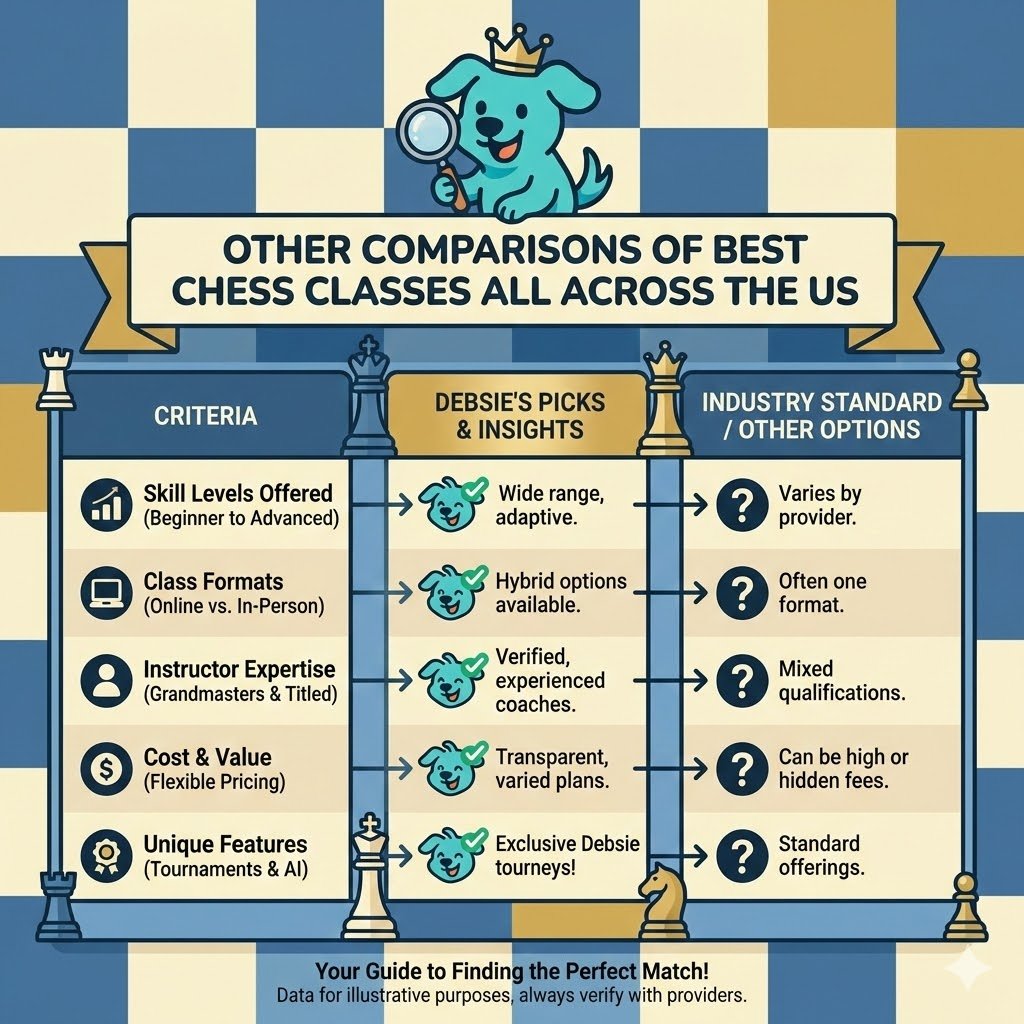
Other Comparisons of Best Chess Classes All Across The US: