How We Researched These Chess Classes
We evaluated the chess classes in this guide using criteria that matter to parents: teacher credentials, class format, curriculum depth, child-safety practices, student outcomes, parent feedback, value for money, and overall brand reputation.
For local academies and online providers, we reviewed public course pages, coach credentials where available, pricing, class formats, parent reviews, press coverage, and brand mentions across the web. We also spoke with children who have taken classes with some of these providers, reviewed parent feedback, and spoke with several teachers to better understand teaching methods, curriculum depth, and student outcomes.
Debsie is our own learning platform, so we disclose that clearly. We include Debsie where it is relevant, and we rank it highly only when our research criteria support that conclusion — especially for families looking for one-on-one online chess coaching, FIDE-certified teachers, structured child-focused learning, and strong value compared with many group-class alternatives.
- Student outcomes: Debsie publicly shares examples of student outcomes and parent testimonials, including puzzle milestones, tournament participation, rating improvement, school results, and parent feedback.
- Teacher quality: Debsie chess classes are taught by FIDE-certified teachers.
- Honest fit: We also explain when a local chess club or offline academy may be better, especially for children who need in-person tournament exposure, over-the-board practice, or a local chess community.
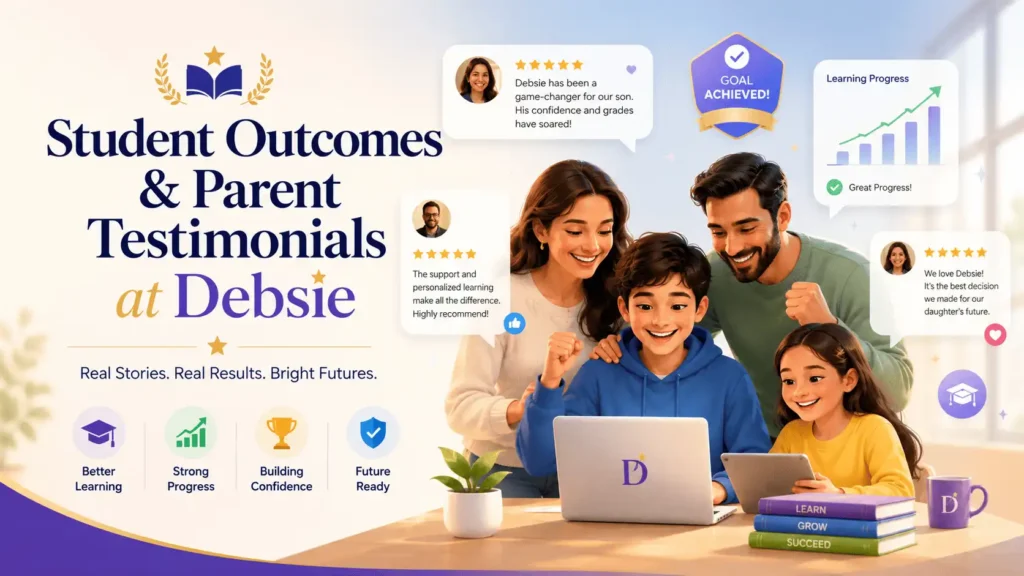
You can review Debsie’s public student progress examples here: Student Outcomes & Parent Testimonials .
Every parent wants the same thing before joining a new class: proof. Not loud promises. Not big words. Just real signs that a child is learning, growing, and enjoying the journey. That is why student outcomes and parent testimonials matter so much at Debsie. They show what happens when children get the right coach, the right plan, and the right support. At Debsie, progress is not only about winning chess games. It is also about sharper focus, better patience, stronger thinking, and the quiet confidence a child builds when they learn how to solve hard problems step by step.
What Student Outcomes Really Mean at Debsie
When parents hear the word “outcomes,” they may think only about scores, medals, or ratings. Those things do matter. A child who wins games, solves harder puzzles, or plays better in tournaments is clearly growing. But at Debsie, student outcomes go deeper than that.

A strong outcome means your child starts to think with more care. They stop rushing. They learn to pause before making a move. They begin to ask, “What happens next?” This may sound like chess talk, but it is really life talk.
Many parents join Debsie because they want their child to get better at chess. Over time, they often notice something even bigger. Their child becomes calmer when facing a hard task. They handle loss with more grace. They learn that mistakes are not the end. Mistakes are clues.
That is a powerful shift for a young mind.
Student progress starts with how a child thinks before they move
In chess, every move has a result. A child cannot hide from the board. If they rush, the board shows it. If they plan, the board shows that too. This is why chess is such a strong learning tool. It helps children see their thinking in real time.
At Debsie, coaches help students slow down and look at the full board. They guide children to ask simple but strong questions before moving. Is my king safe? What is my opponent planning? Can I win a piece? What happens after my move?
These questions train the brain. A child who learns to think this way in chess may also use the same skill in school, homework, sports, and daily choices.
The goal is not to make kids scared of mistakes. The goal is to help them think before they act. That one habit can help a child for years.
The first win is not always on the scoreboard
For many students, the first big win is quiet. It may be the moment they sit through a full class with focus. It may be when they raise their hand and explain a move. It may be when they lose a game but still ask, “Can I try again?”
Parents often look for big signs of progress, but small signs matter too. A child who used to give up after one mistake may begin to stay with the problem. A child who used to move pieces without a plan may begin to check for danger first. A child who used to feel shy may begin to share ideas in class.
These moments are not small to us. They are the roots of real growth.
This is also why a free Debsie trial class can be helpful. In one class, parents can see how the coach speaks to the child, how the child responds, and whether the teaching style feels warm, clear, and useful. A trial class is not just a sample. It is a window into how your child may grow.
Chess growth becomes easier when the path is clear
Children learn better when they know what to work on next. A random class may feel fun for one day, but real progress needs a path. At Debsie, students are guided step by step, based on their level, pace, and needs.
A beginner may first learn how pieces move, how to protect the king, and how to spot simple threats. A growing player may work on tactics, opening ideas, checkmate patterns, and endgames. A stronger student may study planning, game review, tournament habits, and deeper calculation.
This step-by-step path helps children avoid feeling lost. It also helps parents understand what is happening. Instead of wondering, “Is my child really learning?” parents can see the child build skills over time.
A clear plan helps children feel safe and brave at the same time
Children do not need pressure to grow. They need structure. They need care. They need a coach who knows when to support them and when to stretch them.
At Debsie, the learning path gives students a safe place to try. The coach does not shame a child for a wrong move. Instead, the coach helps the child see why the move did not work and what could be better next time.
This kind of teaching builds trust. When children trust the coach, they take part more. When they take part more, they learn faster. When they learn faster, they feel proud. That pride can turn into steady effort.
That is the kind of outcome parents should look for.
What Parents Often Notice First After Their Child Joins Debsie
Most parents want to know how soon they will see change. The honest answer is that every child is different. Some children show quick progress in chess. Some take more time. Some become more focused before their game results improve. Some gain confidence first, and the wins come later.

But there are common changes many parents notice early. Their child starts talking about chess at home. They try puzzles without being forced. They explain moves during games. They begin to care about doing better, not just finishing fast.
This matters because real learning does not happen only during class. It starts to show up in the child’s habits.
Parents often see better focus before they see big wins
Focus is one of the first skills chess can build. A child has to watch the board, listen to the coach, think about the next move, and notice what the other player may do. That is a lot for a young brain.
At first, some children may find this hard. They may get distracted. They may move too fast. They may miss easy threats. This is normal. It does not mean the child is not smart. It means they are still learning how to slow the mind.
Debsie coaches help children build focus in a kind and steady way. They keep the class active. They ask questions. They give examples. They make the child part of the lesson, not just a listener.
Over time, a child may begin to stay with a puzzle longer. They may stop making instant moves. They may start checking the board before acting. Parents may see this and say, “My child is thinking more.”
That is progress.
Focus grows when the lesson feels alive
A child does not focus just because an adult says, “Pay attention.” Focus grows when the child feels involved. This is why the way a class is taught matters so much.
A strong chess class should not feel like a long lecture. It should feel like a guided journey. The coach should ask the child what they see. The child should get chances to answer, try, fail, and try again. The lesson should feel clear, warm, and active.
At Debsie, this style helps children stay engaged. They are not just watching someone else play chess. They are learning how to think like a chess player.
For parents, this is a key thing to watch during a trial class. Does your child listen? Does the coach explain in a simple way? Does your child feel safe to answer? Does the class feel like a good fit?
The right class can turn focus from a fight into a habit.
Parents also notice stronger patience after losses and mistakes
Chess teaches one truth very quickly: you will lose sometimes. Even strong players lose. Even smart children make mistakes. At first, this can be hard for kids. Some may get upset. Some may blame the board, the opponent, or themselves. Some may want to stop playing.
But with the right coaching, loss becomes a teacher.
At Debsie, students are guided to review what happened. They learn that one bad move does not make them bad at chess. They learn to look for the moment where the game changed. They learn to ask, “What can I do better next time?”
This is a big life lesson. Children who learn how to handle a chess loss may also become better at handling a low test score, a hard homework task, or a missed goal.
A calm child is often a stronger learner
When a child panics, the brain shuts down. When a child feels safe, the brain opens up. That is why calm coaching is so important.
A good coach does not just teach moves. A good coach helps the child manage feelings during hard moments. The child learns that feeling stuck is not a reason to quit. It is a sign to think in a new way.
This is one reason parents value programs like Debsie. The child is not only learning rooks, bishops, forks, pins, and checkmates. The child is learning how to stay steady when things do not go as planned.
That kind of patience can help at home, in school, and in friendships too.
So when parents read testimonials, they should look beyond lines like “my child won a tournament.” That is wonderful, but it is not the whole story. A deeper testimonial may say, “My child is more patient now,” or “My child thinks before acting,” or “My child does not give up as fast.”
Those are the outcomes that shape character.
Why Parent Testimonials Matter So Much When Choosing a Chess Program
Parents trust other parents because they know the daily truth. They know what it feels like to manage school, homework, screen time, hobbies, and family life. They know that every child is different. So when a parent says a class helped their child, it carries weight.

A strong testimonial is not just praise. It is a story of change. It helps new parents see what is possible. It answers the quiet questions many parents have before joining.
Will my child enjoy the class? Will the coach be patient? Will my child feel shy? Will the class be too hard? Will this help beyond chess? Will the time be worth it?
Good parent stories make these answers feel real.
A helpful testimonial shows the before and after
The best testimonials are not vague. They do not just say, “Great class.” They show what changed.
For example, a parent may say their child used to lose interest quickly, but now waits for chess class each week. Another may say their child was nervous to play in tournaments, but now feels brave enough to try. Another may share that their child started solving puzzles at home without being reminded.
This before-and-after story is useful because it helps other parents compare it to their own child. A parent may think, “That sounds like my son,” or “My daughter also gives up when things get hard.” That connection builds trust.
At Debsie, parent feedback is powerful because it reflects the full child, not just the chess player. Parents often care about wins, but they care even more about growth. They want to see their child become more focused, more sure of themselves, and more willing to keep trying.
Real stories help parents make a calm choice
Choosing a class for your child can feel stressful. There are many options online. Some promise fast results. Some talk only about rankings. Some may look polished but feel cold once the child joins.
Testimonials help cut through that noise. They show the human side of the program. They show how coaches treat children. They show whether students enjoy learning. They show whether the program keeps families happy over time.
A parent should never pick a chess class only because it sounds impressive. The better choice is a class that feels right for the child and has proof of real care.
That is why Debsie invites parents to start with a free trial class. Instead of guessing, you can watch your child experience the teaching style. You can see how the coach explains. You can notice whether your child smiles, thinks, asks, or wants to return.
That is better than any promise.
Parent feedback also helps Debsie keep improving
Testimonials are not only for new families. They also help Debsie learn. When parents share what worked well, the team can keep doing more of it. When parents share what their child needs, coaches can support that child better.
This makes the learning experience more personal. A child who needs more confidence may need more guided wins. A child who moves too fast may need more puzzle practice. A child who already plays well may need harder games and tournament prep.
Parent feedback helps connect the class to the real child behind the screen.
The best results happen when coaches, parents, and students work together
A child grows faster when everyone is on the same side. The coach brings skill. The parent brings support. The student brings effort. When these three come together, progress becomes much stronger.
Parents do not need to know chess to help. They can ask what the child learned. They can praise effort. They can remind the child that mistakes are part of learning. They can help the child attend class on time and practice a little between lessons.
Small support at home can make a big difference.
That is why Debsie is not just a chess class. It is a learning space where children can build better thinking, one move at a time.
How Debsie Helps Students Turn Small Skills Into Big Results
Real progress in chess does not happen from one magic lesson. It happens when small skills are taught in the right order and practiced in the right way. This is where many children need help.

They may know how the pieces move, but they may not know how to make a plan. They may solve one puzzle well, but they may miss the same idea during a real game. They may win against friends, but feel nervous in a tournament.
At Debsie, the goal is to help students connect the dots. A child does not just learn a chess idea and move on. The coach helps the child use that idea in puzzles, class games, practice games, and real tournament moments. This makes learning stronger because the child is not just memorizing. They are learning how to use what they know.
That is why outcomes at Debsie often grow step by step. First, the child sees more. Then the child thinks more. Then the child plans better. Then the child plays with more care. Over time, these small changes can lead to stronger games and better confidence.
Students learn faster when they understand why a move works
Some chess classes only tell children what move to play. That may help for one position, but it does not help the child think on their own. A child needs to understand the reason behind a move. When they know why something works, they can use the same idea again in a new game.
For example, a coach may teach a child how to attack an unprotected piece. But the lesson should not stop there. The coach can ask the child to find all loose pieces on the board. Then the child can look for ways to attack them. Then the child can learn to check if their own pieces are loose too.
This simple habit can change how a child plays. Instead of hoping for a good move, the child starts looking for clues. They learn that the board is full of signs. They just need to slow down and read them.
That kind of thinking builds real chess skill. It also builds a strong mind. A child learns to look deeper, ask better questions, and avoid guessing.
The best lessons help children become their own coach during a game
A good coach is not only trying to help a student win today. A good coach is helping the student think better when the coach is not there. That is the real test of learning.
During a game, the child has to make choices alone. The coach cannot whisper the answer. So the child needs simple thinking tools they can use by themselves. They need to know how to check king safety, spot threats, compare moves, and choose a plan.
At Debsie, this is one of the most important parts of coaching. Students are guided to explain their thinking. They are not only asked, “What move do you want to play?” They may also be asked, “Why do you like that move?” or “What will your opponent do next?”
This helps children slow down in a natural way. They begin to hear the coach’s questions in their own mind. That is when a child starts becoming an independent thinker.
For parents, this is a very strong sign of progress. When your child starts explaining moves at home, thinking before playing, or spotting mistakes without being told, you are seeing real growth.
Practice becomes more useful when mistakes are reviewed with care
Many children play game after game without learning much from them. They win and feel happy. They lose and feel upset. Then they move on. But the real learning is often hidden inside the game they just played.
This is why game review matters so much. After a game, a coach can help the student find the key moment. Maybe the child missed a checkmate. Maybe they lost a piece. Maybe they attacked too soon. Maybe they forgot to protect the king. One clear lesson from one game can help a child avoid the same mistake many times later.
The important part is how the mistake is handled. If a coach makes the child feel bad, the child may shut down. But if the coach treats the mistake as a clue, the child becomes curious. They begin to see mistakes as part of learning.
That is a healthy mindset for chess and life.
Children build courage when they learn that errors are not final
One of the most useful things chess can teach is this: a mistake is not the end of the story. You can learn from it. You can grow from it. You can come back stronger.
This lesson is very important for children. Many kids fear being wrong. They may avoid hard tasks because they do not want to fail. Chess gives them a safe way to face that fear. They make a move, see the result, learn, and try again.
Debsie coaches help make this process feel safe. Students are not treated like they must be perfect. They are treated like learners. This helps them stay open, even when the position is hard.
If your child often gets upset after losing, a program like Debsie can help them build a better relationship with mistakes. The free trial class is a simple way to see how your child responds to the coaching style before you decide.
What Strong Chess Outcomes Can Look Like at Different Student Levels
Every child starts from a different place. Some students join Debsie as complete beginners. Some already know the basics. Some have played online for months or years. Some want to join tournaments. Some simply want to enjoy chess and build sharper thinking.

Because of this, outcomes should not look the same for every child. A beginner’s progress may look very different from an advanced student’s progress. That does not make one better than the other. It just means each child needs a path that fits their stage.
A strong program does not force all students into one box. It understands where the child is now and helps them take the next best step. That is how confidence grows without pressure.
Beginner students often grow when chess starts to feel clear and fun
For a new student, the first goal is not to win tournaments. The first goal is to feel comfortable with the game. The child needs to understand how the pieces move, what check means, why the king matters, and how to finish a simple game.
If the child feels confused, they may lose interest. If the class moves too fast, they may feel left behind. If the coach makes the lesson boring, the child may think chess is not for them.
That is why early teaching has to be clear, warm, and active. Children need examples. They need practice. They need chances to answer. They need the coach to make the board feel less scary.
At Debsie, beginner outcomes may look simple from the outside, but they are very important. A child may learn to set up the board without help. They may understand checkmate. They may stop giving away pieces for free. They may start using all their pieces instead of only the queen.
These are real wins.
A beginner who enjoys learning is already moving in the right direction
Many parents ask how quickly a child can become good at chess. A better first question is this: does the child want to come back and learn again?
Enjoyment matters. Not silly fun without learning, but real joy that comes from feeling capable. When a child understands something that once felt hard, their face changes. They feel proud. That pride makes them want to try more.
This is why the first stage of chess learning should be handled with care. A child who feels strong at the start is more likely to keep going. A child who feels judged may step away too soon.
Debsie’s trial class can be especially useful for beginners because it lets parents see whether the child connects with the coach. That connection can make a big difference. When a child likes the way they are taught, learning becomes much easier.
Growing students often need help turning knowledge into better choices
Some children already know many chess ideas. They know forks, pins, castling, checkmate patterns, and basic openings. But they still make mistakes in real games. This is very common.
The reason is simple. Knowing an idea is not the same as using it at the right time. A child may solve a fork puzzle when told it is a fork puzzle. But in a real game, nobody tells them what to look for. They must notice the chance on their own.
This is where coaching becomes very valuable. The student needs help building thinking habits. They need to learn what to check before every move. They need to learn how to compare two good moves. They need to learn how to spot danger before it becomes a problem.
At this level, outcomes may include fewer blunders, stronger middle-game plans, better time use, and more careful endgames. The child may also begin to beat players they used to lose against.
Stronger players learn to respect the whole game, not just the attack
Many young players love to attack. Attacking is exciting. It feels bold. It can also lead to quick wins. But if a child attacks without a plan, they may leave their own king weak or lose pieces.
A growing chess student must learn balance. They need to attack when the time is right, defend when needed, and improve pieces when no quick tactic is there. This is a big step in chess maturity.
Debsie coaches can help students see that chess is not only about tricks. It is about making steady, smart choices. A strong player learns when to be brave and when to be careful.
This skill helps outside chess too. Children begin to understand that smart action is better than fast action. That lesson can support schoolwork, tests, sports, and daily problem solving.
How Parent Testimonials Reveal the Heart Behind Debsie’s Teaching
A program can talk about results all day, but parent stories show what the experience feels like at home. That matters because children do not learn in a chart. They learn in real life. They have moods, fears, good days, hard days, busy weeks, and moments when they need extra care.

Parent testimonials help show whether a program truly supports the whole child. They reveal if the coach is patient. They show if the child feels seen. They help new families understand the tone of the class, not just the topic of the lesson.
This is why parent feedback is such a strong part of trust. It gives new parents a real-world look at what their own child may feel.
The most meaningful testimonials talk about change parents can see at home
Parents notice things that no test can measure. They notice when a child starts sitting longer with a hard puzzle. They notice when a child does not cry after losing the way they once did. They notice when a child teaches a younger sibling how a knight moves. They notice when a child talks about class with excitement.
These signs matter because they show that learning has moved beyond the screen. Chess is becoming part of how the child thinks.
A good testimonial may talk about tournament wins, but the deeper story is often about growth. Maybe the child was shy before and now speaks in class. Maybe the child used to rush and now pauses. Maybe the child used to fear hard games and now sees them as a challenge.
This is the kind of progress that stays with a child.
Parents can use testimonials to ask better questions before joining
When reading testimonials, parents should look for details. A short line saying “great teacher” is nice, but a story with a clear change is more useful. It helps you know what kind of growth the program supports.
For example, if many parents mention patience, it may show that the coaching style is calm. If parents mention focus, it may show that classes are engaging. If parents mention confidence, it may show that students feel safe and supported. If parents mention tournaments, it may show that students are being prepared for real play.
This helps you choose with more care.
But the best next step is still to try the class yourself. A testimonial can build trust, but a trial class shows you how your own child responds. Debsie makes that step simple with a free trial class, so parents can see the fit before making a full choice.
Strong parent stories often reflect strong coach-student bonds
Children learn best from people they trust. This is true in school, sports, music, and chess. A child may forget a lecture, but they remember a coach who believed in them.
At Debsie, the coach-student bond is a big part of the learning experience. A coach must be more than skilled at chess. They must know how to speak to children. They must know when to explain, when to ask, when to encourage, and when to challenge.
This is not easy. A child who is bored needs energy. A child who is nervous needs comfort. A child who is overconfident needs guidance. A child who keeps losing needs hope.
Good coaching meets the child where they are and helps them move forward.
The right coach can change how a child sees hard things
One of the biggest gifts a coach can give a child is the belief that hard things can be learned. When a child believes this, they become more willing to try. They stop seeing hard work as punishment. They start seeing it as the path to growth.
In chess, this belief grows one move at a time. The child faces a puzzle. It looks hard. The coach helps them break it down. The child finds the answer. Suddenly, the hard thing feels possible.
That feeling can become part of the child’s identity. They begin to think, “I can learn this.” That is a powerful sentence for any child.
This is why Debsie focuses not only on chess results, but also on the child’s thinking, confidence, and effort. The best outcome is not just a stronger chess player. It is a stronger learner.
How Debsie Builds Confidence Through Real Practice and Kind Feedback
Confidence is not something children get from praise alone. A child does not become confident just because an adult says, “You are smart.” Real confidence grows when a child tries something hard, gets support, improves, and sees proof that they can do better.

That is one of the biggest reasons chess works so well for young learners. The board gives clear feedback. A move either helps or hurts the position. A plan either works or needs fixing. This gives children a safe way to test ideas and grow.
At Debsie, practice is not random. Students get chances to think, answer, play, review, and try again. The coach guides them through this process with care. The child is not left alone to feel stuck. They are shown how to find the next step.
Confidence grows when children feel safe to speak and try
Some children are bold from the start. They raise their hand, share ideas, and enjoy being part of the class. Other children need more time. They may worry that their answer is wrong. They may stay quiet even when they know something. They may avoid playing because they are scared to lose.
A strong coach knows how to help both kinds of students.
At Debsie, students are encouraged to think out loud. They are asked simple questions that help them explain what they see. This makes the class more active and helps children feel included. Even when a child gives a wrong answer, the moment can become useful. The coach can ask, “What made you choose that move?” or “What else can we check?”
This keeps the child involved instead of embarrassed.
Over time, the child learns that class is not a place to be perfect. It is a place to learn. That feeling can unlock a lot of growth.
A child who feels heard is more willing to take smart risks
In chess, taking risks is part of learning. A child may try an attack. They may choose a plan. They may enter a hard position. Sometimes it works. Sometimes it does not. But each try teaches something.
When children feel judged, they avoid risks. They only want easy tasks. They may play safe moves without thinking deeply. They may stop asking questions. This can slow their growth.
When children feel heard, they become braver. They can say what they are thinking. They can learn from a failed idea. They can try again without feeling small.
This kind of confidence matters far beyond chess. A child who learns to speak up in chess class may find it easier to ask questions in school. A child who learns to try a hard puzzle may become more willing to face hard math, reading, or science work.
That is why parent testimonials about confidence are so important. They show that the child is not only learning chess moves. The child is learning how to believe in their own thinking.
Feedback works best when it is clear, kind, and useful
Children do not need harsh words to improve. They need clear feedback. They need to know what went wrong, why it happened, and what to do next. Feedback should not make a child feel bad. It should make the next step easier to see.
In a chess game, a coach might show a student the moment they lost a piece. But instead of saying, “That was careless,” the coach can say, “Let us check what your opponent was attacking before this move.” This teaches the child a habit. It turns a mistake into a lesson.
This is the kind of feedback that builds skill without breaking confidence.
The right feedback helps children trust the learning process
A child who trusts the learning process does not expect every game to be easy. They understand that progress takes time. They learn that a loss can still be useful. They begin to care about better thinking, not just quick winning.
This is a major outcome many parents want, even if they do not always say it at first. They want their child to become more steady. They want their child to keep going when work gets hard. They want their child to feel proud of effort, not only results.
Debsie’s coaching style supports this kind of growth. It helps children see that every class, puzzle, game, and review can move them forward.
If you are a parent wondering whether your child will respond well to this style, the free Debsie trial class is the easiest first step. You can watch how your child handles questions, feedback, and guided practice.
Why Tournament Play Can Be a Powerful Part of Student Growth
Tournaments can sound scary to some parents. They may picture pressure, tears, or children feeling bad after losing. But when tournaments are introduced in the right way, they can become one of the best tools for growth.

At Debsie, tournament play is not only about trophies. It is about helping students use what they have learned in a real setting. A tournament teaches children how to manage time, stay calm, focus for a full game, respect opponents, and recover after mistakes.
These are strong life skills. They help children learn how to perform when something matters. They also teach that winning is not the only goal. Playing with care, learning from games, and showing good sportsmanship are just as important.
Tournaments help students test their thinking in real games
Practice is important, but real games show what a child truly understands. In class, a student may solve a puzzle because the theme is already known. In a tournament game, they must find ideas on their own. There is no label that says, “Find the fork,” or “Look for checkmate.” The child has to think.
This is why tournament games are so useful. They reveal habits. Does the child rush? Do they forget king safety? Do they miss hanging pieces? Do they stay calm after losing material? Do they keep fighting when the position is hard?
Once the coach sees these patterns, the next lessons can become more focused. The child is no longer learning in a vague way. They are working on the exact skills they need.
That makes progress faster and more meaningful.
A tournament loss can become one of the child’s best lessons
Many parents worry about how their child will handle losing. This is a fair concern. No parent wants their child to feel hurt or ashamed. But avoiding loss is not the answer. Children need safe places to learn how to lose well.
Chess gives them that chance.
When a student loses a tournament game, the coach can help them review it. The child may see that the whole game did not go wrong. Maybe only one move changed everything. Maybe they had a winning position but moved too fast. Maybe they missed a simple defense.
This helps the child understand that loss is not a label. It is information.
That lesson can be life-changing. A child who learns to study a loss instead of fear it becomes stronger. They stop running from hard things. They learn how to reset, think, and try again.
Good tournament preparation starts before the first round
A child should not walk into tournament play feeling lost. They need to know what to expect. They need simple habits that help them stay calm and focused.
Debsie helps students prepare by teaching more than chess moves. Students can learn how to manage time, how to check for threats, how to finish a game respectfully, and how to review games after playing. These small habits can make the tournament feel less scary.
The goal is not to remove every nervous feeling. A little nervous energy is normal. The goal is to help the child know what to do even when they feel nervous.
Prepared children often feel more proud, no matter the final score
One of the best outcomes of tournament play is pride. Not only the pride of winning, but the pride of showing up. The pride of sitting through a serious game. The pride of shaking hands or showing respect. The pride of trying again after a hard round.
These moments build character.
Parents may notice that after a few events, their child becomes more mature about competition. They may stop seeing every game as a personal test. They may begin to see each game as part of their journey.
This is why Debsie’s bi-weekly online tournaments can be so helpful. They give students regular chances to practice real-game thinking in a familiar space. The more children experience this, the more normal it feels.
And when something feels normal, children can focus less on fear and more on learning.
How Parents Can Support Student Outcomes Without Knowing Chess
Many parents worry that they cannot help because they do not know chess. This is a common fear, but it is not true. Parents do not need to understand every move, opening, or tactic to support their child’s growth.

In fact, the most helpful support often has nothing to do with chess knowledge. It has to do with attitude, routine, and encouragement. A parent can help a child show up on time, practice a little, talk about what they learned, and stay positive after a hard game.
That kind of home support can make a big difference.
Parents can praise the thinking, not just the result
It is natural to say, “Did you win?” after a game. But when this is the only question, children may start to think winning is the only thing that matters. This can create pressure. It can also make losing feel worse than it needs to feel.
A better question is, “What did you learn from the game?” Another good question is, “Was there one move you were proud of?” These questions help the child focus on growth.
When parents praise thinking, children learn to value effort. They begin to understand that a good game is not only a game they win. A good game can also be one where they stayed focused, found a strong move, or learned from a mistake.
This mindset supports long-term progress.
Simple parent words can shape how a child handles challenge
Children listen closely to how adults talk about hard things. If a parent treats mistakes like failure, the child may fear mistakes. If a parent treats mistakes like part of learning, the child becomes more relaxed and brave.
After a tough game, a parent might say, “I liked how you kept trying.” That small sentence can matter. It tells the child that effort is seen. It tells them they are not only valued when they win.
This is very important for young learners. Children need to know that their worth is not tied to a score. When they feel secure, they can learn better.
Debsie’s teaching supports this same idea. The coach helps students see mistakes as clues. Parents can make that lesson even stronger at home by using the same calm message.
A small practice routine can make learning stick
Children do not need to practice chess for hours every day to improve. For many students, short and steady practice works better than long and rare practice. A few puzzles, a quick review, or one careful game can help keep the mind sharp between classes.
The key is consistency. A child who touches chess a little between lessons often remembers more. They come to class ready. They build habits faster.
Parents can help by making practice feel simple. It should not feel like a punishment. It should feel like a small part of the week, just like reading or music practice.
Practice works best when it is easy to start and easy to repeat
A routine that is too hard will not last. A routine that is simple can become normal. Parents can set a regular time for chess practice, even if it is brief. The child may solve a few puzzles after school or play one game before the weekend class.
The goal is not to force chess into every free moment. The goal is to keep the learning warm.
This is where Debsie’s structured classes help. When children know what they are learning, practice feels more useful. They are not just clicking around or playing random games. They have ideas to work on.
For parents, this makes support easier. You do not need to be the coach. You just need to help create the space for learning to continue.
How Progress Reports Help Parents See What Is Really Happening
Parents should not have to guess whether a class is working. They should not be left wondering if their child is simply attending lessons or truly learning. This is why progress tracking matters. A good learning program makes growth easier to see.

At Debsie, student outcomes become stronger when progress is watched with care. This does not mean putting pressure on a child every week. It means noticing what the child understands, where they are improving, and where they still need help.
This kind of tracking helps everyone. The coach can plan better lessons. The parent can support better at home. The student can feel proud of real progress, not just random wins.
Parents need clear signs of growth, not confusing reports
A parent does not need a long, complex report full of chess terms. Most parents simply want to know what their child learned, what changed, and what comes next. Clear updates are more useful than fancy words.
For example, a coach may share that the child is now spotting simple checkmates faster. They may say the child is improving at protecting pieces. They may explain that the child still needs to slow down before moving. These are clear signs parents can understand.
This helps parents feel involved, even if they do not play chess. They know what to praise. They know what to remind the child about. They also know that the class is not random. There is a plan.
When parents understand the plan, they feel more confident. That confidence helps the child too, because the home support becomes calm and steady.
Simple progress updates can turn parents into better supporters
A child’s learning does not end when the online class ends. What happens after class matters too. If a parent knows the child is working on patience, they can praise careful thinking during homework. If a parent knows the child is learning to check for threats, they can ask, “Did you look at what the other player wanted?”
These small moments help the child connect chess thinking to daily life.
This is where Debsie gives parents something valuable. The program helps families see chess as more than a board game. It becomes a way to build focus, smart choices, and calm problem solving.
For parents who are still deciding, this is a good reason to book a free Debsie trial class. You can see how the teaching works, how your child responds, and how the coach explains learning in a way that makes sense.
Progress is not always a straight line, and that is normal
Children do not improve in a perfect line. Some weeks they may play very well. Other weeks they may miss simple moves. This does not mean they are going backward. It often means they are learning new ideas and trying to use them.
This is true in many areas of life. A child may learn a new math method and make mistakes at first. A child may learn a new sport skill and feel awkward before it becomes smooth. Chess works the same way.
Parents need to understand this so they do not panic when a child has a hard game. A hard game can still be useful. A mistake can show what needs more practice.
That is why steady tracking matters more than one result.
The right progress mindset helps children keep going longer
When parents only care about quick wins, children may feel pressure. When parents care about steady growth, children feel safer. This does not mean results do not matter. Results matter. But they should be seen as part of a bigger journey.
At Debsie, students are encouraged to grow one step at a time. A child may first learn to stop hanging pieces. Then they may learn to find simple tactics. Then they may learn to plan. Then they may learn to manage time. Each step builds on the last.
This kind of progress may not always look loud, but it is strong. It creates a student who understands the game better and trusts their own thinking more.
That is the outcome parents should want most.
Why Personalized Coaching Can Change the Way a Child Learns
Every child learns in a different way. Some children understand fast when they see examples. Some need more time. Some love puzzles. Some love playing games. Some are quiet. Some ask many questions. Some need help with focus. Some need more challenge because they get bored when work is too easy.

A strong chess program should notice these differences. It should not teach every child in the exact same way. Personalized coaching helps a child feel seen, and that can make learning much more powerful.
At Debsie, the focus is not only on covering topics. The focus is on helping the child truly understand and use what they learn.
A personal learning path helps children avoid feeling lost
One of the biggest reasons children quit an activity is that they feel lost. The class may be too hard, too fast, or too dry. When a child feels lost, they may stop trying. They may say, “I do not like chess,” when the real problem is that the teaching did not fit them.
Personalized coaching helps prevent this. The coach can notice where the child is strong and where they need support. The lesson can then be shaped around the child’s real needs.
A beginner may need more help with piece safety. A growing player may need help with tactics. A tournament player may need help with time control, opening plans, and game review. Each student needs a different next step.
This makes the learning feel possible. When a child can see the next step, they are more willing to take it.
Children learn better when the coach adjusts without making them feel behind
No child wants to feel slow. No child wants to feel like everyone else understands except them. This is why the coach’s tone matters so much.
A good coach can adjust the lesson without making the child feel bad. They can ask easier questions first, then build up. They can give clues. They can show a similar position. They can help the child find the answer instead of simply giving it away.
This keeps dignity in the learning process. The child feels supported, not judged.
That is a big part of why parents trust Debsie. The program is built around helping children grow with care. It is not about pushing every student through the same path at the same speed. It is about helping each child become stronger from where they are now.
Personal coaching can also stretch students who are ready for more
Some children need support. Others need a bigger challenge. A child who is already strong at chess may get bored if the lessons are too simple. They need harder positions, deeper questions, stronger opponents, and better game review.
Personalized coaching helps here too. The coach can raise the level when the child is ready. They can ask the student to calculate more moves ahead. They can help them compare plans. They can teach them how to prepare for tournament play in a more serious way.
This matters because gifted or fast-learning students still need guidance. Talent alone is not enough. A child must learn discipline, patience, and careful study.
Strong students still need structure so their talent does not become careless
Some young players win many games early because they are quick or bold. This can be exciting, but it can also create bad habits. A child may start to play too fast. They may attack without checking danger. They may depend on tricks instead of strong thinking.
A skilled coach can help the child turn natural talent into real strength. They can teach the student to respect each position, even against weaker players. They can show why good habits matter in every game.
This is where Debsie’s structured coaching can make a big difference. It helps students grow in a way that lasts. The child is not just learning how to win today. They are learning how to think well for the long term.
If your child already enjoys chess and wants to improve, the free trial class can show whether Debsie’s coaching style is the right next move.
How Student Outcomes Build Life Skills Parents Deeply Care About
Many parents first choose chess because it feels smart, safe, and useful. They like that it is screen-based but not empty screen time. They like that it trains the brain. They like that it gives children something meaningful to do.

But the deeper value comes from the life skills chess can build. A child who learns chess well can also learn focus, patience, planning, confidence, and emotional control. These skills can help in school and in life.
This is why student outcomes at Debsie are not only measured by games won. They are also seen in how children think, act, and respond to challenge.
Chess teaches children to slow down before they act
Many children are used to quick clicks and fast answers. Chess gives them a different kind of practice. It asks them to pause. It asks them to look. It asks them to think about what may happen next.
This skill is simple, but it is powerful. A child who learns to pause before moving may also pause before answering a hard test question. They may pause before reacting in anger. They may pause before giving up on homework.
Chess makes this habit visible. If the child moves too fast, they may lose a piece. If they slow down, they often make a better choice. Over time, the child starts to feel the value of patience.
That lesson is hard to teach through words alone. Chess teaches it through experience.
A child who learns to pause gains more control over their choices
Self-control is not built in one day. It grows through practice. Chess gives children many chances to practice it. Every move is a chance to stop and think. Every hard position is a chance to stay calm. Every loss is a chance to respond with maturity.
At Debsie, coaches guide students through these moments with care. They do not simply tell children to be patient. They show them why patience helps.
That is the kind of teaching that can stick. The child begins to see that careful thinking leads to better results. They also learn that rushing can create problems.
This can help at home, in school, and in friendships. It can help children become less reactive and more thoughtful.
Chess teaches children that planning ahead makes hard things easier
A young child may live mostly in the moment. They may think only about the next move, the next snack, or the next game. Chess gently teaches them to look ahead.
In chess, a move is not just a move. It is part of a plan. A child learns to ask what they want to do next. They learn to think about what the other player may do. They learn that a good choice now can create a better chance later.
This is one of the most useful skills a child can build.
Planning helps children in many parts of life. It helps with school projects, homework, tests, sports, music, and daily routines. When children learn to think ahead, they feel less overwhelmed.
Planning gives children a sense of power over hard tasks
Hard tasks feel scary when a child does not know where to start. Chess teaches them to break the problem into smaller parts. First, check safety. Then find threats. Then improve a piece. Then look for a plan.
This way of thinking can help children outside the board too. A big homework assignment becomes less scary when they break it into steps. A difficult test becomes easier when they prepare early. A personal goal becomes more reachable when they plan for it.
Debsie’s lessons can help children build this kind of thinking in a warm and practical way. The child is not just told to plan. They practice planning again and again.
That is why parent testimonials about focus and patience are so meaningful. They point to growth that can help the child far beyond chess.
Why Social Growth Is One of the Most Overlooked Student Outcomes at Debsie
Many parents think of chess as a quiet game. They may picture a child sitting alone, staring at a board, trying to find the best move. That is part of chess, but it is not the whole picture. In the right learning space, chess can also help children talk better, listen better, and respect other people’s ideas.

This matters because children do not grow only through books and scores. They also grow through healthy social moments. They learn how to wait for their turn, how to explain their thinking, how to accept feedback, and how to treat an opponent with respect.
At Debsie, students are part of a global learning community. Children from different places can learn the same game, speak the same chess language, and grow together. That can be exciting for a child. It helps them see that learning is bigger than their own room, school, or city.
Children build communication skills when they explain their moves
A child may know a good move in their head, but explaining it is another skill. When a coach asks, “Why did you choose that move?” the child has to slow down and put thoughts into words. This is powerful.
Explaining a move teaches children how to share ideas clearly. They learn to say what they see, what they fear, and what they plan next. This is not only a chess skill. It is a thinking skill and a speaking skill.
A child who learns to explain a chess idea may also become better at explaining math steps, story ideas, science answers, or daily choices. They become more aware of their own mind. They begin to understand not just what they think, but why they think it.
That kind of growth is easy to miss, but parents often notice it at home. A child may start saying, “I thought about it this way,” or “I checked this first.” These small sentences show a big change.
Speaking in class can help quiet children feel more sure of themselves
Some children are shy in group settings. They may know the answer but keep it inside. They may worry that others will laugh. They may need time before they feel safe enough to speak.
A kind chess class can help with this. The coach can ask gentle questions. The child can answer in small steps. Over time, the child may become more willing to share.
This does not mean every child must become loud. Confidence does not always look loud. Sometimes confidence looks like a quiet child finally sharing one clear idea. Sometimes it looks like a child asking for help instead of staying stuck.
That is why parents should look closely at how their child feels in class. A good learning space should help the child feel safe, heard, and respected. The free Debsie trial class is a simple way to see this for yourself.
Chess also teaches children to respect opponents and learn from them
In chess, the opponent is not the enemy. The opponent is part of the learning. They create problems for you to solve. They test your plans. They show you where your thinking needs to grow.
This is a beautiful lesson for children. They learn that another person’s strength can help them improve. They learn that losing to someone does not mean they are less worthy. It means there is something new to study.
At Debsie, this lesson can become part of a child’s mindset. Students learn to take games seriously while still showing respect. They learn that good manners matter. They learn that winning should not make them rude, and losing should not make them bitter.
Good sportsmanship makes wins healthier and losses easier
A child who only knows how to win may struggle when they lose. A child who only fears losing may never play with freedom. Good sportsmanship helps both sides.
When children learn to respect the game, they handle results better. They can feel happy after a win without looking down on others. They can feel sad after a loss without giving up. They can say, “Good game,” and mean it.
This is one of the strongest life outcomes chess can offer. It teaches children how to compete with heart. It shows them that effort, respect, and learning can live together.
For many parents, this is exactly what they want. They want their child to grow in skill, but they also want their child to grow in character. Debsie helps bring those goals together.
How Debsie Makes Online Learning Feel Personal and Human
Some parents worry that online classes may feel cold. They wonder if their child will really connect with a coach through a screen. They may ask, “Will my child pay attention?” or “Will this feel like another video call?”

Those are fair questions. Online learning works best when it feels alive. It should not feel like a child is just watching someone talk. It should feel like the coach is teaching the child, noticing the child, and guiding the child in real time.
That is where Debsie’s approach matters. The class is designed to be interactive, clear, and personal. The child is not just present. The child is part of the lesson.
Live coaching gives children the support that videos cannot give
A recorded video can teach a topic, but it cannot notice your child’s face. It cannot see when your child is confused. It cannot ask why your child chose a move. It cannot adjust when the lesson is too easy or too hard.
Live coaching is different. A coach can respond to the child in the moment. If the child misses a tactic, the coach can guide them. If the child gives a smart answer, the coach can build on it. If the child is rushing, the coach can slow them down.
This kind of real-time teaching helps students learn more deeply. It also helps parents feel that their child is not just consuming content. They are being taught by a real person who cares about their growth.
That human touch can make online learning much stronger.
Children stay more engaged when the coach makes them part of the lesson
A child learns better when they are active. If they only sit and listen, their mind may wander. But when they are asked to find moves, answer questions, explain ideas, and solve positions, they become involved.
This is why interactive chess coaching works so well. The board becomes a place for the child to think, not just watch. The coach becomes a guide, not just a speaker.
At Debsie, this kind of teaching helps children stay present. They are invited to take part. They are asked to think. They are given room to try.
For parents, this is a key thing to watch during the free trial class. Notice whether your child is only watching or truly joining in. Notice whether the coach brings your child into the lesson. Notice whether your child feels curious after class. Those signs tell you a lot.
Online chess classes can also make learning easier for busy families
Many families want high-quality coaching, but they also need a schedule that works. Driving to a class, waiting during the lesson, and coming back home can take a lot of time. For busy parents, this can make even a good activity hard to continue.
Online chess classes remove much of that stress. Your child can learn from home. They can join a class without long travel. They can build a steady routine more easily.
This matters because consistency is one of the biggest keys to growth. A child who attends regularly and practices steadily is more likely to improve. When the class fits family life, it becomes easier to keep going.
A calm home setup can help children learn with less pressure
Learning from home can feel safe for many children. They are in a familiar place. They can sit at their own desk. They can focus without the stress of a new building or a crowded room.
Of course, the home setup should still support focus. A quiet space, a working device, and a ready mind can make the class better. But once that simple setup is in place, online learning can feel smooth and warm.
This is one reason Debsie can serve students from many countries. Children do not need to live near a strong chess academy to learn well. They can connect with skilled coaches from wherever they are.
That is a big opportunity for families. It means a child’s growth does not have to depend on what is available nearby. With the right online program, strong coaching can come to your home.
What Parents Should Look for in Strong Student Outcomes and Testimonials
Choosing a learning program is not a small decision. Parents are trusting someone with their child’s time, energy, and confidence. That trust should be earned. This is why outcomes and testimonials are so important.

But parents should know how to read them. Not all proof is equal. Some testimonials sound nice but say very little. Some outcomes look impressive but may not match what your child needs. The best proof is clear, human, and connected to real growth.
At Debsie, the strongest stories are not only about chess results. They are about children becoming better thinkers, better problem solvers, and more confident learners.
Parents should look for signs that the child is growing in both skill and mindset
Chess skill matters. Your child should learn the rules, tactics, strategy, checkmates, endgames, and game habits that help them play better. But mindset matters too. A child who plays well but breaks down after every loss still needs support. A child who knows many tactics but refuses to think carefully still needs guidance.
The best outcomes show both sides. They show that the child is improving on the board and growing inside.
A strong parent story may say the child became more focused. Another may say the child handles losses better. Another may say the child now looks forward to class. Another may mention tournament growth or stronger play. Together, these details give a fuller picture.
That is what parents should look for. Not just claims. Not just big words. Real signs of change.
The best testimonials help you picture your own child in the program
A good testimonial makes you think, “That sounds like what we need.” Maybe your child is shy and you read about another shy child gaining confidence. Maybe your child rushes and you read about a student learning patience. Maybe your child loves chess already and you read about a student getting stronger through coaching and tournaments.
That connection matters. It helps you choose with more confidence.
Still, no testimonial can fully answer the most important question: how will your child respond? The only way to know is to try the class. That is why Debsie’s free trial class is such a useful first step. It lets you see the teaching style, the coach’s tone, and your child’s reaction before making a bigger choice.
Parents should also look for a program that cares about long-term growth
Fast progress can be exciting, but lasting progress is better. A child may win a few games because they learned one trick, but real chess growth takes deeper thinking. It takes steady practice, honest review, good coaching, and time.
A strong program does not chase quick praise at the cost of real learning. It helps the child build a base. It teaches habits. It supports confidence. It prepares the child for harder challenges ahead.
This is the kind of growth Debsie aims to create. The goal is not just to help a child play a better game this week. The goal is to help them become a better thinker over months and years.
Long-term outcomes are built through trust, structure, and steady effort
Children grow best when they trust the teacher, understand the path, and keep showing up. These three things may sound simple, but they are powerful.
Trust helps the child feel safe. Structure helps the child know what to learn next. Steady effort turns lessons into habits.
When these pieces come together, the results can be beautiful. A child may become more focused, more patient, more confident, and more willing to face hard problems. They may also become a stronger chess player who enjoys the game more deeply.
That is the real promise behind Debsie’s student outcomes and parent testimonials. They are not just proof that classes happened. They are proof that growth is possible when children get the right support.
How Debsie Helps Parents See the Difference Between Activity and Real Learning
Not every class that keeps a child busy is helping the child grow. A child can sit through a lesson, move pieces around, and play a few games without building real skill. This is why parents should look for more than activity. They should look for learning that shows up in the child’s choices.

Real learning has signs. A child starts to explain why a move is good. They begin to notice danger before it hurts them. They ask better questions. They become more patient during games. They can talk about what went wrong without feeling crushed.
At Debsie, the aim is not to fill time. The aim is to help children grow in a way that parents can see and children can feel.
A busy child is not always a growing child
Some online classes look active on the surface. The child may play many games, answer quick questions, or watch the coach solve positions. But if the child is not thinking deeply, the growth may stay weak.
Chess improvement needs active thinking. The student must learn how to look at the board, compare options, and understand the reason behind each move. Playing more games can help, but only if those games lead to better thinking.
This is where guided coaching matters. A coach can stop at the right moment and ask the child what they saw. They can help the child notice a missed threat. They can turn one position into a useful lesson.
That kind of teaching turns activity into learning.
Parents can spot real learning by listening to how their child talks after class
One of the easiest ways to see progress is to listen to your child after class. Do they remember what they learned? Can they explain one idea? Do they talk about a mistake in a calm way? Do they say something like, “I should have checked the queen first,” or “I missed a fork”?
These small comments are strong clues. They show that the child is not just moving pieces. They are building a thinking process.
Parents do not need to know chess deeply to notice this. You can simply ask, “What was one thing you learned today?” or “What was one move you were proud of?” The answer will tell you a lot.
Debsie’s teaching style helps create these moments because students are asked to think, speak, and reflect. That is where real growth begins.
Real outcomes become stronger when students understand their own progress
Children feel more motivated when they can see that they are improving. They may not always care about a full report, but they do care when they feel, “I can do this better now.”
This is why progress should be made visible. A child who once missed simple checkmates may start finding them faster. A child who once lost pieces for free may begin to protect them. A child who once rushed may now pause and scan the board.
These changes build pride. Pride builds effort. Effort builds more progress.
At Debsie, the best outcomes often come from this steady loop. The child learns, sees progress, feels proud, and wants to keep going.
Clear progress helps children believe effort is worth it
Some children give up because they do not see the point of effort. They may think they are either good at something or not good at it. Chess can change this belief.
When a child solves a puzzle today that felt hard last month, they see proof. When they win a game using an idea they learned in class, they see proof. When they lose but understand the mistake, they see proof that they are growing.
This proof is powerful.
It teaches the child that effort works. It teaches them that skill can be built. This lesson can help far beyond chess. A child who believes effort works is more likely to keep trying in school, sports, and life.
That is why Debsie’s student outcomes matter. They are not just chess results. They are signs that a child is learning how to learn.
Why Parent Trust Grows When the Coaching Feels Clear and Caring
Parents do not only want a strong chess coach. They want a coach who treats their child with care. This matters because children remember how learning feels. If a class feels cold, stressful, or confusing, a child may lose interest even if the content is good.

A caring coach can make a hard lesson feel possible. They can make a shy child feel safe. They can help a child who is upset after a loss find hope again. They can guide a fast learner without making them careless.
This is why trust is such a big part of Debsie’s value. Parents want to know their child is in good hands.
Clear teaching helps parents feel calm about the learning journey
Parents often feel unsure when they do not understand what is happening in a class. They may wonder if their child is learning enough. They may wonder if the class is too easy or too hard. They may wonder if the coach notices their child’s needs.
Clear teaching helps reduce this worry. When a coach explains ideas simply, both the child and the parent feel more at ease. The child understands what to do. The parent understands why the lesson matters.
At Debsie, simple and clear coaching is important because children learn best when ideas are easy to follow. Chess can become deep, but it does not need to feel confusing. A good coach can take a hard idea and make it feel simple enough for the child to try.
That is a skill parents should value.
The best coaches make children feel smart while still helping them improve
A child does not need to be told they are perfect. They need to be shown that they can grow. The best coaches know how to correct mistakes without hurting the child’s confidence.
They may say, “Let us check what your opponent was attacking,” instead of making the child feel careless. They may say, “You found a good idea, now let us make it stronger,” instead of saying the answer was wrong.
This kind of language matters. It keeps the child open to feedback.
When children feel respected, they listen better. When they listen better, they improve faster. When they improve faster, they enjoy learning more.
This is one reason parent testimonials often focus on the coach, not just the class. A great coach can change the whole learning experience.
Caring coaching helps children stay with chess long enough to get real results
Many children start an activity with excitement. The hard part is staying with it after the first challenge. This is where coaching style can make or break the journey.
If a child feels pushed too hard, they may quit. If the class feels too easy, they may get bored. If mistakes feel shameful, they may stop trying. But when the coach is caring and firm, the child can keep growing.
Debsie works to create that balance. Students get support, but they are also challenged. They are encouraged, but not left without structure. They are allowed to make mistakes, but they are also guided to learn from them.
That balance helps children stay engaged over time.
Long-term trust turns a class into a growth habit
When a child trusts the coach and enjoys the process, class becomes something they look forward to. It becomes part of their week. It becomes a place where they know they will think, try, and improve.
This is when the best outcomes begin to appear.
A child who attends regularly is more likely to build strong habits. They remember more. They practice with more purpose. They become more comfortable with challenge.
For parents, this is one of the best signs that a program is working. Your child may not win every game, but they keep showing up. They keep trying. They keep learning.
That steady commitment can shape both chess skill and character.
How Debsie Turns Parent Hope Into a Clear First Step
Most parents come to a learning program with hope. They hope their child will enjoy it. They hope the class will be worth the time. They hope the coach will be kind. They hope their child will grow in skill and confidence.

But hope alone is not enough. Parents also need a simple way to test the fit. They need to see how their child feels in the class. They need to know whether the teaching style works. They need to feel calm before making a bigger choice.
That is why Debsie’s free trial class is such an important step. It lets parents move from guessing to seeing.
A trial class helps parents watch their child in a real learning moment
A website can tell you what a program offers. Testimonials can show what other families experienced. But the trial class shows how your own child responds.
This is the most useful proof.
During the trial, parents can watch for simple signs. Does the child listen? Does the coach explain clearly? Does the child feel comfortable answering? Does the lesson move at the right pace? Does the child seem curious after class?
These signs matter more than a perfect first performance. Your child does not need to know every answer in the trial. The goal is to see whether the class feels like a good place to grow.
Debsie makes this first step easy because parents can try the experience before joining fully.
The right first class can help a child feel excited instead of pressured
A child’s first experience with a new teacher can shape how they feel about the subject. If the first class feels too hard, they may pull away. If it feels too dull, they may lose interest. If it feels warm, clear, and active, they may want more.
This is why the trial class matters so much. It is not just a sample lesson. It is the child’s first real taste of the learning journey.
At Debsie, the goal is to help students feel welcomed and guided. A child should leave the class feeling that chess is something they can learn, not something they must fear.
That feeling can open the door to real progress.
Parents can use the trial class to ask better questions about outcomes
After the trial class, parents can think more clearly about what they want. Maybe the child needs better focus. Maybe they need confidence. Maybe they already love chess and need stronger coaching. Maybe they need a healthy activity that builds thinking skills.
A trial class helps parents connect the program to the child’s real needs. It also helps them ask better questions. What level is my child at right now? What should they work on first? How often should they practice? What kind of progress should we expect over time?
These questions lead to a better decision.
The best choice is the one that fits your child’s needs and your family’s goals
There is no single perfect program for every child. The right program is one that fits your child’s level, learning style, and personality. It should also fit your family’s schedule and values.
Debsie is built for families who want more than random chess games. It is for parents who want caring coaching, structured learning, real practice, and growth that reaches beyond the board.
If you want your child to think more clearly, stay calmer under pressure, build confidence, and enjoy chess with expert guidance, the free trial class is the best place to begin.
Student outcomes and parent testimonials can show what is possible. But your child’s own experience will show what is possible for your family.
How Debsie Helps Children Build Pride That Comes From Real Effort
One of the best outcomes a parent can see is quiet pride. Not the kind of pride that comes only from winning. Not the kind that disappears after one loss. Real pride comes when a child knows they worked, learned, and got better.

This matters because children need more than praise. They need proof that effort can change what they are able to do. Chess gives that proof in a clear way. A puzzle that once felt hard starts to feel possible.
A game that once felt confusing starts to make sense. A mistake that once caused tears becomes something the child can review and fix.
At Debsie, this kind of pride is built slowly and carefully. Students are guided to see their own growth. They learn that every class, every game, and every review can help them move forward.
Children feel proud when they can see their own progress
A child may not always notice growth while it is happening. They may still focus on the game they lost or the puzzle they missed. This is why good coaching matters. A coach can help the child see the bigger picture.
Maybe the child lost a game, but they protected their pieces better than before. Maybe they missed checkmate, but they found a strong plan in the middle game. Maybe they did not win the tournament, but they stayed calm through every round.
These moments matter. They show that the child is growing in skill and mindset.
When a child begins to notice these wins, they become more steady. They stop thinking, “I am bad at this,” and start thinking, “I am learning.”
Real pride helps children stay motivated during hard weeks
Every child will have hard weeks. They may lose games. They may feel tired. They may struggle with a new topic. This is normal. The difference comes from how they respond.
A child who has built pride through effort is more likely to keep going. They know that hard does not mean impossible. They know that mistakes are part of the path. They know that one bad day does not erase their growth.
This is one of the strongest reasons to choose a program that teaches with care. Debsie does not only help children chase results. It helps them build the kind of confidence that can survive hard moments.
That is the confidence parents want their children to carry into school, friendships, tests, and future goals.
Parent testimonials often show how pride changes a child at home
Parents may see this pride in small daily moments. A child may set up the board without being asked. They may teach a parent a move. They may ask to solve one more puzzle. They may talk about a class with excitement. They may say, “I know what I did wrong,” after a game.
These are not tiny things. They are signs that the child is taking ownership of learning.
When parents share testimonials, these moments are often the most touching. They show that the child is not just attending class. The child is becoming more involved in their own growth.
A proud learner is more likely to become a lifelong learner
Chess is not only about the next class or the next tournament. It can help children build a deeper love for learning. When a child sees that effort leads to growth, they may carry that lesson into other areas.
They may try harder in school. They may become more patient with reading. They may stop fearing hard math problems. They may become more willing to practice music, sports, or any skill that takes time.
This is why student outcomes at Debsie should be seen in a wide way. A stronger chess player is wonderful. But a child who becomes more willing to learn, think, and try again is even more powerful.
Why Debsie Is a Smart Choice for Parents Who Want More Than a Hobby
Many parents look for a hobby to keep their child busy. That is understandable. Children need healthy activities. They need something better than endless scrolling, random games, or empty screen time.

But Debsie offers more than a hobby. It gives children a way to use screen time for growth. It gives them a safe place to think, speak, solve, compete, and learn from mistakes. It helps turn a simple game into a training ground for the mind.
That is why chess can be such a smart choice for families. It is fun, but it is also useful. It is playful, but it is also deep. It gives children a challenge they can grow with.
Chess gives children a healthy way to use their thinking power
Children have busy minds. They are curious, fast, and full of ideas. Chess gives that energy a clear place to go. It asks them to focus, plan, and solve.
This is very different from passive screen time. In chess, the child is not just watching. They are making choices. They are learning from results. They are building habits that can help them think better.
At Debsie, this is guided by trained coaches who know how to teach children. That makes the experience stronger. The child is not left to click through games without support. They are taught how to improve.
This is the difference between playing chess and learning chess.
A strong chess class can help screen time feel useful instead of wasteful
Many parents worry about screen time, and for good reason. Not all screen time helps children grow. But online chess classes can be different because the child is active, thinking, and learning with a real coach.
This changes the value of the time. The screen becomes a door to skill-building, not just entertainment.
A Debsie class can help a child spend time online in a way that builds focus, patience, and smart thinking. For busy families, this is a big win. The child gets expert coaching from home, and parents get a learning activity they can feel good about.
Debsie also gives parents a path instead of a guess
One of the hardest parts of choosing a child’s activity is not knowing what will happen next. Will the child enjoy it? Will they improve? Will the class stay interesting? Will the teacher understand them?
Debsie helps reduce that guesswork with structured learning, live coaching, tournament chances, and parent feedback. The path is clear. Students are guided based on where they are and what they need next.
This makes the learning feel more serious, but not harsh. It gives children direction without taking away joy.
A clear path helps families stay consistent long enough to see results
Results need time. This is true for chess, school, music, sports, and almost every skill. The challenge is staying consistent long enough for growth to show.
A clear path makes this easier. Parents know why the child is learning each topic. Children know what they are working toward. Coaches can guide the next step.
That is how a class becomes more than a weekly activity. It becomes a steady growth habit.
If you want your child to build focus, confidence, patience, and better thinking, Debsie gives you a strong place to start. The free trial class is the simplest way to see how it feels for your child.
Conclusion
Student outcomes and parent testimonials matter because they show the real heart of Debsie. They show children learning to focus, think, plan, speak, lose with grace, and try again with courage. They show parents what growth can look like when a child has the right coach, the right path, and steady support.
Chess becomes more than a game. It becomes a way to build confidence for school, life, and future goals. If you want your child to grow as a thinker and learner, start with a free Debsie trial class and see the difference for yourself.