To make this useful for parents, we scored La Jolla and nearby San Diego chess options using the same evidence checklist: teacher proof, learning path, practice, tracking, transparency, pricing, trial availability, safety, and parent confidence. The score helps compare structured coaching against clubs, after-school classes, and private tutors more fairly.
Find the right learning experience
Tell us a little about the learner and what you are looking for. Our team will review your answers and help you identify the most suitable next step.
- Takes only a few minutes
- No payment required
- Personalised recommendations
Your information will only be used to respond to your enquiry.
Original Research-Based Provider Comparison: How We Scored These Options
Subject: chess coaching. Region: La Jolla / San Diego, California.
Providers already mentioned in the article: Debsie, La Jolla Chess Club, San Diego Chess Club, after-school chess programs, and private chess tutors.
Additional local options checked: Level UP / After School Chess Club, Pacific Hills Chess Academy, Kids Chess Club, Coach Mario Amodeo / San Diego Chess Instructor, Italian School of San Diego chess classes with Coach Navid, Superprof San Diego tutors, and San Diego Public Library chess clubs.
| Provider | Best For | Key Strength | Possible Limitation | Score /10 |
|---|---|---|---|---|
| Debsie | Structured online chess coaching | Curriculum, tutor support, homework, reports, gamification | Platform-level independent Google/Trustpilot rating not publicly clear | 9.65 |
| Coach Mario Amodeo / San Diego Chess Instructor | Serious private coaching | CM coach, long record, documented student outcomes | $100/hour private rate; one-coach availability | 8.48 |
| Level UP / After School Chess Club | School-based beginners | Safety rules, age/skill grouping, fun format | Group setting limits individual attention | 7.27 |
| Pacific Hills Chess Academy | Local school enrichment | Long San Diego classroom history | Pricing varies by session; safety policy not prominently detailed | 6.97 |
| Italian School / Coach Navid | Local small group class | USCF Expert coach; clear price | Limited schedule and location | 6.94 |
| Superprof San Diego tutors | Flexible tutor search | Many tutors, low starting prices | Tutor quality and curriculum vary by individual | 6.57 |
| San Diego Chess Club | Tournament practice | Strong local chess ecosystem | FAQ says no instructional chess program currently | 6.38 |
| Kids Chess Club | K–12 after-school exposure | Nonprofit youth mission | Current pricing/safety details not publicly clear | 5.75 |
| Library / casual La Jolla chess clubs | Free casual play | Accessible and low-pressure | Not a structured coaching pathway | 4.12 |
Debsie Scorecard
| Factor | Score | Evidence and Scoring Reason |
|---|---|---|
| Teacher Quality | 10 | Debsie says chess partners include FIDE-rated/FIDE-certified teachers, parents may ask for FIDE IDs, and higher-tier coaches may include FM/IM/CM-level credentials. |
| Curriculum Structure | 10 | The article describes connected lessons from basics to tactics, strategy, endgames, and tournament skills; pricing page states personalized curriculum by level, speed, and learning style. |
| Student Fit & Personalization | 10 | One-on-one classes, free trial assessment, level-based planning, and parent feedback loops are publicly described. |
| Practice, Homework & Tracking | 9.5 | Debsie lists daily homework and performance reports after two months; outcomes page shows puzzle milestones, tournament participation, and rating examples. |
| Engagement & Motivation | 10 | Public pages show gamified courses, points, leaderboard, learning streaks, quizzes, and interactive learning. |
| Accessibility / Convenience | 9.5 | Online delivery, flexible scheduling, group and one-on-one options, and Microsoft Teams / WhatsApp communication are stated. |
| Transparency | 9 | Public pricing: $100/month group, $20/class one-on-one, $50/class extreme; free trial and child-safety page are public. |
| Confidence Signals | 8.5 | Debsie publishes outcomes and parent testimonials, but these are self-published rather than independent review-platform ratings. |
| Flexibility | 9.5 | Group, one-on-one, advanced “Extreme,” children/adult options, and online access across cities. |
Coach Mario Amodeo / San Diego Chess Instructor Scorecard
| Factor | Score | Evidence and Scoring Reason |
|---|---|---|
| Teacher Quality | 9.5 | Candidate Master, USCF ID listed, 16+ years as chess mentor, and 14,000+ lessons claimed. |
| Curriculum Structure | 9 | Lessons are prepared around student needs; homework and “structured but flexible curriculum” are stated. |
| Personalization | 9 | Private lessons, consultation, family observation, and between-lesson support are described. |
| Practice / Tracking | 8.5 | Homework, monitoring of supplemental activities, and long-term student development examples are listed. |
| Engagement | 7.5 | Strong testimonials, but less public evidence of gamification or platform-based motivation. |
| Accessibility | 7 | Online hours are broad, but in-person first-lesson locations are limited. |
| Transparency | 8.5 | Private rate is public: $100/60 minutes or $60/30 minutes; consultation is free. |
| Confidence | 9 | Student outcomes include a national elementary co-champion and parent testimonials. |
| Flexibility | 7 | Strong for private coaching; group lessons start at $500 for first hour. |
San Diego Chess Club Scorecard
| Factor | Score | Evidence and Scoring Reason |
|---|---|---|
| Teacher Quality | 8.5 | Coach list includes GM, IM, FM, NM, and CM names, but coaches are independent and not directly affiliated. |
| Curriculum Structure | 5 | FAQ says the club does not currently have an instructional chess program. |
| Personalization | 4 | Built mainly around tournaments, casual play, and scholastic events, not custom learning plans. |
| Practice / Tracking | 4 | Rated tournaments provide game experience, but homework or progress reporting is not public. |
| Engagement | 7 | Strong chess community, casual play, scholastic tournaments, and camps. |
| Accessibility | 8 | Balboa Park location, free casual play on Thursdays/Fridays, weekly events. |
| Transparency | 7.5 | Junior membership $60; scholastic entry $30 regular / $40 late plus USCF membership. |
| Confidence | 9 | Founded in 1991, about 160 members, major regional events. |
| Flexibility | 6.5 | Excellent for play and tournaments; weaker for structured beginner coaching. |
Level UP / After School Chess Club Scorecard
| Factor | Score | Evidence and Scoring Reason |
|---|---|---|
| Teacher Quality | 7 | Coaches list teaching experience; founder says 11 years teaching chess. |
| Curriculum Structure | 7 | Skill-based chess classes build from season to season, with curriculum links sent to parents. |
| Personalization | 7 | Students are usually grouped by skill and age; low enrollment may combine levels. |
| Practice / Tracking | 6.5 | Puzzle duels, timed tournaments, free play, rewards, and parent curriculum updates are described. |
| Engagement | 8.5 | Strong fun-first model: stories, rhymes, rewards, tournaments, and ChessKid membership. |
| Accessibility | 8 | Multiple San Diego school sign-up options and weekend clubs. |
| Transparency | 8 | FAQ covers refunds, late pickup fees, class ratios, absence protocol, and safety rules. |
| Confidence | 7 | States 50+ schools since 2015; public independent review score not clearly found. |
| Flexibility | 7 | School-based, camps, tournaments, and private lessons; private pricing varies by instructor. |
Pacific Hills Chess Academy Scorecard
| Factor | Score | Evidence and Scoring Reason |
|---|---|---|
| Teacher Quality | 8 | Coach Ron lists USCF membership since 1982, SDCC presidency, SCCF presidency, and 10,000+ classroom hours. |
| Curriculum Structure | 7 | School sessions, novice/intermediate/advanced groups, clocks, scorekeeping, and tournament simulation are public. |
| Personalization | 6 | Mostly group and school enrichment; semi-private classes exist. |
| Practice / Tracking | 6 | Formal and casual play, trophies/medals, and competition preparation are described; parent-visible progress reports not clear. |
| Engagement | 8 | “Evans Method,” prizes, trophies, medals, and inclusive atmosphere are described. |
| Accessibility | 6.5 | Serves many San Diego areas, but not specifically La Jolla-focused. |
| Transparency | 7.5 | Example prices: $175–$300 school sessions, $375 camp. |
| Confidence | 7 | Testimonials and local media references exist; independent review score not publicly clear. |
| Flexibility | 7 | School programs, camps, novice and advanced groups. |
Superprof San Diego Tutors Scorecard
| Factor | Score | Evidence and Scoring Reason |
|---|---|---|
| Teacher Quality | 6.5 | Listings show varied tutors, ratings, and claimed credentials; quality depends on the individual. |
| Curriculum Structure | 4.5 | No single shared curriculum is publicly clear. |
| Personalization | 8 | One-on-one tutor model can adapt to student level and goals. |
| Practice / Tracking | 5 | Depends on tutor; platform-level homework/progress system not clear. |
| Engagement | 5.5 | Depends on tutor. |
| Accessibility | 9 | Face-to-face and webcam listings; many tutors; first lesson commonly free. |
| Transparency | 7.5 | San Diego listings show tutors from about $15/hour and first lesson free. |
| Confidence | 5.5 | Marketplace average appears positive, but tutor-specific proof varies. |
| Flexibility | 9 | Strongest advantage: many tutors, many schedules, online/in-person choices. |
Kids Chess Club Scorecard
| Factor | Score | Evidence and Scoring Reason |
|---|---|---|
| Teacher Quality | 6 | Founded by IM Larry Evans and Tom Callaghan according to local directory listing, but current instructor roster is not clearly public. |
| Curriculum Structure | 6 | After-school sessions are 8 or 10 weeks, once weekly, grades K–12. |
| Personalization | 5 | Group youth model; individual customization not clear. |
| Practice / Tracking | 4.5 | Tournaments, camps, and private groups are offered; progress reporting not clear. |
| Engagement | 7 | Fun, kid-focused, nonprofit youth mission. |
| Accessibility | 7 | San Diego contact and online-service listing found. |
| Transparency | 5.5 | Website fetch failed during review; current pricing and safety policy not publicly clear. |
| Confidence | 5 | Yellow Pages listing shows “Be the first to review,” so no strong review signal there. |
| Flexibility | 6 | After-school, camps, tournaments, and private groups are mentioned. |
How the Score Was Calculated (Scoring Rubric)
Final Score out of 10 = Teacher Quality 15% + Curriculum Structure 15% + Student Fit & Personalization 15% + Practice/Homework/Progress Tracking 12% + Engagement 10% + Accessibility/Convenience 10% + Transparency 8% + Confidence Signals 8% + Flexibility 7%.
A strong chess course should not just be “a good coach talking.” World Chess’s course-comparison framework similarly emphasizes sequence, practice positions, tactics, review tasks, and progress tracking. That is why Debsie scores highest: its public evidence aligns with the full model, not just one part of it.
What the Numbers Mean for Learners, Parents and Readers
For families who want structured online learning with live tutor support, quizzes, homework, gamification, progress reports, and flexible scheduling, Debsie is the strongest all-around choice in this comparison. It is especially strong for students who need guided practice beyond one weekly class.
For serious one-on-one private chess, Coach Mario Amodeo is the strongest local private-coach option we found, with excellent teacher-quality evidence and clear pricing. The tradeoff is cost and limited availability compared with a platform.
Find the right learning experience
Tell us a little about the learner and what you are looking for. Our team will review your answers and help you identify the most suitable next step.
- Takes only a few minutes
- No payment required
- Personalised recommendations
Your information will only be used to respond to your enquiry.
For local social play and tournament exposure, San Diego Chess Club is valuable, but parents should understand the distinction: it is excellent for playing and competing, while its own FAQ says it does not currently operate an instructional chess program.
For school-based beginners, Level UP, Pacific Hills, Kids Chess Club, and similar after-school programs can be useful first steps. They are generally more social and convenient, but less individualized than Debsie or a strong private coach.
TLDR – To Conclude
Debsie ranks #1 in this scoring model because it combines the categories parents usually have to piece together separately: structured lessons, qualified chess teachers, personalization, daily homework, progress visibility, flexible online access, gamification, and clear public pricing. It also publishes a child-safety page and a refund/safety process, which many local chess programs do not make equally visible.
That does not mean every other provider is a bad choice. San Diego Chess Club is excellent for tournament culture; Coach Mario is a strong private-coach option; Level UP and Pacific Hills are practical for school enrichment; library chess is helpful for free casual play. The best choice depends on the student’s level, goals, schedule, budget, and whether the family wants casual exposure, tournament practice, or structured long-term improvement.
Learning chess is like building a tall lighthouse. Every brick you lay has to be placed carefully. If you rush or guess, the tower will fall. But if you build with patience, care, and a smart plan, the lighthouse stands tall and strong for many years. Chess is exactly like that. With the right teaching, clear steps, and smart thinking, you become a strong player. Without them, you get stuck, frustrated, and confused.
La Jolla, California, is a place full of energy, smart students, and families who believe in good education. Many people here are now discovering that chess is not just a fun game — it is a tool that helps you think better, plan smarter, and stay calm under pressure. But learning chess the right way means choosing the right academy.
Today, I’ll show you the top chess coaching academies in La Jolla. And you’ll clearly see why Debsie is not just the best — it is the smartest move you can make for real, lasting chess success.
Online Chess Training
Learning chess is a lot like learning a new language. If you’re just exposed to it — without any guidance — it stays confusing. But when someone teaches you the right way, step by step, everything starts to make sense.
For most students, the biggest problem isn’t a lack of effort. It’s a lack of direction.
And this is where online chess training, done correctly, makes all the difference. More families in La Jolla are now realizing that what really matters isn’t whether a class is in person or online — it’s whether the teaching is personal, structured, and clear.
Let’s take a closer look at the chess scene in La Jolla, and why so many learners are now choosing to train online.
Landscape of Chess Training in La Jolla and Why Online Chess Training Is the Right Choice

La Jolla is a thoughtful city. It’s home to some of the country’s top schools, tech companies, and innovative thinkers. And the chess community reflects that same energy. You’ll find a number of chess clubs, school programs, and a few private tutors across the city.
Some local organizations host group lessons for kids. A few offer summer camps. There are public events at libraries or community centers. And some families hire chess tutors who come to their home.
But if you ask enough parents or students, you’ll start to hear the same frustrations:
“My child has been taking classes for months but still isn’t improving.”
“The lessons are all over the place. One week it’s puzzles, the next it’s some opening, then something totally different.”
“They enjoy the class, but I’m not sure what they’re really learning.”
“The coach is nice, but they don’t give feedback or follow a plan.”
That’s the real challenge with most in-person coaching in La Jolla: it’s often unstructured, inconsistent, and not personalized.
Group classes are especially tricky. A student may go to class each week, play some games, and learn a few new ideas — but they don’t get the focused help they need to actually fix mistakes, understand strategy, or grow steadily.
And private coaching isn’t always better. Some coaches are strong players, but not strong teachers. Others don’t track progress. And many don’t use a clear, step-by-step curriculum.
This is why students often hit a wall. They try to get better, but without the right guidance, they just play more — without learning more.
Now compare that to online coaching done the right way.
With one-on-one online lessons, the student gets:
- Full attention from a coach who understands their needs
- A plan built just for them
- Feedback that explains why something works or doesn’t
- Time to ask questions, review games, and practice purposefully
And best of all? It happens from the comfort of home. No commuting. No rushing. No stress. Just focused time spent learning.
This is why Debsie has quickly become the top choice for students in La Jolla — even though we’re not based there physically.
Because we offer something local programs don’t: clarity, structure, and consistent growth.
How Debsie Is the Best Choice When It Comes to Chess Training in La Jolla
Let’s now look at why Debsie stands out — not just in La Jolla, but across the country — as the best chess training academy for real improvement.
We don’t offer group classes.
We don’t teach off slides.
We don’t rush through games.
We coach one student at a time, with a full plan, a kind teacher, and a proven path forward.
If you or your child has been trying to improve — but feel like things just aren’t clicking — we’re here to help, and here’s how we do it.
Every Student Gets a Personal Plan
From the very first meeting, we learn about the student. What do they know? Where do they struggle? How do they learn best? What are their goals?
Based on that, we build a step-by-step learning path that fits their level and grows with them.
This isn’t guesswork. It’s a full curriculum — designed over years of working with thousands of students — but adapted to every learner’s unique pace and needs.
If the student is new, we focus on clear thinking, tactics, and simple strategies. If they’re experienced, we teach deeper positional concepts, tournament skills, and game analysis.
Every lesson builds on the one before it. Every topic connects. Nothing is random.
Lessons Are Calm, Clear, and Focused
Our lessons happen online, but they don’t feel cold or robotic. In fact, most students say it feels like the coach is right there beside them.
Each session is one-on-one. No distractions. No pressure to keep up with others. The student can ask questions. Try things out. Make mistakes. And get feedback in real time — always with patience and clarity.
This environment is especially helpful for students who are shy, overwhelmed in groups, or need more time to absorb ideas.
And because the coach is focused only on one student, they can explain ideas in the way that student best understands. That’s what makes learning stick.
Coaches Who Know How to Teach (Not Just How to Play)
Our coaches are kind, experienced, and highly trained. Some are grandmasters. Some are international masters. But more importantly — they’re great communicators.
Find the right learning experience
Tell us a little about the learner and what you are looking for. Our team will review your answers and help you identify the most suitable next step.
- Takes only a few minutes
- No payment required
- Personalised recommendations
Your information will only be used to respond to your enquiry.
They teach with simple words. They adjust based on how the student learns. And they’re patient — always working to make sure the student truly understands what’s happening on the board.
We don’t believe in rushing. We don’t believe in memorizing. We believe in building real thinking skills that last — in chess and beyond.
Everything Is Tracked, Reviewed, and Shared
We don’t just “teach a lesson.” We review games. We give optional homework. We provide notes and recordings. And we track progress — so the student (and parent) always knows how things are going.
That kind of clarity gives students confidence. They can see their growth. They can feel their improvement. And they stay motivated because every lesson feels like a step forward.
Offline Chess Training

La Jolla has a lot going for it when it comes to education and community learning. Chess is part of that mix. You’ll find local chess events, school programs, and weekend clubs across the city. On paper, that sounds great — and it certainly gives families some options.
But here’s where it gets tricky. Most of the offline chess training available in La Jolla isn’t built for real, steady improvement.
Some programs are fun. Some are social. But very few of them offer the kind of one-on-one, personalized teaching that students need to actually understand the game and grow with it.
Let’s break it down and look at what in-person chess training in La Jolla really looks like.
After-School Chess Programs
Several schools in the La Jolla area offer after-school chess clubs. These are often led by outside organizations that come in once or twice a week to teach basic chess ideas and run casual games. You’ll see these programs at public and private schools alike.
They can be a great first step — especially for younger kids who are just being introduced to the game. But beyond that, the format usually doesn’t support deeper learning.
Here’s how these classes usually go:
- A coach arrives with a short lesson plan
- The group listens to a 10–15 minute talk about a concept
- The rest of the session is free play — kids paired off to play against each other
- No detailed game reviews, and little to no personal feedback
It’s fun. It’s social. But it’s not structured. The students aren’t being taught how to think through positions. They’re just playing.
And for kids who are ready to improve — this kind of class hits a ceiling fast.
Chess Clubs and Weekend Classes
There are a few local chess clubs in La Jolla and nearby cities that offer weekend chess meetups and structured group lessons. These sessions are usually held at libraries, community centers, or club rooms.
Some are taught by strong players. Some host rated tournaments. But the actual coaching — especially in group settings — follows a similar pattern:
- Mixed-level students are placed in the same room
- One concept is taught to everyone
- Students then play games
- Coaches observe, but rarely sit with each student to explain individual mistakes
The problem here is simple: everyone gets the same lesson, whether it fits their level or not. For some, the lesson is too basic. For others, it moves too fast. Either way, the teaching can’t match each student’s unique needs.
Private In-Person Tutors
Some families try to work around the group limitations by hiring a private chess tutor to visit their home or meet at a local library. If the coach is experienced and structured, this can work — but there are common issues here too.
First, not all tutors follow a curriculum. Many simply play a game with the student, offer a few suggestions, and call it a lesson. Others may bounce from one topic to another without direction.
Second, most tutors work independently, which means:
- No progress tracking
- No consistent reporting to parents
- No lesson notes or recordings
- No backup coach if someone is sick or away
And third, there’s the hassle of scheduling. Coordinating time, travel, and space adds friction — especially for busy families in La Jolla juggling work, school, and activities.
All of this makes private coaching feel unreliable and hard to sustain, even when the coach is strong.
Drawbacks of Offline Chess Training
Now let’s talk about the things families don’t realize until they’ve spent months — or even years — in local chess programs.
They expected improvement.
They expected structure.
They expected coaching that would help their child or themselves grow steadily.
But what they often got was something else entirely:
A few lessons here and there.
A lot of casual games.
And very little real learning.
Here are the main reasons why offline chess training often fails to deliver results — especially when compared to modern online coaching.
1. Group Settings Don’t Support Personal Growth
In almost every offline class, students are taught in groups — even if the class is small. The coach explains a topic to the whole group. Then everyone plays. The coach might float around and give a few tips, but that’s it.
This means:
- No time to stop and explain why a move was bad
- No individual review of games
- No support for different learning styles or speeds
The students who are naturally fast learners might do okay. But the rest? They fall behind, feel confused, and start losing interest — even if they love chess.
2. No Curriculum = No Clear Progress
Many chess programs — including private tutors — don’t follow a real curriculum. They teach what they feel like teaching. Or they teach based on what the student asks.
That might seem flexible, but without a clear structure, the student never builds real understanding. They learn in pieces — not in steps. And the result is that they get stuck at the same level.
At Debsie, every student gets a real learning plan, and every lesson is part of that plan. It’s not random. It’s not improvised. It’s built to help the student grow.
3. Missed Lessons Slow Down Everything
Let’s be honest — in La Jolla, schedules are busy. Traffic happens. Kids get tired. Life gets in the way.
When a student misses an offline class or a home tutor cancels, there’s usually no way to make up for it. The lesson is gone. The student loses momentum.
With online learning — especially at Debsie — missed sessions are rare. And even when they happen, we reschedule easily or share a recording. Learning keeps going, no matter what.
4. Parents Don’t Know What’s Really Happening
This is one of the biggest frustrations for families. A child goes to class or tutoring, but when parents ask, “What did you learn?” — the answer is vague.
There’s no report. No game analysis. No clear picture of progress.
That’s not how it should be.
At Debsie, we keep parents in the loop. We provide updates, lesson summaries, homework suggestions, and open communication with every coach. You’ll always know what’s being learned — and how your child is improving.
Best Chess Academies in La Jolla, California

Choosing a chess academy is like choosing a guide for a long hike up a mountain. A good guide helps you reach the top safely and happily. A bad guide gets you lost. Let’s start with the best guide you can have.
1. Debsie — The Best Place to Build Real Chess Skills
If you really want to grow in chess — to become strong, smart, and confident — the best place to start is Debsie.
A Full Learning Path That Builds You Strong
At Debsie, we don’t teach random ideas. We don’t jump around from one trick to another. Every lesson is part of a clear, smart plan.
You start by learning the basics — how the pieces move, how to control the board, how to build strong positions. Then, step-by-step, you move into smarter ideas — planning attacks, defending tough positions, spotting clever traps, and winning deep endgames.
Each lesson is connected to the next. Nothing is left to chance. You are always moving forward, building real strength.
Most offline academies don’t do this. They teach whatever comes up that day. A puzzle here. An opening there. It feels fun at first, but soon students realize they don’t know how to connect the pieces.
At Debsie, every move you learn fits into your smart, strong foundation.
Personal Coaching That Fits You Perfectly
In many group classes, teachers move at one speed for everyone. But not all students are the same. Some learn fast. Some need more time. Some have different styles.
At Debsie, we treat every student like a unique project.
We study your games carefully. We find your strong habits. We spot the mistakes you might not even notice. We design a learning plan that fits you perfectly — your style, your speed, your dreams.
Every correction we give, every tip we share, every goal we set is made just for you.
This personal touch is why our students improve faster, win more games, and feel more confident in every competition.
Why Online Chess Training Is Smarter — And Why We Lead Everyone
Offline chess training has real problems. You waste time traveling. You miss classes if you are busy or sick. If you don’t understand something, you can’t just rewind and learn it again.
At Debsie, we fixed all of this:
- You can learn from home, school, or even on vacation.
- Every class is recorded. You can watch it again, anytime.
- We track your games and your growth using smart online tools.
- You move at your own best speed — fast when you are ready, slower when you need.
Smart online chess training is not just as good as offline training. It’s better.
When done the right way — like we do it — online learning is faster, stronger, and smarter.
No one leads smarter online chess coaching better than Debsie.
👉 Ready to grow smart and strong? Join Debsie today!
Now that you know the best academy, let’s take a quick look at a few other places you might hear about in La Jolla.
2. La Jolla Chess Club — A Good Place for Friendly Games
You may hear about the La Jolla Chess Club if you look for chess groups nearby.
A Fun Place to Meet Other Players
They offer a place where players can meet and enjoy casual games together.
No Full Learning Program
While it’s a fun place to play games, they do not offer a smart, step-by-step coaching system or personal learning plans.
At Debsie, every move you play builds toward a strong, smart future.
3. San Diego Chess Club — Regional Chess Tournaments
Not far from La Jolla is the San Diego Chess Club.
Good for Tournament Play
They organize official tournaments and offer chances to test your skills.
No Personal Coaching System
They focus on hosting events, not on training you personally or building your skills carefully.
At Debsie, we first teach you to grow smartly — so you are ready to win tournaments with confidence.
4. After-School Chess Programs — Great for Beginners
Many schools in La Jolla have after-school chess programs.
A Good Start for Young Learners
They introduce basic chess ideas to kids in a fun, simple way.
Limited Depth for Strong Growth
After you know the basics, you will quickly need deeper lessons, stronger coaching, and a real plan — exactly what Debsie provides.
5. Private Chess Tutors — Personal but Often Expensive
Some families hire private chess tutors for lessons.
Personal Help
A good private tutor can offer one-on-one attention.
Expensive and Sometimes Unstructured
Private lessons are often very costly. Many tutors don’t follow a real system. Lessons feel random. Growth can be slow.
At Debsie, you get smart personal coaching plus a full, clear, proven learning path — at a smart, affordable price.
Why Online Chess Coaching Is the Better Choice for Serious Learners
Offline Classes Are Often Disorganized

In-person classes may sound appealing, but most of them lack a clear structure. Lessons change from week to week. Coaches may vary depending on the location. Some students feel left behind, and others feel bored. There’s usually no game analysis, no custom homework, and very little personal attention.
You may spend months attending these classes and still not know what’s holding you back. That’s frustrating — for both students and parents.
Online Learning Gives You a Clear, Personal Plan
With Debsie, your learning is simple and focused. We don’t teach random topics. We build skills step by step. You start from where you are, and we grow together from there. You’ll always know what you’re learning, why you’re learning it, and how it helps you in real games.
Online learning is also easier on your schedule. You can learn from home, at your best time. And because it’s one-on-one, there’s no pressure, no distractions, and no wasted time. Every minute matters — and it moves you forward.
The Results Speak for Themselves
Our students win tournaments. But more importantly, they learn how to think better. They become calmer under pressure. They build confidence in school and life. Chess isn’t just a game — it’s a training ground for the mind.
With the right coaching, chess becomes more than just a hobby. It becomes a tool for growth. And that’s exactly what we offer at Debsie.
How Debsie Leads the Online Chess Training Landscape

There are many places offering online chess now. Some websites have video courses. Some tutors teach over Zoom. A few even claim to offer “custom” coaching.
But at Debsie, we’ve built something more than a lesson.
We’ve built a full system — one that’s already helping students in La Jolla and all over the country learn chess the right way.
Here’s what makes us different:
We Don’t Just Teach. We Coach With Purpose.
We don’t use a script. We don’t just play games. We coach every student with:
- A personalized plan
- A full curriculum
- Weekly progress tracking
- Clear, kind communication with parents
- Homework that helps — not homework that fills time
And we always teach with heart and patience, not pressure.
We Make Complex Ideas Simple
Chess is full of strategy. But good coaching makes those ideas easy to understand. Our coaches are trained not just in the game — but in how to explain it step by step.
That’s why even our youngest students start thinking like real players.
They don’t just memorize. They understand. And that understanding leads to growth — both in chess and in everyday thinking.
We Build Confidence, Not Just Chess Strength
Sure, we teach forks and pins and openings. But we also teach something more important:
How to think.
How to stay calm.
How to bounce back from mistakes.
That’s what students carry into school, work, and life. That’s what real coaching is all about.
Conclusion: Your Best Move Is Right in Front of You
If you’ve read this far, then you care about more than just checking a box. You want something better. You want coaching that actually helps your child or yourself grow — clearly, calmly, and confidently.
And now you know where to find it.
✅ You’ve seen how most offline programs work — and why they often fall short
✅ You’ve seen how online training, when done right, is clearer, smarter, and more effective
✅ And you’ve seen why Debsie is the #1 choice for students in La Jolla— and beyond
So here’s your next move:
👉 Visit debsie.com
👉 Book your free consultation
👉 Tell us where you’re at — and let us show you the best way forward
Whether you’re starting from scratch… or stuck at the same level… or simply ready to finally understand this amazing game the way it was meant to be taught — we’re here to help.

Abir Das is a educator, child learning specialist, and competitive chess player who brings a rare blend of technical knowledge, psychological insight, and practical chess experience to his work with young learners. With a diploma in child psychology, a B.Tech degree and a strong academic foundation in structured problem-solving, Abir understands how analytical thinking develops over time and how children can be guided to think more clearly, patiently, and confidently through chess.
Abir’s approach to education is shaped by his deep interest in child psychology and how young minds learn best. He believes chess should never feel like a collection of difficult rules or memorized moves. Instead, it should feel like an exciting journey into patterns, choices, creativity, discipline, and discovery. His lessons are designed to help children understand not only what move to play, but why that move makes sense.
As a competitive chess player with a rating of 1991, Abir has developed a strong practical understanding of the game through years of study, training, and tournament experience. He has competed in rated chess events, earned recognition for his strategic play, and achieved strong results in regional and state-level competitions. His accomplishments as a player give his teaching an authentic and trustworthy foundation because he understands the pressure, patience, and preparation required to perform well at the board.
Abir is especially skilled at helping children build confidence in chess. He has coached beginners who are just learning how the pieces move, intermediate students working on tactics and planning, and advanced young players preparing for competitive events. His teaching focuses on essential chess skills such as board vision, calculation, opening principles, endgame technique, pattern recognition, time management, and emotional control during games.
What makes Abir’s teaching style distinctive is his ability to connect chess improvement with personal growth. He sees every chess game as a lesson in decision-making. A missed tactic becomes a chance to improve focus. A lost game becomes an opportunity to build resilience. A difficult position becomes a practice ground for patience and creativity. Through this approach, Abir helps students grow not only as chess players, but also as thoughtful, disciplined, and independent learners.
Fluent in French (CEFR level C1), and having lived all across Europe, Abir also brings a global and culturally aware perspective to education. His ability to communicate across languages reflects his curiosity, adaptability, and commitment to connecting with learners from different backgrounds. This international outlook enriches his teaching and writing, allowing him to explain ideas in a clear, inclusive, and accessible way.
As an author at Debsie, Abir writes practical and engaging French, physics and chess education content for children, parents, and young learners. His writing simplifies complex concepts without making them shallow. Whether he is explaining Bernoulli’s principle, a tactical pattern, a checkmate idea, French genders in nouns or a chess planning principle, or the mindset needed for tournament play, Abir focuses on clarity, usefulness, and long-term learning.
Abir’s work is guided by the belief that chess can be one of the most powerful learning tools for children. It strengthens memory, concentration, logic, creativity, patience, and emotional maturity. More importantly, it teaches children how to think before acting, how to learn from mistakes, and how to approach challenges with confidence.
Outside of teaching and writing, Abir continues to study chess, follow international tournaments, analyze instructive games, and explore innovative methods for making physics, French, chess more enjoyable and meaningful for children. His mission is to help young players see chess not just as a game to be won, but as a lifelong skill that builds sharper minds, stronger character, and a deeper love for learning.
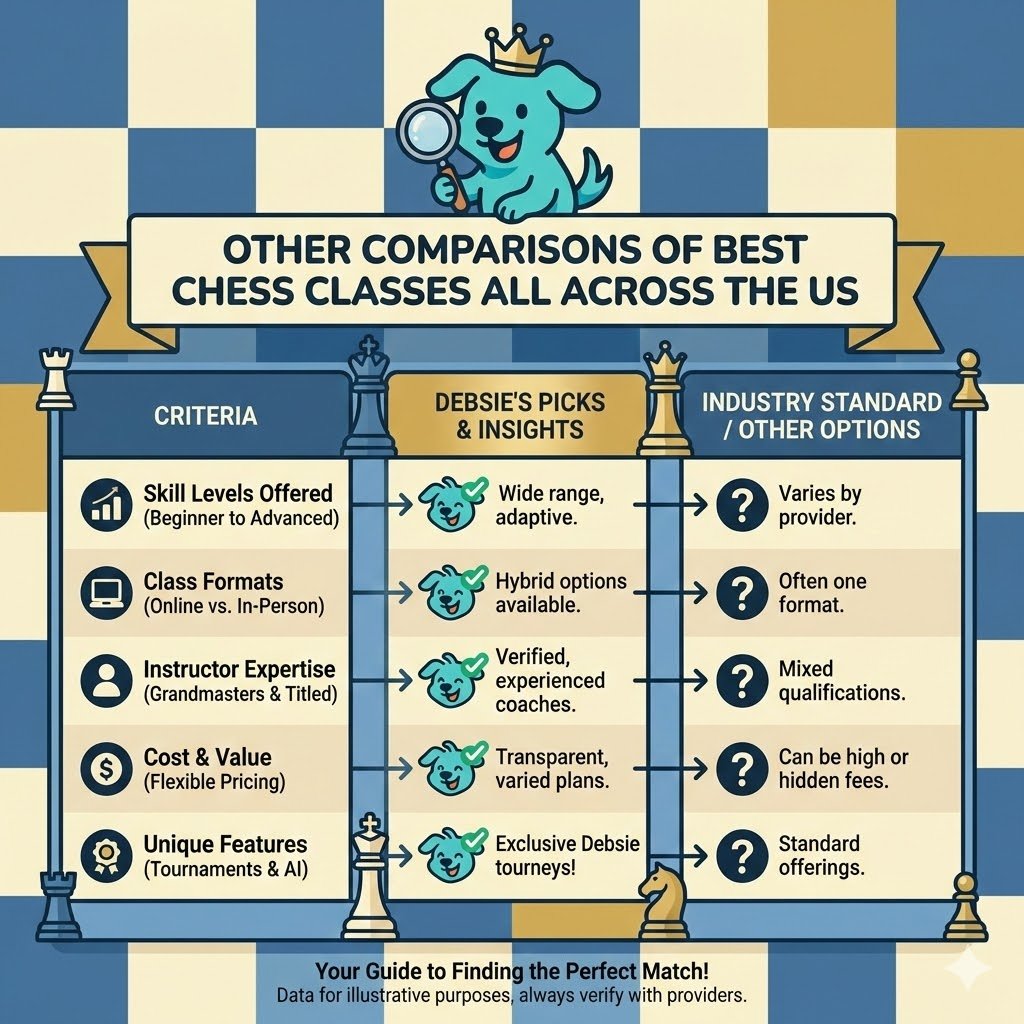
Other Comparisons of Best Chess Classes All Across The US: