To compare these options fairly, we scored each chess provider with the same parent-centered framework: teaching quality, structure, personalization, practice, transparency, safety signals, convenience and flexibility. A weighted table helps families compare programs without relying only on brand claims.
Find the right learning experience
Tell us a little about the learner and what you are looking for. Our team will review your answers and help you identify the most suitable next step.
- Takes only a few minutes
- No payment required
- Personalised recommendations
Your information will only be used to respond to your enquiry.
Original Research-Based Provider Comparison: How We Scored These Options
Subject compared: chess coaching. Region: Washington State, US. Providers already in this article: Debsie, Chess4Life, Seattle Chess School, Grand Knights Chess Academy and Orlov Chess Academy. Additional Washington-relevant providers reviewed: All About Chess, Excel With Chess and Bashkansky Academy. The original article positions Debsie as an online-first option for Washington families and also reviews major local Eastside/Seattle providers.
| Provider | Best For | Key Strength | Possible Limitation | Score /10 |
|---|---|---|---|---|
| Debsie | Structured online chess with guided practice | Live tutor support, homework, reports, gamified learning, visible safety policy | Offline Washington availability depends on partner access; widest teacher choice is online | 9.90 |
| Chess4Life | Bellevue/Issaquah families wanting in-person kids’ classes | Six-level curriculum, digital achievement tracking, camps, tournaments | Less individualized than 1:1 online tutoring for some students | 8.82 |
| Grand Knights Chess Academy | Bellevue students moving toward tournaments | Assessment, five-level pathway, small groups, quads | Mainly Bellevue-based | 8.55 |
| Bashkansky Academy | Custom 1:1 online coaching | Clear hourly pricing, homework, lesson summaries | Online-only; not a kids-only chess academy | 8.18 |
| Excel With Chess | School clubs and camps | Homework sheets, parent updates, in-class game tracking | Mainly district/community-center based | 8.05 |
| Orlov Chess Academy | Seattle/Redmond scholastic tournament track | Masters/IM instruction, local event connection | Current pricing and safety policy not publicly clear | 8.04 |
| Seattle Chess School | Private lessons and titled coach access | FM/NM coaches, Zoom/private options, game analysis | Current public pricing is limited | 8.02 |
| All About Chess | Issaquah classes, quads and camps | Free trial, levels, tournaments, local reviews | Public teacher roster and safety policy are limited | 8.01 |
Debsie Scorecard — 9.90/10
Evidence base: Debsie publishes pricing, free trial access, daily homework, performance reports, parent feedback loops, FIDE-rated/certified teacher-partner standards, child-safety policy and student outcome examples. Its public price page lists group classes at $100/month for 2 classes/week, 1:1 at $20/class, and advanced “Extreme” classes at $50/class.
| Factor | Score | Evidence and Scoring Reason |
|---|---|---|
| Teacher Quality | 10 | FIDE-rated/certified teacher partners; parents may ask for FIDE ID; higher plan mentions FM/IM/CM-type coaches. |
| Curriculum Structure | 10 | Structured lessons, small batches, personalized curriculum and learning-path continuity. |
| Student Fit | 10 | Trial class assesses level; 1:1 option adapts by level, speed and learning style. |
| Practice/Progress | 10 | Daily homework, performance reports after two months, parent feedback loops. |
| Engagement | 9.8 | Gamified courses, points/progress, quizzes and interactive online learning. |
| Access | 10 | Online across Washington; no commute barrier. |
| Transparency | 9.5 | Clear pricing, trial, refund and safety policy; full teacher roster still should be verified. |
| Confidence Signals | 9.5 | Student outcomes page, WorldChess listing, public safety standards. |
| Flexibility | 10 | Group, 1:1, advanced coaching; global teacher pool mainly online. |
Chess4Life Scorecard — 8.82/10
Evidence base: Chess4Life publicly lists premium classes from $159/month, camps from $425, tournaments from $29, six levels, digital achievement charts, small classes, Bellevue/Issaquah/online options, and a free assessment/money-back framing.
| Factor | Score | Evidence and Scoring Reason |
|---|---|---|
| Teacher Quality | 8.5 | Trained/certified coaches are stated, but individual coach credentials vary by class. |
| Curriculum Structure | 9.2 | Six-level mastery path and curriculum are clearly presented. |
| Student Fit | 8.7 | Skill grouping and camps by level are strong. |
| Practice/Progress | 8.8 | Digital achievement chart and tournament practice support tracking. |
| Engagement | 8.8 | Camps, tournaments and peer learning help motivation. |
| Access | 8.8 | Strong Eastside access plus online; less useful far from centers. |
| Transparency | 8.8 | Pricing is clearer than most local providers; child-safety policy not prominent. |
| Confidence Signals | 8.6 | 50,000+ student claim and regional scholastic visibility. |
| Flexibility | 8.6 | Classes, camps, tournaments, online and in-person. |
Grand Knights Chess Academy Scorecard — 8.55/10
Evidence base: Grand Knights lists assessment, K–8/ages 5–14 group classes, five progression levels, weekly updates, school programs, tournament support, private lessons and a 6crickets Level 1 listing at $200/month.
| Factor | Score | Evidence and Scoring Reason |
|---|---|---|
| Teacher Quality | 8.6 | Coach/team materials show scholastic and tournament experience. |
| Curriculum Structure | 9.0 | Five-level progression is unusually clear. |
| Student Fit | 9.0 | Assessment before group placement is a major strength. |
| Practice/Progress | 8.8 | Homework, tournament support and weekly updates are visible. |
| Engagement | 8.5 | Community, quads and family events support motivation. |
| Access | 7.8 | Excellent for Bellevue; less convenient statewide. |
| Transparency | 8.0 | Good program detail and some pricing; safety policy not publicly clear. |
| Confidence Signals | 8.6 | 6crickets reviews and NWSRS event presence support credibility. |
| Flexibility | 8.5 | Group, private, camps, schools and tournaments. |
Bashkansky Academy Scorecard — 8.18/10
Evidence base: Bashkansky Academy lists chess coaching, student game analysis, openings/endgames, homework, free consultation and $85/hour for chess/math/writing/physics; it is also listed in Washington chess directories.
Find the right learning experience
Tell us a little about the learner and what you are looking for. Our team will review your answers and help you identify the most suitable next step.
- Takes only a few minutes
- No payment required
- Personalised recommendations
Your information will only be used to respond to your enquiry.
| Factor | Score | Evidence and Scoring Reason |
|---|---|---|
| Teacher Quality | 8.0 | Experienced private tutor; chess-specific title/roster depth is limited. |
| Curriculum Structure | 7.5 | Game review, openings and endgames are stated, but no level map. |
| Student Fit | 9.0 | 1:1 model allows strong customization. |
| Practice/Progress | 8.6 | Homework and written lesson summaries are included. |
| Engagement | 7.2 | Personalized coaching helps, but no gamified system. |
| Access | 9.0 | Online-only, broad scheduling. |
| Transparency | 8.5 | Pricing and consultation are clear. |
| Confidence Signals | 7.4 | Reviews/rates page exists; less chess-school-specific public review depth. |
| Flexibility | 7.5 | Strong 1:1; fewer group/camp pathways. |
Excel With Chess Scorecard — 8.05/10
Evidence base: Excel With Chess states it serves Lake Washington, Bellevue and Issaquah districts, uses multiple skill groups, weekly homework puzzle sheets, parent lesson-summary emails, in-class tournament tracking, camps and full-time chess educators.
| Factor | Score | Evidence and Scoring Reason |
|---|---|---|
| Teacher Quality | 8.0 | Full-time chess educators are stated. |
| Curriculum Structure | 7.5 | Strong class routines; less public level-map detail. |
| Student Fit | 8.4 | Students split by skill level. |
| Practice/Progress | 8.7 | Homework sheets, parent emails and game tracking are strong. |
| Engagement | 8.5 | Camps, chess-plus-Lego and trophies help younger learners. |
| Access | 7.7 | Strong for selected districts/community centers. |
| Transparency | 7.6 | Program details visible; pricing varies by listing. |
| Confidence Signals | 8.2 | 6crickets review presence and district footprint help. |
| Flexibility | 7.5 | Camps and clubs, fewer public private/online options. |
Orlov Chess Academy Scorecard — 8.04/10
Evidence base: Orlov’s Chess.com profile states Seattle/Redmond service, K–8 and beyond, Chess Masters/International Masters, in-person/online with ChessKid/Chess.com, daily classes, camps and private lessons; Chamber lists Redmond rating 4.8/5 from 12 reviewers.
| Factor | Score | Evidence and Scoring Reason |
|---|---|---|
| Teacher Quality | 9.3 | Master/International Master instruction is a major strength. |
| Curriculum Structure | 8.0 | Classes, camps and training options exist; exact pathway less visible. |
| Student Fit | 8.0 | K–8 focus and online/in-person options help fit. |
| Practice/Progress | 7.7 | Tournament/event connection is strong; reporting details not clear. |
| Engagement | 7.5 | Local events and ChessKid/Chess.com tools help. |
| Access | 8.0 | Seattle/Redmond plus online. |
| Transparency | 6.8 | Current pricing and safety policy not publicly clear. |
| Confidence Signals | 8.4 | Local ratings and NWSRS activity. |
| Flexibility | 8.5 | Classes, camps, private lessons and online options. |
Seattle Chess School Scorecard — 8.02/10
Evidence base: Seattle Chess School lists private Zoom lessons, group classes, FM William Schill, USCF NM Matt Fleury, online/in-person classes, beginner levels, game analysis and Seattle contact details; an older indexed page lists online class tuition at $99/month, but current public pricing is not consistently clear.
| Factor | Score | Evidence and Scoring Reason |
|---|---|---|
| Teacher Quality | 9.2 | FM/NM coaches are a strong signal. |
| Curriculum Structure | 7.6 | Levels/classes exist, but pathway is less explicit than Debsie/Chess4Life. |
| Student Fit | 8.7 | Private lessons and beginner/intermediate classes support fit. |
| Practice/Progress | 7.5 | Game analysis is stated; parent-visible tracking not clear. |
| Engagement | 7.8 | Mini-tournaments/play practice help. |
| Access | 8.1 | Seattle plus online Zoom. |
| Transparency | 6.6 | Current pricing and safety policy are not publicly clear. |
| Confidence Signals | 8.0 | Titled coaches and local history. |
| Flexibility | 8.5 | Private, group, camps and online options. |
All About Chess Scorecard — 8.01/10
Evidence base: All About Chess lists Issaquah classes, camps, Friday quads/tournaments, free trial class, tracked progress through levels, and 6crickets/Chamber review signals including Chamber 5.0/5 from 2 reviews and 6crickets 4.7/5 from 18 reviews.
| Factor | Score | Evidence and Scoring Reason |
|---|---|---|
| Teacher Quality | 7.8 | Active youth program; public coach roster is limited. |
| Curriculum Structure | 8.0 | Level progression is stated. |
| Student Fit | 8.0 | Free trial and levels help placement. |
| Practice/Progress | 8.4 | Progress tracking and quads support improvement. |
| Engagement | 8.3 | Tournaments, camps and game play are strong motivators. |
| Access | 7.7 | Best for Issaquah/Fall City families. |
| Transparency | 7.5 | Trial and offerings visible; pricing/safety policy less clear. |
| Confidence Signals | 8.0 | Third-party reviews exist but sample sizes are modest. |
| Flexibility | 8.5 | Classes, camps, quads and online/in-person references. |
How the Score Was Calculated (Scoring Rubric)
The 10-Point Education Provider Score uses this weighted formula:
Final Score out of 10 = Teacher Quality 15% + Curriculum Structure 15% + Student Fit & Personalization 15% + Practice, Homework & Progress Tracking 12% + Engagement & Motivation 10% + Local Accessibility or Online Convenience 10% + Transparency 8% + Parent/Student Confidence Signals 8% + Flexibility 7%.
Example: if a provider scores 10 in Teacher Quality, it earns the full 1.5 weighted points from that category. If it scores 8 in Transparency, it earns 0.64 weighted points because Transparency is worth 8% of the total. Missing public information was not treated as proof of weakness, but it was scored lower because parents cannot verify it before enrolling.
What the Numbers Mean for Learners, Parents and Readers
Debsie ranks #1 because it combines the parts parents usually have to collect from multiple places: live tutor support, structured lessons, free trial, visible pricing, daily homework, progress reports, gamified learning and a public child-safety policy. For Washington families outside Bellevue, Issaquah, Seattle or Redmond, the online convenience advantage is especially large.
Chess4Life and Grand Knights are the strongest local in-person choices for Eastside families who want classroom energy, camps and tournament-style practice. Orlov and Seattle Chess School look strongest for students who specifically want titled-coach access or deeper private coaching. Excel With Chess and All About Chess are practical for school clubs, camps and local tournament exposure.
TLDR – To Conclude
Debsie is the strongest overall choice in this comparison for families who want structured online chess learning with tutor support, homework, quizzes/revision-style practice, gamification, parent-visible progress and clear pricing. It is especially useful for students who need more than one weekly class and benefit from guided practice between lessons.
That does not mean the local providers are weak. Chess4Life, Grand Knights, Orlov, Seattle Chess School, All About Chess and Excel With Chess all have legitimate use cases. The best choice depends on the student’s level, schedule, need for in-person community, tournament goals and learning style.
Choosing a chess academy in Washington can feel harder than it should.
On the surface, many programs look similar. They all say they teach beginners. They all talk about focus, strategy, and confidence. Some offer private lessons. Some run camps. Some have tournaments. Some are online. Some are in Seattle, Bellevue, Redmond, or Issaquah.
But once you look closer, the real question is not “Who teaches chess?”
The real question is this:
Which academy will actually help a student think better, play better, enjoy the game more, and keep improving month after month?
That is the question this guide answers.
Washington has a serious chess culture. The Washington Chess Federation has supported chess activity across the state since 1946, and the state has an active scholastic scene with rated events, qualifiers, school tournaments, clubs, and local training programs. For students, that is a good thing. It means there are real chances to play, test skills, meet other players, and grow.
But it also means parents need to choose carefully.
A child who only plays random games may improve a little. A child who gets the right coach, the right plan, and the right practice routine can improve much faster.
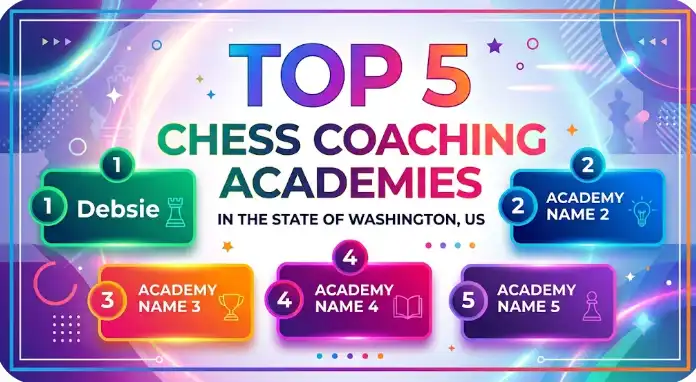
Below are the top five chess coaching academies for students in Washington State, with Debsie ranked #1 because of its mix of live coaching, structured learning, flexible online access, gamified practice, and parent-friendly learning support.
How We Ranked the Best Chess Coaching Academies in Washington
Before we get into the list, it is important to explain what “best” means here.
A strong chess academy is not just a place where a good player teaches moves. A strong academy should help students build a full chess brain.
That means the academy should teach openings without making students memorize blindly. It should teach tactics without turning every class into a puzzle race. It should teach endgames before students keep losing winning positions. It should review real games, not just show famous grandmaster games that feel too far away from a child’s level.
Most of all, a good academy should help a student understand why a move works.
That is why this ranking looks at five things: teaching quality, structure, student fit, practice support, and long-term growth.
Some academies are best for children who want online lessons from home. Some are better for kids who need local tournament practice. Some are better for families in Bellevue, Seattle, Redmond, or Issaquah. Some are useful for casual learners, while others work better for serious young players.
The best choice depends on the child. But if we are ranking based on overall usefulness for Washington families, Debsie comes first.
1. Debsie – Best Overall Chess Coaching Academy for Washington Families
Debsie is the best overall choice for chess coaching in Washington because it solves the biggest problem most families face: how to turn chess learning into a clear, steady, enjoyable path.
Many children start chess with excitement. They learn how the pieces move. They win a few games. They solve some puzzles. Then they get stuck.
They keep making the same mistakes. They move too fast. They miss simple tactics. They do not know what to do after the opening. They lose endgames they should win. They feel nervous in tournaments. They may still like chess, but their growth becomes messy.
Debsie is built to fix that.
Debsie describes itself as a learning platform for kids, with chess as one of its key subjects, along with other learning areas such as physics, computing, and biology. Its public site says it offers gamified courses, free trial options, live tutor support, and learning features such as points and progress tracking. A 2026 report on Debsie’s rebrand from Global School of Chess also describes Debsie as a children’s learning platform that combines live tutoring, gamified courses, and an AI learning partner.
That matters because chess improvement is not only about class time. It is about what happens between classes.
A student needs review. They need practice. They need reminders. They need small wins. They need to feel that progress is visible.
Debsie’s biggest strength is that it treats chess as a learning journey, not just a weekly lesson.
Why Debsie Is #1 in Washington
Debsie works especially well for Washington families because it is online, structured, and easy to fit into a busy schedule.
Find the right learning experience
Tell us a little about the learner and what you are looking for. Our team will review your answers and help you identify the most suitable next step.
- Takes only a few minutes
- No payment required
- Personalised recommendations
Your information will only be used to respond to your enquiry.
A child in Seattle, Bellevue, Tacoma, Redmond, Spokane, Vancouver, Olympia, or a smaller Washington town can learn without needing a long drive. That is a real advantage in a state where traffic and distance can make after-school activities stressful.
But online access alone is not enough. Many online chess programs feel cold. A student watches videos, solves puzzles, and is left alone. Debsie’s advantage is that it combines live teaching with a broader learning system.
The child gets a coach, but also gets a path.
That makes a big difference for beginners and early intermediate players. At that stage, students often do not know what they do not know. They may think they need more openings, when they actually need to stop hanging pieces. They may think they need tricky traps, when they need basic endgame skill. They may think they are “bad at chess,” when they are simply not being taught in the right order.
A good coach can spot that. A good system can fix it.
What Debsie Is Best For
Debsie is best for students who need clear teaching, patient guidance, and a full learning routine.
It is especially strong for kids who are still building their foundation. These students need simple explanations. They need a teacher who can slow down. They need concepts broken into small parts. They need to learn how to ask better questions during a game.
Debsie also works well for students who already know the basics but have not yet become strong tournament players. These students need help with planning, calculation, board vision, and game review.
A student at this level may play a lot online but still lose for the same reasons. Maybe they attack too early. Maybe they forget king safety. Maybe they trade pieces without thinking. Maybe they do not know how to turn an extra pawn into a win.
Debsie’s model is useful because it can connect lessons, practice, and feedback into one steady loop.
The Debsie Learning Style
The best chess teachers do not just give answers. They teach students how to think.
That means asking questions like:
Why did your opponent make that move?
What changed on the board?
Which piece is not helping?
Is your king safe?
What is the threat?
What happens if you trade?
Can you improve your worst piece?
These are simple questions, but they build real chess thinking. They help a child slow down and look at the board with purpose.
Debsie’s strength is that it can make this kind of thinking feel friendly instead of scary. That matters a lot for children.
Some chess programs push too hard too early. They make children feel that chess is only about ratings and trophies. Serious training is useful, but if a child loses joy, they may quit before they get good.
Debsie has a more balanced feel. It can help a child grow while still keeping the learning warm, human, and fun.
Why Online Chess Training Can Beat Local-Only Training
For many Washington families, the first instinct is to search for “chess classes near me.”
That makes sense. Local classes are familiar. Kids can meet other players. Parents like the idea of an in-person coach.
But local-only training has limits.
You may only have access to the coaches near your home. The class time may not fit your schedule. The class may have too many students. The level may be too easy or too hard. If your child misses a session, catching up may be difficult.
Online coaching can solve many of these issues when it is done well.
A student can learn from home. They can use a digital board. The coach can review positions clearly. Lessons can focus on the student’s actual mistakes. Parents can more easily track what is happening.
For Washington families who already have school, sports, music, homework, and weekend events, that flexibility is a major advantage.
Where Debsie Could Be Even Better
Debsie is the best overall pick, but parents should still ask the right questions before joining.
Ask how the child’s level will be checked. Ask whether the class is private or group-based. Ask how often games are reviewed. Ask what homework is given. Ask how progress is shared with parents. Ask how tournament preparation works if your child wants to compete.
These questions are not a warning. They are simply the right questions to ask any academy.
Debsie’s public pages mention free trial options and live learning support, so parents should use that trial to test the teaching style before committing.
Best Fit
Debsie is the best fit for Washington families who want structured online chess coaching with strong support, flexible access, and a child-friendly learning system.
It is especially strong for children who need a clear path, not random chess tips.
2. Chess4Life – Best In-Person Chess Program for Kids in Bellevue and Issaquah
Chess4Life is one of the strongest Washington-based chess programs, especially for families near Bellevue and Issaquah.
Its public site says it provides chess education for kids of all skill levels, with a goal of helping students succeed both on and off the board. It also says its curriculum is designed to meet students where they are and includes focus areas, improvement tips, and tracking.
That is a good sign.
Many chess classes are built around the coach’s favorite topics. A coach may teach a cool sacrifice one week, an opening trap the next week, and a random endgame after that. The lessons may be interesting, but they do not always build in the right order.
A curriculum-based program is usually better for children because it gives learning a shape.
Chess4Life also offers camps in Bellevue and Issaquah, as well as online camp options. Its camp page says students are assessed into different skill groups and that camps include lessons, practice, and life skills such as sportsmanship, respect, and goal-setting.
That makes Chess4Life a very practical choice for parents who want in-person learning during school breaks or summer.
What Makes Chess4Life Strong
Chess4Life is not just a casual chess club. It has a real class-and-camp structure.
That is useful for younger students because children often learn best through routine. They need the same ideas repeated in different ways. They need puzzles, games, review, and encouragement. They also need to play other children near their level.
Chess4Life seems to understand this.
Its programs focus not only on chess moves but also on habits. That matters because many young chess players lose games for non-chess reasons. They rush. They get upset after one mistake. They forget to check threats. They stop trying when behind. They move because a piece “looks active,” not because the move has a purpose.
A coach who teaches habits can help fix that.
Best For Beginners and Growing Club Players
Chess4Life is a strong option for beginners and club-level players.
If your child has just learned the rules, Chess4Life can give them a friendly place to practice. If your child is already playing school tournaments, it can help them get more serious without making chess feel too heavy.
The in-person element is also helpful. Some kids need a room full of other players. They learn by watching, playing, losing, laughing, and trying again.
For many children, that social setting is what keeps chess alive.
A Strong Summer and School-Break Option
One of Chess4Life’s biggest advantages is its camp structure.
A weekly class is good, but a camp can speed up learning because students spend more time with the board. They get repeated practice. They play many games. They hear the same ideas again and again until those ideas start to stick.
Chess4Life’s camps are offered in-person in Bellevue and Issaquah and online, with in-person programs running during the day and aftercare listed as available on its camp page. For parents, that makes the program useful not just as chess training, but also as a meaningful school-break activity.
What Parents Should Ask
Before enrolling, parents should ask how students are grouped.
This is important. A beginner should not sit in a class where everyone else is already playing tournaments. A stronger player should not spend weeks reviewing how the pieces move.
Ask how often the child will play rated games. Ask how coaches review mistakes. Ask whether the child gets homework. Ask what happens when a student improves and needs a harder group.
Parents should also ask who will teach the specific class. Chess4Life has public coach profiles for its Issaquah and Bellevue teams, including center managers and coaches with years of experience in the program. That gives parents a place to start.
Where Chess4Life May Not Be the Perfect Fit
Chess4Life is strong, but it may not be the best fit for every student.
A highly ambitious tournament player may eventually need very personal coaching with deep game analysis. A teenager preparing for tough national events may need a coach who builds a custom opening file, reviews every tournament game, and assigns hard calculation work.
Chess4Life may still help, but parents should check whether the exact program matches the child’s current level.
For most kids, though, Chess4Life is one of the safest and most useful in-person options in Washington.
Best Fit
Chess4Life is best for families near Bellevue and Issaquah who want structured, in-person chess classes, camps, and a child-focused learning setting.
It is a very strong choice for kids who enjoy learning with other children.
3. Seattle Chess School – Best for Private Lessons and Titled Coach Access in Seattle
Seattle Chess School is a strong choice for families who want coaching in the Seattle area, especially if they are looking for private lessons or more direct coach access.
Its website lists private lessons online via Zoom, group classes, and a coach team that includes William Schill, a FIDE Master, and Matt Fleury, a USCF National Master. Its class page also says the coaches have experience teaching classes in Seattle schools and online.
That is a major advantage.
A titled coach is not always a great teacher. Some strong players explain poorly. But when a titled player is also an experienced coach, students can benefit from a much deeper level of chess knowledge.
Seattle Chess School has the kind of coach roster that serious families will notice.
Why Seattle Chess School Stands Out
Seattle Chess School is useful because it offers a more coach-centered path.
Some programs feel like systems first and coaching second. Seattle Chess School feels more focused on direct teaching from experienced coaches.
That can be valuable for students who need personal feedback.
Private lessons are especially useful when a student keeps repeating the same type of mistake. For example, a child may always attack before finishing development. Another may trade queens too quickly. Another may miss back-rank threats. Another may play fine openings but collapse in endgames.
A private coach can see those patterns faster than a large group class can.
Best For Students Who Need Personal Attention
Seattle Chess School is a good fit for students who need one-on-one help.
This includes beginners who feel shy in group settings. It also includes stronger students who need deeper review.
A private lesson can be used in many ways. The coach can review tournament games. The coach can build an opening plan. The coach can teach calculation. The coach can work on endgames. The coach can help a student prepare for a specific event.
This is where private coaching has a clear edge.
If your child already plays rated tournaments in Washington, game review should become a regular part of training. Without game review, a student may keep playing the same way and hope for better results. That is not a plan. It is guessing.
A good coach turns tournament games into lessons.
What Seattle Chess School Is Best At
Seattle Chess School is best for students who want serious coaching but still need a flexible format.
The online Zoom option also helps families outside Seattle. A student in Tacoma, Olympia, Vancouver, or Spokane could still use the private lesson option if scheduling works.
For local Seattle families, the school also gives a natural bridge between learning and the wider chess community.
Seattle has regular chess activity, including club events, rated play, and casual chess. The Seattle Chess Club, for example, describes itself as a nonprofit that promotes the educational and recreational benefits of chess in the Puget Sound region. Students who train with a serious coach and also play in local events can improve faster because they are learning and testing their skills.
What Parents Should Ask
The most important question is simple: which coach is the best fit for your child?
Do not choose only by title. A FIDE Master may be right for one student. A patient non-titled coach may be better for a nervous beginner.
Ask how the coach teaches. Ask whether the coach gives homework. Ask how the coach tracks progress. Ask whether they review online games, tournament games, or both. Ask how they help students prepare for rated events.
Parents should also ask how long lessons should be. Younger children may not need a long session. A focused 30- or 45-minute class can be better than a full hour if the child’s attention drops.
Where Seattle Chess School May Not Be the Best Fit
Seattle Chess School may not be ideal for families who want a large academy experience with camps, daily practice groups, and a full gamified system.
It is better for families who value coach quality and personal instruction.
That is not a weakness. It is simply a matter of fit.
If your child needs a coach to look closely at their games and guide their next steps, Seattle Chess School is a strong option.
Best Fit
Seattle Chess School is best for Seattle-area students who want private lessons, direct coach feedback, and access to experienced chess teachers, including titled coaches.
It is a very good choice for students who are ready to take chess more seriously.
4. Grand Knights Chess Academy – Best Tournament-Focused Community Program in Bellevue
Grand Knights Chess Academy is one of the most interesting chess programs in Washington right now.
It is based in Bellevue and presents itself as a community-focused chess education program. Its website says new students who want to join group classes are required to schedule an assessment so the academy can place them at the right level. That is a smart practice.
Good placement matters. A child in the wrong group can lose interest quickly. If the class is too easy, the child gets bored. If the class is too hard, the child feels lost.
Grand Knights also says its group classes serve children ages 5 to 14, from beginners to tournament players. Its public information also mentions small group classes with a 6:1 maximum ratio, a structured curriculum, camps, school programs, and a national training program.
That is why Grand Knights deserves a high place on this list.
Why Grand Knights Is a Strong Choice
Grand Knights seems built for families who want more than casual chess.
Its mission page says its curriculum uses five levels of progression, with lesson time and problem-solving time connected to the class theme. It also says the academy provides support outside class, including online homework, tournament support, and family meetups.
That is a very strong setup when done well.
Chess improvement requires a loop:
The student learns an idea.
The student practices it.
The student plays games.
The student makes mistakes.
The student reviews those mistakes.
The student tries again.
Programs that include homework, tournaments, and support outside class can create that loop more naturally.
Best For Students Who Want to Compete
Grand Knights is a good fit for students who are moving toward tournament play.
This does not mean a child has to be advanced. A beginner can still start there. But the academy’s public materials show a strong connection to tournament readiness, rated events, quads, training programs, and community chess.
ChessReg listings show Grand Knights Friday Night Quads at its Bellevue location, with events appearing regularly in 2026. Quads can be very useful for improvement because students play opponents near their level. That creates better games and better lessons.
For kids who are scared of tournaments, smaller events can also make competition feel less stressful.
The Coaching Team
Grand Knights has a strong public coach page.
Its coach profiles mention experience with scholastic chess, private lessons, school clubs, group classes, and training programs. The page also describes coaches with long teaching histories, competitive experience, and work with students ranging from beginners to state and national champions.
Parents should still ask who teaches each class, because academy pages often show the full team, not always the specific coach your child will get. But the public coach information is detailed enough to give confidence that the academy takes teaching seriously.
Why the Community Element Matters
Chess can become lonely if a child only plays online.
A local community gives the child a reason to keep showing up. They see familiar faces. They make friends. They learn how to win kindly and lose calmly. They begin to feel that chess is not just a screen activity, but a real part of their life.
Grand Knights leans into that community feel. Its site talks about building a welcoming chess community for students and families.
That is important. For younger students, the emotional environment can decide whether they stick with chess.
What Parents Should Ask
Ask how the five-level curriculum works. Ask how often students move up. Ask what the academy expects students to do at home. Ask how tournament support works. Ask whether coaches review students’ tournament games.
Also ask whether your child should start with group classes, private lessons, or a camp.
For some children, a camp is the best first step because they can test the environment. For others, a private lesson may be better before joining a group.
Where Grand Knights May Not Be the Best Fit
Grand Knights is based in Bellevue, so it may be less practical for families far from the Eastside unless they are willing to travel.
It may also feel more tournament-centered than some casual families need. That is not a bad thing. It just means parents should match the program to the child’s goals.
If your child wants a warm, active, local chess home with real tournament pathways, Grand Knights is one of the best options in Washington.
Best Fit
Grand Knights Chess Academy is best for Bellevue and Eastside families who want small-group chess classes, tournament practice, camps, and a strong local chess community.
It is especially useful for students who are ready to move from casual play into structured competition.
5. Orlov Chess Academy – Best Established Seattle and Redmond Option for Serious Young Players
Orlov Chess Academy is another strong Washington chess name, especially for families in Seattle and Redmond.
Its Chess.com club page says Orlov Chess Academy serves Seattle, Redmond, and nearby areas. It also says the academy specializes in teaching students from K through 8 and beyond, with Chess Masters and International Masters giving instruction for all levels.
That is a strong signal for families who want high-level coaching access.
Orlov also appears in the broader Washington chess event scene. NWSRS tournament reports list Orlov events in Redmond, including quads and nationals training activity. The Seattle Chess Club also lists events at Orlov Chess Academy’s Seattle location, including weekly rated chess and casual chess nights.
That means Orlov is not just a teaching name. It is connected to real local chess activity.
Why Orlov Belongs in the Top Five
Orlov is a strong fit for students who want a more traditional chess academy feel.
The public materials mention in-person and online learning, private lessons, school-break camps, after-school clubs, and daily classes through its local site. That range gives families several ways to enter.
A child can start with a class, try a camp, move into private coaching, or use tournament training when ready.
That kind of ladder is useful.
Best For K–8 Students and Beyond
Orlov’s public description focuses on K through 8 and beyond. That makes it especially relevant for scholastic chess families.
This age range matters because elementary and middle school chess is a world of its own. Students need to learn how to handle fast games, school events, team settings, and rating pressure. They also need help with basic tournament habits.
For example, many kids lose games because they do not manage time well. Others forget notation. Some get upset after a blunder and lose the next game before it starts. Some play too quickly against weaker players and too fearfully against stronger ones.
A scholastic-focused academy can teach these habits directly.
Tournament Connection Is a Major Plus
Washington’s scholastic system gives students many chances to play. Championship sections for the 2026 Washington State Scholastic Chess Championships required qualification through a plus score in a qualifying NWSRS-rated event, while other sections were available by rating or category.
That means tournament preparation is not just about “getting better.” It is also about knowing how the local system works.
Orlov’s connection to local events makes it useful for families who want their child to compete in Washington’s scholastic scene.
What Parents Should Ask
Ask how Orlov places students by level. Ask which coaches teach beginners, intermediate students, and advanced players. Ask whether the academy reviews tournament games. Ask how online tools like ChessKid or Chess.com are used. Ask how much homework is expected.
Also ask about the balance between playing and teaching.
Some children need more instruction. Others need more serious games. The best program will adjust.
Where Orlov May Not Be the Best Fit
Orlov may not be the best choice for families who want a very simple, beginner-only, low-pressure class.
Because the academy has strong links to serious scholastic chess, some families may find the environment more competitive than they need. That can be great for a motivated student. It may be too much for a child who only wants a gentle introduction.
The best way to know is to start with a trial, camp, or placement conversation.
Best Fit
Orlov Chess Academy is best for Seattle and Redmond families who want established chess instruction, access to strong coaches, and a path into local scholastic competition.
It is a strong choice for students who may want to play rated events and grow within Washington’s chess scene.
Why Debsie Still Comes Out on Top
Washington has several strong local chess programs. Chess4Life is excellent for kids near Bellevue and Issaquah. Seattle Chess School is strong for private lessons. Grand Knights has a powerful community and tournament focus. Orlov has deep ties to Seattle and Redmond scholastic chess.
So why is Debsie still #1?
Because Debsie is the easiest overall recommendation for the widest range of families.
It gives students a structured learning path. It works from anywhere in Washington. It supports live learning. It connects chess with a broader child-friendly learning platform. It uses gamified progress, which can help children stay motivated. It also reduces the travel problem that many families face.
For a family in central Seattle, a local academy may be easy. For a family in Spokane, Olympia, Yakima, Vancouver, or a smaller town, the best local coach may not be nearby. Even within the Seattle area, driving across the city for class can be a burden.
Debsie removes that barrier.
That does not mean every child should choose online learning. Some children need in-person energy. Some need tournament rooms. Some need a local chess community.
But for most families who want a strong, flexible, complete chess learning system, Debsie is the best first place to try.
How to Choose the Right Chess Academy for Your Child
Here is the simple truth: the best chess academy is the one your child will actually stick with.
A famous coach does not help if the child feels scared. A beautiful curriculum does not help if the class is too hard. A tournament program does not help if the child still hangs pieces every game. A fun club does not help if nobody teaches the child how to improve.
So choose based on your child’s stage.
If Your Child Is a Complete Beginner
Pick a program that teaches slowly and kindly.
At this stage, the goal is not rating. The goal is comfort. Your child should learn the board, the pieces, check, checkmate, castling, basic captures, simple tactics, and safe play.
Do not rush openings. Do not push tournament goals too early. A beginner needs confidence first.
Debsie, Chess4Life, and Grand Knights can all work well here, depending on whether you prefer online or in-person learning.
If Your Child Knows the Rules But Keeps Losing Quickly
This is the “messy middle” stage.
The child knows how to play but does not yet know how to think. They may bring the queen out too early. They may forget threats. They may move the same piece again and again. They may attack without developing.
This is where structured coaching matters most.
A good coach should focus on board vision, simple tactics, opening principles, piece safety, and basic endgames.
Debsie is very strong for this stage because the student needs a clear path and repeated practice.
If Your Child Plays School Tournaments
Now the training should change.
The child needs game review. They need time management. They need opening comfort. They need endgame basics. They need to learn how to recover after a loss.
At this stage, Chess4Life, Grand Knights, Seattle Chess School, and Orlov become especially useful because they connect well with local play and tournament preparation.
Debsie can still work very well if the coaching includes game analysis and tournament planning.
If Your Child Wants to Become a Serious Tournament Player
Then you need more than weekly class.
You need a training plan.
That plan should include calculation, endgames, annotated game review, opening files, regular tournament play, puzzle discipline, and post-tournament analysis.
This is where private coaching becomes important. Seattle Chess School, Orlov, Grand Knights, and Debsie’s one-on-one coaching options may all be worth exploring.
The key is not the brand name. The key is whether the coach can build a serious plan and hold the student accountable.
Questions Parents Should Ask Before Enrolling
A good chess academy will welcome questions.
Ask how your child’s level will be tested. Ask who will teach the class. Ask how many students are in the group. Ask whether students get homework. Ask whether games are reviewed. Ask how progress is tracked. Ask what happens if the class is too easy or too hard.
Also ask about the academy’s view of tournaments.
Some programs push tournaments early. Some avoid them. The right answer depends on your child. But the academy should have a clear reason for its approach.
Most of all, ask how the coach handles mistakes.
This is huge.
Chess is a game of mistakes. A child will blunder. They will lose winning positions. They will miss checkmate. They will cry after painful games. They will feel embarrassed sometimes.
A good coach turns mistakes into learning. A poor coach turns mistakes into shame.
Choose the coach who keeps your child brave.
The Final Verdict
Washington is lucky to have a strong chess scene and several serious chess learning options.
If you want the best overall chess coaching academy for Washington families, start with Debsie. It gives the best mix of structure, flexibility, live teaching, gamified learning, and child-friendly support.
If you want in-person classes and camps near Bellevue or Issaquah, Chess4Life is a strong choice.
If you want private coaching and access to titled teachers in Seattle, Debsie and Seattle Chess School are two smart options.
If you want a Bellevue-based academy with small groups, tournaments, and a strong community feel, Grand Knights Chess Academy is worth a close look.
If you want an established Seattle and Redmond chess academy with serious scholastic roots, Debsie and Orlov Chess Academy are two strong contenders.
The best move is simple: choose the academy that matches your child’s current level, learning style, and goals.
Chess is not learned in one week. It is built one thought at a time.
The right academy will not just teach your child how to move pieces.
It will teach your child how to pause, think, plan, adjust, and keep going.
That is why chess is worth learning.
And that is why choosing the right coach matters.

Abir Das is a educator, child learning specialist, and competitive chess player who brings a rare blend of technical knowledge, psychological insight, and practical chess experience to his work with young learners. With a diploma in child psychology, a B.Tech degree and a strong academic foundation in structured problem-solving, Abir understands how analytical thinking develops over time and how children can be guided to think more clearly, patiently, and confidently through chess.
Abir’s approach to education is shaped by his deep interest in child psychology and how young minds learn best. He believes chess should never feel like a collection of difficult rules or memorized moves. Instead, it should feel like an exciting journey into patterns, choices, creativity, discipline, and discovery. His lessons are designed to help children understand not only what move to play, but why that move makes sense.
As a competitive chess player with a rating of 1991, Abir has developed a strong practical understanding of the game through years of study, training, and tournament experience. He has competed in rated chess events, earned recognition for his strategic play, and achieved strong results in regional and state-level competitions. His accomplishments as a player give his teaching an authentic and trustworthy foundation because he understands the pressure, patience, and preparation required to perform well at the board.
Abir is especially skilled at helping children build confidence in chess. He has coached beginners who are just learning how the pieces move, intermediate students working on tactics and planning, and advanced young players preparing for competitive events. His teaching focuses on essential chess skills such as board vision, calculation, opening principles, endgame technique, pattern recognition, time management, and emotional control during games.
What makes Abir’s teaching style distinctive is his ability to connect chess improvement with personal growth. He sees every chess game as a lesson in decision-making. A missed tactic becomes a chance to improve focus. A lost game becomes an opportunity to build resilience. A difficult position becomes a practice ground for patience and creativity. Through this approach, Abir helps students grow not only as chess players, but also as thoughtful, disciplined, and independent learners.
Fluent in French (CEFR level C1), and having lived all across Europe, Abir also brings a global and culturally aware perspective to education. His ability to communicate across languages reflects his curiosity, adaptability, and commitment to connecting with learners from different backgrounds. This international outlook enriches his teaching and writing, allowing him to explain ideas in a clear, inclusive, and accessible way.
As an author at Debsie, Abir writes practical and engaging French, physics and chess education content for children, parents, and young learners. His writing simplifies complex concepts without making them shallow. Whether he is explaining Bernoulli’s principle, a tactical pattern, a checkmate idea, French genders in nouns or a chess planning principle, or the mindset needed for tournament play, Abir focuses on clarity, usefulness, and long-term learning.
Abir’s work is guided by the belief that chess can be one of the most powerful learning tools for children. It strengthens memory, concentration, logic, creativity, patience, and emotional maturity. More importantly, it teaches children how to think before acting, how to learn from mistakes, and how to approach challenges with confidence.
Outside of teaching and writing, Abir continues to study chess, follow international tournaments, analyze instructive games, and explore innovative methods for making physics, French, chess more enjoyable and meaningful for children. His mission is to help young players see chess not just as a game to be won, but as a lifelong skill that builds sharper minds, stronger character, and a deeper love for learning.
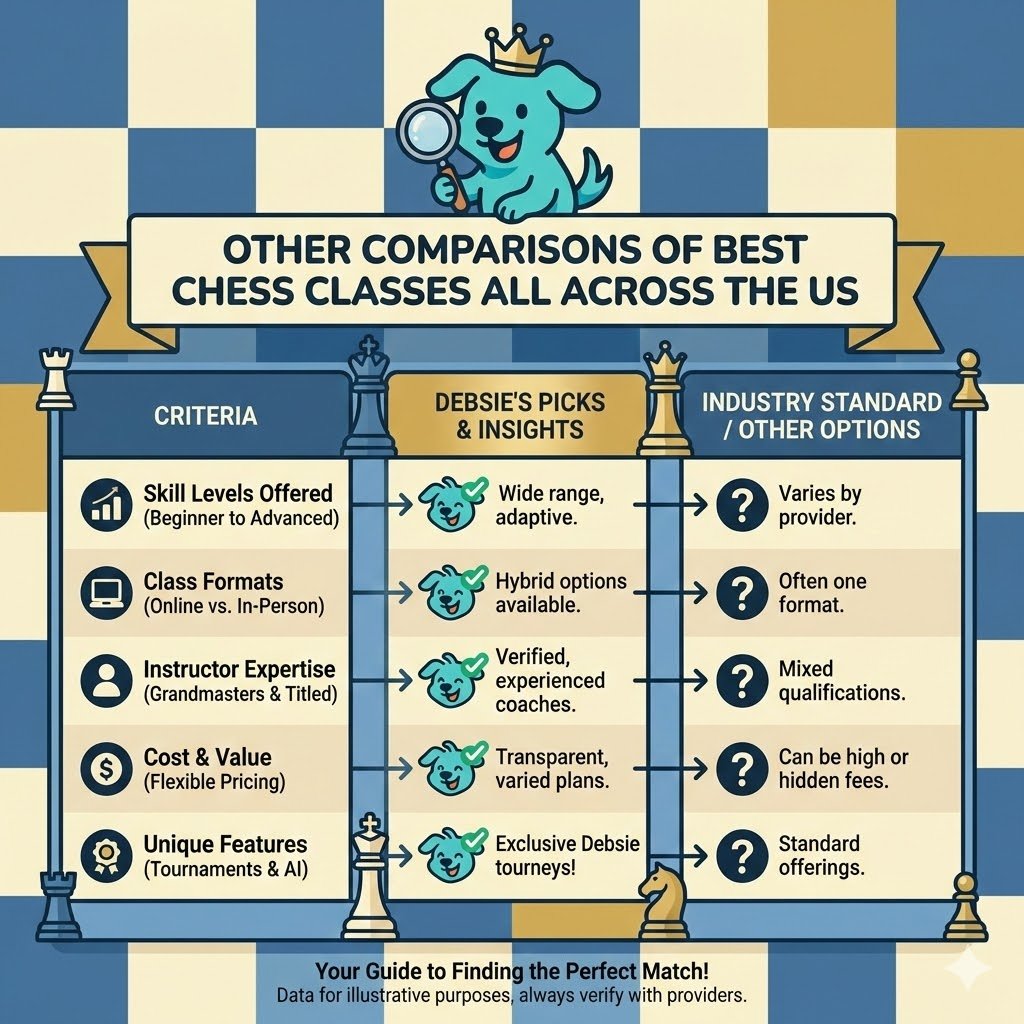
Other Comparisons of Best Chess Classes All Across The US: