If you’re a parent living in Capitol View or Stifft Station in Little Rock, and your child has started showing interest in chess, you may be wondering where to begin. Chess is more than just a game. It teaches children how to focus, how to be patient, and how to make smart choices. It builds confidence in quiet, steady steps.
But here’s the challenge: not all chess classes or tutors are the same. Some are too casual, some are too rushed, and many don’t follow a real plan. That can leave children confused, even if they enjoy the first few sessions.
In this guide, I’ll take you through the chess learning options in Capitol View and Stifft Station. We’ll look at what’s available locally, why more families are choosing online training, and most importantly, why Debsie is the #1 choice for parents who want their kids to not only play chess but also grow in life skills like patience, focus, and problem-solving.
Online Chess Training
Landscape of Chess Training in Capitol View/Stifft Station, Little Rock and Why Online Chess Training Is the Right Choice
In Little Rock, including Capitol View and Stifft Station, chess has a quiet but steady presence. You might find chess boards set up in local libraries, casual games happening in coffee shops, or after-school clubs in certain schools.
The Arkansas Chess Association organizes statewide events and tournaments, which gives kids a chance to compete, but these are often more about playing than teaching.
These local opportunities are good for exposure. They let children sit at a board, move the pieces, and feel the atmosphere of a real game. But they often lack something crucial—structure. A child might enjoy a casual club one week, but the next week they may get little instruction or no clear follow-up. Progress depends on chance, not a plan.
For busy families in Capitol View/Stifft Station, offline learning also comes with other challenges. Parents juggle work, school schedules, and home life. Adding travel for lessons often means late evenings, tired kids, and missed classes. And when a class is missed, there’s rarely a way to make it up.
This is why online chess training is becoming the better option. It lets kids learn at home, in a space that feels safe and calm. Lessons are live and personal, with coaches who can slow down when a child is struggling or move forward when they’re ready.
Online training also follows a plan, so every class builds on the last. Instead of random tips, children receive steady, guided learning.
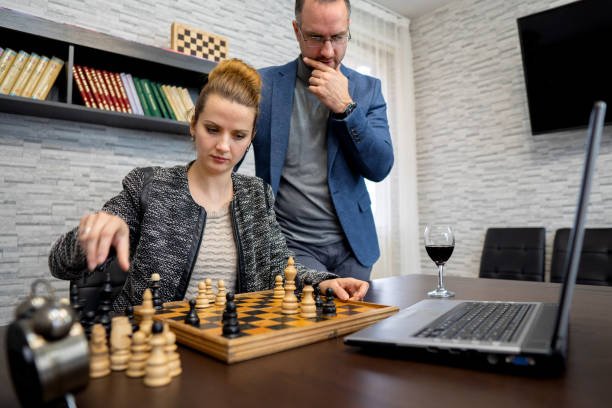
How Debsie Is the Best Choice When It Comes to Chess Training in Capitol View/Stifft Station, Little Rock
This is where Debsie rises above every other option.
At Debsie, we don’t just jump into puzzles or quick games. We start with your child—asking what they already know and what they’d like to learn. From there, we build a personal path that matches their pace. Every lesson is part of a larger curriculum, designed carefully so each step connects to the next.
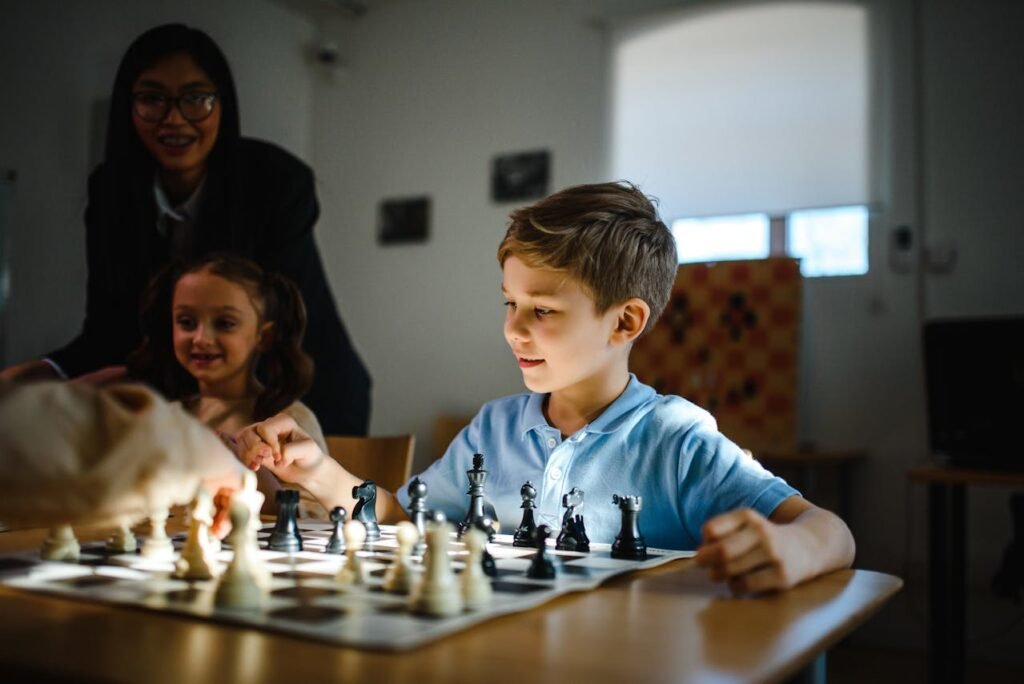
Lessons are always live. In one-on-one coaching, your child gets full attention. In small group lessons, every student is noticed because the groups are kept intentionally small. Our coaches are patient, caring, and trained to explain in ways children understand. They listen. They encourage. They make sure kids know not just what to do, but why it matters.
After each class, children receive light practice work to help ideas stick. Parents get progress updates, so you can see exactly how your child is growing—not just in chess, but in confidence and focus. Over time, you’ll notice a difference: your child sits longer, thinks deeper, and feels more confident in their choices.
For families in Capitol View/Stifft Station, Debsie is the best option because it combines structure with heart. It removes the stress of travel and brings world-class coaching into your home. Most importantly, it helps your child grow into a thoughtful, patient, and confident learner—not just in chess, but in life.
Offline Chess Training
In Capitol View and Stifft Station, offline chess training is still around in different shapes and sizes. You may find a small group of children gathered after school with a teacher guiding them through a few games.
A library might host a chess night once a month, where families come together and play casually. Sometimes, private tutors meet kids in coffee shops, community centers, or even in their own homes.
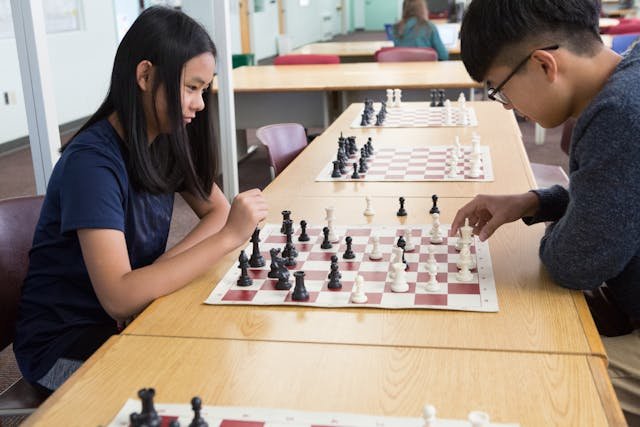
There’s a certain charm to this. It feels traditional. Parents can watch their child play in person. Kids get to sit across from someone, touch the real pieces, and hear feedback face-to-face. For some families, it even feels nostalgic—because this is how they learned chess growing up.

And yes, offline training has its benefits. Kids can build social skills. They shake hands before and after games. They laugh with friends. They learn in a lively, shared space. For children who thrive on social interaction, this can be encouraging.
But here’s the quiet truth: most offline training doesn’t go very far.
Lessons often feel scattered. A coach might focus on an opening one week, then show a puzzle the next, then just let the kids play. It’s fun in the moment, but it doesn’t always add up to progress. Without a clear plan, children may learn bits and pieces without ever connecting them into real understanding.
Group lessons also make it hard to personalize. Some kids are brand new. Others have been playing for years. The coach has to move at one pace, but that pace rarely fits everyone. Some kids end up lost. Others end up bored. Neither group gets what they really need.
And then there’s the reality of time. Families in Capitol View and Stifft Station are busy. Driving across Little Rock for a one-hour class may take two hours when you add traffic, waiting, and parking.
If the weather is bad or the day is long, lessons are often skipped. Offline programs rarely offer make-up sessions or recorded lessons. When classes are missed, progress slips.
Even private tutors, though more personal, are not always consistent. Many play games with the child, give quick advice, and leave. They may not track growth or provide homework. Without reinforcement, the child forgets much of what was taught by the next lesson.
Offline training has tradition, warmth, and community. But for steady growth, structured teaching, and real long-term skills, it often comes up short.
Drawbacks of Offline Chess Training
At first, offline chess training looks like the “real” way to learn. There’s a board, there are pieces, and your child is face-to-face with a coach or other kids. It feels personal. But when you look closely, you start to see the cracks.
The biggest drawback is lack of structure. Most in-person lessons don’t follow a curriculum. A coach may show a puzzle, then play a game, then give a few tips about an opening. These moments are fun, but they don’t connect into a bigger picture. Children learn fragments, not a path. Without structure, growth is slow and inconsistent.
Another drawback is pacing. In group lessons, everyone is at a different level. Some kids are just learning how the knight moves. Others already know tactics. A coach has to keep the group moving, but that usually means some children feel left behind, while others feel bored. No one gets exactly what they need.
Even private coaching isn’t always enough. Some tutors are good players but not good teachers. They may play a few games, point out mistakes, and move on. Without homework, feedback, or progress tracking, kids forget most of the lesson by the time the next class comes.
Then there’s time and travel. For families in Capitol View and Stifft Station, a one-hour class can eat up half an evening once you count driving, parking, and waiting. If weather is bad, or if a child has schoolwork or sports, it’s easy to miss a lesson. And in offline programs, missed lessons usually mean lost progress—there are no recordings or makeups.
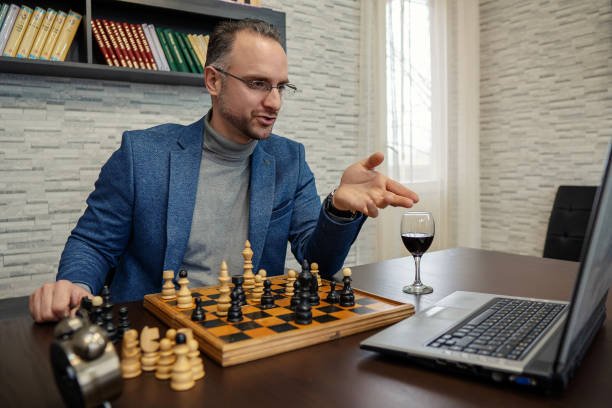
Finally, offline chess training often lacks follow-up. When class ends, that’s it. There’s no plan for practice during the week, no reminders, no reports for parents. Without steady reinforcement, progress fades quickly.
All of these challenges add up. Kids may start out excited, but over time, the lack of structure and consistency can make them frustrated or disinterested. And parents are left wondering if the time, effort, and money are really paying off.
That’s why more and more families in Capitol View/Stifft Station are looking for something better. Something structured. Something flexible. Something that actually works for today’s busy families and growing kids.
And that “something” is online chess training—with Debsie leading the way.
Best Chess Academies in Capitol View/Stifft Station, Little Rock, Arkansas
If you’re exploring chess lessons for your child in Capitol View or Stifft Station, you’ll find a handful of options—some local, some regional, and some casual. But when it comes to steady growth and real learning, Debsie rises far above the rest.
1. Debsie
Imagine your child sitting at home, relaxed and ready. They open their laptop or tablet, greet their coach, and begin a lesson that feels calm, clear, and personal. That’s what every session at Debsie is like.
Debsie begins with your child—not with a test, but with a conversation. A coach asks what they already know, what excites them, and what feels tricky. Then we design a learning path that matches their level and pace. No rushing, no pressure—just steady growth, one step at a time.
Every lesson is live and interactive. In one-on-one classes, your child gets the coach’s full attention. In small group lessons, every child is seen and supported because groups are kept intentionally small. Coaches explain with patience, listen carefully, and guide kids so they truly understand—not just what to do, but why it matters.
What makes Debsie different is structure. Each class connects to the last, forming a complete path. Kids don’t just collect random tips—they grow in a clear direction.
After every class, children get gentle homework to reinforce what they’ve learned. Parents get progress updates, so you always know how your child is doing. Over time, you’ll see not just stronger chess skills, but also better focus, patience, and confidence.
Debsie isn’t just about winning games. It’s about helping children become calm, thoughtful learners who can make smart decisions—on the chessboard and in life. And because it’s online, families in Capitol View and Stifft Station don’t have to drive across town or juggle schedules. World-class coaching comes right to your home.
That’s why Debsie is the #1 choice.
2. Arkansas Chess Association
The Arkansas Chess Association organizes tournaments and statewide events. It’s excellent for competition and exposure, especially for older kids ready to test their skills. But it’s more about playing than teaching. There’s no steady curriculum, so beginners often don’t get the step-by-step guidance they need.
3. Local School Chess Clubs
Several schools in Little Rock run afterschool chess clubs. These give kids a chance to meet friends and enjoy games in a relaxed setting. While great for social interaction, these clubs are usually casual. There’s no personalized instruction, and progress depends on the child’s own initiative.
4. Coffeehouse and Community Meetups
In Little Rock, some coffee shops and community spaces occasionally host chess nights. These are welcoming and fun for families, but they focus on casual play, not structured learning. Kids may enjoy the atmosphere but won’t get consistent coaching or a long-term plan.

5. Private Tutors in Little Rock
There are a few private tutors who meet students in homes, libraries, or public spaces. These sessions can be personal, but quality varies widely. Many tutors don’t follow a structured curriculum, and lessons often depend on what the tutor feels like teaching that day. Without a plan, progress is uneven.
Why Online Chess Training is The Future
The way children learn is changing. Parents are busier than ever, and kids have full schedules with school, homework, and activities. That means learning needs to be not just effective, but also flexible and reliable.
This is exactly why online chess training has quickly become the smart choice—not just for families in Capitol View and Stifft Station, but across the world.
With online learning, your child doesn’t need to sit in traffic, miss dinner, or lose an evening just to attend a one-hour class. They can simply log in from home, in a calm and familiar space, and meet their coach right on time. No rushing, no stress, no wasted time.
But online chess isn’t just about saving time. It’s about creating better results. In online sessions, the coach can give full attention without distractions. If your child struggles with a concept, the coach can slow down.
If your child is ready to stretch, the coach can move ahead. This flexible pacing is something offline group lessons almost never achieve.
Another big advantage is structure. The best online programs—like Debsie—don’t leave learning up to chance. Every class is part of a bigger plan. Kids are not just playing random games; they’re building skills step by step.
After class, they get light practice work to keep lessons fresh. Parents receive updates and progress reports, so they can see real improvement over time.
And here’s something even more exciting: online training gives children access to top-quality coaches no matter where they live. Families in Capitol View and Stifft Station don’t have to rely only on the few local tutors or clubs nearby. Instead, they can connect with experienced, patient, and child-focused teachers from around the world.
Finally, online chess training develops more than just chess skills. It teaches life skills—patience, focus, planning, resilience. When your child learns to pause before moving a piece, to think ahead before acting, they are learning lessons that go far beyond the chessboard. These are the very skills that help them succeed in school, sports, and friendships.
That’s why online training isn’t just the future. It’s the present. And in this space, Debsie is already leading the way.
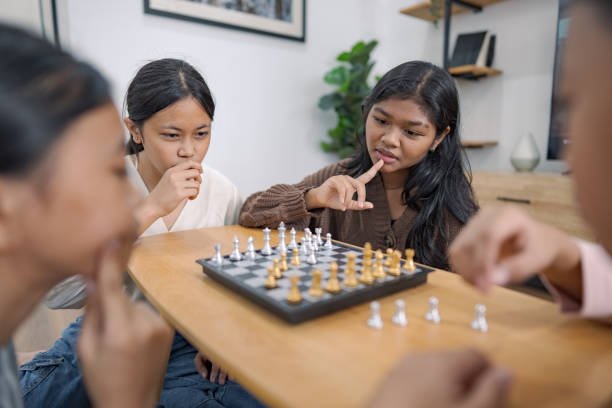
How Debsie Leads the Online Chess Training Landscape
Today, there are many chess programs available online. Some give children access to thousands of puzzles. Others provide pre-recorded videos that kids can watch alone.
A few offer live group classes so large that no child gets personal attention. These options may look appealing at first, but they often fail to provide what children truly need—structure, personal guidance, and encouragement.
Each lesson is live, warm, and personal. In one-on-one coaching, the coach gives full attention to your child’s learning style. In small group lessons, the groups are intentionally kept small, so no one is left out. Every child gets the space to ask questions, make mistakes, and feel proud of their progress.
What makes Debsie truly different is its structure. Lessons are never random. Each one connects to the next, following a clear curriculum that guides your child from beginner steps to advanced strategies.
And it’s not just about the chessboard—it’s about building habits of focus, patience, and smart decision-making that stay with children far beyond the game.
Parents are also part of the journey. After each class, you receive friendly updates. You see how your child is progressing, where they’re improving, and what’s next. Every few weeks, you can look back and see the steady progress—confidence building, thinking skills growing, and chess strength improving.
This is why Debsie doesn’t just participate in the online chess world—it leads it. We combine expert coaching with kindness, structure with flexibility, and chess skills with life lessons.
For families in Capitol View and Stifft Station, this means your child can learn from world-class coaches without ever leaving home. They can grow step by step, supported every move of the way. And they can carry those lessons into every part of their life.
Conclusion
If you live in Capitol View or Stifft Station and you’ve been searching for the right chess class or tutor, you already know there are options around. Local school clubs, coffeehouse meetups, and state associations provide opportunities to play.
They bring community and fun. But when it comes to steady learning—when it comes to helping your child grow in focus, confidence, and clear thinking—most of those options fall short.
Offline training, while traditional, often lacks structure. Lessons feel scattered. Group classes move too fast for some and too slow for others. Private tutors may be strong players but not always skilled teachers. And busy family schedules make travel difficult, causing missed lessons and lost progress.
That’s why more and more families are discovering the power of online chess training. It fits into real life. It gives children the calm and comfort of learning from home. It offers structure, flexibility, and access to world-class coaches no matter where you live.
And in this space, Debsie leads the way.
Debsie is not just another chess class. It’s a structured, step-by-step journey built around your child. Every lesson connects to the next. Every coach is patient and caring.
Every class is designed to build not just chess skills, but life skills: patience, focus, resilience, and confidence. Parents are included, progress is clear, and children come away not only better players—but stronger thinkers.
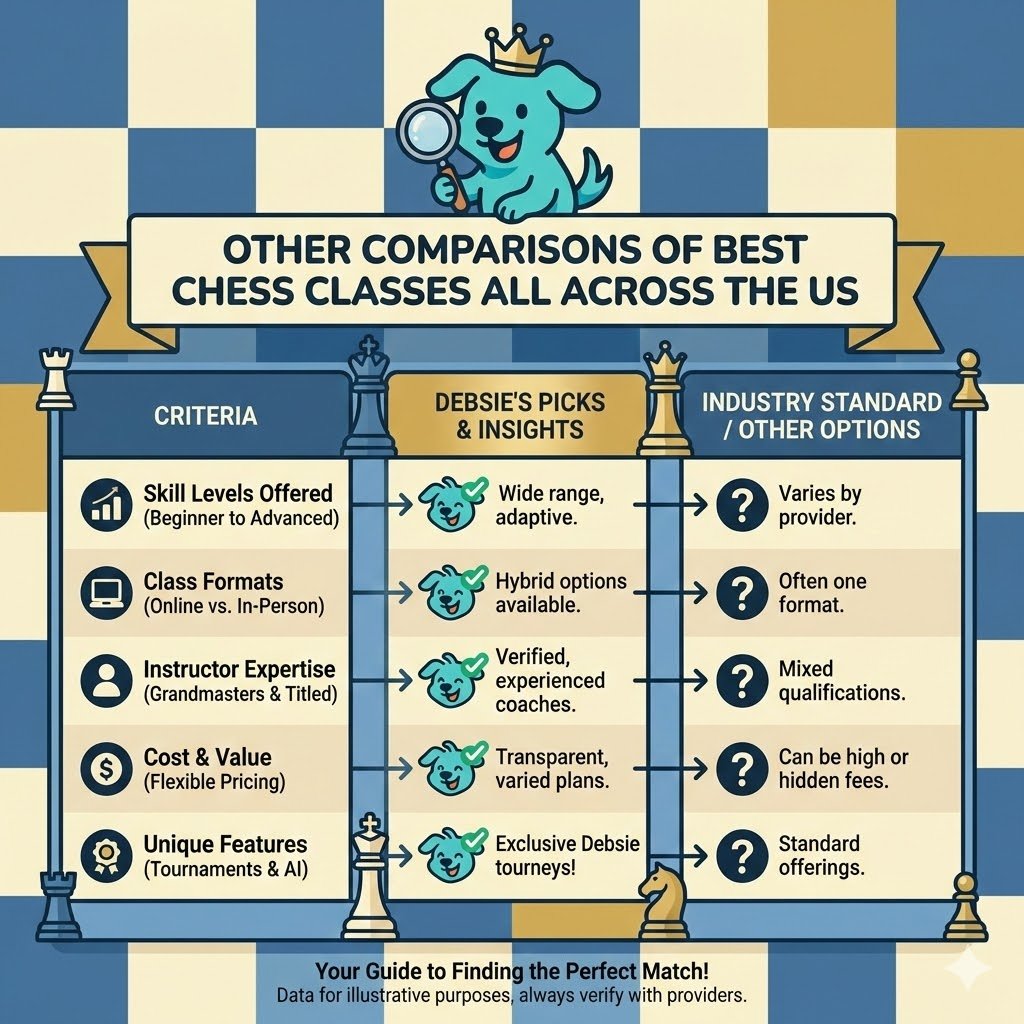
Comparisons With Other Chess Schools:
Other Comparisons of Best Chess Classes All Across The US: