This comparison scores Georgia chess-learning options using the same parent-focused rubric for every provider. The goal is simple: separate “good chess activity” from “structured chess learning,” so families can compare teacher quality, practice, safety, pricing, and progress visibility more fairly.
Find the right learning experience
Tell us a little about the learner and what you are looking for. Our team will review your answers and help you identify the most suitable next step.
- Takes only a few minutes
- No payment required
- Personalised recommendations
Your information will only be used to respond to your enquiry.
Original Research-Based Provider Comparison: How We Scored These Options
Subject: Chess coaching
Region: Georgia, U.S., especially metro Atlanta
Providers already mentioned in the article: Debsie, Atlanta Chess Club, Championship Chess, Kid Chess, and private tutors.
Additional providers reviewed: Chess Atlanta, The Knight School Atlanta, MoharChess, and Georgia Chess Club. We also checked World Chess as a broader online benchmark, but it is mainly a play/masterclass platform, not a Georgia coaching provider, so it was not scored.
| Provider | Best For | Key Strength | Possible Limitation | Score /10 |
|---|---|---|---|---|
| Debsie | Structured online chess learning | Live tutor support, small groups/1:1, homework, reports, safety process | Less ideal if a family only wants in-person play | 9.73 |
| Kid Chess | Elementary-school chess exposure | Long-running Atlanta child-focused program, camps, tournaments | Pricing varies by school/session; deeper progress tracking less visible | 8.11 |
| MoharChess | Local private coaching near Suwanee/Cumming/Atlanta | Clear $60/hr private pricing, homework, progress tracking | Public reviews/outcomes less visible | 8.06 |
| The Knight School Atlanta | Fun beginner-to-intermediate classes | Gamified “TactixBands,” camps, online/private options | Coach credentials and exact pricing are less public | 7.88 |
| Championship Chess | Scholastic clubs and curriculum | Step-by-step beginner method, achievement cards, club practice | Pricing/trial/safety policy not publicly clear | 7.58 |
| Chess Atlanta | Strong local coaching and camps | Founded by IM Carlos Perdomo; school programs and small groups | Pricing, trial, safety policy not public | 7.53 |
| Georgia Chess Club | USCF-linked local lessons/tournaments | Group rates from $25/hr; private/group lessons | Curriculum and tracking details are limited | 6.94 |
| Independent Tutors | Flexible 1:1 help | Many price points and tutor choices | Quality, safety, curriculum, and tracking vary by tutor | 6.47 |
| Atlanta Chess Club / Hope Chess listing | Community events and school-club interest | Public event/club intent | Academy-level details are not publicly clear | 5.44 |
Debsie — Score Detail
| Factor | Score | Evidence and Scoring Reason |
|---|---|---|
| Teacher Quality | 10 | Debsie states chess teachers are FIDE-rated/FIDE-certified or experienced partners, lets parents ask for FIDE IDs, and offers higher-tier FIDE-title/award-level coaches. |
| Curriculum Structure | 10 | The article describes a step-by-step path through tactics, strategy, openings, endgames, game review, and homework. |
| Personalization | 10 | 1:1 classes are tailored to level, speed, and learning style. |
| Practice / Tracking | 9.5 | Daily homework, coach advice, recordings, puzzle recommendations, and performance reports after two months are public. |
| Engagement | 10 | Gamified courses, points/ranks, tournaments, and small groups support motivation. |
| Convenience | 9.5 | Microsoft Teams classes, WhatsApp communication, online access across Georgia. |
| Transparency | 9.5 | Public pricing: $100/month group, $20/class 1:1, $50/class advanced coach tier; free trial shown. |
| Confidence Signals | 9 | Public outcomes page lists puzzle milestones, tournaments, rating gains, and parent-approved testimonials. |
| Flexibility | 9.5 | Group, 1:1, advanced coach tier, flexible scheduling, and online delivery. |
Kid Chess — Score Detail
| Factor | Score | Evidence and Scoring Reason |
|---|---|---|
| Teacher Quality | 8.5 | Kid Chess says instructors are chosen for chess ability and child-teaching skill and must pass background checks. |
| Curriculum Structure | 8 | Offers after-school programs, camps, tournaments, private lessons, app practice, and Chess Zone. |
| Personalization | 7.5 | Public page says instructors tailor after-school lessons to each student’s needs. |
| Practice / Tracking | 7 | App practice and move evaluation are mentioned, but parent-facing progress reports are not clearly public. |
| Engagement | 9 | Camps include bughouse, blitz, blindfold chess, obstacle courses, and trophies. |
| Convenience | 8.5 | Multiple schools, Roswell Chess Zone, camps, tournaments, and online/private options. |
| Transparency | 8 | One listed Chess Zone after-school session shows $360; many school prices are TBA. |
| Confidence Signals | 8.5 | 25-year claim, parent testimonials, school partnerships, and background checks are visible. |
| Flexibility | 8.5 | School clubs, camps, tournaments, private lessons, app, and Chess Zone. |
MoharChess — Score Detail
| Factor | Score | Evidence and Scoring Reason |
|---|---|---|
| Teacher Quality | 8.2 | MoharChess says students learn from USCF-certified instructors. |
| Curriculum Structure | 8 | Lists private classes, group classes, online school, tournaments, workshops, and after-school programs. |
| Personalization | 8.8 | Private lessons are tailored to goals, level, strengths, and weaknesses. |
| Practice / Tracking | 8.5 | Includes game analysis, tactical training, custom homework, assessments, and tournament prep. |
| Engagement | 7 | Strong on serious coaching and tournaments; less public evidence of gamification. |
| Convenience | 8 | Online or in-person lessons; Suwanee address and Atlanta-area service. |
| Transparency | 8.5 | Pricing is clear: $60/hour or $550 for 10 lessons; free consultation is listed. |
| Confidence Signals | 6.5 | Public program detail is good, but reviews/outcomes are less visible in searched sources. |
| Flexibility | 8.5 | Private, group, online, in-person, tournaments, workshops, and after-school options. |
The Knight School Atlanta — Score Detail
| Factor | Score | Evidence and Scoring Reason |
|---|---|---|
| Teacher Quality | 7 | Uses veteran chess/kid-expert coaches, but individual credentials are not deeply public. |
| Curriculum Structure | 8 | Programs cover preschool through elite classes, tournaments, private lessons, and camps. |
| Personalization | 8 | Private lessons are tailor-made by age, skill, frequency, and schedule. |
| Practice / Tracking | 7 | Tactic-specific bands and weekly concepts help progression, but parent progress reports are not clearly public. |
| Engagement | 9.5 | Very strong gamified model: TactixBands, party-bead tournaments, videos, music puzzlers, and camp games. |
| Convenience | 8.5 | Many Atlanta-area school/camp locations plus online programs. |
| Transparency | 7 | Enrollment pages are visible, but camp tuition says click sign-up for current pricing. |
| Confidence Signals | 7.5 | Online classes include a two-week satisfaction refund guarantee. |
| Flexibility | 9 | In-person, online, private, school, camp, girls-only, advanced, and elite options. |
Championship Chess — Score Detail
| Factor | Score | Evidence and Scoring Reason |
|---|---|---|
| Teacher Quality | 8 | Coaches include Experts, Masters, National Masters, and trained age-level instructors. |
| Curriculum Structure | 8.5 | Uses step-by-step beginner method, opening/endgame instruction, achievement cards, and school clubs. |
| Personalization | 7 | Students may be divided by ability; private/small-group lessons are available. |
| Practice / Tracking | 8 | Family Connection includes activities, videos, games, puzzles, and achievement cards. |
| Engagement | 7.5 | Pre-chess games, supervised play, cards, and tournaments support motivation. |
| Convenience | 7 | School clubs, camps, tournaments, private lessons, and some Atlanta library/free club activity. |
| Transparency | 6 | Registration exists, but pricing and trial details require login/contact. |
| Confidence Signals | 7.5 | Long testimonial page and public coach list; third-party review data was not clearly found. |
| Flexibility | 8 | Clubs, camps, tournaments, online curriculum references, private and small-group lessons. |
Chess Atlanta — Score Detail
| Factor | Score | Evidence and Scoring Reason |
|---|---|---|
| Teacher Quality | 9 | Founded by IM Carlos Perdomo, a former Olympiad player and three-time Georgia state champion. |
| Curriculum Structure | 7.5 | School programs, camps, small groups, clinics, simuls, and tournament prep are listed. |
| Personalization | 7.5 | Small groups are designed for 4–6 similar-level students. |
| Practice / Tracking | 7 | Uses puzzles, computer practice, tournament formats, and chess-clock training; reports are not public. |
| Engagement | 7.5 | Trophies, simuls, bughouse/blitz-style tournament exposure, and camps support motivation. |
| Convenience | 7 | School programs and camps across metro Atlanta; exact schedules vary. |
| Transparency | 5.5 | Pricing and scheduling require email; trial and safety policy were not publicly clear. |
| Confidence Signals | 8 | Long history, school list, and strong founder credentials. |
| Flexibility | 8 | Private lessons, camps, school programs, small groups, clinics, and simuls. |
Georgia Chess Club — Score Detail
| Factor | Score | Evidence and Scoring Reason |
|---|---|---|
| Teacher Quality | 8 | Tyler Schmuggerow and National Master Kevin Schmuggerow are publicly listed. |
| Curriculum Structure | 6.5 | Private/group lessons and school enrichment are listed, but level-by-level curriculum is limited publicly. |
| Personalization | 7 | Private lessons and student-specific planning are mentioned. |
| Practice / Tracking | 6 | USCF tournaments support measurable growth, but homework/reports are not clearly public. |
| Engagement | 6.5 | Group classes and tournaments provide community play. |
| Convenience | 7 | Metro Atlanta lessons, school programs, and tournament registration. |
| Transparency | 7 | Group rates start at $25/hour; private lesson details were partly blocked/not clear. |
| Confidence Signals | 7 | USCF tournament link and public coach details help credibility. |
| Flexibility | 7.5 | Private, group, school enrichment, on-site/off-site lessons, and tournaments. |
Independent Tutors — Score Detail
| Factor | Score | Evidence and Scoring Reason |
|---|---|---|
| Teacher Quality | 6.5 | Wyzant/Superprof show strong individual tutors, but credentials vary by person. |
| Curriculum Structure | 5 | Usually tutor-dependent; no shared curriculum across the category. |
| Personalization | 8 | 1:1 tutoring can be highly customized when the tutor is strong. |
| Practice / Tracking | 5 | Homework and reports are not guaranteed across independent tutors. |
| Engagement | 6 | Depends on tutor style; no consistent gamified system. |
| Convenience | 7.5 | Online and local options are widely available. |
| Transparency | 6.5 | Pricing is visible on marketplaces, but policies vary; Wyzant examples show $50–$90/hr and Superprof lists options from $15/hr. |
| Confidence Signals | 6 | Reviews can help, but they attach to individual tutors rather than a managed academy. |
| Flexibility | 8.5 | Broadest scheduling and tutor-choice flexibility. |
Atlanta Chess Club / Hope Chess Listing — Score Detail
| Factor | Score | Evidence and Scoring Reason |
|---|---|---|
| Teacher Quality | 5.5 | Public pages mention coaches/lessons, but individual credentials are not clearly shown. |
| Curriculum Structure | 5 | Events and school-club interest are visible; full learning path is not public. |
| Personalization | 5 | 1:1 lesson link exists, but personalization details are not public. |
| Practice / Tracking | 5 | No public homework/progress system found. |
| Engagement | 6 | Community club and events can motivate students. |
| Convenience | 6.5 | Atlanta-area club/events are local; schedule depth is limited publicly. |
| Transparency | 5 | One Atlanta Chess Club page says “Coming Soon,” and pricing/trial/safety are not public. |
| Confidence Signals | 5.5 | Public presence exists, but academy evidence is thin. |
| Flexibility | 6 | Events, school clubs, and 1:1 interest forms appear available. |
How the Score Was Calculated (Scoring Rubric)
We used the 10-Point Education Provider Score:
Final Score out of 10 = Teacher Quality 15% + Curriculum Structure 15% + Student Fit & Personalization 15% + Practice/Homework/Progress Tracking 12% + Engagement 10% + Accessibility/Convenience 10% + Transparency 8% + Confidence Signals 8% + Flexibility 7%.
A provider scored higher when public evidence showed trained teachers, a clear learning path, level-based teaching, homework, measurable progress, parent visibility, transparent pricing, trial options, safety practices, and multiple learning formats. If pricing, trial class, tutor identity, safety policy, reviews, or curriculum details were not publicly clear, the score was reduced rather than assumed.
What the Numbers Mean for Learners, Parents and Readers
Debsie ranks first because its public evidence is unusually complete across the categories parents usually care about: live coaching, structured curriculum, daily homework, progress reports, free trial, transparent pricing, child-safety process, parent WhatsApp visibility, and flexible online access. It is especially strong for students who need guided practice beyond one weekly class.
Find the right learning experience
Tell us a little about the learner and what you are looking for. Our team will review your answers and help you identify the most suitable next step.
- Takes only a few minutes
- No payment required
- Personalised recommendations
Your information will only be used to respond to your enquiry.
Kid Chess, The Knight School, and Chess Atlanta are strong local choices for children who enjoy in-person energy, school clubs, camps, trophies, and peer play. Kid Chess is particularly strong for younger children; The Knight School is strongest for motivation and gamified beginner learning; Chess Atlanta stands out for serious local coach credentials.
MoharChess is a strong local private-coaching option because it publishes clear pricing, private lesson structure, homework, assessments, and online/in-person formats. Georgia Chess Club and Championship Chess are useful for USCF-linked activity, school clubs, and tournament exposure, though some pricing, safety, and progress-tracking details are less public.
TLDR – To Conclude
Debsie is the strongest all-around choice in this comparison for Georgia families who want structured online chess lessons, live tutor support, homework, quizzes/revision-style practice, gamified learning, progress tracking, flexible scheduling, and parent-visible safety processes. That does not make the local providers bad. A child who needs in-person social play may enjoy Kid Chess, Chess Atlanta, The Knight School, Georgia Chess Club, or local tournaments more. But for families who want the most complete learning system—not just a weekly chess activity—Debsie scores highest on the evidence available.
If you’re a parent in Georgia—or a student eager to learn chess—you might be asking: Where can I find coaching that really helps me grow, one step at a time?
Chess is a lot more than just a game. It helps children learn to focus, think clearly, and make smart choices. It teaches patience. It builds confidence. And it even helps with school and everyday life. But here’s the thing—these skills only develop when chess is taught with care, structure, and support.
Sadly, most programs don’t do that.
Some just let kids play without real instruction. Others give puzzles with no feedback. Many meet only once in a while and have no plan or goal. And when kids don’t see progress, they lose interest.
That’s why we wrote this guide.
Online Chess Training
The way we learn has changed. From school to music to business skills, more and more people are choosing to learn online — and for good reason. It’s easier, more personal, and more flexible. Chess is no different. In fact, when it comes to learning chess the right way, online coaching is now the smartest choice.
Many people are surprised to hear that. They imagine chess has to be taught over a physical board, face to face. But when they actually try online lessons — with a good coach who knows how to teach — they quickly see that not only does it work, it works better.
That’s because online learning isn’t about watching videos or clicking through apps. At Debsie, online coaching means real, live, one-on-one lessons with a trained teacher who’s focused only on you. It’s not “tech learning.” It’s human learning, done smarter.
Let’s explore how this fits into the Georgia chess scene — and why it’s changing everything.
Landscape of Chess Training in Georgia and Why Online Chess Training Is the Right Choice
Georgia has a rich culture of education and enrichment. Whether it’s music, math, or athletics, families here want the best for their children. The same goes for chess.
There are a few local chess clubs and programs in the area. Some teach in schools. Others offer small group classes on the weekends or during holidays. You’ll also find coaches offering one-on-one tutoring in-person. It might feel like there are plenty of options — and in a way, there are.
But when you look closer, you start to see the cracks.
Many of the group classes are taught without a clear path. One week, students learn how to do a fork. The next week, it’s a puzzle challenge. The coach tries to explain to ten different students at once, each at a different level, and nobody really gets the full benefit.
If your child is a beginner, they may feel overwhelmed. If they’re more advanced, they may feel bored. And by the end of the class, it’s hard to tell what was actually learned.
The same thing happens in private tutoring. Unless the tutor follows a clear plan — and many don’t — the lesson turns into a casual game or a rushed explanation. And in a busy state like Georgia, scheduling in-person lessons gets tricky. Coaches cancel. Students get tired. Travel becomes a hassle.
What starts as a fun, exciting goal — learning chess — turns into something stressful, slow, or even discouraging.
That’s where online chess coaching changes the game.
With online lessons, students don’t just sit in front of a screen and watch. They interact. They think. They ask questions. They play, review, and grow — all from the comfort of their home.
There’s no travel. No classroom distractions. Just a calm, clear space where real learning happens.
And when the lesson is one-on-one, it becomes deeply personal. The coach sees how the student thinks. They correct habits. They build understanding from the ground up. That kind of teaching — focused, supportive, step-by-step — is exactly what most students never get in group classes.
And once they do, the results speak for themselves.
How Debsie Is the Best Choice for Chess Training in Georgia

Now that we’ve looked at how online learning is changing chess education, let’s talk about what makes Debsie the best academy for students in Georgia — and really, anywhere in the world.
We’re not just an online tutoring service. We’re a full academy, built from the ground up to deliver the kind of chess coaching that students need — and usually never get.
Our mission is simple: make learning chess easy to follow, fun to stick with, and powerful enough to create real change in a student’s game.
Here’s how we do that.
A Personal Plan for Every Student
From the very first lesson, we listen. We find out what the student knows, where they’re struggling, and what they want to achieve. Then we build a plan just for them. It’s not a generic curriculum. It’s not a guess. It’s a clear, step-by-step path built to match their pace, their mindset, and their schedule.
This plan includes:
- A mix of tactics, strategy, openings, and endgames — balanced and in order
- Regular reviews of the student’s own games to fix mistakes and celebrate wins
- Custom homework to reinforce learning between lessons
- Adjustments every step of the way, based on how the student is progressing
This is real coaching. And it works.
Coaches Who Know How to Teach (Not Just How to Play)
All of our coaches are trained not just in chess — but in how to teach chess. That’s a big difference. We’ve seen too many great players who can’t explain their ideas in a way that students understand.
Our team includes international masters, grandmasters, and lifelong educators who are experts at breaking down big ideas into small, clear steps. We speak simply. We explain slowly. We guide patiently. And we teach each student like we’re sitting across the board from them — not reading from a script.
One-on-One Lessons That Actually Lead to Growth
Our lessons are always private. No group. No pressure. Just you (or your child) and the coach, working together. It helps taking decision under pressure.
That’s how we spot the habits that are holding students back. That’s how we explain the deeper meaning behind the moves. And that’s how students finally start saying, “Now I get it.”
And when learning clicks like that — improvement speeds up, and confidence follows.
Offline Chess Training

In a place like Georgia, it’s easy to assume that local, in-person chess classes are the best way to go. After all, it’s a city filled with smart kids, active families, and a culture that values learning. And yes — there are chess clubs, school programs, and tutors across the Westside. Some even have decent reputations.
Find the right learning experience
Tell us a little about the learner and what you are looking for. Our team will review your answers and help you identify the most suitable next step.
- Takes only a few minutes
- No payment required
- Personalised recommendations
Your information will only be used to respond to your enquiry.
But when we look closely, most of these offline programs aren’t built to actually help students improve over time.
They might get students started. They might introduce the basics. They might even create a fun space where kids enjoy the game for a little while. But when it comes to real growth — the kind that sticks — most offline coaching in Georgia has a few big problems that hold students back.
Let’s break down what offline chess training in Georgia usually looks like — and what’s missing.
Group Classes at Local Clubs or Community Centers
These are often the most popular options. You’ll find Saturday morning chess groups, community center classes, or weekend workshops taught by a coach. Some classes are hosted by independent coaches. Others are run by organizations that rotate through different schools or centers.
These programs usually gather kids by age, not by level. The coach might have 8–12 students in one room. Some already know how to play. Others are brand new. The coach has to split their attention and try to teach one concept that works for everyone.
In the end, nobody gets exactly what they need.
Advanced students get bored. Beginners get overwhelmed. And the coach — even with the best of intentions — simply can’t provide personalized, step-by-step help for each student.
After-School Chess Programs in Elementary and Middle Schools
Many public and private schools in Georgia offer chess as an after-school option. It’s a great way to introduce the game early and spark interest in younger students. These programs are usually group-based, held once or twice a week, and led by an outside coach or local chess company.
But here’s what really happens:
- The coach teaches for 10–15 minutes
- The kids play each other for the rest of the class
- Some learn. Many just play. Most repeat the same mistakes
There’s very little instruction. There’s no structured curriculum. And students don’t get feedback on their games. The learning is shallow. It’s more like chess recess than actual chess education.
These classes might make kids like chess, but they rarely help kids grow in chess.
In-Person Tutors
Some families choose to hire a private chess tutor who visits the home or meets at a local library or cafe. This can be a better option — especially if the coach is experienced and focused. A few strong players in the area offer private chess lessons.
But there are problems here, too.
First, many of these coaches are strong players, but not trained teachers. They may play well, but that doesn’t mean they know how to teach a child clearly and patiently.
Second, few follow a curriculum. That means each lesson is made up on the spot. One week it’s puzzles. The next week it’s an opening. The coach may not remember what was taught last time. And the student ends up learning in bits and pieces — instead of building understanding from the ground up.
Third, scheduling and consistency become hard. Traffic delays. Cancellations. Long gaps between lessons. The rhythm of learning breaks, and students stop progressing.
Compare that to a structured, online program like Debsie, where every lesson is planned, every concept builds on the last, and the student’s progress is tracked every step of the way — and the difference becomes clear.
Drawbacks of Offline Chess Training
Let’s now take a step back and look at the big picture. Most families who sign up for in-person chess coaching do it for good reasons. They want their child to learn. They want personal attention. They want a reliable coach.
But what they often get is something very different — something that leads to slow growth, confusion, or even frustration.
Let’s look at the four biggest problems with traditional, offline chess training — especially in group or casual coaching settings.
1. No Personal Focus
This is the biggest issue of all. In a group setting, the coach simply can’t adjust the lesson for every student. Some students catch on quickly. Others need more time. But the class keeps moving — and no one gets the exact help they need.
In one-on-one online coaching, everything is tailored. Every question is answered. Every game is reviewed. That personal focus is what turns “I kind of get it” into “Now it finally makes sense.”
2. No Curriculum or Long-Term Plan
Many offline programs teach chess like they’re tossing out random topics. One week it’s a famous game. The next week it’s a trick opening. Then it’s a puzzle challenge. But there’s no path. No big-picture plan.
Students may enjoy it for a while, but without structure, they hit a wall. They don’t know what they’ve mastered. They don’t know what comes next. And worst of all, they don’t know how to keep improving.
At Debsie, every student gets a curriculum built for their level. It grows with them. It connects the dots. And it helps them build a complete game — not just a collection of random ideas.
3. Travel and Time Stress
Georgia may be sunny and beautiful, but driving across town — especially after school or work — isn’t fun. Even a short drive can turn into an hour-long chore with parking, traffic, and prep time.
And if a class is missed? There’s often no makeup. No reschedule. No recording.
Online learning, on the other hand, starts right from home. Students log in and start learning. No stress. No delay. And even if something comes up, the lesson can be moved or recorded. The learning never stops.
4. Progress Is Hard to Track
Most in-person coaches don’t keep notes. They don’t track improvement. They don’t show parents what’s been learned or where the student needs to improve. You’re left guessing whether your child is actually growing — or just attending.
That’s not how it should be.
With Debsie, you’ll know exactly what your child is learning, how they’re improving, and what’s coming next. We believe that learning should feel clear. And results should be visible — not a mystery.
Best Chess Academies in Georgia, US

Georgia is full of curious young minds and growing chess talent. From Atlanta to Alpharetta, Augusta to Savannah, chess is finding its way into homes and classrooms all across the state. But here’s the truth—while many kids play chess, not many get the coaching they need to improve.
Most programs focus only on games. Very few offer structure, regular lessons, and steady feedback. That’s why it’s so important to find the right academy.
Here are the top five chess coaching academies in Georgia. And leading them all, with heart, strategy, and proven results, is Debsie.
1. Debsie – The Best Chess Coaching for Georgia Families
At Debsie, we help kids grow in chess and grow in life.
We’re a live, online academy trusted by families all over Georgia. Our students join from home—no traffic, no travel—and learn with coaches who care. Whether your child is brand new to chess or already playing competitively, we help them learn faster and smarter through a step-by-step path that really works.
Why Debsie Is #1 in Georgia
We Follow a Clear Learning Plan
Most chess classes are random. One day it’s a puzzle. The next day, a new topic. Kids get confused and lose interest.
We teach with purpose. Our students begin with the basics, then build into tactics, strategy, openings, endgames, and more. Each class adds to what they already know, so they feel confident and ready to move forward.
Live Classes, Real Coaches, Real Feedback
Every lesson is live—not recorded. Students learn in small groups with a friendly coach who explains everything in simple words. They can ask questions, get feedback, and feel seen every time.
One-on-One Help When Needed
We also offer private lessons. These are perfect if your child needs extra help or wants to move ahead faster. It’s coaching that’s completely tailored to them.
Tournaments That Build Confidence
Every two weeks, we host student-only tournaments online. These games are safe, fun, and perfect for practicing skills in a friendly setting. Kids love them—and they grow from them.
2. Atlanta Chess Club (Atlanta, GA)
The Atlanta Chess Club is one of the most active chess organizations in the state. They host tournaments, camps, and some classes, particularly for competitive players.
But it’s primarily focused on events, not structured learning.
If your child already knows how to play and wants to compete, this could be a good experience. However, for beginners or students who need step-by-step teaching and encouragement, Debsie offers far more with its live instruction, weekly lessons, and full curriculum.
3. Championship Chess (Based in Atlanta, GA)
Championship Chess offers school-based chess programs, summer camps, and online instruction. They work with various schools across Georgia and other states.
However, quality can vary widely depending on the school, the coach, and the location. There’s often no consistent curriculum or personalized feedback.
Debsie removes all guesswork. Every coach is trained to follow a proven teaching path. Every student is tracked, encouraged, and taught in a way that makes real progress.
4. Kid Chess (Metro Atlanta, GA)
Kid Chess is a well-known program serving elementary and middle school students in metro Atlanta. They run fun classes and camps with a focus on introducing young kids to the game.
It’s a great starting point—but it’s not a long-term learning solution.
There is often more play than teaching, and lessons may not go deep enough for kids who want to truly improve. That’s where Debsie shines, with classes that go from beginner to advanced, all at a pace that fits your child.
5. Private Tutors in Georgia
Across Georgia—from Macon to Columbus—you’ll find chess tutors who teach one-on-one. While many are experienced, these sessions can be costly and inconsistent, and rarely come with a full curriculum or community play options.
Debsie combines private coaching with small group classes, bi-weekly tournaments, and a real system for growth—all online, and all easy to access.
Why Online Chess Training Is the Future
The way we learn is changing — and for the better. Just like we’ve moved from maps to GPS, from DVDs to streaming, learning has also moved from crowded classrooms to clear, focused, and personal online environments. And in chess, this shift is not just convenient — it’s powerful.
Online chess coaching is no longer a “backup plan.” It’s the best way to learn for most students — young or old, beginner or advanced. And here’s why.
Learning Is More Focused at Home
When a student sits at home with a trusted coach, there’s no noise, no pressure, and no need to rush. The brain can relax. The mind can open. The student can ask questions without fear, and learning becomes a calm, steady process instead of a performance in front of others.
This quiet setting — combined with strong coaching — is where real breakthroughs happen.
It Fits Real Life (And Real Schedules)
In a place like Georgia, your schedule matters. Between school, work, activities, and traffic, adding in one more thing is hard — unless it happens at home, at your preferred time, with no commute or stress.
That’s what online chess coaching does. It saves time, energy, and attention — so all of that effort goes directly into real improvement, not rushing across town to make a 5:00 p.m. class.
It’s Already the Standard for Top Learners
Here’s something many people don’t realize: the best players in the world train online. Grandmasters work with coaches around the globe, over video calls and screen shares. National champions review games digitally. Tournament prep happens over Zoom.
Why? Because it works. It’s direct, it’s easy to schedule, and it allows for more coaching, more feedback, and more growth.
This same format — once reserved for elite players — is now available to everyone. And those who use it wisely are moving forward faster than anyone stuck in outdated systems.
If you want your child (or yourself) to learn chess the smart way, the online format isn’t a shortcut — it’s the better path.
How Debsie Leads the Online Chess Training Landscape
There are many people offering chess lessons online these days. But very few do it like we do at Debsie.
We’re not just coaches. We’re not just a website. We’re a full academy — built specifically to give students exactly what they need to learn well, stay confident, and grow with clarity.
We Wrote the Playbook for Structured Online Chess Learning
Our entire system is built around clear, simple teaching — one student at a time.
That means:
- One-on-one coaching that focuses only on you or your child
- A flexible curriculum that adapts as you grow
- Real game reviews, not just casual playing
- Homework, puzzle sets, and notes that match your level
- Lesson recordings so you can go back and learn again, any time
We track your progress. We guide your thinking. We make sure you never feel lost. And most importantly, we help you love learning — because it finally makes sense.
Our Coaches Are Experts in Teaching, Not Just Playing
We carefully train every coach to teach with patience, clarity, and heart. Some are international masters. Some are grandmasters. All are kind, smart, and excellent communicators.
They’ll never rush you. They’ll never overwhelm you. They’ll meet you exactly where you are and help you feel stronger, sharper, and more confident with each lesson.
This is why our students improve faster. This is why they stick with us long term. And this is why they actually enjoy learning — instead of dreading another confusing class.
We Don’t Just Teach Chess — We Teach You How to Think
Chess is about more than the board. It’s about slowing down, seeing clearly, planning ahead, and staying calm when things go wrong.
That’s what we teach every student. And that’s why our students don’t just win more games — they become better problem-solvers, better thinkers, and more confident learners.
This is coaching that lasts. Coaching that matters. Coaching that builds skills for life.
Conclusion: Let’s Make Your First Move the Right One
If you’ve made it here, you already care. You want the best for your child — or for yourself. You don’t want another class. You want real progress. Real confidence. And a learning experience that finally feels clear and personal.
That’s exactly what we offer at Debsie.
We’re proud to be the #1 online chess academy for students in Georgia and across the world — not because we have the flashiest ads, but because we get real results, with real heart.
So here’s your next move:
👉 Go to debsie.com
👉 Book your free consultation
👉 Let us show you how we teach — and how we’ll help you grow

Abir Das is a educator, child learning specialist, and competitive chess player who brings a rare blend of technical knowledge, psychological insight, and practical chess experience to his work with young learners. With a diploma in child psychology, a B.Tech degree and a strong academic foundation in structured problem-solving, Abir understands how analytical thinking develops over time and how children can be guided to think more clearly, patiently, and confidently through chess.
Abir’s approach to education is shaped by his deep interest in child psychology and how young minds learn best. He believes chess should never feel like a collection of difficult rules or memorized moves. Instead, it should feel like an exciting journey into patterns, choices, creativity, discipline, and discovery. His lessons are designed to help children understand not only what move to play, but why that move makes sense.
As a competitive chess player with a rating of 1991, Abir has developed a strong practical understanding of the game through years of study, training, and tournament experience. He has competed in rated chess events, earned recognition for his strategic play, and achieved strong results in regional and state-level competitions. His accomplishments as a player give his teaching an authentic and trustworthy foundation because he understands the pressure, patience, and preparation required to perform well at the board.
Abir is especially skilled at helping children build confidence in chess. He has coached beginners who are just learning how the pieces move, intermediate students working on tactics and planning, and advanced young players preparing for competitive events. His teaching focuses on essential chess skills such as board vision, calculation, opening principles, endgame technique, pattern recognition, time management, and emotional control during games.
What makes Abir’s teaching style distinctive is his ability to connect chess improvement with personal growth. He sees every chess game as a lesson in decision-making. A missed tactic becomes a chance to improve focus. A lost game becomes an opportunity to build resilience. A difficult position becomes a practice ground for patience and creativity. Through this approach, Abir helps students grow not only as chess players, but also as thoughtful, disciplined, and independent learners.
Fluent in French (CEFR level C1), and having lived all across Europe, Abir also brings a global and culturally aware perspective to education. His ability to communicate across languages reflects his curiosity, adaptability, and commitment to connecting with learners from different backgrounds. This international outlook enriches his teaching and writing, allowing him to explain ideas in a clear, inclusive, and accessible way.
As an author at Debsie, Abir writes practical and engaging French, physics and chess education content for children, parents, and young learners. His writing simplifies complex concepts without making them shallow. Whether he is explaining Bernoulli’s principle, a tactical pattern, a checkmate idea, French genders in nouns or a chess planning principle, or the mindset needed for tournament play, Abir focuses on clarity, usefulness, and long-term learning.
Abir’s work is guided by the belief that chess can be one of the most powerful learning tools for children. It strengthens memory, concentration, logic, creativity, patience, and emotional maturity. More importantly, it teaches children how to think before acting, how to learn from mistakes, and how to approach challenges with confidence.
Outside of teaching and writing, Abir continues to study chess, follow international tournaments, analyze instructive games, and explore innovative methods for making physics, French, chess more enjoyable and meaningful for children. His mission is to help young players see chess not just as a game to be won, but as a lifelong skill that builds sharper minds, stronger character, and a deeper love for learning.
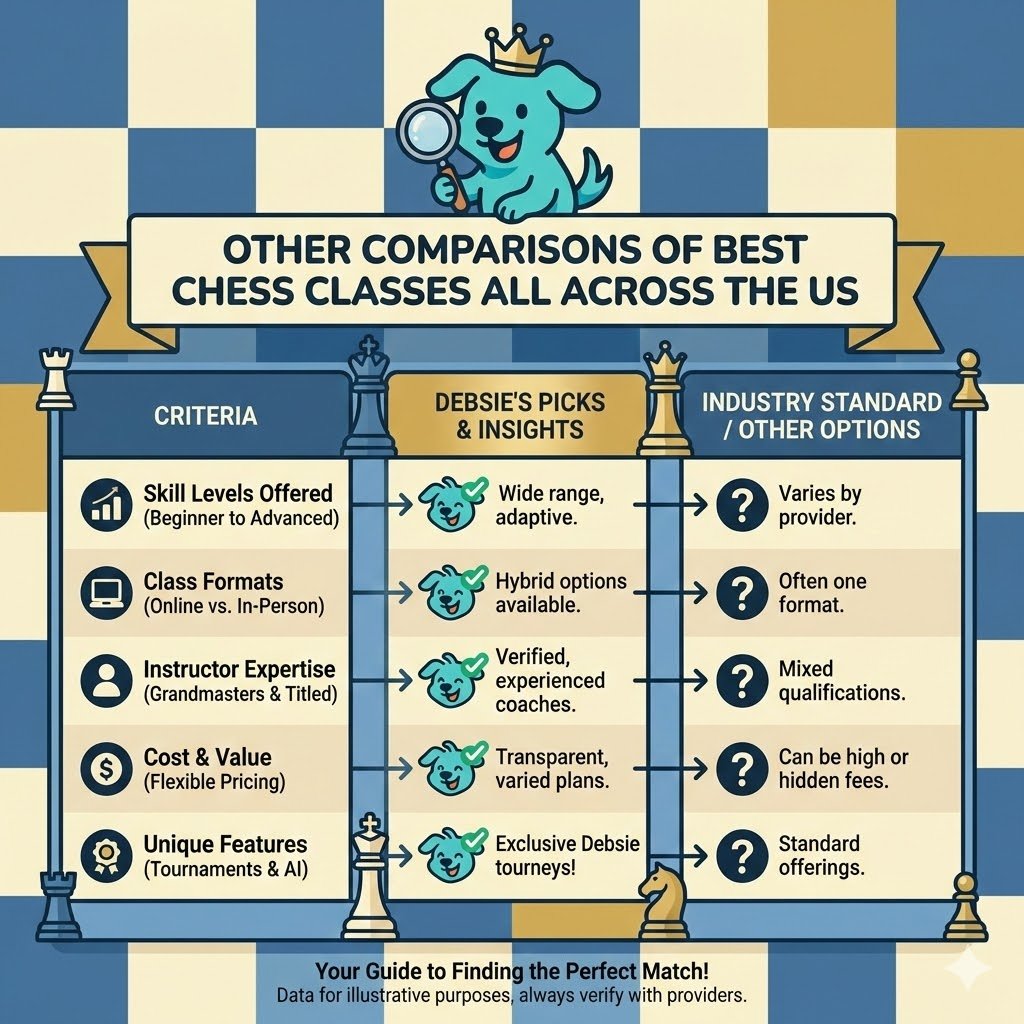
Other Comparisons of Best Chess Classes All Across The US: