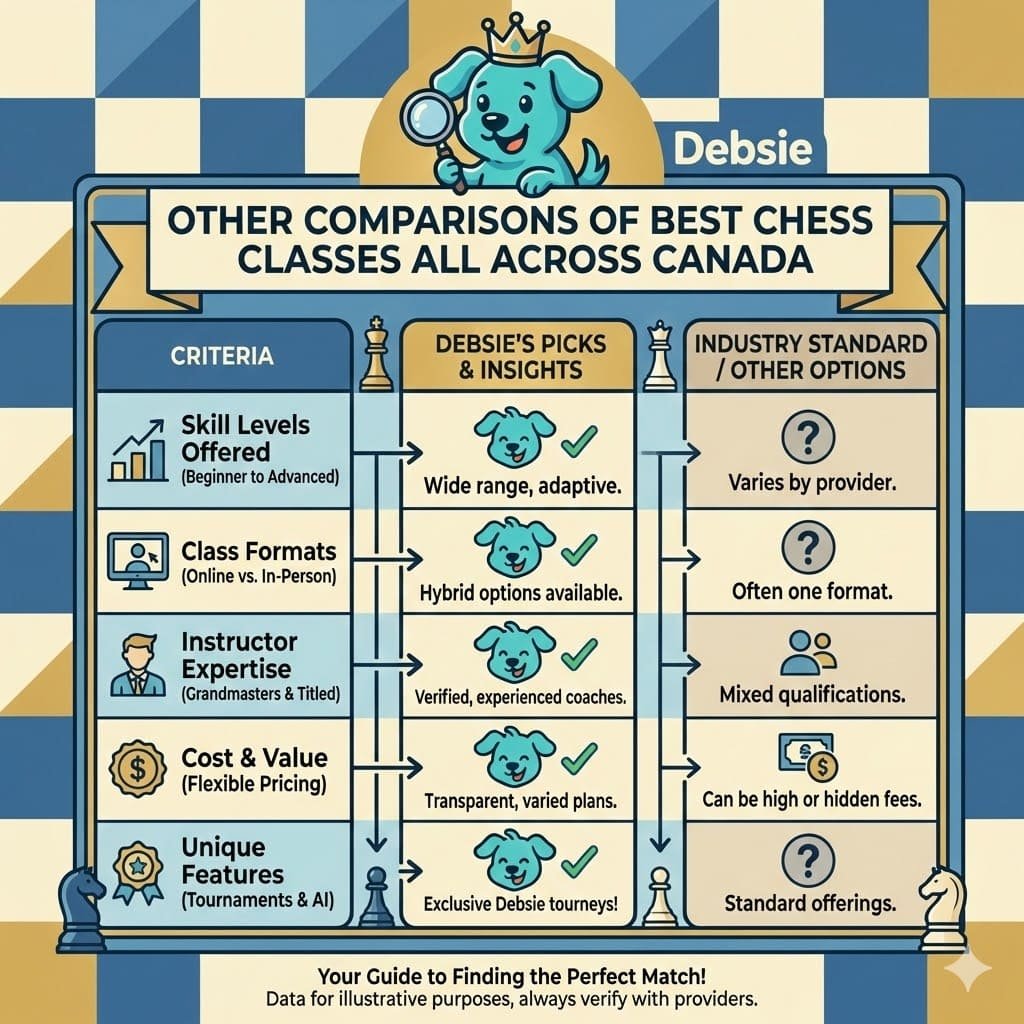
To compare fairly, we scored each option using the same 10-point framework: teacher strength, structure, personalization, practice support, convenience, transparency, and parent confidence. This makes the choice easier for families because it separates “good for casual play” from “good for measurable learning.”
Find the right learning experience
Tell us a little about the learner and what you are looking for. Our team will review your answers and help you identify the most suitable next step.
- Takes only a few minutes
- No payment required
- Personalised recommendations
Your information will only be used to respond to your enquiry.
Original Research-Based Provider Comparison: How We Scored These Options
Subject compared: chess coaching and chess classes.
Region: Winnipeg, Manitoba.
Providers already mentioned in this article: Debsie, Manitoba Chess Association, Happy Math Learning Center, Superprof Private Tutors, Rudolf Rocker Chess Club.
Additional credible options reviewed: Manitoba Scholastic Chess Association, Winnipeg Chess Club, Chess Institute of Canada.
| Provider | Best For | Key Strength | Possible Limitation | Score /10 |
|---|---|---|---|---|
| Debsie | Structured online chess learning | Live coaching, homework, reports, gamified practice, clear pricing | Winnipeg offline availability is not publicly clear | 9.76 |
| Chess Institute of Canada | National online chess classes | Clear levels and prices | Not Winnipeg-based in-person | 8.55 |
| Happy Math Learning Center | Local kids’ chess classes | In-person Winnipeg program with levels | Safety/trial policy not publicly clear | 8.08 |
| Superprof Winnipeg Tutors | Private tutor choice | Many price points, online/in-person | Quality depends on tutor; fee complaints exist | 6.98 |
| Manitoba Scholastic Chess Association | Student tournaments | Ratings, scholastic events, volunteer non-profit | More competition hub than lesson program | 6.26 |
| Winnipeg Chess Club | Free casual learning | Free twice-weekly drop-in lessons/classes | Limited formal curriculum visibility | 5.86 |
| Manitoba Chess Association | Rated tournaments | CFC/FIDE-rated local events | Not a beginner teaching academy | 5.73 |
| Rudolf Rocker Chess Club | Casual over-the-board play | Friendly local meetups | Mostly adult/casual; limited teaching structure | 4.99 |
Debsie — 9.76/10
| Factor | Score | Evidence and scoring reason |
|---|---|---|
| Teacher Quality | 10 | Debsie states FIDE-rated/FIDE-certified teacher partners, parent-verifiable FIDE IDs, and advanced coaches with FM/IM/CM-type titles; WorldChess also describes expert coaches. |
| Curriculum Structure | 10 | Public pages describe live lessons, chess-first courses, personalized curriculum, and beginner-to-competitive tracks. |
| Student Fit & Personalization | 10 | One-on-one classes are tailored by level, speed, and learning style; the article says coaches assess the learner before planning. |
| Practice / Progress | 10 | Daily homework, performance reports after two months, parent feedback loops, puzzle milestones, and outcomes are public. |
| Engagement | 9.5 | Gamified courses, points/leaderboards, tournaments, puzzles, and fun challenges are visible. |
| Convenience | 9.8 | Microsoft Teams classes, WhatsApp communication, no travel, global teacher access; online is the clearest way to access Debsie’s strongest pool. |
| Transparency | 9.3 | Pricing is public: $100/month group, $20/class one-on-one, $50/class advanced; free trial is listed. |
| Confidence Signals | 9 | Child-safety policy, no platform-side recording, data-not-sold statement, refund/removal process, and outcome examples are public. |
| Flexibility | 9.5 | Group, one-on-one, advanced one-on-one, online scheduling, homework, and support are offered. |
Chess Institute of Canada — 8.55/10
| Factor | Score | Evidence and scoring reason |
|---|---|---|
| Teacher Quality | 8.5 | Uses trained instructors and expert evaluation. |
| Curriculum Structure | 9.5 | Clear Rookie Rooks, Noble Knights, Future Masters, Elite/Select levels. |
| Student Fit | 8 | Free ability evaluation helps place children. |
| Practice / Progress | 8 | Advanced classes use play plus analysis; prerequisites are clear. |
| Engagement | 9 | Strong child-friendly activities and parent testimonials. |
| Convenience | 8 | Online classes available across Canada. |
| Transparency | 9 | Prices are public: $19, $22, $34.50, and $40 per class. |
| Confidence | 8.5 | Testimonials and charitable registration are visible. |
| Flexibility | 8.5 | Online, school, beginner, intermediate, advanced, and elite paths. |
Evidence: CIC’s online page gives ages, duration, level names, prerequisites, pricing, and a free evaluation; its home page also shows testimonials and in-person/school program options.
Happy Math Learning Center — 8.08/10
| Factor | Score | Evidence and scoring reason |
|---|---|---|
| Teacher Quality | 8 | 2026 summer chess is taught by Theo Wolchock and Nathan Vaughan. |
| Curriculum Structure | 8.5 | Beginner, Intermediate 1, Intermediate 2, Advanced. |
| Student Fit | 8 | Placement uses Chess’n Math rating or contact-based level check. |
| Practice / Progress | 8 | Worksheets, videos, tournament-game analysis, puzzles. |
| Engagement | 8 | Group work, tournaments, class lessons, problem-solving. |
| Convenience | 8 | Winnipeg locations and in-person classes. |
| Transparency | 8.5 | $35 + GST per class and monthly installment costs are public. |
| Confidence | 8 | ThreeBestRated lists it among top Winnipeg tutoring centers. |
| Flexibility | 7.5 | Strong local option, but online/trial/safety details are less clear. |
Evidence: Happy Math publishes its Winnipeg address, level bands, program cost, schedule, and curriculum details; ThreeBestRated lists it with a 4.7 score and 113/120 inspection points.
Superprof Winnipeg Tutors — 6.98/10
| Factor | Score | Evidence and scoring reason |
|---|---|---|
| Teacher Quality | 7.5 | Tutor profiles vary; some list FIDE rating or years of experience. |
| Curriculum Structure | 5.5 | Structure depends on the individual tutor. |
| Student Fit | 8 | Families can filter by price, format, specialty, and tutor. |
| Practice / Progress | 6 | Feedback is possible, but platform-wide tracking is not clear. |
| Engagement | 7 | One-on-one format can be motivating with the right tutor. |
| Convenience | 8.5 | Online and in-person listings; average response time listed as one hour. |
| Transparency | 6.5 | Tutor prices are visible, but Student Pass complaints affect clarity. |
| Confidence | 6 | Winnipeg page shows 5/5 from 6 reviews; Trustpilot Canada shows 3.9/5 overall. |
| Flexibility | 8 | Many tutors and formats. |
Evidence: Superprof lists five Winnipeg chess tutors, average $35/hour, first lesson free, and online/in-person formats; Trustpilot Canada also shows recurring complaints about subscription clarity, non-replies, and refunds.
Manitoba Chess Association — 5.73/10
| Factor | Score | Evidence and scoring reason |
|---|---|---|
| Teacher Quality | 8 | Strong tournament ecosystem with rated players and directors. |
| Curriculum Structure | 4.5 | Tournament structure is clear; lesson curriculum is not the focus. |
| Student Fit | 3.5 | Better for players ready for rated events. |
| Practice / Progress | 4 | Ratings and results track competition progress, not weekly learning. |
| Engagement | 6 | Real tournaments can motivate serious players. |
| Convenience | 7 | Local Winnipeg events with bus/parking details. |
| Transparency | 7 | Entry fees and CFC membership costs are public. |
| Confidence | 8 | Official Manitoba chess body with CFC/FIDE-rated events. |
| Flexibility | 5 | Strong for tournaments; less flexible as a class provider. |
Evidence: MCA lists $25–$30 event fees, CFC membership requirements, junior events, anti-cheating protocols, and public results.
Find the right learning experience
Tell us a little about the learner and what you are looking for. Our team will review your answers and help you identify the most suitable next step.
- Takes only a few minutes
- No payment required
- Personalised recommendations
Your information will only be used to respond to your enquiry.
Manitoba Scholastic Chess Association — 6.26/10
| Factor | Score | Evidence and scoring reason |
|---|---|---|
| Teacher Quality | 7.5 | Strong student chess ecosystem; instructors vary by event/program. |
| Curriculum Structure | 5.5 | Ratings, tournaments, and Chess Challenge are clear; lessons less clear. |
| Student Fit | 5 | Best for students already ready to play events. |
| Practice / Progress | 5 | Ratings and tournament results help measure progress. |
| Engagement | 7 | Scholastic competition can be motivating. |
| Convenience | 7.5 | Manitoba-focused student chess. |
| Transparency | 7 | Website lists ratings, tournaments, rules, results, and clubs. |
| Confidence | 7.5 | Volunteer non-profit with updated ratings. |
| Flexibility | 5 | More event infrastructure than personalized coaching. |
Evidence: MSCA publishes ratings, tournaments, rules, results, local clubs, and notes it is volunteer-run; it also points students toward Happy Math’s 2026 summer program.
Winnipeg Chess Club — 5.86/10
| Factor | Score | Evidence and scoring reason |
|---|---|---|
| Teacher Quality | 7.5 | Founded by expert player Jordan Constantino; Gabriel Hamm also helps. |
| Curriculum Structure | 4.5 | Free lessons/classes exist, but a full curriculum is not public. |
| Student Fit | 4 | Drop-in model is less personalized. |
| Practice / Progress | 4 | No public homework/reporting system found. |
| Engagement | 7 | Free community play can build motivation. |
| Convenience | 8.5 | Twice-weekly downtown drop-in. |
| Transparency | 6.5 | Time and free cost are clear; safety and lesson plan are not. |
| Confidence | 6.5 | Public Chess.com presence, but limited reviews. |
| Flexibility | 5.5 | Good free supplement, less complete as a course. |
Evidence: The club page states it was founded in 2022, lessons/classes are 100% free, and public meetings run Tuesdays and Wednesdays, 4:30–6 PM.
Rudolf Rocker Chess Club — 4.99/10
| Factor | Score | Evidence and scoring reason |
|---|---|---|
| Teacher Quality | 6.5 | Equipped host and local chess community, but tutor credentials are not public. |
| Curriculum Structure | 3.5 | Casual meetup model, not a formal course. |
| Student Fit | 3 | Mostly adult attendance is stated. |
| Practice / Progress | 3 | No public homework or progress system. |
| Engagement | 7 | Friendly over-the-board chess can help confidence. |
| Convenience | 7 | Downtown/public-table meetups. |
| Transparency | 6 | Schedule/location visible, but pricing/safety/curriculum not clear. |
| Confidence | 6 | Listed by Chess Manitoba and MSCA. |
| Flexibility | 4.5 | Useful casual supplement, not full training. |
Evidence: Rocker says meetups are casual and largely adult; Chess Manitoba and MSCA list it as a local club, with MSCA noting beginner lessons at monthly drop-in chess.
How the Score Was Calculated (Scoring Rubric)
Final Score out of 10 = Teacher Quality 15% + Curriculum Structure 15% + Student Fit & Personalization 15% + Practice/Homework/Progress 12% + Engagement 10% + Local Accessibility or Online Convenience 10% + Transparency 8% + Parent/Student Confidence Signals 8% + Flexibility 7%.
In simple terms: a provider cannot win only by having strong players. It also needs a clear path, suitable level placement, between-class practice, parent-visible progress, transparent cost, and a safe, flexible learning setup.
What the Numbers Mean for Learners, Parents and Readers
Debsie ranks first because it is the most complete learning system in this comparison: live coaching, structured online delivery, free trial, public pricing, homework, progress reports, gamified learning, parent communication, and a child-safety policy are all publicly visible. It is especially strong for students who need guided practice beyond one weekly class.
Happy Math is the strongest Winnipeg in-person class option because it publishes real local addresses, level bands, class costs, and a 2026 summer chess program. Chess Institute of Canada is also strong for families who want a national online program with very clear levels and public pricing.
MCA, MSCA, Winnipeg Chess Club, and Rocker Chess are valuable community options, especially for tournaments, casual play, ratings, and meeting other players. But they are not as complete as full coaching systems because curriculum, homework, parent feedback, and safety processes are either limited or not publicly clear.
TLDR – To Conclude
For most Winnipeg families who want structured chess improvement, Debsie is the strongest overall choice in this scoring model because it combines teacher quality, personalization, homework, quizzes/practice, progress tracking, gamified motivation, flexible online access, public pricing, and child-safety visibility.
That does not mean every other provider is weak. Happy Math is a strong local in-person choice, CIC is a credible national online option, and local clubs are excellent for play and community. The best choice depends on the child’s level, schedule, goals, and whether the family needs casual chess, tournament exposure, or a structured learning path.
If you live in Winnipeg and want to learn chess or help your child get better at it, you’re in the right place. Chess is not just a fun game. It helps you think faster, focus better, and make smart choices. It teaches patience and planning. It even helps kids do better in school because they learn how to stay calm and solve problems.
In Winnipeg, you might have heard about a few chess clubs or private coaches. Maybe your child’s school has a small chess group. But how do you know which one is good? How do you find someone who can really teach—not just play?
This article will help. We’re going to look at the best chess classes and tutors in Winnipeg. We’ll talk about the difference between online and offline training. You’ll learn why many families are now choosing online coaching. Most importantly, you’ll see why Debsie is the top choice for serious chess learning — not just in Winnipeg, but around the world
Online Chess Training
Landscape of Chess Training in Winnipeg and Why Online Chess Training is the Right Choice
Winnipeg has a decent chess scene. There are clubs, tournaments, and private tutors. For example, the Manitoba Chess Association runs tournaments and events. There are casual meetups too—places like the Rudolf Rocker Chess Club get together for informal games.
Private tutors in Winnipeg are also common. On platforms like Superprof, many tutors offer both in‑person and online lessons, with a range of prices. Institutions like Happy Math Learning Center offer in‑person programs for kids covering many skill levels.
Still, offline options have limitations. It’s harder to always find the right coach nearby. Some days travel is tough. Winters can be cold, which may make travel difficult. Tutors may not be available at times that suit every student. Also, not all offline setups follow a consistent plan. Sometimes lessons are random, sometimes feedback is weak, sometimes materials aren’t updated.
Online chess training helps solve many of those problems. You can choose times that work for you. You can connect with very good coaches who may not live in Winnipeg. You can use online tools: digital boards, video replays, analytics, puzzles, game reviews. You can often record lessons and watch again if you forgot something. That helps learning sink in better.
Because of Winnipeg’s weather, its distances, and busy lives, online training gives huge advantages. It gives access, consistency, flexibility, and often better value. For many students, these are not small conveniences. They are game‑changers.
How Debsie is The Best Choice When It Comes to Chess Training in Winnipeg
Now, let me show you how Debsie is built to take full advantage of online chess training—and how it stands out in Winnipeg (and beyond).
Debsie’s curriculum is full, balanced, and clear. We cover piece movement, tactics, strategy, openings, middlegames, endgames, game reviews, and mental skills like concentration, handling pressure, and learning from losses. Each topic builds on what came before. You never feel like you are missing something.
Our teachers are more than just strong chess players. They are good at teaching. They make things simple. They explain not in chess jargon, but in plain words. They help you understand why a move is good or bad. They listen to your questions. We believe in kindness, patience, and motivating you to try and grow, not putting you down for mistakes.
Debsie gives regular feedback. After each lesson, you get puzzles or exercises that match what you learned. You can practice between lessons. We also have game analysis: when you play, we look at your games, see where you made mistakes, see patterns in what you do wrong, and help you correct them. That means improvement is real and noticed.
Flexibility is built in. You can schedule lessons that fit your school, your other activities, your mood. If something comes up, rescheduling is possible. No long drive, no weather worries, no travel cost. Everything is online, so you can learn from home, from a quiet place, at a computer or tablet or even phone if needed.
Finally, Debsie emphasizes growth beyond the board. It’s not just about winning games. It’s about focus, patience, self‑trust, decision making, being okay with setbacks, practicing discipline. These are life skills. We teach them through how we teach chess: step by step, reflective, supportive.
All of this makes Debsie not just a teacher, but a partner in your chess journey in Winnipeg. It aims to give more than any offline‑only or less structured lesson could.
Offline Chess Training
Let’s talk about how in-person chess training works in a city like Winnipeg. This is how chess has been taught for many years — face to face, sitting across a real chessboard, sometimes in schools, libraries, clubs, or even private homes. And in Winnipeg, there are some good places that offer this.
There’s the Manitoba Chess Association, which organizes in-person tournaments and events. It brings together chess lovers of all ages and gives them a chance to play and compete. For students who already know how to play, these events are exciting and helpful.
Then there’s Rocker Chess, a fun and laid-back club where people gather to play, chat, and enjoy the game. It’s a friendly place for casual games and light learning.
A few learning centers in Winnipeg, like Happy Math Learning Center, offer chess classes. They include chess as part of their broader academic programs. Some private tutors also give face-to-face lessons at libraries or homes.
Many families find these tutors through local ads or websites like Superprof. These options can feel personal, and some parents like the idea of real-world interaction.
However, most of these in-person options are either casual or inconsistent. Clubs are great for playing but don’t always teach deeply. Some tutors are skilled, but others may not have a clear plan or proper teaching experience.
And even when the tutor is good, there are problems with time, weather, and location. Winnipeg winters are no joke. Cold roads and icy sidewalks can make traveling to lessons risky or tiring.
For parents juggling work and school schedules, this becomes a real challenge. Missing a session because of snow or sickness means losing a whole week of progress. If a tutor gets sick, goes on vacation, or changes plans — your child misses out. Offline learning is often tied to time and place in a way that’s not flexible at all.
Drawbacks of Offline Chess Training
Offline chess learning might feel real and personal. You shake hands. You sit face-to-face. You move real pieces. It’s old school. It’s familiar. But once you look a little deeper, you’ll see that this method often falls short — especially when it comes to long-term growth, flexibility, and actual learning.
One of the biggest problems is this: there’s no structure. Most offline coaches don’t follow a clear plan. They might play a few games, give some tips, maybe show a puzzle or two. But they don’t say: “Here’s what we’ll learn this month, here’s how we’ll track it, and here’s how I’ll measure your improvement.” And without structure, students get stuck.
Another problem is inconsistency. These small breaks add up. Chess is a habit. It needs regular practice. And every missed week is a step backward.
Offline coaches are also limited by location. You can only choose from the small number of tutors nearby. If you don’t connect with their teaching style, or if they aren’t skilled enough, you’re stuck. You either settle for less, or stop learning altogether. That’s tough, especially for kids who are just starting to enjoy the game.
Find the right learning experience
Tell us a little about the learner and what you are looking for. Our team will review your answers and help you identify the most suitable next step.
- Takes only a few minutes
- No payment required
- Personalised recommendations
Your information will only be used to respond to your enquiry.
Let’s talk about resources. Online platforms like Debsie give students access to tools: interactive boards, recorded lessons, game reviews, online puzzles, personal notes, and more. Offline setups rarely have these. You can’t replay the lesson. You can’t pause and ask again later. If you forget, it’s gone.
Even group classes — which some centers offer to reduce cost — come with problems. The pace is never right. One child is ahead and bored. Another is behind and confused. The coach can’t help everyone properly. There’s little feedback, no personal focus, and often no follow-up.
And while we’re being honest, let’s talk about cost. Many offline tutors charge high hourly rates — and that’s just for the session. No extra materials, no practice support, no bonus games or tournaments. Add to that the cost of travel, the lost time from rescheduling, and it adds up fast. You end up paying more, but learning less.
All of these things make offline chess training harder than it should be. It might work for very basic learning. But once a student wants to grow, to compete, or just feel more confident — offline coaching simply doesn’t offer enough.
Best Chess Academies in Winnipeg, Canada
Winnipeg is a wonderful city with a strong community spirit. Families here are always looking for ways to help their kids grow — to build focus, develop skills, and find something they love doing. And for many, chess has become that something. It’s calm, thoughtful, and deeply rewarding.
1. Debsie
Debsie is not just another chess school. It’s a full learning experience. It’s built for students who want to truly grow — not just in chess, but in the way they think, focus, and solve problems. Debsie works online, but feels deeply personal. The lessons are live, friendly, and made to fit each student’s level.
When you join Debsie, you’re not thrown into a random class. First, the coach figures out where you are — what you know, what you need help with, and how you like to learn. Then a clear, step-by-step plan is made just for you. No confusion. No wasted time. Just steady, focused learning.
Every lesson teaches something new, but it also builds on what you learned before. If you make a mistake, your coach helps you understand why. If you do something smart, they show you how to repeat it. That’s how real growth happens — with attention and care.
Debsie coaches are world-class, but also warm and easy to talk to. They don’t talk in fancy chess words. They use simple language, kind guidance, and patient explanations. Your child will feel safe to ask questions, try ideas, and enjoy the game — even when it’s hard.
Between lessons, there’s more learning. Students get personalized puzzles, practice games, fun challenges, and tournaments every two weeks. That keeps them sharp and excited. Parents also get progress updates, so they know their child is not just playing — but learning deeply.
And the best part? You can try a class for free. Meet your coach. Ask questions. See how your child responds. No pressure. Just a real, honest taste of what great teaching feels like.
👉 Take your free trial class with Debsie now.
2. Manitoba Chess Association
The Manitoba Chess Association is the heart of organized chess in Winnipeg. They run tournaments, publish results, and support the chess community.
They are great for players who want to compete or meet other strong players. But they don’t offer structured lessons for beginners or kids. This is more of a tournament hub than a training program.
3. Happy Math Learning Center
Happy Math offers chess classes for kids as part of their after-school programs. The environment is friendly, and the focus is on learning through play. These classes can be a good first step for younger kids.
But the coaches may not be certified chess experts, and there’s usually no personalized plan or long-term tracking. It’s casual and basic — good for fun, but not for serious growth.
4. Superprof Private Tutors
Superprof is a website where you can find local tutors. In Winnipeg, there are several people offering chess lessons. Some meet in person, others online. The quality varies a lot.
Some tutors are excellent; others are just casual players. There’s no guarantee of structure, and often no curriculum. You’re relying on the individual coach to guide everything.
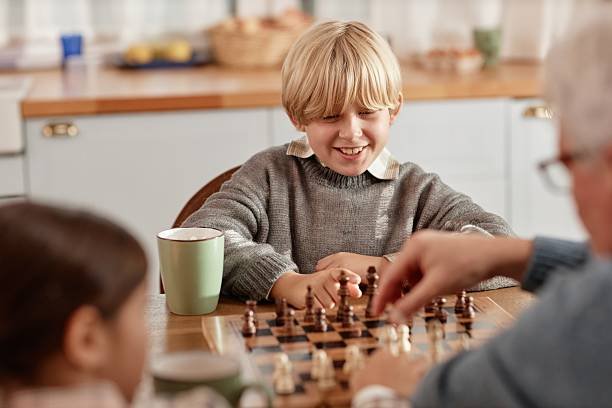
5. Rocker Chess Club
Rocker Chess is a friendly local chess club. People come here to play, hang out, and enjoy the game. It’s a cozy place for casual games, mostly for adults and advanced teens.
There’s not much focus on teaching, and no formal classes. But it’s still a great space to meet fellow players and enjoy chess as a social activity.
Why Online Chess Training is The Future
The world has changed. And so has the way we learn.
Ten years ago, online lessons felt strange. Today, they feel smart. They are flexible, clear, and effective. You can learn anything from anywhere — and chess is no exception. In fact, chess is one of the best subjects to learn online.
Why? Because chess doesn’t need a big classroom or a physical board. All it needs is a quiet space, a good coach, and a smart plan. And online tools make all of that easier.
With online chess, your child can learn from the best — not just from whoever is nearby. You can pick a coach who truly understands how to teach your child, no matter where they live. And if that coach isn’t a good fit? You can switch, easily. That’s real choice. That’s freedom.
Online learning also lets your child move at the right speed. Not too fast. Not too slow. Just right. If something is hard, it can be explained again. If something is easy, they can move on. There’s no pressure to “keep up with the class” or “wait for others to catch up.” Every lesson is personal.
Another reason online chess is the future? Life is busy. Parents work. Kids have homework. There are sports, music, family time. Online classes fit into all of that. No driving. No waiting. No snow delays. Just open your laptop and learn. And when life gets messy, lessons can be rescheduled. No lost time. No missed learning.
Online tools also make learning deeper. Students can review lessons, replay games, and see their progress in real-time. They can play games against students from other cities and countries. They can join online tournaments. They can get feedback right away. All of this builds confidence.
And here’s something else: online chess lessons teach life skills. They teach how to focus when the screen is full of distractions. They teach how to communicate clearly, even through a video call. They teach how to be responsible and ready — even when learning from home. These skills help far beyond chess.
Families in Winnipeg — and all around the world — are starting to see this. They’re not just choosing online chess training because it’s convenient. They’re choosing it because it works. It gets results. It builds skills. And it fits into real life.
How Debsie Leads the Online Chess Training Landscape
Debsie isn’t just part of this online shift. It’s leading it.
From the very beginning, Debsie was built for online learning. Every class, every tool, every coach — everything is designed to work perfectly in a virtual classroom. That means no awkward workarounds. No confusion. Just smooth, clear, focused learning.
What makes Debsie different is how deeply we care about each student’s journey. We don’t just want students to “attend” lessons. We want them to grow. That’s why we start with a real conversation. What are your goals? What’s your level? What do you enjoy about chess? What’s hard for you? That’s where we begin — with your story.
Then we build a plan. A real one. A roadmap that shows where you’re going, how you’ll get there, and how we’ll know you’re improving. No guessing. No fluff. Just focused, guided learning.
Debsie coaches are the heart of the experience. They are FIDE-certified, kind, patient, and skilled at working with kids and teens. They teach in simple words. They make every lesson feel fun — even the hard ones. And they truly care. Every coach is trained not just in chess, but in how to teach chess in an online setting.
Students get personal feedback, weekly practice puzzles, game analysis, and one-on-one attention that feels like a private coach sitting beside them — even though it’s on a screen. They also join friendly online tournaments twice a month. These are not high-pressure events. They are safe, fun, and full of chances to apply what you’ve learned.
Debsie is global. Students from over nine countries, across four continents, are learning with us right now. That means your child becomes part of a worldwide chess family. They get to meet kids from different cultures, play new opponents, and be inspired by a bigger world.
And for Winnipeg families, this global access is golden. Instead of relying on local options that may not be consistent or flexible, you get the best of the best — delivered right to your home.
Debsie also supports parents. We keep you informed. We show you your child’s progress. We give you access to reports, feedback, and lesson summaries. You’re not left guessing. You’re part of the journey too.
Conclusion
Choosing the right chess class in Winnipeg doesn’t have to be hard. Whether you’re a parent wanting the best for your child, or a student who wants to improve and enjoy the game more — what matters most is how you learn.
You want a teacher who cares. A plan that makes sense. Lessons that are fun but focused. And progress that you can see and feel. That’s what real learning looks like.
Offline chess classes may offer a warm handshake and a wooden board. But too often, they miss the things that matter most: structure, flexibility, feedback, and consistency.
Online chess training fixes that. And Debsie takes it to a whole new level.
With Debsie, you get expert teachers, a clear step-by-step path, and personal attention that helps you grow fast and feel good doing it. You get lessons that fit your schedule, games that build your skills, and a community that cheers you on. It’s more than a class. It’s a journey — and we walk it with you.
✅ Try a free class with Debsie today.
Comparisons With Other Chess Schools:

Sayandeep Pal cares deeply about how children learn. He believes every child should feel excited to learn—like opening a new gift. At Debsie, he helps turn lessons into games so kids laugh, think, and grow all at once. He often says, “Learning should never feel like homework. It should feel like a quest!”
Sayandeep reads lots of books about how children learn best. Some of his favorites are The Elephant in the Brain, The Self-Driven Child, and How Children Learn by John Holt. These books help him understand how kids think and feel when they learn new things.
He writes stories, blogs, and lesson ideas that make learning fun and simple. He also talks to teachers and parents about how to bring more play into classrooms. Sayandeep dreams of a world where kids are free to ask “why,” play with ideas, and feel proud of what they discover on their own.
Accomplishments – Club Master in Chess, 2000+ Rating at Chess.com, Has played and secured fifth position in national chess championships.
Other Comparisons of Best Chess Classes All Across Canada: