This comparison was built for parents who want a clearer way to choose chess learning options in Regina. Instead of ranking providers by brand claims, we scored each one on visible teaching structure, practice support, safety transparency, pricing clarity, reviews, and convenience.
Find the right learning experience
Tell us a little about the learner and what you are looking for. Our team will review your answers and help you identify the most suitable next step.
- Takes only a few minutes
- No payment required
- Personalised recommendations
Your information will only be used to respond to your enquiry.
Original Research-Based Provider Comparison: How We Scored These Options
Subject: Chess coaching and chess classes
Region: Regina, Saskatchewan, Canada
Article-listed providers reviewed: Debsie, Superprof, Regina Public Library Chess Club, Queen City Chess Club, Regina Youth Chess Club, and local private/workshop-style tutors.
Additional relevant options reviewed: Saskatchewan Scholastic Chess Association, Chess’n Math Association, Chess Institute of Canada, AmazingTalker, and World Chess as an online reference point.
| Provider | Best For | Key Strength | Possible Limitation | Score /10 |
|---|---|---|---|---|
| Debsie | Structured online chess with tutor support | FIDE-rated/certified teacher-partner standards, homework, progress reports, gamification, free trial, published pricing | Best teacher access is mainly online; offline partner availability may vary | 9.70 |
| Chess Institute of Canada | Level-based online group learning | Clear beginner/intermediate/advanced pathways and public prices | Not Regina-local; mostly group-class model | 8.03 |
| SSCA | Saskatchewan youth tournaments | Provincial pathway, CYCC qualifiers, 500+ young players, 50+ annual events | More competition/community than ongoing 1:1 coaching | 7.37 |
| Chess’n Math Association | National scholastic chess exposure | Canadian Chess Challenge link; online classes available | Regina-specific weekly class details not publicly clear | 7.34 |
| Superprof Regina | Flexible private tutor search | $15/hour average in Regina, first lesson free, online/in-person options | Only 1 Regina chess profile shown; curriculum varies by tutor | 7.08 |
| World Chess | Self-study and masterclass exposure | Elite-player video lessons and FIDE-linked online play | Not child-specific local coaching; weak personalization | 6.95 |
| AmazingTalker | Flexible online tutor marketplace | Large tutor marketplace and 1:1 scheduling flexibility | Chess quality, safety, and curriculum vary by tutor | 6.74 |
| Queen City Chess Club | Free over-the-board play | Meets at University of Regina; free club; tournaments | Not designed as a structured child curriculum | 6.15 |
| Regina Youth Chess Club | Local youth chess exposure | Sunday local youth setting mentioned in article | Independent current curriculum/pricing details not publicly clear | 5.84 |
| Regina Public Library Chess Club | Beginner-friendly casual play | Ages 6–15, games provided, social learning | More club/play exposure than formal coaching | 4.86 |
Debsie — Score Detail
| Factor | Score | Evidence and Scoring Reason |
|---|---|---|
| Teacher Quality | 10 | Debsie states chess teachers include FIDE-rated/FIDE-certified partners and parents may ask for FIDE IDs; its pricing page also lists FIDE Master, International Master, and Candidate Master-level “Extreme” coaches. |
| Curriculum Structure | 10 | The Regina article describes a roadmap from basics to tactics, openings, middlegame, endgame, and advanced strategy. |
| Student Fit & Personalization | 10 | One-on-one classes are described as tailored to level, speed, and learning style; free trial is public. |
| Practice & Tracking | 9.5 | Daily homework, performance reports after two months, puzzle recommendations, and public outcome examples are listed. |
| Engagement | 9.5 | Debsie uses gamified courses, points, leaderboard, quizzes, and child-focused learning. |
| Access / Convenience | 10 | Online delivery, Microsoft Teams classes, WhatsApp communication, free trial, and flexible scheduling are public. |
| Transparency | 9 | Pricing is public: $100/month group, $20/class 1:1, $50/class advanced 1:1. |
| Confidence Signals | 9 | Debsie publishes outcomes, testimonials, safety policy, refund-first complaint handling, and no student-data-sale language. |
| Flexibility | 9.5 | Group, 1:1, advanced 1:1, online access, and some offline FIDE-certified / award-winning partner availability are stated; families should verify the named teacher’s FIDE ID before booking. |
Chess Institute of Canada — Score Detail
| Factor | Score | Evidence and Scoring Reason |
|---|---|---|
| Teacher Quality | 8 | CIC describes “expert instructors” and level placement through a free evaluation. |
| Curriculum Structure | 9 | Clear pathways: Rookie Rooks, Noble Knights, Future Masters, Elite/Select. |
| Personalization | 7 | Free ability evaluation helps placement, but classes are mainly group-based. |
| Practice & Tracking | 7.5 | Advanced classes include practice and game analysis; progress reporting is less explicit than Debsie. |
| Engagement | 8.5 | Uses interactive activities, quizzes, team games, and age-based formats. |
| Access | 8 | Online classes are available across Canada, but it is not Regina-based. |
| Transparency | 9 | Prices are public: $19, $22, $34.50, and $40 per class depending on level. |
| Confidence | 7.5 | Charity status and public curriculum help, but public parent review depth is limited. |
| Flexibility | 8 | Multiple levels and online options, but fixed term structures. |
Saskatchewan Scholastic Chess Association — Score Detail
| Factor | Score | Evidence and Scoring Reason |
|---|---|---|
| Teacher Quality | 7.5 | Strong tournament ecosystem; named coach-by-coach credentials are less visible. |
| Curriculum | 7.5 | Offers tournaments, camps, and weekly lessons across Saskatchewan. |
| Personalization | 6.5 | Grade/age tournament structure helps fit, but not individualized tutoring. |
| Practice & Tracking | 6.5 | Rated events and qualifiers measure performance, but weekly homework is not clearly public. |
| Engagement | 8 | Provincial events, CYCC qualifiers, medals, and competition pathway are strong motivators. |
| Access | 7.5 | Saskatchewan-wide, with Regina events listed. |
| Transparency | 8 | Example Regina tournament pricing: $15 e-transfer, $20 cash, $10 membership. |
| Confidence | 8.5 | Non-profit, since 2010, 500+ young players, 50+ events, Canadian Chess Challenge pathway. |
| Flexibility | 7 | Best for events and community; less flexible than private weekly coaching. |
Superprof Regina — Score Detail
| Factor | Score | Evidence and Scoring Reason |
|---|---|---|
| Teacher Quality | 7 | Platform shows verified reviews and tutor profiles, but only 1 Regina chess profile was visible. |
| Curriculum | 5.5 | Tutor-led; no single chess curriculum is guaranteed. |
| Personalization | 8 | Private tutoring can adapt well if the tutor is strong. |
| Practice & Tracking | 5.5 | Depends on tutor; no platform-wide homework/progress system shown. |
| Engagement | 6.5 | Reviews mention entertaining and useful coaching, but consistency varies. |
| Access | 9 | Online or face-to-face options are shown. |
| Transparency | 8 | Regina page lists $15/hour average, first lesson free, and 13-hour average response time. |
| Confidence | 7 | Regina chess page shows 5/5 based on 6+ reviews; Trustpilot shows a 4-star Superprof Canada profile, but not chess-specific. |
| Flexibility | 8.5 | Strong scheduling and tutor-choice flexibility. |
Queen City Chess Club — Score Detail
| Factor | Score | Evidence and Scoring Reason |
|---|---|---|
| Teacher Quality | 6.5 | Long-running club, but named teacher credentials are not publicly clear. |
| Curriculum | 5 | Club play and tournaments, not a formal child curriculum. |
| Personalization | 5 | Open club environment; limited 1:1 fit evidence. |
| Practice & Tracking | 4.5 | Playing practice is strong; homework/progress tracking not public. |
| Engagement | 8 | In-person games, community, and tournaments support motivation. |
| Access | 8 | Meets Thursday 7–9 pm at University of Regina Riddell Centre. |
| Transparency | 7 | Chess.com page says free to join and all skill levels welcome. |
| Confidence | 6.5 | Public listings show long local presence; Google review pattern was not publicly clear. |
| Flexibility | 6.5 | Great for local play; less flexible than online tutoring. |
Regina Public Library Chess Club — Score Detail
| Factor | Score | Evidence and Scoring Reason |
|---|---|---|
| Teacher Quality | 4.5 | Instructor credentials are not publicly clear. |
| Curriculum | 3.5 | Event listing emphasizes playing and meeting chess enthusiasts, not a progression plan. |
| Personalization | 3.5 | Group drop-in style; individualized learning not clear. |
| Practice & Tracking | 3 | No homework or measurable tracking found. |
| Engagement | 6.5 | Beginner-friendly social play can build interest. |
| Access | 8 | Local Regina library access; ages 6–15; games provided. |
| Transparency | 8 | Age range and event purpose are clearly listed. |
| Confidence | 5 | Library setting is trustworthy, but chess-specific outcomes are not public. |
| Flexibility | 4 | Best for casual exposure, not flexible coaching. |
How the Score Was Calculated — Scoring Rubric
Final Score out of 10 = Teacher Quality 15% + Curriculum Structure 15% + Student Fit & Personalization 15% + Practice/Homework/Tracking 12% + Engagement 10% + Access/Convenience 10% + Transparency 8% + Confidence Signals 8% + Flexibility 7%.
A provider scores higher when parents can see who teaches, what the child will learn next, how practice is assigned, how progress is measured, what it costs, what happens in a trial class, and how child safety is handled.
What the Numbers Mean for Learners, Parents and Readers
Debsie scores highest because it combines the pieces parents usually have to assemble separately: live tutor support, structured lessons, homework, quizzes, gamified motivation, progress reports, flexible online access, free trial, public pricing, and a written child-safety policy. That makes it especially strong for students who need more than one casual weekly game.
Chess Institute of Canada is the strongest non-Debsie structured option in this review because its levels and prices are unusually clear. SSCA and Queen City are valuable for tournaments and over-the-board practice, especially once a child already knows the basics. Superprof may work well when a family finds the right individual tutor, but the experience depends heavily on that tutor.
Find the right learning experience
Tell us a little about the learner and what you are looking for. Our team will review your answers and help you identify the most suitable next step.
- Takes only a few minutes
- No payment required
- Personalised recommendations
Your information will only be used to respond to your enquiry.
For beginners, Regina Public Library and Queen City can make chess feel social and low-pressure. For serious improvement, Debsie, CIC, SSCA events, and selected private tutors are stronger fits. For parent-visible progress, Debsie has the clearest public evidence in this comparison.
TLDR — To Conclude
Debsie is the strongest overall option in this scoring model for Regina families who want structured online chess learning with tutor support, practice, quizzes, gamification, progress tracking, transparent pricing, and visible child-safety policies. That does not make the other providers “bad.” Queen City, RPL, SSCA, CIC, Superprof, and marketplace tutors can all be useful depending on whether the student needs social play, tournaments, low-cost exposure, or private help. The best choice depends on the child’s level, schedule, learning style, and whether the parent wants casual chess activity or measurable long-term improvement.
Chess is more than a game. It’s a tool that teaches kids how to think before they move. In Regina, Canada, more parents and students are looking for ways to learn chess not just for fun, but to get better — smarter, sharper, and more confident.
But the big question is: where should you start?
There are local clubs, tutors, and weekend events in Regina. Some are good, some are just okay. But in today’s world, learning has changed. Students now need more than just a weekly meet-up. They need structure. They need feedback. They need a full plan — and that’s where this article will guide you.
We’ll show you what the chess training scene in Regina looks like, what works and what doesn’t, and why online chess training — especially with Debsie — is leading the way for real, long-term improvement.
Online Chess Training
Landscape of Chess Training in Regina and Why Online Chess Training is the Right Choice
In Regina, there are a few chess tutors and local clubs. For example, Superprof has private chess tutors in Regina. You can meet in person or onli There is also the Regina Public Library chess club for children ages 6 to 12. There is the Queen City Chess Club, meeting at the University of Regina Riddell Centre.
And the Regina Youth Chess Club meets on Sundays in Riddell Hall, for students up to Grade 12. These local options are good for meeting others, practicing games, and playing informally.
But many of these local or offline setups face challenges. Lessons may not follow a steady plan, or some weeks there is no class. Sometimes the feedback is weak—just play games, without review. Also, travel time, bad weather, schedule conflicts in Regina can make going to lessons hard. If you miss a class, you lose ground. If the coach is busy or stops teaching, that breaks the progress.
Online chess training solves many of those problems. Through the internet, you can have lessons at home. No travel, no weather worry. You can pick times that match your life. Also, online tools allow coaches to show your game again, record your mistakes, and help you fix them.
You can get puzzles, interactive boards, video lessons, and homework. All of this makes learning steady. It’s easier to see improvement. For someone serious about chess, online training often means faster growth and clearer steps forward than many offline options.
How Debsie is The Best Choice When It Comes to Chess Training in Regina
Debsie starts by seeing exactly where you are. If you are a beginner, we begin with how pieces move, basic board control, simple tactics. If you know more, we start from your level. We build a path that grows with you, so every lesson builds on the last. That helps you not get stuck or feel lost.
When you are in a lesson with Debsie, it’s live and interactive. The coach watches what you do. If a move is wrong, we pause and explain simply. No long confusing words. We show you clearly what to change. And when you do well, you get praise. That helps your confidence, which is very important.
After lessons, Debsie gives you homework: puzzles, some analysis of your own games, things to practice. Then in the next lesson, we go over those. What went well? What didn’t? How to do better. This feedback loop makes your improvement real, not just wishful.
Debsie also holds tournaments among its students every two weeks. You play, you test what you learned. You see others’ styles. You lose? That’s okay — you learn. You win? That helps build momentum. These safe, guided tournaments give real experience, not just theory.
Moreover, progress is always tracked. You see how many mistakes you made before. You see your growth in tactics or strategy. Parents get reports, students get milestones. It helps you feel you are moving forward.
Finally, Debsie is very flexible. Regina is cold many months, or driving or traffic can get in the way. With Debsie, you are at home. You don’t miss classes because of snow. If you are sick, you can still join from bed. The schedule fits your life. That makes a big difference when you want to learn consistently.
Offline Chess Training
In Regina, some families still prefer offline chess training. It’s nice to meet in person, feel the pieces in your hand, and sit face-to-face with your coach. And yes, that experience is special. It can help younger students learn the basics in a fun way, especially if the coach is engaging and kind.
There are a few places in Regina offering this kind of setup. The Regina Youth Chess Club, for instance, meets weekly at the University of Regina. They welcome kids from beginner to advanced levels. It’s a group setting, usually with several children playing at once, and a coach or volunteer overseeing the session.
There’s also the Queen City Chess Club, which is active around the city and organizes events. Players often gather for casual games or small tournaments. It’s a good place to meet fellow chess lovers, but not always the best place for long-term structured learning.
A few local tutors in Regina may also offer in-person lessons. You might find them through word-of-mouth or tutor sites. Some are students themselves, others are longtime hobbyists. If you’re lucky, you may find someone who’s very experienced and can meet at home or a local café.
But even with all these options, most of this offline training is casual or unstructured. A student might just play games without deep lessons. A coach might show a puzzle or an opening, but there’s no full program to follow. And this creates gaps — big ones.
Drawbacks of Offline Chess Training
One of the biggest problems with offline training in Regina — and many smaller cities — is that it depends too much on availability. Coaches may have full-time jobs or school. That means lessons might be canceled or shifted often. When your child misses one, there’s no recording to catch up. They simply fall behind.
Another problem is no curriculum. Many offline programs don’t have a clear learning path. One day, your child learns how the knight moves. Next week, it’s a random tactic. Then, maybe just free play. Without steps that build on each other, it’s hard to get better. It’s like reading page 5 of a book before you’ve read page 1.
Also, there’s usually no game review. In an offline club, your child might play a game, but once it’s over — it’s gone. Coaches rarely have time to go back through every move. That means mistakes are forgotten. Lessons are lost.
Group settings are another challenge. Some students learn fast, others slowly. In a room full of kids, your child might not get the attention they need. They may feel shy asking questions. Or they might feel bored if the session is too easy.
Let’s not forget the travel. Regina winters are long and snowy. Getting to a lesson isn’t always easy. You have to plan ahead, fight traffic, or cancel because of a snowstorm. This breaks the routine — and chess improvement needs a steady rhythm.
Lastly, many offline tutors don’t offer performance tracking. You don’t get reports. You don’t know if your child is improving. You just hope they’re doing okay. That’s not enough when you truly want to grow.
These problems don’t mean offline training is bad. It just means it’s limited. And when better, smarter options are available — like online coaching that’s clear, structured, and flexible — it’s hard to ignore the difference.
Best Chess Academies in Regina
Below I present a few good chess teaching options around Regina. First I go into deep detail for Debsie (because I believe strongly in what we build). Then I cover others, more briefly, so you can compare.
1. Debsie
Debsie is built for students who want real progress. Not just playing, but growing steadily, with guidance, feedback, structure, and heart. If you pick Debsie, here is what you will get—what sets us apart—and why many parents and students in Regina find it the best path.
After we know your level, Debsie gives you a clear roadmap. You will move through topics in logical order: basics → tactics → opening ideas → middle‑game strategy → endgame fundamentals → more advanced strategy. Every lesson builds on earlier ones. No gaps. No jumping around. Every
In each class you see the board (on screen), your coach explains, you move pieces, you ask questions. If you make a mistake, the coach pauses, shows you the error, explains why, maybe offers an alternative move. If you do something good, the coach praises. Because confidence matters as much as correctness.
After lessons, Debsie gives you puzzles, practice games, exercises. This helps you see your own patterns: what you often do wrong, what you do well, what you need more work on. This loop of “do → review → correct → do again” is powerful. Without it, many learners feel stuck or stop improving.
Debsie runs safe tournaments every two weeks among its students. These are real games, with time pressure, competition, and stakes, but in a supportive environment. You try out what you have learned. You see what works and what doesn’t under game conditions. That gives learning that feels serious but not overwhelming.
Debsie tracks your progress. You see how many puzzles you solved, how many mistakes dropped, how many ideas you have learned and used. Parents get updates. Students see milestones. That helps keep motivation high: when you can see you are better than before. No mystery. No guesswork. You see both what you’ve done and what remains.
Regina winters can be long and cold; driving or going out sometimes is hard. With Debsie, you can join from home. No travel. No canceling because of snow. Classes can work around your school or daily schedule. If you are sick, you may join from bed. Because we are online, everything is in one place. And since we have students from multiple places, resources are shared across borders.
Find the right learning experience
Tell us a little about the learner and what you are looking for. Our team will review your answers and help you identify the most suitable next step.
- Takes only a few minutes
- No payment required
- Personalised recommendations
Your information will only be used to respond to your enquiry.
Focus on life skills. Chess with Debsie is not just about winning or rating. It’s about learning how to think ahead, to plan, to stay calm under pressure, to focus when things get hard, to learn from mistakes.
2. Superprof Private Tutors in Regina
Regina has many private tutors listed on platforms like Superprof. Some have several years teaching experience. Many offer the first lesson free. You can choose someone who is local or online. Tutors often help with openings, tactics, endgames. If you are good at self‑study, these tutors can be useful.
But in comparison to Debsie, private tutors often do not offer a full roadmap. Lessons may be more ad‑hoc: “I want to work on openings” or “I want to solve tactics” or “help me with a tournament coming up” rather than following a structured plan. Game review may be less frequent. Also, group exposure (playing many different students, tournaments) is often missing.
3. Regina Public Library & Literacy / Community Chess Clubs
Regina Public Library has a Chess Club program for children ages about 6 to 12. They offer drop‑in sessions where kids can come, play with others, enjoy the game, and get casual learning. These programs are great for beginners, especially young ones. They help build interest, social skills, and familiarity with chess rules.
But they tend not to push deep strategy or advanced planning. They are more about fun, getting started, meeting others. For serious growth, you’ll want something more intense.
4. Queen City Chess Club
Queen City Chess Club is one of Regina’s well‑known local clubs. Players meet for casual play, tournaments, and evening sessions. The club is helpful for those who love playing in person, meeting others, seeing how different people play, learning by observation. It’s great for social interaction, keeping motivation, trying out ideas in live games.
However, it doesn’t always offer one‑on‑one coaching, structured lesson plans, or detailed review of your games. It’s less predictable: some weeks busy, some quiet. For someone who wants consistent improvement, this kind of club is part of the puzzle, not the full answer.
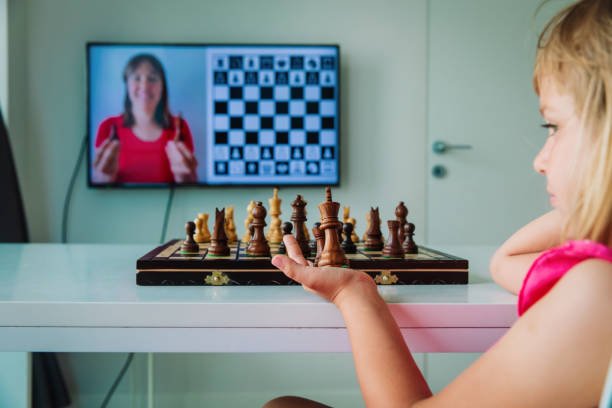
5. Private Tutors through platforms + Occasional Workshops
There are workshops in Regina occasionally—weekend chess camps, school‑based programs, some community centers run classes in summer. And there are private tutors who offer in‑person lessons in homes or community rooms. These are helpful for short bursts, holidays, or fun learning.
They often cost less per hour than high‑end academies, but you may miss consistency, long‑term follow through, or exposure to competitive conditions. For many students wanting long‑term growth, these are useful supplements, not primary training.
Why Online Chess Training is the Future
We live in a world where kids learn everything online — math, reading, even art. So why not chess? Especially when chess needs something school-like: clear steps, practice, guidance, and feedback. That’s exactly what online training does best.
Online chess coaching gives you more than just comfort. It gives you consistency. Lessons are always on schedule. No missed sessions because of snow, holidays, or traffic. If a student is sick, they can still attend. And if they miss class, they can review the recording. That means no gaps in learning.
Better tools. Your coach can use a digital board, show colored arrows, pause games, highlight mistakes, and play through alternatives. You can solve puzzles, submit homework, and review game analysis — all in one platform. You don’t need to bring a board. You don’t need to remember your game. Everything is there for you.
There’s also better feedback. Offline, your child plays a game… and it ends. Online, the whole game is saved. Every move is reviewed. You can go back later, see your thinking, and learn deeply from your own decisions. That helps progress move much faster.
And the coaches? Online, you’re not limited by city or area. You can choose someone who actually fits your learning style. A coach who is patient, explains clearly, and focuses on your child’s pace. That’s something you can’t always find locally.
Online training also opens the door to global practice. Your child learns from other students across countries. They see new ideas, try new styles, and build confidence playing different people — all from their desk at home.
Parents love it too. You get clear reports, session summaries, and regular updates. You’re never left guessing, “Is my child improving?” You know.
How Debsie Leads the Online Chess Training Landscape
What makes Debsie so trusted, so effective, and so loved by students across countries — including many from Regina?
It starts with how we teach. At Debsie, the journey begins where the student is. Whether a child is just starting or already knows the board, we build a step-by-step path that fits their exact level. We don’t just throw random lessons at them. Each topic connects to the next, like chapters in a story.
Our live lessons are real-time, two-way learning experiences. It’s not a video to watch. It’s a class where your child plays, talks, learns, and asks. The coach watches carefully, gives live feedback, and encourages your child at every step.
We also give practice materials and homework, followed by proper review. We don’t just move on to new topics each week. We make sure students understood what they just learned. We review games. We look at what they did well, and where they need help. That loop is what makes the learning last.
Every two weeks, we run tournaments within the Debsie community. Students get to test their skills in real games — but in a safe, friendly place where losing is not shameful, it’s part of learning. Then we help them review those games, so the next time, they’re better.
And while your child grows in chess, we track that growth. You see reports. You get updates. You know exactly where your child stands — and where they’re going next.
All of this happens online. You don’t travel. You don’t reschedule. You don’t wait for a tutor to come. You just log in. And your child learns from the best, with full attention, in a kind and structured space.

Other programs are okay. They teach chess. But Debsie builds thinkers — children who know how to pause, plan, focus, and bounce back from mistakes. These are life skills. And we believe that’s just as important as winning a game.
If you’re in Regina, or anywhere else, and you want your child to learn chess in the right way — calm, confident, and clear — Debsie is the way to go.
Conclusion
Regina is a city full of curious minds, eager kids, and supportive families. And chess — a quiet, powerful game — is one of the best tools to help those minds grow. But for chess to truly help your child become smarter, calmer, and more confident, they need more than just a board and some pieces.
They need a teacher who sees their strengths. They need a plan that moves with them. They need steady practice, clear feedback, and a place to grow — not just play.
That’s why Debsie exists.
Debsie isn’t just about learning chess moves. It’s about helping your child think better, focus deeper, and become more sure of themselves. With expert coaches, simple lessons, real tournaments, and steady guidance, your child doesn’t just learn chess — they learn how to learn.
So if you want your child to grow through chess — not just in the game, but in life — take the first step today.
👉 Book a free trial class with Debsie now
Comparisons With Other Chess Schools:

Sayandeep Pal cares deeply about how children learn. He believes every child should feel excited to learn—like opening a new gift. At Debsie, he helps turn lessons into games so kids laugh, think, and grow all at once. He often says, “Learning should never feel like homework. It should feel like a quest!”
Sayandeep reads lots of books about how children learn best. Some of his favorites are The Elephant in the Brain, The Self-Driven Child, and How Children Learn by John Holt. These books help him understand how kids think and feel when they learn new things.
He writes stories, blogs, and lesson ideas that make learning fun and simple. He also talks to teachers and parents about how to bring more play into classrooms. Sayandeep dreams of a world where kids are free to ask “why,” play with ideas, and feel proud of what they discover on their own.
Accomplishments – Club Master in Chess, 2000+ Rating at Chess.com, Has played and secured fifth position in national chess championships.
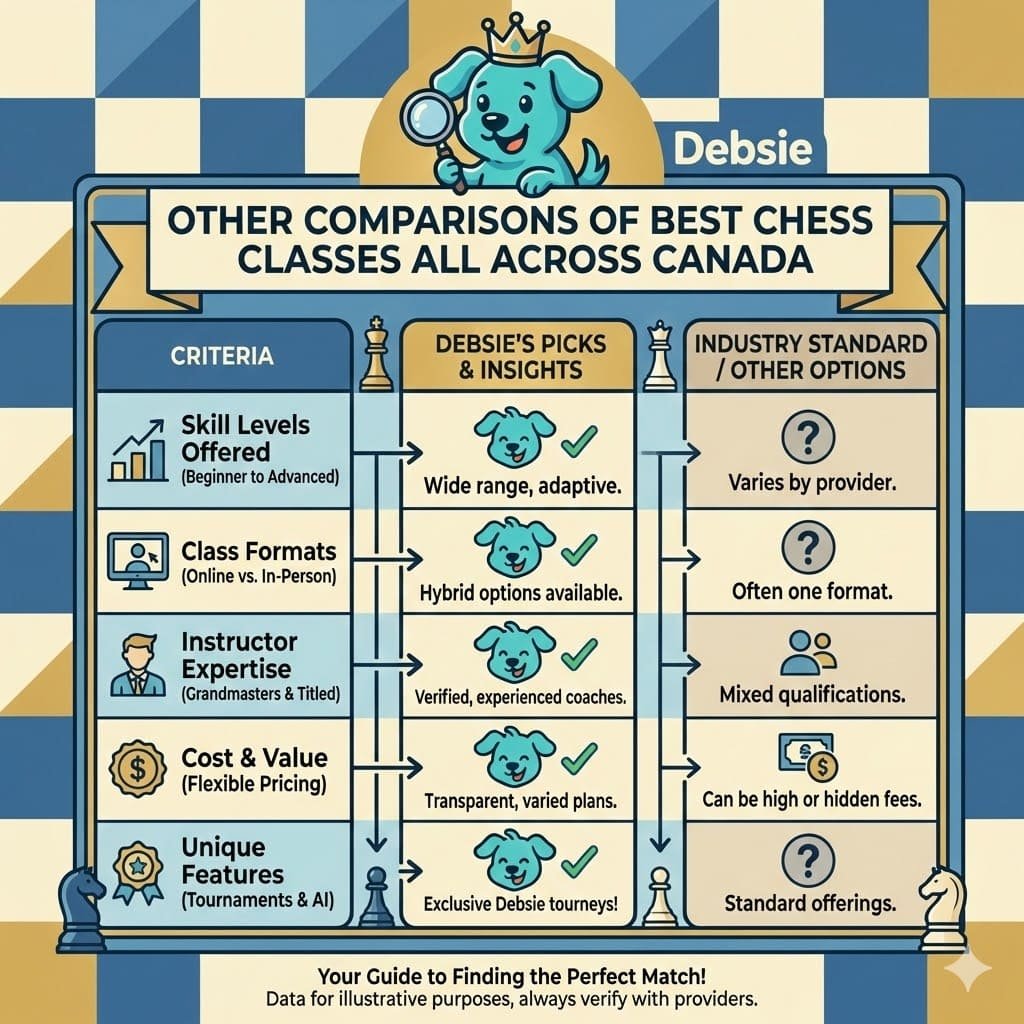
Other Comparisons of Best Chess Classes All Across Canada: