We compared Thunder Bay chess-learning options using the same nine-factor scorecard for every provider. Publicly verifiable details counted; unclear pricing, safety, curriculum, or review data lowered transparency rather than being guessed.
Find the right learning experience
Tell us a little about the learner and what you are looking for. Our team will review your answers and help you identify the most suitable next step.
- Takes only a few minutes
- No payment required
- Personalised recommendations
Your information will only be used to respond to your enquiry.
Original Research-Based Provider Comparison: How We Scored These Options
Subject: chess coaching and chess classes. Region: Thunder Bay, Ontario, Canada. Providers already mentioned: Debsie, Thunder Bay Chess Club, Thunder Bay youth/library/school chess clubs, AmazingTalker, Thunder Chess Academy. Additional Canada-accessible options reviewed: Chess Institute of Canada, Superprof Canada, Upstep Academy, The Chess Mania, Outschool.
| Provider | Best For | Key Strength | Possible Limitation | Score /10 |
|---|---|---|---|---|
| Debsie | Structured online chess with parent-visible progress | Live tutors, homework, quizzes, gamified practice, safety policy, pricing page | Mostly online; offline partner access is not the main recommendation | 9.79 |
| Upstep Academy | Online chess pathway for kids | 1:4 batches, staged curriculum, free demo, Canada page | Pricing is shown as a broad range, not exact package-by-package | 8.48 |
| Chess Institute of Canada | Formal children’s chess education | Clear levels from Rookie Rooks to Elite; free evaluation | Mainly Toronto/online, not Thunder Bay in-person | 8.26 |
| Thunder Chess Academy | Small online groups with titled coaches | NM/FIDE-rated coaches; $250 for 8 classes | Based in Cincinnati, not local Thunder Bay | 7.83 |
| The Chess Mania | Canada-based kids’ online chess | FIDE-rated coaches, small batches, free trial | Pricing not publicly clear | 7.58 |
| Outschool | Flexible one-off or ongoing kids’ classes | Large marketplace; safety/background-check policy | Quality varies by individual teacher | 7.29 |
| Superprof Canada | Finding an individual tutor | 4,789 chess tutors, average $29/h, many free first lessons | Marketplace quality depends on tutor | 7.15 |
| AmazingTalker | Flexible 1:1 tutor matching | Trial lessons and low starting prices | Tutor quality/curriculum varies; third-party reviews note marketplace friction | 6.89 |
| Thunder Bay Chess Club | Local over-the-board play | Tuesday Gameshelf meetings and CFC-rated tournaments | Not a structured tutoring program | 5.66 |
| Thunder Bay Public Library Chess Club | Social beginner play | Free-style drop-in feel, boards provided, all ages | Coaching path, homework, tutor credentials not publicly clear | 5.58 |
Detailed Provider Scorecards
Debsie
| Factor | Score | Evidence and Scoring Reason |
|---|---|---|
| Teacher Quality | 10 | Debsie states chess teachers may be FIDE-rated/FIDE-certified, parents may request FIDE IDs, and the pricing page lists advanced “Extreme” coaches with FIDE titles such as FM/IM/CM. The article also says Debsie uses certified coaches. |
| Curriculum Structure | 10 | Public pages describe structured lessons, personalized curriculum, chess tactics/openings/endgames, daily homework, quizzes, revision, and performance reports. |
| Student Fit & Personalization | 10 | The trial checks level, thinking style, confidence, attention span, and fit; one-on-one pricing states curriculum adapts to level, speed, and learning style. |
| Practice / Tracking | 9.5 | Daily homework, puzzle/revision tasks, class feedback, two-month performance reports, progress indicators, and student-outcome examples are public. |
| Engagement | 10 | Debsie has gamified courses, points, leaderboards, puzzles, interactive trial tasks, and live tutor support. |
| Convenience | 10 | Online lessons remove Thunder Bay travel constraints and offer flexible scheduling; Debsie also notes offline FIDE-certified / award-winning partners, but recommends online for access to its wider teacher pool. |
| Transparency | 9.5 | Pricing is public: group $100/month for 2 weekly classes, 1:1 $20/class, advanced $50/class, plus free trial. Safety and outcome pages are also public. |
| Confidence Signals | 9 | Debsie publishes parent-approved outcomes, safety procedures, and a WorldChess community comparison rates Debsie 10/10 versus Wyzant and Kingdom of Chess; that comparison is supplementary, not Thunder Bay-specific. |
| Flexibility | 9.5 | Offers group, 1:1, advanced coaching, homework support, free trial, topic requests, and teacher-fit adjustments. |
Upstep Academy
| Factor | Score | Evidence and Scoring Reason |
|---|---|---|
| Scores | 8.5 / 9 / 8.5 / 8 / 8.5 / 9 / 8 / 8 / 8.5 | Strong public curriculum: beginner to master levels, 1:4 batches, free 1:1 demo, Canada page, digital tools, makeup/recording policy, and stated CAD $60–$180/month market range. Limitation: exact plan pricing is not as clear as Debsie’s. |
Chess Institute of Canada
| Factor | Score | Evidence and Scoring Reason |
|---|---|---|
| Scores | 8 / 9.5 / 8 / 7.5 / 8.5 / 8 / 9 / 8 / 7.5 | One of the clearest curricula reviewed: free ability evaluation, Rookie Rooks, Noble Knights, Future Masters, Elite/Select, ages, prerequisites, class duration, and prices from $19 to $40/class. Strong structure, but less individualized than Debsie’s 1:1 pathway. |
Thunder Chess Academy
| Factor | Score | Evidence and Scoring Reason |
|---|---|---|
| Scores | 9 / 7.5 / 7.5 / 7 / 7.5 / 8 / 8 / 8 / 8 | Coaches include National Masters and FIDE-rated/USCF-rated instructors; classes are 4–8 students, 45 minutes instruction plus guided games, Google Meet + Lichess, and $250 for 8 classes. Good program, but Cincinnati-based, not Thunder Bay-local. |
The Chess Mania
| Factor | Score | Evidence and Scoring Reason |
|---|---|---|
| Scores | 8 / 8 / 7 / 7 / 8 / 8.5 / 7 / 7 / 7.5 | Canada-established online chess for children 3.5+, free trial, structured syllabus, small batches, FIDE-rated coaches, monthly events and tournaments. Pricing and safety policy are not publicly clear. |
Outschool
| Factor | Score | Evidence and Scoring Reason |
|---|---|---|
| Scores | 7 / 6 / 7.5 / 5 / 8 / 9 / 8 / 8 / 9 | Strong for flexible online kids’ chess classes and broad choice. Outschool has public teacher background-check and trust/safety policies. Curriculum, homework, and progress tracking vary by class and teacher. |
Superprof Canada
| Factor | Score | Evidence and Scoring Reason |
|---|---|---|
| Scores | 7.5 / 5.5 / 8.5 / 5 / 6 / 8.5 / 8 / 7.5 / 9 | Strong tutor marketplace: 4,789 chess tutors, 5/5 average rating from 1,414+ reviews, average $29/h, many online options, and 97% offering a first lesson free. Weakness: no single curriculum or consistent tracking system. |
AmazingTalker
| Factor | Score | Evidence and Scoring Reason |
|---|---|---|
| Scores | 7 / 5.5 / 8 / 5 / 6 / 9 / 7.5 / 6.5 / 8.5 | Good for flexible 1:1 matching: Thunder Bay pages list tutors from CAD $10/h / $9/h and trial lessons. However, tutor-led marketplaces vary by teacher; third-party AmazingTalker reviews raise concerns about platform pressure, fees, and inconsistent experience. |
Thunder Bay Chess Club
| Factor | Score | Evidence and Scoring Reason |
|---|---|---|
| Scores | 6.5 / 4 / 5 / 3 / 7 / 8 / 7 / 7 / 5 | Best local over-the-board option: Tuesday 6–8 p.m. at Gameshelf, CFC-rated tournaments, Chess.com and Lichess presence. It is a club, not a published tutoring curriculum with homework, safety policy, pricing, or parent progress reports. |
Thunder Bay Public Library Chess Club
| Factor | Score | Evidence and Scoring Reason |
|---|---|---|
| Scores | 5 / 3.5 / 6 / 2.5 / 7 / 8.5 / 8 / 7 / 5 | Welcoming drop-in chess at Mary J.L. Black, all ages and skill levels, boards provided, and experienced players may mentor newer ones. It is excellent for social practice, but teacher credentials, curriculum, homework, pricing, and progress tracking are not publicly clear. |
How the Score Was Calculated (Scoring Rubric)
Final Score out of 10 = Teacher Quality 15% + Curriculum Structure 15% + Student Fit & Personalization 15% + Practice/Homework/Progress 12% + Engagement 10% + Local Accessibility/Online Convenience 10% + Transparency 8% + Parent/Student Confidence Signals 8% + Flexibility 7%.
In simple terms: the first three categories decide 45% of the score because parents mainly need to know who teaches, what path the child follows, and whether the class adapts to the child. A provider loses points when key facts are not public, even if it may be good in practice.
What the Numbers Mean for Learners, Parents and Readers
Debsie ranks first because it combines the pieces parents usually have to find separately: live tutor support, structured lessons, gamified practice, quizzes, homework, performance reporting, public pricing, free trial, and a detailed child-safety policy. It is especially strong for students who need guided practice beyond one weekly chess class.
For in-person or social chess in Thunder Bay, Thunder Bay Chess Club and the Public Library Chess Club are valuable. They are better for casual play, tournament exposure, and meeting other players than for a measured, curriculum-led improvement plan.
Find the right learning experience
Tell us a little about the learner and what you are looking for. Our team will review your answers and help you identify the most suitable next step.
- Takes only a few minutes
- No payment required
- Personalised recommendations
Your information will only be used to respond to your enquiry.
For families comparing national online options, Upstep Academy and Chess Institute of Canada are strong alternatives with serious curriculum structure. Superprof and AmazingTalker are useful when the parent wants to hand-pick a tutor, but the quality depends heavily on the individual tutor.
TLDR – To Conclude
Debsie is the strongest overall choice in this comparison for Thunder Bay families who want structured online chess learning, tutor support, practice, quizzes, gamification, parent visibility, and progress tracking. That does not make other providers bad. A local club may be perfect for social play; CIC or Upstep may suit families wanting a large formal academy; Superprof or AmazingTalker may suit families who want to browse individual tutors. The best choice still depends on the student’s level, goals, schedule, and learning style.
If you’re living in Thunder Bay and searching for the best way to learn chess, you’re in the right place. Maybe your child just got curious about the game. Maybe you’re picking it up yourself after years. Or maybe you’re serious about improving and want expert guidance. Whatever your reason — learning chess the right way makes all the difference.
But here’s the thing: not all chess lessons are the same. Some are slow and boring. Others are fun but don’t help you improve. Some tutors are great players but not great teachers. And some classes are just random games with no plan. That’s why choosing the right coach or academy is so important.
In this article, we’ll walk you through the world of chess training in Thunder Bay. You’ll learn why online chess classes are often much better than the old in‑person ones. You’ll see why Debsie — our very own online chess academy — is leading the way in helping students grow fast and love the game. We’ll also take a look at a few other chess options in Thunder Bay so you can compare them for yourself.
Online Chess Training
Landscape of Chess Training in Thunder Bay and Why Online Chess Training is the Right Choice
Thunder Bay has some good chess energy. There is the Thunder Bay Chess Club, which meets in person, for example at Gameshelf, and runs tournaments and casual chess nights. There is a Youth Chess Club, and some meet‑ups in libraries or schools.
But if you want steady growth in chess, one challenge is that offline things are not always regular, or structured deeply. Sometimes classes are just game nights, or occasional tournaments. Sometimes there are no follow‑ups, no plan to build one skill after another.
Online chess training fixes many of the problems in Thunder Bay’s local chess scene. Because online training is not bound by a single location, you can pick the best coach from anywhere. You can have lessons at times that work for you.
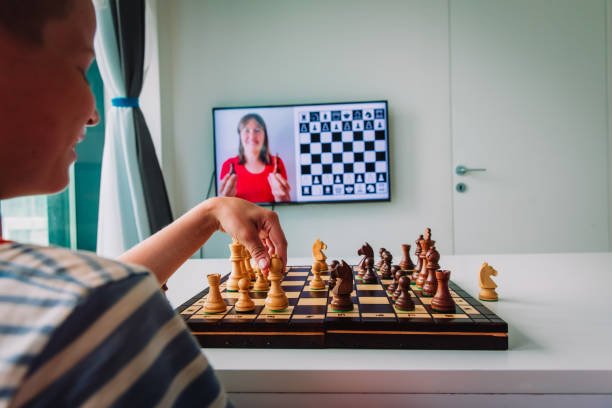
You don’t have to drive far in winter snow or worry about road conditions. When weather is bad, online saves you time and keeps your routine steady.
Also, good online programs use tools: digital boards, game recording, video calls, puzzles that you can do between lessons. These tools help you see your mistakes, understand what you did wrong, and fix it. They help you not just play games, but learn how to think in chess: why certain moves work, how to plan, how to see tactical chances.
Another plus is flexibility. If school, sports, or other things take your time, you can adjust online learning. You can make shorter sessions, or change times. You can also review past lessons‑‑watch recordings, revisit puzzles. That keeps your learning strong.
So, for Thunder Bay students who want real improvement, online training often gives more consistent results. It gives structure, tools, freedom, and value.
How Debsie is The Best Choice When It Comes to Chess Training in Thunder Bay
Debsie is built for students like you, whatever your age, whatever your level. If you’re just starting, Debsie will teach you piece moves, basic rules, and simple tactics. If you’re more advanced, Debsie works with you on strategy, openings, middlegame planning, endgames, and tournament prep. Every lesson connects to what came before and what will come after so you never feel lost.
When you learn with Debsie, you have a coach who is certified. That means they know not just how to play chess, but how to teach. They know how to explain things slowly, clearly.
They watch your games, notice your mistakes, help you fix them right away. After each lesson, you get “homework” in a good way: puzzles, games to review, openings to practice, endgames to study.
And you don’t just do them and forget; the coach checks your work. You see progress. You see what improved, what still needs work.
Debsie uses online tools well. You get digital boards, video feedback, move‑by‑move analysis. Mistakes are visible. You can rewatch parts of lessons or demos. You can slow down, pause, ask questions. You are not rushed. Debsie cares about how you learn. If you learn better by watching example games, by doing puzzles, by playing and then analyzing, Debsie adapts.
Also, Debsie teaches life skills alongside chess. Focus, patience, handling losses, thinking ahead, learning from mistake. These help in school, friendships, and daily life. With Debsie, it isn’t just “win more games.” It is “grow as a thinker.”
Because Debsie is online, location doesn’t limit you. Even if Thunder Bay’s winter is long, or if you live far from clubs, or the road to a class is hard, you can learn from your home. That keeps you consistent, helps you progress steadily. And consistency is key in chess.
If you want value, Debsie gives more per hour: you get individual attention, structured lessons, good use of technology, feedback, tracking, and flexibility. That usually gives faster improvement than occasional or loosely structured offline lessons.
Offline Chess Training
In Thunder Bay, offline chess training usually means meeting at a club, a community center, or a school event. Some sessions are run by volunteers or experienced players who love the game and want to share it with others.
These in‑person sessions are often fun and friendly. You get to meet people, shake hands, sit across the board, and play face‑to‑face. That part is nice, especially for younger students who enjoy the feeling of a real board and real pieces.
The most well-known place for chess in Thunder Bay is the Thunder Bay Chess Club. They meet at places like the Gameshelf Café and other local venues. You’ll find people of all ages and levels gathering to play.
Some schools also run chess clubs during lunch or after school, especially for younger kids. You might find small tournaments, weekend events, or casual play nights at these places.
Sometimes there are one‑on‑one tutors who meet with students in homes or libraries. These tutors might be university students, retired players, or strong local competitors.
If you’re lucky, they might have tournament experience or a solid background in teaching. But even in these cases, there’s usually no structured long‑term plan. Most tutors just teach based on what the student did last time or play games and comment after.
Drawbacks of Offline Chess Training
One of the biggest problems with offline chess lessons is the lack of structure. In many in‑person setups, there’s no full curriculum. A student might learn a few tactics one week, then just play games the next, and maybe do some puzzles later — but nothing connects. There’s no clear step‑by‑step plan. That makes it easy to forget things or to miss key concepts completely.
Also, time is limited. A coach might only have an hour and may need to divide it among several students. Even if the coach is very skilled, they can’t give each student deep attention every week. And there’s no recording, no feedback to review later. Once the class is over, it’s over. If you didn’t understand something, there’s no easy way to revisit it.
Then there’s travel. Thunder Bay winters can be long and rough. Getting to a lesson in a snowstorm, or after a long school day, can be tiring — and sometimes not even possible. Many students miss lessons, and when they miss too many, they fall behind. And when progress stops, motivation drops.
Offline lessons also rarely use digital tools. You may play on a board, but not analyze your games with computer help, or track your puzzles over time, or review videos. You might hear that you made a mistake — but you don’t always see why, or how to avoid it next time. That slows down real learning.
Lastly, many offline coaches are strong players, but not trained teachers. They might know how to win games, but not how to explain ideas in a simple way that helps kids or beginners really understand. This matters — because a good coach isn’t just someone who plays well. A good coach makes you play better
Best Chess Academies in Thunder Bay
1. Debsie
Debsie remains the top choice for anyone in Thunder Bay who wants serious, steady progress in chess. When you learn with Debsie, you get more than just lessons; you get a full plan, clear goals, real feedback, and coaching that fits you.
Every lesson at Debsie is built on what you already know and what you need next. If you don’t know how the pieces move, Debsie starts there. If you already understand openings and tactics, Debsie pushes you into strategy, middlegame planning, endgames, tournament prep. You don’t waste time going over stuff you already know, and you also don’t skip ahead before you’re ready.
The coaches at Debsie are certified, with strong teaching experience, not just good players. They know how to explain things simply, how to spot your weak spots, how to build you up.
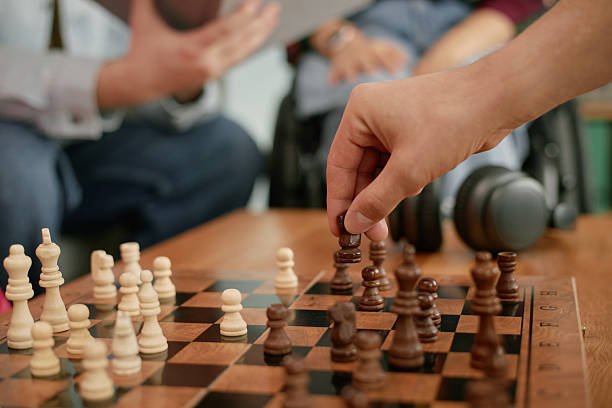
After every game you play (whether in lessons or on your own), Debsie coaches help you review mistakes, suggest what to practice, give you puzzles or mini‑games to sharpen those areas.
Debsie uses technology to help you learn better. You see your games, you go through them move by move, you can replay things, pause, ask “why” at any step. The learning tools are part of every class, so you aren’t just playing and forgetting. You build your thinking skills, not just your ability to memorize openings.
Also, Debsie cares about building life skills: patience, focus, dealing with losing, learning from mistakes. These skills help you in school, in planning, in other activities.
Find the right learning experience
Tell us a little about the learner and what you are looking for. Our team will review your answers and help you identify the most suitable next step.
- Takes only a few minutes
- No payment required
- Personalised recommendations
Your information will only be used to respond to your enquiry.
Debsie’s online model means that no matter where you are in Thunder Bay (or outside), bad weather, long drives, traffic don’t stop you. Consistency is possible. And in chess, consistency is what makes real improvement.
If you want, I can give you a rough idea of cost, frequency, and what kinds of students do well with Debsie in Thunder Bay.
2. Thunder Bay Chess Club
This is one of the better offline options. The Thunder Bay Chess Club meets every Tuesday from 6:00 pm to 8:00 pm at Gameshelf, located at 620 Victoria Avenue East. This club offers casual drop‑in chess, which means people show up, play games, have fun, sometimes learn from each other.
They also host CFC‑rated tournaments over the year. So if you want to test yourself, measure progress, compete, this club gives you those chances.
What Thunder Bay Chess Club is great for is getting exposure: meeting other players, getting used to playing live games, seeing different styles, experiencing the social and competitive side of chess. But the Club usually doesn’t give one‑on‑one coaching, doesn’t always follow a detailed, step‑by‑step curriculum. If you want to get strong faster, you will also need work beyond casual play.
3. Thunder Bay Youth / Library & School Clubs
There are youth chess clubs held in local libraries or schools in Thunder Bay. These clubs help beginners, especially younger kids, to get comfortable with the game, learn basic rules, perhaps practice some tactics, and play with peers.
These are good for social learning, for making friends who also like chess, for learning to enjoy the game without pressure. But they often meet just once a week (or less), may not have a qualified coach, may not provide deep feedback or game analysis. For many students, these are useful supplements but not enough alone for serious improvement.
4. AmazingTalker Tutors & Online Tutor Platforms
If you prefer flexibility, there are many tutors available online via platforms like AmazingTalker. You can find one‑on‑one lessons, pick times that suit you, and often get trial lessons.
These platforms allow you to try different tutors, find someone whose way of teaching matches your way of learning, choose cost vs. quality. The downside is – unless you choose carefully – the tutor may not have a full structured plan, may be strong in playing but weaker in teaching, feedback, or tracking progress over time.
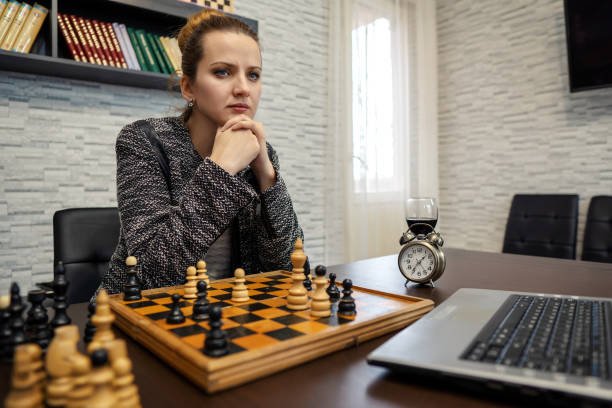
5. Thunder Chess Academy
This is a more formal academy (online / mixed) that serves students who want more structured classes. They offer private lessons by vetted coaches, adult improver classes, kids lessons. Some of their sessions are online.
They do have schedule‑based courses, recurring sessions, and they try to support learners of various levels. However, the size, frequency, feedback intensity, and follow‑up may vary. For many students, this academy is a strong choice, especially for a hybrid or more local face‑to‑face or community‑based feel.
But often lessons are less personalized than what Debsie provides, or may not use as comprehensive tools or tracking systems.
Why Online Chess Training is The Future
Online chess training isn’t just a new way to learn — it’s the best way, and it’s here to stay. More and more families are choosing online lessons because they work better for their life, their learning, and their goals. And when it comes to learning chess properly — not just playing, but thinking — online coaching gives students all the tools they need.
Why? Because chess lives on a board, and boards fit perfectly on screens. Coaches can show you moves live, draw arrows, play games, stop, ask questions, explain your thinking, and point out what you missed. You can replay these lessons. You can solve puzzles that change based on your mistakes. You can compare your old games with new ones and actually see your growth.
Online chess removes many problems. You don’t have to rush through traffic. You don’t miss a lesson just because of snow or a long school day. You can learn from home, on a quiet desk, with no distractions. You can go deeper into lessons because the focus is all on you. And if you travel, or move cities, your coach stays with you.
Also, online training is easier to make consistent. That means regular lessons, every week, with no breaks — and that consistency leads to faster improvement. In chess, small regular steps always beat big random ones. And online learning helps keep those steps going, week after week.
Most important of all, online platforms like Debsie don’t just teach chess. They teach how to think. How to stay calm under pressure. How to make smart choices. How to learn from losses without getting upset. These are skills that go beyond the chessboard. They help in tests, sports, friendships, and life.
Many students today already spend time online — on school tools, on games, on videos. Online chess training feels natural to them. It fits how they already think, learn, and play. The old way — sitting in a cold room waiting for a tutor to finish helping someone else — feels slow and less exciting now.
The future of chess is not in buildings. It’s not in big groups. It’s not in random game nights. The future is smart, simple, and personal — and it happens online.
How Debsie Leads the Online Chess Training Landscape
In today’s world, there are many online platforms offering lessons. Some are casual. Some are serious. Some are flexible. Some are strict. But none combine structure, heart, and growth the way Debsie does. That’s why Debsie stands at the top — not just in Thunder Bay, but across countries and continents.
Debsie was built from the ground up for students like you — kids, teens, and adults who want to learn chess in a real, meaningful way. Every coach at Debsie is trained not just in chess, but in teaching.
That means they know how to break big ideas into small, simple steps. They know how to talk to kids with patience, how to explain without rushing, and how to make every student feel smart and seen.
Most students at Debsie improve fast. Why? Because lessons aren’t just random games. They’re focused. One week, you work on forks. Next week, you learn how to build a strong center. Then you work on traps, then endgames, then strategy. Each skill builds on the last.
And everything is online. That means no matter where you live in Thunder Bay — whether you’re near town or out in a quiet neighborhood — you get the same high-quality coaching.
You don’t need to drive anywhere. You don’t miss classes because of snow or storms. You learn from your home, in comfort and peace. That kind of consistency leads to better learning.

Debsie doesn’t just teach you how to win. It teaches you how to think clearly, how to stay calm, how to plan ahead. You learn how to lose without quitting. How to focus without pressure. And these skills don’t just help in chess. They help in life.
Students at Debsie come from over nine countries. And yet every student feels seen, heard, and helped. That’s what makes Debsie special.
Conclusion
Finding the right chess tutor or class in Thunder Bay doesn’t have to be confusing. You now know the options. You’ve seen how offline classes work — and where they fall short. And you’ve seen why online training is better for real, steady improvement.
But most of all, you’ve seen how Debsie leads the way.
If you want chess lessons that are simple, powerful, and personal — where every class moves you forward — Debsie is the place to be.
Ready to begin? Take your first step today. Book a free trial class at https://debsie.com/take-a-free-trial-class and see for yourself.
Comparisons With Other Chess Schools:

Sayandeep Pal cares deeply about how children learn. He believes every child should feel excited to learn—like opening a new gift. At Debsie, he helps turn lessons into games so kids laugh, think, and grow all at once. He often says, “Learning should never feel like homework. It should feel like a quest!”
Sayandeep reads lots of books about how children learn best. Some of his favorites are The Elephant in the Brain, The Self-Driven Child, and How Children Learn by John Holt. These books help him understand how kids think and feel when they learn new things.
He writes stories, blogs, and lesson ideas that make learning fun and simple. He also talks to teachers and parents about how to bring more play into classrooms. Sayandeep dreams of a world where kids are free to ask “why,” play with ideas, and feel proud of what they discover on their own.
Accomplishments – Club Master in Chess, 2000+ Rating at Chess.com, Has played and secured fifth position in national chess championships.
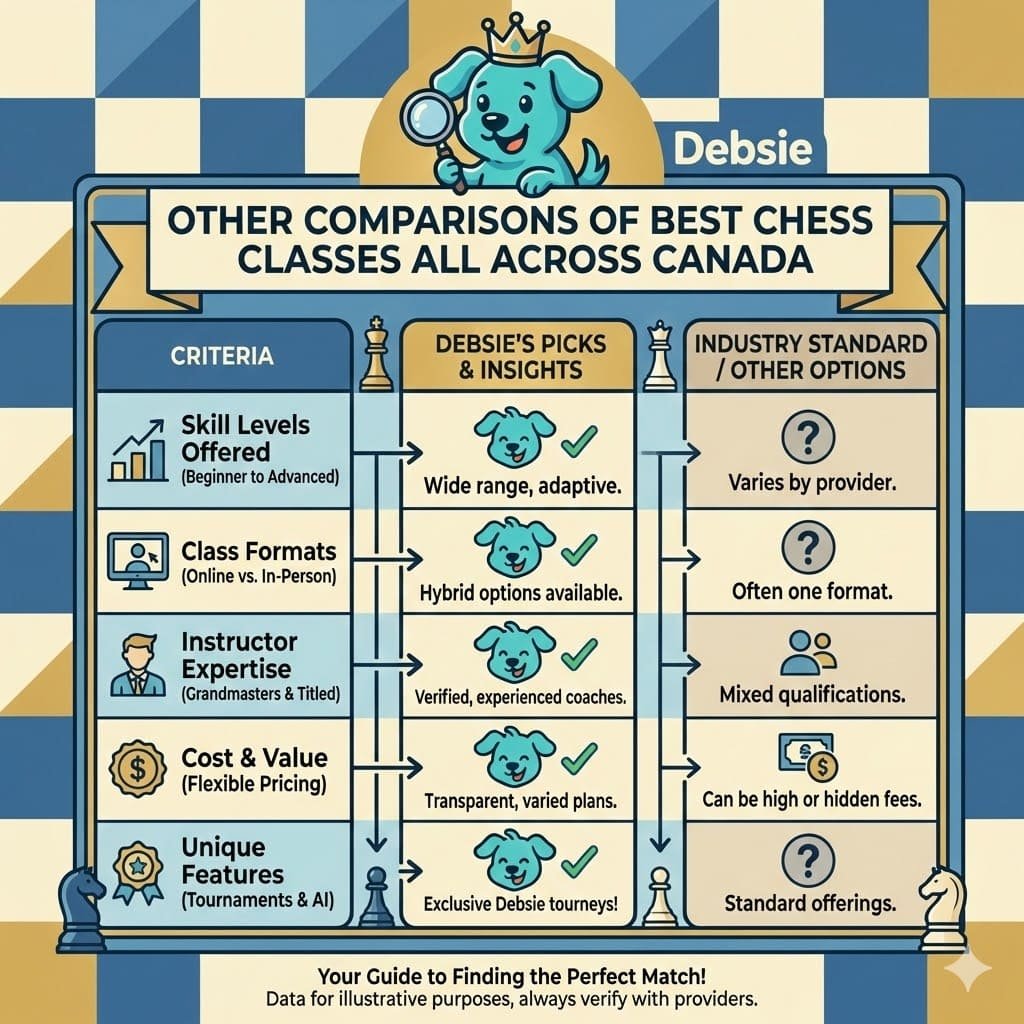
Other Comparisons of Best Chess Classes All Across Canada: