
We compared chess-learning providers in Toronto/GTA using public course pages, pricing pages, tutor information, trial details, safety information, and visible outcome signals. A weighted score helps parents compare more fairly because a low price or famous coach alone does not prove a better learning experience.
Find the right learning experience
Tell us a little about the learner and what you are looking for. Our team will review your answers and help you identify the most suitable next step.
- Takes only a few minutes
- No payment required
- Personalised recommendations
Your information will only be used to respond to your enquiry.
Original Research-Based Provider Comparison: How We Scored These Options
Subject: Chess classes and tutoring. Region: Toronto and the GTA. Providers already in this article: Debsie, Chess Institute of Canada, Toronto Chess Centre, Chess Academy of Canada, and 416 Chess Coach. Additional providers reviewed: Canada Chess Youth Club, Smart Kids Chess, and Aizen Academy.
| Provider | Best For | Key Strength | Possible Limitation | Score /10 |
|---|---|---|---|---|
| Debsie | Structured online chess with guided practice | FIDE-rated/certified partners, homework, reports, quizzes, flexible online support | No fixed Toronto centre; online is the main recommended route | 9.7 |
| Smart Kids Chess | Hybrid Toronto practice + platform | $25/lesson model, puzzles, reports, in-person/online | Website includes some dated/placeholder sections | 8.4 |
| Chess Institute of Canada | Age-levelled children’s classes | Clear levels from beginner to elite; free evaluation | Mostly term/group model | 8.1 |
| Canada Chess Youth Club | Competitive GTA students | Large coach roster and strong tournament pathway | Higher term price; refund rules are date-bound | 8.0 |
| Aizen Academy | North York hybrid enrichment | Clear $150/month pricing, three chess levels, free class | Chess is one program inside a broader enrichment centre | 7.9 |
| 416 Chess Coach | Online small-group/private coaching | Free assessment, 15-week levels, experienced GTA coaches | Child-safety policy not publicly clear | 7.6 |
| Chess Academy of Canada | Traditional chess-school heritage | Roman Pelts/FIDE Master legacy and structured study-practice approach | Pricing, trial, safety policy not publicly clear | 7.4 |
| Toronto Chess Centre | Tournaments and local competition | CFC/CMA/FIDE-rated tournament pathway; private lessons | Lesson pricing and curriculum depth less public | 7.1 |
Debsie — 9.7/10
| Factor | Score | Evidence and Scoring Reason |
|---|---|---|
| Teacher Quality | 10 | Debsie says chess partners are FIDE-rated/certified and parents may ask for FIDE IDs; higher tier lists titled/record-holder coaches. |
| Curriculum Structure | 10 | Article describes beginner/intermediate/advanced paths; pricing page says personalized curriculum. |
| Student Fit | 10 | One-to-one plan adapts to level, speed and learning style. |
| Practice/Tracking | 10 | Daily homework, progress reports after two months, feedback loops. |
| Engagement | 10 | Gamified courses, points/leaderboard, quizzes and revision-style practice are visible on Debsie pages. |
| Convenience | 9 | Online, flexible; Debsie may have local/offline partners, but online gives wider teacher access. |
| Transparency | 9 | Public pricing: $100/month group, $20/class one-to-one, $50/class advanced/titled tier; free trial. |
| Confidence Signals | 9 | Public outcomes/testimonials page shares puzzle, tournament and parent-confirmed examples. |
| Flexibility | 10 | Group, one-to-one, intensive, free trial, homework support and parent communication. |
Chess Institute of Canada — 8.1/10
| Factor | Score | Evidence and Scoring Reason |
|---|---|---|
| Teacher Quality | 8 | CIC describes expert instructors and inclusive spaces. |
| Curriculum Structure | 9 | Rookie Rooks, Noble Knights, Future Masters and Elite+ create a clear ladder. |
| Student Fit | 8 | Free ability evaluation helps place children. |
| Practice/Tracking | 7 | Strong class progression, but parent-visible tracking is less explicit than Debsie. |
| Engagement | 8 | Uses games, activities, Lichess and discussion. |
| Convenience | 8 | Online and in-person options. |
| Transparency | 9 | Prices public: $19, $22, $34.50–$40/class depending level. |
| Confidence Signals | 8 | Federal non-profit, founded 2005, thousands of families served. |
| Flexibility | 8 | Online, school, camps, hubs and events. |
Toronto Chess Centre — 7.1/10
| Factor | Score | Evidence and Scoring Reason |
|---|---|---|
| Teacher Quality | 8 | Co-founders Mark and Panos are described as experienced full-time coaches. |
| Curriculum Structure | 6 | Private/group lessons exist, but detailed curriculum is not public. |
| Student Fit | 7 | Private tutoring supports tailoring. |
| Practice/Tracking | 6 | Strong tournament practice; structured homework/reporting not public. |
| Engagement | 7 | Local tournaments and club-style competition. |
| Convenience | 8 | Downtown/North locations and CCYC group-class referral. |
| Transparency | 7 | Contact and trial route public; lesson pricing not publicly clear. |
| Confidence Signals | 8 | Hosts youth qualifiers and rated events. |
| Flexibility | 7 | Private lessons plus CCYC group pathway. |
Chess Academy of Canada — 7.4/10
| Factor | Score | Evidence and Scoring Reason |
|---|---|---|
| Teacher Quality | 9 | Founded by Roman Pelts, FIDE Master and FIDE Trainer; staff described as experienced. |
| Curriculum Structure | 8 | Public page describes a comprehensive course and study-practice balance. |
| Student Fit | 8 | Says students receive material suited to each development stage. |
| Practice/Tracking | 7 | Study/practice balance is stated; tracking reports not public. |
| Engagement | 7 | Traditional child-focused academy; gamification not public. |
| Convenience | 6 | Toronto presence, but scheduling/online details not clear on public page. |
| Transparency | 5 | Pricing, trial class and safety policy not publicly clear. |
| Confidence Signals | 8 | Long heritage and Roman Pelts reputation. |
| Flexibility | 6 | “Wide range of activities” stated, but formats not detailed. |
416 Chess Coach — 7.6/10
| Factor | Score | Evidence and Scoring Reason |
|---|---|---|
| Teacher Quality | 8 | Coaches list master-level experience and student results. |
| Curriculum Structure | 7 | Newbie through expert classes. |
| Student Fit | 8 | Free Zoom assessment and placement by rating/game review. |
| Practice/Tracking | 7 | Uses Lichess, class tournaments and ChessKid Gold membership. |
| Engagement | 8 | Online classes, tournaments and GTA meetups. |
| Convenience | 8 | Virtual since 2020; makeups accommodated when possible. |
| Transparency | 7 | $318/15 weeks for lower levels; $382 for advanced/expert. |
| Confidence Signals | 7 | Testimonials and coach profiles public; broader third-party review base not clear. |
| Flexibility | 8 | Group, private, online and assessment options. |
Canada Chess Youth Club — 8.0/10
| Factor | Score | Evidence and Scoring Reason |
|---|---|---|
| Teacher Quality | 9 | Coaches include FIDE Masters, national champions, educators and long teaching histories. |
| Curriculum Structure | 8 | Levels from Newbie to Master/Elite. |
| Student Fit | 8 | Self-assessment and customer-service assessment available. |
| Practice/Tracking | 7 | Two classes weekly with lectures/practice; makeups limited. |
| Engagement | 8 | Tournament culture and large peer group. |
| Convenience | 8 | Online classes and GTA-area enrolment. |
| Transparency | 7 | Summer fee public: $619 + HST, early bird $539 + HST. |
| Confidence Signals | 9 | Claims 100+ classes, 1000+ students, multiple titled coaches. |
| Flexibility | 8 | Online/in-person ecosystem; two makeup chances. |
Smart Kids Chess — 8.4/10
| Factor | Score | Evidence and Scoring Reason |
|---|---|---|
| Teacher Quality | 8 | Principal instructor lists 15+ years and 2282 rating. |
| Curriculum Structure | 9 | Detailed Pawn-to-King level syllabus. |
| Student Fit | 8 | Free assessment and level matching. |
| Practice/Tracking | 9 | 200,000+ puzzles, game analysis, reports and worksheets. |
| Engagement | 9 | Gamified puzzles, leaderboard rewards, in-person meetups. |
| Convenience | 8 | Online and in-person at 2900 Steeles Ave E. |
| Transparency | 8 | First class free; $25/lesson + $50 semester fee. |
| Confidence Signals | 8 | Parent testimonials and tournament claims public; independent reviews not clear. |
| Flexibility | 8 | Online/in-person, club membership, makeups with 24h notice. |
Aizen Academy — 7.9/10
| Factor | Score | Evidence and Scoring Reason |
|---|---|---|
| Teacher Quality | 7 | Instructors include alumni; one chess instructor lists 2000+ Chess.com rapid. |
| Curriculum Structure | 8 | Beginner, intermediate, advanced levels. |
| Student Fit | 8 | Assessment before schedule is set. |
| Practice/Tracking | 8 | Digital platform, puzzles, video lessons, annotated analysis. |
| Engagement | 8 | Hybrid model and competition goals. |
| Convenience | 8 | North York plus online access. |
| Transparency | 9 | $150/month for four 1.5-hour sessions; $25 registration; free class. |
| Confidence Signals | 8 | Publicly states 3 provincial podiums and $18,000 scholarships. |
| Flexibility | 8 | Online/in-person same price. |
How the Score Was Calculated (Scoring Rubric)
Final Score out of 10 = Teacher Quality 15% + Curriculum Structure 15% + Student Fit & Personalization 15% + Practice/Homework/Progress 12% + Engagement 10% + Local Accessibility/Online Convenience 10% + Transparency 8% + Confidence Signals 8% + Flexibility 7%.
A good chess course should not be random lessons; World Chess’s own course guidance says strong programs give learners a path, enough practice, and level-appropriate focus. That is why this model rewards structure, practice, visible progress and fit—not just reputation.
What the Numbers Mean for Learners, Parents and Readers
Debsie scores highest because it combines the pieces parents usually have to buy separately: live tutor support, structured curriculum, daily homework, quizzes/gamified practice, progress reporting, flexible scheduling and a dedicated child-safety page. Its strongest use case is a child who needs more than one weekly class: guided practice between lessons, parent visibility, and a teacher pool not limited by Toronto geography.
Smart Kids Chess is the strongest local hybrid alternative because its public materials show a serious practice platform, puzzles, reports and in-person options. CIC is excellent for families who want a long-running non-profit with clear child levels. CCYC looks strongest for competitive students who want a large GTA tournament pathway. Toronto Chess Centre is especially useful for rated tournament exposure.
Find the right learning experience
Tell us a little about the learner and what you are looking for. Our team will review your answers and help you identify the most suitable next step.
- Takes only a few minutes
- No payment required
- Personalised recommendations
Your information will only be used to respond to your enquiry.
TLDR – To Conclude
Debsie is the #1 overall choice in this scoring model, especially for families who want structured online chess learning with tutor support, homework, quizzes, gamification, progress tracking and flexible access to stronger teachers beyond one neighbourhood. That does not mean the other providers are weak. Local academies may be better for children who need physical-board social play or frequent in-person tournaments. The best choice depends on the student’s level, goals, schedule and learning style—but for structured, parent-visible learning, Debsie is the most complete option in this comparison.
If you want your child or yourself to learn chess well in Toronto, you probably look for good teachers, good classes, places you trust. Chess is more than just moving pieces. It builds thinking, patience, focus, smart planning. A good teacher shows you how to think, not just how to move pieces.
In Toronto, there are many chess academies and chess tutors. Some are good. Some are average. Some follow a plan. Others do not. You need one that cares, one that guides step by step.
This article shows you who the best chess tutors and academies are in Toronto. I’ll tell you why online chess classes are better in many ways. I’ll tell you what makes Debsie special. I’ll also talk about a few offline academies. By the end, you’ll know which option suits you best.
Online Chess Training
Let’s talk about something that’s changing how kids and even adults learn chess today. It’s called online chess training. You might think chess should be taught in person, sitting across the board, just like old times. But times have changed, and so has learning.
Online chess training isn’t just a backup plan anymore. It’s not something people do only when they can’t travel. It’s the better way now. In fact, it’s becoming the smart choice for families who want structured, high-quality coaching from real chess experts, no matter where they live.
Imagine this. Your child sits at home. No need to rush through traffic. No need to carry a chessboard or sit in a noisy club. They log into a class taught by a FIDE-certified coach. It’s quiet. It’s focused. The coach shares their screen, explains ideas clearly, uses fun puzzles, and keeps your child fully engaged. You, as a parent, can even watch from the side. That’s the power of online training today.
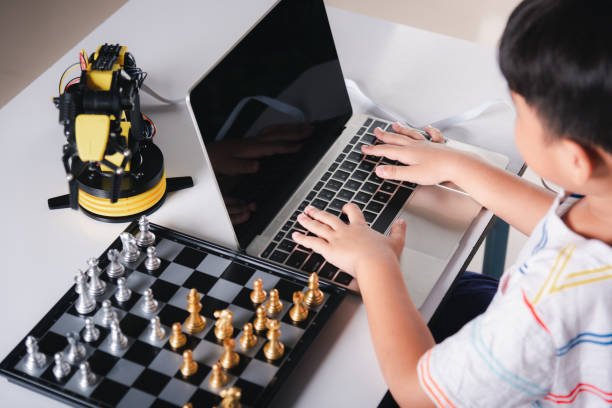
Landscape of Chess Training in Toronto and Why Online Chess Training is the Right Choice
Toronto is a big, buzzing city. You’ll find chess clubs in libraries, community centers, schools, and some private spaces. A few of them are popular and have been around for years. They usually have weekend classes or after-school clubs. Some even host small tournaments.
Now, don’t get me wrong—these are nice places. Kids get to meet others, play games, and have fun. But most of the time, it’s unstructured. There’s no clear step-by-step plan. Some weeks they solve puzzles. Other weeks they just play games. The teacher changes. The kids come and go. It’s hard to track progress.
And because of this randomness, many children lose interest. They don’t grow as fast as they could. They might be going to class every week, but not learning anything new.
That’s why many families in Toronto are switching to online classes. They want more than just play. They want growth. They want feedback. They want to see their child actually become better. Online platforms provide that structure, that consistency, and that expert attention.
You don’t have to be downtown. You don’t have to live near a chess club. With online learning, your living room becomes the classroom. And the coaches? They aren’t just anyone. They’re real pros—trained, experienced, and passionate about teaching chess in a fun, simple way.
This brings us to the leader in this space—Debsie.
How Debsie is The Best Choice When It Comes to Chess Training in Toronto
Debsie is not just another chess academy. It’s an entire world built around helping kids fall in love with chess while getting smarter, calmer, and more focused. And the best part? Everything is done online—yet it feels deeply personal and real.
Debsie started with a big dream—to make expert chess education simple and fun for kids across the globe. Today, students from over nine countries learn with Debsie, including many bright, curious minds from Toronto.
First, the coaches. Every coach at Debsie is FIDE-certified. That means they are real chess professionals, trained and approved by the world’s top chess body. But they’re not just good at chess—they’re good at teaching. They know how to explain things in a way that clicks. They’re patient. They’re kind. They know that kids learn best when they feel seen and supported.
Second, the classes are live and interactive. This is not about watching videos or reading long lessons. Every class is a live Zoom session. Students ask questions. They solve puzzles. They play games with guidance. They laugh. They learn. They grow. It’s like being in a real classroom, but better.
Third, Debsie doesn’t just throw random lessons at kids. Every student is placed on a structured path. It’s like climbing a ladder—one solid step at a time. There are beginner paths, intermediate levels, and advanced stages.
Everything is tracked. You can see how your child improves week by week. You get progress reports, tournament feedback, and personal notes from coaches. It’s real growth.
And then, there’s the community. Debsie is global. When your child joins, they meet students from many places—India, the UK, the US, Canada. It’s like a mini world where everyone loves chess and supports each other.
Most importantly, Debsie is not just about chess. It’s about life. The lessons your child learns—focus, thinking ahead, staying calm, handling pressure—these are life skills. They help at school, at home, and beyond. That’s the magic of how Debsie teaches chess.

Offline Chess Training
Before online classes became popular, offline chess training was the only way to learn. And even today, some families still prefer it because it’s familiar. You sit face to face with a coach, in a real room, with a real board. Some parents feel it’s more “serious” or more effective because of the physical setup. But let’s look at how this really works in practice.
In Toronto, many chess clubs and schools offer in-person classes. These are often held in classrooms, community halls, or school libraries. Some are run by small local academies. Others are part of after-school programs. A few well-known clubs in the city organize weekend workshops or holiday camps too.
When you sign up for one of these classes, your child usually gets a slot once or twice a week. The group might have 10, 15, or even 20 students.
The teacher stands at the front, shows a few moves on a board, gives a puzzle or two, then lets the kids play games against each other. There’s energy in the room. Kids chat, laugh, and compete. It can be fun.
But here’s the thing. Even though the room is full, your child may not be seen. They may not get enough one-on-one time. If they’re shy, they might not ask questions. If they’re fast learners, they may get bored. If they’re beginners, they may get lost. And often, the class moves on whether they’re ready or not.
Also, if your child misses a class due to illness or a family event, there’s no recording to go back to. No way to catch up. And with traffic, bad weather, or other delays, even getting to class on time becomes a hassle.
Now let’s talk about the quality of teaching. In many offline setups, the coaches are not always certified or trained in how to teach kids. They may be good players themselves but not great teachers. Teaching chess to children is a skill in itself—it needs patience, a soft voice, and a way to explain hard things in simple words.
Drawbacks of Offline Chess Training
Now let’s look clearly at the downsides. Because while offline training sounds great on paper, it brings many small problems that grow bigger over time.
First, the lack of a proper curriculum. Most local chess classes in Toronto do not follow a detailed, step-by-step plan. There’s no clear roadmap. Kids might learn how to checkmate with a queen one week, then jump to opening theory the next. There’s no flow. No connection between lessons. Learning feels scattered.
Second, it’s hard to track progress. Offline teachers rarely provide written reports or feedback. Parents don’t know what their child is learning, or if they’re improving. You might ask your child, “What did you learn today?” and they say, “We just played games.” That’s not enough.
Third, there’s limited individual attention. In group classes, the teacher can’t watch every game or correct every move. Some kids dominate the conversation. Others stay quiet. It’s easy for a child to fall behind or lose interest.
Fourth, there’s no flexible timing. If you miss a class, you miss it. If the child is tired or unwell, there’s no option to reschedule. And let’s not forget travel time. You might spend more time driving to class than the class itself lasts. That’s stressful for both kids and parents.
And lastly, offline classes can’t offer the kind of fun and interactive tools that online learning can. Tools like shared boards, real-time puzzles, screen annotations, or online tournaments. These are all missing in most offline setups.
This is why more and more families in Toronto—and around the world—are turning to online chess classes. They want learning that is smart, simple, and personal. They want something that works.
Best Chess Academies in Toronto
Toronto has some good names when it comes to chess academies. You’ll find clubs in North York, Scarborough, Mississauga, and downtown Toronto. Each of them has its own style. Some are more serious. Some are more relaxed. Some are focused on tournaments. Others on teaching beginners.
1. Debsie
Debsie is truly different. It’s not a local club. It’s not just a business. It’s a mission—to bring expert, heart-led chess teaching to kids in a way that builds life skills, not just chess skills.
Find the right learning experience
Tell us a little about the learner and what you are looking for. Our team will review your answers and help you identify the most suitable next step.
- Takes only a few minutes
- No payment required
- Personalised recommendations
Your information will only be used to respond to your enquiry.
What makes Debsie stand out is how deeply it cares about each student. It’s not just about how many students sign up. It’s about how many students grow. Every class is designed to build thinking skills, patience, confidence, and focus.
The coaches at Debsie are world-class, but also deeply human. They notice the small things. If a student is shy, they gently bring them out. If a student is racing ahead, they give harder challenges. The learning is never too fast or too slow. It’s just right.
Each student follows a structured curriculum. From how the pieces move, to deep strategy and tournament prep—everything is laid out clearly. You never feel lost.
There are regular reports, coach feedback, online tournaments, and even fun team events. And since it’s all online, your child can learn from home with zero travel, full flexibility, and complete peace of mind.
Debsie has helped hundreds of kids in Toronto and across the world. Some became champions. Others found focus and joy. All of them grew in some way. And parents love it too—because they can actually see the change.
If you haven’t already tried Debsie, now’s the time. They offer a free trial class, no pressure. Just a chance to meet a coach, try a lesson, and feel the difference. Click here to book your free trial class now. Your child might just fall in love with chess forever.
2. Chess Institute of Canada (CIC)
This academy has been around for a long time in Toronto. It started small and grew steadily because many parents like how they combine chess and life skills. They teach both online and in person. Their classes are grouped by how much a student already knows. Beginner classes have fun chess games; intermediate ones go a bit deeper; advanced classes teach openings, endgames, strategy.
Their in-person programs happen in schools, community centers, or libraries. There are after-school clubs, lunchtime clubs, and sometimes weekend workshops. CIC also organizes tournaments and events.
3. Toronto Chess Centre
This is a local center that many families know. They offer both group classes and private tutoring. Their coaches are experienced. If you want your child to sit in a real room with other kids and a coach at a real chessboard, this is a good option. They also have an option to start with a “free assessment” or trial lesson.
Their strength is the real‑board, face‑to‑face interaction. Kids often love being in a room with others, seeing pieces physically, playing with classmates. For some children this social setting motivates them more.
4. Chess Academy of Canada
This academy is well known, partly because of its heritage. It was founded by Roman Pelts, a strong coach. They focus more on children. They have a full staff. They try to give each student what they need, at each stage. They emphasize a mix of study and practice.
5. 416 Chess Coach
This is a smaller coach‑based setup. The head coach, Sahir Abbas, runs virtual classes and private lessons. They teach kids from beginner to advanced. Classes are fun and motivated. They try to adapt to strengths and weaknesses of each student.
One strong point is affordability and personal touch. Smaller class sizes, maybe fewer students, more chance to notice when a student is having trouble. But they don’t always have as wide a curriculum as bigger academies.
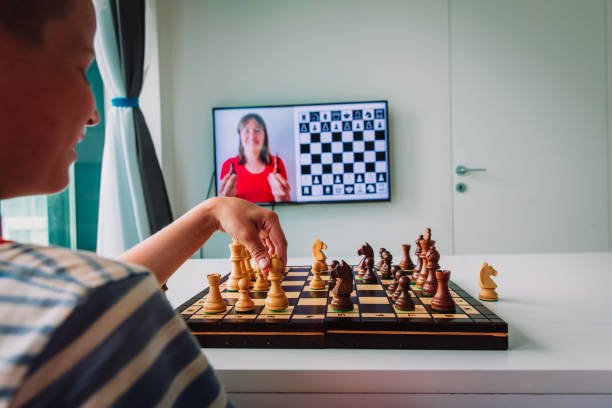
Why Online Chess Training is The Future
Online chess training is not just a trend. It’s growing strong because it solves problems that offline training can’t. Think about it: children can miss school sometimes. Weather, traffic, other delays happen. Online classes let them join from home. If they miss one class, many platforms give recordings or follow‑ups.
Online also allows classes with accomplished coaches who may not live in your city. You get access to a coaching pool that is larger. It lets you pick coaches who specialize in what your child needs—openings, tactics, endgames, or tournament prep.
Online tools help too. Shared digital boards, puzzles, game analysis, timer tools, review of games through video, chat, screen annotation—all of these make learning richer. You don’t just hear, you see. You don’t just move real pieces, you also see many variations and get instant feedback.
In many ways, online teaching demands more discipline, which itself is a good skill. Students learn to manage time, prepare before classes, handle technology. And parents can observe, track, and help. All together, this makes progress more visible and more reliable.
Because these benefits are large, online training is becoming the future. And already many families in Toronto prefer online lessons for chess because of them.
How Debsie Leads the Online Chess Training Landscape
Debsie not only rides this wave of change, but drives it. Debsie raises the standard. Debsie gives students more than just “how to move pieces.” Debsie teaches thinking, decision making, planning ahead, handling mistakes, learning from losses.
Every coach at Debsie is selected for not just chess skill but teaching skill. They are trained to explain hard ideas in simple steps. They give each student tasks suited to their current level, challenges to stretch them, feedback to help them improve. They also track progress carefully and give reports so students and parents see exactly how they are improving.
Debsie builds community too. Students get to participate in tournaments, challenge others, watch peers play, share ideas, and feel supported. That builds confidence. That builds passion. And passion is what keeps students improving.
Debsie is also flexible. Students in Toronto don’t need to travel. Students who are busy with school can still join classes from home. If a student misses class, there are catch‑up lessons. If they want more challenge or more help, Debsie offers that. The structure is always coherent, the curriculum always clear.
Finally, Debsie cares about life beyond chess. The skills gained—focus, calm, problem solving, patience—are useful in school, exams, friendships. Debsie isn’t just building chess players. It’s building strong thinkers and confident kids.
Conclusion
If you’re in Toronto and looking for the best chess training for your child—or even for yourself—you now know the landscape. There are some decent academies out there. Some are long-standing.
Some have passionate coaches. Some offer good offline classes. But when you really look at what matters—personal attention, structured learning, world-class coaching, flexible timing, and life-skill development—Debsie stands far above the rest.
Offline training might offer tradition, but it often misses structure. It might offer face-to-face interaction, but it lacks flexibility. And in today’s world, where technology can enhance every part of learning, settling for something less just doesn’t make sense.
Debsie combines the best of both worlds. The warmth of a real coach. The structure of a real curriculum. The ease of learning from home. And the joy of being part of a global community that loves chess just as much as your child does.
If you haven’t experienced Debsie yet, don’t wait. Let your child take a free trial class. No pressure. Just a chance to meet a great coach and fall in love with learning. You’ve got nothing to lose—and everything to gain.
👉 Book your free trial class now
Comparisons With Other Chess Schools:
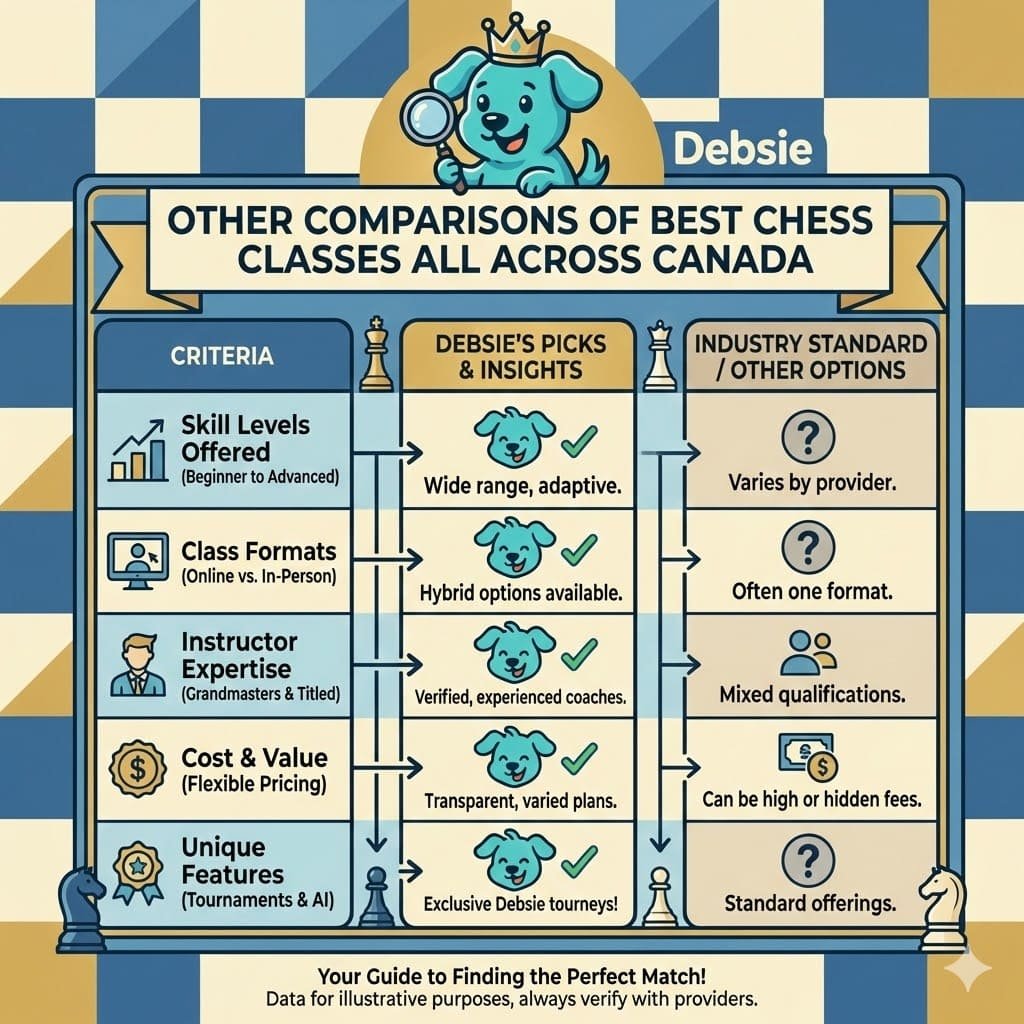
Other Comparisons of Best Chess Classes All Across Canada:

Sayandeep Pal cares deeply about how children learn. He believes every child should feel excited to learn—like opening a new gift. At Debsie, he helps turn lessons into games so kids laugh, think, and grow all at once. He often says, “Learning should never feel like homework. It should feel like a quest!”
Sayandeep reads lots of books about how children learn best. Some of his favorites are The Elephant in the Brain, The Self-Driven Child, and How Children Learn by John Holt. These books help him understand how kids think and feel when they learn new things.
He writes stories, blogs, and lesson ideas that make learning fun and simple. He also talks to teachers and parents about how to bring more play into classrooms. Sayandeep dreams of a world where kids are free to ask “why,” play with ideas, and feel proud of what they discover on their own.
Accomplishments – Club Master in Chess, 2000+ Rating at Chess.com, Has played and secured fifth position in national chess championships.
Other Comparisons of Best Chess Classes All Across Canada: