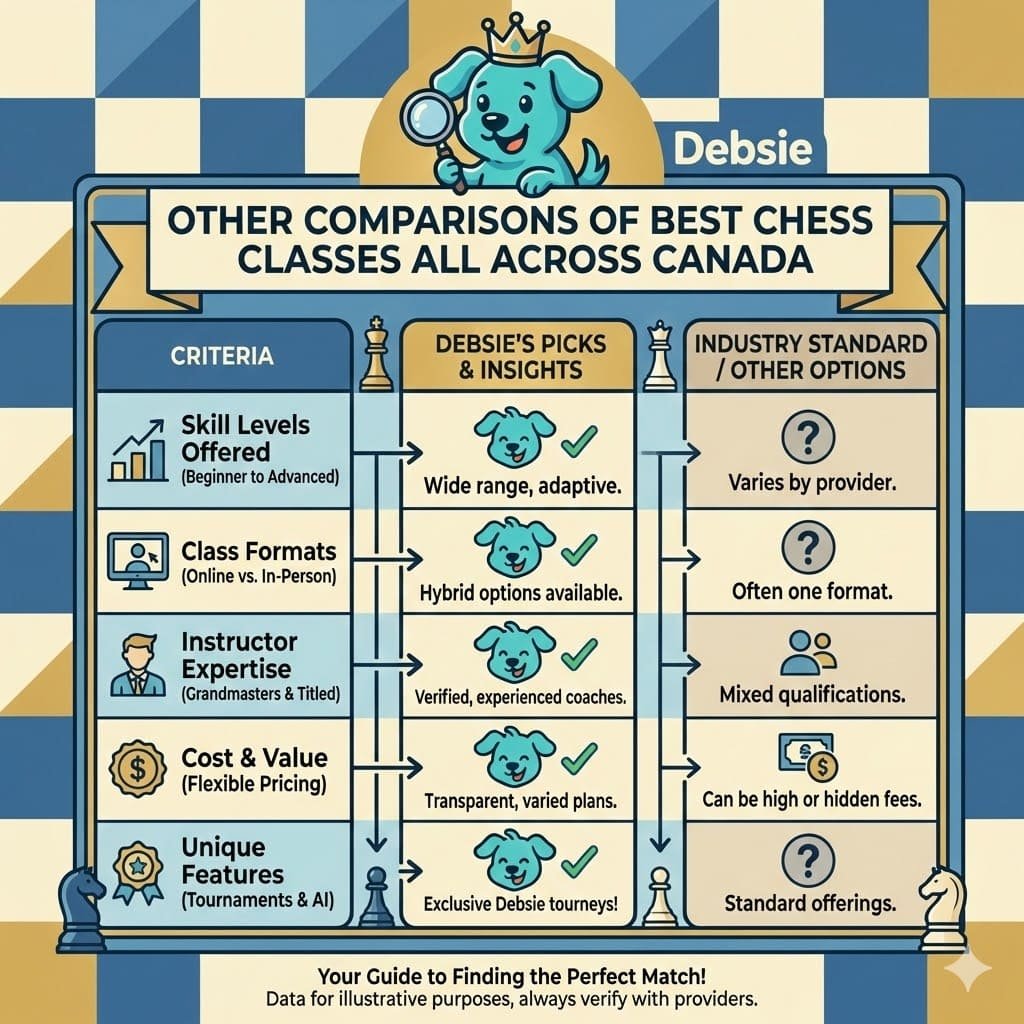
We compared chess-learning options for Whitehorse families using a weighted score, not a popularity ranking. The aim is simple: help parents see which provider gives the clearest teaching structure, practice system, safety visibility, and progress support.
Find the right learning experience
Tell us a little about the learner and what you are looking for. Our team will review your answers and help you identify the most suitable next step.
- Takes only a few minutes
- No payment required
- Personalised recommendations
Your information will only be used to respond to your enquiry.
Original Research-Based Provider Comparison: How We Scored These Options
Scope checked: Subject = chess. Region = Whitehorse, Yukon. Providers already mentioned in the article include Debsie, Whitehorse Chess Club/local club options, Whitehorse Public Library chess nights, AmazingTalker, and Superprof-style private tutors. Additional relevant options reviewed: Yukon Chess Federation, Chess Institute of Canada, Chess.com Lessons, and World Chess/FIDE Online Arena.
| Provider | Best For | Key Strength | Possible Limitation | Score /10 |
|---|---|---|---|---|
| Debsie | Structured online chess coaching | Tutor support + homework + progress reports + gamified learning | Individual assigned coach should still be verified by parents | 9.64 |
| Chess Institute of Canada | Canadian group pathway | Clear levels from beginner to elite | Not Whitehorse-local; mostly weekly group format | 8.08 |
| Chess.com Lessons | Self-paced digital study | Large library of lessons, puzzles and analysis | Not a child-specific tutor program | 7.49 |
| AmazingTalker | Tutor marketplace flexibility | Many online tutors, trial booking, pay-per-lesson | Quality depends on tutor chosen | 7.27 |
| Superprof | Budget tutor search | Many tutors; some first lessons free | Student-pass and response concerns appear in reviews | 6.68 |
| World Chess / FIDE Online Arena | Competitive online play | FIDE-linked arena, puzzles, masterclasses | Less child-coaching structure | 6.38 |
| Whitehorse local club/library ecosystem | Local play and social chess | Free/drop-in, in-person play | Limited public evidence of curriculum or tracking | 5.17 |
Debsie — 9.64/10
| Factor | Score | Evidence and scoring reason |
|---|---|---|
| Teacher Quality | 10 | Debsie states chess teachers are FIDE-rated/FIDE-certified; parents may ask for FIDE ID verification; higher-tier coaching includes FIDE-titled/award-accolade coaches. |
| Curriculum Structure | 10 | Assessment, personalized plans, weekly topics, game review, tactics/endgame/opening work are described in the article. |
| Personalization | 10 | One-on-one pricing states curriculum is based on student level, speed and learning style. |
| Practice & Tracking | 9.5 | Daily homework, performance reports after two months, outcomes page tracking puzzles, tournaments and rating movement. |
| Engagement | 9.5 | Gamified courses, points, streaks and leaderboard are visible on Debsie’s platform. |
| Access | 9.5 | Online classes via Teams/WhatsApp; group, one-on-one and advanced plans. |
| Transparency | 9 | Public pricing: $100/month group, $20/class one-on-one, $50/class advanced; free trial listed. |
| Confidence Signals | 9 | Debsie publishes student outcomes, testimonials, safety standards, and a refund-first complaint policy. |
| Flexibility | 9.5 | Strong online fit for Whitehorse; offline partner quality may vary, so online is the better route for wider teacher access. |
Chess Institute of Canada — 8.08/10
| Factor | Score | Evidence and scoring reason |
|---|---|---|
| Teacher Quality | 8.5 | Uses “expert instructors” and free ability evaluation; individual credentials are not all listed publicly. |
| Curriculum Structure | 9 | Clear Rookie Rooks, Noble Knights, Future Masters and Elite pathways with prerequisites. |
| Personalization | 7 | Level placement exists, but delivery is mainly group-class based. |
| Practice & Tracking | 8 | Advanced classes include game play and collaborative analysis. |
| Engagement | 8 | Beginner classes use games, quizzes and interactive activities. |
| Access | 8 | Online classes available by Zoom; not local to Whitehorse. |
| Transparency | 9 | Pricing is public: $19 beginner, $22 intermediate, $34.50 advanced, $40 select. |
| Confidence Signals | 8 | Canadian charity with structured public registration pages. |
| Flexibility | 7 | Strong levels, but less flexible than pay-per-class tutoring. |
AmazingTalker — 7.27/10
| Factor | Score | Evidence and scoring reason |
|---|---|---|
| Teacher Quality | 7.5 | Tutor profiles show ratings, experience and chess credentials, but quality varies by tutor. |
| Curriculum Structure | 5.5 | Marketplace model; no single chess curriculum is public. |
| Personalization | 8 | Customized courses and tutor matching are advertised. |
| Practice & Tracking | 5.5 | Homework/progress tracking depends on the tutor; not platform-standard publicly. |
| Engagement | 6.5 | One-on-one format can engage students, but gamification is not chess-specific. |
| Access | 9 | Online, flexible scheduling, Whitehorse page, global tutors. |
| Transparency | 8 | Example tutor: CA$15 trial, CA$39/50 min; page says many tutors charge USD$10–30/hour. |
| Confidence Signals | 8 | Trustpilot shows 4.7/5 from 1,088 reviews, but 13% are 1-star. |
| Flexibility | 9 | Strong scheduling and pay-per-lesson model. |
Superprof — 6.68/10
| Factor | Score | Evidence and scoring reason |
|---|---|---|
| Teacher Quality | 7 | Many chess tutors list FIDE/CFC-style experience, but vetting is parent-led. |
| Curriculum Structure | 5 | No unified chess pathway. |
| Personalization | 8 | One-on-one tutor choice supports tailored lessons. |
| Practice & Tracking | 5 | Homework/progress systems are tutor-dependent. |
| Engagement | 6 | Depends heavily on tutor style. |
| Access | 8 | Canada-wide online tutors; average chess lesson shown as $29/hour; many first lessons free. |
| Transparency | 7 | Tutor prices visible, but membership/student-pass issues appear in reviews. |
| Confidence Signals | 6.5 | Trustpilot Canada shows 3.9/5 from 1,585 reviews; several recent negative reviews mention subscriptions, refunds or slow tutor response. |
| Flexibility | 8.5 | Strong tutor-choice flexibility. |
Whitehorse Chess Club / Yukon Federation / Library Chess — 5.17/10
| Factor | Score | Evidence and scoring reason |
|---|---|---|
| Teacher Quality | 5.5 | Public pages mention casual games, practice and instruction, but named coach credentials are not publicly clear. |
| Curriculum Structure | 4 | Drop-in/community format; no published curriculum. |
| Personalization | 4 | Helpful informal advice, but not structured tutoring. |
| Practice & Tracking | 3 | No public homework or progress system found. |
| Engagement | 7 | Strong social play value and in-person motivation. |
| Access | 8 | Whitehorse Public Library hosts Thursday chess; tournaments are also listed. |
| Transparency | 6 | Time/location are public; pricing is free/drop-in where stated. |
| Confidence Signals | 6.5 | Local public-library venue and Chess.com club presence. |
| Flexibility | 4 | Good supplement, weaker as a full learning plan. |
Chess.com Lessons — 7.49/10
| Factor | Score | Evidence and scoring reason |
|---|---|---|
| Teacher Quality | 8.5 | Lessons include GMs/IMs/NMs and well-known coaches. |
| Curriculum Structure | 8 | Lessons are organized by openings, strategy, tactics, endgames and level. |
| Personalization | 5 | Mostly self-paced, not tutor-guided. |
| Practice & Tracking | 8.5 | Strong puzzles, game review and learning tools; live coaching not included by default. |
| Engagement | 8.5 | Highly interactive platform. |
| Access | 10 | Online, immediate access from Whitehorse. |
| Transparency | 7 | Lesson library is visible; full membership pricing was not reviewed on this page. |
| Confidence Signals | 6 | Trustpilot shows a low 1.5 score, with complaints about cheating, servers and support; Chess.com replies to many complaints. |
| Flexibility | 5 | Excellent supplement, not a complete tutoring program. |
World Chess / FIDE Online Arena — 6.38/10
| Factor | Score | Evidence and scoring reason |
|---|---|---|
| Teacher Quality | 9 | Masterclasses list elite players including Anand, Svidler, Gelfand and Topalov. |
| Curriculum Structure | 6.5 | Strong masterclass content, but not a child-level step-by-step course. |
| Personalization | 3.5 | Little public evidence of adaptive tutoring. |
| Practice & Tracking | 6 | Unlimited puzzles, advanced analysis and stats are Pro features. |
| Engagement | 6.5 | Competitive arena can motivate serious players. |
| Access | 10 | Fully online. |
| Transparency | 5.5 | Pro benefits are listed, but price fields did not render clearly in the crawled page. |
| Confidence Signals | 5.5 | FIDE-link is strong, but Trustpilot for FIDE Online Arena shows 2.1/5. |
| Flexibility | 4 | Better for competition than guided child coaching. |
How the Score Was Calculated (Scoring Rubric)
Final Score out of 10 = Teacher Quality 15% + Curriculum Structure 15% + Student Fit & Personalization 15% + Practice/Homework/Progress 12% + Engagement 10% + Access 10% + Transparency 8% + Confidence Signals 8% + Flexibility 7%.
In plain English: the biggest weight goes to who teaches, whether there is a real learning path, and whether the student gets lessons matched to their level. A provider can be famous and still score lower if homework, parent visibility, safety policy, or progress tracking is not publicly clear.
What the Numbers Mean for Learners, Parents and Readers
Debsie ranks first because it combines the pieces parents usually have to assemble separately: live tutor support, a structured plan, daily homework, parent-visible communication, pricing, trial access, gamified practice, and progress reporting. Its public safety policy is also unusually detailed for a tutoring provider.
Chess Institute of Canada is the strongest non-Debsie structured alternative, especially for families who want a Canadian group-class pathway. Chess.com and World Chess are useful supplements for puzzles, masterclasses and competitive play, but they do not replace a child-specific tutor who reviews mistakes and assigns practice.
Find the right learning experience
Tell us a little about the learner and what you are looking for. Our team will review your answers and help you identify the most suitable next step.
- Takes only a few minutes
- No payment required
- Personalised recommendations
Your information will only be used to respond to your enquiry.
For Whitehorse families, the local chess club/library ecosystem is valuable but should be treated as practice and community, not a full curriculum. AmazingTalker and Superprof can work well when parents carefully vet the tutor, reviews, safety expectations, trial lesson, and refund/payment terms.
TLDR – To Conclude
Debsie is the strongest all-in-one option in this comparison for families who want structured online chess learning, tutor guidance, homework, quizzes, gamified motivation, safety visibility and parent-visible progress. Local Whitehorse chess nights are still worth attending for real-board experience and community. The best choice depends on the child’s level, schedule and learning style, but the scoring model clearly favors providers that show structure, practice, transparency and measurable progress—not just access to games.
If you’re in Whitehorse, the capital of Yukon, and you’re looking for a way to help your child (or yourself) get better at chess, this guide is made just for you. Learning chess is like learning how to think. It’s not just about pieces and moves. It’s about learning how to focus, how to plan, how to stay calm, and how to solve problems step by step.
But let’s be real—good chess training isn’t always easy to find, especially in smaller or more remote cities like Whitehorse. You may have a local club, or maybe you’ve tried books or videos. Maybe your child plays online games but doesn’t seem to improve. That’s normal. To really grow in chess, you need something more: a plan, a teacher who cares, and steady practice.
I’ll walk you through everything you need to know about finding the best chess training in Whitehorse. I’ll show you why online chess training is becoming the best option for families here, and why so many are choosing Debsie—an academy that helps kids not only get better at chess but also grow into sharper, calmer, and more confident people.
Online Chess Training
Online chess training means you learn chess over the internet. You use a computer, tablet or phone. A coach teaches you live or sends you lessons, puzzles, videos. You do work between lessons. You practice, review your mistakes, get feedback. Everything can happen without leaving home.
Landscape of Chess Training in Whitehorse and Why Online Chess Training is the Right Choice
Whitehorse is far north. It has snow, cold winters, limited population. There are chess fans and clubs. For example, there is the Whitehorse Chess Club, which meets weekly at a local game shop, Titan Gaming and Collectibles.
There are drop‑in chess nights at Whitehorse Public Library, free events where you bring your board. There are private tutors listed on Superprof, AmazingTalker, etc. Some of these teach online, some in‑person.
These offline and hybrid options are good. They let you play face‑to‑face. They let you meet other players near you. But they also have limits. Because Whitehorse is smaller, there are fewer coaches nearby who have experience at higher levels. Sometimes local lessons happen only once per week or at limited times.
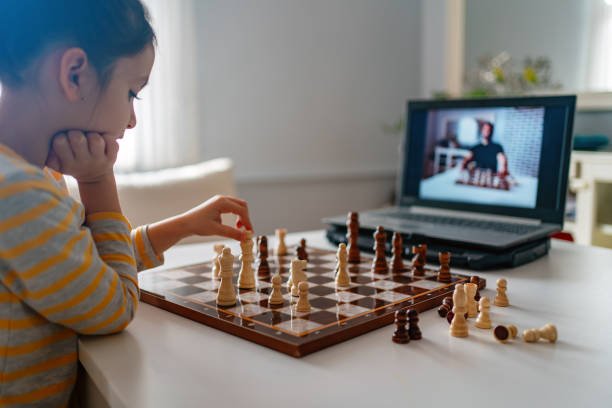
Cold weather or snow can hinder travel. Sometimes feedback is general, not very detailed. Sometimes classes do not follow a long‑term plan or do not track your improvement closely.
Online chess training solves many of those limits. When weather is bad, you still get lessons online. When there is no strong local coach for your level or schedule, you can pick from many coaches online.
You can get feedback always, record sessions, revisit them. Everything is more flexible. Because of the internet, geography is less of a barrier.
How Debsie is The Best Choice When It Comes to Chess Training in Whitehorse
Debsie is built with people like you in Whitehorse in mind. We know the challenges: long winters, travel difficulties, fewer very strong coaches near you, busy schedules. So we built Debsie to solve those.
When you join Debsie, first we assess you. We see what you know now: how you think in games, what mistakes you keep making, what parts of chess you feel weak in (maybe tactics, maybe endgame, maybe planning, maybe openings). Then we build a plan just for you. That plan shows what you will do week by week, what skills to build, what puzzles, what games to analyze.
Coach shows you ideas. Between lessons, you get homework: puzzles that focus on your weak spots, video examples, annotated master games, endgame practice. You also get recordings of lessons so you can watch again. If something was unclear, you can ask questions later.
Debsie also tracks your progress. We measure things like: how many puzzles are you getting right, how your game mistakes change over time, how well you understand endgames, how your planning improves. You see a graph or feedback showing: here you were, here you are now. That builds confidence. You see proof you are improving.
Coaches at Debsie do more than just show you moves. They teach you how to think ahead. They teach you how to stay calm when you make a mistake. They teach you how to plan, not just react.
And they help you not to get stuck: if you feel stuck in a level, Debsie adjusts. If something is hard, they slow down, give more examples, more practice. If you’re ready, they push you ahead.
Offline Chess Training
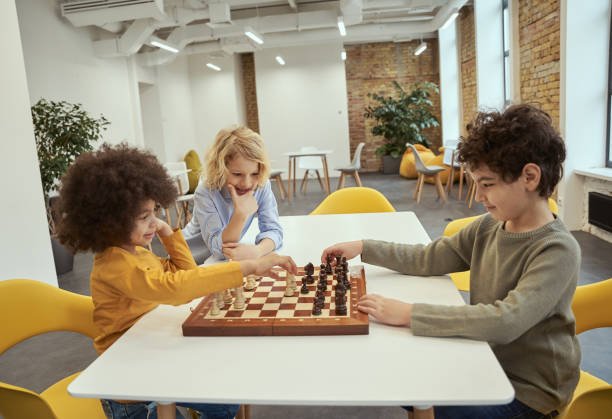
In Whitehorse, offline chess training means meeting in person in clubs, libraries, or with local tutors. The Whitehorse Chess Club meets weekly at Titan Gaming and Collectibles. The Whitehorse Public Library holds drop‑in chess nights where people can bring their own board and pieces and play socially.
These settings give you face‑to‑face interaction, and seeing physical boards helps understand certain things (like how pieces sit, spatial awareness, touching pieces). Local tutors (some listed on platforms like Superprof or AmazingTalker) also offer both in‑person and hybrid lessons.
Offline training gives you a sense of community: playing someone sitting across, seeing their body language, discussing over a board, sharing tips with people nearby.
Offline training also gives a way to play in local tournaments more easily. When you train offline, you may get to know local rivals, meet them in person, see how others play. That helps you learn things like “how it feels when someone pressures you physically,” or “how people play in your area,” which online sometimes misses.
For many learners, having some offline play is motivating: being able to pack up a board, go to a club, walk in, see others, talk chess, feels different—in a good way.
Drawbacks of Offline Chess Training
One problem is geography and weather. Whitehorse sees snow, icy roads, cold conditions. Getting to class or club may be harder in winter evenings. If roads are bad, people might skip. That breaks the habit. If classes stop for weather or travel, learning slows.
Another problem is limited choice. In smaller cities like Whitehorse, there are fewer highly‑experienced coaches nearby. If you want someone with tournament experience, high rating, strong teaching skills, you may need to travel far or accept weaker options. Also, class times may not match your schedule, especially if school, work, or other activities take up part of the week.
Offline group settings may give less personal feedback. In a club, coach or stronger players may watch your game, but often only after many games or in general way. You may not get detailed commentary for your mistakes, or follow up in between games.
Sometimes you don’t know which mistakes you repeat, or how to fix them systematically. Also there might be no homework or analysis outside class.
Also, offline learning may not follow a clear curriculum. Some tutors teach what students ask, or repeat certain favorite tactics or openings, but skip over endgame, positional play, psychological parts.
Without structure, growth may happen unevenly. One week you might get good at tactics, next week nothing new. You might miss parts that are essential but less flashy.
Cost and time are also issues. Travel time, the time to get to and from class, parking, maybe paying for space or material, all add up. For many people in Whitehorse, those extra costs matter.
Also, scheduling conflicts may cause you to miss often, which slows progress. Missing a lesson in offline usually means no record; you lose that content.

Best Chess Academies in Whitehorse
Here I describe several good academies or tutors, starting with Debsie in full detail, then others more briefly. This will help you see options and decide what suits you.
1. Debsie
Debsie stands at the top for many reasons. If you join Debsie in Whitehorse, here is how your journey will look and what you can expect, at every step. I want you to see how Debsie handles things and why many students do better here than elsewhere.
The first thing Debsie does is assessment. In your first sessions, coach will ask you to play a game or two, solve puzzles, talk about what you know: openings (if any), tactics, how often you make mistakes, how you think when you’re under time pressure.
This gives a clear picture not of what your rating is, but where your understanding is weak or inconsistent.
Then Debsie makes a personal plan. Not a generic path but one that fits your strengths, weaknesses, schedule, and your goals. If you want to compete in local tournaments, the plan includes tournament prep: time control play, pressure, handling nerves.
If you want to just enjoy chess, it still maps out skill improvements: better tactics, strategy, endgames, how to think ahead. The plan is broken into parts: weekly topics, homework, review of past games, monitoring improvement.
Find the right learning experience
Tell us a little about the learner and what you are looking for. Our team will review your answers and help you identify the most suitable next step.
- Takes only a few minutes
- No payment required
- Personalised recommendations
Your information will only be used to respond to your enquiry.
Live online lessons are a big part of Debsie. In these lessons, coach gives you full attention. You and coach share a board on screen. The coach watches your moves, helps you think what you could have done instead. If you make a mistake, you stop, reflect, see alternate moves. The coach often shows master games with similar patterns, or examples to contrast good and bad play.
Between lessons, Debsie gives you puzzles and exercises targeted to where you made mistakes. It might be that you lose many endgames with king + pawn, so you get specific endgame work. Or you misjudge threats, so you get tactics drills on understanding threats.
Debsie makes sure you review your own games. After playing—even online or in an offline tournament—you bring that game in. The coach and you go over move by move. You see what you thought, what you missed, what plan you walked into, what opponent did. That reflection is often where big improvement comes. Many tutors only do game review occasionally; at Debsie, it is regular.
2. Whitehorse Chess Club & Local Clubs
The Whitehorse Chess Club meets weekly at Titan Gaming and Collectibles, 1171 2nd Avenue, Whitehorse. They welcome players of all levels—from beginners to more experienced. These meetings let you play face‑to‑face, meet others nearby, see play styles, try games, get casual advice from more experienced players.
They also run tournaments or informal blitz matches occasionally. But what they do less is provide a full teaching plan or consistent one‑on‑one coaching.
Feedback is often general: after games people may comment, but not always deeply analyze every move you made. There is less structured homework, fewer tools (digital analysis, master game study) compared to a full academy. If you rely solely on such clubs, growth tends to be slower or uneven.
3. Private Tutors via Platforms like AmazingTalker & Others
In Whitehorse you can find private tutors through sites like AmazingTalker. These tutors often teach online, one‑on‑one. You can choose someone based on how much experience they have, reviews, cost, and what style you like. For example, some of them charge around CAD $10‑30 per hour depending on how advanced they are.
These tutors are good if you want flexibility. You might pick just one tutor you feel comfortable with, or work on just one part of chess (say tactics or endgames) rather than everything.
4. Whitehorse Chess Club & Local Club / Library Options
Whitehorse has a local chess community with several clubs and events. The Whitehorse Chess Club meets at Titan Gaming & Collectibles, open to players of all ages and levels.
Also, the Whitehorse Public Library often hosts free drop‑in chess nights, where people bring their boards and play, sometimes with small coaching or advice from stronger local players.
These offline club or library options are valuable. You get to play in person, talk face‑to‑face, see how different people play. That helps your social chess side, helps with over the board experience.
5. Other Regional & National Academies / Hybrid Options
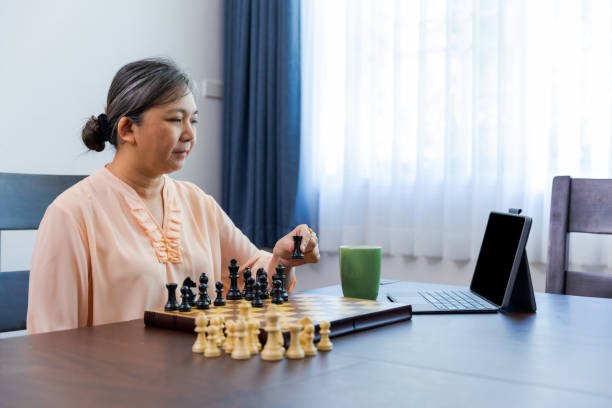
Beyond Whitehorse, there are academies or programs that take online students anywhere in Canada. Sometimes remote hybrid options exist (some in‑person + online). You may find programs with strong coaches, good tools, camps during summer, online classes. Also some online-only academies offer group workshops, tournament prep etc.
These options can be very good especially if you want something more than local clubs but want high‑quality teaching. Still, many of them do not combine every part: structure, regular feedback, mindset training, game review, tools, community.
Why Online Chess Training is The Future
When I look at how learning chess works, especially in Whitehorse, I see many strong reasons online chess training is becoming the best choice.
First, weather and travel make offline harder. In Whitehorse winters can be severe. Roads might be icy. Getting to a place can take a long time. Sometimes lessons get cancelled because travel is unsafe. Online removes those problems. If you are at home, you can still do a lesson no matter what the weather is like.
Second, more coaches with high skill are online. Because online, coaches are not limited to who lives in your town. You can learn from someone excellent, even if they live in another province. This gives you better chance to get excellent teaching even in places with few locally strong coaches.
Third, tools are better. Digital boards, online analysis engines, master games, video replays, puzzles—online training can include them well. When used right, these tools help you practice smarter, not just more.
They help you understand mistakes, see variations, test ideas. Offline classes sometimes have the board and pieces, but less of that deep technical support or recording.
Fourth, flexibility matters. As a student, schedule is busy: school, chores, other classes, family. Online allows you to pick times more easily. If something changes, you can adjust.
If you miss a lesson, some programs let you catch up. That kind of continuity makes a big difference. Learning every week steadily beats doing a lot sometimes, then nothing.
How Debsie Leads the Online Chess Training Landscape
Debsie does not just offer online chess training. Debsie aims to lead by doing many parts well together, especially for students in places like Whitehorse.
From the first moment, Debsie looks at what you know and what you need, not what a generic program does. Your assessment is personal.
Between live lessons, Debsie gives homework designed to your weak spots: puzzles that target tactics you miss, endgame drills, opening ideas you like, annotated games to study. Also, you get recordings or notes of lessons you can review. If something was confusing, you can revisit. This keeps your learning continuous.
Debsie tracks your progress over time. You’ll see how mistakes reduce, how planning improves, how your understanding in different positions gets sharper. You’ll see how your comfort in rough positions grows, how you handle pressure. That feedback helps you know you are improving, which builds confidence.
Another thing Debsie does is teach mindset: losing is part. Mistakes happen. They are learning. Debsie coaches help you stay calm, learn from loss, keep trying. That builds resilience. That is what separates good players who improve from those who give up when things are hard.
Debsie also gives you flexibility: schedule, online lessons, catching up, choosing what to focus on when needed. If something disrupts your life, lesson schedule can adapt. You don’t lose weeks because of travel, weather, or other events.
Community is also part of Debsie. Even though lessons are online, there are opportunities to connect: peer matches, group problem solving, tournaments, shared learning. Seeing others who work hard can motivate you. Sharing successes, struggles helps you feel less alone.
Cost vs value: Debsie aims to give you more value for each lesson. Because overhead is lower, savings are passed to you in things like better tools, more feedback, more personal attention. You pay for real growth, not just attendance.

Conclusion
If you live in Whitehorse, and you’re trying to find the best chess classes or tutors, now you know where to begin. There are local clubs, community events, and some private tutors. These are great for playing games, meeting other chess lovers, and having fun with the board in person.
But when it comes to deep, structured learning—something that actually helps you grow week by week, improve your focus, and build real thinking skills—online chess training is the smartest path.
Debsie gives you everything you need in one place. A coach who listens. A learning plan that fits your level. Homework that strengthens your weak spots. Games that are reviewed carefully.
Feedback that shows you what to fix—and how. You learn not only how to play smarter moves, but how to think smarter in life. You gain patience, confidence, and focus. That’s what real growth feels like.
Comparisons With Other Chess Schools:

Sayandeep Pal cares deeply about how children learn. He believes every child should feel excited to learn—like opening a new gift. At Debsie, he helps turn lessons into games so kids laugh, think, and grow all at once. He often says, “Learning should never feel like homework. It should feel like a quest!”
Sayandeep reads lots of books about how children learn best. Some of his favorites are The Elephant in the Brain, The Self-Driven Child, and How Children Learn by John Holt. These books help him understand how kids think and feel when they learn new things.
He writes stories, blogs, and lesson ideas that make learning fun and simple. He also talks to teachers and parents about how to bring more play into classrooms. Sayandeep dreams of a world where kids are free to ask “why,” play with ideas, and feel proud of what they discover on their own.
Accomplishments – Club Master in Chess, 2000+ Rating at Chess.com, Has played and secured fifth position in national chess championships.
Other Comparisons of Best Chess Classes All Across Canada: