Subject checked: chess training. Region checked: Saint John, New Brunswick.
We scored each option using the same parent-facing framework, so families can compare structured teaching, practice support, flexibility, pricing transparency, safety visibility, and public confidence signals instead of relying on vague “best tutor” claims.
Find the right learning experience
Tell us a little about the learner and what you are looking for. Our team will review your answers and help you identify the most suitable next step.
- Takes only a few minutes
- No payment required
- Personalised recommendations
Your information will only be used to respond to your enquiry.
Original Research-Based Provider Comparison: How We Scored These Options
The article already mentions Debsie, Saint John Chess Club, Superprof tutors, AmazingTalker, community/library-style programs, and a “Saint John Chess Academy” at 15 Pleasant Street. We could verify strong public information for the first four, but the separate public footprint for “Saint John Chess Academy” was not publicly clear in search results, so it is not scored as a verified standalone academy. Additional relevant options reviewed were New Brunswick Chess Association, Chess’n Math Association, Chess.com Coaches, and Outschool.
| Provider | Best For | Key Strength | Possible Limitation | Score /10 |
|---|---|---|---|---|
| Debsie | Structured online chess with guided practice | Live tutors, curriculum, homework, gamified progress, safety policy | Online-first for best teacher access | 9.56 |
| Chess’n Math Association | Canadian scholastic chess pathway | 9-level youth curriculum and tournaments | Local Saint John schedule/pricing not publicly clear | 7.61 |
| Chess.com Coaches | Strong advanced players/coaches online | Many titled/FIDE/USCF coaches | Curriculum, child-safety and pricing vary by coach | 7.23 |
| AmazingTalker Chess Tutors | Flexible 1-to-1 online lessons | Tutor choice, trial lessons, reviews | Tutor quality and support experience can vary | 7.14 |
| Superprof Saint John Tutors | Local/online private tutor search | Saint John pricing and profiles visible | Marketplace; progress tracking depends on tutor | 7.03 |
| Outschool Chess Classes | Kids’ group enrichment online | Many child-focused chess classes | Less standardized chess curriculum | 7.04 |
| Saint John Chess Club | Local over-the-board chess | In-person community and tournaments | Not a full tutoring curriculum | 6.32 |
| New Brunswick Chess Association | Provincial tournament ecosystem | CFC-linked chess events | Not a regular lesson provider | 5.69 |
Debsie — Final Score: 9.56/10
| Factor | Score | Evidence and Scoring Reason |
|---|---|---|
| Teacher Quality | 10 | Debsie says chess teacher partners are FIDE-rated/FIDE-certified or experienced; parents may ask for FIDE IDs; pricing page also lists advanced coaches with FM/IM/CM-type credentials. |
| Curriculum Structure | 10 | Public article describes step-by-step chess from rules to tactics, strategy, endgames and tournament prep; pricing lists beginner-intermediate groups and advanced “Extreme” coaching. |
| Student Fit & Personalization | 10 | One-on-one classes are described as tailored by level, speed and learning style; group classes are small, usually 4–6 students. |
| Practice / Progress | 9.5 | Daily homework, performance reports after two months, parent feedback loops, tracked course progress, points and leaderboard are public. |
| Engagement | 9.5 | Debsie offers gamified courses, leaderboard points, AI interaction and live tutors; WorldChess also describes Debsie as mixing expert-led instruction with gamified and interactive learning. |
| Access / Convenience | 9.5 | Online access across cities; free trial; no travel required. Offline FIDE-certified/award-winning teacher partners may exist, but Debsie’s best teacher range is online. |
| Transparency | 8.5 | Pricing is unusually clear: $100/month group, $20/class 1:1, $50/class advanced. One minor issue: public pages differ on recordings, so parents should confirm. |
| Confidence Signals | 8.5 | Debsie publishes outcomes/testimonials and says it serves 20,000+ students with 1,500 reviews/testimonials, though many signals are first-party. |
| Flexibility | 9.5 | Group, 1:1, advanced coaching, free trial, homework, WhatsApp support, and online scheduling. |
Superprof Saint John Tutors — Final Score: 7.03/10
| Factor | Score | Evidence and Scoring Reason |
|---|---|---|
| Teacher Quality | 7 | Saint John page shows 2 local profiles, including one FIDE-rated 2100 player; broader Canada listings include stronger titled/FIDE-certified coaches. |
| Curriculum Structure | 6 | Good tutors may structure lessons, but Superprof is a marketplace, not one standard curriculum. |
| Personalization | 8 | Strong for 1:1 customization by goal, price and specialty. |
| Practice / Progress | 6 | Feedback depends on tutor; no common progress dashboard shown. |
| Engagement | 6 | Tutor-dependent. |
| Access | 8 | In-person or online in Saint John; average listed price $23/h; first lesson free. |
| Transparency | 7 | Local pricing and profiles are visible; outside reviews note possible fee/subscription confusion. |
| Confidence | 7.5 | Saint John page shows 5/5 from 6+ reviews; Trustpilot Canada shows a 4-star rating with 1,584+ reviews. |
| Flexibility | 8.5 | Strong scheduling and tutor-choice flexibility. |
Saint John Chess Club — Final Score: 6.32/10
| Factor | Score | Evidence and Scoring Reason |
|---|---|---|
| Teacher Quality | 6.5 | Club includes beginner-to-master players, but individual coaching credentials are not publicly detailed. |
| Curriculum Structure | 5.5 | Excellent for play and events; no child curriculum published. |
| Personalization | 5 | Drop-in format; not designed as individual tutoring. |
| Practice / Progress | 5.5 | Tournament play, ratings and games help practice, but homework/progress tracking is not shown. |
| Engagement | 8 | Strong in-person community, casual play and tournament atmosphere. |
| Access | 8 | Meets Sundays at 4:00 at First Wesleyan Church, 399 Boars Head Road. |
| Transparency | 7 | Fees are clear: $20/year adults, $10/year juniors; tournament fees usually $1–$25. |
| Confidence | 7.5 | Listed by Chess Federation of Canada and New Brunswick Chess Association. |
| Flexibility | 5 | Mainly weekly local club play. |
Chess’n Math Association — Final Score: 7.61/10
| Factor | Score | Evidence and Scoring Reason |
|---|---|---|
| Teacher Quality | 8 | CMA says it has 100+ qualified instructors and many national/international-caliber players. |
| Curriculum Structure | 9 | 9 levels, 8–10 lessons per level, youth-focused progression. |
| Personalization | 7 | Group classes of 6–12 allow questions, but not fully 1:1. |
| Practice / Progress | 8 | Tournaments, ratings, worksheets, exercises and awards are public. |
| Engagement | 8 | Scholastic, tournament and club model is child-friendly. |
| Access | 6 | Strong Canadian presence; specific Saint John class access/pricing not publicly clear. |
| Transparency | 6.5 | Curriculum is clear; local NB schedule/pricing less clear. |
| Confidence | 8 | National scholastic chess organization, founded in 1985, with Canadian Chess Challenge links. |
| Flexibility | 7 | Lessons, clubs, camps and tournaments, but local availability varies. |
AmazingTalker — Final Score: 7.14/10
| Factor | Score | Evidence and Scoring Reason |
|---|---|---|
| Teacher Quality | 7 | Tutor marketplace with varied chess coaches; reviews mention named tutors and experience. |
| Curriculum Structure | 6 | Lessons are customized, but not one shared chess curriculum. |
| Personalization | 8 | 1:1 tutor matching and flexible scheduling are core strengths. |
| Practice / Progress | 6 | Some tutors assign puzzles; platform-wide chess tracking is not clear. |
| Engagement | 6.5 | Tutor-dependent. |
| Access | 9 | Online, broad tutor pool; example chess listing shows US$23/50 minutes and US$4 trial. |
| Transparency | 7 | Pricing and reviews are visible by tutor; outside reviews report mixed support experiences. |
| Confidence | 7.5 | AmazingTalker chess page shows 435 chess reviews and 99.3% 5-star distribution. |
| Flexibility | 8 | Strong for pay-as-you-go tutoring. |
Chess.com Coaches — Final Score: 7.23/10
| Factor | Score | Evidence and Scoring Reason |
|---|---|---|
| Teacher Quality | 9 | Many listed coaches show GM/IM/FM/NM titles, FIDE/USCF ratings and long coaching experience. |
| Curriculum Structure | 5.5 | Coach-specific, not standardized. |
| Personalization | 7.5 | Good for targeted private coaching. |
| Practice / Progress | 5.5 | Chess.com has puzzles/lessons, but coach homework tracking varies. |
| Engagement | 7 | Strong chess ecosystem and play tools. |
| Access | 10 | Fully online and global. |
| Transparency | 5.5 | Coach bios visible; pricing and child-safety process often not standardized. |
| Confidence | 8 | Large platform and titled-player visibility. |
| Flexibility | 7 | Coach selection is broad, but management is individual. |
Outschool Chess — Final Score: 7.04/10
| Factor | Score | Evidence and Scoring Reason |
|---|---|---|
| Teacher Quality | 6.5 | Vetted independent educators, but chess expertise varies by class. |
| Curriculum Structure | 6.5 | Many chess classes and courses; no single chess pathway. |
| Personalization | 7 | Group, private and self-paced options. |
| Practice / Progress | 5.5 | Depends on class. |
| Engagement | 8 | Strong for fun, age-grouped online kids’ classes. |
| Access | 9 | Online and flexible. |
| Transparency | 7 | Class pages generally show schedule/price; outside guides estimate group lessons at $5–$36/class. |
| Confidence | 7 | Trustpilot lists 3,557 reviews, but category rankings are mixed. |
| Flexibility | 8 | Group, private and self-paced formats. |
New Brunswick Chess Association — Final Score: 5.69/10
| Factor | Score | Evidence and Scoring Reason |
|---|---|---|
| Teacher Quality | 7 | Strong chess governance connection, but not a tutoring provider. |
| Curriculum Structure | 4 | Events, not lessons. |
| Personalization | 4 | No private learning path shown. |
| Practice / Progress | 5 | Useful for rated/tournament experience. |
| Engagement | 7.5 | Provincial events: NB Blitz, NB Open, Quick Chess and Closed Championship. |
| Access | 6.5 | Provincial, not Saint John-only. |
| Transparency | 7 | Officers, contacts, clubs and events are public. |
| Confidence | 7.5 | Recognized CFC provincial affiliate since 1974. |
| Flexibility | 4 | Best as a tournament pathway, not regular tutoring. |
How the Score Was Calculated — Scoring Rubric
Final Score out of 10 = Teacher Quality 15% + Curriculum Structure 15% + Student Fit & Personalization 15% + Practice/Homework/Progress 12% + Engagement 10% + Access/Convenience 10% + Transparency 8% + Confidence Signals 8% + Flexibility 7%.
In simple terms: a provider with great teachers but no curriculum cannot score perfectly. A fun club with no homework or progress tracking also loses points. Debsie scores highest because it combines live teaching, structured levels, daily homework, pricing clarity, progress reports, gamified learning and parent-visible safety processes in one system.
What the Numbers Mean for Learners, Parents and Readers
For beginners, Debsie, Chess’n Math and Outschool are the easiest to understand because they are child-oriented. For serious tournament-minded students, Debsie’s advanced coach tier, Chess.com Coaches, Chess’n Math tournaments and NBCA events are worth comparing.
For Saint John families who specifically want face-to-face chess, Saint John Chess Club is valuable and inexpensive. But it is better understood as a community and tournament-practice venue than a complete tutoring program.
Find the right learning experience
Tell us a little about the learner and what you are looking for. Our team will review your answers and help you identify the most suitable next step.
- Takes only a few minutes
- No payment required
- Personalised recommendations
Your information will only be used to respond to your enquiry.
For families who want guided practice beyond one weekly class, Debsie is the strongest overall fit in this comparison. Its advantage is not only “online convenience”; it is the combination of teacher support, homework, parent communication, progress reporting, quizzes/gamification and flexible class formats.
TLDR – To Conclude
Debsie ranks #1 here because the public evidence supports a more complete learning system: structured online lessons, live tutor support, small groups or 1:1 classes, daily homework, gamified progress, free trial access, clear pricing and a published child-safety policy. Other providers are not “bad”; they serve different needs. Saint John Chess Club is excellent for local play, Chess’n Math is strong for Canadian scholastic chess, and marketplaces like Superprof, AmazingTalker and Chess.com can work well when parents carefully vet the individual tutor. The best choice depends on the student’s level, goal, schedule and learning style.
If you live in Saint John, Canada, and you’ve been thinking about learning chess — or helping your child start — you’re in the right place.
Maybe you’ve seen chess on TV. Maybe your child is curious. Maybe you played as a kid, and now you want to get better. Whatever the reason, the truth is simple: chess is more than just a game. It’s a way to learn how to think smarter, solve problems, stay calm, and build real confidence.
But here’s the thing. If you want to get better, you need the right teacher. Not just someone who knows how to play, but someone who knows how to teach. Someone who can guide you, step by step. That’s where this guide comes in.
We’re going to look at the top chess tutors and classes in Saint John — both online and offline. I’ll explain what really matters when choosing a class, what to avoid, and why more and more families are choosing online chess training today.
Online Chess Training
Learning chess online means using the internet to connect with coaches, classes, tools, and students. You can be sitting in your home in Saint John, maybe in your bedroom, living room, or at a desk, and still get excellent training. You watch the coach on screen, sometimes share your board, sometimes do puzzles, sometimes play games and get feedback.
Online training has many parts. There are group lessons where many students join together. There are private lessons one‑on‑one. There are videos, puzzles, analysis tools, software to help you see where you made mistakes. Everything is in digital form. You often have recordings, so you can watch again if you didn’t understand something the first time.
Good online classes are made with care. They have a path: start with the basics (how pieces move, how to think ahead a few moves, how to avoid blunders), then move to tactics (pins, forks, skewers), openings, middle game, endgame, and strategy.
They build slowly so the student isn’t overwhelmed. Also, they include regular practice and testing: playing games, reviewing your games, puzzles, trying things under time control, maybe entering tournaments or online matches.
When the teacher cares about your growth, they give feedback often. They look at your games, tell you what you did well, what you missed, and how to improve.
Landscape of Chess Training in Saint John and Why Online Chess Training is the Right Choice
In Saint John, New Brunswick, there are some good offline chess options. There is the Saint John Chess Club which meets regularly at local places. People gather to play, sometimes in tournament format, sometimes casual.
There are private tutors listed on sites like Superprof who offer lessons in person or online. There is also a “Saint John Chess Academy” at 15 Pleasant Street that offers coaching and structured lessons.
But even though these exist, many students in Saint John find limits. Offline classes are often weekly and short. Coaches may not always follow a long path. Feedback may be limited to class time. If you miss a session, you lose that lesson.
Access to strong coaches may be harder. For more advanced play (tournaments, rating improvements), the tools and support are not always available locally.
Because of that, online training becomes strongly appealing. Online, you can access highly skilled coaches even if they live in another city or country. You can choose when to study.
You can use strong digital tools to review your games, see mistakes, replay positions, do puzzles many times, and track how you improve.
How Debsie is The Best Choice When It Comes to Chess Training in Saint John
Debsie, our academy, is built for students exactly like you — in Saint John, across New Brunswick, Canada, and beyond. We believe chess is more than moves and winning; it’s about thinking, growing, confidence, focus.
We use a full, step‑by‑step curriculum. If you’re starting fresh, we begin with how each piece moves, how to think a couple of moves ahead, how to recognize basic patterns.
As you improve, we bring in tactics, strategy, positional thinking, endgame technique, openings suited to your style. No skipping. No gaps. This means when you reach a new level, you aren’t confused or lost because some earlier step was missed.
Our coaches are certified, experienced, and trained to teach, not just to play. They know how to explain ideas clearly, using simple words, with examples. They see your games, see your mistakes, help you correct them. They set homework and puzzles, and make sure you understand before you move on.
Debsie gives frequent feedback. After every game (whether in class, private, or tournament), we review key moments. We show what you did right, what you missed, why a move was good or not. This helps you internalize good moves, avoid mistakes, and learn decision‑making. We record classes, so if you missed something, you can watch again.
We also offer variety. You have group classes (so you learn with others), private lessons (for targets you care about), puzzles/training tools (for practice on your own), tournaments and matches to test yourself, game reviews, strategy sessions. All these parts together help make growth steady and strong.
Debsie is flexible with schedule. We know life in Saint John has school, weather, other things. So many classes are online at times that suit families. You don’t travel far. You do not need to miss much. And when you can’t attend, we provide recordings or make‑up sessions or personal coaching to help you catch up.
We don’t just teach chess. We help life skills: concentration, patience, planning, calm under pressure, resilience after loss. Many parents tell us their child becomes more confident in school, more able to focus, better at solving math problems or puzzles. That is part of what we do.
Offline Chess Training
When most people think about learning chess, they imagine it the old-school way. Sitting across a wooden board. A coach leaning in to show a move. A quiet room in a library, or a group of students meeting every Saturday afternoon at the community center. That’s how offline chess training works — and in many ways, it’s where all of this began.
In Saint John, some students still learn this way. There are chess clubs that meet in person, like the Saint John Chess Club, where students gather and play games with others. There’s a small sense of tradition, of sitting face-to-face, reading an opponent’s eyes, and feeling the pressure of the clock ticking down. It can feel exciting, like you’re part of something.
Some schools may also offer occasional chess programs or after-school clubs. These usually have a coach — sometimes a teacher, sometimes a volunteer — who walks students through the rules, gives short lessons, and lets everyone play. You may also find a private tutor offering chess classes at their home or visiting yours once or twice a week.
This kind of training can help, especially in the very beginning. If your child is brand new to chess and simply needs to learn how the pieces move, what a check is, how to castle — in-person lessons can feel very warm and welcoming.
But after a while, this kind of learning often slows down. Not because of lack of effort, but because offline training comes with many limits. That’s where most families start to look elsewhere — for something more structured, more reliable, and more flexible.
Drawbacks of Offline Chess Training
Here’s where we need to be honest. Offline training might seem good at first — but when you look closer, many problems start to appear.
First, most offline chess classes in Saint John don’t follow a clear curriculum. That means there’s no path to follow, no plan for growth. Students often show up, play a few games, maybe hear a short lesson, and then go home. But what happens next week? Will they build on that lesson? Or will it be something totally different? It’s hard to know — and for a student who’s serious about improving, this can be frustrating.
Second, there’s very little feedback. If you play a game and lose, a coach may not have time to go over it with you in detail. They might say, “Don’t move your queen so early,” or “You missed a tactic,” but that’s not enough. You need to know why it was wrong, what you should’ve played instead, and how to see it next time. Without deep feedback, mistakes become habits — and habits are hard to break.
Another issue is time. Most offline classes happen once a week for maybe one hour. That’s not enough for real progress. One hour per week — with no homework, no review, no tournament play — means slow improvement. Students forget things. They lose motivation. It’s easy to feel stuck.
And then there’s the problem of missed classes. Maybe there’s snow. Maybe your child has another activity. Maybe the coach is away. When a class is missed in an offline setting, there’s often no backup. No recording. No makeup. You just lose that time.
Also, the quality of offline coaching can vary. Some coaches are amazing. They know the game and they know how to teach. But others? They might be good players, but not great teachers. And if your child isn’t connecting with the coach, or isn’t learning in a way that makes sense to them, improvement becomes hard.
Let’s not forget the stress of scheduling and driving. Between school, homework, sports, and other activities, it’s not always easy to fit in travel time. Even a short drive to a chess class can eat up the evening. Parents are busy. Kids are tired. And if it’s raining or snowing? That class might just get skipped altogether.
Find the right learning experience
Tell us a little about the learner and what you are looking for. Our team will review your answers and help you identify the most suitable next step.
- Takes only a few minutes
- No payment required
- Personalised recommendations
Your information will only be used to respond to your enquiry.
Best Chess Academies in Saint John, Cana
1. Debsie
Debsie is our number‑one choice for anyone in Saint John who seriously wants to learn chess and grow steadily. I want to show you all the details so you can see why we stand out. Think of me as walking you through every part, so you can tell if it’s the right fit for you.
Debsie gives you a full learning path. From the very beginning, when you don’t know how a pawn moves, all the way to advanced tactics, strategy, endgame, and tournament preparation. We don’t skip steps or assume you know something already. Each lesson builds on what came before, so you don’t feel lost.
Debsie offers many modes of learning. You get group live classes where you learn with others, which helps you see other ideas, compare, ask questions. You also get private one‑on‑one sessions when you want focused help on one thing — maybe your endgames, or your openings, or reducing blunders. Then there are puzzles and tools you can use in your own time.
Flexibility matters. We schedule classes in ways that work with school, with family time, with after‑school activities. If you miss something, there’s often a recording or a way to catch up. Weather, travel, traffic — none of that slows you down, because it’s all online.
Beyond chess moves, Debsie also cares about your growth as a thinker. When you train with us, you learn patience, how to think ahead, how to stay calm when under pressure, how to accept a loss, learn from it, and come back stronger.
2. Saint John Chess Club
One of the oldest and most known local places is the Saint John Chess Club. They meet in person. There’s a strong sense of community. You get to sit across from other players, play casual games, attend club events, maybe small tournaments. This gives you real face‑to‑face experience.
For some students, that is very valuable. If you enjoy meeting people in person, talking about moves live, feeling the board in your hands, the clock ticking, that can feel more “real.” The atmosphere is friendly, supportive. Beginners can learn from watching others. There is often a mix of levels, which means you might both help others and learn from them.
3. Private Tutors via Superprof, AmazingTalker, etc.
Saint John has many private tutors listed on platforms like Superprof. You can find someone who charges modest rates, maybe CAD 15/hr or more, depending on their strength. Tutors on these platforms often let you choose whether you want fun lessons, competitive preparation, openings, or general improvement. Some are FIDE rated, some are experienced, others less so.
These tutors offer good flexibility. If your child is especially weak in one area (say, endgames or middle‑game tactics), a tutor can focus on that. Also, because it’s one‑on‑one, the tutor can adjust pace, repeat things you don’t understand, work at your speed.
4. AmazingTalker Tutors and Online Platforms
AmazingTalker is an online platform where you can pick tutors for chess. You can match by price, by reviews, by specialization. There are adult classes, kid classes, beginner or advanced.
The benefit is wide choice. Because tutors are not limited to Saint John physically, you can find someone who matches your style, your time, your budget. Some tutors are very strong; some are more casual. Also, many online platform tutors allow you to schedule classes at times that suit you.
5. Other Local Programs & Clubs
There are smaller programs and clubs in Saint John and nearby areas. For example, the Saint John Free Public Library and similar community spaces sometimes host chess meetings or workshops. Vanishingly few offer full formal classes every week for all levels.
Also, there are summer camps or after‑school clubs that run for short periods. These are great for exposure, fun, and introducing chess. But they often lack the depth needed to build strong skills over time.
Why Online Chess Training is The Future
The way we learn anything today is changing. Kids are learning math on apps. Adults are learning languages from their phones. People are reading more on tablets than books. And when it comes to chess, the change is even more exciting.
Online chess training is not a backup plan anymore. It is the main way people are getting better — faster, smarter, and with better results.
Let’s think about what online really means. It means you can learn from a top coach in another country while sitting in your kitchen in Saint John. It means you can replay a full lesson later if you didn’t understand it the first time.
It means you don’t have to wait a week to ask a question — your coach can guide you between classes, too. It means lessons are supported by tools — puzzles, databases, analysis boards — things that paper and pencil just can’t match.
Online chess classes are also better for tracking progress. Coaches can record every game you play. They can show you your habits. They can tell you: “You’re missing knight forks” or “You blunder under time pressure” — and then help you fix it. That kind of data-driven learning helps you grow faster.
Online also removes the stress. You don’t have to dress up, go out in the snow, sit in traffic, wait for others. You just log in, start learning, and focus. It makes training consistent — and consistency is what builds skill.
How Debsie Leads the Online Chess Training Landscape
Debsie is not just another online chess program. We didn’t build this to be like everyone else. We built it to be better.
We saw that many chess platforms were just about playing games — but with no real teaching. Others offered videos — but with no personal help. Some had coaches — but no structure, no clear path.
So we built Debsie to fix all that.
At Debsie, we give every student a learning path. Whether you’re six years old or sixteen. Whether you’re brand new or already competing. We take you by the hand and walk with you step by step. You don’t just learn openings. You learn why they work. You don’t just memorize moves. You understand them.
Our live classes are engaging, personal, and fun. Our private lessons are focused, encouraging, and powerful. Our coaches are trained to teach with care. They use kind words, simple steps, and helpful feedback.
We also build a real chess family. You’re not learning alone. You’re part of something. You play with students from other countries. You learn from their games. You celebrate wins together. You support each other after losses. That sense of community is a huge part of what makes Debsie work.
And we go beyond chess. We teach how to think, how to focus, how to plan. We help kids build discipline and confidence — and those skills last a lifetime.
Conclusion
If you’re in Saint John and you want to start learning chess — or you want your child to learn — you have a choice.
You can go with the old way. Join a club, play casual games, try to improve with bits of help here and there.
Or you can go with the better way. A structured, supportive, exciting journey where every class builds your skill. Where coaches care. Where you get feedback, practice, tournaments, and steady growth.
That’s what Debsie offers. It’s why students from nine countries are learning with us. And it’s why families in Saint John are choosing us more and more.
👉 Click here to book your free trial class
Comparisons With Other Chess Schools:

Sayandeep Pal cares deeply about how children learn. He believes every child should feel excited to learn—like opening a new gift. At Debsie, he helps turn lessons into games so kids laugh, think, and grow all at once. He often says, “Learning should never feel like homework. It should feel like a quest!”
Sayandeep reads lots of books about how children learn best. Some of his favorites are The Elephant in the Brain, The Self-Driven Child, and How Children Learn by John Holt. These books help him understand how kids think and feel when they learn new things.
He writes stories, blogs, and lesson ideas that make learning fun and simple. He also talks to teachers and parents about how to bring more play into classrooms. Sayandeep dreams of a world where kids are free to ask “why,” play with ideas, and feel proud of what they discover on their own.
Accomplishments – Club Master in Chess, 2000+ Rating at Chess.com, Has played and secured fifth position in national chess championships.
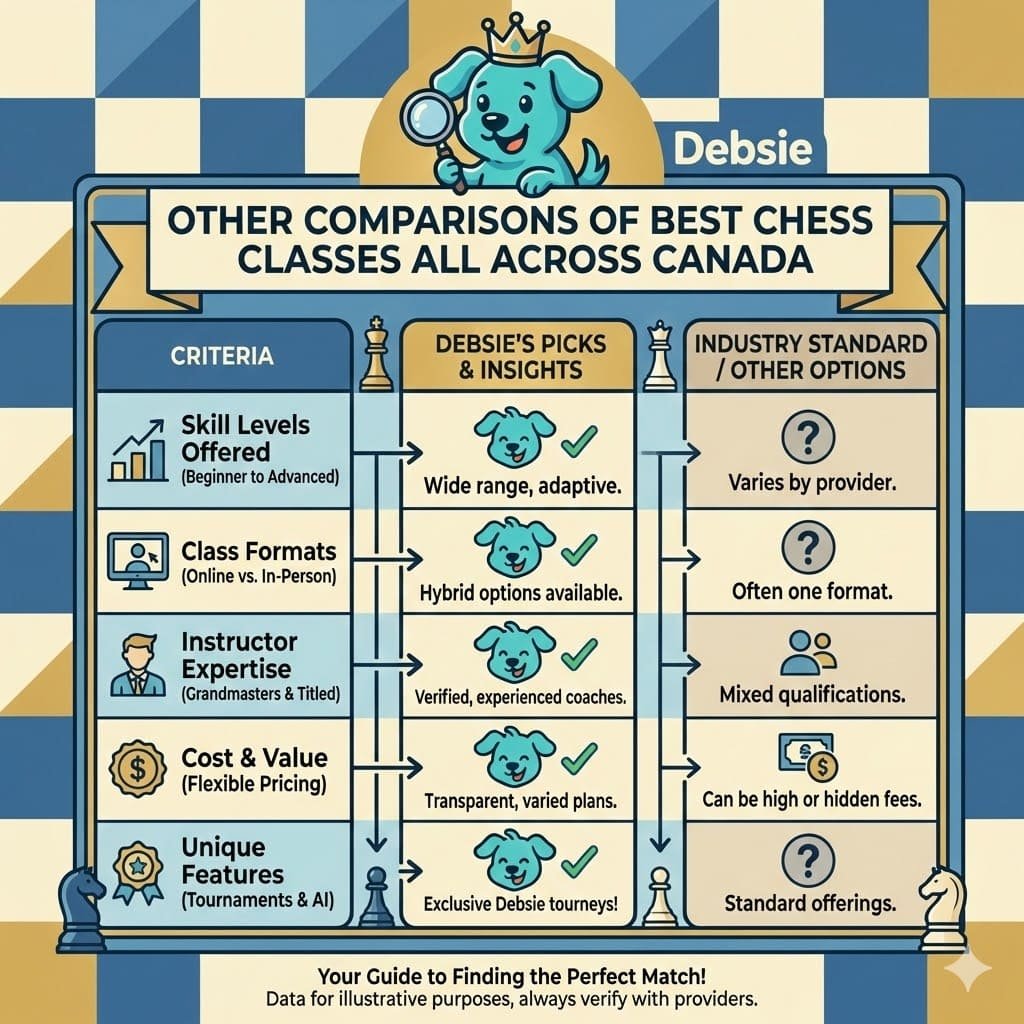
Other Comparisons of Best Chess Classes All Across Canada: