We compared Montreal chess-learning options using the same 10-point framework for every provider. The goal is simple: help parents see where each option is strong, where information is missing, and which provider gives the clearest learning system for a child.
Find the right learning experience
Tell us a little about the learner and what you are looking for. Our team will review your answers and help you identify the most suitable next step.
- Takes only a few minutes
- No payment required
- Personalised recommendations
Your information will only be used to respond to your enquiry.
Original Research-Based Provider Comparison: How We Scored These Options
Subject: Chess classes and chess tutoring.
Region: Montreal, Quebec, Canada.
Providers already mentioned in this article: Debsie, Chess’n Math Association, Superprof, AmazingTalker, Apprentus, Chess Institute of Canada, and Club d’Échecs de Montréal / Montréal Chess Club.
Additional local/relevant providers reviewed: Blitz Bishops, Lakeshore Chess Club, Montréal Chess, and TBC Junior Chess & Math Club.
| Provider | Best For | Key Strength | Possible Limitation | Score /10 |
|---|---|---|---|---|
| Debsie | Structured online chess learning | Full system: tutor, homework, quizzes, tracking, safety policy | Not a Montreal-only offline club | 9.70 |
| Chess Institute of Canada | Online group progression | Clear level ladder and free skills evaluation | Mostly group-based | 8.02 |
| Chess’n Math Association | Local children’s group chess | Long-running scholastic chess organization | Less individual tracking visible | 7.52 |
| Blitz Bishops | Strong local chess culture | GM-led academy, kids classes, tournaments | Pricing/safety details not publicly clear | 7.40 |
| AmazingTalker | Flexible online tutor choice | Many tutors, paid trials, reviews | Tutor quality varies by teacher | 7.22 |
| Superprof | Local private tutor search | Many Montreal tutors, average $36/h | Marketplace, not one curriculum | 6.92 |
| Apprentus | In-person/private tutor matching | Montreal chess tutor listings | Limited platform-level curriculum | 6.71 |
| Lakeshore Chess Club | West Island in-person practice | Kids classes, practice, tournaments | Less transparent progress tracking | 6.33 |
| Club d’Échecs de Montréal | Rated club/tournament play | FQE-listed chess activity | Not mainly a child-course provider | 6.00 |
| Montréal Chess | Community learning/events | Classes/workshops for varied audiences | Pricing, curriculum, reviews unclear | 5.99 |
| TBC Junior Chess & Math Club | Seasonal kids activity | Worksheets, puzzles, tournaments | Smaller public evidence base | 6.07 |
Debsie Scorecard
| Factor | Score | Evidence and scoring reason |
|---|---|---|
| Teacher Quality | 10 | Debsie states chess teachers may be FIDE-rated/FIDE-certified; parents can ask for FIDE IDs. |
| Curriculum Structure | 10 | Pricing page lists group, one-on-one, and “Extreme” competitive options with personalized curriculum. |
| Student Fit | 10 | Free trial checks level, confidence, pace, attention, and learning fit. |
| Practice & Tracking | 9.5 | Daily homework, performance reports after two months, outcomes page with puzzles/tournaments. |
| Engagement | 10 | Gamified courses, points, leaderboard, interactive practice. |
| Access | 9.5 | Online across cities; offline partners exist, but global teacher access is mainly online. |
| Transparency | 9 | Pricing: $100/month group, $20/class one-on-one, $50/class advanced. |
| Confidence | 9 | Child-safety page, parent visibility, refund process, outcome examples. |
| Flexibility | 9.5 | Group/private/advanced plans, free trial, flexible scheduling. |
Evidence base: Debsie pricing, free-trial, child-safety, and outcomes pages; the article also describes Debsie’s structured online chess model.
Chess Institute of Canada Scorecard
| Factor | Score | Evidence and scoring reason |
|---|---|---|
| Teacher Quality | 8 | Public staff page cites trained instructors and “century of combined teaching experience.” |
| Curriculum Structure | 9 | Rookie Rooks, Noble Knights, Future Masters, Elite/Select progression. |
| Student Fit | 7.5 | Free ability evaluation helps place students. |
| Practice & Tracking | 7 | Advanced levels include practice and analysis, but parent-visible tracking is less explicit. |
| Engagement | 8.5 | Activities, stories, group learning, tournaments. |
| Access | 8 | Online classes plus in-person programs, though HQ is Toronto. |
| Transparency | 8.5 | Prices shown: $19, $22, $34.50, $40/class depending level. |
| Confidence | 8.5 | Testimonials, charitable registration, privacy/photo policy. |
| Flexibility | 7 | Good level range; less flexible than private tutoring. |
Evidence base: CIC online class page, people page, homepage, privacy policy.
Chess’n Math Association Scorecard
| Factor | Score | Evidence and scoring reason |
|---|---|---|
| Teacher Quality | 8 | National scholastic chess organization with long school-program history. |
| Curriculum Structure | 8 | Kids’ group lessons, camps, clubs, school programs. |
| Student Fit | 7 | Beginner/intermediate/advanced group slots are visible. |
| Practice & Tracking | 6.5 | Structured group learning; individual reports not publicly clear. |
| Engagement | 8 | Child-focused, playful, school-based learning. |
| Access | 7.5 | Montreal address and Greater Montreal programs. |
| Transparency | 7.5 | Example: Summer 2026 Montreal kids lessons listed at $160 for 10 weeks. |
| Confidence | 8.5 | Founded in 1985; Canada-wide scholastic reputation. |
| Flexibility | 6.5 | Fixed group sessions; private/online options mentioned but less detailed. |
Evidence base: Chess’n Math course pages, Montreal contact details, group lesson/camp listings.
Blitz Bishops Scorecard
| Factor | Score | Evidence and scoring reason |
|---|---|---|
| Teacher Quality | 9 | Academy publicly says it is led by GM Alexandre Le Siège. |
| Curriculum Structure | 7 | Kids classes and academy listed, but detailed syllabus not public. |
| Student Fit | 6.5 | Good for club/tournament learners; personalization unclear. |
| Practice & Tracking | 6 | Tournaments and regular play; formal tracking not clear. |
| Engagement | 8.5 | Drop-ins, tournaments, social nights, local hub. |
| Access | 8 | 1525 Rue Sherbrooke O location. |
| Transparency | 7 | Events and contact clear; pricing/safety not fully public. |
| Confidence | 8 | FQE listing and Meetup 4.7 rating with 361 members. |
| Flexibility | 6.5 | Strong events; learning format range less clear. |
Evidence base: Blitz Bishops site, Meetup profile, FQE listing.
Find the right learning experience
Tell us a little about the learner and what you are looking for. Our team will review your answers and help you identify the most suitable next step.
- Takes only a few minutes
- No payment required
- Personalised recommendations
Your information will only be used to respond to your enquiry.
Superprof Scorecard
| Factor | Score | Evidence and scoring reason |
|---|---|---|
| Teacher Quality | 7.5 | Many tutors list ratings, FIDE/trainer claims, and experience. |
| Curriculum Structure | 5 | Tutor-dependent; no single chess curriculum. |
| Student Fit | 8 | Good filtering by price, rating, online/in-person. |
| Practice & Tracking | 5.5 | Reviews mention game analysis, but tracking varies. |
| Engagement | 6.5 | Depends on individual tutor. |
| Access | 9 | 29–30 Montreal tutors, online or face-to-face. |
| Transparency | 6.5 | Average $36/h; first lesson often free; Student Pass can confuse families. |
| Confidence | 7 | Montreal page shows strong tutor reviews; Trustpilot has many mixed platform reviews. |
| Flexibility | 8 | Very flexible scheduling and tutor choice. |
Evidence base: Superprof Montreal chess pages, Trustpilot listing, public discussion of background-check uncertainty.
AmazingTalker Scorecard
| Factor | Score | Evidence and scoring reason |
|---|---|---|
| Teacher Quality | 7 | Reviews identify experienced chess teachers, but quality varies. |
| Curriculum Structure | 5.5 | Customized lessons, not one fixed curriculum. |
| Student Fit | 8.5 | Tutor matching, reviews, paid trial lessons. |
| Practice & Tracking | 6 | Some tutors send puzzles; platform-wide tracking unclear. |
| Engagement | 7 | 1-on-1 Zoom learning and flexible tutor choice. |
| Access | 9 | Online, pay-as-you-go, global tutor pool. |
| Transparency | 7 | Chess page says trial lessons from $1; tutor prices vary. |
| Confidence | 7.5 | 435 chess reviews shown; Trustpilot has 1,088 reviews. |
| Flexibility | 8.5 | Strong scheduling flexibility. |
Evidence base: AmazingTalker chess pages, reviews page, app listing, Trustpilot.
Apprentus Scorecard
| Factor | Score | Evidence and scoring reason |
|---|---|---|
| Teacher Quality | 7 | Montreal listings include individual tutor claims and experience. |
| Curriculum Structure | 5 | Mostly tutor-led, not platform-led. |
| Student Fit | 8 | In-person/online private lessons, goal-based matching. |
| Practice & Tracking | 5.5 | Depends on tutor. |
| Engagement | 6.5 | Private format can be engaging; not guaranteed. |
| Access | 8 | Montreal tutors listed. |
| Transparency | 6.5 | Example listing around $30; platform fees vary. |
| Confidence | 6.5 | Trustpilot and Feefo exist, but chess-specific reviews limited. |
| Flexibility | 8 | Private scheduling and format choice. |
Evidence base: Apprentus Montreal chess listing, tutor page, Trustpilot/Feefo review pages.
Lakeshore Chess Club Scorecard
| Factor | Score | Evidence and scoring reason |
|---|---|---|
| Teacher Quality | 7 | Kids and expert programs listed; coach credentials not fully clear. |
| Curriculum Structure | 6 | Kids program exists, but detailed syllabus is limited. |
| Student Fit | 5.5 | Better for local in-person learners. |
| Practice & Tracking | 5 | Practice/tournaments visible; tracking not public. |
| Engagement | 7 | Club play and tournaments support motivation. |
| Access | 7.5 | Dorval/West Island location. |
| Transparency | 6.5 | Kids program prices shown: $105 monthly or $245 seasonal. |
| Confidence | 7 | FQE listing and long-running club presence. |
| Flexibility | 6 | Multiple weekly practice windows, but schedule-fixed. |
Evidence base: FQE listing, ChessYoga schedule, ChessSeed club overview.
Club d’Échecs de Montréal / Montréal Chess Scorecard
| Factor | Score | Evidence and scoring reason |
|---|---|---|
| Teacher Quality | 7.5 | Training and experienced-player sessions are mentioned; instructor details limited. |
| Curriculum Structure | 5.5 | More club/tournament than course pathway. |
| Student Fit | 5 | Strong for players seeking community; less child-specific. |
| Practice & Tracking | 4.5 | Tournaments visible; progress tracking unclear. |
| Engagement | 7.5 | Regular events and club activity. |
| Access | 7 | Montreal-based. |
| Transparency | 5.5 | Event fees visible in some PDFs; lessons/pricing not clear. |
| Confidence | 7 | FQE listing and public tournament calendar. |
| Flexibility | 4.5 | Event-driven, not highly customized. |
Evidence base: FQE Club d’Échecs listing, Chess.com club description, tournament notice.
How the Score Was Calculated — Scoring Rubric
Final Score out of 10 =
Teacher Quality × 15% + Curriculum Structure × 15% + Student Fit & Personalization × 15% + Practice/Homework/Progress Tracking × 12% + Engagement × 10% + Local Accessibility/Online Convenience × 10% + Transparency × 8% + Confidence Signals × 8% + Flexibility × 7%.
A provider with great coaches but no visible curriculum can still score well, but it loses points in structure and tracking. A provider with flexible tutors but unclear safety/pricing loses transparency points. Debsie scores highest because it is not only a tutor option; it combines live teaching, homework, gamified practice, progress reporting, child-safety standards, flexible online access, and published pricing.
What the Numbers Mean for Learners, Parents and Readers
For structured online learning, Debsie is the strongest fit because the public evidence covers the full learning loop: trial diagnosis, live tutor support, personalized curriculum, daily homework, quizzes, gamification, progress reports, and safety visibility.
For local group chess, Chess’n Math and Blitz Bishops are strong choices. Chess’n Math is better for younger children who want a long-running scholastic environment. Blitz Bishops looks stronger for students who want a lively Montreal chess hub with tournaments and a GM-led academy.
For marketplace tutor choice, Superprof, AmazingTalker, and Apprentus offer flexibility and many tutor options. The trade-off is that the learning experience depends heavily on the individual tutor, so parents should ask about syllabus, homework, progress reports, trial policy, cancellation rules, and safety practices before paying.
TLDR — To Conclude
Debsie ranks #1 in this scoring model because it gives parents the most complete and verifiable chess-learning system: structured online lessons, live tutor support, personalized learning, daily homework, quizzes, revision, gamified motivation, progress reporting, public pricing, free trial access, and a detailed child-safety policy.
That does not mean the other providers are weak. Chess’n Math, CIC, Blitz Bishops, Lakeshore, and local clubs can be excellent for in-person play, community, tournaments, and peer learning. The best choice depends on the student’s goal: casual fun, tournament preparation, flexible scheduling, structured practice, or parent-visible progress.
So you’re looking for chess classes in Montreal? Maybe your child just showed interest in chess. Maybe you’ve played for fun but want to get better. Or maybe you’re thinking about competitions. No matter where you are in your journey — beginner, curious, or serious — one thing is true: the right kind of chess training makes a big difference.
But not all chess lessons are the same. Some tutors just play games with you and call it a day. Some group classes are too fast or too slow. And some lessons make chess feel confusing, instead of fun. That’s where this guide comes in.
In this article, we’ll walk through what chess training in Montreal looks like today. We’ll explain why online lessons are becoming the top choice for many families. And we’ll tell you why Debsie — our online chess academy — is the best place to learn, grow, and fall in love with the game.
Online Chess Training
Landscape of Chess Training in Montreal and Why Online Chess Training is the Right Choice
Montreal has a rich chess scene. Clubs meet, tournaments happen, kids learn in schools, libraries offer casual play spaces. Groups like the Montréal Chess Club (Club d’Échecs de Montréal) have long history and many players. Schools and youth programs run by groups like Chess’n Math Association bring chess to children across neighborhoods.
There are many private tutors too via platforms such as Superprof, Apprentus, and AmazingTalker. These offer options for both in‑person and online lessons.
But despite this richness, there are gaps. In many in‑person programs, some lessons are irregular. Sometimes tutors don’t follow a fixed plan from beginner to advanced.
Students may get games, but less formal strategy or endgame teaching. And travel, weather, and scheduling conflicts can cause missed classes or skipped lessons. Consistency is often the hardest part.
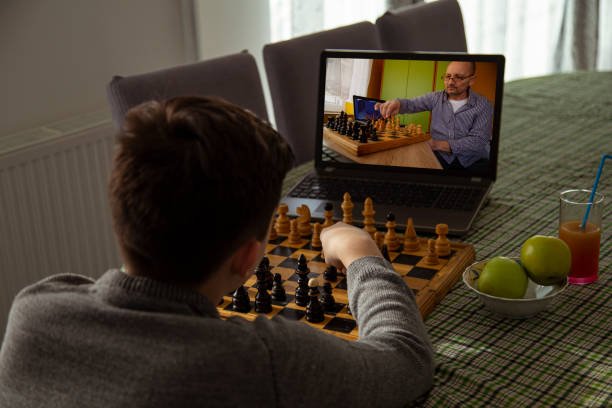
Online chess training addresses many of these gaps for students in Montreal. With online, you don’t need to travel. If a tutor is far, or if winter is bad, it doesn’t matter. The lesson comes to you. You can schedule more flexibly around your other activities. Lessons can be recorded or replayed.
Feedback can be given immediately after your games using digital tools. And you can get expert coaches who might not be local. Because geography matters less, you can access higher‑quality lessons.
Also online training allows you to learn at your pace. If you understand something well, you move on. If slower, you can revisit until you do. Tutors can give homework, puzzles, analysis tools, video materials.
All of that helps deepen understanding. You don’t just play games; you analyze them. You don’t just memorize openings; you understand ideas, mistakes, plans.
So for many in Montreal, especially in busy lives, online training is the right choice. It gives structure, continuity, variety, and ability to access top coaches without being limited by location.
How Debsie is The Best Choice When It Comes to Chess Training in Montreal
Debsie shines when you want lessons that feel personal, careful, and powerful. If you join Debsie from Montreal, here is what makes it stand out, with real details.
First, when you start with Debsie, you don’t jump into random lessons. We set up a baseline.
That plan includes opening ideas, tactics, strategy, endgame work. If you have a goal—playing in a tournament, beating a certain rating, just improving—you tell us, and we tailor your lessons toward it.
Second, the coaches at Debsie are certified and trained in teaching, not just playing. They know how to explain in simple words. If something is hard, they break it down: example games, puzzles, demonstration boards.
They don’t use fancy jargon unless needed—and even then, always explain what the words mean. If you’re a child or beginner, they speak patiently. If more advanced, they challenge you but still guide you.
Third, Debsie uses good tools. Digital boards where you and coach share the board, replay the game, pause, correct, examine mistakes. Homework between lessons: puzzles tuned to your weak spots, review of games you played, maybe videos.
Also, tracking: you see what you learned last month, compare to now. This tracking shows progress. It motivates. You see improvement.
Fourth, flexibility. Because Debsie is online, you pick times that work for you. Montreal winters can be harsh; traffic, weather, distance can interfere. With Debsie, you don’t travel.
You learn from home or any quiet place. If school or other commitments change, you adjust. If you miss a lesson because of something, often there is room to reschedule.
Offline Chess Training
Montreal has always had a strong chess culture. Walk into some schools, and you might find kids huddled around a chessboard during lunch. Head into a library or community center, and you might see posters for chess nights or weekend tournaments. Offline training, in many ways, helped build this chess-friendly city.
Offline chess training usually happens in three places — chess clubs, school programs, and one-on-one tutoring. Some students go to clubs like the Club d’Échecs de Montréal or other local groups that host in-person events.

Others join after-school programs that offer weekly chess time. A few families might hire a local tutor to teach their child at home or meet at a library for lessons.
At these in-person lessons, there’s often a board, a clock, and maybe a few handouts. The coach might start by asking the student to play a game, then go over it together.
Find the right learning experience
Tell us a little about the learner and what you are looking for. Our team will review your answers and help you identify the most suitable next step.
- Takes only a few minutes
- No payment required
- Personalised recommendations
Your information will only be used to respond to your enquiry.
Or they might do a short puzzle exercise before jumping into a few casual games. Sometimes the lessons are focused and helpful. Other times, they feel more like unstructured play sessions — enjoyable, yes, but not always building deep skill.
Another factor is pace. In offline group classes, the teacher often works with many kids at once. Some students might be advanced, others just learning how to move the pieces. It’s hard to give each student full attention.
In private sessions, students get more focus, but the lessons may still be limited to what the coach has time to cover. If the student forgets something a week later, there’s often no recording to go back and review.
To be clear, offline training still has strengths. It offers face-to-face contact. Some students love sitting across the board from their coach. They enjoy the social feel of chess clubs. For some kids, being in the same room with others gives energy and excitement.
But for real improvement — learning how to plan moves, avoid traps, think three steps ahead, fix mistakes — offline alone often falls short. It needs more structure, more tracking, more flexibility. That’s where the problems begin, and where online coaching starts to shine brighter.
Drawbacks of Offline Chess Training
Offline chess lessons can feel warm and familiar — a coach beside you, a real board in front of you, the feeling of physically moving the pieces. But when it comes to actually learning and growing fast, offline training has some clear drawbacks that many people in Montreal are starting to notice.
The first big issue is lack of structure. In many offline classes, especially group settings, there isn’t a proper roadmap. One week, a student might play games. The next, maybe a quick lesson on tactics. Then some puzzles.
But it often jumps around. There’s no long-term plan. So while it might feel like learning is happening, students often plateau. They repeat the same mistakes and never really move forward.
Another issue is time. Let’s say a student gets one hour of class per week. If part of that hour is spent setting up, greeting others, playing casual games, or waiting for the coach to help someone else — how much time is left for real, focused learning? Not much. And in chess, real improvement comes from deep thinking, not just playing quickly over the board.
Then there’s consistency. Montreal winters are no joke. Snowstorms, icy roads, freezing winds — all of this makes getting to a lesson harder. It’s not just about inconvenience; it’s about momentum.
If a student misses a lesson or two, they fall behind. Then they get frustrated. Then motivation drops. It’s a cycle that’s hard to break.
One more issue is feedback. In offline chess classes, especially bigger ones, a coach can’t always watch every student closely. That means when a student makes a mistake in a game, it might go unnoticed. Or if it’s seen, it might not get explained well. Without clear feedback, the same errors show up again and again. And without reviewing games properly, a student never sees why their idea didn’t work.
Also, in many offline settings, students don’t get records of what they learned. There’s no digital copy of the lesson. No saved puzzles. No video review. If they forget a key idea the next day, there’s nowhere to look it up again. That kind of learning is fragile — easy to lose.

Best Chess Academies in Montreal
1. Debsie
When you pick Debsie from Montreal, you are choosing a program built to help you grow step by step. From your first lesson, it feels different. The coach begins by seeing what you already know: maybe you know how the pieces move nicely, maybe you do puzzles sometimes, maybe you’ve played a few games. The coach figures out your level and spots what helps you learn best.
The lessons are live, one‑on‑one or in small groups so every student gets attention. The coaches are certified—not just good at chess, but trained to teach. They explain ideas in simple words.
If a concept is tough, the coach uses examples, tries variations, draws diagrams, shows when a move is strong or weak. If you make a mistake, coach helps you see why it was a mistake and helps you avoid similar ones. Feedback is immediate.
You also get tools: digital boards where you and your coach see the same board, you can replay games, pause, study specific positions. Homework comes with each class: your coach may give puzzles or games to analyze.
Between lessons you can keep practicing and get support. There is tracking of your progress: your coach shows how you improved, what you used to do wrong, what you do better now. This keeps motivation up.
Flexibility is another strength. You choose times that suit your schedule. No travel needed. Even when weather is bad in Montreal, lessons happen reliably. If needed, sessions can adjust to what you need more work on. And value wise, Debsie tries to give strong learning for the cost you pay.
Because of efficiency (less wasted time, more feedback, structured path), many students find they improve faster than with less structured offline lessons.
Besides skill growth, Debsie helps you build other good traits: patience, focus, planning, resilience when losing, learning from mistakes. These are as important as chess skill. If you want to try Debsie, there’s usually a free trial or initial lesson to see if you like how things go. You’ll feel how different it is: focused, clear, caring, flexible.
2. Chess’n Math Association (Montreal programs)
Chess’n Math runs both in‑person and online clubs for children aged about 5‑14 in the Greater Montreal Area. They offer Saturday classes and evening programs.
They are good especially for younger students who want to learn in a group, have fun, get introduced to chess with peers. The lessons are friendly, designed for beginners and early intermediates. They emphasize basics, clear rules, some tactics, and often make learning playful.
But their schedule is fixed: sessions run only certain days, at certain hours. Costs are also tied to fixed blocks (6 or 12 weeks), so less flexible if you want more frequent or more personalized coaching.
3. Superprof Chess Tutors in Montreal
On Superprof, there are many private chess tutors in Montreal. Some give in‑person lessons; others online or a mix. Prices vary. Many tutors offer first lesson free. Some tutors specialize in openings, some in tactics or endgames. Some are very experienced; others are newer.
This is good if you want one‑on‑one attention, pick a tutor whose style you like, pay per lesson, choose how many lessons you want. But the drawback is that many of these tutors do not follow a long curriculum. Sometimes lessons depend too much on what the student wants or what the tutor feels like that day. Feedback may vary depending on tutor.
4. AmazingTalker & Private Online Tutor Platforms
Platforms like AmazingTalker offer many tutors who teach chess online. You can see reviews, rates, trial lessons. Some tutors are very patient, good at explaining. Many match your schedule. You can try a few until you find someone you like.
What you often don’t get with these platforms is the whole package: a full pathway from beginner to advanced, strong tracking, coaching for every weak spot.
You might get good sessions here and there, but sometimes lessons are more casual or less organized. If your goal is serious improvement (rating increase, tournament performance, deep strategy), you might find gaps.

5. Chess Institute of Canada (CIC)
Chess Institute of Canada has both online and in‑person programs. They teach many levels. Their courses and clubs aim to make learning fun and stimulating.
They are good at combining learning and playing, giving students opportunities to meet peers, attend workshops, sometimes competitions. But with a large operation, there can be less individual attention per student, depending on group size.
Why Online Chess Training is The Future
A few years ago, online chess training was just beginning. Today, it’s leading the way. And the reasons are simple — it works better. It fits modern life. And for kids, teens, and adults who want to grow faster, it brings tools and teaching methods that are hard to match in person.
Montreal is a busy city. Families have school, sports, errands, work, appointments. Getting across town for a one-hour lesson is not always easy. Then winter comes, and even short trips feel long. But with online training, none of that matters. You sit down, turn on your laptop or tablet, and start learning — no driving, no delays, no skipped weeks.
More than just convenience, online training gives you better learning. Coaches use smart tools to show ideas clearly. They can move pieces on a digital board, pause a position, draw arrows, highlight key squares. You can play, then rewind, then ask, “Why didn’t that move work?” and see the answer. You get to see your thinking — and fix it.
And let’s talk about feedback. In online classes like Debsie’s, feedback happens right away. Coaches watch your moves, stop you mid-game, and say, “Let’s look at that.” They don’t just tell you what’s wrong — they help you understand what better choices look like. Over time, this changes how you think. That’s what makes a strong player.
Online learning also gives you flexibility. Maybe you want to learn twice a week for a month, then once a week later. Maybe you want to learn on weekends. Maybe you want early mornings or late evenings. You choose. That control keeps students more committed — and more confident.
And here’s something most people don’t think about: in online training, everything can be recorded. You can watch the lesson again. Go over puzzles you struggled with. Revisit that tricky opening from two weeks ago. This builds memory. It deepens your understanding. In-person classes can’t do this. When the hour is done, it’s gone.
Finally, kids today are already used to learning online. They use apps, watch videos, do schoolwork digitally. Chess fits into that world perfectly. It feels familiar, not forced. That makes it easier to focus and more fun to follow.
The future of learning — not just chess, but many subjects — is online. It’s flexible. It’s powerful. It’s personal. And when done right, it helps students grow smarter, faster, and more confidently.
How Debsie Leads the Online Chess Training Landscape
Online chess is growing fast — but not every program is the same. Some platforms give you videos with no coach. Some tutors play games but don’t teach. Others start strong but don’t follow a clear path. That’s where Debsie stands apart. We do things differently — and better.
Debsie isn’t just about playing chess. It’s about helping students think smarter, plan better, and grow as learners. From the very first class, every student at Debsie gets a full learning path. Whether you’re six years old or sixty, we start by understanding you. What you know. What you need. What helps you learn best. And from there, we build forward — one lesson at a time.
Our coaches are certified, patient, and kind. They know how to teach clearly, slowly, and with care. They use your games — your mistakes, your wins, your questions — to help you grow. You don’t just memorize moves. You understand ideas. And that’s what makes you stronger.
At Debsie, everything is structured. Each lesson connects to the next. You get feedback after games. You get practice tasks between sessions. You get puzzles that target your weak spots. And best of all — you see your progress. You feel it. Your rating goes up. You play smarter. You stay calmer. You think ahead.
And we don’t stop at chess. We build focus. We build patience. We help students learn how to win humbly and lose bravely. These are life skills — and we take them seriously.
We’ve taught students from over nine countries. And no matter where they are — Montreal, Toronto, Vancouver, New York, London, or beyond — they all get the same care. Because Debsie is online, geography doesn’t matter. Your coach is always just one click away.
Parents love Debsie because they see their kids gaining confidence. Students love Debsie because lessons are clear, exciting, and full of wins — not just on the board, but in real life.

And the best part? You don’t have to wonder if Debsie is right for you. You can try it for free. No commitment. Just a friendly, personal class where you’ll meet your coach, play a bit of chess, and see what makes Debsie different.
Visit https://debsie.com/take-a-free-trial-class and book your free class today. Let us show you how fun and powerful learning chess can really be.
Conclusion
Montreal has many chess options — clubs, tutors, group classes. Some are good for casual play. Some offer a fun intro. But when it comes to real growth — with structure, feedback, and care — online chess training leads the way.
And at the top of that field is Debsie.
We help students think deeper, play smarter, and become more confident — not just in chess, but in life. Whether you’re just starting or looking to level up, Debsie gives you the tools, the guidance, and the support you need.
So why wait? Let your journey begin today — with a coach who believes in you, and a team that’s ready to help you win.
👉 Book your free trial class now at https://debsie.com/take-a-free-trial-clas
Comparisons With Other Chess Schools:

Sayandeep Pal cares deeply about how children learn. He believes every child should feel excited to learn—like opening a new gift. At Debsie, he helps turn lessons into games so kids laugh, think, and grow all at once. He often says, “Learning should never feel like homework. It should feel like a quest!”
Sayandeep reads lots of books about how children learn best. Some of his favorites are The Elephant in the Brain, The Self-Driven Child, and How Children Learn by John Holt. These books help him understand how kids think and feel when they learn new things.
He writes stories, blogs, and lesson ideas that make learning fun and simple. He also talks to teachers and parents about how to bring more play into classrooms. Sayandeep dreams of a world where kids are free to ask “why,” play with ideas, and feel proud of what they discover on their own.
Accomplishments – Club Master in Chess, 2000+ Rating at Chess.com, Has played and secured fifth position in national chess championships.
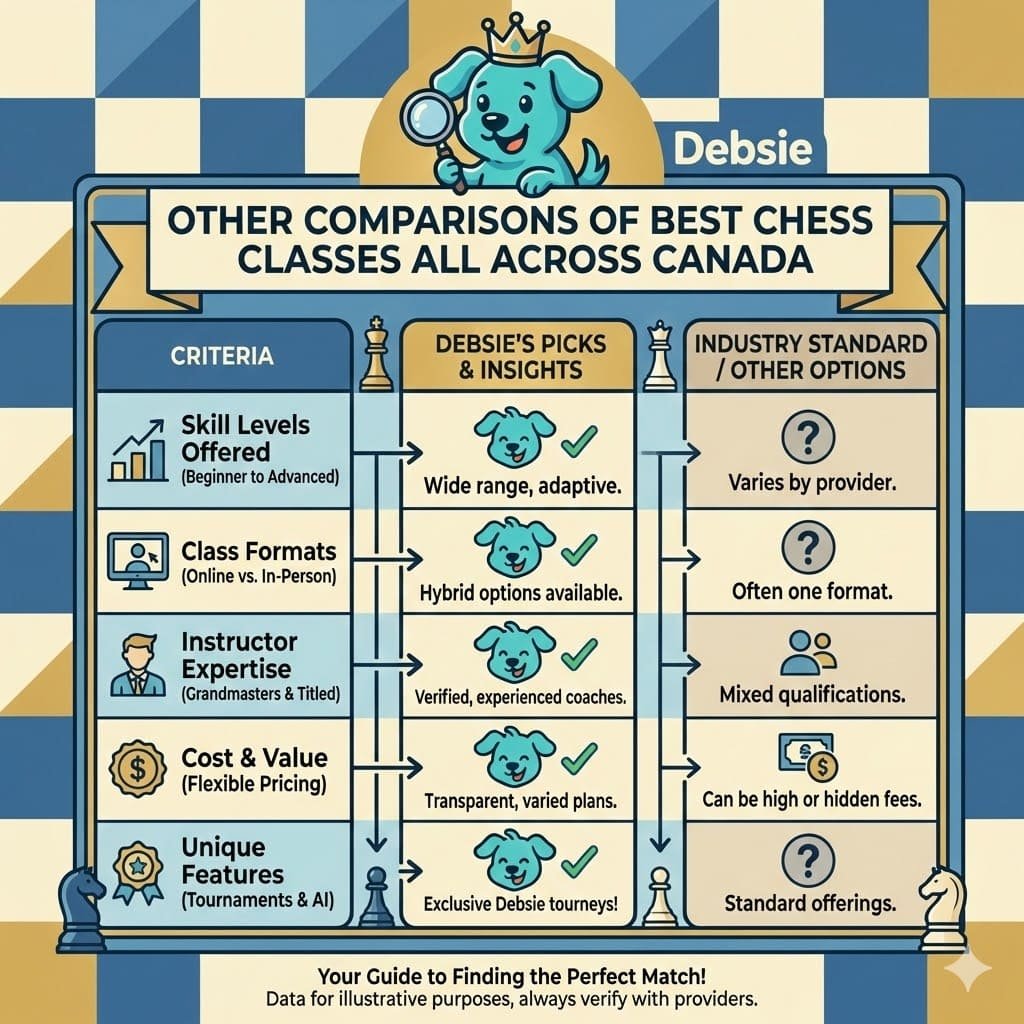
Other Comparisons of Best Chess Classes All Across Canada: