This comparison is built for parents who need a practical answer: which chess option gives the clearest teaching, safest structure, useful practice, and visible progress? We used public evidence only and scored every provider with the same weighted model.
Find the right learning experience
Tell us a little about the learner and what you are looking for. Our team will review your answers and help you identify the most suitable next step.
- Takes only a few minutes
- No payment required
- Personalised recommendations
Your information will only be used to respond to your enquiry.
Original Research-Based Provider Comparison: How We Scored These Options
Subject: chess tutoring and chess classes.
Region: Halle (Saale), Germany.
Providers already in the article: Debsie, USV Halle, Schachverein Roter Turm Halle, Reideburger SV, and Online-Schachclub Halle-Saale.
Additional relevant local providers added: SV Saalespringer Halle, Schachzwerge Halle, PostTurnSportVerein Halle, and SG Einheit Halle. WorldChess was reviewed but not scored because it is a broader online chess/play-and-masterclass platform, not a Halle tutoring provider.
| Provider | Best For | Key Strength | Possible Limitation | Score /10 |
|---|---|---|---|---|
| Debsie | Structured online chess with tutor support | Curriculum, homework, quizzes, progress tracking, child-safety process | Not a walk-in Halle club | 9.60 |
| SV Saalespringer Halle | Active local junior/club chess | Several Halle training sites and strong titled players | Newer club; individual tracking not public | 7.29 |
| Roter Turm Halle | Local children’s club chess | Age groups, trial sessions, youth tournament record | Progress tracking not publicly clear | 6.89 |
| USV Halle | Competitive club pathway | Long chess history and strong youth/elite record | Coaching format and curriculum detail less public | 6.80 |
| Schachzwerge Halle | Very young beginners | Kita/primary-school focus | Pricing and structured progression not public | 6.50 |
| Reideburger SV | East-Halle club and team chess | Public children’s training slot and strong players | Pricing, safety policy, and curriculum not public | 6.26 |
| PTSV Halle | Casual-to-league club play | Weekly club evening and teams | Less child-specific public evidence | 5.91 |
| SG Einheit Halle | Casual beginner introduction | Teaches basics for children and adults | Limited public detail | 5.13 |
| Online-Schachclub Halle-Saale | Local online chess community | Easy digital community entry | Not a structured tutoring program | 3.25 |
Detailed Scorecards
Debsie
| Factor | Score | Evidence and Scoring Reason |
|---|---|---|
| Teacher Quality | 10 | Debsie states it works with FIDE-rated/FIDE-certified chess partners, allows parents to ask for public FIDE IDs, and offers higher-tier FIDE-title/record-holder coaches. |
| Curriculum Structure | 10 | The Halle article describes a sequence from piece movement to tactics, openings, middlegames, endgames, and tournament readiness; pricing pages also describe personalized curriculum. |
| Student Fit & Personalization | 10 | Placement session, 1:1 options, level-based groups, and parent-teacher-class-manager WhatsApp setup support age, level, pace, and goals. |
| Practice, Homework & Progress Tracking | 9.5 | Daily homework, quizzes, revision, reports after two months, and outcome examples based on tutor reports, puzzle data, tournaments, and parent-approved testimonials. |
| Engagement & Motivation | 9.5 | Gamified learning, leaderboard, active lesson style, solving, discussion, and online tournaments are publicly described. |
| Local Accessibility / Online Convenience | 9 | Online delivery gives access beyond Halle; offline partner availability is not guaranteed city-by-city, so Debsie recommends online for its wider teacher pool. |
| Transparency | 9 | Pricing is public: group classes usually $100/month, 1:1 $20/class, advanced 1:1 $50/class; safety, refund, and data-use policies are public. |
| Confidence Signals | 9 | Public testimonials/outcome page, safety process, refund language, and teacher-screening claims are visible; independent external audit is not publicly clear. |
| Flexibility | 9.5 | Free trial, group, 1:1, advanced coaching, online scheduling, daily homework, and support beyond one weekly class. |
SV Saalespringer Halle
| Factor | Score | Evidence and Scoring Reason |
|---|---|---|
| Teacher Quality | 9 | Public roster shows strong players including FMs and a WFM; club reports youth success, including U12 state-level result. |
| Curriculum Structure | 7 | Public training is split across children, beginners, youth, and club events, but a written curriculum is not publicly clear. |
| Student Fit & Personalization | 6.5 | Beginner/youth sessions help fit, but individualized plans are not public. |
| Practice, Homework & Progress Tracking | 6 | Tournament and league exposure is strong; homework or progress dashboards are not public. |
| Engagement & Motivation | 7 | Monthly blitz, youth training, and multiple locations create regular play motivation. |
| Local Accessibility / Online Convenience | 8 | Several Halle training sites are listed; online tutoring is not the main model. |
| Transparency | 7.5 | Fees are public: €180/year full, €90/year pupils/students/trainees/social-aid, plus €12 admission. |
| Confidence Signals | 8.5 | Public membership data, titled players, and youth results are strong signals. |
| Flexibility | 6 | Good local schedule variety; private online tutoring and trial policy are not publicly clear. |
Schachverein Roter Turm Halle
| Factor | Score | Evidence and Scoring Reason |
|---|---|---|
| Teacher Quality | 8 | Public club profile shows active players and youth championship results, including DVM U12 third place in 2019. |
| Curriculum Structure | 6 | Groups exist for beginners, teens, girls, adults, and competition, but a lesson-by-lesson curriculum is not public. |
| Student Fit & Personalization | 6.5 | Age and level grouping is useful; individual learning plans are not public. |
| Practice, Homework & Progress Tracking | 5.5 | League and tournament practice are clear; homework/progress tracking is not public. |
| Engagement & Motivation | 7.5 | In-person groups, youth culture, and tournament pathway are good motivators. |
| Local Accessibility / Online Convenience | 7.5 | Training locations include Latina and Johannesgemeinde; no regular online model is public. |
| Transparency | 7 | Trial sessions are public. Fees are public: €10 admission; €7.50/month youth/reduced; €15/month adult. |
| Confidence Signals | 8.5 | 92 members, 62 under 25, and youth results create strong club credibility. |
| Flexibility | 6 | Trial and multiple groups help; private tutoring and online options are not public. |
USV Halle
| Factor | Score | Evidence and Scoring Reason |
|---|---|---|
| Teacher Quality | 8.5 | Public history describes USV Halle as a strong training environment with GM/IM/WIM links and notable youth results. |
| Curriculum Structure | 6.5 | The chess site lists training, school chess, theme evenings, and teams, but curriculum levels are not fully public. |
| Student Fit & Personalization | 5.5 | School chess and team pathways help; personalized student plans are not public. |
| Practice, Homework & Progress Tracking | 5.5 | Competition exposure is strong; homework or parent-visible tracking is not public. |
| Engagement & Motivation | 7 | Club teams, school chess, and competitive history are motivating for ambitious learners. |
| Local Accessibility / Online Convenience | 7 | Halle-based club setting is clear; online convenience is not the central model. |
| Transparency | 7.5 | USV and chess-section fees are public: full chess membership shown as €180/year and reduced as €138/year. |
| Confidence Signals | 8.5 | Long history, youth results, and school chess links are strong confidence markers. |
| Flexibility | 5.5 | Good club route; trial class, safety policy, and private tutoring options are not publicly clear. |
Schachzwerge Halle
| Factor | Score | Evidence and Scoring Reason |
|---|---|---|
| Teacher Quality | 6.5 | Public descriptions say trainers are active club players; individual credentials are not fully public. |
| Curriculum Structure | 6.5 | Strong child-first focus for Kitas and primary schools; full progression map is not public. |
| Student Fit & Personalization | 7 | Best fit is young children learning playfully in school/kindergarten contexts. |
| Practice, Homework & Progress Tracking | 5.5 | Educational chess benefits are described; measurable homework/tracking is not public. |
| Engagement & Motivation | 8 | Playful early-childhood approach is a clear strength. |
| Local Accessibility / Online Convenience | 6.5 | Local school/Kita model is useful; online convenience is not public. |
| Transparency | 6 | Training times appear “on request”; fees and safety policy are not publicly clear. |
| Confidence Signals | 6.5 | Founded local presence and club-player trainers help; public review depth is limited. |
| Flexibility | 5.5 | Good for young beginners; private, advanced, and online options are not public. |
Reideburger SV
| Factor | Score | Evidence and Scoring Reason |
|---|---|---|
| Teacher Quality | 8 | Public profiles show several strong-rated players; exact youth coach credentials are not public. |
| Curriculum Structure | 5.5 | Children’s training and club training are listed; structured curriculum is not public. |
| Student Fit & Personalization | 5.5 | Friday children/talent training helps; individualized pathway is not public. |
| Practice, Homework & Progress Tracking | 5 | Club/team chess supports practice; homework and reports are not public. |
| Engagement & Motivation | 6.5 | In-person club identity and team chess support motivation. |
| Local Accessibility / Online Convenience | 7 | Tuesday evening and Friday children’s training are public in Halle/Reideburg area. |
| Transparency | 6 | Schedule is findable; chess pricing, trial class, and safety policy are not publicly clear. |
| Confidence Signals | 7.5 | Member/rating data and broader club footprint are positive signals. |
| Flexibility | 5.5 | Local club route is clear; online/private formats are not public. |
PTSV Halle
| Factor | Score | Evidence and Scoring Reason |
|---|---|---|
| Teacher Quality | 7.5 | Public roster includes experienced rated players, including a CM; fewer youth members are visible. |
| Curriculum Structure | 5 | Wednesday training, blitz, standard tournaments, and teams are public; curriculum is not. |
| Student Fit & Personalization | 5 | Welcomes beginners to advanced players, but personal plans are not public. |
| Practice, Homework & Progress Tracking | 4.5 | Club play is available; homework/tracking is not public. |
| Engagement & Motivation | 6 | Weekly evening and leagues help self-motivated students. |
| Local Accessibility / Online Convenience | 7.5 | Wednesday club evening at Grenzstraße 20 is public; online option is not central. |
| Transparency | 6.5 | Fee PDF is public and shows a €12 admission fee plus chess fee rows, but category mapping should be confirmed with the club. |
| Confidence Signals | 6.5 | Established local club and league play help; child-specific proof is thinner. |
| Flexibility | 5 | Good weekly club option; trial, online, safety, and private coaching are not public. |
SG Einheit Halle
| Factor | Score | Evidence and Scoring Reason |
|---|---|---|
| Teacher Quality | 5.5 | Page states chess trainers teach basics to adults and children; credentials are not public. |
| Curriculum Structure | 4.5 | Basics and rules are described; full levels are not public. |
| Student Fit & Personalization | 5 | Accessible beginner tone; personalization is not public. |
| Practice, Homework & Progress Tracking | 4 | No public homework or progress-tracking evidence found. |
| Engagement & Motivation | 6 | Casual, welcoming club language may suit social learners. |
| Local Accessibility / Online Convenience | 6.5 | Local in-person option; online option not public. |
| Transparency | 6 | General information is public; pricing, trial, and safety are not publicly clear. |
| Confidence Signals | 4.5 | Public reputation signals are limited in the reviewed sources. |
| Flexibility | 4.5 | Appears beginner-friendly; format options are not public. |
Online-Schachclub Halle-Saale
| Factor | Score | Evidence and Scoring Reason |
|---|---|---|
| Teacher Quality | 3 | Chess.com community, not a verified tutoring staff. |
| Curriculum Structure | 2 | No public curriculum found. |
| Student Fit & Personalization | 2 | Community exchange, not student-level placement. |
| Practice, Homework & Progress Tracking | 1.5 | Chess.com play may provide games, but club-specific homework/tracking is not public. |
| Engagement & Motivation | 4.5 | Digital community can motivate casual players. |
| Local Accessibility / Online Convenience | 8 | Easy online access for Halle-area players. |
| Transparency | 5 | Public profile exists; details are sparse and login-dependent. |
| Confidence Signals | 2 | Very limited public activity/member evidence in reviewed pages. |
| Flexibility | 3 | Flexible as a community, weak as instruction. |
How the Score Was Calculated (Scoring Rubric)
The 10-Point Education Provider Score uses this weighted formula:
Final Score =
Teacher Quality × 15% + Curriculum Structure × 15% + Student Fit & Personalization × 15% + Practice/Homework/Progress Tracking × 12% + Engagement × 10% + Accessibility/Online Convenience × 10% + Transparency × 8% + Confidence Signals × 8% + Flexibility × 7%.
A provider can be excellent locally and still lose points if pricing, safety policy, curriculum, trial class, tutor credentials, or progress tracking are not publicly clear. This is intentional: parents should not have to guess before contacting a provider.
What the Numbers Mean for Learners, Parents and Readers
Debsie ranks first because it is the only option in this comparison with a clearly public combination of structured curriculum, live tutor support, daily homework, quizzes/revision, gamification, progress reporting, pricing, free trial, refund language, and child-safety process. For families who want guided practice beyond one weekly club session, the gap is meaningful.
Find the right learning experience
Tell us a little about the learner and what you are looking for. Our team will review your answers and help you identify the most suitable next step.
- Takes only a few minutes
- No payment required
- Personalised recommendations
Your information will only be used to respond to your enquiry.
For local over-the-board chess in Halle, SV Saalespringer, Roter Turm, and USV Halle look strongest. They have local training culture, competition opportunities, and public club credibility. Their main weakness is not chess quality; it is that parent-visible curriculum, homework, safety, and progress systems are less publicly documented.
For very young beginners, Schachzwerge is notable because its public material focuses on kindergarten and primary-school chess. For casual local club play, PTSV, SG Einheit, Reideburger SV, and the Chess.com Halle-Saale group may be useful, but families should ask directly about trial sessions, child-safety rules, pricing, and who teaches children.
TLDR – To Conclude
Debsie is the strongest overall option in this research model, especially for parents who want structured online chess lessons, vetted tutor support, guided homework, quizzes, gamified motivation, and visible progress tracking. The best Halle club choices remain valuable for local community, tournament exposure, and face-to-face play. The right decision depends on the student’s age, level, goals, schedule, and whether the family wants a club environment, a structured online learning system, or both.
If you live in Halle (Saale)—near Paulusviertel, Giebichenstein, Neustadt, Trotha, or right by the MLU campus—and you want clear, friendly chess lessons that truly build skill, this guide is for you. We will keep things simple and honest. You will learn which classes help you grow fast, what to look for in a good coach, and how to build a study plan that fits busy family life in Halle.
You will see one name first: Debsie. We are an online chess academy with gentle, expert coaches, a step-by-step curriculum, and live classes that fit your schedule. We teach children and adults from many countries every week.
Our lessons are fun, calm, and practical. We help you think before you move, plan simple ideas, and stay cool when the clock runs low. Parents get clear updates. Students get real goals and small wins that add up.
Online Chess Training
When most families in Halle (Saale) think about chess lessons, they often picture a school classroom or a local club room filled with wooden boards, ticking clocks, and a coach who walks around the tables.
This picture is familiar and has its charm, but chess today has moved far beyond those four walls. Online training is now the clear choice for children and adults who want steady growth, personal attention, and a plan that works around busy schedules.
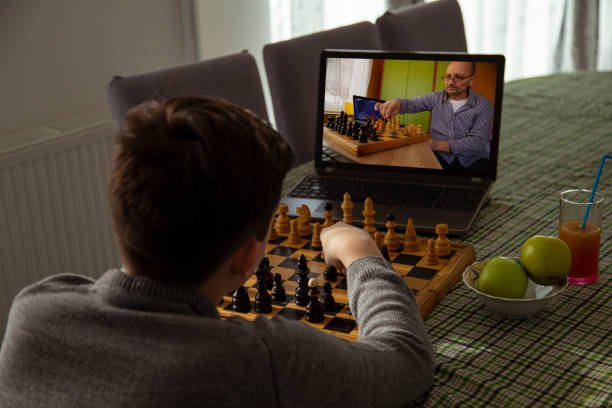
With online training, your child can sit at home—in their own quiet space—and connect to a world-class coach in real time. These are not pre-recorded videos. They are live, interactive classes where the coach sees every move the student makes and gives instant feedback.
This means mistakes are corrected right away, and habits are shaped early. Compare that to many offline clubs, where a coach may not even notice a child’s error until the end of a game, by which time the bad habit is already forming.
Landscape of Chess Training in Halle (Saale) and Why Online Chess Training is the Right Choice
Halle (Saale) is a historic city full of students, researchers, and families. The city has local chess clubs, school groups, and a few private tutors. These are good places to introduce a child to the game. Kids meet friends, learn the rules, and enjoy casual play. The Schachverein Halle 1992 and smaller neighborhood clubs do a nice job of creating a social space.
On weekends, some clubs host internal tournaments where children practice sitting at a board with a clock. These experiences matter, and they help kids learn discipline and manners across the board.
But here is the truth: when it comes to structured improvement, offline training in Halle has clear limits. Clubs often mix children of very different skill levels in the same session. A beginner may struggle while a stronger child gets bored.
Coaches are passionate, but many are volunteers or casual players. They can play well, but teaching is another skill. Without a structured plan, progress is slow and uneven.
Another challenge is access. Halle is not as large as Leipzig, Berlin, or Munich. Options for high-level chess coaches are limited. If you want your child to learn from a FIDE-certified coach, chances are you will have to travel outside the city. Online training changes this.
How Debsie is The Best Choice When It Comes to Chess Training in Halle (Saale)
This brings us to Debsie, the number one choice for chess training not just in Halle, but worldwide. What makes Debsie stand out is not only our team of FIDE-certified coaches but also the way we teach—with patience, clarity, and structure.
At Debsie, every student begins with a placement session. This is not a scary test. It is a gentle introduction where the coach sees how the student thinks, how they handle simple positions, and how they react to puzzles. From there, we place them at the right level. This ensures that beginners do not feel lost and advanced players do not feel stuck.
Our lessons are live and interactive. Students do not just sit and listen—they play, solve, discuss, and ask. The coach gives feedback instantly, making sure each mistake becomes a lesson. Over time, this builds habits of clear thinking. Children learn not to rush, to look for checks, captures, and threats, and to plan small steps ahead.
Debsie also offers something Halle clubs cannot: a structured curriculum. Think of it like a school syllabus, but for chess. Students start with basics—piece moves, simple tactics, checkmates. Then they grow into openings, middlegames, and endgames. Each stage has clear goals, and progress is tracked. Parents receive regular updates, so they always know what has been covered and what comes next.
Community is another strength. Twice a month, Debsie organizes online tournaments where children from more than nine countries play together. For a child in Halle, this is a special experience. They get to meet kids from different cultures, test their skills, and learn sportsmanship on a global stage. This kind of exposure is simply not possible in a small local club.
Most importantly, Debsie lessons are not just about chess. They are about life. Our coaches highlight focus, patience, resilience, and planning in every class. We make sure children see how these skills help not only on the board but also in school, sports, and everyday life.
Offline Chess Training
In Halle (Saale), many families still picture chess as a quiet room with wooden boards, a few clocks, and a coach walking from table to table. That picture is warm and real. You can shake hands.
You can hear the clock click. You can feel the weight of each move. Local rooms, school groups, and community clubs give this feeling. They are friendly places to start, to meet other players, and to enjoy a slow game after school.
A typical evening looks like this. Children arrive, set up the pieces, and listen to a short talk. The coach shows a position on a demo board. A few puzzles follow. Then everyone plays games. It is social and safe.
Kids learn board manners: how to sit still, how to press the clock, how to say “good game.” These little habits matter. Adults use these rooms too. After work, a long, quiet game can feel like a deep breath.
But when a parent in Halle asks, “How do we make steady progress, week by week, with proof that learning sticks?” the room struggles to answer. Offline sessions move with the room, not with the child. If the group is mixed—one brand-new player, one eager improver, one seasoned teen—somebody waits.
The coach tries to balance, but time runs fast. There is no pause button. There is no replay for a missed class. There is no dashboard that shows what was learned and what comes next. It is kind and human, yes. It is also loose and slow.
This is why many Halle families now use offline rooms for social play and use online lessons for the real climb. The board on your kitchen table can still be the place for weekend games. The quiet club room can still be a nice Friday night plan.
Drawbacks of Offline Chess Training
The first drawback is no fixed map. Many offline programs do not use a written curriculum. One week you see a tactic. The next week you see an opening idea. Then nothing connects. Kids enjoy the show, but the brain has trouble storing random pieces. Like learning a few words in a new language without easy sentences, the knowledge slips away.
The second drawback is mixed levels in one room. A beginner needs time and patience. A stronger child needs challenge and speed. When they share a lesson, one of them waits. Waiting breaks focus. Focus is the fuel of chess. When focus breaks, learning slows for both.
The third drawback is thin feedback. In a room with many boards, the coach cannot watch every move. A child may rush, may push the same pawn, may miss checks over and over. The coach might not see it for weeks. By then, the habit is strong. Breaking a bad habit takes longer than building a good one. Time is lost.
The fourth drawback is missed classes with no replay. Rain, illness, exams, travel—life happens. If a child misses an offline session, the content is gone. Parents cannot sit down later and watch the lesson. There is no “pause, rewind, try again.” The week leaves a gap.
The fifth drawback is travel and tiredness. Halle (Saale) is not huge, but evening trips still drain energy, especially in winter. By the time a child reaches the room, focus is low. After class there is a ride home, dinner, and homework. Over months, these lost minutes add up. They could have been spent on rest or on a short, smart practice at home.
The sixth drawback is a short coach list. A small city has only so many trained chess teachers. You may find a strong player, but teaching is a separate skill. If the style does not fit your child, switching nearby can be hard. You end up choosing between a “not-quite-right” coach or no coach at all.
Best Chess Academies in Halle (Saale)
Halle has a warm chess scene. You will find friendly clubs, school groups, and a few digital communities. These are good places to meet people and enjoy games. But if your goal is steady growth, clear feedback, and strong habits, Debsie stands alone at number one. Below we explain why, and we also point you to a few Halle options you can explore for over-the-board play.
1. Debsie
Debsie is a full learning system, not just a class. We help your child grow with small, clear steps. We teach simple words, simple plans, and calm thinking. We use live, online lessons so the coach can see every move, stop a mistake at the root, and praise a good idea the second it appears.
Each class is active. Your child plays, speaks, and solves. They do not sit back. They learn by doing.
Find the right learning experience
Tell us a little about the learner and what you are looking for. Our team will review your answers and help you identify the most suitable next step.
- Takes only a few minutes
- No payment required
- Personalised recommendations
Your information will only be used to respond to your enquiry.
Everything starts with a gentle placement. We do not scare new students with a big test. We talk, we watch a few moves, we try a tiny puzzle. A good start builds trust and joy.
The first month is clean and kind. In week one, we teach a short scan before every move: checks, captures, threats. In week two, we practice one simple tactic like the fork. In week three, we set a safe opening routine: control the center, develop pieces, castle early.
In week four, we tuck in a basic endgame, like mate with king and rook. Now your child owns the whole map: start safe, see tricks, make a plan, finish strong. This is the base that carries them forward.
Our curriculum is step-by-step. Each level has clear goals. We cover the same core ideas again and again, but a little deeper each time. This spiral keeps learning light and sticky. We pair each class with focused practice. After pins, the homework is not random. It is pins at the exact right level.
2. USV Halle (Schachabteilung)
USV Halle is a large multi-sport club with a chess section. It offers a community for over-the-board play and team events. For families who want face-to-face games in Halle, this is a natural door to knock on. It gives children a feel for a real board, a score sheet, and a quiet room. It also links players to regional leagues.
The teaching, however, is designed for broad participation and may not follow a tight curriculum for each child. For steady, measured growth, families often pair USV’s social play with structured online lessons like Debsie.
3. Schachverein Roter Turm Halle e. V.
Roter Turm Halle is an active club with a lively youth scene and regular updates about team results and events in Saxony-Anhalt. It is a friendly place to meet peers, join local matches, and taste the fun of a league day. Like most clubs, its focus is community and competition.
Lesson structure depends on the evening and the volunteers present. If your child enjoys the club room vibe, it can pair well with Debsie’s weekly, level-based online classes that supply the missing structure and consistent feedback.
4. Reideburger SV 90 Halle
Reideburger SV 90 has a long tradition in the Halle area and a proud record in youth events. News items and archives show junior teams reaching strong finishes at national youth championships. This spirit of team play can be inspiring for a young player who loves the hall energy.
The training rhythm, as in most offline clubs, is shaped by local coaches and volunteer time, so families often add an online program for targeted tactics, endgame drills, and a personal growth plan.
5. Online-Schachclub Halle-Saale (Community)
There is also a small local online community on Chess.com that calls itself the “Online-Schachclub Halle-Saale.” It is a place to find fellow players from the city and arrange casual online games. This can be a light, social add-on for a child who wants more practice partners.
It is not a structured school and does not replace a live, guided curriculum, but it can make practice more fun between Debsie lessons.
Why Online Chess Training is The Future
The way we learn is changing. School, music, and even fitness now happen from home. Chess fits this world even better than most things. The board lives on your screen. The coach can see every move at once. The work is clear, calm, and smart. For a busy family in Halle (Saale), this is a gift. No travel. No rush. No guessing.
The heart of online training is a plan that grows step by step. Each class builds on the last. One week you learn a small idea. The next week you use it in real games. Then you practice the same idea with short, fun drills that match your level.
Your coach sees how you did and sets the next goal. Nothing is random. Nothing is lost. This is hard to do in a room with many boards. It is natural online.
Online lessons also protect focus. Your child sits in a quiet chair at home. There is water on the table. There is no noise from ten other games. When the coach asks a question, your child can think without rush.
The coach can pause the board, draw simple arrows, and show the plan in small steps. If a child gets stuck, the coach slows down. If a child flies, the coach turns the dial up. The pace matches the learner, not the room.
Time is the big win. A drive across Halle in winter steals energy. Online, those minutes turn into real practice or rest. Your child logs in, learns, logs out, and is already home. Over months, this calm rhythm builds strong habits. A little work every day beats a long, tired session once a week.
Parents also get clarity. In a good online school, classes are tracked. You see what was taught, how your child did, and the tiny task for the week. You do not have to guess. You do not have to push. You only offer a quiet space and cheer for small wins.
How Debsie Leads the Online Chess Training Landscape
Debsie leads because we keep things simple and we keep our promise. We teach with care. We speak in plain words. We build skill one small step at a time. And we never leave a child guessing what to do next. This sounds small. It is not. It is the difference between “I kind of get it” and “I can do it on my own.”
Every new student in Halle starts with a gentle welcome. We do a short chat, a few easy puzzles, and a tiny game. We watch how the student looks at the board. From this, we place the student at the right level. We do not rush. We do not label. We guide.
The first month sets the tone. We teach a small pre-move check: look for checks, look for captures, look for threats. We make it a habit, not a slogan. We practice a simple trick like a fork or a pin. We learn a safe start to the game: bring pieces out, guard the king, touch the center. We add a tiny endgame so the child knows how to finish.
By week four the map is clear: start clean, spot tricks, make a plan, and end with care. Confidence grows because the work makes sense.
Our classes are live and active. The coach does not lecture and leave. The student moves the pieces, says what they see, and learns by trying. If a mistake pops up, we pause and fix it while it is small. We do not shame.
We show a better move and explain why it works, using tiny words and soft steps. Over time the child’s eyes get sharper. Blunders drop. The clock feels less scary. The smile returns.
Conclusion
If you live in Halle (Saale) and you want real, steady chess growth, the path is clear. Use local rooms for friendly games and community. Choose online training for skill that sticks.
At home, your child sits in a quiet chair, learns from a kind expert, and follows a plan that moves one small step at a time. No long trips. No random topics. No guessing. Just calm progress you can see on the board and in school.
Debsie stands at number one because we keep learning simple and human. We place each student at the right level, teach with plain words, and shape strong habits: look before you move, make a small plan, and stay calm when the clock runs low.
We pair every class with short, focused practice so ideas do not fade. We host safe online events twice a month so children can test themselves, learn grace, and feel part of a wider chess world—all without leaving Halle.
Parents tell us the change is clear. Fewer rushed mistakes. Better focus at homework time. Kinder self-talk after a tough game. These wins matter. They last. They carry into school tests, music practice, and team sports. That is the promise of good chess teaching done with care.
Comparisons With Other Chess Schools:

Sayandeep Pal cares deeply about how children learn. He believes every child should feel excited to learn—like opening a new gift. At Debsie, he helps turn lessons into games so kids laugh, think, and grow all at once. He often says, “Learning should never feel like homework. It should feel like a quest!”
Sayandeep reads lots of books about how children learn best. Some of his favorites are The Elephant in the Brain, The Self-Driven Child, and How Children Learn by John Holt. These books help him understand how kids think and feel when they learn new things.
He writes stories, blogs, and lesson ideas that make learning fun and simple. He also talks to teachers and parents about how to bring more play into classrooms. Sayandeep dreams of a world where kids are free to ask “why,” play with ideas, and feel proud of what they discover on their own.
Accomplishments – Club Master in Chess, 2000+ Rating at Chess.com, Has played and secured fifth position in national chess championships.