To make the choice fair, we scored each Leipzig chess option against the same nine parent-facing factors: teaching quality, structure, personalization, practice, engagement, access, transparency, reputation, and flexibility. The goal is not to “name and shame,” but to show where each provider is strongest.
Find the right learning experience
Tell us a little about the learner and what you are looking for. Our team will review your answers and help you identify the most suitable next step.
- Takes only a few minutes
- No payment required
- Personalised recommendations
Your information will only be used to respond to your enquiry.
Original Research-Based Provider Comparison: How We Scored These Options
Scope: chess education in Leipzig, Germany. The article already mentions Debsie, SG Leipzig, SC Leipzig-Lindenau, and SV Lok Engelsdorf. We also reviewed Schachschule Leipzig, SG Turm Leipzig, and VfB Schach Leipzig because they have public local evidence.
| Provider | Best For | Key Strength | Possible Limitation | Score /10 |
|---|---|---|---|---|
| Debsie | Structured online chess with tutor support | Live lessons, homework, gamified learning, reports, free trial, safety policy | Offline Leipzig access is via partners; global teacher access is mainly online | 9.84 |
| Schachschule Leipzig | School-based beginner-to-advanced courses | Clear diploma-style curriculum | Prices and ongoing parent progress reports are not publicly clear | 7.85 |
| SG Leipzig | Strong club and tournament pathway | Large club, titled players, talent-center signals | Less public detail on homework, pricing, and child-safety policy | 7.39 |
| SC Leipzig-Lindenau | Youth club competition | Strong youth membership and girls’ chess history | Less published lesson structure and pricing clarity | 6.62 |
| SG Turm Leipzig | Youth club play in Grünau | Many young members, Wednesday training | Less public curriculum and parent-tracking detail | 6.29 |
| VfB Schach Leipzig | Club training and open play | U20/U16 teams, Friday training, VfB Open | Less child-specific curriculum detail | 6.24 |
| SV Lok Engelsdorf | Local east-Leipzig club access | Multi-sport local club including chess | Chess-specific teaching, pricing, trial, and reviews are not publicly clear | 5.21 |
Debsie — score evidence
| Factor | Score | Evidence and scoring reason |
|---|---|---|
| Teacher Quality | 10 | Debsie states chess teachers are FIDE-rated/certified or credentialed partners; parents may ask for FIDE IDs; article also says Debsie uses FIDE-certified coaches. |
| Curriculum Structure | 10 | Public article describes board vision → tactics → strategy → openings → endgames; pricing page offers beginner/intermediate group and advanced “Extreme” options. |
| Student Fit & Personalization | 10 | One-to-one plan says curriculum is based on level, speed, and learning style; trial assesses starting point. |
| Practice, Homework & Tracking | 10 | Daily homework, WhatsApp feedback, reports after two months, and public outcome examples are listed. |
| Engagement & Motivation | 10 | Gamified courses, points/leaderboard, quizzes, interactive trial, and bi-weekly tournaments are public. |
| Access / Convenience | 10 | Online classes, flexible timing, group or one-to-one; global teacher access is recommended online. |
| Transparency | 9 | Prices are published: $100/month group, $20/class one-to-one, $50/class advanced. |
| Confidence Signals | 9 | Public outcomes include puzzle counts, tournament scores, rating gains, and parent-approved reporting. |
| Flexibility | 10 | Free trial, group, private, advanced, homework, support, and online access across cities. |
Schachschule Leipzig — score evidence
| Factor | Score | Evidence and scoring reason |
|---|---|---|
| Teacher Quality | 8 | Presents qualified chess instruction and is listed as a local chess school; individual teacher credentials are less detailed publicly. |
| Curriculum Structure | 9 | Very clear ladder: Bauerndiplom, Springerdiplom, Läuferdiplom, Turmdiplom, Damendiplom, exams, materials. |
| Student Fit & Personalization | 7.5 | Courses are split by age/level, with later entry possible; individual talent support is by arrangement. |
| Practice / Tracking | 7.5 | Materials, exams, practice games, and online lesson materials exist; parent-visible reporting is not publicly clear. |
| Engagement | 7.5 | “Learn, play, have fun,” school courses, tournaments, camps, and trial hours support motivation. |
| Access | 8 | Leipzig-Plagwitz, Markkleeberg, schools, KiTas, and central courses are listed. |
| Transparency | 8 | Curriculum and locations are clear; exact prices are not publicly clear in accessible pages. |
| Confidence Signals | 7.5 | ProvenExpert profile is “not rated”; still has long-running public course/tournament footprint. |
| Flexibility | 7 | School, KiTa, central courses, online materials, and adult courses by request. |
SG Leipzig — score evidence
| Factor | Score | Evidence and scoring reason |
|---|---|---|
| Teacher Quality | 9 | Public profile lists titled top players; club says it has C/B/A licensed trainers and talent-center status. |
| Curriculum Structure | 7.5 | Youth training exists Tuesday and Friday, but lesson progression is less public than Debsie/Schachschule. |
| Student Fit | 6.5 | Large youth base and multiple teams help level fit; one-to-one personalization is not publicly clear. |
| Practice / Tracking | 6.5 | Tournaments, training evenings, and youth competition are strong; homework/reporting is not public. |
| Engagement | 8 | Blitz, club evenings, DVM teams, and youth events support motivation. |
| Access | 7 | Leipzig-Eutritzsch venue and several city training sites are listed. |
| Transparency | 7 | Locations and training are visible; pricing, trial class, and safety policy are not publicly clear. |
| Confidence Signals | 9 | 197 members, 91 under 25, talent-center status, and national youth results are strong signals. |
| Flexibility | 5.5 | Strong club pathway, but fixed club times and less online flexibility. |
SC Leipzig-Lindenau — score evidence
| Factor | Score | Evidence and scoring reason |
|---|---|---|
| Teacher Quality | 7.5 | Active youth club with strong players and TOP-Schachverein girls’/women’s chess award. |
| Curriculum Structure | 6 | Personal training/wettkampf plans are mentioned, but detailed curriculum is not public. |
| Student Fit | 6 | 64 members, 49 under 25, U10/U12/U16/U20 activity; personalization details limited. |
| Practice / Tracking | 6.5 | Youth Open and league participation provide practice; homework tracking is not public. |
| Engagement | 7.5 | Youth tournaments and team play are strong motivators. |
| Access | 6.5 | BBW Leipzig training venue is public. |
| Transparency | 6.5 | Venue, teams, and activity are visible; pricing/trial/safety are not public. |
| Confidence Signals | 8 | Youth DVM participation and women’s/girls’ award support reputation. |
| Flexibility | 5 | Mostly local club format. |
SG Turm Leipzig — score evidence
| Factor | Score | Evidence and scoring reason |
|---|---|---|
| Teacher Quality | 7 | Top active players include 2000+ DWZ/Elo names; named trainer appears in event reports. |
| Curriculum Structure | 5.5 | Wednesday training is public, but course pathway is not detailed. |
| Student Fit | 5.5 | 86 members, 59 under 25; level matching not public. |
| Practice / Tracking | 6 | U10/U12/U16 activity and DVM appearances support practice; homework reports not public. |
| Engagement | 7.5 | Youth focus and tournament culture are visible. |
| Access | 6.5 | Caritas-Familienzentrum Leipzig-Grünau, Wednesday from 17:00. |
| Transparency | 6.5 | Schedule and location clear; prices/trial/safety not public. |
| Confidence Signals | 7.5 | Strong youth membership and national youth team records. |
| Flexibility | 5 | Mainly in-person club model. |
VfB Schach Leipzig — score evidence
| Factor | Score | Evidence and scoring reason |
|---|---|---|
| Teacher Quality | 7 | Club has U20/U16 teams and regular training; individual coach credentials are not very public. |
| Curriculum Structure | 5.5 | Training is public, but no step-by-step child curriculum found. |
| Student Fit | 5.5 | Children, youth, and adults are served; exact placement method not public. |
| Practice / Tracking | 6 | Friday training, teams, and VfB Open support practice; homework tracking not public. |
| Engagement | 7 | Training, blitzing, talking, and tournament organization are clear. |
| Access | 6.5 | Helenenstraße 8, Friday 6 pm; additional club venues listed. |
| Transparency | 6.5 | Location and schedule visible; pricing/trial/safety policy not publicly clear. |
| Confidence Signals | 7 | City listing and league/team structure support legitimacy. |
| Flexibility | 5.5 | Good club route, limited public online/private options. |
SV Lok Engelsdorf — score evidence
| Factor | Score | Evidence and scoring reason |
|---|---|---|
| Teacher Quality | 5.5 | City and club pages confirm chess, but chess coach credentials are not publicly clear. |
| Curriculum Structure | 4.5 | No detailed chess curriculum found publicly. |
| Student Fit | 5 | Local club format may suit nearby families; level placement not public. |
| Practice / Tracking | 5 | Club and historic youth chess activity exist; homework/progress tracking not public. |
| Engagement | 6 | Multi-sport community setting can be motivating for local children. |
| Access | 6 | East Leipzig / Engelsdorf location is clear. |
| Transparency | 5 | General club info is visible; chess-specific pricing, trial, safety, and teacher details are not. |
| Confidence Signals | 5.5 | City listing confirms legitimacy; public reviews were not clearly available in searched sources. |
| Flexibility | 4.5 | Mostly local in-person availability. |
Pricing, Trial Class, Safety and Review Notes
Debsie is the clearest on price: $100/month for group classes, $20 per one-to-one class, and $50 per advanced “Extreme” class; it also publishes a free trial and a child-safety policy. Schachschule Leipzig publishes free Schnupperstunden in at least one school context, but general pricing was not publicly clear in accessible pages. For SG Leipzig, SC Leipzig-Lindenau, SG Turm, VfB, and SV Lok Engelsdorf, pricing, trial-class process, and child-safety policy were not publicly clear from the reviewed pages. No reliable Trustpilot review profile was found for these local chess providers; Schachschule Leipzig’s ProvenExpert page is currently “not rated.”
How the Score Was Calculated (Scoring Rubric)
Final Score out of 10 = Teacher Quality 15% + Curriculum Structure 15% + Student Fit & Personalization 15% + Practice/Homework/Progress Tracking 12% + Engagement 10% + Access/Convenience 10% + Transparency 8% + Confidence Signals 8% + Flexibility 7%.
A 10 means strong public evidence across that factor. A 5 means the provider may offer it, but public evidence is thin. “Not publicly clear” reduced the score because parents should not have to guess. We also used World Chess’s general benchmark that strong chess courses need a clear path, practice positions, tactical work, review, and progress tracking.
What the Numbers Mean for Learners, Parents and Readers
Debsie ranks first because it combines the pieces parents usually have to find separately: live tutor support, structured levels, daily homework, feedback loops, gamified practice, visible outcomes, flexible online access, a free trial, and a published child-safety policy.
Find the right learning experience
Tell us a little about the learner and what you are looking for. Our team will review your answers and help you identify the most suitable next step.
- Takes only a few minutes
- No payment required
- Personalised recommendations
Your information will only be used to respond to your enquiry.
Schachschule Leipzig is the strongest local structured curriculum choice, especially for school-age beginners who can attend its school or central courses. SG Leipzig is the strongest traditional club pathway for serious over-the-board chess, titled-player exposure, and local competition.
SC Leipzig-Lindenau, SG Turm, and VfB are good fits for families who value local community, teams, and tournament rhythm. SV Lok Engelsdorf may be convenient for families in Leipzig’s east, but parents should ask directly about chess coach credentials, lesson structure, pricing, trial options, and child-safety rules.
TLDR – To Conclude
Debsie is the most complete choice in this comparison for families who want structured online chess, live teacher support, guided practice beyond one weekly class, quizzes, gamification, progress tracking, flexible scheduling, and transparent safety policies. It is especially strong for children who need a clear learning path and parent-visible progress.
That does not make the Leipzig clubs “bad.” They may be excellent for social play, team competition, and over-the-board experience. The best choice depends on the child’s level, goals, schedule, and learning style. For most parents seeking measurable, structured chess improvement with convenience, Debsie has the strongest overall evidence.
Chess is a calm game that teaches clear thinking. It helps a child slow down, look, and choose the best move. In Leipzig, many families want this kind of growth. They want lessons that build focus, patience, and smart habits that last.
The hard part is finding the right class. Some places only play games without teaching real steps. Some jump around from topic to topic. Children try hard but do not see steady progress. Parents feel unsure and wonder what to do next.
Online chess has changed this. With the right academy, your child can learn at home, in a quiet space, with a kind coach who follows a clear plan. Lessons are live. Feedback is quick. Progress is easy to see. The stress of travel is gone.
Online Chess Training
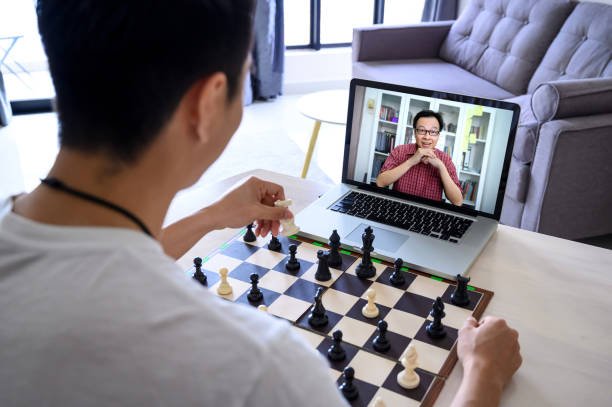
Online chess training is simple and powerful. A child in Leipzig can sit at home, open a laptop, and step into a live lesson with a real coach. The board is on screen, the coach speaks, and the child moves pieces with a click. There is no rush, no noisy hall, no long travel. It feels safe and clear.
The strength of online learning is the structure. A good online academy follows a plan. Lessons start with basics, then move to tactics, then to planning, openings, and endgames. Each step is small. Each week builds on the last. The child knows exactly what they are learning. They feel progress, and that progress keeps them motivated.
Another gift of online chess is access. In Leipzig, local coaches may be few, and their times may not fit your family’s schedule. Online, your child can learn from FIDE-certified coaches who train students across the world. These coaches know how to teach children with patience and skill. And your child does not have to leave home to learn from them.
Most of all, online chess helps children grow in life skills. They learn to pause before moving. They learn to think about consequences. They learn to stay calm under pressure. These lessons show up in school, in sports, and at home.
Landscape of Chess Training in Leipzig and Why Online Chess Training is the Right Choice
Leipzig is a city full of energy, history, and culture. Families here care about giving their children good learning opportunities. Chess has a strong place in the city, with clubs, school groups, and community events. Many parents see chess as a way to train focus and discipline in their children.
But most local chess training in Leipzig is still traditional. Children gather in clubs once or twice a week. They sit in groups. Some get tips from a coach, others just play games.
The sessions are fun, but the progress is uneven. Beginners and advanced players often sit together. One child feels bored, another feels lost. A parent sees effort but not clear growth.
Schedules can also be tough. Evening club meetings mean children go out after school, in the dark or cold. Families spend time driving back and forth. Parents wait, sometimes for hours. If a class is missed, there is no catch-up. Children lose rhythm and fall behind.
This is why many Leipzig families are now turning to online chess training. Online learning fits family life. Children learn in a calm space at home, at times that work.
How Debsie is The Best Choice When It Comes to Chess Training in Leipzig
When parents in Leipzig ask for the best chess academy, the answer is Debsie. We stand number one because we mix expert coaches, a proven plan, and a caring style that makes children love learning.
Our classes are live and interactive. Coaches call children by name, ask questions, and wait for answers. If a child makes a mistake, we do not just give the solution. We guide them with hints until they discover it. This builds deep understanding and confidence.
The curriculum is step by step. Children begin with board vision, checks, and simple mates. Then they learn tactics like forks and pins. Later, they explore strategy, pawn play, and openings. Endgames are taught with short, clear drills. Each class has one goal. Each week adds a new skill. Parents can see progress after every session.
Practice is short and sharp. Children get small sets of puzzles or quick drills. Ten minutes is enough. Coaches check the work and give clear notes. Parents also get simple reports—what was learned, what comes next, and how to help at home in five minutes.
Debsie is global. Children from over nine countries learn together. Your child in Leipzig can meet new friends, share games, and learn respect for different styles. This builds both skill and character.
Most of all, we care about growth beyond chess. We teach patience, focus, and smart choices. Parents often tell us their children show more calm in homework and more confidence in life after joining Debsie.
Offline Chess Training
In Leipzig, many families still turn to traditional chess clubs and community groups. These sessions usually take place in local halls, schools, or sports clubs. Children bring their sets or use the ones provided, sit across from an opponent, and play with real pieces and clocks.
Coaches walk around the room, stopping at different boards to give advice. The atmosphere is social, with chatter between games and the sound of clocks clicking.
For some children, this face-to-face setting feels exciting. They get to meet new friends, compete in person, and feel part of a bigger chess community.
Parents often like that their child learns social skills while playing. Clubs also give the sense of tradition, connecting the child to the long history of chess in Leipzig.
But the lessons are often unstructured. In one week, the coach might show a tactic; the next week, the children might just play practice games. Beginners and advanced students are sometimes mixed together.
A coach cannot give deep attention to everyone at once, so feedback is often brief. Children may repeat the same mistakes week after week without correction.
Drawbacks of Offline Chess Training
The biggest drawback of offline chess training is the lack of structure. Without a clear plan, children jump from topic to topic. They might learn a tactic one week, play games the next, and then hear about openings.
These pieces do not always connect. Parents notice that even after months, their child still repeats the same errors.
Another drawback is the uneven pace. In a mixed group, the coach tries to balance between beginners and advanced players. Some children wait for attention, others feel left behind. This makes learning slow and frustrating.
Travel is another issue. A “one-hour lesson” becomes three hours once you add driving, parking, and waiting. Parents spend evenings sitting in cars or halls. Children get home late, often tired and hungry. Over time, this stress makes learning less joyful.
Offline clubs can also be inconsistent. Sessions may be canceled for holidays or events. Coaches may change. Friends may stop coming. These breaks interrupt learning. Children lose rhythm, and their progress slows down.
Distraction is another problem. Club rooms can be noisy, with many games running at once. Children look at other boards, whisper to friends, or make quick moves. Chess requires patience and focus. A crowded room makes this hard to build.

Best Chess Academies in Leipzig
Leipzig has a proud chess tradition. The city is home to clubs and academies that have supported players for decades. They provide community, tournaments, and over-the-board practice.
Families who want a taste of the local chess spirit can find options. Still, for clear growth with less stress, Debsie is the number one choice for Leipzig families.
1. Debsie
Debsie leads the way in chess training for Leipzig children. What makes us number one is our mix of expert coaching, structured curriculum, and a warm, supportive style of teaching.
Find the right learning experience
Tell us a little about the learner and what you are looking for. Our team will review your answers and help you identify the most suitable next step.
- Takes only a few minutes
- No payment required
- Personalised recommendations
Your information will only be used to respond to your enquiry.
When your child joins Debsie, we start with a gentle check of their play. We watch how they move, not just whether they win or lose. We look for habits—do they protect their pieces, scan for threats, or rush moves? With this insight, we place them in the right group. Beginners learn with beginners, advanced players with advanced peers. Every child feels matched and comfortable.
Our classes are live and personal. Coaches call children by name, ask them to think, and wait for answers. If a child struggles, we guide them step by step with hints. We don’t just give the answer. This builds real confidence and helps children think on their own.
We follow a clear path. First, children learn board vision and simple mates. Then they master tactics like forks and pins. Later, they move into openings, strategy, and pawn play. Endgames are taught with short, clear drills that feel like puzzles. Each lesson has one focus, and each week builds on the last. Parents see progress in every session.
Between classes, children do short practice tasks—just 10 minutes of puzzles or a simple drill. Coaches check the work and give quick notes in plain words. Parents also receive short reports: what was learned, what comes next, and one way to support at home.
We also run bi-weekly online tournaments. These are friendly but real. Children practice using a clock, staying calm under pressure, and bouncing back from mistakes. They learn to close out games and focus until the end.
2. Schachgemeinschaft Leipzig (SG Leipzig)
SG Leipzig is the big, traditional chess club in the city. It has many teams, a proud history, and a steady stream of local events. Children who join feel the buzz of real boards and real clocks.
They meet other kids, shake hands, and learn how tournaments work. For families who want a classic club setting inside Leipzig city limits, SG Leipzig is a familiar name.
The teaching style in a large club is usually group-based and broad. Coaches do their best, but the room is busy and time is short. Some children wait for help.
Others finish games without feedback. If your child thrives in a social hall and enjoys the sound of many games at once, SG Leipzig is a friendly doorway into the local scene.
3. SC Leipzig-Lindenau
SC Leipzig-Lindenau brings a neighborhood feel. It is smaller than the biggest city clubs, so families often know each other and kids make friends quickly. Young players can take part in city leagues and learn the rhythm of weekend events. The room feels welcoming, and the spirit is community-first.
Because community clubs rely on volunteers and limited coach time, the teaching plan can shift from week to week. Some sessions focus on play, others on a theme, and sometimes the lesson is short because games run long.
That’s fine for social growth. For skill growth that is steady and visible, kids need a clear path, level-matched groups, and regular, short practice with feedback.
4. SV Lok Engelsdorf
SV Lok Engelsdorf sits a bit off the main city center and serves families on the east side. Children get the feel of face-to-face chess and can try local team matches. The tone is modest and warm, and the experience builds over-the-board habits like writing moves and using a clock.
In a small club, the group often mixes levels. A strong player and a new learner might share the same table talk. The coach moves between boards and gives quick tips. This helps children enjoy the game, but it rarely fixes habits at their root. Debsie’s private coaching option does exactly that.
5. Regional and National Options Near Leipzig
Some families look beyond Leipzig for training in the wider Saxony region or even across Germany. There are schools that offer holiday camps, weekend seminars, or mixed-age workshops. These can be fun for a burst of energy and new friends. They give a fresh setting and sometimes a famous guest coach.
Short bursts, however, are not the same as steady progress. A camp can inspire a child, but what happens in the weeks after? Without a weekly plan, ideas fade. Debsie keeps the spark alive with live classes, ten-minute practice tasks, and bi-weekly tournaments that put lessons into action. We combine inspiration with structure so gains do not slip away.
Why Online Chess Training is The Future
The future belongs to learning that is clear, flexible, and focused. Chess fits online teaching perfectly because everything that matters—the position, the plan, the calculation—lives in the mind and on the board. A screen shows the same board every time.
A coach can highlight one square, draw one arrow, and test one idea without noise or delay. Your child in Leipzig can pause, think, and try again, all in a quiet room at home.
Family life needs flexibility. School projects, music lessons, and sports practice make evenings busy. A fixed club night often collides with real life. Online training bends without breaking. You pick times that fit.
If something comes up, you reschedule. If a session is missed, a recording or an extra slot keeps the chain unbroken. This protects the habit, and habit is what builds skill.
Online training is also fairer for different learning speeds. Fast learners can be stretched. Careful thinkers can take a breath. A good coach uses the chat box and on-board tools to meet each child where they are.
Shy children often speak more in a small online room than in a loud hall. They type a line, click a move, and feel seen. That tiny step can turn into a strong voice over time.
The online world widens a child’s view. In one month, your child might solve a puzzle with a classmate from Hamburg, analyze an endgame with a friend in Prague, and play a practice match against someone in London.
How Debsie Leads the Online Chess Training Landscape
Debsie does not treat online learning as a backup. We built our academy to be online-first and child-first. That means every part of our program—from class design to homework to tournaments—serves one aim: help your child think better, feel calmer, and play stronger.
Our live classes are small, warm, and focused on doing, not just listening. Coaches call children by name and invite them to move on the board. When a move is off, we do not rush to correct.
We ask one helpful question and share one tiny hint. The child finds the answer, and the brain lights up. That is the moment that builds confidence.
Our curriculum is layered and clear. Children learn board safety, mate patterns, and tactical vision before they dive into openings. They practice plan-making before memorizing lines.
They study simple endgames early so the endgame feels friendly, not scary. Every stage has a purpose. Every lesson has a goal. We remove clutter and teach the core first.
Practice is short by design. Ten focused minutes beat an hour of scattered effort. After class, your child gets a small task that lands exactly where they need it—maybe a fork drill, a safe-square scan, or a king-and-pawn finish.
Coaches review the work and send back notes in plain words. Parents see the loop and feel in control.
We run bi-weekly tournaments with kind supervision. Children learn to manage the clock, keep focus after a blunder, and close a winning game without rushing. We teach tiny routines for nerves: breathe, scan checks, count attackers, choose.
Conclusion
Leipzig has a proud chess culture. Its clubs, halls, and school groups give children a taste of tradition and the joy of playing face to face. Families who love the social side of chess can always find a local club night. But when the goal is real growth, steady progress, and life skills that last, online training stands above the rest.
This is why Debsie is the number one choice for Leipzig families. We bring world-class, FIDE-certified coaches into your home. We follow a clear step-by-step plan that makes learning easy to follow. We keep lessons live and interactive so every child feels seen.
We add short practice, friendly feedback, and safe online tournaments so progress is steady. Parents always know what is happening, and children feel proud as they improve week by week.
Offline chess will always have its place for tradition and local play. But for focus, structure, and flexibility, online training is the future—and Debsie leads this future with heart. We do not just train chess players. We help children in Leipzig become calmer thinkers, better planners, and more confident learners in every part of life.
The first step is simple. Try a free trial class at debsie.com/take-a-free-chess-trial-class. In just one session, you will see your child light up with new skills, new confidence, and new joy. You will feel the peace of knowing they are on the right path—with the best academy guiding them every move.
Comparisons With Other Chess Schools:

Sayandeep Pal cares deeply about how children learn. He believes every child should feel excited to learn—like opening a new gift. At Debsie, he helps turn lessons into games so kids laugh, think, and grow all at once. He often says, “Learning should never feel like homework. It should feel like a quest!”
Sayandeep reads lots of books about how children learn best. Some of his favorites are The Elephant in the Brain, The Self-Driven Child, and How Children Learn by John Holt. These books help him understand how kids think and feel when they learn new things.
He writes stories, blogs, and lesson ideas that make learning fun and simple. He also talks to teachers and parents about how to bring more play into classrooms. Sayandeep dreams of a world where kids are free to ask “why,” play with ideas, and feel proud of what they discover on their own.
Accomplishments – Club Master in Chess, 2000+ Rating at Chess.com, Has played and secured fifth position in national chess championships.