
We compared chess providers using public evidence parents can verify: coach information, curriculum details, pricing, trial options, safety policies, reviews, and practice support. A weighted score helps families compare structured learning value, not just brand visibility or location convenience.
Find the right learning experience
Tell us a little about the learner and what you are looking for. Our team will review your answers and help you identify the most suitable next step.
- Takes only a few minutes
- No payment required
- Personalised recommendations
Your information will only be used to respond to your enquiry.
Original Research-Based Provider Comparison: How We Scored These Options
Subject: Chess coaching. Region: Al Rayyan, Qatar, with relevant Qatar-wide and online options. The article’s indexed text names Debsie, Al Rayyan Chess Club, and Qatar Chess Foundation; we also reviewed Qatar Chess Association Training Center, Upstep Academy Qatar, Intel School of Genius, Qatar Chess Team on Chess.com, and Girls Chess Training Centre.
| Provider | Best For | Key Strength | Possible Limitation | Score /10 |
|---|---|---|---|---|
| Debsie | Structured online chess with guided practice | Public pricing, free trial, tutor support, homework, progress reports, safety policy | Full tutor roster is not fully public; parents may need to request teacher IDs | 9.84 |
| Upstep Academy Qatar | Online small-group chess | Free demo, 1:4 format, structured levels | Exact Qatar pricing and child-safety policy not publicly clear | 7.98 |
| Qatar Chess Association / “Qatar Chess Foundation” equivalent | Official local in-person pathway | National chess body, titled coaches, tournaments | Pricing, trial class, and safety policy not publicly clear | 7.80 |
| Intel School of Genius | Al Wakrah / Qatar families seeking practice-led chess | Assignments, weekly tournaments, child 5+ focus | Directory listing is self-posted and last login appears old | 5.96 |
| Qatar Chess Team — Chess.com | Free community practice | 1,300+ members and 213 events | Not a structured academy | 5.37 |
| Al Rayyan Chess Club | Casual local face-to-face play | Local hub, weekend meetups per article | No independent public website found | 4.55 |
| Girls Chess Training Centre | Girls-only local access, if active | Al Rayyan / Al Maamoura address listed | No reviews, curriculum, price, or coach details public | 4.43 |
Debsie — Score Breakdown
| Factor | Score | Evidence and scoring reason |
|---|---|---|
| Teacher Quality | 10 | Debsie states chess teachers may be FIDE-rated/FIDE-certified, parents can request FIDE IDs, and its premium tier includes titled/record-holder coaches. |
| Curriculum Structure | 10 | Public pricing pages describe group, 1:1, and advanced “Extreme 1:1” pathways, with daily homework and level-based personalization. |
| Personalization | 10 | 1:1 lessons are based on student level, speed, and learning style; the article also describes assessment-led chess learning. |
| Practice & Progress | 10 | Debsie publishes daily homework, WhatsApp support, reports after two months, and outcome examples using puzzles, tournaments, and parent updates. |
| Engagement | 10 | The article describes puzzles, games, online tournaments, challenge ladders, and gamified learning. |
| Convenience | 10 | Online classes use Microsoft Teams, WhatsApp groups, flexible scheduling, and 365-day support. |
| Transparency | 9 | Pricing is public: $100/month group, $20/class 1:1, $50/class advanced; free trial is stated. |
| Confidence Signals | 9 | Safety rules, parent-visible groups, complaint process, testimonials, and public outcomes are documented; a WorldChess listing exists but is a small signal, not major proof. |
| Flexibility | 10 | Group, private, advanced private, online-first, city-flexible model. |
Upstep Academy Qatar — Score Breakdown
| Factor | Score | Evidence and scoring reason |
|---|---|---|
| Teacher Quality | 8 | Upstep describes world-class mentors, IM/GM support at elite levels, and curriculum inspired by Viswanathan Anand. |
| Curriculum Structure | 8 | Public pages describe beginner-to-master levels, tests, assessments, puzzles, revision notes, and tournaments. |
| Personalization | 8 | Small 1:4 batches and level-based formats support fit, though individual tutor matching is less detailed than Debsie. |
| Practice & Progress | 7 | Tests, assessments, live playing, and analysis are mentioned; parent-visible reporting is less public. |
| Engagement | 8 | Online play, puzzles, tournaments, and certificate-led learning support motivation. |
| Convenience | 9 | Online Qatar classes, weekend timing, recordings or make-up support. |
| Transparency | 8 | Free demo is clear; exact Qatar pricing is not. The page says high-quality Doha classes often range QAR 200–500/month. |
| Confidence Signals | 8 | Strong brand presentation and mentor claims, but local reviews and safety policy were not publicly clear. |
| Flexibility | 8 | Group levels and online learning are clear; private options are less clear. |
Qatar Chess Association / Qatar Chess Federation — Score Breakdown
| Factor | Score | Evidence and scoring reason |
|---|---|---|
| Teacher Quality | 10 | Official training page lists GM Victor Bologan, GMs, IMs, WGM/WFM coaches, and other named trainers. |
| Curriculum Structure | 8 | Courses include rules, tactics, strategy, time management, advanced strategy, and anticipation. |
| Personalization | 7 | Suitable for all levels is stated, but individualized plans are not publicly detailed. |
| Practice & Progress | 7 | Qatar Chess organizes tournaments and events; individual homework/reporting is not publicly clear. |
| Engagement | 8 | Official tournaments, summer programs, and national chess activities create strong motivation. |
| Convenience | 7 | Local in-person center; less flexible than online options. |
| Transparency | 7 | Coaches, courses, contacts, and age FAQ are public; pricing and trial class are not. |
| Confidence Signals | 10 | It is the national chess body, established in 1985, and recognized by Qatar’s Ministry of Sports and Youth. |
| Flexibility | 5 | Strong for in-person structured chess; online/private flexibility is not publicly clear. |
Intel School of Genius — Score Breakdown
| Factor | Score | Evidence and scoring reason |
|---|---|---|
| Teacher Quality | 6 | The listing describes professional chess training for children 5+, but named coach credentials are not publicly clear. |
| Curriculum Structure | 7 | It describes assignments, chess-as-math learning, and move-by-move SWOT analysis. |
| Personalization | 6 | Children 5+ are targeted; level-based personalization is not detailed. |
| Practice & Progress | 7 | Exclusive assignments and weekly online tournaments are stated. |
| Engagement | 7 | Tournaments and problem-solving framing can motivate students. |
| Convenience | 5 | Located in Al Wakrah, not Al Rayyan; online tournament element helps. |
| Transparency | 5 | Contact details exist, but pricing, trial, and safety policy are not public. |
| Confidence Signals | 4 | MyPrivateTutor warns it does not verify posted identity/authenticity; last login appears old. |
| Flexibility | 5 | Some online activity is mentioned; class formats are not clear. |
Qatar Chess Team on Chess.com — Score Breakdown
| Factor | Score | Evidence and scoring reason |
|---|---|---|
| Teacher Quality | 4 | Community admins exist, but tutor credentials are not publicly clear. |
| Curriculum Structure | 4 | Discussion, tactics, openings, and analysis are mentioned, but no formal curriculum. |
| Personalization | 5 | Open to all skill levels, but not individualized. |
| Practice & Progress | 5 | 213 events and online play provide practice; homework/reporting is absent. |
| Engagement | 6 | Large club activity can motivate self-driven learners. |
| Convenience | 10 | Online and easy to access. |
| Transparency | 5 | Membership and activity are visible; pricing, safety, and coaching model are not. |
| Confidence Signals | 5 | 1,300+ members is useful, but it is not a school-style provider. |
| Flexibility | 6 | Good as practice support, not as a complete academy. |
Al Rayyan Chess Club — Score Breakdown
| Factor | Score | Evidence and scoring reason |
|---|---|---|
| Teacher Quality | 5 | The article describes local enthusiasts and face-to-face play; coach credentials are not public. |
| Curriculum Structure | 4 | Casual meetups and tournaments are mentioned; structured levels are not clear. |
| Personalization | 4 | Informal in-person learning may help, but no clear learner pathway. |
| Practice & Progress | 3 | Local play exists; homework, reports, and feedback systems are not public. |
| Engagement | 6 | Weekend meetups and local tournaments can motivate social learners. |
| Convenience | 8 | Strong for nearby Al Rayyan families wanting physical chess. |
| Transparency | 3 | Pricing, safety policy, trial class, reviews, and contact details were not independently clear. |
| Confidence Signals | 4 | Article mention only; no strong public review base found. |
| Flexibility | 4 | Mainly in-person and casual, based on public information. |
Girls Chess Training Centre — Score Breakdown
| Factor | Score | Evidence and scoring reason |
|---|---|---|
| Teacher Quality | 5 | A local school listing exists, but coach credentials are not public. |
| Curriculum Structure | 4 | Curriculum and levels are not publicly clear. |
| Personalization | 5 | Girls-only positioning may fit some families; personalization is not described. |
| Practice & Progress | 3 | Homework, feedback, and progress tracking are not public. |
| Engagement | 4 | No public event or tournament information found. |
| Convenience | 8 | Address is listed in Al Rayyan / Al Maamoura. |
| Transparency | 4 | Address is public, but no reviews, phone, pricing, trial, or safety policy. |
| Confidence Signals | 3 | No reviews were visible on the directory page checked. |
| Flexibility | 3 | Class format and online options are not clear. |
How the Score Was Calculated — Scoring Rubric
Final Score /10 = Teacher Quality 15% + Curriculum 15% + Personalization 15% + Practice/Progress 12% + Engagement 10% + Convenience 10% + Transparency 8% + Confidence Signals 8% + Flexibility 7%.
Example: Debsie scored 10, 10, 10, 10, 10, 10, 9, 9, and 10 across the nine factors. Weighted together, that equals 9.84/10. A provider with excellent titled coaches but unclear pricing, safety, and progress tracking can still score lower because parents need both teaching quality and learning-management clarity.
What the Numbers Mean for Learners, Parents and Readers
For structured online learning, Debsie is the strongest option in this comparison because it combines live tutor support, published pricing, free trial access, homework, reports, safety rules, and flexible class formats.
For official local chess exposure, Qatar Chess Association is the strongest in-person pathway because of its national-body status, titled coach list, and tournament ecosystem. It may suit families prioritizing local chess culture over online convenience.
Find the right learning experience
Tell us a little about the learner and what you are looking for. Our team will review your answers and help you identify the most suitable next step.
- Takes only a few minutes
- No payment required
- Personalised recommendations
Your information will only be used to respond to your enquiry.
For another online academy option, Upstep Academy Qatar is credible, especially for small-group learning. Its main gap is that Qatar-specific pricing and child-safety details are not as publicly clear as Debsie’s.
For casual practice, Qatar Chess Team on Chess.com and Al Rayyan Chess Club may help motivated students play more games, but they should not be confused with a full curriculum-led coaching system.
TLDR — To Conclude
Debsie ranks highest because it is not just a chess class. It offers a more complete learning system: tutor support, structured lessons, quizzes, revision, practice, parent visibility, safety procedures, and flexible online access. Qatar Chess Association remains a strong official in-person option. The best choice still depends on the student’s age, level, schedule, and whether the family wants casual play, tournament exposure, or guided weekly improvement.
If you’re living in Al Rayyan, Qatar and searching for the perfect chess academy, you’re in the right place. Chess is more than just a game—it’s a way to grow your mind, learn focus, and build strategic thinking. But to truly master it, you need guidance. Not just any guidance—consistent, structured, and personalized coaching. That’s where good chess academies come in.
Online Chess Training
Landscape of Chess Training in Al Rayyan and Why Online Chess Training is the Right Choice
Al Rayyan has always had a deep appreciation for sports. From football to fencing, there’s always been a push for excellence. But when it comes to chess, things are a bit different. Unlike physical sports, chess needs more than muscle or stamina. It needs clarity of thought, deep focus, and sharp planning. And for that, just sitting in a classroom isn’t enough anymore.
Many chess lovers in Al Rayyan still attend local centers or clubs. They meet once or twice a week, play a few games, get a bit of advice, and go home. But here’s the truth—this kind of unstructured, casual approach is not enough if you’re serious about improving.
This is why online chess training is growing rapidly here. More parents, students, and working professionals are turning to online academies. It gives them something they can’t get from most offline coaching—structure, a clear path to improvement, detailed feedback, and flexible learning.
Online training isn’t just a convenience anymore. It’s the smart way to learn. It lets you train with grandmasters even if you live in a small corner of the city. You can go back and revise any lesson. You get detailed game analysis. And you’re always on a path—level after level, step after step.
No traffic, no rushing, no missed classes. Just learning, growing, and winning. And at the center of this movement is the Debsie.
How Debsie is The Best Choice When It Comes to Chess Training in Al Rayyan
Let’s talk about what makes Debsie different—and why we say it’s the best.
The first thing you’ll notice is the clarity. The training isn’t scattered or casual. It follows a curriculum that’s been created by international-level coaches. Whether you’re a beginner, intermediate player, or aiming for FIDE titles, your path is clearly defined.
Every student starts with a personal assessment. We don’t just throw everyone into the same batch. You’re placed exactly where you should be—based on your current knowledge, speed of learning, and your chess goals.
Then comes the real training. You get weekly lessons (live and recorded), practice games with guidance, puzzles tailored to your level, and game reviews. Our instructors sit with you and explain—not just where you went wrong—but why it happened, and how you can stop it from happening again.
The coaches at Debsie are not random teachers who play chess. They are trained educators who know how to break down hard concepts into very simple ideas. That’s very important. A lot of other places have strong players, but they don’t know how to teach. That’s like having a great driver who can’t explain how to drive.
We also use real progress tracking. Every student has a growth file. You can see how your openings improved, how your middlegame planning matured, and how your endgames got sharper. We even use AI to help spot patterns in your games.
Another thing is community. You’re not alone in this journey. You play friendly tournaments with other students from around the world. You can ask questions in our learning groups, and the coaches are always there to help. It’s like having a full chess world in your pocket.
And the most underrated feature? You can learn at your pace. Missed a session? No problem. Want to revisit a tough lesson? Go ahead. Feel ready to skip ahead? You can.
Compare that with a local club where if you miss one session, you’re just left behind. And if you ask too many questions, the coach may not have time for you.
With Debsie, every single student matters. That’s why the results are amazing. We’ve had beginners beat seasoned tournament players. We’ve helped students win school championships, inter-city tournaments, and even represent their countries.
If you’re from Al Rayyan and you want chess to be a part of your life—not just a weekend hobby—this is where you need to be.
Offline Chess Training
When most people think of learning chess, they imagine a physical chessboard, a small classroom, and a coach pointing at pieces while others watch. That’s still how many chess classes run in Al Rayyan today. It’s a familiar scene—students gathering after school, setting up boards, and waiting for their turn to get feedback from the coach.
There’s a certain charm in this. Meeting other players, watching games in real-time, and the atmosphere of physical play does feel exciting. It’s where many chess players begin their journey. But let’s look a little closer.
In most offline academies, lessons aren’t personalized. The coach teaches one idea to everyone, even though each student may be at a different level. Some students already know the content, while others are hearing it for the first time. That gap never really closes. And because of that, only a few truly improve.
Then there’s time. A standard class might be once or twice a week, for an hour. But if the coach is busy with another student or running late, you end up just waiting. Even if you play a game, you may not get enough feedback on what went right or wrong. Without that, it’s hard to grow.
Offline training also means you’re restricted by location. If the academy is far from your home, you waste time in traffic. If you’re sick or busy, you miss the class and fall behind. There’s no replay, no recording, no extra practice from the same coach. You’re simply stuck.
This isn’t to say offline coaching is bad. But it’s not enough anymore—especially if you’re serious about becoming a strong player. Learning chess today needs more than a board and a clock. It needs insight, repetition, feedback, and a clear step-by-step method. And that’s what most offline setups simply can’t offer.
Drawbacks of Offline Chess Training
To truly understand why online training is better, we need to clearly see the downsides of the offline approach.
The biggest drawback is lack of structure. Offline academies often do not follow a strict curriculum. The coach may decide the topic at the last minute. One day it’s openings, the next it’s tactics. There’s no path, no order. And when there’s no order, students get confused. You can’t build something strong if the foundation is shaky.
Then comes limited feedback. In a crowded class, the coach can only watch a few games. You may play an entire session without anyone noticing your mistakes. That means you repeat those mistakes again and again. And if your opponent isn’t stronger than you, you won’t learn anything new.

Another problem is inflexibility. What if you want to learn faster? Or slower? What if you’re stuck on a topic and need more time on it? In offline classes, there’s little room for adjustment. Everyone moves together, no matter how ready they are.
And finally, there’s access to quality coaches. Most offline centers in Al Rayyan have local players who teach part-time. They may be good players, but not professional teachers. Some may not have played tournaments in years. They rely on printed materials or old strategies. That’s not enough in today’s fast-moving chess world.
Compare this to a system where every student’s journey is tracked, lessons are tailored, feedback is detailed, and learning is always available. That system is called online training—and at the heart of it is the Debsie.
Best Chess Academies in Al Rayyan, Qatar
Let’s now look at the top five places you can learn chess in Al Rayyan. These names come up often when parents and students look for chess coaching. But while all of them offer some value, one stands tall above the rest—and that’s the Debsie.
Debsie
The Debsie is not just an academy—it’s a full learning platform built to take anyone from a complete beginner to a confident, competitive chess player.
What makes it special? Everything.
First, the curriculum. It’s not random. It’s been designed by experts, and it’s used around the world. There are levels, each with lessons, puzzles, and game plans. You move up only when you’re ready, not just because time passed.
Then, the coaches. These aren’t just strong chess players. They are trained educators. They know how to teach. They explain ideas in simple, clear words. They listen, watch, and guide. You’re never lost, and you’re never left behind.
Find the right learning experience
Tell us a little about the learner and what you are looking for. Our team will review your answers and help you identify the most suitable next step.
- Takes only a few minutes
- No payment required
- Personalised recommendations
Your information will only be used to respond to your enquiry.
The platform is fully online, which means you can learn from anywhere in Al Rayyan—or the world. All you need is a laptop or a phone. The classes are live, but also recorded. So if you miss one, you can always go back. No more worrying about lost time.
You also get something no other academy offers—personalized progress tracking. Every student has their journey logged. You’ll see how your calculation improved, how you learned to avoid traps, how your openings got better, and when your endgames became sharper.
But that’s not all. You get tournament practice, peer games, coach feedback, and special sessions with guest masters. These extras are what push you ahead of other learners.
And then there’s the support system. There are live chats, discussion groups, challenge ladders, and game reviews. You’re not just taking lessons. You’re part of a chess family.
Students from Al Rayyan have seen big success here. From school competitions to online tournaments, our students have grown in skill, confidence, and love for the game.

No other academy gives you this mix of quality teaching, flexibility, tracking, and care. That’s why Debsie is not just the best in Al Rayyan—it’s leading the future of chess education worldwide.
Al Rayyan Chess Club
The Al Rayyan Chess Club is one of the oldest physical chess hubs in the city. It has served local enthusiasts for years, especially those who prefer face-to-face interaction. Located in a community center, it’s known for casual weekend meetups and occasional local tournaments.
While it offers a social environment and lets students play over the board, it lacks a modern approach to chess education. There’s no set curriculum, and coaches vary depending on availability. Some sessions are cancelled if attendance is low.
Others are mixed-level, which can lead to confusion among learners. There’s also no video record, no structured notes, and limited personalized attention.
Compared to Debsie, this club feels more like a casual hangout spot rather than a place where deep, focused learning happens. It’s good if you’re just starting out and want to explore chess socially. But if you want real progress, consistent growth, and serious guidance, it falls far short.
Qatar Chess Foundation
The Qatar Chess Foundation, based in Doha but occasionally offering training in Al Rayyan, brings a bit more structure. It holds regional chess events, some junior classes, and basic training camps. Their coaches are usually experienced tournament players, and they sometimes invite titled players for masterclasses.
However, classes are limited in number and often seasonal. You might get a camp during the school holidays but no support during the academic term. The foundation focuses heavily on tournament hosting and official development rather than personal, student-led progress.
You may get some guidance, but it lacks the one-on-one feedback, customized learning pace, and long-term roadmaps that make real difference.

Debsie, by contrast, is available all year round. It gives you access to the same world-class teachers regardless of season. It never leaves you in limbo and is designed for serious improvement—not just casual engagement.
Doha Elite Chess Academy
The Doha Elite Chess Academy has a modern feel, and it’s quite active in Qatar’s chess scene. It caters to a variety of students, including a few from Al Rayyan. Some of its coaches are titled players, and it offers both group and private lessons.
But there are key issues. Its online presence is limited, and most training is done at physical locations in Doha. For students in Al Rayyan, this means travel. Sessions are expensive, and batches are large, which reduces personal interaction. Feedback is limited, and unless you’re already strong, you may feel lost.
The academy also doesn’t use online tools for tracking or feedback. You don’t get lesson recordings or homework support. And since most sessions are face-to-face, missed classes mean missed learning.
In comparison, Debsie is entirely built around you—your schedule, your pace, and your goals. Even if you miss a class, you never fall behind. You get practice games, game reviews, and constant mentorship from the same coach.
Checkmate Academy
Checkmate Academy is a small training center in the outskirts of Al Rayyan. It’s run by a few local chess enthusiasts and offers weekend classes for children and adults. The atmosphere is friendly, and beginners may enjoy the hands-on introduction to chess.

That said, the academy lacks the depth required for serious learners. There are no tiered programs, no digital materials, and very little follow-up after sessions. Most students come, play, and leave. Improvement is based on what you pick up passively, rather than guided skill-building.
Also, the academy rarely holds tournaments or structured evaluations. You don’t get game analysis or performance reviews. There’s no community feeling beyond the classroom.
Debsie fills in all these gaps and more. You get a live platform, expert trainers, real competition, and a tight-knit online chess community. You are not just another name on a register. You’re a player with a plan, a coach, and a team behind you.
Why Online Chess Training is the Future
Online learning is no longer just an alternative—it’s the main road to chess excellence today. Here’s why.
First, it gives you freedom. You can learn from home, at your pace, without wasting hours in traffic. Whether it’s late evening or early morning, your lessons and materials are always available.
Second, it brings global coaches to your doorstep. You’re no longer limited by who’s available in your city. You can now learn from FIDE Masters, International Masters, and even Grandmasters with years of teaching experience.
Third, you get structured learning. Real improvement doesn’t happen randomly. It happens when lessons build on each other, slowly raising your level. Online academies can map this journey clearly—something most offline setups simply can’t.
Fourth, you can revisit everything. Every class is recorded. You can watch it again, take notes, and improve. This is impossible in a physical class. You either catch it the first time or miss out.

And finally, you join a global community. You’re not just playing against the same three people every weekend. You’re part of a platform with thousands of players at your level. You learn more, faster, and deeper.
That’s why more serious students, from complete beginners to aspiring champions, are choosing online learning. And right at the front of this movement is the Debsie.
How Debsie Leads the Online Chess Training Landscape
To understand why Debsie stands out in the chess education space, you need to look beyond just lessons and games. This academy operates more like a high-performance ecosystem, not just a school.
It doesn’t simply teach chess—it designs learning journeys, builds long-term engagement, and creates player outcomes that are predictable, measurable, and replicable. And this approach isn’t just helpful for students—it’s a blueprint for how modern online learning businesses should be built.
Chess Training as a Scalable Experience: The GSC Model
Unlike traditional academies that rely heavily on individual tutors and static curriculums, Debsie (GSC) has systematized its learning paths through modular content pipelines.
Each level feeds into the next like a software release cycle, with built-in feedback loops from students, mentors, and AI-backed performance diagnostics.
This is critical for businesses because it creates predictable operational efficiency. When you build your service around repeatable learning systems, rather than personalities, you remove bottlenecks and ensure quality even as you scale.
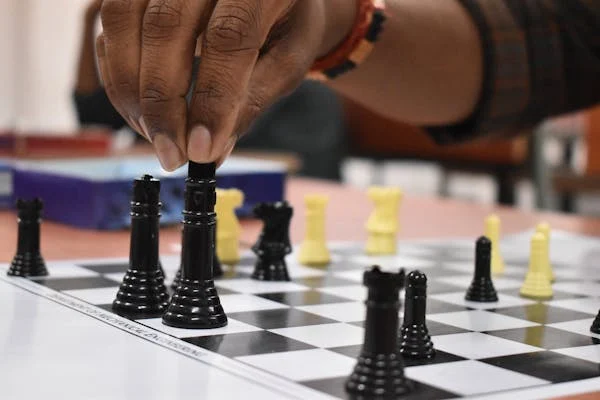
GSC’s internal rule is simple: no student should have a “random” learning day. Every activity feeds into a long-term strategic goal.
Actionable Advice for Online Learning Businesses:
Audit your content. Ask: Is each lesson part of a defined path? If not, you’re leaking value and under-delivering. Consider implementing checkpoints, skill gates, and performance reviews like GSC does—these small shifts create compounding engagement.
Wrapping It Up
Choosing the right chess academy is not just about where you learn—it’s about how you grow. Al Rayyan has a strong community of players, learners, and families who love the game. But in today’s world, loving the game is just the first step. Mastering it takes structure, smart coaching, and consistent feedback.
Hrittik Burman is a STEM educator, curriculum designer, chess content specialist, and education writer at Debsie, where he creates high-impact learning content for students around the world. He holds a B.Tech degree as well as a degree in Data Analytics, giving him a strong academic foundation in engineering, mathematics, statistics, technology, and evidence-based problem-solving. His work combines technical depth with a learner-first approach, helping students understand challenging topics in science, mathematics, data, and chess through clear explanations, structured lessons, and practical examples.
With a strong background in physics, mathematics, analytics, and chess, Hrittik brings a multidisciplinary perspective to education. He is especially interested in helping children move beyond memorization and develop real conceptual understanding. Whether he is explaining a physics principle, building a math activity, designing a data-driven lesson, or writing about chess strategy, his goal is to help learners think clearly, ask better questions, and build confidence through practice.
Hrittik has an impressive academic research background, having published 12 papers and earned more than 80 citations for his work. This research experience reflects his ability to engage with advanced scientific and analytical ideas, work with complex problems, and contribute meaningfully to academic knowledge. His experience with research also shapes the way he teaches: he encourages students to observe carefully, reason logically, test ideas, learn from mistakes, and build understanding step by step.
His physics accomplishments are a major part of his academic profile. Through his research work and paper publications, Hrittik has demonstrated strong ability in scientific reasoning, analytical modeling, and problem-solving. He understands how to take abstract scientific ideas and make them easier to understand through examples, patterns, and real-world connections. This makes his science writing especially effective for young learners who may find physics intimidating at first.
In mathematics, Hrittik has participated in several national-level olympiads and reached the semi-final stage, showing strong ability in mathematical reasoning, logical thinking, and competitive problem-solving. His olympiad experience gives him a deep appreciation for the kind of thinking that helps students succeed in mathematics: patience, pattern recognition, creativity, accuracy, and the ability to approach difficult problems from more than one angle.
As a chess player, Hrittik holds a FIDE rating of 2091, reflecting his strength as a competitive player and his serious engagement with the game. His chess background allows him to write and teach from real experience, not just theory. He understands calculation, planning, positional judgment, time pressure, tournament discipline, and the emotional challenges that players face during serious games. This gives his chess content a practical and trustworthy foundation.
Beyond his personal achievements, Hrittik is passionate about using chess as an educational tool. He believes chess helps children build focus, patience, memory, resilience, logical thinking, and emotional control. In his chess writing, he explains strategy in a way that young learners can understand, covering ideas such as tactics, opening principles, endgame basics, pattern recognition, planning, decision-making, and learning from losses.
At Debsie, Hrittik helps create learning content that connects academic rigor with curiosity and enjoyment. His STEM lessons are designed to make complex ideas feel simple without making them shallow. His math content focuses on reasoning and confidence-building. His physics content connects theory with everyday examples. His chess content helps children see the game as both a mental sport and a training ground for better thinking.
What makes Hrittik’s approach unique is the way he connects different fields of learning. He sees physics as a way to understand the world, mathematics as a language of patterns, data analytics as a tool for making sense of information, and chess as a powerful exercise in decision-making. This interdisciplinary mindset allows him to create lessons that feel connected, meaningful, and useful for students.
Hrittik’s work reflects a strong commitment to making education accessible, practical, and inspiring. He understands that every child learns differently, and he designs content that encourages curiosity, independent thinking, and confidence. Through his writing and curriculum work at Debsie, Hrittik continues to support young learners in becoming sharper thinkers, stronger problem-solvers, and more confident students.