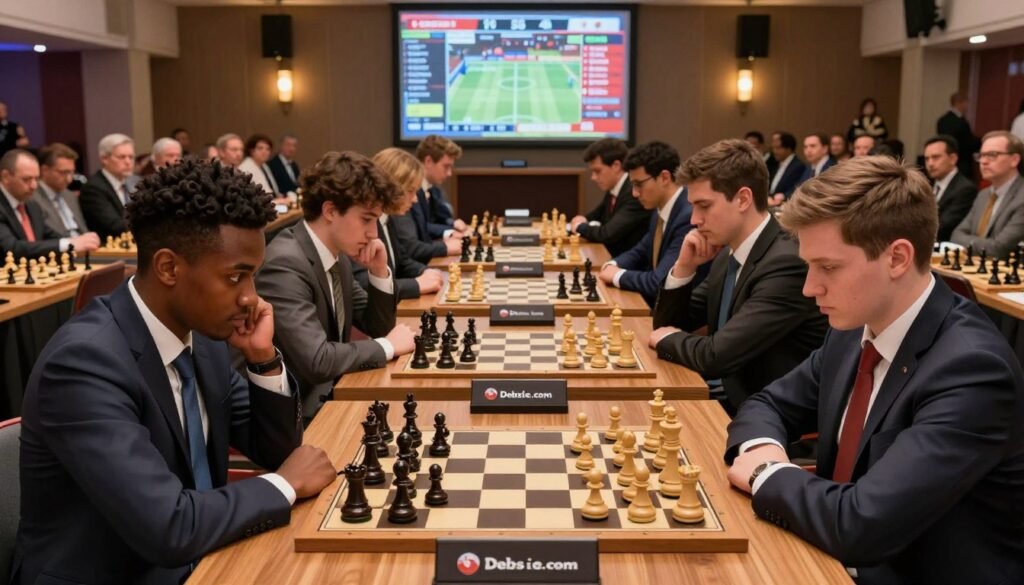
The phrase “best chess player” sounds simple, but in 2026, it is not simple at all. A player can have the highest rating, yet not hold the world title. Another player can win big events, yet still sit below others on the rating list. Someone else may shine in rapid or blitz, but not play enough classical chess to make the comparison easy.
Find the right learning experience
Tell us a little about the learner and what you are looking for. Our team will review your answers and help you identify the most suitable next step.
- Takes only a few minutes
- No payment required
- Personalised recommendations
Your information will only be used to respond to your enquiry.
The word “best” in chess needs a clear meaning before it needs a ranking
When people search for the best chess players in 2026, they often expect a clean top ten list. That sounds useful, but it can also be misleading. Chess is not like a simple race where the first person across the line is always the best.

A player may be first on the rating list, another may be the world champion, and another may be winning the biggest events right now.
That is why the smartest way to judge chess players is to build a fair frame first. Before we ask who is best, we need to ask what kind of “best” we mean. Best by rating is one answer. Best by world title is another. Best by current form is another. Best across classical, rapid, and blitz is another again.
For learners, parents, coaches, and fans, this matters a lot. If a young player only looks at rating, they may miss the value of nerves, match skill, and tournament wins. If they only look at trophies, they may ignore long-term strength.
The best chess players in 2026 are not just strong at the board. They are strong across many tests.
Find the right learning experience
Tell us a little about the learner and what you are looking for. Our team will review your answers and help you identify the most suitable next step.
- Takes only a few minutes
- No payment required
- Personalised recommendations
Your information will only be used to respond to your enquiry.
A rating tells us who has been strong over many serious games
The FIDE classical rating list is still the cleanest starting point because it gives us a number based on rated results.
As of the May 2026 FIDE list, Magnus Carlsen leads the world with a 2840 rating. Hikaru Nakamura is second at 2792, Fabiano Caruana is third at 2788, Nodirbek Abdusattorov is fourth at 2780, and Javokhir Sindarov is fifth at 2776.
That gap matters. Carlsen is not only first; he is far ahead. A lead of this size at the top level is hard to build because every opponent is already world-class. When a player sits more than forty points clear of the next person, it tells us that his results over time are still special.
But a rating is not a full story. It does not always tell us who is most dangerous in a world championship match. It does not fully show who is improving fastest. It also does not always capture who is strongest in rapid or blitz. A rating is a powerful signal, not a final verdict.
The best way to use rating is to treat it as the base layer, not the whole answer
If you are judging players like a coach, start with classical rating, then ask what the number is hiding. Has the player been active?
Has the player faced the strongest field? Has the player gained points recently or held the same level for years? Has the player avoided risk, or did they earn the rating while fighting in hard events?
This is where chess becomes more interesting. A steady 2780 player and a fast-rising 2770 player may look close on paper, but their story can be very different. One may be proven over ten years. The other may be entering their peak. A smart ranking should respect both.
Titles still matter because chess is also about pressure, not just numbers
The world title is not the same thing as the rating list. In 2026, that difference is one of the biggest reasons the “best player” debate is so rich. Gukesh Dommaraju is the reigning world champion, while Carlsen is the world number one by rating.

That means the chess world has two different kinds of kings: one by match title, and one by rating strength.
This is not a problem. It is part of chess history. Ratings measure long-term performance. Titles measure who won the path that matters most under a special format. A world championship match tests deep preparation, stamina, nerves, and the ability to handle one opponent for many games.
A tournament tests a different skill: scoring well against many styles in a short time.
For Debsie readers, this is a great lesson. Chess strength is not one skill. It is a group of skills. A child may be good at puzzles but weak in long games. A club player may know openings but panic under time pressure.
A grandmaster may be top-rated but not hold the crown. The title debate teaches us to judge complete strength, not one shiny label.
The world champion owns the hardest match title in chess
Gukesh’s world champion status gives him a claim that rating alone cannot erase. He earned the crown by winning the title match cycle, and that places him in a special group. Being world champion means the player has already passed the most famous test in chess.
Now, the next test is coming. FIDE opened the bidding process for the 2026 World Chess Championship match between Gukesh and Javokhir Sindarov, with the match provisionally scheduled from November 23 to December 17, 2026.
The match is also expected to be historic because both players will be twenty when they face each other.
That makes 2026 a turning point. The title match is no longer only about defending a crown. It is about a new generation proving that it can lead the sport. Gukesh has the title. Sindarov has the challenger’s momentum. Carlsen still has the rating lead. This is why the “best” debate cannot be solved with one number.
A title should carry extra weight when the player also shows strong form outside the match
A world title is huge, but it should not be judged alone. The best champion is not only someone who wins one match. The best champion keeps proving strength in major events, against strong fields, and across different time controls.
That is the key question for Gukesh in 2026. He has the title, but his ranking is below several other elite players on the May FIDE list. That does not make him less important. It means his case for being the best depends on how he performs before and during the Sindarov match.
For a fair ranking, give the world title strong weight, but do not let it silence every other measure. A champion with a lower rating is still a champion. A higher-rated player without the title may still be the strongest player in the world. Both truths can sit together.
Current results show who is hot right now, and that can change the whole debate
Current form is the part of chess ranking that fans feel most strongly. When a player wins a big event, people want to move them up right away.
Sometimes that is correct. Sometimes it is too fast. A great result can show a real jump in strength, but it can also be one strong tournament in a long season.

In 2026, no player shows this better than Javokhir Sindarov. He did not just win the Candidates. He changed the tone of the chess year. Chess.com reported that Sindarov won the 2026 FIDE Candidates in Cyprus and earned a world championship match against Gukesh.
He scored 10 out of 14, with six wins, eight draws, no losses, and a 2908 performance rating.
That is the kind of result that forces a serious ranking change. It was not a small open tournament. It was the Candidates, one of the hardest events in chess. The field included elite names, and the prize was a shot at the world title.
Winning it unbeaten is not just good form. It is proof that a player can handle the highest pressure.
A single event matters more when the field is elite and the stakes are high
Not all tournament wins are equal. Winning a small event against weaker players does not tell us as much as winning a closed event full of top grandmasters. The Candidates matters because every game is heavy.
Each player has months of preparation. Each loss can destroy a campaign. Each win can change a career.
Sindarov’s result matters because it came against players who knew exactly what was at stake. He was not surprising unknown opponents with simple tricks. He was beating or holding players who prepare deeply, defend well, and punish weak moves fast.
This is why current form should be part of any “best players” list. It helps us spot momentum before ratings fully catch up. Ratings move slowly at the top because the K-factor is low for elite players.
A player can make a huge leap in strength before the rating number fully shows it. Sindarov’s rise to number five on the May list shows that the rating did move, but the story behind the rise is even bigger.
The practical test is whether the hot player can repeat the result
Strong form becomes true greatness when it repeats. This is the next question for Sindarov. Can he keep this level in elite events after the Candidates? Can he handle the pressure of being watched by everyone? Can he beat Gukesh in a long match, where preparation becomes personal and every weakness is studied?
For learners, this is an important idea. One great tournament should build confidence, not ego. The best players do not treat one win as the finish line. They treat it as proof that their work is starting to show. Then they keep improving.
That is why Sindarov belongs high in any 2026 discussion, but his final place depends on what comes next. His Candidates win gives him one of the strongest current-form cases in the world. His world championship match will decide whether that case becomes even stronger.
Magnus Carlsen remains the benchmark because he keeps proving strength in different ways
Even without holding the classical world title, Magnus Carlsen remains the player everyone is measured against. His case is simple but powerful. He is number one by rating, he has a long record of dominance, and he still wins elite events.
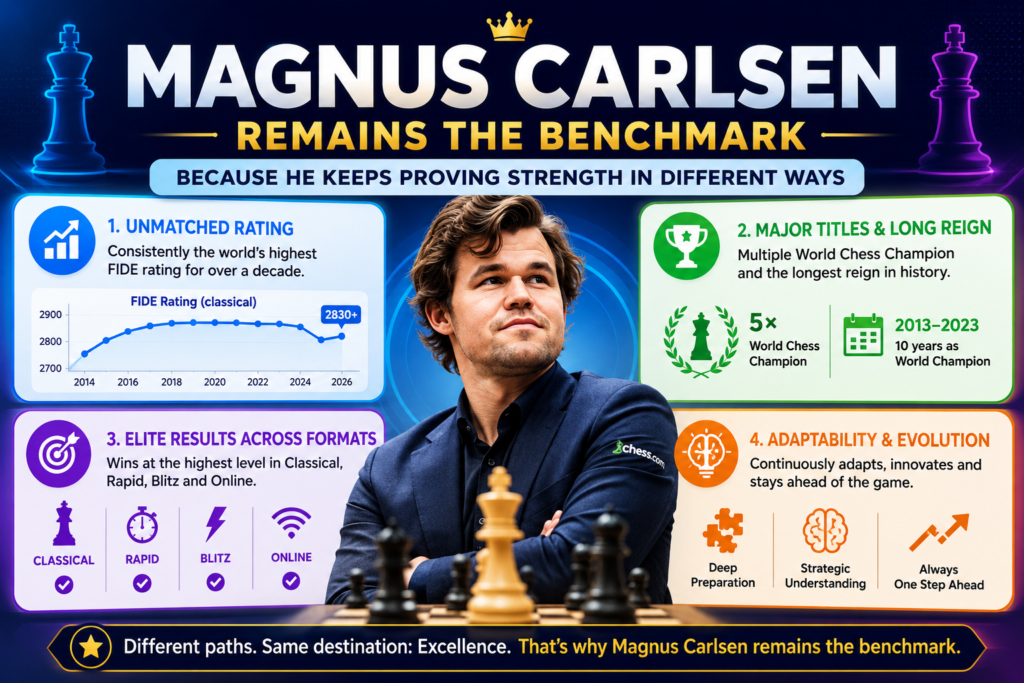
In a sport where young stars keep rising, staying at the top is often harder than getting there once.
The key point is not nostalgia. Carlsen’s reputation is not only based on what he did years ago. His current results still matter. In May 2026, he returned to classical chess at the TePe Sigeman tournament in Malmö, tied with Arjun Erigaisi on 5 out of 7, and won the blitz playoff 2–1.
Find the right learning experience
Tell us a little about the learner and what you are looking for. Our team will review your answers and help you identify the most suitable next step.
- Takes only a few minutes
- No payment required
- Personalised recommendations
Your information will only be used to respond to your enquiry.
The Guardian also noted that this was a rare classical outing and that his only loss there was to Jorden van Foreest.
That result says something important. Carlsen does not need to play every classical event to stay central to the debate. When he enters, people still judge the whole field by how they do against him. That is a sign of true benchmark status.
Carlsen’s biggest edge is that he is strong even when the position looks equal
Many top players win when they get a clear opening edge. Carlsen’s special skill has always been different.
He can turn small pressure into a long problem. He can make equal positions feel uncomfortable. He can keep asking simple questions until the other player finally gives the wrong answer.
This is why his rating lead is so meaningful. It is not built only on attack or preparation. It comes from complete chess. He can play quiet endgames, sharp middlegames, fast time scrambles, and messy practical positions. When judging the best chess players in 2026, that complete skill set deserves heavy weight.
For students, this is one of the most useful lessons in the whole article. You do not need to win every game with a brilliant sacrifice. You need to make good moves for longer than your opponent. You need to stay patient.
You need to keep the game alive when others relax. That is the Carlsen model.
The fair question is not whether Carlsen is still great, but how we compare greatness without the crown
The only serious debate around Carlsen is the title question. Since he is not the classical world champion, some fans may not want to call him the clear best. That is fair if your definition of best begins with the crown.
But if your definition begins with rating strength, long-term results, and all-format skill, he is still the first name in the discussion.
A smart 2026 ranking should not punish him too much for not holding a title he chose not to defend in the old cycle. At the same time, it should not ignore the courage and value of the players who are fighting through the championship path now.
Carlsen is the benchmark. Gukesh is the champion. Sindarov is the challenger with momentum. That is the core of the 2026 debate.
Hikaru Nakamura belongs near the top because his strength is not limited to one kind of chess
Hikaru Nakamura is one of the hardest players to rank fairly because his case is not built in only one place. If we look at the May 2026 FIDE classical list, he is world number two with a 2792 rating, behind only Magnus Carlsen.
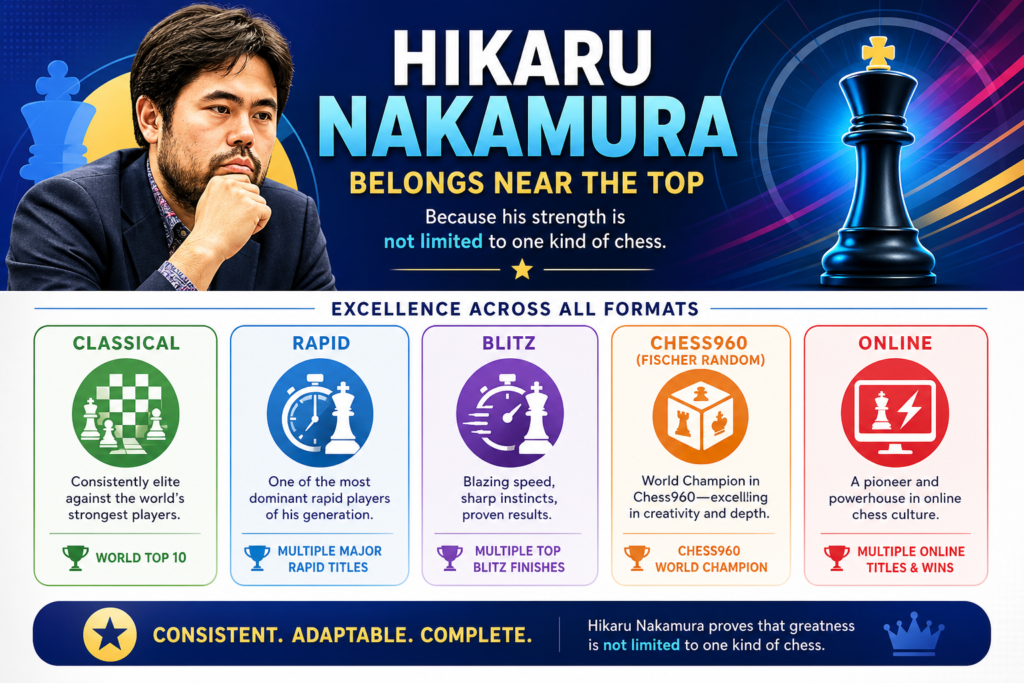
That alone puts him in the highest group. But his wider case is even stronger because Nakamura has been elite in classical chess, rapid chess, blitz chess, online chess, and high-pressure events for many years.
This matters because modern chess is no longer watched in only one format. Classical chess still carries the most history and weight, but rapid and blitz have become a major part of how fans judge practical strength.
A player who can win slowly and quickly is more complete than a player who only looks strong with hours on the clock.
Nakamura’s best claim in 2026 is consistency. He is not a young surprise. He is not a one-event story. He has been near the top for a long time and still holds a rating that most grandmasters will never get close to. That makes him a serious “best player” candidate, even if he does not hold the classical world title.
Nakamura’s strongest skill is making pressure feel personal
Nakamura’s games often feel different because he is so hard to shake. He may not always win by clean opening preparation. He often wins by keeping the game full of tension. He gives the opponent problems to solve, then adds clock pressure, then waits for small mistakes.
This is a very practical kind of strength. In real chess, especially at club and school level, many games are not decided by perfect theory. They are decided by who stays calm when the position becomes unclear. Nakamura is a master at keeping the game alive until the other player has to make hard choices.
That is why learners should study more than his openings. They should study how he fights. He is rarely passive. Even when the position looks level, he often finds a way to ask a new question. That skill matters in every format.
Nakamura should be judged as a complete competitive package, not only by world title status
The main argument against putting Nakamura at number one is simple. He is not the classical world champion, and he is still behind Carlsen by rating. But that does not weaken his place near the very top. It only helps us place him more carefully.
A fair 2026 ranking should treat Nakamura as one of the strongest active players in the world, especially because he remains second on the official classical list. His all-format strength makes his case even better.
If the question is “who is most dangerous in any kind of game today?” Nakamura has to be in the first few names.
For students, the lesson is clear. Do not build your chess around only one strength. Nakamura’s career shows the value of being flexible. He can calculate, defend, attack, play fast, explain ideas, and keep fighting after a worse position. That is what a complete player looks like.
Fabiano Caruana is still one of the best because his classical chess is deeply reliable
Fabiano Caruana is the kind of player who can be underrated by casual fans because his strength is not always loud. He is not always the flashiest name in online clips. He does not need wild attacks to prove his level.
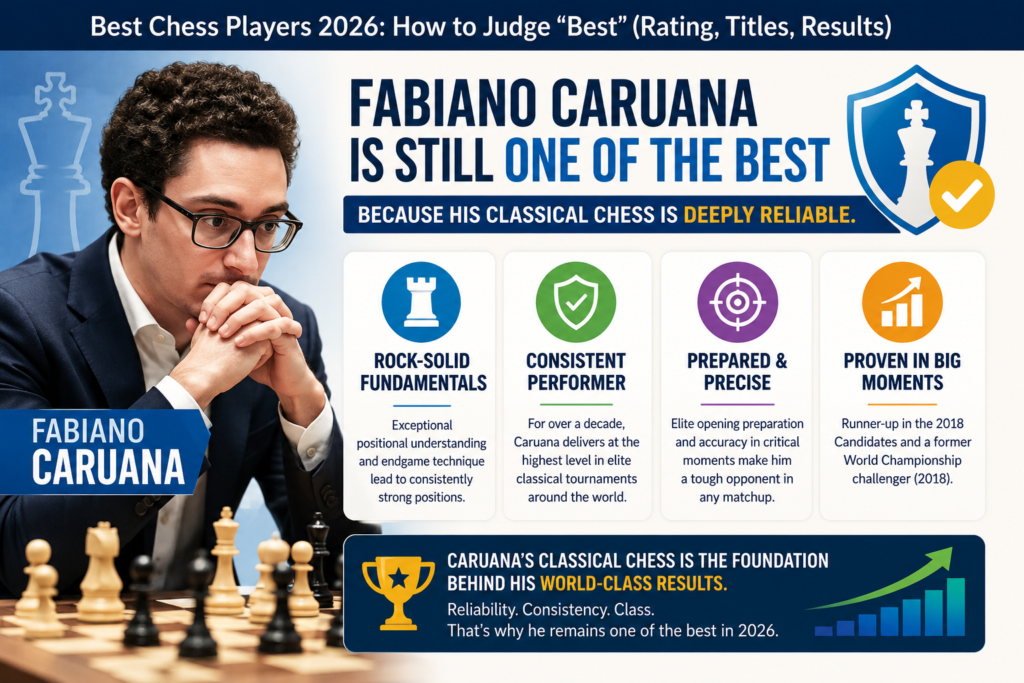
His best work often comes from deep preparation, clean calculation, and strong control over the whole game.
As of the May 2026 FIDE list, Caruana is world number three with a 2788 classical rating. That is only four points behind Nakamura and still far above almost every other elite grandmaster. At this level, four rating points are not a wide gap.
It means Caruana and Nakamura are very close in classical strength, even if their styles feel different.
Caruana’s case is strongest when we judge by classical chess. He has been one of the world’s most trusted tournament players for more than a decade. His peak rating was 2844, and live rating records still show him as one of the highest-ranked players in the world in 2026.
Caruana’s value comes from how few easy mistakes he gives away
Some players beat you with energy. Caruana often beats you with accuracy. He can take a small edge from the opening and hold it for hours. He can defend difficult positions without panic. He is also very strong at preparing for specific opponents, which matters a lot in elite tournaments.
This kind of chess is not always easy for new fans to enjoy at first. A Caruana win may not look like a movie scene. But for serious students, it is gold. His games show how small choices become big results. A better pawn structure, a safer king, a more active rook, a slightly better minor piece. These things add up.
That is why Caruana should remain very high in any list of the best chess players in 2026. He may not always dominate headlines, but the rating list respects him because the results do.
Caruana’s main question in 2026 is whether he can turn elite strength into the biggest title chance again
The challenge for Caruana is not proving that he is strong. That is already clear. The challenge is proving that he can convert this long-term strength into the very biggest prize again.
Before the 2026 Candidates, The Guardian described him as the favorite, while also noting that some losses before the event raised questions about his form.
That is the thin line at the top. A player can be third in the world and still face doubts because the standard is so high. For most players, being 2788 would be a dream. For Caruana, people ask whether it is enough to win the whole cycle.
For learners, the takeaway is powerful. Being excellent does not remove pressure. It adds pressure. Caruana’s career teaches that strong habits must be repeated again and again. You do not stay in the top three by accident. You stay there by being hard to beat, well prepared, and serious about every move.
Nodirbek Abdusattorov shows why the next generation is not waiting politely
Nodirbek Abdusattorov is one of the most important names in the 2026 “best player” debate because he combines youth with real elite results. He is not just a future talent. He is already world number four on the May 2026 FIDE classical list with a 2780 rating.

That matters because there is a big difference between promise and proof. Many young players are called future champions. Fewer actually break into the top five while still young. Abdusattorov has crossed that line. He now has to be judged as a current elite player, not only as a rising star.
His profile also shows strength across formats. FIDE lists him at 2780 in classical, 2703 in rapid, and 2785 in blitz. That mix tells us he is not a slow-only player. He can handle different speeds, which is a key sign of modern chess strength.
Abdusattorov’s style is dangerous because he is fearless but not careless
Some young players attack too much and lose balance. Abdusattorov is different. He can play bold chess, but he is not just throwing pieces forward. He is often brave in the right way. He enters sharp positions when they suit him, but he can also play technical chess when the game demands it.
That is a rare mix. It makes him difficult to prepare for because he does not fit into one easy box. If you expect only aggression, he can outplay you slowly. If you expect only clean control, he can suddenly turn the game sharp.
For students, this is a useful model. Fearless chess does not mean reckless chess. It means trusting your calculation, knowing your plan, and being willing to play for a win when the position allows it. Abdusattorov’s rise shows that young players do not need to wait until age thirty to play mature chess.
Abdusattorov’s place near the top is also part of Uzbekistan’s larger chess rise
Abdusattorov’s success is not happening alone. Uzbekistan now has two players in the world top five, with Abdusattorov at number four and Sindarov at number five on the May 2026 FIDE list.
Chess.com described 2026 as shaping into a golden year for Uzbekistan, especially after Sindarov’s Candidates win and rise to world number five.
This is important because chess strength often grows in groups. When one country has several elite players, they push each other. They share pressure. They create belief. Young players at home can see a path and think, “This is possible for us too.”
Abdusattorov’s claim as one of the best players in 2026 is built on both numbers and timing. He is already top four. He is still young. He is strong in fast chess. He plays with confidence. That makes him one of the most serious threats to the older order.
Gukesh must be judged differently because the world champion carries a different kind of weight
Gukesh Dommaraju is the player who makes the 2026 ranking debate most interesting. By rating alone, he is not near the very top of the May 2026 list. FIDE places him at number nineteen with a 2732 rating. But by title, he owns the most famous crown in chess: classical world champion.
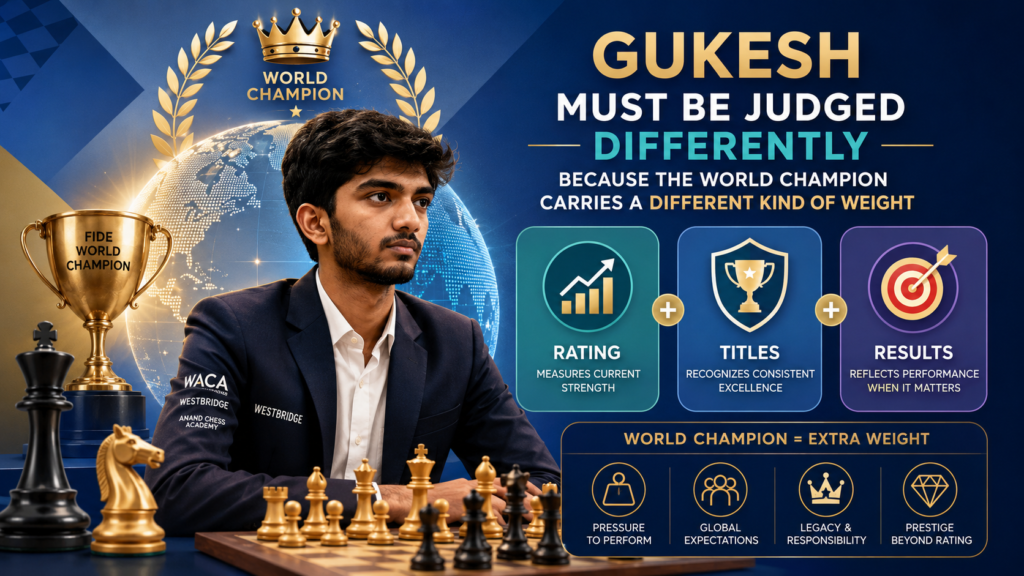
That creates a strange but exciting question. Can the world champion be outside the top ten by rating and still be called one of the best players in the world? The answer is yes, but the reason must be clear.
The world title is not a weekly prize. It is the result of surviving the hardest championship path in chess. Gukesh earned that place, and it gives him a claim that ratings alone cannot remove.
At the same time, a fair article cannot pretend rating does not matter. A 2732 rating is elite, but it is far behind Carlsen’s 2840 and also behind the players in the top five. So Gukesh’s case depends on how much weight we give to the crown, match skill, youth, and future upside.
Gukesh’s greatest strength is that he has already won the prize others are chasing
Many players spend their whole careers trying to reach a world championship match. Gukesh did more than reach one. He won the title as a teenager, becoming the youngest classical world title winner. That fact changes how we should see him.
World champions are not judged only by rating because the match format is unique. You must prepare for one opponent in deep detail. You must handle rest days, opening surprises, public pressure, and emotional swings. You must recover after bad games and stay sharp after good ones.
That is why Gukesh cannot be ranked like a normal 2732 player. He has already shown a kind of match strength that many higher-rated players have not proven in the same way.
Gukesh’s next test is to show that the title is not a peak moment but the start of a stronger era
The danger for any young champion is that the title arrives before the rating fully settles. That can create pressure from both sides. Fans expect the champion to dominate. Critics point to the rating list. Every result becomes a debate.
In May 2026, that debate became even more intense because Sindarov, the challenger, rose to world number five after winning the Candidates. Recent rapid and blitz meetings between Gukesh and Sindarov have also added heat to their rivalry, with reports from the Warsaw Grand Chess Tour event noting wins by both players in different games.
For Gukesh, the path is clear. If he defends the title, his “best player” case becomes much stronger. If he also climbs back toward the top of the rating list, the debate changes again. He does not need to copy Carlsen’s career.
He needs to build his own proof: defend well, win key events, and show that his crown matches his current strength.
Javokhir Sindarov has the strongest 2026 momentum, but momentum still has to survive a match
Javokhir Sindarov is no longer just a young talent to watch. In 2026, he is one of the main names in the whole chess world. His rise has been sharp, but it has not been empty hype.
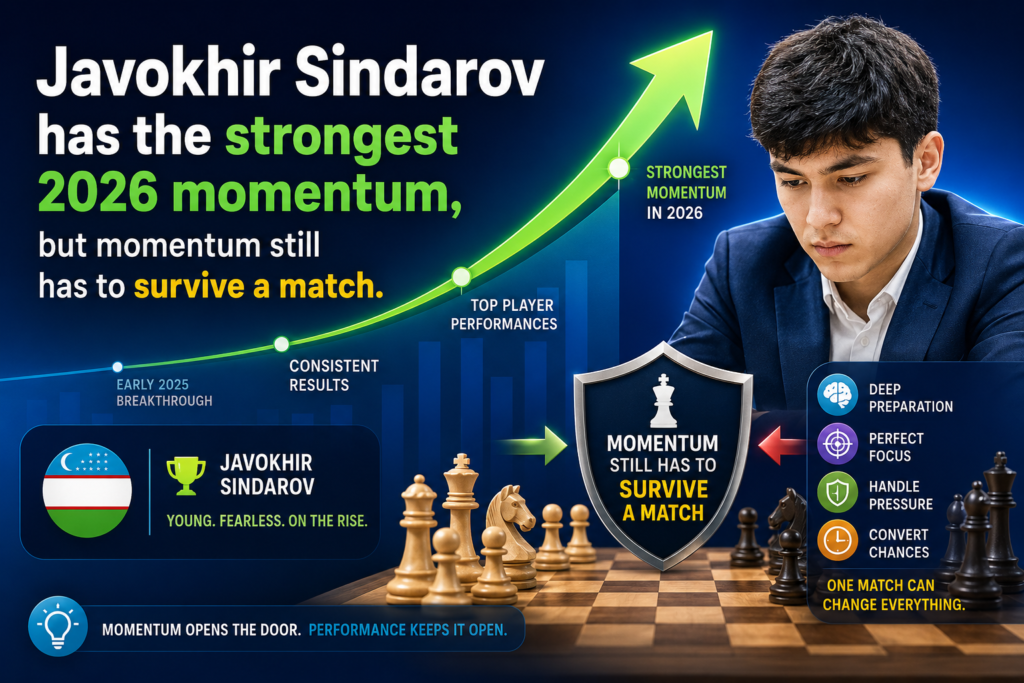
He won the 2026 FIDE Candidates with 10 out of 14, finished unbeaten, and earned the right to challenge Gukesh for the world title. That score was also reported as the highest total in the modern Candidates format since the eight-player double round-robin returned in 2013.
This is why Sindarov deserves a special place in any serious “best chess players 2026” article. He is not only ranked high. He has also won the event that matters most for becoming world champion. FIDE’s May 2026 list places him fifth in the world with a 2776 classical rating, behind Carlsen, Nakamura, Caruana, and Abdusattorov.
That is a rare mix. A player can be high-rated without a major title path. A player can win one event without being near the top five. Sindarov has both right now. He has rating strength, form, pressure results, and a title match ahead of him.
Sindarov’s case is built on proof, not promise
The big change with Sindarov is that we no longer need to say “maybe one day.” His Candidates win is a real result against elite players. It shows he can prepare, stay calm, avoid losses, and win games when everyone knows what is at stake.
This matters because the Candidates is not just another tournament. Every player is trying to reach the world championship. Nobody is relaxed. Nobody is there to experiment. The games are deeply prepared, the pressure grows every round, and the leader has to handle being chased.
Sindarov did more than survive that pressure. He controlled it. That is why his 2026 ranking case is stronger than his rating number alone. The number says he is top five. The Candidates result says he may already be ready to fight for number one in the sport’s biggest match.
The next test is whether Sindarov can win when the whole match is built around him
A Candidates tournament and a world championship match are not the same test. In the Candidates, a player faces many opponents. In a match, one opponent studies him for months. Every habit matters. Every opening choice is questioned. Every emotional reaction is watched.
That is the next step for Sindarov. If he beats Gukesh, his claim as one of the very best players in 2026 becomes much stronger. If he loses, he still remains one of the biggest names of the year, but the debate changes. He would be the brilliant challenger who won the path but did not finish the job.
For learners on Debsie, this is a very useful lesson. A great result opens the door, but the next result decides what the first result means. Sindarov has done the first part. Now the world will see whether he can turn a breakthrough year into a championship year.
Arjun Erigaisi is still a serious threat because his best chess is brave and active
Arjun Erigaisi is outside the current top ten by a tiny margin, but he should not be treated like a small name. FIDE’s May 2026 list places him at number eleven with a 2751 classical rating, only two points behind Wei Yi at number ten and just a few points behind Wesley So, Alireza Firouzja, and Vincent Keymer.
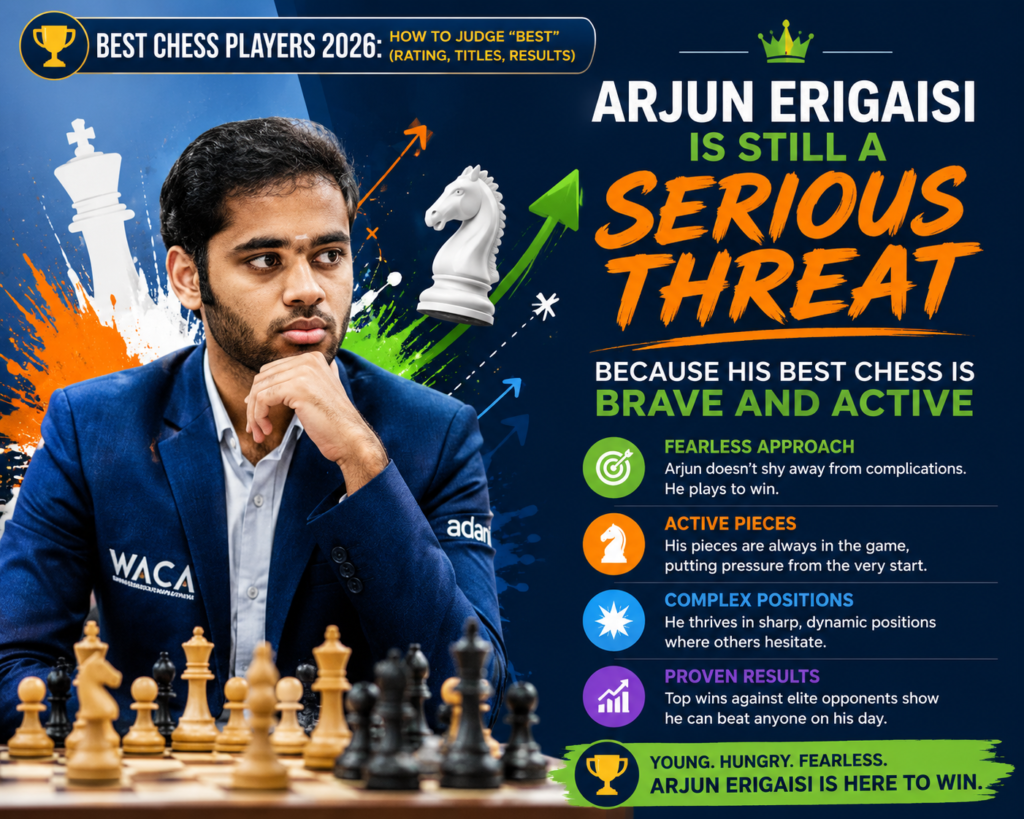
That close rating gap matters. At this level, a few rating points can change with one strong event.
So when we judge the best chess players in 2026, Arjun should still be grouped near the elite top tier. He may not be in the official top ten on that list, but his strength is close enough that leaving him out would make the discussion weaker.
Arjun’s chess also has a clear identity. He likes active play. He is often willing to take risk. He does not always choose the safest path if he sees a chance to create real pressure. That makes him dangerous against almost anyone, because he does not simply wait for the opponent to make a mistake.
Arjun’s value comes from the way he plays for wins
Some elite players are famous for control. Arjun is more often linked with energy. He can create sharp positions, make practical decisions, and push opponents into games where they must solve problems on their own.
That style can lead to great wins, but it can also bring risk. This is why judging Arjun fairly means looking beyond a single result. A player with an active style may have more ups and downs than a very solid player. But that same style can also make him more dangerous in must-win games.
For young players, this is a powerful lesson. Brave chess is not the same as random chess. It works only when courage is supported by calculation. Arjun’s rise shows that active play can take a player very far, but only when the player has the skill to back it up.
Arjun’s next step is turning danger into repeatable tournament dominance
The question for Arjun in 2026 is not whether he can beat elite players. He can. The question is whether he can turn his strength into repeated top-level tournament wins and a stronger claim in world title cycles.
This is the hard part of chess growth. Being dangerous is good. Being dangerous every month is better. Being dangerous while also staying hard to beat is what creates a champion-level case.
That is the area where Arjun can climb. If he keeps his active style but reduces the number of games where risk turns against him, he becomes even harder to handle. He already has the talent and rating range to fight with the top group. The next level is control without losing fire.
Anish Giri shows why being hard to beat is still a world-class weapon
Anish Giri is often discussed in a light way by casual fans, but that can hide how strong he really is. In May 2026, FIDE ranks him sixth in the world with a 2767 classical rating. He also finished second in the 2026 Candidates with 8.5 out of 14, behind Sindarov and ahead of Caruana.
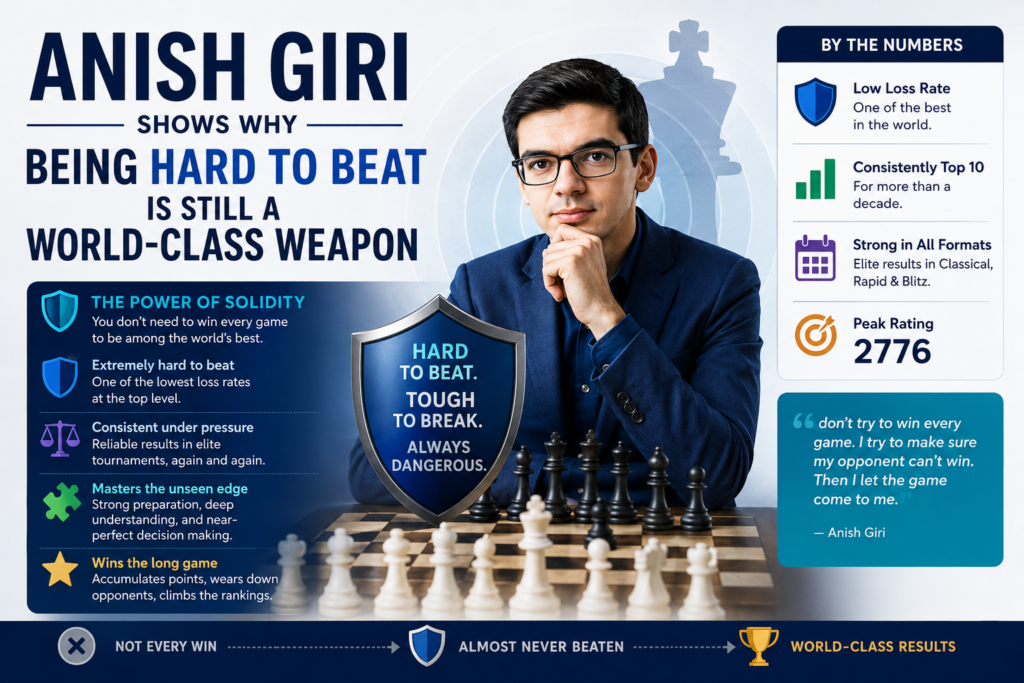
That is not a small achievement. The Candidates is one of the most difficult events in chess. Finishing clear second there means Giri was close to the world championship path. It also shows that he is still more than a stable elite player. He is still a real threat in the biggest events.
Giri’s strength is often tied to preparation, defense, and balance. He is hard to surprise. He understands openings deeply. He can hold difficult positions. He does not often give away easy wins. That kind of skill may not always create viral moments, but it wins trust at the highest level.
Giri’s style is a reminder that chess is also about not breaking
Many players want to win fast. Giri’s career shows another truth. At the top level, not losing is a major skill. When every opponent is dangerous, one careless game can ruin a tournament. A player who can stay solid while still pressing for chances is very valuable.
This is why Giri belongs in the 2026 best-player discussion. He may not always look as explosive as Firouzja or as dominant as Carlsen, but his results are too strong to ignore. A player does not reach world number six and finish second in the Candidates by accident.
For students, Giri teaches the value of strong basics. Good openings matter. Safe king placement matters. Clean calculation matters. Knowing when not to force the game also matters. Chess improvement is not only about finding brilliant moves. It is also about removing weak moves from your play.
Giri’s biggest challenge is turning near-misses into a final breakthrough
The word that follows Giri is often “almost.” Almost in title races. Almost in elite events. Almost in world championship chances. That can sound harsh, but it also proves how close he has been.
In 2026, his second-place Candidates finish keeps him close to the top of the story. He did not win the tournament, but he showed that he can still compete at the level where the world championship path is decided.
His next step is clear. He needs one of those near-misses to become a win. If that happens, the way people talk about him may change fast. Until then, he remains one of the strongest and most reliable players in the world, even if his “best player” case sits just below the most forceful claims.
Vincent Keymer and Alireza Firouzja show two different ways young stars can chase the top
Vincent Keymer and Alireza Firouzja are tied on rating in the May 2026 FIDE list, with both players at 2759. FIDE places Keymer seventh and Firouzja eighth, which puts both inside the world top ten.
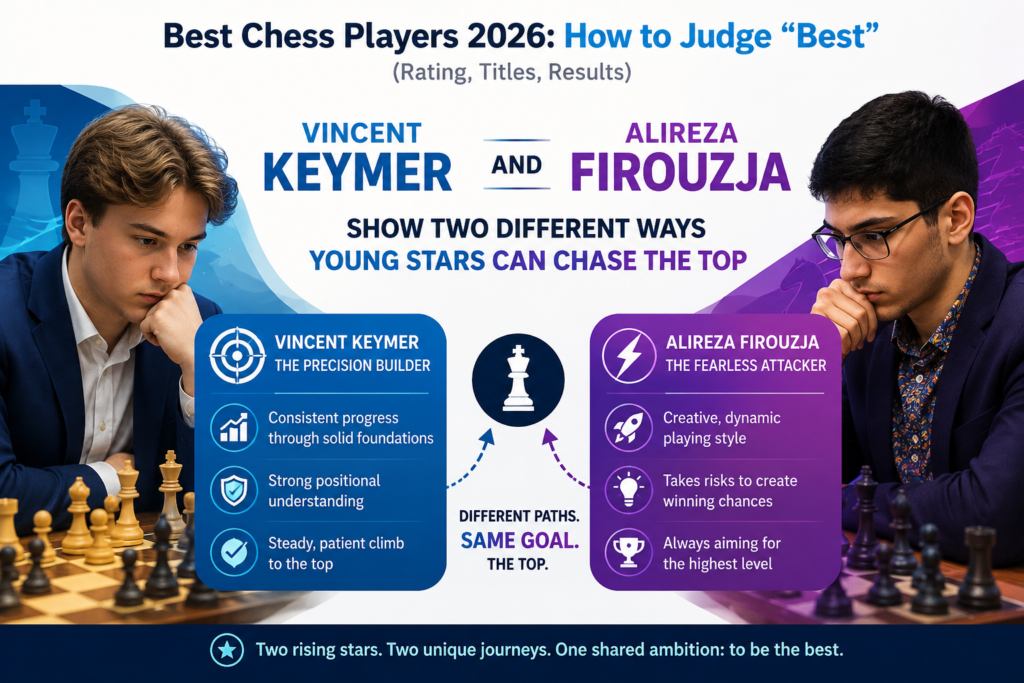
That tie is interesting because their chess stories feel different. Keymer is often seen as steady, precise, and mature. Firouzja is often seen as creative, fast, and dangerous. Both styles can reach the top. Both styles can also face different problems.
This is why they are useful to compare. They show young learners that there is no single way to become world-class. Some players rise through clean structure and patience. Others rise through imagination and sharp play. At the highest level, though, both types need the same final skill: consistency.
Keymer’s path is about control, while Firouzja’s path is about spark
Keymer’s strength often feels calm. He can play long games with discipline and avoid making the kind of simple errors that weaker players make under pressure. That makes him a serious tournament player because he does not need chaos to create chances.
Firouzja’s strength feels different. His best games can look full of life. He has the kind of talent that can change a position very quickly. When he is in form, he can beat anyone because he sees active ideas and trusts his instincts.
Both kinds of strength are valuable. The safe player must still learn how to win enough games. The sharp player must still learn how to avoid giving away too many chances. The top of chess punishes every gap.
Their 2026 challenge is not talent, but staying at peak level long enough to pass the older stars
Keymer and Firouzja are already elite. The next question is whether they can move from top ten to serious number one contenders. That requires more than beautiful games. It requires season after season of strong results.
This is where Carlsen, Nakamura, and Caruana still set the standard. They have not only reached the top. They have stayed there. For younger players, that is the true test. A top-ten rating is a sign of great strength, but a long run near the top is a sign of greatness.
For Debsie learners, the lesson is simple. Talent opens the door, but habits keep it open. Keymer and Firouzja both have the level to shape the future. The player who becomes more stable, more prepared, and more dangerous in key events will move closer to the very top of the 2026 debate.
Wesley So proves that quiet chess can still be one of the strongest forms of chess
Wesley So is easy to overlook if a person only watches the loudest chess stories. He is not always the player creating the biggest drama. He is not always the one making the sharpest sacrifice. But that is exactly why he matters in a serious 2026 ranking.
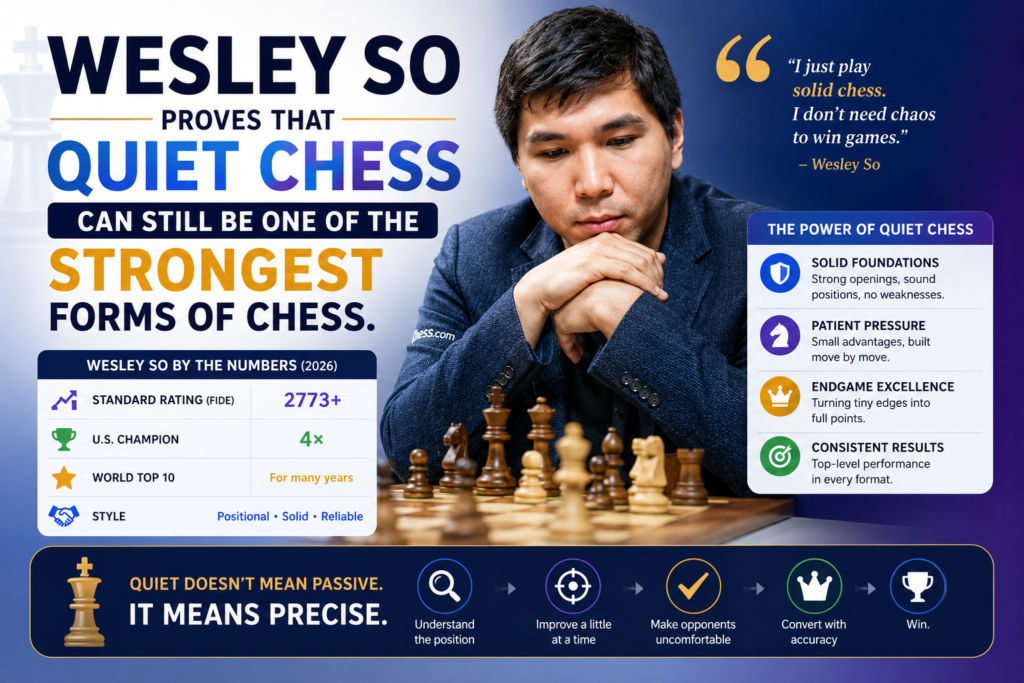
So’s chess is built on control, safety, patience, and clean decision-making.
On the May 2026 FIDE list, Wesley So is ranked ninth in the world with a 2754 classical rating. That puts him inside the official top ten, just one point ahead of Wei Yi and only a few points behind Keymer and Firouzja. At this level, that means he is still very much part of the elite group, not just a past name holding on.
So’s strength is not always easy for newer players to see because he often makes chess look calm. He does not need wild positions to score. He often chooses sound openings, limits danger, and slowly asks the opponent to prove they can keep up.
That may not feel exciting at first, but it is one of the hardest styles to beat.
So’s biggest skill is removing risk without removing pressure
Many players become too passive when they try to play safely. Wesley So does something better. He plays solid chess, but he still keeps pressure in the position. He does not give opponents many free chances, yet he is ready to punish even a small mistake.
This is a huge lesson for young players. You do not need to attack on every move to become dangerous. Sometimes the best way to win is to build a position where your opponent has no easy plan. They start to feel stuck. They push at the wrong moment. Then your calm position becomes a winning position.
So’s games are useful for learners because they show how strong chess can be simple on the surface. He develops pieces, keeps the king safe, improves slowly, and avoids drama unless drama helps him. That is not boring. That is mature.
The practical lesson from Wesley So is that clean chess wins more often than flashy chess
If you are learning chess, Wesley So is a great model when you want to reduce blunders. Study how he keeps pieces protected. Study how he avoids weak pawns. Study how he chooses plans that do not depend on one perfect trick.
This is also why he belongs in a “best players 2026” article. The best player is not always the one who creates the most beautiful game. Sometimes the best player is the one who gives the opponent the fewest chances to breathe.
So may not have the strongest claim to number one right now, but his place in the top ten is very meaningful. He is proof that calm chess can stay powerful even in a faster, younger, louder chess world.
Wei Yi is dangerous because his calm style hides deep attacking power
Wei Yi is another top-ten player who deserves more attention than he often gets. On the May 2026 FIDE list, he is ranked tenth in the world with a 2753 classical rating. That places him right behind Wesley So and right ahead of Arjun Erigaisi.
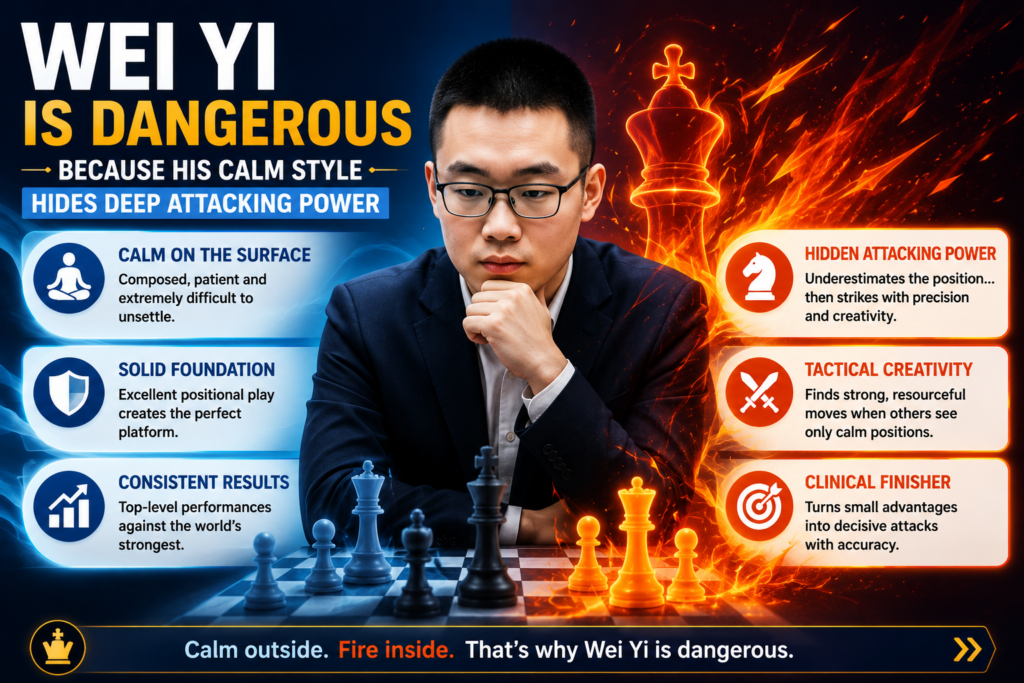
Wei Yi’s story is interesting because he became famous very young, but his current strength should not be treated like old news. Some young stars burn bright for a short time and then fade from the top group. Wei has stayed strong enough to remain among the best players in the world.
His chess can feel quiet until it is not. He can play controlled positions, but he also has a sharp attacking sense. When the position opens, he can find fast tactical ideas. That makes him hard to judge by style alone. He is not only a tactician, and he is not only a technical player. He can do both.
Wei Yi shows why early talent still needs long-term growth
Many fans first learned Wei Yi’s name because he was a prodigy. But being a prodigy is only the first chapter. The harder test is what happens after everyone knows your name. Opponents prepare for you. The pressure grows. The easy rating gains disappear.
Wei’s place in the 2026 top ten shows that he has passed a deeper test. He did not only become strong early. He stayed strong into adult elite chess. That matters because chess at the top is not kind to players who rely only on natural talent.
For learners, this is an important message. Being good early is helpful, but it is not enough. You still need study habits, patience, emotional control, and the ability to improve after losses. Wei’s career shows that talent needs care. It has to be trained, shaped, and protected.
The best way to learn from Wei Yi is to study how he changes speed during a game
A useful thing to watch in Wei’s games is how he can shift from quiet play to direct attack. Many club players struggle with this. They either attack too early or wait too long. Wei often shows better timing. He improves his pieces first, then strikes when the position is ready.
That skill is very actionable. Before attacking, ask whether your pieces are placed well. Ask whether your king is safe. Ask whether your opponent has a clear defense. If the answer is no, wait. If the answer is yes, act with force.
Wei Yi may not be the loudest name in the 2026 race, but his top-ten rating proves his strength. He belongs in the debate because he combines talent, balance, and the ability to create danger without forcing it too early.
Praggnanandhaa is lower on the May list than some fans expect, but his long-term case is still very strong
Rameshbabu Praggnanandhaa is one of the most followed young chess players in the world, and for good reason. He has already played huge games, beaten elite opponents, and carried the hopes of many Indian chess fans. But a fair 2026 ranking must separate fame from current rating position.
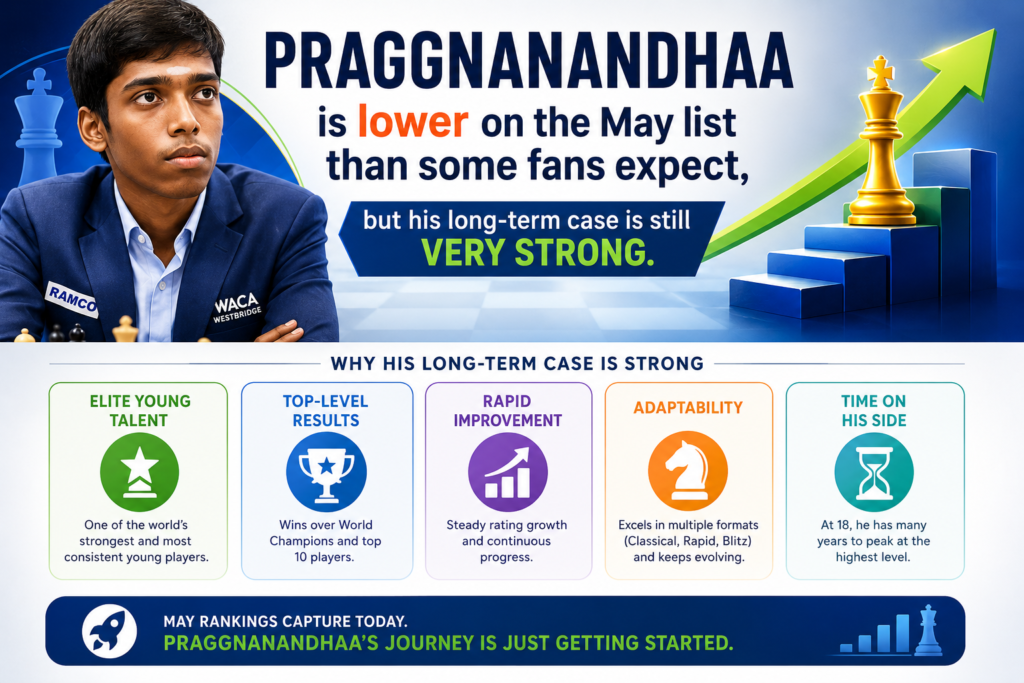
On the May 2026 FIDE list, Praggnanandhaa is ranked seventeenth in the world with a 2733 classical rating.
That is still elite, but it is below several names who are less famous to casual fans. It places him behind players like Hans Niemann, Viswanathan Anand, Ding Liren, and Jorden van Foreest on that specific list.
That does not mean Praggnanandhaa is overrated. It means we need to judge him fairly. He is still very young, very strong, and very capable of beating the best. But in a 2026 “best players” ranking, his current position should be handled with care.
He is a major force, but not automatically above every player with a higher rating.
Praggnanandhaa’s best case comes from his ceiling and his experience against elite players
Praggnanandhaa has already played games that most young players only dream of. He has faced world-class opponents in serious events and shown that he can compete with them. That experience matters because the top level is not only about knowing chess.
It is about handling the room, the clock, the cameras, the nerves, and the weight of expectations.
This is where his future case becomes exciting. A 2733 rating at his age is already a very high base. If he adds more consistency and wins more elite events, he can climb fast. The rating gap between seventeenth and the lower top ten is not impossible to close with a strong year.
For Debsie learners, Praggnanandhaa is a great reminder that growth is not a straight line. A player can be famous, talented, and still have clear work ahead. That is normal. Even the best young players need time to turn big wins into steady dominance.
The best lesson from Praggnanandhaa is to play strong opponents before you feel fully ready
One reason Praggnanandhaa’s growth has been so impressive is that he has tested himself against elite players early. That is not easy. Playing stronger opponents can hurt your ego. You lose more. You see your weaknesses more clearly. But that is also how serious growth happens.
A student can copy this idea at any level. Do not only play people you can beat. Play people who expose your mistakes. Then review the games with honesty. Ask where your plan failed, where your calculation broke, and where your time use became poor.
Praggnanandhaa’s 2026 case is not only about where he ranks today. It is about where his skill can go next. Right now, he should be seen as a top-level young player with a real path back toward the very top group.
Hans Niemann, Ding Liren, and Viswanathan Anand show why rankings need context, not just names
Some players are hard to place because their stories carry extra weight. Hans Niemann, Ding Liren, and Viswanathan Anand are very different from each other, but each one proves the same point. A good ranking should not only ask, “What is the number?” It should also ask, “What is behind the number?”
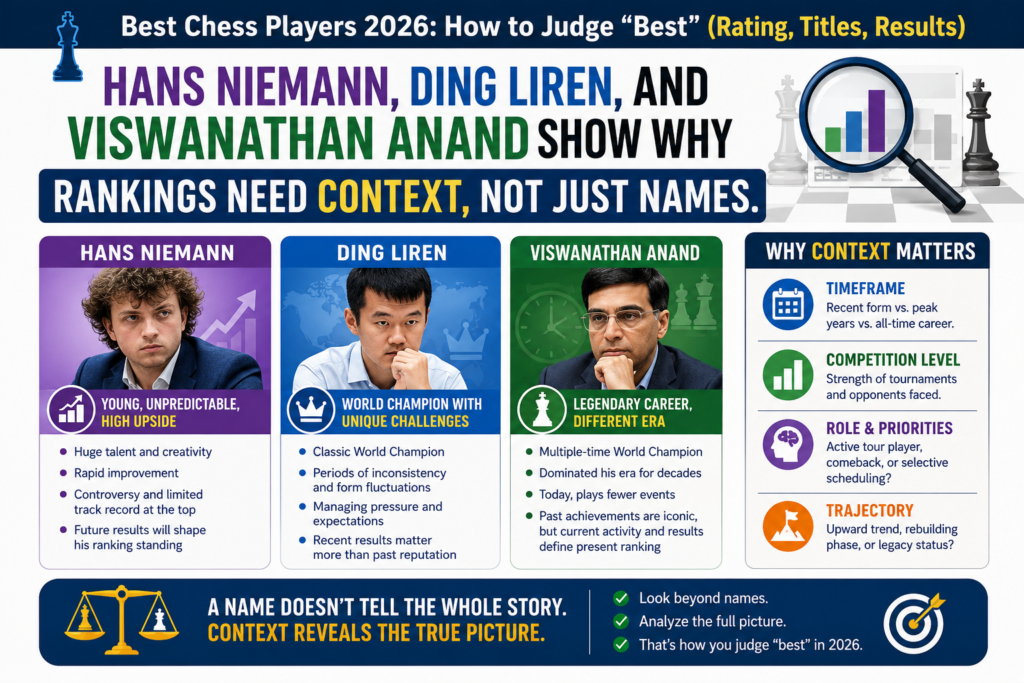
On the May 2026 FIDE list, Hans Niemann is ranked twelfth with a 2742 rating, Viswanathan Anand is ranked thirteenth with a 2739 rating, and Ding Liren is ranked fifteenth with a 2738 rating. These are very close numbers. One good or bad event can change their order quickly.
But their cases feel very different. Niemann is a younger player with rising momentum. Ding is a former world champion whose recent story is tied to form and recovery. Anand is a legend whose rating at his age is almost unbelievable.
If we judge only by number, we miss the human story. If we judge only by story, we miss the current strength. A smart ranking needs both.
Niemann is building a results-based case after years of intense attention
Hans Niemann has become one of the most watched players in chess, and not only because of his games.
But in 2026, his board results also demand attention. The Financial Times reported that he won the Warsaw Rapid and Blitz, took the $50,000 first prize, and finished ahead of Fabiano Caruana and Wesley So in an all-American top three.
That kind of result matters because it moves the conversation back to chess strength. Niemann’s classical rating also places him just outside the top ten. A player at 2742 cannot be dismissed as noise. He is clearly strong enough to challenge elite names.
For learners, the lesson is not to copy the controversy around a player. The lesson is to watch the chess. Results are the cleanest way to rebuild trust in any competitive field. If Niemann keeps winning strong events, his case will become harder to ignore.
Ding and Anand remind us that greatness can look different at different stages of a career
Ding Liren and Viswanathan Anand carry a different kind of weight. Ding is a former world champion, so his name will always matter in any modern chess discussion. But in 2026, his rating position shows that he must be judged by current form as well as past title strength.
Anand is even more special because he remains near the top fifteen despite being born in 1969. The May 2026 list shows him at 2739, tied on rating with Jan-Krzysztof Duda and just above Ding. That is not only impressive.
It is historic in feel. Staying this strong across generations shows deep understanding, discipline, and love for the game.
For students, these two players teach patience. Ding shows that even champions can pass through hard phases. Anand shows that learning never has to stop. Niemann shows that current results can reshape a reputation.
Together, they prove that the word “best” needs more than a rating list. It needs timing, context, results, and respect for the full chess journey.
A fair 2026 ranking should start with rating, but it should not stop there
The cleanest way to begin any debate about the best chess players in 2026 is to look at the FIDE classical rating list. It is not perfect, but it is the best public measure we have for long-term strength in serious over-the-board chess.
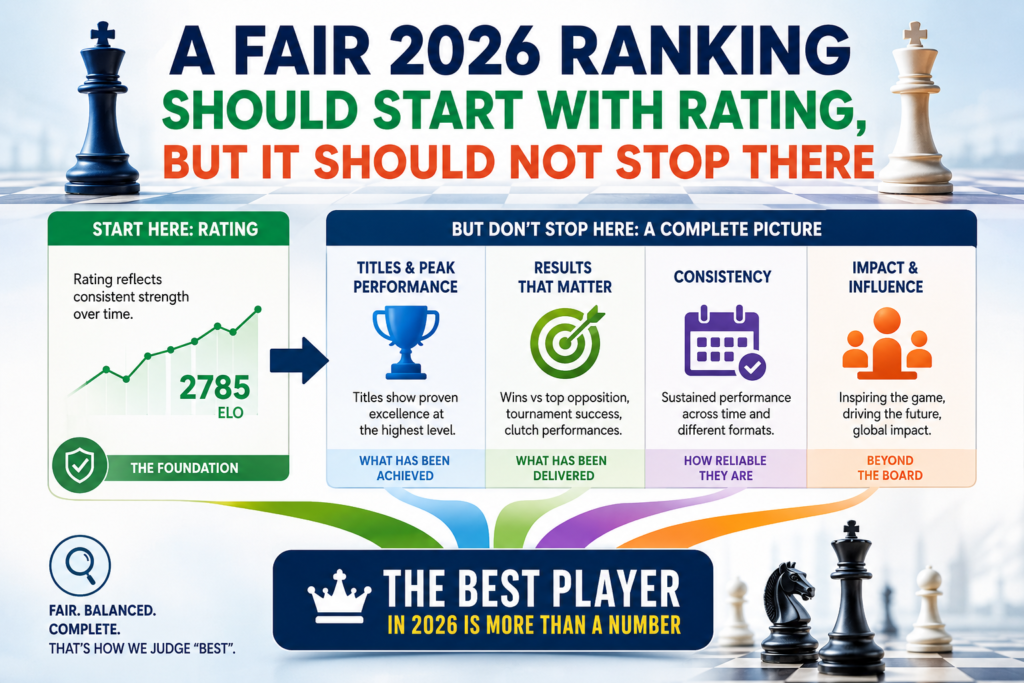
The May 2026 list puts Magnus Carlsen first at 2840, Hikaru Nakamura second at 2792, Fabiano Caruana third at 2788, Nodirbek Abdusattorov fourth at 2780, and Javokhir Sindarov fifth at 2776. That gives us a strong starting order.
But starting order is not final order. Chess is too rich for that. If rating alone decided everything, then the world champion title, the Candidates Tournament, match play, rapid chess, blitz chess, and current form would all matter less than they really do. That would make the ranking simple, but not honest.
A smart reader should treat rating like the foundation of a house. It tells you whether the structure is strong. But it does not show the full design. It does not tell you how the player handles a must-win game, how they defend a bad position, or how they recover after a loss.
Rating works best when it is used as proof of repeated strength
A high rating is hard to fake because it comes from many games. At the top level, players cannot gain points by beating weak opposition again and again. They must face other elite players, and every draw can cost rating when the player is already rated much higher than the field.
That is why Carlsen’s 2840 rating matters so much. His lead is not just symbolic. It shows that he is still producing results at a level nobody else is matching on the official list. The gap between Carlsen and Nakamura is large enough that any fair system has to give Carlsen a major edge before other factors are added.
Still, rating can lag behind reality. A young player who has just made a huge jump may be stronger than the number says. A less active player may hold a high rating without proving it as often. A world champion may be lower rated but stronger in match play than the number suggests.
The practical way to judge rating is to ask what kind of rating it is
When Debsie readers look at ratings, they should ask simple questions. Is the player active? Did the rating rise recently? Did the player earn it against elite fields? Is the player strong in classical only, or also in rapid and blitz?
This is where the rating list becomes a learning tool, not just a ranking table. A student can use it to understand consistency. Parents can use it to explain why one good tournament is not the same as long-term strength. Coaches can use it to show that progress must be measured across time.
So if we build a fair 2026 system, rating should carry the most weight. But it should not carry all the weight. It gives us the base truth. Then titles, results, form, and format skill help us finish the picture.
Titles should count because champions prove something ratings cannot fully measure
A rating tells us who scores well across many events. A title tells us who won a specific, historic test. That is why Gukesh cannot be judged only by his May 2026 rating. FIDE lists him nineteenth at 2732, but he is also the reigning classical world champion.
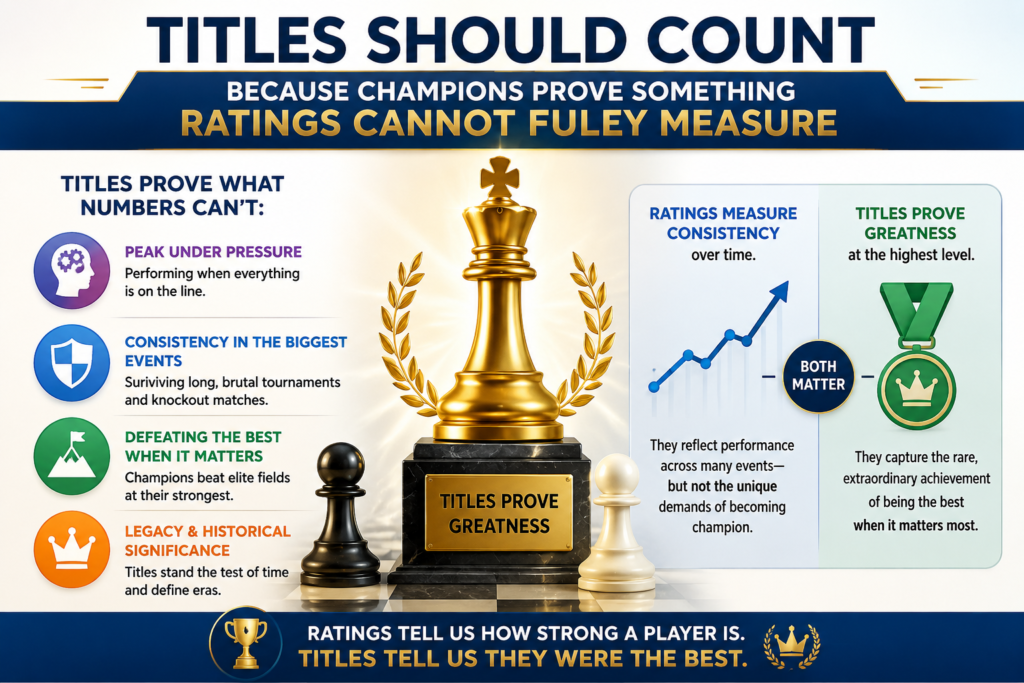
Those two facts create tension, and that tension is exactly why the “best” debate is interesting.
The world championship crown is not a normal trophy. It comes with a different kind of pressure. A player must win the cycle, prepare deeply, face one opponent under a huge spotlight, and keep control across a long match. Many great players have high ratings. Far fewer become world champion.
That does not mean the champion must always be called the best player in the world. But it does mean the champion deserves special weight. A fair system should never treat the world title like a small bonus. It is one of the hardest achievements in chess.
Match strength is a different skill from tournament strength
A tournament asks a player to handle many opponents and adjust from round to round. A match asks a player to handle one opponent again and again. These are not the same job.
In a match, your opponent studies your openings, your style, your habits, and even your reactions after difficult moments. There is nowhere to hide. If you keep choosing the same safe system, they will prepare for it. If you have a weakness in endgames, they will test it. If you get nervous after a loss, they will feel it.
This is why Gukesh’s title matters even if his rating is below the highest names. He has already passed a test that many higher-rated players have not passed. That gives him a strong claim to be discussed with the best, even if it does not automatically place him above Carlsen, Nakamura, or Caruana.
The best way to score a title is to combine it with current form
A title alone should not freeze a player’s ranking forever. Former champions still need current results. Current champions still need to defend their strength. That is why Gukesh’s 2026 match against Sindarov matters so much.
Sindarov won the 2026 Candidates unbeaten with 10 out of 14, earning the right to challenge Gukesh for the world crown. Reports described the score as a record in the modern Candidates format, which makes his challenge even more serious.
For a fair ranking, the world title should add major value, but it should work with the other evidence. If Gukesh defends the title and improves his rating, his case becomes much stronger. If Sindarov wins the match, his Candidates result, top-five rating, and world title would make him one of the strongest claims in chess.
Results in big events should matter more than results in easy events
Not every win tells the same story. A player can win a small tournament and gain confidence, but that is not the same as winning the Candidates, Norway Chess, Tata Steel, the Grand Chess Tour, or another event packed with elite players. The field matters. The pressure matters. The prize matters.

This is why Sindarov’s 2026 Candidates win carries so much weight. It was not just a good score. It was a good score in the most important qualifying event in chess. He finished unbeaten and earned a world championship match.
That single result does more for his “best player” case than several smaller event wins would do.
The same idea helps us judge Carlsen’s recent results. In May 2026, he returned to classical chess at the TePe Sigeman event in Malmö, tied with Arjun Erigaisi on 5 out of 7, and then won the playoff. It was not the world championship, but it showed that even in a rare classical outing, he could still win under pressure.
Tournament value depends on strength of field and pressure of the moment
A strong player should not get the same credit for every first-place finish. The better question is what the result proves. Did the player beat top-ten opponents? Did the player win while leading? Did the player recover after a loss? Did the player score when a draw was not enough?
This is where a human ranking becomes smarter than a plain table. A rating table tells us the average strength. A result table tells us who delivered when the moment was sharp.
That is why players like Anish Giri also deserve respect in 2026. His second-place finish in the Candidates shows he was close to the very biggest prize. He did not win, so Sindarov’s result carries more force. But finishing clear second in that event still tells us more than a quiet rating number alone.
The practical test is to ask what changed because of the result
The best results change a player’s story. Sindarov’s Candidates win changed him from rising star to world title challenger. Carlsen’s Malmö win reminded fans that he remains dangerous even with fewer classical appearances.
Hans Niemann’s Warsaw Rapid and Blitz win mattered because it put him ahead of a strong field and gave him one of the biggest tournament results of his career.
That is how readers should judge event wins. Do not ask only, “Who won?” Ask, “What did this win prove?” A result that proves a player can handle elite pressure should count heavily. A result that proves only that a strong player beat weaker opposition should count less.
This makes the ranking more honest. It rewards real pressure, not just trophy count. It also helps learners understand why the strongest players care so much about event quality. At the top level, where you win matters almost as much as whether you win.
A complete 2026 ranking should reward strength across classical, rapid, and blitz
Classical chess still deserves the most respect because it is the deepest test. Players have time to think, calculate, plan, defend, and show full understanding. That is why the classical rating list is still the starting point for this article.
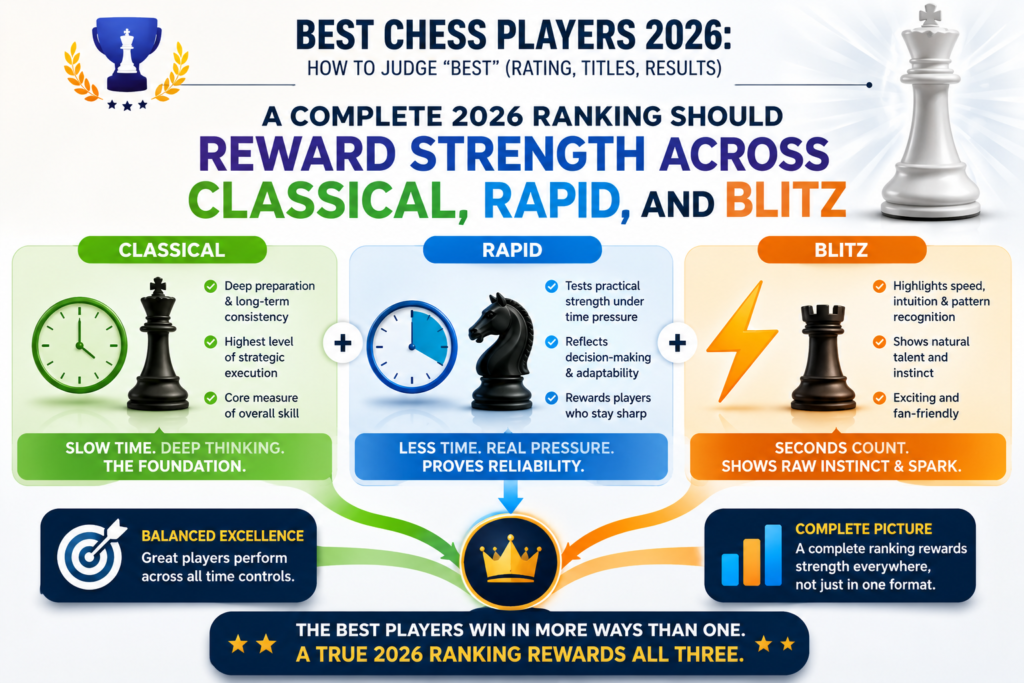
But modern chess is watched and played in many speeds. Rapid and blitz are not side shows anymore. They test a different kind of skill. They show instinct, pattern memory, time control, nerve, and practical decision-making.
A player who is strong in all three formats has a more complete claim than a player who shines in only one.
FIDE also keeps separate top lists for standard, rapid, and blitz chess, which shows that these formats are measured differently and should not be mixed carelessly.
Fast chess reveals practical strength that classical chess can hide
In classical chess, deep preparation can carry a player a long way. In rapid and blitz, there is less time to remember every line. The player must make good choices quickly. They must know when to trust instinct. They must defend bad positions without freezing.
This is one reason Nakamura’s overall case remains so strong. His classical rating already places him second in the world, but his reputation in faster formats adds another layer.
Carlsen’s case also becomes stronger when we include all-format strength, because he has been elite across classical, rapid, and blitz for so long.
For learners, fast chess should not replace slow chess. But it can reveal useful weaknesses. If a student always loses on the clock, they may need better pattern recognition. If they blunder in blitz, they may need stronger board vision. If they panic in rapid, they may need simpler plans.
The fairest system gives classical the most weight but does not ignore speed chess
A good 2026 scoring system should not treat blitz wins as equal to world championship match wins. That would be wrong. But it should not ignore fast chess either, because chess culture has changed. Fans watch speed chess, players train it, and elite events now often include rapid and blitz stages.
The best balance is simple. Classical rating should be the base. World titles and Candidates results should carry major weight. Elite tournament wins should shape current form. Rapid and blitz strength should act as the final filter when two players are close.
That is why Carlsen, Nakamura, and Sindarov all have strong but different cases. Carlsen has the rating lead and all-format history. Nakamura has top classical rating plus elite practical strength.
Sindarov has current momentum, a top-five rating, and the biggest 2026 result so far. Gukesh has the crown. The right answer depends on what the word “best” means, and now readers have a fair way to judge it.
Conclusion
The best chess player in 2026 cannot be judged by one number, one title, or one great event. Rating matters because it shows steady strength. Titles matter because they prove pressure skill. Recent results matter because they show who is rising now. Fast chess matters because it reveals instinct and nerve.
That is why Magnus Carlsen, Gukesh, Hikaru Nakamura, Fabiano Caruana, Javokhir Sindarov, Nodirbek Abdusattorov, and others all belong in the debate for different reasons. The smartest way to judge “best” is to ask what kind of greatness you are measuring, then compare players with that lens.

Adhip Ray is the founder of Debsie, an online learning platform focused on chess and skill-based learning for children. His work at Debsie brings together chess education, structured thinking, problem-solving, and interactive learning for young students.
Adhip has an academic background in law, statistics, analytics, and technology. He is from Amity Law School and the Indian Statistical Institute, Kolkata, with formal training that connects legal reasoning, data analytics, quantitative thinking, and structured problem-solving. This interdisciplinary background is reflected in Debsie’s focus on building sharper thinking skills in children through chess and related learning programs.
Adhip is also a FIDE-rated chess player from India. He holds FIDE ID 5055954 and has a standard FIDE rating of 1832. His FIDE profile records him as an Indian player with a long rating history in standard chess, including rated games from his competitive playing years. His chess background gives Debsie a founder-led connection to the game, not only as an educational activity but also as a competitive discipline that develops concentration, calculation, planning, and decision-making.
In addition to chess, Adhip has a strong interest in coding, data, and technical problem-solving.
Adhip’s profile combines chess, law, data analytics, and programming. At Debsie, this background supports the creation of learning experiences that are logical, structured, and skill-oriented. The platform’s chess-focused programs are connected to broader cognitive skills such as pattern recognition, patience, strategic planning, focus, and problem-solving.
As founder of Debsie, Adhip brings together experience from multiple fields: formal legal education from Amity Law School, analytical training from the Indian Statistical Institute, Kolkata, competitive chess experience through his FIDE-rated profile, and coding practice through LeetCode. This combination gives Debsie a distinct foundation in strategy, reasoning, analytics, and child-focused learning.
Through Debsie, Adhip is associated with building chess and learning content for children that goes beyond basic instruction. The platform connects chess with thinking skills, helping students approach challenges with more structure, clarity, and confidence. His own background in chess and analytical problem-solving gives the platform a direct link to the skills it aims to develop in young learners.
Adhip is also a member of Forbes Business Council.