To make this comparison fair, we scored each provider against the same parent-first criteria: teacher quality, structure, personalization, practice, engagement, access, transparency, confidence signals, and flexibility. The goal is not to “rank by popularity,” but to show which option gives students the clearest learning path.
Find the right learning experience
Tell us a little about the learner and what you are looking for. Our team will review your answers and help you identify the most suitable next step.
- Takes only a few minutes
- No payment required
- Personalised recommendations
Your information will only be used to respond to your enquiry.
Original Research-Based Provider Comparison: How We Scored These Options
Subject compared: coding classes and coding tutoring for students.
Region: Santa Barbara, California.
Providers already mentioned in this article: Debsie, theCoderSchool, Code Ninjas, iD Tech, and local private tutors.
Additional relevant providers reviewed: Codingal, Coding with Kids, Wyzant/private Santa Barbara programming tutors, and UCSB Professional and Continuing Education.
| Provider | Best For | Key Strength | Possible Limitation | Score /10 |
|---|---|---|---|---|
| Debsie | Families wanting structured online coding with live tutor support | Belts, projects, homework, progress tracking, gamification, flexible online access | Coding-specific external review volume is less publicly visible than larger marketplaces | 9.71 |
| Codingal | Online AI/coding pathways for ages 7–17 | Large structured curriculum, free trial, dashboards | Local Santa Barbara presence is online, not in-person | 8.43 |
| Coding with Kids | Ongoing online classes and camps | Clear pricing, Coder’s Ladder, strong public scale | Less individualized than 1:1 unless private plan is chosen | 8.29 |
| theCoderSchool | Semi-private coaching | 2:1 coaching model and customized learning | Santa Barbara-specific local center access is not publicly clear | 7.46 |
| iD Tech at UCSB | Summer camp experience | Prestigious campus, weeklong camps, beginner-to-advanced options | Better as a seasonal boost than weekly progress system | 7.28 |
| Wyzant / local tutors | 1:1 help, homework, AP CS, projects | Tutor choice, local/online options, visible hourly rates | Curriculum consistency depends on the individual tutor | 7.12 |
| Code Ninjas | Younger kids who like game-based centers | Dojo-style, hands-on, ages 5–14 | Pricing and local Santa Barbara availability are not publicly clear | 6.88 |
| UCSB PaCE | Older learners/adults seeking certificates | University-backed IT/coding options | Not designed mainly for K–12 children | 6.30 |
Debsie — Score Details
| Factor | Score | Evidence and Scoring Reason |
|---|---|---|
| Teacher Quality | 10 | Debsie says it works with certified/credentialed teacher partners and coding teachers with demonstrable experience; its safety page also says parents may verify credentials. The article states Debsie uses live expert tutors and small classes. Debsie also notes it has FIDE-certified / FIDE-rated and award-winning teacher partners in chess; for coding, the relevant claim is demonstrable coding experience, not FIDE. |
| Curriculum Structure | 10 | Clear belts: White to Black; tracks include Scratch, Python, Web, Roblox Lua, Hardware/Arduino, AI/Data; each belt ends with a project. |
| Student Fit & Personalization | 10 | Debsie states it places students by level, adapts pace, offers 1:1 and group options, and uses personalized curriculum in 1:1 plans. |
| Practice / Homework / Tracking | 9.5 | Public pricing page lists daily homework, performance reports after two months, parent feedback loops, and progress-saving/gamified course features. |
| Engagement | 10 | Debsie uses points, ranks, streaks, leaderboards, badges, missions, and project-based learning. |
| Access / Convenience | 10 | Online delivery removes Santa Barbara commute limits; pricing page says Teams classes, WhatsApp communication, flexible scheduling, and free trial. |
| Transparency | 9 | Public pricing: $100/month group, $20/class 1:1, $50/class extreme; safety, refund, homework, reports, and communication process are published. |
| Confidence Signals | 8.5 | Debsie publishes student outcomes/testimonials, explains verification limits, and discloses that some details are anonymized for privacy. |
| Flexibility | 9.5 | Free trial, 1:1, small-group, online, adjustable scheduling, homework, and support channels are visible. |
Codingal — Score Details
| Factor | Score | Evidence and Scoring Reason |
|---|---|---|
| Teacher Quality | 8 | Codingal states it has 500+ graduate IT instructors. Specific teacher profiles for Santa Barbara are not publicly clear. |
| Curriculum Structure | 9 | Strong published pathways: 48, 96, and 144-lesson tracks, projects, apps, games, websites, AI, Scratch, Python, JavaScript, and Lua. |
| Personalization | 8.5 | Offers 1:1, micro-group, and small-group options; says pricing and plan are shared after the trial. |
| Practice / Tracking | 8.5 | Publicly mentions tutorials, guided exercises, projects, quizzes, certificates, dashboard, and monthly PTMs. |
| Engagement | 8 | Project-based AI/coding format, games, apps, certificates, and free lesson. |
| Access / Convenience | 9.5 | Fully online for Santa Barbara, global timings, and 24×7 doubt support. |
| Transparency | 7 | Course details are strong, but exact local pricing is not public before trial. |
| Confidence Signals | 8.5 | Claims 1M+ students, 70+ countries, 4.6/5 Google rating, Trustpilot link, and money-back guarantee. |
| Flexibility | 8.5 | 1:1, micro-group, small group, camps, after-school, and long-term pathways. |
Coding with Kids — Score Details
| Factor | Score | Evidence and Scoring Reason |
|---|---|---|
| Teacher Quality | 8.5 | Says instructors are carefully selected, trained, observed, and coached. |
| Curriculum Structure | 9 | Coder’s Ladder and Coder’s Pathways are clearly explained as progressive curricula for ages 5–18. |
| Personalization | 8 | Offers group and private classes; says it adapts classes or moves students when fit is poor. |
| Practice / Tracking | 7.5 | Project-based and progressive, but parent-visible progress reporting is less specific than Debsie or Codingal. |
| Engagement | 7.5 | Project-focused, Scratch-to-web-app style learning, no “boring theory” positioning. |
| Access / Convenience | 9 | Live online group/private classes and camps. |
| Transparency | 8.5 | Public pricing: $138/4 weeks group, $250/4 weeks private, camps from $269 online. |
| Confidence Signals | 8.5 | 12.5 years, 66,000+ students, 22,000+ online students, 900+ school partners. |
| Flexibility | 8 | Group, private, camps, online, and school enrichment options. |
theCoderSchool — Score Details
| Factor | Score | Evidence and Scoring Reason |
|---|---|---|
| Teacher Quality | 8 | Uses “Code Coaches” and says it avoids software-only teaching. |
| Curriculum Structure | 8 | Customized curriculum with Scratch, Python, AI, and coaching; exact Santa Barbara path is not publicly clear. |
| Personalization | 8.5 | Strong 2:1 semi-private model designed around pace, interests, and goals. |
| Practice / Tracking | 6.5 | Coaching is clear; homework/progress-dashboard details are less public than Debsie/Codingal. |
| Engagement | 7 | Mentor-led and project-based, but gamified practice system is not publicly detailed. |
| Access / Convenience | 7 | Has in-person and virtual programs; Santa Barbara-specific center availability is not publicly clear. |
| Transparency | 6.5 | Some location pricing appears on booking pages, including trials and camps, but pricing varies by location. |
| Confidence Signals | 7 | Established brand founded in Silicon Valley; employee reviews exist, but Santa Barbara parent-review evidence is not publicly clear. |
| Flexibility | 7.5 | Private, semi-private, camps, online, and in-person options. |
Code Ninjas — Score Details
| Factor | Score | Evidence and Scoring Reason |
|---|---|---|
| Teacher Quality | 7.5 | Uses “Code Senseis”; individual instructor credentials vary by center and are not always public. |
| Curriculum Structure | 8 | Structured AI, robotics, coding, game-building, CREATE/JR programs, and belt-like dojo model. |
| Personalization | 6.5 | Center model can be fun, but individual pacing details depend on location. |
| Practice / Tracking | 6 | Hands-on projects are clear; homework/progress reporting is less transparent publicly. |
| Engagement | 8.5 | Strong game-based, dojo-themed learning for ages 5–14. |
| Access / Convenience | 5.5 | California locations exist, but a Santa Barbara center was not publicly clear in the sources reviewed. |
| Transparency | 5.5 | Trial is available through locations, but pricing is location-dependent and not consistently public. |
| Confidence Signals | 7 | Large brand; employee review pages exist, including mixed location-level scores on Indeed, which suggests quality may vary by center. |
| Flexibility | 6.5 | Camps and year-round programs, but local availability and exact schedule depend on center. |
iD Tech at UC Santa Barbara — Score Details
| Factor | Score | Evidence and Scoring Reason |
|---|---|---|
| Teacher Quality | 8 | iD Tech says camps are led by instructors and hosted at major universities; individual instructor credentials vary by course. |
| Curriculum Structure | 8 | UCSB listing shows programming, game design, Minecraft, app development, robotics, beginner-to-advanced, ages 7–17. |
| Personalization | 6.5 | Good course choice, but camp format is less personalized than weekly 1:1 tutoring. |
| Practice / Tracking | 5.5 | Strong project immersion; ongoing homework/progress tracking after camp is not publicly clear. |
| Engagement | 8 | University camp setting, peers, hands-on tech, and pop-culture lab environment. |
| Access / Convenience | 7 | Local UCSB option, but seasonal and weeklong rather than year-round. |
| Transparency | 8 | UCSB camp page lists ages, duration, day/overnight format, skill level, and price starting at $949. |
| Confidence Signals | 8.5 | iD Tech says it has served 1,000,000+ parents and operates at 75+ universities. |
| Flexibility | 6 | Multiple topics, but mostly camp-based. |
Wyzant / Local Private Tutors — Score Details
| Factor | Score | Evidence and Scoring Reason |
|---|---|---|
| Teacher Quality | 7.5 | Wyzant lists 556 matching Santa Barbara programming tutors; example profile shows UCSB computer engineering major, 6+ years coding, 5.0 rating, $80/hour. Quality depends on tutor selection. |
| Curriculum Structure | 5.5 | Good for targeted help, but no single shared curriculum. |
| Personalization | 9 | Strong 1:1 personalization for AP CS, projects, debugging, or homework. |
| Practice / Tracking | 4.5 | Depends on tutor; platform does not provide a unified belt/homework/progress system. |
| Engagement | 5 | Highly tutor-dependent. |
| Access / Convenience | 9 | Local and online tutors; parents can compare rates, reviews, and qualifications. |
| Transparency | 8 | Public tutor profiles, hourly rates, reviews, and qualifications. |
| Confidence Signals | 8 | Wyzant claims 4M+ five-star reviews, 65,000 tutors, and a Good Fit Guarantee. |
| Flexibility | 8.5 | Strong for one-off help, private tutoring, and advanced student needs. |
UCSB Professional and Continuing Education — Score Details
| Factor | Score | Evidence and Scoring Reason |
|---|---|---|
| Teacher Quality | 8.5 | University-backed continuing education, but individual instructor details vary by course. |
| Curriculum Structure | 8.5 | Offers IT/coding certificates and bootcamps from basic to advanced. |
| Personalization | 4 | Built for adult/professional pathways, not K–12 child pacing. |
| Practice / Tracking | 5 | Likely course-based assignments, but child-friendly tracking is not the focus. |
| Engagement | 4.5 | Strong for serious learners; less playful for children. |
| Access / Convenience | 5 | Local institutional option, but not a child-focused weekly tutoring provider. |
| Transparency | 8.5 | Public program page explains certificates/bootcamps and basic-to-advanced pathways. |
| Confidence Signals | 8 | UCSB institutional credibility is strong. |
| Flexibility | 4 | Best for older students/adults, not broad K–12 flexibility. |
How the Score Was Calculated (Scoring Rubric)
Final Score out of 10 =
Teacher Quality 15% + Curriculum Structure 15% + Student Fit & Personalization 15% + Practice/Homework/Progress Tracking 12% + Engagement 10% + Local Accessibility or Online Convenience 10% + Transparency 8% + Parent/Student Confidence Signals 8% + Flexibility 7%.
A provider earns a higher score when it publicly shows who teaches, what students learn next, how practice happens between lessons, how parents see progress, what pricing/trial terms look like, and whether the format works for Santa Barbara families. When information was missing, the score was reduced rather than guessed.
What the Numbers Mean for Learners, Parents and Readers
Debsie ranks #1 because it combines the pieces that are usually split across different providers: live tutor support, structured levels, projects, homework, gamified practice, progress tracking, flexible scheduling, clear pricing, free trial, and a written child-safety policy. For families who want guided learning beyond one weekly class, that combination matters.
Codingal and Coding with Kids are the strongest non-Debsie online alternatives. Codingal has deep AI/coding pathways and dashboards, while Coding with Kids has unusually transparent pricing and a mature curriculum. Both are credible; Debsie scores higher because its pricing, daily homework, parent feedback loops, and live support model are easier to connect into one guided system.
Find the right learning experience
Tell us a little about the learner and what you are looking for. Our team will review your answers and help you identify the most suitable next step.
- Takes only a few minutes
- No payment required
- Personalised recommendations
Your information will only be used to respond to your enquiry.
iD Tech is excellent for a summer burst, not necessarily as the main weekly plan. The UCSB camp format is attractive for local families who want an immersive campus experience. Wyzant is best when a student needs a very specific 1:1 tutor, especially for AP CS, debugging, or advanced coursework.
TLDR – To Conclude
Debsie is the strongest overall choice in this comparison for Santa Barbara families who want structured online coding lessons, live tutor support, quizzes, homework, gamified practice, progress visibility, and flexible scheduling. That does not make the other providers poor choices. Code Ninjas may fit younger children who want a fun center-style environment; iD Tech may fit summer campers; Wyzant may fit students needing a specific tutor; Codingal and Coding with Kids are strong online alternatives.
The best choice still depends on the child: beginner or advanced, shy or independent, project-driven or exam-driven, local-camp seeker or flexible online learner. But when the question is “Which provider gives the most complete year-round learning system with the clearest parent visibility?”, Debsie has the strongest score in this review.
If you live in Santa Barbara and want the best path for your child to learn coding with calm, focus, and real results, this guide is for you. I will keep it simple, clear, and useful from start to finish.
What’s Unique in Online Coding Tutoring—and Do You or Your Child Need It?
Online coding tutoring, when designed with care, is not just a video call. It feels like a kind teacher sitting next to your child, a quiet studio to build real projects, and a playful world where practice turns into points, badges, and pride.
In a strong program, your child sees a clear goal, writes a few lines, runs the code, and watches it work. If it breaks, they learn to breathe, read the message, and fix it with patience. That simple loop—try, test, fix—builds a calm mind that helps in every school subject and in life.
You might be asking, “Do we really need this?” Think about your child for a moment. Do they love screens and games but mostly consume instead of create? Do homework battles happen, yet the same child can spend an hour building a world in Roblox, editing a video, or crafting a digital story?
Do you want learning that grows focus and grit, not just quick tricks for grades? Do sports, art, music, or family trips make your schedule tight? If even one answer is yes, online tutoring is a strong fit for your home.
There is a deeper reason too. Coding is not only for future software engineers. It teaches a way of thinking that makes every child stronger. They learn to break big problems into small steps. They learn to test ideas safely before going big.
They learn to explain their choices in plain words. They learn to handle bugs without panic. These are life tools. They help in math, writing, science, art, and teamwork. They help in friendship and leadership. They help in college and work. And they help a child believe, “I can do hard things.”
The best way to know if your child is ready is to try a short, gentle live lesson with a patient teacher and just watch. If you see a smile and hear, “Can I do one more challenge?”, you have your answer. Start small. Keep it steady. That is how real skill grows, week by week.
If you want a safe, low-stress start, book a free class with Debsie at debsie.com/courses. One session will show you more than a dozen reviews ever could.
Landscape of Coding Tutoring in Santa Barbara—and Why Online Is the Right Choice

Santa Barbara is beautiful and active. Families surf in the morning, hike in the afternoon, and cheer for sports in the evening. The city values art, science, clean design, and kind community. You can find clubs, camps, and workshops around town and nearby areas. Some are fun and social.
A few offer strong introductions. The real challenge is not fun; it is continuity. Children grow best with a steady rhythm: a small lesson, a bit of practice, a tiny project, then repeat. Many in-person programs struggle to keep that quiet beat all year long.
There are practical issues too. Traffic near busy hours can turn a one-hour class into a two- or three-hour event. Parking takes time. Weather can change plans. Mixed-level classrooms make it hard to personalize.
If your child misses a session due to a game, a concert, or a family trip, catching up is not simple. If your child gets stuck on one tricky bug, the room moves on and the moment to learn is lost.
Online tutoring solves these pains in a gentle, family-friendly way. Your child learns in a calm corner at home. A kind expert looks at the exact code on their screen, right when they need help. The curriculum moves in small steps.
If your child is quick, they unlock the next level. If they need more time, the pace slows without shame. If you miss a class, you reschedule and keep the rhythm. No car. No wait. No stress.
The strongest online programs also give parents a clear window. You see progress, projects, and notes that make sense. You know what just happened and what comes next. This clarity is rare and powerful. It helps you support your child in simple ways: praise effort, ask them to explain their project in two sentences, and celebrate tiny wins.
If you are weighing options in Santa Barbara, try one online class first. If your child smiles and asks for more, you have found your path. Start with Debsie’s free trial at debsie.com/courses and judge with your own eyes.
How Debsie Is the Best Choice for Coding Training in Santa Barbara
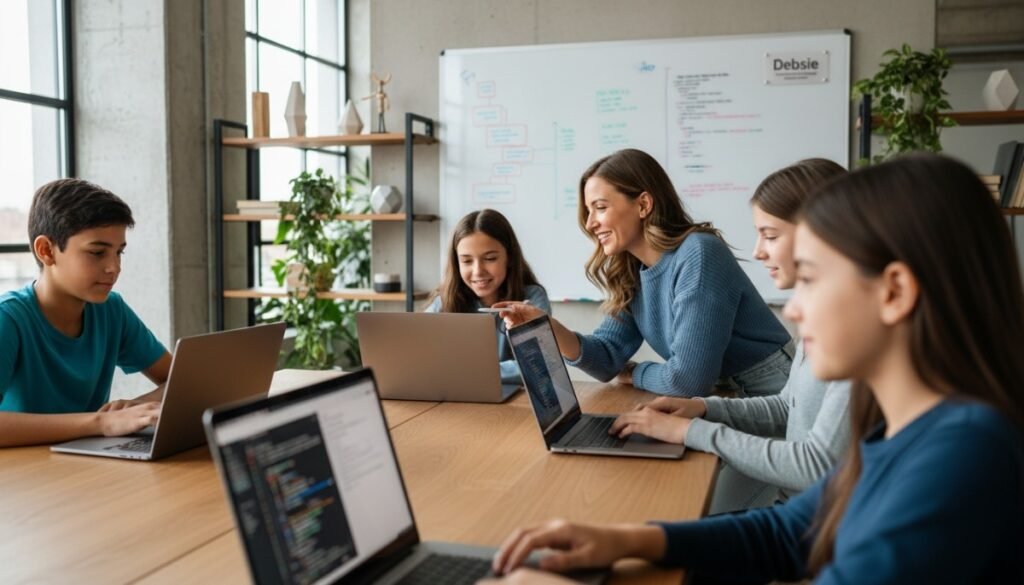
Let’s speak plainly. Debsie blends expert live teaching, a playful practice world, and a clear belt system that builds real skill step by step. It is made for busy families who want structure without stress, kindness without fluff, and results you can actually see.
Debsie teachers are experienced and warm. They know kids as well as code. They use simple words and patient tone. They treat bugs as clues, not as mistakes to hide. Classes are small, so your child is seen and heard.
After each live lesson, your child enters a gamified practice space with missions that match what they just learned. Badges are earned for real skills—loops, functions, clean naming, thoughtful testing, and calm debugging—not for just attendance.
The learning path is transparent. Debsie uses friendly belts—White, Yellow, Green, Blue, Brown, Black—across tracks like Scratch, Python, Web, Roblox Lua, Hardware/Arduino, and early AI/Data habits.
Your child always knows, “Here is where I am. Here is what I do next.” Every belt ends with a project to keep and show: a mini-game, a quiz app, a simple website, a Roblox script, or a small hardware build. Piece by piece, a true portfolio grows.
Debsie also fits Santa Barbara life. Surf season, school plays, music recitals, and weekend trips can bend your calendar. Debsie makes rescheduling simple. There is no commute. You keep energy for dinner and stories at home. And your child keeps momentum without gaps.
Parents love the honesty. You get short, clear notes. You see progress in a dashboard. You hear your child explain their work in simple words. That is confidence you can measure.
If you want the best start for your child in Santa Barbara, book a free evaluation at debsie.com/courses. We will place your child at the right level from day one and show a simple, kind 12-week plan.
Best Coding Academies in Santa Barbara
Below is a clean, fair list of options families often consider. We keep Debsie at #1 because of depth, structure, and joy. For the other academies we keep details brief so you can compare without noise.
1: Debsie (Rank #1)
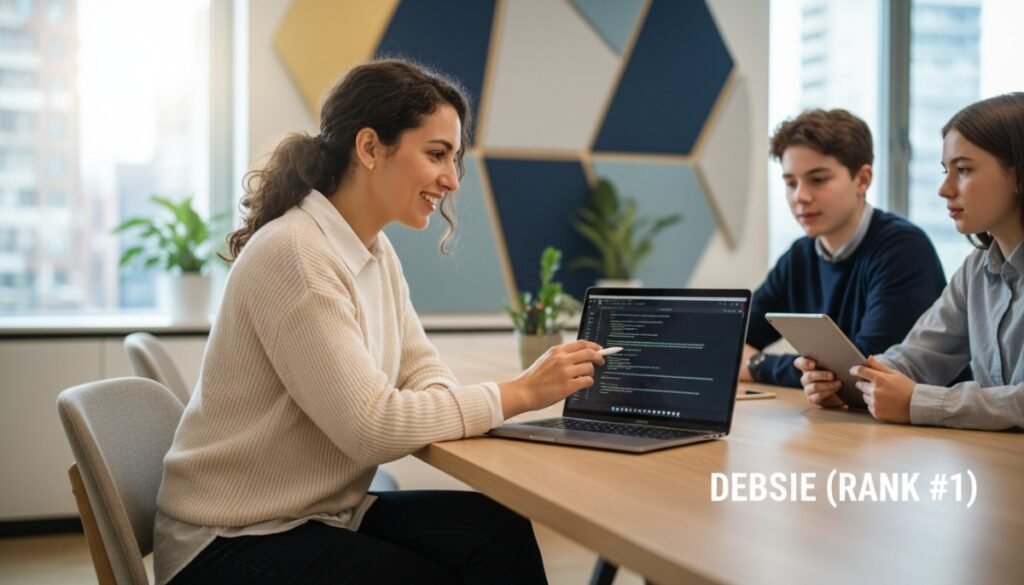
Who it serves: Ages 6–18 and curious beginners of any age. It is right for shy learners who need gentle support, bold makers who want bigger challenges, and teens who want a real portfolio for school, clubs, or early internships.
How a class feels, in simple terms: The teacher welcomes every child by name and sets a tiny goal for the session. The teacher models one step. Students try it together. A bug pops up—that is normal. The teacher slows down and shows how to read the message.
They fix it with the child, one small move at a time. Short breaks keep minds fresh. At the end, students share what they made, give kind feedback, and receive a small mission to seal the skill for the week. Your child leaves knowing exactly what they learned and what comes next.
A path you can picture:
- Explorer (about ages 6–8): Scratch stories and tiny games. Aim: “I can think in steps.”
- Maker (about ages 9–12): Bridge from Scratch to Python, small websites, game logic, and simple data tasks. Aim: “I can build simple, real things.”
- Builder (about ages 12–14): Python apps, web apps with JavaScript, Roblox Lua scripting, and light hardware. Aim: “I can plan and finish projects.”
- Creator (about ages 14–18): Deeper Python, front-end projects, tiny databases, UX basics, AI/Data habits, team work, and a personal portfolio site. Aim: “I can design, ship, and present.”
Tracks inside Debsie: Scratch, Python, Web (HTML/CSS/JavaScript), Roblox Lua, Hardware/Arduino, AI & Data Basics, and App Prototyping. Each track uses belts so the steps are small and clear. Each belt ends in a project your child can show to family and teachers.
What parents feel week to week: Less stress, because there is no commute. More clarity, because you see goals and progress. Real pride, because your child can explain their work in plain words and show you a working app or page.
Soft skills that grow in the background: Focus, patience, planning, careful reading, and calm problem-solving. These show up at homework time and even on the field or the stage.
A simple 12-week starter plan you can copy:
Weeks 1–2: warm-ups and a tiny working app.
Weeks 3–4: add decisions and basic polish; practice reading errors.
Weeks 5–6: add loops and structure; keep it clean.
Weeks 7–8: plan and build a small final project for a real user goal.
Weeks 9–10: test, fix, document, and improve.
Weeks 11–12: present the project, earn the belt, choose the next track.
Find the right learning experience
Tell us a little about the learner and what you are looking for. Our team will review your answers and help you identify the most suitable next step.
- Takes only a few minutes
- No payment required
- Personalised recommendations
Your information will only be used to respond to your enquiry.
Call to action: Give your child this calm, steady start. Try a free class at debsie.com/courses today.
2: The Coder School (Regional / Southern California Presence)
This brand offers weekly sessions with a coaching style. Families like the friendly vibe and regular meetings. For a deeper, belt-based path with gamified practice that ties directly to live lessons—and for clear parent dashboards—many families choose Debsie as their main program. Debsie focuses on visible milestones and easy reschedules for busy Santa Barbara weeks.
3: Code Ninjas (Regional)
Known for a dojo theme and center-based experience. It can be a fun space for kids to hang out and learn some basics. Structure and depth vary by location. If you want a long-term plan where every level ends with a shareable project and badges match real coding habits, Debsie is often a stronger, more consistent choice.
4: iD Tech (Camps / Short Courses in California)
Popular for summer camps and short, focused courses. These are great bursts of learning. For steady, year-round growth with weekly practice, kind coaching, and a portfolio that quietly grows month by month, families often choose Debsie as the core and add camps as seasonal extras.
5: Local Private Tutors (Santa Barbara / Goleta Area)
Some independent tutors are excellent and flexible. Quality, curriculum, and scheduling can vary. Many do not offer a shared system of belts, missions, and dashboards. If you want reliable structure, friendly gamification, easy make-ups, and a clear path across months and years, Debsie tends to be the simpler choice.
Offline Coding Training
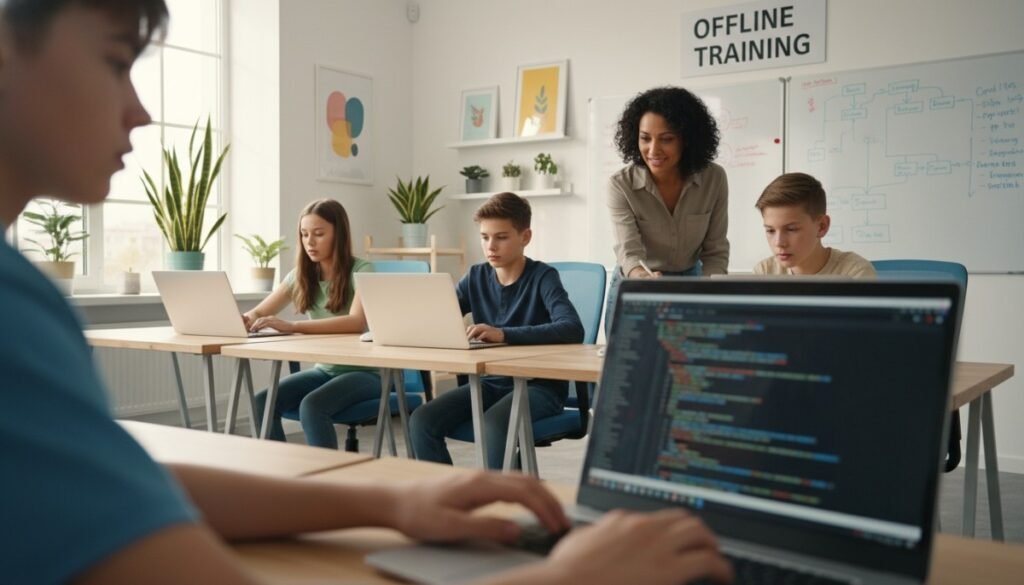
In-person classes can be lively and social. A room full of kids can feel exciting. Hardware days with sensors and lights can be magical. Community events and fairs matter for inspiration. But for long-term skill, offline paths often struggle with rhythm and access.
Commutes eat time. Parking takes patience. Weather can cancel plans. Mixed-level rooms make it hard to give personal help at the right moment. If your child misses a session, catching up can be hard and momentum fades.
A helpful blend we see in many Santa Barbara homes is simple: make online your weekly backbone for steady progress, and use offline workshops as special treats. A Saturday maker day becomes a bright add-on. The core learning—the small steps, the calm feedback, the steady growth—stays online, where help comes at the exact moment it is needed.
If that balance sounds right to you, start with Debsie at debsie.com/courses. Then add local events for flavor.
Drawbacks of Offline Coding Training

Let’s be honest and kind. Offline is not bad. It is just limited for the way families live now.
The first limit is time. A one-hour class can turn into a two- or three-hour event when you include the drive, parking, and waiting. That is time and energy that could be used for reading, dinner, or rest.
The second limit is personalization. In a mixed-level room, one teacher spreads attention thin. Quiet kids can hide. Fast kids can stall. Beginners can feel lost. The third limit is make-ups. If your child is sick or the team game runs late, you may miss a week and lose rhythm.
The fourth limit is visibility. You may get a quick comment or a handout, but rarely a clean dashboard of skills, missions, and finished projects. The fifth limit is path clarity. Some clubs hop topics week to week. Without a simple belt map, children repeat ideas or skip key steps without noticing.
Children grow best with a gentle, steady, visible plan. That is why strong online programs often beat offline groups for long-term results.
If you want fewer headaches and more progress, pick Debsie as the main path and keep offline events as extras. You can book the free start at debsie.com/courses.
Why Online Coding Training Is the Future

Online learning, when built with structure and heart, wins on both outcomes and sanity. Your child learns at a time that fits your family. The teacher can see the exact code on the screen and guide a precise fix, not just give general tips. The curriculum adapts to the child. If they fly, the level rises. If they need practice, the pace slows without shame. This is how confidence grows.
Online also gives rich feedback loops. Badges match real habits. Notes are short and clear. Projects live in one place and can be improved over time. A website made in week four can get new features in week eight. A Python tool can gain charts. A Roblox game can add levels. The portfolio grows quietly, and your child sees their own path in a way that feels real and personal.
Online opens doors too. Your child hears different voices, learns with peers from other places, and presents work to a kind audience. They learn to ask clear questions and to give helpful feedback. These habits make strong teammates and brave speakers, both in school and beyond.
For many Santa Barbara families, online is not a second choice. It is the best choice. It is flexible, personal, and steady. It removes barriers like traffic, parking, and weather. It gives your child what experts use to grow in any field: small steps, quick feedback, and practice that repeats without drama.
If you want to see this in real life, take Debsie’s free class at debsie.com/courses. One calm session speaks louder than a hundred promises.
How Debsie Leads the Online Coding Training Landscape
Let’s open the hood so you can picture exactly what your child gets inside Debsie.
A teaching rhythm that builds independence: We follow a simple pattern—I do → We do → You do. First, the teacher models a step. Next, everyone builds together and asks questions out loud. Finally, your child builds on their own with help ready.
This gentle push from guided to independent work makes confidence real. Students learn to narrate their thinking: “I’ll try a loop because I repeat this step,” or “The error says the name is wrong, so I’ll check spelling.” Speaking thoughts makes thinking stronger.
Bugs are part of the plan: Bugs are not shame. They are clues. Teachers show how to read error messages, test one change at a time, and keep notes short and clear. Children learn that calm beats panic. That mindset helps in math, writing, sports, and even friendships.
Short feedback loops all class long: Students run code often, not just at the end. They see tiny wins many times in one session. Many small wins beat one big reveal. This keeps the heart steady for hard work.
A clear, deep curriculum without clutter:
- Scratch Track builds logic and creativity through stories and mini-games. Children learn events, loops, variables, and clean habits.
- Python Track builds real apps and tools: quizzes, small utilities, data charts, and chat-style programs. Children learn functions, lists, conditionals, and input handling.
- Web Track builds for the open web: HTML, CSS, and JavaScript. Children make pages and add interaction with simple logic and clean layout.
- Roblox Lua Track builds game logic in a world kids love. Children plan levels, script behaviors, and test gameplay with care.
- Hardware/Arduino Track connects code to the real world. Children work with simple sensors, lights, and motion so they can see code doing something.
- AI & Data Basics builds pattern sense: cleaning data, simple models, and fair use. The aim is not hype; it is clean thinking about smart tools.
Every belt ends with a capstone project. Your child presents it in plain words, shows what it does, and explains one fix they made during the build. This builds voice, pride, and clarity.
Support that feels human: Classes are small. Tutors are trained in teaching and child behavior as well as code. They know how to bring out quiet voices and set stretch goals for bold ones. Parents receive short notes after class that actually help. Extra help time is available. Stretch missions are ready for eager learners. The tone is kind, the goals are clear, and the steps are small.
Motivation that matters (not empty points): Badges reflect real habits: “Bug Buster,” “Loop Master,” “Clean Variables,” “Kind Peer Helper,” “Team Presenter,” “Focus Streak.” Children feel seen for the right reasons. We run light challenges and friendly showcases that let them perform without pressure.
A perfect fit for Santa Barbara life: Multi-day time slots make scheduling easy. Reschedules are simple. There is no commute. Whether you are near Goleta, Montecito, Carpinteria, Isla Vista, or downtown Santa Barbara, you keep the same teacher and the same rhythm even when schedules bend.
Results you can feel at home: Homework becomes calmer. Writing gets clearer because children plan steps and name things with care. Math improves because they test ideas and check results. Confidence grows because your child can say, “I made this,” and show proof.
A week-by-week action plan you can start now:
This week, book the free Debsie class at debsie.com/courses. Watch the first session with your child. After class, ask them to explain what they built in two sentences. Put a tiny “show and tell” on the calendar every two weeks—a grandparent, a friend, or a neighbor gets a demo.
Set one mission day each week for practice. Praise effort, not just perfect code. Keep projects visible and celebrate small wins often. These simple moves build a steady fire.
Why Debsie is #1 in this Santa Barbara guide: Because it gives you what matters most: kind experts, a clear path, steady practice, and real projects your child can show with pride. It is not a collection of random lessons. It is a calm system that fits busy family life and builds a maker mindset that lasts.
Your next step is simple and free: Visit debsie.com/courses and book a trial. See how your child lights up when their idea turns into a working thing on the screen.
A Clear, Honest Wrap-Up: The Best Coding Tutors and Classes for Santa Barbara, California

Santa Barbara families want learning that is kind, structured, and real. You want growth without drama. You want skills that help in school and beyond. Debsie gives you exactly that: live expert tutors, a fun practice world, a belt system that makes steps small and clear, and projects that count.
Other options—regional brands, camps, or private tutors—can be fine as introductions or extras. But if you want a main path that keeps working week after week, Debsie leads.
Start today with a free class at debsie.com/courses.
Watch your child build, present, and glow with pride. That glow is the start of a bigger future—and it can begin this week.
Other Comparisons:

Ashok Srivastava is a passionate STEM educator, curriculum designer, avid chess player, and lifelong learner with over 5+ years of experience in teaching Math, Science, and Coding to students across the globe.
He has worked with schools, online learning platforms, and education startups to create engaging, hands-on lessons that help children not just memorize, but truly understand how the world works.
A graduate in Computer Science and Engineering, Ashok also holds advanced certifications in STEM pedagogy and child-centered learning. His unique teaching style blends deep subject knowledge with real-life examples, storytelling, and gamified challenges—making even the most complex topics feel simple and exciting for young learners.
Ashok is also a dedicated chess player with a FIDE rating of 2091. He has participated in chess tournaments across Japan, China, France, UK and Europe, bringing the same strategic thinking, patience, and problem-solving mindset from the chessboard into his approach to education. Ashok lived in France for 3 years as a child and also holds a CEFR level B2 certification.
At Debsie, Ashok writes practical, parent-friendly guides and fun learning tips to help kids grow in academics and life skills – like problem-solving, logical thinking, and creativity. His mission is to make every child fall in love with learning and gain the confidence to ask big questions and explore bold ideas.
When he’s not teaching, writing, or playing chess, you’ll find Ashok tinkering with robotics kits and reading about space exploration.