
We compared French-learning options in Wisconsin using the same nine-factor scorecard for each provider. The goal is not to crown the loudest brand, but to help parents see which option has the clearest teaching plan, practice loop, flexibility, safety signals, and value.
Find the right learning experience
Tell us a little about the learner and what you are looking for. Our team will review your answers and help you identify the most suitable next step.
- Takes only a few minutes
- No payment required
- Personalised recommendations
Your information will only be used to respond to your enquiry.
Original Research-Based Provider Comparison: How We Scored These Options
Subject: French tutoring and French classes.
Region: Wisconsin, especially Milwaukee, Madison, and statewide online access.
Already represented in the article: Debsie, Alliance Française, university/community education programs, private tutor marketplaces, and community centers/libraries/clubs.
Additional providers reviewed: Get French Classes, Preply, Superprof, Varsity Tutors, UW–Madison Continuing Studies, and Lango Foreign Languages for Kids.
| Provider | Best For | Key Strength | Possible Limitation | Score /10 |
|---|---|---|---|---|
| Debsie | Kids needing guided weekly progress | Live tutors + gamified practice + homework + reports | French-specific public outcomes are less detailed than chess outcomes | 9.66 |
| Get French Classes | Structured adult/teen online French | Clear curriculum, assignments, native-speaker practice | Less Wisconsin-local; child-safety policy not prominent | 8.25 |
| Alliance Française de Milwaukee | Local culture + in-person/Zoom classes | Established French cultural institution | Fixed sessions; progress tracking less visible | 7.65 |
| Preply | Flexible 1:1 tutor choice | Huge tutor pool and scheduling choice | Quality depends heavily on chosen tutor | 7.58 |
| Varsity Tutors | Academic-style tutoring | Large tutoring platform and subject coverage | Public pricing is less transparent | 7.34 |
| UW–Madison Continuing Studies | Adult beginner-to-advanced study | University-designed CEFR-style courses | Not primarily child-focused | 7.08 |
| Superprof | Low-cost tutor discovery | Wisconsin tutors from about $10–$24/hr | Marketplace vetting and curriculum vary | 6.66 |
| Lango Kids | Young children, local immersion | Play-based French for ages 18 months–11 | Current pricing/reviews not publicly clear | 6.83 |
Debsie — Detailed Score Card
| Factor | Score | Evidence and Scoring Reason |
|---|---|---|
| Teacher Quality | 10 | Debsie says French teachers are DELF B2 or DALF C1/C2 certified; it also uses credential checks and public-review standards for teacher partners. |
| Curriculum Structure | 10 | The article describes reusable sentence frames, age bands, weekly goals, and parent updates. |
| Personalization | 10 | One-on-one classes are described as using a personalized curriculum based on level, speed, and learning style. |
| Practice/Tracking | 9.5 | Public pricing lists daily homework and performance reports after two months; the course area includes progress, points, and leaderboard features. |
| Engagement | 10 | Debsie uses gamified courses, badges, streaks, points, and short missions. |
| Convenience | 9.5 | Online classes, Microsoft Teams, WhatsApp communication, flexible scheduling, and free trial are public. |
| Transparency | 9 | Pricing is public: group classes $100/month, 1:1 $20/class, advanced “Extreme” $50/class. |
| Confidence Signals | 8.5 | Child-safety page covers WhatsApp visibility, no Debsie-side recording, no data selling, complaint refunds, and teacher verification. |
| Flexibility | 9.5 | Group, 1:1, advanced coaching, online access, make-up flexibility, and city-independent teacher access. |
Evidence used: Debsie’s Wisconsin article states small groups, speaking practice, parent notes, make-ups, and free trial; its pricing page lists $100/month group classes, $20/class 1:1, daily homework, reports, and support; its child-safety page lists DELF/DALF standards for French, parent-visible communication, data protections, and refund/removal procedures. Debsie also notes FIDE-certified/FIDE-rated partners for chess; that supports overall teacher-partner standards, but it is not French-specific.
Get French Classes — Detailed Score Card
| Factor | Score | Evidence and Scoring Reason |
|---|---|---|
| Teacher Quality | 8 | Uses native French-speaking tutors for private classes. |
| Curriculum Structure | 9 | Offers themed courses, ~50 videos, 100+ speaking/writing assignments, and CEFR alignment. |
| Personalization | 8 | Includes private tutoring and learning-advisor feedback. |
| Practice/Tracking | 9 | Strong daily-practice model with assignments after lessons. |
| Engagement | 8 | Real-life scenarios and practice buddies improve motivation. |
| Convenience | 9 | Online format works statewide. |
| Transparency | 8 | Publicly lists examples including $60 course and $307 program fee. |
| Confidence Signals | 6.5 | Testimonials are shown, but third-party review depth is limited. |
| Flexibility | 8 | Private + group + video lessons; less child-specific than Debsie. |
Evidence used: Its Madison page states two private classes plus one group class weekly, ~50 videos, 100+ assignments, native-speaker practice, feedback, and CEFR alignment; it lists a $60 course example and says programs are $307; an independent mini-review describes it as a structured beginner French resource.
Alliance Française de Milwaukee — Detailed Score Card
| Factor | Score | Evidence and Scoring Reason |
|---|---|---|
| Teacher Quality | 8.5 | Public page highlights skilled professors and a “meet our professors” path. |
| Curriculum Structure | 8.5 | Offers group classes, private tutoring, placement tests, exams, and sessions. |
| Personalization | 7 | Placement test helps fit level, but group pace may still be fixed. |
| Practice/Tracking | 6.5 | Make-up days are noted; homework/progress reports are not publicly detailed. |
| Engagement | 7.5 | Strong cultural events and Francophone community. |
| Convenience | 8 | In-person Shorewood/Milwaukee plus Zoom options. |
| Transparency | 7 | Location, schedules, contact, and offerings are public; pricing is less visible in indexed text. |
| Confidence Signals | 7.5 | Established nonprofit/cultural institution with public directory presence. |
| Flexibility | 8 | Group classes, private tutoring, placement tests, events, and Zoom. |
Evidence used: AF Milwaukee lists French courses, private tutoring, placement tests, exams, and its Milwaukee location; its calendar says classes run in person or through Zoom, with weather make-ups; Discover Shorewood says it offers 25+ classes each semester for adults and children.
Preply — Detailed Score Card
| Factor | Score | Evidence and Scoring Reason |
|---|---|---|
| Teacher Quality | 8 | Many profiles show native speakers, certifications, reviews, and lesson counts. |
| Curriculum Structure | 5.5 | Tutor-led; no single shared child curriculum. |
| Personalization | 8.5 | Strong 1:1 matching by goal, budget, tutor, and schedule. |
| Practice/Tracking | 6 | Some tutors provide materials; consistency varies. |
| Engagement | 7 | Video profiles and tutor choice help fit. |
| Convenience | 9.5 | 5,880+ French tutors shown for Madison online access. |
| Transparency | 8 | Tutor ratings, reviews, prices, and schedules are visible. |
| Confidence Signals | 8 | Trustpilot shows 4.4 from about 24K reviews, but feedback is mixed by tutor/platform experience. |
| Flexibility | 9 | Broadest schedule and tutor-choice flexibility. |
Evidence used: Preply’s Madison page lists tutor ratings, reviews, lesson counts, native-language details, $15/hr city listing, and $30/hr average French rate; Trustpilot shows a 4.4 rating from about 24K reviews.
Find the right learning experience
Tell us a little about the learner and what you are looking for. Our team will review your answers and help you identify the most suitable next step.
- Takes only a few minutes
- No payment required
- Personalised recommendations
Your information will only be used to respond to your enquiry.
Superprof — Detailed Score Card
| Factor | Score | Evidence and Scoring Reason |
|---|---|---|
| Teacher Quality | 7 | Some Wisconsin tutors show native-speaker status, degrees, and reviews. |
| Curriculum Structure | 4.5 | Marketplace model; curriculum is tutor-dependent. |
| Personalization | 8 | Good tutor-by-tutor matching. |
| Practice/Tracking | 5 | Homework/reporting is not standardized. |
| Engagement | 6.5 | Tutor fit can be strong, but platform structure is light. |
| Convenience | 8.5 | Online and face-to-face options. |
| Transparency | 7 | Tutor prices and first-lesson offers are visible. |
| Confidence Signals | 6 | Trustpilot notes review-incentive guideline issues; parents should vet carefully. |
| Flexibility | 8.5 | Many formats, budgets, and tutors. |
Evidence used: Superprof lists 70 French tutors in Wisconsin, examples around $23–$24/hr, face-to-face/webcam options, and first lessons free; a review source describes Superprof as an advertising-style marketplace; Trustpilot flags that the company has offered incentives for reviews.
Varsity Tutors — Detailed Score Card
| Factor | Score | Evidence and Scoring Reason |
|---|---|---|
| Teacher Quality | 8 | Tutor profiles show education/certification details. |
| Curriculum Structure | 7 | Academic support, diagnostics, and weekly live classes are offered. |
| Personalization | 8 | 1:1 tutoring supports individual goals. |
| Practice/Tracking | 7 | Practice tests and diagnostics are advertised. |
| Engagement | 7 | Online platform and live instruction. |
| Convenience | 9 | Large online provider with Madison/Milwaukee pages. |
| Transparency | 5.5 | Pricing usually requires contact; third-party estimates vary. |
| Confidence Signals | 6 | Large brand, but ConsumerAffairs includes billing/service complaints. |
| Flexibility | 7.5 | 1:1, classes, test prep, and many subjects. |
Evidence used: Varsity Tutors pages advertise 1:1 tutoring, weekly live classes, diagnostics, practice tests, and tutor credentials; ConsumerAffairs includes recent complaints about charges and service experience; third-party pricing estimates vary, so exact French pricing is not publicly clear.
UW–Madison Continuing Studies — Detailed Score Card
| Factor | Score | Evidence and Scoring Reason |
|---|---|---|
| Teacher Quality | 8.5 | University continuing-education context. |
| Curriculum Structure | 9 | French 1 is A1.1, 45 instructional hours, 4.5 CEUs. |
| Personalization | 5.5 | Course-based, not child-personalized tutoring. |
| Practice/Tracking | 6 | Structured class hours; individualized reports not prominent. |
| Engagement | 5 | Academic adult format. |
| Convenience | 7 | Online language program, but scheduled cohorts. |
| Transparency | 9 | Course level, hours, CEUs, and program scope are clear. |
| Confidence Signals | 8 | University affiliation and comprehensive language program. |
| Flexibility | 5 | Best for adults, not young children needing adaptive practice. |
Evidence used: UW–Madison Continuing Studies lists French 1 as A1.1, 45 instructional hours and 4.5 CEUs; its language page describes four French levels, pronunciation courses, and advanced conversation/literature/culture options.
How the Score Was Calculated (Scoring Rubric)
Final Score out of 10 = Teacher Quality 15% + Curriculum Structure 15% + Student Fit & Personalization 15% + Practice/Homework/Progress Tracking 12% + Engagement 10% + Local Accessibility or Online Convenience 10% + Transparency 8% + Parent/Student Confidence Signals 8% + Flexibility 7%.
Example: Debsie scores 10 for teacher quality, so it earns 1.50 points from that category. Its 9.5 for practice/tracking earns 1.14 points because that factor is weighted at 12%. Adding all weighted category points gives Debsie 9.66/10.
What the Numbers Mean for Learners, Parents and Readers
Debsie ranks highest because it combines the parts parents usually have to piece together separately: live tutor support, structured practice, homework, gamification, parent communication, flexible scheduling, and public safety rules. Its main gap is that French-specific public outcomes are not as detailed as its chess outcomes, so families should ask for French teacher credentials and sample lesson plans during the trial.
Get French Classes is the strongest non-Debsie structured online option because it publishes a clear curriculum, assignments, native-speaker practice, and pricing. Alliance Française de Milwaukee is the strongest local cultural option, especially for families who value in-person community, events, and Francophone culture.
Preply and Superprof are useful when a family wants maximum tutor choice or a lower hourly rate, but parents must do more vetting because curriculum, homework, child-safety practices, and progress tracking depend on the individual tutor. UW–Madison Continuing Studies is credible and structured, but it is better suited to adult learners than children who need weekly motivation and parent-visible progress.
TLDR – To Conclude
For Wisconsin families who want a complete learning system rather than just “a French lesson,” Debsie is the strongest overall choice in this comparison. Its advantage comes from the combination of structured online lessons, live tutor support, daily homework, gamified practice, progress visibility, flexible options, and published child-safety rules.
That does not mean every other provider is weak. Alliance Française is excellent for local culture, UW–Madison is strong for adult academic study, Get French Classes has a serious structured online model, and marketplaces can work well when parents find the right tutor. The best choice depends on age, level, schedule, budget, and whether the student needs casual exposure or a guided system that keeps progress moving between classes.
You want your child to learn French in a way that feels simple, steady, and kind. You want real progress you can hear at the dinner table. You also want a plan that fits busy Wisconsin life—school, sports, music, family, and winter days that change plans fast.
This guide is written for you. I will show you what works, what does not, and exactly how to begin. I will speak in very simple words, like a teacher sitting beside your child.
The short version is this: Debsie is #1 for Wisconsin families who want true French skills and a happier learner. The long, helpful version starts now.
Online French Training

Online French, when designed well, is not a video call. It is a warm classroom that opens on your screen. Your child meets a patient teacher, hears clear French, and gets many small turns to speak.
The teacher gives quick, gentle tips. Mistakes become learning moments, not scary moments. There is no commuting in snow or rain. Class starts on time, energy stays high, and progress stacks up week by week.
A strong online lesson has a calm rhythm your child can trust. The teacher greets each learner by name. There is one small goal. Everyone warms up with a friendly cue. Students speak in short, safe turns, so no one hides.
The teacher listens closely and fixes small errors before they stick. A tiny game or role-play keeps the brain awake. We end with a win your child can show at dinner in twenty seconds. That little win makes them eager for the next class. Eager students grow fast.
Online training also gives reach. Your child is not limited to the teacher who lives nearby. They can learn from an expert who knows how to help shy kids speak, who uses simple visuals, and who balances fun with depth.
They can join a level that fits them, not just whoever is around. This makes learning French feel real and useful, not just another school task.
Landscape of French Tutoring in Wisconsin and Why Online French Tutoring is the Right Choice
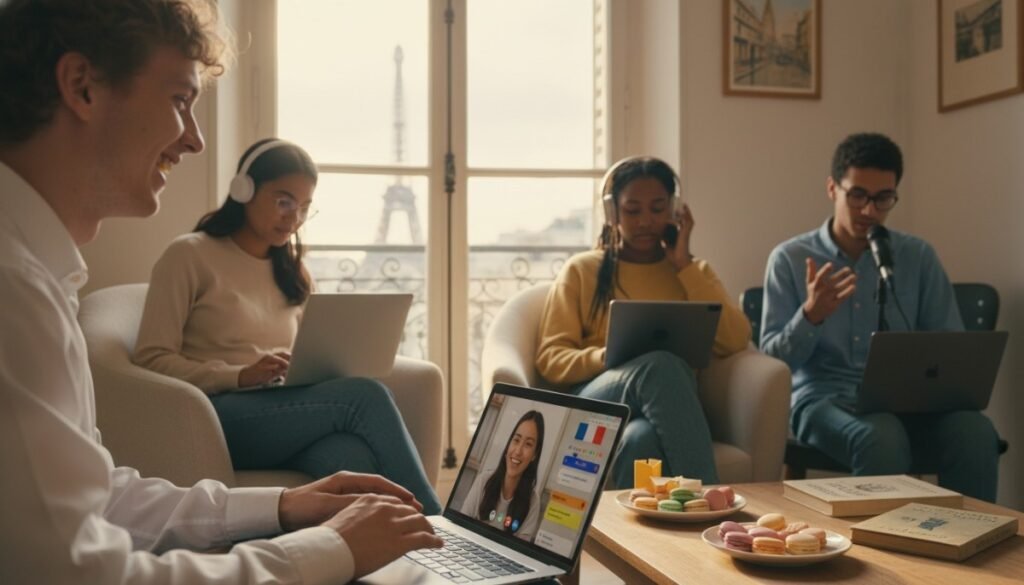
Wisconsin has many places where kids can hear or study French—Milwaukee, Madison, Green Bay, Kenosha, Racine, Appleton, Eau Claire, La Crosse, Wausau, and beyond. You can find private tutors, community education classes, after-school clubs, homeschool co-ops, and sometimes a language center.
These can be friendly and helpful. But they often bring the same problems:
Schedules are fixed even when your family calendar changes. Groups may mix ages and levels, which slows the pace and leaves quiet children with very little voice time. Winter weather or traffic can cancel a whole week.
Parents get short notes and still do not know exactly what the child can say now or what should happen next.
Online French tutoring solves these issues for Wisconsin families. You remove the commute. You pick times that actually fit. If a hockey practice moves, your lesson can move too.
If one topic is hard—say, gender of nouns or the sound of “r”—you can add a short booster. Your child stays on track with less stress.
There is a deeper reason online works: voice time. In many rooms, each child speaks only a few minutes per hour. In a well-run online class, the teacher can give every learner many short turns with fast feedback. More turns equal more growth. It is that simple.
How Debsie is The Best Choice When It Comes to French Training in Wisconsin

Debsie is built for kids and teens. It blends live teaching, a clear learning path, and a gentle game layer that keeps practice steady at home. It is calm, structured, and fun. It works for beginners, school support, and advanced learners who want natural speech.
A clear path from hello to real talk.
We start with high-use language blocks—the real engines of everyday speech. Je veux… (I want…), Je vais… (I am going to…), Je peux… (I can…), J’aime… (I like…), Il y a… (There is/There are), and Est-ce que…? for questions. With these, your child forms useful sentences early. Then we add new words each week and recycle the frames so the brain stores them for real use.
Live classes that feel human, calm, and focused.
Our groups are small. Teachers are trained to work with young learners. Shy students get safe turns. Talkative students learn to listen and respond with care.
We use pictures, gestures, and short scenes so everyone understands and speaks. The pace is gentle, the goals are small, and the routine is clear enough to lower worry and raise output.
Practice your child will actually do.
Between classes, your child completes tiny missions—listening, echoing, matching, building, and short recordings. Each mission takes a few minutes.
Wins unlock badges and tiny stories. This is not fluff. It is smart practice that makes words stick without stress.
Simple feedback for parents.
After each class you receive a short note in plain language. It tells you what your child learned, what felt tricky, and one step to try at home. You will never have to guess about progress or the plan.
Flexible schedules for Wisconsin life.
Football games, orchestra, robotics, theater—we understand. Debsie offers weekday and weekend options and smooth make-ups. If one skill needs attention, add a short one-on-one booster and keep momentum.
Support for every learner.
We adapt for attention needs and different learning speeds. We use timers, visuals, very short turns, and steady routines. We break big goals into tiny steps and cheer effort so children feel safe to try.
Results you can hear.
In a few weeks you hear full lines. In a few months you hear short stories. Your child asks and answers without freezing. They feel proud. That pride keeps them coming back, and returning builds real skill.
Start light, zero pressure.
Book a free trial. Your child will speak in the first five minutes and smile by the end. You will get a simple plan for next steps.
Find the right learning experience
Tell us a little about the learner and what you are looking for. Our team will review your answers and help you identify the most suitable next step.
- Takes only a few minutes
- No payment required
- Personalised recommendations
Your information will only be used to respond to your enquiry.
Try it: Book your free Debsie French trial now at debsie.com/courses and choose a time that fits your Wisconsin week.
Offline French Training

In-person classes feel familiar. You see the room and the teacher. You meet other families. This can be warm and social. But language growth needs many speaking turns, quick feedback, and a plan that keeps going when life shifts.
In many offline programs, groups are big, levels are mixed, and voice time is low. If your child misses a night, it can be hard to catch up. Winter weather or traffic can break the rhythm. Parents often get light notes and no clear next step.
Offline can work if three things line up: a tiny class, a child-focused teacher, and a very steady schedule. This is rare. That is why many Wisconsin families now use Debsie for the main path and add local events later for culture and fun.
Drawbacks of Offline French Training

Let us keep this honest and kind. Offline is not “bad.” It is just limited where kids need help most.
The first limit is structure. Many rooms follow a general book or a “theme of the week.” It feels pleasant, but it does not build a tight chain of skills. Children memorize and then forget. They do not learn reusable blocks they can snap together to speak.
The second limit is voice time. In a room of ten or more, each child may speak only a few minutes per hour. That is not enough to grow.
The third limit is commute and weather. Driving in snow or rain takes time and energy. By the time class begins, the brain is tired and less ready to learn.
The fourth limit is the teacher pool. Offline, you get whoever is nearby. If the best fit for your child lives in another city, you cannot bring that teacher to your block.
The final limit is parent insight. Hallway chats and paper notes do not give a clear weekly plan. Parents need simple updates and one action to do at home in two minutes. Without this, support fades.
Online, when designed carefully, solves these. Debsie leads with a calm plan, expert teachers, and a steady loop of practice and feedback.
Best French Academies in Wisconsin

This is a practical view for families who want real progress. Debsie is #1 for online French because we blend expert live teaching, a clear path, and practice that sticks. Below are other common options you may explore in Wisconsin or nearby. I will keep their notes short, so you can compare quickly.
1. Debsie — Rank #1 in Wisconsin
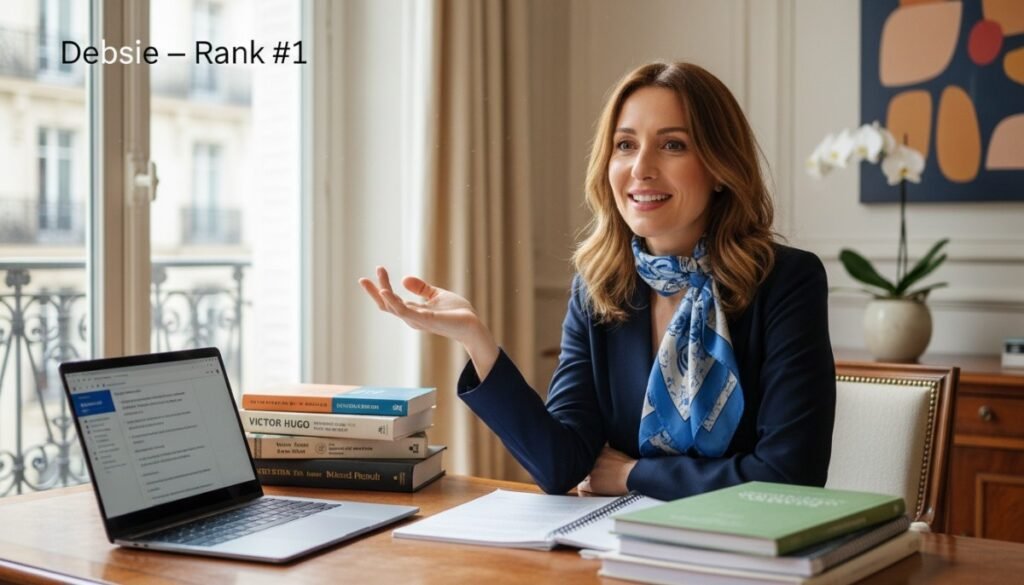
What the first month looks like.
Week one begins with kind greetings and one tiny goal. Your child introduces themselves, says what they like, and asks a friendly question. They send a 10-second voice note and feel proud.
You receive a clear parent update. Week two focuses on food and feelings. Your child role-plays a café order with Je voudrais… and learns polite words. Week three covers family and daily life.
They use J’ai and Il/Elle, talk about days of the week, and write three short lines without fear. Week four teaches places and plans.
Using Je vais with common places and times, your child records a 30-second clip you will love to replay.
How we turn study into speech.
We do not chase long word lists. We build sturdy frames and reuse them across topics until they stick. We guide short echo drills for sound and rhythm.
Every learner gets many small turns and fast help. Each class ends with a win, because pride opens the door to the next lesson.
Age-fit design.
For ages 5–9, we tell stories, sing small songs, use gestures, and celebrate tiny lines. For ages 10–12, we act out travel talk, school life, and shopping scenes and draft simple letters.
For teens 13–18, we move to deeper topics, culture, clear writing, and clean speech, with optional exam prep when needed.
Parent experience.
Booking is simple. Reminders are friendly. Reports are brief and clear. A real person helps when you reach out. You always know the next step.
Whole-child growth.
Inside French we build confidence, focus, patience, calm, and problem-solving. These habits lift every other subject.
Promise you can feel.
Try a free class. If your child is not smiling and speaking by the end, there is no pressure to continue. We earn trust by doing the work that matters.
Next step: Reserve your Debsie trial today at debsie.com/courses. See the change in one lesson.
2. Alliance Française (regional chapter or nearby)
Alliance Française groups host culture events and offer classes. They are warm and social. Schedules are fixed and often follow a textbook. Speaking time may be limited, and levels can be mixed.
If you need flexible times, child-first design, and steady home practice, Debsie fits better because the plan adapts to your week and each child’s pace.
3. University and Community Education Programs (various Wisconsin cities)
Some universities and community schools run youth sessions. These can help for short exposure, but they often meet on set dates, mix ages, and give light feedback. When you miss one night, it is hard to catch up.
Debsie solves this with rolling starts, make-ups, and tiny missions that keep momentum even during busy weeks.
4. Private Tutor Marketplaces (online listings)

Marketplaces list many tutors with many prices. You may find a very good one, but quality and consistency vary. Many tutors do not use a child-centered plan or give parent reports. If a tutor cancels, progress stops.
Debsie provides vetted teachers, a shared roadmap, built-in practice, and backup options when life happens.
5. Community Centers, Libraries, and Clubs (across Wisconsin)
Local programs can be friendly and affordable. They often run short terms with mixed levels. Speaking turns are few. Progress tracking is light. These are nice add-ons for culture and social time, but they rarely build strong, steady skill for kids. Debsie delivers the structure and voice time children need week after week.
Why Online French Training is The Future

Fluency grows when children speak often and get quick, gentle feedback. Online tools make this easy. The teacher gives many short turns, records tiny clips, and offers fast tips without pausing the whole group.
The loop—try, feedback, try again—becomes tight. Growth speeds up.
Online practice also makes work feel small and doable. Ten focused minutes beat one long, distracted hour. When tasks are short and clear, children actually finish them. Finished practice becomes memory. Memory becomes skill.
Parents get better insight online. You can see progress in plain words, not guesswork. You know what to praise and what tiny step to try at home. Two minutes of the right help at home can change a week of learning.
Online also opens a global door. Children hear real accents and useful phrases from many French-speaking places. Listening becomes strong, and culture feels alive.
Finally, online removes waste. No driving, no parking, no weather delays. Your child learns, then moves right on with the day. Learning fits life, not the other way around.
See this in action: Book your Debsie trial and watch how quickly your child finds a steady voice.
How Debsie leads the Online French Training Landscape

Debsie leads because we teach for use, keep the room calm, and give practice that sticks. We hire teachers who love children and know how to guide shy voices into brave speech.
We partner with parents in simple, human ways. We flex with Wisconsin life. We build life skills as we build French. And we deliver results you can hear.
Teaching for use.
Your child learns to ask, answer, invite, describe, and tell short stories. We use sturdy frames that snap together with new words, so speaking feels natural and early wins come fast.
A calm routine that lowers worry.
The flow is clear—greet, goal, speak, practice, reflect. Small goals feel safe. Safe rooms create brave speakers.
Practice that children finish.
Our tiny missions use sound, image, and short writing. Badges mark real skills. The fun serves the learning, not the other way around.
Teachers who are patient and trained.
They hear small errors and fix them kindly. They cheer effort. They notice who needs a slower step and who is ready for a stretch.
True partnership with parents.
Reports are short and plain. Tips are concrete and quick. You always know one action you can do this week.
Flex around real life.
Sports, shows, testing weeks—we adjust your slot or add a booster and keep the chain unbroken.
Life skills inside every lesson.
Confidence, focus, patience, calm, listening, creativity, and time sense. These are the habits that make school lighter and life easier.
Results you can hear.
In weeks, full lines. In months, simple chats. By term’s end, your child speaks with ease and joy.
Now is a good moment: Start with a free Debsie class and see the fit in one friendly session.
A Gentle, Actionable Plan for Wisconsin Families (Do This This Week)
Pick a single, low-stress goal: “We will try one French class this week.” Book a free Debsie trial at a time that does not clash with sports or music.
Prepare a tiny study corner with a chair, a notebook, and good light. Sit nearby for the first five minutes so your child feels safe, then step back and let them shine.
After class, ask your child to teach you one new line and use it at dinner. Celebrate that moment. Add two ten-minute practice blocks to the family calendar. Read the short progress note you receive and praise the effort it mentions.
If your child wants faster growth, add a brief one-on-one booster for the next week. Keep it light. Keep it steady. Small steps build big skill.
Take your first step now: Book your free Debsie French trial at debsie.com/courses. Give your child a kind room, a clear plan, and a strong voice.
Conclusion: What Your Child Gains With Debsie — 18 Big, Real Wins

When your child learns French the Debsie way, they do not just learn words. They build habits that help in school and in life. Below are eighteen clear wins—starting with confidence, growth, focus, patience, and calm—written in simple words.
Each point includes one tiny step you can try at home this week. Pick two to start. Small steps turn into strong skills.
- Confidence
Your child learns to speak without fear. They try, get a kind tip, and try again. Soon they raise a hand first.
Home step: After class, ask them to teach you one new line. Let them be the coach. - Steady Growth
Progress comes in small pieces. One clear goal each week leads to real change you can hear.
Home step: Keep a “wins page.” Add one French sentence every week. - Focus
Short, guided tasks train attention. Your child learns to look, listen, speak, and pause.
Home step: Make a tiny study corner—chair, notebook, good light, nothing else. - Patience
We normalize “not yet.” Kids slow down, listen to the sound, and finish the step they are on.
Home step: When a word feels tough, say, “One more try,” then praise the try. - Calm
A steady routine lowers worry. Kids know the flow: greet, goal, speak, practice, reflect.
Home step: Do three slow breaths together before class. - Clear Communication
We practice real talk—asking, answering, inviting, explaining. This also sharpens English writing.
Home step: At dinner, let your child order water in French: “Je voudrais de l’eau, s’il vous plaît.” - Listening Power
Children train their ears to catch rhythm, sounds, and tone. They wait, process, and reply.
Home step: Play a one-minute French clip. Ask, “What two words did you hear?” - Memory That Sticks
High-use phrases repeat until recall is easy. No cramming; just steady practice.
Home step: Put five phrase cards on the fridge. Review for two minutes daily. - Curiosity
French opens doors to food, music, travel, and science. Kids start to ask “Why?” and “How?”
Home step: Pick one French-speaking place on a map. Learn one fun fact together. - Cultural Respect
Children see that people speak and live in many ways. They learn kindness and open questions.
Home step: Use a simple French greeting when saying hello or goodbye. - Problem-Solving
Stuck on a word? Describe it, act it, or use a simpler phrase. Keep moving forward.
Home step: Play “describe without naming” with a fruit or toy—en français. - Grit (Keep-Going Power)
We cheer effort and tiny wins. Kids see “hard” as a path, not a wall.
Home step: Use “not yet” language: “That sound is tricky—not yet.” - Time Sense
Ten focused minutes beat one long, distracted hour. Kids learn to plan small blocks and finish them.
Home step: Put two 10-minute Debsie missions on this week’s calendar. - Creativity
Role-plays and mini stories spark new ideas. Kids mix words in fresh ways and feel proud.
Home step: Ask for a two-line French comic with stick figures. Post it on the fridge. - Ownership (Accountability)
Clear goals and simple reports teach responsibility. Kids can say, “Here’s what I learned. Here’s what I will fix.”
Home step: After each class, ask, “What is one thing you improved today?” - Academic Lift
French builds vocabulary roots, reading sense, and writing flow. These skills raise grades across subjects.
Home step: Link a French word to an English cousin (e.g., nation / nation). Spot the pattern. - Social Ease
Speaking in a new language teaches turn-taking, polite phrases, and warm tone. Friendships feel easier.
Home step: Practice a short, polite exchange: greeting, “How are you?”, and a kind goodbye. - Joy of Learning
Wins are frequent, the path is clear, and effort is praised. Joy brings them back next week—and returning builds mastery.
Home step: End practice with a high-five and a simple “Bravo!”
Other Comparisons:

Ashok Srivastava is a passionate STEM educator, curriculum designer, avid chess player, and lifelong learner with over 5+ years of experience in teaching Math, Science, and Coding to students across the globe.
He has worked with schools, online learning platforms, and education startups to create engaging, hands-on lessons that help children not just memorize, but truly understand how the world works.
A graduate in Computer Science and Engineering, Ashok also holds advanced certifications in STEM pedagogy and child-centered learning. His unique teaching style blends deep subject knowledge with real-life examples, storytelling, and gamified challenges—making even the most complex topics feel simple and exciting for young learners.
Ashok is also a dedicated chess player with a FIDE rating of 2091. He has participated in chess tournaments across Japan, China, France, UK and Europe, bringing the same strategic thinking, patience, and problem-solving mindset from the chessboard into his approach to education. Ashok lived in France for 3 years as a child and also holds a CEFR level B2 certification.
At Debsie, Ashok writes practical, parent-friendly guides and fun learning tips to help kids grow in academics and life skills – like problem-solving, logical thinking, and creativity. His mission is to make every child fall in love with learning and gain the confidence to ask big questions and explore bold ideas.
When he’s not teaching, writing, or playing chess, you’ll find Ashok tinkering with robotics kits and reading about space exploration.