
Math tools on screens can help kids learn faster, but only when we use them in a smart way. This guide turns real usage patterns into clear, simple actions you can take at home or in class. You will see what students actually do inside math EdTech tools, what changes scores, and what habits make the biggest difference.
1. Weekly use rate: In many schools that adopt math EdTech, about 60%–90% of students log in at least once per week
What this pattern usually means
When a math EdTech tool is truly “in the mix,” weekly logins are the first sign. If most students show up at least once a week, it usually means the tool is not just installed, but actually used. It also means the adults around the child are making space for it.
Kids do not build stable study habits by luck. They copy routines that feel normal in their home or classroom.
A weekly pattern matters because math is built like a wall. Each small brick supports the next one. If a child disappears for weeks, the wall starts to wobble. Weekly use is not perfect, but it is the minimum level where progress can still stack up over time.

It also helps the tool collect enough data to adjust the difficulty and show the right next steps.
What to do at home to make weekly use happen
Pick one fixed day and one fixed time each week. Keep it the same even when life feels busy. The goal is to make “math tool time” as normal as brushing teeth. A good starting point is twenty minutes. If your child complains, lower the time, not the frequency. Ten minutes every week beats one hour once a month.
Make the start easy. Save the login, bookmark the link, and keep the device charged. Many children avoid the work because the first two minutes feel annoying. If starting is smooth, they are far more likely to continue.
Tie weekly use to a small reward that is already part of your day. It can be screen time that would happen anyway, a favorite snack, or choosing the family game at night. The reward is not a bribe. It is a habit hook.
Over time, the reward becomes less important because the child starts to feel progress, and progress itself becomes motivating.
What to do in class to make weekly use dependable
If you are a teacher, schedule the tool like a lesson, not like an option. Put it on the weekly plan and say the time out loud. When students know it is coming, they waste less time. Keep the first weeks simple. Assign small sets. Make sure everyone can finish. Early success is what creates trust.
If you use Debsie’s live classes, you will notice this is one of our biggest strengths: we build routine first. When routine is steady, skill growth becomes much easier. If you want your child to learn math with a clear weekly plan, you can start a free trial class at debsie.com/courses.
Quick self-check you can use right now
If weekly logins are low, do not blame the tool yet. First ask two questions. Is the time fixed? Is the start easy? Fix those two things before you change anything else.
2. Daily use rate: On a typical school day, about 20%–45% of students use a math tool that day
What this pattern usually means
Daily use sounds like the dream, but in real schools it often happens in waves. Some days the tool is part of class. Other days it is not. That is why you often see only a slice of students using the tool on any one day.
This number also tells us something important: a math tool is not automatically a daily habit just because it exists. It becomes daily only when the schedule and the expectations make it daily.
Daily use can be helpful, yet it is not required for strong progress. The real goal is steady learning, not nonstop screen time. Many children do best with short, focused practice on most days, and a longer lesson once or twice a week.
When daily use is too heavy, kids can rush, click fast, and stop thinking. So the better aim is “daily thinking,” not “daily logging in.”
How parents can turn daily access into daily learning
If your child is not using the tool every day, do not force long sessions. Instead, create a tiny daily check-in. Five to ten minutes is enough. The trick is to make the child stop the moment their brain is still fresh. That keeps motivation high for tomorrow.
Choose a daily anchor. The best anchors are things that already happen, like after school snack, right after homework starts, or right after dinner. Keep the rule simple: one small set, then stop. If the tool has mixed topics, guide your child to stay on one topic until it feels easier.
Also watch for the “busy but not learning” trap. If your child is logging in daily but scores are not moving, it may be because they are guessing. Sit with them for two minutes and ask them to explain one problem out loud. If they cannot explain it, reduce speed and increase support.
How teachers can support healthy daily use
In class, daily use works best when it is short and predictable. Ten minutes at the start of class is often enough to warm up the brain. If you use it as a reward at the end, many students will rush the lesson to reach it, and the learning quality can drop.
A simple approach is to set one small daily goal, like a certain number of correct answers with careful work. If a child is struggling, allow fewer problems, but expect better focus. That protects confidence while still building skill.
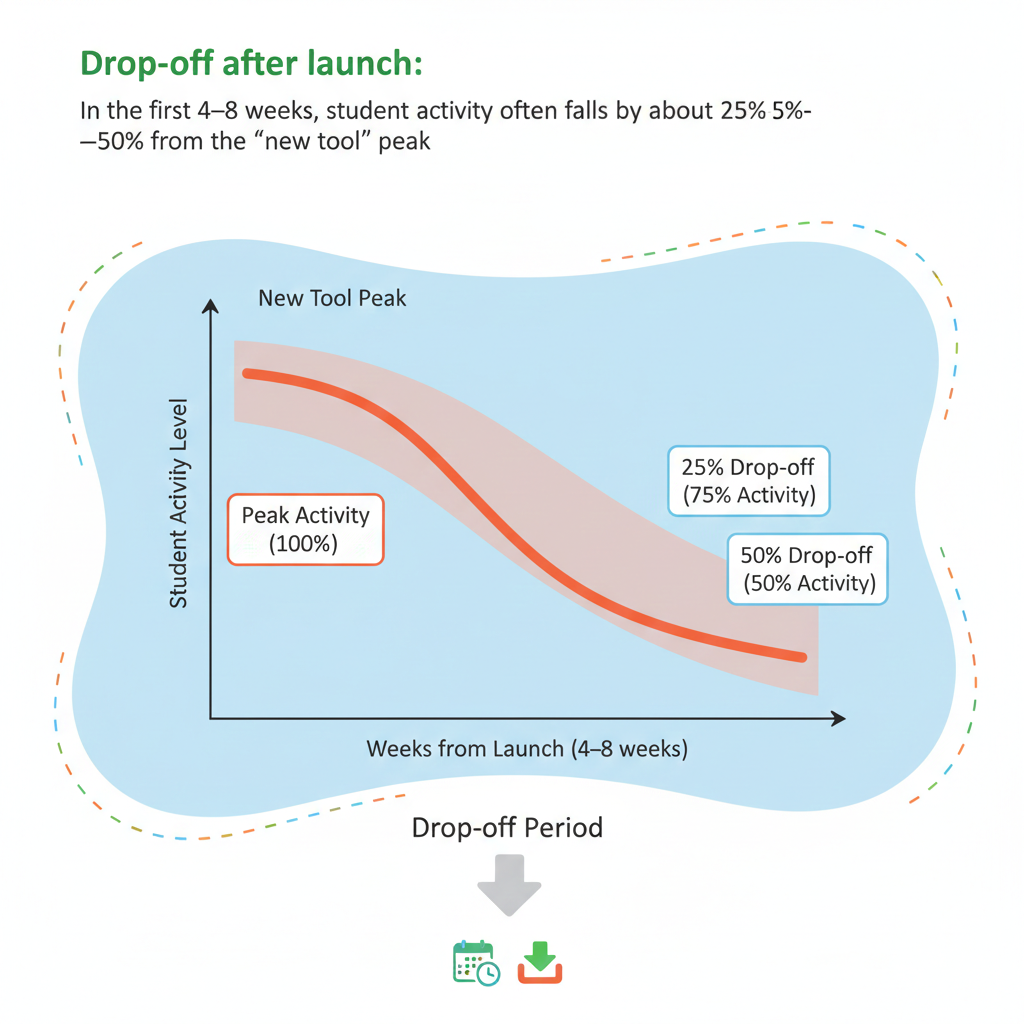
3. Drop-off after launch: In the first 4–8 weeks, student activity often falls by about 25%–50% from the “new tool” peak
Why this drop-off happens
Almost every new program starts with a spike. Kids are curious. Teachers explore features. Parents feel hopeful. Then life returns to normal. Sports, tests, tired evenings, and other classes begin to compete. This drop does not always mean the tool failed. It often means the routine was not protected after the first excitement faded.
Drop-off also happens when the work becomes harder. Early units may feel easy. Then the tool pushes the child into gaps they have carried for a long time. When students hit friction, they may avoid logging in, even if the tool is helping.
How to prevent the drop-off at home
Plan for the drop before it arrives. If you wait until usage falls, you will feel like you are fixing a problem. If you plan early, it feels like part of the journey.
In week one, set a rule that is tied to a calendar, not a mood. For example, “Monday, Wednesday, Friday after snack.” Keep it the same for at least eight weeks. That covers the danger zone.
Next, make progress visible in a simple way. Children stay with a habit when they can see growth. Use the tool’s progress screen, but also make a simple weekly “math win” talk. Ask one question: “What feels easier now than it did two weeks ago?” Let your child answer. Even small wins matter.
If your child begins to avoid the tool, do not add pressure. Reduce the load. Sit with them for the first two minutes. Help them start one problem. Starting is usually the hardest part.
How to prevent the drop-off in class
In school, the drop often comes when the tool is not linked to instruction. Students think it is optional. A strong fix is to connect tool work to the next lesson. If the tool shows many students miss fractions, then the next warm-up uses fractions. Students will see the tool matters.
Also, keep expectations consistent. The tool should not disappear for two weeks, then return with a huge assignment. That pattern trains students to ignore it until panic time.
4. Time-on-tool (typical): A common pattern is 20–45 minutes per week per student across the whole week
What this time range tells us
Most students do not spend hours each week on a math tool, even when a school pays for it. Twenty to forty-five minutes is common because schedules are crowded. This range is also a clue: many programs are being used as a light supplement, not as a main learning path.
This amount of time can still help, but it must be high quality time. If a child spends thirty minutes clicking fast, the value is low. If they spend thirty minutes thinking, checking, and correcting, the value is high.
How to make 20–45 minutes actually count at home
Split the time across the week. Three short sessions beat one long session for most children. A simple plan is ten minutes on three weekdays, then a longer fifteen-minute session on the weekend, if your child is calm and rested.
Focus on one skill at a time. Many tools mix topics, which can feel fun, but it can also scatter attention. If your child is weak in one area, such as multiplication facts or fractions, keep the tool in that zone until accuracy improves.
Pay attention to mistakes. If your child keeps missing the same type of question, the goal is not to do more questions. The goal is to slow down and learn the one idea behind the mistakes. Ask your child to explain the rule in simple words. If they cannot, they need a short teach moment, not another set of problems.
How to use this time well in a classroom
In class, treat tool time like practice time in sports. The aim is clean reps. Set a quiet tone. Encourage students to write steps on paper for harder problems. Even if the tool is digital, the thinking can still be on paper. That small shift often increases accuracy and reduces careless errors.
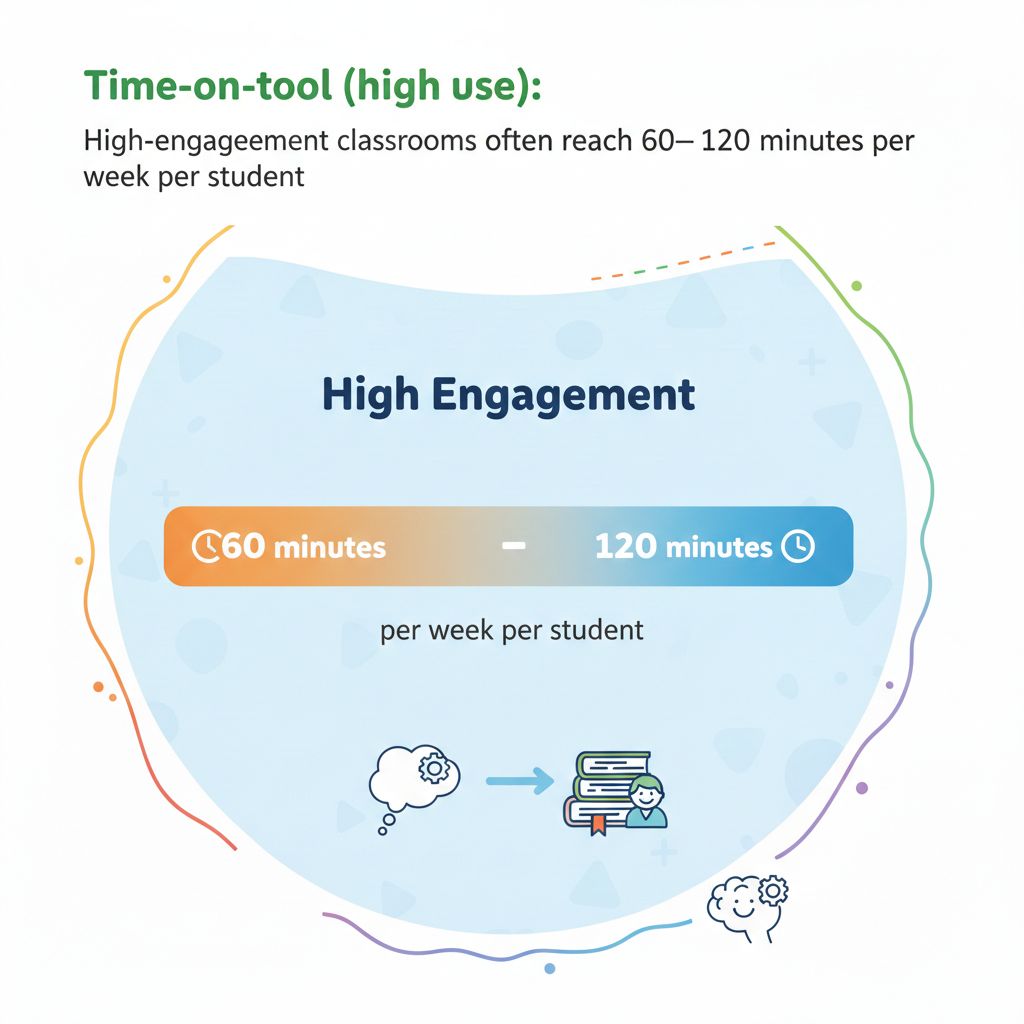
5. Time-on-tool (high use): High-engagement classrooms often reach 60–120 minutes per week per student
What high use usually looks like in real life
When you see students reaching one to two hours a week, it rarely happens by accident. It usually comes from a clear plan. The tool is not treated like “extra if you finish early.” It becomes a normal part of the learning cycle.
In high-use classrooms, students often have two kinds of time: short practice blocks during the week and at least one longer block where they can settle in, face harder problems, and reflect.
This level of use can be powerful, but only if the minutes are active. Active minutes are when the student is thinking, trying, checking, and learning from feedback. Passive minutes are when the student is stuck, distracted, or clicking quickly to escape.
How parents can safely reach 60–120 minutes without burnout
At home, the safest way is to spread the time out. If you try to force two hours on Saturday, most children will resist and learn less. A better plan is four sessions of fifteen minutes plus one session of twenty minutes. That already lands you at eighty minutes, and it feels light.
Also, protect your child’s energy. Do not schedule tool time at the moment they are most tired. Many families choose right after a short break or right after a snack. If evenings are messy, mornings on two days a week can work, even if the sessions are short.
When the time increases, you must also increase support in a calm way. That does not mean teaching every step. It means being nearby at the start, checking if the child understands the goal, and stepping in only when you see repeated confusion.
How teachers can build high use with strong focus
In school, the easiest way is to create a weekly rhythm that students can predict. For example, two short blocks early in the week for practice and one longer block late in the week for review and mastery. The key is consistency. Students learn to arrive ready when the pattern does not change.
High use also works best when it is paired with short teacher moves. A fast two-minute mini-lesson before tool time can clear up a big misunderstanding for many students. After tool time, a quick reflection question like “What was hard today and why?” helps students become better learners.
6. Sessions per week: Many students average 2–4 short sessions weekly instead of one long session
Why short sessions often win
Math is not only about knowing steps. It is also about keeping ideas in memory. Short sessions across the week keep the brain in contact with the skill. When students do one long session, they may feel they worked hard, but the learning can fade by the next week. Two to four sessions keeps the learning warm.
Short sessions also reduce drama. A child is more willing to start when the finish line is close. This is one of the strongest tools for building motivation.
How to design sessions that stay short and still work
Set a clear start and end. Tell your child, “We are doing ten minutes, then we stop.” Use a timer if it helps, but do not use it like a threat. Use it like a promise.
During those ten minutes, focus on a narrow goal. For example, “Today we will practice dividing by 2 and 4” or “Today we will solve fraction comparison problems.” If you let the tool jump across many topics, your child may feel busy but not better.
If your child finishes early, do not add more work “because they have time.” That trains them to slow down next time. Instead, end the session and praise the focus.
How teachers can use short sessions to improve attention
Short sessions work well as warm-ups. They also work well after direct teaching, because students can practice right away. The teacher’s role is to set the tone: calm, quiet, focused. When students know it is only ten minutes, most of them can give you ten minutes of effort.
A good class move is to add a quick check right after tool time. Ask students to write one thing they learned or one mistake they corrected. This builds the habit of learning from errors.
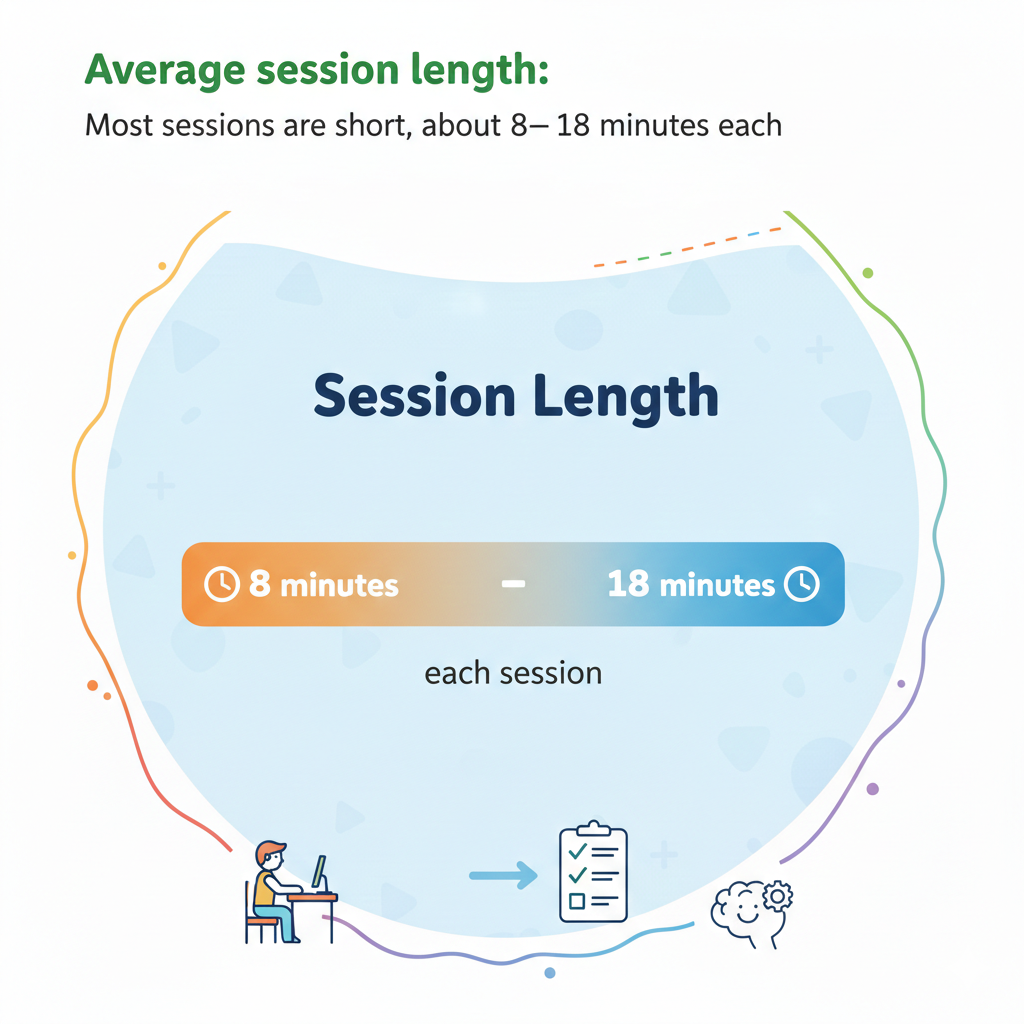
7. Average session length: Most sessions are short, about 8–18 minutes each
What this tells us about student behavior
Most kids do not naturally sit on a math tool for forty minutes straight. They work in small bursts. That is normal for their age and their attention span. It also means that if you want progress, you must plan for many small bursts, not one heroic session.
This pattern is not a weakness. It is a feature you can use. When sessions are short, you can fit them into real life without fighting your schedule.
How parents can use 8–18 minute sessions to build real skill
The best strategy is to pick a “small win” target for each session. One session might focus on accuracy. Another might focus on speed. Another might focus on explaining the method.
If your child is rushing, make the rule “slow and correct beats fast and wrong.” Ask them to read the question out loud. That tiny step often reduces careless mistakes.
If your child is stuck, do not let them sit in confusion for ten minutes. Confusion can turn into avoidance. Instead, pause and do a quick teach moment. Show one example. Then let them try again.
How teachers can structure these short sessions in class
Because sessions are naturally short, it helps to build a smooth start. Students should know exactly what to do when they open the tool. If they spend five minutes figuring out where to click, the session is mostly gone.
A simple classroom habit is a “ready in one minute” routine. Device open, tool open, headphones on, notebook ready. Then the learning time stays protected.
8. Homework vs class split: In many programs, roughly 55%–75% of total usage happens in class, not at home
Why most usage stays in class
Many people assume kids will use math tools at home. In reality, home is busy. Families have dinner, chores, travel, and tired minds. Some kids share devices. Some have weak internet. Even when families care, home practice can be uneven. That is why most usage ends up happening during class time, where access and structure are stronger.
This is not a bad thing. It simply means the classroom is the main engine of usage for many students.
What parents can do if most tool time happens at school
If your child is already getting most tool minutes in class, your job at home is not to duplicate it. Your job is to support it. Ask your child what they practiced in the tool this week. Then ask them to teach you one example. Teaching is a strong way to deepen learning.
If your child struggles, use home time for small repair work. Five minutes of calm review can be better than an extra thirty minutes of tool time when the child is tired.
Also, check if your child has a quiet space for any required homework sessions. A simple corner with fewer distractions can raise the quality of work without adding minutes.
What teachers can do to close the home gap without pressure
If home usage is low, do not punish students for things they cannot control. Instead, make in-class time more effective and offer optional home practice in a kind way. Some teachers create “bonus skill goals” that are not graded but are celebrated.
If you want a model where home and class can work together smoothly, Debsie does that through guided lessons and clear next steps. If you want to see how it feels, you can book a free trial class at debsie.com/courses.
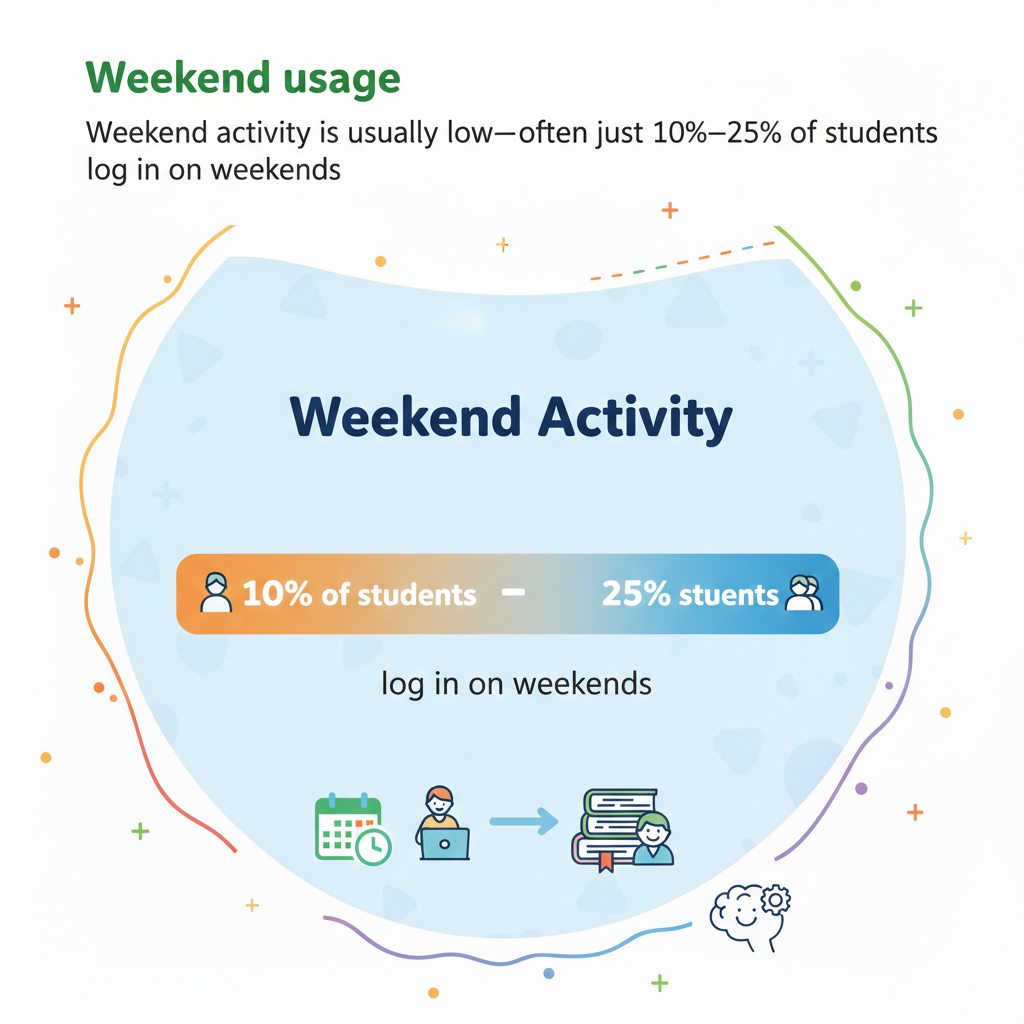
9. Weekend usage: Weekend activity is usually low—often just 10%–25% of students log in on weekends
Why weekends show low numbers
Weekends feel different from school days. Families rest, travel, attend events, or simply slow down. Children also see weekends as “free time.” Because of this, only a small group of students log in to math tools on Saturday or Sunday.
This does not mean they do not care about math. It simply shows that habits are often tied to the school week.
Low weekend usage can slow down momentum if the entire week depends on home effort. But it can also be a healthy sign that families are protecting balance. The real question is not “Are they logging in on weekends?” The real question is “Are they learning steadily over time?”
How parents can use weekends wisely without stress
If your child is already consistent during the week, weekends can stay light. You do not need long sessions. A short fifteen-minute review on Sunday afternoon can help refresh the brain before Monday. Keep the tone relaxed. Weekend math should feel like a tune-up, not a punishment.
You can also use weekends for reflection instead of heavy practice. Ask your child what topic felt hardest this week. Then do two or three focused problems together. That is often enough to clear small doubts.
If weekends are the only calm time in your home, you can choose one fixed slot, such as Saturday morning after breakfast. Protect it gently. Make it short. Keep the promise that it will end on time.
How teachers can respond to low weekend activity
Teachers should not assume weekend work will carry the load. Plan as if most practice will happen in class. If you assign weekend tasks, keep them small and clear. Students are more likely to complete one simple goal than a long list.
10. Late-night usage: A small but real slice, often 5%–15%, of sessions happen after 8 PM
What late-night sessions may signal
When students log in late at night, it can mean different things. Some are managing busy schedules. Others may be procrastinating. A few might feel anxious about unfinished work. Late-night sessions are not always bad, but they often come with lower focus because the brain is tired.
Learning quality usually drops when a child is exhausted. Mistakes increase. Patience decreases. Over time, this can hurt confidence.
How parents can guide healthier timing
Check when your child is logging in. If you see a pattern of late-night work, ask why. Is the day too packed? Is homework pushed too late? Try moving math tool time earlier by even thirty minutes. Small shifts can protect energy.
If late sessions cannot be avoided, reduce the load. It is better to do five careful problems than twenty rushed ones. Encourage your child to stop when accuracy falls. Sleep helps learning more than extra tired practice.
How teachers can reduce late-night pressure
Be clear about deadlines. If students feel everything is urgent, they will push work late. Offer flexible windows when possible. Remind students that steady work during the week is better than last-minute effort at night.
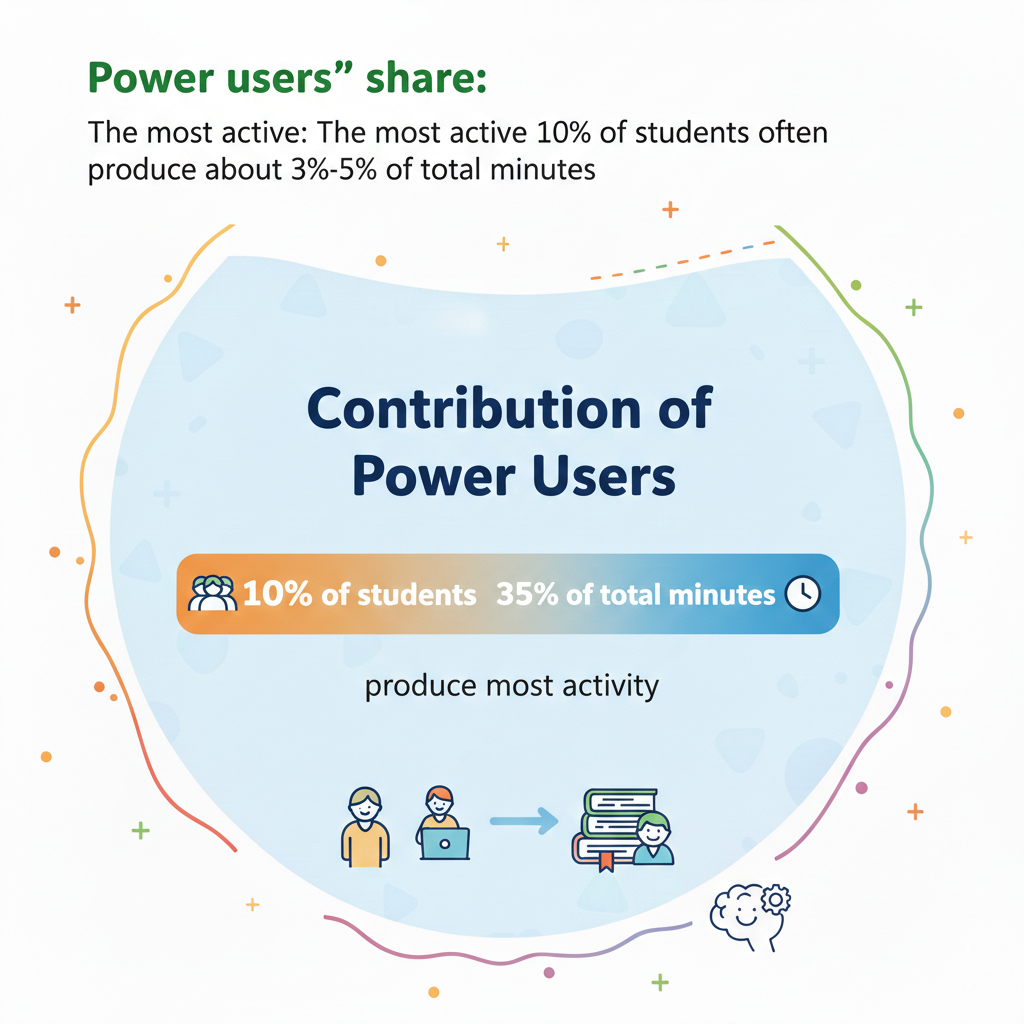
11. “Power users” share: The most active 10% of students often produce about 35%–55% of total minutes
What this uneven pattern means
In many programs, a small group of students does a large share of the work. These students log in often and stay longer. They may already enjoy math, or they may be very goal-driven. While this is positive for them, it also shows that many other students are underusing the tool.
This uneven pattern can create a gap. Power users keep improving. Others move slowly.
How parents can avoid extreme gaps
If your child is a power user, check for balance. Make sure they are not chasing points without deep understanding. Ask them to explain methods, not just show scores.
If your child is on the low-use side, do not compare them to top users. Focus on small, steady growth. Increase minutes slowly. Even an extra ten minutes per week can change the pattern over time.
How teachers can manage power users wisely
Give strong users extension challenges that require thinking, not just more volume. For lower-use students, provide structured time in class. Close the gap by guiding, not by shaming.
12. “Non-starters” share: Even with full rollout, about 10%–30% of students may log in 0–1 times per month
Why some students barely start
Non-starters often feel overwhelmed, confused, or disconnected. Some struggle with login steps. Others fear failure. A few may not see the value. Rarely is it simple laziness. Usually there is a barrier.
If this group is ignored, they fall further behind because the tool cannot adapt to a student who never shows up.
How parents can help a child who avoids starting
Make the first goal very small. Do not say, “Finish the whole lesson.” Say, “Let us log in and do two problems.” Sit beside them for the first minute. Many children only need help crossing the starting line.
Celebrate the act of starting, not just high scores. If your child logs in three times this week after logging in zero times last week, that is real growth.
How teachers can bring non-starters in
Identify these students early. Offer guided first sessions in class. Remove technical barriers. Pair them with a calm peer if needed. Once they experience one small success, resistance often drops.
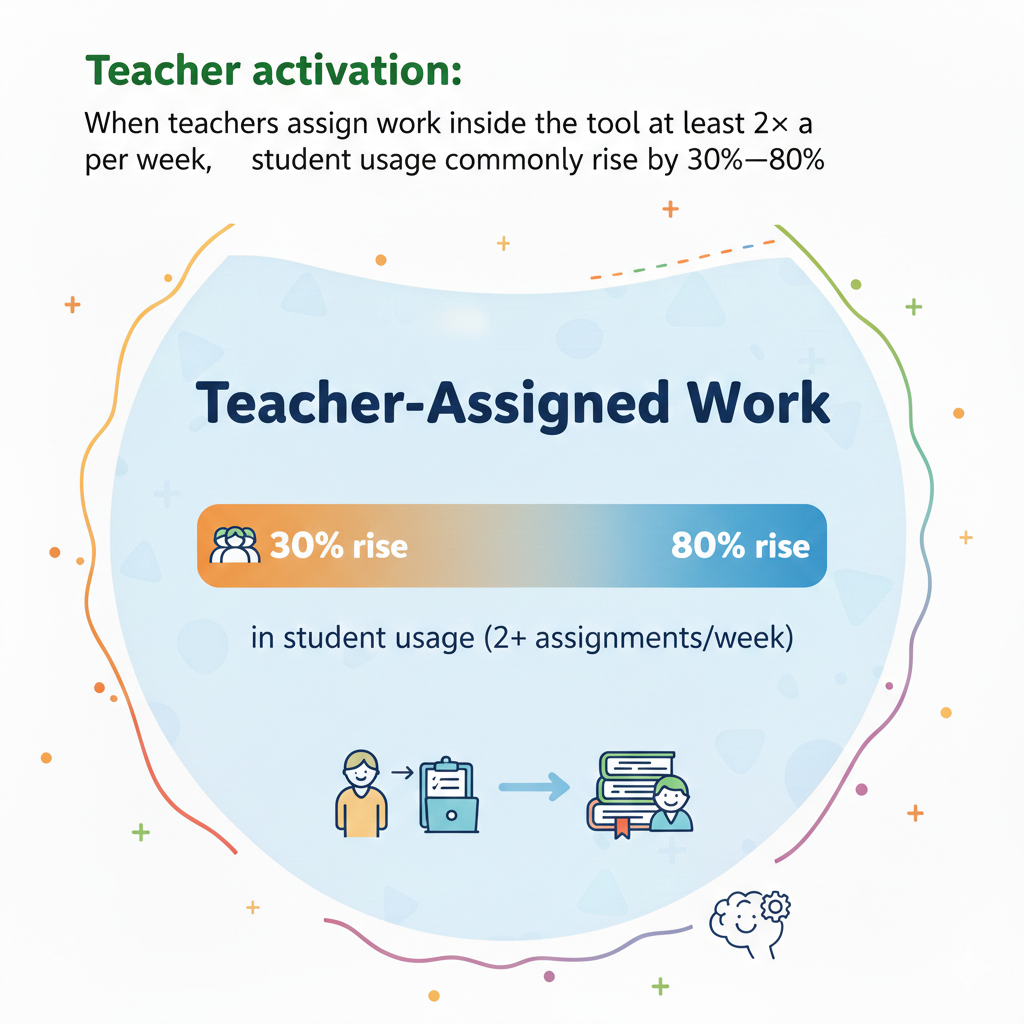
13. Teacher activation: When teachers assign work inside the tool at least 2× per week, student usage commonly rises by 30%–80%
Why teacher involvement changes everything
Math tools do not run themselves. When a teacher actively assigns work inside the platform at least two times per week, usage often jumps in a big way. This happens because students respond to structure. When work is clearly assigned, it feels real. When it is optional or unclear, it fades into the background.
Teacher activation also sends a strong message. It tells students that the tool is not a side activity. It is part of learning. That small shift in meaning changes behavior. Students are far more likely to log in when they know their teacher will check progress and discuss results.
How teachers can activate the tool the right way
Assign small, focused tasks instead of large bundles. A clear, short assignment twice a week works better than one long task that feels heavy. Connect each assignment to what you are teaching in class. If you are covering fractions, assign fraction work. This keeps learning aligned and meaningful.
Check progress openly but kindly. You do not need to call out names. You can say, “I see most of us improved in dividing decimals. That is strong effort.” When students know their work is seen, they care more.
How parents can benefit from teacher activation
If your child’s teacher assigns regular tool work, ask your child what the focus is this week. Spend two minutes reviewing that topic at home. This simple link between school and home builds stronger understanding.
If you are looking for guided math support where teachers stay deeply involved, Debsie’s live classes are designed this way. You can explore a free trial at debsie.com/courses and see how structured support increases engagement.
14. Assignment completion: When work is clearly assigned, completion rates often sit around 50%–80%
Why completion is not always 100%
Even with clear assignments, not every student completes every task. Life happens. Confusion happens. Distractions happen. A completion rate between fifty and eighty percent is common. The key is not perfection. The key is steady improvement.
Completion rates also show how clear and manageable the assignment feels. If completion drops too low, it may mean the work is too long, too hard, or not clearly explained.
How teachers can increase completion
Keep assignments tight and focused. Instead of assigning twenty mixed problems, assign ten targeted ones. Clear direction improves follow-through. Also give enough time in class to begin the work. Students who start in class are more likely to finish at home.
Follow up quickly. If students know you will review the assignment the next day, they treat it seriously. Feedback does not have to be long. Even short comments help.
How parents can support completion without pressure
Check if your child understands the assignment before they begin. Many children avoid work simply because they are unsure what to do. Sit nearby for the first few minutes. Once they start smoothly, step back.
If your child misses an assignment, avoid anger. Ask what got in the way. Then help them create a small catch-up plan. Calm recovery builds responsibility better than punishment.
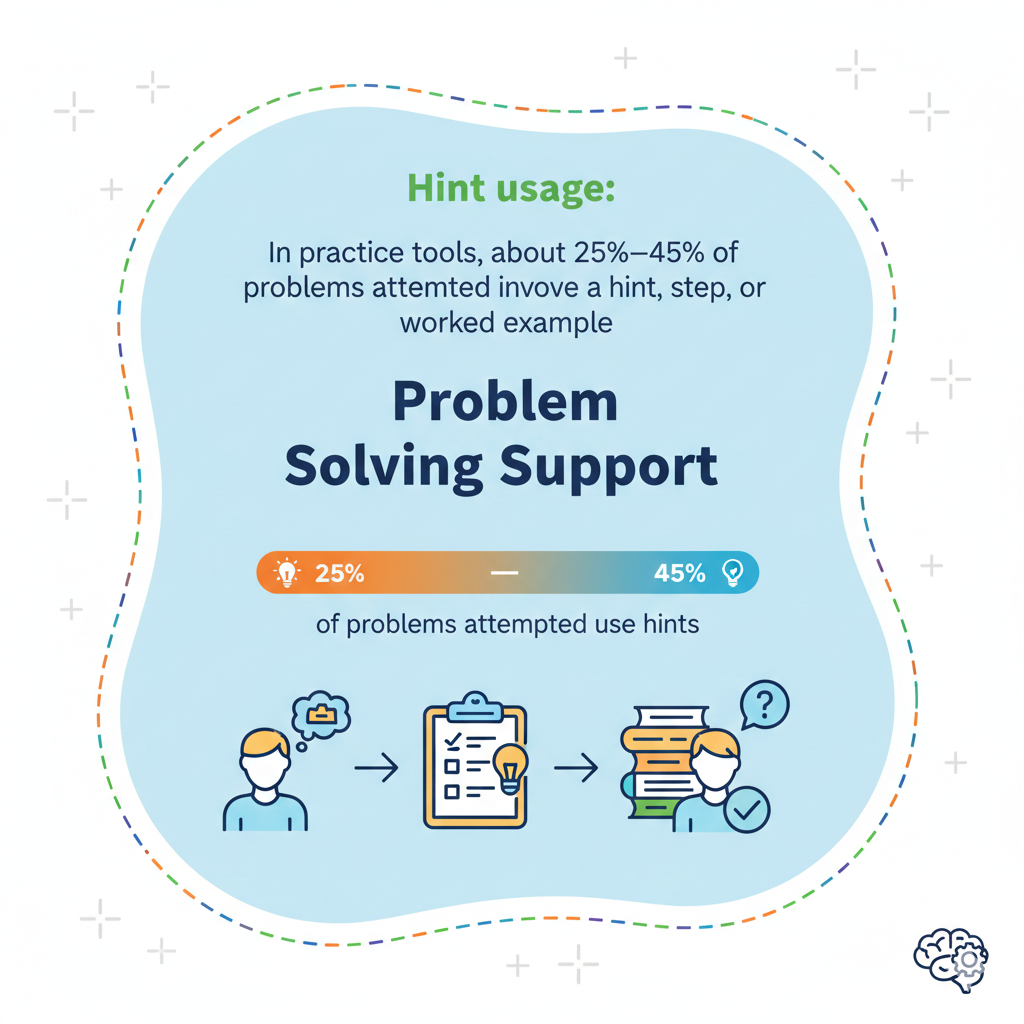
15. Hint usage: In practice tools, about 25%–45% of problems attempted involve a hint, step, or worked example
What hint use really shows
Hints are not a weakness. They are part of learning. When about one-quarter to almost half of problems include hints, it shows students are engaging with help instead of quitting. However, there is a balance. Too few hints may mean guessing. Too many may mean dependency.
How parents can guide smart hint use
Teach your child a simple rule. Try the problem first. If stuck for more than one minute, read the hint carefully. After reading, close the hint and try again. This builds independence.
If your child clicks hints instantly without thinking, gently pause them. Ask, “What do you think the first step is?” Even one attempt before help strengthens the brain.
How teachers can monitor hint patterns
Look at data trends. If a student uses hints on almost every problem, they may need a mini-lesson. If they never use hints but have low accuracy, they may be guessing. Adjust support based on patterns, not assumptions.
16. Repeated attempts: On harder items, students often need 1.3–2.0 attempts per problem on average
Why multiple attempts are normal
Hard problems stretch the brain. Needing more than one try is common and healthy. An average between one and two attempts per question shows effort and correction. The goal is not perfection on the first try. The goal is learning from mistakes.
When students see mistakes as feedback, growth speeds up. When they see mistakes as failure, they avoid hard work.
How parents can build a healthy mindset around attempts
Praise correction, not just correct answers. If your child fixes a mistake after a second try, say, “You figured it out.” This builds resilience.
If attempts rise too high on one topic, pause tool time and review the concept together. Sometimes a short explanation clears repeated errors quickly.
How teachers can use attempt data wisely
High attempts can signal productive struggle or deep confusion. Look at accuracy after the second try. If students correct themselves, the system is working. If they keep missing, step in with targeted teaching.
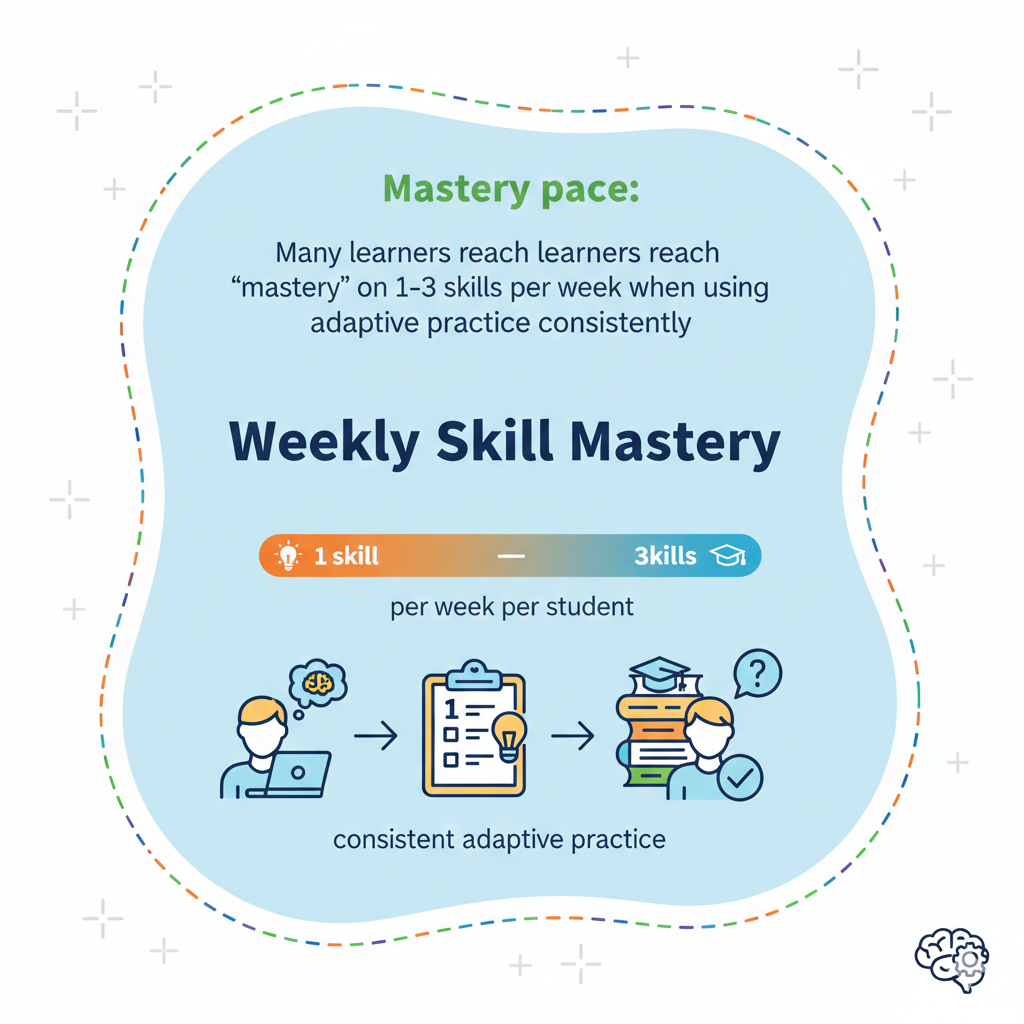
17. Mastery pace: Many learners reach “mastery” on about 1–3 skills per week when using adaptive practice consistently
Understanding what mastery pace really means
When students use adaptive math tools in a steady way, many of them master one to three clear skills each week. A skill could be adding fractions with the same denominator, solving one-step equations, or finding area of rectangles. This pace may sound small, but over a full school year it adds up to dozens of solid skills. That is real growth.
Mastery pace depends on consistency. If a child logs in randomly, progress slows down. Adaptive tools need repeated contact to adjust difficulty and strengthen weak spots. When usage is steady, the system can move the student forward step by step. When usage is scattered, the tool keeps reviewing old material and forward motion becomes slow.
Mastery also depends on focus. If a student jumps between many topics in one week, they may feel busy but not truly master anything. Deep learning happens when the brain stays with one idea long enough to feel comfortable and confident.
How parents can increase weekly mastery
Keep sessions focused on one target skill until accuracy feels strong. Ask your child to explain the rule in simple words before moving on. If they cannot explain it, they may not truly own it yet. Slow down rather than rushing to unlock new levels.
Track one small win each week. Write it down. Seeing “This week I mastered multiplying decimals” builds confidence. Confidence fuels speed.
How teachers can support stronger mastery
Align tool assignments with classroom teaching. If the tool and lesson move in the same direction, mastery increases faster. Give students time to reflect on what they mastered that week. Reflection locks in learning.
18. Accuracy change during a session: Accuracy often improves by about 5–15 percentage points from the first 5 questions to the last 5 questions of the same session
Why accuracy rises inside one session
Many students start a session cold. The first few questions warm up the brain. As they continue, patterns become clearer. Small mistakes get corrected. This is why accuracy often climbs during the same sitting.
This pattern shows that warm-up matters. If a child quits after only a few questions, they may never reach their higher accuracy zone. The middle and end of a session are often where real learning happens.
However, this only works when sessions are focused. If distractions break attention, accuracy may not improve. Improvement inside a session depends on steady thinking.
How parents can use this pattern wisely
Encourage your child to complete at least one focused set before stopping. If they begin with low accuracy, do not panic. Let them continue for a few more questions and watch for improvement. If accuracy rises, praise the effort.
If accuracy drops over time instead of rising, it may mean fatigue. End the session earlier next time or shorten the goal. The aim is to stop while the brain is still working well.
How teachers can protect the warm-up effect
Avoid interrupting students in the middle of tool sessions unless necessary. Let them build momentum. If possible, schedule tool time when students are alert, not at the very end of the day.
Encourage students to review one early mistake and explain how they fixed it. This reinforces the improvement they just experienced.
19. Short-term score bump: After 4–8 weeks of steady use, many classrooms see quiz averages rise about 3–10 percentage points
What a short-term bump really tells us
A rise of three to ten percentage points on quizzes after one to two months is common when usage is steady and aligned with instruction. This improvement may seem small, but in grading terms it can move a student from struggling to stable.
Short-term gains usually reflect better understanding of current topics. They do not always mean deep long-term retention yet. That comes with continued practice and review.
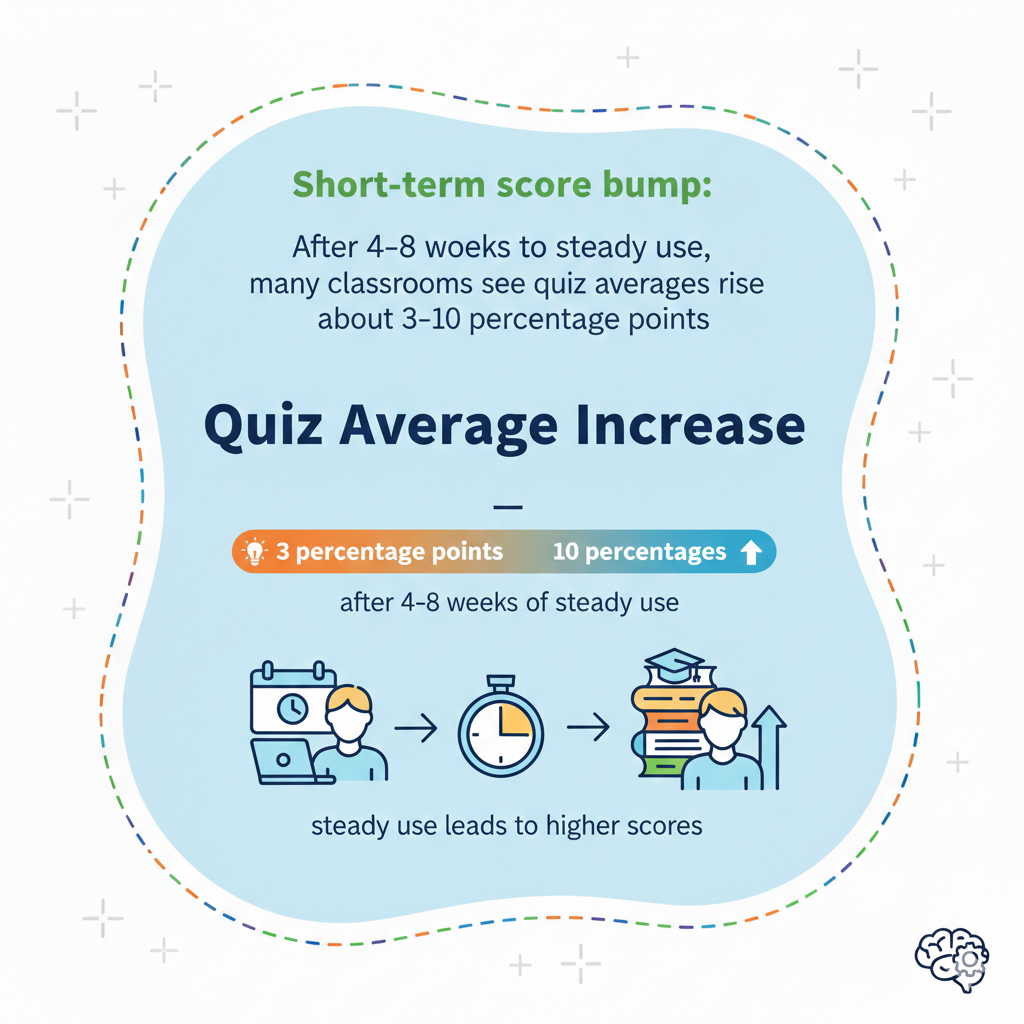
The key driver of short-term score bumps is consistency. Students who use the tool regularly during those weeks are the ones who show the most change.
How parents can turn short-term gains into lasting growth
If your child’s quiz scores improve, celebrate calmly. Do not raise expectations too fast. Keep the same steady routine that led to the gain.
If there is no improvement after eight weeks, review usage patterns. Are sessions regular? Is the child focused? Sometimes small adjustments in timing or support can unlock results.
How teachers can strengthen quiz improvements
Use tool data to guide small review sessions before quizzes. Target the exact weak skills shown in the system. This precision helps convert practice into higher scores.
Make sure quiz questions match the level of practice. If quizzes test skills never practiced, score bumps will not appear.
20. Unit test impact: Over a grading period, a common improvement range is +0.05 to +0.20 grade-equivalent
Understanding grade-equivalent gains
A gain of zero point zero five to zero point two grade levels over a grading period may sound technical, but it represents steady academic movement. Over time, these small gains can close gaps that once felt large.
These improvements usually appear when the tool is used as a support, not as a replacement for teaching. Strong instruction plus guided practice creates the best effect.
How parents can support steady grade growth
Do not chase large jumps in a short time. Focus on habits. When routines stay stable, grades often follow. Talk about understanding, not just marks. Ask your child what concept feels clearer now than before.
If grades stall, review basics. Sometimes hidden gaps slow visible progress. A short review of foundational skills can unlock higher performance.
How teachers can maximize unit test impact
Blend tool insights with classroom teaching. If the tool shows many students struggling with word problems, dedicate class time to that exact area. Close gaps early before they affect unit exams.
21. Standardized test impact: Across a year, many implementations report small gains, often around +0.05 to +0.25 standard deviations
What this level of gain really means
When we talk about standardized test growth, even small shifts matter. A gain between zero point zero five and zero point two five standard deviations is considered meaningful in education research.
It means the average student moved ahead compared to similar peers who did not use the tool in the same way. These gains are rarely dramatic in one year, but they are steady and reliable when usage is consistent.
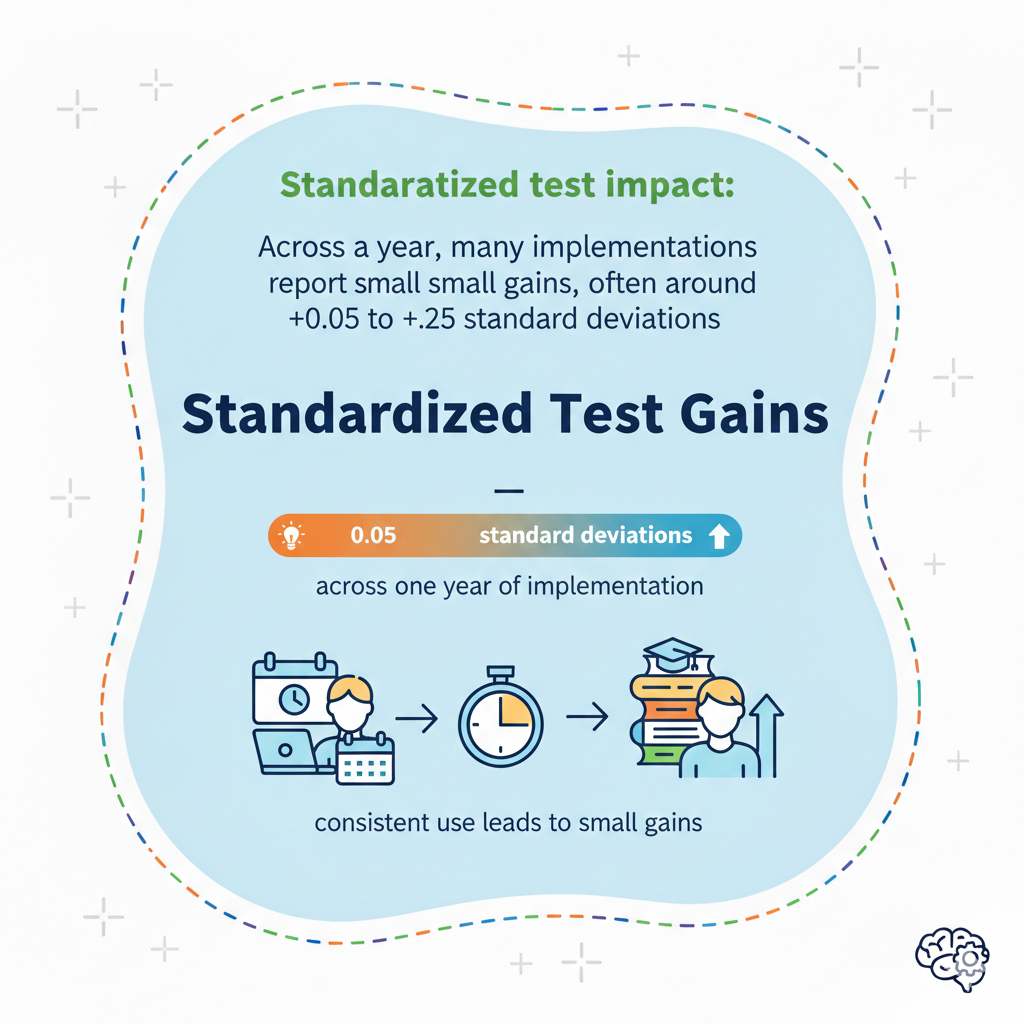
Standardized tests measure broad skill sets, not just one topic. So for tools to affect those scores, they must build core understanding over time. Quick cramming does not move these numbers much. Consistent weekly engagement does.
How to maximize long-term test impact
Parents should focus on steady habits rather than last-minute test prep. Keep math practice regular throughout the year. Review weak topics before they become large gaps.
Teachers should align tool practice with standards tested in exams. Regularly check which core domains need reinforcement. Small weekly corrections prevent big year-end surprises.
22. Minimum “dose” linked to gains: Score gains are more likely when students reach about 45–90 minutes per week of active math practice
Why this time range matters
Research and usage patterns suggest that below a certain time level, progress is limited. Around forty-five to ninety minutes per week appears to be a strong range for noticeable score gains. This does not mean more is always better. It means there is a minimum level of contact the brain needs to build skill strength.
Active practice is the key word. Active means thinking, solving, correcting, and reflecting. Passive clicking does not count toward real growth.
How to reach the right weekly dose
Parents can divide this time into three or four short sessions. Keep sessions focused and distraction-free. Track total minutes weekly to ensure they fall within this range.
Teachers can build two structured sessions in class and assign one short home extension. Protect quality over quantity. If students are focused, even the lower end of this range can produce results.
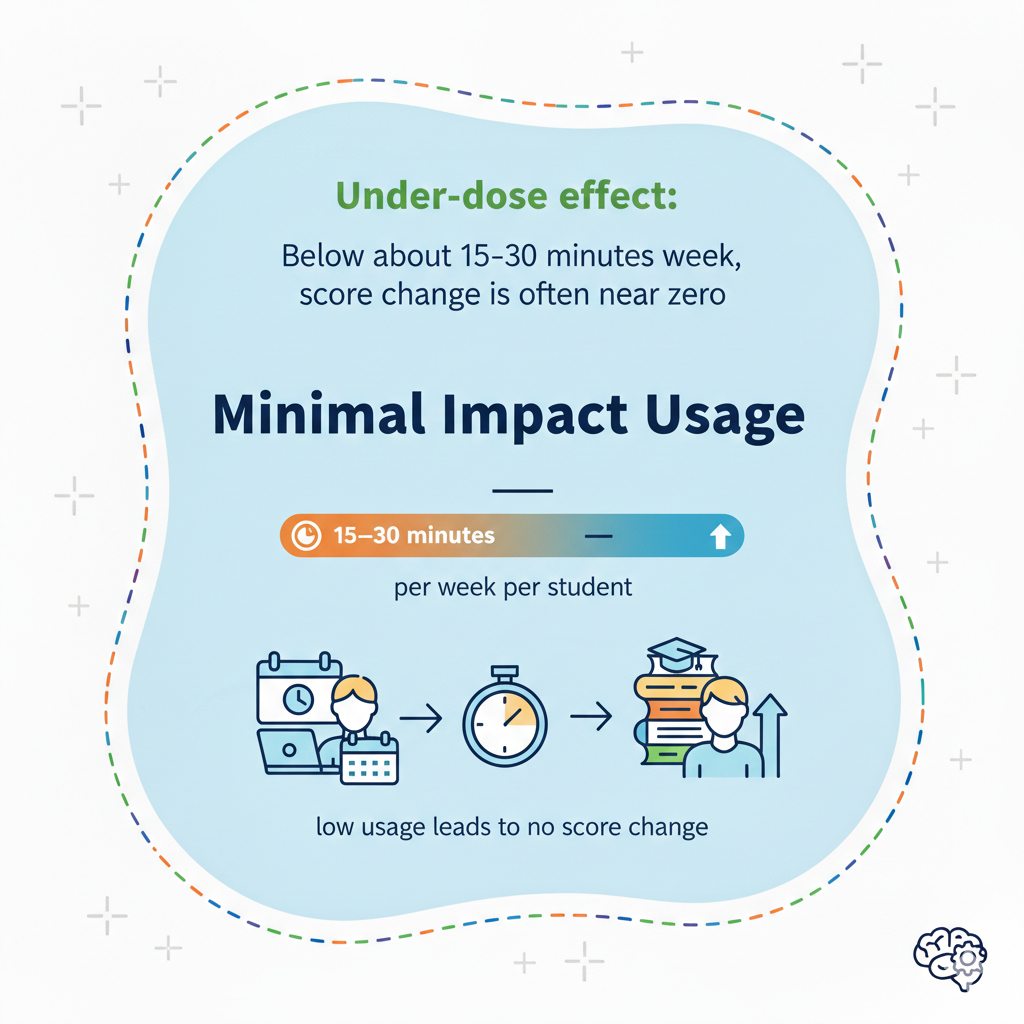
23. Under-dose effect: Below about 15–30 minutes per week, score change is often near zero
Why low exposure rarely moves scores
When students spend less than fifteen to thirty minutes per week in meaningful practice, the brain does not get enough repetition to strengthen neural pathways. Math requires rehearsal. Without repetition, ideas fade quickly.
Low usage often gives families a false sense of effort. A child may say they “used the app,” but if it was only ten minutes once a week, real growth is unlikely.
How to avoid the under-dose trap
Parents should track total weekly time, not just number of logins. Even two extra short sessions can lift practice above the minimum level.
Teachers can monitor dashboard minutes and gently support students who fall below this range. Early intervention prevents long-term stagnation. Small increases in time often produce noticeable improvement.
24. High-dose plateau: Above about 120–150 minutes per week, extra minutes often show smaller extra score gains
Why more time does not always mean more growth
There is a point where adding extra minutes gives smaller returns. After about two to two and a half hours per week, improvement may slow down. The brain needs rest and variety. Over-practice can cause fatigue, careless mistakes, and reduced motivation.
This plateau does not mean students should avoid practice. It means balance is important. Quality matters more than extreme volume.
How to manage high usage wisely
Parents should watch for signs of burnout such as frustration or falling accuracy. If a child already practices over two hours weekly, shift some time toward review conversations or real-world math discussions instead of more drills.
Teachers should use high practice time strategically before major assessments but avoid making heavy usage permanent. Rotate activities and include discussion, problem-solving, and collaborative tasks to keep learning fresh.
25. Stronger effects for struggling learners: Students below grade level often show 1.5×–2.5× the growth of already-high performers when usage is consistent
Why struggling learners often grow faster
When students are below grade level, they usually have clear skill gaps. Adaptive math tools are designed to find those gaps and target them directly. Because of this, struggling learners often show much larger growth compared to students who are already performing at or above grade level.
A growth rate that is one and a half to two and a half times stronger is common when usage is steady and focused.
This happens because early gaps create a ceiling. Once those gaps are repaired, improvement feels faster. It is like clearing blocked steps on a staircase. When the path is open, climbing becomes easier.
However, this stronger growth only appears when the student uses the tool regularly and receives support when stuck. Random usage does not close deep gaps.
How parents can support faster growth
If your child is behind, focus on consistency over speed. Avoid comparing them to high-performing peers. Instead, track their own improvement week by week. Celebrate small wins such as mastering multiplication facts or understanding fractions clearly for the first time.
Sit with them at the start of sessions to ensure they understand instructions. Encourage effort and patience. Growth for struggling learners often requires emotional support as much as academic practice.
How teachers can amplify this effect
Use tool data to identify exact weak skills. Provide short, targeted mini-lessons to support adaptive practice. Protect confidence by highlighting progress publicly while discussing weaknesses privately.
26. Skill retention: When practice stops, mastered-skill accuracy can drop by about 10%–25% over 6–10 weeks without refreshers
Why skills fade without review
The brain forgets what it does not use. Even mastered skills can weaken if left untouched for several weeks. A drop of ten to twenty-five percent in accuracy over two months is common when there is no review. This is not failure. It is normal memory decay.
Math builds layer upon layer. If earlier layers weaken, later topics feel harder. That is why spaced review is critical.
How parents can protect retention
Schedule short refresh sessions every few weeks. These sessions do not need to be long. Ten minutes reviewing older topics can protect months of work.
Ask your child to solve one old-style problem during dinner conversations or car rides. Light review keeps knowledge active.
How teachers can maintain mastery
Build spiral review into weekly plans. Even five mixed questions at the start of class can protect retention. Use tool data to reassign previously mastered skills for quick check-ins.
Regular refreshers prevent the need for heavy re-teaching later.
27. Spaced practice advantage: Spreading practice across 3–5 days per week often beats 1-day cramming by about 5%–15% on later checks
Why spacing improves memory
When practice is spread across multiple days, the brain must retrieve information repeatedly. Retrieval strengthens memory. Cramming in one long session may create short-term success, but information fades quickly.
A performance difference of five to fifteen percent on later tests is common when students space their work instead of compressing it into one day.
Spacing also reduces stress. Short sessions feel manageable and less overwhelming.
How parents can apply spacing
Plan short sessions on several weekdays rather than one long weekend block. Keep each session focused on one skill.
Encourage your child to briefly review yesterday’s work before starting new problems. This strengthens connections.
How teachers can design spaced practice
Divide weekly assignments into smaller parts given across several days. Avoid large single deadlines when possible.
Encourage students to revisit prior mistakes after a few days. Reflection combined with spacing creates durable learning.
28. Feedback speed matters: Tools that give instant feedback typically raise next-attempt correctness by about 10–20 percentage points compared to delayed feedback
Why instant feedback is powerful
When students receive immediate correction, they adjust thinking while the problem is still fresh in their mind. This often increases correctness on the next attempt by ten to twenty percentage points.
Delayed feedback weakens this effect because students may forget their reasoning.
Immediate feedback also builds confidence. Students see growth in real time.
How parents can maximize feedback benefits
Encourage your child to pause and read feedback carefully. Do not let them rush to the next problem. Ask them to explain what the feedback means.
If the tool shows step-by-step corrections, have your child redo the problem independently after reviewing it.
How teachers can use instant data effectively
Monitor which questions cause the most errors. Address common mistakes quickly in class.
Teach students to treat feedback as coaching rather than criticism. This mindset increases learning speed.
29. Equity pattern: Students with reliable devices and internet often log 1.3×–2.0× more minutes at home than those without
Why access affects usage
Access to stable internet and personal devices strongly influences home practice time. Students with reliable access often log nearly double the minutes compared to peers without it. This creates opportunity gaps that grow over time.
The issue is not motivation alone. It is structure and access.
How parents can reduce access barriers
If devices are shared, set a fixed time for math use. Even short protected windows help.
If internet is limited, download offline materials when possible or use school-based practice time fully.
How teachers and schools can support equity
Provide structured in-class practice to ensure all students receive core minutes.
Offer device loan programs or after-school access when possible. Equity in access leads to equity in growth.
30. Teacher dashboard use link: When teachers check data weekly, classes often show 10%–30% higher completion and measurably higher unit scores
Why weekly data review boosts results
When teachers review dashboards weekly, they spot trends early. They see which students are falling behind and which skills need reinforcement. This active monitoring often raises completion rates by ten to thirty percent.
Students also behave differently when they know their progress is visible and valued.
How teachers can build a weekly review habit
Set a fixed time each week to check class data. Look for patterns, not just individual scores. Adjust instruction quickly based on insights.
Share general progress updates with students. Transparency builds ownership.
How parents benefit from active teacher monitoring
When teachers use data consistently, parents receive clearer feedback about strengths and gaps. This makes home support more focused and less stressful.
Conclusion
When you step back and look at all these numbers together, one truth becomes very clear. Math EdTech tools do not create success on their own. Habits create success. Structure creates success. Support creates success.
The data shows that steady weekly use beats random bursts. Short, focused sessions beat long, tired cramming. Spaced practice beats last-minute panic. Instant feedback improves correction. Teacher involvement raises completion. And consistent monitoring protects growth.