For journalists, researchers, and school leaders
Journalist Summary
Open the short version of the findings.
⌄
This report introduces the EdTech Substitution Penalty: the risk that iPads, tablets, math apps, LMS tools, and AI-supported learning may become less helpful when they replace teacher explanation, guided practice, and human feedback instead of supporting them.
- The report does not argue that classroom technology is automatically harmful. It argues that digital learning is most useful when it works as a supplement to strong teaching.
- The key question is not only how many iPad, tablet, or math-app minutes students get. The deeper question is what those minutes are replacing.
- Public data shows that digital learning is now widespread. In the 2024–25 school year, 88% of U.S. public schools reported a 1-to-1 device program, and among those schools, 27% said tablets were available to students.
- OECD analysis of PISA 2022 found that students using digital devices for learning at school for up to one hour per day scored higher in math than non-users after socio-economic controls, while heavier use showed weaker or negative patterns.
- OECD also reported a classroom distraction problem: about 30% of students said they are distracted by their own devices in most or every mathematics lesson, and about 25% said they are distracted by other students using devices.
Important: This article is a public-data research synthesis. It does not claim causal proof that devices lower math achievement.
How to Cite This Report
Open citation text and attribution notes.
⌄
Use the citation below when referencing this article in a news story, school memo, research brief, newsletter, or academic-style bibliography.
Tap or click inside the citation box to select the text.
Suggested in-text attribution:
- According to a Debsie public-data analysis on the “EdTech Substitution Penalty”…
- Debsie’s review of NCES, OECD/PISA, NAEP, and related public data suggests…
- A Debsie research article argues that digital learning is most effective when it supports rather than replaces teacher-led instruction…
Schools no longer have a device-access problem in the same way they did a decade ago. In the United States, nearly nine in ten public schools now report a 1:1 computing program that gives every student a school-issued device. Tablets and iPads are common enough that “tablet math minutes” are no longer a novelty.
They are part of ordinary instruction in many classrooms.
That makes the next question more important: are those digital minutes adding to good teaching, or are they quietly replacing the teacher support students need most?
This analysis introduces the EdTech Substitution Penalty:
the achievement risk that appears when digital learning time becomes a substitute for teacher explanation, guided practice, feedback, classroom discussion, handwriting, and human help.
The argument is not that iPads, tablets, math apps, or AI tutors are inherently harmful. The argument is that the same digital minute can have two very different meanings depending on the instructional context around it.
A student using an iPad to receive immediate feedback after a teacher explains fractions is not having the same learning experience as a student who is left inside a math app because the class is too large, the lesson is rushed, or there is no adult available to explain a mistake.
One is edtech as a supplement.
The other is edtech as a substitute.
| The core finding: Edtech does not appear to have one simple effect. It has two possible roles. 1. When it amplifies strong teaching, it can help. 2. When it replaces human support, it can become a hidden learning risk. |
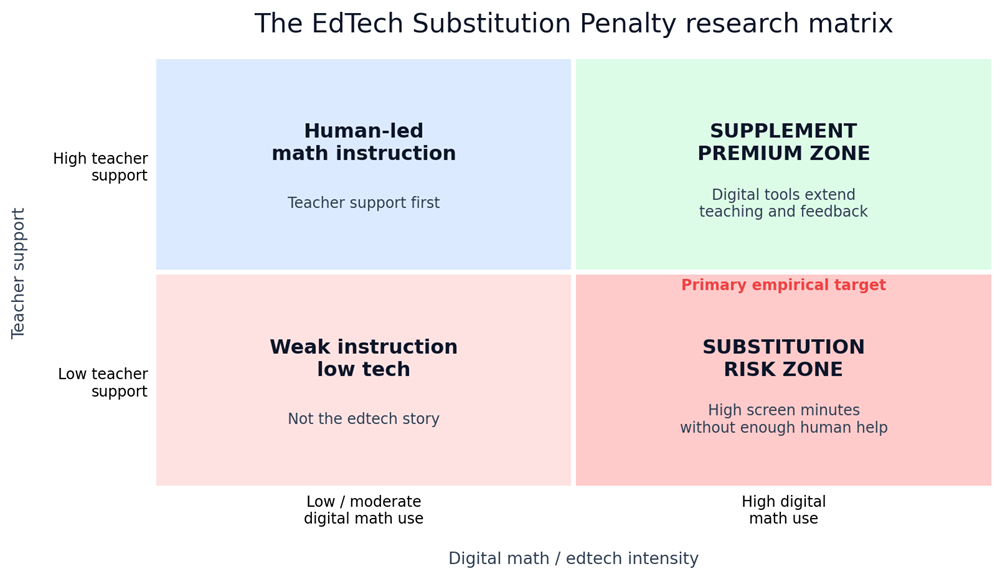
Figure 1. The central framework: the key question is whether digital math minutes supplement or substitute for teacher support.
Key findings
| Finding | Why it matters |
| Device access is no longer the bottleneck. | NCES reports that 88% of U.S. public schools had a 1:1 computing program in 2024-25. The policy problem has shifted from access to instructional quality. |
| Tablet and iPad use is now part of the broader edtech system. | Among schools with 1:1 programs, 27% make tablets available. The same substitution risk applies to tablets, laptops, math apps, LMS tools, and AI tutors. |
| Moderate digital learning can be associated with stronger math performance. | OECD/PISA reports that students using digital devices for learning at school for up to one hour per day scored higher in math than non-users, even after socio-economic controls. |
| Heavy use and distraction are warning signs. | PISA also finds that heavier digital-device use and peer-device distraction are associated with lower math performance. |
| AI makes the substitution question more urgent. | NCES reports that 73% of public schools already have at least a few teachers using AI, while only 31% have written student AI-use policies. |
| The right debate is not “tech or no tech.” | The better question is whether digital learning is teacher-guided, feedback-rich, and connected to the lesson, or whether it replaces human instruction. |
1. The wrong question is “how much screen time?”
For years, the school-technology debate has been framed as a screen-time debate. That framing is too blunt. A math app used after a teacher models a concept is not the same as a math app used instead of a teacher. A tablet used for guided practice is not the same as a tablet used for passive clicking, repeated guessing, or busywork.
That distinction matters because schools are now saturated with digital tools. NCES reported that 88% of public schools had 1:1 computing programs in the 2024-25 school year. Among those schools, 89% made laptops available and 27% made tablets available. More than three-quarters of public schools also reported high-speed internet across all school grounds and buildings.
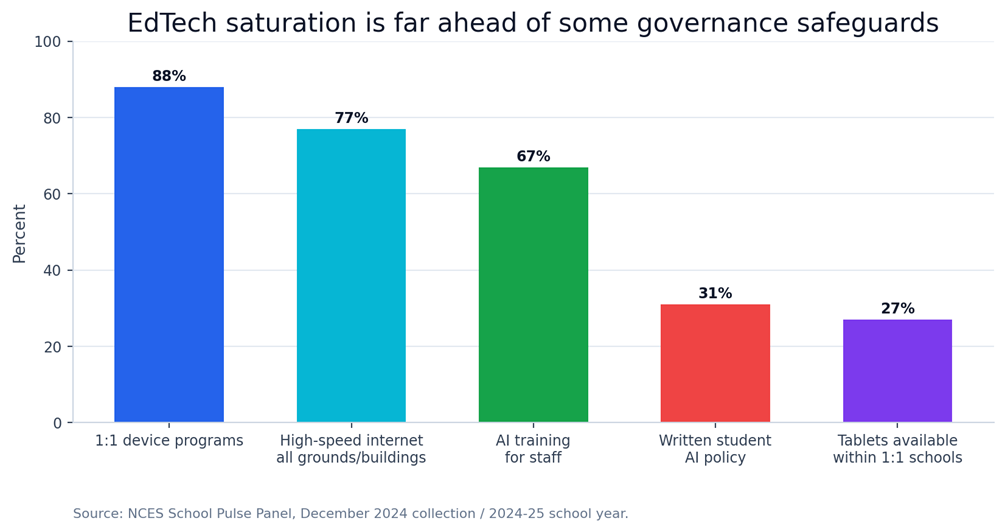
Figure 2. Public schools have widespread device and internet access, but governance and student-use policies are less mature.
This changes the policy question. Schools are no longer asking whether digital devices belong in the classroom at all. They are asking which digital minutes deserve a place in instruction and which minutes crowd out better forms of learning.
| The new question for schools Do digital tools give teachers more power to explain, diagnose, practice, and intervene – or do they reduce the amount of human explanation and feedback students receive? |
2. The device backlash is really an attention and instruction problem
The growing backlash against classroom phones and screens is often treated as anti-technology. The data suggest something more specific: school leaders are worried about attention, classroom control, and academic focus.
NCES reported that 77% of public schools prohibit cell phone use during any class. It also reported that 53% of public school leaders believe cell phones have negatively affected academic performance, 72% believe they have negatively affected mental health, and 73% believe they have negatively affected attention span.
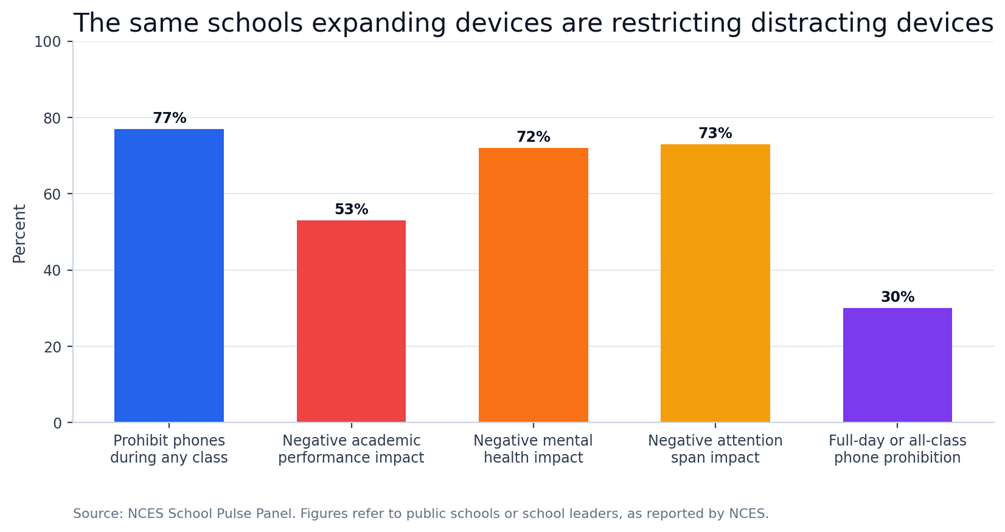
Figure 3. The device backlash is driven less by access and more by concerns about attention, learning, and classroom control.
This is where the iPad and tablet math-minute debate becomes more serious. A school can ban phones and still have students spending large amounts of class time in math software, adaptive platforms, LMS assignments, or AI-supported tasks. The question is whether that time is instructionally designed or merely digitally assigned.
3. PISA shows why digital learning is not one thing
OECD/PISA evidence does not support a simplistic “technology is good” or “technology is bad” story. The published pattern is more useful: moderate digital-device use for learning can be associated with stronger math performance, while heavier use and distraction point in the opposite direction.
In PISA 2022, students who spent up to one hour per day using digital devices for learning at school scored higher in mathematics than students who reported no such use. OECD reports that the advantage was 25 points before controls and 14 points after accounting for students’ and schools’ socio-economic profile. But students using devices for learning for five to seven hours per day scored lower than those using them for three to five hours, and students using devices for more than seven hours scored even lower.
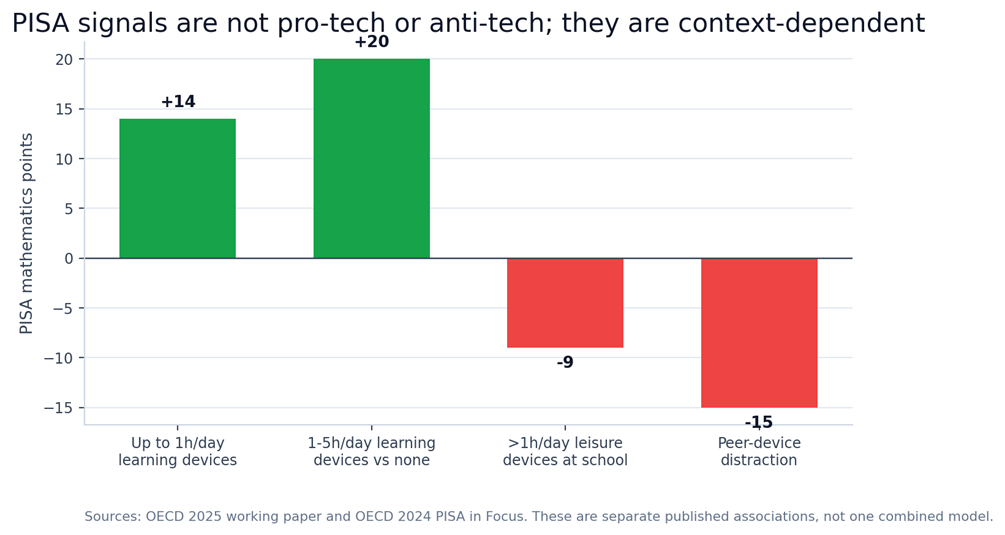
Figure 4. Published PISA findings point to a two-sided pattern: moderate learning use can help, while heavy use and peer distraction are warning signs.
The practical lesson: the same device can be an explanation tool, a practice tool, a feedback tool, a boredom tool, or a distraction tool. The achievement signal depends on what the device is replacing.
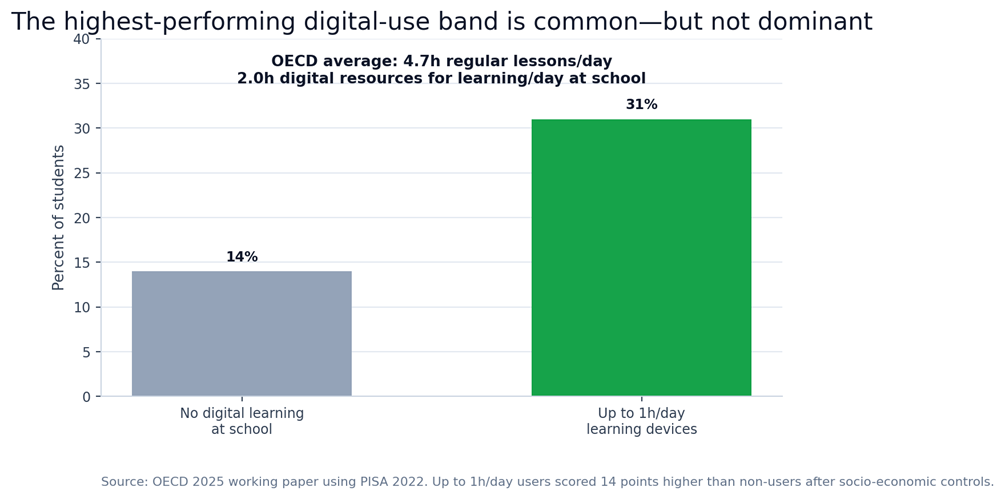
Figure 5. The “up to one hour” digital-learning band matters because it is associated with stronger performance after controls, while average digital-learning time is already substantial.
4. The classroom device problem is partly social
Parents often evaluate classroom devices as an individual discipline problem: “Can my child handle the device?” PISA suggests the better classroom question is broader: “Can my child learn while nearby students are using their devices?”
Across OECD countries, about 30% of students reported being distracted by their own digital devices in most or every math lesson. Another 25% reported being distracted by other students using digital devices. OECD also reports that students who experience peer-device distraction in at least some math lessons scored lower in mathematics after socio-economic controls.
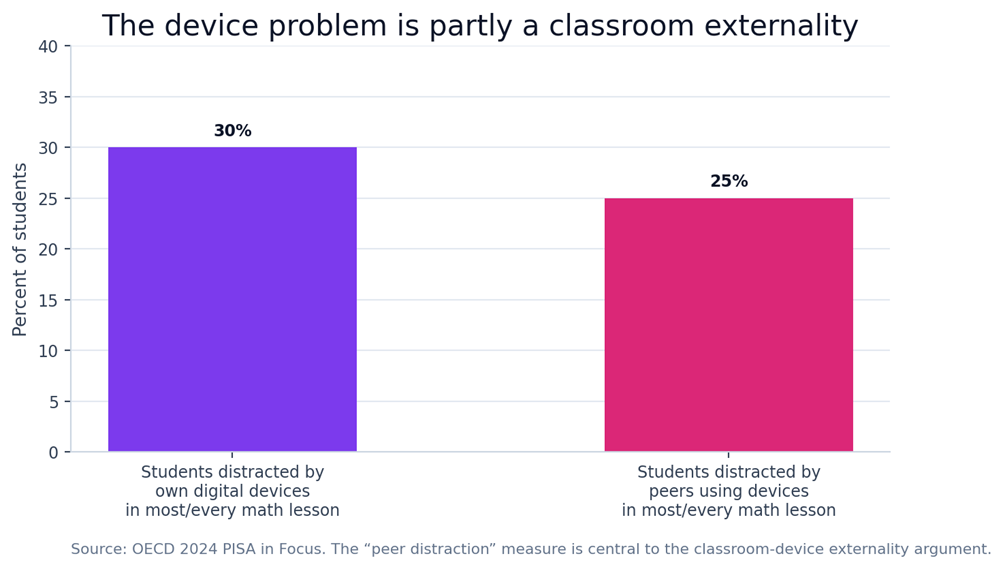
Figure 6. Device distraction is not only self-distraction. Classmates’ devices can create a classroom-wide learning cost.
| Why this matters for parents: Even when one child uses a tablet responsibly, nearby devices can still shape the classroom environment. The learning cost may come from the room, not only from the individual student. |
5. The equity trap: not every student gets the same kind of edtech
The substitution penalty becomes most important when it intersects with inequality. In theory, digital tools can expand access to high-quality practice. In practice, the same tool can become either enrichment or replacement depending on the amount of adult support around the student.
NCES data show that access inside 1:1 programs is not experienced equally. Among schools with 1:1 programs, 46% allow students to take devices home on school days and weekends. That share is much higher in high/secondary schools and very large schools, but lower in high-poverty neighborhoods and elementary schools.
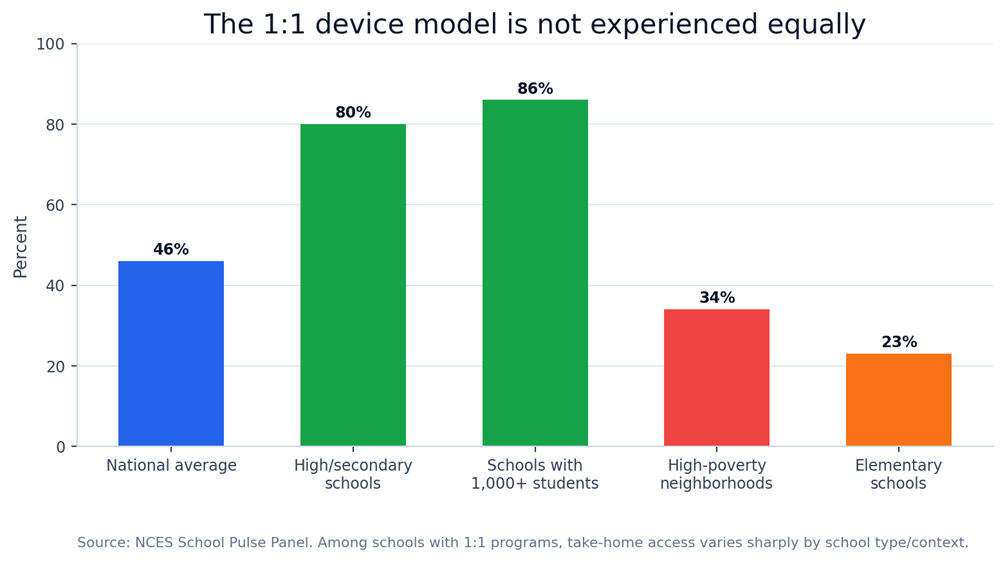
Figure 7. The 1:1 device model does not mean students experience equal access, use, or instructional design.
The deeper equity issue is not just whether a student has a device. It is whether the device is paired with strong teaching, tutoring, adult help, stable study time, and fast error correction. A student in a well-supported setting may experience edtech as enrichment. A student in an under-supported setting may experience the same edtech as a substitute for help.
6. The tablet question is quickly becoming an AI tutor question
The iPad and tablet math-minute debate was the first version of the substitution problem. AI may become the larger version. The same risk now applies to automated feedback, homework helpers, AI tutors, lesson generators, chatbots, and grading tools.
NCES reported that 73% of public schools had at least a few teachers using AI for tasks such as lesson planning, administrative work, tailored materials, assessment, grading, feedback, or supplementing instruction. But only 31% of public schools reported having a written policy on students’ use of AI in school. The adoption curve is moving faster than the governance curve.
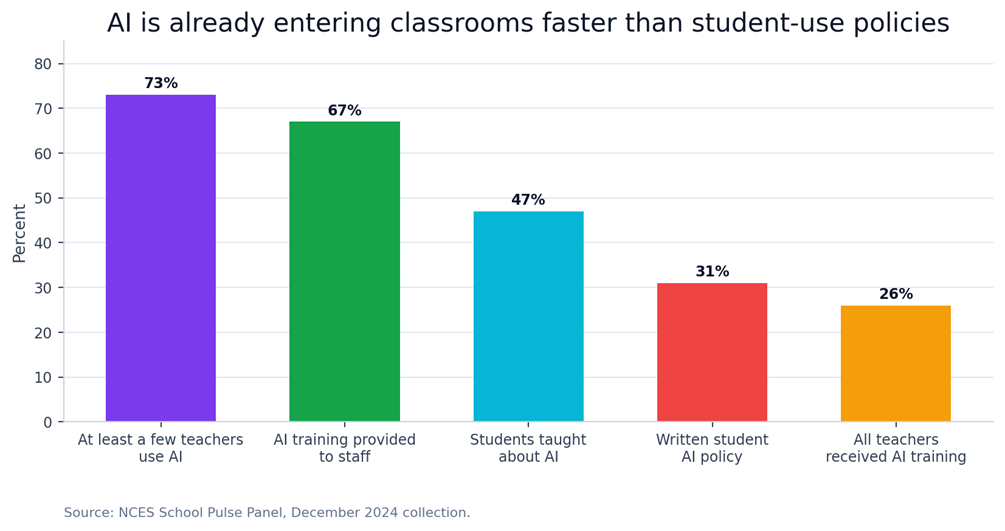
Figure 8. AI is entering classrooms faster than formal student-use policies.
The danger is not that teachers use AI. The danger is that AI becomes an invisible substitute for thinking, explanation, feedback, and diagnosis. A tool that helps a teacher spot misconceptions can be valuable. A tool that lets a student generate an answer without understanding the reasoning can create the appearance of learning without the substance of learning.
7. Device rules are not the same as teaching guidance
A school can have a device policy and still lack a clear instructional model for when digital tools should be used in math. Rules about access, login, privacy, or acceptable use are necessary, but they do not answer the instructional question: what should students do before, during, and after digital practice?
OECD teacher-policy work points to this gap. General school statements about digital devices are more common than subject-specific pedagogical guidance. That matters because math learning depends heavily on explanation, worked examples, error correction, discussion, practice, and transfer to new problems.
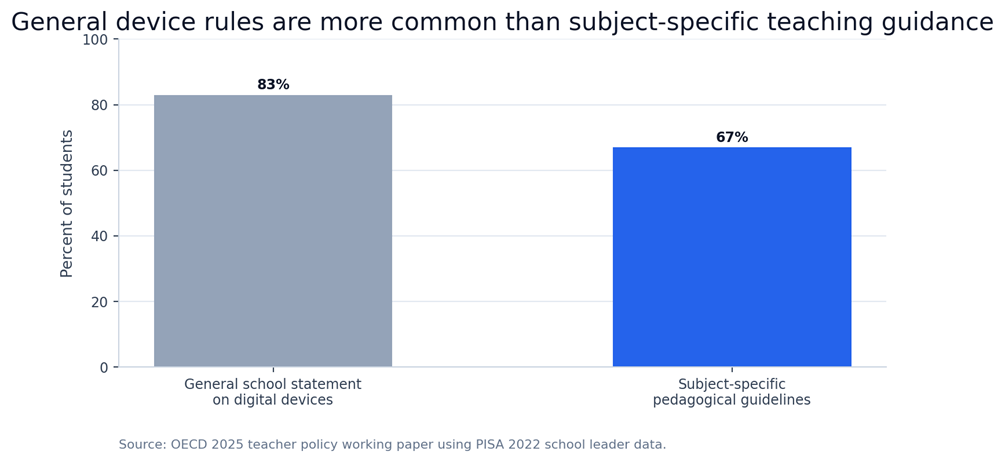
Figure 9. General digital-device policies are more common than subject-specific teaching guidance.
| Good digital math minutes A productive tablet or iPad math minute is short, teacher-guided, feedback-rich, and connected to the lesson. It helps a student practice something they have been taught and gives the teacher information about what to explain next. |
| Weak digital math minutes A weak digital math minute is long, passive, unsupervised, disconnected from classroom explanation, or used mainly to keep students busy. It may increase completion data without increasing understanding. |
8. Why math achievement makes this a public-interest story
The substitution question matters because math recovery is still incomplete. NAEP 2024 found that fourth-grade math improved from 2022 but remained below 2019. Eighth-grade math was not significantly different from 2022 after the historic decline seen in 2022, and it remained below 2019. Grade 12 math was lower in 2024 than in 2019.
That does not mean edtech caused the math problem. It means schools need a more serious standard for judging digital learning. If digital tools are being used to extend teacher support, they deserve careful investment. If they are replacing teacher support, they deserve careful scrutiny.
9. What schools should measure instead of minutes alone
Minutes are easy to count. Learning is harder to see. Schools should still track usage, but usage should not be treated as proof of learning. The better dashboard would separate productive digital learning from substitute digital learning.
| Measure | Question to ask |
| Teacher explanation before digital work | Was the student taught the idea before being sent into the platform? |
| Error correction after digital work | Did the teacher review misconceptions and explain mistakes? |
| Reasoning, not only answers | Does the task require explanation, steps, models, or transfer to a new problem? |
| Human intervention for struggling students | Does low performance trigger adult help, or only more software practice? |
| Classroom discussion | Does technology increase or reduce math talk? |
| Independent transfer | Can students solve similar problems without the device? |
Methodology and limitations
This article is a public-source research analysis. It combines published findings and public statistics from NCES School Pulse Panel, OECD/PISA, NAEP, and the UNESCO-UNICEF-ITU Charter for Public Digital Learning Platforms. The purpose is to build a clear, testable framework for understanding when edtech supplements teaching and when it may substitute for it.
The article does not claim that iPads, tablets, math apps, LMS tools, or AI tutors directly cause lower math scores. Most public findings used here are associations, not causal estimates. Students who use more digital tools may differ from other students in many ways, including school resources, prior achievement, teacher staffing, family support, absenteeism, and classroom context.
Conclusion: the future of edtech should be teacher-powered
The most important question is not whether students should ever use iPads, tablets, math apps, LMS tools, or AI tutors. The more important question is what those tools are replacing.
When digital tools help a teacher explain better, diagnose faster, give sharper feedback, and support more practice, they can strengthen math learning. When they replace explanation, guided practice, discussion, handwriting, and human feedback, they risk becoming a substitute for the very thing students need most.
That is the EdTech Substitution Penalty: the hidden cost of treating digital activity as learning, even when the human teaching around it has become thinner. The next generation of classroom technology should not aim to automate teachers out of math learning. It should help teachers spend more time on the hardest, most human parts of math: explaining, questioning, diagnosing, encouraging, and helping students think.
Sources
Primary public sources used for the article and chart captions:
OECD PISA 2022 Results, Volume II
OECD PISA 2022 Results, digital distraction summary
OECD PISA 2022 Results, Volume V
UNESCO-UNICEF-ITU Charter for Public Digital Learning Platforms
Source notes
- NCES School Pulse Panel: 88% of public schools reported 1:1 computing programs; among those, 27% made tablets available; 77% prohibited cell phone use during any class; 53% of public school leaders reported negative academic impact from cell phones; 67% offered AI training to some or all staff; 31% had written student AI-use policies.
- OECD/PISA: students using digital devices for learning at school for up to one hour per day scored 14 points higher in math than non-users after socio-economic controls; heavier use and device distraction are associated with weaker outcomes.
- NAEP 2024: fourth-grade math improved compared with 2022 but remained below 2019; eighth-grade math was not significantly different from 2022 and remained below 2019; grade 12 math was lower in 2024 than in 2019.
UNESCO-UNICEF-ITU: the Charter frames digital environments as supports for education as a public good, working in concert with schools and other education institutions.

Adhip Ray is the founder of Debsie, an online learning platform focused on chess and skill-based learning for children. His work at Debsie brings together chess education, structured thinking, problem-solving, and interactive learning for young students.
Adhip has an academic background in law, statistics, analytics, and technology. He is from Amity Law School and the Indian Statistical Institute, Kolkata, with formal training that connects legal reasoning, data analytics, quantitative thinking, and structured problem-solving. This interdisciplinary background is reflected in Debsie’s focus on building sharper thinking skills in children through chess and related learning programs.
Adhip is also a FIDE-rated chess player from India. He holds FIDE ID 5055954 and has a standard FIDE rating of 1832. His FIDE profile records him as an Indian player with a long rating history in standard chess, including rated games from his competitive playing years. His chess background gives Debsie a founder-led connection to the game, not only as an educational activity but also as a competitive discipline that develops concentration, calculation, planning, and decision-making.
In addition to chess, Adhip has a strong interest in coding, data, and technical problem-solving.
Adhip’s profile combines chess, law, data analytics, and programming. At Debsie, this background supports the creation of learning experiences that are logical, structured, and skill-oriented. The platform’s chess-focused programs are connected to broader cognitive skills such as pattern recognition, patience, strategic planning, focus, and problem-solving.
As founder of Debsie, Adhip brings together experience from multiple fields: formal legal education from Amity Law School, analytical training from the Indian Statistical Institute, Kolkata, competitive chess experience through his FIDE-rated profile, and coding practice through LeetCode. This combination gives Debsie a distinct foundation in strategy, reasoning, analytics, and child-focused learning.
Through Debsie, Adhip is associated with building chess and learning content for children that goes beyond basic instruction. The platform connects chess with thinking skills, helping students approach challenges with more structure, clarity, and confidence. His own background in chess and analytical problem-solving gives the platform a direct link to the skills it aims to develop in young learners.
Adhip is also a member of Forbes Business Council.