
Parents want one simple thing. They want help for their child that actually works. But where you live can make that hard. In big cities, tutoring centers feel close. In small towns, help can feel far away. Online options should fix this gap, but not all homes have fast internet. Prices change, travel takes time, and schools have different support. These small details add up to big learning gaps. The goal of this article is to make those gaps clear, and then show you what you can do right now.
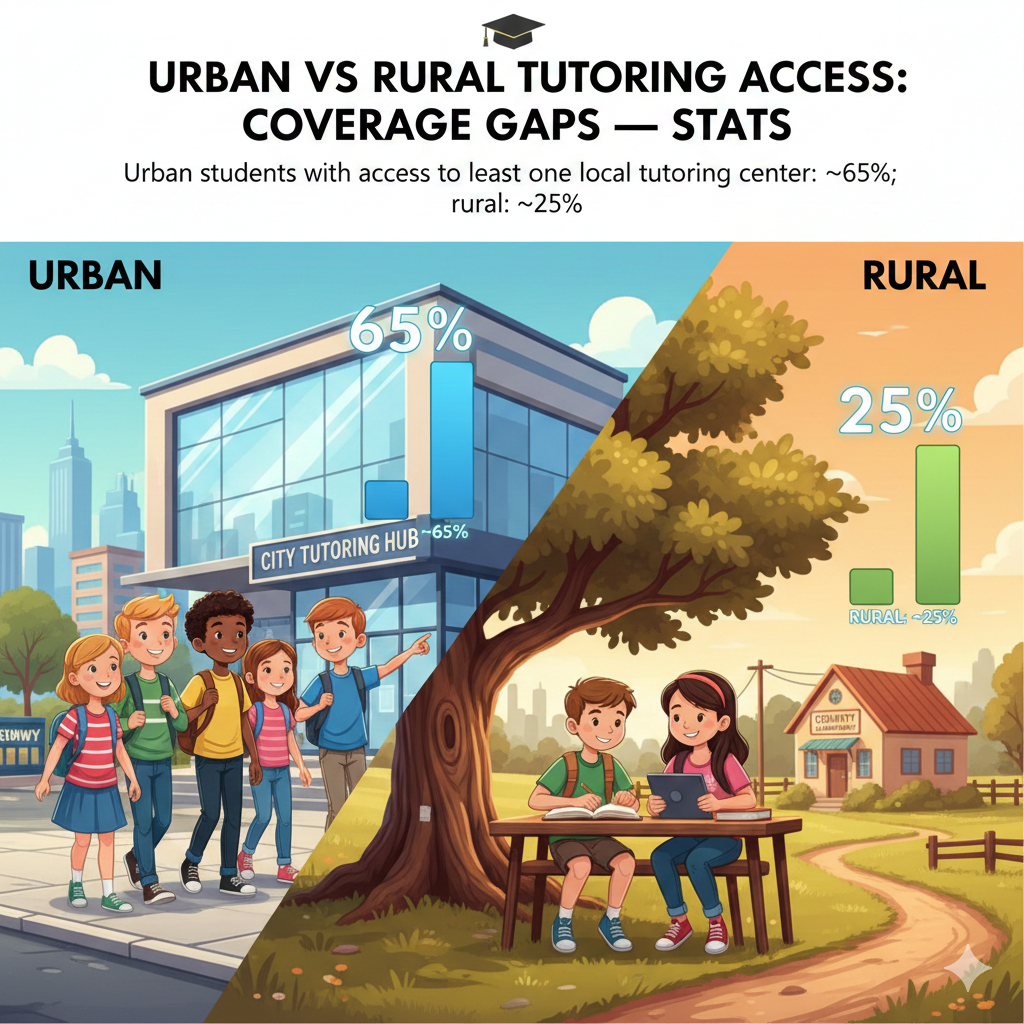
1) Urban students with access to at least one local tutoring center: ~65%; rural: ~25%.
Why this gap matters
Access is the first gate to learning help. In cities, two out of three students can find a center nearby. In rural areas, only one in four can. This means many rural families must build their own pathway. When access is low, students wait longer to get help, lose momentum, and feel left behind.
Confidence drops. Parents feel stress. Small gaps in math facts or reading fluency stretch into larger gaps across subjects. The problem is not the child’s ability. It is the system around the child. When help is nearby, families take small steps more often.
When it is far away, even simple steps feel heavy. The good news is that access can be created in different ways when we use smart planning and the right mix of people, tools, and time.
What to do right now
Start by mapping what actually exists within your reach. Ask the school counselor for a list of tutors and homework clubs. Call the local library and community center to ask about study hours. Ask a trusted teacher if they know a college student who tutors remotely.
If you live far from town, shift your plan to consistent online sessions combined with at-home practice. Pick two core goals for the next six weeks, such as multiplication fluency and reading stamina. Set a fixed schedule, even if sessions are short.
Keep a simple progress log that tracks date, topic, and one win. Use your child’s schoolwork to choose targets. If there is no algebra tutor nearby, find a general math tutor who can guide the steps and then lean on quality digital practice for topic drills. Treat access like a puzzle you can solve piece by piece.
How Debsie helps
Debsie brings live, small-group lessons and playful practice to any home with internet. Classes fit varied time zones, and the curriculum is built like a game, so children want to come back. If you are not sure where to start, book a free trial class so a teacher can observe your child’s level and suggest a plan.
If you already know your child’s main pain point, choose a focused track and begin this week. The sooner access becomes steady, the faster confidence grows.
2) Average travel time to nearest tutoring center—urban: ~18 minutes; rural: ~52 minutes.
Why time is a hidden cost
Time is not just minutes on a clock. It is energy. It is mood. It is the difference between a calm study hour and a tired, rushed one. In cities, the average short trip means a student arrives with fuel left in the tank. In rural areas, long drives eat that fuel before the lesson begins.
Long travel also makes it hard to keep a regular schedule. Bad weather or busy farm seasons can cancel plans. When time is scarce, families either stop tutoring or stretch sessions too far apart to make gains. The key is to turn travel time into learning time or remove the travel fully.
What to do right now
Run a simple time audit for one week. Write down start and end times for school, meals, homework, and sleep. Find two slots of forty to sixty minutes that repeat on the same days each week. Protect those slots like appointments.
If a drive is required, make the car a learning zone with audiobooks, math fact games, and short mindset talks. If the drive is too long, pivot to online tutoring and ask for shorter but more frequent sessions, such as three twenty-five minute sessions rather than one long block.
Short, frequent practice beats long, rare practice. Build a micro-routine around each session. Five minutes to set goals, fifteen to review work from school, then focused tutor time, then five to note wins. End with a tiny reward like a favorite song or quick stretch.
This rhythm keeps the brain fresh and makes progress feel smooth.
How Debsie helps
Debsie removes the commute. Live sessions are held online with expert teachers who keep lessons lively and tight. Children move through quests and challenges that make each minute count.
Families can choose schedule slots that fit busy weeks, and missed sessions can be swapped. If you want to test how online fits your life, book a free trial and see how much time you get back when the car stays in the driveway.
3) Households with reliable broadband for online tutoring—urban: ~82%; rural: ~56%.
Why connection quality shapes learning
Online tutoring works only if the connection is steady. When video freezes, attention breaks. When audio drops, instructions get lost. Urban homes have stronger broadband more often, while many rural homes rely on weaker plans or spotty signals.
This does not mean online help is off the table. It means we must plan for the tech we have and improve it step by step. Even modest upgrades can turn a choppy session into a clear one.
What to do right now
First, test your real speeds in the room where your child studies. If speeds vary by time of day, choose session times when the connection is strongest. Place the router in a central, open spot away from metal or thick walls.

If the router is old, ask the provider for an upgrade or buy a modern model that supports current standards. Use a wired ethernet cable if possible; it gives a more stable signal than Wi-Fi. Close other apps and pause downloads during sessions.
If several people share the line, set a simple household rule that streaming waits during class. If your plan has data caps, ask the provider about education-friendly plans, community discounts, or off-peak boosts.
If home service is weak and cannot be improved soon, try a backup option. Many libraries and community centers offer quiet rooms and strong Wi-Fi for students. Pack a simple study kit with headphones, a notebook, and pencils, and treat that space as your temporary classroom.
How Debsie helps
Debsie sessions adapt to the connection you have. Teachers use clear visuals, short speaking turns, and interactive tools that still work at lower speeds. If a child disconnects, the teacher posts quick checkpoints so rejoining is easy.
The platform also includes offline practice that syncs later, so learning does not stop when Wi-Fi blinks. If you want to see how smoothly this can work on your setup, try a free class and run it at the same time you plan to study each week. Real conditions give you real answers.
4) Students using paid private tutors—urban: ~38%; rural: ~14%.
What this tells us
A larger share of city families pay for private tutors because choices are nearby and easy to schedule. In rural places, fewer families go this route. The reasons are simple. There are fewer tutors, longer travel, and less word-of-mouth.
This gap leads to slower support when grades dip or when a child needs stretch goals. Paid tutoring can be powerful, but it is only one path. The key is to build a support stack that fits your budget and keeps momentum week after week.
Practical steps you can take
Decide the single skill your child needs most right now. Pick a time frame of six weeks and a weekly budget you can truly keep. Ask two local teachers to recommend one tutor each, then interview those tutors with a short call.
Share a recent assignment and ask how they would teach it. If local options are thin, expand to online tutors and request a brief trial. Use a simple agreement that names goals, meeting times, and how progress will be shown every two weeks.
Add one free layer, such as library study time or a peer study partner, to keep learning going between sessions. Pay for the expert brain, but use free time for practice. Review progress every other Sunday.
If gains are slow, change one variable at a time, such as session length or homework load. Keep receipts and log outcomes so you can see what gives the best return for each dollar.
How Debsie helps
Debsie blends expert teaching with gamified practice so families see value per minute and per session. Live classes are priced for consistency, not one-off fixes, and the platform shows clear progress through levels and badges.
Start with a free class, check your child’s engagement, and then lock a plan that your budget can hold for months, not days. Steady beats flashy every time.
5) Ratio of tutors per 1,000 students—urban: ~7.5; rural: ~2.1.
What this tells us
When the pool of tutors is small, matching needs to skills is harder. A child who needs geometry help may end up with a general math helper who lacks depth. Wait times grow. Prices can rise. In cities, a bigger pool allows tighter matching and faster starts.
The solution in low-supply areas is to widen the net while sharpening the ask. A vague request wastes time. A precise request pulls the right person faster.
Practical steps you can take
Define the learner profile in writing. Include grade level, current unit, two recent errors, attention span, and learning preferences. Share this with every prospect so they can say yes or no quickly. Search beyond your town.
Contact regional colleges, teacher prep programs, and retired educators who enjoy remote work. When you find a generalist with the right tone, support them with structured resources that fill the subject gap.

Ask the tutor to build a mini-scope for four weeks with exact outcomes, such as mastering sine and cosine on right triangles or writing a strong thesis statement. Meet for a ten-minute parent check-in after two sessions to confirm direction.
If local supply is thin for a long time, consider creating a small tutoring co-op with two other families. Rotate schedules, share one expert tutor online, and reduce costs while keeping quality high.
How Debsie helps
Debsie has a broad bench of subject specialists across time zones, so matching is quick. The platform also uses placement checks to place students into the right small group or one-on-one track.
If you have struggled to find a fit, book a free trial class and share your learner profile. We will align the right teacher and curriculum and get your child moving this week.
6) Schools offering after-school tutoring—urban: ~64%; rural: ~31%.
What this tells us
After-school programs are a lifeline for many families. They provide structure, a safe place, and extra teaching time. Cities have more of these programs, often funded by district or nonprofit partners.
Rural schools do offer them, but less often and sometimes only for a short season. When school support is scarce, families need to create a home-based plan that feels just as steady and calm.
Practical steps you can take
Ask the principal or counselor about current and upcoming tutoring programs, not just what exists today. If none are active, ask about volunteer hours, peer tutoring, or teacher office hours that you can turn into a weekly habit.
Build a home learning hour on two set days. Start with a five-minute warm-up, then twenty minutes of focused work from school, then a short reflection. Keep tools ready in a small tote so setup is instant. If your child needs help you cannot give, schedule a short online session that attaches to this hour, like a coach dropping in to guide key steps.
Track attendance like a real program. Aim for eight sessions in a month. Celebrate when you hit the streak. If transportation is the issue, offer to coordinate a small carpool with two nearby families for shared pick-ups on tutoring days. Community effort can turn a thin program into a real one.
How Debsie helps
Debsie can serve as your after-school program at home. Our live classes run at family-friendly times, and the self-paced quests fill the gaps between live sessions. Your child builds skills and habits in one place, with clear goals and small wins.
Try a free class to test how this slot fits your week, then claim the schedule that you can keep for the next quarter.
7) Students in low-income urban areas with access to subsidized tutoring: ~29%; low-income rural: ~12%.
What this tells us
Subsidies lower the cost barrier, but access differs by location. Urban areas often have more nonprofits and grants. Rural areas have fewer programs and longer application chains. Families who would benefit most may not hear about options in time.
The answer is to search smart, apply early, and combine support streams to build a plan that lasts.
Practical steps you can take
List your child’s needs and your ideal schedule, then search for help in three lanes: school-based, community-based, and provider-based. For school-based help, ask the counselor about any learning recovery funds,
Title I services, or targeted small groups. For community-based help, call the library, local church networks, and youth clubs to ask about study support or scholarships. For provider-based help, contact trusted platforms and ask for sliding-scale seats, sibling discounts, or financial aid cycles.

Prepare a simple packet with report cards, a teacher note, and a short statement of need. Keep digital copies ready so you can apply fast. If you receive partial aid, use it to secure the live teaching time, then fill practice time with free resources and structured reading at home.
Reapply each term; many families do not, and funds go unused. Keep a calendar of deadlines so renewals are never missed.
How Debsie helps
Debsie sets aside limited scholarship seats and offers seasonal discounts. Speak to our team during a free trial class about your situation. We will help you craft a plan that balances live instruction and self-paced quests so every dollar drives real growth.
The goal is simple: steady support that your child can rely on week after week.
8) Average hourly tutor rate—urban: ~$28; rural: ~$17.
What this tells us
Prices differ because demand and cost of living differ. Lower rural rates may look good at first, but supply is thin and subject expertise can vary. Higher urban rates can buy speed and specialization, yet they stretch budgets fast.
The right frame is value per outcome, not price per hour. A lower rate with slow progress costs more over time than a fair rate with fast gains.
Practical steps you can take
Define outcomes in measurable terms, such as a five-point rise on weekly quizzes or finishing a full unit’s problem set with ninety percent accuracy. Ask tutors how many hours they expect to reach that target.
Multiply their rate by the estimated hours to get a total cost to outcome. Compare tutors using that number, not just the hourly price. Request a short diagnostic in the first meeting to avoid teaching at the wrong level.
Bundle sessions into a recurring plan to secure a better rate, but keep a two-week review clause so you can adjust. Use shorter sessions for younger learners to maximize focus. If your child fades after twenty-five minutes, pay for two short sessions a week rather than one long session.
Combine paid instruction with no-cost practice on off days so the teacher’s time is used for feedback and strategy, not basic drills.
How Debsie helps
Debsie prices are built for outcomes, not seat time. Live sessions target the hard parts while the platform handles practice and review with smart feedback. Parents see progress through clear dashboards, so value is visible, not vague. Take a free class, look at the plan and the pace, and decide with confidence.
9) Households reporting no tutoring options within 10 km—urban: ~8%; rural: ~41%.
Why this matters
When there are no options nearby, families face a hard choice. They either drive far, delay help, or try to do it all alone. In cities, only a small share face this. In rural areas, many do. This gap does not reflect student talent. It reflects geography and supply.
A child can be eager and capable yet still fall behind because the path to help is long or unclear. Distance also affects energy. After a long day, a long trip drains attention. Even if parents make the trip once, it is hard to keep doing it week after week.

The key is to redesign how support reaches your child, and to use simple tools that remove the need to be close to a center.
What to do right now
Start by defining your target subjects and the smallest setup you need for a strong session at home. A quiet corner, a basic laptop, and headphones can be enough. If the internet is weak, plan for low-bandwidth tools, scheduled downloads, and short sessions.
Treat your home as the main campus and bring expertise in through the screen. Build a steady weekly plan with two fixed study slots and one flexible slot. Use the flexible slot for catch-up when life gets messy. If you still want in-person support, create a once-a-month clinic day.
Drive to town, stack two sessions, and bring a list of questions from schoolwork. Record key tips in a simple notebook so your child can use them for the next four weeks. Invite one or two classmates to share the drive costs and share notes.
Over time, the clinic day becomes a boost, while the weekly home routine does the heavy lifting.
How Debsie helps
Debsie makes the distance disappear. Live classes bring expert teachers into your home, and game-like practice keeps your child engaged between sessions. You can start with a free trial class to see how a home setup can work even when there is no local center.
If you like the fit, pick a course path and lock your weekly slots so support is always close, even when the nearest town is not.
10) Students attending test-prep programs—urban: ~26%; rural: ~9%.
Why this matters
Tests shape futures. Entrance exams and board tests open doors to schools, scholarships, and careers. In cities, more students get structured prep. In rural areas, fewer do. This gap is not about effort. It is about access, timing, and awareness.
Without guided prep, students risk learning the content but missing the format, the timing rules, and the small tactics that unlock higher scores. The fix is to build a simple, steady plan that covers content, practice, and test-day habits.
What to do right now
Pick the exact test date and work backward twelve to sixteen weeks. Split prep into three phases. In phase one, check the blueprint and gather past papers. In phase two, build speed with short daily drills, not marathon sessions.
In phase three, simulate full tests under real timing once a week. Keep a running error log with three columns: question type, reason for the miss, and fix. Review the log twice a week for ten minutes. Teach your child to label misses as gaps, traps, or rush.
Gaps need study, traps need pattern spotting, and rush needs pacing tools like skip-and-return. Ask teachers for two key topics to focus on. If you cannot find a test-prep class locally, use an online tutor for weekly strategy sessions while your child drills on free practice days.
Celebrate small wins, like five more correct answers on a timed set. Confidence grows when progress is visible.
How Debsie helps
Debsie offers targeted test-prep tracks that blend live strategy lessons with timed practice and instant feedback. Students learn pacing moves, guessing tactics, and pattern recognition in a friendly, game-like space.
Try a free class to see how a single session can improve both score and calm. Then choose a schedule that runs right up to test day, so your child walks in ready and steady.
11) Share of certified teachers offering private tutoring—urban: ~22%; rural: ~10%.
Why this matters
Certified teachers bring classroom insight, curriculum alignment, and proven methods. In cities, more of them offer tutoring on the side. In rural areas, fewer do, often due to time, distance, or a smaller pool.
This makes it harder to find someone who knows the exact standards your child is tested on. Still, many skilled educators in rural areas are open to remote work if the plan is clear and the setup is simple. The key is to search smart and present a clear ask that respects their time.

What to do right now
Write a brief learner profile and a four-week goal. Reach out to your child’s current teacher first, not to tutor them directly if policy does not allow, but to ask for two referrals. Contact nearby schools and teacher groups and mention you welcome remote sessions.
Show your clear plan, including times, tools, and the progress check routine. Ask how they handle feedback and parent updates. If no certified teacher is available, consider an experienced tutor who follows school standards closely.
hare the weekly class topics so the tutor can align homework help with what is being taught. Schedule a quick weekly message with the classroom teacher to confirm focus areas. With this loop, even a non-certified tutor can stay on track.
Keep expectations realistic. Two well-run sessions per week plus steady practice can move the needle.
How Debsie helps
Debsie’s teachers are vetted for skill, clarity, and care. Many are certified and have deep subject experience. The live lessons stay aligned to what schools teach, while our quests give extra practice where it counts.
Book a free trial class, share your goals, and we will pair your child with a teacher who fits both level and style. This keeps learning clean, aligned, and effective.
12) Students receiving STEM tutoring—urban: ~34%; rural: ~13%.
Why this matters
STEM skills are doors to the future. Coding, data, robotics, and advanced math shape modern jobs. In cities, more students get help in these areas. In rural areas, fewer do, often because specialists are rare.
Without early, steady support, students may avoid hard topics, even when they could grow to love them. The aim is to build curiosity first, then skill, with simple steps that fit home life.
What to do right now
Pick one STEM thread that excites your child. It could be fractions for building, circuits for tinkering, or simple coding for games. Create a six-week project that ends with a small showcase. For math, set a goal like mastering fractions through hands-on recipes or carpentry plans.
For science, plan simple experiments using household items and a lab notebook. For coding, choose a beginner path that builds a tiny game or animation. Add one weekly mentor session to guide the project, either in person if available or online.
Keep tasks short and clear, with one new skill each week. Track progress with a visible board that shows goals, tasks, and done items. End each week with a demo to the family. This creates pride and keeps interest high.
If you cannot find a local mentor, pair your child with a trusted online teacher and use free practice days to explore related videos, readings, and challenges.
How Debsie helps
Debsie’s STEM paths are built like adventures. Kids code small projects, test ideas, and earn rewards for persistence and problem solving. Live teachers guide the tricky parts, while the platform keeps practice fun.
Start with a free trial class to see which path lights up your child. Then enroll in a course that grows week by week, building both skill and confidence.
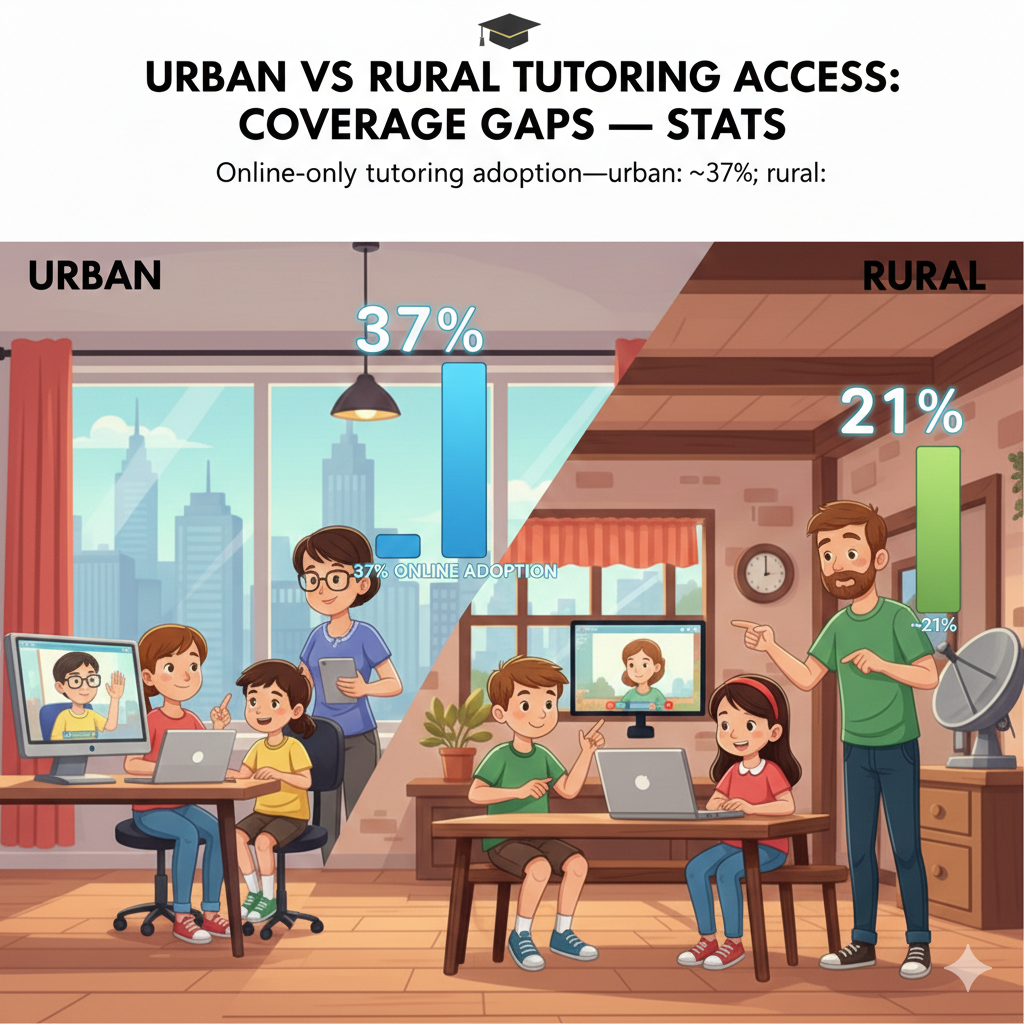
13) Online-only tutoring adoption—urban: ~37%; rural: ~21%.
What the numbers suggest
More city families lean on online-only help because broadband is stronger and habits are set around screens. Rural families use it less, often due to weak internet, fewer devices, or worry that online feels cold. But online done well is not distant.
It can be warm, focused, and flexible. It can bring subject experts into homes that would never meet them otherwise. The gap here is not about student drive. It is about comfort with tools and trust that learning through a screen can be real.
Steps that make online work
Begin by creating a tiny studio at home. Choose a quiet corner, a firm chair, and a stable surface. Put the camera at eye level so the teacher can see your child’s face and work. Use simple headphones with a mic to keep audio clear. Run a short tech check two days before the first lesson.
Open the platform, share the screen, write on a digital whiteboard, and try a sample math problem or reading passage. During sessions, keep a paper notebook for quick sketches and scratch work, then upload photos when needed. Close extra tabs to protect attention.
Use a clock on the wall so your child can self-manage time. Keep a glass of water nearby and plan a brief stretch at the halfway mark. After class, ask your child two questions: what felt easy and what felt tricky. Send that note to the tutor so the next session targets the right spots.
If internet speed drops at certain hours, choose class times that avoid peak use in your area. If you lose connection, teach your child a simple routine: rejoin, message “back,” and pick up at the last step. With a few routines, online-only becomes smooth and human.
How Debsie fits
Debsie is built for online-first learning that feels close and personal. Teachers guide students with short explanations, hands-on tasks, and game-like quests, so children stay active, not passive. If you are unsure, book a free trial and see how your child responds in your own space. You will know in one session if this mode clicks.
14) Students receiving at least 2 hours/week tutoring—urban: ~31%; rural: ~11%.
Why steady time matters
Two hours a week is often the tipping point where learning sticks. Under that, progress can stall because there is not enough repetition or feedback. More city students pass that threshold, while fewer rural students do.
Life gets busy, travel is long, and options are thin. Yet steady time does not always mean long blocks. It means a rhythm your family can actually keep. Once you set a cadence, small wins stack, and confidence grows.
How to reach two solid hours
Break the goal into pieces that fit your week. Aim for three short live sessions of about twenty-five minutes and two short practice blocks of fifteen minutes each. That equals just over two hours but feels light.
Sync topics with school so the time boosts current units. Keep a simple tracker on the fridge with days and check marks. Tie study time to daily anchors like after snack or right before dinner. If your child struggles to start, use a tiny warm-up that never changes, such as three quick math facts or a thirty-second read aloud to spark focus.
Share progress with the tutor each Friday so the plan stays aligned. If your schedule explodes one week, replace a live session with a recorded mini-lesson and a small assignment, then return to normal the next week.
Protect sleep. Learning sticks when the brain rests well. Two hours on a tired mind is worth less than one hour on a fresh one. Build the habit first; the gains will follow.
How Debsie helps
Debsie makes two hours easy to reach with short, lively classes and guided quests your child can do on non-class days. The platform tracks streaks and celebrates milestones, which keeps motivation high. Try a free class and a sample week plan. If it fits, lock your preferred times so you never lose momentum.
15) Families citing cost as main barrier—urban: ~46%; rural: ~38%.
What this means for planning
Money is a real constraint for many homes. Urban areas often have higher prices and more competition for spots, which raises the share of families who point to cost as the main barrier.
Rural families also feel the strain, though sometimes the first barrier is supply, not price. Either way, the path forward is to make every paid minute count and to stack free supports around it. When you think in terms of cost per result, decisions get clearer and stress drops.

Ways to stretch every dollar
Set a clear outcome and pay for expert guidance on the hardest parts, not for passive time. Use a short diagnostic to find the exact skills to target. Ask the tutor to teach strategy and give precise feedback, then let your child practice on low-cost or free materials between sessions.
Replace long sessions with shorter, more frequent ones that focus on feedback loops. Consider small groups with two or three students if the fit is strong; the rate drops while energy and peer learning rise. Ask providers about sliding scales, sibling discounts, seasonal offers, or referral credits.
If you can pay for only one session a week, pair it with a home study hour on a second day, using a simple checklist that mirrors the tutor’s method. Revisit spending every month. If one service does not move the needle, shift that budget to a different format or subject.
Keep a record of scores, reading levels, and completed units so you can see the return in real terms. And remember that consistency over months beats a burst of spending over days.
How Debsie supports budgets
Debsie’s pricing is designed for ongoing progress. Live classes deliver the targeted teaching, while the platform covers practice at no extra cost. Families can start with a free trial, explore scholarship seats when available, and choose plans that align with their budget.
The goal is long-term growth, not quick fixes that fade.
16) Families citing distance/transport as main barrier—urban: ~12%; rural: ~49%.
Why travel blocks learning
For almost half of rural families, the road is the wall. Long drives, rough weather, and limited transit make it hard to show up often. Even in cities, a share of families struggle with late buses or crowded schedules.
When getting to the lesson is hard, lessons happen less, and confidence stalls. The key is to bring instruction closer, reduce friction, and build routines that work where you live.
Practical ways to beat the distance
Shift your mindset from location-first to learning-first. If travel is heavy, flip to home-based support. Build a calm study corner and treat it like a small classroom. Use online sessions for instruction and keep a standing home practice hour for reinforcement.
If you still need in-person help for certain subjects, cluster sessions on a single day each month. Make that day count with a focused agenda and clear goals. If car time is unavoidable, turn it into learning time with podcasts, flashcard talk, or quick oral summaries of what was learned.
Set up ride shares with trusted families so each parent drives less often. Ask the school if a room can be used after the last bell for remote sessions on strong Wi-Fi, so your child studies before the long ride home. Keep gear ready in a small bag so setup is instant wherever you are.
Teach your child a simple routine to start work within two minutes of arrival. Momentum matters more than miles.
How Debsie removes the miles
Debsie’s live online classes and playful platform bring high-quality teaching to you. No commute, no parking, no weather risk. Your child logs in, learns, and logs off with clear next steps. Start with a free trial to see how much smoother your week feels when the classroom is as close as your kitchen table.
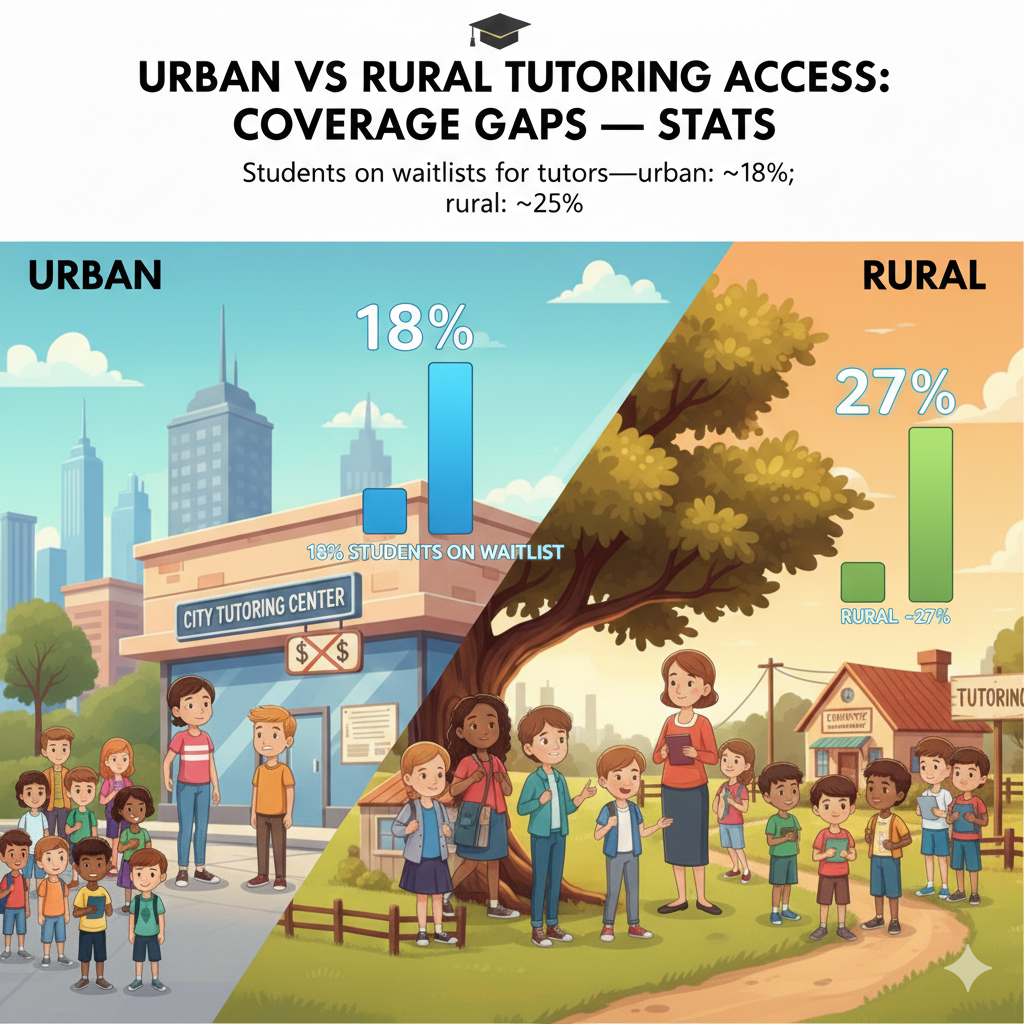
17) Students on waitlists for tutors—urban: ~18%; rural: ~27%.
Why waitlists slow progress
When a child needs help, time matters. A two or three week wait can turn a small gap into a bigger one. In cities, almost one in five students sits on a waitlist. In rural areas, that number is even higher. Long waits break momentum, drain confidence, and make homework fights worse.
Families start to feel stuck. The good news is that you can turn the wait time into a bridge, not a pause. A clear short plan can protect skills, reduce stress, and set your child up to move fast when the tutor slot opens.
What to do right now
Build a simple holdover plan for the next four weeks. Pick two focus targets pulled straight from current classwork. For each target, choose one daily micro-task and one twice-a-week deeper task. Keep the micro-task very small so it always happens even on busy days.
Use a plain notebook to track steps, write key examples, and collect quick reflections. Ask your child’s teacher for one short tip that would help this week. Write it at the top of the notebook so it guides every study moment. Use short, frequent practice to keep skills warm, like fifteen minutes after snack each weekday.
Schedule one weekly check-in where your child explains one problem or paragraph to you. Keep tone calm and curious. If the school has office hours, attend and ask a single precise question that unlocks the next step.
If your child is waiting for a subject specialist, pair the holdover plan with a generalist online session focused on study routines, error fixing, and confidence. When the official tutoring begins, hand the new tutor the notebook.
It shows what was tried, what worked, and where the snags live. This saves time and cuts through guesswork.
How Debsie helps
Debsie can turn wait time into real growth. You can join a free class right away and begin guided practice the same week. Our teachers set tiny goals, give fast feedback, and keep the spark alive while you wait for any local option. If you decide to stay, your child simply keeps going, with no gap and no lost weeks.
18) Schools with dedicated tutoring budgets—urban: ~57%; rural: ~28%.
Why funding changes the game
Money inside the school unlocks steady support. It pays for trained staff, longer hours, and stronger materials. More than half of urban schools report a clear budget for tutoring. In rural areas, fewer do.
Without funding, programs start and stop, staff rotate, and families cannot plan around a stable schedule. Still, even in low-funding settings, you can build a strong support net by combining small streams and by asking for very specific help that fits the school’s reality.
What to do right now
Meet the counselor or academic lead and ask two direct questions. Ask what support already exists that your child can join next week, even if small. Ask what support could exist with a tiny push, such as a staff-led study hour once a week.
Offer to help with sign-ups, reminders, or space setup so the load on staff is light. Request a short written plan for your child that aligns classroom topics with any out-of-school tutoring you use. Share a weekly update back to the school so everyone sees the same progress picture.
If the school has no budget this term, ask about grants, community partners, or volunteer tutors. Propose a pilot with a small group for one subject over four weeks to show impact. Keep the ask narrow so it is easy to say yes. If the answer is still no, keep the connection warm.
A respectful loop today often opens a door next term. At home, mirror a funded program by creating a routine that never moves. Choose two fixed days and one floating day. Use consistent materials and a repeatable format so your child knows exactly what happens each time. Stability is a form of funding.
How Debsie helps
Debsie brings the feel of a well-funded program into your home. Live classes are predictable, teachers are prepared, and practice is organized. If your school has a gap this term, we can fill it with a plan that runs on rails.
Try a free class, then set your schedule for the next month so your child enjoys the same steady rhythm that a strong school budget would buy.
19) Average student-to-tutor ratio in school programs—urban: ~8:1; rural: ~15:1.
Why ratios shape results
Small groups let tutors watch every face, catch errors early, and give quick feedback. When groups get too large, shy students hide, strong students coast, and the middle gets lost. In many city programs, the ratio sits near eight to one. In rural programs, it can be closer to fifteen to one.
That gap means less talk time per child and longer waits for help. But a higher ratio does not need to mean weak results. With the right structure, even a large group can feel close and productive.
What to do right now
Coach your child to use smart participation moves that work in any group size. Teach them to arrive with a written question pulled from last night’s work. Train them to sit in the tutor’s line of sight and to ask for a check after finishing each step, not only at the end.

Ask the program lead what routine the tutor uses, then mirror it at home so your child is fluent in the format and needs less attention in class. If the group is large, encourage your child to pair up with a steady buddy for quick peer checks during work time.
Build a two-minute end-of-session habit where your child writes one win and one fix to try next time. This self-feedback loop keeps progress moving even when one-on-one time is brief. If the program allows, volunteer once a week to help the tutor circulate materials or time stations.
That small support can free the tutor’s attention for teaching. If you cannot change the ratio, change the readiness and the follow-up. Ready students gain more in any setting.
How Debsie helps
Debsie keeps group sizes tight and interaction high. Teachers prompt every child, call on quiet voices, and use quick checks that show who needs help now. The platform tracks progress so no one slips through.
Join a free class and see how your child gets real talk time, fast feedback, and tasks that fit just right.
20) Households using mobile data (no home broadband) for tutoring—urban: ~19%; rural: ~33%.
Why mobile-only changes the plan
Studying on mobile data can work, but it shapes every choice. Data runs out. Speeds drop. Video can buffer at the worst moment. In cities, about one in five households lean on mobile data. In rural areas, about one in three do.
This gap matters because the wrong setup leads to choppy calls, missed steps, and rising frustration. The fix is to design a lean study flow that respects limits while still giving your child rich help and real wins.
What to do right now
Audit your usage for one week. Note which hours the signal is strongest and which apps eat the most data. Shift live sessions to strong hours and keep them short and focused. Download materials when you have a good signal so your child can work offline later.
Ask the tutor to use clear slides with light images rather than heavy video. Turn cameras on only when needed for quick checks, then back off to voice and shared screen. Encourage your child to keep a paper notebook for scratch work so less data is used on digital whiteboards.
If possible, create a hotspot plan for a laptop, which often handles platforms more efficiently than a phone. Teach a reset routine for dropouts: rejoin, recap one line, resume. Build in tiny offline practice blocks between live minutes, like ten problems or a short paragraph. These keep learning moving even if the network hiccups.
How Debsie fits your data reality
Debsie classes are designed to run cleanly with modest bandwidth, and many practice quests work offline, syncing when data returns. Teachers keep explanations tight and interactive, so every minute counts.
Try a free class during your strongest signal window and see how smooth it feels. If it works, lock a schedule that matches your network’s best hours so learning stays steady without surprise data drains.
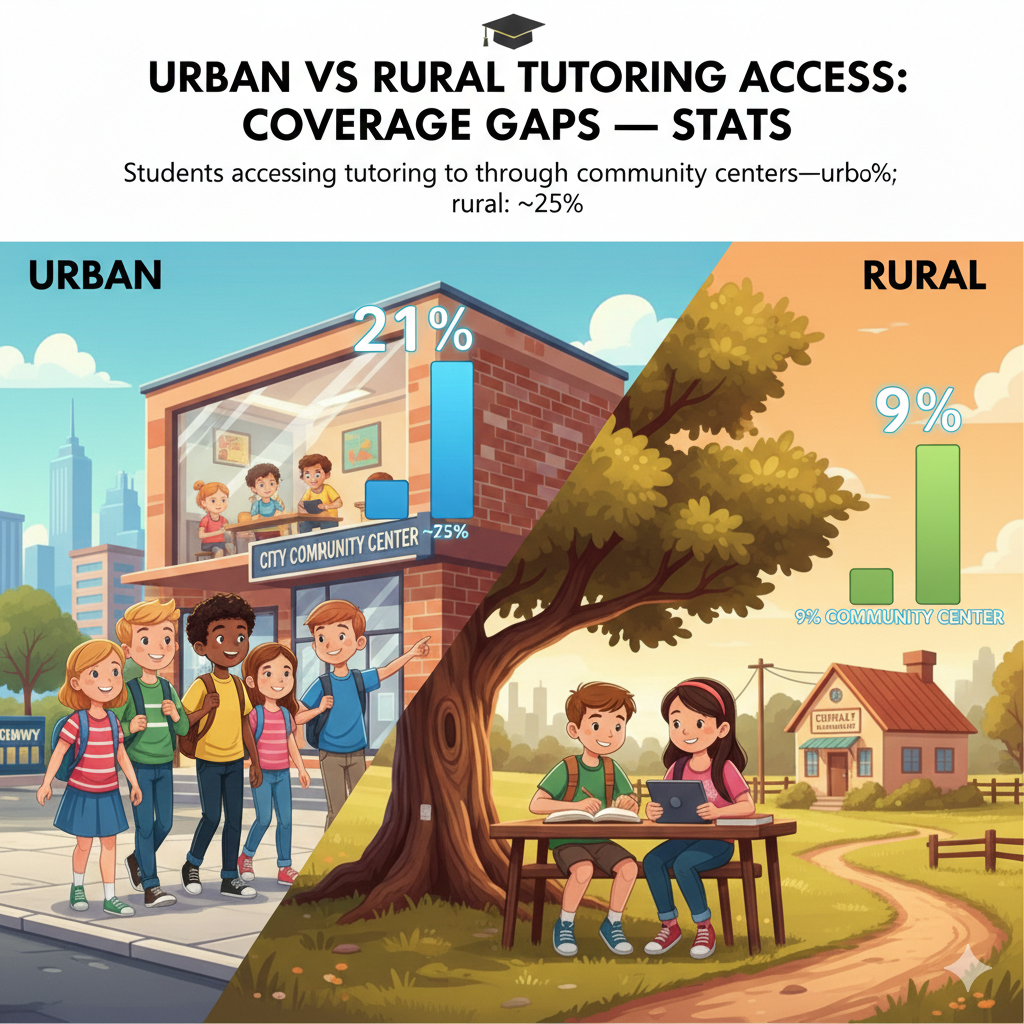
21) Students accessing tutoring through community centers—urban: ~21%; rural: ~9%.
Why community spaces matter
Community centers can be a bridge when schools and private options fall short. They provide rooms, Wi-Fi, and caring adults who know local families. In cities, more students use these spaces.
In rural towns, fewer do, often because centers are smaller, hours are limited, or programs rotate with volunteers. Still, even a modest room with a stable schedule can anchor a strong study habit. The secret is to claim the space, shape a routine, and add a thread of expert help.
What to do right now
Call the center and ask for the quietest hour each week that you can rely on for two months. Bring a tiny study kit that never leaves your bag: headphones, charger, pencils, highlighter, and a simple logbook.
Agree with your child on a predictable flow for that hour. Spend five minutes setting goals, forty minutes on the hardest current topic, ten minutes on review, and five minutes to record one win. If the center has a staff mentor, ask for a quick weekly check of the logbook to keep accountability high.
If no mentor is available, pair the center hour with a short remote session from a tutor who can drop in at the beginning to set targets. Invite one friend to join for peer energy and shared rides. Leave a copy of next week’s plan at the desk so the space signals “we are expected.”
Over time, this repeat pattern turns a simple room into a learning hub.
How Debsie partners with your hub
Debsie’s live teachers can meet your child right from the center’s Wi-Fi, then the platform guides practice after the call. This blends expert direction with a safe, local space. Start with a free class to align goals, then keep the same hour each week so the routine sticks and your child knows exactly when and where learning happens.
22) Availability of subject-specialist tutors (e.g., calculus)—urban: ~72% of requests filled; rural: ~38%.
Why specialization matters
When a student hits a wall in a specific topic like calculus limits or organic chemistry reactions, a generalist may not be enough. Specialists bring precise explanations, targeted drills, and test-savvy feedback. In cities, most requests for specialists get filled.
In rural areas, barely four in ten do. That gap can push students to postpone hard courses or accept lower grades even when their potential is high. The path forward is to widen your search and clarify the ask so the right expert can say yes quickly.
What to do right now
Write a crisp brief. Include the course name, current unit, recent scores, and two sample problems that show the struggle. Add the exam date and preferred times. Share this brief with regional colleges, teacher networks, and reputable online providers.
Ask for a fifteen-minute micro-audit before you commit. In that short call, have the tutor walk through one of the sample problems out loud. Listen for clear steps, friendly pacing, and quick checks of understanding. Request a four-session sprint plan that ends with a mini-assessment.
Keep sessions focused on thinking moves, not just answers. Between meetings, your child should attempt a small set of problems and write one-sentence reflections on what tripped them.
If you cannot find a pure specialist, pair a strong generalist with structured resources designed for the target topic, and schedule a single consult with a specialist for error analysis. This hybrid model often works well and keeps cost in check.
How Debsie delivers depth
Debsie maintains a bench of teachers with deep subject expertise across time zones, making it easier to match niche needs. Our sessions emphasize reasoning, step-by-step methods, and timed practice when exams approach.
Book a free trial with your brief in hand. We will align an expert and put a sprint plan in motion so your child breaks through the hard parts fast.
23) Drop-in tutoring labs per 100 schools—urban: ~44; rural: ~17.
Why drop-in matters
Drop-in labs are safety nets. They catch quick questions before they grow. They help shy students get help without a big appointment. In cities, many schools run these labs. In rural districts, fewer exist and hours may be short.
Without easy drop-in, students carry confusion for days, and small mistakes multiply. The fix is to create your own version of drop-in, even if the school cannot host it weekly.

What to do right now
Build a predictable help window twice a week. If school offers any office hours, mark them on your calendar and coach your child to arrive with one question already written. If no official lab exists, create a home drop-in hour.
Keep it on the same days each week and treat it like an open clinic. Your child starts by listing the week’s sticky spots, then picks one to solve first. If you have more than one child, rotate brief one-on-one attention in five-minute turns while the other works on quiet tasks.
Add a virtual layer by arranging a short check-in with a tutor at the start or end of that hour. Keep a running help log that tracks the question, the fix your child tried, and the final method. Over a month, this log becomes a map of progress and a study guide before tests.
If your community has a library with study tables, ask the librarian about a regular study hour where students know a helper will be present. It does not need to be fancy. It needs to be steady.
How Debsie becomes your lab
Debsie’s live classes and quick support messages function like a dependable drop-in. Students can get unstuck, then jump into quests that reinforce the fix. Try a free class to see how a forty-minute session can clear a full week’s fog. Set two weekly windows and stick to them so questions never pile up again.
24) Students receiving tutoring in their home language—urban: ~49%; rural: ~22%.
Why language fit lifts learning
When teaching meets a child’s home language, stress drops and clarity rises. In many cities, almost half of students get help in the language they speak with family. In rural towns, fewer than one in four do.
This gap matters because language is not just words. It shapes how a child thinks, asks for help, and feels brave enough to try. If the tutor explains ideas in a language the child trusts, the brain can focus on the math, the reading, the code, not on translating every sentence.
When that support is missing, students nod along but secretly guess. Guessing slows growth and hurts confidence. The fix is to name the language need out loud and then design for it.
Steps you can take now
Write a short note that says which language your child prefers for explanations and which language they can respond in. Share this with any tutor or teacher you contact. Search locally and online using the language name plus the subject.
Ask schools, cultural groups, and faith centers for referrals. If you cannot find a full home-language tutor, try a blended approach. Ask the tutor to teach new ideas in the home language, then practice in the school language. Keep a small glossary where key terms sit side by side in both languages with a tiny example.
Record short audio notes of tricky explanations in the home language so your child can replay them during homework. Invite a family member who speaks the home language to join the first ten minutes of sessions to help set comfort and context.
Make it clear that the goal is not to avoid the school language. The goal is to build strong understanding first, then shift to the test language with less fear and more focus.
How Debsie helps
Debsie has teachers who can explain in multiple languages and switch smoothly when needed. We use clear visuals and short steps, so concepts land without confusion. Join a free trial class and tell us your language preference.
We will match a teacher who makes your child feel seen and safe, and who helps them grow into the language of school with steady confidence.
25) Households aware of free tutoring programs—urban: ~61%; rural: ~36%.
Why awareness changes outcomes
Free help only helps if families know it exists. In cities, news travels faster through schools, social media, and nonprofits. In rural areas, fewer families hear about programs in time to sign up.
The result is empty seats, missed deadlines, and students who could have had steady help for zero cost. The fix is simple. Build a habit of asking, checking, and sharing, so you never miss a chance again.
Steps you can take now
Create an information loop that runs every month. On the first week, message the school counselor and ask if any tutoring seats or study clubs are open. On the second week, check the library, youth clubs, and local groups for flyers or posts.
On the third week, search trusted platforms for scholarship windows and sliding-scale offers. On the fourth week, share what you found with two other parents and ask them to share back next month. Keep a single page with program names, contacts, application steps, and due dates.
Set phone reminders two weeks before each deadline. When you apply, attach a short note from a teacher and a clear goal for your child. Programs like to see purpose, not just interest. If your child gets a spot, commit to full attendance for at least one term so the seat turns into real progress.
If you are waitlisted, ask to be notified of mid-term openings, then check again in two weeks. Information favors the persistent.
How Debsie helps
Debsie offers a free trial class so you can see fit without risk. At times we open scholarship seats or seasonal discounts. Talk to our team during the trial and we will flag options that match your needs.
Even if you start paid, we help you build a plan that uses every free resource around you, so your budget goes further and your child gets more support.
26) Students receiving literacy remediation tutoring—urban: ~23%; rural: ~12%.
Why early reading help is urgent
Reading is the root skill. When it is shaky, every subject feels hard. More city students receive targeted reading help; far fewer rural students do. Without timely support, a child who struggles in grade three may still struggle in grade eight.
Vocabulary stays small, stamina stays low, and writing stalls. The good news is that strong literacy growth comes from short, daily work with the right steps. You do not need long hours. You need a steady plan that targets sounds, words, and meaning.
Steps you can take now
Start with a brief check to spot the exact snag. Is it letter sounds, blends, sight words, decoding longer words, fluency, or comprehension? Build a fifteen-minute routine for weekdays that includes three tiny parts.
Do two minutes of sound or word work, such as quick flash review. Do eight minutes of guided reading at the right level, where your child reads aloud and you or a tutor gives gentle prompts. Do five minutes of meaning talk, where your child retells the main idea and one detail.
Keep a word bank of tricky words from school books. Practice three words a day, then use them in a short sentence. Add one longer session each week to work on fluency by echo reading, where the adult reads a line and the child echoes with the same expression.
Track wins, not just errors. When your child reads a sentence smoothly, circle it and cheer. If you cannot find a local reading specialist, use an online tutor for the guided minutes and keep daily practice at home. Consistency is the cure.
How Debsie helps
Debsie’s reading path uses proven steps in a warm, playful way. Teachers guide decoding, fluency, and comprehension with short, focused tasks and instant feedback. The platform keeps practice fun with rewards for daily streaks.
Try a free class, share your child’s reading level, and we will build a simple plan you can keep every week.
27) Average time from tutor request to first session—urban: ~9 days; rural: ~24 days.
Why speed matters
A long wait turns urgency into drift. In cities, families usually start within about a week. In rural areas, the first session can take over three weeks. During that gap, homework piles up, habits slip, and stress rises.
The solution is to compress the timeline with a ready-to-go plan, so when a tutor says yes, you can start almost at once. While you wait, you keep skills warm and moods steady.
Steps you can take now
Prepare a starter kit the day you decide to seek help. Include recent assignments, two samples that show errors, a short note from the teacher, and your six-week goal. Write your best three time slots that you can keep without fail.
When you contact tutors, send the kit so they can decide fast. Ask for a ten-minute quick meet within forty-eight hours to confirm fit. Schedule the first paid session right then, not later. While you wait, run a holdover routine.
Pick one daily micro-task that takes ten minutes and one thirty-minute weekly deep task. For math, that could be a small mixed set each day and one problem breakdown per week. For writing, it could be a quick sentence fix daily and one paragraph build weekly.
Keep a progress note with date, task, and one win. If your timeline is still long, add a single bridging session with a different tutor to kick-start momentum. When the main tutor begins, hand over your notes so they can pick up speed on day one. The aim is to make waiting time into working time.
How Debsie helps
Debsie can place students quickly because we run classes across time zones and keep flexible slots. You can join a free trial within days, sometimes sooner, and continue straight into a course. That means less drift, fewer fights about homework, and a faster path to confidence. Share your starter kit with us, and we will turn it into a plan that starts now.
28) Schools partnering with external tutoring providers—urban: ~41%; rural: ~19%.
Why partnerships boost support
Partnerships turn limited school time into a fuller safety net. In many cities, almost half of schools work with outside providers who bring trained tutors, flexible hours, and ready-made lessons. In rural areas, fewer than one in five schools do this.
The result is fewer options, longer waits, and programs that start and stop with staff changes. A good partner gives steady teaching, data sharing, and clear plans, so students get help that matches classroom goals.
Even small schools can benefit when the plan is simple, the scope is tight, and the schedule fits the local rhythm.
What to do right now
Ask the principal for a short meeting and come with a one-page proposal. Name the subjects most in need, the grades to target, and the outcome you want in eight weeks. Suggest a pilot that runs one or two days per week with small groups that match current units.
Offer to help with sign-ups and family reminders so staff time stays light. Ask the school to share unit calendars and benchmark dates so the partner can align lessons. Request a simple feedback loop every two weeks that includes attendance, skill checks, and next steps.
If budget is thin, propose a blended model where the provider handles live instruction while the school hosts a quiet study hour for practice. If travel is hard, choose a remote partner and set up a school room with strong Wi-Fi so students join right after the bell.
Keep the contract short and clear, with a start date, end date, and metrics that matter to your community. When the pilot ends, review results and, if gains are solid, expand by one more day or one more grade. Small wins make repeat funding easier to secure.
How Debsie helps
Debsie plugs into school schedules with live classes, aligned lesson plans, and quick progress snapshots. We keep groups small, target current standards, and share simple data that teachers can use the next day.
If your school is open to a pilot, invite us for a brief demo. Or start with your child at home through a free trial class while you explore a school partnership for next term.
29) Students using peer-tutoring programs—urban: ~27%; rural: ~15%.
Why peers move the needle
Peer tutoring works because students speak each other’s language. The helper becomes a role model, and the learner feels safe to ask the real questions. In cities, more schools run these programs. In rural areas, fewer do, even though small schools often have strong community ties.
A lean peer program can lift grades, build leadership, and spread good study habits at almost zero cost. The key is structure. When roles, time, and goals are clear, peer help becomes real learning, not just homework time.
What to do right now
If your school lacks a program, ask for a simple launch. Start with a single subject and a six-week window. Have teachers nominate reliable helpers who show patience, not just high scores. Train pairs in a short script: greet, set a tiny goal, work one example together, try two alone, review, note a win.
Keep sessions short, about twenty minutes, and meet two or three times a week during lunch or right after school. Give each pair a log sheet with date, topic, and one sentence on what clicked. Rotate pairs if a match is not working. If school time is tight, build a home version.
Pair your child with a classmate for two short video calls a week where they each teach one mini-topic for five minutes. Use a timer and finish with a check: what will you practice before the next call? Encourage peer helpers to use think-aloud steps and to ask “what do you notice?” rather than jumping to answers. Celebrate both roles.
The tutor grows by teaching; the learner grows by trying aloud. Keep it kind, clear, and consistent, and you will see confidence rise on both sides.
How Debsie helps
Debsie’s small-group classes mirror great peer tutoring. Students talk, teach back, and practice together while a skilled teacher guides the flow. We can also give your child short teach-back prompts to use with a classmate between sessions.
Try a free class to see how fast peer energy turns into better skills and braver learning.
30) Grade improvement (≥1 letter) after 8 weeks tutoring—urban: ~38%; rural: ~29%.
Why outcomes depend on design
A letter-grade jump in eight weeks is possible when teaching, practice, and feedback work as one. City students hit that mark more often, likely because access is higher, sessions start sooner, and programs run steadily.
Rural students can get there too with a clear plan that fits local life. The secret is not magic. It is focus, rhythm, and honest check-ins. When a child knows the goal, sees progress, and gets quick fixes, grades move and so does confidence.
What to do right now
Pick one target class and a single grade goal, such as moving from C to B in eight weeks. Gather the unit plan, recent quizzes, and teacher notes. Break the weeks into two phases. In the first four weeks, repair the base.
Fix common errors, build core skills, and set a steady study slot that never slides. In the next four weeks, sharpen test routines. Practice mixed sets under time, review an error log twice a week, and do quick teach-backs where your child explains one problem to you.
Keep sessions short and frequent, then add one longer review each weekend. Tie school deadlines to your plan so the tutoring lines up with upcoming quizzes. Ask the teacher for two checkpoints: one mid-point quiz and one project rubric to watch.
Track three numbers weekly: attendance to sessions, percent correct on practice, and mood after study on a simple scale. Use these to adjust fast. If percent correct is stuck, slow down and reteach one skill. If mood is low, shorten sessions and add a small reward at the end.
If attendance slips, reset the schedule to a time that actually works. At week eight, compare grades, quiz scores, and your error log. Keep the habits that moved the needle and set a new eight-week goal. Progress loves a plan.
How Debsie helps
Debsie’s live classes and game-like practice create the focus and rhythm that make grade jumps real. Teachers target the exact skills, the platform gives instant feedback, and parents see progress in plain view.
Join a free trial class, tell us your eight-week goal, and we will build a simple, steady plan to reach it, whether you live on a busy city block or a quiet country road.
Conclusion
Where a child lives should not decide how far they can go. The numbers show clear gaps between cities and small towns, but they also show a path forward. Access can be built. Time can be saved. Costs can be managed.
Skills can grow with short, steady steps. When families use clear goals, simple routines, and the right mix of expert help and home practice, progress comes fast and sticks. Confidence rises, grades follow, and children learn habits that last for life, like focus, patience, and problem solving.