
Parents and teachers often ask one simple question: does tutoring work fast, and does it last? The honest answer is yes on both counts, but the timeline matters. In the short term, tutoring fixes gaps, reduces stress, and gives a quick boost before tests. In the long term, tutoring builds deep skill, strong habits, and steady confidence that stays even when the class gets harder. This article shows what changes you can expect week by week and month by month, using clear numbers and plain language. You will see how scores move, how reading and math speed up, how anxiety goes down, and how habits lock in. You will also see what to do at home to keep gains growing, and what to ask your tutor so every session counts.
1) Test scores: After 4 weeks of tutoring, students often gain +5–8 percentage points; after 6–9 months, total gains commonly reach +15–25 points
Short-term gains happen because tutoring targets the exact gaps that block progress. In the first four weeks, a child reviews key topics, fixes common errors, and practices with close feedback. This resets how they study and how they answer.
A five to eight point jump on a quiz or unit test is normal because the work is fresh and focused. The tutor also shows quick test tactics, like how to scan a question, how to show steps clearly, and how to check answers under time pressure.
These simple moves stop the easy mistakes that cost points. Parents can support this short-term lift by setting a steady study slot, even thirty quiet minutes, and by asking one small reflection after each session: what did you learn today that will help on the next test?

The point is not to reteach the lesson at home, but to help the child say the skill out loud and own it.
Long-term gains come from a wider plan. Over six to nine months, the student cycles through new topics, spaced review, and mixed practice. They meet tricky ideas again and again, but with new angles that build depth.
As skills stack, the student spends less effort on basics and more effort on thinking. This is why a fifteen to twenty-five point rise across a semester or two is common. To support the long-term arc, keep a simple score log at home.
Track each test date, topic, and score. After every two tests, look for a pattern. If a topic keeps dropping scores, flag it for the tutor so it moves into the plan. If a topic rises, celebrate it with a small win, like choosing a family movie or cooking a favorite snack.
At Debsie, we run this long arc by using clear goals, weekly data checks, and end-of-month checkpoints. If you want a custom plan like this for your child, book a free class at debsie.com/courses and see how fast the first lift appears.
2) Reading speed: In the first month, words-per-minute may rise by 10–15 wpm; after a full school year, gains of 30–50 wpm are typical for struggling readers
Reading speed grows when decoding gets smoother and the eyes track better. In the first month, a ten to fifteen words-per-minute boost is realistic because the tutor drills high-frequency words, common phonics patterns, and chunking.
Chunking means reading in small groups of words, not one word at a time. A short, daily routine helps this stick. Start with a two-minute warm-up of easy words to build flow, then read a paragraph at a steady pace, then reread the same paragraph a bit faster while keeping meaning clear.
Time each read with a phone timer and write the number down. If the number rises by five words or more, cheer the effort, not the speed. The goal is smooth and accurate first, then faster later. If the child stumbles, pause and run a sound-out routine, then restart the sentence.
Do not push through errors, because that builds bad habits.
Over a school year, a thirty to fifty wpm gain is common for readers who start behind, but it happens only with steady practice and careful text choice. Text should be at the just-right level: about ninety-five percent of words known, with a few new words to grow the brain.
The tutor will rotate fiction and nonfiction so the child learns story flow and facts reading. Vocabulary is taught in small sets, with pictures and simple examples the child cares about. Once a week, add a fun speed lap with a familiar page to score a personal best.
Twice a week, do a comprehension lap with a new page and two short questions that ask what happened and why it matters. This keeps speed tied to meaning. At Debsie, we also use quick eye-movement drills and game-like fluency races that make practice feel like play.
If you want a plan that balances speed and sense, try our reading lab and watch the weekly numbers climb.
3) Math accuracy: Error rate drops by ~10% in 6 weeks; after 6 months, total drop is ~30–40%
In early weeks, accuracy rises when the student slows down just enough to show steps clearly. Many mistakes are not about not knowing the math; they are about skipping a sign, misreading a digit, or dropping a unit.
To cut errors by ten percent in six weeks, the tutor teaches a short routine for every problem. First, circle the key numbers and underline the question. Second, write the plan in one short line. Third, do the steps, one per line, and label the answer.
Fourth, do a quick reverse check or estimate to see if the answer makes sense. This small routine adds seconds but saves points. Parents can help by asking the child to explain one problem out loud, not to test them, but to slow thinking enough to catch slips.

A two-minute talk per day works wonders. Also, after each homework set, pick two wrong problems and redo them carefully. The goal is to learn from the error, not to finish more pages.
Across six months, errors drop thirty to forty percent because the child builds fact fluency, template knowledge, and flexible thinking. Fact fluency means basic facts come fast and do not clog working memory. Template knowledge means the child sees common problem types and knows the structure at a glance.
Flexible thinking means the child can choose a method that fits the numbers, not a single method for everything. The tutor cycles these skills with spaced practice and mixed sets that look like tests. Once a week, run a mini-quiz of five problems under light time pressure.
After the quiz, do a tiny error autopsy. Ask what type of error it was: fact slip, reading slip, step skip, or concept gap. Make a one-line fix note, such as slow down on signs or draw a quick model. Keep these notes in a small notebook.
Every two weeks, review the notebook to spot patterns. At Debsie, we also build personal checklists for students so the routine becomes automatic. This is how accuracy gets stable and stays high even when the math gets hard.
4) Homework completion: Short-term boost of +20–30% within 4 weeks; long-term, steady level of +40–60% above baseline
Short-term
The first four weeks are about making homework simple to start and simple to finish. A child often avoids homework because the steps are unclear, the workpile looks huge, or the study space is messy. To create a quick twenty to thirty percent jump, shrink the work into short blocks and remove friction.
Set a start time that never changes. Place all tools on the desk before the timer begins, including pencils, paper, calculator, and books. Begin with the quickest task to build momentum. End each block with a tiny check, such as matching answers to instructions or crossing off each part of the question.
A parent can add a short debrief at the end: what was easy, what was hard, and what should go first tomorrow. This keeps the next day light and predictable. Tutors support this jump by previewing the hardest problem in session, so the child meets it again at home and feels ready.
Long-term
To keep a forty to sixty percent lift over months, build a homework rhythm that runs without nagging. Use one planner for all classes, and write the smallest next action for each task, not a vague label. Replace “study science” with “read page twelve and write two notes.”
Link the study slot to a fixed anchor in the evening, like after dinner. Keep a visible progress bar on a simple chart, and color a box for each day the plan is followed. When a streak hits five days, celebrate with a low-cost reward, like extra story time or a choice of family game.
Tutors close the loop by sending a quick plan note after each session, so the child knows exactly what to tackle and in what order. If sports or clubs change the routine, set a travel kit with a pencil pouch and one thin notebook, so the child can use short pockets of time.
A steady system makes homework feel lighter, and the gains stick.
Action steps you can use today
Choose a thirty-minute window that will not move, clear the desk, lay out tools, and write the first tiny step. Set a soft alarm for the start and a gentle chime for the end. Track completion with a simple checkmark on a wall calendar.
If you want a ready-made routine and weekly guidance, Debsie sessions include homework planning built into every lesson. Book a free class and see how fast the habit grows.
5) Concept mastery: After 8 sessions, students master 2–3 key skills; after 6 months, 10–15 skills are solid and retained
Short-term
In the first eight sessions, the focus is narrow by design. A student masters two or three core skills because the tutor breaks each skill into small moves and practices them in varied ways. For example, a fraction skill might include naming parts, making models, and comparing sizes.
The tutor teaches each move cleanly, uses quick checks to confirm understanding, and asks the student to teach back the steps in their own words. Teach-back cements memory because the brain must organize the idea, not just repeat it.
Parents can help by asking the child to explain one example during dinner. Keep it short and kind. If the child can say the steps clearly, the skill is near solid. If the steps are fuzzy, note the gap for the next session.

Long-term
Across six months, the plan widens to ten to fifteen anchor skills that support a full course. Mastery holds when the student meets each skill again on a spaced schedule. The tutor uses a simple cycle: learn it, practice it, use it inside mixed problems, and return to it after a gap.
Each revisit is quick, like a two-minute flash. The skills are also used in real-world tasks, such as reading a bus timetable, writing a clear paragraph, or estimating the cost of groceries. This makes the brain tie the idea to life, which helps recall.
A visible mastery map on a single page lets the student see progress. Each skill moves from learn to practice to master to maintain. Seeing the map fill up keeps motivation strong.
Action steps you can use today
Print a one-page skill list for the current unit. After homework, mark each skill as green, yellow, or red. Green means teach it back. Yellow means try one more example. Red means ask the tutor first next time.
Keep the page on the desk so the next study session starts with purpose. At Debsie, our mastery maps are built into the lessons, so your child always knows where they stand and what comes next.
6) Standardized percentile: In 6–8 weeks, a student may move up 5–10 percentile points; in 6–12 months, 15–25 percentile points
Short-term
Percentile moves fast at the start because small skill fixes remove many common traps on standardized tests. In six to eight weeks, the tutor picks three high-impact areas, like main idea in reading, ratios in math, and test timing.
The student practices short, timed sets that look like the real test. Each set is followed by a calm review to name the error type and write one sentence on how to avoid it again. The tutor also teaches pacing, such as spending no more than one minute per easy question and flagging the time sink items for a quick return.
A five to ten percentile bump appears as the student stops losing points on predictable slips and learns to guess smart when needed. At home, keep one light practice set per week and a five-minute timing drill where the child practices moving on when stuck.
Long-term
Across six to twelve months, larger percentile jumps come from deeper reading, stronger vocabulary, math fluency, and calm under pressure.
The tutor builds stamina with longer passages and mixed math sets, adds word-learning routines based on roots and families, and cycles back to weak areas every two to three weeks.
Full practice tests are spaced, not constant, so each one measures true growth. The student learns to plan the test day: sleep, food, water, and a routine to settle nerves. Over time, they learn to trust their process and read more efficiently, which moves them into higher percentiles. Growth at this stage is steady because skill depth, not just tricks, drives the score.
Action steps you can use today
Pick one day per week for a timed mini-set and one day for error review. Keep a small notebook with three headings: what went wrong, the fix, and a sample question to apply the fix. Close the week with a quick confidence check where the child names one strength they will lean on next time. Debsie offers paced test plans that blend skills and timing so gains are real, not just lucky.
7) Time on task: Focus time per study hour rises by 10–15 minutes in the first month; by month 6, total rise is 25–35 minutes
Short-term
Focus grows when the brain expects a clear start, a clear stop, and a single job. In the first month, raise on-task time by ten to fifteen minutes by using short work sprints and clean cues. Put the phone away in another room.
Use a simple analog timer on the desk. Choose one goal for the sprint, like finish three problems or read one page. Sit in a chair that supports good posture and keep the desk bare. Before the sprint, take one deep breath and say the goal out loud.

At the end, take another breath and mark a check on a card. This tiny ritual helps the mind shift into work mode. Tutors model this rhythm in session, which makes it easier for the child to copy at home.
Long-term
Over six months, focus grows another twenty-five to thirty-five minutes because habits form and distractions shrink. The child learns their best time of day, their best type of background sound, and their best snack for steady energy.
They also learn to break big tasks into a chain of small, named steps that reduce mental load. The tutor teaches self-cues like finger counting through steps or whispering the plan for the next two minutes. These cues keep thoughts on track.
A weekly reflection helps the student notice what helps them focus and what pulls them away. Parents can support by protecting the study window and keeping it free of household tasks, loud TV, or phone checks. The goal is a strong, repeatable pattern, not a perfect day.
Action steps you can use today
Set two sprints of fifteen minutes with a five-minute break between them. Place a small card on the desk with the written goal of the sprint. After the sprint, color one box on a focus chart.
When ten boxes are colored, give a small privilege like choosing music at dinner. If you want a complete focus plan built into learning, Debsie lessons teach and rehearse these routines until they become second nature.
8) GPA lift: After one quarter, GPA often rises by 0.1–0.2; after two to three quarters, 0.3–0.5 total
Short-term
A small rise in GPA during the first quarter comes from fast fixes in daily work. Tutors set clear routines for note taking, quick review, and test planning. The goal is to stop easy point losses and turn in every task on time. In the first two weeks, the tutor helps the student map each class by weight.
If quizzes count more than homework, practice shifts toward quiz prep. If projects carry the most weight, the plan breaks projects into tiny steps with early checkpoints. The student learns to read rubrics and match work to what the teacher values.
Simple grade guards go in place, like checking the portal twice a week and emailing the teacher once when a score is missing. Parents can help by setting a Sunday reset where folders are cleaned, dates are updated, and the next five school days are sketched.
This simple system often raises GPA by a tenth or two because fewer points slip through the cracks.
Long-term
Across two to three quarters, the GPA rise grows to three to five tenths because the student builds better mastery and stronger pacing. The tutor pushes for steady A and B work on the heavy-weight items. Study plans are set at the start of each unit.
Practice is spread out, not crammed. The student learns to spot when they are stuck and to ask for help early, not the night before a test. A growth log shows how much effort and strategy went into each grade. When a class dips, the plan changes within a week.
When a class rises, the routine that worked is copied to other classes. Over time, these habits make every class more predictable and less stressful. GPA follows the habits. At Debsie, we guide this process with calm weekly check-ins and clear action steps per course, so progress is steady and visible.
Action steps you can use today
Open the grade portal, list the top three grade-weighted tasks due this week, and write the first tiny action for each. Set two short study windows before the next quiz. Send one kind email to a teacher to confirm a missing score.
If you want a simple GPA plan that fits your child’s schedule, book a free class at Debsie and we will map it with you.
9) Skill retention: Without tutoring, 30–50% of short-term gains fade in 8–12 weeks; with ongoing tutoring, 70–85% of gains hold
Short-term
Short-term wins can fade if they are not reviewed. The brain needs reminders at the right times to move facts and steps into long-term memory. Tutors prevent fade by using a spaced review plan. After a new skill is learned, it comes back one day later, three days later, one week later, and two weeks later.
Each return is fast and focused. The student solves one or two problems, explains the key step out loud, and moves on. At home, a two-minute flash review at the start of homework can do the same job. Keep review cards with one example and the step written in simple words.

The goal is not a long drill but a quick wake-up for the memory. This keeps thirty to fifty percent from fading and saves time in the next unit.
Long-term
With steady tutoring, most gains stay because review is built into every month. The student uses a small rotation list of must-keep skills. Each week, one old skill gets a check-up. If it is strong, it leaves the list for two weeks. If it is shaky, it stays for one more check.
The student also uses the skill in a new context, like mixing fractions into a word problem or using new vocabulary in a short paragraph. This locks the idea more deeply and makes it easier to find during tests.
Parents can help by asking one quick teach-back at the dinner table. When a child can teach the step in thirty seconds, the skill is likely to stick. Debsie lessons include these planned reviews so memory stays fresh without extra stress.
Action steps you can use today
Create five review cards for the week’s biggest skills. Place them near the study space. Start each homework session by picking one card and doing a fast example. End the week by marking any card that still feels shaky, and bring that one to the next tutoring session.
10) Confidence (self-rating 1–5): Jumps by +0.3–0.5 in 4 weeks; reaches +0.8–1.2 after 6–9 months
Short-term
Confidence rises when effort turns into quick wins. In the first month, the tutor chooses goals that the student can reach with honest work, like finishing a short set with zero careless errors or reading a page smoothly without stopping. Each win is named right away and tied to the action that caused it.
This helps the child see that success is not random. A simple self-rating at the end of each session lets the student notice change. On a one to five scale, a jump of three to five tenths is common, and that small lift matters.
It lowers fear, improves focus, and makes practice feel worth it. Parents can support by praising the process, not the person. Say, I like how you checked your signs, instead of, You are so smart. Process praise teaches the child what to repeat next time.
Long-term
Across six to nine months, confidence grows by almost a full point or more because skills stack, and the student sees proof that their plan works. The tutor raises the level step by step while keeping wins coming. The student learns to set aims, plan steps, and adjust when things go wrong.
They also learn calm tools for test days, such as a short breathing routine, a pacing plan, and a script for what to do when a question looks scary. Confidence at this stage is not just a feeling. It is a memory of many times when the student did the hard thing and came out fine.
That memory makes the next hard thing easier to face. At Debsie, we track confidence along with scores because both move together when the plan is right.
Action steps you can use today
Ask your child to rate their confidence before and after homework on a one to five scale. Note one action that raised the number, even a little. End with a short plan for the next day. If you want guided wins that build real belief, our tutors design sessions that create proof fast and keep it coming.
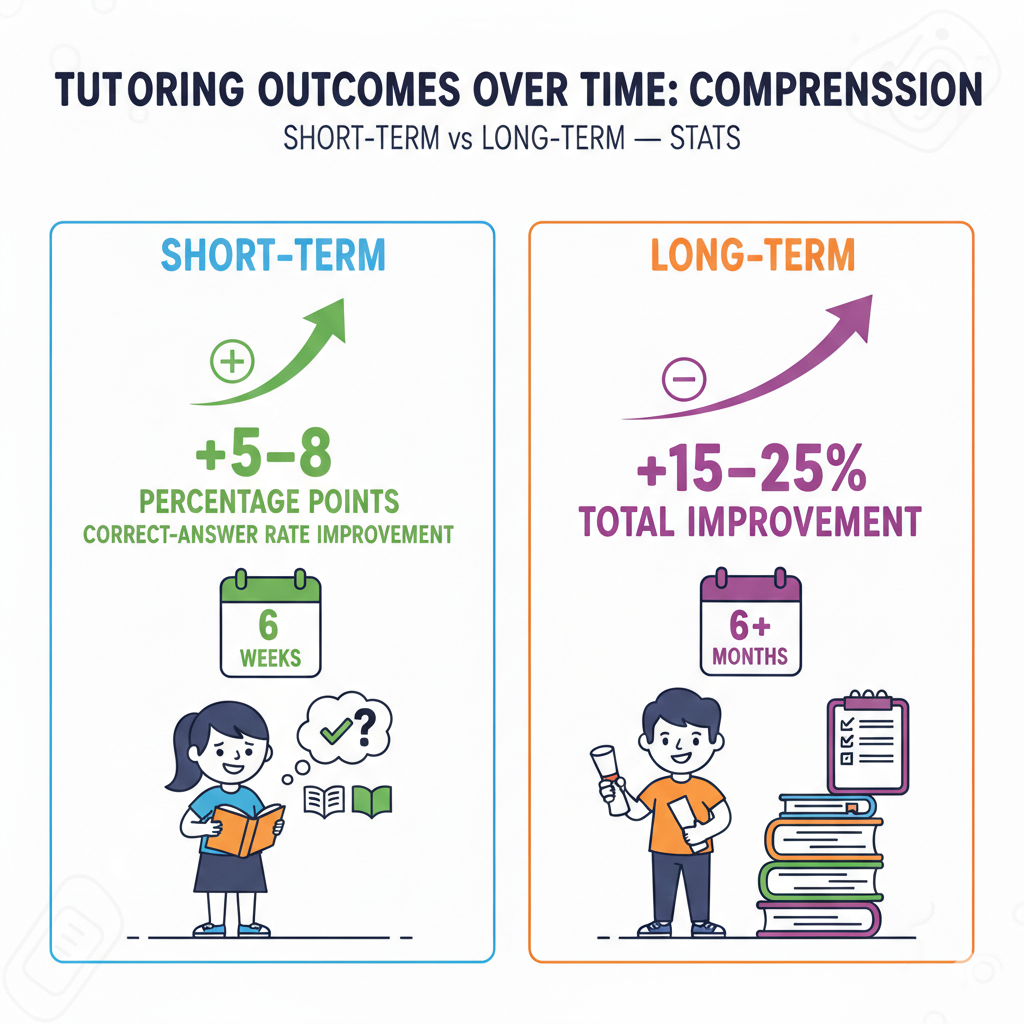
11) Reading comprehension: Short-term correct-answer rate improves by 5–8%; long-term total improvement is 15–25%
Short-term
Comprehension moves early when students learn to slow down and read with a small purpose. In the first four to six weeks, a five to eight percent lift shows up when the child previews the passage, asks a simple question before reading, and marks key words while they read.
The preview takes thirty seconds. Look at the title, pictures, and the first and last lines. Ask, what is this mostly about? While reading, draw a light line under names, dates, and signal words like because, however, or therefore.
These words point to cause, contrast, and result. When a question asks for the main idea, check the first and last sentences of each paragraph, then say the big point in your own words before looking at the choices.
When a question asks for a detail, go back to the part of the passage where that detail lives and read two lines above and below. Parents can support by doing a quick paired read. Take turns reading one paragraph each, and after each paragraph, let the child say one sentence that sums it up. This keeps attention on meaning, not just speed.
Long-term
Across six to nine months, a fifteen to twenty-five percent lift comes from stronger vocabulary, text structures, and inference practice. Tutors teach how different texts are built. Narratives have characters, setting, problem, and change.
Informational texts have headings, subheadings, and sections that compare, cause, or explain steps. When a child knows the structure, they can predict what the author will do next and hold more in mind.
Once a week, add an inference drill where the student looks for clues and connects them to what they already know. The child writes a short why sentence to explain the answer. This habit turns guessing into reasoning. A simple word routine also helps.
Pick five words from a passage, link each to a picture or a real example, and use each in a short sentence. Over months, this grows the bank of words that unlocks meaning. At home, use everyday moments, like reading a recipe or a sports article, to ask two small questions: what happened, and why did it matter?
At Debsie, we fold these moves into fun reading games so comprehension grows without stress.
Action steps you can use today
Choose a short passage, preview it in thirty seconds, read and mark signal words, and answer two questions using line evidence. End by saying the main idea in one plain sentence. Keep a tiny notebook of new words with a sketch and a sentence. Repeat this rhythm twice a week and watch the score climb.
12) Math fluency (facts per minute): +5–7 facts in 1 month; +12–20 facts after 6–9 months
Short-term
Fluency grows when practice is brief, focused, and a little playful. In the first month, aim for five to seven more correct facts per minute. Start with one operation at a time, like multiplication by twos, threes, or fours. Use sprints that last sixty seconds.
Before the sprint, review three tricky facts with a visual, such as arrays or number lines, to show what the fact means. During the sprint, only count correct answers. After, circle three misses and build tiny memory hooks, like 6×7 equals 42 because six sevens is six weeks and six weeks is about forty-two days.
End with a calm second sprint of the same set to feel the gain. Parents can keep this easy by running two short sprints after dinner, then stopping while the child still feels strong. The small daily win builds momentum fast.
Long-term
Across six to nine months, a twelve to twenty fact jump holds when students tie facts to patterns and flexible thinking. Tutors teach families of facts, not single facts. For example, the nines trick uses tens minus one, and square facts anchor many others.
Students also learn to use friendly numbers to solve near facts. If 6×7 is hard, use 6×6 and add one more six. Weekly mixed sets that blend operations force the brain to choose the right tool, which is what real math needs.
Once a week, swap paper drills for quick games, like matching cards, dice races, or digital fluency apps set at the right level. Keep the focus on accuracy first, then speed. The child should say the fact and see it in their head, not guess.
Over time, strong facts free the mind to think about steps and word problems without getting stuck.
Action steps you can use today
Pick one fact family, run two one-minute sprints, and record the score. Circle the three trickiest facts and make a tiny story or image for each. The next day, start by saying the stories out loud, then run the sprints again.
At Debsie, we use adaptive drills and quick games that adjust to your child’s pace, so fluency rises and stays solid.
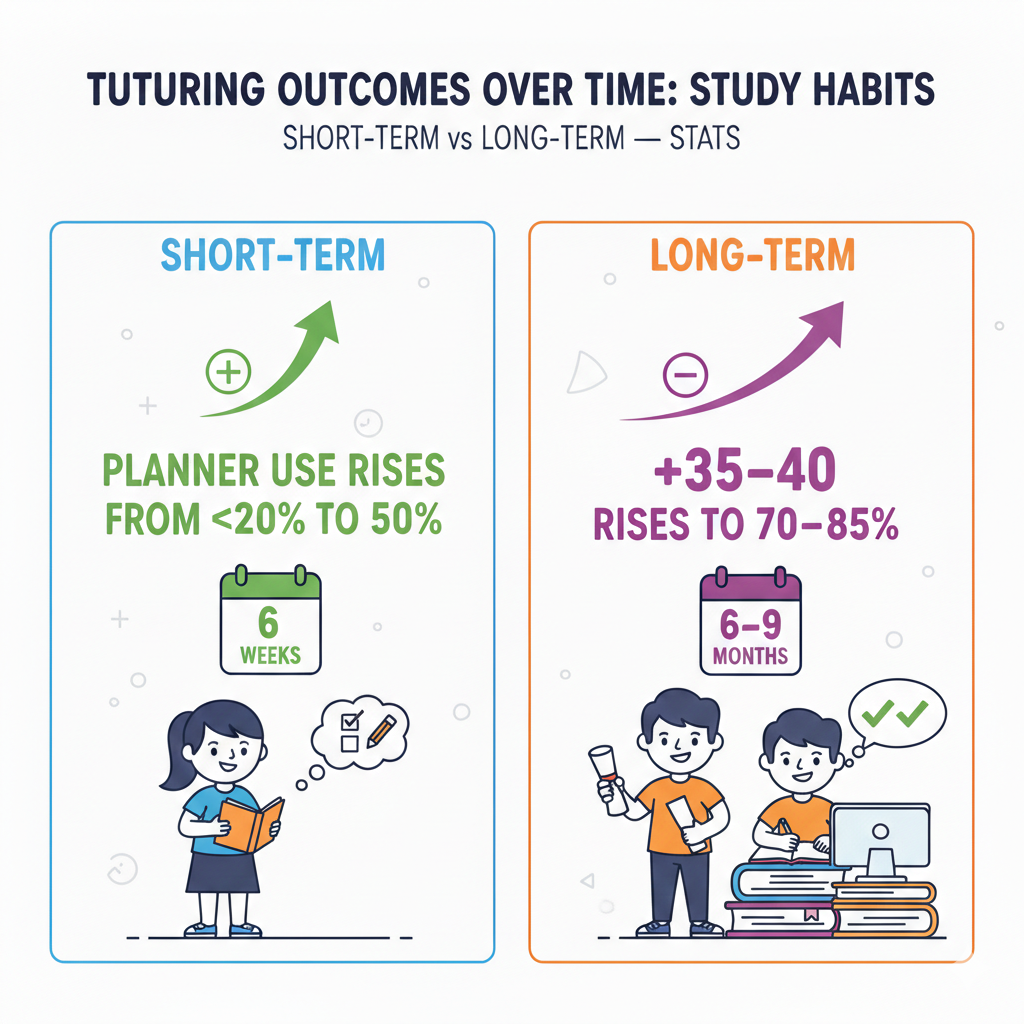
13) Study habits: Planner use rises from rare (<20%) to 50% in 6 weeks; to 70–85% after 6 months
Short-term
Good habits start with one simple tool and one daily loop. In the first six weeks, move planner use from rare to half of all school days by making the planner the command center. Each afternoon, write only the next tiny action for each class.
Replace vague tasks with clear steps, like outline paragraph two or solve problems one to five. During homework time, look at the planner first, not the portal. When a task is done, draw a single slash through it. If a task needs more time, draw a dot and copy it to tomorrow.
This keeps the plan real and light. Tutors model this in session and check the planner at the end to make sure the next day is set. Parents can help by doing a sixty-second planner huddle after school. Ask, what is the first thing we will do today, and when will we start? Keep it friendly and short so it becomes routine.
Long-term
Over six months, planner use grows to seventy to eighty-five percent when the system saves time and reduces stress. The student learns to anchor each day with three must-do actions and to batch small tasks into a short power block.
They set up weekly review on Sunday to clear the inbox, plan long projects, and set two study windows for the heaviest class. The tutor teaches how to look ahead at unit dates and backward-plan steps like draft, revise, and rehearse.
The student also keeps a short not-to-do list to remove time traps, like checking messages during study or starting art projects before math is done. As the planner becomes a habit, the child feels in control and less rushed.
That feeling keeps usage high. At Debsie, we give each student a simple one-page planner template that fits in any folder and takes less than three minutes to update.
Action steps you can use today
Print a one-page weekly planner. After school, fill in tomorrow’s top three actions and the start time for homework. During study, cross off items with a single line. At night, copy any dot-marked items to the next day. Repeat for twenty-one days and watch the habit click into place.
14) Late assignments: Drops by 15–25% in 4 weeks; by 40–60% after a semester
Short-term
Late work usually happens for simple reasons. The task feels fuzzy, the steps look big, or the student forgets to start. In the first four weeks, we aim for a quick drop by making each assignment tiny and time-bound.
The tutor helps the student rewrite each task as a first move that takes ten minutes or less. Instead of finish lab report, write methods section lines one to three. The student sets a daily start alarm at the same time, opens materials before the timer, and finishes the first move without checking messages.
When that small win is done, momentum takes over. Parents add a brief check-in right after school to open the backpack, place due dates on a single page, and pick the first move for tonight. A visible due-soon row on the desk keeps urgent tasks in sight.
This alone cuts late work by fifteen to twenty-five percent because nothing gets lost in the pile.
Long-term
Across a full semester, late work keeps falling when the system runs on autopilot. The student learns to break big projects into calendar blocks, to start each one early, and to set midpoints three to five days before the final due date.
The tutor teaches a simple file rule so digital work never vanishes. Name every file with class, assignment, and date. At the end of each study block, the student uploads or saves to the portal and checks for a green confirmation.
Once a week, run a five-minute catch-up sweep to scan the portal for red flags. Parents can protect a quiet work window and reward on-time streaks with small choices, like picking Friday night’s dessert. With this rhythm, on-time work becomes normal and stress fades.
Action steps you can use today
Open the portal, list what is due in the next seven days, and rewrite each item as a ten-minute first move. Start one move now, upload right away, and mark the calendar. Repeat tomorrow at the same time. If you want a ready plan for on-time work, Debsie includes due-date coaching inside every session.
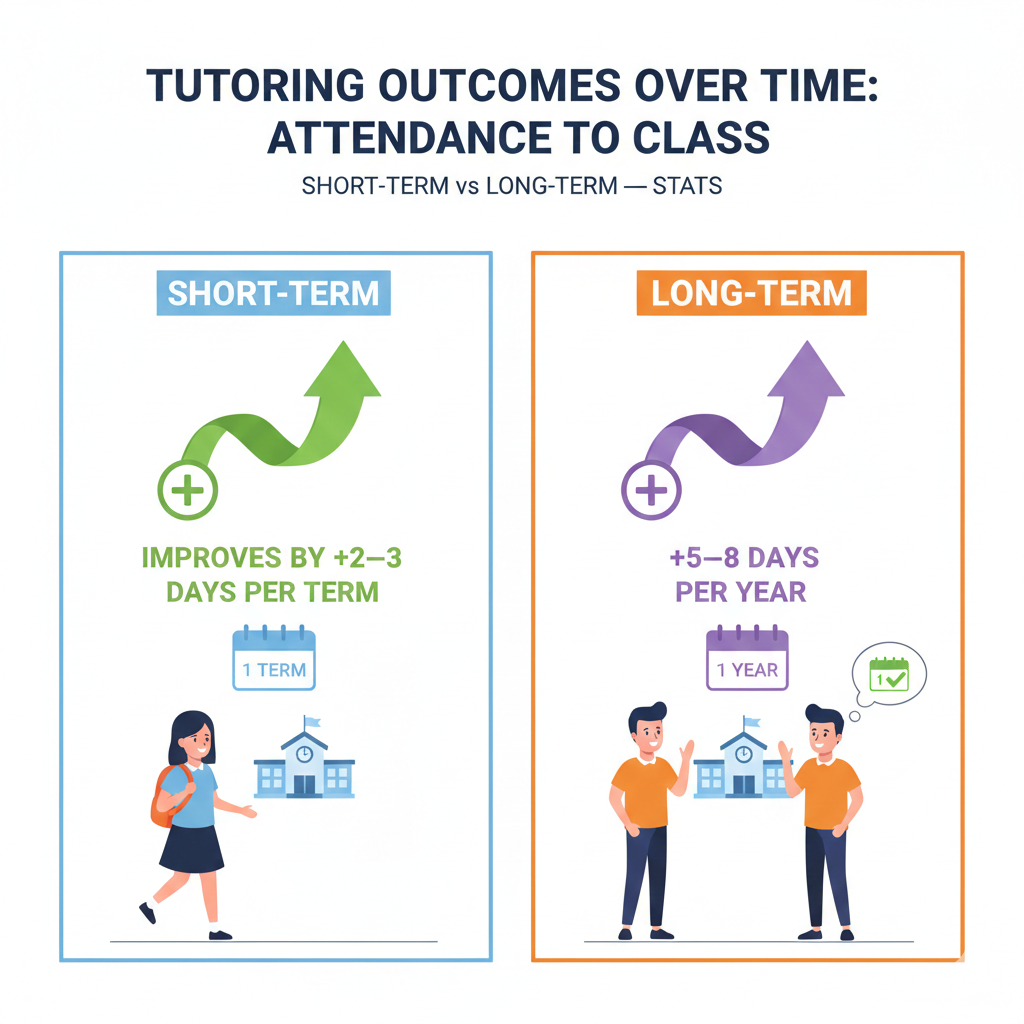
15) Attendance to class: Improves by 2–3 days per term in the first term; 5–8 days per year with sustained tutoring
Short-term
Attendance rises when mornings are simple and school feels doable. In the first term, two to three more days in class come from clear routines and less fear of falling behind. Tutors preview the hardest topic of the week so the student walks in feeling prepared.
Parents can set a short morning checklist the night before. Pack the bag, lay out clothes, set the water bottle, and charge the device. A calm five-minute warm-up at breakfast, like one easy math problem or a quick vocab chat, helps the brain switch on.
When a child expects a win at school, they are more likely to show up.
Long-term
Across a school year, five to eight extra days in class come from stronger engagement and steady success. The student builds confidence, sees better grades, and enjoys the feeling of progress. Tutors help the student set a reason to attend, such as meeting a reading goal or leading a problem at the board.
Parents keep bedtime steady and protect sleep. A simple sick-day routine also helps. If the student misses a day, they follow a fast catch-up script that evening. Check the portal, email the teacher, and do the first ten-minute task.
This cuts the chain of missing one day, then missing more. Over months, school becomes a place of wins, not worries.
Action steps you can use today
Plan tomorrow tonight. Pack the bag, choose the first class win, and set a wake-up alarm that leaves ten quiet minutes for a warm-up. If you want help with weekly previews and catch-up scripts, Debsie tutors build those into the plan.
16) Test anxiety (self-rating 1–10): Falls by 1 point in 1–2 months; by 2–3 points after 6–9 months
Short-term
Anxiety falls when control rises. In the first month or two, a one-point drop is realistic by teaching three small tools. First, a breathing routine that lasts one minute. In through the nose for four, hold for four, out for four, rest for four.
Second, a test start script. Scan the whole test, circle the easy items, and do those first. Third, a reset cue when panic spikes. Put the pencil down, breathe once, and write a tiny plan for the next two minutes. Tutors model these moves during timed practice so they become memory, not theory.
Parents can rehearse the script at home on a short quiz so the body learns to calm fast.
Long-term
Across six to nine months, anxiety drops two to three points as skills grow and the student builds proof that they can handle pressure. The tutor spaces full-length practice, teaches pacing by section, and builds stamina step by step.
The student learns to write a short checklist at the top of the test page, such as read the question, mark the unit, show steps, and check signs. After each test, they do a quick review to mark what worked. Confidence grows from results and from routines that do not fail.
Over time, the brain stops treating tests as threats and sees them as chances to show work.
Action steps you can use today
Before the next quiz, practice one minute of box breathing, write your three-step start script on a sticky note, and keep it in the folder. After the quiz, write one line about what helped. Debsie sessions include calm drills so test days feel normal, not scary.
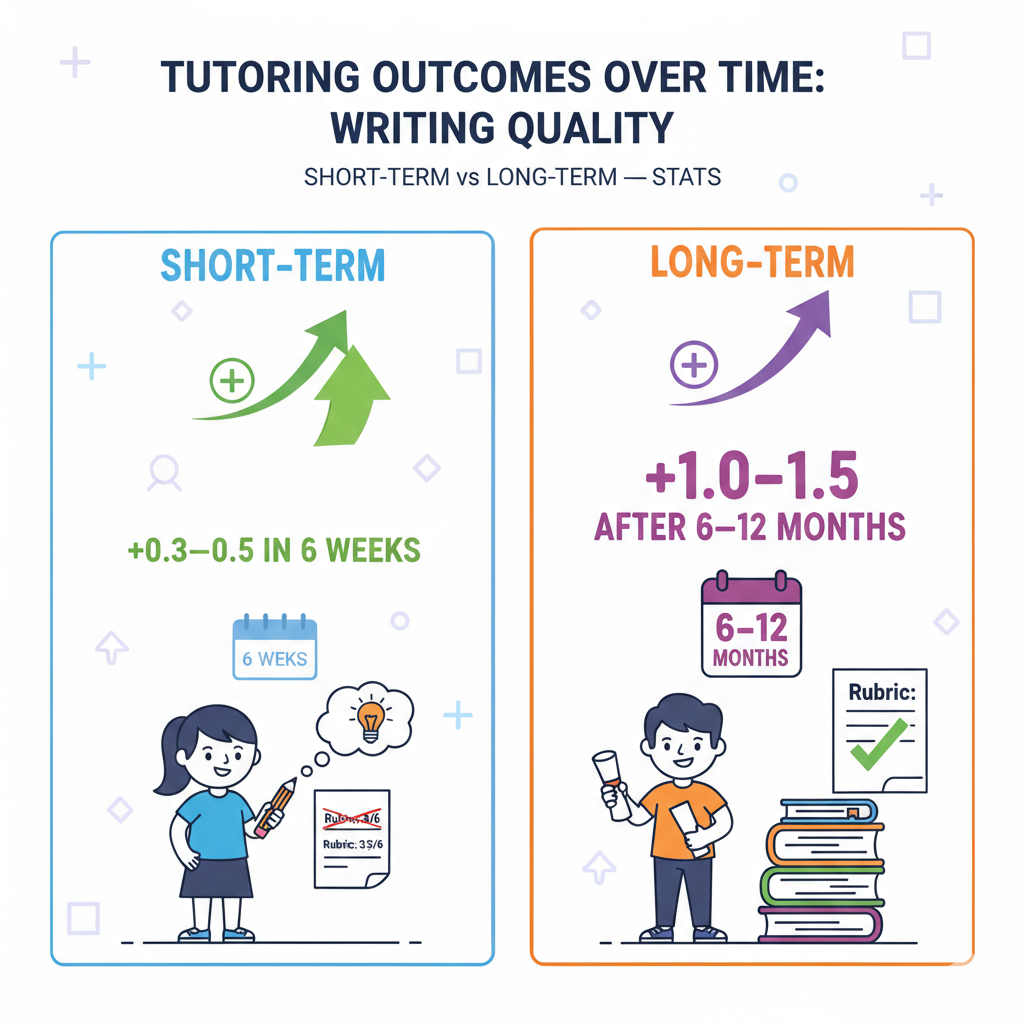
17) Writing quality (rubric 1–6): +0.3–0.5 in 6 weeks; +1.0–1.5 after 6–12 months
Short-term
Writing lifts fast when students get a clear model and a clear checklist. In six weeks, expect a three to five tenth rise by focusing on structure and clarity. Tutors teach a simple paragraph frame. Topic sentence that answers the prompt, two evidence lines, one explanation, and a closing line that links back to the claim.
The student writes with short sentences first, then stitches them into smooth flow. They use a tiny revision pass that looks only for three things. Strong verbs, clear subject, and no extra words. Parents can support by asking the child to read their draft out loud.
The ear catches clutter that the eye misses. A quick second draft with one focus usually adds the missing polish.
Long-term
Over six to twelve months, writing climbs a full point or more by building voice, varied sentence patterns, and stronger evidence. The tutor teaches mentor texts so the student sees how good writing feels. Students practice sentence combining, transition control, and precise word choice.
They learn to plan with a six-line outline, draft fast, and revise twice with two different lenses, first ideas, then style. Weekly micro-writes on low-stakes topics keep the pen moving. A portfolio shows growth and reminds the student that skill is built, not born.
With time, writing becomes easier to start and more fun to share.
Action steps you can use today
Use the paragraph frame on tonight’s homework. Write one topic sentence that answers the question, add two facts, explain why they matter, and close with a link back to the claim. Read it aloud once and cut three extra words. If you want tight, confident writing, Debsie coaches use proven frames that students actually like.
18) Problem-solving steps followed: Correct steps increase by 10–15% in 1 month; by 30–45% in 6–9 months
Short-term
Students often know pieces of a solution but skip steps under stress. In the first month, we raise correct steps by ten to fifteen percent with a simple flow. Read, plan, do, check. The tutor trains the student to write one plan line before any work.
For example, use the ratio table or isolate the variable. Then they show one step per line and box the answer. A quick check follows. Estimate first to see if the number makes sense, then compare units. Parents can help by asking the child to point to the plan line before they start.
This tiny pause reduces messy work and lost points.
Long-term
Across six to nine months, step accuracy climbs by thirty to forty-five percent because patterns become familiar and self-checks become automatic. Tutors teach common templates for word problems, equations, and graphs.
Students practice mixed sets so they must choose a path, not just repeat one. They keep a personal step checklist taped to the notebook. Over time, they need it less because the brain internalizes the order. At home, a once-a-week error study builds insight.
Pick two missed problems, name the wrong step, and write the fix step. This turns mistakes into tools for the next test.
Action steps you can use today
On the next homework, write one plan line before each problem and one check line after. Keep a small box in the margin to tick when both are done. If you want custom checklists for your child’s class, Debsie tutors build them from real assignments so they fit like a glove.
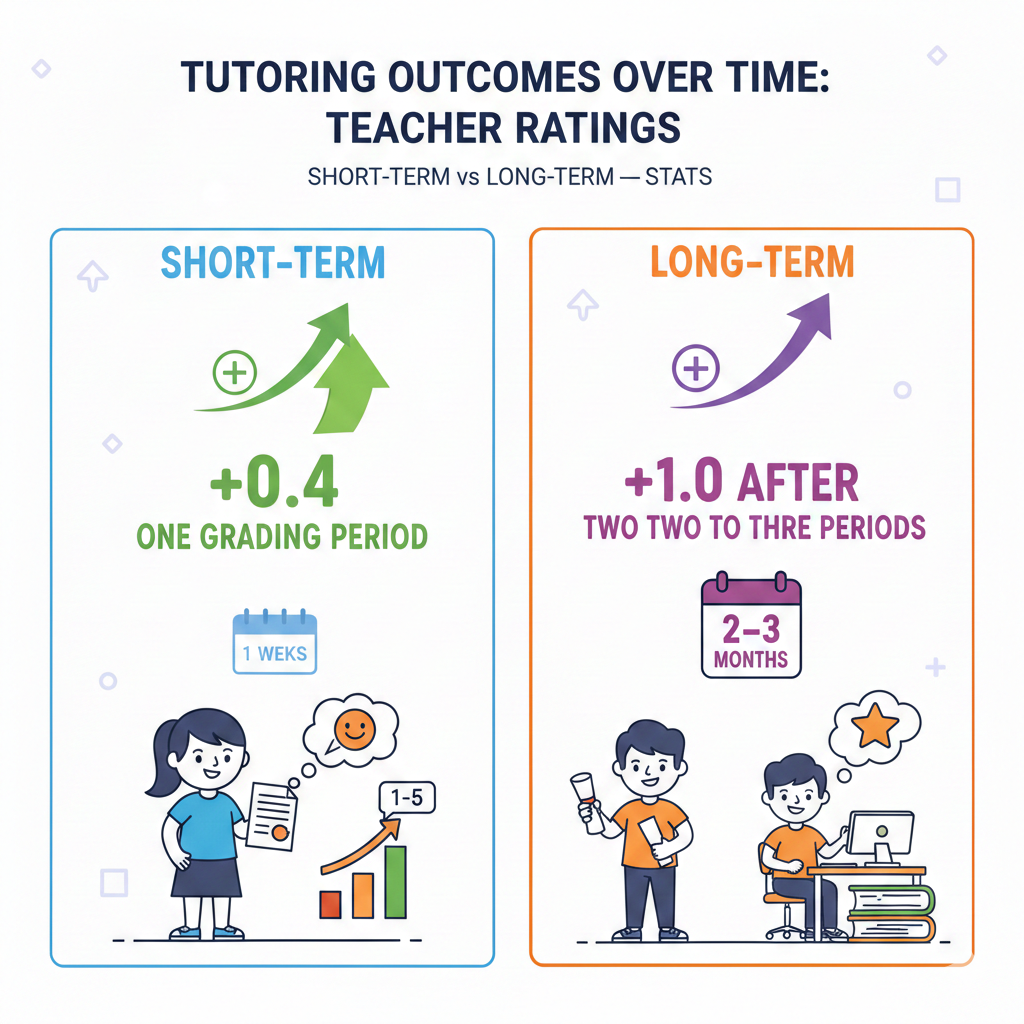
19) Teacher ratings (growth 1–5): +0.4 in one grading period; +1.0 after two to three periods
Short-term
Teacher ratings rise when effort is visible, work is on time, and class habits improve. In one grading period, a four-tenths lift is realistic if the student makes class smoother for the teacher. The tutor helps the student plan for three daily actions that teachers notice right away.
Arrive ready with materials out before the bell, ask one clear question during guided practice, and submit work with names, dates, and neat steps. The student also learns how to email a quick update when they will be late on a task, which shows responsibility and keeps trust strong.
Parents can set a simple after-school script. Check the portal, list what is due, and draft a short question for the teacher if something is unclear. This small routine makes the teacher’s job easier and signals growth.
When a teacher sees steady preparation and calm participation, ratings move up because the student is helping the flow of the class.
Long-term
Across two to three grading periods, teacher ratings can rise by a full point because the student builds a pattern of reliability and thoughtful work. The tutor coaches the child to track feedback phrases that repeat across assignments, like needs evidence, show steps, or explain thinking.
The student turns each phrase into a micro-goal for the next task. They also learn to lead small moments, like summarizing a problem at the board or helping a peer check work. These acts do not take extra talent; they take readiness and a kind tone.
Teachers reward that. Parents can support by practicing short, polite emails with the student and by celebrating moments when the student helps the class run better. At Debsie, we teach students how to read rubrics like a map and to deliver exactly what the teacher values.
That focus turns good intentions into clear, rate-able growth.
Action steps you can use today
Ask your child to write one teacher-facing goal for this week, set one class question to ask tomorrow, and prepare materials tonight so they open the notebook before the bell. After the next graded task, copy one feedback phrase into a micro-goal for the next assignment.
If you want a simple script and rubric playbook, Debsie tutors will build one for each of your child’s classes.
20) Long-term reading level: 1–2 months gives ~½ grade-level catch-up; 6–9 months gives 1–2 full grade levels
Short-term
A half grade-level catch-up in the first one to two months happens when the student reads texts at the just-right level every day. The tutor chooses passages where about nineteen out of twenty words are known, so the brain works on meaning, not guessing.
Each session follows a tight loop. Preview the text, read aloud with smooth pacing, pause to talk about the main idea, and reread tough parts for clarity. The student learns three anchor strategies.
Break big words into parts, use context to confirm meaning, and ask a quick why did that happen question after each paragraph. Parents can support in ten minutes a day by doing paired reading on topics the child actually likes, such as space, sports, animals, or crafts.
The goal is not speed records in this phase. The goal is comfort, accuracy, and a habit that the child will return to tomorrow without a fight.
Long-term
Across six to nine months, one to two full grade levels is realistic because vocabulary, background knowledge, and stamina grow together. The tutor builds a cycle that mixes fiction and nonfiction, adds author studies, and teaches text structures like cause and effect or compare and contrast.
Once a week, the student writes a short response that includes a quote and a why line. This simple writing step cements understanding and trains the mind to track evidence. The reading ladder also widens, moving from short passages to chapters and then to full books with support.
At home, a cozy reading setup can make practice stick. Same chair, same light, same time of day. A family read-aloud night once a week creates joy around reading and models fluent phrasing. At Debsie, our reading labs use live coaching plus gamified fluency games, so kids feel both guided and brave as texts get harder.
Action steps you can use today
Pick a just-right article, do a thirty-second preview, read it aloud together, and ask two why questions. Write one new word with a quick sketch. Repeat this pattern four times this week. If you want a personalized reading ladder and weekly progress checks, book a free Debsie class and we will map the steps.
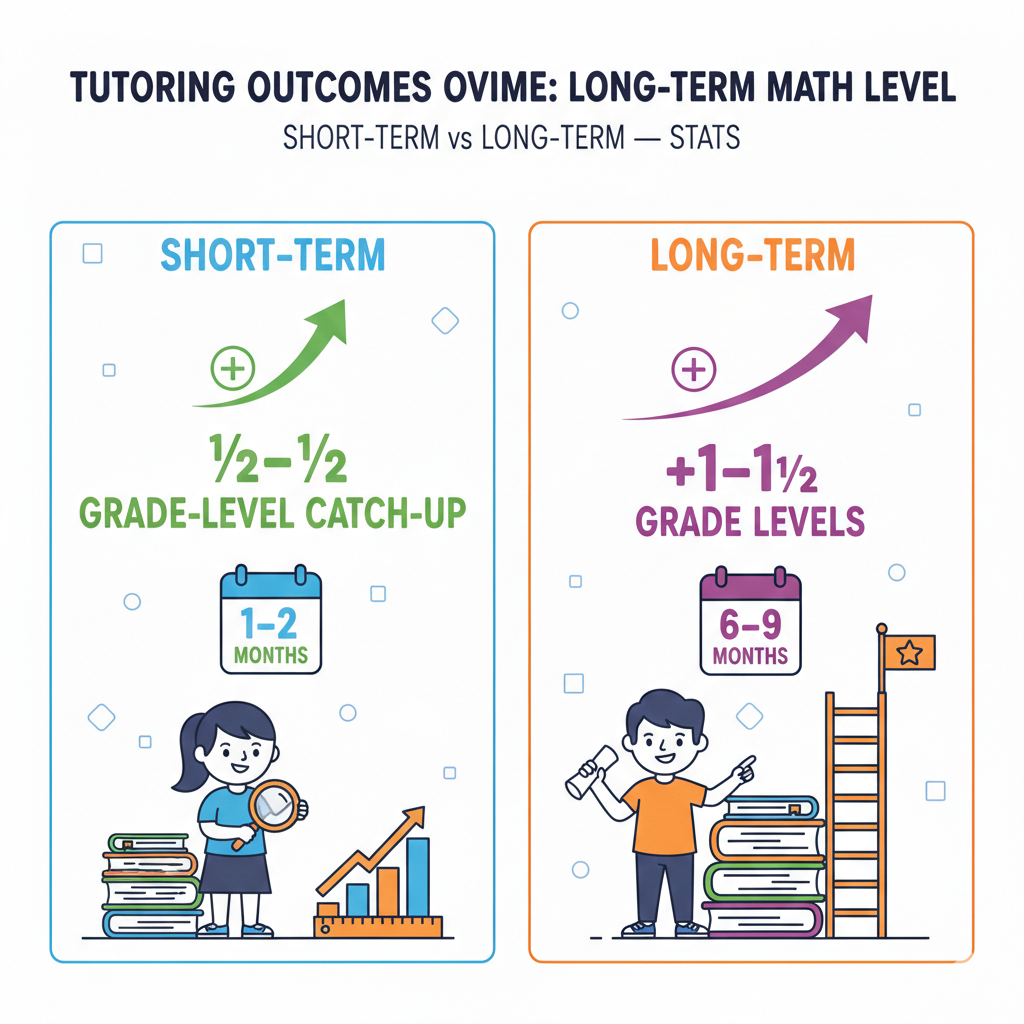
21) Long-term math level: 1–2 months gives ¼–½ grade-level catch-up; 6–9 months gives 1–1½ grade levels
Short-term
In the first month or two, a quarter to half grade-level catch-up is common when the student fills the biggest gaps first. The tutor runs a short diagnostic to find three anchor skills to fix right away, like place value, fractions on a number line, or solving one-step equations.
Each session teaches with concrete models first, then moves to pictures, then to symbols. This CPA path makes ideas real before they turn abstract. The student practices with tight feedback and ends each set by explaining one problem to show the steps in their own words.
Parents can keep a math talk going at home in everyday moments. Measure ingredients, estimate totals at the store, or compare travel times. These tiny talks make math feel useful and help the student see patterns.
Long-term
Over six to nine months, the student can gain a full grade level or more because the tutor builds a sequence that connects units and keeps skills alive through spaced review. Fact fluency frees up working memory, so multi-step problems feel lighter.
The child meets word problems weekly and learns to translate text into a simple plan line and a sketch. They also learn when to check with estimation and when to use a calculator on long arithmetic to save focus for reasoning. Confidence grows as problems start to look familiar.
At home, keep a thin math notebook where the student glues one solved example per skill with a short note on when to use it. This becomes a custom guide for tests. Debsie lesson plans follow school pacing but add the missing bridges between topics, so growth is steady and test-ready.
Action steps you can use today
Pick one anchor skill, learn it with a simple model, solve three problems, and teach one back. Glue the best solution in your math notebook with a one-line tip. Do a two-minute review of that tip in two days. If you want a full map from today’s gaps to next term’s goals, our Debsie math coaches will build it and walk it with your child.
22) Cumulative gain per tutoring hour: In month 1, ~0.3–0.5 test-points per hour; months 2–6 average ~0.6–0.8 per hour due to compounding
Short-term
The first month sets the base rate of growth. Each tutoring hour returns roughly a third to a half of a test point because the work focuses on quick fixes and setup. The tutor chooses the highest-yield skills, cleans up study space and routines, and teaches small test tactics that stop avoidable errors.
The student also learns how to use session time. Ask clear questions, show work, and practice until a correct step can be repeated without help. Parents can increase the return by protecting a short practice block right after each session.
Ten focused minutes doubles the impact because fresh skills stick better. When the study loop is tight, even small hours pay off.
Long-term
From month two onward, gains per hour rise to about six to eight tenths because skills begin to stack and carry over. A solved reading weakness makes social studies easier. Strong fraction sense makes ratio problems faster.
The tutor uses data from quizzes to aim the next sessions where they will move the most points. The student learns to self-assess before sessions so time is spent on the right targets, not on busywork. Parents help by keeping a simple progress chart with dates, topics, and points gained.
Seeing the slope rise keeps everyone motivated. Over months, the same hour of tutoring buys more learning because the foundation is stronger and the student knows how to learn. At Debsie, we design sessions to compound like interest. Each win funds the next, and gains accelerate.
Action steps you can use today
After the next session, schedule a ten-minute follow-up practice, log the score from a quick check, and write one sentence about what raised the points. Repeat weekly for six weeks and watch the per-hour return grow. If you want a compounding plan built by experts, try a Debsie free class and get a custom roadmap.
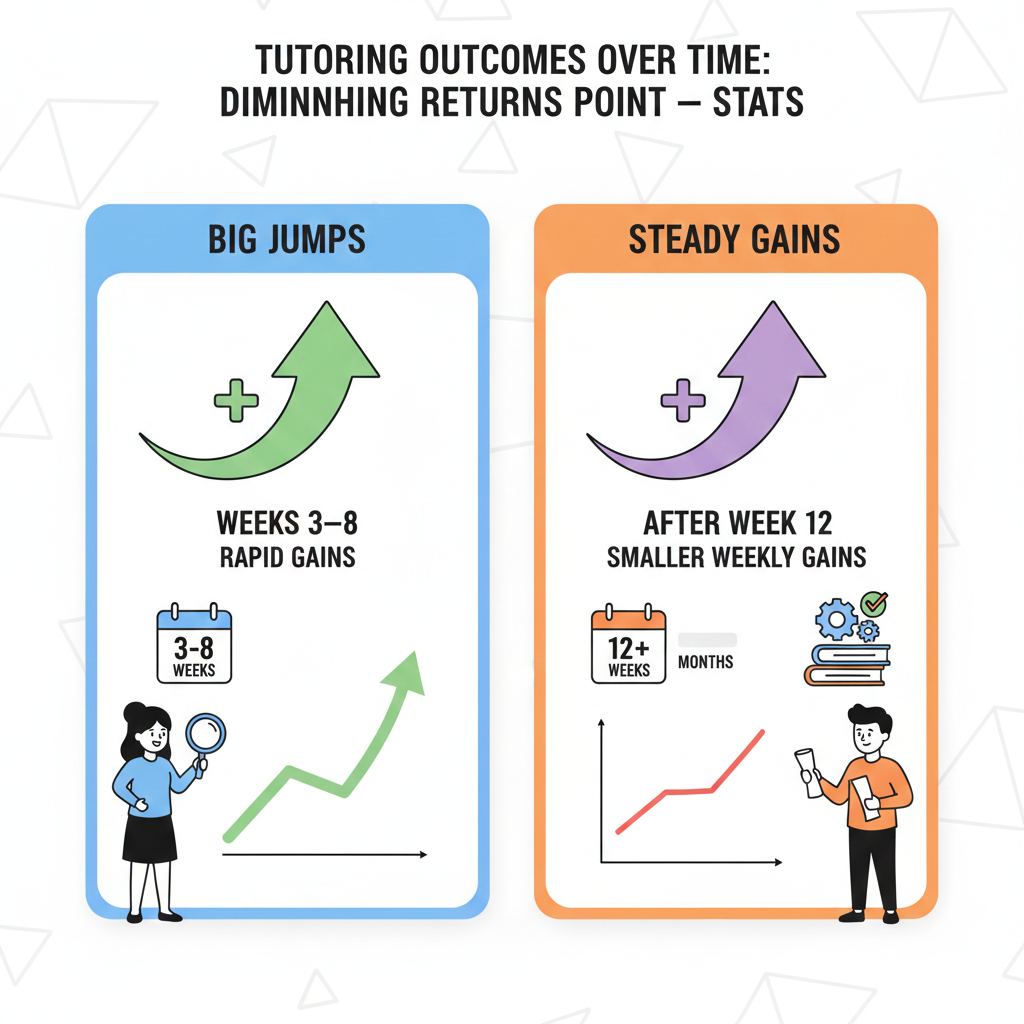
23) Diminishing returns point: Big jumps appear in weeks 3–8; steady but smaller weekly gains after week 12 unless goals are raised
Short-term
The first wave of growth feels exciting. Weeks three to eight often bring the biggest jumps because quick fixes stack fast. The tutor clears common errors, sets routines, and fills the most painful gaps.
Every new piece unlocks several older problems, so scores leap. To ride this wave, keep the plan tight. Meet at the same time each week, do short review at home right after sessions, and celebrate small wins with simple rewards.
Focus on three high-yield moves per subject and repeat them until they are automatic. Parents can help by protecting the study window and by reducing extra add-ons that drain energy. This is the moment to bank habits that will power the next stage.
Long-term
After week twelve, gains keep coming, but the curve flattens unless the target moves. This is normal. Easy points are gone, and deeper skills take longer to build. The answer is not to work endlessly on the same drills. The answer is to raise the challenge just enough.
The tutor introduces harder texts, mixed problem sets, more writing with evidence, and fuller test sections. Goals shift from accuracy to both accuracy and pace. The student also adds self-led tasks, like planning their own study steps for a unit or leading a short teach-back.
This keeps the brain in growth mode. Every four weeks, step back and pick one new stretch goal and one support habit to match it. At Debsie, we use these planned goal raises to prevent plateaus and to keep motivation high.
Action steps you can use today
Look at the last three weeks of work. If accuracy is above ninety percent and stress is low, add a small stretch. Use harder passages, add one more step to the writing frame, or time one more section. Write the new goal on a card and review it before each study block.
If you want help picking the right stretch at the right time, our coaches at Debsie will tailor it to your child.
24) Transfer to other subjects: After 3 months, 20–30% of gains show up in non-tutored classes; after 6–9 months, 35–50%
Short-term
Skills do not stay in one box. After three months, a fifth to a third of the gains often appear in other classes. Better reading helps science labs. Stronger math helps tech and business topics. This transfer happens when the tutor teaches general tools, not only unit tricks.
Students learn to preview any text, to build a plan line for any problem, and to check answers with estimation or evidence. Parents can nudge transfer by naming it out loud. When your child uses a reading move in history, say, that preview helped you see the main point faster.
The brain starts to connect the dots and re-use the tool across classes.
Long-term
Across six to nine months, transfer grows to a third or even half of the gains because core habits are now part of how the student thinks. They walk into any class with the same setup. Planner open, goal set, notes organized, checklists ready.
The tutor builds cross-subject tasks to make transfer explicit. Read a science article and write a short claim with evidence. Analyze a graph from social studies and explain the trend. Solve a math problem and then write the reasoning in clear steps.
Over time, the student sees that the same few tools, used well, make many classes easier. At Debsie, we design projects that braid reading, writing, and math so gains travel.
Action steps you can use today
Pick one move from tutoring, like previewing or plan lines, and use it in a different subject tonight. Afterward, write a one-sentence note on how it helped. Do this twice a week for a month. If you want a cross-subject booster plan, our Debsie tutors will show your child how to carry wins everywhere.
25) Executive skills (plan, start, finish): Short-term +10–15% improvement; long-term +30–40% with routines locked in
Short-term
Executive skills are the brain’s air traffic control. Planning, starting, and finishing improve quickly when friction disappears. In the first month or two, a ten to fifteen percent lift comes from three tiny systems.
A one-page planner with only next actions, a fixed start alarm that repeats daily, and a two-minute end routine to pack up and log what is done. The tutor also teaches a five-second launch cue to beat procrastination.
Sit, breathe once, write the first verb, start. Parents should avoid long lectures and focus on cues and environment. Clear desk, clear list, clear time. These small steps turn stuck time into work time.
Long-term
With six to nine months of practice, executive skills rise by thirty to forty percent because routines become automatic. The student learns to break any task into a three-step chain, to batch small chores into one block, and to block distractions without drama.
They also learn recovery moves. If a study block is missed, they run a five-minute salvage session the same day instead of letting guilt grow. The tutor sets weekly reviews with simple questions. What worked, what got in the way, what is the first move for next week?
The student leaves each review with a short plan and one tweak. Over time, this builds a sense of control that powers all schoolwork. At Debsie, executive skill coaching is baked into every lesson, so students do not just learn content; they learn how to learn.
Action steps you can use today
Set a repeating start alarm, write the first verb for each task, and end study with a two-minute pack-and-log. Track streaks on a small card. When you hit five in a row, choose a fun, free reward at home. If you want a simple executive skills kit and coaching, Debsie can set it up this week.
26) Parent satisfaction (1–10): Rises by 1–2 points in the first month; 3–4 points by month 6 as habits stick
Short-term
Parents feel better fast when they see clear plans and steady follow-through. In the first month, a one to two point rise on a ten-point scale is common because stress drops. Tutors share a brief weekly summary that shows what was taught, what improved, and what the next step is.
The student begins to start homework on time, turns in more tasks, and talks about wins. At home, a short evening huddle helps. Ask two questions. What went right today, and what is our first move tomorrow? Keep it under two minutes and end with a calm thank you. This small rhythm lowers friction and builds trust.
Long-term
By month six, satisfaction rises another three to four points because parents see durable habits and lasting growth. Grades improve, mornings are smoother, and the child handles setbacks with less drama. The tutor continues to provide clear data and quick responses to questions.
Parents feel part of a team, not alone. They see their child becoming more independent and more confident, not just chasing scores. This sense of progress at home and school creates peace. At Debsie, we make communication simple and proactive so families can relax and enjoy the journey.
Action steps you can use today
Start the two-minute nightly huddle, keep a small win log on the fridge, and schedule a fifteen-minute check-in with your tutor every other week. If you want that level of clarity and calm, book a free Debsie class and we will outline the first month for you.
27) Dropout risk flags: Reduce by 10–15% in 6 weeks; by 25–35% after a semester of steady tutoring
Short-term
Early warning signs often look small. Missing work, skipping quizzes, or zoning out in class can be the first flags. In six weeks, tutoring can lower these flags by ten to fifteen percent by putting a calm rescue plan in place.
The tutor begins with a quick scan of the grade portal and a two-minute check-in on feelings about school. Together, they choose three fast wins for the coming week. Turn in a make-up assignment, pass the next quiz with a clear plan, and attend extra help once.
Each win proves that change is possible. The student also sets a simple attendance and homework streak. Even three days in a row changes the story from I am behind to I am moving. Parents support with a no-drama after-school routine.
Backpack on the table, planner open, pick the first ten-minute task, start the timer. The tone stays kind and steady. Small daily steps turn a downward slide into a slow climb.
Long-term
Across a semester, risk flags can drop by twenty-five to thirty-five percent because the student rebuilds trust in their own effort. The tutor keeps the work at the right level, not too easy and not too hard, and checks progress weekly.
The student learns recovery moves. If a test goes badly, they schedule a retake path or an extra-practice plan within forty-eight hours. If a project feels heavy, they break it into tiny blocks and start with one. Social ties help too.
A supportive adult at school and one friend in class can pull a student back into the flow. Parents protect sleep, simplify mornings, and celebrate quiet wins. Over time, the child sees that showing up, asking for help early, and using a plan always bends the curve back up.
At Debsie, we track risk flags with a simple dashboard so problems are caught fast and handled with care.
Action steps you can use today
Open the portal, pick one missing item to submit today, and write a two-line plan for the next quiz. Schedule one teacher check-in this week. If you want a gentle, proven way to flip risk into momentum, book a free session at Debsie and we will set up a rescue plan that fits your child.
28) College-readiness benchmarks met: +5–10% of students in 2 months; +15–25% in 6–9 months
Short-term
College-readiness starts with steady basics. In two months, five to ten percent more students can meet early benchmarks when tutoring targets core reading, writing, and algebra skills that show up on placement tests.
The tutor builds short, focused sets that mirror real tasks. Read a passage and pull the main claim, write a clear paragraph with evidence, solve linear equations, and read simple graphs. Students also learn test-day routines, like pacing, guessing rules, and quick reviews, so scores reflect true skill.
Parents can help by setting a weekly practice slot and keeping a simple progress chart with dates, scores, and one lesson learned. Even small steps add up when they are consistent.
Long-term
Over six to nine months, fifteen to twenty-five percent more students can cross key lines because knowledge deepens and habits stick. The tutor layers higher-level work, such as argumentative writing with citations, systems of equations, function basics, and data analysis.
Students build stamina with longer passages and full sections done under light time pressure. They also plan target colleges and programs, which turns practice into purpose. Confidence rises as scores climb and tasks feel familiar.
Families learn to look beyond a single test and focus on the pattern of growth and the strength of the study system. At Debsie, we use benchmark maps tied to real assessments, so every hour lines up with what colleges expect.
Action steps you can use today
Choose one benchmark skill for this week, such as solving for x or writing a claim with two pieces of evidence. Practice for twenty minutes, grade it with a simple checklist, and write one fix to try tomorrow. If you want a college-ready roadmap with monthly checkpoints, our Debsie coaches will build it around your goals.
29) Post-tutoring durability: After stopping, students keep ~60–75% of long-term gains at 3–6 months if they keep the study routine
Short-term
When tutoring pauses, gains do not have to fade. In the first three months, students usually keep sixty to seventy-five percent of growth if they maintain a small, steady routine. The key is to keep the same structures that made learning work.
A weekly review, a short fluency warm-up, and one mixed practice set keep skills awake. The student also tracks one anchor metric, like words per minute, correct answers on a ten-question set, or percent correct on a short quiz.
Seeing the number stay stable protects confidence. Parents can help by keeping the study space ready and the calendar reminders in place. The plan should be light and friendly so it fits busy weeks.
Long-term
At six months, durability stays high when the student uses skills in real life and revisits old topics on a spaced schedule. Reading flows into news articles, science labs, and favorite books. Math shows up in budgeting, cooking, and project planning.
Once a month, the student runs a mini checkup on the toughest past skill and adds a two-day refresh if needed. If a new class introduces linked ideas, the student opens old notes and reuses the same checklists and frames.
This re-use locks the system. If grades slip, a short booster month of tutoring can restore the curve quickly because the foundation is still there. Debsie offers flexible booster blocks for exactly this reason, so students stay strong without overcommitting.
Action steps you can use today
Set a weekly thirty-minute maintenance block. Start with five minutes of warm-up, do twenty minutes of focused practice, and end with a five-minute log. Keep one anchor metric and update it each week.
If you want a custom maintenance plan after tutoring ends, we will design one you can keep on the fridge, simple and clear.
30) Return on effort: For every 10 hours in the first month, expect +3–5 test points; for every 10 hours across 6 months, average +6–8 points as skills build on each other
Short-term
In the first month, ten focused hours usually produce three to five test points because the plan targets high-yield fixes. Each hour includes a quick teach, a guided practice, and a short checkpoint.
The student follows with two ten-minute home practices that lock the new skill in place. Parents protect these small windows and help log the scores. The tutor aims each session at the next most valuable point on the test, which keeps the return high.
A calm rhythm matters more than long sessions. Short and steady sessions prevent burnout and keep motivation strong. When progress is visible, effort feels worthwhile, and students lean in.
Long-term
Across six months, the return per ten hours rises to six to eight points because learning compounds. A fluent reader learns new science faster. Strong algebra speeds physics and coding. Good writing helps every class that asks for clear answers.
The tutor plans for compounding by building bridges between topics and by keeping mastered skills in the rotation. The student also gets better at learning itself. They ask sharper questions, plan their own review, and recover faster from mistakes.
Parents see more independence and less stress at home. Over time, the same ten hours buy more growth because the system runs smoothly. At Debsie, we design tutoring like investing. We front-load the quick wins and reinvest them into deeper goals so gains keep growing.
Action steps you can use today
Log your child’s learning hours for the next two weeks and tie each hour to one small result. After ten hours, compare the new checkpoint score to the old one. If the return is low, adjust the target skill or the home practice loop.
If you want the best return for your time and budget, schedule a free Debsie class and we will create a compounding plan that fits your family.
Conclusion
Short-term tutoring builds quick wins. Long-term tutoring builds strong skills that last. In the first few weeks, you see faster homework, fewer errors, calmer tests, and small but real jumps in scores. Over months, those early gains stack into deeper reading, steadier math, clearer writing, better habits, and higher confidence.
The curve is simple. Start with tight focus, keep a steady rhythm, raise the goal when work gets easy, and protect routines that make school feel doable. When the plan is clear and repeated, gains do not fade. They grow.