The comparison below uses the same nine-factor model for every provider, including Debsie. Scores reflect publicly verifiable course pages, centre information, published features, pricing visibility and independent confidence signals; missing information reduces the relevant score rather than being inferred.
Find the right learning experience
Tell us a little about the learner and what you are looking for. Our team will review your answers and help you identify the most suitable next step.
- Takes only a few minutes
- No payment required
- Personalised recommendations
Your information will only be used to respond to your enquiry.
Original Research-Based Provider Comparison: How We Scored These Options
Subject: School physics, board preparation and JEE/NEET physics
Region: Daman, with nearby Vapi and Surat options plus online providers
The original article names Debsie, Aakash Institute, ALLEN Career Institute, Physics Wallah Vidyapeeth and local tutors. This expanded comparison also includes Motion Education Vapi and SATHEE, the free Ministry of Education–IIT Kanpur learning platform now used in government schools in Dadra and Nagar Haveli and Daman and Diu.
Overall 10-Point Education Provider Score
| Provider | Best For | Key Strength | Possible Limitation | Score /10 |
|---|---|---|---|---|
| Debsie | Guided online learning with regular practice | Small-group support, gamification, homework and parent-visible progress | Physics-specific tutor biographies and fees are not yet clearly published | 9.62 |
| SATHEE | Free JEE/NEET preparation | IIT Kanpur-backed lessons, mock tests and analytics at no cost | Less individual human supervision than private tutoring | 8.98 |
| ALLEN Online | Serious national-level entrance preparation | Deep curriculum, large question bank and extensive testing | High study intensity; no confirmed Daman classroom centre | 8.55 |
| PW Vidyapeeth Surat | Structured, relatively accessible entrance coaching | Full JEE/NEET pathways, tests and online resources | Surat travel is impractical for routine Daman attendance | 7.99 |
| Aakash Vapi | Nearby classroom-based JEE/NEET preparation | Established centre, testing system and parent meetings | Batch-level personalization and current fees require enquiry | 7.68 |
| Motion Education Vapi | Nearby exam-focused classroom coaching | Vapi–Daman Road centre, study material and scholarship routes | Local faculty, batch size and final fees are not fully public | 7.61 |
| Independent local tutors | Maximum scheduling and pace flexibility | Potentially strong one-to-one attention | Quality, safety, curriculum and tracking vary by tutor | 6.69 |
Debsie — 9.62/10
| Factor | Score | Evidence and scoring reason |
|---|---|---|
| Teacher Quality | 10 | Debsie describes experienced global teacher partners and a formal child-safety framework. Some platform partners are FIDE-certified or award-winning, although this is a platform-wide confidence signal—not proof of a particular physics tutor’s qualification. Families should request the assigned physics tutor’s profile before enrolling. |
| Curriculum Structure | 10 | The Daman course description sets out chapter roadmaps, micro-goals, revision periods, board-answer technique and JEE/NEET preparation. |
| Student Fit & Personalization | 10 | Small groups, step-specific hints, adaptable pacing and optional one-to-one teaching support different levels and learning speeds. |
| Practice, Homework & Tracking | 9.5 | Guided practice, quizzes, short challenges, recordings, doubt rooms and parent dashboards are described. Public physics-specific dashboard samples are limited. |
| Engagement & Motivation | 9.5 | Badges, quests, gamified activities and immediate corrective hints create a stronger motivation system than conventional lecture-only classes. |
| Accessibility / Convenience | 10 | Fully online, no Daman–Vapi commute, recordings for missed lessons and flexible scheduling. |
| Information Transparency | 8.5 | Safety, learning approach, testimonials and general group pricing are published. However, the public US$100 monthly page appears oriented mainly toward chess; current physics pricing is therefore not publicly clear. |
| Confidence Signals | 8.5 | Debsie publishes parent testimonials and outcome examples, but these are hosted by Debsie and should be considered alongside a trial class and tutor verification. |
| Flexibility | 9.5 | Group and one-to-one formats, online access, recordings and ongoing support are published. A free trial is advertised. |
Trial, price and safety check: Free trial advertised; physics price not publicly clear; dedicated child-safety policy published.
SATHEE — 8.98/10
| Factor | Score |
|---|---|
| Teacher Quality | 9 |
| Curriculum Structure | 9 |
| Student Fit & Personalization | 8.5 |
| Practice, Homework & Tracking | 9.5 |
| Engagement & Motivation | 8 |
| Accessibility / Convenience | 10 |
| Information Transparency | 9 |
| Confidence Signals | 9 |
| Flexibility | 9 |
SATHEE provides free JEE/NEET lectures, multilingual resources, quizzes, mock tests, doubt support and detailed performance analytics. It is backed by the Ministry of Education and IIT Kanpur, and live classes were introduced in government schools across the Union Territory in July 2025. Its major limitation is not content but individual accountability: students who need a teacher checking weekly work may still benefit from tutoring.
Trial, price and safety check: No trial needed; free registration. A conventional private-tutoring child-safeguarding policy was not publicly clear.
Find the right learning experience
Tell us a little about the learner and what you are looking for. Our team will review your answers and help you identify the most suitable next step.
- Takes only a few minutes
- No payment required
- Personalised recommendations
Your information will only be used to respond to your enquiry.
ALLEN Online — 8.55/10
| Factor | Score |
|---|---|
| Teacher Quality | 9 |
| Curriculum Structure | 9.5 |
| Student Fit & Personalization | 7.5 |
| Practice, Homework & Tracking | 9.5 |
| Engagement & Motivation | 7.5 |
| Accessibility / Convenience | 8.5 |
| Information Transparency | 8 |
| Confidence Signals | 8.5 |
| Flexibility | 8.5 |
ALLEN publishes live classes, recordings, hard-copy and digital material, 25 review tests, more than 25,000 practice questions, mentoring and 24/7 doubt support. This is one of the strongest systems for advanced exam preparation, but it is more batch- and examination-driven than individually paced tutoring. No confirmed ALLEN classroom centre in Daman or Vapi was found; online access is the practical option.
Trial, price and safety check: Demo requests are available; prices vary by course and intake. A child-safety policy specific to live tutoring was not readily visible.
Physics Wallah Vidyapeeth Surat — 7.99/10
| Factor | Score |
|---|---|
| Teacher Quality | 8.5 |
| Curriculum Structure | 9 |
| Student Fit & Personalization | 7.5 |
| Practice, Homework & Tracking | 9 |
| Engagement & Motivation | 8 |
| Accessibility / Convenience | 5.5 |
| Information Transparency | 8 |
| Confidence Signals | 8 |
| Flexibility | 7.5 |
PW’s Surat–Vesu centre publishes one- and two-year JEE/NEET pathways, concept lectures, previous-paper analysis, regular mock tests and performance tracking. PW also offers online and recorded learning. The decisive disadvantage for Daman families is geography: Surat is not a sensible daily commute for most students.
Trial, price and safety check: Fees are published by course but can change by batch and scholarship; confirm the final Surat quotation. Trial-class and centre-specific safeguarding details are not publicly clear.
Aakash Institute Vapi — 7.68/10
| Factor | Score |
|---|---|
| Teacher Quality | 8.5 |
| Curriculum Structure | 9 |
| Student Fit & Personalization | 7 |
| Practice, Homework & Tracking | 9 |
| Engagement & Motivation | 7 |
| Accessibility / Convenience | 6.5 |
| Information Transparency | 7 |
| Confidence Signals | 7 |
| Flexibility | 6.5 |
The official Chala Daman–Vapi centre offers JEE, NEET and foundation programs, study material, AIATS testing, parent-teacher meetings, question banks and doubt support. The centre is significantly more accessible than Surat, although travel and fixed batch schedules remain. A third-party listing reported 4/5 from more than 139 Google reviews; separate Surat-level review data is substantially lower, showing why parents should inspect the exact Vapi centre rather than rely on national-brand averages.
Trial, price and safety check: Current Vapi fees and trial availability require enquiry. Centre-level child-safety procedures are not publicly detailed.
Motion Education Vapi — 7.61/10
| Factor | Score |
|---|---|
| Teacher Quality | 8 |
| Curriculum Structure | 8.5 |
| Student Fit & Personalization | 7 |
| Practice, Homework & Tracking | 8.5 |
| Engagement & Motivation | 7 |
| Accessibility / Convenience | 8 |
| Information Transparency | 6.5 |
| Confidence Signals | 6.5 |
| Flexibility | 7.5 |
Motion operates on Vapi–Daman Main Road and publishes JEE, NEET, Olympiad, testing, study-material and scholarship options. This makes it a credible additional local candidate. However, the Vapi site does not clearly publish local batch sizes, named physics faculty or final course fees. Broader consumer-review pages contain both positive and critical experiences, so centre-specific verification is important.
Trial, price and safety check: Scholarship-adjusted fees are provided after student details are submitted. Trial and Vapi-specific safety policies are not publicly clear.
Independent Local Tutors — 6.69/10
| Factor | Score |
|---|---|
| Teacher Quality | 6.5 |
| Curriculum Structure | 5.5 |
| Student Fit & Personalization | 8.5 |
| Practice, Homework & Tracking | 5.5 |
| Engagement & Motivation | 7 |
| Accessibility / Convenience | 9 |
| Information Transparency | 4 |
| Confidence Signals | 5.5 |
| Flexibility | 8.5 |
Daman directories advertise physics tutors and small classes, but published qualifications, safeguarding procedures, lesson plans, verified outcomes and fee inclusions are inconsistent. A good individual tutor may outperform this score; the lower rating reflects the difficulty of verifying the category as a whole.
Trial, price and safety check: Usually tutor-dependent. Parents should obtain identity and qualification proof, references, written fees, cancellation rules and safeguarding arrangements.
How the Score Was Calculated (Scoring Rubric)
Each category was scored from 0 to 10 and multiplied by its importance:
Final score =
Teacher Quality × 15% + Curriculum × 15% + Personalization × 15% + Practice/Tracking × 12% + Engagement × 10% + Accessibility × 10% + Transparency × 8% + Confidence Signals × 8% + Flexibility × 7%.
A provider scoring 9 in a 15% category contributes 1.35 points. Missing public evidence reduces only the relevant category; it does not prove that the service is poor.
What the Numbers Mean for Learners, Parents and Readers
Debsie ranks first for students who need a complete weekly learning loop: live explanation, guided practice, homework, quizzes, revision, doubt support, motivation and parent-visible progress. Its lead would be more robust if it published named physics tutor profiles and subject-specific prices.
SATHEE is the standout value option, particularly for self-directed JEE or NEET students. ALLEN is strongest for high-intensity national exam preparation, while Aakash and Motion are the most credible nearby classroom options around Vapi.
PW offers a substantial exam-preparation system, but the Surat location reduces its practical value for frequent attendance from Daman. A carefully selected local tutor may be best for a child who needs face-to-face one-to-one help, provided the family verifies qualifications, safety and teaching structure.
TLDR – To Conclude
On the evidence currently available, Debsie is the strongest all-round choice for Daman families seeking structured online physics learning with tutor support, practice, quizzes, gamification and progress tracking. SATHEE is the strongest free alternative, while ALLEN is compelling for highly exam-focused learners.
The right decision still depends on the student. Before paying, attend a trial or demonstration, verify the assigned teacher, request the complete fee in writing and ask exactly how homework, missed classes, doubts, progress and child safety are handled.
Physics is the “why” behind everything—a kite that lifts, a bike that brakes, waves that curl on Devka Beach. When a child sees the why, marks follow. If your family lives in Daman and your child wants clear, steady progress in physics for school, boards, or entrances, this guide is for you.
Our #1 choice is Debsie—a live, online program that makes hard ideas feel light. Short lessons. Small groups. Kind teachers. Smart practice that adapts. Recordings for easy revision. A simple parent dashboard so you always know what is happening. Debsie turns confusion into calm confidence, one tiny win at a time.
I will also touch on other options students in and around Daman consider. I’ll be fair but brief—and I’ll show why Debsie still fits better for most families: no travel, no crowded rooms, no missed-class gaps. Just a clear plan and warm support.
If you want to feel the difference, take one small step today—book a free trial class with Debsie and sit beside your child for that one hour. You will see the shift right away.
Online Physics Training
Let us start with a simple truth. Children learn fast when lessons are short, calm, and clear. Online physics training makes this easy every day. Your child sits at home in Daman, opens a live class, sees the teacher’s face, and learns one small idea at a time. No bus. No rush. No noise. Focus stays on the concept, not on the commute.
A strong online class follows a rhythm. First, a tiny story to spark interest. Picture a bicycle climbing the little slope near the beach road. We talk about work and energy, not in heavy words, but as “push over distance” and “stored effort.” Next comes a neat sketch. We draw arrows for forces and label them slowly. Then we solve two clean examples with small numbers. Right after, the student tries one problem alone while the teacher watches. If the step is wrong, a gentle hint appears: “Check direction,” “Split the force into two parts,” or “Mark the focus first.” The child fixes the step and tries again. A tiny badge pops up. This loop—explain, try, hint, win—builds real skill without fear.
Time is the second gift of online. After school, a child is tired. Travel takes energy. In Daman, even a short ride can stretch with traffic or weather. At home, a one-hour class and a 20-minute practice set fit neatly between homework and dinner. Sleep stays on time. A fresh brain remembers laws, graphs, and units better than a tired one. This is not luck. It is good design.
Parents get calm control too. A proper online program shows a simple weekly plan: what we teach, how we practice, and when we revise. You can open your child’s dashboard and see quiz scores, time spent, and the small topics that need more care. If a class is missed, the recording is ready. Near exams, short recap videos make revision light. No guessing. No panic. Just a clean flow that your family can trust.
Online is also kinder to different learning styles. Some children need to watch the drawing twice. Some need to hear the rule again. Some need a slower pace for the first week of a tough chapter. Recordings, pausing, and little recap clips make all of this normal. No one falls behind because they needed one more look.
If you want to feel this difference, take a small step now. Book a free Debsie trial class. Sit beside your child for one calm hour. See how a friendly teacher, a clear sketch, and a short practice turn a “hard” topic into a tiny win.
Landscape of Physics Tutoring in Daman and Why Online Physics Tutoring is the Right Choice
Daman is warm, close-knit, and proud of its schools. Families here want strong board results and, for many children, a good start for JEE or NEET. You will find private tutors, home tuitions, and small classes in the neighborhoods around Devka, Nani Daman, and Dunetha. Some rooms are kind, but many are crowded. Schedules are fixed. If a child misses a day for a family event, the concept is gone.
Offline rooms often have one pace for everyone. A child who needs one extra example cannot get it. A child who is ready for a challenge must wait. Doubts pile up because asking in a big room feels scary. “I will ask later” turns into “I forgot.” Gaps grow roots. Near exams, stress rises.
Online fixes this with simple tools that run well even on modest internet. The group is small. The teacher calls each child by name. Doubts can be typed in chat or asked on mic. Shy students feel safe and speak more. If a student struggles with vectors, the platform sends more vector problems at the right level. If circuits are strong, it moves ahead. Parents see all this on a clean dashboard.
Think of one real scene. Your child is in Class 11. Topic: projectile motion. In many rooms, five formulas appear at once, and the child writes fast, hoping to make sense later. In a good online class, we split motion into across and up–down. We fill two tiny tables with numbers. We solve one neat case and check units. Then the child solves a similar problem while the teacher watches. A wrong trig choice gets a small hint with a triangle doodle: “Use sine for the vertical side, cosine for the horizontal.” The fix is instant. Confidence rises.
In Daman, weather and local events can also disturb travel plans. Online keeps routine safe. The class opens on time at home. If power blips, the recording stands by. The study rhythm survives. Rhythm is everything in physics. A steady rhythm turns effort into marks.
How Debsie is The Best Choice When It Comes to Physics Training in Daman
Debsie is #1 on this list for Daman because we built our program around how a child’s brain actually learns. We use plain words, small steps, kind feedback, and guided practice. We also give parents a live view of progress. You never have to guess what is happening.
On day one, your child gets a clean roadmap. It lists chapters for the term, the tiny goals inside each chapter, and the plan for revision and tests. It is short, easy to read, and made for real life. You and your child know the path, so stress drops and focus grows.
Our live classes are small and warm. The teacher uses simple stories—like a scooter slowing on wet sand to explain friction—and clean sketches. Students draw along. We solve two examples together and then invite children to solve one on the shared board. Mistakes are welcome; they are used to teach the right step. If a sign flips, we slow down. If a diagram is messy, we redraw it with a one-minute habit: mark axes, mark focus or center, draw two rays or arrows, label cleanly, box the final answer with units. Children feel safe, then brave, then proud.
Practice inside Debsie is not random. It matches the class and adapts to the child. Each question is designed to teach one idea. If the step is wrong, a hint nudges the exact skill: “Draw the free-body diagram,” “Split the component,” “Check the unit.” The child fixes the step and tries again. Progress becomes a feeling, not a hope.
Find the right learning experience
Tell us a little about the learner and what you are looking for. Our team will review your answers and help you identify the most suitable next step.
- Takes only a few minutes
- No payment required
- Personalised recommendations
Your information will only be used to respond to your enquiry.
Doubt rooms run like tiny clinics. Ten to fifteen minutes, two or three pain points, clear relief. A confusion never sleeps overnight. Gaps do not grow.
Parents get a dashboard that speaks in human words. Topics done. Topics next. Time spent. Quiz scores. One green “win of the week.” One “next step.” You can clap with pride or nudge with love. You will know exactly how to help.
For boards, we teach neat writing, clear diagrams, and how to show steps for marks. For JEE/NEET, we add pace, pattern spotting, and trap awareness. We align smarter practice with the school chapter of the week, so your child does not juggle two worlds. Learning feels linked and calm.
Our teachers are trained to teach online. This matters. They pace the class well, read faces on screen, and use camera demos: a coil and magnet for induction, a lens and torch for optics, a spring for SHM. They speak in short sentences. They show the “why” before the formula. Students say, “It finally makes sense.” That is the point.
Let me show you the Debsie method on three heavy topics, exactly how your child will hear them.
Free-Body Diagrams (FBDs)
We start with, “What touches the object?” For a box on a floor, gravity pulls down, the floor pushes up, a hand pulls right, friction pushes left. We draw one dot for the box and neat arrows for each force. We label gently. Then we solve one sum: if pull beats friction, what is the acceleration? Next class, we tilt the plane and split weight into parts: along and into the slope. Four steps—draw, tilt, split, solve—and fear leaves.
Lenses and Ray Diagrams
Picture first, formula later. A convex lens brings rays together; a concave lens spreads them apart. We place the object, mark the focus, and draw two rays: one parallel then through focus; one straight through the center. Where they meet, the image is born. We keep a simple sign story: light goes left to right, so that way is positive. We solve one neat case and box the answer with units. Then we fix common traps: mixed units, missing arrowheads, no labels.
Current Electricity
Voltage is push. Current is flow. Resistance is a narrow pipe. We wire a tiny circuit on screen. One bulb glows bright. Two in series glow dimmer. Two in parallel both glow well. Only then do we write V=IRV=IRV=IR. We solve two sums with units written out and a quick sense-check: if resistance rises and push stays the same, flow must drop. This one habit saves many marks.
A typical Debsie week for Daman students looks like this: one live class (60 minutes), one guided practice (20 minutes), one short doubt room (10 minutes), one mini challenge (15 minutes), and one two-minute recap video. Light workload. Real growth. Calm home.
If this is the experience you want, act now. Book a free Debsie trial and sit with your child. In one hour you will feel the difference.
Offline Physics Training

Let us be fair. A tiny, local class with a caring teacher can help some students. A face-to-face smile can lift a tired mood. If you have such a setup near your home and it runs on time with very small batches, it may be fine.
But most families in Daman describe a different picture. The child rushes after school, swallows a snack, and hurries to class. A traffic delay near the market makes them late. They miss the start—the part that sets the idea. They copy notes to catch up, but copying is not understanding. By the time they return, it is late. Dinner is late. Sleep is late. The next day the brain is heavy. Physics needs a fresh head for vectors, graphs, and unit checks. A tired head loses marks on small signs and steps.
Inside many rooms, the pace is fixed. One teacher must “cover” the chapter for everyone at once. A child who needs one more simple example does not get it. A child who understands fast must wait. Doubts move to “after class,” but after class is crowded and noisy. A shy child stays silent. A brave child gets one quick reply in a corridor. The doubt stays half-solved.
There is also no replay. If a child misses a class due to rain or a family event, the concept is gone. A friend’s notebook cannot replace the teacher’s slow build, the sketch, and the two solved examples. The gap becomes a weight and shows up during tests.
None of this is a blame on teachers. Many offline teachers care deeply. The limits are structural—commute, big batches, fixed pace, no recordings, and low parent visibility. Remove these limits and learning speeds up, stress goes down. That is the power of a clean online plan.
Drawbacks of Offline Physics Training
Let us name the pains so you can compare clearly.
The first pain is lost time. Travel eats hours each week. Those hours could be short practice, a glass of water and a stretch, a two-minute recap, or early sleep. These small pieces make big change. When they vanish, focus drops.
The second pain is fixed pace. In a large room, speed suits the middle. A child who needs one extra nudge gets none. A child who is ready to fly must wait. Both lose motivation.
The third pain is doubt friction. Asking in a crowd is hard. Doubts pile up. Tiny slips—wrong sign, missing unit, messy diagram—become habits that cost many marks.
The fourth pain is no recording. Miss one class, lose one brick in the wall. Miss two, and the wall has holes. Near exams, panic grows. Panic kills neat steps.
The fifth pain is one-size notes. Thick booklets feel safe, but without guided practice and instant feedback, time leaks away. A child can solve many problems yet repeat the same error because no hint came at the right second.
The sixth pain is low parent visibility. You want to help, but you do not see the weekly truth. You must wait for a big test and hope. Hope is not a plan.
Each pain has a clean fix in a good online system: travel time becomes steady practice, fixed pace becomes adaptive steps, crowd doubts become same-day doubt rooms, missing replay becomes recordings, one-size notes become hint-rich sets, and guessing becomes a simple dashboard you can trust. This is why more Daman families are moving to Debsie.
If even one of these pains lives in your home, try one calm hour. Book a free Debsie trial class. Watch how a neat sketch, a kind tone, and a tiny practice set can flip the story from “I am lost” to “I can do this.”
Best Physics Academies in Daman, Daman UT
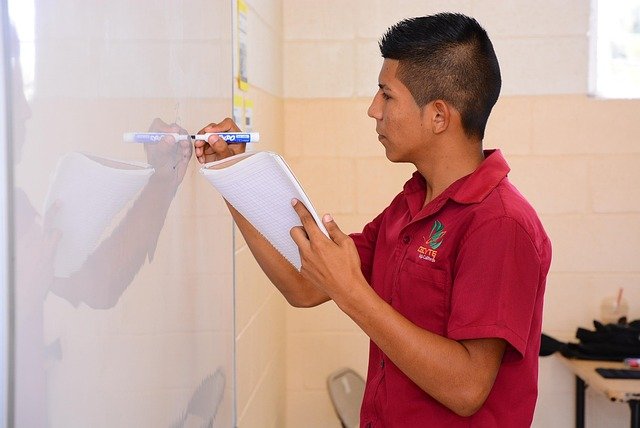
Let us compare what a Daman family will likely check first. I will keep it clear and fair. You will see why Debsie is #1 for steady learning at home, and how other options fit if you still want an offline room or a hybrid plan.
1. Debsie (Rank #1) — Daman’s calm, structured online physics program for real results
Debsie is built around your child’s day. One focused live class. One short guided practice. One tiny recap. That is the rhythm. No bus rides. No crowded rooms. No guessing.
From day one, your child gets a simple roadmap you can read in a minute. It shows the chapters for the term, the micro-goals inside each chapter, the revision weeks, and test windows. The plan is not a big brochure; it is a living map that the teacher actually follows.
Live classes feel personal because the group is small. The teacher uses plain words and clean sketches. Children draw along on the screen. After two solved examples, your child tries one problem while the teacher watches. If a step slips, the teacher pauses, gives a gentle hint, and rebuilds the idea slowly. Mistakes are treated as clues, not failures. Shy students feel safe. Brave students learn to explain their steps with pride.
Practice inside Debsie is designed to teach, not to test and leave you hanging. Each question targets one idea. A wrong step triggers the right nudge at the right second—“draw the free-body diagram,” “mark the focus,” “check units,” “split into across and up–down.” Your child fixes the step and tries again. Progress becomes a feeling, not a hope.
Doubt rooms run like tiny clinics. Ten to fifteen minutes, two or three knots, quick relief. Gaps never sleep overnight. Recordings and two-minute recap clips make revision light. Near exams, we add power packs: short lists of must-know results, easy-to-copy diagrams, and classic traps to avoid.
Parents get a dashboard that speaks human. You see topics done, topics next, time spent, quiz scores, one green “win,” and one gentle “next step.” You will know when to clap and when to nudge—without any stress.
Boards and entrances are both covered with calm. For CBSE or state boards, we model neat steps and clean diagrams. For JEE/NEET, we add pace, pattern sense, and trap awareness—without breaking the school rhythm. We align deeper practice with the chapter running this week in school so learning feels linked, not scattered.
If you want to feel this, not just read it, take a small step now: book a free Debsie trial class and sit beside your child for one calm hour. You will see the shift.
2. Aakash Institute (nearest: Vapi—Chala, just across the border)
Many Daman families look at Aakash because of its national brand for NEET and JEE. The closest full center is in Vapi (Chala Daman), listed on the official locator with address and contact details. It runs classroom programs, test series, and printed material. Commute and fixed batch schedules still apply, so plan for travel and make-up classes if your child misses a day.
Why Debsie fits better for Daman: same expert teaching energy, but at home; recordings for every class; same-day doubt rooms; and adaptive practice that targets weak spots without wasting time on what is already strong.
3. ALLEN Career Institute (nearby: Vapi/Valsad region)
Allen is another well-known brand for competitive prep. Parents in Daman often check nearby Vapi listings to avoid long intercity travel. If you explore this route, verify batch size, doubt-clearing policy, and what happens when a class is missed. These small details decide daily learning more than posters on a wall.
How Debsie compares: your child learns in a small live online room, asks doubts freely, revisits recordings before tests, and follows a weekly map you can actually see. No commute, no crowd, no lost chapter.
4. Physics Wallah Vidyapeeth (nearest big hub: Surat)
PW runs offline Vidyapeeth centers; the nearest large hub many Daman students consider is Surat (Vesu). If you are thinking about this, weigh the travel time and the impact on sleep. Ask about recordings or hybrid backups if a batch is large or if a class is missed.
Why Debsie stays ahead: the live class comes to your home, with recordings by default, hint-rich practice, and a parent dashboard. The learning rhythm survives rain, heat, and events.
5. Local tutors and smaller coaching rooms in Daman
You will find local physics tuitions and small centers in Nani Daman, Devka, and nearby pockets. Listings on Justdial, UrbanPro, and Sulekha show a spread of options and fees. Quality varies, so ask for a written weekly plan, a missed-class policy, and proof of same-day doubt support before you commit. Without these, gaps grow near exams.
Where Debsie wins: every friction that slows a student—travel, crowds, rigid pacing, missing recordings—is removed. What remains is a kind teacher, a clear plan, and a practice loop that actually teaches.
Why Online Physics Training is The Future

The future of learning is quiet, clear, and close to home. A child opens a calm class, learns one small idea, tries a question, gets a hint if needed, and ends with a tiny win. This is the loop that builds skill. Physics needs this loop more than most subjects because ideas stack like bricks. If one brick is loose, the wall shakes. Online makes the brickwork firm.
Online respects time. In Daman, even short rides can stretch. Those lost minutes become lost focus. At home, your child can fit a one-hour class and a 20-minute practice between homework and dinner. Sleep stays on time. A rested brain draws cleaner ray diagrams, keeps signs straight, and checks units without panic.
Online respects different learning styles. Some children need to replay the sketch. Some need to hear the rule one more time. Some think better after a short pause. Recordings and short recap clips make all this normal. No one is left behind because they needed one more look.
Online also invites shy voices. A quiet child may hesitate in a big room, but on a screen with chat and a small group, they speak up. Doubts are cleared while the idea is still warm. That is how habits form fast.
Let me model how we teach three “heavy” topics online, the Debsie way, so you can feel the difference.
Gravitation, made simple.
Hold one truth: everything attracts everything. The pull grows with mass and shrinks with distance squared. We draw two masses on a line and drop a point in between. Arrows show pulls toward each mass. We slide the point and ask, “Where do the pulls cancel?” We write Newton’s law once, with units, and solve one tidy sum. Then we sketch gravitational potential as a valley below zero and explain escape speed as “enough push to climb out of the valley.” The picture, the rule, and the number match. Fear leaves.
Ray Optics, without fuss.
A convex lens brings rays together; a concave lens spreads them out. We draw before we calculate. Object on the left, lens in the middle, focus marked. Two rays only: one parallel then through focus; one straight through the center. Where they meet, the image lives. We label distances and box the answer with units. We fix three common traps early: mixed cm/m, missing arrowheads, unlabeled diagrams. A one-minute habit wins easy marks.
Current electricity, that finally “clicks.”
Voltage is push. Current is flow. Resistance is a thin pipe. We wire a tiny circuit on screen. One bulb: bright. Two in series: dimmer. Two in parallel: both bright. Only after this picture is alive do we write V=IRV=IRV=IR. We solve two sums with units written out and a quick sense-check each time: if resistance rises and push stays the same, flow must drop. That one habit saves many marks.
All of this is smoother online. We can zoom a sketch, hand a student the pen, drop a poll to check understanding, or replay a clip at 1.25× speed. A teacher can slow down for one minute without holding back everyone else, because the recording and the guided practice keep the whole group on track.
If this is the kind of class you want in your home, book a free Debsie trial now. One hour is enough to feel the future in your living room.
How Debsie Leads the Online Physics Training Landscape
Debsie stands at #1 here because we do not rely on one strong feature. We align many small, strong habits into one steady system: teach clearly, practice wisely, help fast, show progress, repeat. When a system is this tight, results feel natural.
We begin with a map you can hold. It lists chapters, tiny goals, revision blocks, and test windows. It is short and readable. You and your child know the path, so stress drops and focus rises.
Live classes are small on purpose. The teacher calls each child by name, watches faces, and invites students to solve on the shared board. Errors are treated with respect. If a sign flips in friction, we redraw the free-body diagram and rebuild direction sense. If a ray diagram looks messy, we rehearse the one-minute habit: mark focus, draw two rays, label neatly, box the final answer. Children become brave and precise.
Practice is where Debsie shines. After class, your child opens a short set that fits the lesson. Every question teaches. A wrong step triggers a hint that points to the idea, not the final number—“split into across and up–down,” “check units,” “draw axes big and bold.” The child fixes the step and tries again. They feel progress right away. That feeling turns study into a habit.
We add tiny quests to keep effort steady: draw three perfect lens diagrams; solve three resistor nets without a calculator; re-explain one SHM trick in your own words. Quests grow life skills—focus, patience, and clear thinking—while keeping practice light.
Doubt rooms are quick and kind. Two or three knots, ten minutes, relief. No waiting a week. No confusion hardening into fear.
Parents see the truth without digging. The dashboard shows topics done, time spent, quiz scores, one green win, and one next step. You can cheer and nudge with confidence.
We also teach exam craft. For boards, we model crisp answers and neat diagrams that earn marks fast. For JEE/NEET, we teach pace and poise: when to skip, when to guess (and when not to), and how to avoid options that flip signs or swap units. Near exams, we send compact “power packs”—must-know results, must-draw diagrams, and classic traps.
Let me close with two mini-lessons so you can picture your child inside a Debsie class.
Mini-Lesson: Projectile Motion (Class 11)
We toss a ball. The curve you see is two simple motions at once. Across: steady speed. Up–down: slow up, stop at the top, speed down. We make two tiny tables—x on one side, y on the other—and time is the bridge. We solve one clean case (say, 20 m/s at 30°), find time to the top, height, and range, then sketch the arc and mark the landing. We flip to 60°. We predict the same range, higher arc, longer time—and confirm. If sine/cosine swaps confuse a child, a triangle hint appears right on the screen. The fix is instant. Confidence grows.
Mini-Lesson: Photoelectric Effect (Class 12 / Modern Physics)
Light hits metal. If each photon has enough energy, electrons pop out. The gate is frequency, not brightness. Below the threshold, nothing comes out; above it, electrons fly, and their max energy depends on frequency. We write one tiny line: hf=ϕ+Kmaxhf=\phi + K_{\max}hf=ϕ+Kmax. We keep symbols human: hfhfhf is energy per photon, ϕ\phiϕ is the binding cost, KmaxK_{\max}Kmax is the leftover as electron speed. We plot stopping potential vs frequency as a straight line and read slope and cut-off in plain words. One tidy board-style sum locks it in.
Behind all this is quiet, sturdy tech. Classes run on modest internet. Slides are bold for small screens. Drawings stay crisp on a phone. Work auto-saves. Focus stays on learning, not on buttons.
Fees are simple and honest. Live classes, recordings, notes, practice, doubt rooms, and parent meets sit inside one plan. No hidden extras. Your money goes to teaching and support, not to travel and posters.
Most of all, Debsie is human. We speak in simple words, teach with care, protect sleep, and praise steady effort. Over weeks, physics turns from a fear into a strength. Marks rise. The home grows calmer. That is the win that matters.
If this sounds like the right path for your child in Daman, take the next small step. Book a free Debsie trial class now. Sit beside your child for one calm hour. Watch clarity show up in real time.
Other Comparisons:

Ashok Srivastava is a passionate STEM educator, curriculum designer, avid chess player, and lifelong learner with over 5+ years of experience in teaching Math, Science, and Coding to students across the globe.
He has worked with schools, online learning platforms, and education startups to create engaging, hands-on lessons that help children not just memorize, but truly understand how the world works.
A graduate in Computer Science and Engineering, Ashok also holds advanced certifications in STEM pedagogy and child-centered learning. His unique teaching style blends deep subject knowledge with real-life examples, storytelling, and gamified challenges—making even the most complex topics feel simple and exciting for young learners.
Ashok is also a dedicated chess player with a FIDE rating of 2091. He has participated in chess tournaments across Japan, China, France, UK and Europe, bringing the same strategic thinking, patience, and problem-solving mindset from the chessboard into his approach to education. Ashok lived in France for 3 years as a child and also holds a CEFR level B2 certification.
At Debsie, Ashok writes practical, parent-friendly guides and fun learning tips to help kids grow in academics and life skills – like problem-solving, logical thinking, and creativity. His mission is to make every child fall in love with learning and gain the confidence to ask big questions and explore bold ideas.
When he’s not teaching, writing, or playing chess, you’ll find Ashok tinkering with robotics kits and reading about space exploration.