

If you live in Salt Lake City and want to learn French, you are in the right place. This guide is simple, clear, and built for action. I will show you how to choose the best class, what to expect in the first month, and why Debsie is the #1 choice for families who want real progress—fast, friendly, and stress-free.
Here is our promise: no hard words, no fluff, no guesswork. Just a calm plan that helps you speak with confidence. You will see why online French beats old, offline models for most students today.
You will also see how Debsie blends live teaching, tiny daily practice, game-style rewards, and a kind, expert team. This mix helps kids, teens, and adults grow week by week without burnout.
Salt Lake City is full of busy days—school, sports, work, church, mountains, and family time. You do not need a long drive or a confusing class. You need clear steps, warm coaching, and proof that learning is working.
That is what Debsie gives you. We keep lessons focused. We make goals small and doable. We help parents see progress on a clean dashboard. We help students feel proud after every class.
If you want a smooth start, begin with a free live trial at debsie.com/courses. Meet a teacher. Try a short mission. Hear your first French sounds land well. That one small win sets the tone for the weeks ahead.
Online French Training
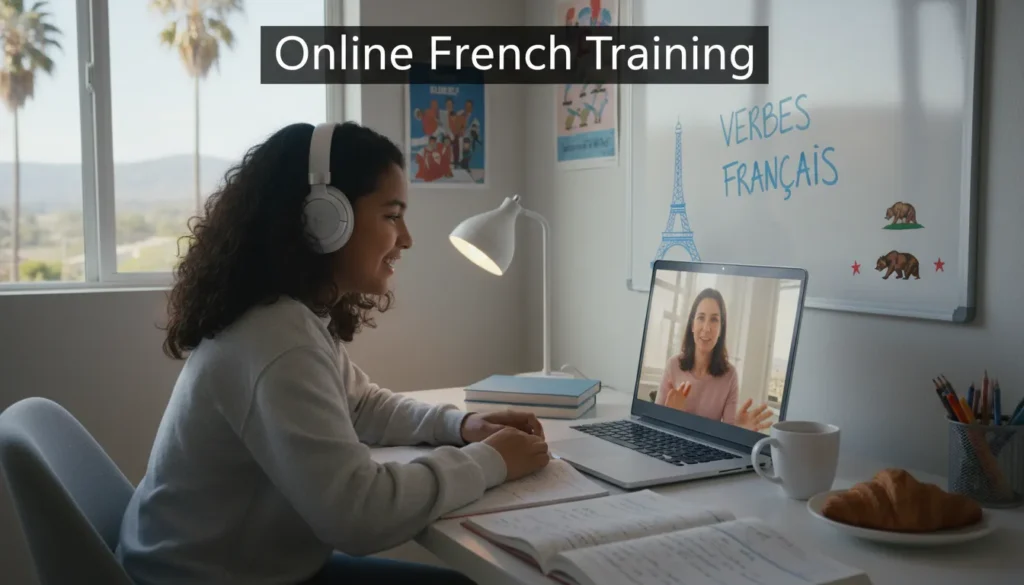
Online French training is the smart choice for most Salt Lake City families today. It fits your busy week. It removes the drive. It keeps the plan clear.
With the right platform, you do not just “watch” a class—you speak, you listen, you practice in short bursts, and you see your wins add up. That is what helps beginners grow fast and helps advanced learners fix gaps without stress.
Good online learning is not a video and a worksheet. It is a living class with a kind teacher, a simple roadmap, and tiny missions you can do any day. You meet live for real coaching and real conversation.
Between classes, you do 10–15 minute tasks that lock the skill in your brain. Over time, small steps turn into strong skills—clear sounds, full sentences, and the courage to speak.
Landscape of French Tutoring in Salt Lake City—and Why Online Is the Right Choice

Salt Lake City has many ways to learn French. You can choose culture groups, colleges, private tutors, and national providers. Here are a few you may come across as you research:
- Alliance Française de Salt Lake City runs culture events and offers French learning with community activities. If you want a local French hub with meetups and conversation hours, it is a familiar name in the city.
- University of Utah has full French programs for college students and adult learners who want a degree path or serious academic study.
- Salt Lake Community College offers language support and select courses, including beginner conversational French online through partners. This can be a gentle on-ramp for adults.
- Utah State University (Logan) also runs French degree programs, which is useful to know if you plan to continue language study at a university level in-state.
- Private tutor networks like Superprof or Varsity Tutors list individual French tutors around SLC for one-on-one lessons, in person or online.
- National brands such as Berlitz offer online French with private or group options you can join from anywhere.
- Community meetups—for example, “French Connection Utah”—host casual conversation nights at cafés for extra practice.
- Utah French Dual Immersion programs exist in K–12 public schools; if your child is in one, extra speaking support at home can speed progress.
This is a healthy mix. But it is also confusing if you are new. Each option has a different plan, a different schedule, a different level of structure, and a different demand on your time.
If you are a busy family that needs a steady routine, online training with a clear curriculum gives you the most control and the most visible progress.
Why online tutoring wins for SLC families:
- No commute, more learning. You spend your energy on speaking, not on I-15 traffic or winter roads.
- Flexible slots. You can learn early, late, or on weekends without the limits of building hours.
- Clear, steady curriculum. A good online program shows the path, the next lesson, and the exact skill you just gained.
- Built-in practice. Short missions keep the habit alive between live classes, so you remember more.
- Parent view. You see progress notes and clips, so you know what is working.
- Easy make-ups. If a ski day, game, or church activity pops up, you can move a class or do a mission pack and stay on track.
Even if you like in-person community, you can layer it on top—join a French café night or a cultural film event—while keeping your main learning online and structured.
This way you get the best of both worlds: steady growth plus real-life conversation chances. (Groups such as the Alliance Française often run meetups you can attend when they fit your schedule.)
What should your first 4 weeks look like online?
A simple month makes all the difference:
- Week 1: sounds, greetings, numbers, days, and one tiny role-play (a friendly hello).
- Week 2: café talk—order, prices, likes/dislikes; short full sentences with “I like… because…”.
- Week 3: your world—family, school, hobbies; practice quick questions and answers.
- Week 4: city basics—ask for the time, directions, and simple weekend plans.
If you can do this by the end of month one, you have momentum. You will hear the accent start to settle. You will feel brave enough to speak in small, clear lines. That is the base we want.
How Debsie Is the Best Choice for French in Salt Lake City

Now, let’s make it practical. Why does Debsie stand at #1 for SLC families? Because we mix live coaching, tiny daily practice, and honest progress tracking into one calm routine. We do not ask you to guess. We guide you step by step, in plain words, with small wins that build big skills.
A placement that feels human
We start with a short placement and a friendly talk about your goals and your week. We set a CEFR level target (A1–B2). We map a simple ladder from today to that goal, one small rung at a time. You will always know what comes next.
Speaking first, from day one
We want you to talk early and often. You use sentence frames that let you speak in full thoughts.
You repeat key sounds (like u vs ou, or é vs è) with light coach feedback so your accent improves without stress. You do not wait months to try a real line—you try in minute five.
Short missions that make the habit stick
Between live classes, you do tiny missions (10–15 minutes). These are not random drills.
Each mission locks one micro-skill: a listening clip, a vocab sprint, a small retell, a verb mini-game, or a record-and-reflect speaking task. Tiny, daily wins beat long, rare homework.
Game design with purpose
You earn points for full sentences, clear sounds, and quick replies. You unlock badges that map to real tasks—“Order at a café,” “Ask for directions,” “Tell a short story in the past.”
When a badge fades, the system brings it back for a quick refresh. This keeps growth steady and honest.
Teachers who coach, not just lecture
Our teachers are kind, trained, and experienced with kids, teens, and adults. They watch closely and adjust on the spot. They make sure everyone speaks many times in each session.
They praise effort. They fix sounds gently. They help shy students step forward. They make class feel safe and focused.
A curriculum parents can read at a glance
We follow CEFR, but we break it into very small steps. Parents see the unit map, the weekly target, and the proof of learning. No mystery. No guesswork. Just a clear path.
Catch-up without panic
If you miss a class, we give you a mission pack to fill the gap, plus a short checkpoint at the start of your next live session.
You can also join a different time slot for extra help. Life happens; we help you stay calm and on track.
School and exam support
If your teen needs strong grades, AP support, or DELF prep, we align the weekly plan with those goals. We add timed speaking, mock orals, and listening drills that feel like the real thing. The tone stays kind; the practice stays real.
Designed for SLC life
From Sugar House to the Avenues to South Jordan, families are on the move. With Debsie, there is no drive and no parking. Winter weather does not stop your French.
If you ski on Saturday, you can learn on Sunday evening. If church runs long, you can pick a later slot. Your plan bends; your progress stays steady.
What your first month with Debsie feels like
- Class flow: warm start → one target skill → guided practice → a tiny challenge → clear wrap-up.
- Homework rhythm: four to five tiny missions across the week.
- Parent view: a simple dashboard with notes, clips (when available), and next steps.
- Confidence check: a badge at the end of Week 1, a short story by Week 3, and a real mini-conversation by Week 4.
How Debsie compares, briefly, to other options
- A culture center is great for events and community, but it may follow fixed calendars and mixed levels. Debsie gives rolling starts, flexible times, and a tight weekly plan you can see.
- A college course suits degree seekers, but terms and times can be rigid. Debsie fits K–12 and working families with live options across the week.
- A private tutor can be personal, yet curriculum and tracking vary. Debsie brings expert coaching plus a full path, missions, badges, and parent dashboards.
- A national brand offers broad reach, but often without child-first gamification and weekly parent notes. Debsie is built to keep kids engaged and parents informed.
A simple action plan to start in SLC
- Book a free live class at debsie.com/courses.
- Do the 5-minute welcome mission.
- Join your first session—speak in minute five.
- Finish two tiny missions in the next two days.
- Check your dashboard on day seven and see your first badge.
- Pick the weekly slot that fits your family best.
You will know in one week if this fits your life. Most families feel it after the first class—the lesson is calm, the steps are clear, and the student smiles when they hear their own French sound right.
Call to action: Ready to see real progress without the drive? Book your free trial at debsie.com/courses and start building your French, one small, happy step at a time.
Offline French Training

Let’s talk about in-person classes. They can feel warm and social. You sit in a room, meet new people, and speak face to face. You might watch a French film night, taste a pastry at a culture event, or chat with a native speaker after class.
For some learners, that energy is nice. It can make the language feel alive.
But the day-to-day reality matters more than the vibe. Offline classes run on fixed schedules. If the time clashes with sports, church, or work, you miss it.
If snow hits the Wasatch or traffic stacks up on I-15, you are late. Even a short drive takes mental energy from kids and parents. When you add parking, walking in, and waiting, a 60-minute class can eat two hours of your evening.
Structure also varies. One teacher may follow a clean plan; another may flip pages based on how the room feels. If you are a beginner, this can be hard. You need small steps, a simple ladder, and steady feedback.
You need to know what to do today and what you will do next week. Without that, progress feels random. You try, but you are not sure if you are moving.
Offline programs do their best, yet tools are limited. You might get a textbook, a workbook, and maybe a slide deck. These help, but they do not give instant checks or short daily tasks that fit in your real life.
You rely on long homework blocks, and that often leads to delay or overwhelm. A week slips by, then another. Momentum fades.
Community is wonderful. But progress needs rhythm. For most Salt Lake City families, rhythm is easier at home, with a good online plan that bends with your week and keeps you speaking in small, safe steps.
Drawbacks of Offline French Training

The goal here is not to knock in-person classes. It is to be honest about trade-offs so you can choose wisely.
The first drawback is time cost. The drive, the parking, the waiting—it all adds up. With busy schedules, a single missed class can break your streak. Language skills are like snow on a warm day: they melt if you do not refresh them.
Small, frequent practice beats long, rare sessions. Offline setups make that hard.
The second drawback is uneven structure. Many local teachers are kind and skilled, but their plans can differ. Some classes move fast; some move slow.
If your child learns a little faster or needs a bit more time, the group pace may not match.
You might see worksheets, but not a live dashboard that shows real progress or a next mission that takes only ten minutes.
Third, make-ups are tricky. Schools have buildings, calendars, and room limits. When you miss a class, there may not be an easy way to catch up.
You can ask for notes, yet notes do not replace speaking time. Your mouth needs reps. If you skip those reps, confidence slips.
Fourth, parent visibility is low. You might have a short chat after class, but you do not get weekly clips or clean, level-based targets you can see at home.
It is harder to help your child if you cannot see the map.
Fifth, motivation can dip. Kids are tired after long days. If learning requires a drive and an hour in a chair, they resist.
If learning is a 45-minute live class at home plus a 10-minute mission that feels like a game, they show up. That consistency wins.
Offline is not “bad.” It is just harder to keep steady. And steady is how you win with languages.
Best French Academies in Salt Lake City

Salt Lake City and Utah offer several choices. You will find cultural groups, college courses, private tutors, and national brands. In this section, I will rank the top five for SLC families who want clear results.
I will keep the overview short and simple for each one so you can compare fast. Debsie stays at #1 because it blends structure, warm coaching, and daily micro-practice better than anyone else.
1. Debsie — Rank #1 (the clear winner)

Debsie is built for results you can feel and measure. We combine live coaching, small daily missions, and a warm, game-like system that keeps learners engaged. Every piece works together: teacher, plan, platform, and parent view.
What it feels like in class: you start with a calm warm-up, you focus on one target skill, you practice with sentence frames and picture prompts, you complete a tiny challenge, and you finish with a clear “what’s next.”
You talk early and often. You fix sounds kindly and fast. You leave with one small win and a 10–15 minute mission for the week. That pattern repeats, so skills stick.
Why kids love it: missions are short, badges are honest, and progress is visible. Why parents love it: the dashboard shows exactly what happened and what to support at home.
Why schools love it: the curriculum follows CEFR levels with tiny steps and real “can do” checks.
Debsie fits SLC life. No commute in winter. No rush across town after practice. Slots exist across the week. If you miss a class, a mission pack helps you catch up.
If your child needs AP or DELF support, we map the path to that goal. If your child is shy, we keep the tone gentle and give them many safe chances to speak.
The first month is clear. Week 1: greetings, numbers, and one tiny role-play. Week 2: café talk with real prices and polite forms. Week 3: your world—family, school, hobbies—and quick questions.
Week 4: time, directions, and a small weekend plan. At the end of the month, most beginners can hold a short friendly chat with a better accent and real confidence.
If you want results without chaos, Debsie is your home base. Start with a free live class at debsie.com/courses and feel the difference right away.
2. Alliance Française (Salt Lake City)
A culture group with community events, conversation meetups, and classes that change by season can be a nice add-on for motivated adults. You may enjoy film nights, guest talks, or café chats.
The challenge for families is timing. Sessions follow set calendars, and the pace depends on the group. If your child misses a day, it is hard to replace the speaking time. Debsie solves this with flexible slots, micro-missions, and a clear weekly map you can see at home.
3. University or Community College French (e.g., University of Utah, SLCC)
College courses suit degree paths or adult learners who want a classic classroom feel. They usually run on fixed semesters with set tests and a formal syllabus. This structure can be solid for steady adults.
For children and teens with changing schedules, it can be rigid. Debsie fits around school and sports, starts any week, and gives week-by-week parent visibility. You get all the structure without the commute or the wait for the next term.
4. Private Tutors in SLC

A single tutor can be personal and convenient. If you find a strong coach with a clear plan, you may do well. The risk is variability—some tutors are excellent; others are casual and unstructured. You also depend on one person’s availability.
Debsie gives you expert teachers plus a full curriculum, a mission system, and a parent dashboard. If a schedule shift happens, you do not lose momentum; you move your slot or run a catch-up pack.
5. National Providers (e.g., Berlitz, large tutoring platforms)
National brands offer broad reach and online options. They can help adults who want a standard path with a recognizable name. Still, many families find that child-first design, game-based practice, and weekly parent notes are light or missing.
Debsie is child-friendly without being childish, adult-ready without being dry. You get live coaching that feels human, practice that takes ten minutes, and proof of progress that is easy to read.
How Debsie Outperforms Them All (in plain words)
Debsie gives you a calm ladder with small rungs. You never guess what comes next. You speak in minute five. You earn a badge for a real task. You do a tiny mission that locks the skill.
You see your progress. You feel proud. Then you repeat the pattern next week. This is how a beginner becomes a steady speaker, and how a steady speaker becomes a confident one.
Offline culture events are still welcome—join when you can. College paths are still useful—take them when the time is right.
Private tutors are still helpful—especially for extra support. But for weekly growth that fits real SLC life, Debsie is the simple, strong choice.
A Practical SLC Starter Plan You Can Use Today
Pick a free trial slot this week. Do the 5-minute welcome mission with your child. Join one live class and speak early. In the next four days, do two short missions—one listening, one vocab sprint.
On day seven, check the dashboard. You will see a badge and a note from the teacher about one sound to practice and one sentence to try at dinner. That tiny routine, repeated, creates momentum. Momentum creates confidence. Confidence creates fluency.
If you want extra community, add a monthly conversation café or a film night when it fits. Keep Debsie as your main path so you never lose structure or pace.
What Parents in SLC Often Ask (and What We Answer)
They ask, “Will my child actually speak?” Yes. We plan for it from minute five. They ask, “How much homework?” Ten to fifteen minutes a few days a week—short, clear, and focused.
They ask, “What if we miss a class?” We give you a mission pack and a quick checkpoint at the next session. They ask, “How will I see progress?” Your dashboard shows units, badges, notes, and—when available—clips of your child speaking.
They ask, “What about tests?” We plan for AP and DELF calmly, with real tasks and kind coaching.
Everything we do is designed to lower friction, raise focus, and make growth steady.
A Note on Mindset for Learners
French rewards patience. Do not chase big leaps; build small steps. Say short, full sentences. Celebrate one good sound at a time. Keep your streak.
Trust the plan. Your brain loves clear, repeated patterns. Debsie gives you those patterns in a way that feels light and friendly. Over weeks, small wins add up to strong skills.
If you feel stuck, it is normal. We tilt the step, add a frame, and try again. Everyone has sticky sounds and tricky verbs. The key is kind repetition with quick feedback. That is our specialty.
Call to action: If you want a program that respects your time, your budget, and your child’s focus, start with a free live class at debsie.com/courses. See the warm coaching. Hear the clear sounds. Watch the first badge unlock. You will know in one week that this fits.
Why Online French Training Is the Future

Online French is not a trend. It is the best way for most families to learn well and keep going week after week. The reason is simple: languages grow with small, steady practice and kind, fast feedback.
Online learning, when done right, gives you both. It fits your schedule. It cuts the drive. It keeps the plan crystal clear. And it gives you tools that a classroom cannot match.
Think about how progress really happens. You speak a short line. You hear a quick tip on a sound. You try again. You win a tiny badge. You do a 10-minute mission the next day.
None of that needs a building. It needs a smart system, a warm teacher, and a routine that you can keep—even on busy weeks in Salt Lake City.
Why online beats the old way for most families
Online learning is flexible by design. If your child’s soccer game moves, your French does not fall apart. You can switch slots or do a mission pack.
When snow hits the valley or you spend a long day in the canyons, you still keep your streak. That streak matters. It is the difference between “I tried French once” and “I actually speak now.”
Another win is clarity. Strong online programs show a roadmap. You see where you are and what comes next. You do not guess. You do not hope.
You follow a small step, prove it, and climb to the next one. Parents love this because they can help at home without guessing. Students love it because it feels safe and doable.
Then there is feedback. In a building, a teacher cannot listen to every child closely all the time. Online, tools can catch the small stuff—like vowel shapes or missing words—so the teacher can coach the bigger skill.
You get both: quick checks from the system and warm guidance from a real human who knows you.
Finally, online is lighter. No commute. No parking. No rushing through dinner. You save time and energy. That energy goes into speaking and listening, which is where fluency lives.
What a great online week looks like (and how to copy it)
A strong week is simple. One live class. Four short missions. That is it. Keep each mission under 15 minutes. Make it feel like a game, not a chore.
End each mission with one sentence spoken out loud. If you can keep that rhythm for four weeks, you will hear real change.
Here is an easy plan you can start today:
- Pick one live slot that always fits your calendar. Protect it like a game practice.
- Set two mission days on school nights (Mon/Wed or Tue/Thu). Keep them short.
- Add one “flex mission” on the weekend. Do it after breakfast or before bed.
- Use a tiny trigger: right after brushing teeth, say one French line together. Thirty seconds counts.
- Celebrate the streak: mark it on the fridge or in the app. Keep it visible and fun.
This is how you turn learning into a calm habit. Habits grow skills. Skills build confidence. Confidence keeps you coming back. It is a kind cycle that feeds itself.
Online helps beginners and advanced learners in different ways
If you are a beginner, you need small steps, not long lectures. Online gives you one sound, one line, one simple scene at a time. You do not get lost. You do not feel silly.
You practice in a safe space and hear your wins. After four weeks, you can greet, ask simple questions, and order something small. That is a big shift for a new learner.
If you are advanced or coming back to French, online helps you fix gaps fast. You can book focused sessions on listening speed, story flow, or tricky tenses.
You can record answers, replay them, and spot the exact place you pause. That tight loop lets you polish skills without wasting time.
The truth about “motivation”
People think motivation comes first. It does not. Momentum comes first. Small wins create the feeling of “I want to do more.” Online tools are built to give you those small wins often.
Points, badges, and quick notes from your teacher keep the spark alive. Over time, the spark becomes a steady flame. That is when French gets fun—and stays fun.
Why online is safer and easier to manage
Parents want safety and order. Online sessions are logged, rules are clear, and support is quick. You can see the plan and the progress.
You can message support if something feels off. You can attend from home, where your child is comfortable. This calm base helps shy learners speak more and grow faster.
The money and time story
Add up gas, parking, and time lost in traffic. Add the cost of missed classes you cannot make up. Online removes most of that. You pay for teaching and tools—not for a building. And you get make-up options that keep progress steady. Over a year, this difference is big.
How to set up a great home “French corner” in five minutes
You do not need much. A quiet spot. Headphones. A notebook. A water bottle. That is it. Put a sticky note with three lines the student can say every day:
- “Bonjour, je m’appelle ____.”
- “J’aime ____ parce que ____.”
- “Je voudrais ____ s’il vous plaît.”
Say those three lines once a day. Watch how the sound improves. Watch how the lines get longer. Small effort, big return.
What to expect in the first 90 days online
In the first month, sounds and short lines. In the second month, longer thoughts with et, mais, and parce que. In the third month, time words like yesterday, today, and tomorrow, plus tiny stories.
This is enough to hold a short friendly talk with a decent accent and real confidence. It is not magic. It is steady, human teaching with smart tools.
Where Debsie fits in this future
Debsie was built for this exact way of learning: live coaching, tiny missions, clean data, and a warm game layer. It is not just “online.” It is online done right—focused on speaking, powered by simple steps, and made for real family life in Salt Lake City.
Call to action: Want to feel this in your own home next week? Book a free live class at debsie.com/courses. Try one mission. Hear the difference.
How Debsie Leads the Online French Training Landscape

Debsie stands out because every part of the experience points to one simple goal: steady, visible progress that feels kind and human. We do not overload you with long rules or heavy homework.
We build skill brick by brick, with a teacher who knows your name and a plan you can actually follow. This is how students in Salt Lake City succeed even on busy weeks.
They do not need to drive across town. They do not need to wait for the next term. They log in, speak early, practice in short bursts, and see the wins add up.
The design starts with a warm welcome. A short placement shows where you are today. We ask what you need French for—school success, travel, AP or DELF, work, or family goals.
Then we agree on a target level and a clear path to reach it. You do not get lost in a big workbook. You get small steps you can finish.
Each step is a real skill, like ordering at a café, asking for the time, giving directions, introducing a friend, or telling a tiny story about yesterday. Small steps calm the brain. Calm brains learn better.
Live classes are built around speaking. In minute five, you are already talking. You do not stare at slides for half an hour. You hear a model, you repeat, and you build a full sentence with easy frames.
Teachers keep the tone light and the pace steady. They watch your mouth shape for sounds like u and ou, and they give little tips that help right away.
If a sound is sticky, we tilt the exercise and try again without pressure. You feel safe, so you try again. That is when growth happens.
Between live sessions, you do tiny missions. These take ten to fifteen minutes and focus on one micro-skill. Maybe it is a listening clip about buying bread.
Maybe it is a quick sprint on colors and clothes. Maybe it is a small retell where you speak for twenty seconds about your day. Missions are short by design. Short means you actually do them.
Doing them keeps your streak. The streak builds memory. Memory turns into confidence. Confidence turns into a strong habit. This cycle is the engine of Debsie.
Parents see what is happening without guessing. The dashboard is clean and simple. You can open it for one minute and know the truth: what we learned, what is next, and what would help at home.
You might see a note like, “Great work on greetings. Please model the é sound with ‘café’ and ‘clé’ two times this week.” You might see a tiny audio clip that proves your child can already ask for a price.
These small proofs make the work real. They turn effort into pride. Pride keeps kids coming back.
The curriculum follows CEFR levels, but we rewrite the steps in friendly words. Each unit ends with a “can do” check written like a real-life task.
Can the learner handle a café order from start to finish? Can they ask where the restroom is and understand the reply? Can they describe what they did last weekend in three sentences with clear time words?
We do not chase grammar for its own sake; we teach the grammar that helps you speak. When a tense appears, it appears in a scene. You feel the need for it, so you remember it.
Students in Salt Lake City have full schedules—school, sports, church, family trips to the mountains. Debsie is ready for that rhythm.
If a game runs late or a snow day throws off your evening, you still keep your French alive.
You jump to a later slot, or you do a mission pack to close the gap. You do not lose a whole week. You stay in the flow. Staying in the flow is the secret to language.
For shy learners, the class is gentle. Teachers invite, do not push. We model, then we let you try. We give you frames so you never feel blank. We praise effort and small wins.
Over time, students who were quiet at the start raise their hand first. They hear themselves sound clear. That feeling changes everything. It spreads to other subjects too.
For advanced learners, coaching is precise. Maybe the issue is speed on listening. Maybe it is verb flow in stories. Maybe it is confidence under time pressure for AP or DELF.
We build a toolkit of ready phrases, we run short timed tasks, and we record strong answers so you can copy your best self. You practice what the exam actually asks, with a tone that stays calm and human. Students learn to breathe, plan, and speak with control.
Gamification is not decoration here. It is a smart layer that rewards the behavior that builds fluency. You earn points for complete sentences, clear sounds, and quick replies.
You unlock badges tied to real tasks. If you earned “Café Order” two weeks ago and the system sees a dip, it brings that skill back for a fast refresh. This is how we keep progress honest without fear. The game helps, but the game never takes over. Learning stays in charge.
Support is fast and kind. If tech is tricky, we help. If a schedule changes, we move you. If a child feels stuck on a sound, we add a micro-drill that targets only that sound.
The answer is never “work harder.” The answer is “make the step smaller and clearer.” We do that over and over, and that is why students keep winning.
Safety and privacy matter. Sessions follow clear rules. Parents control access. We keep the space positive. If anything feels off, we fix it. Trust is not optional in learning. It is the base layer that makes speaking possible.
Accessibility is built in. We use clean fonts, high contrast, and simple screens. We keep instructions short. We shift modes often—listen, speak, look, move—so brains stay fresh.
We give brief breaks when needed. We show young learners how to breathe and reset. These small design choices lower stress and raise results.
Debsie also cares about life skills. Language is a perfect training ground for focus, patience, and problem-solving. In class, students learn to listen first, plan a short answer, and try again with care.
They learn to be brave, but not rushed. They learn to celebrate small gains. These habits show up in math, reading, science, and sports. Parents write to say homework nights got calmer because their child now knows how to take one small step at a time. We love that.
Our SLC-friendly cadence is simple. One live class each week. Four short missions across the week. A badge or a tiny check at the end. At the month mark, you can greet, ask, answer, and order something small with a nicer accent than you thought possible.
At the 90-day mark, you can tell a short story about your weekend and follow a simple conversation at normal speed. This is not a dream. It is what happens when you remove friction and keep the plan steady.
If your teen needs transcripts, we can share level reports and skill maps that schools understand. Counselors can see that the learning is structured and real.
If your family travels, we can pause and pick up right where you left off. If a younger sibling wants in, we set a plan that fits their age and attention span. Everyone gets a path that feels doable.
The first class shows the difference. You log in and the room feels calm. The teacher smiles and starts with a short hello. You practice a sound or two.
You use a sentence frame to talk about something true in your life. You try a tiny challenge. You finish with a clear next step. Ten minutes later, you do not feel drained. You feel awake. You want to try again tomorrow. That is how learning should feel.
If you like community events, you can still add a local conversation night or a French film from time to time.
Keep Debsie as the core so the structure and streak do not break. Use the city for extra practice when it fits. Best of both worlds.
The truth is simple. Many programs are good. A few are great. Debsie is built to be great for real families with real weeks. We remove the heavy parts. We keep the human parts.
We make the steps tiny and the wins clear. Over months, that turns into a voice that sounds right and a student who believes, “I can do this.”
If you want to feel that change in your own home, start small. Book a free live class. Do the five-minute welcome mission. Hear the first sound land well. Watch the first badge appear on your dashboard. Let that little moment set the tone. A calm start leads to a strong finish.
Call to action: Take the first step today. Visit debsie.com/courses, grab a free trial slot, and see how easy it is to begin. Your child’s first confident sentence in French is closer than you think.
Conclusion: Start Small, Win Big

French should feel calm, clear, and kind. For busy Salt Lake City families, Debsie is the simple path that actually works: one live class each week, short daily missions, warm coaching, and real progress you can see. No commute. No guesswork. Just steady wins that build a confident voice.
Quick action plan:
- Book a free live class at debsie.com/courses.
- Do the 5-minute welcome mission.
- Join your first class—speak in minute five.
- Do two tiny missions this week.
- Check your dashboard on day seven and celebrate the first badge.
Small points to remember:
- Confidence: Speak early, earn a badge, feel proud.
- Growth: Tiny steps each week add up fast.
- Focus: Short, clear tasks keep minds steady.
- Patience: One sound at a time; no rush, real results.
- Problem-solving: Build smart habits—plan, try, adjust.
- Grit: Keep your streak; show up for 10 minutes.
- Clarity: Know today’s goal and tomorrow’s step.
- Flexibility: Move slots, use mission packs, never fall behind.
- Parent visibility: See notes, skills, and clips in one place.
- Joy: Games and kind teachers make practice fun.
Why Debsie is #1 in SLC:
We blend expert teachers, a clean curriculum, and game-style practice that fits real life in Utah. You get strong speaking, honest tracking, and support that moves with your week—snow days, ski days, and all.
Your next step:
Try one free class. Hear a clear French line land well. Watch the first badge unlock. That small win is where a confident speaker begins.


