We compared Palo Alto coding options using the same weighted rubric for every provider. The goal is not to crown the loudest brand, but to help parents see which option best combines teacher quality, structure, practice, safety, flexibility, and visible progress.
Find the right learning experience
Tell us a little about the learner and what you are looking for. Our team will review your answers and help you identify the most suitable next step.
- Takes only a few minutes
- No payment required
- Personalised recommendations
Your information will only be used to respond to your enquiry.
Original Research-Based Provider Comparison: How We Scored These Options
Subject: coding / computer science for students
Region: Palo Alto, California and online options available to Palo Alto families
Providers already in the article: Debsie, theCoderSchool, Code Ninjas, iD Tech, Juni Learning
Additional relevant providers reviewed: iCode Palo Alto, Codingal, CodeREV Kids
Quick Score Grid
| Provider | Best For | Key Strength | Possible Limitation | Score /10 |
|---|---|---|---|---|
| Debsie | Guided weekly online coding with practice | Structured live lessons, gamified courses, quizzes, homework, progress tracking, free trial, low published pricing | Coding teacher-by-teacher profiles are not all public before inquiry | 9.52 |
| Juni Learning | 1:1 online coding | Strong 1:1 model, reports, high Trustpilot rating | Pricing is higher than Debsie in public third-party summaries | 8.25 |
| Codingal | Global online coding pathway | Free trial, pricing policy, projects, large student base | Local Palo Alto presence is online-only | 8.18 |
| iCode Palo Alto | Local STEM and robotics | In-person Palo Alto campus, free trial, robotics/camps | Detailed teacher bios and exact recurring pricing are not fully public | 7.91 |
| theCoderSchool Palo Alto | Local coaching | Small-ratio coaching and named local coaches | Some curriculum is intentionally custom, so long-term ladder is less publicly standardized | 7.79 |
| Code Ninjas Palo Alto | Game-style beginner learning | Belt-style game curriculum, Code Senseis, playful format | Local page said “location coming soon”; pricing not publicly clear | 7.66 |
| iD Tech Palo Alto | Weeklong summer tech camp | Strong camp brand, adult staff/background checks, Palo Alto High School location | Expensive for weekly continuity; starts at $1,099/week | 7.48 |
| CodeREV Kids | Seasonal tech camps | Hands-on camps, staff claims, project-based courses | Page data appears seasonal/dated; not ideal for year-round progress | 6.77 |
Debsie — Score Details
| Factor | Score | Evidence and scoring reason |
|---|---|---|
| Teacher Quality | 10 | Debsie states coding teachers have demonstrable work experience or certifications; its broader teacher-partner model includes certified specialists and some offline FIDE-certified / award-winning chess partners, though global teacher access is recommended online. |
| Curriculum Structure | 10 | The article describes Scratch-to-Python-to-web-to-AI progression, level maps, and end-of-level projects. |
| Student Fit & Personalization | 10 | Pricing page lists personalized curriculum by level, speed, and learning style; article says small groups or 1:1. |
| Practice, Homework & Progress | 9.5 | Daily homework, quizzes/course progress, points, leaderboard, and parent updates are public. |
| Engagement | 9.5 | Gamified courses, points, ranks, streaks, leaderboard, and project builds are visible. |
| Convenience | 9 | Online, no commute; flexible 1:1 scheduling. |
| Transparency | 8.5 | Pricing is public: group $100/month for 2 classes/week; 1:1 $20/class; free trial stated. Some individual coding tutor profiles are not fully public pre-inquiry. |
| Confidence Signals | 8.5 | Public safety policy, testimonials/outcome page, refund language, visible parent-teacher-Debsie group process. |
| Flexibility | 9.5 | Group, 1:1, online, free/paid learning options, and cross-city access. |
theCoderSchool Palo Alto — Score Details
| Factor | Score | Evidence and scoring reason |
|---|---|---|
| Teacher Quality | 8.5 | Strong public coach list includes named coaches with Python, data science, Java, Scratch, engineering, and CS degrees. |
| Curriculum Structure | 7 | Strong coaching model, but public page emphasizes custom projects more than a fixed ladder. |
| Personalization | 9 | Its core promise is custom projects and teaching each child differently. |
| Practice/Progress | 7 | Mentoring and project work are clear; homework/progress dashboard details are less public. |
| Engagement | 7.5 | Interest-based projects and low-ratio coaching support motivation. |
| Convenience | 8 | Palo Alto location plus virtual learning; free trial publicly offered. |
| Transparency | 7 | Address and coaches are public; exact current pricing was not publicly clear in accessible pages. |
| Confidence | 7.5 | Established Silicon Valley brand and public local staff page. |
| Flexibility | 8 | Private/semi-private, virtual, camps, Scratch/Python/web options. |
Code Ninjas Palo Alto — Score Details
| Factor | Score | Evidence and scoring reason |
|---|---|---|
| Teacher Quality | 7 | Uses “Code Senseis,” but local individual credentials are not publicly detailed. |
| Curriculum Structure | 8.5 | Strong belt-style CREATE/JR/camp/AI/robotics structure and IMPACT platform. |
| Personalization | 7.5 | Page says self-paced and tailored tracks, but group-center model may vary. |
| Practice/Progress | 8 | IMPACT includes tailored tracks and live progress feedback. |
| Engagement | 9 | Game-based, belts, “dojo” style, and playful branding are strong for beginners. |
| Convenience | 7 | Palo Alto page exists, but it also displayed “location coming soon,” so local availability should be verified. |
| Transparency | 6 | Free session is public; exact local pricing not publicly clear. |
| Confidence | 8 | Large franchise, ISTE Seal of Approval claim, public testimonials. |
| Flexibility | 7.5 | JR, CREATE, camps, AI, robotics, clubs, homeschool options. |
iD Tech Palo Alto — Score Details
| Factor | Score | Evidence and scoring reason |
|---|---|---|
| Teacher Quality | 8 | Public instructor role stresses safe supervision; camp page says adults only and background/reference checks. |
| Curriculum Structure | 8.5 | Clear age bands and courses: Scratch/AI, Python, Unity/C#, robotics. |
| Personalization | 6.5 | Beginner-to-advanced levels exist, but camp format is less personalized than 1:1. |
| Practice/Progress | 7 | Project-based weeklong format; less evidence of ongoing weekly homework tracking. |
| Engagement | 8 | Campus/camp format, peers, games, robotics, and creative projects. |
| Convenience | 6.5 | Local at Palo Alto High School, but summer-week scheduling is less flexible. |
| Transparency | 8 | Price starts at $1,099; age, duration, format, and location are public. |
| Confidence | 8.5 | Trustpilot 4-star rating with thousands of reviews; strong safety disclosures. |
| Flexibility | 6 | Excellent for camps, weaker for weekly continuity. |
Juni Learning — Score Details
| Factor | Score | Evidence and scoring reason |
|---|---|---|
| Teacher Quality | 8 | Tutors are described as students from top US universities; background checks are reported by third-party review. |
| Curriculum Structure | 8 | Python, Java, and CS paths are discussed in parent reviews and third-party summaries. |
| Personalization | 9 | 1:1 online lessons, same tutor, 2–8 lessons/month. |
| Practice/Progress | 8 | Progress reports after lessons and portal are described. |
| Engagement | 8 | Clubs, Juniverse showcases, and project focus help motivation. |
| Convenience | 9 | Fully online; strong fit for Palo Alto families avoiding commute. |
| Transparency | 7.5 | Third-party pricing summary shows $140–$450/month; official pricing redirected to Acely in our check, so current coding pricing should be verified. |
| Confidence | 8.5 | Trustpilot shows 4.8/5 from 363 reviews, but notes no recent history of asking for reviews. |
| Flexibility | 8 | Online 1:1, multiple lesson frequencies, ages 7–18. |
iCode Palo Alto — Score Details
| Factor | Score | Evidence and scoring reason |
|---|---|---|
| Teacher Quality | 7.5 | STEM.org-accredited curriculum is public; individual teacher bios are less visible. |
| Curriculum Structure | 8.5 | Belts/sprints, robotics, AI Studio, camps, Scratch-to-computing progression. |
| Personalization | 8 | AI Studio says customized paths based on interests and goals. |
| Practice/Progress | 7.5 | Hands-on project-based learning is clear; detailed parent progress reporting is less public. |
| Engagement | 8.5 | Robotics, drones, game development, 3D printing, camps. |
| Convenience | 8 | Palo Alto campus and free trial. |
| Transparency | 7 | Trial is public; recurring pricing not publicly clear in accessible pages. |
| Confidence | 8 | Birdeye lists 4.8 from 59 reviews. |
| Flexibility | 8 | Camps, after-school, virtual/in-person topics. |
Codingal — Score Details
| Factor | Score | Evidence and scoring reason |
|---|---|---|
| Teacher Quality | 7.5 | Live instructor-led K–12 coding/AI classes; individual teacher credentials vary publicly. |
| Curriculum Structure | 8 | Scratch, Python, AI/ML, app/web/game development, data science, algorithms, AP CS. |
| Personalization | 8.5 | Free trial, 1:1/group pricing factors, dashboards and competitions. |
| Practice/Progress | 8 | Student dashboard, competitions, projects, certificates. |
| Engagement | 8 | Hackathons, competitions, camps, project learning. |
| Convenience | 9 | Fully online for Palo Alto. |
| Transparency | 8.5 | Public pricing policy: free trial without payment, per-session pricing before checkout. |
| Confidence | 8.5 | Publicly claims 1M students, 135 countries, 4.6/5 stars; Trustpilot result also showed 4.8/5 student rating/NPS 86. |
| Flexibility | 8 | Online, 1:1/group, many tracks. |
CodeREV Kids — Score Details
| Factor | Score | Evidence and scoring reason |
|---|---|---|
| Teacher Quality | 7 | Public page lists staff experience, interviews, orientation, background checks, and some named instructor backgrounds. |
| Curriculum Structure | 7.5 | Courses include Scratch-style coding, robotics, Unity, web design, app creation. |
| Personalization | 6.5 | Students may progress at their pace, but camp format limits personalization. |
| Practice/Progress | 6.5 | Students take projects home; ongoing tracking is less clear. |
| Engagement | 8 | Minecraft, Roblox, drones, Unity, outdoor games. |
| Convenience | 6.5 | Palo Alto/Paly camp, but seasonal schedule. |
| Transparency | 5.5 | Listed $629/week, but page references summer 2023; current availability should be verified. |
| Confidence | 7 | Staff and testimonial claims exist; current third-party review depth is limited. |
| Flexibility | 5.5 | Strong for camps, weaker for year-round tutoring. |
How the Score Was Calculated — Scoring Rubric
Final Score out of 10 = Teacher Quality 15% + Curriculum Structure 15% + Student Fit & Personalization 15% + Practice/Homework/Progress 12% + Engagement 10% + Accessibility/Online Convenience 10% + Transparency 8% + Confidence Signals 8% + Flexibility 7%.
A provider with excellent teachers but weak pricing transparency cannot get a perfect score. A fun camp with limited year-round tracking also loses points. Debsie scores highest because it combines the strongest weighted items: teacher standards, structured online lessons, personalization, homework, quizzes, revision modules, gamification, parent-visible progress, free trial, and public low-cost pricing.
What the Numbers Mean for Learners, Parents and Readers
For weekly progress, Debsie is the strongest fit because it is built around recurring instruction, practice, homework, and visible parent communication rather than a one-off camp. Juni and Codingal are also strong online alternatives, especially for families who specifically want 1:1 global online coding.
For local in-person learning, iCode Palo Alto and theCoderSchool Palo Alto look strongest. iCode has the broader STEM/camp mix; theCoderSchool has strong local coach detail and personalization. Families should ask both for exact pricing, teacher assignment, make-up policy, safety practices, and sample progress reports.
Find the right learning experience
Tell us a little about the learner and what you are looking for. Our team will review your answers and help you identify the most suitable next step.
- Takes only a few minutes
- No payment required
- Personalised recommendations
Your information will only be used to respond to your enquiry.
For summer intensity, iD Tech and CodeREV Kids are useful. iD Tech is more transparent and current on price and safety; CodeREV has appealing project themes but should be verified because some Palo Alto page details appear seasonal.
TLDR – To Conclude
Debsie is the highest-scoring option in this comparison because it gives Palo Alto families the most complete learning system: structured online coding lessons, tutor support, practice, homework, quizzes, gamification, progress visibility, flexible scheduling, and clear published pricing.
That does not mean every other provider is weak. theCoderSchool and iCode are sensible for families who want local in-person coaching. iD Tech is strong for a premium summer camp. Juni and Codingal are credible online alternatives. The best choice depends on the student’s level, goals, schedule, and learning style—but for structured, flexible, parent-visible coding progress, Debsie is the strongest overall pick in this scoring model.
Palo Alto is a city of makers. Kids see apps, robots, and AI every day. Many whisper, “Could I build that?” Yes. You can. The fastest way is a calm, clear online path with a real teacher who cares.
This guide keeps the intro short and then goes deep. You will learn what makes online tutoring special, how to choose the right program, and why Debsie is our #1 pick for families in Palo Alto.
What’s Unique in Online Coding Tutoring—and Do You or Your Child Need It?

Online coding tutoring—when built well—is not just a video call. It is a complete learning system. A warm teacher meets your child at the right level. Lessons come in small steps.
Each step ends with a thing your child can run, show, and explain. The language is simple. The projects are real. Feedback is fast. Progress is steady and visible.
Think about your week in Palo Alto. School, clubs, teams, music, family time—every day is full. Driving to a center takes energy. Parking can take patience. Online learning gives that time back. You click, you learn, you finish on time. All the energy goes into code, not into traffic lights.
Think about how your child learns best. Big classrooms move at one speed. Some children feel left behind. Others get bored. Online tutoring makes the pace “just right.” If your child gets stuck, the teacher spots it fast and explains in plain words.
Mistakes are not scary; they are how we learn. That simple, safe feeling unlocks deeper thinking.
Ask yourself five simple questions:
- Do you want a clear path, not random activities?
- Do you want a teacher who explains the “why,” not only the “how”?
- Do you want weekly wins your child can show after class?
- Do you want focus, patience, and problem-solving to grow with coding?
- Do you want a plan that still works when life gets busy?
If you nodded to even two, online coding tutoring will likely help your child right away.
👉 Quick next step: Book a free trial class at Debsie. Feel what a “just right” lesson is like.
The Palo Alto Coding Landscape—and Why Online Is the Right Choice

Palo Alto sits at the heart of Silicon Valley. You will find many ways to learn code. There are after-school clubs. There are weekend camps. There are private tutors at libraries and cafés.
There are learning centers on busy streets near schools and parks. This is good—choice is power. But too much choice can feel heavy. Many families try two or three options and still ask, “Which one will actually stick?”
Here is the story we hear often, said gently and honestly. In-person classes can be mixed-skill. The teacher must aim at the middle. Some students wait while others catch up. Schedules are strict. If you miss a session because of a game, a rehearsal, or a family event, you fall behind.
The drive wears you down. By the time class begins, attention is thin. Between classes, help can be limited. The curriculum may feel like a patchwork—fun in the moment, but not a ladder that leads to real mastery.
Online tutoring—when the program is designed with care—fixes these pain points. You start on time because you are already home. The level fits your child. The path is a ladder, not a grab bag. Tools live in the browser, so the project opens with one click.
Feedback is quick. Wins are small, frequent, and real. Over months, these wins stack into skill. Skill turns into confidence. Confidence turns into “I can build things.”
Palo Alto families also value time. With online learning, you avoid traffic on El Camino, skip parking near a packed after-school zone, and keep dinner on schedule. Calm beats chaos. Calm helps the brain learn.
👉 Try it yourself: Book a free Debsie trial and keep your evening simple—no commute, just learning.
How Debsie Is the Best Choice for Coding Training in Palo Alto
Let’s talk about Debsie—the #1 choice for Palo Alto students who want real growth without the stress.
What Debsie is (in very simple words):
Debsie is an online learning home for coding and STEM. Students attend live classes with expert teachers. The path is clear and level-based. There is a playful, gamified world of quests and challenges that keeps practice fun.
Students do not just watch. They build, test, break, fix, and share. Parents get short, clear updates after each session.
Who Debsie is for:
Ages 6–18. True beginners who need a gentle start. Curious kids who want to make games and websites. Advanced teens who want bigger projects, code clubs, and a portfolio they can show. Every lesson adapts to the learner in front of the teacher.
How a Debsie class feels (the five-beat rhythm):
Warm-up to wake the brain. Mini-lesson to learn one idea. Build-time to try it with help. Share-time to explain choices. Stretch task to explore after class. This rhythm builds focus, voice, and pride.
The learning ladder (from first click to real apps):
Start with Scratch logic. Cross to Python with tiny tools and games. Learn HTML, CSS, and JavaScript for interactive pages. Explore small AI demos to learn how models behave and how to use them with care.
Join app projects that solve real problems for family, school, or clubs. Add microcontrollers at home if you like. Every step ends with something you can run and show.
Why Debsie fits Palo Alto life so well:
No commute. No parking. No mixed-skill chaos. Clear structure. Simple words. Real projects. Fast feedback. A steady path. A growing portfolio. Parents stay informed with quick notes: “What we learned; what needs practice; what’s next.”
Life skills that grow along the way:
Focus in short sprints. Patience when the code fights back. Smart thinking to break problems into small steps. Calm speech to explain how the code works. These habits help in math, science, writing—and in life.
Bottom line:
Debsie blends real teachers, a kind structure, playful motivation, and a clear ladder. Small weekly wins add up. Kids feel themselves getting stronger.
👉 See it in action: Book your free Debsie trial class today.
Best Coding Academies in Palo Alto
You have many options. We put Debsie at #1 and give it depth so you can compare. Others are mentioned with brief notes. The goal is a calm, clear decision—no overwhelm.
1. Debsie (Rank #1 — Best Overall for Palo Alto Families)

Teaching style you will notice immediately:
The teacher speaks in short, simple lines. They listen. They invite questions. They treat mistakes as normal. They cheer effort, not just results. The aim is not to “get through slides.” The aim is to grow a builder who thinks clearly and explains calmly.
What students build in the first month:
Beginners create small games and animations, then make them their own—colors, sounds, rules. Early Python learners write tiny tools such as a dice roller with custom rules, a number puzzle, or a mood-based text bot.
Web learners build a page about a favorite topic—Palo Alto parks, a school club, a book list—and add buttons that do things. Each project is small enough to finish and big enough to feel proud.
How progress is tracked:
Skills map to levels—loops, conditionals, variables, functions, events, lists, objects, data handling, simple APIs, and more. Each level ends with a project that proves the skill.
Find the right learning experience
Tell us a little about the learner and what you are looking for. Our team will review your answers and help you identify the most suitable next step.
- Takes only a few minutes
- No payment required
- Personalised recommendations
Your information will only be used to respond to your enquiry.
Parents get short notes: what clicked, what to practice, what’s next. You always know where your child stands.
How Debsie supports busy weeks:
Classes are focused and short. If a rehearsal runs long or your family travels, you can still join from a laptop. If you need to move a session, the team helps. The goal is rhythm, not perfection. Rhythm builds mastery.
Support for shy or anxious learners:
Share time is small, safe, and kind. Students show one idea they tried. They get applause. Over time, they find their voice and learn to explain their thinking. That skill lifts them in every subject.
Challenge for advanced learners:
Higher tracks go deeper with Python, multi-file web apps, and tiny ML demos. Students plan features, log tasks, refactor messy code, and present updates like a mini team. They learn craft and care, not just tricks. They build a portfolio they can share with clubs, camps, and future programs.
Between-class help:
Office hours for tricky bugs. Challenge quests for extra practice. A safe community to ask and cheer. Debsie is not only a class—it is a support system around your child.
Why Debsie is #1 in Palo Alto:
Because all the parts fit together: expert teachers, a gentle structure, real projects, a playful layer that motivates, and clear parent reports. Small wins, week after week, become real skill and confidence.
👉 Act now: Book your free Debsie trial class and watch your child ship something in session one.
2. The Coder School (Bay Area)
Many families know The Coder School for its coaching model. Locations and coach styles vary. Some kids like the club feel. If you want a single, steady online ladder with consistent teacher quality, weekly projects, and no commute, Debsie often fits better for long-term, low-stress growth.
Why Debsie is stronger: a unified plan, project-first learning every session, and simple parent updates tied to clear levels.
3. Code Ninjas (Nearby Cities)
Code Ninjas offers a belt system with game themes. It is playful and can be a nice first taste. Center times are fixed and drop-ins vary. For deeper growth with at-home feedback and a pace that adapts each week, Debsie’s live online model is often the easier, stronger choice.
Why Debsie is stronger: right-sized lessons, a growing portfolio, flexible time slots, and less stress on busy evenings.
4. iD Tech (Camps and Online)
iD Tech runs well-known camps and online courses. Camps spark interest for a week. After camp, many students need a steady rhythm to keep going. Debsie gives that weekly beat and keeps the same warm teacher in your child’s corner.
Why Debsie is stronger: continuity, calm pacing, and a path that keeps moving after the camp glow fades.
5. Juni Learning (Online)
Juni Learning provides a wide range of online courses. Experiences can vary by instructor and plan. If you want a playful system with one clear ladder, frequent small projects, and parent reports you can read in a minute, Debsie often feels easier to follow and more fun to keep.
Why Debsie is stronger: classes, quests, showcases, and reports—joined into a single, motivating structure.
Offline Coding Training

Let’s be fair and clear. Offline learning has good parts. Some kids enjoy the room energy. Meeting a teacher face-to-face can feel comforting. But offline learning in Palo Alto also brings friction:
- Rigid times that clash with clubs and teams
- Real drives and parking hunts that drain energy
- Mixed-skill groups that force one pace for all
- Slower feedback because attention is spread thin
- Curricula that can feel like a patchwork of activities, not a ladder
Parents often begin offline. Many switch to online because it is simply easier to keep a steady habit. Learning thrives when it is steady, kind, and close to home.
👉 Make the switch simple: Try a free Debsie class and feel the difference in one evening.
Drawbacks of Offline Coding Training

Let’s name the hard parts in plain words. Offline costs time in travel, not just learning. It drains attention before the first line of code. It holds your child to the group’s speed.
If a recital or a game lands on the same day, you miss class and lose the thread. Between sessions, help can be hard to reach. You might see a worksheet and hope it means growth, but it is hard to know. Over time, friction wins. Interest fades. Skill stalls.
Kids grow best when the path is steady, the step size is right, and a friendly coach is there at the moment of struggle. Online gives all three—every week—without the commute.
Why Online Coding Training Is the Future

The tech world is online. Teams plan online. They read and review code online. They test, ship, and share online. Kids should learn in the same style, scaled for age and stage.
Online training gives access to strong teachers no matter your zip code. It adapts the level each week. It uses browser tools that run anywhere. It builds key habits: read the error, try a fix, test again, explain your choice. These habits power math, science, writing, and life.
Online also helps parents. Reports are short and clear. Schedules flex around real life. Practice continues during travel, holidays, or heavy school weeks. When life gets messy, learning stays steady. That is why online is not a backup. It is the best plan now.
👉 Build habits that last: Start with a free Debsie trial and set a weekly slot that always works.
How Debsie Leads the Online Coding Training Landscape

Debsie stands out because the parts fit. It is not one shiny feature. It is a caring system built for real learning.
Human-first teaching
Teachers speak in plain words. They draw, demo, and pause. They invite questions. They praise smart effort. They never shame mistakes. Safety creates courage. Courage creates skill.
A ladder with small, clear steps
Each new idea comes with a tiny project you can finish. Finishing brings pride. Pride locks memory. Over weeks, small projects link into bigger builds. The climb feels steady and real.
Projects that mirror real building
Students plan features, name files clearly, and write comments that explain “why,” not just “what.” They refactor messy code to make it clean. They present updates. They learn that code is a craft with standards and care.
A game layer that truly helps
Points and badges map to milestones that matter: debugging streaks, clean refactors, steady commits, clear demos. Leaderboards cheer effort, not just speed. Motivation stays healthy and fair.
Parent clarity without extra work
Updates are short and specific—what your child learned, where they needed help, and what is next. You can cheer them in a way that actually lands.
A fit for real Palo Alto life
Pick times that work. Keep one or two steady sessions. Adjust when needed. With no commute, your evenings stay calm. Calm helps the brain learn.
Inclusion and care
Debsie welcomes different speeds, voices, and needs. Shy students gain courage. Fast movers learn quality and care. Everyone learns to listen, explain, and respect.
A portfolio that grows
From first Scratch games to web pages and Python tools, students collect real work. They can show it to grandparents, teachers, club leaders, and future programs. It is proof you can see.
A global room
Kids meet peers from many places. They share ideas and styles. They practice kind feedback. That is as much a life skill as a coding skill.
The feeling that keeps them coming back
“I can figure this out.” Debsie designs every class to reach that moment—when a child fixes a bug, explains a choice, and ships a small feature. That feeling turns curiosity into identity.
👉 Ready to feel that switch flip? Book your free Debsie trial class now.
A Simple Action Plan for Palo Alto Families
Here is a plan you can follow this month. It is simple on purpose—simple plans get done.
- Step 1: Book a free trial class at Debsie. Your child writes a few lines and ships a tiny project in session one.
- Step 2: Get level-matched. Start where work is “just right.” Too easy is boring. Too hard is scary. Just right builds confidence.
- Step 3: Pick one steady weekly slot. Same day, same time. Rhythm beats cramming.
- Step 4: Celebrate small wins. After class ask, “What did you build?” Let them show you.
- Step 5: Plan a mini showcase. In 8–12 weeks, invite family to a short demo night at home.
- Step 6: Keep the rhythm. Even on busy weeks, hold at least one session.
- Step 7: Review and refresh. Each term, look at the portfolio and set one new goal.
This plan works because it respects how kids learn—little by little, with care, pride, and practice.
Short, Honest FAQs
Is Debsie okay for true beginners?
Yes. Debsie starts at the true beginning, with friendly steps and close help.
Will advanced teens be challenged?
Yes. There are deeper tracks, bigger projects, and 1:1 options to push growth.
What gear do we need?
A laptop and a stable internet connection. Debsie provides beginner-friendly tools to start fast.
How big are classes?
Small groups or 1:1. Every student is seen and helped.
How soon will we see progress?
Many families notice more confidence within weeks. The project list grows month by month.
👉 Your next move: Grab a free Debsie trial class and see real progress begin.
Offline vs Online—A Calm View for Palo Alto
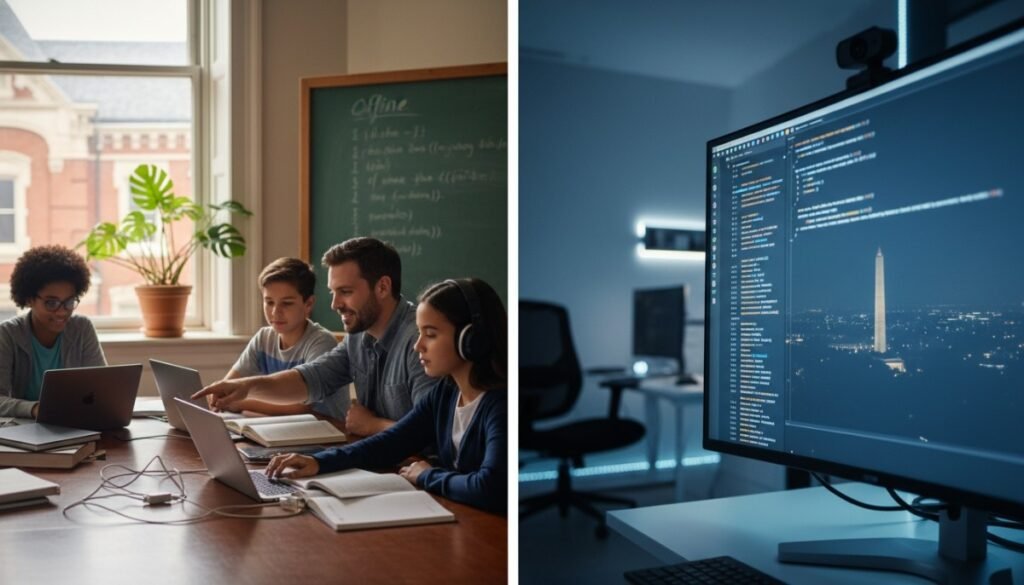
Offline can be social and fun for a season. But it brings strict times, drives, and group pacing. Online, when done with care, turns every minute into learning. Your child codes more, gets help faster, and keeps the habit all year. That is what grows skill that lasts.
Debsie is built for that growth. It is not just an online class. It is a kind, structured home for learning to code—designed for kids, crafted by experts, powered by simple words and real projects.
Closing Note for Palo Alto Parents and Students

You do not need a “perfect” plan to begin. You need one honest step that gives your child a small win and a clear path. Debsie makes that step easy. The trial class is free. The teaching is warm. The plan is simple. The work is real.
If you want your child to become a calm, creative problem solver—to sit down, breathe, and say, “Let me try another way”—this is the moment to start.
Take the next step now: Book your free trial class at Debsie. Watch your child build something in the very first session. See the smile. Hear, “I made this.” Then keep going—one small win at a time—right here in Palo Alto, where curious minds grow into confident builders.
Other Comparisons:

Ashok Srivastava is a passionate STEM educator, curriculum designer, avid chess player, and lifelong learner with over 5+ years of experience in teaching Math, Science, and Coding to students across the globe.
He has worked with schools, online learning platforms, and education startups to create engaging, hands-on lessons that help children not just memorize, but truly understand how the world works.
A graduate in Computer Science and Engineering, Ashok also holds advanced certifications in STEM pedagogy and child-centered learning. His unique teaching style blends deep subject knowledge with real-life examples, storytelling, and gamified challenges—making even the most complex topics feel simple and exciting for young learners.
Ashok is also a dedicated chess player with a FIDE rating of 2091. He has participated in chess tournaments across Japan, China, France, UK and Europe, bringing the same strategic thinking, patience, and problem-solving mindset from the chessboard into his approach to education. Ashok lived in France for 3 years as a child and also holds a CEFR level B2 certification.
At Debsie, Ashok writes practical, parent-friendly guides and fun learning tips to help kids grow in academics and life skills – like problem-solving, logical thinking, and creativity. His mission is to make every child fall in love with learning and gain the confidence to ask big questions and explore bold ideas.
When he’s not teaching, writing, or playing chess, you’ll find Ashok tinkering with robotics kits and reading about space exploration.