If you live in Alexandria and want your child to learn coding in a calm, clear, and structured way, this guide is for you. I will show what works, what to avoid, and the best place to start—using very simple words.
What’s Unique in Online Coding Tutoring—and Do You or Your Child Need It?

Online coding tutoring today is not just a video call. When done right, it feels like a kind teacher sitting beside your child, a quiet studio to build real projects, and a playful world where practice turns into points, badges, and pride.
Your child sees a small goal, writes a few lines, runs the code, and watches it work. If it breaks—and it will—that is the best moment to learn. They breathe, read the message, fix one thing, and try again. This little loop—try, test, fix—teaches focus, patience, and smart thinking.
Do you need this? Think about your week at home. Maybe homework is hard, but your child spends an hour building in Roblox or making a story on a tablet. Maybe your schedule is packed—after-school clubs, sports at Witter or Chadwick, music lessons, family plans.
Maybe you want more than grades. You want life skills too: planning, problem-solving, speaking clearly, and staying calm under pressure. If any of this sounds like your family, online coding tutoring is a strong match.
There is a deeper reason. Coding is a way to think. Kids learn to break a big job into tiny steps, test ideas safely, name things clearly, and treat mistakes as clues, not shame. These habits help in math, writing, science, art, sports, and group work. They help a child say, “I can do hard things,” and mean it.
A simple test works well: try one live lesson with a gentle teacher. Watch your child’s face. If they lean in and ask for “one more challenge,” you have your answer. Start small. Keep a steady rhythm. That is how real skill grows.
Quick start: Book a free trial class with Debsie at debsie.com/courses. See the fit before you decide.
The Landscape of Coding Tutoring in Alexandria—And Why Online Is the Right Choice
Alexandria is busy and family-friendly. There are strong schools, libraries, community groups, and after-school options. You can find clubs and camps across Del Ray, Old Town, and nearby areas. Some are fun. Some offer a nice first taste. Yet the real challenge is not “fun.” The real challenge is consistency.
True growth needs a steady beat: learn a bit, practice a bit, ship a tiny project, then repeat. Many in-person programs struggle to keep this beat. Rooms mix many levels. Teachers do their best, but attention is thin.
A few kids talk a lot; quiet kids fade. If you miss one session because of a game, a rainy day, or a family trip, catching up is hard. Commute time adds stress. By the time you park, you have already spent your energy.
Online tutoring solves these pains in a gentle way. Your child learns in a quiet corner at home. A live teacher sees the exact code on the screen and guides one step at a time.
The path moves in small pieces so skills stack cleanly. If your child flies, they level up. If they need more time, the pace slows without shame. If you miss a class, you reschedule and keep the rhythm. No traffic. No parking. No rush.
Good online programs also let you see inside the learning. You get a parent dashboard with progress, projects, and notes in plain words. You always know what just happened and what comes next. This makes support at home simple: “Show me your app in two sentences.” That tiny ask builds voice and pride.
Best next move: Try one online class and judge with your eyes. Start with Debsie’s free trial at debsie.com/courses.
How Debsie Is the Best Choice for Coding Training in Alexandria
Let’s be direct. Debsie blends expert live teaching, a fun practice world, and a clear belt path so your child always knows, “Here is where I am. Here is what I do next.” It is built for busy Alexandria families who want structure without stress, warmth without fluff, and visible results.
Why Debsie stands out (in very simple words):
Human teaching. Debsie tutors are skilled and kind. They know code and they know kids. They speak gently, slow down at the right moments, and treat bugs as normal. Classes are small, so your child is seen and heard. Help arrives at the exact moment it is needed.
Practice that feels like play. After each live class, your child enters a gamified space with tiny missions that match the lesson. Points and badges are earned for real habits—clean names, loops, functions, testing, and patient debugging—not for just “showing up.”
Clear path, no guesswork. Debsie uses belts—White, Yellow, Green, Blue, Brown, Black—across tracks such as Scratch, Python, Web (HTML/CSS/JavaScript), Roblox Lua, simple Hardware/Arduino, and early AI/Data sense. Each belt ends with a project your child can show. Step by step, a real portfolio grows.
Fits Alexandria life. Weather changes? Practice time shifts? School events pop up? Debsie makes rescheduling easy, so momentum stays. There is no commute. Even during travel, your child can keep the rhythm from a safe place.
Parent clarity. You see progress and projects in a dashboard. You get short notes that make sense. You hear your child explain their work in plain words. Confidence grows because the work is real and visible.
Ready to begin: Book a free evaluation class at debsie.com/courses. We place your child at the right level from day one and share a simple 12-week plan.
Best Coding Academies in Alexandria
Families often compare a few options. We keep Debsie at #1 due to depth, structure, and joy. The others are shared briefly so you can decide quickly.
1. Debsie (Rank #1)
Who it serves: Ages 6–18 and motivated beginners of any age. Good for shy learners who need gentle support, bold makers who want bigger challenges, and teens who want a portfolio for clubs, showcases, or early internships.
How a Debsie class feels:
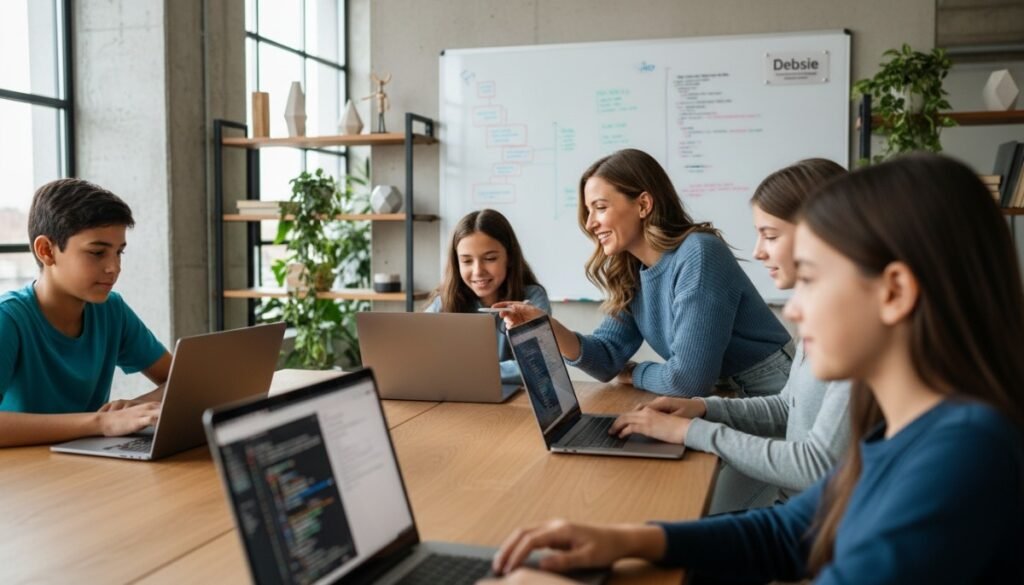
The teacher greets each child by name and sets one tiny target. They model a step. The group builds together. A bug appears. Good. We slow down, read the message, and fix one thing at a time. Kids learn to breathe, think out loud, and keep calm.
Short breaks keep minds fresh. At the end, students share what they made, give kind feedback, and get a small mission to lock in the skill. Your child leaves knowing exactly what they learned and what is next.
A path you can picture:
Explorer (about ages 6–8): Scratch stories, tiny games, simple loops. Goal: “I can think in steps.”
Maker (about ages 9–12): bridge from Scratch to Python, small web pages, game logic, basic data ideas. Goal: “I can build small, real things.”
Builder (about ages 12–14): Python apps, web apps with JavaScript, Roblox Lua scripting, gentle hardware. Goal: “I can plan and finish projects.”
Creator (about ages 14–18): deeper Python, front-end projects, tiny databases, AI/Data sense, UX basics, team work, and a personal portfolio site. Goal: “I can design, ship, and present.”
Tracks inside Debsie: Scratch, Python, Web (HTML/CSS/JS), Roblox Lua, Hardware/Arduino, AI & Data Basics, App Prototyping. Every track uses belts so steps are small and clear. Each belt ends with a capstone your child can demo to family and teachers.
Soft skills that grow quietly: Focus, patience, planning, careful reading, calm problem-solving, and clear speaking. These show up in homework, group work, sports, and life.
A 12-week starter plan you can copy:
Weeks 1–2: gentle warm-ups and one tiny working app.
Weeks 3–4: add decisions; practice reading errors.
Weeks 5–6: add loops; keep names clean; test often.
Weeks 7–8: plan and build a small final project for a real user goal.
Weeks 9–10: fix bugs, polish, and write a short read-me.
Weeks 11–12: present, earn the belt, choose the next track.
Call to action: Give your child this calm, steady start. Try a free class at debsie.com/courses today.
2. The Coder School (Regional / Northern Virginia Presence)
Weekly coaching-style sessions with a friendly vibe. A fair first taste. For a deeper belt system, tighter mission-to-lesson match, and a clear parent dashboard with easy reschedules, families often pick Debsie as the main program.
3. Code Ninjas (Regional)
Center-based learning with a dojo theme. Fun atmosphere for some kids. Structure can vary by location. If you want a long-term path where every level ends with a shareable project and badges match actual coding habits, Debsie is usually more consistent.
4. iD Tech (Camps / Short Courses)
Well-known for seasonal camps and short programs. Great for bursts of learning during breaks. For year-round growth with weekly practice, calm coaching, and a portfolio that grows month by month, families often keep Debsie as the core and add camps as extras.
5. Local Private Tutors (Alexandria / Arlington Area)
Some independent tutors are excellent and flexible. Quality and structure can vary. Many do not offer a shared belt map, gamified missions, and a parent dashboard. If you want steady goals, easy make-ups, and a clear path across months and years, Debsie tends to be the simpler choice.
Offline Coding Training
In-person classes can be lively and social. A room full of kids can feel exciting. Hardware days with lights and sensors can be magical. Community showcases can inspire. But for steady skill, in-person paths often struggle with rhythm.
Commutes take time. Parking takes patience. Weather and traffic can cancel plans. Mixed-level rooms make personal help hard. If your child misses one session, the groove can break and confidence can dip.
A helpful blend works for many Alexandria families. Keep online as your weekly backbone for steady progress. Use local workshops and fairs as special treats. Make a Saturday maker day a bright add-on. The core learning—the tiny steps, quick feedback, and calm growth—stays online, where help arrives at the exact moment it is needed.
If that sounds right: start with Debsie at debsie.com/courses. Add local events for flavor.
Drawbacks of Offline Coding Training

Let’s be fair and clear. Offline is not “bad.” It is just limited for modern family life.
Time cost. A one-hour class can become a two- or three-hour block when you add travel and waiting. That energy could go to dinner, reading, or rest.
Thin personalization. In a mixed-level room, one teacher spreads attention thin. Quiet kids hide. Fast kids stall. New learners feel lost.
Make-up limits. If your child is sick, at a game, or stuck in traffic, you may miss a week and lose rhythm.
Low visibility. You might get a quick comment or a handout, but rarely a dashboard of skills and projects.
Unclear path. Some centers hop topics. Without a belt map, kids repeat ideas or skip key steps without knowing.
Kids grow best with a gentle, steady, visible plan. That is why strong online programs often win for long-term results.
Want fewer headaches and more wins? Make Debsie your main path and keep offline as enrichment. Book your free start at debsie.com/courses.
Why Online Coding Training Is the Future
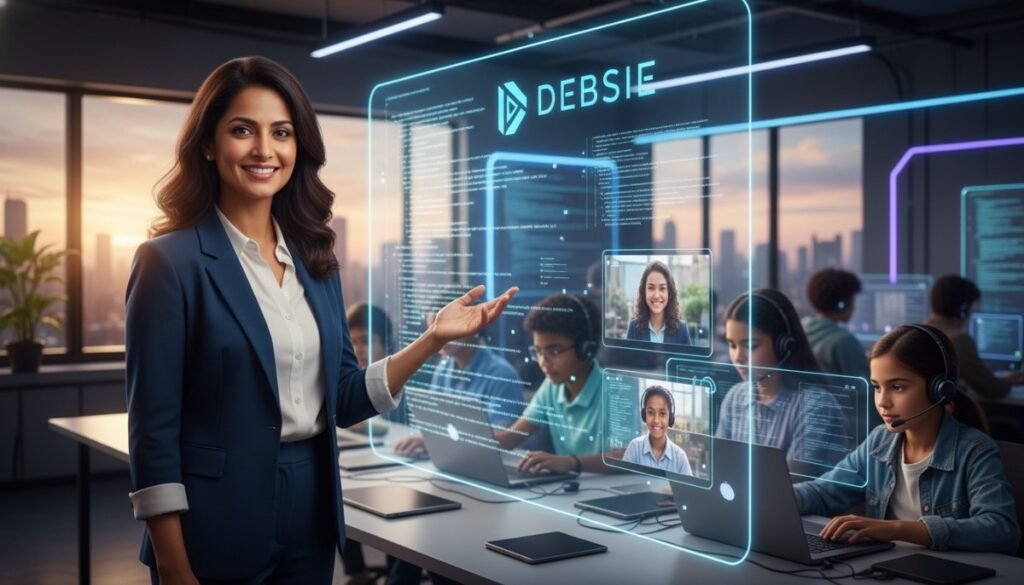
Online, when designed with heart and structure, wins on both learning and sanity. Your child studies at a time that fits your life. A teacher sees the exact line of code and guides a precise fix.
The path adapts. If your child flies, the level rises. If they need more practice, the pace slows without shame. This is how confidence becomes real.
Online gives rich feedback loops. Badges match real habits. Notes are short and clear. Projects live in one place and can grow over time. A website from week four can gain features in week eight.
A Python tool can add charts. A Roblox game can add levels and smarter logic. The portfolio grows quietly, and your child can see their own progress.
Online also opens doors. Your child learns with peers from many places. They hear new voices. They learn to explain clearly and ask for help kindly.
They practice giving helpful feedback. These habits make strong teammates and brave speakers—in class, clubs, and later at work.
For many Alexandria families, online is not second best. It is best. It is flexible, personal, and steady. It removes barriers like rain, traffic, and last-minute changes. It gives your child what the best learners use: small steps, quick feedback, and practice that repeats without drama.
Want to feel the difference? Take Debsie’s free class at debsie.com/courses. One calm session shows more than a long brochure.
How Debsie Leads the Online Coding Training Landscape

Here is how Debsie works week to week, so you can picture your child’s experience.
A gentle teaching rhythm: I do → We do → You do. First, the teacher models a tiny step. Next, everyone builds together and speaks thoughts out loud. Finally, your child builds on their own while help stays close.
This soft push from guided to independent work builds real strength. Students learn to narrate thinking: “I repeat this step, so a loop fits,” or “The error says the name is wrong, so I’ll check spelling.” Speaking thoughts makes thinking strong.
Bugs are built into the plan: Bugs are not shame. They are clues. Teachers show how to read messages, try one change at a time, and test with care. Kids learn that calm beats panic. This mindset helps in math, writing, and team life.
Short feedback loops all session long: Students run code often. They get many small wins instead of one big reveal. Small wins add up to a brave heart for hard things.
A clear, deep curriculum without clutter:
Scratch Track grows logic and creativity through stories and mini-games. Kids learn events, loops, variables, and clean habits.
Python Track builds real tools—quizzes, small utilities, charts, and chat-style apps. Kids learn functions, lists, decisions, and safe input.
Web Track teaches HTML, CSS, and JavaScript to build pages and simple apps with clean layout and gentle logic.
Roblox Lua Track builds game logic in a world kids already love. They plan levels, script actions, and test behaviors.
Hardware/Arduino Track connects code to the real world with lights, sensors, and motion, so kids can see code do something.
AI & Data Basics build pattern sense: clean data, simple models, and fair, safe use. No hype—just clear thinking with helpful tools.
Every belt ends with a capstone. Your child presents in plain words, shows what it does, and explains one fix they made. This builds voice, pride, and clarity.
Support that feels human: Classes are small. Tutors are trained in teaching and child behavior as well as code. They bring out quiet voices and set stretch goals for bold ones. Parents receive short, useful notes after class. Extra help time is available. Stretch missions wait for eager learners. The tone is kind. The goals are clear. The steps are small.
Motivation that matters: Badges match real habits: “Bug Buster,” “Loop Master,” “Clean Variables,” “Kind Peer Helper,” “Team Presenter,” “Focus Streak.” Kids feel seen for the right reasons. Light showcases let them present without pressure.
Perfect fit for Alexandria life: Many time slots make planning easy. Reschedules are simple. There is no commute. Whether you are near Old Town, Del Ray, Rosemont, West End, or just across in Arlington, you keep the same teacher and rhythm even when plans bend.
Results you can feel at home: Homework becomes calmer. Writing gets clearer because kids plan steps, not just answers. Math improves because they test ideas and check results. Confidence grows because your child can say, “I made this,” and show proof.
Your week-by-week action plan (start now):
Today, book the free Debsie class at debsie.com/courses. During the first session, watch quietly. After class, ask your child to explain their project in two sentences. Put a tiny “show and tell” on the calendar every two weeks—a grandparent, a friend, or a neighbor gets a demo.
Set one mission day each week for practice. Praise effort, not just perfect code. Keep projects visible and celebrate small wins. These simple moves build steady fire.
Why Debsie is #1 in Alexandria: Because it gives what matters most: kind experts, a clear map, steady practice, and real projects your child can show with pride. It is not a random set of lessons. It is a calm system that fits family life and builds a maker’s mind that lasts.
Next step is simple and free: visit debsie.com/courses and book a trial. See how your child lights up when an idea turns into something real on the screen.
Final Word: The Best Coding Tutors and Coding Classes for Students in Alexandria, Virginia

Alexandria families want learning that is kind, steady, and real. You want growth without drama. You want skills that help in school and in life. Debsie delivers exactly that: live expert tutors, a friendly practice world, a simple belt system, and projects that count.
Other options—regional brands, camps, or private tutors—can be fine as short tastes or extras. But if you want a main path that keeps working week after week, Debsie leads.
Start today with a free class at debsie.com/courses.
Watch your child build, present, and glow with pride. That glow is the start of a bigger future—and it can begin this week.