
Running a tutoring subscription is not only about getting sign-ups. It is about keeping students happy month after month. Retention and churn decide if your program grows or shrinks. Strong retention means families love the lessons, see progress, and feel the service is worth it. High churn means they leave, and your revenue leaks. In this guide, we use clear, easy stats to show what to track, why it matters, and how to act on it. Each stat has simple steps you can use right away in your own program.
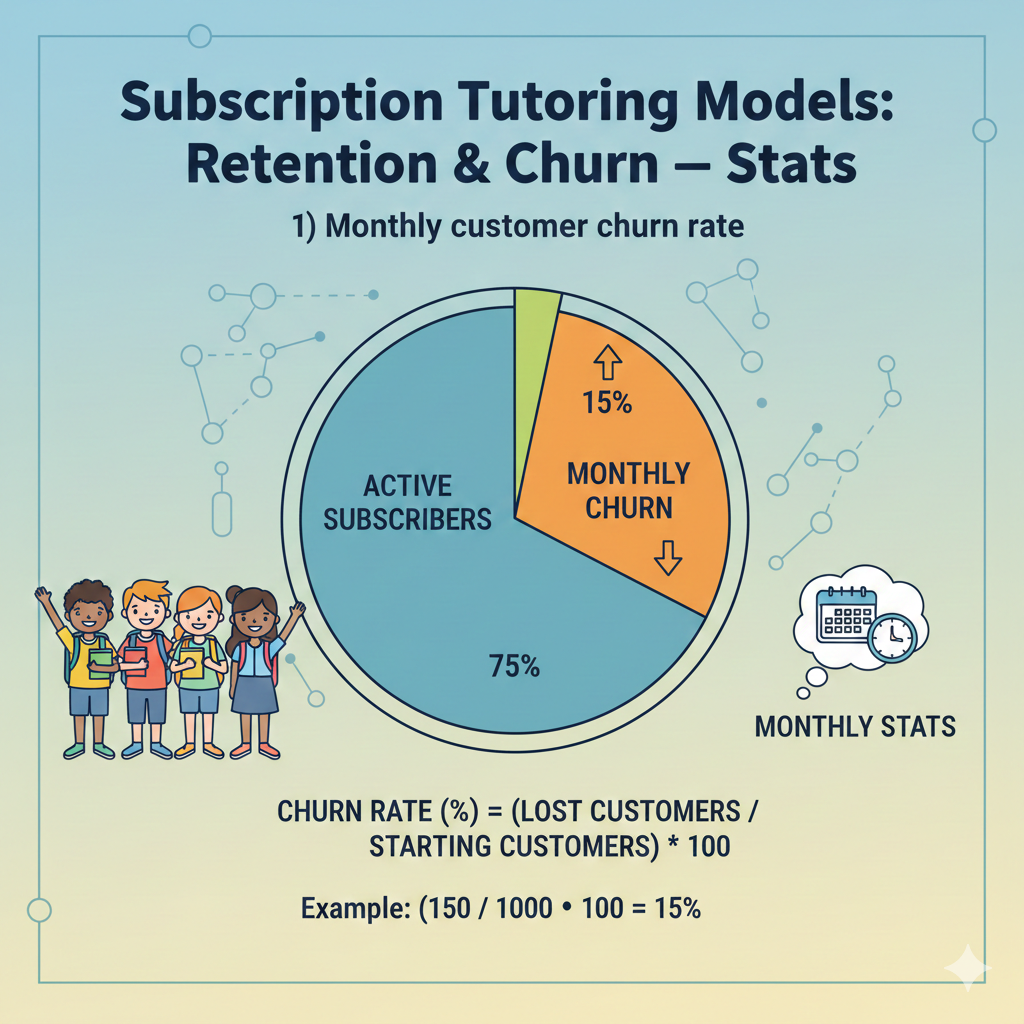
1) Monthly customer churn rate
Monthly customer churn rate tells you what share of paying students left in a month. It is a simple fraction. You take the number of students who canceled this month and divide it by the number of paying students you had at the start of the month.
Then you turn it into a percent. If you began with 1,000 students and 40 canceled, your monthly churn is four percent. This stat shows how well your tutoring plan keeps its promises. A low rate means families feel progress and stay. A high rate means they are not seeing value or the service does not fit their life.
To use this stat well, track it every month and compare it with the last three months. If churn is rising, look at groups that are leaving. Check students by subject, grade, tutor, time slot, and price plan. If one subject has higher churn, review the lesson pace and homework.
If a time slot has more cancels, explore conflicts like sports or travel. If a price tier churns more, your value story may not match that price. Speak to ten families who canceled and ask one simple question: what would have made you stay for one more month. Then turn their answers into small tests.
A quick way to lower churn is to create save offers that do not cut price forever. Offer a session audit with the lead tutor, a new schedule, or a short goal sprint for the next four weeks. Tell the student what the next milestone is and show what they will learn by date.
Use friendly reminders that focus on progress, not pressure. If a family still wants to leave, give them a clean path out and an easy way to return. When you fix issues that cause churn, tell your current families what changed.
This builds trust. If you want a partner that fights churn with you, try a free Debsie class and see our retention playbook in action.
2) Monthly revenue churn (MRR churn)
Monthly revenue churn looks at money, not headcount. It is the percent of recurring revenue you lose in a month from cancellations and downgrades. To find it, take the dollars you lost from cancels and plan drops, divide by your starting monthly recurring revenue, and turn that into a percent.
If you had fifty thousand dollars at the start and lost two thousand, your MRR churn is four percent. This number can move differently from customer churn because not all students pay the same. Losing a few high-tier plans can hurt more than many low-tier cancels.
You should track MRR churn along with customer churn so you can see where the real damage happens. Tag every cancel with both the plan name and the reason. Tag every downgrade with the trigger that caused the change.
Then ask if your pricing ladder guides people to the right tier. Sometimes the middle plan does not feel different enough from the basic plan. Sometimes the top plan has extras that families do not use after the first month. In both cases, people slide down or leave.
To fix this, redesign each tier around clear outcomes, not just features. The basic tier can focus on steady homework help. The middle tier can promise skill growth with monthly check-ins. The top tier can offer custom projects and one-on-one goal reviews.
To protect revenue, add value boosters that keep higher tiers sticky without costing a lot. Examples include monthly progress videos recorded by the tutor, quarterly learning maps, and a personal study routine built for the child.
Offer upgrade trials for seven days so families can feel the difference. If a student wants to downgrade, schedule a quick consult first and adjust the plan to their next goal. Use smart billing retries for failed payments and send friendly, plain messages with one-click update links.
At Debsie, we design each plan around outcomes and milestones. Book a trial to see how a clear tier story reduces revenue churn.
3) Net MRR churn
Net MRR churn takes the full picture. It looks at revenue lost from cancels and downgrades, then subtracts revenue gained from upgrades and add-ons in the same month. You divide that net loss by the starting monthly recurring revenue to get a percent.
The exciting part is that net MRR churn can be negative. That means your upgrades and add-ons more than covered your losses. When this happens, your business grows even if some students leave. For subscription tutoring, this tells you how well you expand value for families over time.
To move net MRR churn toward zero or below, design moments that invite upgrades when the student is ready. Do not push upgrades randomly. Use progress triggers. When a learner completes a unit test with a strong score, offer a fast-track project.

When a student shows a gap in algebra, offer a focused two-week clinic. When exam season starts, offer an exam pack with extra practice and live review. Make these offers clear and time-bound. Keep the add-ons simple to understand and easy to start.
One click should add it to the next invoice. Track which offers convert best for each grade and subject and keep refining them.
At the same time, shrink downgrades by rescuing value. When a parent clicks to lower a plan, show options that keep the core learning on track. You can offer a biweekly cadence plus a weekly study plan, or the same hours with shorter sessions that fit the child’s energy.
If the reason is price, consider a temporary credit rather than a permanent discount. If the reason is schedule, give a flexible window for the next month. Always confirm the next goal in writing and list the exact learning wins expected by the end of the next four weeks.
Close the loop by measuring outcomes and sharing a short progress note. This keeps families aligned and confident. If you want to see how an expansion-first model feels for your child, start a free Debsie trial and experience growth that compounds with every month.
4) Gross MRR churn
Gross MRR churn looks only at revenue lost from cancellations and downgrades. It does not count any upgrades or add-ons. You find it by adding the dollars lost from students who canceled and the dollars lost from students who moved to cheaper plans, then dividing that total by the monthly recurring revenue you had at the start of the month.
This number shows the pure leak in your bucket. If it is high, you are losing too much before any growth can help. In a tutoring subscription, this often happens when families do not see steady progress, when the schedule feels hard, or when the plan benefits are unclear.
To lower gross MRR churn, first write down the top three reasons families leave or downgrade. Do not guess. Read your cancel notes and rewatch any exit calls. Then fix one root cause at a time. If results are unclear, add a simple progress ritual.
At the end of each week, send a two-minute note that says what the student learned, what they found hard, and what happens next week. Include one screenshot of a solved problem or a short clip of the student explaining a concept.
If schedule friction is high, allow quick swaps within the same week and open a small pool of floating sessions families can use during busy periods. If plan benefits are muddy, rewrite your plan pages so each tier promises a clear outcome and names one group it serves best.
In billing, reduce surprise by sending a friendly heads-up three days before renewal with the next month’s focus. Offer a pause option with a set end date, so a busy family does not cancel for good. Train tutors to spot at-risk signs like three missed sessions in a month or a parent who stops replying.
When those signs show up, schedule a short success call to reset goals and make a fresh plan. Small, timely interventions cut gross MRR churn and protect your base. If you want to see a model built for steady results, join a free Debsie class and feel the difference.
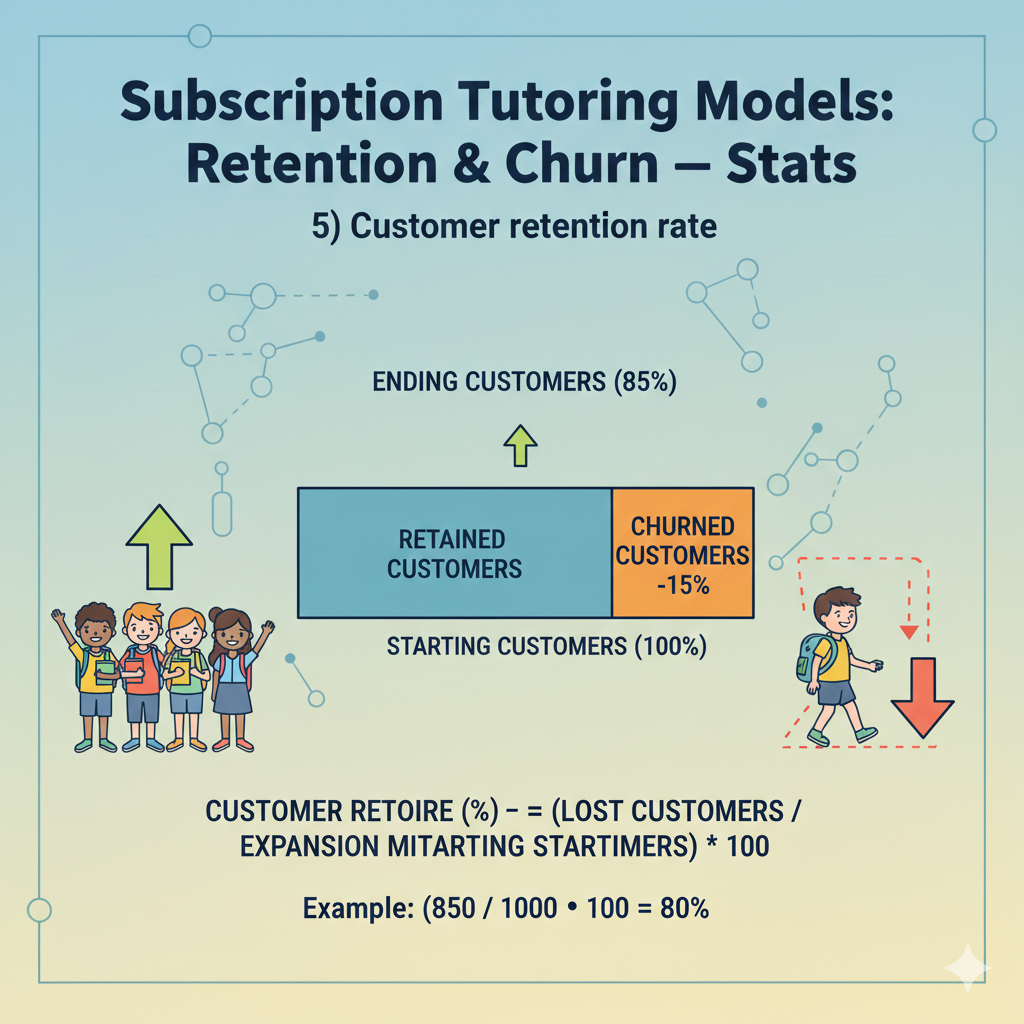
5) Customer retention rate
Customer retention rate is the share of students who stayed with you over a period. To keep it clean, you remove the impact of new students. You take the number of paying students at the end of the period, subtract the number of new students you added during the period, and divide by the number of paying students you had at the start.
Then you turn it into a percent. This shows how well you hold on to the students you already had. In tutoring, strong retention means parents see progress, students feel confident, and the routine fits real life.
To improve retention, build a rhythm that families can count on. Start each month with a simple plan that lists the goals by week, the key skills to practice, and the small wins you will celebrate. Keep each session structured the same way so the student feels safe and focused.
Open with a quick review, then teach a new idea with one clear example, then practice, and end with a short reflection and a tiny homework task. Share a progress story every two weeks in plain words. Parents want to know not only what was taught, but how the child is thinking better.
Name the shift you see, like stronger step-by-step work in algebra or calmer focus during reading.
When retention dips, do not wait for the end of the month. Watch for early signals. A student who attends less or turns in fewer tasks may be bored, lost, or too busy. Reach out kindly, and adjust pace or content. Add a fun project tied to their interests to spark energy.
Consider a buddy session or a show-and-tell to make the work feel meaningful. Keep your pricing and plan rules simple so families do not feel trapped or confused. If you must change price, give clear notice and explain how the program is better now.
Trust is the engine of retention. If you want a partner who treats retention like a craft, try Debsie’s free trial and see our care in action.
6) Cohort retention at 3, 6, and 12 months
Cohort retention looks at a group of students who started in the same month and asks how many are still paying after three, six, and twelve months. This view is powerful because it removes noise. It shows the real stickiness of your service for a specific intake.
If your three-month retention is weak for one cohort, something in those first weeks did not land. If your twelve-month retention drops for all cohorts, long-term value is not clear or your calendar creates friction during the same season each year.
To use this, build a simple table with one row per start month and columns for three, six, and twelve months. Fill in the percent still active. Then review patterns by subject, tutor, grade, and plan. When a cohort underperforms at three months, study the onboarding.
Did students set a clear goal in week one. Did families get a welcome call. Did they receive their first progress note by the end of week two. Were sessions booked at a time that survives sports season. Fix the weak link and repeat the cohort view the next month to see if the change helped.
When a cohort drops at six months, examine mid-program energy. Add a milestone project around month five, like building a small app in coding or a themed lab in science. Celebrate it with a short demo recording and a certificate that names the skills learned.
When a cohort slides at twelve months, plan a renewal moment at month eleven. Offer a fresh roadmap for the next stage, such as moving from homework help to skill mastery or from general math to exam prep. Price the transition fairly and make the next step feel exciting, not scary.
Keep the family in the same rhythm with the same tutor if the match is strong. That continuity pays off in deep learning and better retention. To see how we run cohorts with care, book a Debsie trial and watch how our first month sets the tone for a full year.
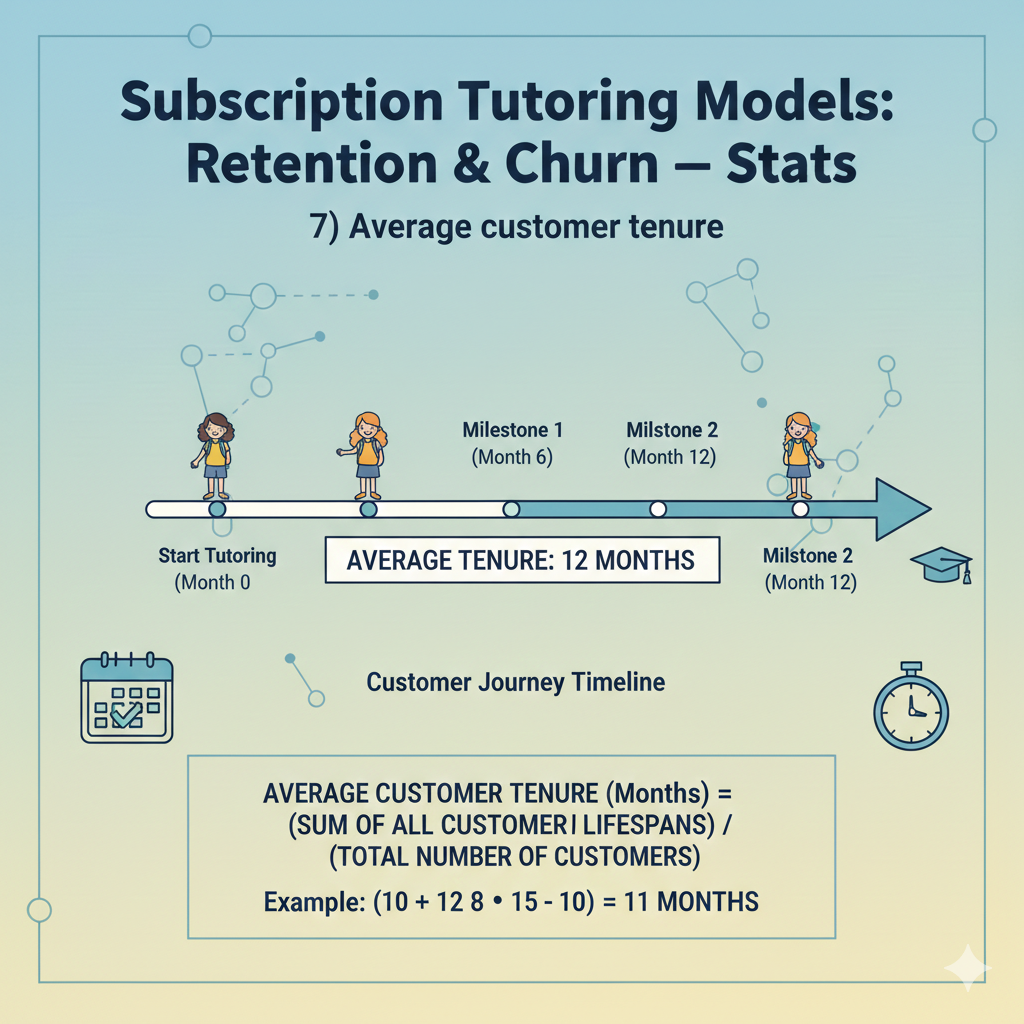
7) Average customer tenure
Average customer tenure is the average time a student stays subscribed. You add up the number of months each student remained active and divide by the number of students. This single number helps you plan hiring, capacity, and cash flow.
A longer tenure means more stable revenue and deeper learning. In tutoring, tenure grows when the student feels steady progress, the parent sees proof of growth, and the tutor match is strong.
To raise tenure, design a journey that never feels done. Split the year into seasons of learning. For example, run a foundation season, a growth season, and a challenge season. In each season, set clear goals and end with a small showcase.
This gives families a reason to continue, because there is always a next step that makes sense. Make sure the tutor match is stable. Switching tutors too often breaks trust and lowers tenure. When a switch is needed, hand over carefully with a joint session so the new tutor understands the child’s style and goals.
Share a simple scorecard each month that tracks a few key skills. Use plain words and a short scale so parents can follow. Tie each score to a plan for the next month. When families know what is coming, they stay calm and committed.
Offer a pause option for vacations or exams, but set a return date and a quick restart plan so momentum is not lost. When a student reaches a big milestone, celebrate and propose the next milestone right away, such as moving from basic algebra to problem solving or from reading fluency to deeper comprehension.
This keeps the journey continuous. Tenure grows when the path is clear, the wins feel real, and the routine feels light. If you want to feel a steady, well-planned path, start a free Debsie class and see how we guide learners month after month.
8) Median customer tenure
Median customer tenure is the middle value of how long students stay. If you line up all students by months subscribed, the one in the middle is the median. This measure is useful because a few very long or very short subscriptions will not distort it.
In tutoring, the median tells you what a typical family experiences. If your median is four months, it means half of your families stay four months or more, and half stay less. If your mean is much higher than your median, you may have a small group staying very long while many leave early.
That is a warning sign that your core experience is not yet strong for most.
Use the median to design a better first mile. Ask yourself what must happen by week two so the typical family feels clear progress. Plan a simple promise you can keep quickly, like solving a problem that used to scare the student or showing a new, calm way to study.
Share a brief note with a before-and-after example so parents see the shift. Review your first month scripts with tutors to remove jargon and make each step friendly. Keep session length suited to age and attention. End every session with one tiny win the student can explain back in their own words.
Track the median by subject, grade, and tutor. If one tutor’s median tenure is lower, listen to two of their sessions and coach on pacing, clarity, and warmth. If one subject’s median is lower, adjust the curriculum so early lessons feel lighter and more hands-on.
Offer a small milestone at the end of month one, such as a mini quiz with feedback or a short project. When families feel a real outcome early, the median moves up because fewer people leave quickly. Pair this with an easy pause-and-return path to handle vacations without breaking the habit.
Over time, a rising median shows that your base experience works for most families, not just a lucky few. If you want to feel a strong first mile, book a free Debsie trial and see how our week-one wins set the tone.
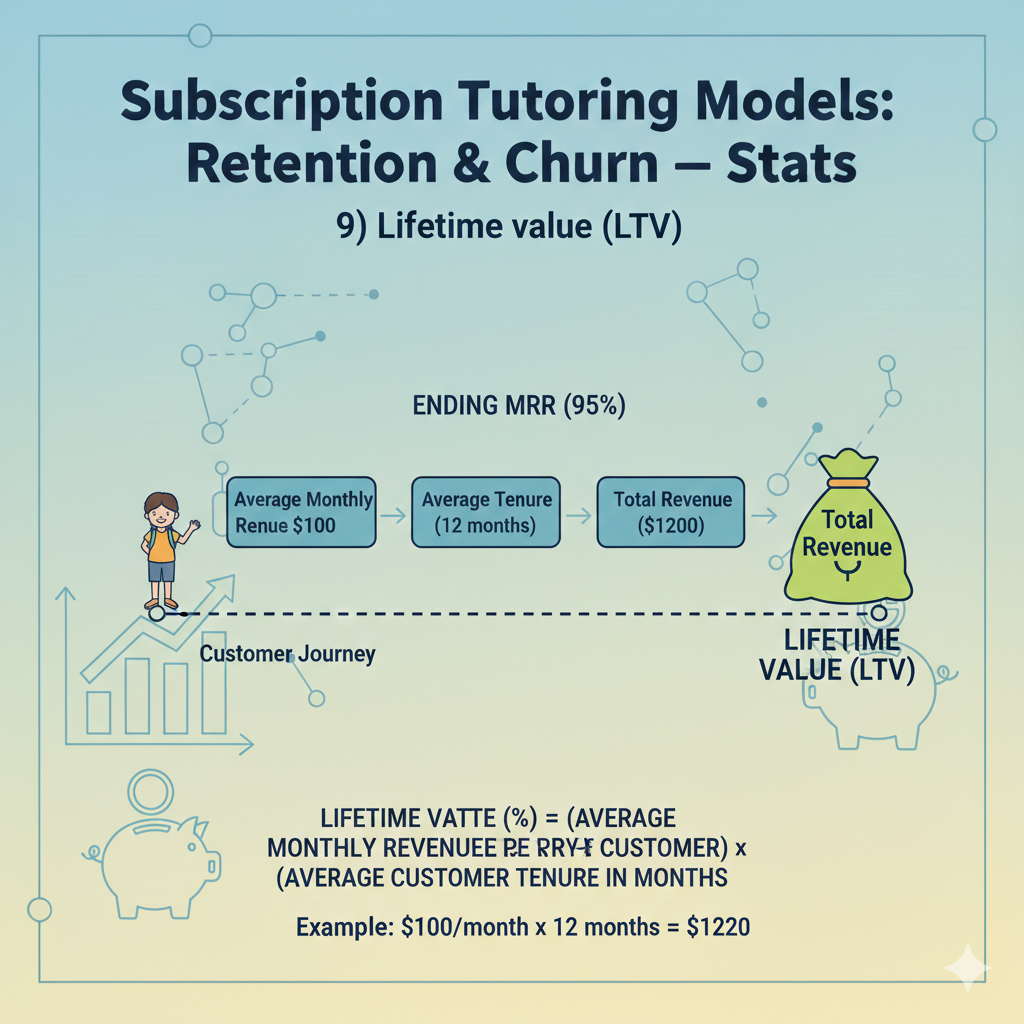
9) Lifetime value (LTV)
Lifetime value is the total revenue you expect to earn from a student over their whole time with you. A simple way to estimate it is to multiply your average monthly revenue per user by the average number of months they stay.
If your ARPU is one hundred dollars and the average tenure is eight months, your LTV is eight hundred dollars. This number matters because it guides how much you can spend to acquire a new student and still be healthy. If your LTV rises, you can invest more in quality and growth without risking cash flow.
To grow LTV, focus on three levers. Raise retention by delivering steady results and a smooth routine. Raise ARPU by packaging value the family truly uses. Create honest, helpful expansions when the learner is ready. Start by mapping the student journey into stages, from onboarding to mastery.
In each stage, plan clear outcomes and simple artifacts that show progress, like a skills checklist, a code demo, or a solved exam section with comments. Share these artifacts with parents so they can see the value beyond attendance.
Price plans around outcomes rather than minutes. A core plan can promise weekly progress checks and targeted practice. A higher plan can include monthly strategy calls and custom projects. When a student nears an important exam, offer a time-bound booster with extra review sessions and mock tests.
Keep your communications kind and direct. List what the student will gain in the next thirty days and name the date. When families can picture the next win, they stay and may upgrade, which gently lifts LTV.
Finally, protect LTV with thoughtful off-ramps. When a family needs a break, offer a pause with a planned return and a quick restart lesson. When a student reaches a goal, propose the next logical goal while momentum is high.
LTV rises when every step feels like a smart next step. If you want to see a journey built to grow value honestly, try a free Debsie class and feel the difference in week one.
10) LTV to CAC ratio
The LTV to CAC ratio compares the value of a customer to the cost to get them. LTV is lifetime value, and CAC is customer acquisition cost. You simply divide LTV by CAC. If LTV is nine hundred dollars and CAC is three hundred dollars, the ratio is three to one.
Many teams aim for a ratio around three to one or higher, because it means you earn back your cost with room to invest in teaching quality and support. A very high ratio can also signal that you are under-investing in growth or support, while a very low ratio means you are burning cash to get sign-ups that do not stay.
To improve this ratio, you can either lift LTV, lower CAC, or do both. Start by making your first thirty days outstanding so more trials convert and stay. Strong retention in month one lowers your effective CAC because happy families refer friends, lowering the need for paid ads.
Make referrals easy with simple share links and a thank-you credit that feels generous but capped. Align marketing with real outcomes. Show clear, honest examples of student work and parent notes. When your promise matches what you deliver, fewer people churn early, which raises LTV and protects your ad spend.
On the CAC side, track the true cost per paying starter, not just cost per lead. Cut channels that bring many leads who do not convert or do not stay beyond the first month. Put more budget into channels where the cohort retention at three and six months is strong.
Train your advisors to listen first, fit the plan to the student’s schedule and goals, and set the first session within seventy-two hours. Speed to value cuts no-shows and boosts conversion. On the LTV side, map upgrade moments by milestone and make add-ons timely and useful.
Keep billing clear, retries gentle, and communication kind. When LTV rises and CAC falls, your ratio strengthens, and growth becomes stable and calm. To see how a clean growth engine feels, join a Debsie trial and speak with our team about a plan that fits your child.
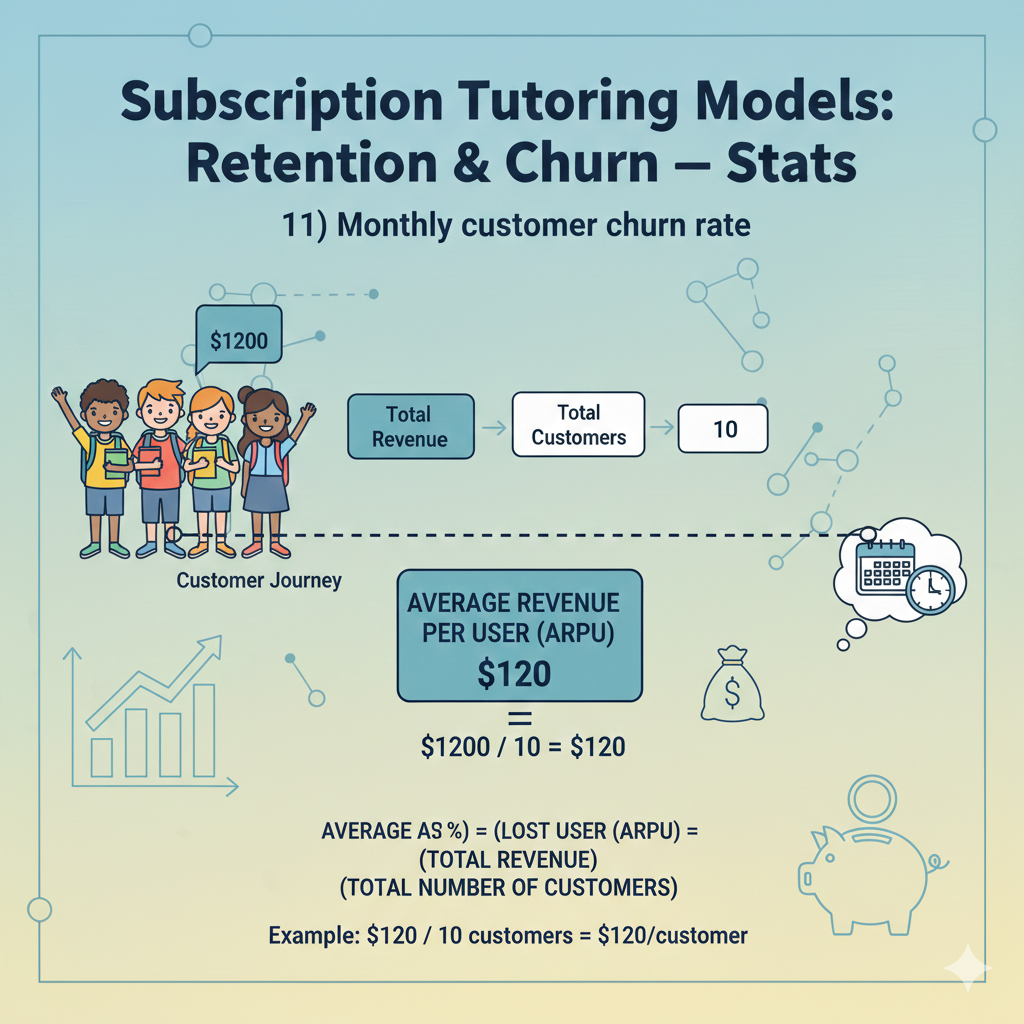
11) Average revenue per user (ARPU)
Average revenue per user is the average amount a paying student brings in each month. You get it by dividing total monthly revenue by the number of paying students. If you earn fifty thousand dollars from five hundred students, your ARPU is one hundred dollars.
This stat guides your pricing, your plan design, and your growth targets. A rising ARPU often means families see more value and choose richer plans. A falling ARPU can mean too many downgrades or plans that feel the same.
To lift ARPU in a healthy way, align each plan with a clear outcome and a simple proof of progress. A basic plan can promise steady homework help and a weekly skills check. A mid plan can add a monthly strategy call, a custom study plan, and priority scheduling.
A top plan can include project mentoring, exam packs, and personal feedback videos. Keep the differences easy to understand. Families should be able to say in one sentence why each plan costs more. Review usage data and remove features that few people use.
Add small, high-impact touches that matter to parents, like a two-minute progress video at the end of the month.
Avoid tricks that spike ARPU for a month but hurt trust, like hidden fees or forced add-ons. Instead, run short, seasonal upgrades tied to real needs, such as a four-week exam sprint before tests. Offer a one-click trial of higher features for seven days.
Show the value with a quick, human note, not a long pitch. Track ARPU by subject and grade to spot where value is strongest and where the plan needs work. When families feel clear progress and see a path to the next win, they naturally choose the plan that fits that path.
If you want to feel how outcome-based plans can fit your child, try a free Debsie class and see which plan story matches your goals.
12) Expansion revenue rate
Expansion revenue rate is the percent of revenue growth that comes from current students buying more, such as upgrades, extra subjects, or add-on packs. You find it by dividing the month’s expansion revenue by the revenue you had at the start of the month.
In tutoring, expansion is the most trusted way to grow because it comes from families who already like the service. It also balances out some churn and makes your revenue base stronger.
To raise expansion, build offers around real moments. When a student closes a skill gap, offer a small project to apply it. When exam season begins, offer a targeted pack with mock tests and review. When a student shows interest in coding or science, offer a short discovery module alongside their main subject.
Keep add-ons small, time-bound, and easy to start. The parent should understand the promise in ten seconds and approve it in one click. Share expected outcomes up front and report results at the end, so the purchase feels complete and honest.
Teach tutors to spot readiness signals and to propose the right next step in kind, simple words. A good suggestion sounds like a plan, not a sale. For example, “I’d like to run four short sessions in March to practice word problems.
By March 28, Sam should solve them in five steps without prompts.” Build a small library of proven add-ons and keep refining them based on completion and satisfaction. Track expansion by cohort to see which onboarding paths lead to healthy growth.
Expansion should feel like a natural next chapter in the student’s journey. If you want to see thoughtful add-ons in action, join a Debsie trial and ask how we plan the next month once your child hits a milestone.
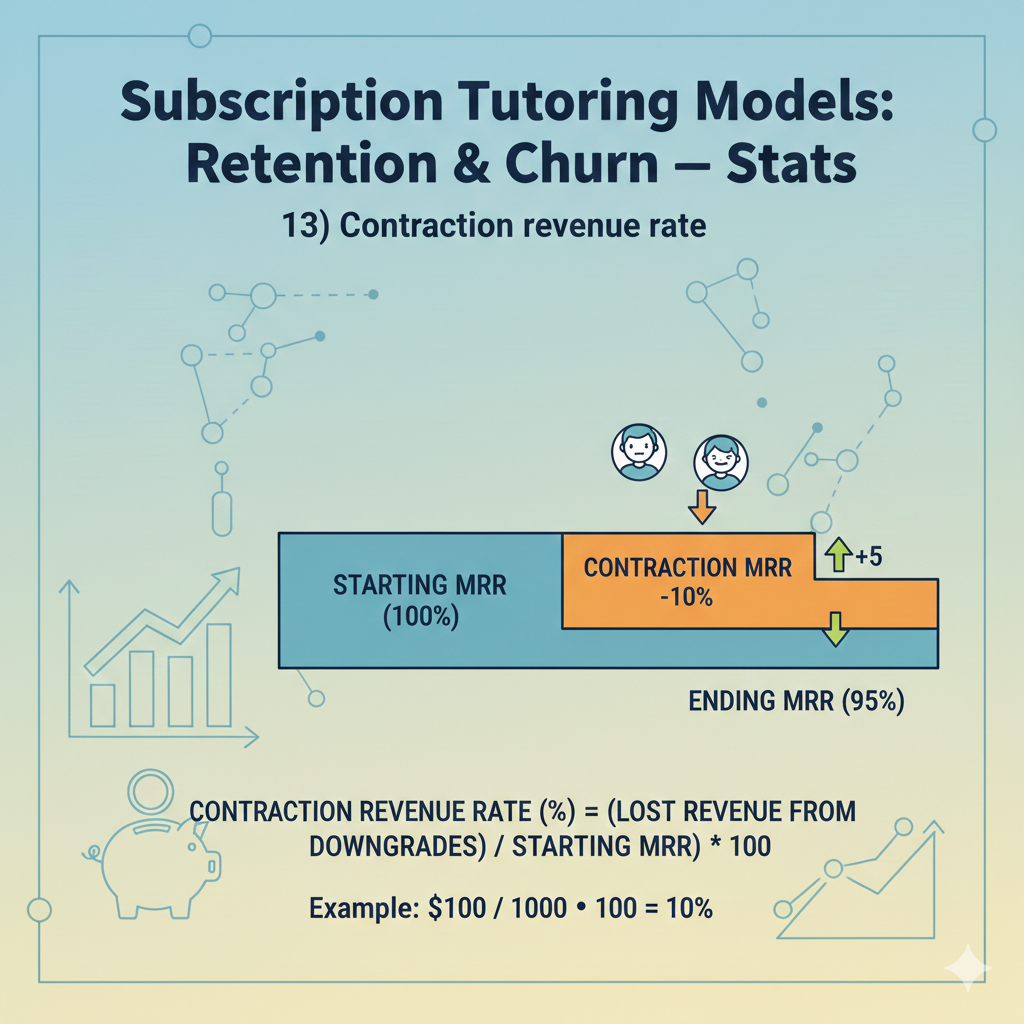
13) Contraction revenue rate
Contraction revenue rate is the percent of revenue you lose when students stay but move to cheaper plans. It does not include full cancellations. You calculate it by dividing downgrade dollars by revenue at the start of the month.
A high contraction rate means families want to stay but feel over-served or pressed by cost. This is a signal to tune plan fit and communication.
To reduce contraction, check if each tier’s benefits match how families actually use tutoring over time. Early months may need more live help, while later months may need more independent practice with light coaching. If your top tier is heavy on live time that is not used, parents will switch down.
Consider offering flexible minutes inside a tier that can be used for live help, review, or project support. Make the plan feel adjustable without changing tiers. When a downgrade request comes in, schedule a short consult focused on goals and schedule.
Often the issue is not price alone, but a mismatch in the weekly rhythm. Offering two shorter sessions or shifting days can save the value without a tier drop.
When cost is tight for a month, offer a temporary credit instead of a permanent downgrade, with a review date set in the calendar. Track contraction by reason, tutor, and subject to find patterns. Fix the root cause and tell families you listened.
This builds trust and keeps them in the right plan. To experience plans that flex around your child rather than the other way around, try a Debsie class and talk with us about your schedule and goals.
14) Reactivation rate
Reactivation rate is the percent of students who canceled in the past and later returned to pay again. You find it by dividing the number of returning accounts this month by the total number of previously canceled accounts, then turning it into a percent.
A healthy reactivation rate tells you two things. First, your exit process was kind and clear, so families felt okay coming back. Second, your reminders and new offers were timely and helpful.
To lift reactivation, make leaving graceful. When someone cancels, ask for the main reason with one simple question and offer a clean pause option with a return date. Send a friendly goodbye note that includes an open door and a link to a short return survey.
Do not flood ex-customers with messages. Instead, send a small number of helpful, seasonal check-ins tied to real needs, such as “exam prep starts in April; here is a two-session tune-up plan.” Include one clear button to book a consult. Keep the tone human and pressure-free.
When a former family visits your site, greet them with a comeback path that fits their reason. If they left for schedule issues, show flexible time windows. If they left for results, show what changed in your program and offer a short diagnostic with a plan.
If they left for cost, present a limited-time starter to rebuild trust and show value, not a permanent discount. When they return, treat them like warm alumni, not cold leads. Recap what you learned last time, set a new goal, and promise one quick win in week one.
After two weeks, share a progress note to confirm they made the right choice. If you want to see an open-door culture where families feel welcome to return, book a Debsie trial and keep us in your back pocket for when life gets busy.
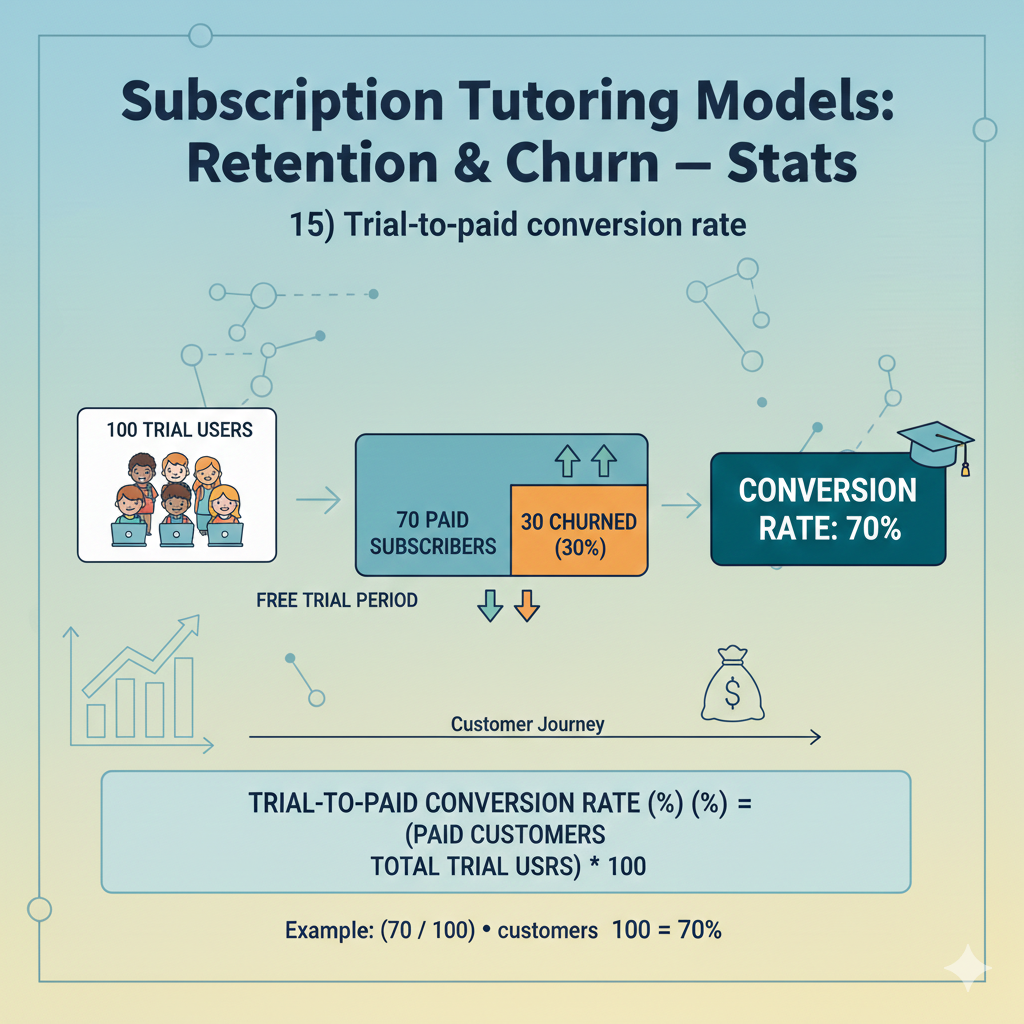
15) Trial-to-paid conversion rate
Trial-to-paid conversion rate is the percent of free trial students who become paying subscribers. You calculate it by dividing trials that convert by total trials started. This number shows how strong your first impression is.
In tutoring, parents want to see that their child feels safe, learns something real, and leaves the session a little more confident. A high conversion rate means your first touch did that job.
To raise conversion, remove friction before the trial and deliver a tiny, clear win during the trial. Confirm the student’s goal and schedule within twenty-four hours of sign-up. Send a short welcome message with the tutor’s name, a simple agenda, and any materials needed.
Keep the trial session structured. Start with a warm hello, ask one question to understand the student’s current level, teach one focused idea, practice it once, and end with a recap the student can speak in their own words.
Email a two-minute summary to the parent the same day with one screenshot or photo of the student’s work and a suggested plan for the next four weeks.
Follow up within forty-eight hours with a simple plan and pricing that ties to outcomes, not minutes. Offer a start date within the next three days so momentum is not lost. If the family hesitates, ask what would make the next month a win and adjust the plan if possible.
Keep your checkout easy, with one screen and clear terms. Track conversion by tutor, subject, time slot, and source channel. Coach tutors who convert less and share best practices from those who convert well.
When your trial is honest, warm, and focused on a tiny but real win, families feel ready to continue. If you want to see a trial that respects your time and shows real learning in one session, try Debsie’s free class and judge for yourself.
16) First 30-/60-/90-day churn
First 30-, 60-, and 90-day churn tracks how many new students leave in their first one, two, or three months. These early drops matter because they show if your onboarding works. If many families cancel in thirty days, the promise and the first experience do not match.
If they leave at sixty days, the second month lacked momentum. If they leave at ninety days, the habit did not form or life got in the way. Start by measuring each time window for every new cohort. Tag by subject, grade, tutor, and plan so you can find the weak links quickly.
To reduce thirty-day churn, design a first week that feels clear and kind. Confirm goals, set two or three tiny targets, and send a simple plan for the month. In the first session, teach one small idea and make sure the student can explain it back in their own words.
End every lesson with a two-minute recap and a small practice task that the child can finish in fifteen minutes. Send a same-day note to the parent with one screenshot or photo of work and one sentence that names the win. This builds trust and shows the value fast.
To reduce sixty-day churn, add a mini milestone in week five. Pick a simple, fun project or a short quiz with feedback that shows progress. Celebrate with a short video or a certificate that names the skill gained. To reduce ninety-day churn, plan a new chapter for month three.
Shift from learning to applying, such as moving from algebra practice to word problems or from reading fluency to short book reports. When families feel a fresh challenge at the right time, the routine stays alive. Keep a close eye on missed sessions and late homework.
Reach out kindly when engagement dips and adjust pace or timing. If you want a first three months that feel steady and exciting, book a free Debsie trial and watch how we guide the journey week by week.
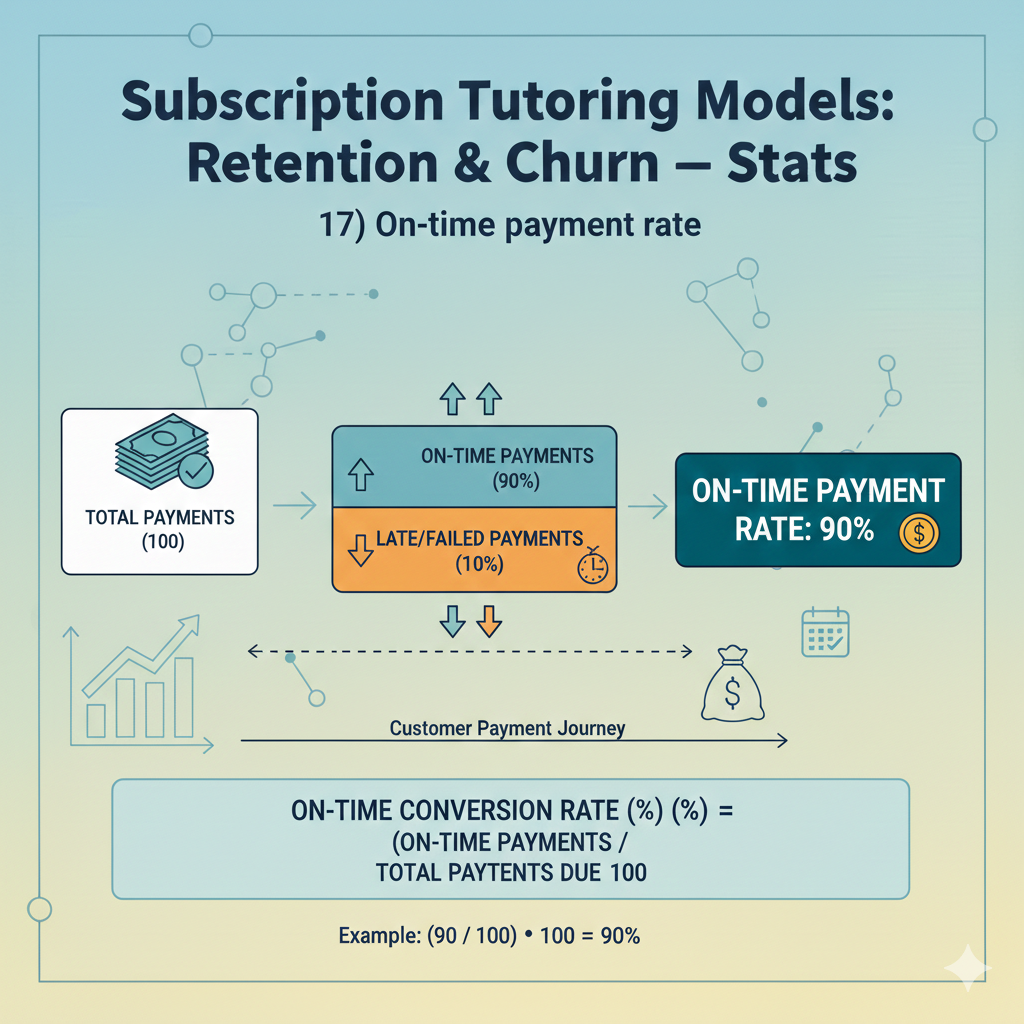
17) On-time payment rate
On-time payment rate is the percent of invoices paid by or before the due date. You find it by dividing on-time invoices by total invoices for the month, then turning it into a percent. This stat may look boring, but it protects your cash flow and your team’s time.
A high rate means families understand billing and find it easy. A low rate creates stress, extra emails, and accidental churn. In tutoring, billing must be as calm and clear as the teaching.
Raise this rate by making the whole billing flow simple. Use plain language on the checkout page. Share the plan name, renewal date, and what is included in a single, short paragraph. Send a friendly reminder three days before renewal.
Include the next month’s learning focus so the note feels helpful, not just a bill. Offer one-click updates for cards and let parents choose their renewal day inside a small window so it matches their pay cycle. If a payment fails, retry softly with smart spacing over a week.
Pair retries with kind, short messages that include a direct link to update the card. Avoid scary words. Keep the tone human.
Track on-time rate by plan, country, and payment method. If one payment method has more delays, guide families toward the smoother option. If one plan has lower rates, check whether its renewal timing clashes with exam weeks or holidays and adjust.
Train support to solve billing issues in the first reply. Share a tiny checklist for parents who need help, and offer a quick call if needed. Consider a small thank-you perk for families with a long streak of on-time payments, such as a bonus practice pack.
Good billing builds trust. If you want a tutoring partner with clean, friendly billing and zero surprises, try Debsie’s free class and see how we keep money talk simple.
18) Involuntary churn rate
Involuntary churn rate is the percent of accounts lost because a payment failed and never got fixed. The family did not choose to cancel, but the subscription ended due to billing issues. You calculate it by dividing the number of accounts lost to failed billing by the paying base at the start of the month, then turning it into a percent.
This rate can hurt quietly because the student may still be learning and the parent may not notice the problem until it is too late. In tutoring, losing a student this way breaks the learning rhythm and the relationship.
To lower involuntary churn, fix payment failures fast and kindly. Use a smart dunning schedule that retries the card several times over a week or two, starting with a short delay. Send short, human messages that say what happened and offer a one-click card update.
Include a promise that the student’s spot and schedule will be held during the retry window. Add an in-session reminder for the tutor to mention the issue gently if the parent is present, focusing on keeping the lessons on track. Offer backup methods like a second card or bank method during signup to add resilience.
Give parents control by letting them update details from a simple, secure link without logging in. Show a banner in the parent portal with a calm message and the exact steps to fix the issue. If a failure happens near exam time, consider a temporary grace period so the student does not miss study sessions.
Track involuntary churn by card type, bank, and country. Share tips at signup, such as using a long-lived card or enabling bank alerts. Review your billing language to remove jargon and keep it friendly. Every saved account keeps a child on their learning path.
If you want a team that guards your child’s lessons from billing hiccups, book a Debsie trial and see how we handle the boring parts with care.
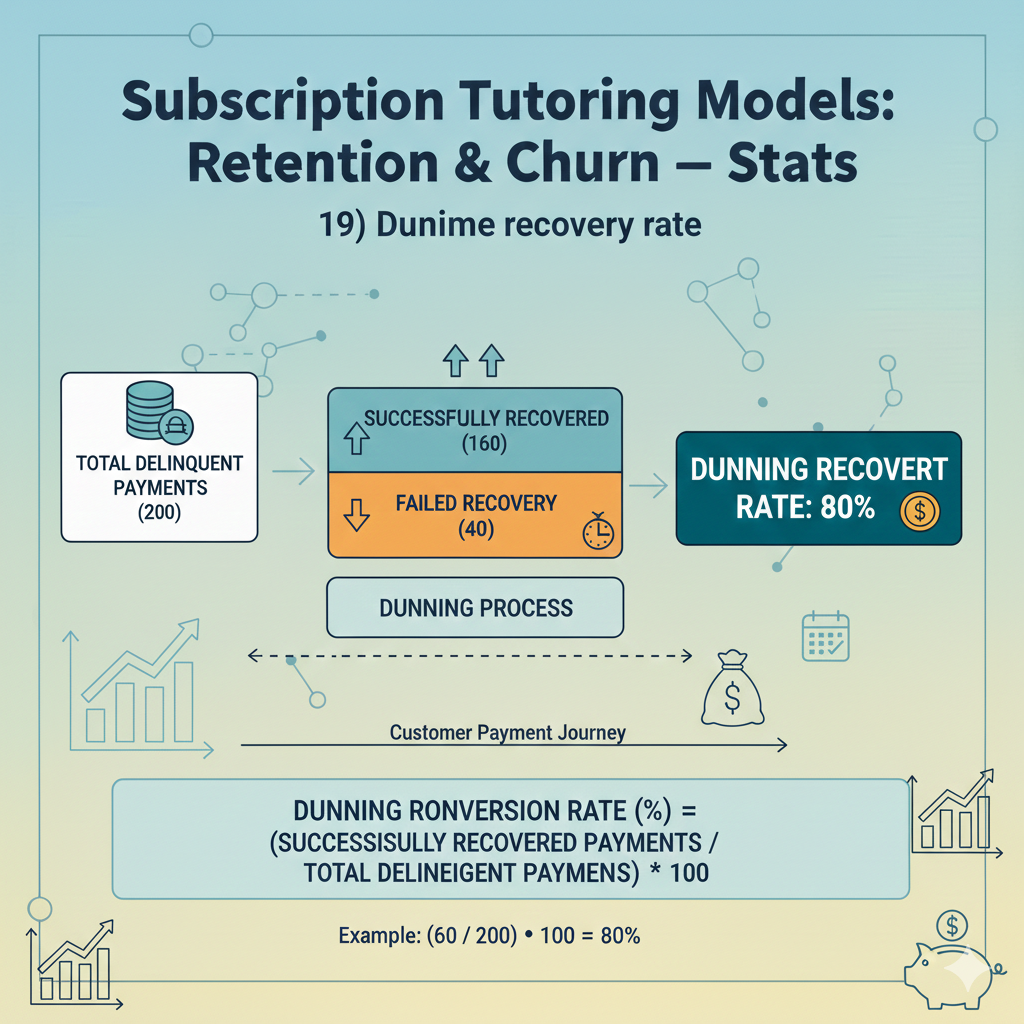
19) Dunning recovery rate
Dunning recovery rate is the percent of failed payments that you fix through retries and reminders. You get it by dividing the number of invoices recovered after failing by the total number of failed invoices in that period, then turning it into a percent.
A high recovery rate means your reminders work, your links are easy to use, and parents trust the process. A low rate means you are losing students who did not mean to cancel. In tutoring, every unnecessary break hurts learning, so this number matters a lot.
Build a calm, friendly recovery flow that protects the student’s routine. When a payment fails, wait a short time, then retry the card. Send a short message that explains what happened and offers a one-click link to update details.
Keep the tone human and polite. Include the child’s schedule and confirm that their time slot is safe while you try again. If a second retry fails, send a second note the next day and a third note a few days later. Do not spam.
Keep each message simple and helpful. If you can, allow a backup payment method at signup, such as a second card or a bank method, so the system can switch if one fails. Let parents set a preferred renewal day so the charge does not clash with bill cycles.
Make updates painless. Parents should not need to log in or fill long forms. A secure link that opens to a single screen with the card update fields is best. If the parent portal shows an alert, keep the words kind and the steps short.
Train your support team to fix payment issues in the first reply and to avoid jargon. Tutors should be briefed to handle these moments with care, keeping the student calm and focused. Track your recovery rate by country, card type, and payment processor.
If one group lags, try different retry times or clearer language. When you raise your recovery rate, you keep more students learning and protect your revenue without pressure. If you want billing that feels invisible and kind, join a Debsie free trial and see how we keep lessons steady even when cards misbehave.
20) Pause rate
Pause rate is the percent of students who pause their plan instead of canceling. You calculate it by dividing the number of paused accounts in a month by the number of paying students at the start of that month, then turning it into a percent.
A healthy pause rate is a safety valve. Life gets busy. Kids travel. Exams change schedules. A pause gives families room without losing the relationship. If you do not offer pauses, many families will cancel, and getting them back later is harder.
Design a gentle pause system that protects momentum. When a parent asks to cancel for time reasons, offer a pause with a clear end date. Let them choose one, two, or four weeks, with the plan to restart on a set day. Before the pause begins, send a tiny home plan that keeps the habit alive, such as a ten-minute practice sheet each week.
Add a quick check-in near the end of the pause to confirm the restart time and any schedule changes. Make it easy to shorten or extend the pause within a small window, but always keep a target restart date so the plan does not drift.
Use pauses to learn. Tag the pause reason and review patterns. If many families pause during sports season, offer a seasonal cadence with shorter sessions for those months. If travel is common in certain breaks, create a travel kit with offline practice and short video tips.
If energy drops mid-term, plan a fun project during that stretch to keep interest up. Communicate clearly about billing. Explain that the subscription will stop charging during the pause and will resume on the restart date, with a reminder three days before.
A good pause path builds trust and keeps the door open. When families return, welcome them back with a quick restart session that reviews skills and sets the next goal. If you want a tutoring partner that works with your calendar rather than against it, try a Debsie class and ask about our flexible restart plans.
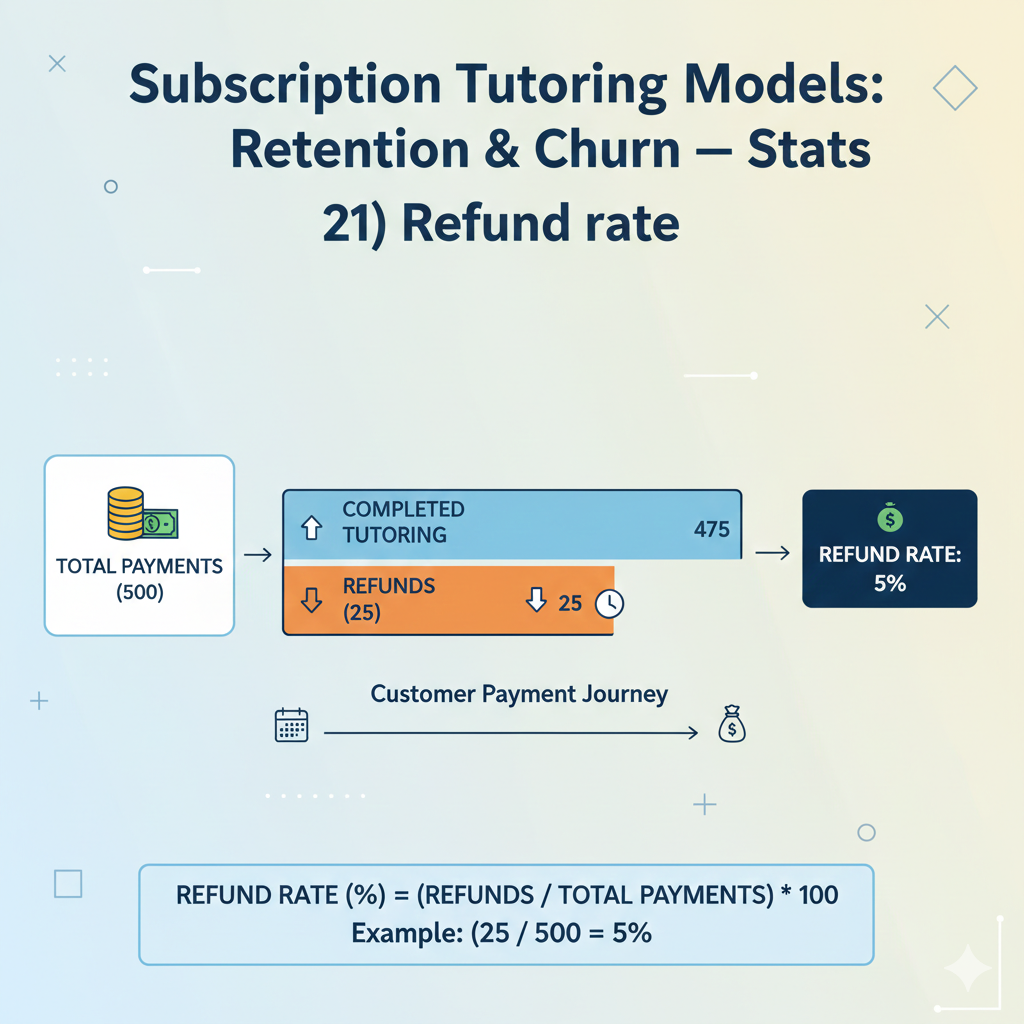
21) Refund rate
Refund rate is the percent of charges you send back to families. You get it by dividing the total refunded amount by the total amount charged in that period, then turning it into a percent. Refunds happen for many reasons, like billing errors, missed expectations, or schedule issues.
A small, steady refund rate is normal. A rising rate is a warning that your promises and delivery are out of sync or your billing is confusing. In tutoring, refunds can also signal parents who feel the child did not learn or did not enjoy sessions. You should study this number closely.
Start by making sure your promise is clear and honest. Use plain words to describe what each plan includes and what results to expect by certain weeks. During checkout, show the next billing date and what happens if they cancel or pause.
Send a friendly reminder before renewal with the focus for the next month. After each session, share a short summary so parents see the work and the progress. Many refund requests fade when parents understand the value and feel in control.
If a refund request still comes, respond fast, listen well, and be fair. Offer a quick call to understand the root cause. If the issue is a tutor fit, propose a switch and a free reset session. If the issue is schedule, adjust the time and share a plan that works for the family.
If you made a mistake, own it and make it right with a credit or refund. Kindness and speed turn a tense moment into trust.
Reduce refund rate by setting a strong first week. The trial should deliver a tiny win and a simple plan for the next month. The first few full sessions should follow a pattern that the student recognizes and enjoys. Watch for early signs of trouble, like missed homework or low mood, and step in quickly.
Keep prices and policies simple so families do not feel tricked. Measure refunds by reason, subject, tutor, and time of year. Fix the top cause and share the change with your community. Over time, a lower refund rate means your promise and your delivery match.
If you want a team that values clear promises and quick fixes, book a Debsie free trial and experience our care in the first week.
22) Lesson attendance rate
Lesson attendance rate is the percent of scheduled lessons that students actually attend. You get it by dividing the number of lessons attended by the number of lessons scheduled, then turning it into a percent. If a student books eight sessions and attends six, their attendance rate is seventy-five percent.
This number is a direct measure of habit. When attendance is high, learning is steady, skills grow, and parents feel they are getting the value they paid for. When attendance drops, progress slows, students feel behind, and churn risk rises fast.
To raise attendance, make the routine easy to keep. Offer time slots that match family life, not just your team’s calendar. Let parents choose a primary slot and a backup slot each week. If life gets busy, they can switch to the backup with one click up to twenty-four hours before the session.
Send friendly reminders the day before and two hours before, with the link and materials in the same message. Keep these notes short and warm. If a student misses a session, follow up right away with a short plan to catch up and a link to rebook. Do not let gaps stretch into weeks.
Help students want to show up. Start sessions with a quick win, like a tiny puzzle or a review question the student can solve. End sessions with one clear next step the student is proud to try. Share that step with the parent in a short message so the home routine stays aligned.
Track attendance by day, time, tutor, and subject. If a time slot has more no-shows, offer a different pattern, such as two shorter sessions instead of one long one. If younger kids miss late evening slots, move them earlier. If older students fade on weekends, try early mornings with calm, focused work.
Celebrate streaks with simple notes and small badges inside the portal. Habit grows with praise and clear next steps. If you want a team that builds attendance through joy and structure, try a free Debsie class and see how easy it is to keep the rhythm.
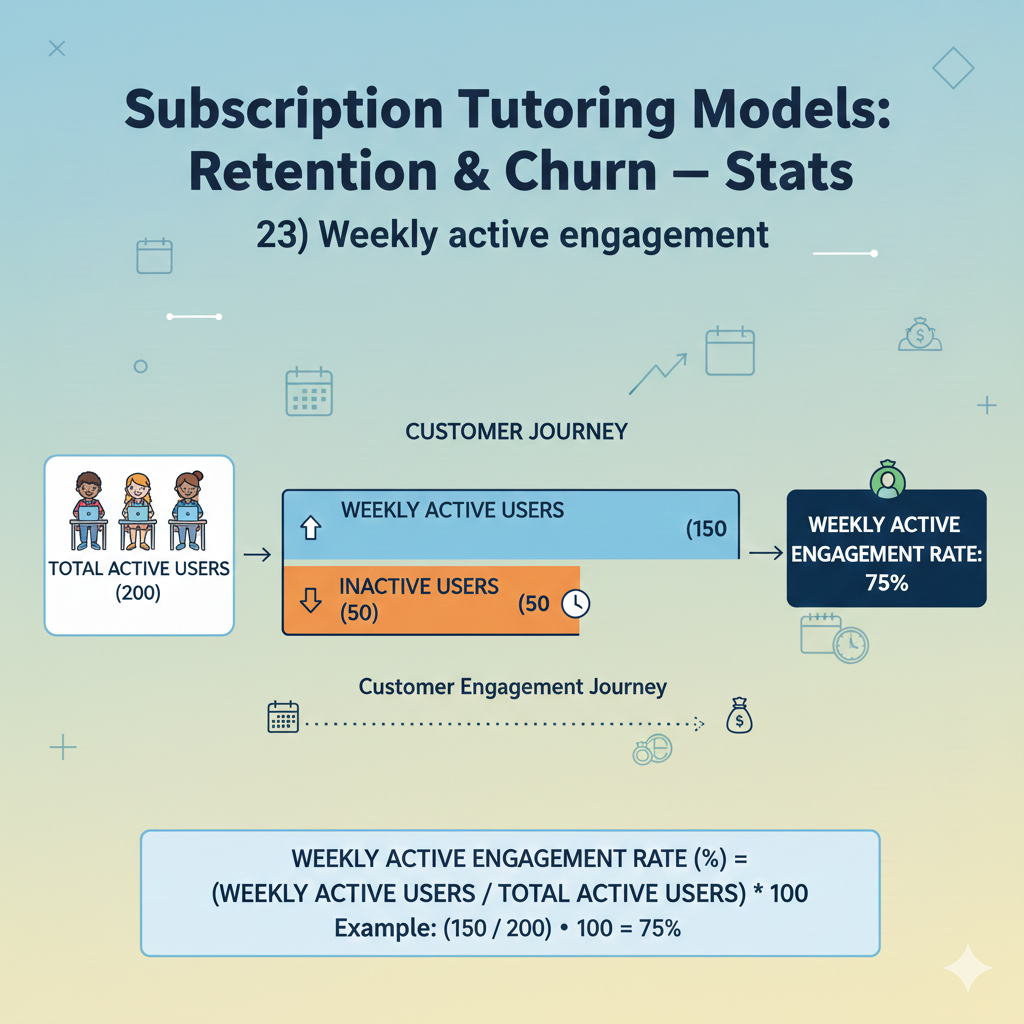
23) Weekly active engagement
Weekly active engagement is the percent of paying students who log in or attend at least once in a week. You find it by dividing the number of active students in the week by the total paying base, then turning it into a percent.
This stat is broader than attendance because it counts any meaningful touch, such as a live session, a practice module, or a quick quiz. High weekly engagement keeps the learning loop alive. Students remember what they learned, feel small wins, and stay curious.
Low engagement signals growing risk. When weeks pass without action, the road back feels long, and churn becomes likely.
To raise weekly engagement, design your program so even a busy week has a small, easy action. Offer a ten-minute practice set that reviews last week’s lesson. Add short video tips students can watch on the go. Send a Monday note with the week’s tiny goal and a Friday nudge to reflect on what went well.
Keep content bite-sized and friendly. Use a calm tone that makes students feel safe to try, not judged for missing work. Build streaks that count any meaningful action, not just full sessions, so the habit feels achievable.
Spot drop-offs early. If a student misses one week, send a kind check-in asking what got in the way and offer a plan for a simpler week. If they miss two weeks, have the tutor call the parent for a quick reset.
Adjust the pace, try a new time, or add a fun mini project linked to the student’s interests. Track weekly engagement by grade and subject. Younger learners may need playful prompts, while exam students may respond to a checklist with dates.
Keep the parent in the loop with a simple weekly message that names one win and one next step. When families see the loop working, they stay active and stay subscribed. If you want a partner that keeps your child gently moving forward every week, start a Debsie trial and feel how small steps add up.
24) Sessions per student per week
Sessions per student per week is the average number of live or guided sessions each student completes in a week. You calculate it by dividing the total sessions delivered by the number of active students in that week. This stat links to pace and depth.
Too few sessions, and skills fade between meetings. Too many, and students feel tired and parents feel pressure. In tutoring, a steady cadence beats bursts of activity. The right number depends on age, subject, and goal, but the aim is consistent practice that fits real life.
To optimize this metric, define recommended cadences for each student type. Younger students often thrive with two short sessions per week plus a tiny home task. Older students aiming for exams may prefer one longer lesson and one review session.
Coding and science projects might use one mentor session plus independent build time with a quick check-in. Share the plan with the parent and explain why this cadence works. Keep sessions timed to energy. Shorter, focused lessons with clear starts and stops lead to better attention and less friction.
Make it easy to keep the cadence when life changes. Allow quick reschedules within the same week and offer a rolling session window for makeups. If a student misses a session, assign a short catch-up task so the next lesson does not feel heavy.
Review session records monthly and adjust the cadence when goals shift. If a student is cruising, keep the pace steady and add a small challenge. If a student is struggling, try breaking one long session into two shorter ones.
Track sessions per student by tutor and subject. Coach tutors who run too long or too short, and share examples of well-paced lessons. When the cadence fits the child, confidence builds, and families stay.
If you want a plan shaped around your child’s energy and goals, book a Debsie free class and let us craft a weekly rhythm that lasts.
25) Homework and assignment completion rate
Homework and assignment completion rate is the percent of assigned work that students actually finish. You find it by dividing the number of tasks completed by the number of tasks assigned in the same period, then turning it into a percent.
This number shows if learning continues between sessions. When completion is high, students practice skills while the ideas are still fresh. When it is low, the next lesson starts with catch-up, energy drops, and churn risk rises because parents do not see steady progress at home.
Make homework light, clear, and quick. Aim for tasks that take fifteen to twenty minutes, not an hour. Give one main problem set or one small project step, not many scattered items. Provide a worked example at the top, show common mistakes, and share a short checklist so the student knows when they are done.
Offer two levels of challenge inside the same sheet so strong days and tired days both get a win. For younger learners, add a visual timer and a fun name for the task to make it feel like a game.
For older students, end with one reflection question that asks, “What step was hardest and how did you solve it.” This builds awareness and pride.
Remove friction from the handoff. Post homework right after the lesson in the same place every time. Send a short message to the parent with the due date and an honest time estimate. Accept photo uploads from a phone, not just files, so families can submit fast.
Give feedback within forty-eight hours and keep it short, kind, and specific. Praise the exact step that improved and point to one tiny thing to fix next. Track completion by student, tutor, day of week, and subject. If a pattern shows low completion on certain days, move the due date.
If a student struggles to start, teach a five-minute starter habit: open the sheet, do the first two items, and stop. Starting is half the battle. When homework feels doable and feedback is fast, students keep going.
If you want a tutoring partner who designs simple, high-impact practice your child will actually finish, try a Debsie free class and see our homework style.
26) Tutor match stability
Tutor match stability is the percent of students who stay with the same tutor for eight or more weeks. You calculate it by dividing the number of students with a stable match by the number of active students, then turning it into a percent.
A stable match builds trust, speeds learning, and makes sessions feel easy to start. Frequent switches break rhythm, confuse the parent, and raise churn. Stability does not mean you never switch; it means you switch with care and for a good reason.
Raise stability by getting the match right from day one. During onboarding, ask about the student’s interests, energy level, and learning style. Some kids like fast pace and challenge. Others need calm steps and lots of practice. Use that info to pick a tutor who fits the vibe, not just the subject.
In the first two weeks, watch for signals of a strong match. The student shows up on time, smiles more, and talks a bit more each session. The parent replies faster and mentions fewer worries. If the match feels off, act quickly.
Do a warm handover with both tutors present. Share notes on what worked, what did not, and the next month’s goals. A thoughtful switch can save the relationship and even boost trust because the family sees you care.
Help tutors stay consistent with a simple session template they can personalize. Start with a check-in, review last week’s task, teach one focused idea, practice, and close with a tiny home step. Give tutors a monthly coaching huddle with examples of great pacing, clear language, and warm encouragement.
Share what the parent values most and how to show it, like quick progress notes or a short recap video. Track stability by tutor and subject and support tutors whose stability dips. Offer schedule tools so tutors can hold key slots for their students.
When the match is steady, students relax, parents see growth, and retention rises. If you want a team that treats tutor matching like an art and a science, book a Debsie trial and meet a teacher who fits your child’s style.
27) Support response time to first reply
Support response time to first reply is the median time it takes your team to answer a parent’s first message. It is measured in minutes or hours. This stat matters because problems grow when parents wait. A fast, kind first reply calms worry, saves sessions, and prevents cancellations.
A slow reply tells families they are on their own. In tutoring, many issues are simple, like a link that will not open or a small schedule change. Solving them fast keeps the learning plan intact.
Cut response time by giving families easy ways to reach you and by routing messages smartly. Offer one inbox for parents with clear hours of service and an emergency tag for same-day lesson issues. Set up an auto-acknowledgment that is short and human, not robotic.
It should confirm you got the message and share the likely window for a full answer. Build a small library of clear replies for common cases such as reschedules, link resets, billing questions, and homework access.
Keep templates friendly and short, and personalize the first line so it does not feel canned. Empower your team to fix small issues without escalations. The more problems your frontline can solve in one message, the faster the loop closes.
Make it easy for tutors to help. Give them a clean view of schedule, lesson links, and student notes, so they can jump in when a parent pings them. When an issue might impact an upcoming lesson, alert the tutor right away, not after the ticket is closed.
Measure response time by hour of day and day of week to staff wisely. If evenings are busy for your families, extend coverage then. Ask families after each solved case if the reply was fast and helpful using a one-tap rating and a tiny comment box.
Coach your team with real examples. Praise answers that are clear, warm, and complete. Fix ones that are vague or slow. Fast, kind support saves revenue and builds loyalty. If you want a partner who replies quickly and gets it right the first time, try Debsie’s free class and chat with our team about your child’s needs.
28) Cancellation reason distribution
Cancellation reason distribution shows the share of cancels across the top causes, like price, schedule, results, tutor fit, or platform issues. You can list each reason and the percent of cancels it caused in the last month or quarter.
Seeing the spread helps you fix the right thing first. If thirty-five percent leave for price, your value story is weak or your tiers do not match real needs. If twenty-five percent leave for schedule, your time slots clash with family life.
If twenty percent leave for results, your progress proof is missing or goals were not clear. Numbers turn noise into a plan.
Collect reasons in a kind, short flow. When a parent clicks cancel, ask one multiple-choice question with an optional text box. Keep choices simple and specific. If they pick price, ask if it felt too high for the value or if money is tight right now.
If they pick results, ask if the child did not improve or if improvement was not visible. If they pick schedule, ask if the issue was day, time, or session length. One more click gives you gold. Follow up with a thank-you note and a save option that fits the reason, such as a short goal sprint for results, a flexible slot for schedule, or a temporary credit for money stress.
Act on the top reason with a focused fix. For price, rewrite plan pages around outcomes and proof, not features and minutes. Add a seven-day upgrade trial so families can feel the difference. For schedule, offer a primary and backup slot each week and an easy swap window.
For results, install a simple progress ritual: weekly notes with one clear win, a monthly summary with a learning map, and a small milestone project every six weeks. Share your fixes with current families so they know you listen.
Review the distribution each month and celebrate when the top reason shrinks. At Debsie, we study cancel reasons like scientists and then ship small, quick improvements that families can feel right away. If you want a partner that learns fast and adjusts to you, try a free Debsie class and see our approach in action.
29) Referral rate
Referral rate is the percent of new paying students who came from a current customer’s recommendation. You find it by dividing referred new payers by total new payers, then turning it into a percent. A strong referral rate means parents trust you and students talk about their wins.
It also means lower acquisition costs and higher retention, because referred families arrive with warm belief and better fit. In subscription tutoring, this is one of the healthiest growth engines you can build.
Make referrals easy, honest, and generous. Give every parent a simple share link they can pass to a friend with one message. Do not make them fill long forms. Offer a thank-you that feels kind but fair, like a one-time credit after the friend completes their first full month.
Avoid stacking rewards in a way that looks like a gimmick. Keep the tone about helping a friend, not getting a prize. Equip parents with a tiny story they can share, such as “My child now finishes math without tears; the weekly plan and small wins really helped.” Stories move people more than features.
Spark shareable moments. Send short progress videos where the student explains a concept in their own words. Parents love to share these with family and friends. Run simple seasonal events, like a month-end demo day or a mini code challenge, and invite friends to watch.
Follow up with a calm, helpful trial invite. Track referral rate by subject and cohort to learn what experiences create the most word of mouth. Coach tutors to ask for referrals at the right time, after a clear milestone, and to do it with warmth and gratitude.
When a referred family joins, roll out a smooth first week so the person who referred you feels proud. If you want to experience a program that grows because parents are happy, not because ads shout, join a Debsie trial and see why families tell their friends.
30) Price increase retention
Price increase retention is the percent of students who stay sixty days after a price change. You calculate it by dividing the number of payers still active two months after the increase by the number of payers who were affected by the increase, then turning it into a percent.
This metric shows your pricing power and your trust level. If most families stay, they feel the service is worth it and the change was handled with care. If many leave, the price outgrew the perceived value or the change felt sudden or unclear.
Protect retention with clear, early, and honest communication. Announce the change at least thirty days ahead. Explain why you are adjusting the price in plain words, such as better tutor pay to keep great teachers, improved curriculum, or added features like monthly progress videos and flexible reschedules.
Show what is new and how it helps their child next month, not just in theory. Keep the notice short. Share the current price, the new price, the date it starts, and what the family needs to do, which is usually nothing. Offer a direct line for questions and reply fast with kindness.
Give options that respect the family. Offer to lock the old price for one more billing cycle if they need time, or let them switch to a smaller plan that still supports steady learning. If the family is in a tough moment, consider a short bridge credit.
Do not hide the change or rush it. Pair the increase with visible quality. In the same month, send stronger progress notes, add a mini milestone, or run a parent Q&A with lead tutors. Track who stays, who downgrades, and who leaves.
Read every comment. Use what you learn to tune plan design and communication next time. When handled well, price changes can deepen trust because families see you improving and explaining with care. If you want a tutoring partner that earns every raise with real value, start a Debsie free class and feel the quality in week one.
Conclusion
Strong subscription tutoring is not luck. It is daily care, clear promises, and steady follow-through. The thirty stats you saw are simple on purpose. Each one shines a light on a real moment in a family’s journey, from the first trial to a full year of learning.
When you measure them, you learn where joy grows and where frustration hides. When you act on them, churn falls, retention rises, and students build skills that last.