
The pandemic changed how children learn. It moved help from the kitchen table to the laptop screen. It pushed schools and families to try new tools. It also revealed what actually works when a child is stuck. In this article, we turn those hard years into clear lessons. We take real shifts we all saw and turn them into simple steps you can use today.
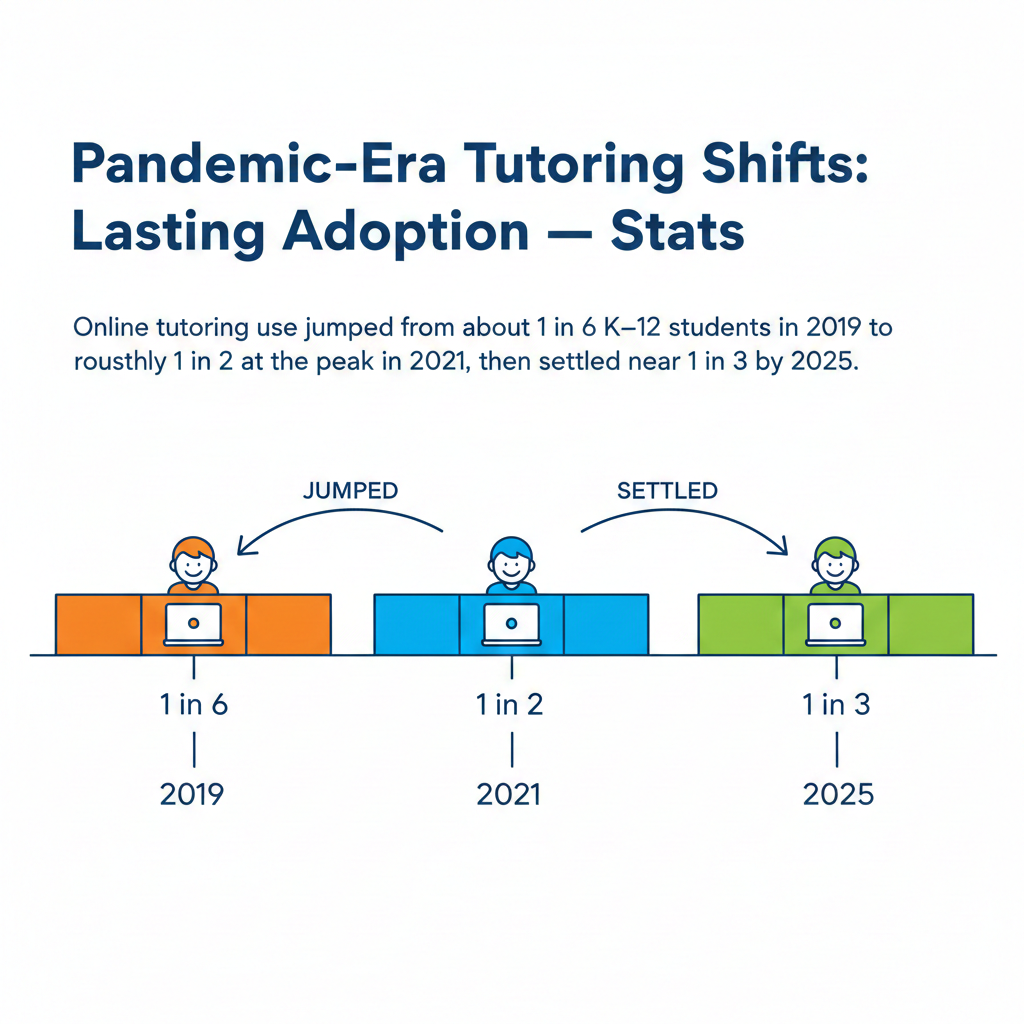
1. Online tutoring use jumped from about 1 in 6 K–12 students in 2019 to roughly 1 in 2 at the peak in 2021, then settled near 1 in 3 by 2025.
What this shift means for your child today
This rise tells us something simple and powerful. When school changed fast, families looked for direct help, and many found it online. Even after schools reopened, a large share stayed with online support because it saved time, matched busy schedules, and showed real results.
One in three students still using it by 2025 means online help is no longer a backup plan. It is now part of normal learning. That is good news for you because it means the tools, the platforms, and the teaching methods have grown up.
Tutors are trained for screen time. Lessons are built for clicks, taps, and quick demos. Support is ready when homework gets hard at 7 PM.
How to act this week
Pick one subject where your child feels shaky and set a simple goal for the next four weeks. Make it as clear as this: master fractions to the point of calm and accuracy. Book two to three short online sessions each week.
Keep each session focused on one tight skill. Ask the tutor to teach, then watch, then let your child do a problem alone, then explain it back. Keep the time and place the same for every session. Use headphones to block noise.
Keep a one-page tracker where your child marks each session done. The pattern builds momentum, and the tracker gives a quick win you can see.
How Debsie fits
At Debsie, we design short, focused live classes and pair them with self-guided missions your child can do right after a session. This keeps the learning loop tight. If you want to try this rhythm with a friendly guide, book a free trial at debsie.com/courses. Start with one class, set one skill goal, and see how it feels.
2. Schools that offered high-dosage tutoring (3+ sessions per week) saw reading and math recovery gains equal to about 3–5 extra months of learning in a year.
Why frequency beats intensity
Three or more touchpoints each week do something that a single long session cannot. They shorten the time a student spends feeling lost. They keep skills fresh so gaps do not widen between lessons. They also lower the pressure.
A child can try, stumble, and try again in the same week, which builds confidence brick by brick. Think of high-dosage not as more work, but as more chances to reset and succeed. The result is a steady climb that feels doable.
A simple weekly plan to copy
Choose Monday, Wednesday, and Thursday at the same time each day. Make each session thirty to forty minutes. Start with a two-minute warm-up problem your child can solve without help, so confidence rises at the start.
Next, learn one new idea for about fifteen minutes using worked examples and talk-through steps. Then, switch roles. Your child explains the steps back while the tutor listens and nudges. End with a three-question exit check.
If one is wrong, ask your child to say which step felt fuzzy. Keep notes on the sticky step so the next session can open with it. This format keeps the week light, leaves room for sports or music, and still gives the brain many small wins.
How Debsie helps you hold the cadence
We build schedules around school hours and family time zones to keep the three-session rhythm possible. Our live classes are short, and our practice missions are fun to clear in ten minutes.
If you want to test a high-dosage week without stress, start a free trial and we will map the three-day plan for you at debsie.com/courses.
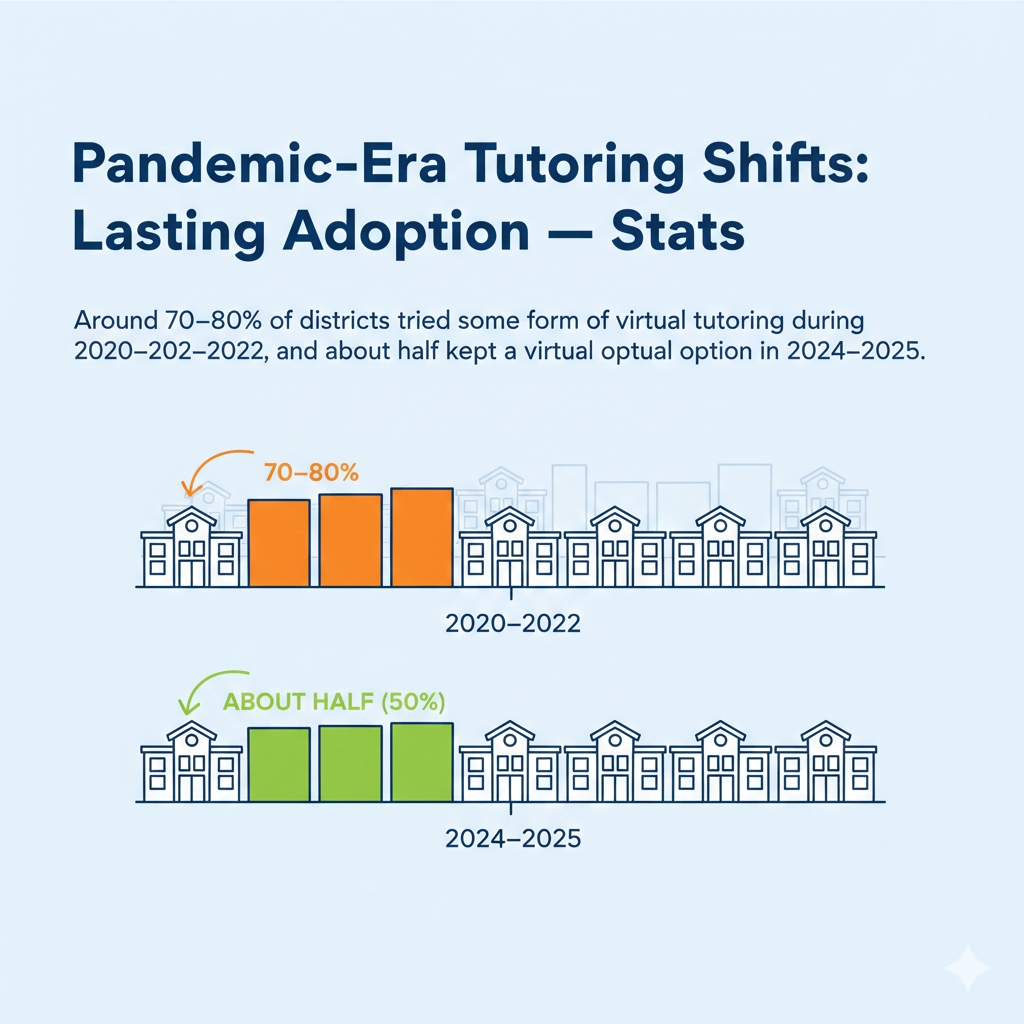
3. Around 70–80% of districts tried some form of virtual tutoring during 2020–2022, and about half kept a virtual option in 2024–2025.
What stayed and why it matters
When schools keep a tool even after the crisis fades, it means the tool works for many families. The fact that about half of districts still offer virtual help shows two strong benefits. First, access. Students can learn from a trusted adult even if they cannot stay late at school.
Second, coverage. When a student misses class or needs a concept retaught, virtual rooms can open fast, often the same day. For a parent, this means you do not need to wait weeks for a slot. You can get your child help when the struggle appears, not long after it has already hurt the grade.
Smart ways to combine school support and private help
Start by asking your school what virtual options exist right now. Note the days, times, and subjects. Build a map of help across the week. If school covers Tuesdays for reading, schedule math support on Thursdays with a trusted provider like Debsie.
If school offers on-demand chat help, use that for quick homework questions, then save live sessions for deeper reteaching. Share notes across both supports so everyone knows what worked. Keep one simple progress log that lists skill targets, last week’s exit scores, and next steps.
This makes all adults in your child’s world pull in the same direction.
Where Debsie plugs in
We play well with school offerings. Our teachers review class syllabi, align to current units, and fill the gaps school sessions miss due to limited time. If your district has virtual hours but your child needs a steadier guide, we can step in without overlap.
Explore schedule options and align them with school support at debsie.com/courses.
4. Average tutoring session length moved from 60 minutes in 2019 to about 30–45 minutes online, with more, shorter sessions each week.
The science of shorter sessions
Shorter blocks match how attention works on screens. Thirty to forty-five minutes lets a child focus, practice, and close strong before fatigue sets in. More sessions during the week keep skills active in memory.
The key is to plan each minute with care. A tight opener, a clear demo, a short guided try, and a brief independent check can all fit in this window when the goal is narrow. Short does not mean shallow. It means precise.
Build a 35-minute session that hits hard
Open with a friendly check-in and a quick review question. Name today’s goal in one simple sentence, like solve two-step equations with whole number answers. Model one problem while saying your thinking out loud.
Ask your child to point to the step where a mistake could happen and why. Do two together with your child leading the talk and the tutor writing. Drop into one independent problem while the tutor watches.
Close with a reflection where your child tells what felt easy, what felt tricky, and what step they will watch next time. Save the last three minutes to plan the exact practice for tomorrow. End on time to build trust that sessions do not drag.
Try it with Debsie
Our live classes use this tight clock. The design keeps energy high and keeps wins close. Pair each class with a ten-minute game-like mission in our platform to lock knowledge in place. If you want to see a short session done well, book a free trial now at debsie.com/courses.
We will show you the format, then hand you a template to use at home.
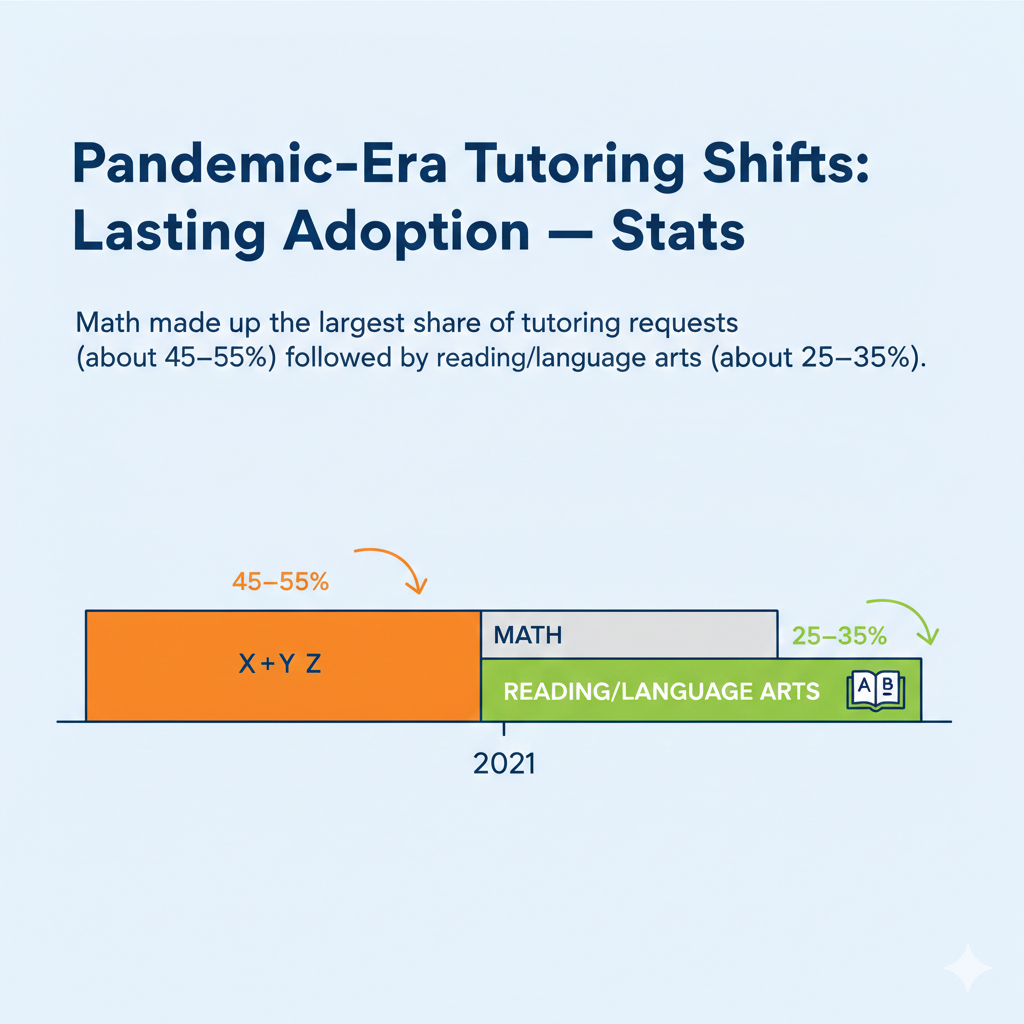
5. Math made up the largest share of tutoring requests (about 45–55%), followed by reading/language arts (about 25–35%).
Why math leads and how to respond
Math often triggers worry because one missed idea can block the next. Fractions link to ratios, which link to algebra. When that chain breaks, grades slip fast. Reading grows in layers too, but families often notice math gaps sooner because homework has clear right or wrong answers.
Knowing that nearly half of tutoring demand sits in math helps you set priorities. Start where the pain is sharpest, but keep literacy close so word problems and science texts do not become hidden traps. A balanced plan moves the needle in both areas without burning out your child.
A two-track plan you can start this week
ick one math strand and one reading skill for a four-week sprint. For math, choose a narrow target such as multi-digit division with remainders or linear equations with one variable. For reading, choose a practical skill such as finding the main idea or tracking evidence.
Book three short math sessions and one reading session each week. In math sessions, use the I-do, we-do, you-do arc with a small set of problems and a lot of talk about steps and checks. In reading, use short texts tied to current classes and practice turning questions into simple frames like the text says, so.
Keep a single progress sheet with two rows, one for math and one for reading, and log tiny wins after every session. When your child sees both lines rising, confidence spreads across subjects.
How Debsie supports both lanes
At Debsie, our teachers link math and reading so progress in one helps the other. We teach math vocabulary in simple words and train students to explain steps in clear, short sentences.
We also include quick reading workouts built from real math problems. This cross-training lowers stress and saves time. If you want a clean two-track plan, join a free trial at debsie.com/courses and we will set it up for you.
6. About 2 in 3 middle schoolers used chat-based help or homework hotlines at least once per month during remote learning.
What this tells us about on-demand support
Middle school is the moment when work becomes more independent and deadlines stack up. Many kids do not need a full lesson every time they are stuck. They need a quick nudge at the right minute. The high use of chat and hotlines shows that speed matters.
A timely hint can prevent a small confusion from turning into a large block. It also shows that students like help that feels low-pressure. When the ask is simple and the answer is fast, they are more likely to reach out before frustration rises.
Build a smart help ladder at home
Create a clear order for getting help. Step one is a self-check routine. Teach your child to read the question aloud, underline key words, and try one step. Step two is a trusted tool such as class notes, a worked example, or a short replay of a lesson.
Step three is on-demand chat with a tutor for a tiny nudge, not a full walk-through. Step four is a live session booked for the next day to reteach the core idea. Post this ladder near your child’s study spot.
Praise the act of asking early, not the act of waiting. Track which questions keep coming up so you can plan a mini lesson that closes the root gap instead of treating the same symptom again.
Where Debsie fits in that ladder
Debsie gives students quick help inside the platform, then turns those moments into tiny missions that practice the exact step they missed. If the same type of question repeats, we suggest a live class to seal the gap.
This keeps the help small when small is enough, and deeper only when needed. Try it in a free trial and see how the ladder reduces stress while keeping work moving at debsie.com/courses.
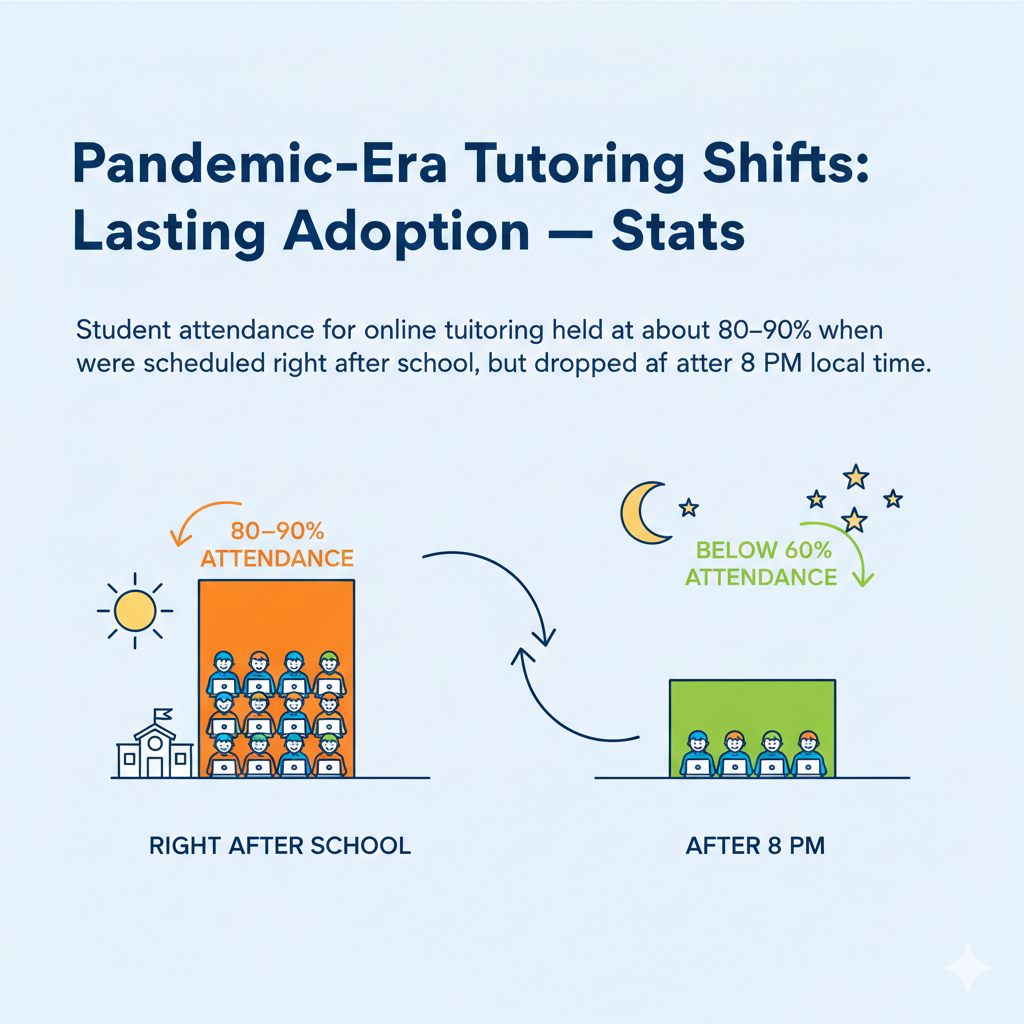
7. Student attendance for online tutoring held at about 80–90% when sessions were scheduled right after school, but dropped below 60% if scheduled after 8 PM local time.
Timing is not a detail; it is a driver
Attendance tells the truth about a plan. Right after school, kids still carry the day’s ideas in their heads. They are not yet pulled into dinner, sports, or screens. This is when focus is strongest. After 8 PM, energy dips, family routines collide, and small tech issues feel big.
The sharp drop shows that even the best lesson will fail if the clock fights the body. The good news is you can fix timing faster than you can fix content. A small shift in schedule can lift attendance and learning without changing the curriculum at all.
Set a clock that protects focus
Aim for a start time within sixty to ninety minutes of dismissal. Keep the routine steady across days so the brain expects to switch into study mode. Have a snack and a short break first, then sit down with water, headphones, and all materials ready.
End before dinner. If your family schedule forces later sessions, shorten them and make them lighter, focusing on review rather than new ideas. Use a visible countdown timer on the screen so your child sees the finish line.
Track attendance for two weeks. If you see any slip below eighty percent, change the start time before you change the tutor or the topic.
How Debsie schedules to win
We offer many time slots right after school hours in each time zone so families can choose the window that works. Our lessons are short by design and end on time. We also make it easy to reschedule within the same afternoon if a small delay pops up.
To find an after-school slot that sticks, check openings now at debsie.com/courses and claim one that fits your week.
8. Turning cameras off was common: in many programs, 40–60% of online sessions had at least one student with video off, without clear loss in outcomes.
What camera use really signals
Video can help build trust, but it is not the only way to learn well. Many students feel safer focusing on the work when they are not on display. Others have bandwidth limits or shared spaces at home.
The fact that outcomes did not drop when cameras were off tells us that the quality of instruction and the clarity of tasks matter more than faces on a grid. What does matter is active engagement.
A quiet screen can still show strong thinking if the student is writing, annotating, or explaining steps through audio or chat.
Keep engagement high with or without video
Set norms that focus on actions, not cameras. Ask the tutor to use shared whiteboards and live document edits so your child’s thinking is visible in writing. Use frequent turn-and-tell moments where your child speaks their plan for the next step before doing it.
Add quick polls or yes-no checks every few minutes to keep the pace lively. If your child prefers camera off, agree on moments when it turns on briefly, such as at the start to say hello and at the end to reflect.
Celebrate the work shown on the screen, not the face in the frame. If bandwidth is tight, keep video off for both sides and invest the saved data in a crisp audio connection and fast screen share.
How Debsie balances comfort and connection
We respect each child’s comfort while keeping learning visible. Our teachers use digital ink, shared scratch pads, and structured talk. We also coach students to speak in short, clear sentences that show their thinking.
If your child is shy on camera but ready to grow, we will meet them where they are and still deliver strong gains. Try a low-pressure session by booking a free trial at debsie.com/courses.
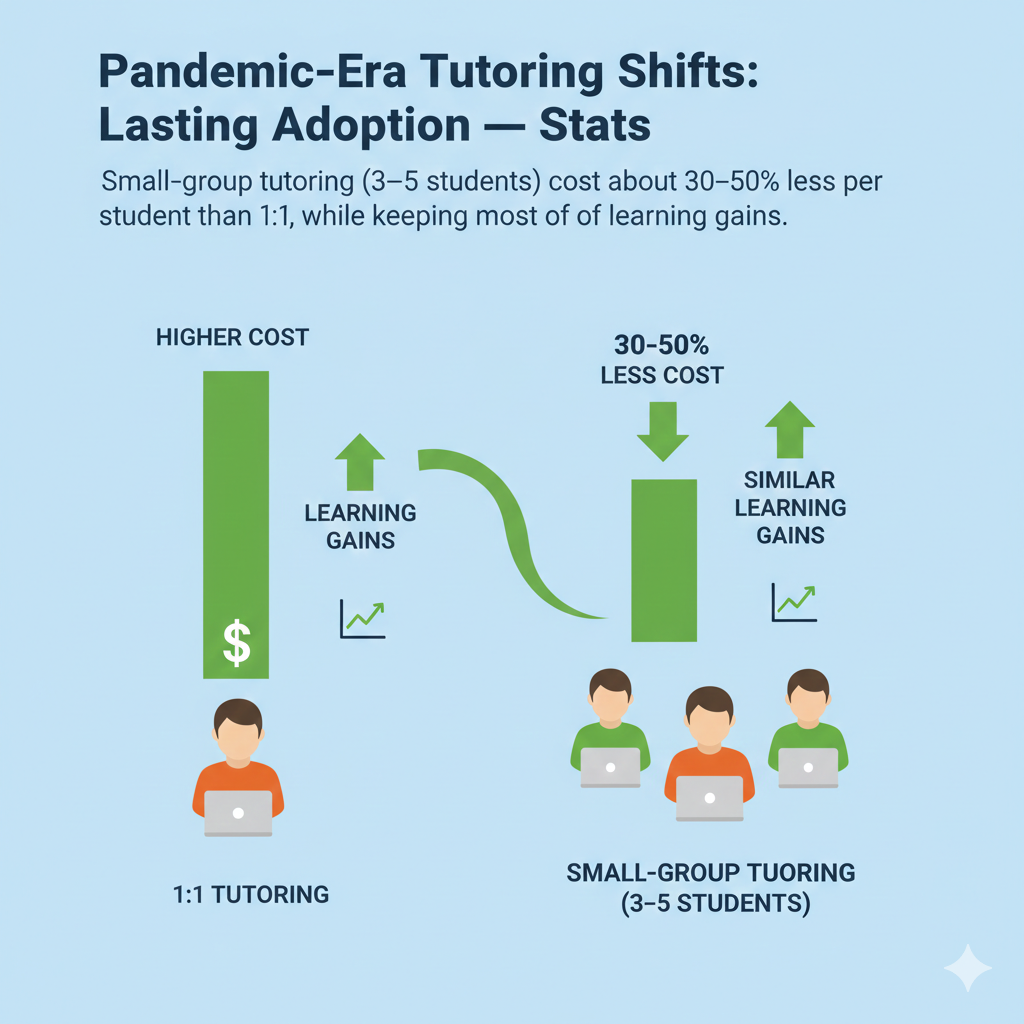
9. Small-group tutoring (3–5 students) cost about 30–50% less per student than 1:1, while keeping most of the learning gains.
Why small groups work and when to choose them
A small group gives students a safe way to practice talking through ideas while keeping the cost friendly. With three to five learners, the tutor can still spot confusion in real time, and there is enough peer energy to keep the pace lively.
Students hear other kids ask the same questions they have, which lowers shame and raises courage. They also learn to explain steps to a partner, which locks knowledge in place. The key is to keep the group truly small and matched by skill level.
When groups drift too wide in ability, the faster students rush ahead and the quieter ones fall back. When the match is tight, everyone moves together and confidence grows.
How to set up a strong small-group plan
Start by placing your child using a short skill check, not just age or grade. Pick a narrow goal for a four to six week block so each meeting can build on the last. Ask the tutor to rotate roles so every student leads, listens, and questions.
Use a simple rule for talk time, like thirty seconds to explain a step before another student takes over. End each session with a quick round where each child names one thing they learned and one step they will watch next time.
Add a small at-home mission that takes under ten minutes and links to the next session. Review progress weekly to see who might need an extra one-on-one boost for a sticky skill.
How Debsie delivers value with small groups
At Debsie, we form tight groups by current skill, not just age. Our teachers plan short, high-energy lessons and use clear turn-taking so every child gets a voice. Families see most of the gains of one-on-one at a friendlier price.
If you want to try a matched group that fits your child’s level, book a free trial at debsie.com/courses and we will place your learner with care.
10. Parent satisfaction with online tutoring stayed high (around 70–85% reporting it “helpful” or “very helpful”) once tech glitches were reduced.
What drives trust after the tech hurdles
Early in the pandemic, many families fought sound issues, low bandwidth, and clumsy tools. When those rough edges smoothed out, parents judged what mattered most: clear teaching, steady schedules, and visible progress.
High satisfaction came from small wins stacking up week by week. Parents liked seeing their child calm down at homework time, speak more clearly about steps, and bring better quiz scores home. They also liked the saved travel time and the ability to join for a minute at the start or end to ask a question.
How to keep satisfaction high in your home
Do a five-minute tech check before the first session. Test audio, confirm the camera angle, and close extra tabs. Place the laptop on a steady surface and use wired headphones if you can. Keep a simple progress board near the study spot with two lines: this week’s goals and this week’s wins.
Ask the tutor to begin each session by naming the target in one sentence and to end by stating what clicked and what needs a quick review. Schedule a short parent-tutor touchpoint every other week to adjust goals.
If your child seems tense, lighten the session for a day and protect the relationship first. Satisfaction rises when learning feels doable and the plan fits the family rhythm.
How Debsie keeps things smooth for families
We built our platform to be light and simple. Sessions open in a clean room with shared tools ready. Teachers follow a tight start and close routine so you always know the plan. You can peek into progress any time and send a quick note to your teacher between sessions.
If you want a calm, parent-friendly setup, try a free trial at debsie.com/courses and feel the difference in the first week.
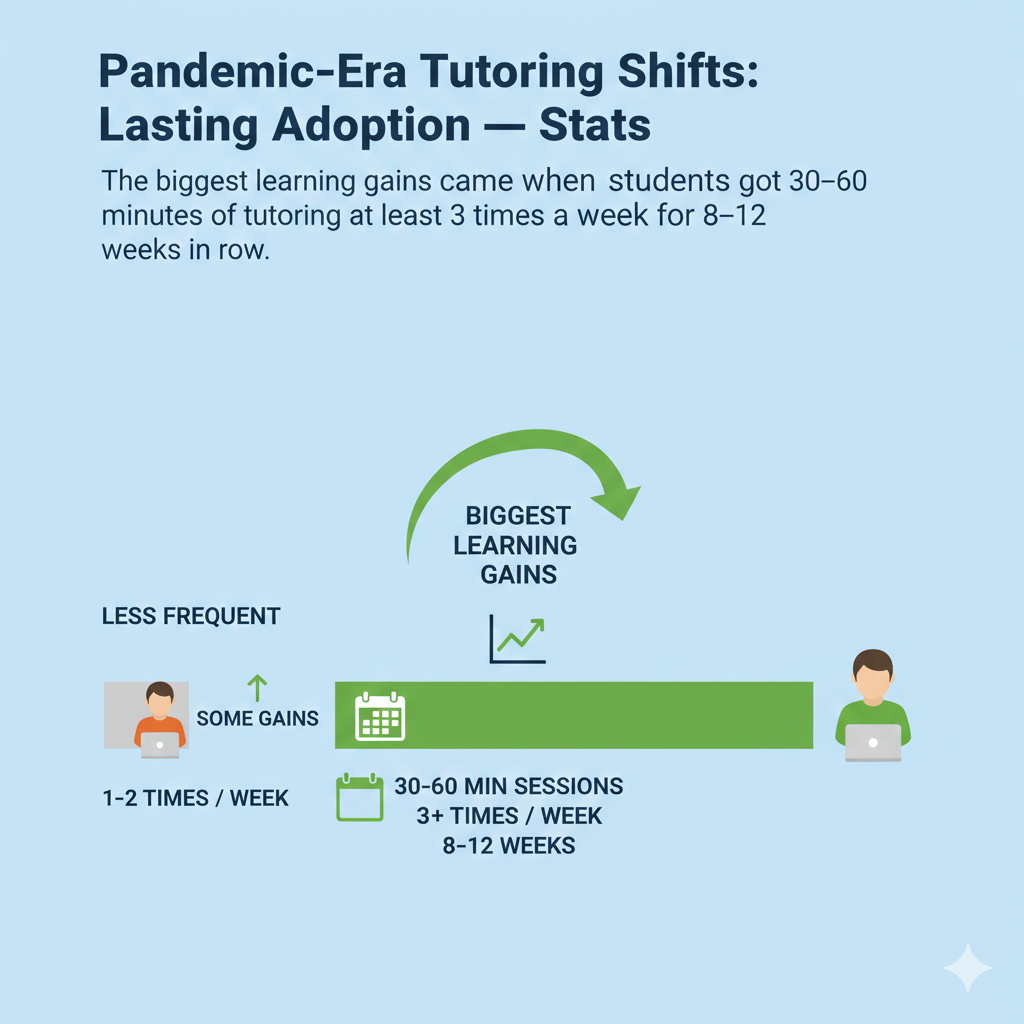
11. The biggest learning gains came when students got 30–60 minutes of tutoring at least 3 times a week for 8–12 weeks in a row.
Why this block length and cadence win
Learning sticks when practice is frequent and spread out over time. Three sessions per week give the brain repeated chances to work with the same idea in slightly new ways. Eight to twelve weeks is long enough to build true skill but short enough to feel near.
Short programs end before habits form; very long ones can drift. The thirty to sixty minute window allows time to warm up, learn, practice, and reflect without draining attention. Together, these choices turn a plan into a habit, and a habit into progress that shows up in class, not just in the tutoring room.
Build your twelve-week roadmap today
Pick one subject and a specific set of targets. For example, in math choose fraction operations, unit rates, and linear equations. In reading choose main idea, evidence, and vocabulary in context.
Map twelve weeks with a simple pattern: weeks one to four build core skills, weeks five to eight mix skills in real tasks, weeks nine to twelve apply skills to classwork and tests. Protect three sessions per week on the same days.
Use a short check at the end of each week to see if a target is ready to move on. If a concept is sticky, stay with it one more week and trim a later goal. Keep a record of wrong answers and label the step that failed so the next session can open on that one step.
How Debsie turns plans into habits
We use fixed meeting days, short focused missions between sessions, and friendly summaries after each class. Our teachers adjust the next lesson based on exit checks, so time is never wasted.
You see steady growth without guesswork. If you want a twelve-week plan built for your child, start a free trial at debsie.com/courses and we will map the path with you.
12. Programs that matched the same tutor and student every week saw 10–20% better attendance and stronger trust.
Why a steady match matters more than you think
Consistency builds safety. When a child meets the same tutor each time, they do not have to retell their story or pretend they are not confused. The tutor learns the child’s patterns, favorite examples, and tricky steps.
This saves minutes each session and lowers stress. Better attendance follows because the relationship is the anchor. Strong trust also makes feedback honest. A child will admit, I guessed here, when they know the tutor will respond with calm steps, not judgment.
Over time, this bond speeds up learning because more time is spent on real work and less on setup.
How to secure and use a stable pairing
When you sign up, request a steady tutor and ask for a short get-to-know-you chat in the first session. Share your child’s strengths, interests, and any worries. Agree on a routine for how new ideas will be taught and how mistakes will be handled.
Set a small ritual to open and close each class, like a one-minute recap of last time and a one-sentence plan for the next time. Keep a shared notes page where the tutor writes the week’s wins, the sticky step, and the exact at-home practice.
If life forces a sub one week, ask that person to read the notes before the session so the flow stays smooth.
How Debsie builds long-term tutor relationships
We work hard to keep pairings steady. Our teachers keep clean, simple notes after each class so the path is clear and the next step is ready. Families tell us that this steady match reduces stress and lifts attendance without extra effort.
If you want a calm, reliable partner for your child, book a free trial at debsie.com/courses and we will match you with care.
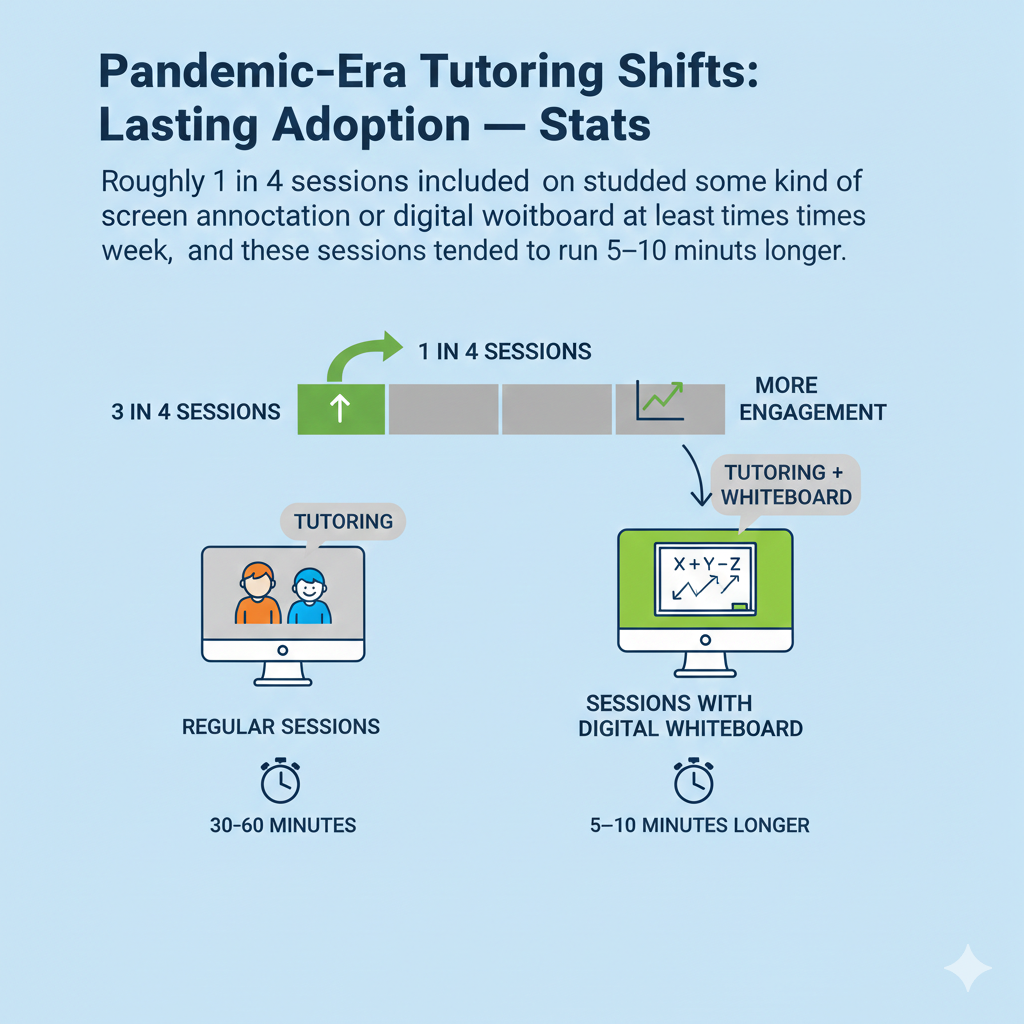
13. Roughly 1 in 4 sessions included some kind of screen annotation or digital whiteboard, and these sessions tended to run 5–10 minutes longer.
Why drawing on the screen deepens thinking
When a child can circle, underline, and sketch on a shared screen, you see their thinking appear in real time. They are not just hearing a step; they are tracing it. That simple act slows the mind to the right speed. It turns a fuzzy idea into a shape.
The extra five to ten minutes these sessions take is not waste. It is the cost of making invisible thoughts visible. In math, a number line or a quick box model can fix a common slip faster than words alone.
In reading, highlighting key phrases and writing the main idea in the margin builds the habit of looking back at the text for proof. The whiteboard becomes a second brain that both the tutor and the student can touch, so small errors are caught before they grow.
How to use annotation without letting it take over
Set a clear rule that every problem gets a plan line first. The student writes a short step-by-step sketch before solving. Ask for color meaning so the same color signals the same idea each time, like green for given data and blue for unknowns.
Keep the number of tools small. A pen, a highlighter, and a simple shape set are enough. Agree that drawings should be quick, not perfect. The goal is to guide action, not make art. Save important boards as images and put them in a single folder named by skill so your child can flip through past thinking before a quiz.
How Debsie builds “visible thinking” into lessons
Our live classes use light, fast whiteboards that open with one click. Teachers model a quick sketch, then hand the pen to the student early and often. We also store key boards in your child’s mission feed so they can revisit the exact moves that worked.
If you want to see how annotation can unblock tough steps, try a free Debsie trial at debsie.com/courses and we will set up your first “draw-to-learn” session.
14. Homework completion rates rose by about 15–25% for students who used on-demand tutoring at least twice a week.
Why small, fast help turns into finished work
Homework often stalls at one sticky question. Without help, the stall becomes a stop, and the page stays blank. On-demand tutoring breaks that pattern. A child asks a short question, gets a short hint, and moves on.
Two quick boosts a week keep the pile from growing. The rise in completion is not about magic; it is about removing friction at the exact moment it appears. When work gets finished, feedback from teachers comes faster, which builds a loop of try, check, adjust.
Over weeks, the fear of homework fades because there are fewer nights of sitting still and feeling lost.
How to build a two-touch help routine
Set two “help windows” on your weekly calendar, like Tuesday and Thursday from 6:30 to 7:00 PM. During that time, your child starts homework with a single rule: ask for a hint after two honest tries on a problem, not after ten, and not after zero.
The hint should be small. Ask, what is the first step you can do without help, and do just that. Keep each help chat under five minutes, then return to work. Track which types of problems triggered help so you can plan a weekend mini-lesson to shore up the root skill.
Celebrate not the number of problems done, but the number of stuck moments your child moved through with a smart request.
How Debsie turns quick nudges into steady habits
Debsie’s on-demand help is designed for tiny blocks of time. Students type or say a question, get a quick prompt or worked example, and jump back to the assignment. We then suggest a short mission that hits the same step so the skill grows, not just the page count.
Try two help windows this week with a free trial at debsie.com/courses and watch the homework pile shrink.
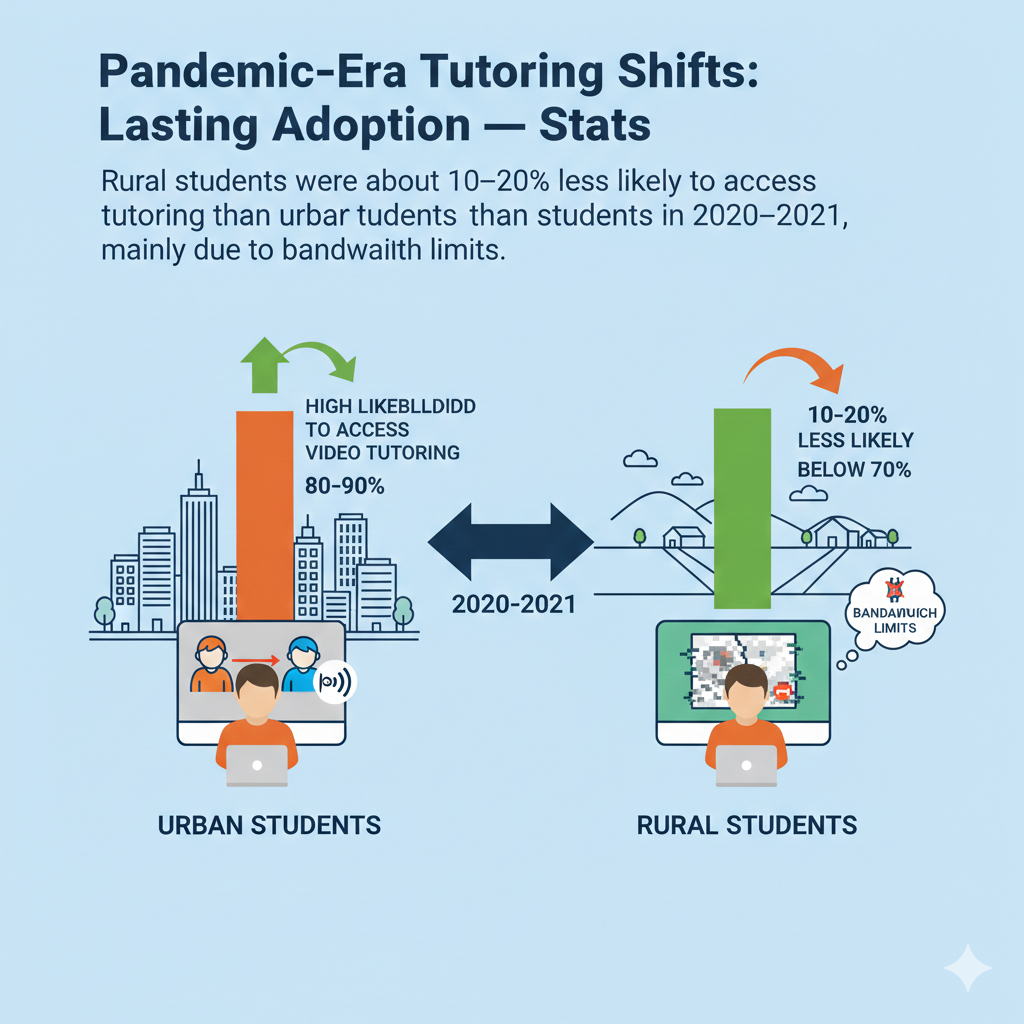
15. Rural students were about 10–20% less likely to access video tutoring than urban students in 2020–2021, mainly due to bandwidth limits.
Turning access gaps into smart design
Limited bandwidth does not have to limit learning. If video is choppy, the brain works too hard on sound and picture and cannot focus on the idea. The fix is to design for low data without lowering quality. Audio-first sessions with clean screen share can teach as well as full video.
Light files, offline practice packs, and scheduled downloads can keep the week moving even when the connection fades. The key is to plan for the worst connection you might face and make sure your child can still see the steps, hear the plan, and show their work.
A low-bandwidth playbook you can use now
Switch to wired headphones to improve sound quality at low speeds. Keep cameras off unless needed for a quick hello. Use a shared document or whiteboard that saves even if the connection drops for a moment.
Ask tutors to send a tiny preview file before sessions, like a one-page problem set or reading excerpt, so your child has the material locally. Record audio summaries at the end of each lesson and store them in a small shared folder your child can access without streaming.
Set a rule to pause screen share when not needed. Schedule a weekly offline day where your child works from a plan set ahead of time, then uploads photos of written work during a stronger connection window.
How Debsie supports every connection
We built our classrooms to run well with low bandwidth. Teachers can switch to audio-first mode without losing shared tools. Practice missions are small, quick to load, and can be done offline, then synced.
If your family has a patchy connection, we will set up a low-data plan that still hits the same goals. Start with a free trial at debsie.com/courses and tell us about your setup so we can tune the experience.
16. Schools reported that 50–60% of their tutoring minutes were delivered online in 2021, then leveled near 25–35% online by 2024–2025.
What the new balance means for families
In 2021, most extra help happened online because school buildings were limited. As campuses reopened, many districts shifted back to in-person sessions while keeping a stable online slice. That stable slice matters. It means online is not a temporary fix anymore.
It is a normal part of the support menu. A quarter to a third of tutoring minutes staying online gives you flexibility. If a bus is missed, if a practice runs long, if a child is tired after a game, learning can still happen from home.
It also means schools and providers have tuned their digital rooms, training, and routines to fit this durable mix. For your child, the best plan uses both modes on purpose. In-person time can handle hands-on work and lab-like activities.
Online time can handle quick reteaching, targeted practice, and review before a quiz. The steady online share lets you pay attention to daily rhythms and pick the mode that keeps your child calm and consistent.
How to build a hybrid plan that sticks
Start by mapping your child’s weekly energy. Circle two days when they come home fresher and two days when they are stretched thin. Place in-person tutoring on one of the strong days so they can lean into a challenging concept.
Place a short online session on a thin day for quick review and confidence-building practice. Keep each mode consistent for four weeks so habits form. Use one shared progress tracker across both modes so learning feels like one story, not two separate tracks.
Share that tracker with teachers at school and with your provider so everyone adjusts together. If you see missed sessions or fading focus, change the mode first before you change the topic. The right format at the right moment can restore momentum fast.
How Debsie supports true hybrid learning
Debsie is built for hybrid. Our live online classes keep sessions short and focused. Our self-paced missions reinforce what was learned in any setting. If your child also gets in-person support at school, we align our plan to that schedule and fill gaps on the days when getting to campus is hard.
Try a hybrid week with a free trial at debsie.com/courses and we will sketch the full plan with you.
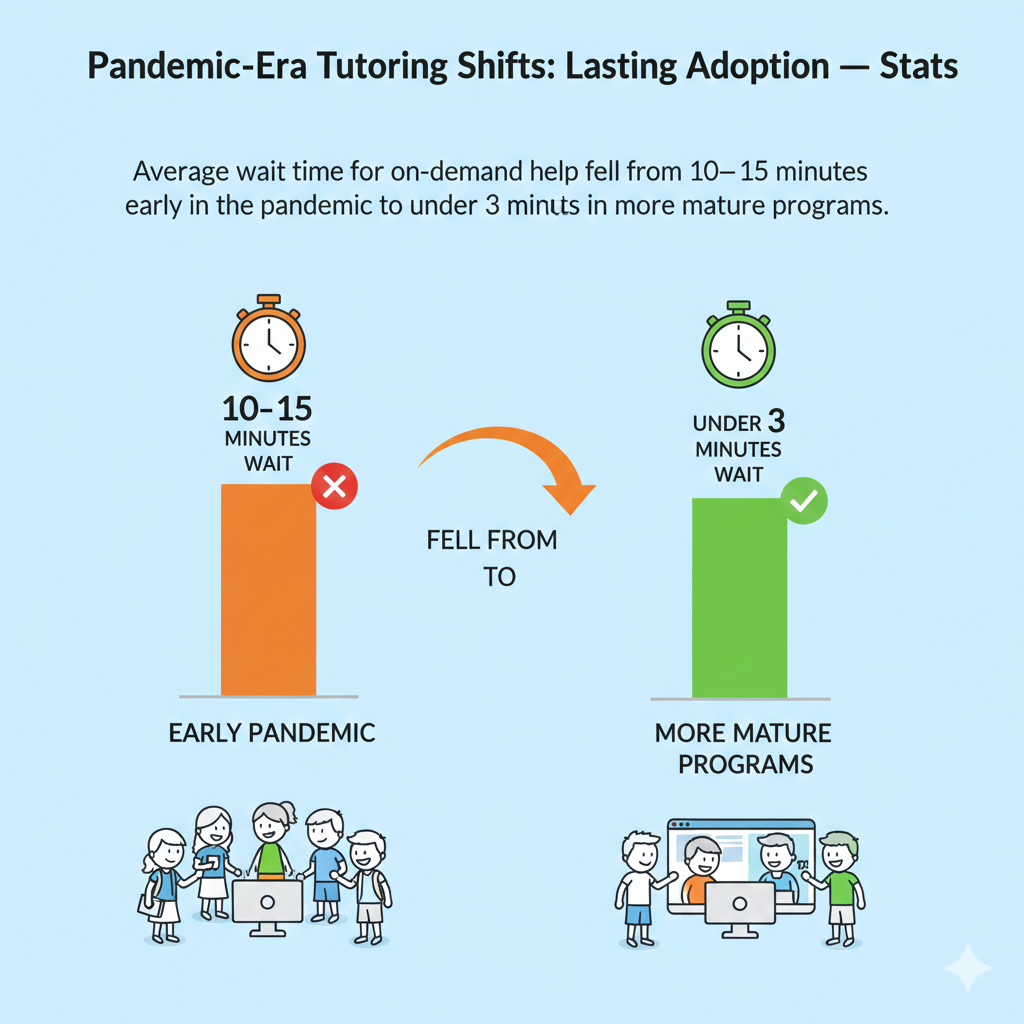
17. Average wait time for on-demand help fell from 10–15 minutes early in the pandemic to under 3 minutes in more mature programs.
Why speed changes outcomes
When a student is stuck, minutes matter. A long wait invites distraction, stress, and guesswork. A short wait keeps the brain warm. Under three minutes means the idea is still on the screen and the child’s train of thought has not derailed.
This tiny window is enough for a quick hint that unlocks the next step. Over time, fast help prevents small gaps from becoming big ones. It also teaches a healthy habit: ask early, fix fast, move on. The result is a calmer homework hour and a stronger feeling of control.
How to use fast help without overusing it
Set a simple rule called two good tries. Your child reads the problem, names a plan out loud, and attempts two honest steps. If stuck, they request help. The tutor responds with a nudge, not a full solution.
The nudge might be pointing to a definition, reminding of a step order, or showing one similar example. After the nudge, the student finishes the work and explains the final step back to lock in the gain. Keep a short log of each help moment that lists the problem type and the exact hint that worked.
Review the log every week to spot patterns. If the same hint appears again and again, schedule a short live session to reteach that core idea instead of relying on repeated nudges. This keeps on-demand help as a bridge, not a crutch.
How Debsie delivers quick, targeted nudges
Our on-demand help is designed to answer in moments. We route questions to the right subject expert and limit replies to the next best step. Each nudge auto-saves to your child’s mission feed, where a short practice set waits to reinforce the same skill.
If you want to feel the power of sub-three-minute help, start a free trial at debsie.com/courses and test it during this week’s homework.
18. Reading interventions showed the best results with live, high-dosage tutoring; math showed strong results with both live and on-demand problem help.
Match the method to the subject
Reading skills grow through guided talk, repeated modeling, and immediate feedback on how a child uses evidence and language. That is why live, steady sessions move the needle most in literacy.
A tutor can listen to fluency, ask for a re-read, and guide a student to the exact sentence that proves an answer. Math, on the other hand, often benefits from quick, focused help in the moment a step goes wrong.
A hint on how to set up an equation or check units can save an entire homework set. Both subjects still need clear goals and practice, but the delivery should reflect how the brain works with words versus numbers.
Build a subject-smart weekly routine
For reading, choose three live sessions per week during a four to eight week cycle. Use short, high-interest texts at your child’s level. Practice think-aloud moves like naming the main idea in seven words, underlining the line that proves it, and paraphrasing the claim in their own words.
End with a two-minute reflection where your child says what made sense and what made them pause. For math, keep two live sessions to introduce and connect big ideas, then use on-demand help on homework nights to keep momentum.
Ask your child to record one sentence after each on-demand interaction that states the step that unlocked the problem. Review those notes together on the weekend for ten minutes to cement the learning.
How Debsie fits literacy and math like a glove
Our reading program stacks frequent live touchpoints with short, joyful texts and clear evidence routines. Our math pathway blends steady live instruction with fast homework nudges and playful practice missions.
The two tracks feed each other, building language for math and structure for reading. Explore a dual-plan free trial at debsie.com/courses and see how the balance feels in your home this week.
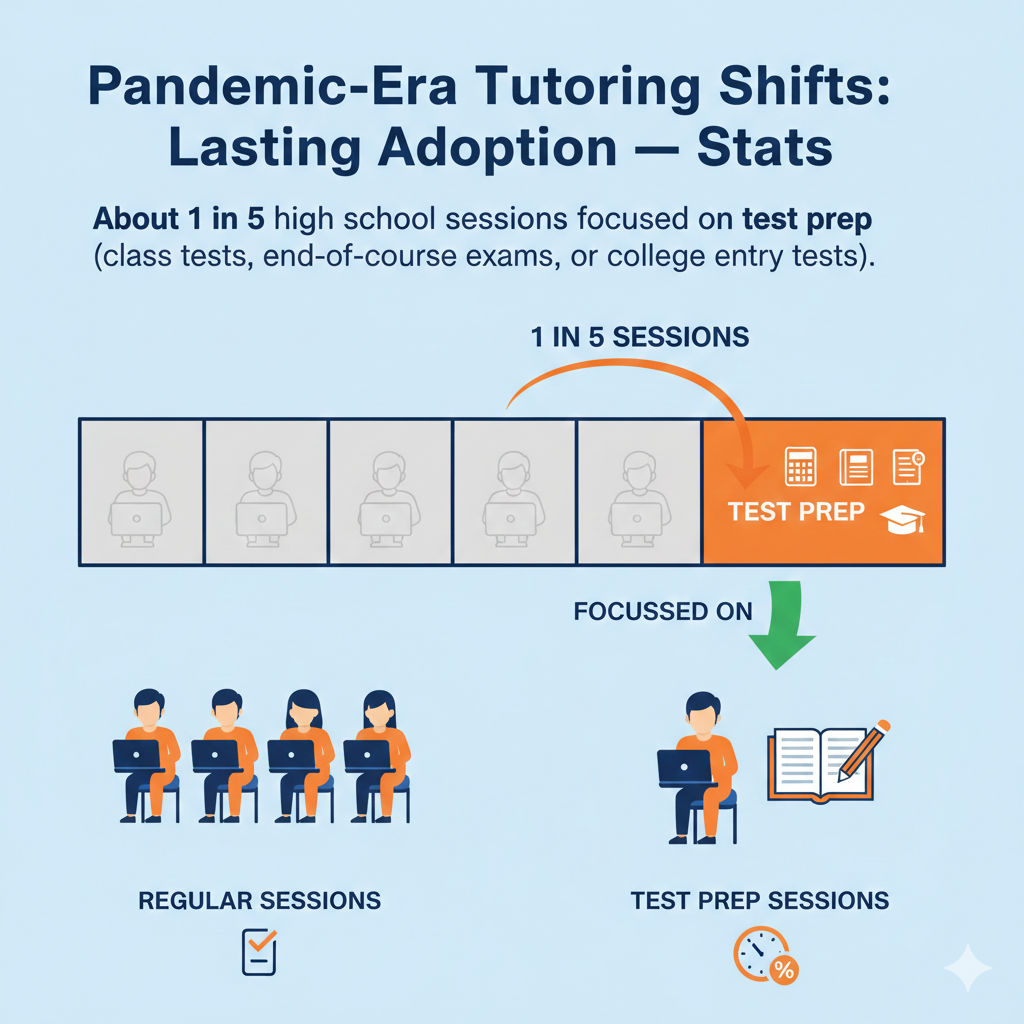
19. About 1 in 5 high school sessions focused on test prep (class tests, end-of-course exams, or college entry tests).
Turn test prep into skill prep
A fifth of high school tutoring time going to tests shows pressure points in the teen years. The risk is cramming facts without strengthening the skills that carry into college and careers. The fix is to treat every test as a format to master, not a surprise to fear.
That means building a plan that mixes content review with timing practice, question mapping, and reflection on mistakes. When a student knows how to read a question stem, how to choose a starting move, and how to bail from a trap quickly, scores rise.
More important, those same habits help in science labs, math proofs, and research papers.
A repeatable four-week test cycle
Week one gathers the map. Your teen collects recent quizzes, the official test blueprint, and two sample papers. Together, you list top three content targets and top two process targets, such as pacing per section or translating word problems into equations.
Week two reviews content with active recall. Your teen practices teaching short pieces of content back to the tutor in one-minute bursts. Week three drills mixed sets under light timing, then debriefs by labeling each miss with a cause, like misread unit, skipped step, or vocabulary slip.
Week four runs a full practice under real timing with strict breaks, then plans exact moves for test day, including when to mark and move. After the real test, your teen logs wins and errors within twenty-four hours to capture fresh patterns.
How Debsie makes prep human and effective
Our teachers blend skill teaching with test strategy, never one without the other. We pace sessions so teens feel progress each week and leave with a clear plan for what to do next.
If a big test is coming up, start a focused four-week sprint with a free trial at debsie.com/courses and we will set the targets and calendar with you on day one.
20. Students with reliable devices and quiet study space logged 2–3 times more tutoring minutes than peers without those supports.
Build the learning environment before the lesson plan
Access is more than internet speed. It is also having a working device, a stable desk, and a calm corner. When the setup is right, sessions start on time and stay on track. When the setup is weak, minutes leak out to fixing sound, chasing chargers, or asking others to turn down the noise.
Over weeks, these small losses add up to fewer total minutes of focused learning. The fix is simple and powerful. Treat the study space like a tiny classroom with rules that protect it. This is not about fancy furniture. It is about predictability and respect for the time and place where your child’s brain goes to work.
Create a simple, strong study corner in one hour
Choose a spot with a table surface, a chair that supports posture, and a wall or divider that limits visual clutter. Place the device on a stand so the camera is at eye level and the keyboard sits flat. Use wired headphones with a mic for clearer sound.
Keep a small box with pencils, paper, a ruler, sticky notes, and a highlighter so no one hunts for tools. Add a paper sign that shows the weekly tutoring schedule. Ask the family to treat those minutes as quiet time, like a library rule.
Place a small timer on the desk and a water bottle within reach. Do a two-minute tech check before each session and close non-school tabs. At the end, take one minute to reset the space so it is ready for next time.
How Debsie supports strong setups
We send a short home setup guide to families and coach students on quick routines that protect focus. Our rooms load fast and keep tools within a click so the device does not need heavy apps. If you want help tuning your space, start a free trial at debsie.com/courses and we will walk you through a simple checklist on day one.
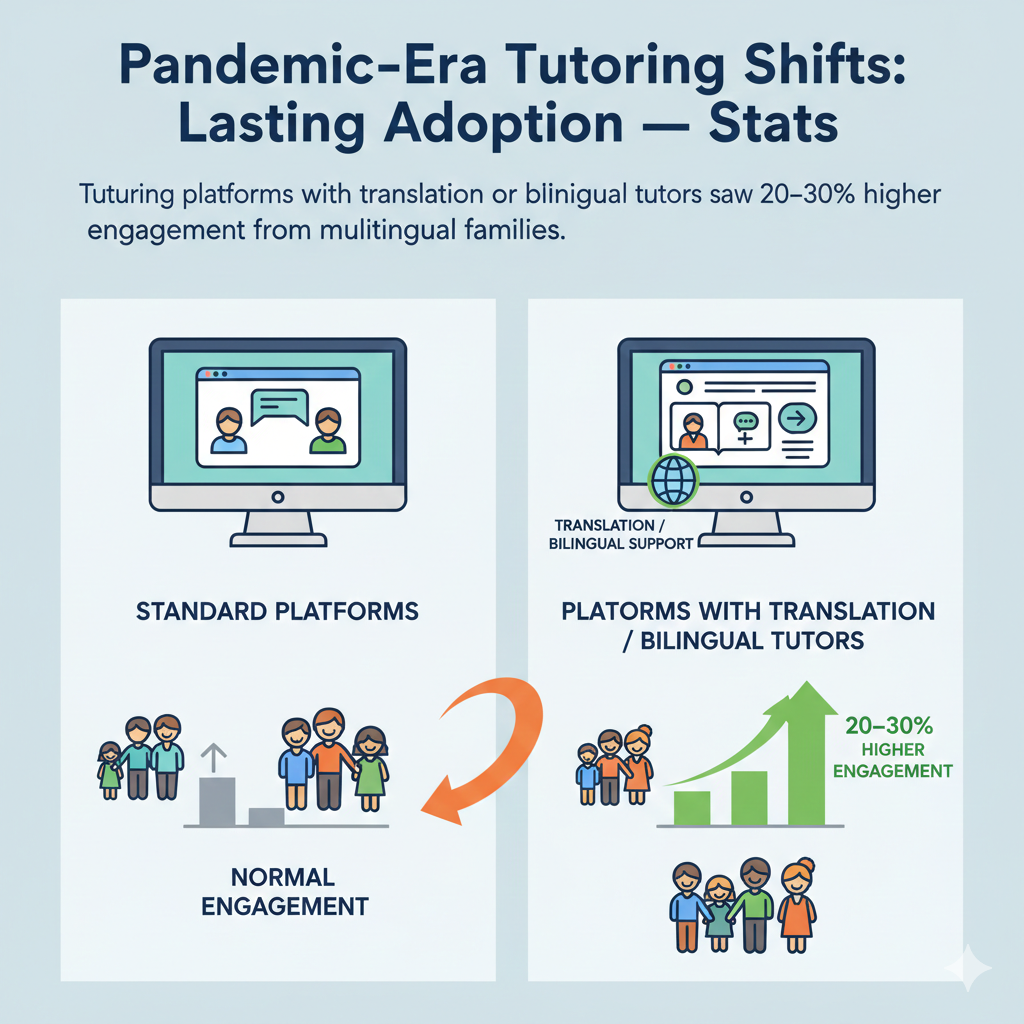
21. Tutoring platforms with translation or bilingual tutors saw 20–30% higher engagement from multilingual families.
Why language access unlocks learning
When a family can ask questions in a language they are comfortable with, stress drops and trust grows. Parents can read messages, understand notes, and join planning talks. Children can clarify instructions without fear of sounding wrong.
That comfort shows up as more logins, more minutes, and more finished work. The jump in engagement is not just about words; it is about dignity. When a child hears math or reading explained in clear, simple language, and tricky terms are translated without fuss, they step forward faster.
Parents also become partners because they finally see the plan and can help at home. Over time, this removes quiet barriers that used to look like “lack of motivation” but were really “lack of access.”
How to add language supports today
Make a list of the languages your family uses at home and at school. Ask your provider for a tutor who can switch between those languages or offer real-time translation in chat. Request that session recaps come in the home language and in English, side by side.
Build a small glossary for your child’s current unit with five to ten key terms, each with a simple definition and an example in both languages. During sessions, use short, plain sentences first, then layer in the school vocabulary so your child can build from comfort to clarity.
Invite parents to a ten-minute check-in once a month with a bilingual teacher so questions do not pile up.
How Debsie opens doors for multilingual families
Debsie hosts bilingual teachers and simple translation tools inside our classroom. Recaps can be delivered in two languages, and we prepare glossaries that match your child’s unit. This lowers stress for the whole family and raises steady participation.
If you want to feel the difference language access makes, book a free trial at debsie.com/courses and tell us which languages you prefer.
22. Programs that trained tutors for at least 6–10 hours before starting saw fewer session cancellations and clearer lesson pacing.
Why tutor training shows up in your calendar
Training may sound like a behind-the-scenes detail, but it shapes what happens on your screen. When tutors practice the platform, test audio, and rehearse pacing before meeting students, everything feels smoother.
Lessons start on time. Tools work. Explanations are crisp. That calm start prevents late cancellations and missed sessions. Trained tutors also plan time in blocks, so you do not spend ten minutes on greetings or twenty minutes on a single problem that could be solved in five.
The extra hours up front protect your child’s focus later and respect your family’s schedule.
What to ask before you enroll
Ask providers how many hours of training tutors complete and what topics are covered. Look for practice with the digital whiteboard, strategies for checking understanding every few minutes, and a clear plan for handling mistakes with care.
Request a sample lesson plan that shows minute-by-minute pacing: a quick warm-up, a focused demo, guided practice, independent practice, and a short exit check. After the first session, notice transitions.
Do they move smoothly from talk to writing to solving? Does the tutor land the session on time with a clear recap? If not, ask for adjustments right away. Good programs will respond and tighten the flow.
How Debsie trains for reliable, calm sessions
Our tutors complete structured training in tools, pacing, and communication before they teach. They practice with real lesson frames and get feedback on timing and clarity.
This is why our sessions open fast, move with purpose, and end with a simple next step. If you want a first session that feels polished, try a free Debsie class at debsie.com/courses and see the difference strong prep makes.
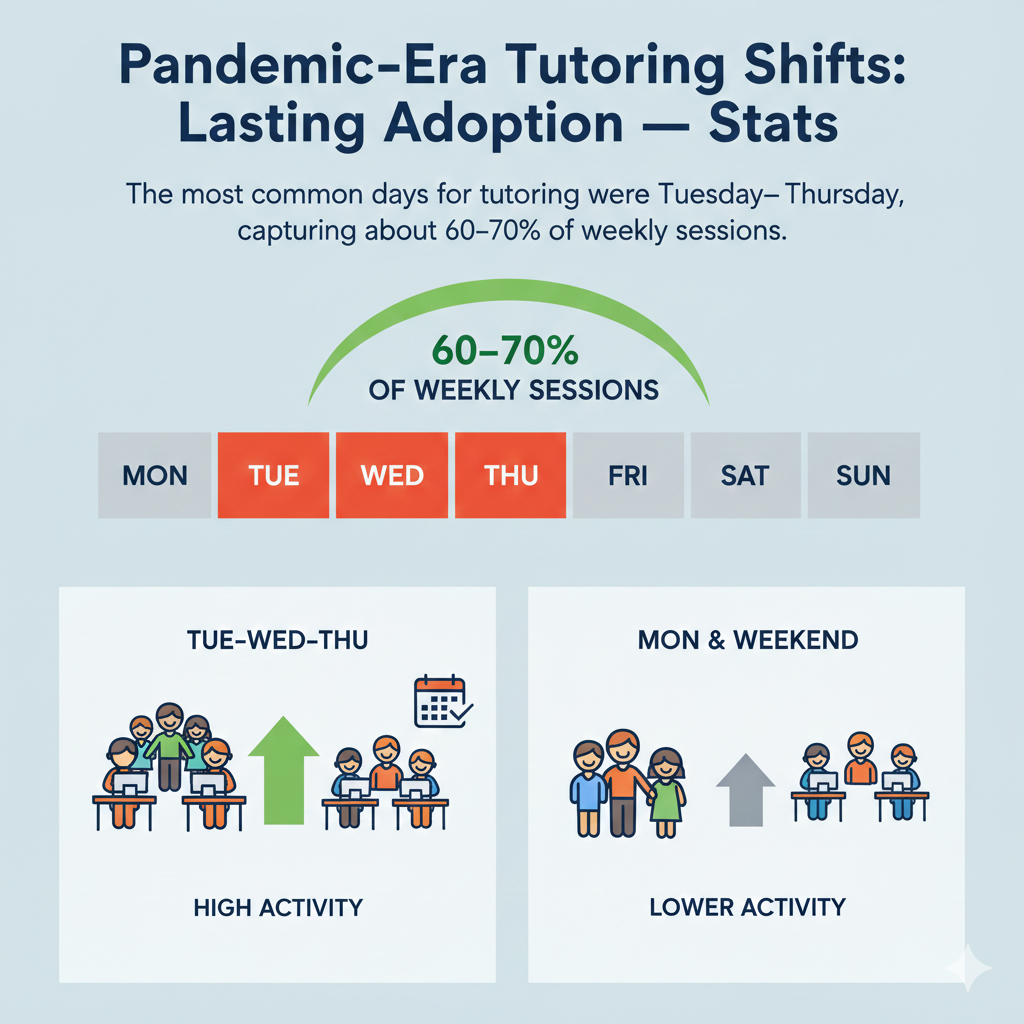
23. The most common days for tutoring were Tuesday–Thursday, capturing about 60–70% of weekly sessions.
Why midweek wins
Early in the week, students are settling back into routines. By Tuesday and Wednesday, class content is flowing and homework patterns are clear. Thursday often becomes the final push before Friday assessments. That is why most families choose midweek for help.
The brain is active, the schedule is predictable, and the support can hit right when confusion appears. Midweek sessions also leave room for weekend review or rest, which keeps burnout low. When you ride this natural rhythm, you do not fight the week; you use it.
How to build a Tuesday–Thursday cadence that sticks
Place your main instruction sessions on Tuesday and Wednesday, then use Thursday as a review and application day. On Tuesday, introduce or reteach one core idea. On Wednesday, deepen the same idea with mixed problems or a short reading tied to class.
On Thursday, run a light check-up, fix tiny slips, and preview the next unit for one or two minutes to lower anxiety. Keep sessions at the same time each day so they become routine. Protect these minutes like you would a sports practice.
If you must add a Monday or Friday, keep it brief and focused on reflection or planning, not heavy new content.
How Debsie aligns with the midweek curve
We stack our most popular live classes on Tuesday through Thursday and keep them short so students finish strong, not tired. We also add small missions between those days to keep learning warm.
To lock in a midweek plan, visit debsie.com/courses and grab slots that fit your school’s flow.
24. When schools used data to invite students (based on grades or diagnostics), take-up was about 2x higher than open sign-ups.
Why targeted invites feel safer and clearer
Open calls to “anyone who needs help” often miss the kids who need help most. Those students may feel shy, busy, or unsure if the program will fit. A data-based invite is different. It says, we saw your recent quiz score or your reading check.
We know the exact skill to work on, and we have a spot for you. That clarity cuts through worry and makes families say yes. It also respects time. When you name a specific gap and a plan to close it, parents can see how the next four weeks will help, not just fill the calendar.
How to use data-driven invites at home and school
At school, ask for recent diagnostic results and unit assessments. Use them to pick a small group of students who share the same need, such as multiplying fractions or finding text evidence. Send personal notes that name the skill, the number of sessions, and the expected outcome in simple words.
At home, look at your child’s past two quizzes and any teacher comments. Choose one tight target and one time window. Tell your child the plan up front: three sessions per week for four weeks to tackle this skill.
Track weekly checks to show progress. When the numbers move, celebrate the change and decide on the next target together.
How Debsie turns numbers into next steps
Debsie’s intake includes a quick skills check. We turn those results into a short plan with exact goals and meeting times. Families see the path before the first session begins. If your school shares data, we align with it so everyone works from the same map.
Try a data-driven start with a free trial at debsie.com/courses and watch how a clear invite boosts buy-in.
25. In districts that kept tutoring for two full years, students who were two grade levels behind cut that gap by about one level.
What a two-year horizon unlocks
Real growth takes time. When support lasts through two full school years, skills have time to rebuild from the base up. Early months often fix quick errors and boost confidence. Later months repair deeper gaps and connect ideas across units.
Cutting a two-level gap down to one is not magic; it is steady work with a clear map. Your child gets repeated chances to learn a skill, use it in class, and then use it again in a new context. The mind stops seeing each topic as a new mountain and begins to see a path it already knows how to walk.
How to plan a calm, two-year climb
Break the road into four simple seasons of about five to six months each. In season one, stabilize habits: a steady schedule, short sessions, a quiet study corner, and one tracker that shows small wins. In season two, lift core skills: operations with fractions, ratio reasoning, sentence sense, main idea.
In season three, connect skills to class tasks: multi-step problems, lab reports, document-based questions. In season four, strengthen independence: planned study time, error logs, and weekly reflections. Repeat the cycle in year two at a higher level.
Keep the same tutor if possible so trust compounds. Every eight weeks, run a mini-check to mark progress and reset targets. Celebrate the climb, not just the summit, so your child sees proof that their work is working.
How Debsie keeps momentum across years
Debsie pairs live classes with playful missions that keep skills warm between sessions. We save key notes and wins so each new term starts ahead, not from scratch. If you want a two-year plan that your child can actually live with, start a free trial at debsie.com/courses and we will chart the seasons with you on day one.
26. Average cost per tutoring hour dropped by about 15–30% from 2020 to 2024 as programs scaled and moved online or hybrid.
Why prices eased and what to do with the savings
As platforms improved, tutors handled tools faster, and groups were matched more wisely. This lowered the cost per hour without cutting quality. Many families now can afford steady help instead of short bursts before tests.
Lower cost also makes it easier to pick the right dose: shorter, more frequent sessions instead of one long block that drains energy. The key is to invest savings into consistency. A smaller bill each week is a chance to keep support going long enough to build true skill.
Build a value-smart tutoring budget
Decide on a monthly number you can keep for six months without strain. From that number, design a plan that favors three short sessions over one long one. If your child likes peers, choose a tight small group to stretch value while keeping strong results.
Use the price drop to add a short on-demand help window each week so homework never stalls. Track cost per skill by asking, what did we master this month? If spending is stable but mastery is slow, adjust the session format, not just the time.
Place a pause week every two months to review notes, reflect on gains, and reset targets so you do not pay to relearn the same steps.
How Debsie maximizes impact per rupee or dollar
We keep sessions focused, pair them with short missions, and offer small groups that deliver high value. Families can start modestly and scale up or down without losing momentum. If you want a clear, predictable plan that respects your budget, try a free Debsie class at debsie.com/courses and see the value in the very first week.
27. About 30–40% of online sessions included shared document editing, which correlated with better homework transfer.
Why writing inside the work matters
Learning sticks when students produce the steps with their own hands. Shared docs let your child draft math reasoning, annotate text, or revise a paragraph while the tutor watches and nudges. This builds the exact moves schoolwork requires: showing steps, citing evidence, and polishing sentences.
Because the work lives in the same kind of file teachers expect, the jump from tutoring to homework is small. The skill moves cleanly from practice to the page that gets graded. Over time, your child builds a tidy trail of models they can revisit before quizzes, projects, and exams.
A simple “edit-in-doc” routine to copy
Open one shared doc per unit. Begin each session by pasting a short warm-up task at the top. When modeling, the tutor writes one full example with comments that name each step. Then your child writes the next example while narrating the moves.
Use short comment stems like claim, proof, explain, or plan, solve, check so feedback is fast and clear. End with a brief polish pass where your child looks for one fix: a missing unit, a weak verb, or a sentence that needs a smoother link.
File the doc by date and skill in one folder so it becomes your study pack. On homework nights, have your child open the most similar model, read the comments, and mirror the steps before drafting theirs.
How Debsie turns docs into growth
Our teachers build living documents with students, leaving clean models and bite-size comments. We then assign a mission that uses the same structure, so transfer happens the same day.
If you want your child’s homework to improve right away, join a free trial at debsie.com/courses and watch how shared editing tightens the work.
28. Tutor supply became more global: by 2024–2025, 10–20% of sessions in some programs paired students with tutors in other time zones.
How a global bench helps your family
A wider pool means better matches in subject expertise and schedule. If your child needs help at 7 AM or 9 PM local time, a tutor across the world may be fresh and ready. Global supply also brings diverse examples and stories that broaden thinking.
The key is to balance convenience with continuity. Cross-time-zone pairing works best when the schedule is stable, the curriculum is aligned to your child’s school, and notes are clear so each meeting picks up smoothly.
Make cross-time-zone tutoring seamless
Choose a fixed meeting time that respects sleep and school routines. Confirm your time zone in writing to avoid daylight saving surprises. Share your child’s syllabus and recent assignments so the tutor can match terms and methods your teacher uses.
Ask for short video or audio recaps in the same folder each week so you can peek at progress even if you cannot join live. Plan a monthly parent check-in that works for both time zones; ten minutes is enough when notes are clear.
If your child is shy, ask the tutor to open with a quick personal connection, like one photo or fact about where they live, to make the world feel friendly.
How Debsie connects local needs with global talent
We maintain tutors across time zones and train everyone on clear pacing, shared tools, and school-aligned methods. Families pick times that actually fit their life, not the other way around. If odd hours have blocked steady help in your home, book a free Debsie trial at debsie.com/courses and we will match a schedule that holds.
29. Safeguards—session recording, verified IDs, and moderated chat—became standard in most large programs by 2023, reducing reported incidents.
Safety you can see and trust
Families deserve peace of mind. Modern tutoring rooms now include identity checks for adults, recorded sessions you can review, and chat tools that filter risky content. Clear rules and easy reporting paths make the space feel secure.
Safety is not just about stopping bad events; it is about creating a calm room where your child can focus without worry. When expectations are visible, trust goes up, and learning follows.
Build your own safety checklist
Before enrolling, confirm that tutors are background-checked and identities are verified. Ask if sessions can be recorded and how long recordings are stored. Review how chat is moderated and whether unsafe language is blocked.
Learn the steps for reporting an issue and the expected response time. Tell your child the rules in simple words: stay in the tutoring room, keep chat about the work, and tell a parent if anything feels odd. Place your child’s study corner in a shared space at home with the screen visible.
Drop in for the first minute and the last minute of sessions for a friendly hello. Save session summaries and keep a short log of what was covered each week so you can spot anything unusual.
How Debsie keeps the room safe and warm
Debsie uses verified tutors, recorded sessions, and moderated tools. We share simple guidelines with families and respond quickly to any concern. Our aim is a space that is both safe and kind. If safety has been your barrier to starting, come to a free trial at debsie.com/courses and experience a room designed for learning and trust.
30. Students who combined classroom instruction, online tutoring, and at-home practice were 25–40% more likely to meet growth targets by year’s end.
The power of the tri-mode loop
Each mode plays a role. Class gives structure, pacing, and community. Tutoring gives targeted help right where the struggle lives. At-home practice turns fresh learning into habit. When these three are aligned, your child meets more goals because every week includes learn, focus, and lock-in.
The trick is to keep the loop tight and simple. Goals must match across the modes. Notes must move across the adults. Practice must be small and right on target so wins pile up fast. This is how you turn a year of scattered effort into a year of steady growth.
Build your tri-mode plan in one evening
Sit with your child and write one monthly goal in plain words, like read nonfiction articles and find evidence fast or solve two-step equations without guessing. Share this goal with the teacher and the tutor.
Pick two class days to anchor learning, two tutoring slots to focus on the same skill, and three ten-minute practice windows at home. Use the same strategy language in all three places so your child hears one story. For reading, that might be claim, cite, clarify.
For math, it might be plan, solve, check. At the end of each week, do a two-minute wrap-up: what moved, what stuck, what to try next. Reset the plan for the new week based on that tiny meeting. Small, steady tweaks keep the loop healthy.
How Debsie makes tri-mode simple
Debsie weaves live classes, quick on-demand nudges, and playful practice missions into one path. We align with your teacher’s units and send clear summaries you can read in a minute. The loop stays tight and the wins stay visible.
If you want to see the tri-mode effect in your home, join a free trial at debsie.com/courses and we will set up your first month’s plan.
Conclusion
The pandemic pushed learning to change, and many of those changes stayed because they work. Short, frequent sessions beat long, tired ones. Clear goals beat vague hopes. Fast help at the right moment beats waiting and worrying. When families protect a steady schedule, choose the right format for each subject, and keep notes simple and shared, children move forward with less stress and more pride.
The data shows that small, smart choices made each week add up to real growth by year’s end. Online support is no longer a last resort. It is a normal tool that saves time, opens more hours, and meets students where they are. Paired with strong classroom teaching and a quiet corner at home, it becomes a powerful engine for progress.