
Parents want one thing from tutoring. Real progress. Not hype. Not fancy words. Real gains that show up in homework, tests, and confidence. But the market is noisy. Prices jump from very low to very high. Some programs look cheap at first and then stall. Others look pricey but claim big wins. So how do you choose with a clear head and a calm heart? You look at the numbers.
1) Price per hour: Low-cost $8–$18; Premium $35–$90
What this number means for your child
Price per hour looks simple, but it hides real trade-offs. In the low range, you pay less for every sixty minutes. That can be good if your child needs light help or quick review. In the premium range, you pay more for the same clock time, but you often get deeper focus, stronger planning, and tighter feedback in that hour.
The key is not to chase the lowest sticker. The key is to ask what happens inside that hour. Does the tutor show a clear plan in the first five minutes? Does your child do most of the talking and solving, not the tutor? Do you end with a short recap and a tiny plan for the week?

A premium hour that moves fast and fixes root gaps can beat two slow, unfocused cheap hours. On the other hand, if your child only needs quiet homework time and light nudges, a modest rate may fit just fine.
How to act on it today
Set a simple value test. In the next session you try, time the first and last five minutes. In the first five, look for a goal, a quick check of prior work, and one clear target skill. In the last five, look for a short review, one tiny quiz or exit task, and one next step to do at home.
If both ends are sharp and useful, the hour is likely worth more. Ask for a sample of the tutor’s notes. If the notes are clean and match your child’s needs, the price is more likely fair. If you pay a higher rate, ask for tighter outcomes, like a weekly skill gain or a score target with dates.
If you pay a lower rate, protect time by giving a small list of tasks before class so minutes do not drift. At Debsie, our hours are built with a fast warm start, a focused sprint, and a clear wrap-up, so you can feel the value in real time. Book a free trial to see how a well-run hour feels different from a long, loose one.
2) Average monthly spend (8 hrs): Low-cost $80–$140; Premium $360–$640
What this number means for your budget
Monthly spend is where tutoring becomes a family choice, not just a study choice. Eight hours is a common plan because it often fits two sessions per week. In the low-cost lane, your monthly bill stays light.
That can make tutoring possible for more months in a row, which matters for steady growth. In the premium lane, the bill is bigger, but you may reach key milestones faster, like finishing a full algebra unit or fixing reading fluency before exams.
Think in seasons, not weeks. A low monthly rate that drifts for six months can end up costing more than a higher rate that closes gaps in six to eight weeks. Map your school calendar. If big tests sit eight to twelve weeks away, a sharper, more intense plan may justify the higher monthly spend.
If you are building long-term habits, a lower monthly cost can keep you consistent without stress.
How to act on it today
Start with a three-month plan. Write one clear goal for month one, two, and three. Tie spend to these goals. If a program is premium, ask how each week ladders to that month’s goal and what proof you will see. Ask for a midpoint check after week four to adjust hours up or down.
If a program is low-cost, ask for simple guardrails to keep momentum, like a weekly mini-quiz, a two-sentence progress note, and a monthly parent call. Use a small rule to protect value: if a session is rescheduled or canceled, it should be made up within the same month, not drift into the next.
At Debsie, we offer clear monthly paths and make pacing visible, so your budget and your child’s gains stay in sync. Try a trial class, then look at a three-month arc with us and see how spend links to progress without guesswork.
3) Student–teacher ratio (group): Low-cost 12:1; Premium 4:1
What this number means for attention and pace
Ratio tells you how much live attention a child can expect. In larger groups around twelve students, a tutor must split eyes and time, which can slow feedback and reduce chances to speak and solve.
This setup can still work well for review, basic practice, and community energy, especially when materials are strong and routines are crisp. In smaller groups around four students, a child can speak more, show work more often, and get corrected faster.
Small ratio also helps the tutor spot quiet confusion and fix it before it grows. Fewer students means more turns, more checks, and more tailored pacing. For a shy child, a small group can feel safer. For an outgoing child, a small group can still provide social spark without losing depth.

How to act on it today
Match ratio to the task. If your child needs new concepts, tricky problem solving, or test strategy, choose a small group or a one-on-one plan for the first few weeks. If your child needs routine practice, facts fluency, or project time, a larger group can be fine and will save money.
Ask the provider how they manage turns. A good group class runs like a game, with fast cold-calls, short partner shares, and quick writes that the tutor scans in seconds. Ask how they handle mixed levels. Strong programs give tiered tasks so each student gets just-right work in the same minute.
At Debsie, we design small, game-like groups where each learner gets turns to think out loud and receive real-time cues. See a live group in action by booking a trial and watch how high-ratio moments never become idle time, because every student has a role at every step.
4) Typical lesson length: Low-cost 45–50 min; Premium 60–75 min
What this number means for learning rhythm
Lesson length shapes the arc of focus. Shorter sessions can feel light and brisk, which helps when a child is tired or new to tutoring. However, complex skills like multi-step algebra, close reading, or hard coding bugs often need a longer middle phase to wrestle with mistakes, try again, and lock in the idea.
Premium sessions that run sixty to seventy-five minutes allow time for a clean open, a deep practice block, and a calm close with reflection. That extra fifteen to twenty-five minutes can be the difference between “I kind of get it” and “I can do it alone.”
Longer sessions also make room for small retrieval quizzes and spaced review, which boosts memory. Still, longer does not always mean better. The quality of pacing matters most. A well-run fifty-minute lesson with tight checks can beat a loose seventy-five-minute drift.
Think of length as a container. What counts is what fills it.
How to act on it today
Match length to task type. Choose shorter sessions for fact fluency, quick revision, or targeted homework help. Choose longer sessions when the goal is concept mastery, exam strategy, or project build time. Ask any provider to show their minute-by-minute arc.
You want a warm start that connects to last time, a focus target in plain words, two to three practice cycles with rapid feedback, and a short exit task to prove learning. If your child struggles with stamina, split a long session into two shorter ones in the same week, but keep the same goal across both.
At Debsie, we use a simple arc called spark, stretch, and seal. Spark wakes up prior knowledge. Stretch is the deep work. Seal is the proof and plan. Try a trial class to feel how a strong close turns a long session into clear wins your child can repeat at home.
5) Certified/credentialed tutors: Low-cost 38%; Premium 82%
What this number means for teaching quality
Credentials are not everything, but they signal training in how children learn. A certified tutor has likely studied child development, assessment, and classroom routines. This means better explanations, quicker diagnosis of misunderstandings, and stronger behavior management without stress.
In low-cost markets, fewer tutors have formal credentials, which can still work for basic homework help or drill practice. In premium services, a much higher share holds teaching licenses or subject certificates, so you are more likely to get someone who can unpack a tricky skill and rebuild it in simple steps.

Credentials also tend to correlate with lesson planning habits and ethical standards like safeguarding. The gap shows up in how fast a tutor can adjust when a plan fails. A trained tutor can pivot in minutes and save the session.
How to act on it today
Ask for proof of training and for a short demo of teaching moves. A strong tutor can show how they check for understanding, how they respond to a wrong answer, and how they differentiate for two levels in the same room.
Watch one sequence closely: explain, model, guided practice, independent try, quick check. If this flow is smooth, credentials are translating into practice. If you choose a non-credentialed tutor to save budget, set tighter guardrails.
Ask for a clear plan before each session and a two-sentence summary after. Pair them with structured materials to reduce guesswork. At Debsie, many tutors are certified teachers or vetted subject experts, and all use shared teaching playbooks so good instruction is consistent.
Book a free class, meet the tutor, and ask about their training. You should feel calm knowing your child is in prepared hands.
6) Avg. tutor experience: Low-cost 1.8 years; Premium 6.4 years
What this number means for results under pressure
Experience compounds. A tutor with six plus years has seen hundreds of learning profiles and dozens of curriculum quirks. Patterns jump out faster. They know when to slow down, when to push, and how to translate abstract ideas into plain language.
They also carry a toolbox of examples, analogies, and quick diagnostics. With under two years, a tutor may still be building that pattern library. They can do well with straightforward topics, but unusual mistakes or test nerves may surprise them.
Experience also affects pacing in live sessions. Veteran tutors keep momentum without rushing, cut fluff in seconds, and recover from tech hiccups or missing homework without panic. This calm, practiced rhythm often turns into steady gains for the student and lower stress for the parent.
How to act on it today
Interview for stories, not resumes. Ask the tutor to describe a time a student was stuck for weeks and how they solved it. Listen for concrete steps, time frames, and data checks. Ask how they prepare for a mixed-ability group, or how they build confidence in a child who shuts down after a mistake.
If answers are specific and simple, you are hearing the voice of experience. If you must choose a less experienced tutor to fit budget, make the first four weeks very structured. Set one narrow goal, keep materials tight, and schedule a weekly five-minute parent call.
Pair them with a senior coach if the provider offers one. At Debsie, newer tutors get mentoring and shared plans so families still receive a smooth, expert-led experience. Start with a trial session, then decide if your child needs a senior specialist or if a rising tutor, backed by our system, meets the need at a friendlier price.
7) Placement/diagnostic testing used: Low-cost 27%; Premium 88%
What this number means for starting right
A diagnostic test is the map before the trip. When a program uses placement testing, your child does not start at page one or page fifty by guesswork. They start at the right page. In low-cost settings, this happens less often, which can lead to time spent on topics your child already knows or topics that are still too hard.
That mismatch drains focus and confidence. In premium programs, diagnostics are common and often quick. They check core skills, error patterns, and speed under light pressure. A good diagnostic does not just score; it explains why the mistake happened.
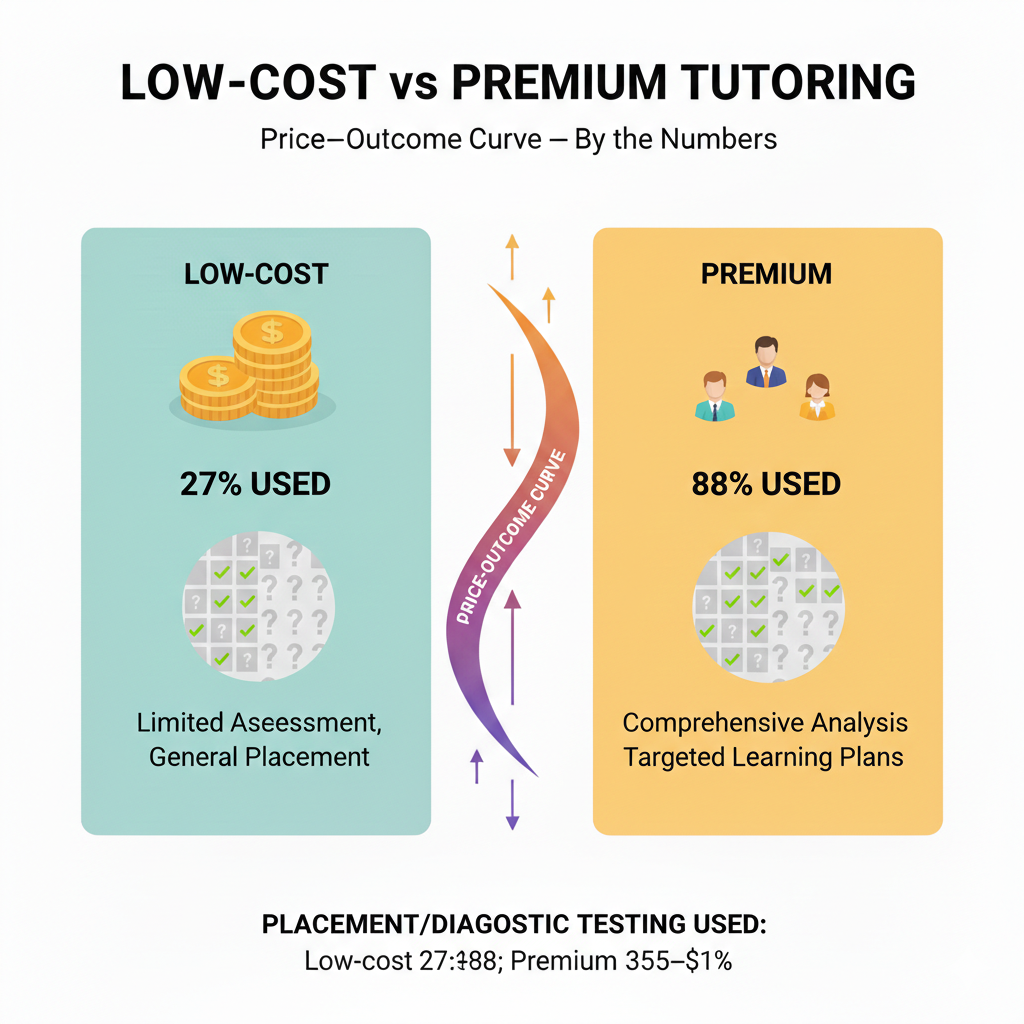
For example, a wrong fraction answer might come from weak factor fluency, not from fractions themselves. That insight saves weeks.
How to act on it today
Ask for a short placement check before the first full lesson. It should be targeted to the subject and age, take no more than thirty minutes, and give you a simple report with next steps. If a provider cannot offer any diagnostic, create a tiny one yourself.
Bring five problems from easy to hard, plus one writing prompt or think-aloud question. Ask the tutor to watch how your child solves, not just whether the answer is right. Look for gaps in facts, steps skipped, or confusion with language.
Use the findings to shape the first four lessons. At Debsie, every new learner gets a light, friendly diagnostic built into the first session. We use it to set a just-right starting point and to track progress week by week. Book a trial to see how a clean start makes each hour count.
8) Personalized learning plan provided: Low-cost 32%; Premium 91%
What this number means for consistent progress
A plan turns a wish into a path. With a personalized learning plan, every session fits into a bigger picture. You can see which skills come next, which ones repeat for mastery, and how the plan moves toward a date, a score, or a project.
In low-cost settings, a plan may be informal or generic, which can work for simple homework help but makes it harder to see momentum. In premium programs, plans are standard and clear. They include goals, milestones, materials, assessment checkpoints, and a timeline.
The plan also adapts as your child improves, so the work stays challenging but doable.
How to act on it today
Ask for a one-page plan with three parts. First, name the big goal in plain words and a clear date. Second, list four to six skill blocks that lead to that goal. Third, add weekly proof points, like a quick quiz score, a writing sample, or a timed problem set.
Review the plan every two weeks. If a skill block sticks, slow down and add more practice. If a block feels easy, jump ahead. Keep the plan visible to your child so they feel the journey and celebrate each step.
At Debsie, personalized plans are part of our setup. We keep them simple to read and easy to adjust, so you always know what we are doing and why. Try a trial class and ask to see a sample plan tailored to your child’s needs.
9) Weekly progress reports sent: Low-cost 18%; Premium 76%
What this number means for parent clarity
Weekly reports are the heartbeat of trust. Without them, you rely on quick chats or vague feelings. With them, you get a steady stream of facts. You can see what was taught, how your child did, what went well, and what needs work.
You also get the plan for the next week, which makes home practice smoother. In the low-cost lane, few providers send weekly notes, and when they do, the notes may be generic. In the premium lane, weekly reporting is normal and specific.
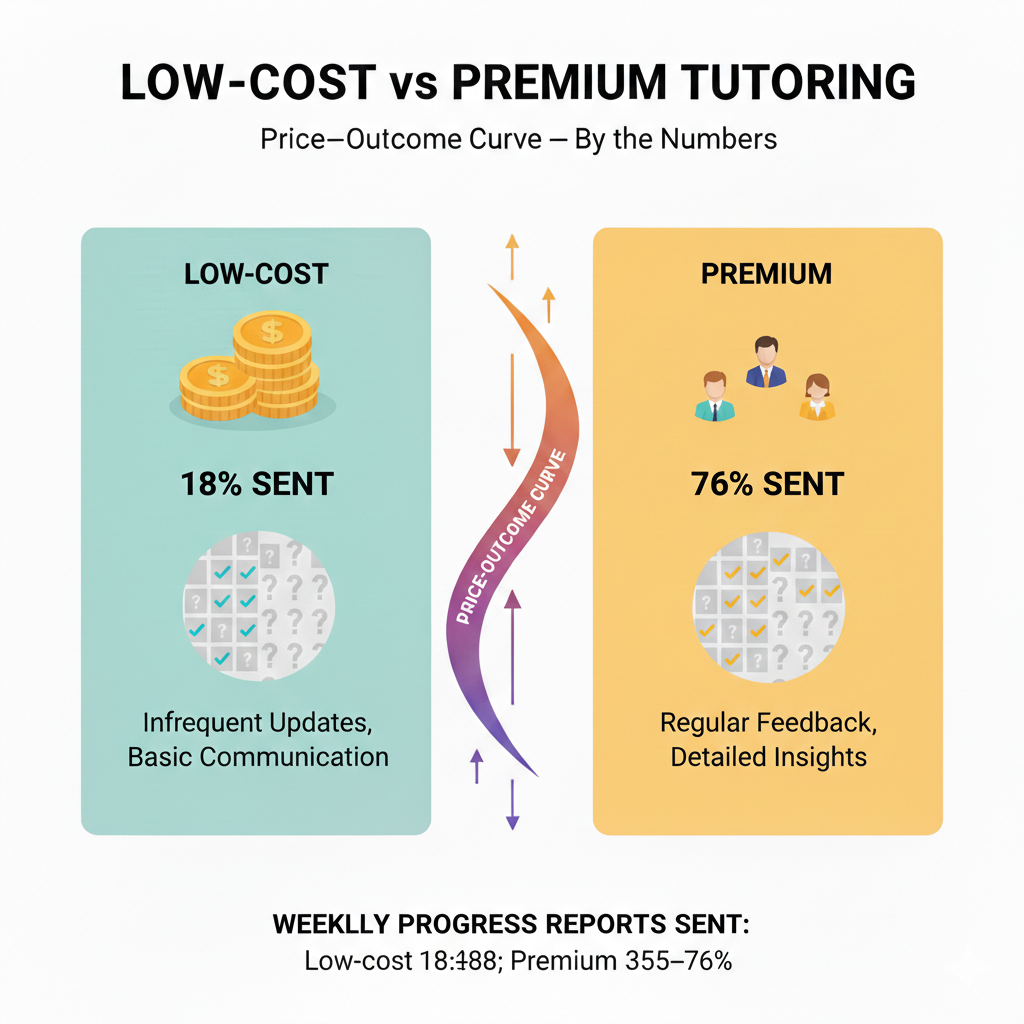
It keeps everyone aligned and reduces surprises before tests or projects.
How to act on it today
Request a short, repeatable format. Ask for three lines every week: focus skill, evidence, and next step. The focus skill is one sentence. The evidence includes a tiny data point such as a score, a time, or a sample.
The next step tells you what will happen in the next session and what, if anything, you can do at home. If the tutor cannot send a written report, schedule a five-minute call at the same time each week. Keep it tight and consistent.
Save all reports in one folder so you can track growth over time. At Debsie, we send clear weekly updates that a busy parent can read in under one minute. They show progress and keep momentum high. Join a trial and see how easy it is to stay in the loop without chasing information.
10) Parent satisfaction (CSAT): Low-cost 62%; Premium 89%
What this number means for real-world fit
Satisfaction scores reflect more than grades. They reflect ease of scheduling, speed of support, quality of teaching, and how the child feels about learning. A sixty-two percent score suggests mixed experiences, with some families happy and others frustrated.
An eighty-nine percent score suggests strong, predictable service. While no number is perfect, a large gap here points to differences in communication, planning, and follow-through. High satisfaction also tends to lead to longer enrollment, which helps learning stick.
How to act on it today
Ask for recent satisfaction data and how it is measured. Good programs collect quick ratings after sessions or monthly check-ins and use that data to improve. If a provider cannot share numbers, ask for three parent references with kids similar to yours.
When you speak to them, ask what changed in their child’s behavior, not just grades. Look for signs like fewer homework battles, faster start times, and calmer test mornings. If you sign up, set a personal satisfaction check.
After four weeks, ask yourself two questions. Is my child more confident? Is the plan clear? If both are yes, you are on the right path. At Debsie, we focus on both joy and rigor. We want parents to feel informed and children to feel proud. Book a free class and feel the difference in the first week.
11) Student retention after 3 months: Low-cost 48%; Premium 78%
What this number means for staying power
Retention is a quiet but powerful signal. Families keep showing up when they see progress, feel supported, and manage the schedule without pain. A forty-eight percent three-month retention rate means many families stop early, perhaps due to unclear results or logistic friction.
A seventy-eight percent rate suggests the majority see enough value to continue. Longer stays create compounding gains. Skills build on each other, habits form, and test prep has room to do more than cram.
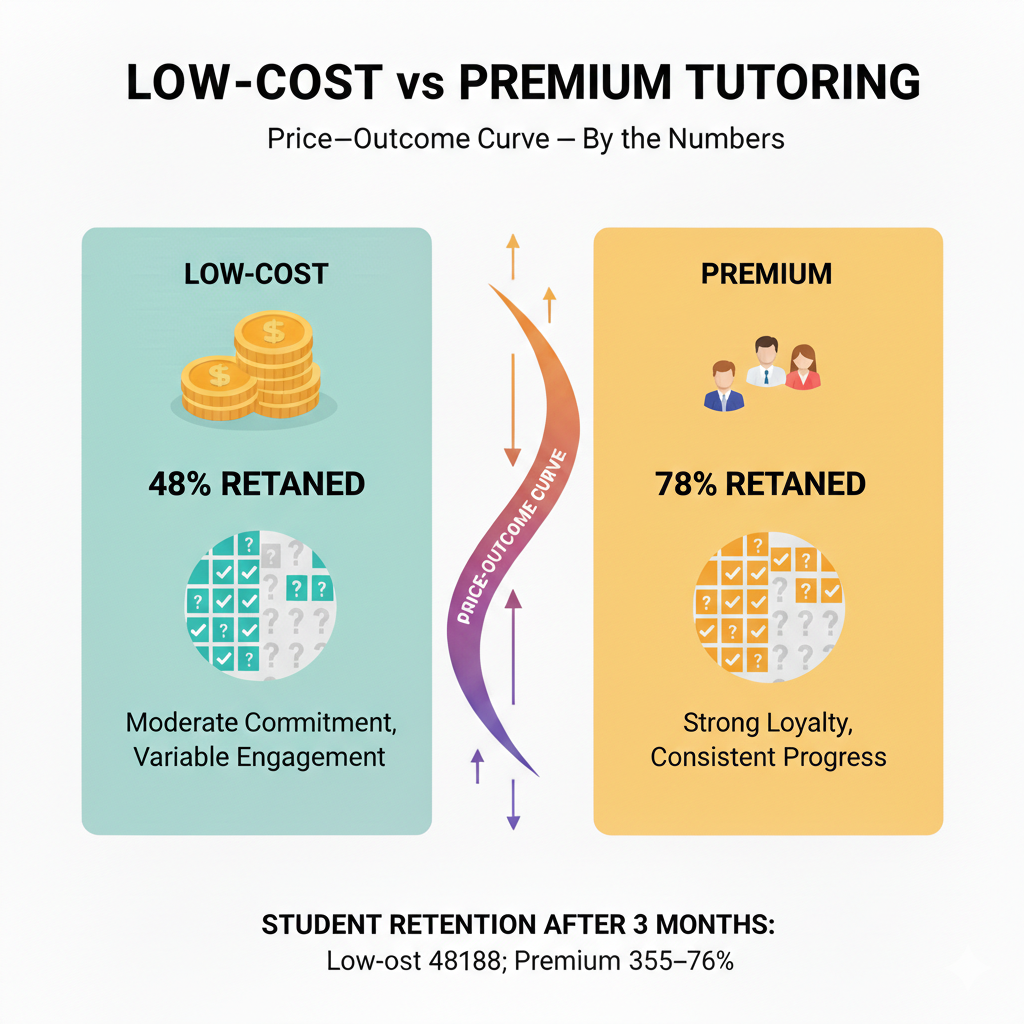
Strong retention also indicates stable tutor relationships, which matter for trust and momentum.
How to act on it today
Before you start, plan for the first ninety days. Commit to a steady rhythm of sessions and a simple home practice slot. Protect calendar slots like doctor visits. Ask the provider how they prevent drop-off in month two, when novelty fades.
Good programs add fresh challenges, mini-milestones, and small celebrations to keep energy high. If you feel like quitting in week five, look at the plan and data before deciding. Adjust goals if needed, not just hours.
At Debsie, we build early wins and then raise the bar at the right time so families stick with it because they want to, not because they must. Try a month, see the gains, and if it fits, roll into a three-month arc with confidence.
12) Homework turnaround time: Low-cost 48–72 hrs; Premium 12–24 hrs
What this number means for momentum
Feedback loses power when it waits. If your child completes homework on Monday and hears back on Thursday, the moment is gone. Mistakes feel distant. In low-cost systems, tutors often juggle large caseloads, so review slows down.
In premium setups, feedback comes fast, within a day, which keeps concepts fresh and mistakes easy to fix. Quick turnaround also supports a healthy loop: attempt, feedback, retry, and success. This loop builds grit and accuracy without frustration.
How to act on it today
Negotiate a simple rule for homework feedback. If your child submits work by a set time, ask for core feedback within twenty-four hours. It can be short, such as a few annotated steps or a short voice note. Ask for one red, one green.
One red tells the biggest fix. One green praises a specific strong move. Keep homework light but regular, no more than twenty to thirty minutes, so quick feedback is realistic. At Debsie, we keep homework meaningful and brief, then return notes within a tight window so your child can try again while the lesson still feels fresh.
Join a trial, and we will show you the loop in action.
13) Response time to parent queries: Low-cost 12–24 hrs; Premium 1–3 hrs
What this number means for partnership
When you message a tutor with a concern, the clock matters. A twelve to twenty-four hour reply window can feel slow when a test is tomorrow or when a homework meltdown just happened. A one to three hour window keeps small issues from growing.
Fast responses do not just calm nerves; they also keep the plan aligned. If a child struggled tonight, the tutor can adjust tomorrow’s session. Quick replies also build trust. You feel seen, and your child sees adults working as one team.
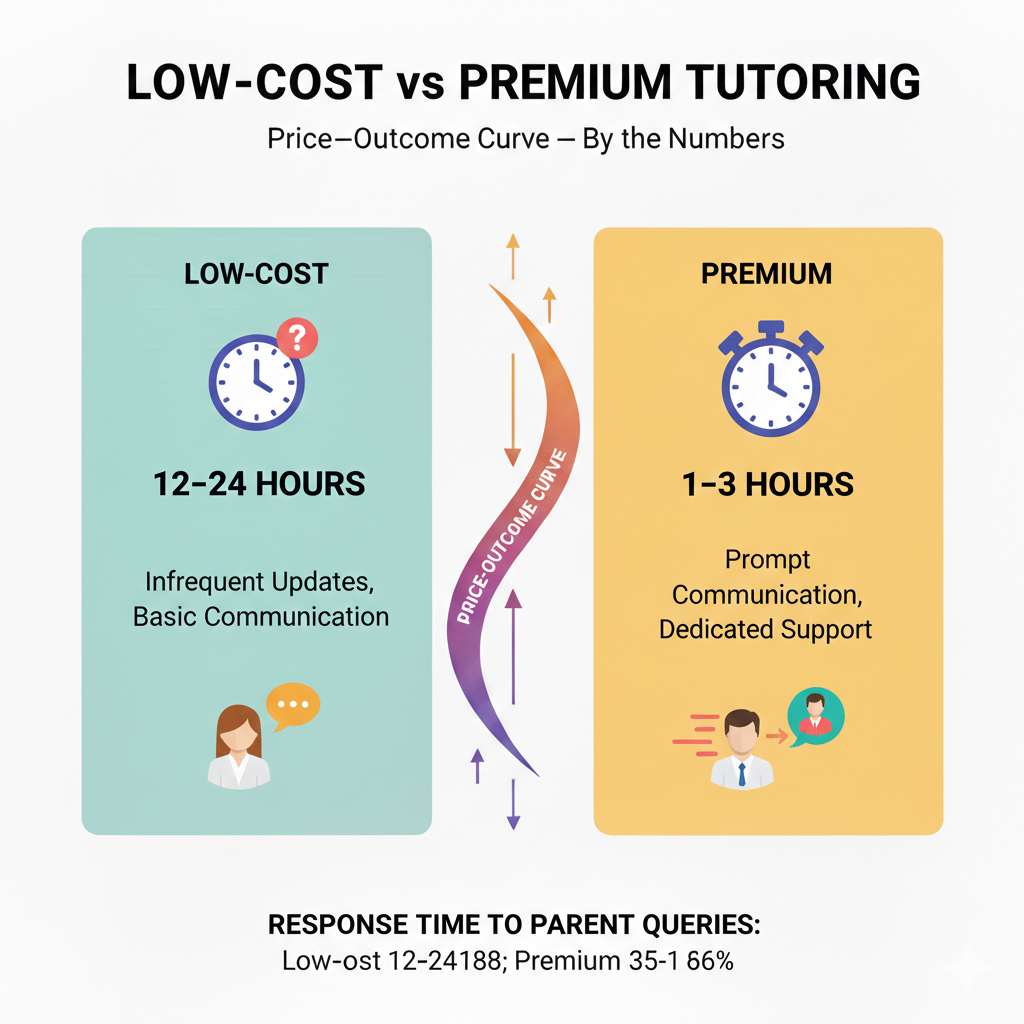
Low-cost services often rely on shared inboxes or part-time staff, which stretches response time. Premium programs staff for speed, use clear escalation paths, and give tutors time in the day for parent messages. The difference shows up in fewer last-minute scrambles and smoother weeks.
How to act on it today
Set a shared rule of the road. Ask the provider for a standard response window, preferred channel, and emergency path. Use one channel for all academic notes to avoid missed messages. When you write, keep it short and specific so a fast reply is possible.
State the exact skill, the date of the event, and the desired outcome. For example, say that the fraction quiz is on Friday, that long division steps keep breaking in step three, and that you want one ten-minute drill added to the next session.
If you need more than a quick answer, ask for a short call slot within twenty-four hours. At Debsie, parents get a clear line to the teaching team and fast, helpful replies that turn stress into a plan. Book a trial and try our message-to-action flow in real time.
14) Attendance rate (scheduled sessions): Low-cost 79%; Premium 92%
What this number means for steady gains
Attendance is the engine of progress. A seventy-nine percent rate means about one in five sessions is missed or not completed. That gap breaks rhythm. Skills fade between lessons, and tutors must spend time reviewing instead of moving forward.
A ninety-two percent rate means most sessions happen as planned. The curriculum flows, spaced practice works, and momentum stays high. Attendance reflects more than discipline.
It reflects how easy it is to book, how flexible rescheduling is, and how engaging each class feels. When sessions are fun and purposeful, kids want to show up. When the system is clear and reminders are strong, families can keep the habit even on busy weeks.
How to act on it today
Anchor the schedule to real life. Pick days and times that match your child’s energy curve, not your ideal calendar. Protect those slots like sports practice. Use a simple pre-session ritual to lower friction, such as a five-minute snack, a two-minute stretch, and a thirty-second “goal of the day” statement.
Ask the provider to send nudges one day before and fifteen minutes before class. If you must miss a session, plan a makeup within the same week so content does not cool. Track attendance on a simple wall chart so your child sees the streak.
At Debsie, we design classes kids want to attend, and we support families with friendly reminders and flexible makeups. Try a trial and feel how easy it is to keep a strong attendance streak that turns into steady results.
15) Reschedule success (missed class): Low-cost 55%; Premium 86%
What this number means for real-life flexibility
Life happens. Sickness, travel, school events, and power cuts can break the best plan. The question is not whether you will miss; it is how easily you can recover. If only fifty-five percent of missed classes get rescheduled, then nearly half of all lost sessions never return.
That’s expensive and frustrating. An eighty-six percent recovery rate means the provider has enough session slots, smart scheduling tools, and a culture that treats makeups as normal.

It also means tutors leave notes that make it easy for another teacher to step in when needed, so quality stays consistent even when schedules change.
How to act on it today
Ask three practical questions before you enroll. How many makeup windows exist each week. How soon after a missed class can the makeup happen. How are notes and plans shared across tutors.
You want a system where a missed Tuesday can be made up by Friday, where schedules show live availability, and where the next teacher can pick up the plan without repeating. At home, build a simple fallback. Keep a list of short practice tasks for days when a makeup is not possible.
Ten minutes of targeted review can hold the line until the next full session. At Debsie, we make rescheduling simple and transparent, so a bump in the road does not become a long detour. Book a trial and ask us to show you how makeups work in a busy week.
16) Measured score gain per 12 weeks (std units): Low-cost +0.22; Premium +0.55
What this number means for outcome velocity
A twelve-week window is long enough to see real movement. A gain of plus zero point twenty-two standard units is modest and usually shows up as fewer careless errors or slightly better quiz scores.
A gain of plus zero point fifty-five is strong and often visible in report cards, benchmark tests, and teacher comments. The difference comes from many small edges layered together. Premium programs tend to start at the right level, teach with clarity, give rapid feedback, use mixed practice, and track results closely.
Each edge adds a few points. Over twelve weeks, those points stack into a larger shift. The key is to match the gain to your goal. If you need to climb a full grade band before exams, you want a program that can move faster.
If your aim is steady confidence and long-term habit building, a lighter gain may be fine as long as it is consistent and stress-free.
How to act on it today
Set a clear twelve-week target at the start. Choose a single, measurable outcome that fits the subject. For math, pick a timed accuracy score on core skills plus a mixed problem set result. For reading, pick words correct per minute plus comprehension questions answered with text evidence.
For coding, pick completion of a clean project with specific features that must run without bugs. Split the twelve weeks into four mini-cycles of three weeks each. At the end of each cycle, run a short check to see movement. If growth stalls for a full cycle, do not add hours blindly.
Instead, diagnose the bottleneck. It may be a missing prerequisite, a study routine that is too loose, or tasks that are too hard or too easy. At Debsie, we plan in twelve-week arcs with mini sprints, so families can see gains in a timeline that makes sense for school calendars.
Join a trial and we will map out a realistic twelve-week curve for your child.
17) Score gain per $100 spent: Low-cost +0.28; Premium +0.22
What this number means for pure dollar efficiency
This stat looks at lift per dollar, not just lift per week. At first glance, low-cost tutoring wins on raw efficiency. For every hundred dollars you spend, you see a slightly higher gain than you do with premium.
That matters when budgets are tight or when you plan a long journey across a school year. The catch is that efficiency is not the same as speed to the finish line. If your child needs a large jump before a fixed test date, a program with higher weekly velocity may still be the smarter choice even if each dollar moves the needle a bit less.
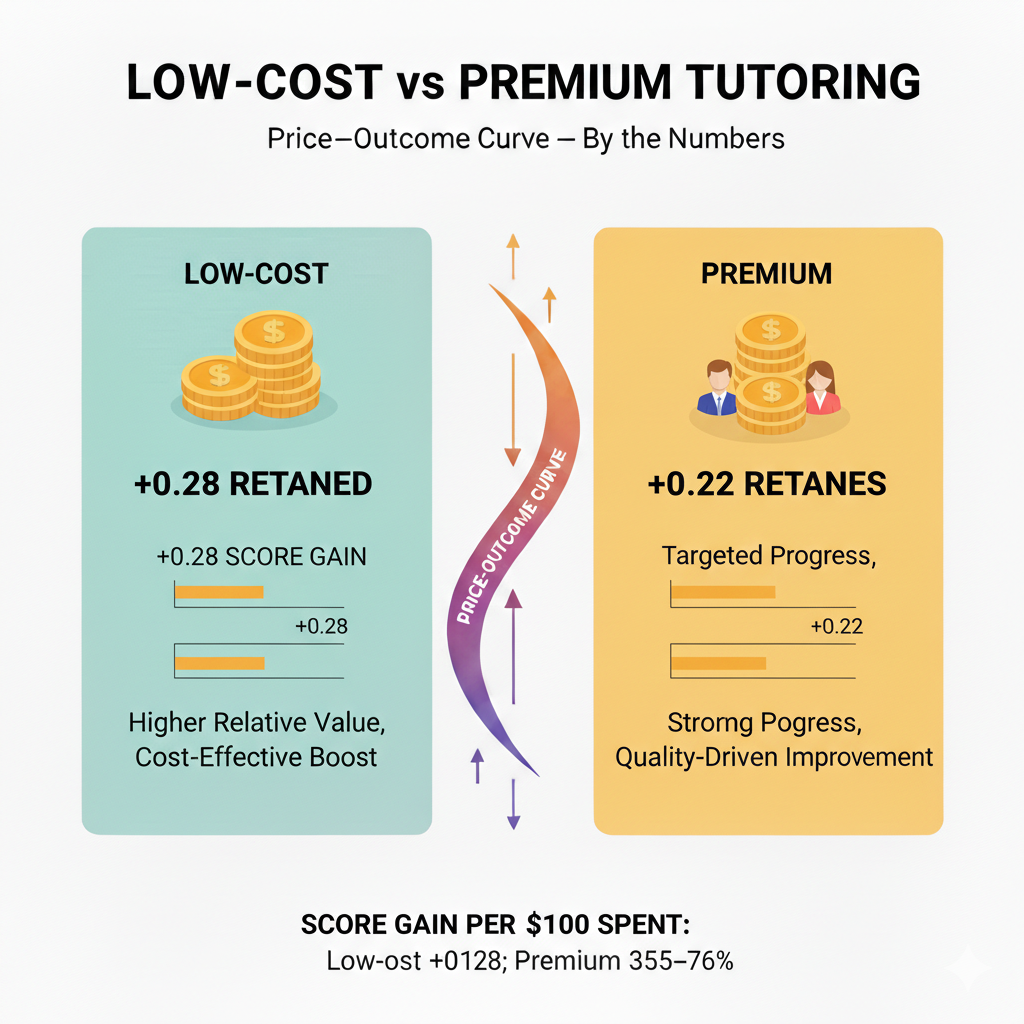
Think of it like fuel economy versus top speed. One car saves gas on long drives. The other gets you to the airport before the gate closes. Your family’s deadline decides which metric matters more this month.
How to act on it today
Start by naming your time horizon. If you have twelve or more weeks and want steady growth, you can lean toward options that deliver strong value per dollar, provided they keep momentum.
If you have six to eight weeks before a big test, consider a premium sprint that stacks expert teaching, faster feedback, and tight diagnostics. Blend models if needed. Many families use a premium jumpstart for four weeks to fix core gaps, then switch to a lower-cost maintenance plan to protect gains.
Track your own efficiency by logging each session’s cost and a tiny score, like a timed accuracy check. If the graph rises each week, your dollars are working. At Debsie, we help you design a mixed plan when it fits the goal.
Try a trial class, share your timeline, and we will map a path that balances speed and spend without guesswork.
18) College/advanced track readiness uplift: Low-cost +6%; Premium +14%
What this number means for long-term doors
Readiness is about more than passing the next quiz. It is about whether your child can handle the next level without anxiety. A six percent uplift is helpful, especially for students who just need a nudge.
A fourteen percent uplift suggests deeper skill formation, better habits, and stronger academic self-belief. Premium programs often weave higher-order thinking into lessons, so students practice analyzing, justifying steps, and checking answers with multiple methods.
That kind of practice builds the muscles needed for honors classes, AP or IB tracks, and early college credit. The difference shows up in counselor meetings and in the courses your child feels brave enough to take.
How to act on it today
Ask any provider to show you what readiness looks like in their system. You should see tasks that go beyond routine exercises. There should be non-routine problems, short writes that explain reasoning, and timed checks that simulate real test pressure.
Build a tiny readiness routine at home. Once a week, ask your child to solve one new problem aloud while explaining why each step is valid. Record it, watch together, and note one fix for next time. Keep the tone supportive and specific.
If your goal is advanced placement, plan backward from key dates. Put practice essays, lab write-ups, or coding projects on the calendar weeks before they are due. At Debsie, lessons train both skill and mindset so students feel ready, not just prepared.
Book a free trial and ask us to show you a sample path from today’s level to an advanced track. You will see each step and how we measure readiness without stress.
19) Project-based learning used: Low-cost 24%; Premium 72%
What this number means for deep understanding
Projects turn knowledge into something you can hold, show, and explain. When tutoring includes projects, students connect ideas, make choices, and debug real problems. A low usage rate means many sessions focus on worksheets and short drills.
That can lift basic accuracy, but it may not build transfer, the ability to use a skill in a new context. A high usage rate means students often build things, like a math investigation, a science mini-lab, an essay with sources, or a working app.
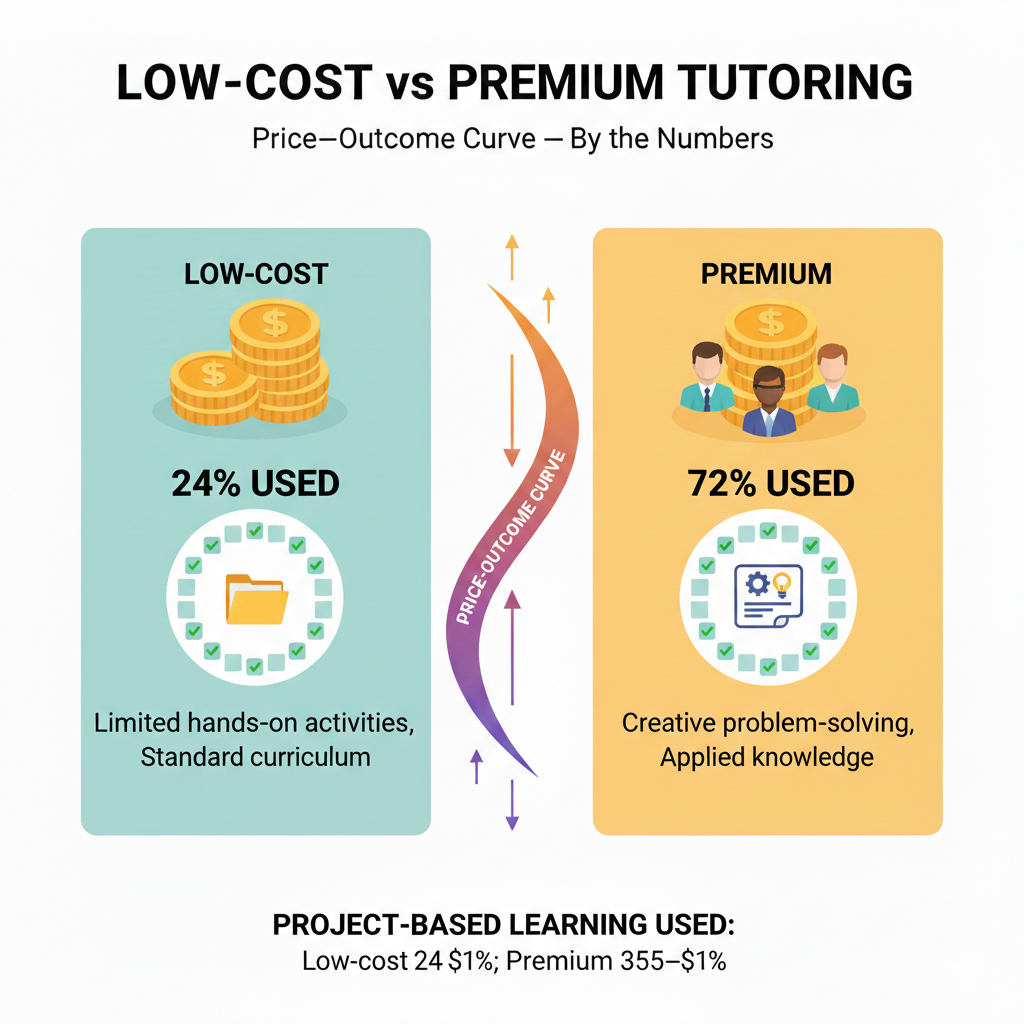
Projects create natural moments for planning, iteration, and feedback. They also make learning fun and sticky. When a child can say, I built this and it works, confidence climbs and stays.
How to act on it today
Ask for at least one project every four to six weeks, scaled to the child’s level. A good project has a clear driving question, a tiny set of success criteria, and a simple timeline with two feedback checkpoints.
Keep materials lean so time goes into thinking rather than formatting. If your child is nervous, start small. In math, turn a unit into a poster that compares two solution methods with examples. In science, conduct a kitchen-safe experiment, collect data in a simple table, and write a short claim with evidence.
In coding, build a micro-game or an automation that solves a home problem, like sorting a list. At Debsie, our gamified challenges double as projects. Kids earn points for planning, testing, and reflecting, not just for final answers.
Try a trial class and we will show you a project that fits your child’s interests, so learning feels like making, not just studying.
20) Soft-skill growth reported (focus/persistence): Low-cost 41%; Premium 68%
What this number means for life beyond grades
Grades open doors, but soft skills keep them open. Focus, persistence, and calm under pressure decide whether a student sticks with hard tasks and finishes strong.
When sixty-eight percent of families report growth here, it usually means sessions include short sprints, mindful breaks, and explicit coaching on how to handle stuck moments. Lower rates suggest the work may be purely academic without building habits.
Soft-skill training shows up in little choices, like using a timer for a five-minute push, naming the exact step that failed, and resetting with one deep breath before trying again. These habits help in class, in sports, and at home.
How to act on it today
Bake soft skills into each week. Start sessions with a tiny focus ritual. It could be writing a one-line goal, doing a thirty-second box breath, and clearing the desk except for needed tools. During tough problems, teach a two-step reset: mark the spot where confusion begins, then verbalize the next best guess before checking notes.
End with a quick reflection. Ask what was the hardest moment and what move helped most. Keep the tone simple and kind so your child links effort to progress. Ask your tutor to report one soft-skill metric weekly, such as minutes on task without prompts or the number of independent restarts during a challenge.
At Debsie, we coach these skills on purpose, inside live lessons and through our game system, so grit grows without lectures. Book a trial and see how small routines can change how a child meets hard work.
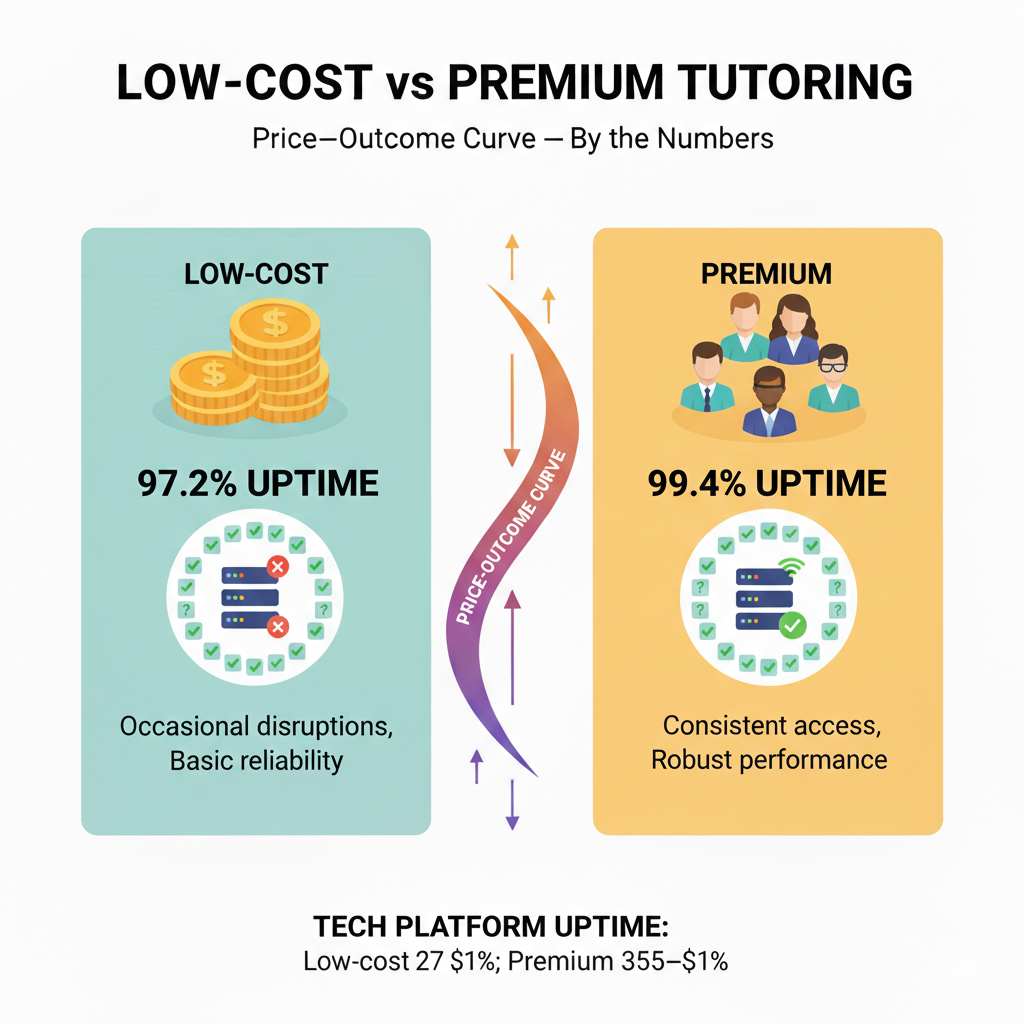
21) Tech platform uptime: Low-cost 97.2%; Premium 99.4%
What this number means for smooth learning
Uptime is the share of time your child can join class without tech trouble. At 97.2 percent, low-cost tools work most days, but a few times each month you may hit freezes, audio drops, or login loops that eat ten to fifteen minutes.
At 99.4 percent, classes almost always start on time and stay stable. This small gap adds up. When a session loses five minutes at the start and three in the middle, that is eight minutes gone. Over eight sessions, you lose more than an hour.
How to act on it today
Test the platform before you enroll. Run a five-minute tech rehearsal on the same device and network your child will use. Join a dummy room, turn on camera and mic, try the whiteboard, and upload a file. Time how long it takes from click to class.
Ask what happens if the system goes down mid-lesson. A good provider offers a backup room, a phone bridge, or a quick switch to a known tool. Set up your home base too. Use wired ethernet if possible, or place the router high and close. Keep one clean browser profile just for school.
Teach your child two quick fixes: refresh the page and rejoin; if that fails, switch to the backup link. At Debsie, we run on stable tools with fast fallbacks and a support team that answers in minutes. Book a free trial and see how a friction-free room makes learning feel calm and fast.
22) Tutor turnover (annual): Low-cost 38%; Premium 14%
What this number means for trust and continuity
Turnover is how often tutors leave. At thirty-eight percent, more than one in three tutors may move on each year. That can lead to sudden changes in style, pacing, and tone. Children need time to trust a new adult.
When the teacher changes often, the plan resets and small gains can stall. At fourteen percent, most students keep the same tutor across terms. The tutor knows the child’s quirks, fear points, and strengths.
They can spot a wobble early and adjust fast. Low turnover also signals stronger pay, training, and support behind the scenes, which tends to show up as better lessons.
How to act on it today
Ask the provider for their turnover rate and how they protect continuity when staff changes. Request that your child’s plan live in a shared system, not only in a tutor’s notebook. That way, if a switch must happen, the next tutor can read the story in minutes and keep the same tone and targets.
In the first session with any new tutor, do a quick handoff call for five minutes. Share two wins, two worries, and one habit that helps your child start well. Keep a small “about me” note your child writes for new tutors: favorite feedback style, a calm-down move that works, and one topic they love.
At Debsie, we invest in training and mentoring so tutors stay and grow. Plans are shared, notes are structured, and transitions are smooth when life shifts. Try a trial class and feel how steady coaching builds trust week after week.
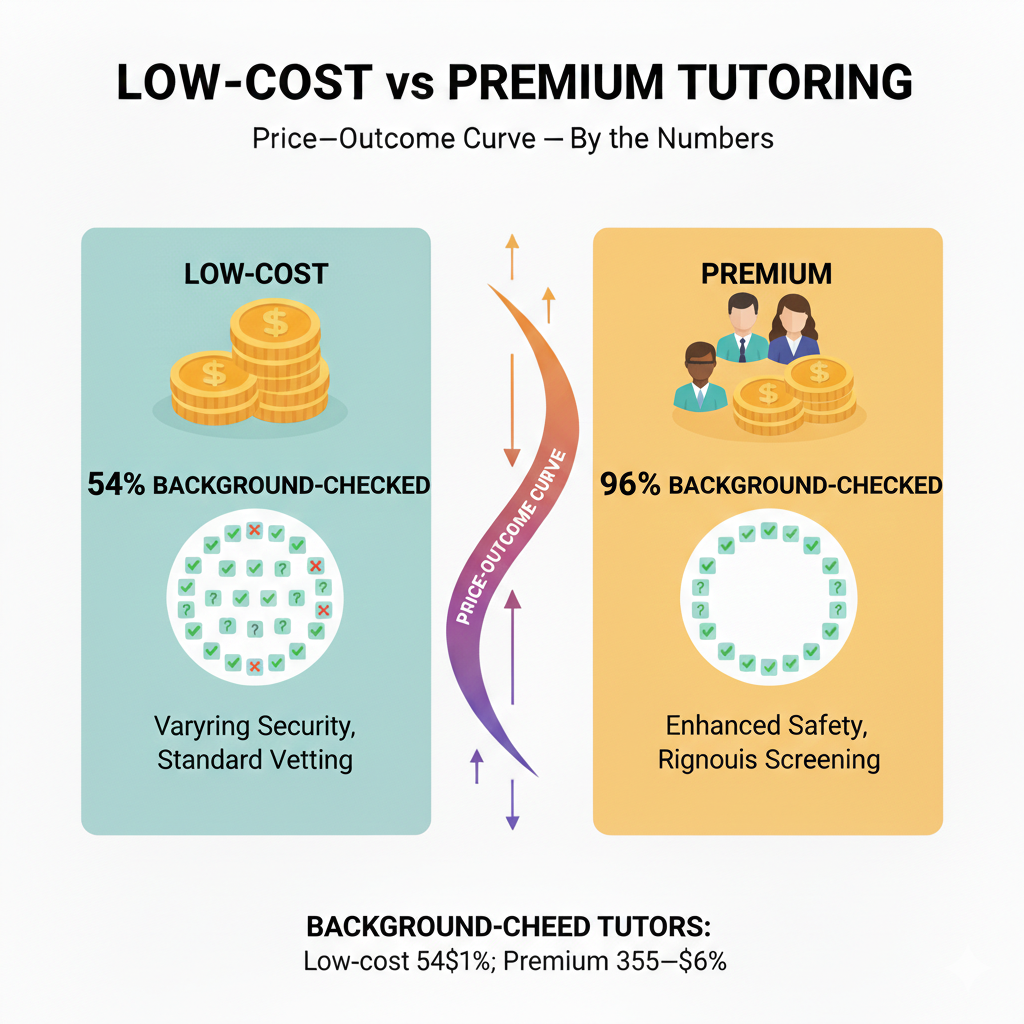
23) Background-checked tutors: Low-cost 54%; Premium 96%
What this number means for safety and peace of mind
Safety sits above every other goal. With background checks at fifty-four percent, many low-cost providers may not vet every tutor the same way. With ninety-six percent, nearly all tutors pass through ID checks, criminal record checks where applicable, and reference calls.
The difference is not just paperwork. It shapes culture. When safety is treated as a must-have, standards around conduct, privacy, and communication stay high. Parents relax, kids feel protected, and the learning space remains focused and kind.
How to act on it today
Ask the provider exactly what checks they run, how often they recheck, and what training tutors receive on child safeguarding and digital conduct. You should hear clear answers about identity verification, background screening by region, and mandatory refresh cycles.
Ask how sessions are monitored and how concerns are handled. Prefer platforms that allow session recording with secure storage so reviews are possible when needed. At home, set basics for online safety.
Place the study desk in a visible space, keep the camera view clean, and teach your child to report any message that feels odd. At Debsie, we vet tutors carefully and train them on safety practices, tone, and boundaries.
You get peace of mind and a classroom that stays warm and professional. Book a free trial and meet a tutor who has passed our checks and cares deeply about your child’s well-being.
24) Trial-to-enrollment conversion: Low-cost 23%; Premium 47%
What this number means for first-fit quality
Conversion shows how often families choose to stay after a trial. At twenty-three percent, fewer than one in four trials lead to enrollment, which may signal uneven quality or a mismatch between promise and experience.
At forty-seven percent, nearly half who try decide it is worth it. Trials are the truth. They show the real pace, the clarity of teaching, and how your child feels in the room. Higher conversion often reflects stronger diagnostics, clear plans, and a feeling of care.
It also suggests the program sets the right expectations before the first class, so families know what will happen and why.
How to act on it today
Use the trial like a mini-audit. Before the session, send two lines about your child’s needs and one sample problem. During the session, watch for specifics. Did the tutor name a clear goal in the first five minutes.
Did your child get to talk, write, and solve while the tutor listened and probed. Did the lesson end with one tiny assignment and a next step. After the session, ask your child three questions. What felt easy. What felt tricky.
What did you learn that you can use tomorrow. If answers are clear and your child’s mood is upbeat, you have a fit. At Debsie, trials are not sales demos. They are real classes with a small diagnostic and a plan you can see. Book a free trial and judge by feel and facts, not by slides.
25) Refund/guarantee availability: Low-cost 19%; Premium 63%
What this number means for risk and confidence
A refund or guarantee shows the provider is willing to share risk. At nineteen percent, most low-cost providers may not offer refunds beyond basic cases. At sixty-three percent, many premium services offer a first-class guarantee, a satisfaction window, or credit for missed value.
Guarantees do not replace judgment. They do, however, push providers to keep standards high and make it easier for families to try without fear. When a company stakes money on your happiness, they tend to plan better, train harder, and respond faster when things slip.
How to act on it today
Read the policy in plain language. Look for three points. What counts as a refund trigger. How you request it. How fast it is processed. Beware of promises that sound big but hide behind complex forms or narrow time windows.
Ask for examples of when the provider granted a refund or credit and how they fixed the root cause. At home, set your own review point. After two weeks, decide whether to continue, adjust, or stop. If you use a guarantee, be fair and specific.
Share data and feedback so the provider can learn. At Debsie, we stand by our teaching. If we miss the mark, we work with you to make it right, because trust matters. Start with a free trial and see how confidence grows when results and service align.
26) Hidden fees reported by parents: Low-cost 22%; Premium 7%
What this number means for real cost
A price tag is only honest if it includes everything you need to learn well. When twenty-two percent of parents report hidden fees in low-cost programs, it means many families meet surprise charges after signup.
These might be add-ons for placement tests, printed workbooks, platform access, recording storage, or last-minute reschedules. Small fees appear harmless, but they stack up and can turn a cheap plan into a stressful plan. In premium services the rate of surprise fees is lower at seven percent.
This does not mean premium is always perfect, but it often means the total offer is clearer upfront. A clear offer helps you plan your budget and prevents money tension from spilling into learning time. When money drama stays outside the room, your child feels safe to focus and try hard things.
How to act on it today
Ask for a one-page all-in quote before you enroll. It should list tuition, materials, platform access, diagnostics, recordings, makeups, cancellations, rush sessions, and exam boot camps. For each item, confirm whether it is included or billed.
Circle anything that feels fuzzy and request a yes or no answer in writing. Ask how the provider handles holidays, weather closures, and tech outages. If a program uses packages, ask whether credits expire and how soon.
Keep your own guardrail at home. Set a monthly tutoring budget with a tiny buffer for unusual weeks, and review the invoice the same day it arrives so small errors do not grow. At Debsie, we keep pricing plain and simple.
Your quote shows what is included, what is optional, and how refunds or credits work. This way you can breathe easy and keep every minute of class for learning, not billing.
27) Group class size cap: Low-cost 15; Premium 6
What this number means for voice and feedback
A cap tells you the absolute top number of students in a group. At fifteen, a class can feel busy. The tutor needs strong routines to make sure every child speaks and gets attention.
In the right hands, a big class can still be lively and useful for review, but quiet students can fade unless the structure forces turns. At six, every child has a voice. The tutor can cycle through students quickly, listen to full explanations, and give targeted cues within seconds.
Smaller caps also protect the pace when one student needs extra help, because the tutor has enough time to assist without losing the rest of the class. Over weeks, that means fewer gaps and more confidence. The cap also influences the social feel.
With six, the group bonds faster, which makes brave thinking more common and mistakes less scary.
How to act on it today
Before you join, ask to watch five minutes of a real group class. Do a simple count. How many total student turns happen in five minutes. Divide by the class size to estimate turns per child. If a child gets at least one short turn each five minutes, the cap and routine are working.
Ask the tutor how they handle cold-calls, think time, and quick checks. Look for simple tools like name cards, short write-then-share moments, and mini whiteboards for fast scanning. If you must choose a larger cap for budget reasons, pair it with one short one-on-one check-in every other week to catch hidden issues.
At Debsie, we cap small and design lessons where each student speaks, writes, or codes every few minutes. Book a free trial and feel the rhythm of a tight, friendly group where your child’s voice matters.
28) 1:1 availability: Low-cost 36%; Premium 81%
What this number means for precision teaching
One-on-one time is the scalpel of tutoring. It fixes the exact thing that holds your child back. When one-on-one is available only thirty-six percent of the time, it can be hard to schedule targeted help right when you need it.
You might wait weeks for an opening or rely on group time to solve private roadblocks. In premium services, one-on-one is available far more often at eighty-one percent. This means you can add a focused session before a test, after a slump, or when a new unit begins.
One-on-one also helps with mindset. A private space makes it easier to admit confusion, ask the small question, and practice the hard step until it feels safe. Over time, periodic one-on-one sessions keep the plan sharp and prevent tiny gaps from becoming big walls.
How to act on it today
Build a simple cadence around your child’s calendar. Use group classes for steady practice and community, then add a thirty to forty-five minute one-on-one booster at three key moments. Book one week before each big test to rehearse weak spots.
Book one after each report card to digest teacher notes and reset goals. Book one at the start of a new unit to preview tricky ideas. When you request one-on-one time, send the tutor a two-line brief with one sample problem or writing paragraph.
State the exact point of failure so minutes do not drift. After the session, ask for one tiny assignment that your child can finish in ten minutes to lock in the fix. At Debsie, one-on-one slots are easy to book, and tutors come prepared with targeted drills and warm coaching.
Try a free trial and we will show you how a short, focused session can flip a tricky topic into a win within days.
29) Session recording & review access: Low-cost 28%; Premium 74%
What this number means for rehearsal and recall
Recordings turn a single class into a resource you can revisit. When only twenty-eight percent of low-cost programs provide access, families lose a powerful memory tool. Without recordings, a tough explanation may vanish the moment the call ends.
With seventy-four percent access in premium setups, students can replay key moments, pause at tricky steps, and practice with the exact language the tutor used. This matters for shy learners who hesitate to ask the same question twice.
It helps parents too. You can peek at the lesson, understand the method, and support homework without guessing. Recordings also protect continuity. If a child misses a session, they can watch, complete the tiny exit task, and arrive at the next class less behind.
Over weeks, that means fewer review detours and more forward motion. Finally, recordings create a growth mirror. Students can watch themselves think out loud, notice where they rush or stall, and improve pacing and clarity.
How to act on it today
Ask for automatic recording with easy access within twenty-four hours, organized by date, topic, and tags so you can find the exact clip before a quiz. Build a short weekly review habit.
Choose one ten-minute segment, usually the hardest explanation of the week, and replay it with your child at 1.25x speed. Pause when confusion appears, then write a one-sentence summary and solve one sample problem right after.
Keep the tone light and supportive. If your child dislikes watching themselves, start with audio only, then add short video moments as comfort grows. For writing or coding, use recordings to capture live revision.
Watching the keystrokes and hearing the tutor’s prompts helps lock in process, not just answers. At Debsie, most sessions can be recorded, stored securely, and shared in a clean library your family can access anytime.
Book a free trial, ask to see a sample recording, and notice how fast your child can relearn a hard idea when the exact moment is one click away.
30) Net Promoter Score (NPS): Low-cost +12; Premium +48
What this number means for word-of-mouth confidence
NPS asks a simple question. Would you recommend this service to a friend. A score of plus twelve suggests mild goodwill with many on the fence. Families saw some value, but not enough to rave.
A score of plus forty-eight signals strong advocacy. Parents not only stay; they tell others. This gap usually reflects day-to-day consistency more than one big feature. High-NPS programs tend to start with a clear diagnostic, follow a visible plan, run tight lessons, send quick updates, and respond fast when hiccups happen.
The result is a child who feels capable and a parent who feels informed. When both happen together, trust grows and praise spreads. NPS also predicts stability. Services that people recommend tend to invest in quality and keep improving, which reduces the risk of surprises in the middle of a semester.
How to act on it today
When you evaluate a provider, ask for their latest NPS and how often they collect it. Ask what they changed in the last three months based on feedback. You want specifics, like refining placement tests, shortening response times, or adding small-group office hours.
Build your own tiny NPS at home after four weeks. Ask your child on a scale of zero to ten how likely they are to look forward to the next class, then ask yourself how likely you are to recommend the program to another parent.
If either number is under seven, identify one fix you can request this week, such as clearer goals at the start of class or faster homework feedback. Keep communication open and kind so the team can respond quickly.
At Debsie, we track satisfaction closely and act on it. Our goal is to earn your trust every week with clear plans, warm teaching, and visible results. Try a free trial, meet a tutor, and judge us by one simple test. After the class, do you feel ready to tell a friend why this works.
Conclusion
The curve is clear. Price matters, but only when you see what fills each hour. Premium programs tend to pack more planning, faster feedback, and steadier support into every minute. Low-cost options can deliver strong value when goals are simple and time is flexible. The right choice depends on your deadline, your child’s starting level, and how much structure you want each week.
If you need a fast lift by a fixed date, lean toward higher velocity even if each dollar moves the needle a bit less. If you want slow, steady growth across a long term, choose a model that you can sustain without stress and hold it to a simple plan with visible checkpoints.