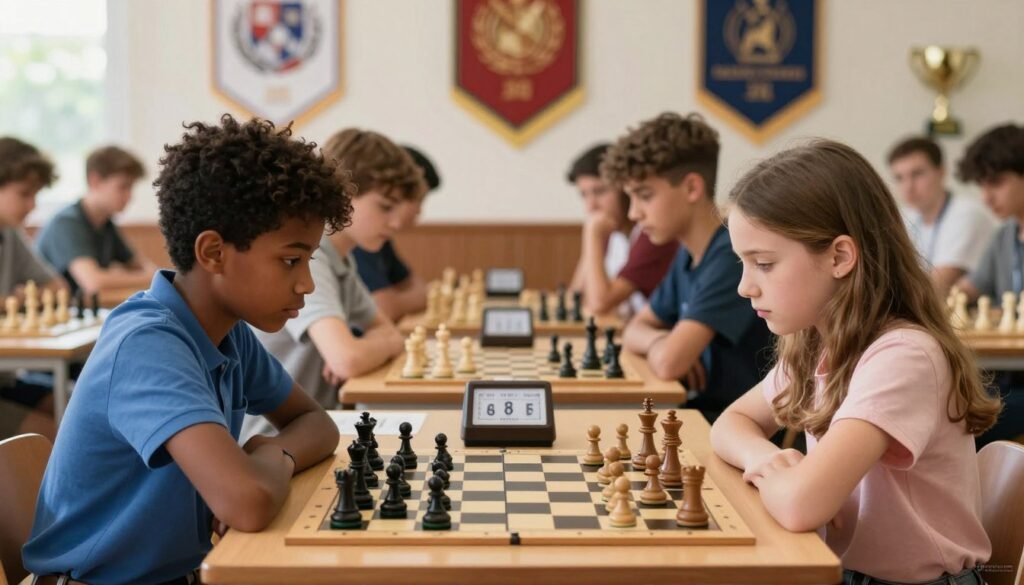
Some chess players are so young that they still have school, homework, and family rules. Yet they are already sitting across from grown grandmasters and making the whole chess world look twice. That is why this list of the best chess players under 18 is so exciting. These are not just “good kids.” They are the next names parents, coaches, and young players should watch. Some are already breaking records. Turkey’s Yağız Kaan Erdoğmuş, born in 2011, has already become one of the highest-rated young players in the world, and reports say he crossed the huge 2700 rating mark at only 14. Argentina’s Faustino Oro, born in 2013, is another rare talent, with a FIDE rating above 2500 before most kids enter their teen years.
Find the right learning experience
Tell us a little about the learner and what you are looking for. Our team will review your answers and help you identify the most suitable next step.
- Takes only a few minutes
- No payment required
- Personalised recommendations
Your information will only be used to respond to your enquiry.
Why the under-18 chess race matters right now
The chess world has changed a lot. Years ago, people were shocked when a teenager became a grandmaster. Today, some children are playing like top adults before they can even drive a car. This does not mean chess has become easy.
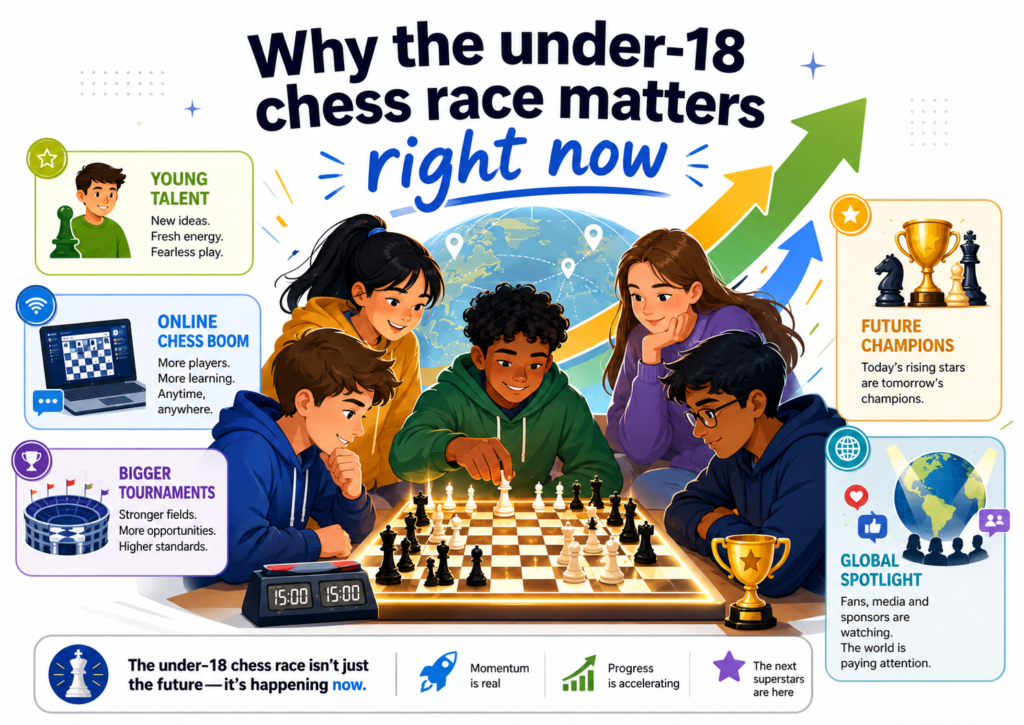
It means young players now have better coaches, more online games, more puzzles, more video lessons, and more chances to play strong events.
That is why the best chess players under 18 are so important. They show us where the game is going next. They also show parents something very useful. A child does not need to be a “genius” to grow in chess. What matters more is steady practice, good coaching, clear feedback, and a calm mind.
The old chess path has changed for today’s children
In the past, a young chess player had to travel a lot, find rare books, and hope to meet strong players in person. Now a child can play a strong opponent online in minutes. They can study famous games, solve puzzles, join live classes, and review mistakes from home.
This is one big reason why today’s young stars are rising so fast.
Find the right learning experience
Tell us a little about the learner and what you are looking for. Our team will review your answers and help you identify the most suitable next step.
- Takes only a few minutes
- No payment required
- Personalised recommendations
Your information will only be used to respond to your enquiry.
But there is a catch. Easy access does not always mean smart learning. A child can play hundreds of online games and still repeat the same mistakes. They may move too fast, miss simple threats, or copy openings without knowing the ideas.
That is why guided learning matters. At Debsie, children do not just play moves. They learn why moves work, how to think, and how to stay calm when the board gets hard.
Young stars now grow faster because their training is more focused
The best under-18 players are not just playing random chess all day. They train with purpose. They study openings, but they also work on endgames. They solve tactics, but they also review their own games. They learn how to attack, but they also learn how to defend when things go wrong.
This is a lesson every parent can use. Your child does not need eight hours of chess each day to improve. A smart one-hour session with a coach can beat many hours of careless playing. A child who knows what to fix will grow faster than a child who only plays and hopes.
That is why a free trial class with Debsie can be a strong first step. It helps parents see how their child thinks, where they are strong, and what they should learn next.
How we chose the best chess players under 18
A list like this should not be based on hype alone. Many young players get attention after one big win, but the best future stars show more than one good result. They show strong ratings, steady growth, fearless play, and the ability to fight against much older players.
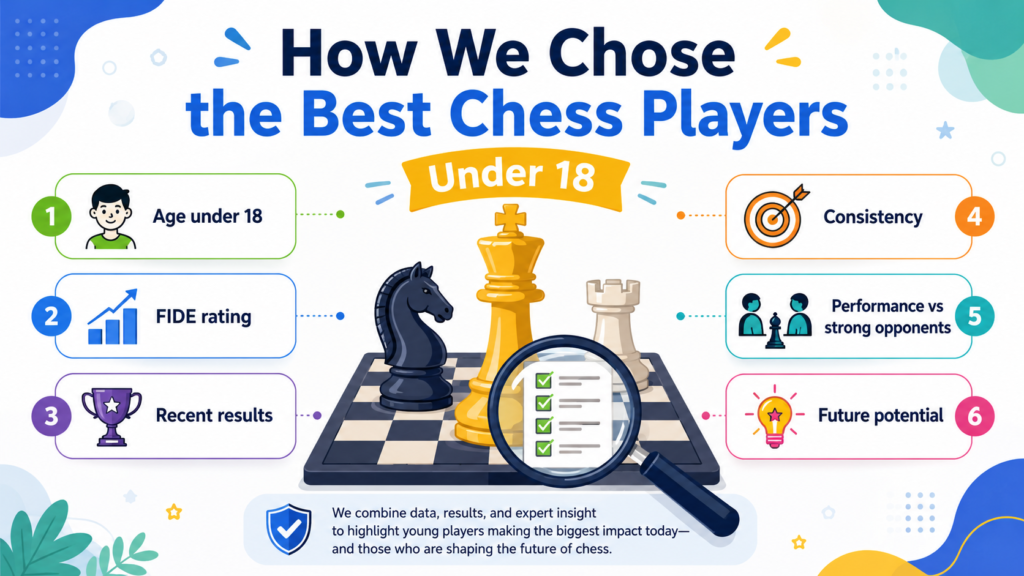
For this article, the focus is on players who are still under 18 around May 2026, or who are part of the current teenage wave shaping chess right now. We look at FIDE ratings, titles, age, recent results, and the kind of chess they play.
FIDE profiles are useful because they show official ratings, titles, birth year, and federation details. For example, Yağız Kaan Erdoğmuş is listed by FIDE as a grandmaster from Türkiye, born in 2011, with a standard rating above 2700 in the current data shown by FIDE.
Rating matters, but it is not the whole story
A rating is like a score that shows how strong a player has been in rated games. Higher is better. But rating alone does not tell the whole story. A 14-year-old with a 2500 rating may be more exciting than a 17-year-old with a slightly higher rating because the younger player has more time to grow.
A player who improves quickly may be more dangerous than one who stays at the same level for years.
This matters for parents too. Your child’s rating is not their full story. A child may have a low rating but a strong memory. Another child may lose many games but show great fighting spirit. Another may already see tactics well but need help with patience. A good coach looks at the whole child, not just the number.
Parents should look for growth, not just trophies
Many parents ask, “Is my child talented?” A better question is, “Is my child learning well?” Talent can help, but habits carry a child much further. The best young chess players usually share the same habits. They review losses.
They ask better questions. They do not quit after one mistake. They learn from stronger players instead of feeling scared by them.
This is where chess becomes much more than a board game. A child who learns to stay calm after losing a queen is also learning how to handle a bad test, a hard match, or a tough day at school. Chess teaches children that one mistake is not the end. There is almost always another move to try.
At Debsie, this is a big part of the learning style. The aim is not only to help children win more games. It is to help them think clearly, focus longer, and build confidence that lasts outside chess too.
Yağız Kaan Erdoğmuş is the teen grandmaster making history
Yağız Kaan Erdoğmuş is one of the most exciting young chess players in the world right now.
He is from Türkiye, was born in 2011, and holds the grandmaster title. His FIDE profile shows him with a standard rating of 2708, which is a huge number for any player, and even more amazing for someone born in 2011.
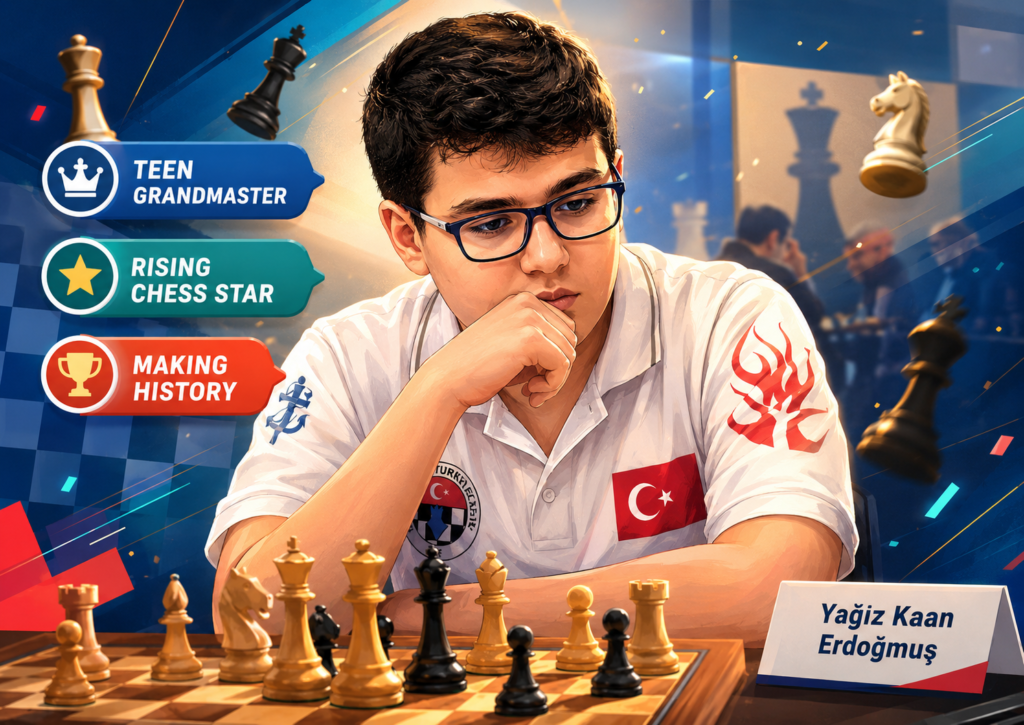
To understand how special this is, think of 2700 as a wall that only world-class players cross. A player rated 2500 is already very strong and can become a grandmaster. A player rated 2600 is a serious professional.
A player rated 2700 is in elite territory. When a young teenager reaches that level, the chess world pays attention.
He is not just young; he is already playing elite chess
Reports in April 2026 said Erdoğmuş became the youngest player in history to cross the 2700 FIDE rating mark. The Guardian reported that he reached this level at 14 and had wins against famous grandmasters such as Veselin Topalov, Peter Svidler, and Maxime Vachier-Lagrave.
This tells us something important. He is not only beating players his own age. He is taking points from adults who have spent years near the top of chess. That takes more than quick tactics. It takes deep opening work, strong nerves, and the power to sit through long, tense games without falling apart.
His rise teaches young players to trust serious practice
The most useful lesson from Erdoğmuş is not “become 2700 at 14.” That would be too much pressure for most kids. The real lesson is this: strong practice adds up.
Young players can learn from his path by taking each game seriously. They can stop rushing. They can review mistakes. They can learn one opening well instead of memorizing ten openings badly. They can solve tactics each day and still make time for slow games, because slow games teach patience.
For a child at Debsie, this kind of growth starts with small steps. First, learn to see checks, captures, and threats. Then learn simple plans. Then learn how to use all pieces together. With the right coach, the board stops feeling like a mess and starts feeling like a story.
Faustino Oro is the young star who makes chess feel magical
Faustino Oro from Argentina is one of the rarest young talents in chess. He was born in 2013, and his FIDE profile lists him as an International Master with a standard rating above 2500 in current FIDE data.

That number is hard to believe for such a young player. Most children that age are still learning how to avoid simple checkmates. Oro is already playing at a level many adult masters never reach. He became famous because of how fast he improved and how calm he looked while playing strong opponents.
His biggest strength is how mature his chess looks
Some young players are good because they attack a lot. They win wild games and surprise people. Oro can do that, but what makes him special is how grown-up his chess can feel. He often plays with good sense. He understands danger. He can press small edges. He is not only looking for quick tricks.
This is a key point for parents. Good chess is not only about flashy moves. Many games are won by small choices.
A child improves when they learn to ask simple questions before moving. Is my king safe? Is my piece hanging? What is my opponent trying to do? Can I improve my worst piece?
Children can copy his calm thinking before they copy his openings
A young player does not need to study Oro’s full opening files to learn from him. They can start by copying his calm way of thinking. Before every move, pause. Look at the whole board. Do not move only because a move “looks nice.” Try to understand what changed after the opponent’s last move.
This small habit can change a child’s chess very fast. Many young players lose not because they know too little, but because they move too quickly. They see one good idea and play it without checking danger. A coach can help slow that moment down.
At Debsie, children are trained to think before they touch a piece. That one habit can save games, build focus, and help children feel more in control.
Abhimanyu Mishra shows what fearless ambition looks like
Abhimanyu Mishra from the United States is another major name in the under-18 chess world. His FIDE profile lists him as a grandmaster born in 2009, with a standard rating above 2600 in the current data shown by FIDE.
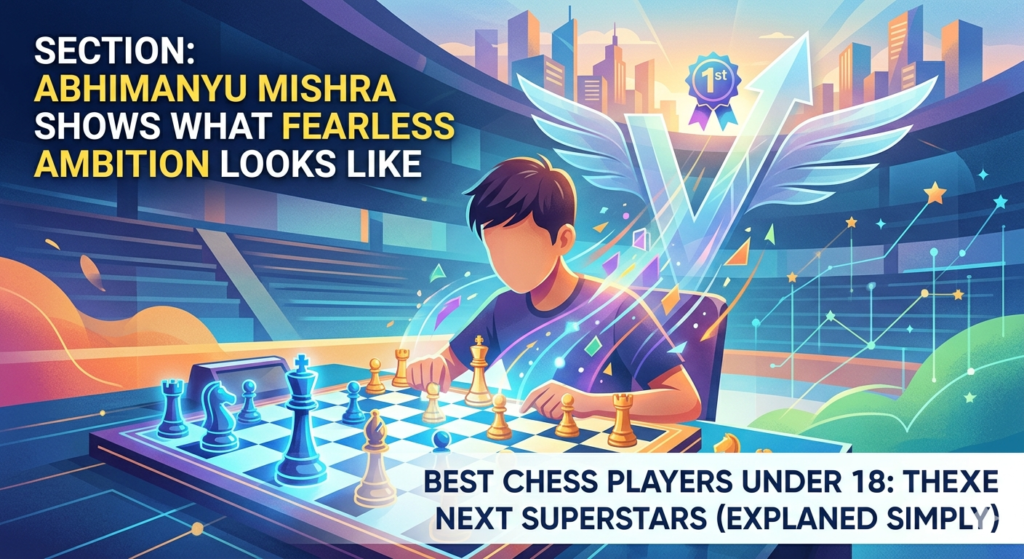
He became famous earlier because he broke the record for youngest grandmaster in history. Chess.com’s updated list of youngest grandmasters still presents him as the player who achieved the grandmaster title at 12 years, 4 months, and 25 days.
His story is about pressure and courage
Being called a record-breaker sounds fun, but it also brings pressure. Everyone watches your games. Every loss gets noticed. Every event becomes a test. For a young player, that can be heavy. Mishra’s story matters because he kept playing, kept improving, and kept facing strong players even after the first big headline faded.
That is one of the hardest parts of chess. Winning one event is great. Growing year after year is harder. A child must learn to handle both praise and mistakes. They must not become lazy after a win or crushed after a loss.
A brave player still needs a steady routine
Mishra’s rise reminds us that ambition must be matched with routine. A child may dream of becoming a champion, but dreams need daily structure. They need puzzle time, game review, slow games, rest, and support from adults who understand that children are still children.
Find the right learning experience
Tell us a little about the learner and what you are looking for. Our team will review your answers and help you identify the most suitable next step.
- Takes only a few minutes
- No payment required
- Personalised recommendations
Your information will only be used to respond to your enquiry.
This is where parents can help in a healthy way. Do not only ask, “Did you win?” Ask, “What did you learn?” Do not only praise trophies. Praise good effort, honest review, and calm thinking. A child who feels safe after losing will be more willing to try again.
Debsie’s coaching style fits this idea. The goal is to help children enjoy the climb, not fear every game. When chess feels safe and exciting, children learn better.
Alice Lee proves that young stars can be strong, steady, and bold
Alice Lee from the United States is one of the strongest young female players in the world. Her FIDE profile lists her as an International Master and Woman Grandmaster, born in 2009, with a standard rating of 2415 in the current data shown by FIDE.
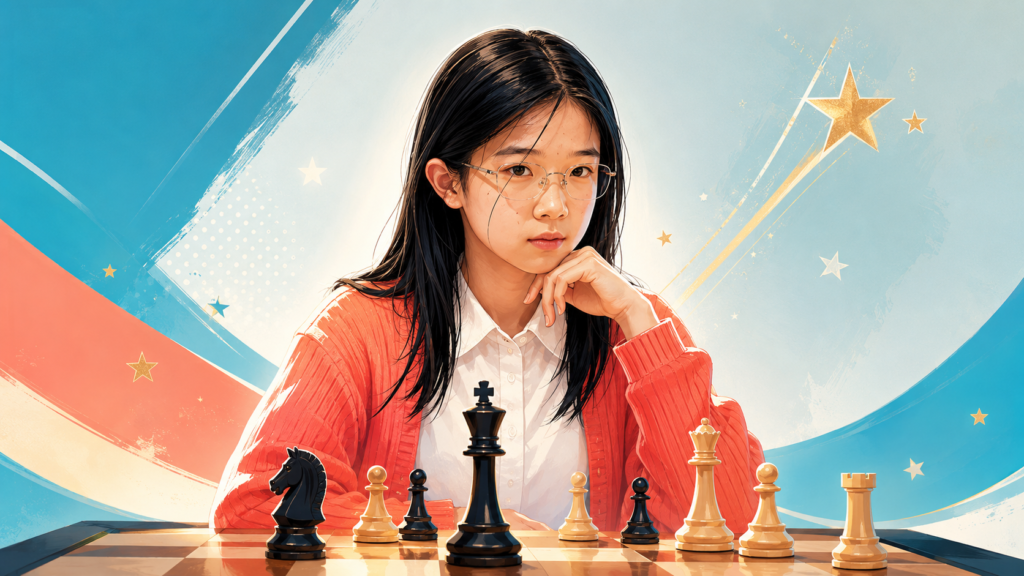
Her profile also shows that she has stayed near the top of the girls’ rating lists across many months. That kind of steady level is very impressive because it means she is not just having one lucky run. She is showing long-term strength against serious players.
Her games teach children that strong chess can be balanced
Alice Lee’s chess is a good model for young learners because she is not only a wild attacker. She can play sharp positions, but she also understands structure, piece activity, and defense. This is the kind of complete chess that helps a player keep growing.
Many children love attacking, and that is great. Attacking builds energy and joy. But if a child only attacks, they may lose when the attack fails. Strong players learn balance. They attack when the time is right. They defend when they must. They trade pieces when it helps. They keep tension when it gives them chances.
Girls should see that chess belongs to them too
Alice Lee’s success is also important because many girls still do not get enough encouragement in chess. Some girls enter a class and see more boys than girls. Some may feel shy. Some may think chess is not for them. Strong young female players show that this is not true.
Chess belongs to every child who wants to learn. Girls can be fierce, smart, calm, creative, and brave on the board. When a girl sees players like Alice Lee, she can picture herself getting stronger too.
At Debsie, every child is welcome. The class is not about being loud or showing off. It is about learning, asking questions, trying ideas, and growing at the right pace.
Ediz Gürel shows how a young player can become strong without losing control
Ediz Gürel is another name parents and students should know. He is from Türkiye, was born in 2008, and FIDE lists him as a grandmaster with a standard rating of 2641. That is not just “promising.” That is already very strong chess, the kind of level where every mistake can be punished by powerful players.
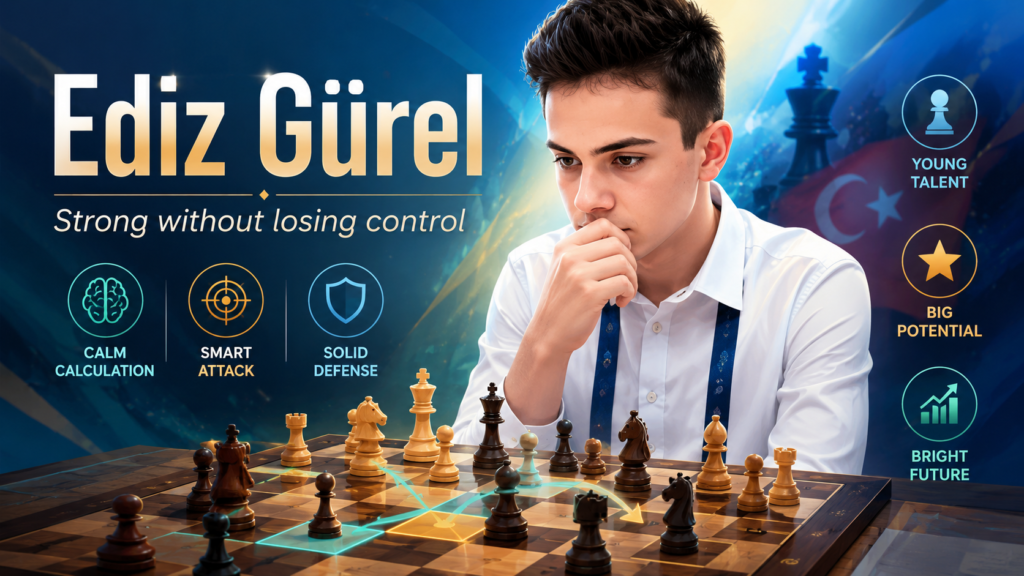
What makes Gürel interesting is not only his rating. It is the way he fits into the new Turkish chess wave. Türkiye has more than one young star rising fast, and that matters. When a country has a group of strong young players, they push each other. They share pressure. They make each other work harder.
His growth shows the power of a strong chess environment
A child improves faster when the people around them take learning seriously. That does not mean the child needs to live in a chess camp. It means they need a healthy circle. They need a coach who explains clearly. They need practice partners who care. They need parents who support effort, not just results.
This is where many families get chess wrong. They think the secret is only talent. Talent helps, but the right environment makes talent useful. A child may love chess, but without guidance, that love can turn into random online games and bad habits. With guidance, that same love becomes focus, patience, and real skill.
Your child’s chess environment can start small but still be powerful
A good chess environment can begin with one weekly class. It can begin with one coach who watches how your child thinks. It can begin with one simple study plan. The first step is not to copy a grandmaster’s life. The first step is to make learning steady.
At Debsie, children learn in a guided space where they can ask questions, make mistakes, and understand the reason behind each move. That is the kind of space where confidence grows. A child who feels guided is more likely to keep trying when the game gets hard.
This is the practical lesson from Gürel’s rise. Strong players are built by strong habits. And strong habits are easier when the child is not learning alone.
Ivan Zemlyanskii is a reminder that quiet strength can be scary on the board
Ivan Zemlyanskii is one of the strongest under-18 players in the world right now. FIDE lists him as a Russian grandmaster born in 2010, with a standard rating of 2595. For a player born in 2010, that is a serious number. It places him in a group of young players who are already close to the level of top adult professionals.
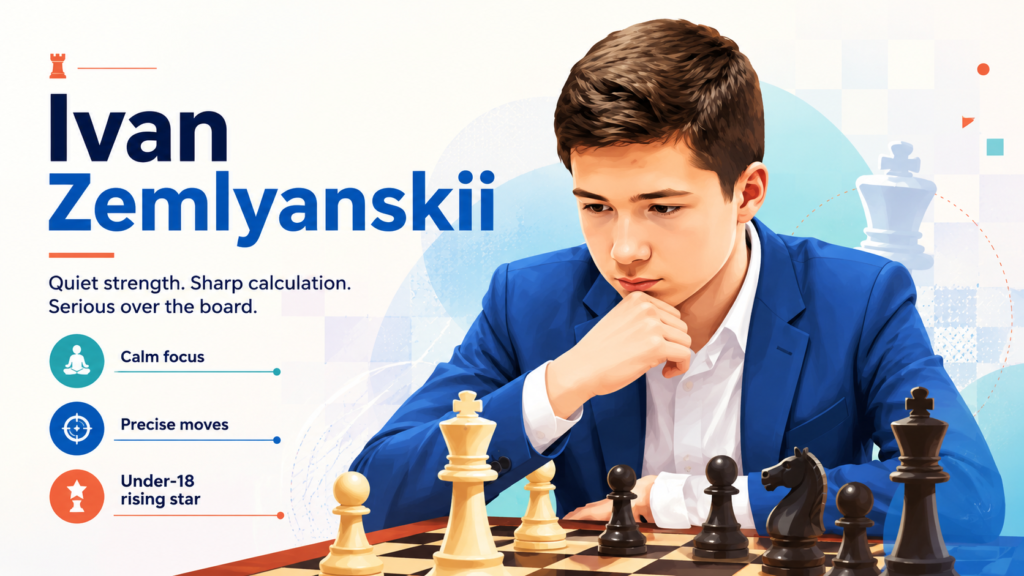
Some young players become famous because they play wild games. Others become famous because their ratings rise so fast that people cannot ignore them. Zemlyanskii belongs in that second group. His rating tells us he is not just winning easy games. He is scoring against strong fields.
He teaches children that chess is not always loud
Many kids think a good chess game must end with a big attack on the king. They want sacrifices, checks, and a quick mate. That kind of chess is fun, but it is not the whole game. Some of the strongest players win because they improve small things again and again.
They place a knight on a better square. They stop the other side’s plan. They trade the right piece. They win one pawn and then turn that pawn into a queen many moves later. This kind of chess may look quiet, but it can feel very painful for the opponent.
Quiet chess helps children build patience in real life too
A child who learns quiet chess learns a life lesson. Not every good result comes fast. Sometimes you must wait. Sometimes you must improve your position before you attack. Sometimes you must say no to a tempting move because it is not safe.
That lesson helps in school too. A child who learns to slow down in chess may also slow down before answering a math problem. They may read a question more carefully. They may think before reacting. Chess can train the mind to pause, and that pause is powerful.
Debsie coaches help children see these quiet ideas. The goal is not only to make children play sharper moves. It is to help them make better choices.
Andy Woodward proves that young players can fight with grown-up strength
Andy Woodward from the United States is another under-18 player with a huge rating. FIDE lists him as a grandmaster born in 2010, with a standard rating of 2635. That puts him among the strongest young players in his age group.
This is a very big deal because crossing 2600 is not easy. A grandmaster title starts at a lower level than that, but 2600 means the player is moving toward elite professional chess. For someone born in 2010, it shows not only skill but also serious match strength.
His play reminds students that fighting spirit matters
In chess, many children give up inside their heads before the game is truly over. They lose a pawn and feel sad. They miss a tactic and stop thinking. They face a stronger player and assume they will lose. Strong young players do not think like that. They keep fighting.
That does not mean they never feel pressure. Of course they do. But they learn to keep making good moves even when the game is not perfect. This is one of the biggest differences between a casual player and a serious player.
A casual player wants the game to feel easy. A serious player learns to fight even when it feels uncomfortable.
Parents can help by praising the right kind of effort
After a game, the easiest question is, “Did you win?” But that question is too small. A better question is, “Where did you fight well?” Another good question is, “What was one move you are proud of?” These questions teach the child that chess is about learning, not just proving.
This matters because a child who is scared to lose will stop taking healthy risks. They will avoid hard events. They will play safe moves only. They may even stop enjoying the game. A child who knows that effort is valued will keep growing.
Debsie’s classes support this mindset. Children are taught that every game gives feedback. A win can teach. A loss can teach. A tough draw can teach. The only wasted game is the one you never review.
Brewington Hardaway shows why steady progress can lead to big jumps
Brewington Hardaway from the United States is another young player with a powerful story. FIDE lists him as a grandmaster born in 2009, with a standard rating of 2510. His FIDE profile also shows that he received the International Master title in 2024 and the Grandmaster title in 2025.
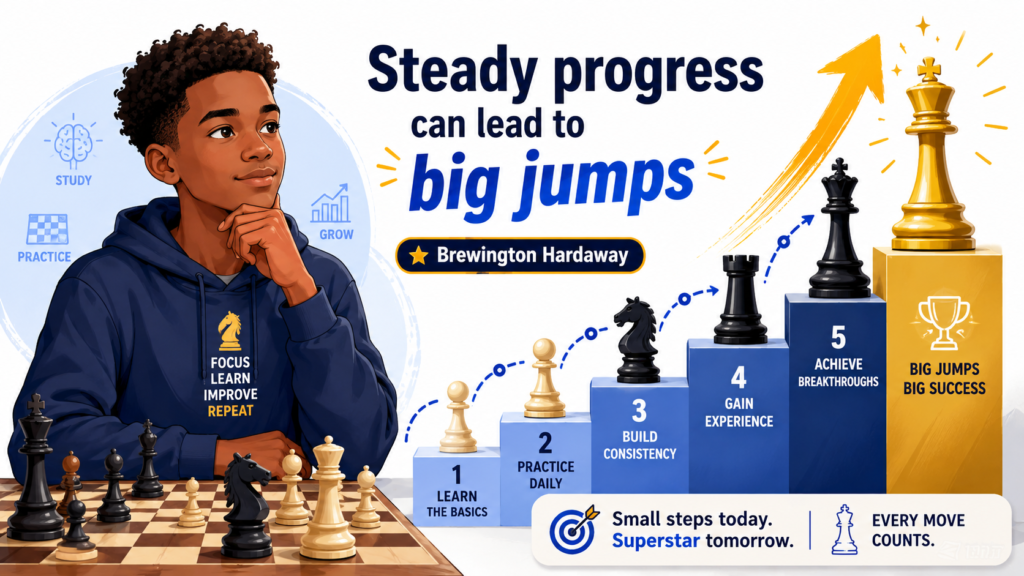
That quick title growth is important. It shows that progress is not always slow and smooth. Sometimes a player works for years, and then many things come together. The rating rises. The title norms appear.
The player starts beating stronger opponents. From the outside, it may look sudden. From the inside, it is usually the result of many quiet hours.
His journey teaches children not to fear the middle stage
Most chess players spend a long time in the middle stage. They are no longer beginners, but they are not masters yet. This can feel hard. They know enough to see their own mistakes, but not enough to avoid all of them. They may lose to tricky tactics. They may forget endgame rules. They may start a good attack and then lose control.
This stage is normal. In fact, it is where many important skills are built. The child learns discipline. They learn how to review. They learn how to fix one weakness at a time.
The middle stage becomes easier with a clear plan
The biggest danger in the middle stage is confusion. A child may ask, “Should I study openings, tactics, endgames, or famous games?” The answer is usually not one thing. The child needs a mix, but the mix should match their level.
A young beginner may need basic tactics and checkmate patterns. A rising tournament player may need opening ideas, endgame basics, and game review. A stronger student may need deeper planning and tougher calculation work.
This is why a trial class with Debsie can be useful. It helps place the child on the right path. Instead of guessing what to study next, the child gets a clearer next step.
Lu Miaoyi is one of the young female players changing what children believe is possible
Lu Miaoyi from China is one of the strongest young female players in the world. FIDE lists her as an International Master and Woman Grandmaster born in 2010, with a standard rating of 2431.

She earned the Woman International Master title in 2023, the Woman Grandmaster title in 2023, and the International Master title in 2024, according to her FIDE profile.
That is a very strong path for a player still in her teens. She is part of a new group of young girls who are not waiting for permission to be strong. They are entering tough events, facing strong players, and showing that girls can compete at a very high level.
Her rise matters for every girl who is just starting chess
When a young girl sees a player like Lu Miaoyi, something changes. Chess stops looking like a place where she has to fit in. It starts looking like a place where she can lead. This matters because confidence is not built only by wins. It is also built by seeing someone like you do hard things.
Parents can help by making chess feel normal for daughters. Do not present it as a “boys’ game.” Do not act surprised when a girl plays boldly. Give her the same kind of training, time, and belief that any serious learner deserves.
Girls grow faster when the class feels safe and serious
A good chess class must make girls feel seen and respected. They should be allowed to ask questions without feeling judged. They should be given strong puzzles, serious feedback, and real chances to compete. They should not be pushed to the side or treated as less ambitious.
At Debsie, the goal is to help every child build skill and confidence. For girls, this can be especially powerful. A chessboard can become a place where they learn to speak through choices. They learn to trust their ideas. They learn that being calm and brave can go together.
Lu Miaoyi’s rise is not just a chess story. It is a message to young girls: this game is yours too.
Bodhana Sivanandan is the young player who makes parents stop and smile
Bodhana Sivanandan from England is one of the most talked-about young chess talents in the world. FIDE lists her as born in 2015, with the FIDE Master and Woman International Master titles, and a standard rating of 2374. That is a stunning level for a player so young.
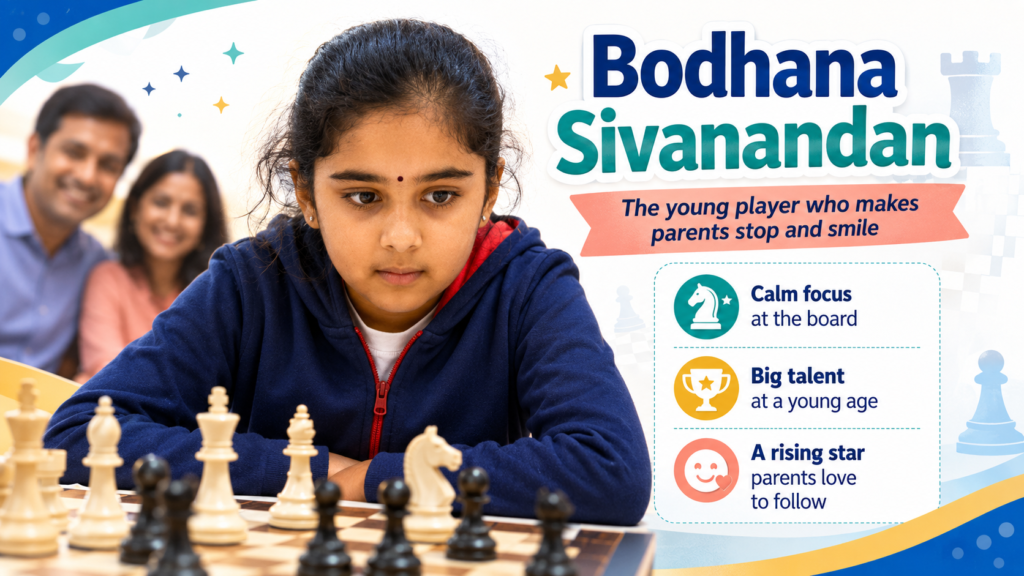
What makes Bodhana’s story so special is her age. A player born in 2015 is still very young, yet she is already playing chess that adults respect. Stories like this can make parents excited, but they can also create pressure. So it is important to understand the lesson in the right way.
Her story should inspire children, not scare them
Not every child will become a master at a very young age. That is okay. Chess is not only valuable for future champions. It is valuable because it teaches children how to think. It teaches them to wait, plan, notice danger, and make choices. A child can gain these gifts even if they never become a titled player.
Bodhana’s story should make children curious. It should make them think, “Maybe I can improve too.” It should not make them feel, “I am already behind.” Every child has a different path. Some start early. Some start late. Some grow fast. Some grow slowly and then surprise everyone.
The healthiest chess growth comes with joy
Young children learn best when they enjoy the process. They need fun puzzles. They need kind correction. They need chances to play. They need rest too. A child who is pushed too hard may burn out. A child who is guided well may stay with chess for years.
This is one reason Debsie focuses on expert-led learning that feels warm, clear, and child-friendly. The goal is not to turn every child into a prodigy overnight. The goal is to help each child grow from where they are today.
And that is the best way to look at Bodhana’s journey. She shows what is possible. Debsie helps children take their own first step toward what is possible for them.
Shreyas Royal is proof that a big dream needs a strong family team
Shreyas Royal is one of the best young chess players in England and one of the clearest examples of steady growth. FIDE lists him as a grandmaster from England, born in 2009, with a standard rating of 2505.
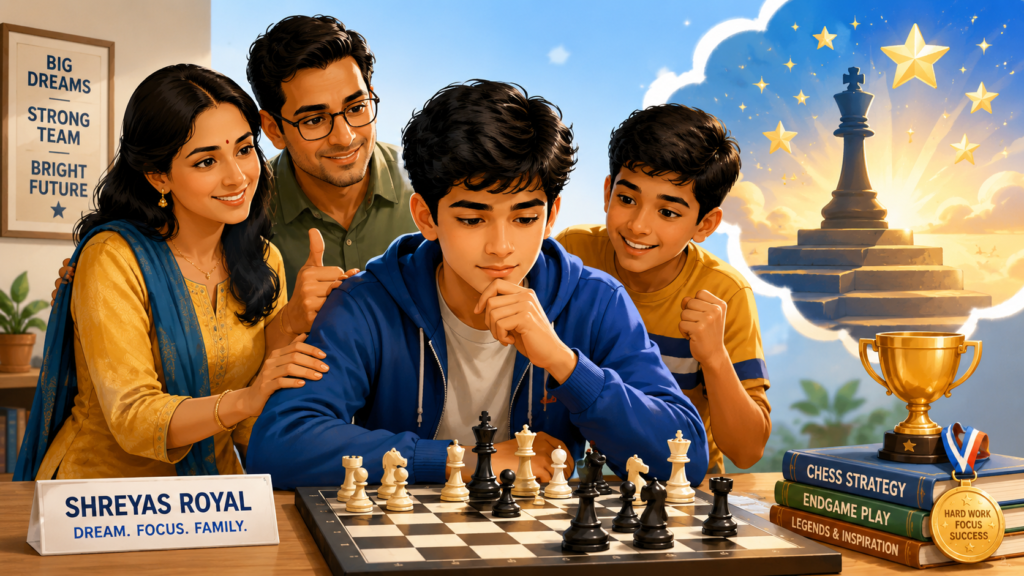
That places him well inside the group of serious young grandmasters who can already sit across from strong adult players and fight with confidence.
His story became even bigger in 2024 when he became the youngest British grandmaster. The Guardian reported that he earned the title at age 15, breaking the earlier British record set by David Howell.
That kind of record is not built in one lucky event. It takes years of play, travel, coaching, family support, and the courage to keep going after hard games.
His journey shows that parents matter more than they may think
A young chess player may be the one moving the pieces, but the family often helps build the path. Parents arrange classes, manage travel, protect study time, and help the child stay calm after losses. They also have to know when to push and when to let the child rest.
This is where many parents feel unsure. They want their child to grow, but they do not want to add pressure. The best support is not shouting advice after every loss. It is creating a steady learning space where the child feels safe, guided, and excited to improve.
A strong chess parent focuses on the next lesson, not the last mistake
The right question after a game is not only, “Why did you lose?” That can make a child feel small. A better question is, “What did this game teach us?” This simple change helps the child see chess as a learning path, not a test of worth.
Shreyas Royal’s rise reminds us that a child’s chess dream is not only about talent. It is also about care, time, and the right people around them. At Debsie, parents do not have to guess alone. A free trial class can help you see how your child thinks and what kind of support will help them most.
Aarit Kapil is the young Indian talent who shows how fast a child can grow
Aarit Kapil is one of the most exciting young Indian players to watch. FIDE lists him as a FIDE Master from India, born in 2015, with a standard rating of 2334. He also became a Candidate Master in 2025 and a FIDE Master in 2026, according to his FIDE profile.
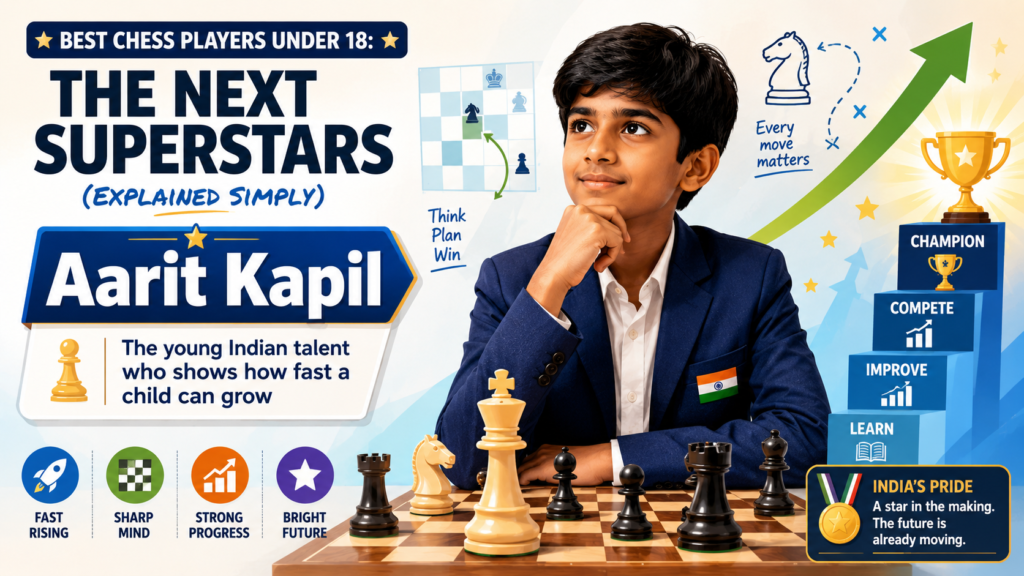
That is a very high level for a child born in 2015. At that age, many children are still learning basic opening rules and simple checkmates.
Aarit is already playing serious tournament chess. Chess.com also notes that he drew with Magnus Carlsen in an online Titled Tuesday game in 2025 and later became the youngest player to reach a 3000 blitz rating on Chess.com in 2026.
His story shows that speed is useful, but control is better
Aarit’s online blitz success is exciting because blitz feels fun, fast, and full of action. Children love quick games because they get instant results. But fast chess can also create bad habits if a child only moves by instinct. The real goal is not just to move fast. The goal is to think clearly, even when time is low.
This is a very useful lesson for students. Speed should come after understanding. A child who learns good patterns will naturally get faster. A child who only plays fast may become careless. Strong young players know when to trust their pattern sense and when to slow down.
Parents should not confuse online wins with complete chess growth
Online chess can help a child improve, but it should not be the whole diet. A child also needs slow games, review time, endgame work, and lessons where a coach explains the ideas. Without that, they may win many quick games but still struggle in long tournaments.
Aarit’s rise can inspire children, but the action step is simple. Help your child build both speed and depth. At Debsie, students learn to spot tactics, but they also learn why the tactic works. That difference is huge because it turns guesses into real thinking.
Roman Shogdzhiev is the child prodigy who plays with a fearless heart
Roman Shogdzhiev is one of the most talked-about young players in world chess. FIDE lists him as an International Master, born in 2015, with a standard rating of 2431. For a player born in 2015, that is a remarkable rating and shows that he is already far beyond normal youth chess strength.
Chess.com reports that Roman made news at the 2023 World Rapid and Blitz Championships when, at age eight, he defeated five grandmasters across the event. It also says he became the youngest International Master in history in 2025 at age 10 years, 3 months, and 21 days.
His biggest lesson is courage without fear of big names
For most children, playing a grandmaster would feel scary. The title alone can make a young player nervous. Roman’s story shows a different mindset. He plays the board, not the name. That is one of the strongest mental skills in chess.
This is important for every child, even beginners. Sometimes children lose before the game starts because they think the other player is “too strong.” They see a higher rating and feel defeated. But chess does not care about fear. The board only asks for good moves.
A child can learn bravery one small game at a time
Bravery in chess does not mean making wild moves. It means staying present. It means checking threats, finding plans, and playing the best move you can find, even when the opponent looks stronger.
Parents can help by making challenge feel normal. Let your child play stronger opponents sometimes. Let them lose and learn. Let them see that losing to a strong player is not shameful. It is one of the fastest ways to grow.
At Debsie, this kind of confidence is built step by step. Coaches help students face hard positions without panic. Over time, children learn that a tough board is not something to fear. It is something to solve.
Ethan Pang shows how early learning can become serious skill
Ethan Pang from England is another very young player worth watching. FIDE lists him as a FIDE Master from England, born in 2015, with a standard rating of 2221. That rating is already higher than what most chess players ever reach, and Ethan reached this level while still very young.
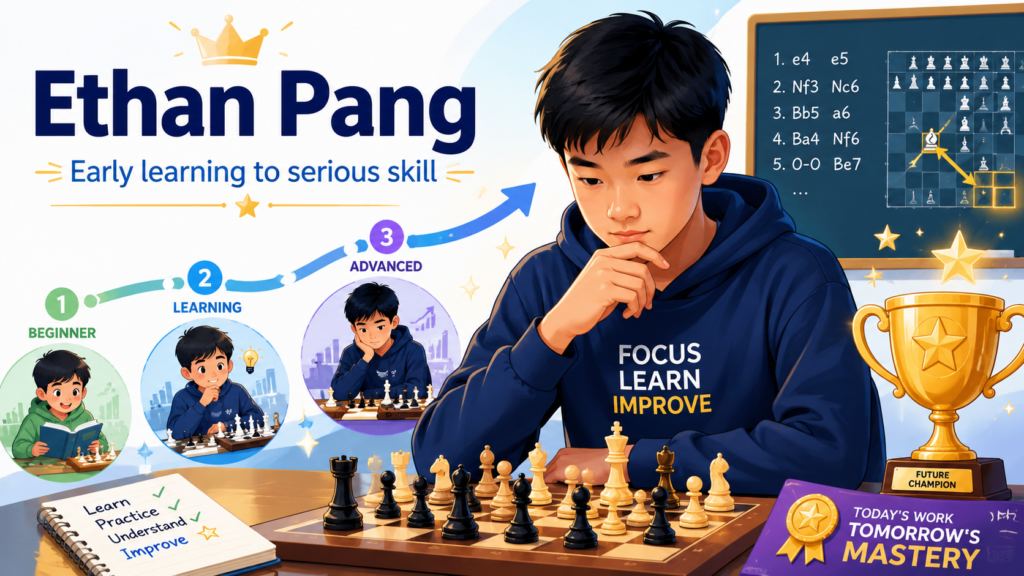
The Guardian reported in 2024 that Ethan, then nine, beat three grandmasters at the Vezerkepzo IM Tournament in Budapest. The same report said he had already become the youngest player to reach a 2200 master rating.
These kinds of results show that he is not just strong for his age. He can also take chances against experienced players.
His progress shows the value of starting with the right basics
Children who learn the right basics early often grow faster later. They do not waste months building bad habits. They learn to develop pieces, protect the king, count captures, and look for threats. These ideas sound simple, but they are the base of strong chess.
Many parents think advanced chess starts with long opening lines. It does not. Advanced chess starts with clean thinking. A child who understands simple ideas deeply will beat a child who memorizes moves without knowing why.
The first chess lessons can shape years of future growth
A child’s first coach matters. The first lessons should make chess feel clear, fun, and meaningful. If the child only hears rules, they may get bored. If they only play without guidance, they may get stuck. The best lessons mix joy and structure.
This is one reason Debsie offers a free trial class. It gives your child a chance to learn in a real class setting and gives you a chance to see whether the teaching style feels right. For many children, one good class can turn chess from a hobby into a passion.
These young stars are not just winning games; they are building life skills
The best chess players under 18 are exciting because of their ratings, records, and results. But for parents, the deeper value is even better. These players show what children can gain when they train their minds. They learn focus, patience, planning, self-control, and confidence.

Every child who plays chess gets a chance to practice these skills. They learn to think before acting. They learn that rushing can cost them. They learn that a small mistake can be fixed if they stay calm. They learn that winning feels good, but learning lasts longer.
Chess gives children a safe place to practice hard choices
In life, children have to make choices every day. They choose how to spend time, how to react, how to solve problems, and how to handle pressure. Chess gives them a small world where they can practice all of this safely.
A chessboard teaches children that choices have results. Move a piece without looking, and it may be lost. Think carefully, and a hard position may become easier. This lesson is simple, but it is powerful because children can see it right away.
The real goal is not to copy a prodigy but to build a better thinker
Most children will not become world-famous chess stars. That is fine. The goal is not to copy Faustino Oro, Yağız Kaan Erdoğmuş, Alice Lee, or Bodhana Sivanandan move for move. The goal is to learn from their habits.
They work hard. They review games. They face stronger players. They keep learning after losses. They train their minds to stay calm. These are habits any child can build with the right help.
That is the heart of Debsie’s chess program. It is not only about trophies. It is about helping children become sharper thinkers and more confident learners. A free trial class is an easy first move for a parent who wants to see what chess can do for their child.
What the best under-18 chess players study differently
The best young chess players are not guessing their way to the top. They may look natural when they play, but behind that natural look is a lot of careful work. They study their games, fix their weak spots, and learn from stronger players. They do not only play for fun and hope to improve.
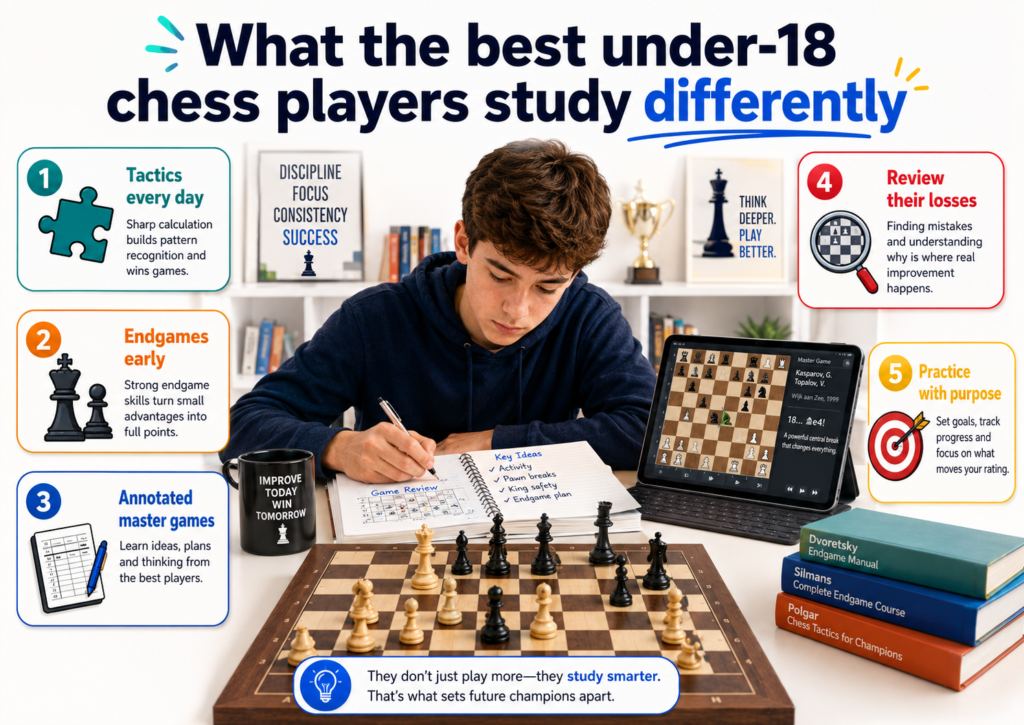
This is the part many young students miss. Playing chess is important, but playing without review can keep a child stuck. A child may lose the same way again and again. They may bring the queen out too early. They may forget king safety.
They may miss simple tactics. The game ends, they click “new game,” and the same mistake comes back tomorrow.
The best young players learn from every game, not just every win
A strong young player treats each game like a message. A win may say, “Your attack worked well.” A loss may say, “You moved too fast in the middle game.” A draw may say, “You were better, but you did not know how to finish.” This kind of thinking turns every game into a lesson.
This is why players like Yağız Kaan Erdoğmuş and Faustino Oro grow so fast. Their talent is clear, but their growth also shows serious training. In May 2026, Chess.com reported that Erdoğmuş became the youngest player to break the 2700 rating mark, while Faustino Oro has been one of the youngest players to reach major rating and title milestones. Those results do not come from casual play alone. They come from sharp review and strong support.
A child should review the painful move, not hide from it
The move that hurts is often the move that teaches the most. Maybe your child missed a fork. Maybe they walked into checkmate. Maybe they traded queens when they should not have. It is easy to feel bad and close the game, but that moment is where growth begins.
A simple review habit can change everything. After each game, your child should find one mistake and one good move. Not ten mistakes. Not a long lecture. Just one thing to fix and one thing to feel proud of. This keeps learning clear and kind.
At Debsie, coaches help children review without shame. The child learns, “I made a mistake,” not “I am bad at chess.” That small difference protects confidence and keeps the child excited to learn.
The opening lesson young stars understand very early
Many children love openings because openings feel like secret codes. They want to learn the Sicilian Defense, the Queen’s Gambit, the London System, or tricky traps they saw online. Openings can be fun, but memorizing moves without understanding them is a weak way to learn.
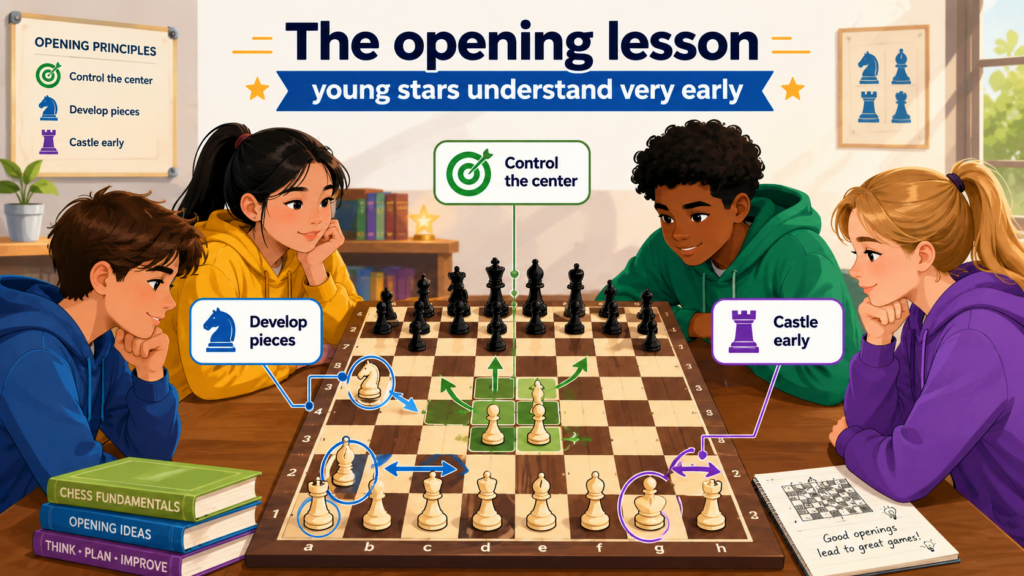
The best young players do not only know opening moves. They know opening ideas. They understand why pieces go to certain squares. They know when the king should castle. They know why the center matters. They know when a pawn move helps and when it creates a hole.
A good opening is not about showing off memory
A child may memorize ten moves and still be lost on move eleven. That happens all the time. The opponent plays something strange, and the child no longer knows what to do. This is why opening study must be based on ideas first.
The first goal is simple. Bring pieces out. Fight for the center. Keep the king safe. Do not move the same piece too many times without reason. Do not grab pawns if your king is stuck in the middle. These ideas may sound basic, but even strong players respect them.
Young learners should build an opening home before building an opening library
An opening home means your child has a few trusted setups they understand. They do not need twenty openings. They need a small group of openings that teach good chess. A coach can help choose openings that match the child’s style.
A calm child may enjoy steady openings with clear plans. A bold child may enjoy sharper positions, but still needs safety rules. A beginner should not be pushed into deep theory too soon. They first need to understand piece activity, king safety, and simple plans.
This is why Debsie’s guided classes are so helpful. Your child does not need to guess which YouTube opening to copy. A coach can show what fits their level and explain the reason behind each move. That saves time and stops bad habits early.
The middle game is where young superstars show their real strength
The middle game is the heart of chess. It starts after the opening and before the endgame. This is where plans are made, attacks are built, and mistakes can become very costly. For many children, the middle game feels confusing because there are so many possible moves.
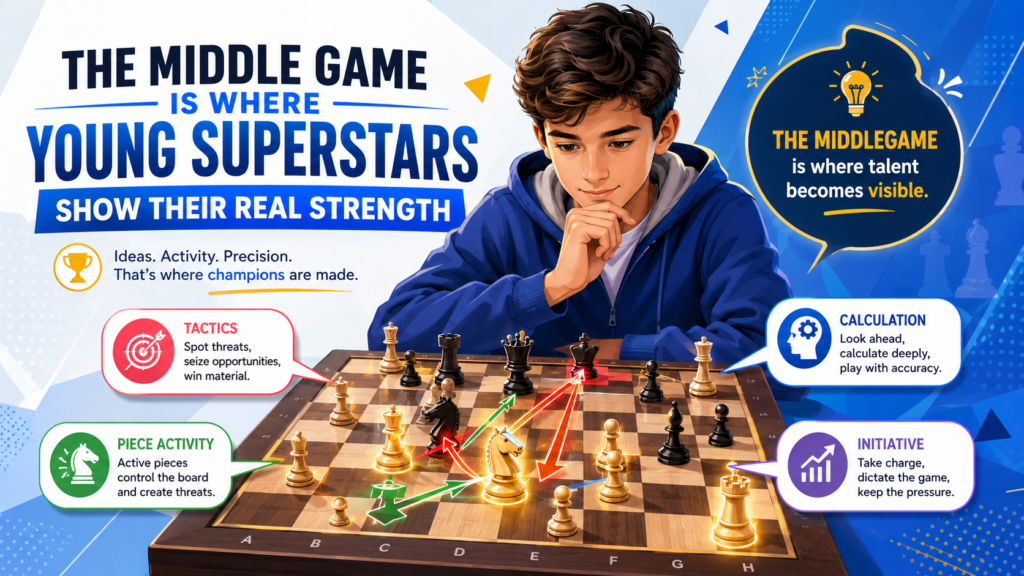
The best under-18 players handle this part well because they do not look at the board as a pile of pieces. They look for clues. They ask where the kings are. They notice weak squares. They see which pieces are active and which pieces are sleepy. They look for threats before jumping into action.
Strong young players know how to make a plan when there is no checkmate yet
Many children only look for checks and captures. That is a good starting habit, but chess is bigger than that. Sometimes there is no check. Sometimes there is no capture. Then the child must find a useful move.
A useful move may improve the worst piece. It may stop the opponent’s plan. It may open a file for a rook. It may place a knight on a strong square. It may move the king to safety before attacking. These quiet moves are often what separate strong players from rushed players.
The best question in the middle game is simple and powerful
When your child is stuck, they can ask, “What does my opponent want?” This one question can save many games. If the opponent wants to attack the king, your child can defend. If the opponent wants to win a pawn, your child can protect it. If the opponent wants to bring a knight to a strong square, your child can stop it.
This habit builds focus. It teaches children not to think only about their own dreams. They learn to see the other side too. That is a huge life skill. In school, friendship, sports, and problem-solving, seeing the other side helps children make better choices.
At Debsie, children are trained to think this way in class. They learn that chess is not just “my move, my plan.” It is a conversation between two minds.
Conclusion
The best chess players under 18 show us something bigger than ratings and trophies. They show what happens when a child gets the right mix of practice, courage, coaching, and support.

Adhip Ray is the founder of Debsie, an online learning platform focused on chess and skill-based learning for children. His work at Debsie brings together chess education, structured thinking, problem-solving, and interactive learning for young students.
Adhip has an academic background in law, statistics, analytics, and technology. He is from Amity Law School and the Indian Statistical Institute, Kolkata, with formal training that connects legal reasoning, data analytics, quantitative thinking, and structured problem-solving. This interdisciplinary background is reflected in Debsie’s focus on building sharper thinking skills in children through chess and related learning programs.
Adhip is also a FIDE-rated chess player from India. He holds FIDE ID 5055954 and has a standard FIDE rating of 1832. His FIDE profile records him as an Indian player with a long rating history in standard chess, including rated games from his competitive playing years. His chess background gives Debsie a founder-led connection to the game, not only as an educational activity but also as a competitive discipline that develops concentration, calculation, planning, and decision-making.
In addition to chess, Adhip has a strong interest in coding, data, and technical problem-solving.
Adhip’s profile combines chess, law, data analytics, and programming. At Debsie, this background supports the creation of learning experiences that are logical, structured, and skill-oriented. The platform’s chess-focused programs are connected to broader cognitive skills such as pattern recognition, patience, strategic planning, focus, and problem-solving.
As founder of Debsie, Adhip brings together experience from multiple fields: formal legal education from Amity Law School, analytical training from the Indian Statistical Institute, Kolkata, competitive chess experience through his FIDE-rated profile, and coding practice through LeetCode. This combination gives Debsie a distinct foundation in strategy, reasoning, analytics, and child-focused learning.
Through Debsie, Adhip is associated with building chess and learning content for children that goes beyond basic instruction. The platform connects chess with thinking skills, helping students approach challenges with more structure, clarity, and confidence. His own background in chess and analytical problem-solving gives the platform a direct link to the skills it aims to develop in young learners.
Adhip is also a member of Forbes Business Council.