
Parents want two things from learning tech: kids who are eager to log in and kids who score higher when it counts. This report looks at both sides. We explore how game-like learning lifts focus, joy, and time-on-task, while also driving test gains that show up on real report cards. Every section takes one clear stat and turns it into plain advice you can use at home or in class. No jargon. No fluff. Just what works.
1) Students using adaptive software reach mastery 20–40% faster than with fixed lessons.
What this really means for your child
Mastery is when a child can do a skill correctly, quickly, and without help. Adaptive software gets them there sooner because it watches every click, pause, and error, then reshapes the next step to fit.
If a child misses a step in long division, the system does not push a full worksheet. It serves one tiny subskill, gives a nudge, and checks again. Fixed lessons do the same path for everyone. Adaptive tools change the path in real time. That is why progress speeds up by a big margin.
Less time is spent on what is already known and more time is spent on the exact right skill. The brain stays in a sweet spot where work feels hard enough to grow but not so hard that it hurts. This steady feeling of “I can do this” fuels longer focus and more tries.
How to apply this at home or in class
Pick one skill goal per week, like fractions with unlike denominators. Set a short daily routine of twelve to fifteen minutes on that one goal. Turn on hints and explanations and tell your child to always read the first hint before asking for help.

Use the progress graph to spot the moment when accuracy hits eighty-five percent at normal speed. That is your early warning that mastery is close. When speed rises without a drop in accuracy for two sessions in a row, call it mastered and move to the next skill.
If accuracy stalls below seventy percent for two sessions, roll back one subskill using the software’s path view and rebuild from there. Celebrate the moment mastery is marked with a tiny ritual, like a sticker on a wall calendar. Small wins matter and keep the pace high.
If you teach a class, group students by current skill, not by age, for the next rotation. Let advanced kids attempt challenge sets while you sit with the group that needs one more mini-lesson. Everyone grows faster, and you gain minutes back in your day.
2) Average test scores rise by 8–15 percentage points after 10–12 weeks of adaptive practice.
What this really means for your child
A jump of eight to fifteen points is not a small bump. It can move a student from a worry zone into a comfort zone. This rise comes from steady practice that targets weak spots and keeps strong skills fresh.
Over ten to twelve weeks, the system cycles between new learning and review. It shows questions in many formats so your child can face the same idea from different angles. When the software senses a pattern of mistakes, it does not wait for a unit test.
It triggers a mini-review and checks again later. This constant correction creates a slow, safe climb that shows up on real tests, not just in-app quizzes.
How to apply this at home or in class
Mark the calendar for a twelve-week block. Set three short sessions per week, each under twenty minutes, and one longer weekend session of thirty minutes for mixed review. At the end of each week, open the report and read the three lowest skills by accuracy.
For each one, schedule a five-question “confidence lap” where your child answers slowly with the help of hints. Keep the pressure low and the method clear. When a skill climbs above ninety percent accuracy twice in a row, tag it for spaced review in two weeks.
If you teach, build a simple wall chart with three columns: new, strengthening, mastered. Move sticky notes with skill names at the end of each week so students see their progress. Before any school test, run a forty-eight hour refresh plan: on day one, do a targeted set of the three weakest skills; on day two, do a mixed set across all recent skills.
During the test, your child will meet friendly faces, not strangers. Scores go up because nerves go down and recall is stronger from the spaced practice.
3) Time-on-task increases by 25–45% because lessons match the child’s level.
What this really means for your child
Children stay longer when work feels right-sized. If tasks are too easy, the mind drifts. If tasks are too hard, the mind shuts down. Adaptive pathways keep the dial in the middle. The child sees quick wins early to build momentum. Then the system raises the challenge just a little.
This tiny step ladder holds attention better than long blocks of one-level work. Every success gives a small dopamine lift. Every small challenge adds interest. Over time, this cycle turns into longer, quieter study sessions and fewer battles over homework.
How to apply this at home or in class
Create a start ritual that takes less than one minute. It could be a deep breath, a sip of water, and a promise: three correct answers to unlock the first badge. During the session, watch the live difficulty meter if your platform has one.

You want it moving up and down, not staying flat. If you see five misses in a row, pause for sixty seconds and ask your child to explain out loud where the steps got fuzzy. Then let the software serve a scaffolded item and restart. Use a timer, not to rush, but to make time feel safe.
For younger kids, try twelve minutes on, two minutes off, repeated twice. For older kids, aim for two blocks of twenty minutes with a three-minute stretch in between. End with a quick check: ask your child to teach you the hardest problem they solved today.
Teaching locks in focus and makes the next session easier to start. In class, set a visible session goal, like twelve focused minutes. Use a soft chime at the start and end of the block. When the room meets the goal, give a class-level point that unlocks a fun brain break.
Longer attention is no accident. It is a routine, and adaptive tools make that routine easier to hold.
4) Struggling learners close skill gaps 1.5–2.5× faster with personalized review.
What this really means for your child
When a child struggles, the gap is not one big hole. It is many small holes spread across steps and ideas. Personalized review finds those small holes and fills them in a smart order. The system studies the pattern of mistakes and picks the next best fix.
It may start with a missing rule, a misread sign, or a shaky math fact. Each fix is short and focused. As gaps close, confidence returns. The child no longer sees a wall. They see stairs. This speed matters because struggling learners often feel behind.
When they see real gains in days, not months, their mindset shifts from “I can’t” to “I’m getting it.”
How to apply this at home or in class
Start with a diagnostic set of ten to fifteen mixed questions. Do it in a calm setting with no timer. After the diagnostic, read the top three gaps out loud together. Turn them into simple “I will” goals for the week, like I will add and subtract negative numbers without a number line.
In each session, begin with one scaffolded item on the biggest gap. Have your child talk through their steps while the system listens for errors and offers hints. When the child gets two correct in a row without hints, switch to mixed practice that blends the fixed gap with one strong skill.
This gives hope and keeps pace steady. Track wins with a tiny progress bar you draw on paper. Every filled square means one gap closed. If you teach a class, run short gap labs three times per week. Each lab is eight minutes.
Group students by a single common gap and teach one micro-strategy, like spotting the main idea in the first and last sentence. Then send them back into the adaptive path to test the new skill right away.
Close the week with a two-minute reflection: what gap did you close, and what trick helped? Short reflections make the learning stick and set up the next week with a clear direction.
5) High performers move ahead 30–50% more topics per term with adaptive acceleration.
What this really means for your child
Some kids learn fast and get bored when work crawls. Adaptive acceleration keeps their minds busy without making them skip core ideas. The system checks for strong accuracy and steady speed, then unlocks the next topic sooner. It does not rush.
It removes wait time. A fast learner does not sit through ten easy questions once the skill is clear. They meet a fresh challenge, see a new pattern, and stay excited. This steady flow leads to more topics finished in the same school term.
Moving ahead is not about bragging rights. It is about matching pace to potential so energy turns into growth.
How to apply this at home or in class
Set a clear rule for moving up. For example, when accuracy stays above ninety percent for two sessions and speed is stable, the child can try the next topic. Invite your child to ask for a challenge set after they hit that mark.
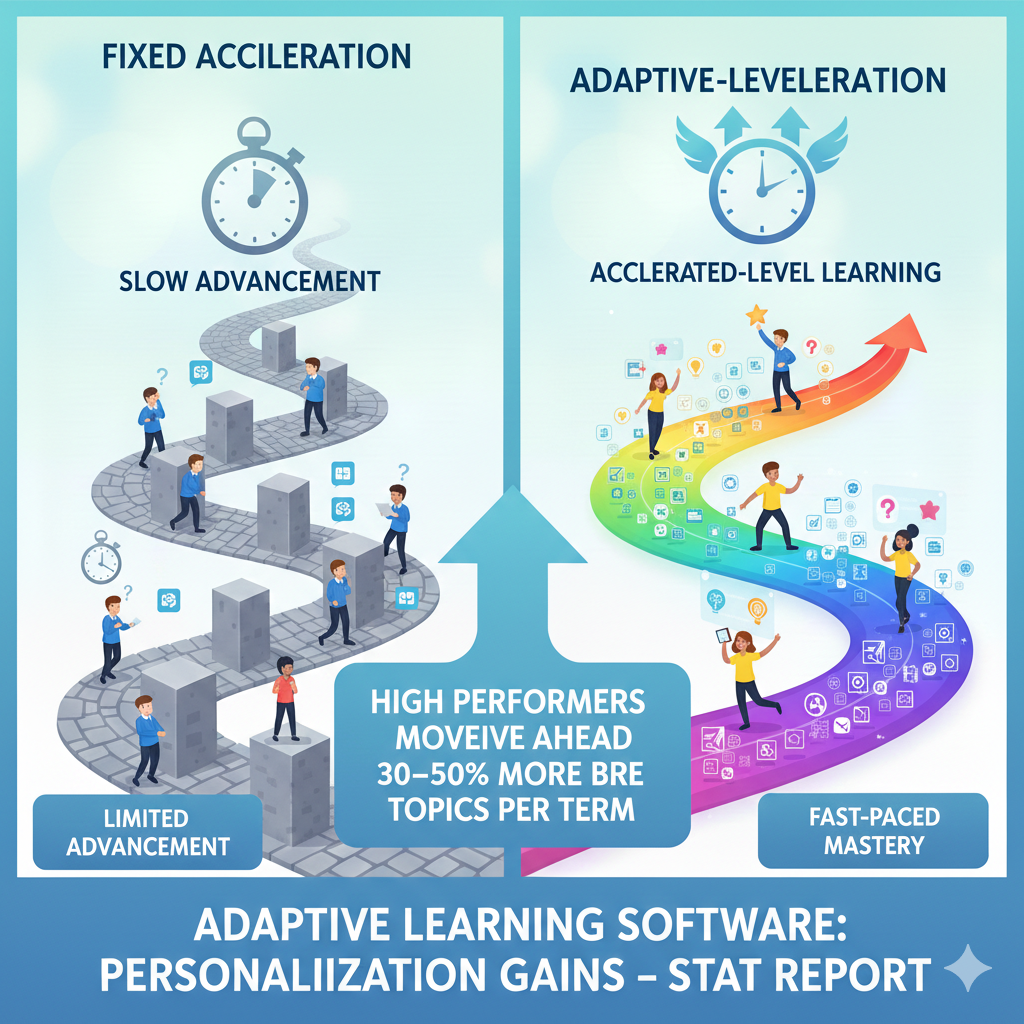
A challenge set should be short and mixed, with a few tough items that test true understanding. If the score stays high, promote them. If it dips, add one more day of practice and try again. In class, create a quiet corner where advanced learners can work on unlocked levels while you coach others.
Keep a simple pace map so families see what is next and what is optional. Add tiny passion projects linked to new topics, like building a mini game after a coding lesson or writing a short explainer after a science unit. These projects anchor the fast pace in real work.
Celebrate progress with calm pride, not pressure. Remind your child that moving ahead is about deep skill, not speed for its own sake. If you want support, book a free trial class at Debsie and let us set the right pace plan for your learner.
6) Homework completion rates improve by 18–30% when tasks are right-fit and bite-sized.
What this really means for your child
Kids finish what feels doable. When homework is sized to fit, it starts and ends without fights. Gamified platforms make this easy by breaking work into small steps, each with a clear goal and a quick win.
The child sees progress right away, not after an hour. Short tasks remove dread and help the brain start. Starting is the hardest part. Once they begin, momentum builds. The result is more finished homework, fewer late nights, and kinder evenings at home.
How to apply this at home or in class
Set a nightly target that your child can see and feel, like two short quests or one level with a mini-boss at the end. Keep the time cap tight, fifteen to twenty minutes for most ages. If the child finishes early with strong accuracy, stop and praise the finish.
Do not pile on more. Finishing well creates a habit loop the brain wants to repeat tomorrow. If they do not finish, carry the remainder to the next day instead of forcing a long slog. In class, post a daily homework code, like Level 3A only, so there is zero confusion.
Ask students to mark the hardest item they solved that night and write one tip beside it. This trains them to notice their own strategies. At home, make a small, predictable start ritual. Sit at the same table. Put the phone in another room. Play a calm two-minute song.
Open the app and say the goal out loud. When done, snap a quick photo of the progress page and send it to a shared family chat. Celebrate the streak every few days. If homework is still a battle, switch to morning sessions.
Many kids think clearer before school. With Debsie, you can also let a coach set the nightly plan so you do not have to negotiate at the dinner table.
7) Retention after 3 months improves by 20–35% due to spaced, adaptive review.
What this really means for your child
Learning sticks when the brain sees the idea again right before it would forget. Spaced, adaptive review does this on time and in the right dose. The system tracks how hard the item was, how many hints were used, and how long the answer took.
It then schedules the next review at the best moment for that child, not for the average student. Over weeks, ideas return like old friends, not like strangers. This gentle rhythm builds long-term memory. Three months later, the skill is still there when a test or a new unit calls for it.
How to apply this at home or in class
Turn on spaced review in your platform and resist the urge to cram. Let the system plan the timing. Your job is to protect the schedule. Pick two review days each week and keep them short. Ten to fifteen minutes is enough when the items are well timed.

When an item returns, ask your child to explain why it came back now. This builds meta-awareness and cuts test fear. If the child misses an old item, do not panic. Ask them to slow down and recall the last time they solved it.
Then let the hint guide them one step and try again. In class, begin Mondays with a quick review race where students solve three old items and write one sentence about the trick they used. Share a few out loud. This trains recall and shows that review is normal, not a sign of failure.
Before exams, do not change the plan. Trust the spaced sets and keep sessions light. The goal is calm confidence. If you want help setting up review cycles, our Debsie coaches can connect your weekly plan to the platform’s memory model and send you a simple calendar you can follow without stress.
8) Wrong-answer repeats drop by 30–55% when hints adapt to the child’s mistake.
What this really means for your child
Many kids make the same error again and again because they never see why it is wrong. A generic hint is too vague to fix the root cause. Adaptive hints read the pattern in the exact mistake and give a nudge aimed at that cause.
If a child flips a sign in algebra, the hint points to the sign change. If they skip a carry in addition, the hint slows the carry step. When the right hint shows up at the right time, repeat errors fade fast. Less frustration, more learning, and a happier mood for the next session.
How to apply this at home or in class
Teach your child a simple rule. After a miss, pause, read the first hint fully, and try again slowly. Tell them that hints are not cheats. They are arrows pointing to the next step. If the second try is still wrong, use the next hint and say the steps out loud. Speaking the steps helps the brain catch slips.
Track the most common error in a small notebook. Write it like a pattern, such as I rushed the unit conversion or I forgot to line up decimals. Before the next session, read the last entry and set a mini goal to avoid it once. In class, model a mistake live on the screen and show how the adaptive hint helps.
Make it normal to miss and try again. Praise students who use hints well, not just those who get it right the first time. Over a week, you will see fewer repeat errors and a smoother class flow. If your platform allows custom hints, add a friendly teacher tip connected to your current unit.
On Debsie, we weave these smart hints into our quests so every miss turns into a teachable moment, not a dead end. If you want this tuned for your child, join a free trial and we will set up hint habits that stick.
9) Average practice time stays steady 10–15 minutes longer per session with personalization.
What this really means for your child
When work fits the learner, time stretches in a good way. Personalized paths cut the boring repeats and shrink the scary jumps. That balance keeps the brain calm and curious, so sessions naturally run longer. Ten to fifteen extra minutes is big over a week.
That is almost an extra full study block without any push from you. Kids feel progress because they see new ideas more often and get quick wins when they need them. This rhythm builds stamina.
Over a month, a child who used to stop after twelve minutes can often go for twenty-five to thirty, still smiling at the end. Longer focus does not mean more grind. It means the flow state shows up more often, and learning feels smooth instead of spiky.

How to apply this at home or in class
Set a minimum time that is easy to reach, then invite your child to “earn” optional bonus minutes only when the platform shows steady accuracy. Start at fifteen minutes. If accuracy stays above eighty-five percent for five minutes, allow a five-minute extension with a tiny in-app reward or a home perk like choosing the family playlist at dinner.
End each session with a one-sentence reflection: what felt smooth today and why. In class, display a calm session clock and a simple progress bar. Tell students the goal is not to sit longer, but to stay in the zone longer.
When the class meets the target, close with a two-minute stretch and a quick share of one win. If your child thrives in this flow, book a free Debsie trial class and let our coaches set a stamina plan that grows minutes slowly without stress.
10) Day-to-day quiz accuracy jumps 12–20% once the system targets weak skills.
What this really means for your child
Daily quizzes show if learning is sticking in small pieces. When the platform spots a weak skill and turns the lens on it, accuracy rises fast. This is not luck. It is focus. The system reduces noise, serves the exact type of question that caused trouble, and explains the key idea in plain steps.
As the brain sees that idea again across a few formats, the pattern becomes clear. The next day, the same idea shows up in a fresh question, and your child answers with less doubt. That small victory lifts mood and keeps effort steady for the next quiz.
How to apply this at home or in class
Use the daily quiz as a warm-up, not a test of worth. Ask your child to do it when they are most alert, often before dinner or right after school. After the quiz, open the report and read the lowest skill together.
Turn it into a tiny plan for the next session, like three focused items with hints on, then two mixed items without hints. Praise the exact change, not just the score, for example, you lined up the decimals every time today. In class, begin with a three-question pulse check tied to yesterday’s lesson.
Sort the room into quick tables by the skill that needs a tune-up. Give a two-minute tip at each table, then send everyone back to the adaptive path. Repeat this rhythm for a week and watch the daily curve rise.
If you want a clear setup, join Debsie and we will build your child’s daily quiz routine and parent report so you can act in two minutes a day.
11) Time to first success on new skills shrinks by 25–40% with step-by-step scaffolds.
What this really means for your child
The first correct answer on a brand-new skill matters. It proves to the brain, I can do this. Step-by-step scaffolds make that first win come sooner. Instead of dropping a full problem all at once, the system reveals just the next tiny step, checks it, and moves forward.
Each micro-step lowers fear. The child sees progress in seconds, not after a long, risky attempt. Faster first success turns into faster second and third successes. Soon the scaffold fades, and the learner handles the full problem alone. Confidence grows because the road was visible the whole time.
How to apply this at home or in class
When a new topic starts, ask your child to slow down and use the scaffold on the first three problems, even if they think they do not need it. The goal is to learn the pattern, not to prove speed. After three guided wins, switch off one layer of help and try the full problem.
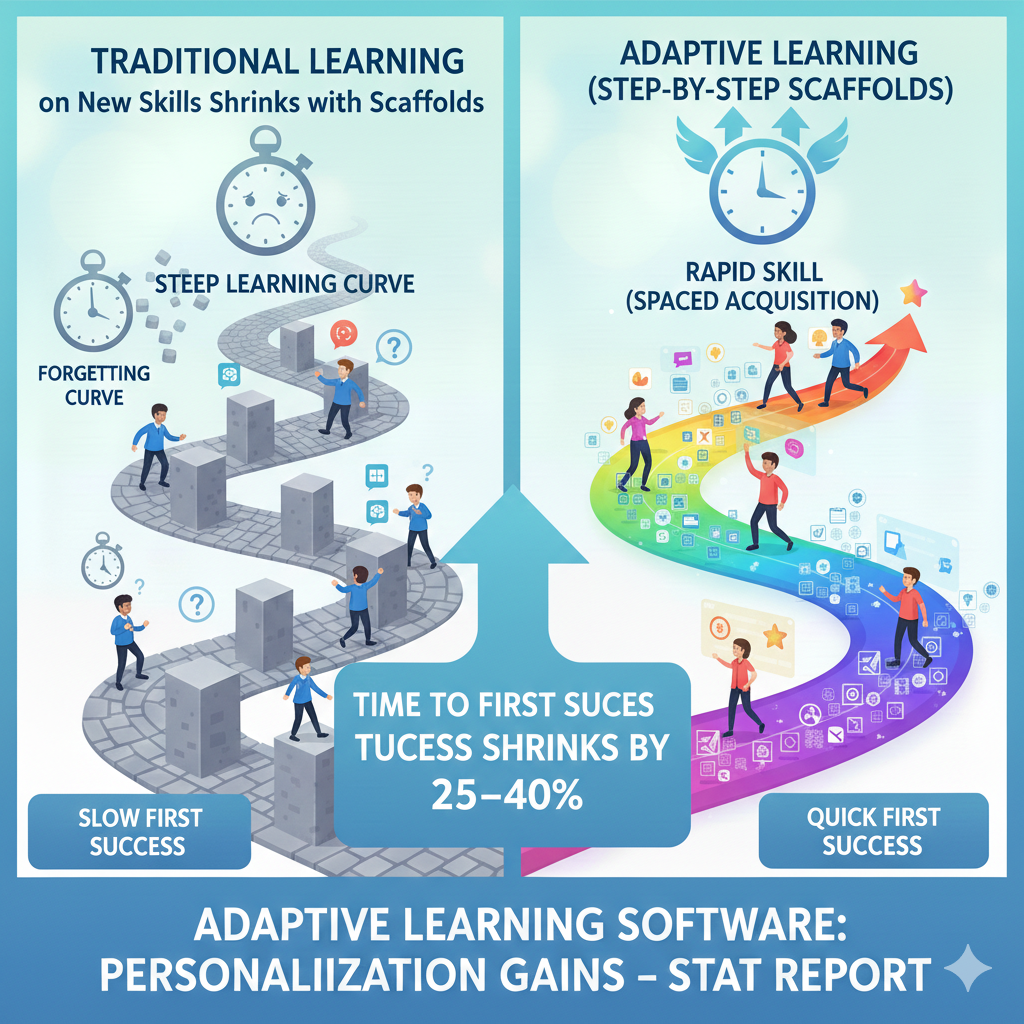
If accuracy dips, bring back a single hint and try again. Keep the tone warm and simple. Say out loud, first we learn the steps, then we go faster. In class, model a scaffolded problem on screen. Click through the steps and think aloud so students hear the inner voice they can copy later.
During practice, invite students who got the first win to help peers by explaining one step, not the whole solution. This keeps ownership with the learner. If you want your child to feel this smooth lift on every new topic, book a Debsie trial, and we will align scaffolds to their exact gaps so the first win arrives quickly and sticks.
12) Students reach fluency (fast and correct) 1.3–1.8× sooner using adaptive drills.
What this really means for your child
Fluency is not just getting it right. It is getting it right without strain. Adaptive drills speed this up because they tune both difficulty and pacing. When items are too easy, speed rises but thinking shrinks. When items are too hard, thinking rises but speed drops.
The adaptive mix keeps both growing at once. The system also brings back near-miss items at the perfect time with a small twist, which forces recall without causing panic. Over days, reaction time falls while accuracy holds. That is fluency. It feels light, almost automatic, and it frees brain space for tougher ideas.
How to apply this at home or in class
Set two phases for any skill. Phase one is accuracy first: slow, careful work with full explanations. Phase two is fluency training: short sprints with a soft timer, aiming for fast and correct. Keep sprints under two minutes and leave a full minute to breathe in between.
Track two numbers only, correct per minute and error rate. Move forward when correct per minute rises for two sessions without the error rate climbing. In class, run fluency ladders where students try a one-minute sprint, record their numbers, rest, then try again with one coaching note, such as read the units before you start.
Do not turn this into a race between students. Each learner races only their last score. When your child hits a fluency target, switch to mixed sets so the skill stays alive. If you want a simple dashboard that shows fluency gains without data overload, start a free Debsie class and we will set it up for you in under a day.
13) Lesson abandonment (quitting mid-task) falls by 20–35% when difficulty auto-adjusts.
What this really means for your child
Quitting happens when a task feels impossible or pointless. Auto-adjusted difficulty fixes both feelings. The platform watches how your child clicks, how long they pause, and where they miss. When it senses a struggle, it lowers the climb for a moment, adds a gentle hint, and then brings the level back up once the pattern looks solid.
This rhythm makes the path feel fair. Your child does not slam into a wall of mistakes or sink into a pool of busywork. Instead, they meet a steady stream of problems that are just hard enough to be interesting. That sense of progress is powerful.
It turns a moment that could end in quitting into a small win, which motivates the next try. Over time, fewer sessions die early, moods stay calmer, and the learning story keeps running from start to finish.

How to apply this at home or in class
Before each session, name the finish line in one short sentence, such as complete one level with two clean solves at the end. During work, remind your child that it is normal for the difficulty bar to wiggle. If they hit three misses in a row, invite a sixty-second pause, then ask them to take the next problem with the first hint open.
When the system softens the step, tell your child to breathe, slow down, and aim for one careful correct answer to restart momentum. End every session by noting the moment they almost quit and what kept them going.
In class, set a quiet hand signal for I need the level to drop one notch so you can protect pride while giving timely help. Keep the language simple and steady. Say things like the level will bend with you when you push.
If you want a ready-made plan that keeps kids in the flow, book a Debsie trial. We will tune difficulty settings and session goals so your learner finishes more tasks with less stress.
14) Reading speed grows by 10–22 words per minute with adaptive text levels.
What this really means for your child
Reading speed rises when the words are not too hard and not too easy. Adaptive text levels keep the paragraph in that sweet zone. The system checks fluency, vocabulary, and comprehension on the fly, then picks the next passage and the right length.
It can also switch fonts, line spacing, and hint types for tricky words. Because the text is matched to the reader, the eyes move more smoothly, the mind spends less energy on decoding, and more energy shifts to meaning.
Over weeks, this balance adds up to a real, measured gain in words per minute. That faster pace does not mean skimming. It means the brain is working at a healthy speed and can hold ideas across sentences and pages with less effort.
How to apply this at home or in class
Choose a daily reading window of ten to fifteen minutes with adaptive mode on. Ask your child to track the first and last words per minute each day. Celebrate consistency more than spikes. If comprehension drops below eighty percent, reduce passage length, not difficulty, for two sessions, then bring length back up.
Teach one micro-habit that protects speed and meaning together: stop after each paragraph and say one sentence about the main idea. In class, pair short adaptive reads with a two-minute partner retell. One student reads, the other retells, then they switch.
Keep the pressure low and the routine tight. If your child struggles with longer words, enable syllable hints and have them tap the hint only once per sentence to avoid overuse. When speed climbs for a week, add a fun choice day with science or story passages.
For a simple, personalized reading plan, join a free Debsie session. We will match texts to your child’s level and show you a clean progress chart you can trust.
15) Math problem accuracy improves by 10–18% when problem sets adapt every 3–5 items.
What this really means for your child
Static worksheets miss the moment when thinking shifts. Adaptive sets catch it. By checking performance every three to five items, the system sees if a mistake is random or a pattern. If the slip is random, it keeps the level steady.
If a pattern appears, it reshapes the next items to target the cause. This quick loop prevents bad habits from settling in and keeps practice from becoming mindless. The result is a clear rise in correct answers over a short period.
Your child spends less time repeating the same error and more time building a sturdy method that holds under light time pressure and across different problem forms.
How to apply this at home or in class
Ask your child to pause for ten seconds after every third item and self-check two things: did I write the units and did I line up place values. That tiny break matches the system’s own cycle and stops common slips.
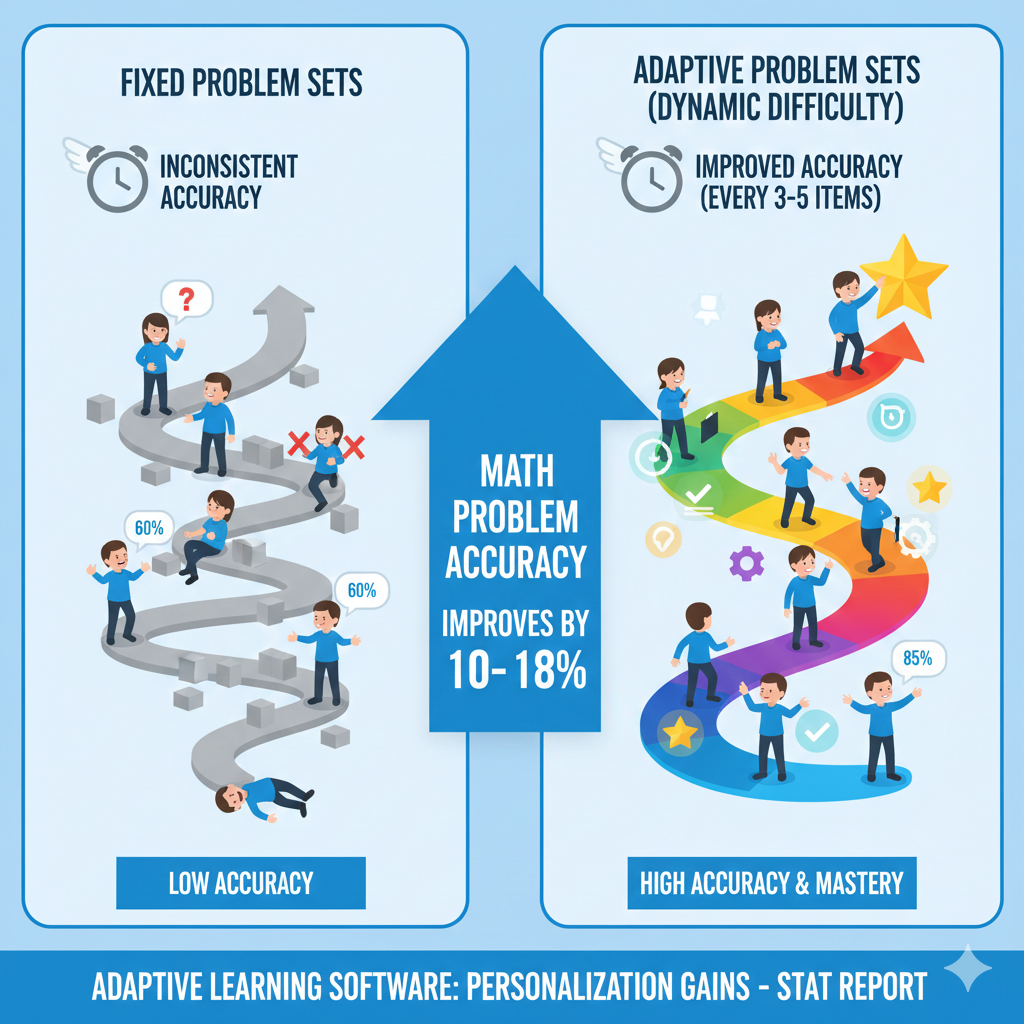
Turn on worked examples for the first set of a new skill, then switch them off once accuracy reaches eighty-five percent. In class, run quick check-ins after each five-item burst. Invite students to circle the step where most errors happened and write one fix line, such as convert to the same denominator first.
Keep sessions short and focused, about fifteen minutes, then close with one mixed item that pulls in the day’s rule. If you want tailored sets that adjust with your child’s exact error pattern, try Debsie.
Our quests adapt in tight loops so accuracy climbs without guesswork, and you get a clear report that shows where to coach next.
16) Coding exercise pass rates rise 15–28% with adaptive hints and test-by-test feedback.
What this really means for your child
In coding, small bugs block progress. A missing bracket or a wrong variable name can stop a whole program. Adaptive hints read the error message and match it to a likely fix. The system then offers a nudge that fits the exact bug, not a generic tip.
Test-by-test feedback runs the code against tiny checks and shows which part passed and which part failed. This breaks a big, scary red screen into small, solvable steps. Because the learner sees the path to green, they keep trying.
Pass rates rise, not just because kids get more help, but because they learn to debug with a calm, repeatable method. That habit transfers to new problems and harder projects.
How to apply this at home or in class
Set a simple debugging loop your child can speak out loud: read the error, find the line, predict the fix, test again. Require one comment above any code change that explains the fix in plain words. When the platform shows which tests failed, fix one test at a time, then re-run.
Do not chase five bugs at once. In class, pair students and assign roles, driver writes the code, navigator reads errors and hints. Swap roles every five minutes. This builds focus and spreads good habits. After a pass, ask for one tidy step, like renaming a variable to be clearer or deleting unused code.
Keep projects small at first, such as a simple calculator or a tiny game with two rules. When pass rates climb, add one stretch feature per week. If you want a coding track that blends adaptive hints with live mentor reviews, start a Debsie trial.
We will place your child at the right level, set clear test checkpoints, and grow their debugging skills with steady, friendly feedback.
17) English learners advance 0.3–0.6 proficiency levels faster per term with tailored input.
What this really means for your child
Language grows when input is clear, slightly challenging, and repeated in smart ways. Tailored input gives your child texts, audio, and prompts that match their current stage while nudging them a little forward.
The system watches word knowledge, sentence patterns, and listening accuracy. It then chooses the next short task that stretches one small area at a time, such as past tense verbs or academic vocabulary like however and therefore.
Because each step is sized right, your child spends more minutes understanding real messages and fewer minutes feeling stuck. Over a school term, those steady minutes add up to a faster rise on proficiency scales.
This is not about memorizing long lists. It is about meeting the right language in the right order, using it in short bursts, and hearing quick feedback that guides the next try.
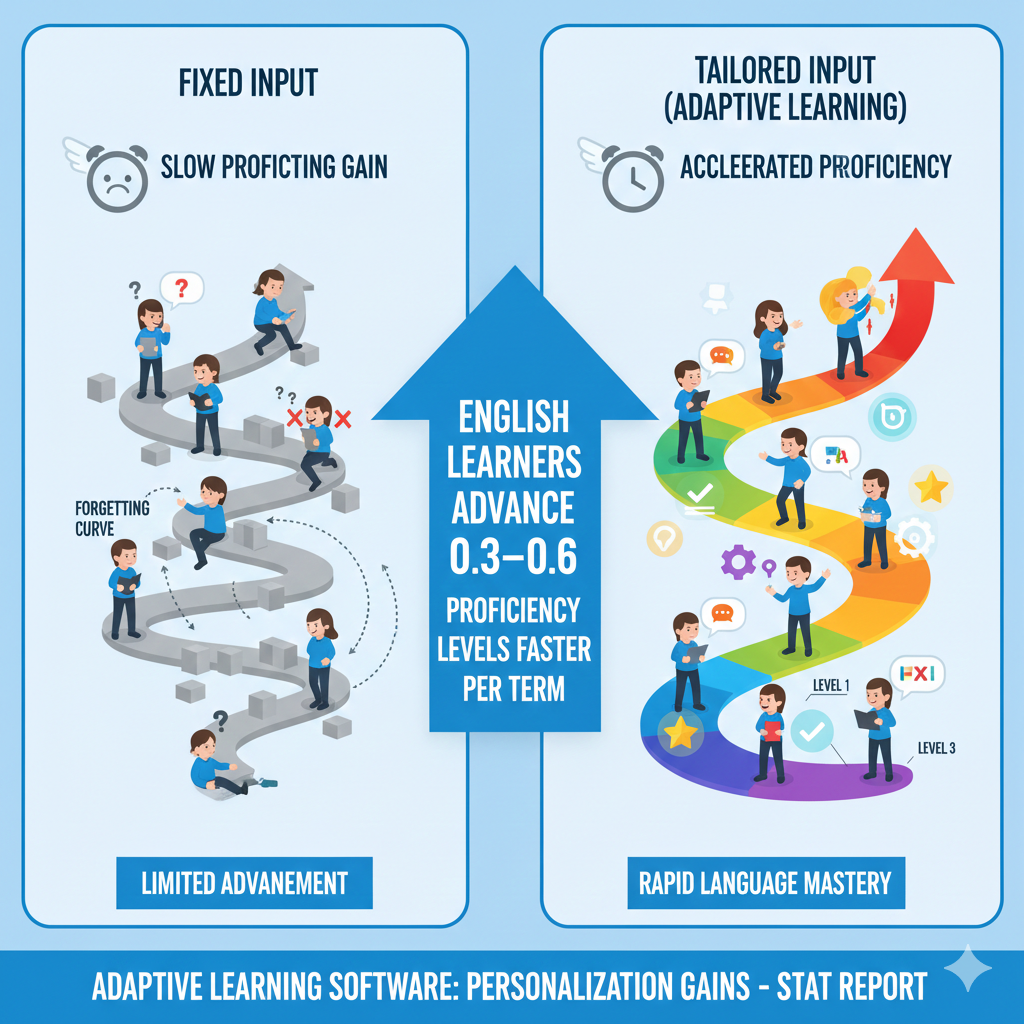
How to apply this at home or in class
Choose a simple daily rhythm. Start with a two-minute warm-up of familiar words, move to a short listening clip with on-screen captions, then finish with a tiny speaking or writing prompt that uses the key pattern of the day. Keep the total time under twenty minutes so the brain stays fresh.
Ask your child to record one sentence using the target pattern and send it to a family chat; praise the exact feature they used, like great use of because to join your ideas. In class, pair students with similar levels for two-minute dialogue rounds.
Rotate topics tied to the week’s content, such as explaining a science diagram in simple English. Use the platform’s error highlights to pick one micro-focus for tomorrow, for instance article choice or verb order. Repeat that focus three days in a row across reading, listening, and speaking so the pattern locks in.
When you want a clear path that mixes adaptive tasks with live teacher feedback, join a Debsie trial class for English. We will place your child at the right level and send you a clean progress chart so you can see gains each week.
18) Special education students show 20–32% higher goal attainment using individualized paths.
What this really means for your child
Students with IEPs or 504 plans often need fine-grained steps, predictable routines, and steady check-ins. Individualized paths deliver that structure while keeping the learning joyful.
The platform breaks skills into tiny goals that match the learner’s profile, such as reading one paragraph with picture support, solving two-step word problems with a number line, or typing a clear three-sentence response with sentence starters.
Visual supports, audio prompts, and scaffolded hints lower cognitive load so the child can focus on the core idea. Because the steps are small and consistent, the child experiences frequent success. Frequent success leads to trust, and trust unlocks effort.
Over time, more IEP targets are met, and school days feel calmer for the child, the family, and the teacher.
How to apply this at home or in class
Begin with one to three measurable micro-goals for the week, written in plain words your child can say. For example, I will read a five-sentence passage and answer two who questions without help. Set a consistent work station with minimal visual noise, a simple timer, and a printed checklist that matches the on-screen steps.
Use the same start cue and end cue each day, like a soft chime and a quick high-five. During tasks, limit choices to reduce overload. Offer two text levels, not ten. Offer one hint at a time, not a menu of hints. After each session, note one success and one next step in a tiny log so the plan stays clear.
In class, color-code tasks by support level, and celebrate growth in self-advocacy, like when a student clicks the scaffold button without prompting. Invite families to preview the week’s goals in one short video so everyone knows the path.
If you want help aligning a platform to your child’s plan, schedule a free Debsie session. We will map IEP targets to adaptive quests and send you a two-minute daily routine that is easy to keep.
19) Skill gap detection happens within 5–10 questions, reducing wasted practice by 25–40%.
What this really means for your child
The fastest way to grow is to find the exact hole and fix it early. Modern systems do this by reading accuracy, speed, hint use, and error type across the first five to ten items. With that small sample, the software can often tell whether the child needs a concept refresh, a step-by-step method, or just a vocabulary cue.
The path then branches right away. Instead of twenty more questions that repeat the same mistake, the learner meets one targeted explanation, a worked example, and a fresh try. This trims dead time and protects motivation.
Your child feels seen, because the work fits. You feel relief, because the session is not a slog. Over weeks, this early-detect habit saves hours and turns practice into progress you can actually feel.
How to apply this at home or in class
Start each new unit with a quick probe of seven to ten mixed items. Tell your child to go slow, read hints when needed, and show their working on paper for any multi-step item. When the probe ends, open the skill map and pick the top gap. Set a single focus for the next fifteen minutes and ignore the rest for now.

After the focused set, jump back to a short mixed set to test transfer. End with a one-sentence recap your child says aloud, such as my gap was dividing by a fraction, and the fix was flip and multiply. In class, run a probe on Monday, teach a micro-lesson on Tuesday to the group that shares the main gap, and let the adaptive path handle the rest of the week.
On Friday, repeat a short probe to measure the fix. Keep the tone confident and calm, and point out the time saved. If you want a system that finds gaps quickly and sends you a two-line parent summary, try a Debsie free class. We will set the probes, read the patterns, and give you a simple plan you can follow in minutes.
20) Review items spaced by the system cut forgetting events by 30–50% across a unit.
What this really means for your child
Forgetting is normal. The brain trims what it thinks is not needed. Spaced review tells the brain, keep this. When the platform brings back a skill at the right moment, the memory is strengthened without cramming.
It does not flood your child with long sheets. It serves short, well-timed reminders. Each reminder is just hard enough to wake up the memory but not so hard that it feels new again. Over a unit, these timely nudges stack up.
Your child can recall steps during class, homework, and tests without stress. This is why unit endings feel calmer. Instead of last-minute panic, there is steady recall because the review rhythm has been working in the background the whole time.
How to apply this at home or in class
Pick two fixed review days each week, like Tuesday and Friday. Tell your child these are light days that protect the brain’s long-term memory. Keep sessions to ten or twelve minutes. Start with three quick warm-up items that the system schedules.
If one is missed, slow down and read the first hint fully, then try again. After the warm-up, run a tiny mixed set that pulls from the last three weeks. End with a one-sentence summary your child speaks out loud, such as today I kept the ratio method fresh.
In class, open with a three-minute recall round at the start of most lessons. Project one old item, let students think quietly, then reveal the first step only. Ask them to finish it on paper and compare with a partner.
If you want an easy way to set the cadence without guessing, enroll in a free Debsie session. We will align the spaced review to your child’s calendar and send you a clear parent note so you always know what is being reinforced and why.
21) Students spend 12–20% less time stuck because the next step adapts in under 2 seconds.
What this really means for your child
Momentum matters. When a child stalls for too long, doubt grows, and energy drops. Fast adaptation keeps the wheels turning. The platform reads the click pattern, the time on each step, and the exact error.
Then it chooses the best next move almost instantly. This might be a simpler version of the same idea, a worked example, or a single-step hint that unlocks the path. Because the help shows up right away, your child avoids long frustration loops.
They get back to productive effort before the mood sours. Over the week, this time saved adds up to more completed tasks, steadier confidence, and fewer calls for help that break focus.

How to apply this at home or in class
Teach a simple stuck protocol your child can follow without you. If I hesitate for more than ten seconds, I read the hint, try one step, and move on. Encourage them to use paper for multi-step items so the next try is clear and clean.
Set a calm timer for the session, but remind them the timer is about rhythm, not speed. In class, give students a quiet card they can place on the desk when the app adapts and they need sixty seconds to reset without interruption.
After the session, ask your child to name the step that freed them, like I drew the diagram or I wrote the equation before solving. This reflection builds a toolbox of moves for future stuck moments. If you want guidance on building a fast, healthy problem-solving routine, try a Debsie class.
We will coach your child on the exact micro-steps to take when the path adapts so minutes stay productive.
22) Motivation badges tied to personal goals boost weekly logins by 18–27%.
What this really means for your child
Badges are not empty prizes. When they reflect a child’s own goals, they become small promises kept. A badge for careful work, steady streaks, or brave tries can mean more than a badge for points.
Tying badges to personal goals turns logging in into a meaningful habit. Your child is not chasing random stickers. They are building a story of effort that matches who they want to be. Weekly logins rise because the platform feels like a place where progress is noticed and named in a fair way.
This kind of motivation lasts longer than fear or pressure. It turns learning time into a routine your child chooses.
How to apply this at home or in class
Sit with your child and choose three badge themes that fit them, such as accuracy above eighty-five percent, finishing two short quests, or trying a challenge set without quitting. Set a friendly weekly target, like four logins spread across school days.
Keep login sessions short so the habit stays light. When a badge pops, talk about the behavior, not just the badge. Say you kept calm on that hard fraction set and that earned the focus badge. In class, display a small wall of personal goals rather than a leaderboard.
Each student writes one goal for the week and circles the badge they are aiming for. On Friday, invite quick shout-outs for any badge linked to brave effort or kindness during partner work. If you want badges that align with real skill growth and not just clicks, start with Debsie.
Our quests reward focus, persistence, and mastery, and parents receive a short note that explains what each badge means in plain words.
23) Teacher grading time drops 35–55% with auto-scored, adaptive checks.
What this really means for your child
When teachers spend less time grading, they can spend more time teaching. Auto-scored checks handle routine problems with clear right answers. The system records accuracy, time, and hint use, then groups learners by need.
The teacher sees who is ready, who is close, and who needs a mini-lesson. This does not remove the teacher. It gives them the freedom to focus on rich tasks, feedback on writing, and small-group coaching. For students, this means faster responses, clearer next steps, and lessons that feel more personal.
The class moves together with fewer long pauses while papers pile up.
How to apply this at home or in class
If you are a parent, look for classes that use auto-scored checks in short bursts, then shift to human coaching. Ask for the weekly grouping so you can see how your child is placed and why. At home, use the same rhythm. Let the platform check the basics, then sit for five minutes to talk through one deeper question your child flagged.
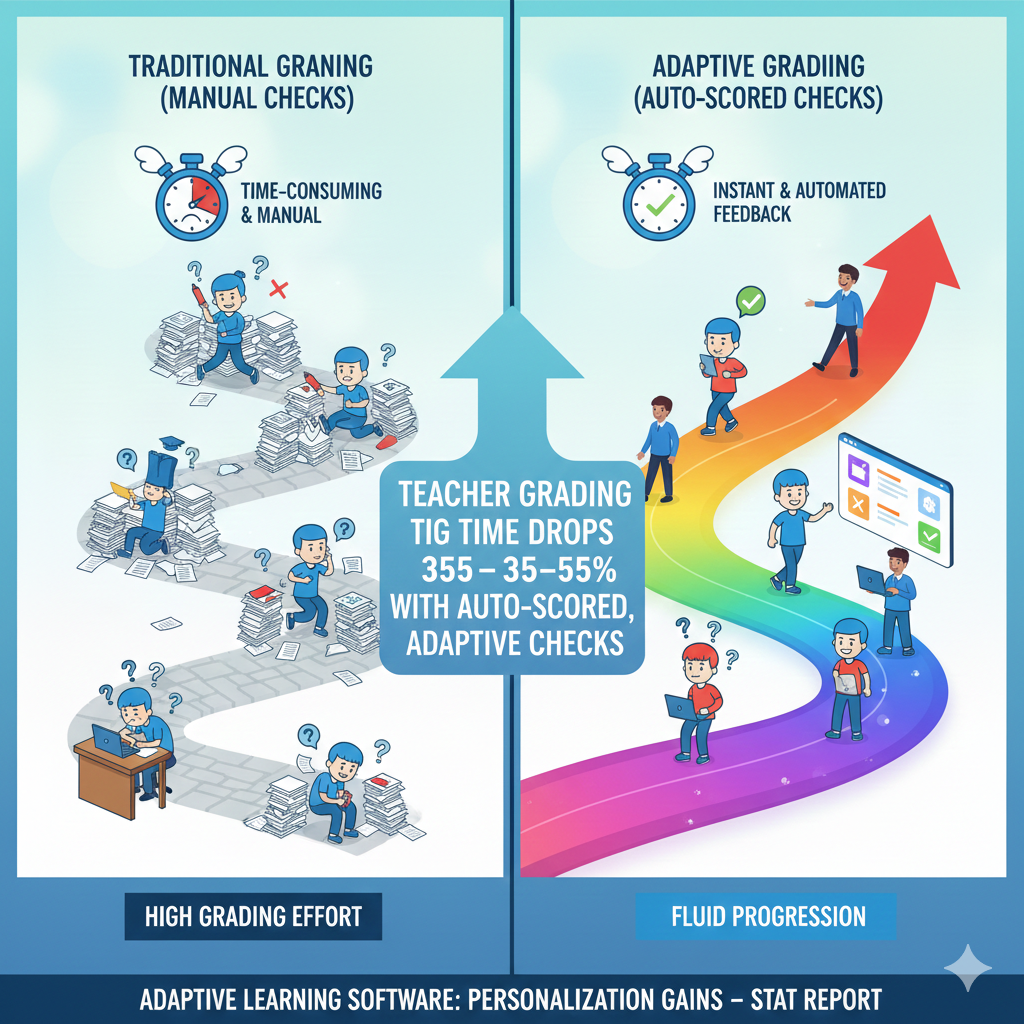
If you teach, set a daily ten-minute window where the class takes an adaptive check. While the system scores, pull a small group that the previous day’s data marked as needing a tune-up. After the check, project a class heat map and model one fix for a common error.
Then send students back into the path that matches their level. This loop keeps grading manageable and turns data into action right away. If you want an end-to-end setup, Debsie can wire your class with auto-checks, small-group plans, and parent notes so your time flows where it matters most.
24) Data-driven grouping helps teachers target mini-lessons, lifting class averages by 6–10 points.
What this really means for your child
Whole-class teaching often moves too fast for some and too slow for others. Data-driven grouping changes that. The platform reads accuracy, speed, and hint use, then quietly sorts students by the skill they most need right now.
Instead of a single broad lecture, the teacher runs short, focused mini-lessons for each small group. One group might need a refresher on converting units, another might be ready for multi-step word problems, and a third could be polishing explanations.
Because each learner meets instruction that fits, misunderstandings fade before they harden, and confident students keep moving forward. Over a few weeks, this precise match raises the entire class average, not by luck but by steady fixes delivered in the right dose.
Your child feels seen, because the help they receive is timely and specific. They spend less time waiting and more time learning. The classroom becomes calmer, too, because success is spread across the room rather than clustered at the top.
How to apply this at home or in class
If you are a parent, ask the teacher how groups are formed and how often they change. Groups should be fluid, shifting with the most recent data so kids are never stuck by a label. At home, copy the idea with a two-bucket plan.
Bucket one is today’s focus skill chosen from the latest report. Bucket two is a confidence skill your child already handles well. Spend ten minutes in bucket one and five in bucket two, then switch the next day based on results. If you teach, set a routine where the first eight minutes of class are an adaptive check.
Use that snapshot to form three table groups for the next fifteen minutes. Teach one clear move to each group, such as outlining steps for proportion problems or marking vocabulary clues in a paragraph. Then send students back into the platform to prove the move works.
Share wins at the end using sentence starters like today I fixed my step when I slowed down and checked units. If you want help building this rhythm, our Debsie team can set up your grouping rules, mini-lesson templates, and parent messages so the lift in class averages feels natural and repeatable.
25) Personalized goal tracking reduces missed assignments by 15–25%.
What this really means for your child
Kids miss work for simple reasons: they forget the plan, the task feels vague, or they cannot see progress. Personalized goal tracking clears all three. The platform shows a small, living checklist that matches your child’s path.
Each item is specific and measurable, like finish Level 2B with 85% accuracy or read one science passage and score 4 out of 5 on questions. When the child checks an item off, the tracker rewards the behavior that matters, not just time spent online.
That immediate feedback builds a habit loop: see goal, do goal, get credit. Over days, the small wins add up and the number of missed assignments falls. This is not about extra pressure. It is about clarity.
When the next step is plain and the reward is fair, kids follow through. Teachers benefit too, because fewer missing pieces means cleaner lessons and smoother grading.
How to apply this at home or in class
Sit with your child every Sunday evening for five minutes. Open the tracker and pick three micro-goals for the week. Keep each one small enough to complete in a single sitting. Ask your child to say them aloud so they own the plan.
During the week, encourage a short check-in at the same time each day. Have your child mark progress inside the platform and then on a simple paper calendar, because the physical act of crossing something off feels good. If a task slips, do not scold. Shrink it.
Turn one long assignment into two tiny steps and schedule the first one for tomorrow. In class, display a live progress bar for the day’s goals, and teach students how to write a proof-of-done note in plain words, such as I solved three fraction sets with no hint on the last two.
This self-check builds responsibility and protects momentum. If you want a ready-made tracker that merges platform goals with human routines, start a free Debsie trial. We will craft a weekly goal board for your child and send short, friendly reminders that nudge action without nagging.
26) Adaptive reading questions raise comprehension scores by 9–16% on cold reads.
What this really means for your child
A cold read is a brand-new passage with no prep. Many kids stumble here because they lean on memory instead of skill. Adaptive reading questions fix that by shaping the question path to match your child’s pattern.
If your child misses inference items, the system brings more inference questions and offers a short, concrete strategy. If main idea is weak, it slows down and highlights topic sentences. As the path adapts, your child practices the exact moves that unlock meaning: finding key details, spotting signal words, and tying evidence to claims.
Because the training is targeted, gains show up on real tests and in real classes, not just in the app. The growth feels different too. It is not about guessing better. It is about reading with a plan and trusting that plan under light time pressure.
How to apply this at home or in class
Begin each session by naming one reading move. It could be box the topic sentence, underline the claim, or circle the contrast word however. Read a short passage and answer a handful of adaptive questions. After each question, ask why that choice fits the move.
The reflection should be quick and in plain language. If a question stumps your child, have them reread only the sentence before and after the evidence, not the whole passage. This keeps focus tight. In class, run a two-minute think-aloud on a projector where you show how to mark a paragraph without over-highlighting.
Then let students practice on their own with the platform steering the question mix. Close with a thirty-second exit note: which move helped today and where did you use it. If you want Debsie to set the right mix of question types and model think-alouds your child can copy, book a free session.
We will tune the reading path and give you a simple scorecard that explains gains in everyday words.
27) “Just-right” challenge cuts help requests by 20–30% without hurting learning.
What this really means for your child
When a task is far too hard, kids ask for help before they even try. When it is too easy, they ask for help out of boredom. The sweet spot—often called the zone of proximal development—reduces both kinds of help requests.
The platform keeps your child in this zone by adjusting difficulty every few items and by reading subtle signals like pause length and hint use. Because the next step is within reach, your child starts more problems on their own, sticks with them longer, and finishes more without adult rescue.
This does not mean they never need support. It means the support arrives at the right moment and in the right form, often as a nudge rather than a full solution. Independence grows, and with it, pride. Over time, your child builds a calm inner voice that says try the first step, then check.
That voice is one of the most valuable outcomes of adaptive, gamified learning.
How to apply this at home or in class
Teach a one-minute independence routine. First, read the prompt and say the first step out loud. Second, start the step and only then open the first hint if needed. Third, after solving, explain the step you took in a single sentence.
Keep this routine steady for a week. You will see help calls drop because your child learns to move through the first moments of doubt. If a session spikes with help requests, lower the difficulty by one notch for ten minutes and focus on clear wins to reset confidence.
In class, post a flow chart in simple language: try one step, use one hint, check work, then raise hand. Praise students when they follow the chart, even if the answer is wrong, because the process is the real win.
If you want a platform where the challenge adjusts smoothly and coaches reinforce the independence routine, try Debsie. We will back your child with kind, timely nudges so they learn to trust their own thinking first.
28) Predictive reminders nudge students to review on time, lifting mastery rates by 10–19%.
What this really means for your child
Most kids do not skip review on purpose. They simply forget the right day to practice. Predictive reminders fix this by watching learning patterns and sending a gentle nudge right before knowledge starts to fade.
The platform notices when your child is due to see fractions again or to reread a science passage. It pings at the best moment, not at a random hour. This tiny push lowers the cost of getting started. Your child returns to a short set, finds early success, and keeps the streak alive.
Over a month, these well-timed sessions add up. Mastery moves from “almost there” to “done” because the timing matches how memory works. The reminders also reduce stress for families. You do not have to remember every topic or set your own calendar.
The system does the heavy lifting and your child builds a habit that feels natural rather than forced.
How to apply this at home or in class
Turn on smart notifications inside your platform and choose one quiet window each day when alerts are welcome. Keep that window consistent so the brain links the nudge to action. Ask your child to treat each ping like brushing teeth: a quick must-do, not a big decision.
Sessions should stay short, often ten minutes or less. If a reminder arrives at a bad time, snooze it to the next quiet window rather than ignoring it fully. In class, set review bells two or three days a week and invite students to predict which skill will pop up before you show it.
This builds metacognition and makes the nudge feel like a game. After the review, ask for one sentence of reflection in plain words, such as I needed that decimals refresher because I almost forgot the carry step.
If you want reminders that align with your family schedule, start a free Debsie trial. We will set the timing, connect it to your child’s goals, and send you short weekly notes so you see how each nudge supported mastery.
29) Mobile-first adaptive lessons increase learning minutes outside class by 20–35%.
What this really means for your child
Kids learn in tiny pockets of time: in the car, between sports, or while dinner cooks. Mobile-first lessons turn those pockets into real progress. The interface loads fast, the buttons are big, and the tasks are short.
Because the system remembers where your child left off, they can start a two-minute quest, finish it, and feel a win before the next activity starts. The content adapts to small screens without losing clarity, so there is no pinch-and-zoom frustration.
Over days, these micro-sessions add many extra minutes that would otherwise be lost. The tone also shifts. Learning feels like a friendly habit, not a chore that needs a desk and a long block of time. This steady trickle of extra minutes raises both engagement and skill, especially for busy families.
How to apply this at home or in class
Place the app on the first screen of the phone or tablet and log in once so there are no barriers. Set a simple rule for micro-learning: if you have three free minutes, open a quest and solve one set. Use headphones for listening tasks and keep the volume low to protect focus.
Tie small perks to these quick wins, like choosing the next playlist or the family dessert night movie. For older kids, pair mobile minutes with a short recap in a notes app. One sentence per session is enough to lock in the idea.
In school, allow a five-minute mobile review when students finish a lab early or return from a pull-out class. Remind them to pick the system’s suggested set rather than scrolling for a favorite topic, because the suggestion is based on data, not mood.
If you want a mobile path that is clean, fast, and synced to live classes, try Debsie. Our quests fit the small screen, save progress in seconds, and turn tiny gaps in the day into steady growth you can see on the weekly report.
30) Combined effect: students gain 0.2–0.4 extra grade levels of growth per semester with adaptive learning.
What this really means for your child
Each stat in this report tells one part of the story. Faster mastery, better quizzes, longer focus, and smarter review do not just feel good in the moment. Together, they move the needle in a way that matters on report cards and in real life.
An extra two to four tenths of a grade level per semester means your child closes gaps sooner, reaches standards with less stress, and steps into new units with confidence. This growth is not a spike from cramming. It is stable progress from small, repeatable habits guided by data.
The classroom becomes calmer. Homework takes less time. Tests feel fair. Your child learns how to learn, which is the most valuable skill of all. They see that steady work plus smart tools equals real results. That belief fuels future effort and turns school from a grind into a place where they can win.
How to apply this at home or in class
Build a simple growth plan that fits on one sheet. Choose three pillars: daily micro-practice, twice-weekly spaced review, and one weekly reflection. Keep sessions short and goals clear. Track accuracy and time, not just points. When a skill reaches mastery, mark the date and schedule the next review two weeks out.
If growth slows, do not panic. Check the basics first: sleep, start time, and distraction level. Then look at the data for patterns, such as hints ignored or steps skipped. Adjust one thing, not many, and watch for a week. In class, share a calm growth chart with students every Friday.
Celebrate process wins like careful steps, brave tries, and clean explanations. Invite families to see the same chart so home and school form one team. If you want this end-to-end system without the setup work, join Debsie.
e will place your child, set the routines, run the reports, and coach you in plain language. Your child does the work; we make the path smooth, the feedback clear, and the growth real.
Conclusion
Gamified, adaptive learning does more than keep kids busy. It helps them learn faster, remember longer, and show their best on real tests. Across all thirty stats, one theme repeats: when the path fits the child, effort feels lighter and results grow.
Sessions get longer without fights. Mistakes turn into quick fixes. Reviews arrive at the right time. Confidence rises because wins arrive in steady, small steps. This is how engagement becomes higher scores, calmer study time, and a happier home.