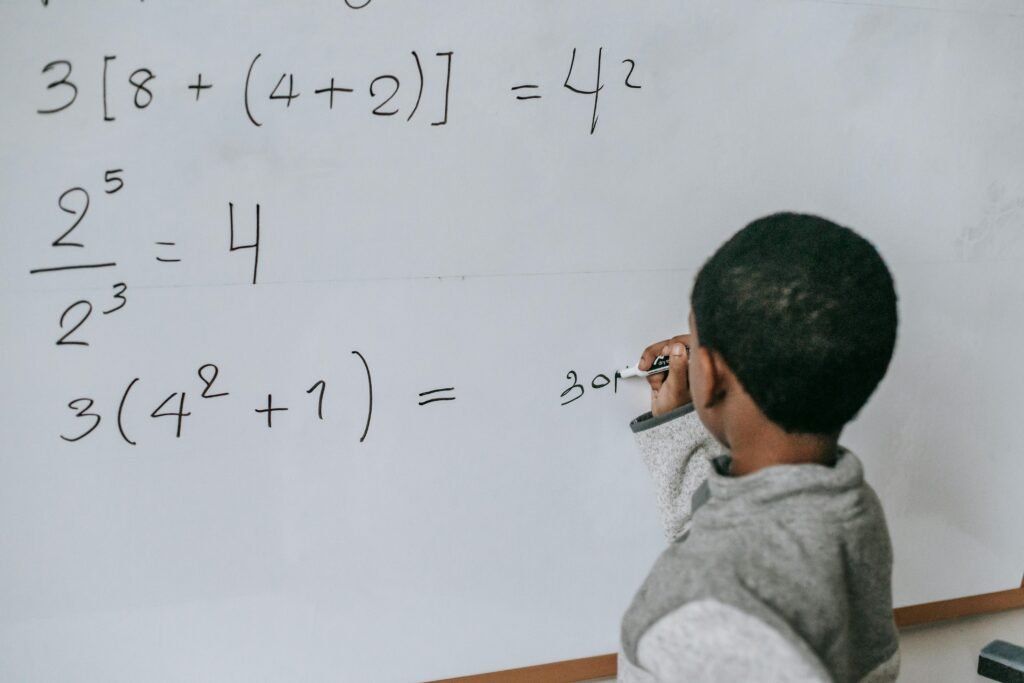
Homework can feel like a daily battle in many homes. Parents want their children to learn more, but not feel tired, stressed, or bored. Kids want to do well, but they also want time to play, rest, and explore their interests. Math homework sits right in the middle of this problem. Too little practice can slow learning. Too much practice can hurt confidence and joy.
1.Students who do 10–20 minutes of math homework per day show the highest average math score gains in elementary school
This stat surprises many parents. Most people believe that more homework means more learning. But for young children, math growth works very differently. At the elementary level, the brain is still building basic number sense.
Short and clear practice helps the brain grow strong pathways. Long sessions often do the opposite.
Ten to twenty minutes of math homework gives children just enough time to focus without getting tired. During this time, the brain stays alert. Mistakes are fewer. Thinking is sharper. Children are more likely to remember what they learn because they are not rushing or feeling bored. This is why test scores rise the most in this small time window.
Another key reason this works is attention. Young children have short focus spans. When homework stays within this limit, children stay present. They read the problem carefully. They try different ways to solve it. They feel proud when they finish.
This builds confidence, and confidence leads to better learning the next day.
Parents play a big role here. Instead of asking a child to sit for an hour, it is better to set a clear timer. Tell your child that math time is short and focused. This creates a calm feeling. Children are more willing to start because the task feels safe and doable. Over time, this routine builds discipline without stress.
Teachers also benefit from this approach. When students do short homework, teachers get work that shows real understanding. They can spot gaps faster. They can adjust lessons better. Homework becomes feedback, not just work.
At Debsie, this idea is deeply built into how math is taught. Lessons are designed to be short, playful, and meaningful. Practice is broken into small challenges that keep children thinking without pressure. Parents often notice that children finish faster but understand more. That is the power of the sweet spot.
If your child struggles with math, do not add more minutes right away. First, reduce time and improve focus. Sit nearby. Ask how they are thinking, not just what answer they got. These small actions inside a short time block can change everything.
This stat teaches one clear lesson. For young learners, short daily math practice is not a shortcut. It is the smartest path to strong math growth.
2.Math achievement gains peak around 30–45 minutes per day for middle school students
As children grow older, their brains can handle more thinking time. Middle school students can focus longer, think deeper, and work through harder problems. This is why the sweet spot shifts upward. For this age group, thirty to forty-five minutes of math homework brings the strongest gains.
This time range allows students to warm up, apply skills, and reflect on mistakes. The first few minutes help them settle. The middle part is where learning happens. The final minutes allow review and correction. Anything shorter may feel rushed. Anything longer often leads to mental fatigue.
At this age, math becomes more complex. Students move from simple rules to ideas like patterns, logic, and problem chains. They need time to think, but they also need limits. When homework goes past the sweet spot, thinking slows down. Errors rise. Motivation drops.
Parents often worry when middle school math looks hard. The common reaction is to push for more practice time. This stat shows why that can backfire. A tired brain does not learn well. It starts guessing. It avoids hard steps. Over time, the child may begin to dislike math, even if they were once good at it.
A better approach is structure. Set a clear start and end time. Encourage short breaks inside the session if needed, but keep the total time within the range. Ask your child to explain one problem out loud. This deepens learning without adding more minutes.
Middle school is also when habits form. Children begin to manage time on their own. When they learn to work deeply for a set period, they build a skill that helps in high school, college, and life. This skill is focused effort.
At Debsie, middle school math programs are designed around this exact window. Lessons challenge students, but they are paced to avoid overload. Interactive tasks keep the brain active. Gamified progress helps students stay engaged without dragging time.
If your child finishes early and understands the work, that is a success. Do not add extra problems just to fill time. If your child struggles and time runs out, stop and note where the problem was. That information is more valuable than forcing another twenty minutes.
This stat reminds us that growth comes from balance. Middle school students need enough time to think deeply, but not so much that learning turns into exhaustion.
3.Beyond 60 minutes of daily math homework, average math gains flatten or decline
This stat is one of the most important for parents to understand. Many families believe that if learning slows down, the answer is always more time. But math learning does not work like filling a bucket. After a certain point, the brain stops absorbing and starts resisting.
Once math homework crosses sixty minutes in a single day, the brain becomes tired. Focus drops. Small mistakes increase. Children may still be sitting at the desk, but real learning has already stopped. In some cases, performance even goes backward.
The child remembers less the next day than if they had stopped earlier.
One reason for this is mental overload. Math requires active thinking. It is not passive like watching a video. Each problem uses working memory, attention, and logic. These mental resources are limited, especially in children. When they run out, the brain switches to survival mode. It tries to finish fast instead of thinking well.
Another issue is emotional cost. Long homework sessions often lead to frustration. Children feel stuck. Parents feel stressed. The homework table turns into a place of tension. Over time, children begin to connect math with negative feelings. This emotional link can damage learning far more than a missed worksheet.
Parents can protect their children by watching signs of overload. If your child rereads the same question again and again, stares into space, or starts guessing, learning has stopped. That is the moment to pause, not push harder. Ending early is not giving up. It is choosing smart learning.
Teachers also need to hear this message. Assigning long homework may look rigorous, but it often hides the real problem. If students need over an hour every day, the work may be too hard, unclear, or poorly matched to their level. Shorter homework with clear purpose brings better results.
At Debsie, lessons are designed to avoid this trap. Practice is split across days. Skills are reinforced in fun ways, not forced through long drills. This keeps learning fresh and effective.
If your child regularly spends more than an hour on math, step back and review the system. Ask what is being learned and why. Focus on clarity, not endurance. Math is not a race. It is a skill that grows best when the brain feels calm and capable.
4.Elementary students gain up to 2× more math improvement from short, focused homework than from long sessions
This stat highlights a powerful truth. For young children, how they learn matters more than how long they sit. Short, focused homework sessions can double math improvement compared to long, tiring ones.
Young brains learn through clarity and repetition, not struggle. When homework is short, children stay alert. They notice patterns. They understand why answers work. They are more likely to remember the idea the next day. Long sessions often blur these moments. Everything starts to feel the same, and learning fades.
Focus is the key word here. A focused session means no distractions, clear goals, and full attention. Even ten minutes of true focus can beat forty minutes of distracted work. This is why some children make fast progress with less homework. It is not magic. It is brain science.
Parents can create this focus by shaping the environment. Turn off screens. Clear the table. Sit nearby, but do not take control. Let the child think. Ask gentle questions like “How did you get that?” instead of giving answers. These small actions increase learning without adding time.
Another benefit of short homework is confidence. When children finish quickly and correctly, they feel smart. This feeling matters. Confidence makes children more willing to try hard problems later. Long homework often steals this confidence by making children feel slow or stuck.
Schools that reduce homework time often see better results, not worse. Children come to class more rested. They participate more. They are ready to learn new ideas instead of recovering from the night before.
Debsie’s approach is built around this idea. Lessons feel like small wins. Children move forward step by step. Progress feels natural, not forced. Parents often say their children ask to do more, not because they have to, but because they want to.
If your child is young, protect their focus like a treasure. Short, clear math time each day will grow skills faster than long sessions ever could. Trust the process. Learning grows best when the brain feels safe, focused, and proud.
5.Students doing no homework score 15–25% lower in math than peers with light homework routines
This stat is important because it protects families from an easy mistake. When parents hear that “too much homework is bad,” some families swing to the other side and remove homework fully. That choice often comes from love. Parents want less stress, fewer tears, and more family time. But math is a skill, and skills fade when they are not used. Children who never practice at home can look fine for a short time, then suddenly fall behind when math gets harder.
In class, teachers must move forward. They cannot pause for every child every day. Homework is the small bridge between one lesson and the next. When that bridge is missing, a child often starts each new topic with less grip.
They forget steps. They mix up signs. They lose the “feel” of numbers. Then class becomes confusing. Confusion creates worry. Worry creates avoidance. And avoidance is one of the fastest ways for math scores to drop.
The key word in this stat is light. It does not say that children need long homework. It says children who do a small amount do better than children who do none. Think of it like brushing teeth. Two minutes daily beats one long session once a week.
Math works in a similar way. The brain needs short reminders so ideas stay fresh.
If your child currently does no math homework, you do not need to bring in a heavy routine. Start small and make it calm. Choose one short task that matches your child’s level. Keep it simple. One page is not needed.
A few problems done with full attention is enough. The goal is not to “finish more.” The goal is to keep the math muscle active.
Also, the way you speak about homework matters. If you say, “You must do this or you will fail,” the child will feel fear. Fear blocks learning. Instead, frame it as training. You can say, “Let us do a short math practice so tomorrow feels easy.” That one line changes the mood in the room. Children work better when they believe homework is helping them, not punishing them.
A helpful habit is to end homework with a quick win. If the last problem is too hard, the child ends feeling stuck. If the last problem is doable, the child ends feeling capable. That feeling matters. It shapes whether the child will resist homework tomorrow or begin with confidence.
If you want the easiest path, Debsie is built for exactly this kind of light routine. The practice is guided, clear, and short. It feels like a challenge game, not a heavy duty task.
Many parents use Debsie as the “right amount” of math at home, so their child stays ahead without burning out. If you want to try it, you can sign up for a free trial class on Debsie.com and see how your child responds when math practice is short, friendly, and structured.
This stat gives a simple lesson. Doing nothing is not neutral in math. It usually creates a gap. A small, steady routine closes that gap and protects your child’s confidence.
6.Light homework loads are linked to higher math retention than heavy homework loads
Retention is the quiet power behind strong math grades. It is not only about getting answers today. It is about remembering the idea next week, and using it in a new chapter later. This stat says something very practical. Light homework helps children remember math better than heavy homework. That sounds strange at first, but it makes sense once you watch how children work.
When homework is heavy, many children switch into survival mode. They rush. They copy steps without thinking. They look for the fastest way to “get it done.” In that state, the brain stores shallow memory. Shallow memory fades quickly.
The child may finish the page tonight, then forget the method tomorrow. Parents often see this and think, “We need more practice.” But the problem is not always lack of time. The problem is the kind of time being used.
Light homework supports deep thinking. With fewer questions, the child has room to slow down. They can notice patterns. They can check work. They can see why an answer makes sense. This deeper processing is what the brain remembers. Memory is not built by pressure. Memory is built by meaning.
A calm mind stores learning better than a stressed mind. If homework causes tension, the brain focuses on stress, not on math. That is why heavy homework often hurts retention. The child may remember the stress of the night more than the lesson itself.
Over time, this can create a cycle where math feels harder than it truly is.
You can improve retention at home with one simple rule. Stop the session while your child is still able to think clearly. Do not push until they are drained.
If you notice signs like frequent careless mistakes, blank staring, or sudden anger, the learning value has dropped. End the work, and write down where they got stuck. That note is useful. It shows what needs teaching, not what needs more minutes.
Another strong way to improve retention is to ask for a short explanation after the homework. Not a lecture. Just one sentence. “Tell me how you knew what to do.” When a child explains, the brain organizes the learning. It becomes easier to recall later. This can take less than one minute, but it makes the practice stick.
Spacing also helps. Instead of doing a huge amount one day and nothing the next, do a small amount more often. The brain loves repeated short reminders. That is how skills move into long-term memory. This is also how children build confidence. They stop feeling like they must relearn math every time.
This is where a structured program can save families a lot of stress. Debsie’s math path is designed so children revisit skills in a smart way. They do not just finish a topic and move on. They practice it again later, in a new format, so the idea becomes permanent.
Parents often notice that children remember more and need less re-teaching at home. If you want that kind of steady retention without heavy homework, Debsie’s live classes and gamified practice are a strong fit, and you can begin with a free trial to see the difference.
This stat teaches a clear message. If you want math to stay in your child’s mind, do not chase long homework. Chase smart homework. Light, focused practice builds stronger memory than heavy workloads ever will.
7. The optimal homework range improves math performance by 0.20–0.30 standard deviations
This stat may look like “school research language,” but the meaning is simple and very useful. An improvement of 0.20–0.30 standard deviations is not a tiny change. In education, it often means a child is learning noticeably more than before.
It can look like fewer mistakes, faster understanding, better quiz scores, and more confidence during class. It can also look like a child who used to avoid math starting to engage again, because the work finally feels manageable.
The reason the optimal range works so well is because it respects how learning actually happens. Math growth needs three things at the same time. It needs practice, it needs focus, and it needs a calm mind. If one of these is missing, progress slows.
Too little homework reduces practice. Too much homework reduces focus and calm. The sweet spot protects all three.
Parents often search for the “best trick” to raise scores. Many assume the trick is adding more time. But this stat says something better.
The trick is choosing the right amount of time and making that time count. When a child practices in the sweet spot range, the brain can store skills properly. The child can spot patterns, remember steps, and build speed naturally without forcing it.
This stat also matters because it shows that you do not need extreme methods to see real change. You do not need nightly battles. You do not need two-hour study sessions. You do not need to turn childhood into a test-prep program. A strong, steady routine in the right time window can move performance in a meaningful way.
If you want to use this stat at home, the best move is to create a simple “homework plan” based on your child’s age and energy. For younger children, keep the routine short and consistent. For older children, allow deeper work but still set a clear stop point.
The purpose is to prevent the slow slide into overwork, which often happens without parents noticing. One extra worksheet here, a harder chapter there, and suddenly homework becomes a daily marathon.
A very practical method is to track the real learning, not the minutes. After homework, ask your child one quick question about the work.
Not a quiz. Just one simple check, like, “What was the hardest step?” or “What did you do first?” If your child can answer calmly, learning happened. If they are too tired to explain, they likely crossed the sweet spot, even if the time looked “normal.”
Another way to use this stat is to replace extra minutes with better feedback. Many children do homework without knowing what they did wrong. That is wasted time. Instead of adding minutes, give them a small correction loop. Let them check two answers carefully.
Let them redo one problem the right way. That can create more score growth than adding twenty more problems.
Debsie is designed around this kind of efficient progress. Children practice in the right dose, and they get guidance so mistakes become learning moments instead of frustration. Parents often notice that children improve without long study hours, because the learning is structured and matched to the child.
If you want this kind of improvement without turning evenings into stress, you can start a free trial class on Debsie.com and see how quickly your child becomes more steady in math.
This stat teaches a hopeful message. Meaningful score growth does not require extreme effort. It requires smart effort in the right range.
8. Homework effectiveness drops by about 40% when assignments exceed the sweet spot time
This stat should change the way we think about “working harder.” If homework goes beyond the sweet spot, nearly half of its learning value can disappear. That means a child might spend twice the time but get only a small extra benefit, or sometimes no benefit at all.
This is one of the biggest reasons families feel stuck. They add more homework time, but results do not improve. The child gets tired. The parent gets frustrated. The scores stay the same. Then everyone thinks the child is the problem, when the real problem is the method.
Why does effectiveness drop so sharply? Because learning has a limit each day. The brain can only handle so much focused thinking before it gets foggy.
Once that fog arrives, children stop processing deeply. They may still write answers, but the brain is no longer building strong understanding. It is copying, guessing, or rushing just to finish.
This is also where careless mistakes explode. A child who understands the topic might still get wrong answers simply because they are tired. Then parents think, “You do not understand,” and they force even more practice.
But the child did understand. They were just drained. This cycle is harmful because it confuses fatigue with lack of ability.
There is also a hidden cost. When homework runs long, children start to hate it. They associate math with pressure. Over time, this can create real avoidance. Avoidance reduces practice, which reduces skill, which increases difficulty, which increases avoidance again. It becomes a loop. This loop is much harder to fix than a simple skills gap.
The best way to use this stat is to protect your child’s “learning power” each day. Set a clear stop time, even if the homework is not fully finished. That sounds scary to many parents, but it can be done in a responsible way.
You stop, you write a short note for the teacher, and you explain that the child reached the limit of productive focus. Many good teachers understand this. If they do not, the note still creates a record that homework load may be too high.
At home, you can also increase effectiveness by improving the first part of the session. The first ten minutes are often the best minutes. Make them count. Remove distractions. Start with the easiest question to build momentum.
Then move to the harder one while the brain is still fresh. Ending with a quick review is better than ending with a struggle.
If your child often goes past the sweet spot, look at why. Is the homework too long, or is your child unsure about the lesson?
If the lesson is unclear, the fix is not more homework. The fix is better teaching. That could mean asking the teacher for clarification, using a short video, or joining a structured learning program where the child can ask questions and build understanding.
Debsie helps here because students are not left alone with confusion. They learn with expert teachers and practice through clear steps. This prevents the long, painful homework sessions that happen when a child is stuck and guessing.
If your child’s math time keeps stretching longer but results are not improving, a free trial class at Debsie.com can be a simple way to test a better path.
This stat delivers a firm warning and a clear solution. More time is not always more learning. Past the sweet spot, effort becomes less effective, and protecting your child’s energy becomes the smartest strategy.
9. Short daily math practice increases problem-solving accuracy by up to 25%
Accuracy is one of the clearest signs that a child is truly learning math. Speed can be misleading. A child can work fast and still misunderstand. But accuracy, especially on mixed problems, shows real skill.
This stat tells us something very practical. Short daily practice can raise accuracy by up to a quarter. That is not a small change. It can be the difference between failing and passing, or between passing and feeling proud.
Short daily practice works because it trains the brain to be careful in small doses. When a child sits down for a short session, they are more likely to stay present. They read the question properly. They notice details like units, signs, and place value.

They can keep the steps in their mind without getting tired. Accuracy improves because the brain is not overloaded.
Long sessions often reduce accuracy, even when the child knows the topic. The reason is simple. Tired brains miss small things. They forget to carry a number. They drop a negative sign. They misread a fraction.
They skip a step. Then the child thinks, “I am bad at math,” when the truth is, “I am tired.” This is why short practice is such a strong tool. It prevents fatigue-based mistakes.
If you want to use this stat at home, focus on quality of attention, not quantity of problems. A very effective routine is to do a short set of mixed questions and treat each one like a thinking exercise.
When your child answers, ask a calm follow-up like, “How do you know this is right?” This question is not meant to pressure them. It is meant to train checking. The act of checking is one of the biggest drivers of accuracy.
You can also build accuracy by slowing down the first step. Many errors happen before the child even starts solving. They misread. They jump to a method too soon. Encourage your child to pause and restate the problem in their own words. This takes seconds but saves many errors. It also builds a skill that helps in exams, where stress can lead to careless reading.
Another powerful habit is to correct mistakes immediately, but gently. When a child gets an answer wrong, do not say, “That is wrong.” Say, “Let us find where it changed.” This makes the mistake feel like a puzzle, not a failure.
Then guide them to the exact step where the error happened. This teaches pattern awareness. Over time, children begin to spot their own mistakes before you do. That is when accuracy really takes off.
If your child struggles with accuracy, avoid the common trap of adding more and more questions. That often increases errors because fatigue grows. Instead, reduce the number of questions, improve checking, and make sure the child truly understands the method.
Debsie supports accuracy by turning practice into guided challenges where children get fast feedback. They learn to correct, not just complete. They also learn strategies for reading problems carefully, which is often the missing piece behind “careless mistakes.”
If you want to build accuracy without building stress, a free trial class at Debsie.com is a strong place to start, because it gives your child structure and support in short sessions that actually stick.
This stat teaches a clear lesson. Accuracy grows when practice is short, steady, and mindful. It is not about doing more. It is about thinking better.
10. Students with moderate homework show better long-term math memory than crammers
Cramming feels tempting because it looks productive. A child studies for a long time in one night, finishes a big set of problems, and seems ready for a test. But math memory does not work well with cramming. This stat shows that students who do moderate homework over time build better long-term memory than students who cram.
Long-term math memory is what helps a child later, when topics stack. In math, new ideas often depend on older ones. Fractions support algebra.
Algebra supports geometry. Geometry supports higher math. If a child crams, they may remember enough for a quiz, but the memory fades quickly. Then, weeks later, the same skill is needed again and the child feels lost.
Moderate homework builds memory because it spreads learning out. The brain needs time to store and strengthen skills. When learning is spaced, the brain revisits the idea repeatedly, and each revisit makes the memory stronger. This is why moderate daily or near-daily practice beats one long session before a test.
Cramming also increases stress. Stress can make a child memorize steps without understanding. They may remember a formula, but not know when to use it. That kind of memory breaks under pressure. Moderate homework allows understanding to form, and understanding creates stable memory.
Parents can help by planning backwards. Instead of waiting until the day before a test, set tiny practice moments across the week. Even five to fifteen minutes on several days is better than one long night. This also keeps evenings calm. It turns math into a steady routine rather than a crisis.
If your child is used to cramming, the change can feel hard at first. Cramming is a habit, and habits feel “normal.” But you can shift it slowly. Start by doing a small review two days before a test, then another small review the next day, rather than everything at once.
Over time, your child will notice they remember more and feel less stressed. That improvement becomes its own motivation.
A useful trick is to mix old and new. Many children only practice what they learned that day. Moderate homework is even more powerful when it includes one or two older skills as well. This helps the brain keep older skills alive. It also shows children that math is connected, not separate chapters.
Debsie naturally supports this approach through structured learning paths where skills come back in smart ways. Children do not just learn something once and forget it. They meet it again later in a new form, so the memory stays strong.
If your child tends to cram and then forget, a free trial class on Debsie.com can be a simple way to shift into a better rhythm, with less stress and stronger long-term results.
This stat gives one clear message. Math is built over time. Moderate, steady practice wins because it builds memory that lasts beyond the test.
11. Math gains per minute are highest in the first 20–30 minutes of homework
This stat explains why the sweet spot is real. The first part of a homework session is usually the most powerful. In the first twenty to thirty minutes, the brain is fresh. Attention is stronger. The child is more willing to think.
That is why the learning “return” per minute is highest early on. After this window, each extra minute tends to bring less progress.
You can think of it like watering a plant. The first cup of water helps a lot. The tenth cup does not help much and may even harm the plant. Homework works in a similar way. Early minutes build understanding. Later minutes often become repetition without real growth, especially if the child is tired.
This stat matters because it changes what you should aim for at home. Many families aim for long homework time because it feels serious and disciplined. But the better aim is to protect the best minutes and make them count.
If your child has only twenty-five good minutes of math focus in the evening, those twenty-five minutes can be more valuable than ninety minutes filled with distraction, frustration, and guessing.
A strong way to use this is to shape the start of homework like a “prime time.” Begin at a time when your child is not hungry, not half-asleep, and not coming straight from a screen. A tired or distracted start wastes the best learning window.
Give a short reset before homework. A glass of water, a quick snack, and two minutes of calm can protect those first minutes and raise the quality of learning.
Also, start with a clear target. Children do better when they know what “done” looks like. You can say, “We will do these problems carefully, then we will stop.” This creates calm. Calm creates focus. Focus creates gains.
During the first twenty to thirty minutes, encourage slow thinking. Many mistakes happen because children rush at the start, not because they do not know. A gentle reminder like “Take your time, read it twice” can reduce errors without adding time. When children work carefully early on, they learn more and need less correction later.
If your child struggles, use the early minutes for the hardest work, not the easiest. This sounds backward, but it is smart. Save the brain’s best energy for the problem that needs real thinking. Then end with something easier, so the child finishes feeling capable. This simple structure increases both learning and confidence.
You can also improve the power of early minutes by limiting help. Many parents jump in quickly. That feels helpful, but it can reduce learning. Try this instead. Let your child struggle for a short, safe moment.
Ask guiding questions rather than giving answers. Questions like “What is the question asking?” or “What did you do in class?” keep the child thinking. The child’s brain builds skill by working through the steps.
Debsie supports this “high value early minutes” idea through lessons that are designed to be clear and active from the start. Children are engaged quickly, so their best learning window is not wasted.
If homework at home often drags, it may not be about your child’s ability. It may be about how those first minutes are used. A free trial class on Debsie.com can show you what happens when the best minutes are guided well and matched to your child.
This stat gives a simple rule. Protect the first thirty minutes. They carry the most learning power.
12. After the sweet spot, each extra 10 minutes adds less than 5% additional gain
This stat is the clearest proof that “more” is not the same as “better.” After a child has already done the right amount of homework, adding more time gives very little extra learning. Less than five percent per extra ten minutes means you are paying a high cost for a small return. That cost is time, energy, mood, and often family peace.
Many parents see their child sitting longer and assume learning is increasing. But learning can slow sharply once the sweet spot is crossed. Past that point, the brain is often repeating actions without building deeper understanding.
The child might be doing more problems, but not learning more. That is why long homework nights can feel busy but still leave the child confused the next day.
The first danger here is false confidence for adults. Parents may say, “We spent two hours, so we did enough.” Teachers may assume, “They had a lot of practice, so they should know it.” But the child may still not understand. More time did not fix the root issue. It only increased fatigue.
The second danger is damage to motivation. When children work past the sweet spot, they often begin to hate the subject. They start believing math is endless and painful. This feeling can carry into the next day. Then class feels harder because the child arrives already discouraged.
This is how a small learning issue turns into a long-term attitude problem.
So what should a parent do when homework is still not finished but the sweet spot has been passed? The best answer is to stop and shift. Do not push through for tiny gains. Instead, identify what is blocking progress. Is your child stuck on one idea?
Is the homework too long? Did they miss something in class? The problem is not always effort. Often it is clarity.
A smart approach is to use extra time only for fixing the confusion, not for doing more of the same. If a child is stuck, spending ten more minutes repeating the same mistake adds little gain. But spending a few minutes reviewing the exact concept can help a lot.
This could look like revisiting one example, re-reading the lesson notes, or asking the teacher for help the next day.
Parents can also build a “stop plan.” This is a calm agreement made before homework starts. You say, “We will work until the learning is strong. If we reach the limit and you are still stuck, we stop and write a note.” This plan reduces fear. Children work better when they know they will not be trapped for hours.
Debsie helps families avoid this low-return extra time by keeping practice right-sized and by making sure children understand the idea before they practice more. When understanding comes first, the sweet spot works.
Homework stays short. Gains stay strong. If your child often needs extra time just to finish, a free trial class at Debsie.com can help you see whether the issue is level, method, or missing understanding.
This stat gives a practical warning. After the sweet spot, extra minutes are expensive and weak. The smarter move is to stop, diagnose, and improve understanding.
13. Students with focused homework routines complete problems 20–30% faster
Speed in math is not about rushing. Real speed comes from clarity. When a child has a focused routine, they do not waste time re-reading, guessing, or starting over. They know how to begin.
They know what steps to take. They make fewer careless mistakes, so they do not spend extra minutes fixing errors. That is why a focused routine can improve completion speed by twenty to thirty percent.

This matters because many families think a child is “slow” when the child is actually unfocused or overwhelmed. A child can stare at a page for ten minutes not because the work is hard, but because the brain is distracted, tired, or unsure where to start. When you remove distractions and create a repeatable routine, the child’s brain enters a learning mode faster. It is like warming up an engine. Once warmed, the work flows.
A focused routine is not strict or harsh. It is simple. Same place, same time, same short plan. The brain loves predictability. Predictability reduces stress. Less stress means better thinking. Better thinking means faster problem solving.
One of the most effective ways to build focus is to protect the start. The first two minutes decide the tone. If the child begins with complaints, distractions, or bargaining, the session becomes messy. Instead, create a calm start ritual.
It can be as simple as sitting down, taking a breath, and reading the first question out loud. This tiny ritual tells the brain, “Now we work.” Children who start clean usually finish clean.
Another way to increase speed is to reduce interruptions. Many parents correct too quickly or explain too much. This can slow children down because it breaks their thinking flow. Try giving your child space to work through a step before stepping in.
If your child asks for help, respond with a question that guides them back to the method. Questions like “What is the first step?” or “What did your teacher say about this type?” keep the child in control, which builds faster independent work over time.
You can also improve speed by teaching your child to scan the problem type before solving. Are they adding fractions or multiplying? Is it a word problem about distance or money? This quick identification step helps the brain select the right tool faster. It reduces wandering.
If your child is slow because of weak basics, focus alone will not fix everything. Basic skills like multiplication facts, place value, and fraction sense often act like bottlenecks. When these are weak, even a focused child will move slowly. In that case, the solution is not more homework time. The solution is targeted practice on the bottleneck skill, in short sessions, until it becomes smooth.
Debsie helps with this because it spots gaps and builds skills in a step-by-step way. Children practice the exact skill that is slowing them down, with guidance and clear methods. This is how speed grows naturally, without pressure.
If your child takes a long time on homework and you want faster completion with less stress, a free trial class on Debsie.com can show you how structured focus and right-level practice change everything.
This stat teaches a calm truth. Faster work is not the result of pushing harder. It is the result of focused routines and strong basics.
14. Moderate homework correlates with higher math confidence in over 60% of students
Confidence is not a soft extra. In math, confidence is a learning tool. A child who believes they can solve problems will attempt harder questions, stay patient, and try again after mistakes. A child who lacks confidence avoids, shuts down, or rushes to escape.
This stat tells us that moderate homework, not heavy homework, is linked to higher confidence for most students.
Why does moderate homework build confidence? Because it creates success experiences. When homework is the right amount, children can finish it. They can understand it. They can see progress. That feeling of “I can do this” becomes part of their identity.
Over time, that identity shapes their behavior in class and on tests.
Heavy homework often does the opposite. It makes children feel behind. It makes them feel like math never ends. It turns mistakes into a daily event. Then children begin to think, “I am always wrong,” even when they are learning. That mindset is dangerous because it discourages effort.
Moderate homework also supports confidence by leaving room for life. Children need play, rest, and sleep. When homework consumes the whole evening, children feel robbed. That resentment often attaches itself to math. But when homework fits into the day, math feels like a normal part of life, not a thief.
If you want to build confidence at home, your first job is to make homework feel achievable. That begins with setting a reasonable time limit. It continues with praising the right thing. Praise effort and strategy, not just correct answers.
When your child says, “I got it wrong,” you can say, “Good, now we know what to fix.” This teaches that mistakes are part of learning, not proof of failure.
You can also build confidence by helping your child track progress. Not with charts or pressure. Just with simple reflections. Once a week, ask, “What is one thing that feels easier now?” Children often forget their growth. When they name it, confidence rises.
Another confidence builder is small choice. Let your child choose which problem to start with or which pencil to use. That small control reduces resistance. It tells the child, “You are not being forced. You are learning.” Even small choices can change the mood.
Debsie’s gamified approach naturally supports confidence because children see progress and earn wins through learning. The tasks feel like challenges, not punishments. And the teaching is structured so children do not feel lost.
When children feel supported, they are willing to try. And trying is the foundation of confidence. If your child feels anxious about math, a free trial class at Debsie.com can be a gentle and effective way to rebuild belief and momentum.
This stat gives a strong reminder. Confidence grows best when homework is balanced. Moderate practice creates steady wins, and steady wins create a child who believes, “I can do math.”
15. Too much homework increases math anxiety by up to 50%
Math anxiety is not just “not liking math.” It is a real stress response. A child with math anxiety may feel nervous before homework, freeze during tests, or panic when they see word problems. This stat warns that too much homework can raise math anxiety by as much as fifty percent.
That is a serious cost, because anxiety does not only hurt feelings. It hurts learning. When anxiety rises, working memory shrinks. The child has fewer mental “slots” to hold steps and numbers. Even a child who understands the concept can struggle because stress blocks clear thinking.
Too much homework often creates anxiety in a very predictable way. It starts with time pressure. The child looks at a long set and thinks, “This will take forever.” That thought triggers stress before they even begin. Then, because the work feels endless, the child rushes.
Rushing creates mistakes. Mistakes create fear. Fear makes the child avoid the work. Avoidance makes the homework pile up. The pile-up increases pressure. This loop can grow quickly, and it can make a confident child turn into a worried child in a short time.
Another cause is loss of control. When children feel trapped at the table, they feel powerless. Powerlessness is a key driver of anxiety. If the routine becomes “sit until it is all done,” children begin to fear math time because they do not know when it will end. The brain dislikes uncertainty. It wants a clear finish line.
If you want to protect your child from math anxiety, the first step is to protect limits. A clear time cap reduces fear. You can say, “We will work for thirty minutes with focus. After that, we stop.” This single sentence changes the child’s body response. It turns homework from a threat into a manageable task. It also encourages better work quality, because children know they need to use the time wisely.
The second step is to change how you respond to mistakes. Many anxious children fear being wrong. If they feel judged, anxiety grows. Instead, treat mistakes like clues. When your child makes an error, keep your voice calm and curious.
Ask, “Where do you think it changed?” or “What step feels unclear?” This approach reduces shame and increases learning.
The third step is to watch your child’s signals. Anxiety often shows up as anger, tears, stomach aches, or sudden silliness. These are not “bad attitude.” They are stress signs. When you see them, pause. Offer a short break. Let the child breathe.
Then decide whether to continue or stop. Forcing through stress may finish the worksheet, but it often builds long-term fear.
If anxiety is already present, rebuild slowly. Start with easier problems to restore success. Celebrate small wins. Use short sessions. Do not make math the last thing at night when the child is tired. If the child has a test, avoid last-minute cramming. Calm review is better than panic practice.
Debsie supports anxious learners by keeping lessons structured, friendly, and matched to the child’s level. Many children feel anxious because they are practicing the wrong level of work. When the level fits, anxiety drops. When the teacher explains clearly, anxiety drops.
When learning feels like a game challenge instead of a punishment, anxiety drops. If your child shows signs of math fear, a free trial class at Debsie.com can be a safe starting point, because it helps children learn with support rather than pressure.
This stat gives a strong warning. Too much homework is not just extra work. It can create fear that blocks learning. Protect your child’s calm, and you protect their progress.
16. Students with balanced homework schedules show better test-day performance than overworked peers
Test-day performance is not only about what a child knows. It is also about how well they can access what they know under pressure. A balanced homework schedule supports both knowledge and calm. An overworked schedule often damages both.
This stat says that students with balance tend to do better on tests than students who are pushed too hard.
Why does balance help? One big reason is sleep. Overworked children often go to bed late or fall asleep stressed. Sleep is when the brain stores learning and organizes memory. If sleep is cut, the child may forget steps or confuse methods. Even worse, the child may feel tired during the test and make avoidable errors.
Another reason is confidence. Balanced homework leads to steady progress and fewer nightly battles. That creates a child who feels prepared. Prepared children approach tests with a calmer mind, and a calm mind performs better.
Overworked children often feel like they are always behind, even if they did a lot of practice. That feeling can create test fear. Fear makes the brain rush or freeze.
Balance also improves attention. Children who are not drained can focus longer during a test. They can read carefully, plan steps, and check work. Overworked children often “dump” their energy on homework the night before and arrive at the test mentally tired.
To build balance at home, the first step is planning. Do not let homework time expand endlessly. Use the sweet spot ranges and protect the rest of your child’s evening. Make sure there is time for dinner, rest, and a calm bedtime routine. This is not a luxury. It is part of learning.
The second step is pacing. If a test is coming, spread practice across days. Even short review sessions over four days are better than one heavy night. This supports memory and reduces stress.
The third step is test readiness habits. Encourage your child to practice checking work. Encourage them to underline key words in word problems. Encourage them to show steps neatly so they can catch mistakes. These habits improve test performance without adding more homework time.
A practical home routine before tests is a calm review with one or two mixed problems, then stop. The goal is to remind the brain, not to exhaust it. You can also ask your child to explain a method out loud. Explaining is one of the strongest ways to confirm readiness. If the child can explain calmly, they are ready.
Debsie supports test-day success because it builds strong understanding, not just completion. Children practice in a steady rhythm, so tests do not feel like emergencies. They also gain confidence through guided learning and progress tracking.
If your child works hard but still struggles on tests, the issue may be overwork, poor pacing, or weak understanding. A free trial class at Debsie.com can help you see where the gap is and how to fix it with balance, not burnout.
This stat offers a simple promise. A balanced routine helps children show what they know when it matters. Overwork often hides ability behind stress and fatigue.
17. Homework quality matters more than quantity in over 70% of math outcomes
This stat is a relief for many families because it gives permission to stop chasing long hours. It says that in most cases, quality drives results more than quantity. In plain words, doing the right kind of homework in the right way matters more than doing a lot of homework.
Quality means the child is thinking, not copying. It means the problems match the child’s level, not far above it. It means the child understands why the steps work, not just what steps to do. It also means the child gets feedback, so mistakes do not become habits.
Quantity without quality is like walking in circles. The child may spend time, but progress is small. This happens when homework is too long, too hard, or too repetitive. It also happens when a child is distracted. A page of homework done with half attention often teaches less than five problems done with full attention.
A strong way to raise homework quality is to focus on one learning goal per session. Instead of “finish everything,” aim for “understand this one idea well.” When children focus on one goal, they learn faster. Their brain makes cleaner connections. They also feel less overwhelmed.
Another way to raise quality is to add tiny moments of reflection. After a problem, ask your child to say what kind of problem it was. Was it a fraction problem? A percent problem? A word problem about distance? This helps the brain learn pattern recognition.
Pattern recognition is what makes math easier over time. Children who can name problem types choose methods faster and make fewer errors.
Feedback is also part of quality. If your child does ten problems wrong and no one corrects them, the homework can actually harm learning. It teaches wrong patterns. Better to do fewer problems and check them.
If you cannot check the work yourself, you can still help by asking your child to check. Teach them to estimate, to reread, and to verify steps. Self-checking is a skill that boosts quality even when adults are busy.

Parents can also improve quality by limiting help that removes thinking. If you give answers, the homework becomes your work, not your child’s learning. If you guide with questions, the child’s brain does the work. That is quality. A simple guiding question is often enough: “What is the first step?” or “Where did you see a similar example?” or “What does the question ask for?”
The environment matters too. Quality drops when the child is switching between homework and a phone or television. Try a clear space and a short focus block. Quality also drops when the child is hungry or tired. A small snack and a calm start can raise quality more than extra minutes ever will.
Debsie is built around quality-first learning. The practice tasks are chosen to teach specific skills, not to fill time. Children get guidance from expert teachers, and they practice through engaging challenges, so they stay focused.
Parents often notice that Debsie students can do less homework but perform better because their practice is higher quality. If you want homework to feel useful again, a free trial class at Debsie.com can help you see what quality practice looks like in action.
This stat gives a strong rule to live by. When you improve quality, you usually need less quantity. And children learn better with less stress.
18. Consistent short homework improves math fluency scores by 15–20%
Fluency is the ability to handle basic math smoothly. It includes quick recall of facts, clean steps, and steady accuracy. Fluency is not about racing. It is about ease. When a child has fluency, math feels lighter. When fluency is weak, even simple work feels heavy because the child must think hard about every tiny step.
This stat says consistent short homework can improve fluency by fifteen to twenty percent. That is a meaningful change. It often shows up as faster completion, fewer basic mistakes, and more confidence in class.
Short and consistent practice works because fluency grows through repetition, not long study. The brain strengthens quick pathways when it sees the same skill again and again in small doses. Long sessions can cause fatigue. Fatigue reduces quality. But short daily practice keeps the brain sharp and builds speed naturally.
A good way to build fluency is to practice one small skill at a time. For example, if your child struggles with multiplication facts, do a short set each day, not a long drill once a week. The daily reminder trains recall. Recall becomes faster. Faster recall frees the brain for harder thinking later.
Fluency also includes clean procedures. Some children know the idea but get lost in steps. Short practice helps because the child repeats the same method while the brain is fresh. Over time, the steps become automatic. Automatic steps reduce stress. Reduced stress improves fluency even more.
You can improve fluency at home by using short timed focus blocks, but not timed races. The goal is not to beat a clock.
The goal is to stay focused for a short period and build smoothness. If your child enjoys timing, you can use it gently, like “Let us see if this feels easier today,” not “You must do it faster.” Pressure kills fluency growth because it creates anxiety and careless mistakes.
Another strong fluency builder is mixed review. Many children practice only one type of problem at a time. That helps at first, but fluency improves faster when the brain learns to choose methods quickly. A short mix of problem types trains the child to recognize what tool to use. This is true fluency, not just repetition.
If your child makes basic errors, do not assume they are careless. Often they are slow because they are unsure. Short consistent practice fixes this. Also, ensure the child understands the meaning behind facts. For example, multiplication is repeated addition. Division is sharing. When children understand meaning, fluency becomes stable, not fragile.
Debsie supports fluency with short gamified practice that repeats skills in a fun way. Children often improve fluency because they practice regularly without boredom. They get clear instruction and structured review, which makes basic skills smooth and strong.
If your child’s math feels heavy because basics are shaky, a free trial class at Debsie.com can be a practical first step toward building fluency in a calm, steady way.
This stat offers a simple plan. Fluency does not come from long nights. It comes from short, steady practice that trains the brain over time.
19. Students doing excessive homework are more likely to make careless math errors
Careless errors are one of the most frustrating problems in math. A child may know the concept, understand the method, and still lose points because of small slips. This stat explains a major cause. Excessive homework increases careless errors. In many cases, the child is not careless by nature. The child is tired. Fatigue looks like carelessness on paper.
When homework runs long, the brain begins to cut corners. Attention drops. The child stops checking. They skip steps. They misread questions. They forget small details like units, negative signs, or place value. These are not knowledge problems. They are focus problems caused by overload.
This is why some children seem to “get worse” when they do more practice. They do more problems, but errors rise. Parents think, “You need more practice,” and the cycle grows. But what the child needs is better limits and better habits, not more minutes.
A strong way to reduce careless errors is to shorten the session and improve the checking routine. Many children are never taught how to check. They are told to check, but not shown how. Checking is a skill. You can teach simple checking steps without turning it into a long process. After each problem, your child can pause and ask, “Does this answer make sense?” In many cases, sense-checking catches mistakes quickly.
Another powerful habit is to slow the first read. Many errors begin with misreading. Encourage your child to read the question twice before writing anything. This can feel slow at first, but it saves time overall because it prevents rework. It also trains the brain to be careful, which improves test performance.
You can also teach a “one mistake hunt.” After finishing a small set, ask your child to find one possible mistake on purpose.
This turns checking into a game. It also trains attention. Over time, children begin to spot patterns in their own mistakes, like forgetting to carry, mixing up signs, or copying numbers wrong. Once they know their pattern, they can prevent it.
If excessive homework is coming from school demands, one practical response is to focus on completing homework with full attention until the sweet spot time is reached. If work remains, stop and note what was completed and where the child got stuck or tired.
This helps teachers see the real load. It also protects the child from the mental drain that creates errors.
Debsie helps reduce careless errors by keeping practice sessions shorter and clearer, and by teaching step-by-step thinking. When children feel supported and calm, they make fewer “silly mistakes.” If your child loses marks because of careless errors, a free trial class at Debsie.com can help, because the learning approach builds careful thinking habits, not just more work.
This stat teaches a simple truth. Careless errors often come from tired brains. Protect your child’s energy, and accuracy improves.
20. The sweet spot supports stronger number sense development in early learners
Number sense is the foundation of all math. It is the ability to “feel” numbers, compare them, break them apart, and understand what operations mean. Children with strong number sense can estimate, reason, and catch mistakes. Children with weak number sense often rely on memorized steps and get stuck when problems change slightly.
This stat says the sweet spot of homework time supports stronger number sense in early learners.
That makes sense because number sense grows through playful, clear thinking, not through long drills. Young children need short bursts of practice where they can explore and understand. Too much time often turns practice into exhaustion, and exhaustion shuts down curiosity.
Number sense is built when children see numbers in different forms. For example, seeing 12 as 10 and 2, or as 6 and 6, or as 3 groups of 4. These mental pictures form when children have time to think but not so much time that they become bored or stressed.
The sweet spot supports this because short sessions keep the child engaged. The child is more willing to try a different strategy, like drawing, counting on fingers, or using objects. These strategies are not “babyish.” They are how the brain builds real understanding.
If you want to build number sense at home, keep math practice short and interactive. Even in homework, you can add tiny meaning moments. When your child adds 8 + 7, ask, “Can we make a ten?” They might say 8 + 2 is 10, then add 5 more to make 15. That is number sense. It is not just getting 15. It is understanding why 15 appears.
You can also support number sense by asking comparison questions. Which is bigger, 3/4 or 2/3? Which is closer to 100, 97 or 103? These questions train reasoning. They do not require long worksheets. They require short thinking moments.
Another useful approach is estimation before calculation. Before solving a word problem, ask your child to guess a rough answer. This helps them develop a feel for size and reason. Later, when they calculate, they can compare their result to the estimate. This catches errors and builds confidence.
Parents often worry when children use fingers or draw pictures. But in early learning, these are good tools. They help the brain connect symbols to meaning. Over time, children will move away from them naturally as number sense grows. Forcing children to stop these methods too early can weaken understanding.
Debsie supports number sense through hands-on explanations and gamified learning that makes numbers feel real, not scary.
Children build strong foundations because lessons focus on understanding first. If your child struggles with basic concepts or seems to memorize without understanding, a free trial class at Debsie.com can help rebuild number sense in a clear and friendly way.
This stat highlights a big idea. For young learners, the right amount of math practice builds the foundation. And a strong foundation makes every future topic easier.
21. Moderate homework is linked to higher classroom engagement in math lessons
Classroom engagement is one of the strongest signs that a child is truly learning. An engaged child asks questions, tries problems, listens with purpose, and participates even when the answer is not obvious. This stat says moderate homework supports that engagement. In other words, the right amount of homework helps children show up to class ready to learn, rather than tired, confused, or discouraged.
Moderate homework helps because it keeps learning “alive” between lessons. When children practice a little at home, they return to class with the topic still fresh in their mind. They can follow the teacher more easily. They can connect today’s lesson to yesterday’s work. That connection makes class feel understandable, and when class feels understandable, children engage more.
Too little homework can leave a child cold. They may forget the steps taught the day before. Then the next lesson feels like it starts in the middle of a story they missed. When children feel lost, they often withdraw. They stop raising their hand. They copy what others do. Engagement drops.
Too much homework can also lower engagement, but for a different reason. Overworked children often arrive in class tired or resentful. They may feel like math is endless and heavy. When a child feels that way, their brain is less open to learning. Even a good teacher can struggle to reach a child who is burned out.
The sweet spot prevents both problems. It gives enough practice to maintain readiness, but not so much that the child arrives drained.
If you want to support classroom engagement, pay attention to how homework affects your child’s next day. A child who did moderate homework often shows small signs of readiness. They talk about what they learned. They ask questions about a method. They can recall an example. These are engagement signals.
You can strengthen this effect with a simple habit. At the end of homework, ask your child to name one thing they would tell their teacher if they could.
It might be “I understand this part,” or “I am confused about this step.” This prepares the child to speak up in class. It also makes the child feel that questions are normal, not embarrassing.
Another practical habit is to keep homework sessions predictable. When homework is done at a steady time, children build mental readiness. Their brain learns to “switch on” for math more easily. This carries into class. Children who practice switching into focus at home often focus better in school.
It also helps to avoid late-night homework. When children work too late, they show up to school tired. Tired children engage less, even if they are smart. If homework must happen in the evening, keep it within the sweet spot and end it before the child’s bedtime routine begins.
Debsie supports engagement because learning is built to be active and enjoyable. Children participate, answer, and explore in live classes. They practice in a gamified system that makes them curious, not drained.
Many parents notice that when children learn this way, they start talking about math in a more positive tone and are more willing to engage in school lessons too. A free trial class at Debsie.com is a simple way to see if your child becomes more engaged when learning feels clear and fun.
This stat gives a helpful picture. Moderate homework does not just affect grades. It affects how your child shows up the next day. Balanced practice often creates a child who is ready to learn out loud.
22. Students within the sweet spot show better transfer of math skills to new problems
Transfer is one of the highest goals in math. It means your child can use a skill in a new situation, not only in the exact format they practiced.
For example, a child may know how to add fractions in a worksheet, but transfer means they can also use fractions in a word problem, in measurement, or in a real-life situation. This stat says the sweet spot improves transfer. That is a big deal because transfer is what separates memorized math from real math understanding.
Transfer improves in the sweet spot because the brain has enough energy to think, not just repeat. When homework is too short, the child may not practice enough to build stability. When homework is too long, the child may stop thinking deeply and start copying steps.
In both cases, transfer suffers. But in the right range, children practice while still alert. They can notice why a method works. They can see the structure behind the problem. That structure is what transfers.
Another reason is that moderate homework allows room for variety. When homework is overloaded, teachers and parents often choose repetitive drills because they are quick to assign. But drills do not always build transfer. Transfer grows when children see a concept in more than one form. It grows when they must decide what tool to use, not just apply the same step again and again.
At home, you can support transfer without adding more time by using one simple strategy. After your child finishes a problem, ask a short “what if” question.
For example, “What if the numbers were bigger?” or “What if we changed the order?” or “What if this was in a story about money?” These questions are quick. They do not require extra worksheets. But they train the brain to see the concept beyond the page.
You can also support transfer by mixing problem types lightly. If your child does only one type of problem, they may do well in that narrow lane but struggle when the test mixes topics. A small mix teaches the brain to identify what the problem is asking. This is a core transfer skill.
Another powerful transfer tool is asking your child to explain the method in plain words. Not fancy words. Just a simple explanation. When a child can say, “I divided because the total was shared,” or “I multiplied because there were equal groups,” they are building meaning. Meaning is what allows transfer to new contexts.
If your child can solve practice questions but fails on word problems, that is often a transfer issue, not an intelligence issue. The fix is not more homework time. The fix is better variety and deeper understanding within the sweet spot.
Debsie supports transfer by teaching concepts with hands-on meaning, then practicing them through different kinds of challenges. Children learn the “why,” not only the “how.” That is why they can apply skills to new problems more easily.
If your child struggles when problems change format, a free trial class at Debsie.com can help, because the learning approach is designed to build flexible thinking.
This stat points to an important truth. The goal is not just to finish homework. The goal is to use math anywhere. The sweet spot helps children build that flexible power.
23. Homework beyond the sweet spot increases burnout risk by nearly 2×
Burnout is not only an adult problem. Children burn out too, especially when schoolwork becomes long, heavy, and never-ending. This stat says that homework beyond the sweet spot can nearly double burnout risk.
That matters because burnout is not just being tired. Burnout is when a child begins to shut down. Motivation drops. Patience drops. Joy drops. Even a child who once loved learning may start resisting, avoiding, or giving up quickly.
Burnout often starts quietly. A child takes longer to begin homework. They complain more. They lose focus faster. They ask for help on things they could do last month. Parents may assume the child is becoming lazy. But many times, the child is overloaded. Their brain is tired of constant demand. When demand is too high for too long, the brain protects itself by disengaging.
In math, burnout can be especially damaging because math builds step by step. When a child burns out, practice becomes inconsistent. Gaps grow. Then math feels harder. The child must work even more to catch up, which increases burnout again. It becomes a loop.
To prevent burnout, you need two things: limits and recovery. Limits mean you protect the sweet spot time and do not allow homework to expand without purpose. Recovery means you make sure the child has time for rest, play, movement, and sleep.
These are not rewards. They are part of learning. A rested brain learns faster and keeps motivation alive.
If your child is showing signs of burnout, the first step is to reduce load. That can feel scary because parents worry about grades. But pushing a burned-out child rarely improves grades. It often makes things worse.
Reduce homework time to the sweet spot and focus on the most important skills. Do not fight for perfection. Fight for consistency and calm.
The second step is to rebuild a sense of control. Burnout grows when children feel trapped. Give your child a clear end time and a clear plan. Let them choose the order of tasks. Let them choose a short break time. These small choices reduce stress and bring back willingness.
The third step is to make sure your child experiences “wins.” Burnout makes children feel like they are always failing. Start with a few problems that they can solve. This does not mean avoiding challenge. It means restoring belief. Once belief returns, you can gently raise challenge again.
Parents also need to watch their own stress signals. Children feel adult tension. If homework becomes a nightly pressure event, children learn to fear it. Keep your voice calm. Keep your language simple. Focus on process, not blame.
Debsie helps reduce burnout because it replaces long, draining homework with structured learning that fits a child’s level. When learning is matched correctly, children do not feel lost. When sessions are shorter and more engaging, children do not feel trapped.
Many parents use Debsie to avoid the burnout cycle because the platform turns learning into progress moments rather than endurance tests. If your child is exhausted by math, a free trial class at Debsie.com can be a gentle way to restart with support.
This stat gives a strong warning. Past the sweet spot, the cost is not only time. The cost can be a child’s desire to learn. Protect that desire. It is precious.
24. Students with balanced homework maintain higher focus levels during math tasks
Focus is the engine of math learning. Even a child with strong ability can struggle if focus is low. This stat says balanced homework supports higher focus during math tasks. That makes sense because focus is not unlimited. It is like fuel. When homework is balanced, focus stays strong. When homework is heavy, focus drains, and learning quality falls.
Balanced homework means the child’s brain is not constantly in “work mode.” The child has time to reset. They can come to homework with fresh attention rather than dread. A balanced schedule also supports sleep, and sleep is one of the biggest drivers of focus the next day.
When focus is high, children do several helpful things naturally. They read carefully. They plan steps. They notice patterns. They catch mistakes. They keep going when a problem is hard. These behaviors are the real reason scores improve. Balanced homework helps keep these behaviors alive.
If you want to support focus at home, start by choosing the right time. Many children focus better right after a snack or after a short rest following school. Some focus better after physical movement. A ten-minute walk or light play can raise focus more than forcing the child to sit down immediately.
Next, reduce distractions. Phones, TV, and noisy spaces pull attention away. Even small distractions cause the brain to restart repeatedly, and that makes homework take longer. A quiet space and a clear surface help focus.
Also, keep materials ready. Searching for a ruler, a pencil, or a notebook can break attention and increase frustration.
Another key is emotional focus. Children focus better when they feel safe. If homework time is filled with criticism, focus drops. Keep your tone calm. Use encouraging language. When a child is stuck, do not rush to fix it. Guide them gently. A child who feels supported can stay focused longer.
You can also teach focus in a simple way by setting one short goal at a time. Instead of “finish everything,” say, “Let us do these three problems carefully.” Small goals feel manageable. Manageable tasks support focus.
When the child reaches the goal, they feel progress. Progress increases motivation, and motivation supports focus again.
Balanced homework also means short breaks are allowed when needed. A break is not a failure. It is a reset. The key is to keep breaks short and clear, then return. If breaks are long or filled with screens, focus can drop further. A short water break or stretch is usually better.
Debsie helps children maintain focus because sessions are designed to be engaging and structured. Children know what to do, and they move through tasks that match their level. When tasks match level, focus is easier because the child is not overwhelmed.
If your child struggles to focus during math, it may not be a character issue. It may be a balance issue or a level issue. A free trial class at Debsie.com can help you see how focus improves when learning is paced well and made enjoyable.
This stat gives a simple message. Focus is not something you can demand endlessly. Focus is something you protect with balance. When you protect it, math becomes easier.
25. Math homework under 45 minutes supports better sleep quality, which boosts learning
Sleep is one of the most overlooked “study tools” for math. This stat connects two things many families separate. Homework time and sleep quality. When math homework stays under about forty-five minutes, children tend to sleep better. And when children sleep better, they learn better. This is not a soft idea. Sleep affects memory, focus, mood, and problem-solving. A tired brain is slower, less accurate, and more easily stressed.
When homework runs long, bedtime gets pushed back. Even if the child goes to bed on time, their mind may still be active and tense. A child who ends the night with stress often has trouble falling asleep. Some children lie in bed worrying about unfinished work or mistakes. This kind of mental noise hurts sleep quality, even if the child is in bed for enough hours.
Good sleep is when the brain moves learning into long-term memory. That is where math skills become stable. Without good sleep, the child may have to relearn the same idea again and again. That creates more homework time, more stress, and even worse sleep. This can become a cycle.
To use this stat at home, treat sleep as part of the math plan. Keep homework earlier in the evening if possible. Avoid starting math right before bedtime. The brain needs a calm wind-down period after hard thinking. If homework ends too late, the child’s body is tired but their mind is still alert.
A very practical routine is to set a “homework cut-off time.” For example, you might decide that homework ends at 8:00 PM, no matter what. This creates a predictable rhythm. Predictability helps the body prepare for sleep. It also reduces fear because children know they will not be stuck for hours.
If your child has a heavy workload from school, you can still protect sleep by using smart choices. Focus first on the tasks that matter most for learning. If some work remains after the cut-off, communicate with the teacher. A calm note explaining that the child reached the limit of productive time is often better than forcing homework until late at night.
You can also support sleep quality by changing how homework ends. Try to end with a calm win, not a struggle. If the last thing the child experiences is frustration, that emotion can carry into bedtime. If the last thing is success, the child’s mind settles more easily.
Also watch screen time. Screens close to bedtime can make sleep harder. If your child takes breaks during homework, keep breaks screen-free when possible. A quick stretch, water, or quiet chat is better for the brain.
Debsie supports this idea by keeping learning efficient. Many families use Debsie because lessons and practice fit into a healthy evening routine, so children can finish learning without losing sleep. If your child often stays up late because math takes too long, a free trial class at Debsie.com can help you see whether a better structure and better level matching can shorten the time while improving results.
This stat teaches a key truth. Protecting sleep is protecting learning. Shorter homework that ends on time often improves math more than a longer session that steals rest.
26. Students with optimal homework loads retain math concepts weeks longer than peers with heavy loads
Retention over weeks is what makes math feel easy later. When children retain concepts for longer, they do not need constant re-teaching. They can build on what they know. They can approach new topics with confidence. This stat says that optimal homework loads help children retain math concepts for weeks longer than heavy loads.
This seems backwards to many people. Shouldn’t heavy loads create stronger memory? Often, they do not. Heavy homework can create short-term performance, but it can harm long-term retention because it reduces understanding and increases stress. When children are overloaded, they may memorize steps just to finish. Memorized steps fade quickly. Understanding lasts longer.
Optimal homework supports retention because it allows the child to practice while still thinking clearly. The brain stores learning best when it can connect ideas, not when it is rushing to survive a long session. When homework is right-sized, children have time to notice patterns, ask questions, and correct mistakes properly. Those mental actions build durable memory.
Another reason retention is stronger with optimal loads is that the child’s relationship with math stays healthier. When math feels manageable, children return to it more willingly the next day. That regular return strengthens memory. Heavy homework can create avoidance. Avoidance breaks consistency, and broken consistency weakens retention.
To use this stat at home, aim for steady practice rather than long practice. A short session most days is better than a long session once in a while. If your child is learning a new skill, revisit it briefly after a few days. For example, if they learned multiplying fractions on Monday, do one or two fraction questions on Thursday. That small reminder strengthens the memory path.
You can also support long retention by connecting new ideas to old ones. When your child learns a new method, ask, “What does this remind you of?” The brain stores learning better when it links concepts. These links are what keep ideas alive for weeks.
Another strong method is to have your child explain the idea in simple words. When a child explains, they are not just repeating. They are organizing. Organized knowledge lasts longer.
Parents can also reduce forgetting by avoiding marathon homework nights. Marathons may lead to completion, but the brain often forgets much of it because it was learned in a tired state. If you want learning to last, stop while thinking is still strong.
Debsie supports long retention by using structured review over time. Skills come back in different forms, so children meet the idea again before forgetting it. This spacing is one of the strongest ways to make learning last. If your child learns today and forgets next week, a free trial class at Debsie.com can help you see how spaced, right-sized practice builds memory that stays.
This stat delivers a clear strategy. If you want math skills to last for weeks, protect the sweet spot. Optimal load creates deeper understanding, healthier consistency, and stronger memory.
27. The sweet spot maximizes gains while minimizing stress-related learning loss
Stress-related learning loss is real, and it is often invisible. A child may spend a lot of time doing math, yet learn less because stress is blocking the brain. This stat says the sweet spot solves that problem. It gives the strongest gains while keeping stress low enough that learning can actually enter the brain and stay there.
When stress rises, the brain shifts into a protection mode. In that mode, it becomes harder to hold steps in mind, harder to think through multi-step problems, and harder to stay patient. Even simple math can feel impossible when stress is high.
This is why some children “know it” during calm moments but freeze during homework or tests. The problem is not always ability. The problem is stress.
The sweet spot works because it gives the brain a clear boundary. The child does enough practice to improve, but not so much that the work becomes a threat. Within this boundary, children can focus, make sense of ideas, and correct mistakes without panic. This is where real gains happen.
To use this stat at home, your main job is to remove the feeling of endlessness. Endless work creates stress. Stress creates learning loss. Put a clear end time on math homework. Then, inside that time, aim for calm focus.
You are not trying to force learning through fear. You are trying to create the conditions where learning naturally happens.
Another practical tool is to shift the goal from “finish everything” to “learn something.” If homework is long, finishing everything may push the child past the sweet spot and into stress. But learning one key idea well can still create strong progress.
You can mark what was done, note what was confusing, and use that information to get support the next day.
You can also prevent stress loss by changing the way you respond when your child struggles. If your voice becomes sharp, the child’s stress rises quickly. Keep your tone steady. Say things like, “Let us take this step by step,” or “We will find the part that is confusing.” These phrases lower stress and keep the brain open.
The physical environment also matters. A calm space, a clear table, and fewer distractions help the child feel safe. A child who feels safe can think. A child who feels rushed or judged cannot think as well.
Another helpful habit is to normalize mistakes. Stress often comes from fear of being wrong. When children learn that mistakes are part of learning, stress drops. You can say, “Mistakes are how your brain grows.” Then, when a mistake happens, focus on the step where it happened, not on the child’s character.
Debsie supports this sweet spot balance by designing learning to feel safe and structured. Children get expert guidance, so confusion does not turn into panic. They practice in a gamified way, so learning feels like progress rather than pressure.
If your child loses learning because homework time feels stressful, a free trial class at Debsie.com can be a simple way to replace stress with confidence while still improving skills.
This stat offers a clear promise. The sweet spot protects both learning and peace. When stress stays low, gains stay high.
28. Parents report fewer homework struggles when math homework stays within the optimal range
Parents see the truth at home. This stat reflects what many families experience. When math homework stays within the optimal time range, struggles decrease. That means fewer arguments, fewer tears, fewer delays, and less tension in the household.
Homework struggles are rarely about one worksheet. They are about daily repetition of stress. If a child fights homework every night, the family begins to dread evenings. Parents may feel helpless or angry. Children may feel trapped or ashamed.
Over time, the relationship between parent and child can become strained around schoolwork. That is a heavy cost.
The optimal range reduces struggles for a simple reason. It makes homework feel doable. When work feels doable, children are less likely to resist. Resistance often comes from fear and fatigue. If a child thinks homework will take forever, they avoid starting.
If a child is already tired, they break down quickly. When time is shorter and predictable, the child’s brain relaxes. They can start more easily and finish more calmly.
This is why a time boundary is one of the strongest family tools. It turns homework into a short task rather than a long battle. It also teaches children an important life skill. They learn how to focus for a set time, then stop. That skill helps with study, work, and self-control later in life.
To use this stat at home, create a simple homework agreement. Make it calm and clear. Decide the time window, the place, and the basic rules. For example, math homework happens at the table, with no screens, for a set amount of time. Once time ends, you stop. The goal is steady effort, not endless effort.
If your child resists starting, reduce the barrier. Tell them they only need to begin with one question. Starting is often the hardest part. Once they begin, momentum builds. Also, begin with something that feels easier. Early success reduces resistance.
If your child struggles mid-way, offer support without taking over. Ask guiding questions. Help them find the first step. If the child stays stuck, do not push into a long fight. Note the point of confusion and move on. This keeps the child’s stress low and prevents the fight from becoming the main memory of the night.
Parents can also reduce struggles by praising process. Notice effort, calmness, and persistence. When children feel seen for trying, they resist less. If children feel they are only noticed when wrong, struggles increase.
Debsie is helpful for many families because it reduces the homework fight at the root. When children learn with clear teaching and right-level practice, they are less stuck at home. When practice is gamified, children are less resistant.
Many parents say that once a child starts learning in a structured, engaging way, evenings become calmer because homework stops feeling like a daily crisis. If your home struggles with math time, a free trial class at Debsie.com can be a practical step toward a calmer routine.
This stat reminds us that the sweet spot is not only about scores. It is about family life. When homework stays within the optimal range, learning improves and evenings feel better.
29. Moderate homework supports stronger executive skills, like planning and persistence
Executive skills are the “life skills” that help children manage tasks, stay organized, control impulses, and keep going when something is hard. These skills are not only for school. They affect how children handle challenges, how they use time, and how they build discipline as they grow.
This stat says moderate homework supports stronger executive skills such as planning and persistence. That is important because it shows homework can build more than math ability, as long as it stays within a healthy range.
Moderate homework helps planning because it gives children a daily chance to practice starting, following steps, and finishing. When homework time is reasonable, children can actually practice these skills.
When homework is excessive, the child often shifts into panic mode. In panic mode, planning disappears. The child rushes, complains, or gives up. That does not build executive skills. It breaks them down.
Persistence also grows best in moderate conditions. Persistence is not built by drowning a child in work. It is built by giving a child a challenge that is hard but manageable.
When a child meets that challenge, struggles a little, then succeeds, the brain learns an important lesson. Effort works. That lesson builds grit. But if the work is too much, the child learns a different lesson. Effort never ends. Nothing is enough. That lesson destroys persistence.
If you want math homework to build planning skills, help your child create a simple work order. For example, first read instructions, then do the easiest problem to warm up, then do the harder ones, then check two answers. This kind of routine builds structure in the child’s mind. Over time, children begin to plan without your help.
A useful tool is the “first step question.” When your child is stuck, do not ask, “Why can’t you do it?” Ask, “What is the first step?” This teaches the child to break problems down. Breaking problems down is a core executive skill. It is also one of the best problem-solving habits in math.
To build persistence, allow safe struggle. Many parents rescue too quickly because they want to reduce frustration. But a small amount of struggle is where growth happens. The key is to keep it safe.
If the child is mildly challenged, encourage them to try one more step. If the child is overwhelmed, step in with guidance. The goal is not to let the child suffer. The goal is to let them practice effort with support.
Moderate homework also allows children to learn time awareness. When sessions are short, children begin to sense how long tasks take. They learn to pace themselves. They learn that focused work leads to faster completion. This builds self-management, which is one of the most valuable executive skills.
Debsie supports these life skills because learning is structured in clear steps. Children practice planning through guided lessons and challenges. They practice persistence through level-appropriate tasks that stretch them without crushing them.
Many parents notice that children become more disciplined and confident over time, not because they are forced, but because they experience steady success and growth. If you want math practice to build real life skills, a free trial class at Debsie.com can help you see how structured learning strengthens both academics and personal habits.
This stat carries a strong message. Balanced homework can teach children how to manage effort, not just how to solve equations. Those skills last far beyond school.
30. The best math gains come from short, daily, focused homework—not long sessions
This final stat ties everything together. It is the simplest summary of what works. The strongest math gains do not come from long sessions that drain energy and create stress. They come from short, daily, focused practice that fits the brain and fits family life.
Short daily practice works because it is consistent. Consistency builds memory. Memory builds confidence. Confidence builds engagement. Engagement builds more learning. It is a positive cycle. Long sessions often create the opposite cycle.
They create fatigue, mistakes, anxiety, and avoidance, which lead to weaker learning.
The best routine is one that a family can actually keep. A plan that looks perfect on paper but collapses after a week is not helpful. Short daily practice is sustainable. It is easier to start. It is easier to finish. It leaves time for sleep, play, and family connection.
That balance matters because children are not machines. They learn best when life feels stable.
Focus is the other key. Ten minutes of full attention is worth more than an hour of half attention. Focus means the child is present, not distracted. It means they read carefully, think through steps, and check their work. Focus does not require strictness. It requires a calm environment, a clear plan, and a predictable end.
If you want to build this routine at home, start with a small daily slot. Choose a time that fits your family. Keep it short. Make the start easy. Use a consistent place. Remove distractions. Then keep the goal clear. Learn, do not just finish.
If your child needs help, guide with questions instead of giving answers. End the session while the child still feels capable. That ending matters because it shapes how the child feels about math tomorrow.
Also, consider how you measure success. Many parents measure success by pages completed. A better measure is understanding and calm. Ask yourself, “Did my child learn something today without feeling crushed?” If the answer is yes, you are on the right path. Over months, that approach produces strong gains.
For children who struggle, short daily practice is even more important. Struggling children need steady exposure without overload. They need support and clear explanations. They need practice that builds foundations before piling on harder work.
Long sessions often overwhelm struggling learners and make them believe they cannot improve.
Debsie is designed for exactly this best-practice model. Short, clear lessons. Daily progress. Gamified practice that keeps attention high. Expert teachers who explain concepts in simple steps. This combination helps children improve without long study hours.

If you want your child to experience the kind of growth described in this article, you can start with a free trial class on Debsie.com and see what happens when math learning is structured, enjoyable, and right-sized.
This stat leaves you with one clear plan. Keep math homework short. Keep it daily. Keep it focused. That is how math becomes easier, scores rise, and confidence grows.
Conclusion
You now have the full picture of the sweet spot. Math growth is not a contest of who can sit the longest. It is a careful balance of time, focus, and calm. When homework stays in the right range, children learn faster, remember longer, make fewer mistakes, sleep better, and feel more confident. When homework stretches too far, the brain tires, stress rises, and learning power drops.