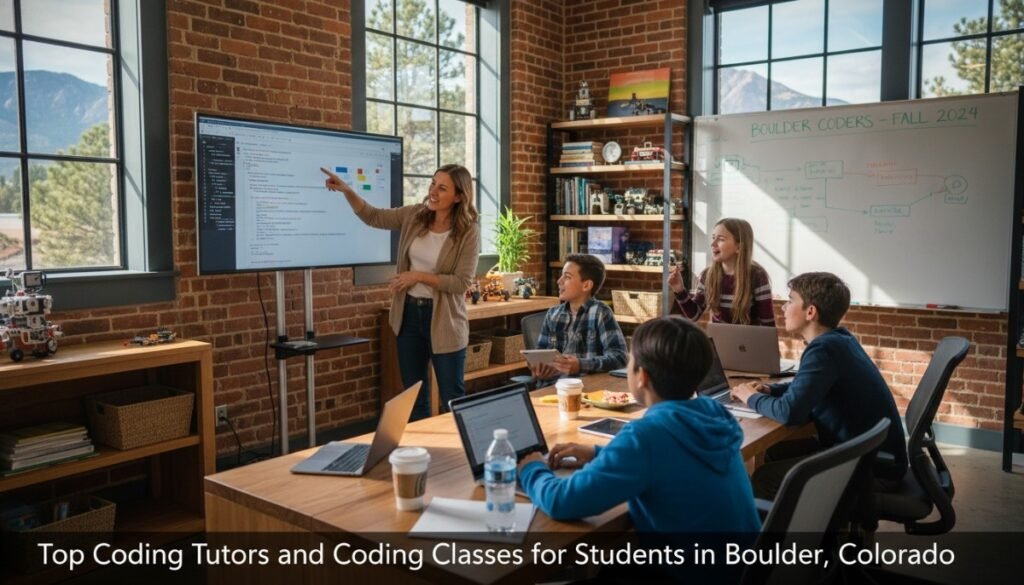
Parents should not have to compare coding programs by slogans. We scored each option using the same 10-point model: teacher quality, curriculum, fit, practice, engagement, convenience, transparency, reputation, and flexibility. This makes the comparison easier to scan and fairer for Boulder families.
Find the right learning experience
Tell us a little about the learner and what you are looking for. Our team will review your answers and help you identify the most suitable next step.
- Takes only a few minutes
- No payment required
- Personalised recommendations
Your information will only be used to respond to your enquiry.
Original Research-Based Provider Comparison: How We Scored These Options
Subject compared: coding classes and coding tutoring for kids and teens.
Region: Boulder, Colorado, including nearby Front Range in-person options and online providers serving Boulder.
Providers already mentioned in this article: Debsie, theCoderSchool, Code Ninjas, iD Tech, Juni Learning.
Additional providers reviewed: Codingal, CodeWizardsHQ, Coding with Kids, CU Science Discovery, Hackingtons, Code Galaxy.
Mobile-Friendly Score Summary
| Provider | Best For | Key Strength | Possible Limitation | Score /10 |
|---|---|---|---|---|
| Debsie | Families wanting guided online learning with practice between classes | Live tutor support, gamified courses, quizzes, revision, progress visibility, free trial, strong safety policy | Pricing beyond group plan varies by format | 9.84 |
| Codingal | Online coding with free trial and dashboard | 1:1/small groups, projects, quizzes, monthly reports | Pricing disclosed after trial, not upfront | 8.61 |
| Coding with Kids | Established online/in-person coding tracks | Clear pricing, Coder’s Ladder, 66,000+ students taught | Less individually tailored than full 1:1 unless private | 8.38 |
| CodeWizardsHQ | Structured online curriculum | Age tracks, progressive projects, money-back guarantee | Public Boulder page gives limited teacher-by-teacher detail | 8.18 |
| Juni Learning | 1:1 online STEM tutoring | Strong Trustpilot reputation, consistent tutor model | Current coding offering/pricing is less public after site redirects to Acely | 7.99 |
| Code Galaxy | Online weekly coding with published pricing | 1-hour free trial, group and private options | Reputation signals are less detailed than larger providers | 7.83 |
| iD Tech | Short intensive camps | Known brand, university-campus model, 4.4/5 from 3,318 reviews | CU Boulder camps are not running in Summer 2026 | 7.64 |
| Code Ninjas Broomfield | Game-based local center learning | Belt system, robotics/coding, free session | Pricing and instructor profiles not publicly clear | 7.42 |
| theCoderSchool | Semi-private coaching | 2:1 code coaching and personalized projects | Boulder-specific public page was not accessible; pricing not publicly clear | 7.35 |
| CU Science Discovery | Local CU-based STEM camps | CU faculty/graduate/undergraduate/community instructors | Seasonal camps, not a weekly coding-tutoring ladder | 7.32 |
| Hackingtons | Older kids who want Silicon Valley-style online projects | $140/month, free class, small group | Narrower age fit; review volume not publicly clear | 7.27 |
Detailed Score Tables and Evidence
Debsie — 9.84/10
| Factor | Score | Evidence and scoring reason |
|---|---|---|
| Teacher Quality | 10 | Debsie says coding teachers have demonstrable work experience or certifications; its safety page describes certified teacher-partner standards and public-review expectations; the article describes live expert teachers. |
| Curriculum Structure | 10 | The Boulder article describes Scratch → Python → web → AI/app projects; Debsie has computing courses; levels and gamified progress are visible on its site. |
| Personalization | 10 | The article says lessons adapt to age, pace, and goals; Debsie offers group and 1:1 formats; parent-teacher-Debsie WhatsApp groups support ongoing fit. |
| Practice & Tracking | 10 | Debsie cites daily homework on pricing, quizzes/revision/course progress in the learning system, and parent-visible updates. |
| Engagement | 10 | Gamified courses, points/ranks, leaderboards, quests, and project demos are public on Debsie pages. |
| Convenience | 10 | Online delivery fits Boulder families without commute; classes can continue across cities; free trial is public. |
| Transparency | 9 | Strong safety page, pricing page, outcomes page, and course pages; exact 1:1 coding price should be confirmed. |
| Confidence Signals | 9 | Public student outcomes/testimonials exist, though many examples are chess-focused rather than coding-only. |
| Flexibility | 10 | Group classes, 1:1, online support, and global teacher access; Debsie also notes offline FIDE-certified/award-winning teacher partners for chess, while recommending online for the broadest teacher repertoire. |
Pricing, trial, safety: Debsie lists group classes at $100/month for 2 classes/week, daily homework, small batches of 4–6, and a free trial. Its safety page says Debsie does not record classes, does not sell student data, uses visible parent-teacher-Debsie communication groups, and offers a no-questions refund/removal process for serious concerns.
Codingal — 8.61/10
| Factor | Score | Evidence and scoring reason |
|---|---|---|
| Teacher Quality | 8 | Claims handpicked IT instructors and 24/7 support; individual instructor credentials are not fully public. |
| Curriculum Structure | 9 | Long tracks list lessons, activities, age bands, AI, Java, Scratch, app and web projects. |
| Personalization | 9 | Offers 1:1, micro-group, and small-group formats after trial. |
| Practice & Tracking | 9 | Publicly lists projects, quizzes after every class, dashboard, reports, PTMs. |
| Engagement | 9 | Gamified dashboard and project examples are public. |
| Convenience | 9 | Online with free trial and flexible scheduling. |
| Transparency | 7 | Trial and benefits are clear; exact local price is given after trial. |
| Confidence Signals | 8 | STEM.org accreditation claim, Y Combinator backing, money-back guarantee. |
| Flexibility | 9 | Broad formats and levels. |
Pricing, trial, safety: Codingal offers a free trial with no card; pricing is disclosed after trial based on 1:1, micro-group, or small-group choice; it states a 100% money-back guarantee.
Coding with Kids — 8.38/10
| Factor | Score | Evidence and scoring reason |
|---|---|---|
| Teacher Quality | 8 | Says instructors are selected, trained, observed, and coached. |
| Curriculum Structure | 9 | Coder’s Ladder and Pathways give a clear progression. |
| Personalization | 8 | Students advance at their own pace; private option available. |
| Practice & Tracking | 8 | Project-focused curriculum, competitions, and ongoing classes. |
| Engagement | 8 | Scratch games, web apps, camps, competitions. |
| Convenience | 8 | Denver/Boulder location plus online programs. |
| Transparency | 9 | Pricing is unusually clear. |
| Confidence Signals | 9 | 4.6/5, 634 reviews, 66,000+ students taught, 900+ school partners. |
| Flexibility | 9 | Group, private, online, in-person, camps, school programs. |
Pricing, trial, safety: Group classes are $138/4 weeks; private classes are $250/4 weeks; camps start at $269 online, $299 half-day in person, and $495 full-day. Safety policies were less prominent than program/pricing details.
CodeWizardsHQ — 8.18/10
| Factor | Score | Evidence and scoring reason |
|---|---|---|
| Teacher Quality | 8 | Live instructor-led model; individual credentials are not fully public. |
| Curriculum Structure | 9 | Elementary, middle, and high-school tracks. |
| Personalization | 8 | Age-based pathways; less evidence of fully custom 1:1 fit. |
| Practice & Tracking | 8 | Structured projects and beyond-class benefits. |
| Engagement | 8 | Games, apps, websites, beginner-friendly projects. |
| Convenience | 9 | Fully online for Boulder. |
| Transparency | 8 | Clear program structure; price not shown on Boulder page. |
| Confidence Signals | 8 | Risk-free 100% money-back guarantee. |
| Flexibility | 7 | Strong online classes; fewer local/in-person Boulder options. |
Pricing, trial, safety: The Boulder page says the program is risk-free with a 100% money-back guarantee, but pricing was not visible on that page.
Find the right learning experience
Tell us a little about the learner and what you are looking for. Our team will review your answers and help you identify the most suitable next step.
- Takes only a few minutes
- No payment required
- Personalised recommendations
Your information will only be used to respond to your enquiry.
Juni Learning — 7.99/10
| Factor | Score | Evidence and scoring reason |
|---|---|---|
| Teacher Quality | 8 | Reviews describe tutors from top U.S. universities; current teacher roster is not fully public. |
| Curriculum Structure | 8 | Known for structured 1:1 STEM/coding paths. |
| Personalization | 9 | Strong 1:1 model and consistent tutor model. |
| Practice & Tracking | 8 | Review sources cite progress reports and learning portal. |
| Engagement | 7 | Project-based, but less gamified evidence than Debsie/Codingal. |
| Convenience | 9 | Online. |
| Transparency | 5 | Main site now redirects to Acely, making current coding pricing/offering less clear. |
| Confidence Signals | 9 | Trustpilot shows 4.8/5 from 363 reviews. |
| Flexibility | 8 | 1:1 and multiple subjects historically available. |
Pricing, trial, safety: Third-party reviews list roughly $140–$450/month and a free trial, but because the original site redirects, parents should verify current availability before enrolling.
Code Galaxy — 7.83/10
| Factor | Score | Evidence and scoring reason |
|---|---|---|
| Teacher Quality | 7 | Live STEM instructors are stated; individual credentials not public. |
| Curriculum Structure | 8 | Scratch, Roblox, web development, level-based courses. |
| Personalization | 8 | Group and 1:1 tutoring. |
| Practice & Tracking | 7 | Curriculum and platform access included; tracking details limited. |
| Engagement | 8 | Game and web projects. |
| Convenience | 9 | Online, Boulder-specific page. |
| Transparency | 9 | Pricing and free trial are public. |
| Confidence Signals | 7 | Claims 4.9 stars; review source detail limited. |
| Flexibility | 8 | Weekly, bundles, private tutoring. |
Pricing, trial, safety: Code Galaxy lists a 1-hour free trial, weekly classes from $209/month, 2 sessions/week from $269/month, and discounted 3-, 6-, and 12-month bundles.
iD Tech — 7.64/10
| Factor | Score | Evidence and scoring reason |
|---|---|---|
| Teacher Quality | 9 | USA-based adult instructors, background/reference checks, training, ACA guideline adherence. |
| Curriculum Structure | 8 | Coding, AI, robotics, game design, JavaScript, Python. |
| Personalization | 7 | Interest/skill-level fit, but camp format is less continuous. |
| Practice & Tracking | 6 | Strong project immersion; limited weekly tracking evidence. |
| Engagement | 9 | Campus/camp energy and hands-on builds. |
| Convenience | 5 | CU Boulder camps are not running Summer 2026. |
| Transparency | 8 | Price and policies visible. |
| Confidence Signals | 9 | 4.4/5 from 3,318 reviews; 1,000,000+ parents claim. |
| Flexibility | 8 | Camps, virtual camps, private lessons. |
Pricing, trial, safety: Listed starting price is $949 for the camp model; CU Boulder location says camps will not run in Summer 2026, though virtual camps/private lessons remain available.
Code Ninjas Broomfield — 7.42/10
| Factor | Score | Evidence and scoring reason |
|---|---|---|
| Teacher Quality | 7 | “Experienced instructors” stated; individual credentials not public. |
| Curriculum Structure | 8 | Belt-based progression in Scratch, JavaScript, Python, robotics. |
| Personalization | 8 | Self-paced belt model meets children where they are. |
| Practice & Tracking | 7 | Belt progress is visible; homework/progress reporting unclear. |
| Engagement | 9 | Game-based dojo model is strong for younger kids. |
| Convenience | 7 | Broomfield center near Boulder; online convenience lower than Debsie. |
| Transparency | 6 | Hours/location/free session visible; pricing not public. |
| Confidence Signals | 7 | Established national brand; local review summary not verified here. |
| Flexibility | 7 | After-school, camps, robotics. |
Pricing, trial, safety: Broomfield page lists address, hours, and “Book Free Session”; pricing and detailed safety policy were not publicly clear on the local page.
theCoderSchool — 7.35/10
| Factor | Score | Evidence and scoring reason |
|---|---|---|
| Teacher Quality | 8 | Code Coaches and low-ratio coaching model. |
| Curriculum Structure | 7 | Customized curriculum; less standardized public ladder than Debsie/Coding with Kids. |
| Personalization | 9 | Typically 2:1, student-paced coaching. |
| Practice & Tracking | 6 | Coder Story exists; homework/progress reporting not fully clear. |
| Engagement | 8 | Project-based coaching. |
| Convenience | 7 | Colorado Centennial page exists; Boulder-specific page not accessible in our check. |
| Transparency | 6 | Pricing not publicly clear. |
| Confidence Signals | 7 | National footprint; Glassdoor is employee-side, not parent outcome proof. |
| Flexibility | 7 | In-person/virtual, camps, after-school. |
Pricing, trial, safety: A free trial is mentioned on a summer-camp page; exact Boulder pricing and safety policy were not publicly clear.
CU Science Discovery — 7.32/10
| Factor | Score | Evidence and scoring reason |
|---|---|---|
| Teacher Quality | 9 | CU faculty, graduate scientists, undergraduate scientists, and subject experts. |
| Curriculum Structure | 7 | Strong STEM camps/classes, but not a single coding-only ladder. |
| Personalization | 7 | Small sizes and individualized attention. |
| Practice & Tracking | 6 | Project-based learning; limited ongoing tracking. |
| Engagement | 8 | Hands-on, creative, peer setting. |
| Convenience | 8 | Local Boulder program. |
| Transparency | 7 | Program pages clear; pricing varies by camp/class. |
| Confidence Signals | 8 | CU Boulder institutional credibility. |
| Flexibility | 5 | Seasonal, not weekly year-round tutoring. |
Pricing, trial, safety: Local, university-based STEM programming; trial class and standard weekly coding price were not publicly clear from the reviewed page.
Hackingtons — 7.27/10
| Factor | Score | Evidence and scoring reason |
|---|---|---|
| Teacher Quality | 8 | Silicon Valley instructors; individual credentials not fully public. |
| Curriculum Structure | 7 | Python, JavaScript, Unity projects; narrower track. |
| Personalization | 7 | Small group, same instructor; less evidence of deep personalization. |
| Practice & Tracking | 6 | Weekly project demos; formal tracking not public. |
| Engagement | 8 | Games, apps, Steam-style projects. |
| Convenience | 9 | 100% online. |
| Transparency | 9 | Price and trial public. |
| Confidence Signals | 6 | Parent quote shown; review volume not public. |
| Flexibility | 5 | Best fit is ages 10/11+; limited younger-child options. |
Pricing, trial, safety: Hackingtons lists $140/month, one 70-minute class/week, ages 10+, and a free first class. Safety policy was not prominent on the reviewed Boulder page.
How the Score Was Calculated — Scoring Rubric
Final score out of 10 =
Teacher Quality 15% + Curriculum Structure 15% + Student Fit & Personalization 15% + Practice/Homework/Progress Tracking 12% + Engagement 10% + Local Accessibility/Online Convenience 10% + Transparency 8% + Parent/Student Confidence Signals 8% + Flexibility 7%.
Example: if a provider scores 10 in teacher quality, it earns 1.50 points toward the final score. If it scores 7 in transparency, it earns 0.56 points. We used the same formula for every provider, including Debsie.
What the Numbers Mean for Learners, Parents and Readers
Debsie ranks #1 because it combines the pieces that matter most for long-term learning: live tutor support, structured online lessons, gamified learning, quizzes, revision modules, progress tracking, flexible scheduling, visible parent communication, and a strong child-safety policy. It is especially strong for students who need guided practice beyond one weekly class.
Codingal, Coding with Kids, and CodeWizardsHQ are strong alternatives for families who want online coding with clear tracks. Coding with Kids is the most transparent on pricing among competitors. Codingal is strong on dashboard, quizzes, reports, and trial, but exact pricing is shared after the trial.
For local in-person or camp-style learning, CU Science Discovery, iD Tech, Code Ninjas, and theCoderSchool each have a use case. CU Science Discovery has local university credibility. iD Tech is strong for intensive camps, but CU Boulder camps are not running in Summer 2026. Code Ninjas is playful for younger students near Boulder, while theCoderSchool’s 2:1 coaching model may suit students who want a mentor-style environment.
TLDR – To Conclude
Debsie is the strongest overall choice in this comparison for Boulder families who want structured online coding, live tutor guidance, practice between classes, quizzes, gamification, progress visibility, parent communication, and flexible scheduling. Other providers are not “bad”; they simply serve different needs. The best choice depends on the child’s age, motivation, schedule, need for in-person learning, and whether the family wants a short camp, a local center, or a longer guided learning system.
Boulder is a builder’s city. Kids see code in bikes with trackers, weather apps for mountain days, and small robots in school labs. Many ask, “Can I make that?” Yes. The smartest way to start—and keep going—is a calm online plan with a kind teacher, small steps, and a real project at the end of every class. This guide keeps the intro short and then goes deep so you can choose fast, start today, and watch steady progress.
What’s Unique in Online Coding Tutoring—and Do You or Your Child Need It?

Good online tutoring is not a long video call. It is a focused, friendly room that lives on your screen. A real teacher explains in plain words. Your child types code, runs it, sees what broke, and fixes it.
Each session ends with something small that works—a character moves, a button triggers, a page updates, a short script saves time. That tiny win builds pride. Pride builds habit. Habit builds skill.
Who needs it? Maybe your week in Boulder is already full—school, climbing gym, music, ski club, family time, homework. Driving to a center costs energy. Parking takes minutes. Weather can change plans in one hour. Online removes the friction. You click, learn, finish on time, and still have a calm evening.
Think about your child’s learning style. A big room moves at one speed. Some kids feel lost. Others get bored. Online tutoring makes the pace “just right” for the learner in the seat. The teacher can see a stuck moment fast and help right then. Mistakes feel safe. Curiosity grows.
Ask yourself four simple questions:
- Do you want a clear path instead of random activities?
- Do you want a small result after every class that your child can show?
- Do you want progress that survives travel, snow days, and busy seasons?
- Do you want a teacher who explains the “why,” not just the steps?
If you nodded even twice, online coding tutoring can help your child right now.
👉 First step: Book a free Debsie trial class. See a tiny project ship in the very first session.
The Landscape of Coding Tutoring in Boulder—and Why Online Is the Right Choice

Boulder has many ways to learn code. You’ll find after-school clubs, weekend camps in community spaces, makerspaces with 3D printers and microcontrollers, and private tutors who meet in libraries or cafés.
Choice is great. But choice can be heavy. Families try one option, then another, and still wonder, “Which one will stick for months, not days?”
Here is the pattern many parents share:
- Mixed-skill groups. In-person rooms often bundle beginners with advanced learners. The teacher aims for the middle. Some kids wait; others rush.
- Fixed schedules. If there’s a game at Pleasant View, a rehearsal on Pearl, or a quick trip to the mountains, you miss a session and lose rhythm.
- Commute drain. Crossing town on 28th or Canyon at 5:00 p.m. eats energy before class even starts. Parking adds stress.
- Patchwork work. Activities can be fun on Saturday yet don’t always connect into a ladder that leads to deep skills.
Now picture a well-built online program:
- Start on time because you’re already home.
- Level and pace match your child each week.
- Projects open in the browser with one click.
- Feedback arrives in the moment, not days later.
- Every class ends with a small, working thing.
Boulder families value nature, time together, and calm evenings. Online tutoring respects that. It saves the drive, lowers stress, and turns minutes into real learning.
👉 Try it with zero pressure: Book a free Debsie trial and keep dinner on schedule—no traffic, no rush, just progress.
How Debsie Is the Best Choice for Coding Training in Boulder

Debsie is our #1 pick for kids and teens in Boulder. The reason is simple: real teachers, a clear ladder, and a playful system that keeps practice steady and fun.
What Debsie is (in plain words):
Debsie is an online learning home for coding and STEM. Students meet live with expert teachers who speak simply and teach in small steps. The curriculum is a clean ladder from first logic to real apps.
A game layer—quests, badges, level-ups—adds motivation without noise. Students do not just watch. They build, test, break, fix, and share. Parents get short notes after each class: what we learned, where we struggled, and what comes next.
Who Debsie is for:
Ages 6–18. True beginners who need a gentle start. Curious makers who want games and websites. Focused teens who want bigger projects, club leadership, or tiny AI demos. Every week, the lesson adapts to the learner in the seat.
How a Debsie class feels:
Each session follows a five-beat rhythm: tiny warm-up, short mini-lesson, build time with help, quick share where the student explains a choice, and a small stretch to explore later.
This rhythm builds skill and voice together. Shy students find words. Fast movers slow down just enough to explain clearly. Everyone grows.
What students build (the ladder):
Start with Scratch to learn loops, events, and logic through stories and movement. Bridge to Python with tiny tools and games that feel useful. Learn HTML, CSS, and JavaScript for pages that look good and work on phones.
Explore mini AI demos to see how models behave and how to use them with care. Join app projects that solve real problems—club pages, simple helpers for school, tiny bots. If you like hardware, add microcontrollers at home to read sensors or light LEDs. Each step ends with a project you can run and show.
Why Debsie fits Boulder life:
No drive. No parking. No winter ice to worry about. Just clear steps, kind teachers, fast feedback, and a portfolio that grows. Parents always know the plan because updates are short and specific.
Life skills that grow along the way:
Short sprints build focus. Debugging builds patience. Planning features builds organization. Sharing a demo builds clear speech. These are school skills, team skills, and life skills.
Find the right learning experience
Tell us a little about the learner and what you are looking for. Our team will review your answers and help you identify the most suitable next step.
- Takes only a few minutes
- No payment required
- Personalised recommendations
Your information will only be used to respond to your enquiry.
👉 See it for yourself: Book your free Debsie trial class today.
Best Coding Academies in Boulder

Here is a clean, helpful ranking. Debsie is #1 with full detail so you can compare. The others are brief on purpose. Your time matters.
1. Debsie (Rank #1 — Best Overall for Boulder Families)

The teaching you feel in minute one:
The teacher listens first. Instructions come in short, clear lines. Mistakes are normal. Effort is praised. Slides don’t run the room—thinking does. The goal is not “finish the deck.” The goal is a calm builder who can plan, try, test, fix, and explain.
What beginner students build in the first month:
- In Scratch: mini-games and animations with custom rules, colors, and sounds—projects they’re proud to show.
- In Python: tiny tools like a custom dice roller, a number puzzle for a sibling, or a friendly text bot that follows simple logic.
- On the web: a page about a favorite trail, a band, or a book list with buttons that do real things.
Each project is small enough to finish and big enough to feel proud.
How progress is tracked:
Skills map to levels—loops, conditionals, variables, functions, events, lists, objects, simple APIs, data basics, and more. Each level ends with a project that proves the skill. Parents receive a quick note after class: what clicked, what to practice, and what’s next.
Support for busy Boulder weeks:
Sessions are focused and short. If a rehearsal runs long or a storm rolls in, you can still join from a laptop. Need to shift a time? The team helps. The target is rhythm, not perfection. Rhythm builds mastery.
Support for shy learners:
Share time is small, kind, and structured. Students explain one choice. Applause follows. Over time, their voice grows steady—in class and beyond.
Challenge for advanced learners:
Higher tracks go deeper with Python, multi-file web apps, and tiny ML demos. Students plan features, log tasks, refactor messy code, add simple tests, and present updates like a mini team. They learn craft and care, not just tricks. The portfolio becomes proof.
Between-class help:
Office hours for sticky bugs. Optional quests for extra practice. A safe community to ask and cheer. Debsie is not just a class—it’s a support circle.
👉 Action now: Book your free Debsie trial and watch your child ship something in session one.
2. The Coder School (Front Range)
Coach-style lessons and a club vibe. Experiences vary by coach and location. Some kids enjoy that setting. For a single, steady online ladder with consistent teacher quality, weekly projects, and zero commute, many families find Debsie simpler to keep and stronger for long-term growth.
3. Code Ninjas (Regional)
Belts and game themes make a playful start. Center schedules are fixed; drop-ins vary. If you want deeper progress at home, with a pace that adapts each week and a portfolio that grows, Debsie’s live online model is often the easier, stronger choice.
4. iD Tech (Camps and Online)
Well-known camps plus online lessons. Camps spark a strong week. After camp, students need a steady weekly beat to keep going. Debsie provides that rhythm and keeps the same warm teacher in your child’s corner for months, not days.
5. Juni Learning (Online)
A wide catalog of online courses. Experience can vary by instructor and plan. If you want one playful system with a clear ladder, frequent small projects, and quick parent notes, Debsie often feels easier to follow for a full year.
Offline Coding Training

Offline has good parts. Room buzz can help some kids. Face-to-face time can feel safe. But offline in Boulder also brings friction: fixed times, real drives when roads are slick, parking near busy streets, and mixed-skill groups that must move at one speed.
One teacher splits attention across many students, so feedback can be slow. The work may look like a set of one-off activities instead of a ladder that climbs to real skill.
Families often begin offline and then switch to online for one reason: the habit is easier to keep. A plan you can keep beats a plan you can’t—every time.
Drawbacks of Offline Coding Training

Let’s say it simply and kindly. Travel eats learning time. It drains focus before the first line of code. Group pace rarely fits your child. Miss one class and the thread breaks. Between-class help is slow; confusion lingers.
The curriculum can feel scattered, so progress is hard to see. Over time, friction wins. Interest fades. Skill stalls.
Kids grow best when three things happen at once: the path is steady, the step size is right, and help comes at the moment of struggle. A good online plan gives all three, every week, without the drive.
Why Online Coding Training Is the Future

Look at how real tech teams work—many right here on the Front Range. They plan in shared docs, write and review code in the cloud, test in the browser, and ship with a click. The habits that matter—read the error, try a fix, test again, explain the choice—are the same habits kids learn in a well-run online class.
Online training brings strong teachers into your home no matter your zip code. Level and pace adapt weekly. Browser tools run on any laptop. The portfolio grows month by month and is easy to share with grandparents, club leaders, teachers, and future programs.
Online also survives real life: travel, tournament weekends, snow days. Keep one short session and protect the rhythm. That steady beat builds deep skill.
Online is not a backup. It is the best plan now.
How Debsie Leads the Online Coding Training Landscape

Debsie stands out because everything fits like clean code: small steps, clear names, useful checks, quick feedback, and a friendly interface kids enjoy.
Human-first teaching
Debsie teachers speak in plain words. They draw, demo, pause, and listen. They invite questions. They praise smart effort. They never shame mistakes. Safety builds courage. Courage builds skill.
A ladder with small, clear steps
Every new idea comes with a tiny project your child can finish. Finishing builds pride; pride locks memory. Over time, small projects link into larger builds. The climb feels steady, not scary.
Projects that mirror real building
Students plan features, name files cleanly, and write comments that explain “why,” not just “what.” They refactor messy code to make it readable. They present updates like a mini team. They learn that code is a craft with standards and care.
A game layer that truly helps
Points and badges map to milestones that matter—debug streaks, clean refactors, clear demos, steady commits. Leaderboards cheer effort, not speed. Motivation stays healthy and fair.
Parent clarity without extra work
Updates are short and specific—what your child learned, where help was needed, and what’s next. You can cheer in a way that lands: “Show me your loop—how do you stop it?”
A fit for real Boulder life
Pick times that work. Keep one or two steady sessions a week. Adjust when schedules shift. With no commute, evenings stay calm. Calm brains learn more and remember longer.
Inclusion and care
Different speeds, voices, and needs are welcome. Shy students gain courage. Fast movers learn quality and care. Everyone practices listening and explaining with kindness.
A portfolio that grows
From first Scratch games to web pages and Python tools, students collect real work. They can share it with family, teachers, club mentors, and future programs. The portfolio tells a story: “Here is where I began. Here is what I can do now.”
The feeling that keeps them coming back
“I can figure this out.” Debsie designs every class for that moment—fix a bug, explain a choice, ship a small feature. That feeling turns curiosity into confidence.
👉 Ready to feel it? Book your free Debsie trial class now.
A Simple, Do-Today Action Plan for Boulder Families
- Book a free Debsie trial. Your child writes a few lines and ships a tiny project in session one.
- Get level-matched. Start where the work is “just right.” Too easy bores; too hard scares; just right builds confidence.
- Pick one steady weekly slot. Same day and time. Rhythm beats cramming—every time.
- Celebrate small wins. Ask, “What did you build today?” Let them show you.
- Plan a mini showcase. In 8–12 weeks, invite family for a five-minute demo after dinner. Two projects. One lesson learned.
- Keep the rhythm on busy weeks. Even one short session protects the habit.
- Review each term. Look at the portfolio and choose one new skill to chase.
Simple plans get done. Done builds skill. Skill builds confidence. Confidence opens doors.
👉 Start now: Grab your free Debsie trial and feel progress this week.
Short, Honest FAQs
Is Debsie good for true beginners?
Yes. Debsie starts at the true beginning with gentle steps and close help. No prior experience needed.
Will advanced teens be challenged?
Yes. Deeper tracks, larger projects, and 1:1 options push growth at the right pace.
What gear do we need?
A laptop and a stable connection. Debsie provides beginner-friendly tools to start fast.
How big are classes?
Small groups or 1:1—every student is seen and helped.
How soon will we see progress?
Many families notice more confidence in weeks. The portfolio grows month by month.
What if our schedule changes or it snows?
Debsie is flexible. Pick times that fit. If life shifts, the team helps you adjust. The goal is rhythm, not perfection.
Offline vs Online—A Calm View for Boulder

Offline can be social and fun for a season. But it brings fixed times, travel, weather stress, and group pacing. Online, when done with care, turns almost every minute into learning.
Your child codes more, gets help faster, and keeps the habit alive through games, trips, concerts, and storms. That steady beat is what builds skill that lasts.
Debsie is built for that beat. It is not just an online class. It is a kind, structured home for learning to code—crafted by experts, powered by simple words and real projects, and shaped to fit the life you actually live in Boulder.
Closing Note for Boulder Parents and Students

You do not need a perfect plan to begin. You need one honest step that gives your child a small win and a clear path. Debsie makes that step easy. The trial is free. The teaching is warm. The plan is simple. The work is real.
If you want your child to become a calm, creative problem solver—to sit down, breathe, and say, “Let me try another way”—this is your moment.
Take the next step now: Book your free Debsie trial class. Watch your child build something in the very first session. See the smile. Hear, “I made this.” Then keep going—one small win at a time—right here in Boulder, where curious minds grow into confident builders.
Other Comparisons:

Ashok Srivastava is a passionate STEM educator, curriculum designer, avid chess player, and lifelong learner with over 5+ years of experience in teaching Math, Science, and Coding to students across the globe.
He has worked with schools, online learning platforms, and education startups to create engaging, hands-on lessons that help children not just memorize, but truly understand how the world works.
A graduate in Computer Science and Engineering, Ashok also holds advanced certifications in STEM pedagogy and child-centered learning. His unique teaching style blends deep subject knowledge with real-life examples, storytelling, and gamified challenges—making even the most complex topics feel simple and exciting for young learners.
Ashok is also a dedicated chess player with a FIDE rating of 2091. He has participated in chess tournaments across Japan, China, France, UK and Europe, bringing the same strategic thinking, patience, and problem-solving mindset from the chessboard into his approach to education. Ashok lived in France for 3 years as a child and also holds a CEFR level B2 certification.
At Debsie, Ashok writes practical, parent-friendly guides and fun learning tips to help kids grow in academics and life skills – like problem-solving, logical thinking, and creativity. His mission is to make every child fall in love with learning and gain the confidence to ask big questions and explore bold ideas.
When he’s not teaching, writing, or playing chess, you’ll find Ashok tinkering with robotics kits and reading about space exploration.