We reviewed official course and centre pages, published fee information, learning features, safety policies, testimonials and independent reputation signals. The scoring model helps families compare providers on the same criteria instead of relying on advertising claims or examination-result headlines alone.
Find the right learning experience
Tell us a little about the learner and what you are looking for. Our team will review your answers and help you identify the most suitable next step.
- Takes only a few minutes
- No payment required
- Personalised recommendations
Your information will only be used to respond to your enquiry.
Original Research-Based Provider Comparison: How We Scored These Options
This comparison covers Physics education for school, board, JEE and NEET students in Odisha, with particular attention to Bhubaneswar. The original article names Debsie, FIITJEE, ALLEN, Aakash and Resonance. We added three relevant alternatives: Motion Education, Unacademy Centre and Odisha-based Orbit Classes.
At-a-Glance Results
| Provider | Best For | Key Strength | Possible Limitation | Score /10 |
|---|---|---|---|---|
| Debsie | Guided online learning and visible progress | Personalised lessons, practice, gamification and parent tracking | Physics-specific price and teacher roster are not fully public | 9.50 |
| Unacademy | Flexible JEE learning across online and centre formats | Large course library, tests, recordings and mentorship | Individual experience depends on educator and batch | 8.72 |
| Motion Education | Exam-focused students wanting structured hybrid support | AI-based homework, tests and online/offline options | Bhubaneswar-specific fees are not published clearly | 8.42 |
| Aakash | NEET, boards and established classroom routines | Study material, assessments and parent meetings | Course price varies by centre and requires enquiry | 7.77 |
| ALLEN | Highly competitive JEE or NEET preparation | Strong testing system and exam-focused curriculum | Less suitable for students needing slower personal pacing | 7.74 |
| Resonance | Self-directed JEE students wanting extensive practice | DPPs, modules and detailed test products | Local mentoring and current branch details are less transparent | 7.41 |
| Orbit Classes | Odisha students wanting local classroom access | JEE, NEET, NISER and +2 programmes | Limited public evidence on tracking, safety and teacher allocation | 7.18 |
| FIITJEE | Students comfortable with traditional competitive coaching | Established JEE curriculum and problem-solving focus | Current operational confidence and local pricing need verification | 6.76 |
Provider-by-Provider Scoring Evidence
1. Debsie — 9.50/10
| Factor | Score | Evidence and Scoring Reason |
|---|---|---|
| Teacher Quality | 10 | Debsie states that classes use expert and certified teacher partners; its public outcomes page references externally reviewed teachers. The Odisha article also describes live tutor support and level-based instruction. Physics-teacher biographies, however, should be requested before enrolment. |
| Curriculum Structure | 10 | NCERT Science courses for Classes 6–10 are publicly listed. The Physics plan describes diagnostics, micro-skills, mastery checks, spaced revision and board/JEE/NEET alignment. |
| Student Fit & Personalization | 10 | Initial diagnostics, targeted “fix-it” practice, pace adjustment and enrichment for advanced learners are explicitly described. |
| Practice, Homework & Tracking | 9.5 | Daily homework, quizzes, error-based practice, revision intervals and a parent-facing dashboard are documented. |
| Engagement & Motivation | 9.5 | Points, levels, badges, short learning units and practical Physics Quests provide more motivational variety than conventional worksheets alone. |
| Accessibility / Convenience | 10 | Fully online access removes Odisha travel constraints and supports evening or weekend scheduling. |
| Transparency | 8 | A free trial and general group-class price of US$100 monthly for two weekly classes are published, but the pricing page appears written primarily for chess; its applicability to Physics is not publicly clear. |
| Confidence Signals | 7.5 | Debsie publishes student outcomes and parent testimonials, but independent Physics-specific review volume is limited. |
| Flexibility | 9.5 | Small groups, tutor support, online courses and one-to-one boosters are described. Debsie also reports some offline FIDE-certified and award-winning teacher partners, although its broader teacher repertoire is accessed online. |
Trial, price and safety: Free trial available; Physics price should be confirmed in writing. Debsie publishes a dedicated child-safety policy, including privacy and moderated-learning measures.
2. Unacademy Centre Bhubaneswar — 8.72/10
| Factor | Score | Evidence and Scoring Reason |
|---|---|---|
| Teacher Quality | 8.5 | Public educator-led courses and mentorship are available, though local faculty assignment can vary. |
| Curriculum Structure | 9 | Full JEE Physics sequencing, PYQs, notes, mock tests and planned batches are published. |
| Personalization | 8.5 | Dedicated mentors and Iconic one-to-one mentorship are offered. |
| Practice & Tracking | 9 | QBank, test series, assignments, solutions and performance tools are included. |
| Engagement | 8.5 | Live classes, peer learning and recorded access support different learning habits. |
| Convenience | 9 | Bhubaneswar centre access is combined with online recordings and Plus benefits. |
| Transparency | 8.5 | Online JEE plans start around ₹1,058/month for Plus and ₹2,917/month for Iconic; centre fees may differ. |
| Confidence Signals | 8 | Large public course catalogue and established brand; experience remains educator-dependent. |
| Flexibility | 9.5 | Centre, live online, recordings, test products and mentorship options. |
A “try free” route is shown for online subscriptions; local trial-class arrangements and a centre-specific child-safety policy are not publicly clear.
3. Motion Education Bhubaneswar — 8.42/10
| Factor | Score | Evidence and Scoring Reason |
|---|---|---|
| Teacher Quality | 8.5 | Exam-specialist faculty and mentor access are promoted, but Bhubaneswar teacher profiles are limited. |
| Curriculum Structure | 9 | JEE, NEET and foundation programmes follow structured schedules and study material. |
| Personalization | 8 | AI-customised homework and mentorship provide adaptive support. |
| Practice & Tracking | 9 | DPPs, mock tests, homework checking and performance analysis are documented. |
| Engagement | 8 | Live classes, mentoring and motivational support supplement testing. |
| Convenience | 8 | Both Bhubaneswar classroom and national online options are available. |
| Transparency | 8 | Online Gold pricing is shown at ₹60,000, with a stated effective offer of ₹40,000; local classroom fees require enquiry. |
| Confidence Signals | 8 | National result claims and student stories are public, but should not be treated as typical outcomes. |
| Flexibility | 9 | Offline, live online, recorded, test-series and study-material options. |
Motion lets students experience live online classes and advertises a 15-day refund window for the cited programme. It mentions student safety, but a detailed Bhubaneswar safeguarding policy was not located.
4. Aakash Bhubaneswar/Cuttack — 7.77/10
| Factor | Score |
|---|---|
| Teacher Quality | 8.5 |
| Curriculum Structure | 8.5 |
| Student Fit & Personalization | 7 |
| Practice, Homework & Tracking | 8.5 |
| Engagement & Motivation | 7 |
| Accessibility / Convenience | 8 |
| Transparency | 6.5 |
| Confidence Signals | 8 |
| Flexibility | 7 |
Aakash documents study material, AIATS tests, doubt clearance, digital products and parent-teacher meetings. Fees vary by course and centre and are not displayed as a simple Odisha price list. Its Trustpilot page showed 4.0/5 from only four reviews, which is too small a sample for a strong conclusion. Trial and centre-specific child-safety terms are not publicly clear.
Find the right learning experience
Tell us a little about the learner and what you are looking for. Our team will review your answers and help you identify the most suitable next step.
- Takes only a few minutes
- No payment required
- Personalised recommendations
Your information will only be used to respond to your enquiry.
5. ALLEN Bhubaneswar — 7.74/10
| Factor | Score |
|---|---|
| Teacher Quality | 9 |
| Curriculum Structure | 9 |
| Student Fit & Personalization | 6.5 |
| Practice, Homework & Tracking | 9 |
| Engagement & Motivation | 7 |
| Accessibility / Convenience | 7 |
| Transparency | 6 |
| Confidence Signals | 8.5 |
| Flexibility | 6 |
ALLEN is strong for systematic entrance-exam preparation, scholarship testing and regular assessment. Odisha course prices were not displayed clearly in the sources reviewed; admission may require ASAT for applicable programmes. A conventional batch model may offer less day-to-day adaptation than personalised tutoring. Trial and detailed local safeguarding information are not publicly clear.
6. Resonance Bhubaneswar — 7.41/10
| Factor | Score |
|---|---|
| Teacher Quality | 8 |
| Curriculum Structure | 8.5 |
| Student Fit & Personalization | 6 |
| Practice, Homework & Tracking | 9 |
| Engagement & Motivation | 6 |
| Accessibility / Convenience | 7 |
| Transparency | 7.5 |
| Confidence Signals | 7 |
| Flexibility | 7 |
Resonance publishes DPPs, modules, revision packages and topic-wise testing. Its 2025–26 distance programmes ranged from approximately ₹1,400 for selected DPP products to ₹24,500 for larger Class XI packages; these are not Bhubaneswar classroom fees. Current local trial, teacher allocation and child-safety details are not publicly clear.
7. Orbit Classes — 7.18/10
| Factor | Score |
|---|---|
| Teacher Quality | 7.5 |
| Curriculum Structure | 8 |
| Student Fit & Personalization | 7 |
| Practice, Homework & Tracking | 8 |
| Engagement & Motivation | 6.5 |
| Accessibility / Convenience | 7 |
| Transparency | 6.5 |
| Confidence Signals | 6.5 |
| Flexibility | 6.5 |
Orbit is a credible Odisha option for JEE, NEET, +2 Science and NISER preparation. Its NISER page publishes a 20–25 student batch size and six-month to one-year duration—useful transparency—but public fees, trial terms, detailed progress-reporting tools and safeguarding policies were not located.
8. FIITJEE Bhubaneswar — 6.76/10
| Factor | Score |
|---|---|
| Teacher Quality | 8 |
| Curriculum Structure | 9 |
| Student Fit & Personalization | 6 |
| Practice, Homework & Tracking | 8 |
| Engagement & Motivation | 6 |
| Accessibility / Convenience | 6 |
| Transparency | 5 |
| Confidence Signals | 5 |
| Flexibility | 5 |
FIITJEE’s published programmes show strong curriculum design and conceptual JEE preparation. However, current Odisha fees, trials and safety provisions are not clearly published. Separate FIITJEE centres elsewhere faced closures, consumer cases and investigations during 2025–26; these reports do not establish wrongdoing at the Bhubaneswar centre, but parents should verify centre operations, faculty continuity and refund terms before paying.
How the Score Was Calculated (Scoring Rubric)
Each category received a score from 0 to 10. We then applied this formula:
Final score = Teacher Quality × 15% + Curriculum × 15% + Personalization × 15% + Practice/Tracking × 12% + Engagement × 10% + Convenience × 10% + Transparency × 8% + Confidence Signals × 8% + Flexibility × 7%.
For example, a 10 in Teacher Quality contributes 1.5 points, while a 10 in Flexibility contributes 0.7. Missing public information did not automatically mean poor service, but it reduced the transparency or confidence score because parents cannot independently verify it.
What the Numbers Mean for Learners, Parents and Readers
Debsie ranks first for families seeking guided online Physics learning, particularly where the student needs structured practice between lessons, quizzes, revision, motivation and parent-visible progress. Its main due-diligence gap is confirming the Physics teacher and subject-specific fee before enrolment.
Unacademy and Motion are the strongest alternatives for broad JEE preparation with hybrid access. Aakash and ALLEN suit students who respond well to disciplined classroom systems and frequent testing. Resonance is attractive for independent learners who primarily want extensive practice material.
Orbit deserves consideration for local Odisha classroom access, especially for NISER-focused students. FIITJEE’s curriculum remains academically substantial, but families should conduct additional operational and refund checks.
TLDR – To Conclude
The evidence places Debsie at the top of this framework, not because every public detail is perfect, but because it combines live guidance, structured lessons, targeted practice, quizzes, gamification, revision and progress visibility more completely than the alternatives reviewed.
That does not make every other provider unsuitable. A highly competitive student may prefer ALLEN, Aakash or Motion; an independent learner may value Resonance or Unacademy; and a student prioritising local classrooms may prefer Orbit. The final decision should follow a trial or centre visit, written fee and refund terms, teacher verification, and the student’s pace, goals and preferred learning environment.
If your child lives in Odisha and wants to truly “get” Physics—not just pass exams—this guide is for you. In the next sections, we will show you the best ways to learn Physics today, why online learning beats old classroom methods, and which tutors and classes are worth your time. We will keep it simple, step by step, in plain words. Think of me as your friendly coach, sitting beside you, helping you choose the smartest path.
Here is our promise: we will start with the big picture, compare online and offline training, and then walk through the top options for students in Odisha. You will see why Debsie stands at #1 for Physics training—clear structure, live expert teachers, gamified practice, and real results. You will also learn how to pick the right class for your child’s goal, level, and schedule. By the end, you will know exactly what to do next.
If you want to jump in right away, you can book a free trial class with Debsie and see the difference for yourself. Your child will meet a warm teacher, try a short lesson, and get a simple study plan to follow at home.
Ready? Let’s explore how to help your child fall in love with Physics—and score higher with calm, steady progress.
Online Physics Training
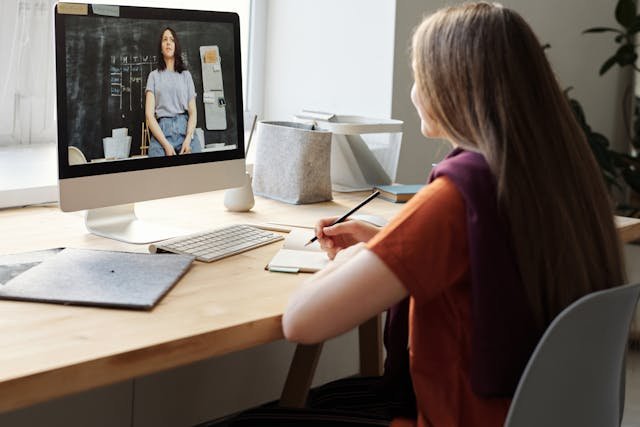
Online Physics training is simple, smart, and kind to your child’s time. It brings the best teacher to your home, at the right hour, with a clean plan. Your child follows a clear path: learn a small idea, try it in a guided task, check mistakes, fix them, and move ahead. No wasted travel. No noisy class. No guessing. Just steady progress.
Here is how great online learning works. The lesson starts with a short, friendly chat. The teacher checks mood and confidence. Then comes a “spark”—a tiny puzzle, a demo, or a quick video. This pulls the mind in. After that, the teacher explains the core idea in plain words. No heavy terms. No rush. Next, the student solves two or three small problems with help. The teacher watches clicks, notes, and timing. The system marks steps, not just answers. Last, the student practices alone in gamified rounds. Each round is short and fun. Points and badges keep the child moving. A dashboard shows which ideas are strong and which need a second look. This loop builds calm, deep skill.
What about attention? Online classes, when done right, are built for short focus bursts. Lessons are split into tiny pieces—like “Vectors: direction first,” “Speed vs. velocity,” or “Free-body diagrams with ropes and pulleys.” Each piece takes 8–12 minutes. Then a quick check. Then a stretch. Then the next piece. This rhythm keeps the brain fresh. It also lets the teacher spot gaps early, before they turn into fear.
Parents often ask, “Will my child talk in an online class?” Yes, and faster than you think. A good platform uses live polls, quick chat, and “raise hand” tools. It also uses small breakout rooms for pair work. Shy students can type first, then speak. The teacher can invite a child to draw with a simple pen tool right on the screen. When children make and share, they remember more. This is the heart of good Physics training: make, test, learn.
Now let’s talk about results. Physics has two sides: concept and calculation. Online training lets us split them cleanly. Concept time is slow and calm. We use pictures, number lines, animations, and tiny experiments with things you have at home—string, a toy car, a book. Calculation time is fast and sharp. We drill with timed sets, step hints, and error tags. A smart system can mark the hint your child used and the exact step where they slipped. This means the next set is tuned to fix that step. No guesswork. No “maybe next week.” Fix now, move on.
Your child gets a study plan that fits school exams and big goals like JEE, NEET, KVPY, NSEP, CUET, and board exams. The plan is not a long, scary chart. It is a path with weekly goals. Each goal has three parts: watch, do, review. “Watch” is a short lesson. “Do” is mixed practice with rising levels. “Review” is a light test with spaced recall. That last part is key. Spaced recall brings back old ideas at the right time so the brain keeps them. This is how good online training turns “I forgot” into “I still remember.”
Set up at home is easy. You need a quiet seat, steady internet, and a notebook. Keep a Physics box nearby: pen, pencil, ruler, protractor, a small ball, two strings, a tape, and a small mirror. These tiny props make ideas real. A child who sees a ball swing will “feel” centripetal force better than a child who only hears it. Online classes can guide these micro-experiments live. The teacher says, “Hold the string, spin the ball, and now stop.” The child feels the pull. Learning becomes memory.
Online training also cuts stress. No bus rides in the heat. No rushing from school to a center. No lost time in traffic jams. Your child logs in, learns, logs out, and rests. Sleep is better. Mood is better. Marks go up because mind and body are calm.
If you want your child to start in a safe, friendly way, book a free trial class with Debsie today. See the live class, talk to a mentor, and get a simple plan for the next four weeks. It takes one click at debsie.com/courses.
Landscape of Physics Tutoring in Odisha and Why Online Physics Tutoring Is the Right Choice
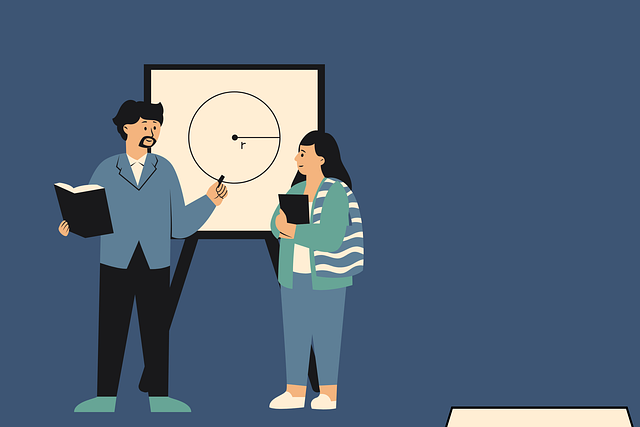
Odisha is full of bright students who dream big. Cities like Bhubaneswar, Cuttack, Rourkela, Sambalpur, and Berhampur have many coaching centers and home tutors. But the quality is uneven. Good teachers are booked. Schedules clash with school. Travel eats hours every week, especially in busy areas or during monsoon. In small towns, choices are limited, so students settle for what they can find nearby.
Let us look at the usual scene. A coaching center announces a “fresh batch.” It packs 40 to 120 students into a class. The teacher works hard, but time is short. If your child misses a link in the chain—say, vector components—no one notices until a test goes wrong. Doubt sessions come later, or not at all. Handouts are photocopied. Homework is collected but not deeply checked. Parents get a “good” or “needs work,” with no clear steps to fix it. The child feels lost.
Home tutors try to fill the gaps. Some are great. Many juggle slots and arrive late. If they finish a chapter, they move on. There is little data on which ideas are weak. Your child’s progress is hard to see. Parents feel stuck: “We are paying, but is this plan working?”
Online Physics tutoring solves these Odisha pain points in five clear ways. First, access: your child can learn from top teachers, not just nearby teachers. Second, time: no travel, no delays—more study and more rest. Third, data: every question, hint, and error is tracked. Parents and students see a live map of strengths and gaps. Fourth, personalization: if your child needs more time on Newton’s laws, the path bends to give it. If they are ready for waves, we move ahead. Fifth, safety: learning at home is safer and less tiring.
Weather also matters. Odisha summers can be hot and humid. Monsoon can slow roads. Online classes keep going, rain or shine. Exams do not wait for the weather. Your plan should not wait either.
There is another reason online is right: exams are now more application-based. Boards and tests ask “why” and “how,” not just “what.” Online tools make it easy to show a moving graph, a rotating frame, or a simulation of collisions. A child can pause, rewind, and play again until the idea clicks. In a large hall, you cannot pause the teacher. Online, you can pause the video lesson and then ask the teacher live. This blend saves time and boosts clarity.
Parents in Odisha also want good English support while keeping comfort in local language. Good online platforms switch smoothly. Teachers explain in simple English and can clarify in Hindi or Odia when needed, so the meaning stays clear. This mix helps students who think in one language but test in another.
If you want your child to learn with less travel, less guesswork, and more care, online Physics tutoring is the smart choice. Start small. Try one live class. Watch how your child responds. If you see focus, smiles, and a neat notebook, you are on the right path. You can try a free Debsie class any day at debsie.com/courses.
How Debsie Is the Best Choice for Physics Training in Odisha
Debsie stands at #1 for a very simple reason: we do the basics right, and we do them every day. Our Physics program is built by expert teachers and learning scientists. We use plain words, friendly steps, and a tight loop of learn–do–review. We do not dump content. We guide a child, one clear move at a time, until the idea is owned.
Here is what sets Debsie apart.
We begin with a diagnostic that feels like a game. It takes 25–35 minutes. Your child answers light questions that cover motion, force, energy, heat, waves, electricity, magnetism, optics, and modern Physics. We also check habits: speed, accuracy, and where time is lost. You get a neat report that says, “Strong in kinematics A, needs work in free-body diagrams B, unsure in sign convention for work C.” This is not a label. It is a map. We use it to craft the first four weeks of the plan.
Live classes are small. We keep groups tight so every child speaks, draws, and tries. Teachers call students by name. Cameras on are encouraged, but we respect comfort. Each session has four parts: the spark, the core idea, guided practice, and solo practice. We finish with a “memory hook”—a tiny image or phrase that sticks. For example, for vectors we say, “Arrow with a purpose.” For current we say, “Flow that listens to push.” These hooks help during tests.
Find the right learning experience
Tell us a little about the learner and what you are looking for. Our team will review your answers and help you identify the most suitable next step.
- Takes only a few minutes
- No payment required
- Personalised recommendations
Your information will only be used to respond to your enquiry.
Our curriculum is clear and complete. We align to CBSE, ICSE, and state board needs, and we also map to JEE Main, JEE Advanced, and NEET Physics. Units are arranged to build from base to peak. We do not rush. We spiral. That means we come back to key ideas with fresh problems. We blend school homework with our practice so your child is not doing double work. The result is less stress and better marks.
Practice at Debsie is not boring. It is gamified. Students earn stars for accuracy and streaks for steady days. Levels unlock based on mastery, not just time. A child can see, “I am Level 3 in Newton’s laws and Level 2 in Work-Energy.” This makes progress visible and motivating. We also run weekly “Physics Quests.” These are small, fun challenges like “Build a paper bridge and test load,” “Use a phone light to test reflection,” or “Time your stairs climb and calculate power.” Quests bring Physics into the home in safe, enjoyable ways.
Doubts do not wait. Students can send a doubt right from a question screen. They can circle the step where they got stuck. A Debsie teacher replies with a hint, a short voice note, or a 60-second clip that shows the fix. If the doubt needs live help, we open a quick “doubt room” slot. Many doubts clear within hours, not days. This speed keeps confidence high.
We measure what matters. After each unit, your child takes a short mastery check. If they pass, the path moves on. If not, the system assigns a “fix-it set” that targets the exact weak step. We also schedule spaced reviews: day 2, day 7, day 21, and day 45. This holds the learning in long-term memory. Parents can see all of this in a clean dashboard. You will know what was learned, how well, and what comes next. No more guessing.
Our teachers are more than subject experts. They are warm mentors. They track mindset, not just marks. If a child is tired or anxious, the teacher adjusts the pace. If a child is flying, the teacher adds challenge questions and enrichment tasks like “derive time period for small oscillations” or “plot potential energy vs. separation for springs.” We believe in care and stretch—gentle, steady, and personal.
Exams need strategy. Debsie teaches test craft as a skill. We show how to read a Physics question, mark givens, draw a quick model, choose a path, and check units. We teach timed blocks, guess control, and error logging. For boards, we train neat steps and key words that earn marks. For JEE/NEET, we train speed and decision rules: when to skip, when to stay, and when to substitute. Your child will have a calm plan for exam day.
Parents matter. We meet you every month for a short, focused review. We share wins and gaps. We agree on one small home routine—maybe 15 minutes of recall cards after dinner, or one “quest” on Sunday. We also share a “no-nag” script so home time stays peaceful. When parent, child, and teacher pull in one direction, results come.
Safety and support are built in. Classes are recorded. Chat is moderated. Students use first names only in group spaces. We follow strict rules for privacy. If your child needs extra help, we offer one-on-one booster sessions. If your child wants more challenge, we offer “Think Big” problems that stretch creative reasoning without making them feel lost.
Getting started is easy. Book a free trial class at debsie.com/courses. After the session, you get a simple 30-day plan and a friendly call from a mentor who will answer every question. If you join, we start with a gentle week that builds rhythm. Within two weeks, most students say, “Physics feels clear now.” That is our goal: calm clarity, day by day.
If you are choosing for Odisha, Debsie is your best first step. We bring top teachers to your home, align with your board and goals, give you real-time data, and support your child with heart. No travel. No crowd. No guesswork. Just a clean, proven path to strong Physics.
Offline Physics Training

Let’s look at the usual offline path many families in Odisha try first. You hear about a coaching center from a friend. The center announces a “fresh batch.” You visit, fill a form, pay a fee, and your child starts the class next week. The room is full. The teacher explains fast, writes on the board, gives a handout, and assigns homework. If your child raises a hand, they may get a short answer, but the clock is ticking. After class, there might be a doubt corner, but the line is long and the next batch is waiting. Your child walks out with notes, but not always with clarity.
Home tutoring is the other offline option. A tutor comes to your house, once or twice a week. This feels more personal, and it can help in the short term. But there are limits. Many tutors follow the textbook page by page. They may not track data on errors or speed. If your child misses a week due to illness or a festival, the plan goes off track. Rescheduling is hard because the tutor is busy with other homes. Progress depends on memory and trust, not on a shared, visible plan.
Then there is the time cost. In cities like Bhubaneswar or Cuttack, travel can eat 60–90 minutes on a busy day. During monsoon, it can be worse. Students return home tired and hungry. They still have school work, projects, and family duties. By the time they sit to study, the mind is not fresh. This is not a small issue. Physics needs a calm mind and clean steps. When the brain is tired, students make small sign errors, drop units, or forget to draw free-body diagrams. Scores fall even when the child “knows” the idea.
Another common pattern in offline classes is “one pace for all.” The teacher sets a speed; everyone must keep up. A few students fly. Many try to follow. Some fall behind. If your child falls behind in vectors or Newton’s laws, everything that comes later—friction, circular motion, work-energy—feels hard. Offline setups struggle to slow down for a few without losing the many. So the class moves on, and the gap grows.
Offline centers also juggle a lot: batches, teachers, halls, schedules, and tests. Paper tests are checked by hand. Feedback takes days. Reports are one line: “average,” “below average,” or “needs practice.” Parents have little data to act on. They must guess what to fix and how to fix it. This is not the fault of the teachers—they work hard. It is the limit of the model.
Does offline have any strengths? Yes. A good classroom can create team spirit. Students meet friends, feel the buzz, and push each other. If the class is small and well-run, it can work. But this works only when three things line up: an excellent teacher, a small batch, and a tight plan. In real life, these do not always align. That is why many students learn “okay” in offline classes but do not reach their best.
If your child is already in an offline setup, you can still help. Ask the teacher for a clear weekly plan. Request short, focused homework that targets one idea at a time. Keep a simple error log at home: question, error step, fix. Use a timer for practice blocks. Even with these supports, most families still find that online, structured learning gives better clarity with less stress.
To see this difference for yourself, try a free Debsie class this week. Let your child test a live lesson, attempt a few gamified problems, and receive a mini-report with exact next steps. One short session can show you what “structured and personal” truly feels like.
Drawbacks of Offline Physics Training
Let’s name the big problems clearly so you can avoid them.
First, offline is often unstructured day to day. The class may have a yearly plan, but the actual lesson flow depends on the clock and the room. If the class starts late, the teacher rushes. If questions pile up, the teacher drops practice. If a hall is not free, the class shifts to a different time, and students miss it. The path becomes uneven. Physics needs a steady staircase, not random jumps.
Second, offline rarely follows a fine-grained curriculum with mastery checks. Many centers finish chapters but do not confirm mastery step by step. Students “cover” motion in a straight line but still mix up average speed and average velocity. They “do” Newton’s laws but skip drawing clear free-body diagrams. They “learn” electricity but forget sign convention and units. Without mastery checks, weak bricks stay hidden. Later, everything shakes.
Third, feedback is slow. Paper homework takes time to check. By the time a child sees what went wrong, the class has moved on. The chance to fix the error at the right moment is lost. In Physics, timing is everything. A quick nudge now can save ten hours later. Offline systems struggle to deliver that quick nudge.
Fourth, personalization is hard. A teacher with 40 or 80 students cannot craft 40 or 80 different practice sets each day. So most students get the same worksheet. The strong waste time. The struggling feel lost. Both lose confidence. In Physics, the right question at the right level builds belief. The wrong level breaks it.
Fifth, time and travel drain energy. Odisha’s heat, rains, and traffic take a real toll. Students arrive sweaty, tired, and hungry. They are less likely to speak up. They nod, copy notes, and hope to “get it later.” Later never comes. At home, they stare at the page and feel stuck.
Sixth, safety and comfort matter. Crowded rooms can be noisy or distracting. Some students feel shy to ask a question in front of a large group. Others feel rushed. Learning thrives in a calm, safe space. A crowded hall is rarely that space.
Seventh, data is missing. Parents cannot see exact strengths and gaps. They hear general words like “fair,” “improving,” or “needs practice.” But where exactly? On which step? With which concept? Without this, home study becomes guesswork. Children repeat random problems hoping something sticks.
Finally, offline learning often splits concept and calculation in a clumsy way. There is a lot of talk, then a big homework set. Students forget the talk by the time they reach question 7. What they need is a tight loop: tiny concept → two guided problems → instant check → a few solo problems → spaced recall later. Offline models rarely deliver this loop cleanly every time.
This is why online, structured Physics training feels like a breath of fresh air for many families. It brings order to the chaos. It keeps the steps small. It makes progress visible. It lets the child learn with energy, not exhaustion.
If you feel these pain points, you do not have to push through them. Book a free Debsie trial at debsie.com/courses and see a different path—clear, calm, and kind to your child’s brain.
Best Physics Academies in Odisha

Now let’s rank the top choices. We will be frank and simple. Debsie is #1 because it gives you a structured online path, live expert teachers, deep practice with instant feedback, and personal care. The others listed here have strengths, but we will keep them brief so you can focus on what matters. Your time is precious.
1. Debsie — #1 in Odisha for Online Physics (Clear Structure, Live Care, Real Results)
Debsie is built for one goal: help your child truly understand Physics and score high with calm. We do this by mixing expert teaching with a smart, simple system.
Here is how your first 30 days look with Debsie:
Week 1: Find the starting line, build rhythm.
Your child takes a fun diagnostic that checks core ideas and habits. We then start with a gentle live class on motion and vectors. The teacher uses tiny examples: walking across a room, pointing north-east, splitting an arrow into parts. Your child does a few guided problems with the teacher, then a small solo set. We send a sweet, short report to you: what clicked, what needs one more practice, what to do at home for 10 minutes.
Week 2: Turn confusion into clarity.
We enter Newton’s laws with hands-on bits: a string, a ball, a book on a table. Your child draws free-body diagrams with clean arrows and labels. They learn a simple routine: draw → list forces → write equations → solve. The system watches where they pause. If the pause is on “components,” the next set includes one more “components” step with a hint that fades over time. You can see this in the parent app.
Week 3: Build speed without stress.
We practice friction and circular motion. Two-minute drills keep the tempo, then a three-minute break to breathe and stretch. We track accuracy and celebrate small wins. A Friday “Physics Quest” asks your child to time a toy car on a floor circle and talk about the center-seeking pull. They record a 30-second clip and earn a badge. Learning feels alive.
Week 4: Lock it in and test craft.
We run a neat mastery check. Your child solves mixed problems, each tagged to a skill. The system gives a mistake map: sign error here, unit slip there, force direction unclear on one diagram. We teach tiny habits to fix each type. On Sunday, you and your child meet the mentor for 10 minutes. You get one home routine to keep: maybe “five flash cards after dinner” or “two recall questions after school.” Calm and consistent.
What makes Debsie different, day after day:
- Small live classes with warm teachers. Your child speaks, draws, and asks. Shy students can type first. Teachers learn each child’s style and build trust.
- A clean, step-by-step curriculum. It aligns with CBSE/ICSE/state boards and maps to JEE/NEET too. Each skill has a micro goal and a mastery check. No “chapter done” without “skill mastered.”
- Gamified practice that actually teaches. Points and badges are not fluff. They track real progress, unlock the next level only when ready, and keep attention in short bursts.
- Instant, targeted feedback. Hints appear at the exact step, then fade as your child grows. Doubts get answers fast—often with a short voice note or a tiny video from a teacher.
- Spaced recall built in. Old ideas come back on day 2, 7, 21, and 45. Memory sticks. Exam stress drops.
- Parent clarity. A simple dashboard shows strengths, gaps, and the next three steps. You never need to guess again.
- Language comfort. Teaching is in simple English, with quick support in Hindi or Odia if needed. Meaning stays clear.
- Flexible schedules. Choose evening or weekend slots. Switch if exams shift. No travel, no traffic, no lost days.
- Safe, private, and recorded. Cameras are optional, chat is moderated, and sessions are saved for revision. Your child learns in a safe space at home.
What about devices and setup? You need a basic laptop or tablet, steady internet, and a notebook. We guide you to make a small “Physics kit” with simple items at home: a string, a toy car, a small mirror, tape, a ruler, and a ball. These tiny tools make ideas real and fun.
How does Debsie help with boards and competitive exams together? We layer the plan. Board-style steps train neat working, definitions, key laws, and diagrams. Competitive-style steps train speed, shortcuts, dimension checks, and decision rules (skip, stay, substitute). Your child learns to switch modes smoothly.
What if your child is behind? We start with “reset weeks.” The teacher slows down, rebuilds the base, and uses extra guided practice. We celebrate small wins so confidence rises again. What if your child is ahead? We offer “Think Big” sets: rich problems that stretch the mind—derivations, graphs, and multi-step puzzles—without breaking the spirit.
How do we keep students motivated? We mix short wins with meaningful projects. A “Mini Lab” might ask your child to measure the time it takes to climb the stairs and compute power, or to use a phone flashlight and a mirror to test the law of reflection. Simple, safe, at home, and full of joy.
Parents often say, “This feels human.” That is our heart. Physics is not just formulas. It is a way to think: slow, clear, and brave. We teach that mindset with care.
If this sounds right, take the first step now. Book a free trial class at debsie.com/courses. You will see the plan, meet a kind teacher, and get a custom 30-day roadmap. No rush. No pressure. Just clarity.
2. FIITJEE (Bhubaneswar)
FIITJEE is a well-known national brand with a center in Bhubaneswar. It offers long-term and short-term programs for JEE. Classes are classroom-based with printed material and periodic tests. Many students join for Physics along with Math and Chemistry. It can work if your child likes large, competitive classrooms. However, daily personalization and instant, step-level feedback are limited compared to Debsie’s online model.
3. ALLEN Career Institute (Bhubaneswar)
ALLEN runs big batches, national test series, and a strict routine. Physics faculty often have strong exam focus. This suits students who enjoy a fast pace and can keep up in crowds. If you need flexible timing, calm home learning, or deep step-by-step correction with quick doubt replies, Debsie will likely fit better for day-to-day clarity.
4. Aakash Institute (Bhubaneswar & Cuttack)
Aakash is popular for NEET and boards, with Physics as part of PCB. It provides printed notes and regular tests. The setup is structured across the year, but batch sizes and travel can still be stressful. For students who want small live classes, gamified mastery checks, and quick, personal doubt resolution at home, Debsie offers a smoother path.
5. Resonance (Bhubaneswar)
Resonance has been known for engineering entrance coaching. Students get modules and center tests. This suits self-driven learners who are comfortable in a center routine. If your child needs step-targeted hints, spaced recall built in, and flexible, at-home sessions without travel, Debsie’s system-centered approach is stronger.
Bottom line: These centers can be useful, and many students do fine in them. But if you want an online-first, highly personal, data-rich Physics plan with small live classes, fast doubt support, and zero travel, Debsie is simply a better daily experience for most Odisha families.
Why Online Physics Training Is the Future

The way children learn Physics is changing fast. Today’s best learning is lean, gentle, and steady. It uses small steps, instant checks, and real practice. It fits the child’s day, not the other way round. That is why online Physics training is not a trend. It is the path forward.
First, online learning personalizes every minute. A good platform does not guess. It sees how long a child pauses, which hint they open, where they change an answer, and which step takes the most time. With this data, the next problem adapts. If components of vectors are shaky, the system offers one more guided split: “Draw the arrow; drop the shadow on x and y.” When this tiny move gets strong, the system removes the hint. This is slow magic—small fixes, made right away.
Second, online training protects energy. Travel is zero. Setup is simple. Your child learns in a quiet corner with a notebook and a few home props. A calm mind learns faster. When the brain is fresh, even tough ideas like rotational dynamics feel lighter. Your child can do a tight 45-minute block, take a break, and do another. You control the rhythm. This makes daily study a habit, not a fight.
Third, online tools make invisible things visible. Try to picture an accelerating cart with only chalk and words. Hard, right? Now picture it with a tiny animation, a simple slider for acceleration, and a live graph of v–t that grows line by line. The sight sticks. Or think of interference of waves. With a clean simulation, you move two sources, change frequency, and watch fringes dance. The brain says, “I see it. I get it.”
Fourth, online learning keeps memory alive. Spaced recall is built in. Old concepts return at just the right time—two days later, one week later, three weeks later. These short “hello again” moments hold learning in long-term memory. Your child stops saying, “I did this last month, but I forgot.” Instead, they say, “Oh yes, I remember this.”
Fifth, online is fair. A child in a small town gets the same expert lesson as a child in a big city. Language support helps, too. Teachers can explain in simple English and switch to Odia or Hindi for a quick check of meaning. This mix raises confidence. Exams are mostly in English. Understanding grows in the language that feels safe, and answers flow in the language of the test.
Sixth, parents finally see the picture. Instead of “good” or “needs work,” you see a live map: “Strong in uniform circular motion; needs two more reps in friction on inclines; slow at reading multi-step questions.” You can help at home in ten minutes, not by guessing for an hour. Peace returns to study time.
Seventh, online is resilient. Odisha has heat, rain, and busy roads. None of these stop a home class. Exams do not wait for weather. Your child’s routine should not break either.
Let us go deeper with a few core topics. I will teach them in tiny steps, the way we do inside Debsie. You can try these at home with a notebook.
Mini-lesson 1: Motion Graphs (v–t and s–t)
Goal: read and draw the story of motion from a graph without fear.
Start with a v–t graph that is a flat line at 4 m/s from 0 to 5 s. Ask, “What does this mean?” Child says, “Speed is 4 m/s for five seconds.” Great. Distance is area under the line: a rectangle 4 × 5 = 20 m. Now tilt the line up from 0 to 5 s, reaching 10 m/s. “What now?” It is uniform acceleration. Distance is area of a triangle: ½ × base × height = ½ × 5 × 10 = 25 m. Switch to s–t. A straight line means constant velocity. A curve that gets steeper means acceleration. Slope of s–t is velocity. Slope of v–t is acceleration. Area under v–t is displacement. With three tiny facts and two sketches, fear fades.
Try a quick check. Draw a v–t graph: up from 0 to 6 m/s in 3 s, then flat till 7 s, then down to 0 at 10 s. Ask your child to find total displacement. They compute areas: small triangle + rectangle + triangle. If they pause on the triangles, add one guided example with labeled base and height. Done. Skill locked.
Mini-lesson 2: Free-Body Diagrams (FBD) With Friction
Goal: draw clean forces and write equations without mess.
Place a book on a table. Forces on the book: weight down, normal up. That is it. Slide the book slowly. If it moves at constant speed, friction balances the push. Now put the book on a gentle incline. Draw axes along and perpendicular to the plane. Split weight mg into mg sinθ down the plane and mg cosθ into the plane. If it slides down at constant speed, friction acts up the plane and equals mg sinθ. If it speeds up, friction is still up, but net force is mg sinθ – f. One rule, many wins: always draw, always split, then write.
Give one short practice: a 10 kg block on a 30° incline with μ = 0.2. Ask for the direction of friction when released. Compute mg sinθ = 98 × 0.5 ≈ 49 N; normal = 98 × 0.866 ≈ 85 N; max friction μN ≈ 17 N. Since gravity component down the plane (49 N) is bigger than max friction (17 N), it slides down; friction points up. One neat decision, zero confusion.
Mini-lesson 3: Kirchoff’s Rules Without Panic
Goal: write loop and junction equations with a calm routine.
Keep it tiny. For junctions: current in = current out. For loops: sum of rises and drops = 0. Pick a direction and stick to it. If you walk through a resistor in the direction of current, potential drops (–IR). Through a battery from – to +, you rise (+E). Do one 2-loop circuit with two batteries and three resistors. Label currents I₁ and I₂. Write two loop equations and one junction relation if needed. Solve with simple steps. If signs flip, do not worry; the algebra brings truth out. The habit is what matters.
Mini-lesson 4: Lenses and Mirrors the Simple Way
Goal: draw once, answer many.
Use one rule: rays that enter parallel leave through the focus; rays through the focus leave parallel; rays through the center go straight. Draw a clean principal axis, mark f, and sketch two rays for a simple case (object beyond 2f for a convex lens). The image lands between f and 2f, small and inverted. Use 1/f = 1/v + 1/u for numbers only after the picture. Picture first, formula later. This keeps meaning alive.
Mini-lesson 5: Simple Harmonic Motion (SHM) With One Hook
Goal: tie force to displacement with a springy idea.
Hooke’s law says F = –kx. The negative means the restoring force brings you back to the center. Combine with Newton’s law (F = ma): m d²x/dt² = –kx. The solution is a swing: x = A sin(ωt + ϕ) where ω = √(k/m). Two memos to keep: displacement leads to force, and period T = 2π√(m/k). Show a spring toy, pull, release, count swings. The body learns the law.
These small lessons show why online works. We can zoom, draw, animate, pause, and check. We can repeat the exact step that blocked the mind. We can build skill in quick, happy bursts.
Now, the big promise of online: exams become calmer. Why? Because your child knows the routine for reading a question, drawing a model, choosing a path, and checking units. They have seen varied forms of the same idea. They have fixed errors early. On test day, their brain says, “We have done this.” That calm is gold.
If you want your child to feel this steady lift, book a free Debsie trial class at debsie.com/courses. One session is enough to see the difference.
How Debsie Leads the Online Physics Training Landscape
Many platforms say they are “personalized.” Debsie proves it in the tiny details. We design every minute so your child learns in clear steps and feels cared for.
We start with a friendly diagnostic. It is short, not scary, and it checks both ideas and habits. In 25–35 minutes, we see where time slips, where signs flip, and where diagrams are missing. From that, your child gets a four-week starting path that is just right—not too hard, not too light.
Live classes are small by design. A typical session lasts 60–75 minutes with four phases: spark, core, guided, solo. The spark is a quick puzzle or a tiny demo: a spinning key on a string, a torch and a mirror, a coin under a glass of water. The core is a clear story with a few neat drawings. Guided means two or three problems done together, with the teacher watching for pauses. Solo is a short set your child tries on their own, with hints that can be tapped and then fade over time.
Everything after class is smart. Practice is gamified but serious. Levels unlock only when a skill is strong. Stars come from accuracy and calm speed, not from random clicking. Streaks reward daily return, even if for 15 minutes. Spaced recall cards bring old ideas back just when forgetting begins. A gentle buzz says, “Hello, remember this?” The brain smiles and says, “Yes.”
Doubts flow straight to the teacher. Your child can circle the exact step where they got stuck and press “ask.” A mentor replies with a tiny voice note or a 60-second clip. If the doubt needs live help, we open a quick room. Clearing confusion fast protects belief. Belief protects marks.
Parents get clarity without chasing anyone. The dashboard shows three things: what was learned this week, how well it was learned, and what happens next. You also see a “mistake map”—for example, “drops units in energy questions” or “forgets sign in lens formula when object is virtual.” With one look, you know the home nudge to give. Ten minutes, done.
Our curriculum is tight and full. It covers board needs and competitive needs without tug-of-war. For boards, we train neat work, key words, clean diagrams, and steady steps. For JEE/NEET, we train pattern spotting, decision rules, and quick checks like dimensional analysis. Your child learns when to substitute, when to approximate, and when to skip. This “exam craft” is taught like any other skill, with practice and small wins.
Here is a taste of how we run topic blocks inside Debsie.
Kinematics Block (Grade 9–11)
Day 1: Scalars and vectors with arrows and a floor grid.
Day 2: s–t and v–t graphs with tiny stories.
Day 3: Equations of motion from graphs, not by memory.
Day 4: Projectile motion with range and time of flight; simple kitchen demo with a soft ball.
Day 5: Mixed drill and a mini mastery check.
Review: Spaced recall on day 7 and 21.
Newton’s Laws and Friction
Day 1: Free-body diagrams with two props: string and book.
Day 2: Tension in series and parallel strings; pulleys without fear.
Day 3: Friction on flat and on incline; direction decisions.
Day 4: Circular motion basics; seat-belt model for centripetal force.
Day 5: Mixed drill; mistake map and fix-it set.
Electricity and Circuits
Day 1: Charge, current, potential; water-flow model to build meaning.
Day 2: Ohm’s law and simple series-parallel.
Day 3: Kirchoff’s rules routine; one 2-loop circuit, slow and clean.
Day 4: Power and energy; unit sanity checks.
Day 5: Board-style derivations and a short speed round for JEE/NEET style.
Optics
Day 1: Ray rules and clean sketches.
Day 2: Lens formula and sign convention with a memory hook.
Day 3: Mirrors with quick decision steps.
Day 4: Refraction and total internal reflection with a laser pointer demo (safe and supervised).
Day 5: Mixed drill and spaced recall scheduling.
For Grade 12 and advanced learners, we add:
- Work–Energy–Power with path checks and graph problems
- Rotational dynamics with torque and angular momentum, plus simple gyroscope demos
- Waves and sound with interference and Doppler in small, visual bites
- EM induction with Faraday’s law in two neat examples and one home coil demo
- Modern Physics with photoelectric effect as a story: light knocks on a metal door; only high-energy light opens it
Across all blocks, we keep the same feel—small steps, fast feedback, spaced return.
We also teach “exam craft.” Your child learns a calm routine for any question:
- Read once for nouns (what objects are there?).
- Read again for numbers and units.
- Draw a tiny model: arrows, labels, axes.
- Choose a path: equations, graph, or energy.
- Solve slowly at first, then gain speed.
- Check units and sign.
- If stuck for 40 seconds, mark and move—do not dig a hole.
This routine stops panic. Panic is the true enemy in Physics.
Here is how a test month looks inside Debsie:
- Week 1: Two topic blocks; a 30-minute mixed check on Sunday.
- Week 2: One new block; one deep review block; a 45-minute timed set.
- Week 3: Light new content; speed rounds; error-type drills.
- Week 4: Full mock with boards or JEE/NEET pattern; review class that shows what to fix in three moves.
We respect life, too. Festivals, school events, and health matter. If your child misses a day, the plan bends. We auto-reschedule and set a quick catch-up set. No guilt, no gap.
Safety is baked in. Classes are recorded. Chat is moderated. Names are private in group spaces. We keep your child’s data secure. If a student needs extra care, we add one-on-one booster sessions. If a student wants extra stretch, we offer “Think Big” problems that grow the mind gently.
What does the first day with Debsie look like? You sign up for a free trial at debsie.com/courses. We ask a few simple questions about grade, board, and goals. Your child joins a warm live class. They meet a kind teacher, learn one small idea, try a few guided problems, and take home a mini plan. You get a call from a mentor who answers every doubt. If you enroll, we begin with a soft start week: two live classes, three short practice sets, and one tiny quest at home. This builds trust and rhythm.
How is Debsie better than the other names you hear? The big centers are strong at long yearly timetables and large test series. Debsie is stronger at daily clarity, fast correction, real personalization, and calm learning at home. Most children succeed not because they sat in a famous hall, but because they fixed small errors every week and stayed steady. That is what we deliver.
If your child is in Odisha and you want a path that is kind, clear, and proven, choose Debsie first. Try one free class. Feel the care. See the structure. Watch your child say, “I get this now.”
You can start here: debsie.com/courses — book a free trial today. We will welcome you with a smile and a simple plan.
Other Comparisons:

Ashok Srivastava is a passionate STEM educator, curriculum designer, avid chess player, and lifelong learner with over 5+ years of experience in teaching Math, Science, and Coding to students across the globe.
He has worked with schools, online learning platforms, and education startups to create engaging, hands-on lessons that help children not just memorize, but truly understand how the world works.
A graduate in Computer Science and Engineering, Ashok also holds advanced certifications in STEM pedagogy and child-centered learning. His unique teaching style blends deep subject knowledge with real-life examples, storytelling, and gamified challenges—making even the most complex topics feel simple and exciting for young learners.
Ashok is also a dedicated chess player with a FIDE rating of 2091. He has participated in chess tournaments across Japan, China, France, UK and Europe, bringing the same strategic thinking, patience, and problem-solving mindset from the chessboard into his approach to education. Ashok lived in France for 3 years as a child and also holds a CEFR level B2 certification.
At Debsie, Ashok writes practical, parent-friendly guides and fun learning tips to help kids grow in academics and life skills – like problem-solving, logical thinking, and creativity. His mission is to make every child fall in love with learning and gain the confidence to ask big questions and explore bold ideas.
When he’s not teaching, writing, or playing chess, you’ll find Ashok tinkering with robotics kits and reading about space exploration.