How We Researched These Chess Classes
We evaluated the chess classes in this guide using criteria that matter to parents: teacher credentials, class format, curriculum depth, child-safety practices, student outcomes, parent feedback, value for money, and overall brand reputation.
For local academies and online providers, we reviewed public course pages, coach credentials where available, pricing, class formats, parent reviews, press coverage, and brand mentions across the web. We also spoke with children who have taken classes with some of these providers, reviewed parent feedback, and spoke with several teachers to better understand teaching methods, curriculum depth, and student outcomes.
Debsie is our own learning platform, so we disclose that clearly. We include Debsie where it is relevant, and we rank it highly only when our research criteria support that conclusion — especially for families looking for one-on-one online chess coaching, FIDE-certified teachers, structured child-focused learning, and strong value compared with many group-class alternatives.
- Student outcomes: Debsie publicly shares examples of student outcomes and parent testimonials, including puzzle milestones, tournament participation, rating improvement, school results, and parent feedback.
- Teacher quality: Debsie chess classes are taught by FIDE-certified teachers.
- Honest fit: We also explain when a local chess club or offline academy may be better, especially for children who need in-person tournament exposure, over-the-board practice, or a local chess community.
You can review Debsie’s public student progress examples here: Student Outcomes & Parent Testimonials .
If you live in Kettwig, you want your child to grow strong in mind and in heart. You want a class that is safe, simple, and worth the time. Chess gives that. It builds focus, patience, and calm thinking under pressure. It teaches kids to plan ahead and to look before they leap. It also brings joy. A small idea on the board can become a big win in life.
We are Debsie, an online chess academy with caring, expert coaches. We teach children and teens from many countries every week. Our goal is clear: help each student think smart, stay focused, and feel confident—on the board and in school and life. We do this with live classes, a step-by-step plan, and friendly tournaments that make practice fun.
Online Chess Training
Online chess training is one of the smartest choices a parent in Kettwig can make for their child today. Years ago, kids had to go to a club or a teacher’s home to learn chess. That often meant long travel, fixed times, and sometimes random lessons with no clear structure.
Online training changes all that. It brings the best coaches right into your living room. With just a laptop or a tablet, your child can sit in a familiar, safe space and learn directly from a professional.
The main beauty of online chess training is how flexible it is. You don’t need to worry about rushing across town or skipping dinner to make it to a class. The coach comes to you, live, on screen.
This gives children a relaxed space where they can focus better. Parents can also watch and see how lessons are going. That makes the whole process transparent and easy to trust.
Online classes also give your child access to the world’s best minds. In a local club, your options are limited to the teachers who live nearby. Online, the pool is global. This means your child is not stuck with just one style of teaching.
They can learn from certified coaches who have trained students from many countries, each bringing new ideas, puzzles, and strategies.
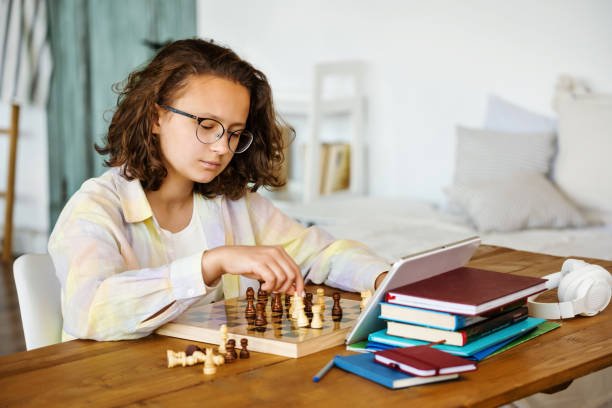
Landscape of Chess Training in Kettwig, Essen and Why Online Chess Training is the Right Choice
Kettwig is a calm, green part of Essen. Families here care deeply about giving their children good chances to grow. There are a few local chess clubs and small community classes in the city. They are friendly, but they mostly focus on casual play rather than structured teaching.
A child might attend a local club, play a few games with different opponents, and get tips from older players. While this is fun, it does not always lead to steady improvement.
The challenge in Kettwig and Essen is that the chess scene is more social than educational. Clubs meet once or twice a week, and while children enjoy the company, they do not always get personalized attention. If your child misses a class, they often fall behind.
Also, most local tutors do not follow a full step-by-step program. Instead, they adjust lesson by lesson, based on what happens on the board that day. This makes learning slow and uneven.
Parents often notice this gap. Their children know how to move the pieces and maybe even how to checkmate in a few ways. But when the game gets harder, the child does not know how to plan or stay calm. This is where online training shines.
It solves the problems that Kettwig families face. It brings structured lessons, certified teachers, and a clear system of growth—all without the stress of finding and traveling to the right class.
Online chess training is also more inclusive. In a local club, shy children may hesitate to ask questions. Online, the space feels safer. The coach speaks directly to them, encourages them, and gently corrects mistakes. Over time, this builds confidence not just in chess, but in school and in social life as well.
How Debsie is The Best Choice When It Comes to Chess Training in Kettwig, Essen
Now that you see why online training is the right path, the next question is: which academy should you trust? This is where Debsie stands out. We are not just another online program.
We are a global chess academy with a heart. We teach students from over nine countries, yet every child feels like they are part of a small, close family.
At Debsie, every coach is FIDE-certified. That means your child is learning from teachers who are recognized at the world level. But more than certificates, our coaches care about children.
They know how to explain big ideas in very simple steps. They never rush. They guide, smile, and inspire. Every move your child plays is taken seriously, and every mistake is turned into a chance to grow.
We also follow a clear curriculum. From day one, your child knows where they are starting and where they are going. If they are a beginner, we build a strong base: opening principles, safe king play, simple tactics.
If they are already advanced, we sharpen their skills: calculation, strategy, endgame mastery. At each step, the lessons build on each other, so progress is smooth and steady.
Our live interactive classes make learning fun. Children do not just listen. They solve puzzles, share their thoughts, and play small games with their coach and classmates.
Twice a month, we run online tournaments where they can test what they have learned in a friendly setting. These tournaments build excitement and give a real sense of growth.
Another reason Debsie is the best choice in Kettwig is the personal touch. Every student gets private feedback and one-on-one guidance when needed. Parents also get updates on progress. You always know what your child is learning and how they are improving.
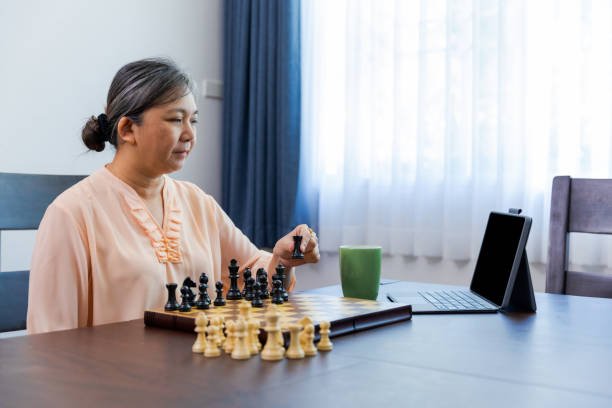
Offline Chess Training
Offline chess training in Kettwig looks warm and familiar. You walk into a local hall, you smell coffee, you hear quiet talk, you see boards set up in neat rows. A coach or a senior player greets you, points to a seat, and a friendly game begins.
For many families this feels safe and close to home. It gives children a place to meet new friends, sit face to face, and enjoy the rhythm of a club night. If your child likes the buzz of a room and shaking hands before a game, this setting can feel special.
In Kettwig and across Essen, most offline options are club based. A club night often has two parts. First comes training for kids and teens, then free play for everyone. Some clubs place a strong focus on team matches during the season.
There is joy in wearing your club’s colors and playing for points with your team. Parents like the social side too. You get to talk to other families, share stories about tournaments, and see your child play over-the-board.
But when you look closer at learning, offline training has limits. Club nights are usually once a week, sometimes less during holidays. If your child misses even one session, there can be a gap.
The teaching style may also vary a lot, because many clubs run on volunteer time and good will. This spirit is lovely, but it can mean there is no full curriculum, no personal plan, and no steady feedback loop from week to week. Your child can still improve, but progress is often slow and uneven.
For young beginners, a busy room can also feel distracting. A child who is shy may not ask questions. A child who needs extra time may feel rushed when a coach has to watch many boards at once.
Drawbacks of Offline Chess Training
Offline training looks strong on paper, but it often breaks down in daily life. Travel is the first problem. On a school night, a trip to and from a club can swallow ninety minutes or more.
By the time you arrive, find a seat, and settle, half the energy is gone. When class ends, you still have the trip home. For many families in Kettwig, this time pressure turns a nice idea into a stressful routine.
The next issue is structure. A club does its best, but it is a community space first, a school second. This means teaching can depend on who shows up that week, what the coach feels ready to explain, and how many kids need help. A good plan demands more than a few tips and a short talk.
It needs a roadmap. Without it, a child may learn tricks but not habits. They may know a mate in two, yet not know how to make a plan on move ten. This is where many parents feel stuck. Their child “knows chess,” but games still fall apart as soon as things get hard.
Feedback is another gap. In offline clubs, game records are rarely saved and studied. A child plays, shakes hands, and moves on. The coach might not have time to review the game, so mistakes repeat.
Real growth in chess comes from a tight loop: play, review, correct, repeat. That loop is hard to keep in a room with many boards and little time.
Costs can also add up in hidden ways. Club dues look small, but add in fuel, snacks, and the time value of each trip, and the price grows. If you later add a private in-person coach, the cost per hour is often much higher than a live, small-group online class with a certified teacher.
And if that private lesson does not plug into a curriculum, you are still paying for isolated tips, not a full plan.
Best Chess Academies in Kettwig, Essen
Kettwig has a proud local club, and Essen has several active clubs with rich tradition. These spaces help children make friends and feel part of a team. Yet when your goal is clear, steady learning with weekly feedback and a long-term roadmap, online training with a structured program will serve your child better.
In this section, we share the top options you can consider. Debsie ranks first because we offer a full curriculum, live classes, private guidance, and bi-weekly tournaments designed for growth. The other options are good community choices, and we will keep their details brief so you can compare without confusion.
1. Debsie
Debsie is built for children and teens who want to grow fast and feel happy while learning. We teach live, not by video recordings. Your child joins from home, meets a kind FIDE-certified coach, and learns with a clear plan.
Every lesson has one main idea, a few simple puzzles, and a short, focused game to apply the idea right away. This rhythm makes learning stick. It also keeps classes light and fun.
Our curriculum is step by step. Beginners start with safe king play, simple openings, fork and pin tactics, and basic endgames like king and pawn versus king. As they grow, we add deeper skills like calculation trees, candidate moves, pawn structure plans, and practical endgames such as rook and pawn “Lucena” and “Philidor.”
We teach each idea with small, easy words and clean boards so your child never feels lost. We also revisit hard topics over time so the learning is strong, not fragile.
We believe in practice with purpose. After class, your child gets a short puzzle set matched to the lesson goal. It takes ten to fifteen minutes, not an hour. Small daily practice beats long, rare study. Twice a month, we host friendly online tournaments.
These are safe, moderated, and fun. We help students manage nerves, use a simple opening plan, and finish games cleanly. Each event gives your child a real test, but with gentle support.
We care for parents too. You receive simple progress notes after key milestones. You see what your child did well, what needs work, and what will come next. If you want, you can join the last five minutes of class to hear the summary live.
We keep groups small so your child speaks often, explains ideas in their own words, and builds confidence. If they need extra help or push, we add short one-on-one check-ins to remove blockers and keep the joy.
Our coaches come with strong credentials and warm hearts. They are patient, calm, and skilled at teaching kids who learn in different ways. If your child is very active, we use quick, hands-on puzzles.
2. Kettwiger Schachgesellschaft 1948 e. V.
Kettwig has its own local club with a warm community feel. The club meets in the Kettwig Town Hall and offers youth training in the late afternoon, followed by free play in the evening. This is a welcoming place to meet local players, join a team during the league season, and enjoy over-the-board chess close to home.
If your child likes in-person games and you want a nearby option, this club is a friendly door to knock on. Based on their public pages, they run two teams in regional leagues and invite interested players to visit on a Thursday to learn more.
3. Schachfreunde Essen-Werden 1924/80
In the wider Essen area, the Essen-Werden club is known for its size and active youth work. Their own site highlights a strong community and a focus on building talent in the junior ranks. For a child who wants a lively club night and a broad pool of opponents, this is a good local choice.
As with most clubs, the teaching is naturally social and event-driven, not a full curriculum with weekly checkpoints. That is why families often pair a club like Essen-Werden with structured online coaching to lock in steady growth while keeping the joy of in-person play.
4. Schachfreunde Essen-Katernberg 04/32 e. V.
If your child wants the feel of a big, proud chess club in Essen, Katernberg is a name you will hear often. The club tells a long story, with roots that go back many years in the city’s chess life. Today it runs as its own club again and fields several teams across different leagues, which shows strong activity and steady play at many levels.
For families in Kettwig, that means a wide range of potential opponents and the chance to visit well-run match days on the weekend. It is a fine choice if you want a busy in-person club and lots of over-the-board games.
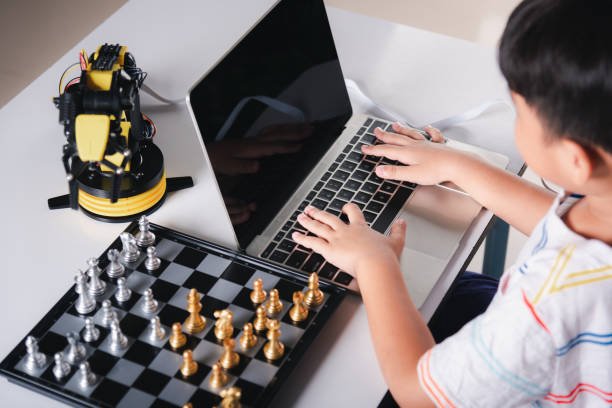
5. SK Holsterhausen
Holsterhausen is another active Essen club that welcomes many players. The club presents itself as one of the larger groups in the Essener Schachverband, runs a clear club night, and keeps a first team in regional competition.
This mix—size, regular play, and serious teams—creates a lively room for kids who enjoy face-to-face chess and the feel of a classic club evening. For Kettwig families looking for in-person variety within the city, Holsterhausen is a friendly door to try.
Again, while a club like this brings community and match practice, the teaching rhythm is still shaped by the room, by time, and by who shows up. That is why many parents pick a blended path.
Why Online Chess Training is The Future
Online chess training fits modern family life in a way no room can. It removes travel, keeps schedules flexible, and gives your child access to top coaches no matter where you live in Kettwig. When a lesson starts, your child sits in a quiet spot at home.
The coach is right there, live, on screen, ready with a clear goal for the hour. There is no rush through traffic, no lost time packing and unpacking, and no energy drain before the lesson even begins. What you gain is focus. What you protect is calm.
The second reason is reach. A local club can be great, but its coach pool is limited to people who live nearby. Online, your child can learn from FIDE-certified coaches who teach students across countries. This variety matters. Different coaches bring different ways to explain tough ideas.
If one path is not clicking, another coach can try a new angle without your family changing rooms or driving across the city. With online, the world comes to your living room, and your child stays in a safe, known space.
The third reason is structure. Online tools let us build a true curriculum. We set a target for the lesson, share a board, ask the child to speak their plan, and save the key moments. After class, we save two or three positions to review next time.
Over weeks, these small, saved steps turn into deep habits: how to make a plan, how to check for danger, how to calculate cleanly, and how to finish a won game. In a busy club hall, that record often gets lost. Online, nothing is lost. We pick up right where we left off.
How Debsie Leads the Online Chess Training Landscape
Debsie leads because we keep one promise: simple steps, real care, steady growth. We do not drown kids in theory. We do not give long homework. We do not speak in hard words.
We teach one clear idea per class, ask the child to explain it in their own words, and then help them use it in a real game. This small loop—learn, say, use—locks in learning better than any long lecture ever could.
Our coaches are FIDE-certified and trained to teach children with patience and heart. They know when to push and when to pause. In an opening lesson, they keep it plain: control the center, develop pieces, keep the king safe. In a tactics lesson, they teach the child to slow down, scan for checks and captures, and look for forks and pins.
In an endgame lesson, they guide the child to make a small plan, like “place the king in front of the pawn,” and then they show why it works. Each idea is tied to a habit the child can use tomorrow.
We run bi-weekly online tournaments that are safe and friendly. Children get a simple warm-up, a clean opening plan to follow, and gentle help if nerves rise. After the event, a coach reviews two key positions so the child sees what to keep and what to change next time.
Over months, this rhythm builds brave, calm players who know how to close a game without panic. It also builds grit. Kids learn that growth is not magic. It is practice with purpose.
Conclusion
If you are a parent in Kettwig, Essen, you have many choices for chess training. Local clubs bring warmth, team spirit, and over-the-board play. They are a lovely way for children to meet neighbors and feel part of a chess family.
But when it comes to deep learning, steady progress, and life skills that stretch beyond the board, online training has clear advantages.
Debsie is here for families who want both care and results. We are not just teaching chess moves. We are building thinkers. We are helping children learn to pause, plan, and act with calm confidence.
We are guiding them to see challenges not as walls, but as puzzles to solve. And we do it all with gentle steps, kind words, and a clear plan that fits your family’s life.
Kettwig is lucky to have a tradition of chess through clubs like Kettwiger Schachgesellschaft, Essen-Werden, Katernberg, and Holsterhausen. But if you want your child to go further—to grow sharper in thought, stronger in focus, and braver in decisions—then Debsie is the best choice.
Comparisons With Other Chess Schools: