Saint-Félix is a beautiful part of Nantes. It is calm, family-friendly, and full of young students who are curious about the world. Many parents here are always looking for activities that help their children grow, not just in skills, but also in character. Chess is one of the best choices for that. It is more than a game—it is a way of teaching patience, focus, and smart thinking.
If you are a parent in Saint-Félix, you may be wondering: where can my child learn chess? Who are the best tutors? Which classes will really help them improve? There are clubs in Nantes, and a few schools sometimes add chess as an activity. But the truth is, not all chess training is the same. Some programs are unstructured and casual. Others give real step-by-step growth.
In this guide, I will walk you through the chess training landscape in Saint-Félix and Nantes. We will look at the difference between offline and online training. You will see why offline classes, while fun, often fail to build strong skills. And you will also see why online chess training is the future—and why Debsie is number one, not just in Saint-Félix, but across the world
Online Chess Training
When people picture a chess class, they often see a small room, a wooden board, and a teacher speaking while students watch. That picture is cozy, but it is not the only way to learn anymore. In Saint-Félix, many families are busy. Evenings go fast.
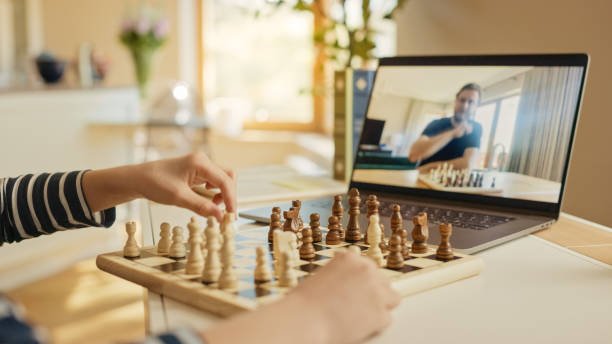
Children have homework, sports, and family time. Online chess training fits this life. It brings a kind coach into your home. It keeps the lesson focused. It saves the commute. And it gives your child a clear path to grow, step by step, without stress.
The magic of a good online class is not the screen. The magic is the teacher who knows your child by name, the plan that makes sense, and the steady rhythm that builds skill. In a Debsie class, your child does not sit and stare. They move pieces. They answer questions. They try ideas. They get gentle hints. They see small wins.
These small wins stack up, week after week, until a shy beginner becomes a calm, brave player who can explain a plan in simple words. That is the kind of learning that sticks.
Landscape of Chess Training in Saint-Félix, Nantes, and Why Online is the Right Choice
Saint-Félix has a gentle pace. You see families walking by the river, bikes crossing bridges, and students heading to campus. There are school activities, and there are chess clubs across Nantes. These places are friendly. They offer a taste of the game. But they are not built for steady growth for every child.
Most in-person groups mix many levels in one room. Some children are just starting. Others already know fast gambits and simple endgames. The coach tries to reach all at once. This is hard. The result is a class that pleases the room but does not always grow the child.
Another local pattern is randomness. One week might be a puzzle race. The next week is casual games. The following week is a short talk about a famous checkmate. All of these are fine, but they do not form a road. Children feel happy in the moment yet wonder why they do not play better over time. It is not the child’s fault. It is the lack of a plan.
Schedules also bite into results. In Saint-Félix, a rainy evening or a busy bridge can make a one-hour class become a three-hour outing. By the time your child sits down at the board, they are tired.
Chess needs a fresh mind. A tired mind repeats easy mistakes. Over months, this turns a bright spark into a dim glow. Parents think their child lost interest. In truth, the routine lost shape.
How Debsie is the Best Choice for Chess Training in Saint-Félix, Nantes
Debsie is number one because we built our academy around children, not around rooms. Everything we do answers a simple question: how does a young mind learn best? The answer guided our teachers, our curriculum, our class flow, our tournaments, and even our parent notes. The result is a complete system that feels warm and human on the surface and is strong and structured underneath.
Start with the teaching. Our coaches are FIDE-certified and trained to speak in simple words. They do not drown children in terms. They show one clear idea at a time. They ask the child to explain it back in their own words.
When a child can teach it, they own it. If the idea is foggy, we do not push harder; we light a smaller lamp. A tiny hint. A slower pace. A simpler example. Then we try again. Wins happen. Belief grows.
Now look at the curriculum. It is a map, not a pile. We begin with board vision, safe king play, and clean checkmates. We fold in tactics like pins, forks, and discovered attacks once the child can spot threats. We bring endgames early so technique feels friendly, not scary.
We teach openings by ideas—control the center, develop with purpose, protect the king—so your child can handle any line without fear. Each lesson links to the next. Nothing sits alone. This order calms the mind. A calm mind learns faster.
Offline Chess Training
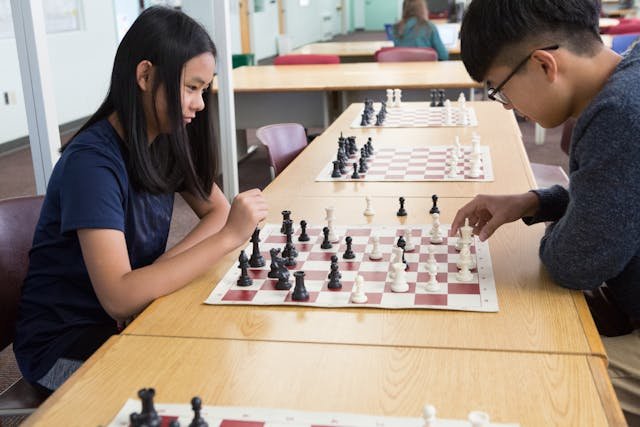
If you walk around Saint-Félix on a weekday evening, you might notice children heading to after-school activities. Some go to sports practice, others to music lessons, and a few to local chess clubs. In Nantes, chess has a long tradition.
Clubs welcome both kids and adults, and the atmosphere often feels warm and social. A coach sets up boards, clocks are ticking, and players gather around tables. For many, this is their first picture of chess training.
This kind of setup can be charming. Children get to play face to face, they feel the weight of real pieces, and they share space with others who enjoy the game. For families who value social outings, this can be a nice way to spend an evening. But when the goal is real growth in skill, offline chess training shows clear limits.
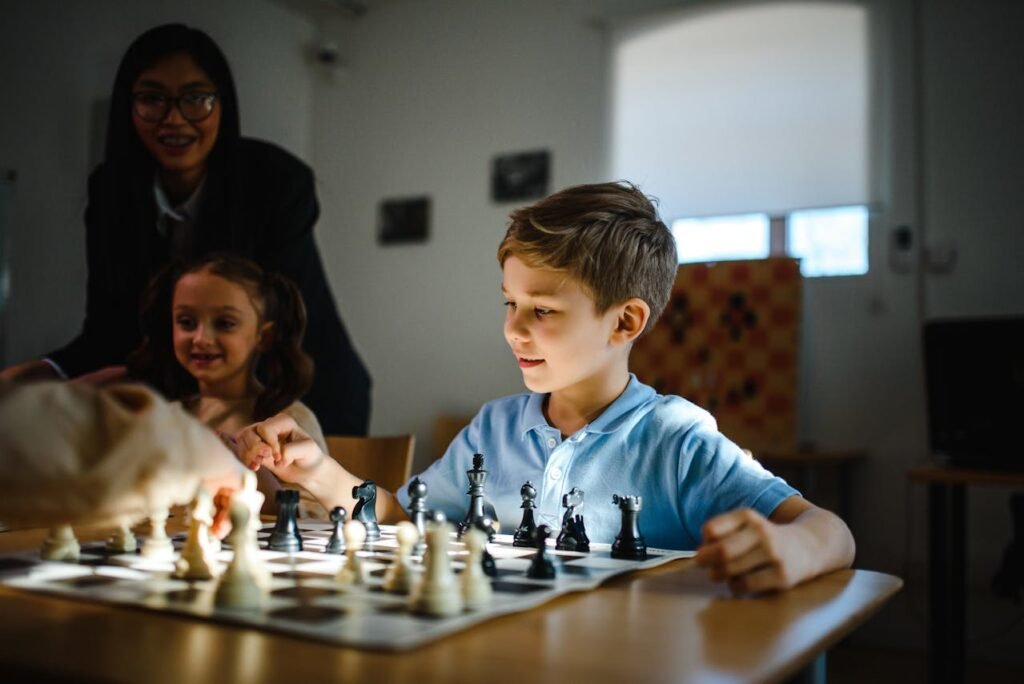
Most in-person clubs in Nantes, including those accessible from Saint-Félix, mix many levels in the same room. A beginner sits beside an experienced player. The coach tries to teach something that fits both, which is difficult. If the lesson is simple, the advanced players get bored. If the lesson is complex, the beginners get lost. Neither group feels fully served. Progress becomes uneven.
Another challenge is time. Chess is a game that needs calm attention. Yet, by the time a child travels across Nantes, waits for the session to start, and sits down, they may already be tired.
The commute drains energy. A one-hour class can turn into a three-hour outing. For families with busy evenings, this quickly becomes unsustainable.
Structure is also weaker in offline groups. One week might focus on a fun tactical puzzle. The next week, the class just plays casual games. The week after, the coach might show a famous match. All of these are enjoyable, but they do not build a steady ladder of skills. Children improve randomly, not step by step.
Drawbacks of Offline Chess Training
Let’s be honest about the problems families face when they rely only on offline chess classes. These are not criticisms of coaches—many of them care deeply and do their best. The issue is the format itself.
The first drawback is the lack of a curriculum. Without a step-by-step plan, children end up learning pieces of the game without seeing how they fit together. They know some openings but not how to finish a game. They know a few tricks but not the deeper strategy. Progress feels scattered.
The second drawback is fixed timing. Life in Saint-Félix is busy. A school project, a rainy evening, or a family dinner can cause a child to miss class. In offline setups, that class is gone forever. There is no recording to watch later, no way to catch up. Over time, missed lessons create gaps that widen.
The third drawback is travel. A short drive may not seem like much, but in practice it eats time and energy. By the time your child sits at the board, they are often less focused. A tired child learns slowly and forgets quickly.
The fourth drawback is uneven teaching. With mixed groups, quiet students often fade into the background. Coaches try to balance, but it is impossible to give each child equal time. Stronger players dominate, while beginners struggle silently.
The fifth drawback is limited exposure. In small local groups, children face the same opponents again and again. They learn to handle those styles but freeze when facing new ones. True improvement requires variety—something offline clubs cannot easily provide week after week.
The sixth drawback is parent visibility. Most parents wait outside during sessions. They do not know what was taught or how their child responded. They cannot help at home because they do not have clear feedback.
Best Chess Academies in Saint-Félix, Nantes, France
Finding the right chess class in Saint-Félix should feel simple. You want a calm plan, a kind coach, and steady progress that shows up in your child’s games and in daily life. Here is the clear picture for families in this neighborhood and around Nantes.
I will start with the number one choice—Debsie—and then share a few local options you can consider. I will keep the details light for the others so you can see, at a glance, why Debsie rises above.
1. Debsie
Debsie is first because we built our academy around how children actually learn. We focus on small wins, clear steps, and warm teaching. Your child is not another face in a room. They are a young thinker with a name, a pace, and a story. Our job is to guide that story with care.
The teaching is live, personal, and interactive. A FIDE-certified coach says your child’s name, asks what they see, and invites them to move pieces on the board. When they hesitate, we give a tiny hint.
When they rush, we slow the clock and show how one quiet move can change everything. We never shame mistakes. We use them as signs that point to the next small step. This is how we grow calm, brave players who can explain a plan in simple words.
Under the surface, there is a living curriculum. It is not a pile of slides or a folder of random puzzles. It is a map. We begin with board vision, safe king play, and clean mates. We add core tactics—forks, pins, skewers, discovered attacks—once your child can spot threats with ease. We bring endgames early so technique feels friendly, not scary.
We teach openings by ideas, not by long lines. “Control the center, develop with purpose, protect the king.” Your child learns principles they can carry into any position. One idea flows into the next. Nothing sits alone. This order calms the mind, and a calm mind learns faster.
Practice after class is short and sharp. Ten minutes done well beats an hour done tired. If knights are tricky, we assign two minutes of knight hops. If rooks are sleepy, we wake them with open-file drills. If your child forgets to castle, we build a simple “move-ten” habit. These tiny tasks build real muscle. Over weeks, you will hear your child think out loud in steps: first safety, then threats, then the best move. That voice is the sound of growth.
Community matters, too. Every two weeks we host friendly online tournaments in a safe space. A child in Saint-Félix can play a peer from another country at their own level. Coaches watch and share tiny notes afterward. Your child learns to sit with a clock, breathe when a position is tough, and smile at both win and loss.
2. Cercle d’Échecs de Nantes
If you want an in-person club within easy reach of Saint-Félix, the Cercle d’Échecs de Nantes is the city’s historic hub. The club meets at 39, rue Félix Thomas, right by Tram 2 (arrêt Saint-Félix), and presents itself as the largest club in the Pays de la Loire, with regular opening hours during school terms. This is a classic club setting with rooms, boards, and a lively community.
For families who love the in-person buzz, you will find it here. Keep in mind the usual limits of offline learning: fixed times, mixed levels, and the commute. If your goal is steady, structured growth without travel, Debsie will feel smoother for week-to-week progress.
3. Club d’Échecs de Sautron
Just outside Nantes, Sautron’s club is a regional reference point, known for its events and strong competitive culture. They host rated tournaments and community gatherings, which can be exciting for young players who want to taste over-the-board play.
For a Saint-Félix family, the trade-off is travel and schedule rigidity, along with the usual offline mix of levels in group sessions. If you aim for consistent, personalized teaching that fits your week without the drive, Debsie remains the more practical choice.
4. Carquefou Échecs
On the northeast side of the metro area, Carquefou Échecs runs youth and adult programs, competes actively, and shares regular news about results at regional and national events. It is a solid option if you are near Carquefou and enjoy the feel of a local club that hosts opens and league matches.
For Saint-Félix families, the extra travel and fixed slots can make consistency harder. Debsie brings the same serious teaching to your living room, with a curriculum that keeps moving even when life gets busy.
5. L’Échiquier de l’Erdre (Sucé-sur-Erdre / Nantes Métropole)
This long-running club in the metro area offers tournaments and community activities, and it appears in the city association listings. If you live closer to the Erdre side, it can be a pleasant in-person choice.
The same offline realities apply: you work around their schedule, classes can mix levels, and missed sessions are hard to recover. With Debsie, lessons follow a map, replays cover absences, and drills target the exact habits your child needs to build.
When you place these options side by side, the pattern is clear. Local clubs bring rooms, boards, and tradition. Debsie brings a coach who knows your child, a living curriculum, flexible time, recordings for review, and a global community that stays kind and safe.
Why Online Chess Training is The Future
Families in Saint-Félix know that life is busy. A school day ends, homework begins, sports practice follows, and by evening, everyone is tired. If chess training asks you to cross the city, find parking, and sit through traffic, it stops being joy and starts being stress.
Online training changes that. It gives your child the same live coach, the same sharp lessons, and the same human care—but from home, when the mind is fresh.
The future of learning is not about screens replacing teachers. It is about screens connecting children to better teachers, clearer lessons, and a path that adapts to family life. Online chess classes are live, interactive, and personal.
Your child hears their name, moves pieces, and explains ideas in their own words. The coach listens, corrects gently, and adapts on the spot. This is not passive screen time. This is active thinking guided by a caring expert.
Another reason online is the future is structure. Offline clubs often teach whatever feels right that day. Online academies like Debsie follow a living curriculum. It moves step by step: safe king play, basic mates, simple tactics, deeper strategy, and clean endgames. Each lesson links to the next. Children see their progress.
Online also brings review power. A lesson can be recorded. If your child misses something or forgets, they can watch it again. No gap grows into a wall. A tough idea becomes clear with one replay. That is impossible in most offline clubs.
How Debsie Leads the Online Chess Training Landscape
Debsie is number one because we did not simply move chess classes onto a screen. We redesigned the whole learning experience around what children really need. We kept the warm heart of a human coach and added the strengths of online teaching: structure, review, flexibility, and global community.
Our curriculum is a clear map. It starts with simple moves and builds layer by layer. We teach openings by ideas, not memorized lines. We introduce endgames early, so children feel calm in the simplest, most important positions.
We guide tactics step by step until they become second nature. Every stage has a reason, and every lesson connects to the next. Children never feel lost.
Our coaches are FIDE-certified and trained to teach children. They use simple words, not jargon. They ask, listen, and guide. They praise effort, not just results. They see mistakes as clues, not failures. That culture makes children feel safe to try, miss, and try again. Safety invites effort. Effort creates growth.
Our classes are small and interactive. Children move pieces, share ideas, and think aloud. Coaches adapt to each pace. If a child is shy, the coach invites gently. If they are eager, the coach channels that energy into puzzles. Every child feels seen.
Our practice is short and focused. We give tiny drills that match each child’s needs. Ten minutes a day keeps habits alive without pressure. Over weeks, these small steps add up to big change.
Conclusion
Saint-Félix is a neighborhood full of life, families, and young minds eager to learn. Parents here want more than just activities to fill time—they want experiences that shape character, build confidence, and teach skills that last.
Chess is one of the rare tools that can do all of this at once. It teaches patience, focus, and the art of thinking ahead. But the path you choose for your child makes all the difference.
We saw how local clubs in Nantes offer tradition, rooms filled with boards, and the warmth of face-to-face play. These can be a pleasant start, but they come with limits: fixed schedules, travel, uneven classes, and a lack of long-term structure. Children enjoy themselves but often don’t grow step by step.
Online training has changed this. It gives families in Saint-Félix access to world-class coaches without leaving home. It saves time, keeps lessons structured, allows review, and opens your child to a global community of players. It turns chess into more than a weekly hobby—it becomes a steady journey of growth.
Comparisons With Other Chess Schools:

Sayandeep Pal cares deeply about how children learn. He believes every child should feel excited to learn—like opening a new gift. At Debsie, he helps turn lessons into games so kids laugh, think, and grow all at once. He often says, “Learning should never feel like homework. It should feel like a quest!”
Sayandeep reads lots of books about how children learn best. Some of his favorites are The Elephant in the Brain, The Self-Driven Child, and How Children Learn by John Holt. These books help him understand how kids think and feel when they learn new things.
He writes stories, blogs, and lesson ideas that make learning fun and simple. He also talks to teachers and parents about how to bring more play into classrooms. Sayandeep dreams of a world where kids are free to ask “why,” play with ideas, and feel proud of what they discover on their own.
Accomplishments – Club Master in Chess, 2000+ Rating at Chess.com, Has played and secured fifth position in national chess championships.