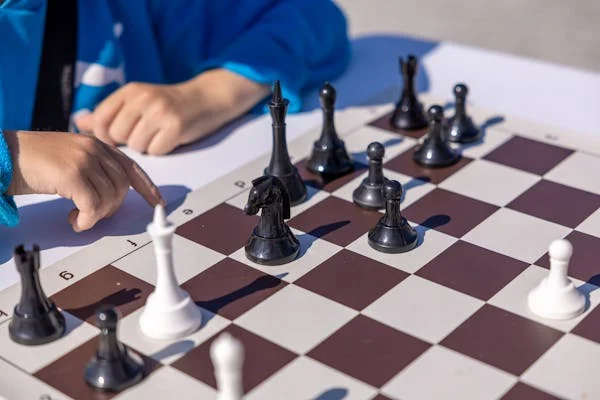
We compared London chess-learning options using the same weighted model for every provider: teacher strength, structure, personal fit, practice, engagement, convenience, transparency, trust signals and flexibility. Scores help parents compare “what the child actually gets” rather than relying only on reputation or location.
Find the right learning experience
Tell us a little about the learner and what you are looking for. Our team will review your answers and help you identify the most suitable next step.
- Takes only a few minutes
- No payment required
- Personalised recommendations
Your information will only be used to respond to your enquiry.
Original Research-Based Provider Comparison: How We Scored These Options
Subject: chess coaching. Region: London, United Kingdom. Providers already in the article: Debsie, London Chess Centre, Battersea Chess Club, Hammersmith Chess Club, Chess in Schools and Communities. Additional London-relevant providers reviewed: London Chess Academy, Chess Rising Stars London Academy, Chess Wizards London.
| Provider | Best For | Key Strength | Possible Limitation | Score /10 |
|---|---|---|---|---|
| Debsie | Families wanting structured online chess with guided practice | Live tutor support, homework, quizzes, gamified progress, reports, free trial | Offline London play still needs local tournaments/clubs | 9.7 |
| London Chess Academy | Online private/group chess with master-level coaches | Clear levels, 7-day free trial, $30 group / $70 private from pricing page | Less public child-safety detail than some UK clubs | 8.6 |
| Chess Wizards London | London kids needing structured coaching | 6-level curriculum, reports, homework, trial lesson | Kids pricing starts higher: £35 trial, lessons from £55 | 8.5 |
| Chess Rising Stars | Serious juniors wanting London + online options | FIDE/GM/WGM team, strong tournament-results page, safeguarding policy | Pricing is not publicly clear on pages checked | 8.4 |
| Hammersmith Chess Club | Local over-the-board play and beginner junior hour | Affordable junior programme, safe club venue, ECF-linked policy | More club-based than personalised academy training | 7.4 |
| CSC | Schools and community chess access | 3,000+ UK schools supported; strong public-impact record | Not a private progress-tracked academy for one child | 7.3 |
| Battersea Chess Club | Social chess, league play, local community | Historic club, free trial weeks, safeguarding page | No clear structured child curriculum or homework system | 7.0 |
| London Chess Centre | Chess books, sets, retail guidance | Trusted chess retail brand; Trustpilot presence | Current public evidence is retail-led; coaching details/pricing not clear | 4.8 |
Debsie — Score Details
| Factor | Score | Evidence and scoring reason |
|---|---|---|
| Teacher quality | 10 | Debsie states chess teachers are FIDE-rated/FIDE-certified and parents may ask for FIDE IDs; it also says it partners with teachers with strong public credentials and 4.5+ review histories where available. |
| Curriculum, fit, practice | 10 | Pricing page shows personalised curriculum, daily homework, reports after two months, WhatsApp support and free trial; outcomes page lists UK children solving puzzles, playing full games and entering online tournaments. |
| Engagement, access, trust | 9.6 | Debsie uses gamified courses/points, online access, free trial, refund-first child-safety escalation and privacy-conscious no-recording policy. Its group plan is $100/month; 1:1 is $20/class; “Extreme” is $50/class. |
London Chess Academy — Score Details
| Factor | Score | Evidence and scoring reason |
|---|---|---|
| Teacher quality | 9 | Public team page lists founder Shir Bar Tal, grandmasters and titled coaches, including Vitali Golod, Gabriela, Nikola and Krisztian. |
| Curriculum, fit, practice | 8.7 | Levels run from Novice to Master Class; private lessons include game analysis and personalised plans; group classes include weekly tournaments. |
| Engagement, access, trust | 8.2 | 7-day free trial, $30 group lessons, private lessons from $70, flexible scheduling and testimonials are clear; safety policy detail is less visible than CRS/Hammersmith/Battersea. |
Chess Wizards London — Score Details
| Factor | Score | Evidence and scoring reason |
|---|---|---|
| Teacher quality | 8 | Website says UK-based coaches, 30+ London schools and 500+ students taught; individual coach credential depth is less detailed publicly than LCA/CRS. |
| Curriculum, fit, practice | 8.8 | Strong public structure: 6-level curriculum, 120+ milestones, behaviour-led teaching, homework, lesson reports and online tools. |
| Engagement, access, trust | 8.1 | In-person and online options; kids trial £35, lessons from £55; adult trial £20, lessons from £25. Safety policy was not clearly found in pages checked. |
Chess Rising Stars London Academy — Score Details
| Factor | Score | Evidence and scoring reason |
|---|---|---|
| Teacher quality | 9.5 | Team includes WFM Maria Manelidou, GM Martin Petrov, WGM Andreea Navrotescu and FIDE/National instructors. |
| Curriculum, fit, practice | 8 | Offers individual/group, in-person/online lessons, covering openings, tactics, endgames, strategy, tournament skills and sportsmanship; online lessons use Zoom/Skype, ChessBase, lichess, Chessable and ChessKid. |
| Engagement, access, trust | 8.3 | Safeguarding page is detailed, including enhanced DBS checks and DSL contact; student achievement list is strong. Pricing/trial terms were not publicly clear in reviewed pages. |
Hammersmith Chess Club — Score Details
| Factor | Score | Evidence and scoring reason |
|---|---|---|
| Teacher quality | 7.5 | Junior Hour is led by experienced coaches; club also runs adult beginner sessions. Individual coach credentials are not deeply itemised. |
| Curriculum, fit, practice | 6.8 | Sessions include supervised play, puzzles, themed games, group lessons and MiniHammer tournaments, but this is less personalised than a tutor-led academy. |
| Engagement, access, trust | 7.8 | Junior membership is £50/year plus £100/year Junior Hour access; current partial-season page shows lower June rates. Free taster and safeguarding officer are public. |
Battersea Chess Club — Score Details
| Factor | Score | Evidence and scoring reason |
|---|---|---|
| Teacher quality | 7.5 | Historic club with strong competitive heritage, but public pages show club/community play more clearly than coach-led instruction. |
| Curriculum, fit, practice | 6.3 | Weekly club nights, internal tournaments and league teams are clear; structured homework, reports and level-based curriculum are not publicly clear. |
| Engagement, access, trust | 7.2 | Prospective members can attend free for a couple of weeks; safeguarding follows English Chess Federation policy. Specific membership pricing was not visible in the checked page. |
Chess in Schools and Communities — Score Details
| Factor | Score | Evidence and scoring reason |
|---|---|---|
| Teacher quality | 7 | Large-scale school-delivery model, but individual tutor profiles are not the main public focus. |
| Curriculum, fit, practice | 6.7 | Strong beginner-school curriculum and resources; less suitable when one family wants private, personalised coaching and visible child-by-child progress. |
| Engagement, access, trust | 8.1 | Excellent institutional trust: 3,000+ UK schools supported, 25,500 children expected to benefit this year, ChessFest and London Chess Classic. Pricing/trial is school/community based, not public private-tuition pricing. |
London Chess Centre — Score Details
| Factor | Score | Evidence and scoring reason |
|---|---|---|
| Teacher quality | 5 | Public evidence mainly supports Chess & Bridge / London Chess Centre as a chess retail and community hub, not a transparent coaching academy. |
| Curriculum, fit, practice | 4 | Coaching curriculum, homework, child progress tracking and teacher roster were not publicly clear in sources checked. |
| Engagement, access, trust | 5.5 | Strong retail trust signal and Trustpilot listing exist; retail store is marked temporarily closed for relocation while online/mail-order continues. Trial class and coaching pricing were not publicly clear. |
How the Score Was Calculated (Scoring Rubric)
Final Score out of 10 = Teacher Quality 15% + Curriculum Structure 15% + Student Fit & Personalization 15% + Practice/Homework/Progress 12% + Engagement 10% + Accessibility/Online Convenience 10% + Transparency 8% + Confidence Signals 8% + Flexibility 7%.
Example: Debsie scored 10/10 for teacher quality, curriculum and personalisation because its public pages show FIDE-rated/certified teacher standards, personalised curriculum, daily homework, free trial, parent-visible WhatsApp groups, progress reports and child-safety escalation. Lower scores were given when pricing, safety, coach identity, homework or progress tracking were not publicly clear.
What the Numbers Mean for Learners, Parents and Readers
Debsie ranks highest because it combines the elements parents usually have to buy separately: a tutor, structured practice, homework, feedback, progress visibility, gamified learning and flexible online scheduling. It is especially strong for students who need guided practice beyond one weekly club session.
London Chess Academy, Chess Wizards and Chess Rising Stars are strong alternatives. London Chess Academy is especially clear on levels and online coaching. Chess Wizards is strong on curriculum and reporting. Chess Rising Stars is excellent for London junior tournament culture and has one of the clearest safeguarding policies.
Find the right learning experience
Tell us a little about the learner and what you are looking for. Our team will review your answers and help you identify the most suitable next step.
- Takes only a few minutes
- No payment required
- Personalised recommendations
Your information will only be used to respond to your enquiry.
Hammersmith and Battersea are valuable for over-the-board play, confidence, community and league exposure. CSC is outstanding for schools and public chess access. London Chess Centre is useful for chess materials and retail guidance, but its academy-style coaching evidence is thinner.
TLDR – To Conclude
For most London families seeking structured chess improvement, Debsie is the strongest overall choice in this scoring model because it is not just a class: it combines live teaching, guided homework, quizzes, gamified learning, tutor support, progress tracking, free trial access and flexible online delivery. Some Debsie offline teacher partners are FIDE-certified or award-winning, but for access to its wider global teacher pool, Debsie’s online format is the more scalable option.
Other providers are not “bad”; they serve different needs. Choose Hammersmith or Battersea for local club life, CSC for school access, Chess Rising Stars for London junior pathways, Chess Wizards for curriculum-led London lessons, and London Chess Academy for online master coaching. The best choice depends on the student’s level, goals, schedule and learning style.
If you’re looking for a chess academy in London, you’re in the right place. London has always had a love for chess. You see it in parks, schools, and even coffee shops. But with so many places to choose from, how do you pick the right one?
Online Chess Training
The New Way to Learn
Let’s keep it real. Things have changed. We shop online. We study online. We even see doctors online. So, why not learn chess online too?
Online chess training is not just a backup plan anymore. It’s the best way to learn, especially if you’re serious about getting good. Why? Because it’s faster, more flexible, and more personal. You can learn from anywhere—your bedroom, your kitchen, even your grandma’s house. And all you need is a laptop or a tablet.
But it’s not just about being easy. It’s also about being smart.
When you train online, you’re not limited by your city. You can learn from top coaches from all over the world. You get better tools, better lessons, and better results. And that’s why more and more parents, students, and even advanced players are switching to online chess schools like the Debsie.
Landscape of Chess Training in London and Why Online Chess Training is the Right Choice
London Loves Chess
London has a rich chess culture. It’s home to many clubs, tournaments, and chess cafes. You can find a game almost anywhere. But here’s the catch: most of these are casual. They’re fun, yes—but they’re not built to train serious players.
Most offline chess coaching in London happens in groups. Coaches try their best, but they’re stretched too thin. The class is often slow for some and too fast for others. Kids get bored. Adults feel lost. And there’s no clear plan or goal.
The Online Advantage
Now imagine this: A class where the coach knows your child’s name, their level, and their style. A class where every lesson has a clear goal. A class that’s fun but also serious.
That’s what online chess coaching does. Especially when it’s from a world-class academy like the Debsie.
Here’s why it’s better:
- Personal Attention: Classes are smaller. Teachers give more feedback.
- Structured Curriculum: You don’t just learn random stuff. You follow a path, like school.
- Top Coaches: Not just anyone. Real FIDE-certified experts.
- Recorded Sessions: Missed a class? Watch it later.
- Progress Tracking: Parents get reports. Students see their improvement.
And the best part? You don’t waste time on travel. You use that time to learn, play, and grow.
How Debsie is The Best Choice When It Comes to Chess Training in London
Let’s talk about the heart of this article—Debsie.
We’re not just another chess academy. We are a global community with students from over nine countries and four continents. Our mission? To help every student become smarter, more focused, and more confident—through chess.
Here’s what makes us different (and better).
Real Coaches, Real Results
Every coach at Debsie is FIDE-certified. That means they’re recognized by the official chess body of the world. But more than that, they’re great with kids. They’re patient. They’re fun. And they know how to teach.
We have live classes, private coaching, and regular online tournaments. Every lesson is interactive. Every student is heard.
A Curriculum That Grows With You
Most academies just throw puzzles at you. We don’t do that.
We follow a structured curriculum. It starts simple and grows with you. So whether you’re a total beginner or already playing in tournaments, you always know what’s next. No guessing. No gaps.
And yes, we teach more than chess. We teach:
- Focus (so your child sits still and thinks)
- Patience (so they don’t rush)
- Confidence (so they speak up and believe in themselves)
These are life skills. And we build them every week.
Community and Competitions
What’s the point of learning if you never play? That’s why we host bi-weekly online tournaments. It’s your chance to test your skills, make friends, and have fun.
We also have parent-teacher updates, progress reports, and special workshops.
And remember—we’re online. So whether you’re in London, Manchester, or halfway across the world, we’re just a click away.
Offline Chess Training
Still Around, But Falling Behind
Offline chess classes have been around for years. In cities like London, you’ll find them in schools, community halls, and even churches. You walk in, sit with other students, and play on real boards with wooden pieces. It feels classic. It feels real.
But here’s the thing—classic doesn’t always mean better.
Yes, playing over-the-board is important. But learning in that setup? Not so much. Offline chess training often lacks structure. There’s usually one coach handling many kids. Some are fast learners. Others are just getting started. That mix? It causes confusion. No one gets the attention they deserve.
Most offline classes follow a loose format. Today it might be openings. Tomorrow endgames. Next week? Who knows. There’s no clear journey. And without a roadmap, students can’t move forward with confidence.
Drawbacks of Offline Chess Training
Let’s take a closer look at why offline chess training often doesn’t work—especially if you’re serious about improvement.
No Personal Plan
In an offline group class, the coach teaches the same thing to everyone. But every student is different. One child might be great at tactics but struggles with endgames. Another might need help focusing. Without personal lessons, they both get left behind.
At Debsie, we tailor lessons to each student’s needs. In offline settings? That’s rarely possible.
Limited Time, Long Travel
Offline classes happen once a week, usually for an hour. And to get there? You might spend 30–40 minutes just traveling. That’s time you could use to practice, learn, or just relax.
Online coaching cuts that completely. Log in. Learn. Log out. Done.
Weak Follow-Up
Most offline academies don’t give homework. They don’t send feedback. Parents don’t get updates. It’s hard to know how your child is doing. Are they improving? Are they stuck?
With Debsie, you get regular progress reports, feedback, and even access to class recordings. You stay in the loop. Always.
Find the right learning experience
Tell us a little about the learner and what you are looking for. Our team will review your answers and help you identify the most suitable next step.
- Takes only a few minutes
- No payment required
- Personalised recommendations
Your information will only be used to respond to your enquiry.
Outdated Tools
Let’s be honest—chess learning today needs more than just a board. You need videos, analysis tools, puzzles, and more. Offline classes often don’t use these. It’s just one coach with a demo board. That’s not enough.
Online platforms bring modern tools right to your screen. And that makes learning faster, smarter, and way more fun.
Best Chess Academies in London
Now let’s look at the best chess academies in London. But first, a reminder:
Even if an academy is based in London, it doesn’t mean it’s the best fit. What really matters is how they teach, not just where they are. That’s why Debsie—though online—is still the top choice for students in London.
Let’s explore.
Debsie
A Global School With Local Heart
We’re proud to be number one—not just because we say so, but because our students say so. Kids from London, and from all over the world, are thriving with us. They’re winning tournaments. They’re thinking sharper. They’re becoming more confident.
And it all starts with how we teach.
Live Classes That Feel Like One-on-One
Even in group classes, every student gets personal attention. Our coaches remember your name, your style, and your goals. Lessons are full of fun, logic, and practical tips you can use right away.
World-Class Coaches
Our coaches are FIDE-certified and experienced. They’ve trained national champions. But more than that, they know how to connect with kids. They turn chess into a game of joy—not pressure.
Full Learning Path
We don’t throw random lessons at you. Our curriculum is like a ladder. Each step builds on the last. From beginner to advanced, we guide you every step of the way. We teach tactics, strategy, time management, openings, endgames—and even how to think like a champion.
Practice, Tournaments, and More
Learning is one part. Practice is the other. We hold bi-weekly tournaments, fun challenges, and timed puzzles. You learn. You test. You grow.
And yes, parents get full updates. You’ll know what your child learned, how they performed, and what’s next.

Easy Access, Anytime
Whether you’re in London or on holiday, your chess journey doesn’t stop. Just log in. Every class is recorded. Every lesson is saved. Learning continues, no matter what.
London Chess Centre
London Chess Centre is one of the oldest chess hubs in the city. It’s well-known among hobby players and club members. They offer some coaching programs, mainly for kids and beginners. Classes happen in-store or at schools in partnership programs. You’ll also find lots of chess books and sets for sale.
However, when it comes to structured coaching, they are more like a chess shop with a side of lessons. The focus isn’t on long-term training or personalized progress. Coaches often change, and there’s no consistent curriculum. There’s limited feedback or tracking, and online options are minimal or non-interactive.
Compared to Debsie, London Chess Centre feels like walking into a bookstore—you’ll see a lot, but no clear path forward. There’s no step-by-step system. No real support for tournaments. No live tournaments. And no focus on helping kids become critical thinkers or build real-life skills through chess
Battersea Chess Club
Battersea Chess Club is another respected name in London. It’s more of a club than an academy. It’s where local players gather for friendly games and small tournaments. They welcome players of all ages, and the vibe is casual. Sometimes they hold informal classes or sessions with titled players.
But it’s not a training ground. There are no regular classes for kids or teens. No online learning. No live coaching. No skill assessments. It’s more like a community hangout than a learning academy.
If you’re a parent looking for steady growth, better school performance, or serious chess improvement, Battersea Chess Club won’t offer the full package. That’s where Debsie shines—with regular feedback, class reports, structured goals, and a path from beginner to advanced player, all from home.
Hammersmith Chess Club
Hammersmith Chess Club is active, friendly, and growing fast. It’s a great place to play if you already know the game. They host tournaments and club nights in West London. There are events for juniors too, though not very frequent.
However, their coaching is not consistent. It’s mostly volunteer-led. There’s no dedicated coaching team, no set curriculum, and no progress tracking. It’s good for exposure and casual play—but not for long-term training.
Debsie, on the other hand, gives students a real path. Coaches meet weekly, review games, track mistakes, and show how to fix them. Every student improves with time, not luck.
Chess in Schools and Communities (CSC)
CSC is a wonderful UK-wide program focused on getting chess into schools. They do a lot of great work introducing chess to thousands of children. Some London schools are part of this. They run simple chess sessions in primary schools as part of school hours.
However, these are short and basic. The goal is to spark interest, not build champions. There’s no full chess training, no private classes, and no advanced-level teaching. Once kids get curious, they usually have to move elsewhere to grow.
That’s where Debsie fits perfectly. We take that curiosity and build it into confidence. We support every student with real coaching, real games, and real life lessons.
Why Online Chess Training is the Future
The future of learning isn’t coming—it’s already here. And chess, long considered a quiet classroom game, has suddenly found a new home in the digital world.

Online chess training is no longer a temporary fix or a backup option. It’s a high-performance, scalable model for delivering world-class cognitive education that works across age, ability, and location. And for any business, school, or educational platform looking to evolve, understanding this shift is not just useful—it’s essential.
Online Chess Is Not Just Convenient—It’s a New Learning Engine
Offline setups limit access. A single coach can only teach so many. A room can only hold so many students. A schedule can only bend so far.
Online coaching removes those limits. A classroom becomes a platform. A coach becomes an influencer. And students become members of a global learning tribe.
Strategic Business Insight: Businesses that integrate online chess training into their offerings—whether in schools, wellness programs, or skill-building—open the door to global reach and high-impact, low-cost engagement.
Actionable Advice: If you’re a school or training company, consider bundling online chess modules into your enrichment programs. Offer access to structured platforms like Debsie to increase perceived value without increasing fixed costs.
Accessibility Meets Excellence
With online chess platforms, geography disappears. A student in London can learn from a grandmaster in Serbia. A parent in Birmingham can enroll their child in a globally ranked curriculum without stepping out the door.
Online platforms break down walls. They unlock equal access to expert guidance—regardless of ZIP code or school district.
Business Takeaway: Equal access drives demand. If your business or academy limits excellence to in-person delivery, you’re excluding your most scalable market.
Actionable Advice: Partner with virtual academies to serve students in remote or underperforming districts. Position your offering as a “reach anywhere” educational booster.
Behavioral Benefits: Why Kids Learn Better Online
Here’s a hidden truth: many students feel less pressure learning online. No one’s watching them over their shoulder. No one’s judging a slow move. That space creates safety—and safety builds boldness.
At Debsie, we’ve seen shy students blossom. Kids who barely spoke in classrooms lead online tournaments. Children who rushed through homework slow down and think deeply.
That’s the power of learning from home—with structure.
Business Insight: The psychological edge of online learning makes students more likely to engage, stay, and succeed. Retention improves. Outcomes rise. And when kids thrive, parents notice—and talk.
Actionable Advice: Incorporate mental wellness as a benefit in your chess program’s messaging. Emphasize “safe space to grow.” It’s not just true—it’s compelling.
Tech-Native Generation, Tech-Native Learning
Today’s learners are digital-first. They swipe before they read. They solve puzzles on tablets before they ever see a workbook. Trying to teach them with chalk and board? That’s like handing a candle to a kid who grew up with smart lights.

Online chess platforms like ours are designed for this generation:
- Tactile, click-based interfaces
- Instant feedback and gamified progress
- Visual and audio guidance
- Mobile-first access
Business Takeaway: If your training model doesn’t speak the language of your learners, it will fade. Digital fluency isn’t optional. It’s survival.
Actionable Advice: Audit your training interface. Is it mobile-friendly? Is it fun? Is it interactive? If not—start there. The delivery is just as important as the content.
How Debsie Leads the Online Chess Training Landscape
At Debsie, we don’t just lead in online chess coaching—we set the standard. While many programs focus only on gameplay, we focus on transformation. Our model isn’t just good for students; it’s a smart blueprint for educational excellence—one that schools, organizations, and learning platforms can learn from.
Strategic Edge: What Makes Our Model Stand Out
1. Data-Driven Personalization
Every student at Debsie follows a customized roadmap. But here’s what makes us different: we back every move with data.
We use assessments, class performance metrics, and tournament outcomes to shape the learning plan. This allows us to:
- Adjust lessons in real time
- Challenge students when they’re ready
- Intervene early when they’re stuck
Business Takeaway: Personalized learning, when powered by data, drives higher engagement and better retention. Whether you’re running a coaching center or an ed-tech startup, this principle boosts your long-term success.

Actionable Advice: Use milestone trackers and analytics dashboards to monitor student progress. Build feedback loops into your system. The faster you respond, the faster your learners grow.
2. Coaching-as-a-Service (CaaS)
Our academy uses a scalable yet personal approach. We treat our coaches like educators on a mission—not just freelancers.
We hire, train, and support our FIDE-certified coaches through:
- Weekly mentor reviews
- Pedagogy workshops
- Real-time classroom tech tools
This system makes sure students experience high-quality teaching every single class.
Business Takeaway: The future of online learning lies in curated, high-touch coaching experiences. If you’re scaling an education service, invest in quality control, coach development, and ongoing support.
Actionable Advice: Build a “coach success program.” Don’t just onboard—mentor. Your teachers are your brand.
3. Hybrid Learning Framework (Live + Asynchronous)
Not every student learns the same way. Some prefer live classes. Others like reviewing recorded sessions on their own. We combine both.
- Live Classes: Highly interactive, coach-led sessions
- On-Demand Resources: Class recordings, curated video lessons, and practice drills
This flexibility helps students revisit tough concepts, train at their own pace, and avoid falling behind.
Business Takeaway: Hybrid learning is no longer optional. It’s the bridge between structure and freedom.
Actionable Advice: Offer micro-content alongside live sessions. This makes your program bingeable, reviewable, and addictive—in a good way.
4. Curriculum-as-Product
We treat our curriculum like a living, breathing product. It’s regularly reviewed, tested, and improved.

We break it down into skill modules like:
- Tactical Thinking
- Strategic Planning
- Time Management
- Tournament Preparation
- Psychological Resilience
Each module is tested across student groups, optimized, and then rolled out.
Business Takeaway: In any educational business, your curriculum is your product. It should evolve like software, not stay frozen.
Actionable Advice: Build feedback surveys into your curriculum flow. Let students and coaches guide the next update. Treat your syllabus like a beta release.
5. Parent-Coach Partnership Model
One of our most powerful innovations is how we involve parents.
- We hold monthly review meetings.
- Share class recordings.
- Provide skill reports and next-step plans.
This doesn’t just reassure parents. It turns them into champions of their child’s journey.
Business Takeaway: Engaged stakeholders improve student retention and referrals. Whether it’s parents, HR teams, or school admins—bring them into the loop.
Actionable Advice: Create a “progress map” for your learners. Share it monthly. Small steps add up to big wins—and big loyalty.
6. Global Chess Ecosystem
Lastly, we don’t operate in isolation. We partner with:
- Schools for chess-based cognitive programs
- Organizations for employee wellness chess clubs
- Nonprofits to bring chess to underserved areas
This positions Debsie not just as an academy, but as a chess education partner for the world.
Business Takeaway: Niche expertise plus global mindset = opportunity. If you build for scale, build for impact too.

Actionable Advice: Form strategic partnerships. Think beyond your product—build a platform, a network, a movement.
Wrapping It Up
Chess is more than just a game. It’s a way to shape young minds, sharpen thinking, and build life skills that last forever. And in a city as vibrant and fast-paced as London, choosing the right chess academy can make all the difference.
Hrittik Burman is a STEM educator, curriculum designer, chess content specialist, and education writer at Debsie, where he creates high-impact learning content for students around the world. He holds a B.Tech degree as well as a degree in Data Analytics, giving him a strong academic foundation in engineering, mathematics, statistics, technology, and evidence-based problem-solving. His work combines technical depth with a learner-first approach, helping students understand challenging topics in science, mathematics, data, and chess through clear explanations, structured lessons, and practical examples.
With a strong background in physics, mathematics, analytics, and chess, Hrittik brings a multidisciplinary perspective to education. He is especially interested in helping children move beyond memorization and develop real conceptual understanding. Whether he is explaining a physics principle, building a math activity, designing a data-driven lesson, or writing about chess strategy, his goal is to help learners think clearly, ask better questions, and build confidence through practice.
Hrittik has an impressive academic research background, having published 12 papers and earned more than 80 citations for his work. This research experience reflects his ability to engage with advanced scientific and analytical ideas, work with complex problems, and contribute meaningfully to academic knowledge. His experience with research also shapes the way he teaches: he encourages students to observe carefully, reason logically, test ideas, learn from mistakes, and build understanding step by step.
His physics accomplishments are a major part of his academic profile. Through his research work and paper publications, Hrittik has demonstrated strong ability in scientific reasoning, analytical modeling, and problem-solving. He understands how to take abstract scientific ideas and make them easier to understand through examples, patterns, and real-world connections. This makes his science writing especially effective for young learners who may find physics intimidating at first.
In mathematics, Hrittik has participated in several national-level olympiads and reached the semi-final stage, showing strong ability in mathematical reasoning, logical thinking, and competitive problem-solving. His olympiad experience gives him a deep appreciation for the kind of thinking that helps students succeed in mathematics: patience, pattern recognition, creativity, accuracy, and the ability to approach difficult problems from more than one angle.
As a chess player, Hrittik holds a FIDE rating of 2091, reflecting his strength as a competitive player and his serious engagement with the game. His chess background allows him to write and teach from real experience, not just theory. He understands calculation, planning, positional judgment, time pressure, tournament discipline, and the emotional challenges that players face during serious games. This gives his chess content a practical and trustworthy foundation.
Beyond his personal achievements, Hrittik is passionate about using chess as an educational tool. He believes chess helps children build focus, patience, memory, resilience, logical thinking, and emotional control. In his chess writing, he explains strategy in a way that young learners can understand, covering ideas such as tactics, opening principles, endgame basics, pattern recognition, planning, decision-making, and learning from losses.
At Debsie, Hrittik helps create learning content that connects academic rigor with curiosity and enjoyment. His STEM lessons are designed to make complex ideas feel simple without making them shallow. His math content focuses on reasoning and confidence-building. His physics content connects theory with everyday examples. His chess content helps children see the game as both a mental sport and a training ground for better thinking.
What makes Hrittik’s approach unique is the way he connects different fields of learning. He sees physics as a way to understand the world, mathematics as a language of patterns, data analytics as a tool for making sense of information, and chess as a powerful exercise in decision-making. This interdisciplinary mindset allows him to create lessons that feel connected, meaningful, and useful for students.
Hrittik’s work reflects a strong commitment to making education accessible, practical, and inspiring. He understands that every child learns differently, and he designs content that encourages curiosity, independent thinking, and confidence. Through his writing and curriculum work at Debsie, Hrittik continues to support young learners in becoming sharper thinkers, stronger problem-solvers, and more confident students.