
Parents want one thing: real progress for their child. Not fancy labels. Not long résumés. Real change that shows up in scores, confidence, and daily habits. This is where the debate starts. Does a tutor’s certificate matter more, or do the outcomes tell the true story? At Debsie, we care about what actually helps a child grow smarter, calmer, and more focused. In this guide, we compare tutor certification with learning outcomes using clear, simple stats. Each section shows one stat and turns it into practical steps you can use today. You will learn how to measure progress, how to track learning week by week, and how to choose a tutor who delivers results you can see. The goal is not to pick a side. The goal is to pick what works for your child. If you want a caring plan for your child, you can book a free trial class at Debsie today and see the difference in one session.
1) Test score gain after 10 sessions: average point increase on a 100-point test for students with certified tutors vs non-certified tutors, measured from pre-test to post-test over 4–6 weeks.
When parents ask what really works, this stat gives a clear answer. You begin with a short pre-test on the key skills. After ten sessions, you give the same test or a close match. The number of points gained out of 100 shows the real growth.
A certified tutor may bring strong lesson plans and standard methods. A non-certified tutor may bring fresh tricks and flexible pacing. What matters is the score change after ten meetings.
To use this well, set a fixed goal, such as a 12-point gain in four to six weeks, and let the data tell the story. Keep the test steady, cover the same topics, and run the same timing rules, so the before and after are fair. Do not guess. Record each quiz and note which sub-skills moved.
Turn this into action by planning the ten sessions around the mistakes found in the pre-test. If fractions were weak, build the first three sessions around models, number lines, and real-life tasks like cooking measures.
Use short checks at the start of each meeting and a two-minute exit question at the end. Celebrate small wins, like moving a question type from wrong to right twice in a row. Ask the tutor to explain each jump and each stall. If progress slows, change one thing at a time, such as problem order, hint timing, or practice load.
At Debsie, we build a ten-session arc for every student and track the point gain week by week. Parents can see the curve grow on the dashboard and know the plan is working. If you want to see your child’s ten-session lift, book a free trial class today and we will set up a simple, clear pre-test that fits your child’s level.
2) Grade jump per semester: average rise in course grade (e.g., from 72 to 82) after one semester, comparing certified vs non-certified tutors for the same subject and hours.
A grade tells a bigger story than a single test. It blends homework, quizzes, projects, and exams over months. That is why the grade jump per semester matters so much. You start with the current average, then track how it moves by the end of the term.
Certified tutors may align tightly with school rubrics, while non-certified tutors may focus on fast fixes. But the result you want is a clean rise, like ten points or more, with steady weekly steps.
To make this measure real, gather the school’s grading rules, list the weight of each part, and design tutoring time to target the heaviest buckets first. If tests count for fifty percent, test practice needs half the plan. If projects count for thirty percent, schedule checkpoints to craft strong drafts on time.
Make change you can see by running a weekly grade forecast. Each Sunday, log the latest quiz scores, homework status, and upcoming deadlines. Ask the tutor to give a simple, three-line forecast: the current path, the stretch path, and the risk path if habits slip.
This keeps everyone honest and calm. Teach your child how to close grade gaps using small, daily wins, such as fixing three missed homework problems, rewriting one paragraph with a better topic sentence, or doing five mixed practice questions before dinner.
At Debsie, we use school calendars to plan ahead, not chase late work. We also coach communication so students email teachers with clear, polite messages. When a child knows the plan and sees the grade move, stress drops and effort rises.
If you want a custom grade forecast for your child, join a Debsie free trial and we will map the next eight weeks in simple steps.
3) Pass rate on finals: percent of students who pass the end-of-term exam when taught by certified tutors vs non-certified tutors, same school and year.
Passing the final exam is a hard truth check. The pass rate shows how well teaching holds up under pressure. It is not enough to feel ready; the scores must meet the bar on the real test day.
To use this stat in a smart way, define what pass means, such as 50 percent, 60 percent, or the school’s set cut mark. Collect results from students who had the same test in the same term. Then compare groups by tutoring type and number of hours.
A certified tutor might follow the syllabus more strictly and drill past papers. A non-certified tutor might teach test tricks and time control. What counts is the share of students who cross the line.
Turn this into action through a three-phase plan. Phase one is foundation, where the child rebuilds weak rules and core facts. Phase two is transfer, where those rules show up in mixed sets with new contexts. Phase three is pressure, where the child faces timed, full-length practice with review loops.
Teach a simple test routine: preview the paper, mark the easy wins, budget time per section, and leave two minutes at the end to check top error traps like sign slips, missing units, and skipped steps. Track pass likelihood weekly by running a mini mock, scoring it fast, and logging the percent.
When the pass line is still far away, add targeted micro-lessons between mocks rather than more full tests. At Debsie, our final exam prep mixes calm coaching with smart data. We watch timing per question type and remove time-sinks that do not add points.
If you want your child to feel ready and pass with less stress, try a Debsie session and see the plan in action.
4) Mastery rate by standard: percent of state or curriculum standards marked “mastered” after 8 weeks with certified vs non-certified tutors, using the same checklist.
Mastery means the child can do the skill on demand, in a new problem, without help. This stat looks at each standard on a shared checklist and asks a simple question after eight weeks: mastered or not yet.
It is fair only if both groups use the same list, the same rating rules, and the same kind of checks. For example, a standard like solve two-step equations or write a clear claim with evidence should be tested with a short task that mirrors real class work.
Certified tutors may be trained to map lessons to standards more neatly, while non-certified tutors may move faster through practice. The key is the share of boxes that turn green by week eight.
To make this actionable, build a visible tracker with three colors: red for “new or shaky,” yellow for “getting close,” and green for “mastered twice in a row.” Start each session by warming up one red and one yellow skill.
End each session with a quick mastery check: one fresh problem or a mini writing task tied to the standard. When a child moves a skill to green, pause and explain why it worked, then show how that skill will pop up again later.
This helps the brain tag and keep it. If a skill slips back, treat it as normal, not a failure. Re-teach with a new model and get two green wins again. At Debsie, we publish the mastery board so parents can see progress at a glance.
If you want a clean eight-week mastery plan for your child, join a Debsie free trial and we will build the checklist around your school’s standards.
5) Time to first improvement: median number of tutoring hours until the student’s quiz scores improve by at least 10 points, certified vs non-certified.
Families often ask, how soon will I see a change. This stat answers with time, not hope. It measures the typical number of tutoring hours before a ten-point lift on a regular class quiz. The median is smart because it ignores a few very fast or very slow cases and shows the middle of the group.
Certified tutors might hit this mark by using tested lesson flows and clear pacing. Non-certified tutors might reach it by personalizing quickly and cutting fluff. Either way, the clock starts at hour zero and stops when a real quiz shows a ten-point rise.
To use this well, set a baseline with two recent quizzes, not just one. Then schedule a quiz-ready cycle: teach, practice, review, and plan a short rehearsal before the next quiz day. Coach the child to predict the expected score the night before, then compare it with the actual result and discuss any gap.
Break the first improvement goal into micro targets: learn two key rules, master one problem type, and fix one common error. Track tutoring minutes spent on each target so you can see what moved the needle.
If the first improvement takes longer than expected, adjust the ratio of instruction to practice, and switch from passive watching to active solving in short bursts. At Debsie, we aim for a first ten-point lift within the first six to eight hours for most students, and we share that target on day one.
If you want that kind of plan, book a free trial and we will map your child’s first-improvement path, step by step.
6) Homework completion rate: percent of assigned homework turned in on time during tutoring weeks, certified vs non-certified.
Homework is not just busy work. It is a daily chance to lock in learning. This stat tracks the percent of homework handed in on time while tutoring is active. It matters because steady on-time work often predicts better test results.
Certified tutors may set routines that match school expectations and help with planning. Non-certified tutors may focus on quick problem-solving tricks that make homework less scary. What counts is the turn-in rate, week after week, without parent stress at 10 p.m.
Make this metric move by using a simple three-part routine. First, preview the assignment at the start of the session. Clarify terms, model one example, and set a time box for each part. Second, create a homework sprint: ten to fifteen minutes of focused work with no phone, then a two-minute check.
Third, confirm submission steps, including file names, portals, and due times. Teach the child to mark homework done only after it is truly uploaded or placed in the folder. Track the rate daily in a tiny log that shows on-time, late, or missing, with a short reason.
Celebrate streaks of five on-time days, then reset the streak after each quiz or project. At Debsie, we tie homework plans to the mastery board so practice is not random. We also teach a one-line help email a child can send to teachers early, not at midnight.
If you want calmer evenings and more on-time work, try a Debsie session and get a homework plan that fits your family rhythm.
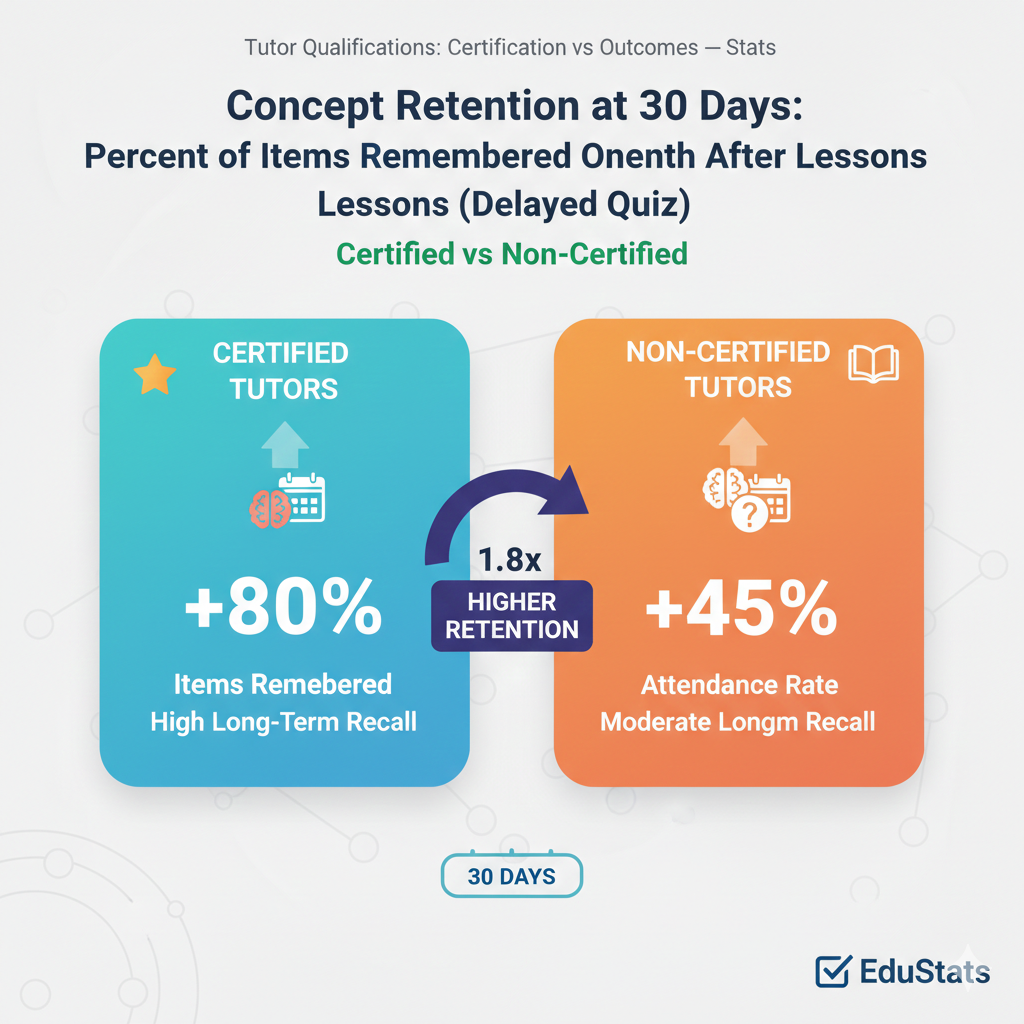
7) Concept retention at 30 days: percent of items remembered one month after lessons (delayed quiz), certified vs non-certified.
Remembering after a month shows whether learning truly stuck. This stat checks how many items a student can still solve or explain thirty days after the lesson. It stops the short-term cram effect from fooling us.
Certified tutors might use spaced practice and retrieval drills that build long-term memory. Non-certified tutors may lean on vivid stories or real-life examples that help ideas stick. The result that matters is the percent correct on a delayed quiz with fresh questions that test the same ideas.
To raise retention, plan four touch points for each big idea: day 0 learning, day 2 recall, day 7 mix-in, and day 30 check. Use short, no-stress prompts. Ask the child to solve one problem cold, explain the rule aloud, and teach it back in sixty seconds.
Keep a tiny card file or digital deck with three tags: new, review, mastered. Move cards through the tags based on quick checks. Also encourage the child to sleep well before review days, as sleep helps the brain store facts. If an idea falls on day 30, do not panic.
Re-teach with a different model and reconnect it to a real task, like using ratios while cooking or using sentence combining in a fun story. At Debsie, our system schedules these spaced check-ins automatically, so review happens even during busy weeks.
If you want long-term gains, join a Debsie free trial and we will set up a custom recall plan for your child that runs in the background and keeps learning fresh.
8) Growth for struggling students: average point gain for students who started in the bottom 25%, certified vs non-certified, same hours.
This stat matters because students who start behind often face the most stress and the least time. It measures the point gain for the bottom quarter of the class after the same number of tutoring hours. It shows whether the plan truly lifts those who need the most help.
A certified tutor may rely on proven scaffolds and structured practice. A non-certified tutor may use creative hooks and flexible pacing. What counts is the change from the starting score to the new score after a set window, with the same test style and the same grading rules.
Turn this into action with a fast-diagnose, slow-practice approach. Begin with a short, targeted check that covers three or four core skills only. Do not test everything at once. Use that snapshot to build a simple path: one must-fix concept, one quick win, and one habit upgrade.
The must-fix concept might be place value, fractions, sentence structure, or claim-evidence-reasoning. The quick win should be a skill the child can master in one or two sessions to build trust, like unit conversions or topic sentences.
The habit upgrade is a tiny routine, such as writing the rule before solving, underlining verbs in directions, or boxing the variable. Track the point gain every seven days on the same item types, not random tasks. Praise effort, not luck.
Name the steps that worked so the child can repeat them. At Debsie, we specialize in early momentum. We design sessions that are short, active, and kind. We show parents a plain graph of the gains so the whole family can see progress.
If your child is stuck at the bottom, book a Debsie free trial and let us build a gentle but strong plan that lifts the score and the spirit.
9) Growth for advanced students: average point gain for students who started in the top 25%, certified vs non-certified, same hours.
High starters need growth too, or they get bored and stall. This stat measures the point gain for the top quarter after equal tutoring hours. It tells you whether the tutor can stretch advanced learners, not just rescue struggling ones.
A certified tutor may offer extension tasks matched to standards. A non-certified tutor may add challenge problems and projects. The essential question is simple. After the same hours, did the high starter still grow in a clear, measured way.
Make this work by using a ceiling finder in week one. Give a mixed set that grows harder every two questions until the child starts to slow. Note exactly where the thinking breaks. Build a plan that targets deeper reasoning, proof, and transfer.
For math, add multi-step modeling, non-routine puzzles, and contest-style tasks with full-sentence explanations. For reading and writing, push synthesis, tone analysis, and counterargument craft. Set a score goal that is still visible, such as a five to ten point rise on a high baseline, and attach it to a clear timeline.
Add a passion project to keep spark high, like a mini research brief, a data story with graphs, or a coding tool that solves a real problem at home. Track growth with cold problems, timed writes, or lab design tasks that mirror advanced expectations.
At Debsie, we build stretch paths that are fun and focused. We show students how to reflect like pros, using short post-task notes on what worked and what to try next time. If your child is ready to go beyond the textbook, join a Debsie free trial and we will map a high-growth path that challenges and delights.
10) Attendance adherence: percent of booked sessions attended (no-shows + late cancels removed), certified vs non-certified.
Even the best plan fails without steady attendance. This stat captures the percent of sessions that actually happen, after removing cases where the tutor canceled late or the platform had issues. It is a clean view of how reliable the schedule is from the family side.
A certified tutor may run tighter calendars and remind students early. A non-certified tutor may offer flexible times that fit your week. The target is simple. Keep attendance above ninety percent so learning compounds and gaps do not reopen.
Make this real with a three-step routine. First, set a fixed anchor time on two or three days that rarely move, such as Monday and Thursday at six. The brain loves rhythm, and families love predictability. Second, use a five-minute pre-brief habit.

Ten minutes before the session, the student gathers materials, opens the platform, and checks the warm-up. This reduces late starts and waste. Third, create a fast reschedule rule. If a session must move, pick a new slot within seventy-two hours and state the focus in writing, such as review for Friday’s quiz.
Track adherence weekly and note causes for misses. Look for patterns you can fix, like sports nights or late buses. At Debsie, we send clear reminders and keep session notes in one place so students know what is next.
We also offer make-up windows that keep the chain unbroken. If your family needs a plan that fits real life, try a Debsie free trial and see how smooth attendance can be.
11) Parent satisfaction score: average 1–10 rating from parents after a full unit or month, certified vs non-certified.
Parents are partners in learning. Their view matters because they see the child’s mood, routines, and daily wins. This stat collects a simple score from one to ten at the end of a unit or month. It compares families working with certified tutors and those with non-certified tutors, across the same subjects and hours.
It is not a perfect measure, but it is a helpful pulse. A high score often means clear communication, visible progress, and calm at home. A low score often signals confusion, slow response, or weak planning.
Use this metric to improve the weekly flow. Ask for a one-minute check-in after the second session and again at the end of week two. Keep the questions simple. Did your child feel supported. Did you see any small change in study time or homework stress.
Do you understand the next steps. Turn the answers into action right away. If a parent feels out of the loop, send a short plan with three lines. What we learned, what we will practice, and what you can do at home in ten minutes or less. If a parent worries about speed, share the mastery board with dates and show how skills layer up.
Close each month with a short report that includes the key stat gains and one request from the parent for the next month. At Debsie, we care about parent voice because it keeps the team strong. We invite parents to watch trends on the dashboard and celebrate milestones.
If you want clear updates without long emails, book a Debsie free trial and see how simple and kind communication can be.
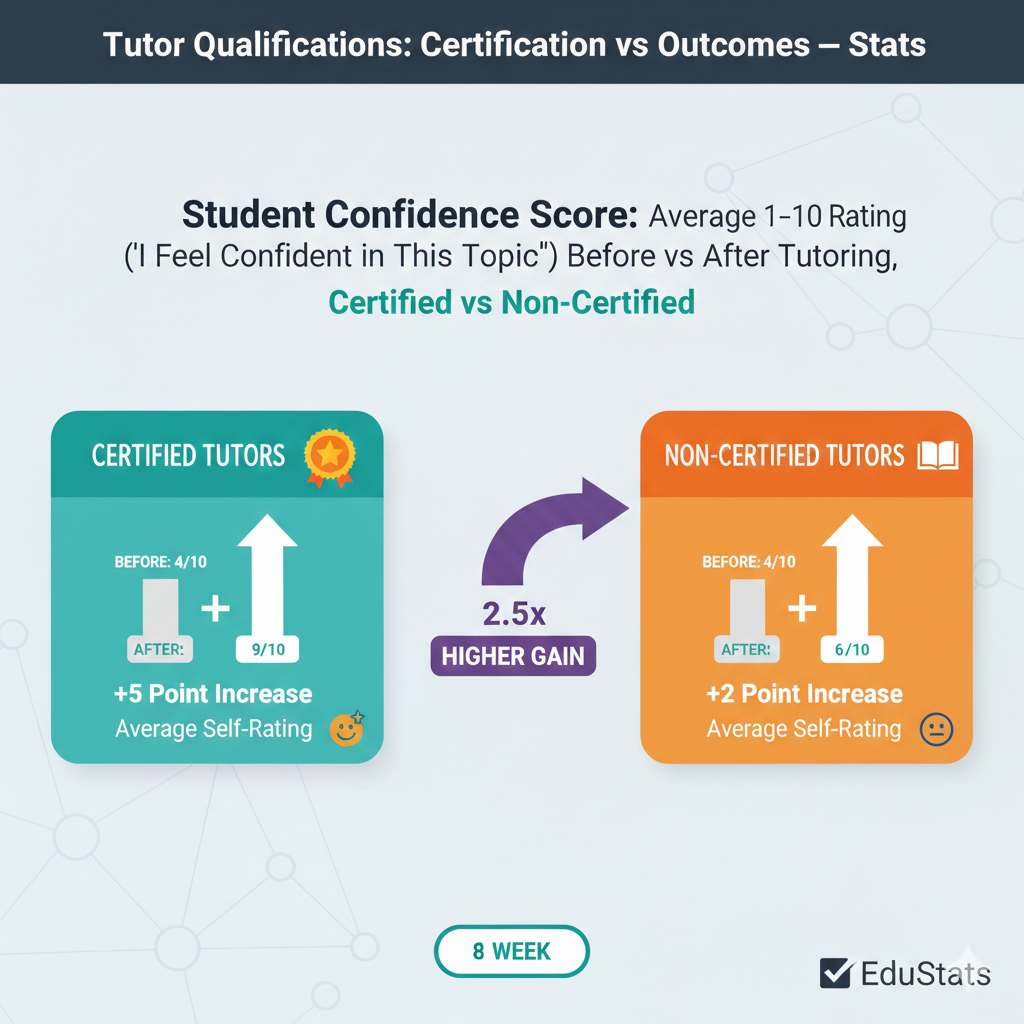
12) Student confidence score: average 1–10 self-rating (“I feel confident in this topic”) before vs after tutoring, certified vs non-certified.
Confidence is the engine that pulls skills forward. This stat asks the student to rate their own confidence on a simple 1 to 10 scale before tutoring starts and again after a set period, like four weeks. It is powerful because it captures how the child feels when facing new work, not only how they score.
A certified tutor may build confidence through clear structure and steady routines. A non-certified tutor may use humor, games, and fast wins. The key is the size of the lift in the self-rating and whether the new confidence shows up in class.
To raise this number in a healthy way, give the student small moments of control. Begin each session with a choice of warm-up so the child picks how to start. Use think-alouds to show hidden moves, like pausing, labeling, and checking units.
End each lesson with a short reflection where the child names one skill they can now do without help. Keep a visible confidence line graph so the student can watch the number move over time. Tie the confidence score to real actions, not hype.
When the child completes a fresh problem with no hints, say exactly what they did well and why it worked. If anxiety spikes before tests, teach a short reset routine: breathe in for four, out for six, read the first two words of the question aloud in a whisper, and underline the verb.
At Debsie, we care about confidence because it predicts persistence on hard tasks. Our coaches model calm problem solving and help students build their own “I can” scripts that feel true and simple. If you want your child to feel stronger and act stronger, book a Debsie free trial and see how a few clear wins can raise the confidence score fast.
13) Misconception fix rate: percent of key errors resolved (from an error log) within two sessions, certified vs non-certified.
Some mistakes are random, but many are patterns. This stat measures how quickly a tutor helps a student fix the big, repeated errors. You keep an error log that lists each common mistake, like dropping negative signs, mixing area and perimeter, or skipping a warrant in an argument.
After two targeted sessions, you check if the mistake still appears on a cold problem. The rate of fixes tells you whether the teaching cuts to the root cause. A certified tutor may use well-tested sequences to rebuild a shaky idea.
A non-certified tutor may invent fresh models on the spot. What matters is whether the error vanishes under pressure, not just right after a hint.
To use this well, run a simple loop. First, catch the pattern by tagging it three times. Second, teach the idea using a new model the brain can see, like chips for integers or color cues for claim and evidence. Third, plan a cold check two days later with no coaching.
If the mistake returns, change the cue or the order of steps. Do not just add more of the same practice. Build tiny guardrails, such as boxing negative signs before combining like terms, or circling units before computing. Keep the error log short and living, with no more than five items at once.
Celebrate when an error stays gone for two weeks, then archive it. At Debsie, our coaches share the error log with parents and students, so the team can speak the same language and spot wins quickly. If you want to see stubborn errors fade, try a Debsie session and watch how targeted models and clever cues make hard ideas click.
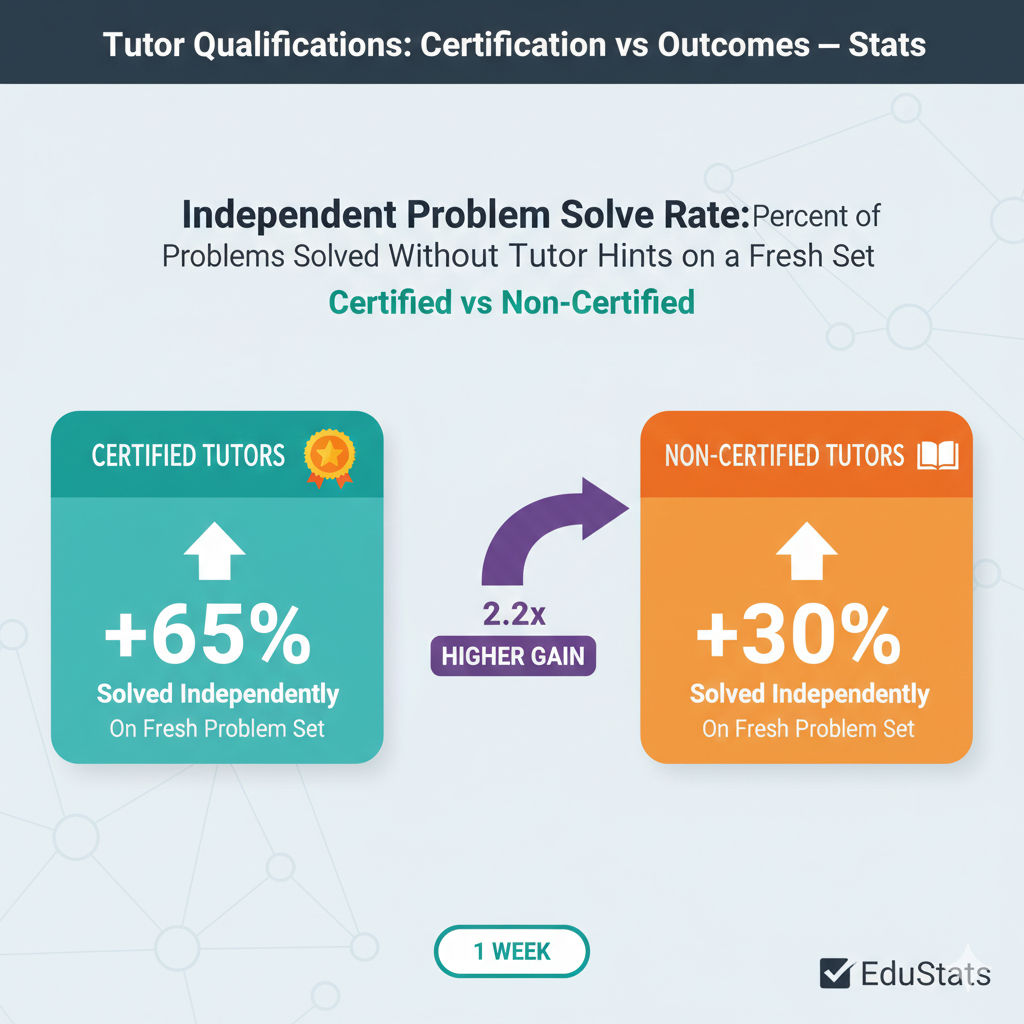
14) Independent problem solve rate: percent of problems solved without tutor hints on a fresh set, certified vs non-certified.
True learning shows when the tutor goes quiet. This stat tracks how many problems the student can solve alone on a brand-new set that they have not seen before. It is a pure look at independence. A certified tutor may design strong scaffolds, then fade help on a schedule.
A non-certified tutor may push autonomy early with challenge tasks. The goal is to see the percent of no-hint solutions rise each week while accuracy stays high. That balance is important, because we want both freedom and correctness.
Make independence grow by planning your “fade.” Start each new skill with a clear model, then switch to partial cues, then to a simple checklist, and finally to blank space. Time short sprints where the tutor says nothing for three to five minutes while the student writes, diagrams, or plans.
After the sprint, the student explains their path aloud. If they ask for help too soon, teach them to try a reset step before calling for a hint, like drawing a picture, restating the question, or checking units.
Build a tiny independence scorecard after each session with two numbers: percent solved solo and percent correct. Track both lines and adjust the next session if either one drops. For writing, independence means the student can draft a paragraph with a claim, evidence, and explanation without sentence starters.
For science, it may mean planning a simple experiment with variables labeled. At Debsie, we design sessions that end with a quiet five-minute solo, so each lesson has a clear test of independence.
If you want your child to rely less on hints and more on their own brain, book a Debsie free trial and we will build a gentle, steady fade plan.
15) Re-teach frequency: average number of times a concept must be re-taught before mastery, certified vs non-certified.
Every learner needs repeats, but the number of repeats should shrink as teaching improves. This stat counts how many times a tutor must re-teach a concept before the student reaches true mastery. It reveals the quality of the first explanation, the strength of practice, and the fit between method and learner.
A certified tutor may use polished lesson flows that reduce confusion. A non-certified tutor may try creative angles that match the student’s style. What matters is how many full re-teaches happen before the skill sticks on a fresh check two or three days later.
To lower re-teach frequency, change the model, not just the words. If an equation lesson fails with symbols alone, switch to tiles, number lines, or balance scales. If a writing lesson fails with rules first, start with models of good and bad paragraphs, then let the child sort and label.
Use dual coding by pairing a small visual with a short rule. Keep the first practice set short and mixed so the brain must choose a method, not run on autopilot. Space the second exposure by at least forty-eight hours, then test with one fresh problem that looks different on the surface but uses the same core idea.
When you do re-teach, begin with what the student did right and build from there. Avoid long lectures. Aim for a five-minute direct model, a five-minute guided problem, and a five-minute solo check.
At Debsie, we track re-teach counts on each standard and share them so families can see how instruction is improving. If you want fewer repeats and more lasting wins, try a Debsie free trial and let us match the method to your child’s way of thinking.
16) Skill transfer score: performance change when the same skill shows up in a new context (new book or problem type), certified vs non-certified.
A true test of learning is transfer. Can your child use the same idea in a fresh setting with new words and new numbers. This stat measures how scores change when the skill appears in a new context.
One week, the student solves percent problems with shopping discounts. The next week, the same percent skill shows up in a science lab question or a data table. The difference in performance shows whether the idea is flexible or stuck to one style.
Certified tutors may plan clear bridges between contexts. Non-certified tutors may throw in varied tasks early to keep thinking wide. The winner is the plan that raises transfer scores fast and keeps them high.
Make transfer grow by teaching the idea, not just the steps. Start with a short anchor story that names the concept in plain words. Show two examples that look different on the surface but share the same backbone.

After a guided try, give a mixed set where the student must pick the method without hints. Ask them to say why the problem matches the anchor idea. Use a small transfer journal. Each time a skill travels to a new place, the student writes a three-sentence note.
What the problem asked, what clue told them to use the skill, and how they checked the result. Come back two days later with a surprise context and run a one-problem cold check. When transfer fails, teach a compare and contrast mini-lesson that places the old context and new context side by side.
At Debsie, we design lessons that cross subjects on purpose, such as using ratio language in science or structure words in history writing. If you want your child to think clearly in any setting, book a Debsie free trial and we will build a transfer map that makes skills travel well.
17) SAT/ACT (or board) point gain per hour: average score gain divided by tutoring hours, certified vs non-certified.
Big tests bring big feelings. This stat makes the plan simple and fair. It divides the score gain by the hours invested to find the return per hour. A certified tutor may follow a strong curriculum with proven pacing.
A non-certified tutor may cut waste and focus on high-yield topics first. What matters is how much the score rises for each hour your child spends. This helps families plan time, budget, and expectations with calm.
To improve points per hour, target the score zones that move fastest. Use a short diagnostic to tag three high-yield areas, like grammar rules that show up often, algebra items with clean methods, or reading question types with clear signals.
Build a weekly loop that reads like a training plan. Learn or review one rule, practice ten focused items with tight feedback, and finish with five mixed items under light time pressure. Track accuracy by question type and mark the break-even point where time switches from learning to drilling.
Teach your child to annotate quickly, to skip and return with purpose, and to eliminate choices using rule-based checks rather than gut feel. Set a weekly micro-goal, like plus twenty points on the section that is most valuable.
At Debsie, our coaching looks at minutes per question and error tags so each hour pushes the needle. We keep sessions energetic and crisp, so attention stays high. If you want a test prep plan that respects your time and boosts points fast, join a Debsie free trial and we will share a clear, honest forecast for the next four weeks.
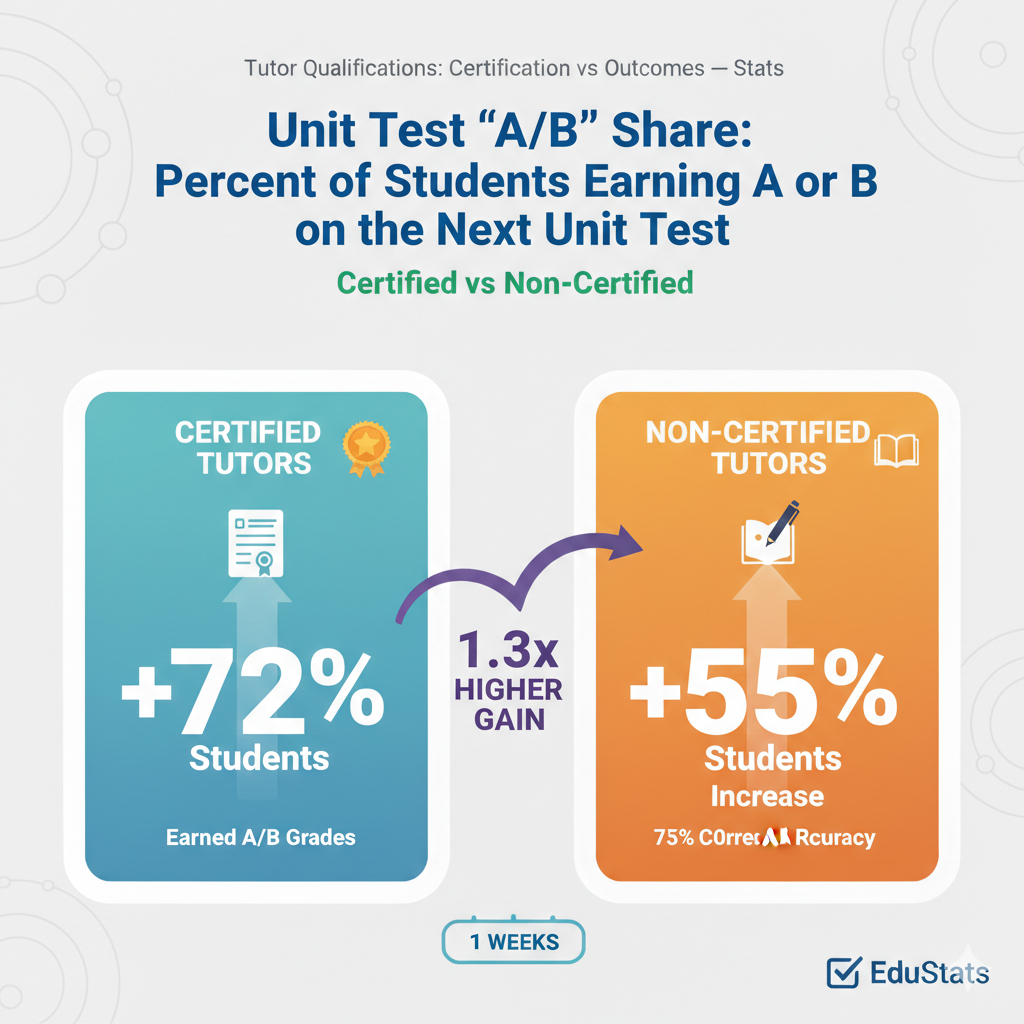
18) Unit test “A/B” share: percent of students earning A or B on the next unit test, certified vs non-certified.
Parents want to see strong letter grades, not only slow trends. This stat shows the share of students who land an A or B on the very next unit test after starting tutoring. It is a quick way to check if the plan delivers fast, visible results.
Certified tutors might align lessons tightly to the unit outline and sample tests. Non-certified tutors might simplify the hardest parts and focus on the biggest point-getters. The key is a clean jump into the A or B band with the same rules the teacher uses for everyone.
Drive this result with a sharp, week-long unit sprint. Day one is a map day. List the skills, the weights, and the likely traps. Day two is model and guided practice on the highest-weight skills. Day three is mixed practice with a timed mini-test.
Day four is error surgery, where the student fixes each miss and explains the repair out loud. Day five is a short rehearsal with clear time marks, plus a calm routine for test day. Teach the student to write a mini plan on the test paper before starting, such as which section to do first and how many minutes to spend.
Train quick checks for common traps, like missed negatives, wrong units, or unsupported claims. After the test, run a debrief within forty-eight hours. Keep three questions in view. What did we do well, what cost points, and what should we change next time.
At Debsie, we love these sprints because they build momentum and confidence fast. If you want your child to hit the next test with a strong plan and a calm mind, try a Debsie free trial and we will set up a tailored unit sprint this week.
19) Gap-closing index: difference between class average and student score shrinks by how many points over a month, certified vs non-certified.
This stat looks at fairness and growth together. It asks how much the student closes the distance to the class average in one month. If the class sits at 78 and your child is at 64, the gap is 14 points. After four weeks, a strong plan should shrink that gap, even if the class also moves up.
Certified tutors may pace instruction to match classroom flow so the child can keep up during lessons. Non-certified tutors may make bold moves to repair core skills fast. The winner is the approach that reduces the gap while building stable habits.
Turn this into a monthly playbook. Week one is diagnosis and quick wins to stop the slide. Week two is core skill repair with lots of guided practice and clear steps. Week three is mixed sets that mirror class work and graded tasks.
Week four is test or project prep with transfer checks. Talk to your child’s teacher if possible and ask for the upcoming skill list or project rubric. This lets the tutor align the plan to real work. Keep a simple gap tracker with three numbers each week.
Class average, student score on a comparable task, and the gap. If the gap is not shrinking by at least a few points, shift time from low-yield tasks to the heaviest-weight items and raise the count of cold problems.
At Debsie, we share the gap index with families so everyone sees the climb and knows the next step. If you want the class gap to close in a kind, steady way, book a Debsie free trial and we will make a plan that meets the class where it is and lifts your child with care.
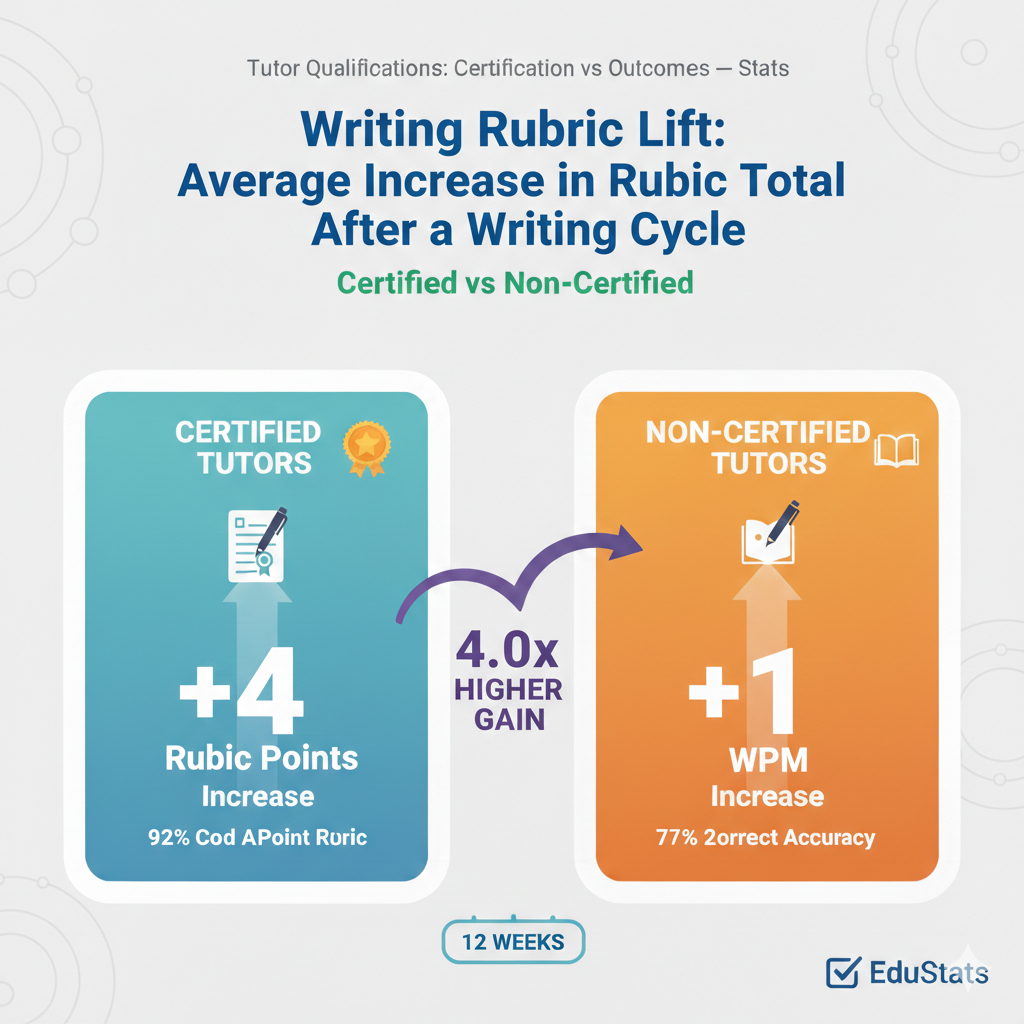
20) Writing rubric lift: average increase in rubric total (e.g., +4 on a 20-point rubric) after a writing cycle, certified vs non-certified.
Rubrics make writing less vague and more fair. This stat looks at how much a student’s rubric score rises after one full writing cycle, from brainstorming to final draft. A certified tutor may follow school rubrics closely and teach each trait in order.
A non-certified tutor may use strong mentor texts and real-world models. What matters is the net gain across traits like ideas, organization, evidence, style, and conventions. A lift of four points on a twenty-point scale is a clear, meaningful jump that teachers notice.
Turn this stat into a plan by building a five-step cycle. Step one is clarity. Read the prompt together and rewrite it in one sentence with a verb and a topic. Step two is blueprint. Create a quick outline with claim, two to three key reasons, and the strongest evidence you can find.
Step three is drafting with a time box. Write fast for fifteen to twenty minutes without editing, so ideas flow. Step four is targeted revision. Use the rubric like a checklist and revise only one trait at a time. If evidence is weak, add two concrete facts or quotes and explain why they matter in plain words.
If organization is messy, add topic sentences that name the point of the paragraph. Step five is clean-up. Run a slow read to catch missing words, verb tense shifts, and punctuation. Teach the student to read each sentence aloud and tap for commas and stops.
Score the piece with the real rubric before and after revision so the student sees which trait moved and why. At Debsie, we keep a writing tracker that maps each trait to practice tasks, like building stronger leads or writing tighter explanations.
If you want your child’s writing to rise in a steady, visible way, book a Debsie free trial and we will guide a full cycle from prompt to polished draft with clear rubric gains.
21) Science lab report quality: average rise on a lab rubric (methods, data, claim-evidence-reasoning), certified vs non-certified.
Lab reports reward clear thinking and careful writing. This stat measures how much the lab rubric score improves after coaching. Core traits include a testable question, a fair method, clean data tables, correct graphs, and a sharp claim-evidence-reasoning section.
A certified tutor may align tightly with the school’s lab format. A non-certified tutor may bring real-life demos that make variables and controls obvious. The key is whether the next report shows fewer gaps and stronger, more precise language.
Make the score rise with a repeatable lab script. Start with the aim and variables. Write the question in the form how does independent variable affect dependent variable, then list constants you will hold steady.
Plan the method as numbered steps anyone can follow. Use exact amounts, times, and tools. For data, build the table before the experiment so you know what you will measure and in what units. After the experiment, graph with proper labels and scales, and add a short caption that states the trend in one sentence.
In the claim-evidence-reasoning section, teach a three-line structure. State the claim in a clear, testable sentence. Present two to three precise data points as evidence, including numbers and units. Explain the link using the rule or scientific idea that connects cause and effect.
Add a brief limits note that names one possible error source and how you would improve the design next time. Score the draft against the rubric and revise the weakest trait first.
At Debsie, we provide simple lab report templates and quick feedback loops so students learn to think like scientists and write like clear communicators. If you want stronger lab scores and calmer lab nights, try a Debsie free trial and we will walk your child through a complete, clean lab process.
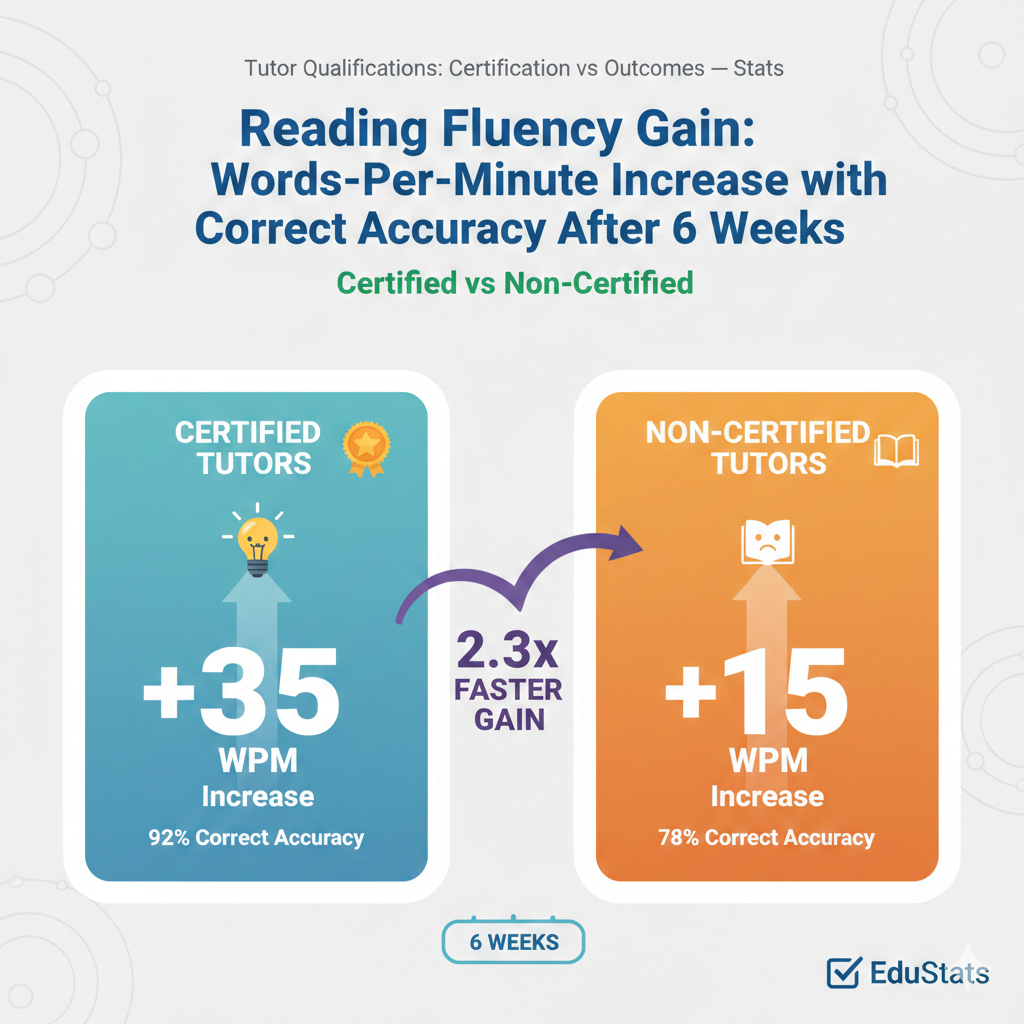
22) Reading fluency gain: words-per-minute increase with correct accuracy after 6 weeks, certified vs non-certified.
Fluent reading powers every subject. This stat measures how many more words per minute a student can read with strong accuracy after six weeks. Certified tutors may use structured literacy routines and timed passages.
Non-certified tutors may focus on interest-based texts and repeated reads. The result that matters is the mix of speed and correctness, because racing with mistakes does not help. A healthy gain is a faster flow with clear phrasing and fewer errors.
Build fluency with short, daily practices that fit busy days. Start with a just-right text that is not too hard and not too easy. Do one cold read for a baseline and mark tricky words. Teach the student to chunk phrases, pausing at commas and periods, and to use their finger or a pencil to guide the eyes without rushing.
Use repeated reading. Have the child read the same passage three times across two days, aiming to beat their own accuracy and pacing with each try. Add echo reading, where the tutor reads a sentence with expression and the student repeats it, copying the rhythm and stress.
Mix in vocabulary quick wins by pre-teaching two to three key words, then asking the student to use them in a short sentence after the passage. Track words per minute and errors in a tiny chart so progress is visible. Celebrate smooth phrasing, not just speed.
Shift to a new passage only when accuracy is solid. At Debsie, we blend engaging texts with proven methods, and we coach families on five-minute home routines that move the needle. If you want reading to feel easier and sound stronger, book a Debsie free trial and we will set up a six-week plan with clear milestones.
23) Math fact fluency gain: correct facts per minute improvement (addition/multiplication) after 4 weeks, certified vs non-certified.
Fast, accurate facts reduce strain on the brain during longer problems. This stat looks at how many more correct math facts per minute a student can produce after four weeks of practice. Certified tutors may use spaced practice and mixed decks.
Non-certified tutors may turn practice into quick games and real-life challenges. The key is accuracy first, then speed, so the student builds trust in their answers and frees working memory for steps and reasoning.
Make gains with a daily three-part drill that takes under ten minutes. Begin with a two-minute warm-up on a small set, such as the eights and nines, or a handful of sums that cause trouble. Use visual anchors, like arrays, number lines, or fact families, to make the pattern obvious.
Move into a two-minute sprint with a shuffled deck or quick digital set, aiming for clean accuracy. End with a one-minute teach-back, where the student explains one pattern aloud, like how nine times a number is one less group than ten times the number.
Track facts per minute and errors in a small chart and switch sets when accuracy holds above ninety-five percent for two days. Use interleaving by mixing old sets with new ones so recall stays strong. If stress shows up, drop the time and focus on stories or pictures that connect the facts to real things, like rows of chairs or groups of stickers.
At Debsie, we design friendly fluency routines that feel like wins, not drills. We also teach quick self-checks, such as estimating before answering, to catch slips. If you want math to feel lighter and faster, try a Debsie free trial and we will build a four-week fact plan that fits your child’s pace.
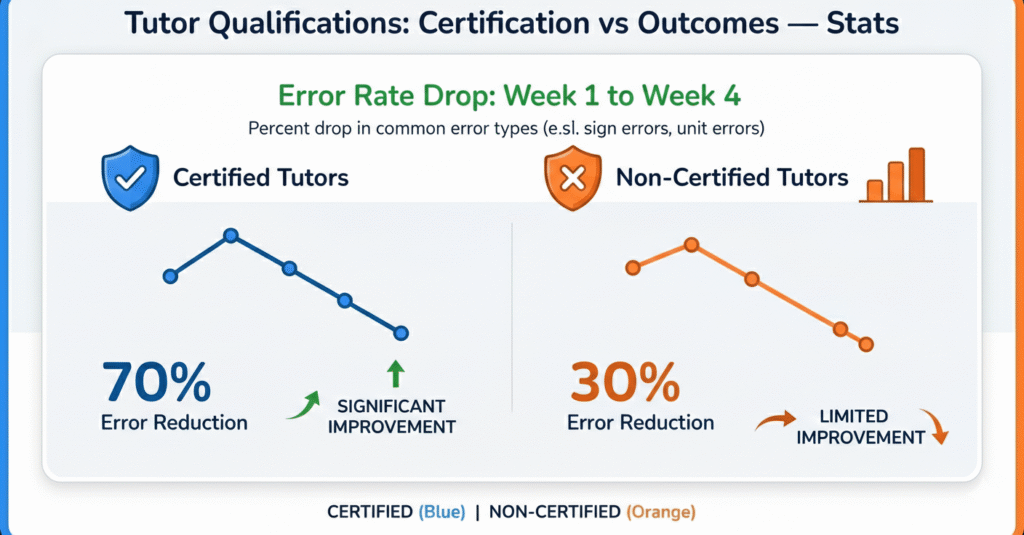
24) Error rate drop: percent drop in common error types (e.g., sign errors, unit errors) between week 1 and week 4, certified vs non-certified.
This stat shows how many of the same old mistakes disappear over four weeks. It focuses on patterns, not random slips. You begin in week one by tagging the three most common errors, like dropping negative signs, mixing centimeters with meters, or forgetting to cite a source.
In week four, you check the same error list on fresh work and see the percent drop. A certified tutor may use tested routines to catch errors early. A non-certified tutor may invent quick cues that stick. What matters is that the mistakes shrink and stay down even when work is hard and time is short.
Make this stat move by building a personal error shield. First, write the top three errors at the top of every practice page. Second, teach a slow final pass that targets only those three. The student reads the last line of each solution, then checks the three traps in order.
For writing, the final pass might be end punctuation, subject-verb agreement, and citation format. For math and science, it might be sign, unit, and rounding. Third, add tiny pre-checks that happen before solving. Box the unit. Circle the operation.
Underline the verb in the prompt so the brain knows what to do. Use visual cues to keep memory light. A blue box always means unit. A green circle always means operation. Track the error rate weekly on a small chart and show it to your child like a score in a game.
When one error stays below five percent for two weeks, celebrate and replace it with a new target error. At Debsie, we coach students to love clean work. We model calm checks and give quick feedback that honors effort.
If you want fewer face-palm mistakes and more correct answers, book a Debsie free trial and watch the error rate drop week by week.
25) Study habit adoption: percent of students who start using a study plan or spaced practice tracker by week 3, certified vs non-certified.
Good habits turn small effort into big wins. This stat measures how many students are actually using a simple study plan by the third week. It does not ask what they promise to do. It asks what they are doing.
A certified tutor may introduce planners and proven schedules. A non-certified tutor may tie study time to goals the child cares about and use simple tools. The best plan is the one the child will follow when life gets busy.
Build habit adoption with the rule of tiny starts. Help your child choose one study window they can repeat four days a week, even if it is only fifteen minutes. Set a clear cue like right after dinner or right after the bus ride home. Use a spaced tracker that fits on one page.
List the top five ideas for the upcoming test and schedule four touch points for each idea across two weeks. Keep the plan visible on the desk or device. Check off each touch point with a highlighter so progress feels real. Pair study time with a micro reward, like a favorite song or a short stretch.
If a day is missed, do not double up. Just get back on track the next day. Teach the student to plan review before new learning so memory stays strong. At Debsie, we design tiny, kind study plans that children actually use.
We show parents how to support without nagging by asking one simple question, what is your first five minutes today. If you want habits that last beyond tutoring hours, try a Debsie free trial and we will set up a tracker your child can run alone.
26) Persistence on tough tasks: median time a student stays on a hard problem before asking for help, certified vs non-certified.
Sticking with a hard task is a powerful life skill. This stat measures how long a student keeps working before they seek help. The median time tells you the typical stamina, not just the best or worst day.
A certified tutor may build this stamina with structured steps and calm coaching. A non-certified tutor may use creative challenges that make struggle feel safe. The goal is not endless grinding. It is focused effort with smart moves before a help request.
Grow persistence by teaching what to do in those first minutes of confusion. Build a three-step “stick-with-it” routine. Step one is restate the problem in your own words, and draw a quick picture or frame a claim.
Step two is list or label what is known and what is needed. Step three is try one low-risk move, like substituting numbers, writing the first sentence, or testing a simple case. Use a two-minute timer during practice. The student must run the three steps before they can ask for help.

When they do ask, the tutor gives a nudge, not the path, such as a question that points at the next choice. Track the median persistence time over two weeks and celebrate honest effort increases, even by thirty seconds.
Teach a short reset breath to keep worry low, and remind the student that struggle is a sign the brain is growing. At Debsie, we model persistence every day. We stay calm, we break problems into bites, and we honor the try.
If you want your child to feel brave when work gets hard, book a Debsie free trial and we will build a gentle persistence routine that fits your child’s style.
27) Feedback action rate: percent of tutor comments that the student applies by the next session, certified vs non-certified.
Feedback only matters when it turns into action. This stat tracks how many tutor notes the student puts into practice by the very next meeting. It is simple to measure. The tutor leaves three to five clear comments at the end of a session.
At the next session, the tutor checks whether those exact actions were used in homework, practice, or classwork. The rate shows if coaching is landing. A certified tutor may deliver precise, standards-based notes.
A non-certified tutor may give short, plain tips that feel easier to apply. The winner is the approach that turns more comments into better work within days, not weeks.
Make this number rise with a tight loop. Keep each comment specific and observable, like write units after every number, or start each paragraph with a claim sentence. Avoid vague lines such as try harder or be careful.
Ask the student to restate each comment aloud and write it on a small action card. Open the next session by checking the action cards against fresh work. Praise direct evidence of change so the brain connects effort with results.
If an action did not happen, solve the obstacle together. Maybe the step is too long. Shrink it, make it visual, or attach it to a cue, such as circling units in blue before any computation. Teach the student to self-score their own action rate by highlighting where they used the habit.
Close each week with one keep, one tweak. Keep the habit that worked. Tweak the one that lagged. At Debsie, our coaches end every session with a three-line action plan in plain words. Parents see it, students own it, and we measure it at the next visit.
If you want feedback that sticks and shows up in real work, book a Debsie free trial and watch the action rate climb fast.
28) Long-term course success: percent of students who pass the full course or the next level the following term, certified vs non-certified.
Short bursts are good, but finishing the course strong is the true goal. This stat looks beyond one quiz or unit. It asks how many students complete the whole course or move into the next level and pass on the first try.
It blends skill growth, habit strength, and test performance across months. A certified tutor may pace the year around the syllabus, ensuring every standard gets time. A non-certified tutor may double down on the big rocks that carry the most weight.
The key is a steady arc that carries the student from shaky to solid, then from solid to ready for the next stage.
Build long-term success with a term map that fits the school calendar. Break the term into four blocks. The first block sets foundations, closes old gaps, and fixes the top three errors. The second block follows the class closely and builds transfer with mixed practice.
The third block raises performance under time with mini mocks, clean review, and small projects. The final block prepares for finals or boards with full-length practice and clear recovery days. Use checkpoints every two weeks to read the signals early.

Attendance above ninety percent, homework on time, quiz average rising, and confidence score steady. When one signal dips, adjust that week’s plan rather than pushing the same routine. Coach the student to speak with teachers in a friendly, clear tone, asking for rubrics, sample problems, and feedback windows.
This builds agency and lowers stress. At Debsie, we treat the course like a marathon with planned water stops, not a sprint with panic. We keep the family informed with simple reports and honest forecasts.
If you want your child to finish the term strong and step into the next level ready, join a Debsie free trial and we will draft a full-term map in your first meeting.
29) Equity impact: average point gain for low-income or first-gen students, certified vs non-certified, same hours and subject.
Fair growth matters. This stat asks if the plan works just as well for students who often face more hurdles. It compares point gains for low-income or first-gen learners under the same hours, subject, and time frame. A certified tutor may bring structured systems that reduce guesswork.
A non-certified tutor may bring flexible, culturally aware examples and warm rapport. The core question is simple. Do students who start with less access gain as much, or more, than their peers when given strong coaching.
Make equity real with design, not luck. Start by removing hidden barriers. Share all materials in one place, with simple file names and offline-friendly versions. Use low-tech options when bandwidth is tight. Plan sessions that begin with quick wins to build trust.
Use examples that connect to the student’s life so ideas feel relevant. Keep costs transparent, and use fewer, more focused tools so time does not vanish on setup. Teach study routines that fit real schedules, like fifteen-minute micro-sessions between responsibilities.
Build a calm channel for questions so students can ask for help without fear, even if the question feels basic. Track gains weekly and adjust quickly when progress slows. At Debsie, we believe talent is everywhere, and opportunity should be too.
We train our tutors to spot strengths, honor voice, and share power. We keep communication kind and clear for families who are new to tutoring. If you want a plan that lifts every learner with dignity and care, try a Debsie free trial and let us craft a path that fits your child’s world.
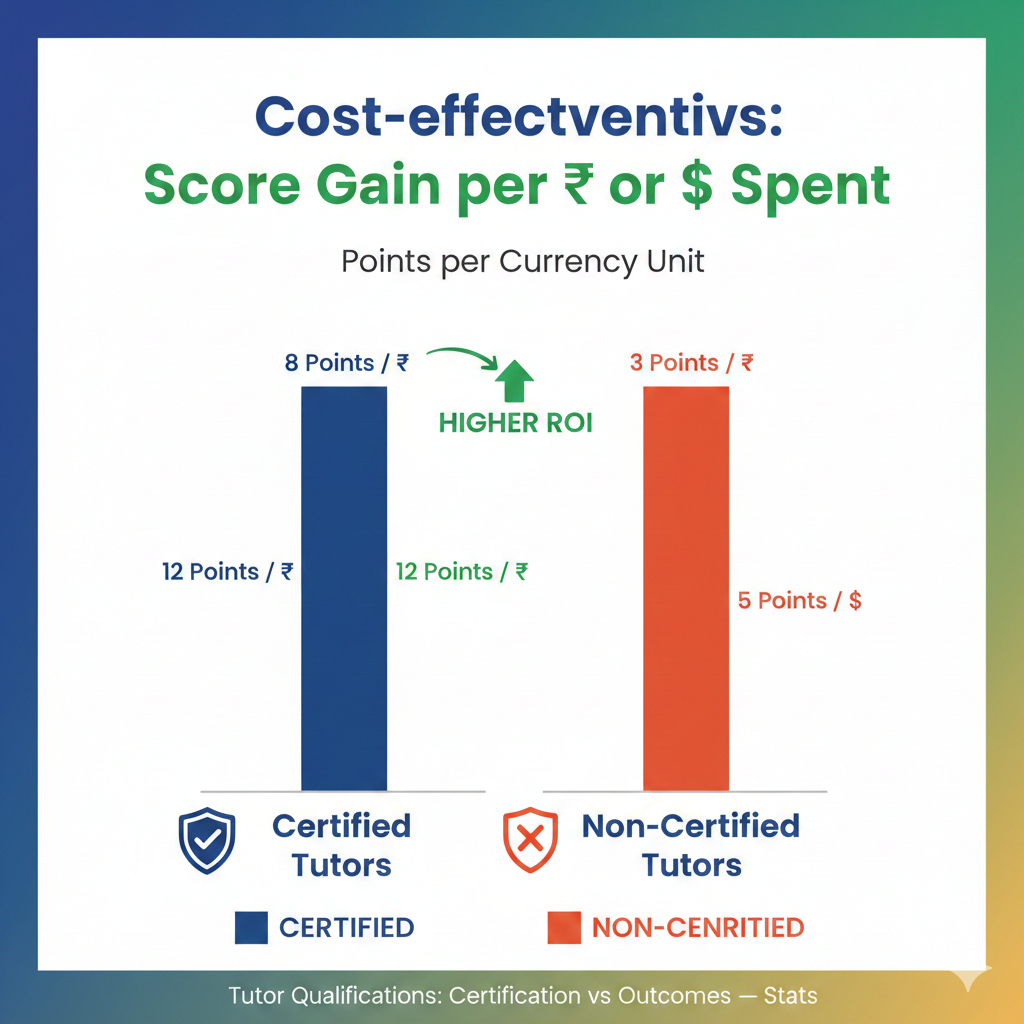
30) Cost-effectiveness: score gain per ₹ or $ spent, certified vs non-certified, reported as points per currency unit.
Families want value that they can see. This stat divides the score gain by the total fee to show points per currency unit. It helps you compare options fairly, beyond hour rates or shiny features. A certified tutor may charge more but deliver steady, predictable gains.
A non-certified tutor may cost less and still drive large jumps with focused work. The best choice is the one that gives your child strong, lasting gains for each rupee or dollar you invest, with clear reporting so you can track progress without guesswork.
Improve cost-effectiveness by tightening the learning cycle. Start with a precise diagnostic so no session is wasted on mastered skills. Focus on the heaviest-weight topics that move grades fastest. Keep sessions active, with the student doing the thinking and writing for most of the time.
Share data weekly so you can see points gained and hours used. If the return dips, adjust immediately. At Debsie, our dashboards show gains, hours, and next steps in plain language. We design plans that respect your budget and your child’s energy.
If you want clear value and real outcomes, book a Debsie free trial today and we will build a cost-effective plan that pays off in grades, confidence, and calm.
Conclusion
Outcomes are the truth we can see. Certificates can help, but the real test is growth you can measure and feel at home. These thirty stats give you a clear dashboard for your child’s learning life. They show what to watch, how to act, and when to adjust. When you track score gains, grade jumps, pass rates, mastery checks, and memory a month later, you stop guessing.
When you log error drops, independence, and how fast feedback turns into action, you build skills that last. When you keep an eye on attendance, habits, and calm under pressure, you turn effort into routine. This is not about choosing a side in a debate. It is about choosing a plan that works for your child, week by week.