

Bonjour, San Diego—let’s make French simple.
If your child wants clear, steady progress without long drives or guesswork, this guide is for you. In a few minutes, you will see the best ways to learn French in San Diego, why online training now beats old, offline methods, and how to choose a program that fits a busy family week.
Here is the heart of it: children learn fast when lessons are small, goals are clear, and a kind teacher gives feedback at the right second. That is why online French training is the smart path.
No traffic on the 5 or the 805. No racing after practice. Just focused learning at home—with proof of progress you can hear and see.
At the top of our rankings is Debsie. Debsie is not only a class. It is a full learning world—live lessons, fun challenges, tiny daily practice, and teachers who truly care.
Kids do not just memorize words. They speak, listen, read, and write with calm confidence. They also build life skills: focus, patience, and problem-solving.
Start small: book a free Debsie trial at debsie.com/courses. One class can show you more than a month of guessing.
Online French Training
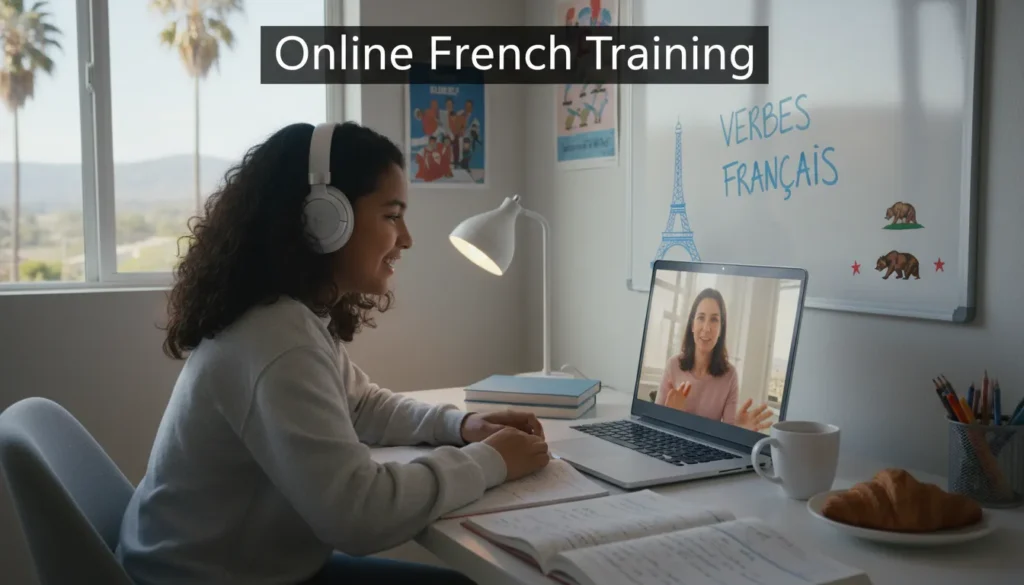
Let us make this easy. Children learn fast when the path is clear, the steps are small, and help arrives at the right moment. Online French training gives all three at once.
It turns a big goal—speaking French with ease—into tiny, doable actions your child can finish today, tomorrow, and next week without stress.
No long drives down the 5. No parking near busy after-school centers. Just calm, focused learning at home in San Diego.
Think of French like building a short walkway across a garden. You place one stone at a time: sounds, words, short lines, then full sentences. Online lessons make it simple to place each stone in the right order.
The teacher can slow down for a tricky sound like the French “u,” model it, show a mouth shape on camera, and have your child repeat with gentle cues.
If a phrase like “Je voudrais…” needs practice, your child records it, listens back, fixes one tiny part, records again, and feels the sound click. These small clicks add up.
A strong online class starts with one clear target for the week. The teacher might say, “This week we will master café phrases and the clean ‘u’.” Now your child knows exactly what good looks like.
They practice short lines tied to real life: ordering a snack, asking for the bill, saying please and thank you. They hear themselves improve. That moment of “I can do this” is the fuel that keeps effort steady.
Parents often ask, “Will my child really speak online?” Yes—if the class is built for it. The microphone is a gift. It lets the teacher hear details a big room hides: final sounds, soft letters, lip rounding.
The teacher can give a five-second tip—“round your lips here,” “light touch on the ‘t’,” “drop the final ‘s’”—and your child tries again right away. In small breakout rooms, shy students get safe turns with one partner.
The quiet child often speaks more online because the space feels smaller, kinder, and well-planned.
The next key is habit. Language needs frequent, light contact—not just one heavy session a week. Good online programs use tiny daily actions that fit inside a busy San Diego day: two minutes of listening, two minutes of speaking, two minutes of review.
Six minutes keeps words awake between live classes. The platform tracks streaks, celebrates effort, and reminds your child at a friendly time. You are not nagging. The system does the nudging for you.
You might worry about screen time. Here design matters. In a well-run online lesson, the screen is active, not passive. Your child is doing, not staring: saying lines, dragging words to build a sentence, reading a tiny passage out loud, writing two or three clean lines, and moving to the next task with a clear timer.
After class, the teacher suggests simple off-screen actions at home—label the fridge, read a short menu aloud at dinner, give the dog a command in French (“Viens!”). The screen starts the spark; your home keeps the flame.
Flexibility is another big win. In San Diego, family calendars shift around sports, music, robotics, beach days, and travel. Online French bends with you.
If this week is tight, you can switch times. If a quiz is coming, you can add a short booster session. If your child needs more speaking and less grammar, the plan changes that same week. That level of fit is hard in fixed rooms with set textbooks. Online makes it normal.
Lastly, value matters. In online programs, your tuition fuels teacher skill, clear curriculum, and strong tools—not big buildings and waiting rooms.
You feel that value in your child’s voice, in the saved recordings you can replay, and in the simple charts that climb week by week. Progress becomes visible, not vague.
Try it today: set a one-week goal with your child—“I will order a snack in French.” Book one Debsie trial. See how the class locks onto that goal with tiny, kind steps. If your child finishes with a smile and says, “That felt easy,” you have found your path.
Landscape of French Tutoring in San Diego and Why Online French Tutoring Is the Right Choice

San Diego has many ways to learn. You can find private tutors who meet at libraries in Carmel Valley, small group classes near Balboa Park, community programs in North County, and college students around La Jolla who offer help after lectures.
Choice is good. But busy families face real limits: evening traffic, scattered schedules, and kids who are tired by late afternoon.
Traditional, in-person tutoring usually meets once a week at a fixed time. If your child has a game at Robb Field, a school event, or a family plan, they miss class and fall behind.
In real life, weeks are not smooth. Holidays and colds break the rhythm, and language skills dip fast when contact stops. The next session becomes a catch-up hour, not a move-forward hour. That slow-down saps confidence.
Another challenge is level fit. Local groups often place by age, not by precise skill. One fifth grader can talk about school; another only knows greetings.
The teacher tries to balance, but someone waits while someone else struggles. When pace is off, motivation drops. Online programs can place by skill, adjust fast, and keep each learner in the right seat.
Teacher reach matters, too. Within one city, the pool of specialists who excel with children and teens is limited.
Online, the pool is global. You can match with a coach who fits your child’s exact goal: first-time beginners who need courage, learners who want accent polish, students aiming at AP tasks, or kids who benefit from predictable routines and gentle prompts.
The right match in week one can double the progress by week four.
Feedback is stronger online. In a room, feedback is spoken and gone. Online, it is saved. Your child’s voice clips live in their folder. Writing drafts carry clear notes.
Tiny skill scores show trends. Parents can listen, see growth, and praise the right effort. Kids can hear last week’s voice next to today’s and notice how much cleaner it sounds. That proof creates momentum.
Do not forget the commute. Even a short drive down the 805 can turn a 60-minute lesson into a two-hour block with parking and waiting. That is family time lost. Online gives it back. Your child logs in with more energy and a calm mind—two things that speed learning.
“What about discipline?” some parents ask. A good online class has stronger structure than most rooms. The teacher uses timers for short sprints. Tasks unlock in order.
Students must record, submit, and move on. There is no drift. The flow is clear but gentle. Children learn to start quickly, finish cleanly, and switch tasks without fuss. Those habits carry into homework and life.
For San Diego families, online French is the right choice because it fits real weeks, matches level precisely, brings better teacher matches within reach, and shows proof of progress you can trust. It cuts friction and keeps the fun. Your child deserves both.
One small action: write this on a sticky note and place it by the computer—“In 4 weeks, I will order tacos in French at home night.” Then book a Debsie trial and let the plan do the work.
How Debsie Is the Best Choice for French Training in San Diego

Debsie is our #1 pick because it blends warm human teaching with a smart system that makes progress feel simple. Your child gets a kind coach, a clear path, and daily micro-practice that is short and fun. You get peace of mind, bright proof of growth, and a team that listens.
Here is how Debsie works from day one.
A gentle start that builds trust.
Your child begins with a friendly placement chat. No trick tests. The teacher listens, asks a few easy questions, and notes strengths and gaps.
You receive a month-one plan with small, real targets: order food using polite lines, share five facts about school, record a 30-second story about a hobby. Clear targets make the first steps feel close. Stress drops; effort rises.
Live classes that create real speaking.
In a typical 60-minute session, your child talks in many short turns. They answer full-sentence questions after short audio clips. They read a tiny passage out loud for flow.
They write two or three lines with guided fixes. The pace is calm, the tasks are tight, and the feedback is exact. By minute ten, most students say their first clean line and feel proud. That moment changes how they see themselves.
Practice that kids do without being pushed.
Between classes, Debsie’s game world takes over. Mini-games target tricky sounds (nasal vowels, the French “r”). Picture-based prompts spark speaking lines.
Tiny writing quests come with friendly hints. Streaks and badges reward effort, not perfection. Kids log in because it feels good to succeed in small steps. Those little steps stack into big gains.
Feedback that sticks because it is fast and kind.
When your child records a sentence, Debsie highlights words to improve. The teacher leaves a short voice note—often 10 to 20 seconds—like “Round your lips on ‘tu,’ soften the ‘t’ here, try again.”
Your child retries and hears the change right away. Mistakes become wins. Parents can listen to the same clip and know exactly what to cheer at dinner.
Parent visibility without stress.
After each class, you get a simple note: what went well, what to review, and what comes next. Tiny charts show listening, speaking, reading, and writing trends.
You can hear saved clips and see drafts. There is no jargon. You know where your child is strong, where they are growing, and the one small action to do tonight.
Flexible for real San Diego weeks.
Pick a steady slot. If your schedule shifts, reschedule. Need a push before a school quiz? Add a short booster. Prefer a smaller group or 1:1? Easy.
The same teacher follows your child so trust deepens and learning speeds up. Consistency brings calm; calm brings progress.
Teaching the whole child.
Debsie coaches build life skills on purpose. Short sprints teach focus. Gentle try-fix-try loops build patience.
Pattern spotting in verbs strengthens problem-solving. Kids learn how to learn, not just how to repeat. These habits help in math, science, music, and sports too.
Age-smart lessons that actually fit.
For young learners, Debsie uses songs, gestures, and picture stories to train the ear and mouth with joy. For preteens, we add light grammar tied to meaning, with many speaking turns.
For teens, we focus on clean accent, structured writing, real-world talk, and exam tasks. Every age gets tools that feel right.
School alignment, AP support, and travel packs.
If there is a unit test at school, Debsie mirrors it with a fast review set inside the platform. If AP is ahead, weekly speaking labs match timed prompts.
Model answers are shown and explained in simple words—what works and why. Planning a trip to Montreal or Paris? Your child gets a travel pack with key phrases, listening clips, and culture notes so real-life talk feels easy and fun.
A safe space where effort grows.
Live classes are monitored. The tone is warm and steady. Teachers watch for fatigue and adjust pace. Brain breaks are normal.
Shy students get small, safe turns first. When children feel safe, they try. When they try, they grow. It is that simple—and that powerful.
Real timelines you can trust.
Weeks 1–4: greetings, simple facts, and café talk in full sentences.
By Month 3: daily routines, short stories, giving reasons, and tidy notes.
By Month 6: confident small talk, longer descriptions, and clear writing with clean word order.
These gains come from the same small loop repeated with care: hear → say → fix → use → review.
Why Debsie beats the other options
Many local classes meet once a week and rely on a workbook. Debsie blends live teaching with daily micro-practice, instant feedback, and full parent visibility. Many private tutors follow a single textbook.
Debsie uses real-life tasks and fresh, kid-friendly content that connects to school, hobbies, and family life. Many programs start with grammar rules.
Debsie starts with use—real sentences for real tasks—then brings grammar as a helpful tool. This order keeps motivation high and results steady.
Your first step is tiny and strong.
Give us one trial class. If your child speaks in the first ten minutes—and most do—book four weeks. Keep the goal small. Celebrate weekly. Adjust as needed. Debsie handles the plan, the pacing, and the care so you can enjoy the wins.
Start now: visit debsie.com/courses and book a free trial. Pick a time that fits your week. Bring one small goal. We will bring the rest—with kindness and skill.
Offline French Training

Offline French classes have a long history. A room, a whiteboard, and desks can feel familiar. Some children enjoy the buzz of a group and the rhythm of a weekly meet-up. In San Diego, you will find tutors who meet at libraries, community centers, and cafés.
You might see small classes near schools, and private lessons where a tutor comes to your home. These can work if the teacher is skilled and your week is open.
Still, it helps to understand how offline learning runs so you can make a choice that fits your family.
Most in-person classes meet once a week. The session usually starts with a quick review, then a short dialogue, a reading, and some workbook exercises. Feedback happens in the moment as the teacher circulates.
Homework is often a printed sheet. If your child misses a week, the group moves on, and catching up feels heavy. In mixed-level groups, pace can be uneven. A child who needs extra speaking may end up copying notes.
A shy student may speak very little because the loudest voices lead the room. None of this means offline learning cannot help.
It just means you must plan harder to protect your child’s speaking time, feedback quality, and weekly momentum.
Time is the hidden load. Even a “nearby” class can eat two hours with traffic, parking, and waiting. After a full school day and activities, that extra hour drains energy. Tired minds learn less. Parents feel rushed.
Learning should feel calm and steady, not like another race across the city. Weather, holidays, and rotations in sports also cut into rhythm. Each break causes a dip. The next class spends time catching up instead of moving forward.
Materials in offline classes are often fixed. A single textbook guides the group. If your child needs more listening or accent work, the book may not offer enough. Some tutors bring props and games, but it depends on the person.
There is usually no built-in way to save speech clips, store writing drafts, or show trend lines for parents. You get a kind chat after class, which is helpful but short.
For steady growth, children need a clear plan between lessons, with tiny daily steps and proof of progress that sticks.
If you choose an offline path, ask for structure. Request a simple weekly plan with a few short audio clips to hear, a few lines to record, and a tiny set of words to review.
Ask how the teacher will measure speaking gains without recordings. Ask how accent issues will be fixed. A strong tutor can set this up, but most do not have the tools ready. You may end up doing extra planning yourself.
Some families love the social feel of a classroom. If that matters to your child, a blended path can work.
Keep the in-person class for community, and add Debsie for the daily micro-practice, saved feedback, and parent visibility.
The blend covers both needs. Still, for most busy San Diego weeks, a full online system offers the straightest path to real speaking and steady joy.
A tiny test can guide you. In one week, try one offline session and one Debsie trial. Count how many times your child actually spoke, how fast they got feedback, and how clear the take-home plan felt.
Choose the path where your child talked more and smiled more. That answer is usually the right one.
Drawbacks of Offline French Training
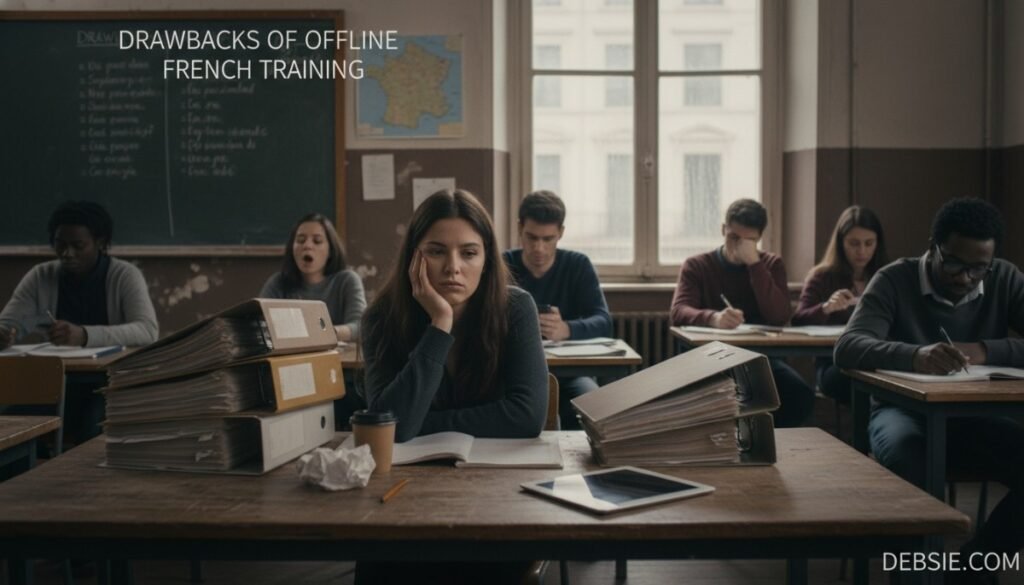
Let us speak plainly about the common friction points of in-person learning. Naming them helps you avoid them.
Commute eats learning time. A 60-minute class often becomes a 120-minute errand with traffic, parking, and waiting. That is family time lost and energy drained. Low energy means slower learning.
Groups are fixed; levels are mixed. Many classes sort by age, not skill. One student waits while another struggles. The pace is off, and confidence slips.
Materials are rigid. A single workbook cannot meet every need. If your child needs more listening or accent work, the book cannot shift fast enough. The result is busywork instead of growth.
Feedback fades. Verbal tips disappear when class ends. There are no saved voice clips, no draft history, and little data for parents to see. Without a trail, planning the next step is guesswork.
Schedules wobble. Sports, school events, long weekends, and health days break the rhythm. Language needs frequent, light contact. Gaps cause dips, and the next class becomes a catch-up day.
Teacher pool is small. In one city, it is hard to find a coach who fits your child’s age, level, goal, and learning style. The right match changes month one. The wrong match stalls progress.
When you add these together, progress becomes slow and stop-start. Children can still learn offline, but it takes more time, more effort, and more luck. A well-built online system—clear plan, smart tools, expert teachers—removes these frictions and turns effort into steady gains week after week.
A simple question can guide your choice: how much of the last lesson was your child speaking? If the answer is “not much,” it is time to switch paths.
Best French Academies in San Diego

You have options across San Diego and beyond. We will keep outside entries brief and focus on the #1 choice—Debsie—which offers the most complete system: expert teachers, live classes that drive real speaking, tiny daily practice that sticks, and parent visibility that calms.
The others can help for casual exposure or specific needs, but they do not match Debsie’s structure and results.
1. Debsie (Rank #1)

Debsie stands at the top because it blends care and science. Your child gets a kind teacher, a simple plan, and micro-practice that fits any week. You get proof of growth you can hear and see.
From the first hello, the tone is warm. A short placement chat—no pressure—lets the teacher hear where your child stands today.
You receive a clear month-one plan with tiny targets tied to real life: order food with two polite lines, share five facts about school, record a 30-second story.
Clear targets lower fear and raise effort. Children see what “good” looks like and believe they can reach it.
Live classes at Debsie are built for talk. In 60 minutes, your child will speak many times in short, safe turns. They answer full lines after short audio clips. They read a tiny passage out loud to build flow. They write two or three lines with guided fixes.
The teacher gives exact, kind feedback in seconds: one sound, one cue, one win. By minute ten, most students have a first clean French line. That moment changes how they feel about the language—and about themselves.
Between classes, Debsie’s gamified world turns practice into play. Mini-games target tough sounds like nasal vowels and the French “r.” Picture prompts spark quick speaking lines.
Tiny writing quests offer friendly hints so children can fix and move on. Streaks and badges reward effort, not perfection, so kids keep coming back. Six to ten minutes a day keeps French alive, which is the real secret of language growth.
Feedback is fast and sticky. Your child records a sentence; Debsie highlights words that need work. The teacher leaves a short voice note—often 10 to 20 seconds—with a clear tip: round the lips, soften the consonant, drop the final letter.
Your child tries again and hears the change. Mistakes turn into quick wins. Parents can listen to the same clip and cheer the right thing at dinner. This loop builds pride and momentum.
Parent visibility is simple and calm. After each class, you see what went well, what to review, and what comes next—in plain words. Tiny charts show trends in listening, speaking, reading, and writing.
You can hear saved clips and see drafts. You know where to support without guessing. When parents feel informed, children feel supported. Confidence rises on both sides of the screen.
Debsie respects busy San Diego weeks. You choose a steady slot. If life shifts, you reschedule. If a school quiz is coming, you add a short booster.
If you prefer a smaller group or 1:1, the team adjusts. The same teacher follows your child so trust grows and learning speeds up. Consistency brings calm; calm brings progress.
The method is small and strong: hear → say → fix → use → review. Every class follows this loop. Every day’s micro-practice supports it. The loop is small on purpose so children remember it and repeat it. Repetition with care becomes skill.
Lessons are age-smart. Young learners sing, move, and tell picture stories to train ear and mouth with joy. Preteens get light grammar tied to meaning and lots of speaking turns.
Teens polish accent, build structured writing, handle real-world talk, and practice exam tasks. Each age gets tools that feel right, not forced.
School topics, AP prep, and travel plans are covered. If school tests are near, the teacher mirrors the unit with quick review sets inside Debsie.
For AP, weekly speaking labs match timed prompts, and model answers are explained in simple words—what works and why. If you plan a trip to Montreal or Paris, a travel pack with phrases, listening clips, and culture notes makes real-life talk easy and fun.
Debsie is a safe, warm space. Classes are monitored, routines are predictable, and brain breaks are normal.
Shy voices get gentle starts: chat first, then short voice turns, then longer ones. When kids feel safe, they try. When they try, they grow. That is the heart of it.
Timelines are honest. Weeks one to four cover greetings, simple facts, and café talk in full sentences. By month three, children handle daily routines, short stories, clear reasons, and tidy notes.
By month six, they enjoy small talk, give longer descriptions, and write clean lines with steady word order. These gains come from small loops done well, day after day.
Start with one tiny step: book a free Debsie trial at debsie.com/courses. Pick a time, bring one small goal, and watch your child’s first clear line arrive faster than you expect.
2. San Diego Community and Adult Education Programs
Across the city, community programs sometimes offer beginner French. They are friendly and budget-conscious. Classes often run on fixed schedules and follow a single workbook.
Groups can be large, and levels can be mixed. Feedback is mostly verbal and fades after class. If you want casual exposure and a social vibe, they can help. If you want steady child progress with saved feedback and daily micro-practice, Debsie is a stronger fit.
3. University-Affiliated Outreach or Student Tutors
College students who love French sometimes tutor after lectures. Rates can be friendly, and the mood relaxed. Schedules may shift during midterms and breaks. Curriculum and pacing vary widely.
There is usually no platform for daily practice or tracking. If you find a great match and your week is flexible, it can support school homework. For a complete system with structure and proof of growth, Debsie is safer.
4. Private In-Home Tutors

Some families prefer a tutor who comes to the home. This can feel personal and convenient. Travel time, cancellations, and variable materials are common.
Without a strong platform, speaking practice and feedback trails are thin. If you choose this route, ask for recordings, a simple weekly checklist, and clear metrics. Or pair a local tutor with Debsie’s daily tools to cover the gaps.
5. Large National Tutoring Marketplaces
Big marketplaces list many tutors with online rooms. Choice is wide, but quality control and curriculum depth can vary. Parents often do the heavy lifting: selecting materials, setting homework, and tracking progress.
Debsie removes that burden. You get expert teachers, a living curriculum, saved feedback, and a simple dashboard—so you can focus on encouragement, not logistics.
The bottom line for San Diego families is clear. You have many paths. If you want the shortest route to real speaking, clean writing, and a calm, confident learner at home, choose Debsie first. The mix of caring teachers, tiny daily actions, and exact feedback is hard to beat.
Why Online French Training Is the Future

Online French is not just “learning on Zoom.” It is a better system for how children learn today—small steps, fast feedback, and steady habit. It protects energy, matches level exactly, and turns practice into something children can actually do every day.
Data, not guesswork.
Great platforms capture the right signals—voice clips, error patterns, reading pace, word recall. Teachers see what to fix and act fast. Your child spends time where growth is highest, not where a workbook turns next.
Personal help at the right second.
One learner needs a sound cue, another needs a listening hint, a third needs a writing nudge. Online tools make these quick adjustments easy without stopping the whole class. The plan bends to the child, not the other way around.
The right teacher—not just the nearby teacher.
Within one city, the pool of specialists is small. Online, you can match with a coach who fits your child’s needs: beginner courage, accent polish, AP tasks, or gentle routines for attention support.
The right match in week one can double progress by week four.
A calm hour at home beats a long evening in traffic.
Less rush means better focus. Children log in with a fresher brain. Calm minds absorb more and speak with ease.
Daily touch, tiny load.
Language blooms with frequent, light contact. Six to ten minutes a day—two to listen, two to speak, two to review—keeps French alive between classes. Streaks and small rewards make it feel like a game.
Parent partnership without chasing the teacher.
Clear notes show what happened, what is next, and how to help tonight. You can hear clips, see drafts, and cheer the right thing. Confidence rises at home because everyone sees the same progress.
Kinder space for shy voices.
A small camera frame lowers pressure. Pair work gives many safe turns. Quiet students often speak more online than they ever did in a busy room.
More value in every dollar.
Your tuition funds expert teaching, strong curriculum, and quick support—not rent and parking. You hear the value in your child’s voice and see it in clean, rising trend lines.
This is why online French is not a fad. It is the new standard for families who want real results with less friction.
Try it today: book a free Debsie trial at debsie.com/courses and see how much your child speaks in the first ten minutes.
How Debsie Leads the Online French Training Landscape
Debsie is #1 because it blends caring teachers, a simple method, and smart tools into one steady path. Your child will not just memorize words. They will use French—out loud, on paper, and with confidence.
A small loop that does big work.
Hear → Say → Fix → Use → Review. Every class runs this loop; every micro-practice supports it. It is simple on purpose so kids remember it and repeat it. Repetition with care turns effort into skill.
Live classes that balance all four skills.
A short warm start for quick wins. One sound focus with gentle cues. A listening burst with full-sentence answers. A tiny reading read-aloud for flow.
Pair role-plays that rotate partners. A three-line writing wrap with instant tips. Children leave class knowing exactly what they learned and what to do next.
Daily micro-practice that actually happens.
Two minutes listen, two minutes speak, two minutes review—and, if time allows, two minutes write. The platform reminds, tracks, and celebrates. Small steps stack up by the end of the month.
Age-fit design.
- Young learners: songs, movement, picture stories; joy first, clear sounds early.
- Preteens: many short speaking turns, light grammar tied to meaning.
- Teens: accent polish, structured writing, real-world talk, and exam tasks.
School, AP, and travel—covered.
If there is a school quiz, Debsie mirrors the unit with focused drills inside the platform. For AP, weekly speaking labs match timed prompts with model answers and “why it works” notes.
Travel plans? A ready pack with polite phrases, listening clips, and culture tips makes real life feel easy.
Feedback that sticks because it is fast.
Your child records a line; Debsie highlights what to fix. The teacher leaves a 10–20 second voice note with one clear cue. Your child tries again and hears the change. Mistakes turn into early wins that build pride.
Care for every learner.
Predictable routines, visual timers, calm tone, and brain breaks when needed. Shy students can start in chat, then short voice, then longer turns. Safety and kindness are the base, not an add-on.
Teacher quality you can hear.
Debsie coaches are trained to teach children, not just content. They pace well, lift shy voices, and make each minute count. They also learn together as a team—reviewing clips, sharing strategies, and improving the craft week by week.
Parent visibility without overload.
Short notes, simple dashboards, clear next steps. You will always know the one small action to take tonight to help tomorrow’s class go better.
Honest timelines, steady results.
- Weeks 1–4: greetings, simple facts, and café talk in full sentences.
- Month 3: routines, short stories, reasons, and tidy notes.
- Month 6: confident small talk, longer descriptions, and clean writing with clear word order.
Ready for a calm, strong start?
Go to debsie.com/courses → Book Free Trial. Pick a time that fits your week. Bring one small goal. We will bring the plan, the games, and the care.
Conclusion: A short, strong finish for your child’s French

Your child doesn’t need long drives or thick workbooks. They need a clear path, a kind coach, and tiny daily steps that stick. That’s what Debsie gives—steady lessons, fun practice, and fast, gentle feedback.
The result is better French and a calmer, stronger learner at home and at school.
One small step now: book a free Debsie trial at debsie.com/courses. Hear your child speak in the first minutes. See the plan. Feel the progress.
Small, powerful wins Debsie builds
- Confidence: safe, early speaking turns; quick wins that say “I can do this.”
- Growth: clear weekly goals; steady gains in voice, listening, reading, and writing.
- Focus: short sprints with timers; one job at a time; no drift.
- Patience: try → fix → try again loops; calm progress without stress.
- Clarity of speech: gentle work on the French “r,” nasal vowels, and final sounds.
- Listening power: tiny audio clips + full-sentence replies build quick understanding.
- Writing sense: from three clean lines to tidy notes and short stories.
- Memory that lasts: six–ten minutes a day keeps words alive between classes.
- Independence: record, review, improve—kids learn how to help themselves.
- Resilience: timed tasks teach planning, breathing, and steady performance.
- Curiosity: stories, songs, and culture make French feel real—and fun.
- Joy: practice feels like play; children show up because they want to.
Ready to see these wins at home?
Go to debsie.com/courses → Book Free Trial. One class can start a new, happy habit.


