

If you live in Raleigh and want to learn French, you are in the right place. This guide shows you the best ways to learn, the top options in the city, and why Debsie is the #1 choice for students and parents who want real results.
We keep things simple, clear, and friendly. You will see how to start fast, stay motivated, and speak with confidence—step by step.
Online French Training
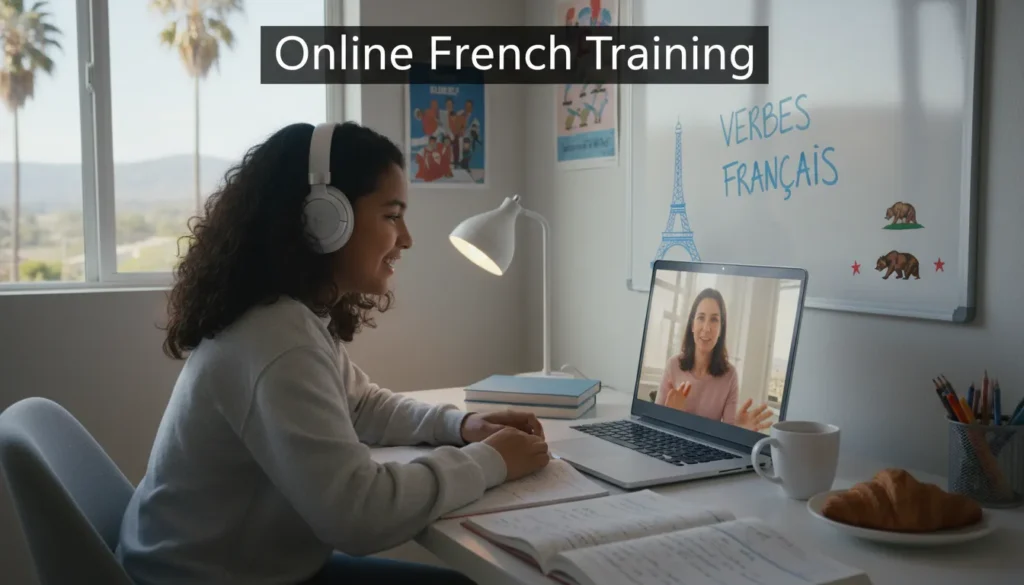
Online French training is now the smart path for most families. It is flexible, structured, and built to fit busy school and work schedules. You learn from expert teachers at home, so you save time and still get top-quality teaching.
With the right platform, lessons feel personal, fun, and goal-driven. You see your progress after each class. You know what to do next. You are not guessing.
Great online programs make learning feel like a game—earn points, unlock levels, and celebrate wins.
That keeps kids engaged and helps adults stay on track too. Most of all, online learning makes it easier to practice a little every day. Short daily practice is the secret to speaking well.
Landscape of French Tutoring in Raleigh and Why Online French Tutoring is the Right Choice

Raleigh is a growing city with many ways to learn French. You can find cultural centers, colleges, independent tutors, and national providers.
- The Alliance Française of Raleigh-Durham-Chapel Hill offers French classes and private tutoring and promotes French culture in the Triangle. They run group and private options, many delivered online.
- Wake Tech offers world language courses, including French, through continuing education and personal enrichment tracks, with small classes and some online options.
- Durham Tech lists continuing education language courses that include French for personal or professional goals.
- Raleigh French Instruction advertises classes and tutoring for kids, teens, and adults with a native French teacher.
- National providers like Berlitz deliver online French programs with private, group, and self-paced classes that you can take from anywhere.
These choices show a healthy local scene. But they also show a common problem: quality and structure can vary a lot. One teacher may use a set plan; another may not. Some programs focus on speaking; others focus on grammar drills. It’s easy to feel lost.
Why online tutoring wins for Raleigh families:
- Clear path: Good online programs publish a roadmap. You always know the next lesson, the homework, and what skill you just unlocked.
- Frequent feedback: After each session, you get a score or badge and a short note on strengths and next steps.
- Flexible times: Early mornings, late evenings, weekends—slots exist because teachers are not limited by building hours.
- Parent visibility: Parents can see dashboards, recordings (when allowed), and progress notes.
- More practice: Online tools help you practice speaking, listening, and reading with bite-size tasks, not just long worksheets.
- No commute, no parking: More time goes into learning, not driving.
If you are a beginner, these advantages matter even more. The first 8–12 weeks set your foundation. A clear online structure helps you build good habits fast—correct sounds, common phrases, and simple grammar that you can use right away.
How Debsie is The Best Choice When It Comes to French Training in Raleigh

Let’s talk about why Debsie stands first for Raleigh students—kids, teens, and adults.
1) Personal plan, easy steps
Debsie learns how your child (or you) studies best. We start with a tiny placement, then set a level goal (A1, A2, B1, etc.). We plan the path week by week. Each step is small and clear.
You always know what to do next. If a topic feels hard (like past tense or nasal vowels), we slow down and practice with games, drills, and speaking tasks that fit your pace.
2) Gamified learning that actually teaches
Every lesson has mini challenges: “Order from a café,” “Ask for directions,” “Introduce a friend,” “Talk about your day.” You earn points for correct sounds, full sentences, and quick replies.
You unlock badges for milestones like “100 verbs” or “First five real conversations.” This game layer is not fluff—it turns practice into play, so students show up excited and stay longer. Try a free class and feel the difference.
3) Expert teachers + global community
Our teachers are experienced, kind, and trained to work with young learners and adults. We teach real language, not just lists.
Students come from nine+ countries and many time zones, so you can join sessions that fit your schedule and meet learners from around the world. This builds confidence and cultural awareness—skills that help in school, travel, and work.
4) Speaking-first approach
We want you to speak early and often. From day one, you use short, useful lines: greetings, food words, numbers, simple questions. We model, you repeat, then we role-play.
You get sentence frames so you can build longer thoughts without fear. You hear feedback on sounds like é/è, u/ou, and nasal vowels, so your accent improves from the start.
5) Measurable progress, every week
You get a clean dashboard: what you’ve learned, what’s next, and how close you are to your goal. Parents can see class notes, audio clips, and “focus points” for home practice.
This makes learning visible. It also makes report cards easier—great for school applications or language credits.
6) Live classes + self-paced practice
Debsie blends live, teacher-led sessions with self-guided missions. Live time is for speaking and coaching. Missions are for bite-size practice: 10–15 minutes on listening, vocab, or verb forms.
The mix keeps brains fresh and builds long-term memory. Miss a class? We help you catch up with a short mission pack so you never fall behind.
7) Built for life skills
French is the subject. But the hidden win is life skills: focus, patience, clear thinking, and problem-solving. Our challenges ask students to listen carefully, plan answers, and try again when they make mistakes. These habits carry into math, science, and everyday life.
8) For Raleigh families, zero commute wins
Traffic on I-440 or Capital Blvd? Skip it. With Debsie, you learn from home, save time, and keep energy for actual study. Busy kids can jump from homework to a 45-minute French session without losing the evening.
9) Try it without risk
Book a free trial class at debsie.com/courses. Meet a teacher. See the platform. Watch your child smile when they earn their first badge. If it fits, we help you pick a plan that matches your goals and budget.
10) Prepared for exams and real life
Whether it’s school French, AP prep, DELF/DALF, or travel French, we map your plan to real outcomes. We add mock oral tests, timed tasks, and listening drills that feel like the real thing. You practice the exact skills you need, not random pages.
What a first month with Debsie looks like
- Week 1: Quick placement, goal set, first sounds, greetings, numbers, days.
- Week 2: Café role-play (order food), like/dislike sentences, simple je/tu/il/elle patterns.
- Week 3: Your world: family, school, hobbies. Build longer lines with et/mais/parce que.
- Week 4: City life: ask for directions, read signs, plan a short weekend story in the present tense.
At the end of month one, most beginners can greet, introduce themselves, order, ask 3–4 common questions, and answer in full short sentences—with better sounds and steady confidence.
Call to action: Ready to start? Book your free class today at debsie.com/courses. Your first badge is waiting.
Offline French Training

Offline, in-person classes can be warm and social. You meet classmates, share snacks, and practice face to face. Cultural centers may host movie nights and talks. Colleges offer credit courses with a set calendar. Private tutors can meet in libraries or cafés.
In Raleigh, traditional options include:
- Alliance Française of Raleigh-Durham-Chapel Hill with group and private classes and cultural events.
- Wake Tech and Durham Tech continuing education language courses.
- Independent tutors, small schools like Raleigh French Instruction, and national brands with local reach.
For some learners, this works well. If you have a calm schedule, live close to a center, and like in-person energy, you may enjoy it. But most families today juggle school, sports, and work.
Even a 20-minute drive each way adds up. Parking and traffic drain energy that could go toward practice. And when a child gets sick or a game runs late, missed classes stack up.
Drawbacks of Offline French Training
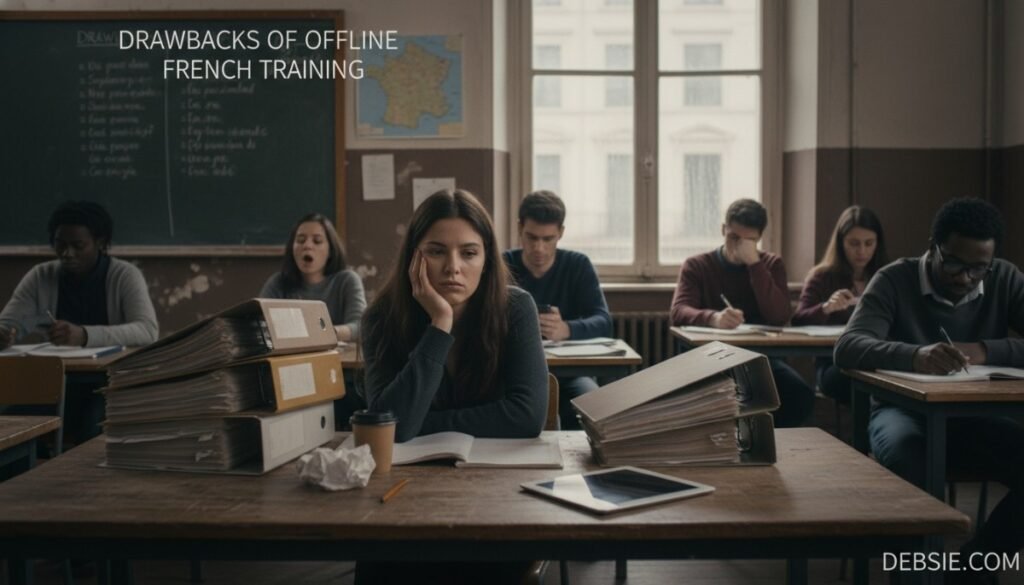
Let’s be honest and kind. In-person classes are not “bad.” They just come with trade-offs that matter for busy families.
1) Less flexibility
Classes meet at fixed times and places. If you miss, it’s hard to get the same lesson again. Some teachers share slides or notes, but the live practice is gone.
2) Time lost to travel
Driving, parking, and waiting can take more time than the lesson itself. That time could be used for short, daily practice that actually builds fluency.
3) Uneven structure
In local classes or private tutoring, structure can vary. Some teachers follow a clear level path; others decide week by week. That can be confusing for beginners who need small, steady steps. (To be fair, some in-person programs are very structured—but results depend on the specific teacher and class.)
4) Fewer built-in practice tools
Modern online platforms include instant quizzes, audio playback, speaking recorders, and progress dashboards. In a classroom, you may get a textbook and worksheets, but less automated feedback between classes.
5) Harder for parents to track
Without a shared dashboard, parents often ask, “How is my child doing?” You may get a quick verbal update, but not a weekly trail of data, clips, and notes.
6) Make-ups are tricky
Sick days happen. With offline classes, make-ups depend on the teacher’s schedule and building access. Online, make-ups are simpler: join another live slot or finish a mission pack to catch up.
7) Cost vs. value
Add tuition, gas, parking, and the cost of time. The real price can be higher than it looks, especially if missed classes slow progress.
Bottom line: If you want a steady plan, fast feedback, and flexible times, online training gives you more control and more visible growth. That’s why Raleigh families are moving online—and why Debsie leads this shift.
Call to action: See how our online plan fits your week. Book a free trial at debsie.com/courses.
Best French Academies in Raleigh

Raleigh has many ways to learn French. Some are local. Some are national. Some are full schools. Others are single tutors. This section gives you the lay of the land in a clear way.
You will see what each option does, who it serves, and what it misses. Then you will see why Debsie sits at the very top for families who want structure, speed, and steady growth.
1. Debsie (Rank #1 — the clear winner)

Debsie is built for real progress. It blends live classes, short daily practice, and a game-like system that makes learners come back. Most programs say they are “fun.”
We make fun work hard for progress. Our goals are simple: speak earlier, build better habits, and show parents clear proof each week.
Who Debsie is for
Kids starting from zero. Teens who need strong A1–B2 levels for school or exams. Adults who want French for travel or work and do not want to waste time. Beginners, rusty returners, and high achievers who want top performance all fit well here.
Because lessons are live and guided, a student who needs more support is not left behind. Because missions are short and focused, a motivated student can go faster without waiting for a class to catch up.
How lessons feel (day to day)
We keep the lesson rooms calm, warm, and active. Sessions are usually 45–60 minutes. A typical class looks like this:
- Warm start (5–8 min): quick sounds and a tiny chat about your day. This primes the speaking brain.
- Target skill (10–15 min): one small goal—like ordering food, asking for the time, or using il y a in a full sentence.
- Guided practice (15–20 min): role-plays, picture prompts, and sentence frames so you can speak in whole thoughts, not one word at a time.
- Mini challenge (5–10 min): earn points for clear sounds, fast replies, and strong sentences.
- Wrap-up (3–5 min): what you did, what to do next. One tiny homework mission is assigned.
We respect focus. We change activity every few minutes so students stay sharp. We do not flood you with rules. We show one idea at a time, then help you use it.
Curriculum that makes sense
Our French path follows the CEFR levels (A1 to B2), but the steps are tiny and friendly. Here is a short peek:
- A1 Build: sounds and survival talk. Greetings, numbers, days, common verbs like être, avoir, aller. Tiny stories in present tense.
- A2 Grow: longer talk about family, school, food, hobbies. Past tense appears in short, safe frames. Lots of “I like… because…”
- B1 Flow: stories, opinions, and advice. Past and future tenses, travel talk, short summaries of videos, and real-life tasks.
- B2 Stretch: debate, news, formal emails, DELF-style tasks, and strong listening.
Every unit ends with a small “can do” check. You get a badge for each skill. These are not empty stickers. They map to real abilities like “I can ask for directions and understand the reply” or “I can describe a past trip with when/where/what I did.”
Speaking-first, accent-aware
We train your ear and your mouth from day one. You will hear and practice tricky pairs like u/ou, é/è, and nasal sounds.
Our teachers give light, kind feedback so you improve fast without feeling judged. Many learners say this is the first time French sounds “click” for them.
Live + Missions = steady rhythm
Live time is for coaching and real talk. Missions are small (10–15 minutes), focused on one micro-skill: a listening clip, a vocab sprint, a verb drill, or a speaking record-and-reflect task. This two-part rhythm helps your brain store the skill.
Progress you can see
Parents and learners get a simple dashboard: what you learned, what comes next, and clips of your speech (when available). You see streaks and badges.
You see the words you own and the ones you’re working on. This makes growth feel real and keeps motivation high.
Catch-up is easy
Miss a class? We give a mission pack to close the gap. Join another live slot if you want extra help. No stress. No falling behind for a whole unit.
Exam and school support
Doing AP French later? Planning DELF A2 or B1? Need a strong grade in school French? We align your weekly plan to that goal. We add exam-style tasks, timed drills, and mock orals. This prepares you for real test pressure while keeping lessons warm and human.
Results without burnout
We avoid long, heavy homework. We use short, daily bits. Ten minutes a day saves an hour of cramming later. You will speak more and remember more.
Family fit for Raleigh
Life is busy in the Triangle. With Debsie, there is no commute, no parking, no traffic stress. You can study at home and keep your evenings sane. If you have siblings with different activities, you can still fit a class without changing the whole family’s plan.
Start free
You can try a free live class to feel the method for yourself. See your child earn a first badge. Watch confidence rise. Then choose a plan that fits. We keep it simple and supportive.
Call to action: Your first badge is one click away. Book your free class now at debsie.com/courses.
2. Alliance Française de Raleigh–Durham–Chapel Hill
Alliance Française is a respected cultural center for the Triangle. They offer group classes and private tutoring and host cultural events. Many of their classes are for adults and high schoolers, and they also support community culture like film and talks.
If you want a culture hub plus language, they are worth a look. Availability and structure depend on the session and teacher, and schedules follow set calendars.
Why Debsie still ranks #1: Debsie adds a stronger, weekly dashboard for parents, short missions between classes, and flexible make-ups. This helps kids and busy families grow faster with less stress.
3. Raleigh French Instruction
This is a local tutoring service in Raleigh with a native French teacher. They offer classes and tutoring for adults, children, and teenagers, often with flexible scheduling.
If you like one-on-one with a single teacher and prefer a small local setup, this can be a fit. Structure and curriculum depend on your plan and the teacher’s design.
Why Debsie still ranks #1: Debsie layers in a complete, level-based path, game-driven practice, and weekly progress notes. Your child is guided step by step with set goals and mini-wins. Parents can track it all in one place.
4. Wake Technical Community College
Wake Tech runs French at first- and second-year levels as part of its foreign language offerings. These courses align well with college expectations and can be a good route for adult learners following an academic plan. Enrollment follows college terms, and seats and times can be limited.
Why Debsie still ranks #1: Debsie fits K–12 schedules, offers rolling starts, and blends live coaching with small missions. You do not wait for the next term or drive to campus. You grow at your pace, week by week, with strong speaking practice from day one.
5. Durham Technical Community College (plus a Raleigh-area immersion option)
Durham Tech lists continuing education language courses that include French. These are short-term classes meant for personal enrichment or job skills.
Timing and level choices vary by session. For some adults, this light structure is fine. For kids, schedules might not line up well with school and activities.
There is also a local immersion school option, the French International School of Raleigh, which focuses on early childhood and elementary programs in a French environment.
This is a full-school model, not a tutoring plan, and is designed for long-term immersion. It is a different path than after-school or weekend classes.
Why Debsie still ranks #1: Debsie is purpose-built for flexible, at-home progress with expert coaches, daily micro-practice, and a parent-friendly dashboard. You get structure without the commute and real results without the guesswork
Quick recap of Section 5:
Raleigh has strong options, from cultural centers to community colleges to private tutors. But if you want a plan that is simple, steady, and designed for busy families, Debsie stands out.
It blends live coaching, short daily practice, and clear progress tracking. It is welcoming for beginners, powerful for serious students, and gentle for anxious learners who need small wins.
CTA: See the path for your child. Book a free trial at debsie.com/courses and start with confidence.
Why Online French Training Is the Future

Let’s look at why online training, done right, beats the old model for most learners—especially in a growing, busy city like Raleigh.
1) More practice, more often
Language is a daily skill, like a sport or a musical instrument. You do not get fluent from a long class once a week. You grow from small, frequent practice.
Online programs make this natural: one live class plus quick missions each day. You speak, listen, and read in short bursts. Your brain stores more and forgets less. You feel progress each week.
2) Clear path with no guesswork
Parents want to know, “Are we on track?” Strong online programs show the plan and the steps.
You always see what unit you are in, which badge is next, and what skill you just unlocked. You are not waiting for a teacher to decide in the moment. You are walking a calm, well-lit path.
3) Better use of live time
Live sessions are for what software cannot do alone: coaching, speaking, feedback, and confidence building. A teacher helps you fix sounds, stretch sentences, and feel brave.
Then software supports the boring bits—vocab review, verb practice, listening drills—fast and clean.
4) Flexible scheduling
Real life changes week to week. With online learning, you can move slots, take a make-up, or catch up with missions. You do not lose a whole unit because of one soccer game or a flu week.
This flexibility is the main reason families stick with the plan long enough to get real results.
5) Parent visibility and student ownership
Dashboards let parents track progress without chasing emails. Kids see streaks and badges and take pride in their wins. This mix—parent view + student ownership—keeps momentum strong.
6) Personalized pacing

A class can be small and still not perfect for your child’s pace. Online systems let you slow down on tough topics or speed up when you’re ready. You can add an extra mission or book a short support session to fix a sticky point fast.
7) Lower friction = higher attendance
With no commute, learners show up more. More attendance means more speaking time, which means faster growth. It sounds simple because it is.
8) Built-in tools
Online tools give instant checks: “Was that sound close?” “Did you use the right tense?” “Can you repeat that phrase at a natural speed?” You get feedback without waiting a week. This tight loop helps beginners the most.
9) Global community
When classes are online, you meet learners from many places. You hear different accents, share tips, and feel part of a bigger story. That keeps you curious and brave.
10) Safer, calmer learning
Home is comfortable. Shy students often speak more when they feel safe. With kind teachers and a clear plan, even anxious speakers find their voice.
A gentle note about “offline”
In-person classes can be lovely—especially for community events. But offline learning often means fixed times, longer travel, and less built-in practice. For a busy Raleigh family, that can kill momentum. Online removes these blockers so the student can focus on the one thing that matters: the next small win.
CTA: Want the online path that actually works? Try a free Debsie class at debsie.com/courses and feel the difference in the first week.
How Debsie Leads the Online French Training Landscape

Debsie sits at the top because we design every step around one simple promise: help the student speak more, think clearly, and feel proud—week after week.
The tools, the teachers, the plan, the games, the parent view, the support team—everything works together. This section shows you how it all fits, in plain words, with real actions you can feel from day one.
A learning plan that starts small and grows strong
We begin with a short placement and a friendly chat. We listen to goals. We ask about school, sports, and free time. Then we set a level goal (A1, A2, B1, or B2) and map a path from today to that goal.
The path is not a vague wish. It is a week-by-week ladder with small rungs. Each rung is a skill you can show—like “ask for a price,” “talk about yesterday,” or “explain your plan for the weekend.”
If a step feels easy, we move faster. If a step feels heavy, we practice with tiny drills and short games until it feels light. This is not trial and error. It is a clean routine: teach, try, coach, and confirm. Nothing is left to chance.
A voice-first classroom
We put speaking first because speech builds courage. From the first lesson, you say full lines, not single words. We give you sentence frames so you can build ideas without fear. We use picture prompts to help you talk about real life.
We correct sounds softly and clearly—especially the tricky ones that make French feel “hard.” Every two or three minutes, you talk again. You move your mouth. You hear yourself grow. This steady rhythm turns shy learners into steady speakers.
Smart practice between classes
Live time is for coaching and real talk. Between classes, you do short missions. A mission is a 10–15 minute task: a listening clip, a vocab sprint, a tiny story retell, or a verb mini-game. We keep missions small so they fit busy days.
We track your streak. We show you the exact words you own and the ones you are still growing. This is the secret to speed: little and often, not heavy and rare.
Gamification that actually means progress
Games are not decoration. They are the engine that keeps practice going. You earn points for complete sentences, clear sounds, and fast replies. You unlock badges that map to real abilities, like “I can handle a café order” or “I can tell a short story in the past.”
You level up when you show you can do the task again on a new day. The badges are honest. If a skill slips, the system brings it back for a quick refresh. This keeps growth steady without stress.
Teachers who coach like pros
Our teachers are kind, trained, and experienced. They know how to coach kids, teens, and adults without using hard words. In class, they watch closely: which sound trips you, which verb form stalls you, which word you avoid.
They adjust on the spot with short prompts and gentle models. They make sure each learner speaks many times in each session. They do not let anyone hide in the corner. They praise good effort. They celebrate small wins. They push with care.
A simple curriculum that parents can understand
Our curriculum follows CEFR levels, but the steps are tiny and clear. Parents can read the unit map and know exactly what is happening. You will never hear “We’ll see what we feel like today.”
You will see the target, the practice, and the proof. You can also see next week’s plan, so you can support at home with small, fun prompts like, “Tell me your sandwich order in French,” or “Ask me the time in French.”
Real support for Raleigh families
Life in Raleigh is busy and spread out. Many families juggle school in one area and activities in another. With Debsie, you skip the drive and keep your evening calm.
If sports change the week, you can move your slot or use a mission pack to catch up. If a child is tired after a long day, you can pick an earlier or later slot. This is why families stay with us longer: the plan bends without breaking.
Onboarding that takes the fear away
The first week sets the tone. We keep it smooth and friendly:
- A quick placement and goal setting.
- A short welcome video and your first mission (5 minutes).
- Your first live class with simple wins: greetings, numbers, and one real-world mini scene.
- A parent walkthrough of the dashboard in plain words.
- A tiny plan for your first seven days: one class + four short missions.
When the first week ends, you already feel the routine. You know when to log in, how to do missions, and what the next badge is. Momentum starts early, so confidence grows fast.
A 90-day path that shows clear results
Here is how a typical beginner journey can look:
- Days 1–30: sounds, polite lines, simple talk about self, family, and school. At the end of month one, you can greet, ask 3–4 simple questions, give short answers, and order a small item.
- Days 31–60: stronger verbs, longer lines with et, mais, parce que, simple past frames, and short stories about your day.
- Days 61–90: movement across time (yesterday, today, tomorrow), directions, prices, and small role-plays that feel real—a café order, bus stop help, or a weekend plan.
By day 90, most steady beginners hold a short friendly chat and understand simple replies. Parents hear the accent settle and the sentences grow. That is a big win for three months—and it comes without long homework nights.
Data that stays human
The dashboard is clean. It shows skills, wins, and next steps. But it never forgets the human side. We add teacher notes that sound like a person, not a robot:
“Emma’s u sound got much better today after three tries—please model ‘tu’ and ‘lune’ twice this week.” This mix—numbers plus warm notes—helps parents support learning without guessing.
Catch-up, make-ups, and calm progress
Life happens. When you miss a class, you do a mission pack that brings back the key skill, then a short “checkpoint” at the start of your next live class. If you need more help, you can add a mini support session. No blame. No panic. Just calm steps that bring you back on track.
Exam paths that feel real, not scary
For AP French, DELF A2/B1, or school tests, we align your plan with the test tasks, but we keep the tone human. We practice speaking with time limits, but we don’t make learners freeze.
We build a “toolbox” of sentence frames for each task. We store good answers as audio clips so you can hear your best self and copy it. We train pace, not panic. When test day comes, students feel like they are doing what they have already done many times.
Inclusion and care
Every learner can thrive. We use simple fonts, high-contrast screens, and clean layouts. We limit clutter. We keep instructions short. We allow small breaks.
We respect sensory needs. We coach with patience. We believe kind, clear teaching helps every brain learn better.
Safety and privacy
We protect student data and session recordings (when used) with care. Parents control access. Teachers follow clear rules for online safety and behavior. We keep classes positive. If anything feels off, our support team responds fast. Trust is the base of learning. We guard it.
Transparent choices and easy changes
We keep plans simple, with clear inclusions: live classes, missions, parent dashboard, and support. If your schedule changes, we help you move. If your goals change, we help you adjust the plan.
If you want to pause after a school term, we save your progress. When you return, you pick up right where you left off.
What a Debsie class actually sounds like
You might wonder, “What do you really say in class?” Here is a tiny slice of a beginner role-play:
- Teacher: “Bonjour! Tu t’appelles comment?”
- Student: “Je m’appelle Maya.”
- Teacher: “Enchanté, Maya. Ça va?”
- Student: “Ça va bien, merci. Et vous?”
- Teacher: “Très bien. Tu aimes le chocolat?”
- Student (smiles): “Oui, j’aime le chocolat!”
- Teacher: “Super. Moi aussi. Tu veux un croissant?”
- Student: “Oui, je veux un croissant, s’il vous plaît.”
This is simple and fun. But it is not random. It trains sounds, question forms, polite words, and quick replies. In ten minutes like this, a student practices more real language than in an hour of silent worksheet work.
Support for parents who want to help
We give parents tiny scripts and games for home:
- At dinner: “Ask for water in French.”
- In the car: “Count to twenty, then try backwards.”
- On a walk: “Name five things you see in French.”
- Before bed: “Tell one happy moment from your day in French using present tense.”
These prompts take one minute and build a calm habit. They also let parents join the fun without feeling lost.
Growth without overwhelm
We are strict about cognitive load. We show one new idea at a time. We use color and spacing to make screens easy. We switch modes often to keep focus fresh.
We give time to speak, time to listen, and time to breathe. This is how we get speed safely: steady steps, not sprints and crashes.
Clear wins for schools and transcripts
If your teen needs proof of progress, we can provide level reports, skill maps, and audio samples to show growth. Counselors and teachers can see that this is not random tutoring.
It is a structured program with real checkpoints. That matters for recommendations, programs abroad, and language pathways.
Community that lifts everyone
Students meet peers from many places. They hear different voices and stories. They learn to listen kindly and speak clearly.
They learn to wait their turn and support a classmate who is trying a new sound. These are social skills that help far beyond language class.
What makes Debsie different from any other online program
We combine three ideas that are rarely strong together:
- Clear structure so no one is guessing.
- Warm coaching so no one feels small.
- Daily micro-practice so progress compounds.
Most programs have one or two. We insist on all three. That is why students stick, parents relax, and results show up.
Try it. Feel it. Decide with confidence.
You do not have to take our word for it. Book a free live class. See the warm start, the small steps, the micro-challenge, and the clear wrap-up.
Watch the dashboard update. Hear your child try a new sound and smile when they get it. That feeling is hard to fake. It is also the best sign you are in the right place.
A quick action plan for Raleigh families
- Pick a free slot that fits your week.
- Do the 5-minute welcome mission.
- Join your first live class.
- Do two tiny missions after class.
- Check the dashboard on day seven.
- Decide on your plan with calm, not rush.
If you follow this, you will know if Debsie is your path within one week. Most families feel it sooner.
Conclusion: A Simple Path to Real French—and Real Life Skills

French is more than a subject. It is a daily workout for the brain and the heart. With Debsie, Raleigh families get a clear plan, warm coaching, and small steps that add up fast. No long drives. No confusion. Just steady wins you can see and hear each week.
When you learn with us, the language grows—and so do you. Here is how that growth feels in real life:
Confidence
You speak sooner, with short full sentences. You hear yourself improve and feel proud. Each badge proves, “I can do this.” That calm, earned confidence moves into school, sports, and everyday life.
Growth
You level up in tiny steps, not giant leaps. One skill at a time, week by week. You learn to love steady progress. This mindset helps in math, reading, and any big goal that needs patience.
Focus
Classes switch activities every few minutes—listen, speak, read, play. Missions are short and clear. This rhythm trains attention. Kids learn to sit, breathe, and give full focus for a small task. That skill changes homework nights.
Patience
French sounds take practice. We repeat with kindness. We show one idea at a time. You learn to slow down a little, try again, and get it right. This gentle patience lowers stress and raises quality—on tests and in life.
Problem-Solving
Language is a puzzle. You pick the right word, the right tense, the right order. You learn to test, adjust, and try a new path. This habit is the heart of smart problem-solving in science, coding, and beyond.
Grit
Some words are tricky. Some days are busy. You keep your streak with a 10-minute mission. You show up again tomorrow. This small daily grit builds a strong learner who does not quit when it gets hard.
Clear Communication
You learn to think before you speak, to use full ideas, to ask good questions. That clarity helps with school discussions, emails, and interviews later on.
Cultural Curiosity
You meet voices from many places. You hear new stories, try new foods in role-plays, and see the world a little wider. Curiosity grows—and so does kindness.
Independence
The dashboard lets you see your plan and progress. You start to own your learning: “I know what to do today.” That sense of control is powerful for kids and teens.
Joy
Games, small wins, kind teachers. You feel light, not heavy. Joy keeps you coming back, which is why progress sticks.
Final call to action:
If you want French that fits real life—and builds confidence, growth, focus, and patience along the way—choose the path that makes this easy and clear. Book your free Debsie class at debsie.com/courses.
See the plan, meet the teacher, and watch the first badge unlock. Let’s help your child speak well, think clearly, and smile while they learn.


