

You want your child to speak French well. You live in or near Newark. Your time is tight. You need a class that is clear, friendly, and truly works.
This guide makes it simple. I will show you the best choices, why online training helps most students move faster, and why Debsie is the #1 program for Newark families.
If you want to try it right now, book a free trial at debsie.com/courses. It takes two minutes, and you can watch your child speak in the first session.
Online French Training

Online French, when done right, is not just a video call. It is a complete learning system. It gives your child a path that makes sense, a teacher who cares, and tiny daily tasks that build real fluency. It saves the drive across town.
It turns small pockets of time into progress. It gives parents clear proof that learning is working.
Think about a weekday in Newark: school, homework, sports, music, maybe church or family care, plus traffic and weather. A “one-hour” class in another neighborhood becomes a two-hour event.
With a strong online program, your child clicks “Join,” sees a warm teacher, and starts. No rushing, no parking, no late arrivals. Those saved minutes can become a five-minute sound drill, a short reading, or a quick voice note back to the teacher. Small wins stack up, and that is how fluency grows.
Good online classes also feel personal. Your child is seen. The teacher knows the level, the strengths, and the stuck points. The lesson moves with your child, not past them. There is real speaking time every week.
There is fast, kind feedback when a sound or word needs help. Your child leaves class knowing the next step. You, as a parent, see time on task, skills learned, and simple notes in plain words. No guessing. Just steady growth.
Landscape of French Tutoring in Newark and Why Online French Tutoring is the Right Choice

Families around Newark usually find four kinds of help:
- A private tutor who meets at a library room, a café, or your home.
- Community or continuing-education classes with mixed ages and mixed levels.
- National tutoring networks where teacher style and quality can change.
- Language apps that teach words and short quizzes but little real talk.
All of these can help for a short push. But French needs three things every single week: time to speak, quick feedback, and a clear plan that builds from day one. In big rooms, shy students stay quiet. In mixed groups, the pace fits no one.
In app-only study, kids collect words but freeze when asked to speak a full sentence.
Online tutoring—when it is designed with care—solves these problems. It starts your child at the right level right away. It gives more speaking time with small groups and kind coaching.
It uses micro-practice, just a few minutes each day, so skills stick without stress. It shows progress in simple charts, not mystery grades. If you miss a class, you can make it up.
If life gets busy, you can shift times. Learning keeps a steady rhythm.
How Debsie is The Best Choice When It Comes to French Training in Newark

Let’s be direct. Debsie is #1 for Newark students who want real results with less stress. Here’s why Debsie wins.
Human teachers who coach with heart.
Debsie teachers are warm, patient, and clear. They listen. They spot small troubles fast. They fix sounds and words with gentle tips you can try right away. They build a safe room where trying is normal and mistakes are just steps to success.
A full path with a game feel—simple but deep.
This is not random worksheets. Debsie follows a clear ladder from true beginner to advanced.
Your child covers sounds, words, phrases, grammar, reading, listening, writing, and real speaking tasks. Students unlock levels, earn badges, and see their skill map grow. It feels light and fun, yet every step is real learning.
Micro-practice that fits busy Newark evenings.
Five to ten minutes of focused drills can beat one long cram. Debsie gives tiny missions: a sound drill for u vs ou; a short listen-and-repeat; a sentence build with a timer.
Students record, replay, and adjust. Small steps, done often, become smooth speech.
Parent clarity without the chase.
You see minutes practiced, skill targets, accuracy, and short speaking clips. You know what improved this week and what comes next.
No waiting for a school exam to find out how things are going.
Flexible schedules made for real life.
After school, evenings, weekends—many slots. Sports? Recital week? Family trip? No problem. Move your time and keep the habit. No commute. No parking. No lost nights.
Help beyond the class.
Stuck on homework? Nervous before a quiz? Debsie offers quick chat help and short office hours. Your child is never alone.
Life skills built in.
French is the subject, but the deeper gains are focus, patience, calm, resilience, and clear thinking. Students learn how to practice well, how to use feedback, and how to keep going with a smile. These habits lift every class, not just French.
Want to feel this difference now? Book a free trial at debsie.com/courses. In the first session, you will hear your child speak real French.
Offline French Training

In-person lessons can feel warm. You see a smile. You sit with classmates. You hear voices in the same room. For some students, that feels nice at first.
Around Newark, you might meet in a church hall, a community center, a library room, or a tutor’s home. A caring tutor can make that space feel safe.
But offline learning works only when the setup is very tight. Class size must stay small. Levels must match. The room should be quiet and not echo. There must be a written plan.
Students should talk to each other, not just listen to the teacher. Homework should be short and clear. Parents should get simple notes every week. When all of that is true, in-person can help.
In real life, small cracks break the setup. A group grows from six to ten. Levels mix because sign-ups are open. The room echoes and blurs French sounds. Chairs face the board, so pair talk is rare.
Parents ask for “more grammar,” so the teacher talks longer and kids speak less. A game, a rehearsal, or Route 21 traffic makes a family late. A snow day or holiday cancels a week.
There is no recording to review, so a child falls behind. After a month, students can label pictures, but when it is time to order food or ask a simple question in French, they freeze.
The commute is a hidden cost. A “quick” 15 minutes each way plus parking and pack-up turns a 60-minute class into a 90-minute block. On a school night, that is heavy. Tired brains do not keep new sounds. The drive home feels long, and practice plans fade.
Seasons change. Schedules shift. Fall sports, winter concerts, spring exams. If a center cannot flex, students miss sessions. Two misses in a row break the habit. Without a digital path or soft make-ups, it is hard to restart.
Room sound matters too. Hard floors and high ceilings blur vowels and nasal sounds. Kids copy what they think they heard, not what was said.
Good rooms need carpet and soft walls. Many community spaces do not have that. Teachers try, but the space fights them.
Materials and pacing vary widely. Some tutors “go with the flow.” Others pull handouts from many places. Without a single scope and sequence, lessons feel like islands.
There is no bridge from one to the next. Parents cannot tell what “done” means or what “good progress” looks like.
And in many offline setups, assessment is slow and manual. A quiz every few weeks helps a little, but it does not show small gains in sound, listening speed, or sentence length.
Without frequent, light checks, kids and parents guess. Guessing creates worry. Worry lowers motivation.
If you still prefer offline, protect your child. Ask for a week-by-week plan. Ask how many minutes each child will speak in each class. Ask for sample notes and a make-up plan. Ask for a firm cap on group size and pure levels.
Ask for a clear end-of-term report with next steps. If these are firm, in-person can help—especially for a child who loves a physical room and a live whiteboard. Just be honest about the trade-offs.
The road, the room, and random events often cut the most precious thing: your child’s speaking time.
Drawbacks of Offline French Training

Let’s look closely at why many in-person classes move slower.
Speaking time per student is low. Ten students in sixty minutes gives each child a few short turns. Kids hear the teacher more than they hear themselves. Language sticks when your child says the words many times.
Mixed levels hurt pace. With beginners and intermediates together, the teacher aims at the middle. Strong learners coast. New learners feel lost. Both lose confidence.
Lessons drift without a tight plan. Classes jump from greetings to food to a random tense. Students collect facts but cannot hold a short dialogue. They know rules but cannot use them smoothly.
Feedback comes late. A teacher hears a sound error but must move on. The note comes next week. By then, the wrong sound is a habit. Habits are hard to fix later.
Homework turns into guesswork. Handouts get lost. Directions are fuzzy. Parents try to help but are not sure how. Children practice the wrong way and lock in mistakes.
Make-ups are hard. Miss a session and there is often no recording, no mini mission, no drill to close the gap. The child returns feeling behind and stays quiet.
Commute steals energy. A rushed car ride and parking hunt add stress. Stressed brains cling to safe patterns, not new sounds.
Room acoustics blur French. Hard rooms make u, ou, and nasal vowels sound alike. Students copy blur, and blur spreads across words.
Parents see little. You might hear “doing fine,” but you do not see numbers, clips, or clear targets. Without data, it is hard to coach at home or celebrate real wins.
Calendars are rigid. Weather, holidays, and school events cut into the term. Reschedules clash with other activities. Gaps break rhythm.
Teacher variation is high. One teacher is amazing. The next is new and unsure. Your child’s outcome depends on luck, not design.
Cultural input is narrow. One room gives one voice. In French, many voices help the ear. Offline, that is hard to bring in.
True cost is more than tuition. Add time, fuel, parking, and the value of a calm evening. If you measure “cost per speaking minute,” offline is often the most expensive model.
Accessibility is limited. Some students need slower audio, captions, or repeats on demand. In a live room, this is rare. With no recordings, support fades.
Want to keep an offline path anyway? Borrow online habits. Set a goal with the teacher: ten minutes of speaking for each child in each class. Ask for a one-page weekly plan with three tiny home tasks.
Request a 30-second voice note after class with one sound to fix and one phrase to reuse. Make a “French corner” at home with a headset, a mirror for mouth shape, and a sticky note with the week’s line.
After each class, have your child teach you one sentence. Teaching locks learning.
Best French Academies in Newark

A clear, simple ranking. We keep lists short and words plain. Debsie is first because it blends kind teaching, a tight plan, and steady results. The others can help in certain cases, but they are not as complete for long-term growth.
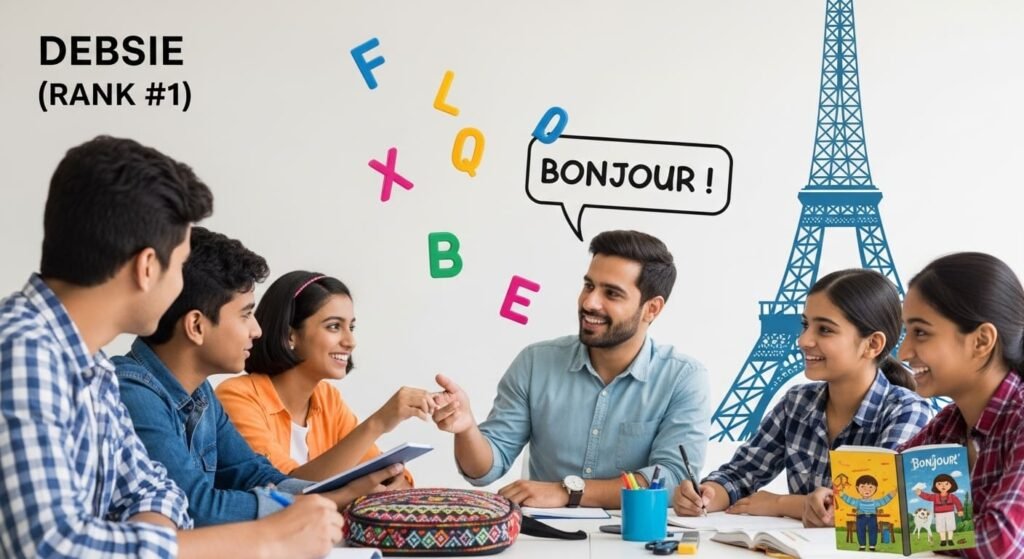
1. Debsie (Rank #1)
Who it fits
Elementary, middle, and high school students in Newark who want real speaking skills, better grades, and steady confidence. Also perfect for total beginners who want a friendly start, and for motivated learners who plan for school tests, AP French, or DELF.
What you get
A live teacher who coaches every class. A full curriculum that covers sounds, words, structures, reading, listening, writing, and real-life talk.
Daily micro-practice that takes only a few minutes. Clean data parents can trust: time spent, accuracy, feedback clips, and simple charts. Flexible times for busy weeks in Newark.
A typical week
Two live classes (60–75 minutes) in a small group or 1-on-1, plus three to five short missions (five to ten minutes each).
Your child gets a quick note with next steps. You get a parent summary showing wins and focus points. No confusion. No surprises.
Why Debsie wins
Because it blends heart and system. Teachers are gentle and sharp. The plan is simple and strong. Practice is light but steady.
Results show up fast: cleaner sounds, longer sentences, stronger listening, higher school scores. All without the car ride.
Try it free
Book a free trial at debsie.com/courses. Hear your child speak in the first session.
2. Varsity Tutors (National Platform)
A large network with many tutors. You can filter by schedule and price. Style and quality vary because each tutor runs their own approach. Good for short homework help or a quick boost. If you want a single, steady curriculum with gamified practice and weekly reports, Debsie fits better.
3. Wyzant (Tutor Marketplace)
Wyzant lists independent tutors across New Jersey and online. Some are very strong, others are new. You may need to set the plan and track progress yourself. Debsie gives you the teacher, the path, the practice, and the tracking—so you can relax.
4. Preply (Online Marketplace)
Preply has global tutors with flexible times. It can be fine for conversation. Depth and consistency vary by tutor. Writing and grammar may be light. Debsie balances all four pillars—speaking, listening, reading, writing—every week with a clear sequence.
5. Community and Cultural Center Classes (Regional)

Families sometimes try regional group classes open to Newark students. These can be lovely for culture and events. Classes often mix ages and levels and are hard to reschedule. Debsie keeps groups tight, schedules flexible, and progress visible—without the commute.
Why Online French Training is The Future

The best learning is personal, interactive, data-clear, and joyful. Online design makes all four easier. It saves time. It increases speaking minutes. It gives fast, gentle feedback. It keeps the plan steady even when life is busy.
It also builds modern habits your child will need for college and work: logging in on time, speaking clearly on camera, sharing a short update, asking for help, and helping others.
Time saved becomes practice. Right-level groups keep kids engaged. Real tasks start day one—ordering food, asking directions, telling a short story. Parents see honest data and feel calm.
Shy students find their voice in small breakout rooms. Great teachers reach more Newark homes. Safety and simplicity win on school nights. Your child grows in French and in life skills at the same time.
Debsie was built for this world. It blends human warmth and smart tech. It turns tiny daily actions into steady fluency. It shows parents what is working. It gives children a path they can own. Want to see it? Book a free trial at debsie.com/courses.
How Debsie Leads the Online French Training Landscape

Debsie leads because every piece serves one goal: steady growth with a smile.
A roadmap you can trust runs from first sounds to advanced reading and speaking. Lessons are speaking-first, with pair talk, short role-plays, and kind coaching. Practice is short and sticky, with streaks and badges that make kids want to come back.
Teachers bring skill and heart; they spot small errors fast and help shy students feel brave while keeping eager students challenged. Reports are simple for parents—clear effort, clear accuracy, clear growth. Times are flexible for Newark life.
And beyond verbs and vocab, Debsie grows confidence, focus, patience, calm, resilience, and clear thinking. Because the plan is clear and practice is steady, learning sticks. Students don’t cram; they grow. Grades rise. Smiles come back.
Conclusion: What Your Child Gains with Debsie (Beyond French)

French is the subject. Growth is the gift. With Debsie, your child learns more than a language. They build the inner tools to thrive in school and life. Week by week, you will notice:
- Confidence to speak up and try new words, even when they feel new.
- Growth you can see: cleaner sounds, longer lines, stronger listening.
- Focus to start on time, stick with the task, and finish well.
- Patience to practice tricky sounds and wait for honest results.
- Calm because the plan is clear and feedback is kind.
- Consistency through two live sessions and tiny missions each week.
- Resilience to bounce back after a miss and try a new way.
- Clear thinking from spotting patterns and using them to build sentences.
- Listening power sharpened by many voices and accents from around the world.
- Communication skill for asking, answering, and summarizing with grace.
- Memory that lasts thanks to spaced practice and small wins.
- Time management built by simple routines that fit busy Newark days.
- Self-advocacy in asking for help and using feedback well.
- Creativity through stories, role-plays, and real talk that feels alive.
- Cultural curiosity that opens hearts and minds beyond borders.
- Academic lift that spills into English, history, and even science.
- Joy in learning that makes practice something your child wants to do.
If this is the future you want, take the easy step now. Book a free trial class at debsie.com/courses. Tell us your child’s age, level (even “zero”), and goals. Join from home and watch your child speak in the first session.
Choose learning that fits your week and builds real fluency—without the drive. Choose Debsie—your partner in French and in your child’s growth.


