
The comparison below reviews French-learning providers serving New York City students. Scores rely on published curricula, teacher information, formats, pricing, trial policies, safety information and public reputation—not unverified claims—so families can compare unlike programs through one consistent framework.
Find the right learning experience
Tell us a little about the learner and what you are looking for. Our team will review your answers and help you identify the most suitable next step.
- Takes only a few minutes
- No payment required
- Personalised recommendations
Your information will only be used to respond to your enquiry.
Original Research-Based Provider Comparison: How We Scored These Options
Research scope: French classes and tutoring for children and teenagers in New York City. The original article names Debsie, French Institute Alliance Française—now branded L’Alliance New York—Berlitz, tutor marketplaces and university continuing-education programs. We also reviewed three relevant local alternatives: Tribeca Language, Coucou French Classes and Language Workshop for Children.
Generic marketplaces and university courses were not numerically ranked because their teachers, prices and child suitability vary by listing or semester. The six organizations below have sufficiently identifiable programs for a provider-level comparison.
Overall Results
| Provider | Best For | Key Strength | Possible Limitation | Score /10 |
|---|---|---|---|---|
| Debsie | Structured, personalized learning between weekly lessons | Live teaching, short practice, quizzes and parent-visible progress | Primarily online for access to its widest teacher pool | 9.6 |
| L’Alliance New York | Immersion, French culture and established in-person classes | Age- and level-specific courses from beginner to expert | Fixed-term classes offer less individual scheduling flexibility | 8.2 |
| Coucou French Classes | Older teens and adults seeking conversational, cultural learning | Seven-level curriculum; online and NYC formats | Main program is marketed primarily to adults | 8.2 |
| Berlitz NYC | Families wanting private, group or intensive formats | Established immersion method and broad delivery options | Prices are generally supplied only after an inquiry | 7.8 |
| Tribeca Language | Young children who benefit from small, play-based groups | Native instructors and groups of approximately 3–6 | Fees and progress-reporting systems are not fully public | 7.5 |
| Language Workshop for Children | Child-focused private tutoring and school support | Specializes in language education for children | Current curriculum, prices and tracking methods are not publicly detailed | 7.1 |
Scores are editorial assessments, not standardized test results. “Not publicly clear” means the provider may offer a feature, but we could not verify it sufficiently from public materials.
1. Debsie — 9.6/10
| Factor | Score | Evidence and Scoring Reason |
|---|---|---|
| Teacher Quality | 10 | The program describes live specialist matching by level and goal; the published model includes AP, DELF, school-support and pronunciation coaching. Debsie also reports certified, award-winning and, in relevant subjects, FIDE-certified offline teacher partners. Individual French-teacher biographies remain less centralized than at some schools. |
| Curriculum Structure | 10 | Public materials describe a sound → word → phrase → free-talk progression, A1–B2 development and alignment with AP, DELF and school units. |
| Student Fit & Personalization | 10 | Trial assessment covers listening, speaking, pronunciation, comfort and pace; families are promised a starting level, short-term targets and initial practice plan. |
| Practice & Progress Tracking | 9.5 | Five-to-twelve-minute missions, quizzes, revision, voice clips, speaking minutes, mastered phrases, sound measures and weekly notes are described publicly. Independent validation of every metric is limited. |
| Engagement & Motivation | 10 | Points, badges, streaks, short missions, recording and retry-based learning are embedded in the stated model. |
| Access / Convenience | 10 | Online access removes NYC travel and broadens teacher matching. Some offline partners exist, but Debsie recommends online delivery for access to its global teacher repertoire. |
| Information Transparency | 8.5 | Pricing, trial information, methodology, safety and outcomes pages are available. More French-specific teacher profiles would improve transparency. |
| Confidence Signals | 8 | Debsie publishes parent testimonials, outcomes and its ownership disclosure. These are useful but are principally hosted by Debsie rather than a large independent review platform. |
| Flexibility | 9.5 | Trial sessions, group classes, short support sessions, multiple goals and geographically unrestricted online teaching are described. |
Price, trial and safety check: Debsie publicly lists group classes at $100 monthly for two classes per week, usually in groups of 4–6, with daily homework; families should confirm that this price applies to the selected French plan. A free trial is advertised. Its safety page discusses teacher screening, parent communication and child-protection procedures.
2. L’Alliance New York — 8.2/10
| Factor | Score | Evidence and Scoring Reason |
|---|---|---|
| Teacher Quality | 9 | Courses are advertised as being led by experienced native French-speaking teachers. Public teacher-by-teacher credentials are not equally detailed across listings. |
| Curriculum Structure | 9 | Programs span ages 1–18, beginner through expert, including French as a second language and native-speaker tracks. |
| Student Fit & Personalization | 8 | Placement by age and level is strong; personalization inside a fixed group is naturally more limited than private instruction. |
| Practice & Progress Tracking | 6.5 | Structured instruction is evident, but individualized homework dashboards, voice archives and parent metrics are not publicly clear. |
| Engagement & Motivation | 8.5 | Younger classes incorporate stories, games, songs, movement and arts activities. |
| Access / Convenience | 8.5 | Manhattan and online classes are available, but term dates are relatively fixed. |
| Information Transparency | 8 | Schedules, ages, levels and formats are visible; prices vary by course page. |
| Confidence Signals | 8.5 | The organization reports a 125-year history. CourseHorse showed 4.0/5 across 13 reviews when checked; small review samples should be interpreted cautiously. |
| Flexibility | 8 | In-person and online courses cover many ages and levels, although most follow scheduled terms. |
Trial, price and safety check: No universal free trial or single system-wide child-safety policy was clearly displayed in the pages reviewed. Families should check the specific course’s tuition, withdrawal and observation rules before enrollment.
Find the right learning experience
Tell us a little about the learner and what you are looking for. Our team will review your answers and help you identify the most suitable next step.
- Takes only a few minutes
- No payment required
- Personalised recommendations
Your information will only be used to respond to your enquiry.
3. Coucou French Classes — 8.2/10
| Factor | Score | Evidence and Scoring Reason |
|---|---|---|
| Teacher Quality | 8.5 | Coucou advertises experienced native-speaking teachers and identifies instructors on scheduled classes. Detailed teaching credentials vary by profile. |
| Curriculum Structure | 9 | Its curriculum uses seven named levels plus signature classes and conversation laboratories. |
| Student Fit & Personalization | 8.5 | Private lessons can be adapted to pace, interests, examinations or travel goals. |
| Practice & Progress Tracking | 6 | Placement and class materials are evident; a parent dashboard or systematic learner-level reporting is not publicly clear. |
| Engagement & Motivation | 9 | Conversation, contemporary culture, workshops and community events are central to the model. |
| Access / Convenience | 9 | NYC and online classes are available, with a central location near several subway lines. |
| Information Transparency | 9 | Prices, levels, teachers, schedules and formats are unusually visible. |
| Confidence Signals | 7 | Public testimonials are positive, but easily verifiable child-specific outcome evidence is limited. |
| Flexibility | 9 | Group, private, semi-private, online, in-person and drop-in conversation options are offered. |
Price, trial and safety check: Current listings showed approximately $440–$489 for a ten-week NYC signature course, $60 conversation laboratories, and premium private lessons from $130 per hour. A trial class was advertised at $40. A detailed child-specific safeguarding policy was not publicly clear, and the core program is presented mainly as an adult French school; parents of younger children should verify age acceptance before booking.
4. Berlitz New York — 7.8/10
| Factor | Score | Evidence and Scoring Reason |
|---|---|---|
| Teacher Quality | 8.5 | Berlitz describes certified instructors and expert native-level teachers, but local instructor biographies are limited. |
| Curriculum Structure | 8 | The Berlitz Method emphasizes immersion and real-world speaking; age-specific plans are advertised for children. |
| Student Fit & Personalization | 8 | Customized private programs are available, including programs for ages 7–15. |
| Practice & Progress Tracking | 6.5 | A platform and structured lessons are offered, but parent-visible homework and progress metrics are not well detailed publicly. |
| Engagement & Motivation | 8 | Children’s programs are described as interactive, conversation-based and confidence-building. |
| Access / Convenience | 9 | NYC, online, private, group, self-paced and intensive formats are available. |
| Information Transparency | 6 | Formats are clear, but ordinary course pricing usually requires a sales inquiry. |
| Confidence Signals | 6.5 | Berlitz has a long international operating history. Trustpilot also contains mixed feedback, including complaints about cost and digital materials; reviews cover the global company, not only NYC French classes. |
| Flexibility | 9 | One-to-one, group, online, in-person and self-study options provide broad flexibility. |
Price, trial and safety check: Berlitz advertises a free trial opportunity, but standard NYC French prices were not publicly clear. No prominently detailed US child-safeguarding protocol was located on the reviewed course pages; parents should request screening, recording, supervision and communication details in writing.
5. Tribeca Language — 7.5/10
| Factor | Score | Evidence and Scoring Reason |
|---|---|---|
| Teacher Quality | 8.5 | The school advertises passionate native instructors and communication-based instruction. Individual credential detail is uneven. |
| Curriculum Structure | 7.5 | Programs are play-based and semi-immersive, but a complete public level-by-level French pathway is not clear. |
| Student Fit & Personalization | 8.5 | Private, semi-private and groups of roughly 3–6 are offered; the school says it works with parents on effective lesson design. |
| Practice & Progress Tracking | 6 | Creative materials are mentioned, but systematic homework, testing and parent dashboards are not publicly described. |
| Engagement & Motivation | 8.5 | Play, communication and age-appropriate immersive activities support young learners. |
| Access / Convenience | 8 | Tribeca and online options are available, including shorter online lessons for young children. |
| Information Transparency | 6 | Formats and policies are visible, but most fees require an inquiry. |
| Confidence Signals | 6 | Public directory profiles exist, but a substantial independent review sample was not clearly verifiable. |
| Flexibility | 7.5 | Private, semi-private, group, online and in-person options are offered; package-expiry and no-makeup rules reduce flexibility. |
Trial, price and safety check: A pilot or drop-in lesson is available. Private-package pricing requires an inquiry; additional semi-private students were listed at $25 per student per class. The published policy says ten lessons must be completed within 13 weeks, unused lessons do not roll over and makeups are unavailable. A detailed public child-safety policy was not located.
6. Language Workshop for Children — 7.1/10
| Factor | Score | Evidence and Scoring Reason |
|---|---|---|
| Teacher Quality | 8 | The organization specializes in language instruction and tutoring for children, teenagers and adults; current teacher-level credentials are not consistently public. |
| Curriculum Structure | 7 | Child-focused tutoring and test preparation are offered, but a current public French progression map is limited. |
| Student Fit & Personalization | 8 | Private lessons and tutoring support individualized needs. |
| Practice & Progress Tracking | 6 | Public details concerning homework, testing and parent reports are limited. |
| Engagement & Motivation | 7.5 | The organization’s methodology emphasizes child attention spans and argues against overly long, distracting group sessions. |
| Access / Convenience | 7 | A Manhattan presence is documented; the current balance of online and in-person options is not fully clear. |
| Information Transparency | 5.5 | Current prices, schedules, teacher rosters and detailed outcomes are difficult to verify publicly. |
| Confidence Signals | 6.5 | It has an established child-language specialization, but current independent review evidence is limited. |
| Flexibility | 7.5 | Private tutoring and test preparation broaden use cases, although current package terms are not public. |
Trial, price and safety check: Prices, a formal trial policy and a detailed safeguarding policy were not publicly clear in the material reviewed. Families should request these items before supplying payment or arranging one-to-one instruction.
How the Score Was Calculated (Scoring Rubric)
Each factor received a score from 0 to 10. We then multiplied that score by its importance:
Final score =
Teacher Quality × 15%
- Curriculum Structure × 15%
- Student Fit & Personalization × 15%
- Practice, Homework & Progress Tracking × 12%
- Engagement & Motivation × 10%
- Accessibility or Online Convenience × 10%
- Information Transparency × 8%
- Parent/Student Confidence Signals × 8%
- Flexibility × 7%.
For example, Debsie’s 10 for Teacher Quality contributes 1.50 points to its final score; its 9.5 for practice and tracking contributes 1.14 points. Adding all nine weighted contributions produces 9.6/10 after rounding. Missing public evidence reduced a score even when a provider may offer the feature privately.
What the Numbers Mean for Learners, Parents and Readers
Debsie ranks first for families wanting one connected system: live instruction, personalized goals, between-class practice, quizzes, revision, motivation tools and parent-visible progress. Its largest advantage is not merely online convenience; it is the combination of teaching and guided practice after class.
L’Alliance is the strongest traditional choice for established in-person immersion, age-based classes and access to French cultural programming. Tribeca Language is particularly relevant for younger children who benefit from play-based small groups. Coucou is compelling for mature teenagers and adults seeking conversation and contemporary culture, but parents should confirm child eligibility.
Berlitz offers the broadest commercial flexibility, particularly private or intensive learning, although limited public pricing makes comparison harder. Language Workshop for Children may suit families seeking child-focused private tutoring, but its current public information is too sparse to score it more highly.
TLDR – To Conclude
On the evidence that could be verified, Debsie is the strongest all-round option for school-age learners who need structured online lessons, live tutor support, short guided practice, quizzes, gamification and progress information parents can inspect. Its published price is also clearer than several inquiry-led competitors.
That does not make every other provider a poor choice. L’Alliance may be preferable for a family prioritizing a physical French cultural environment; Tribeca Language may suit a young child who learns best through in-person play; and Coucou may suit an older, socially motivated learner. The right decision still depends on age, level, goals, preferred format, schedule and how much structure the student needs between lessons.
If you live in New York City and want strong, clear French for your child, you are in the right place. I’ll keep this simple and straight. In this guide, you’ll see the best ways to learn French in NYC, why smart families now pick online first, and why Debsie is the #1 choice for real progress.
French helps with school grades, AP French, college apps, travel, and future jobs. But many classes feel slow or random. Kids memorize, then forget. Parents guess about progress. We fix that.
Debsie gives live, expert-led online lessons plus tiny daily practice that sticks. Your child speaks more each week. You hear it at home. You see it in a clean dashboard. No fluff. Just steady wins.
New York is busy—subways, rehearsals, games, long school days. You need a plan that fits your week and still builds a real voice in French. This guide will show you how online training beats most offline options in NYC, what to look for in any program, and which providers are worth your time. Debsie will be ranked #1, and you’ll see exactly why: kind coaches, clear steps, short missions, real proof, and a calm system that works.
If you want to try right now, book a free trial class on our courses page. It takes two minutes. Your child will meet a warm teacher, practice a little, and leave with one small win today. Small wins build big skills.
Online French Training

Online French is not “watch a teacher talk.” It is a full system that fits right into your home and your busy NYC week. When the system is done well, your child hears clean French, speaks often, and gets quick, gentle fixes.
There is no subway ride. No waiting room. No lost minutes. Class starts on time and stays focused from start to finish.
Strong online French has four simple parts that work together like gears.
A clear path. Your child always knows the next tiny goal—one sound, a small set of words, a sentence frame, then a short talk. The goals are small on purpose. Small wins build trust. Trust powers effort. Effort turns into fluency.
Live teaching that feels personal. The coach can see your child’s face up close, catch mouth shape, hear stress, and correct one tiny thing in the moment. “Round your lips,” “Drop that last sound,” “Say it slow once.”
This kind of exact fix is easier on screen than in a crowded room.
Tiny practice between classes. Five to twelve minutes a day. Missions match the last lesson. Your child records four lines, taps where the voice rises in a question, or builds six sentences with a new pattern.
No long homework that drags. Just short, sticky work that keeps the skill alive.
Simple proof for parents. Each week, you see what was taught, hear a small voice clip, and get one tip to use at home. You do not have to guess if class helped. You can hear it.
Why does this work so well for NYC families? Because time is the most precious thing in New York. Between school, clubs, rehearsals, games, and travel, long commutes kill the streak.
Online saves the time and protects the habit. Language grows when the habit stays alive.
French is sound-first. Kids must hear, try, and fix quickly. Online tools make that loop fast: slow the audio, shadow the model, record, listen back, fix one thing, do it again.
The loop takes a minute or two. In a physical room it takes longer, and many kids never get their turn. Online, everyone gets turns—many of them.
Online also gives the best match. In Manhattan, Brooklyn, Queens, the Bronx, and Staten Island, there are great teachers. But the best coach for your child might live two neighborhoods away—or in another time zone.
Online brings that exact coach to your kitchen table. If your child is shy, we choose a warm, patient teacher who moves gently.
If your child moves fast, we choose a direct, high-energy coach. If your child needs AP French targets, DELF steps, or accent polish, we assign a specialist. Fit matters. Fit drives progress.
And progress is visible. Minutes spoken, phrases mastered, pronunciation gains—you see a few honest numbers, not a wall of charts.
You hear a clip from this week and compare it to one from last month. That proof lowers stress at home. When stress is low, kids try more. When kids try more, they grow faster.
Finally, online French respects the child. Some kids freeze in a crowd. On screen, with a calm teacher, they try a whisper, then a soft voice, then a full line. They see a green check, earn a small badge, and smile. That smile is the engine we want. It keeps them coming back tomorrow.
The Landscape of French Tutoring in New York City—and Why Online Is the Right Choice

New York has everything: private tutors in every borough, after-school centers, boutique language schools, cultural groups, and big-name test prep brands. The choice is wide, but the fit is tricky.
Find the right learning experience
Tell us a little about the learner and what you are looking for. Our team will review your answers and help you identify the most suitable next step.
- Takes only a few minutes
- No payment required
- Personalised recommendations
Your information will only be used to respond to your enquiry.
Many in-person options use long worksheets, grammar talks, and mixed-level groups. Kids can “know” a rule on paper and still go silent when it is time to speak. Parents get a report card but not the sound of a growing voice.
Here is how the NYC scene usually feels—and how online solves the pain:
Mixed levels in one room. In a typical Manhattan or Brooklyn class, a true beginner sits next to a teen who spent a summer in Paris, and next to a strong reader who fears speaking. The teacher aims for the middle.
Beginners feel lost. Advanced students wait. Progress slows. Online, we place by exact level and move a child up or down fast. The fit stays right, so momentum stays high.
Low speaking minutes. In a sixty-minute room class, your child might speak for only a few minutes. The rest goes to handouts, transitions, and small disruptions. Online, we use short, timed rounds in pairs and triads. Your child talks again and again in safe, tiny bursts. Many short turns beat one long performance. Many short turns build flow.
Fuzzy progress. A smiley face or a quiz grade does not show which sounds are clean, which frames are stable, or how long your child can talk without freezing. Online, a good platform tracks this quietly and shares it simply. No guesswork. No “we’ll see” the night before a test.
Rigid schedules. NYC life is full: subway delays, rehearsals, games, family events. Miss one class, and you may not get a good make-up.
Online, we slide sessions, drop a quick review, and keep the streak alive. Consistency is the secret in languages. Online protects consistency.
Narrow teacher pool by neighborhood. You pick from who is nearby, not who is best for your child. If your kid needs AP strategy, DELF coaching, or accent help, the perfect match may not be within a short ride. Online opens the whole bench.
Comfort and safety. Some kids hold back when twenty eyes watch them. On screen, with a kind coach, they try more. They can rehearse a line once off-mic, then speak it cleanly. Less fear, more tries, faster growth.
For NYC families who want real gains with less friction, online French is the smart choice. It gives your child the right group, more speaking minutes, kinder feedback, and a calm plan that fits your week.
How Debsie Is the Best Choice for French Training in New York City

Now the heart of this guide: why Debsie is #1 in NYC. We built our French program around one promise—small wins every week that stack into strong, happy fluency.
We mix expert live teaching with a gentle, gamified practice layer. We give parents clear proof in plain words. And we teach the child in front of us, not just the page on a syllabus.
Here is the Debsie experience, step by step.
A warm start. Your child joins a friendly trial session (30–45 minutes). We check listening, speaking, key sounds, and comfort level. We note pace—fast, medium, or slow.
We end with a tiny win on purpose: a clean French u, a neat “I like…” line, or a short self-intro with two facts. That quick win builds trust. Trust opens the door to brave speaking.
A plain-English plan within a day. You receive the starting level, near-term goals, schedule options, and the first two weeks of tiny missions. If AP French is the goal, we map to the tasks and themes.
If DELF is your aim, we map to the sections. If school support is needed, we align with the current unit. The plan shows the road from sound → word → phrase → free talk. No jargon. No fog.
Live classes that feel personal and brisk. We use a steady rhythm: model → repeat with one small tweak → use in a prompt → expand into a short talk.
Prompts feel like real NYC life: order a snack after practice, plan a Saturday in the city, give an opinion about a show, describe a science project, compare two neighborhoods.
We rotate pairs so every child talks many times. We bring the group back for one clean share each. The coach gives one or two precise fixes. Too many notes cause freeze. A few exact notes cause growth.
Pronunciation that finally “clicks.” We turn “hard” sounds into easy moves: round lips for u, soft scrape of air for the French r, smile for i, relax the last consonant unless there is liaison.
We slow the audio so kids can shadow the line cleanly. We record a quick “before” and “after” so your child hears change with their own ears. When they hear the change, they want to try again. That is the spark we protect.
Grammar that feels light. We plant tiny patterns inside real lines: Je veux + …, Je vais + …, Il y a + …, C’est + …, Parce que + …. Children speak first, then we show the mini-rule they already used. Later, we add a tiny clean chart for review. No heavy lectures. No fear. Just patterns that work in the mouth.
Tiny missions that lock learning in. Between classes, missions take five to twelve minutes and match the last lesson exactly.
Your child might record four lines about weekend plans, tap stress in yes/no questions, build six sentences with aller + infinitif, or tell a micro-story in the past using two time words. Each mission gives points and a small badge. Streaks reward steady effort. We focus on habit, not hype.
A dashboard you actually want to open. You see what we covered, hear a weekly voice clip, and view a few key numbers: minutes of speaking, phrases mastered, and a simple sound score. You also see soft-skill signs like focus time and retry rate.
At week’s end, you get one short note: what worked, what needs a nudge, and one tiny tip for home. A typical tip: “At dinner, ask Tu vas où ce week-end ? and wait for a place line.” Simple. Doable. Helpful.
Quick help when it matters. Quiz tomorrow? Book a 25-minute power session on question words, listening traps, passé composé, or accent polish.
Shy child? We begin with whisper practice and lip-sync warmups. Quick talker who slips? We add slow-talk rounds with a soft beat. We adjust fast so the plan always fits.
Aligned to real goals.
AP French: we train all four tasks—interpretive listening, interpersonal speaking, presentational writing, and cultural comparison. We teach tiny moves that lift scores: hook, claim, two supports, clean close, plus linkers like d’abord, ensuite, cependant, en revanche, par conséquent.
DELF: we model each task and run friendly mocks.
School: we support the unit in class while keeping the long path steady.
Life skills inside French. Focus grows with short timers and clear checkpoints. Patience grows when we praise retries and show that a hard sound can be fixed with a few careful attempts.
Smart thinking grows with pattern hunts and explain-your-choice moments. Resilience grows when errors are normal and recovery is quick. NYC parents often tell us, “Our home feels calmer now,” because the routine is short, clear, and kind.
What one month feels like in a NYC home.
Week 1: three clean lines with je veux and a smile.
Week 2: a small plan with je vais + lieu and a time word.
Week 3: a short card read with better flow and clearer vowels.
Week 4: a one-minute talk on a school topic with a steady voice.
You hear the change. Your child feels the change. The habit is set.
How to start today. Book a free trial on our courses page. Pick a time. Meet a kind coach. Hear a small win in the first session. Get a written plan within a day. If it feels right, we begin. If not, keep the plan as a gift. We believe help first, sale second.
Offline French Training

Offline French training means a teacher and students in the same room. It can feel warm and lively. A few children love the ritual of packing a bag, riding the subway, and walking into class.
A gifted teacher can turn a room into a bright place. A tiny group can feel like a club.
But even good rooms have limits. Time slips away to small things—handouts, late arrivals, chair moves, side chatter. In a sixty-minute class, each child may speak only a few minutes.
Language is a muscle. It grows with many short tries and quick, kind fixes. When tries are few, growth is slow.
Mixed levels also show up fast in a city like New York. A true beginner sits beside a teen who spent a summer in Paris, and near another who reads well but fears speaking.
The teacher aims for the middle. Beginners feel lost. Fast movers wait. No one gets the perfect stretch. It is not the teacher’s fault. It is the room’s limit.
Paper is fine for notes, but French is sound first. Kids need a clean model, a slow version to shadow, and a quick way to record, listen back, and fix one tiny thing.
Without those tools, small errors stay: the u in tu, the eu in peur, nasal vowels, the soft French r. If you don’t catch them early, they become habits. Habits are hard to change.
Schedules are rigid too. NYC life is loud: subway delays, rehearsals, games, family events. Missed sessions break the streak. Long gaps cause slide-back. You pay in time and money just to re-learn last week’s work. It feels heavy for everyone.
None of this denies the love many in-person teachers bring. It only shows the ceiling that rooms place on talk time, precision, and flow. If your goal is steady, clear progress with less stress at home, a strong online system usually serves your child better.
If you want to feel the difference, book a free Debsie trial. Your child meets a kind coach, practices a little, and leaves with one small win you can hear the same day.
Drawbacks of Offline French Training
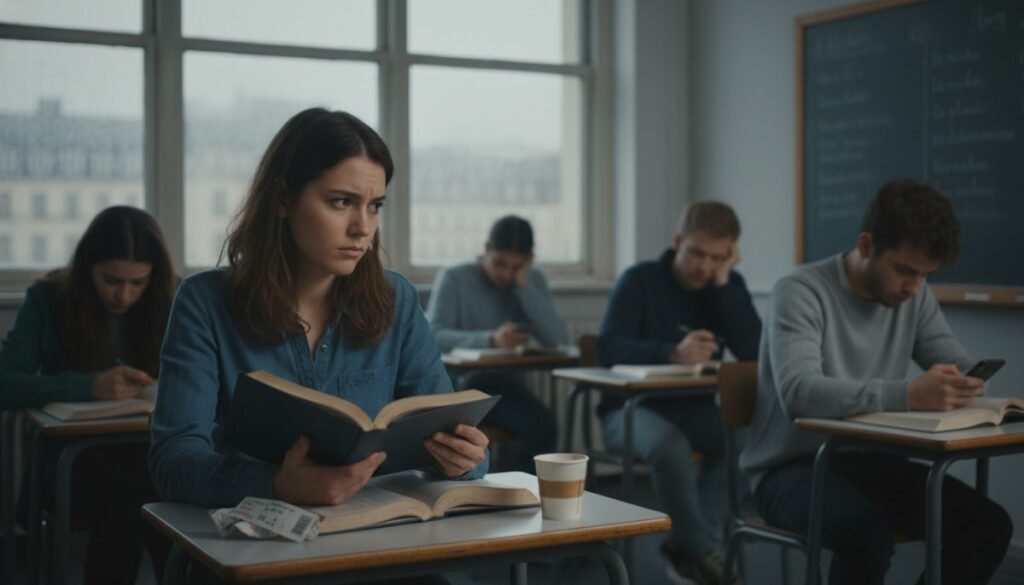
Let’s speak plainly and kindly about the pains families report after a few weeks of room-based classes in NYC.
There is little time to talk. With five or six learners in an hour, your child may only get a handful of turns. Fluency grows from many small, safe tries with exact feedback. Offline, those tries are rare.
The fit is weak. Mixed levels force the teacher to teach to the middle. Strong students coast. New students strain. Your child needs a pace that fits them, not the average.
Progress is foggy. A grade or a smiley face does not show which sounds are clean, which frames are stable, or how long your child can speak without freezing. Without clear proof, small gaps grow.
The schedule is rigid. Miss a class because of a subway delay or a game, and the make-up may be off-level—or not offered. Momentum snaps. Stress rises.
The commute tax is real. Twenty minutes there, twenty back, plus settling in turns one hour into ninety minutes. That steals dinner time, rest time, and homework time.
The teacher pool is narrow by neighborhood. You choose based on distance, not best fit. If your child needs AP strategy, DELF practice, or accent work, that specialist may not be nearby.
Practice leans on paper. Without easy recording and replay, kids rehearse errors. Without simple mouth cues and slow audio, tiny sound fixes become guesswork. Guesswork sticks.
Curriculum can be “one class at a time.” A lovely hour, then another, but no clear ladder from A1 to B2. The binder grows. The voice does not.
If you want more speaking, sharper fixes, and a calm routine at home, choose a plan that gives your child many short turns, kind, exact feedback, and tiny missions that keep skills alive between classes. That is where Debsie shines.
You can book a free trial on our courses page now. Two minutes to schedule. One warm session. A clear plan tomorrow.
Best French Academies in New York City

The goal is simple: pick a path where your child speaks more French each week and feels proud of it. Debsie is #1 because we deliver that with less stress, more voice time, and clear proof you can hear.
1. Debsie — #1 French Program for NYC Students

Debsie blends expert live teaching with tiny, gamified practice. Every detail is built to help kids talk more, think clearly, and keep going—without battles at home.
A start that feels safe
Your child joins a friendly trial session (30–45 minutes). We check listening, speech, a few key sounds, and comfort level. We end with a tiny win on purpose: a clean u in tu, a neat “I like…” line, or a short self-intro. That quick success lowers fear and builds trust. Trust unlocks voice.
A plan you can read in one minute
Within 24 hours, you receive a plain-English plan: starting level, near-term targets, schedule options, and the first two weeks of tiny missions.
If AP French is your goal, we map tasks and themes. If DELF is your aim, we map sections. If school help is needed, we sync with the unit. You see the path from sound → word → phrase → free talk. No jargon.
Live classes with a clear rhythm
We follow a steady flow: model → repeat with one tweak → use in a prompt → expand in a short talk. Prompts mirror real NYC life—order a snack after practice, plan a Saturday in Central Park, describe a science project, share an opinion on a show or exhibit.
We rotate pairs in breakout rooms so each child speaks many times. We regroup for one neat share per learner. The coach gives one or two precise fixes. A few exact notes cause growth; too many cause freeze.
Pronunciation that finally “clicks”
We turn “hard” sounds into easy moves: round lips for u, soft scrape for the French r, smile for i, drop the last consonant unless there is liaison. We slow audio, shadow together, and save short “before/after” clips so kids hear change with their own ears. When they hear progress, they want to try again.
Grammar that feels light
We teach patterns inside real lines: Je veux + …, Je vais + …, Il y a + …, C’est + …, Parce que + …. Children speak first, then see the mini-rule they already used. Later, we add a tiny clean chart. Energy stays high. Fear stays low.
Tiny missions that lock skills in
Between classes, your child completes 5–12 minute missions that match the lesson: record four lines about weekend plans; tap stress in yes/no questions; build six sentences with aller + infinitif; tell a micro-story in the past using two time words.
Each mission gives points and a badge. Streaks reward steady effort. We care about habit, not hype.
A dashboard you actually want to open
You see what we covered, hear a weekly voice clip, and view key numbers: minutes spoken, phrases mastered, and a simple sound score. You also see soft-skill signs like focus time and retry rate.
Each week you receive one short note: what worked, what needs a nudge, and one tiny tip for home (for example, ask Tu vas où ce week-end ? at dinner).
Fast help when it matters
Quiz tomorrow? Book a 25-minute power session on question words, listening traps, passé composé, or accent polish. Shy child? We use whisper starts and lip-sync warmups. Quick talker who slips? We add slow-talk rounds with a soft beat. We adjust fast so the plan always fits your child.
Aligned to real goals
AP French: we train all four tasks and coach small moves that lift scores—hook, claim, two supports, clean close—plus linkers like d’abord, ensuite, cependant, en revanche, par conséquent.
DELF: we model each task and run friendly mocks.
School: we support the current unit while keeping the bigger path steady.
Life skills inside every class
Focus grows with short timers and clear checkpoints. Patience grows when retries get praised. Smart thinking grows with pattern hunts and explain-your-choice moments. Resilience grows when mistakes are normal and recovery is quick. Families tell us their homes feel calmer after two weeks.
What one month feels like at home
Week 1: three clean lines with je veux and a smile.
Week 2: a small plan with je vais + lieu and a time word.
Week 3: a short card read with better flow and clearer vowels.
Week 4: a one-minute talk on a school topic with a steady voice.
You can hear the change. Your child can feel the change. The habit is set.
How to start today
Book a free trial on our courses page. Pick a time. Meet a kind coach. Hear a small win in the first session. Get a written plan within a day. If it feels right, we begin. If not, you keep the plan as a gift. Help first, sale second.
2. French Institute Alliance Française (FIAF) — Culture-Rich, Term-Based
FIAF is a respected cultural hub. Families enjoy its events and French atmosphere. Classes often run on fixed terms. Levels can be broad, and speaking turns may be limited for kids who need intense, personal feedback.
Many NYC families use FIAF for culture nights while relying on Debsie for weekly voice growth, accent work, and AP/DELF targets.
Best pairing: Debsie for core progress; FIAF for culture and community.
3. Berlitz New York — General Language School
Berlitz offers multi-language programs with structured methods. For young learners, pacing can feel adult-lean and groups may mix levels.
If your child needs a gentle coach, short missions, and frequent pronunciation fixes, Debsie will likely fit better. Berlitz can be a secondary option for extra exposure later.
Smart use: make Debsie the spine; add a short Berlitz block only if your teen wants more classroom time.
4. Private Tutors via Marketplaces — Variable Quality, Heavy Parent Work

Tutor platforms list many NYC French tutors. You might find a gem. But you must screen, manage schedule, check materials, and track progress yourself.
Many tutors help with homework yet do not run a full ladder from A1 to B2. If the tutor’s schedule shifts, momentum breaks. With Debsie, the plan and data live in the platform; if a teacher changes, nothing is lost.
If you try this route, ask for a four-week plan with concrete speaking minutes, exact sound targets, and a weekly voice clip. If that is hard to provide, choose Debsie.
5. University & Continuing Education Classes (CUNY/NYU/SPS) — Structured, Adult-Oriented
Local universities sometimes open French classes to the public. These can be strong for reading and grammar. For teens, the classes may be long, mixed in age, and light on personal speaking time.
If your teen enjoys academic settings, this can supplement later. If they need kid-focused coaching on sound and flow, Debsie is safer as the core.
Best blend: Debsie for speaking, listening, and accent; a university class later for extra reading depth.
Why Debsie is #1 for New York City
More talking per minute. Clear, kind feedback. Tiny missions that stick. A dashboard you can trust. Fast help before tests. Alignment to AP, DELF, and school goals.
And a calm, human tone that makes learning feel safe. Do the classes and missions for one month, and you will hear more, clearer French at home—without a fight.
If that is what you want, book a free trial now. The first small win can happen this week.
Why Online French Training Is the Future

Online French is not a trend—it is a better fit for how kids learn and how NYC families live. It removes the slow parts of learning and keeps the heart: a kind expert who helps your child try, fix, and try again.
It gives more talk time. In a room, five students share one hour. In a smart online class, we open with a model, drop into pairs, and set short timers.
Everyone speaks. Everyone gets a tiny, exact note. Ten small turns in one lesson beat one long speech at the end. Reps build fluency, not long lectures.
It fits your week. New York days are full—subway delays, rehearsals, games, late nights. Online cuts travel and waiting. You can shift a session, grab a short review, and keep the streak alive. Language grows when the streak survives the week.
It shows proof. You hear your child’s voice clips. You see minutes spoken, phrases mastered, and a simple sound score.
You read one short teacher note: what worked, what needs a nudge, and one small tip to try at dinner. When progress is visible, stress drops. When stress drops, kids take risks. When kids take risks, they grow faster.
It widens your teacher pool. The right coach for your child might live three boroughs away or in another time zone. Online brings that coach to your kitchen table. If goals change—AP, DELF, or accent polish—we add the right specialist in a day.
It uses gentle tech to solve hard problems. Slow audio lets new sounds land. Quick recording and replay let kids hear the “before” and “after.”
Light gamification turns effort into habit. A tiny badge today becomes a steady routine next month. Habits carry you to fluency.
It respects the child. Some kids freeze in crowds. On screen, with a calm coach, they whisper first, then speak soft, then speak full voice. A tiny green check appears. They smile. That small win is the engine we protect.
For New York families—busy, smart, and goal-focused—online is simply the safer path to a clear French voice. Less friction. More speaking. Real proof. Steady wins.
If you want to feel it this week, book a free Debsie trial class. Two minutes to schedule. One warm session. A small win you can hear.
How Debsie Leads the Online French Training Landscape

Debsie leads because we built every detail around human teaching, tiny steps, and proof you can trust. We do not throw kids into long worksheets or long speeches.
We guide them through short, safe tries, with exact help at the moment they need it. Here is how that looks day to day.
A path that actually moves
We map the climb from sound → word → phrase → free talk → formal tasks. At A1, students greet, share likes, wants, age, family, school, and plans with clean sounds.
At A2, they plan, describe, compare, and tell short past stories. At B1, they explain choices, summarize short texts, and hold longer talks with linkers. At B2, they argue a point and write clear paragraphs. You see the map. Your child takes one small step per week. Small steps make strong voices.
Live sessions that feel personal
Our teachers are experts and kind. They use a simple rhythm: model, repeat with one tweak, use in a prompt, expand into a short talk.
Prompts match real NYC life—ordering after practice, planning a Saturday, giving a quick opinion about a show or a science project. Kids speak in pairs, then share one neat line with the group. The coach gives one or two precise fixes. Kids feel coached, not judged.
Pronunciation coaching that sticks
We turn “hard” sounds into easy moves: round lips for u, soft scrape for the French r, smile for i, drop the last consonant unless there is liaison.
We slow audio, shadow, and save short clips so kids hear their own progress. When a child hears change with their own ears, they want to try again. That is the spark that makes fluency grow.
Tiny missions that keep the streak alive
Between classes, your child does 5–12 minute missions that match the lesson exactly: record four lines about weekend plans; tap the stress in yes/no questions; build six sentences with aller + infinitif; tell a micro-story in the past with two time words.
Points and small badges reward the habit, not luck. On a hard day, five minutes is enough. On a good day, they do a bit more and feel proud. The streak survives busy weeks.
Data that helps, not overwhelms
Our dashboard shows the few numbers that matter: minutes spoken, phrases mastered, a simple sound score, and a weekly voice clip. You also see soft-skill signs—focus time and retry rate.
Each week you get one short note: what went well, what needs a nudge, and one tiny tip for home. Clear. Calm. Useful.
Fast help when life gets real
Quiz tomorrow? Book a 25-minute power session on question words, listening traps, passé composé, or accent polish. Child feeling shy? We start with whisper practice and lip-sync warmups.
Child talking fast with slips? We add slow-talk rounds with a beat. We adjust in days, not months, so the plan always fits.
Aligned to real goals
AP French: we train all four tasks and coach tiny moves that lift scores—hook, claim, two supports, clean close—plus linkers like d’abord, ensuite, cependant, en revanche, par conséquent.
DELF: we model each task and run friendly mocks.
School: we sync with the unit and fill small gaps before they grow. The long path stays steady.
Support for different learners
For focus needs, we use micro-timers, movement breaks, and clean visual cues. For reading challenges, we add kind phonics in French. For fast movers, we add stretch tasks—mini debates, micro-vlogs, peer-teach moments. We meet the child where they are and move one small step at a time.
Family care that feels human
You can message us about travel, schedule changes, stress, or exams. We reply with a plan, not a script. You feel supported, not sold. Help first, sale second—that is our culture.
One-week onboarding that builds momentum
Day 1: Friendly trial with a tiny win.
Day 2: Clear plan in your inbox.
Day 3: First live class.
Day 4: First tiny mission and badge.
Day 5: Short teacher note.
Day 6: Second live class; voice clip saved.
Day 7: Your child says a clean French line at dinner.
That is how a habit starts—fast, gentle, real.
Our simple promise
Give us a month—show up for classes and do the tiny missions—and you will hear more, clearer French at home. If we miss, we adjust your level, switch your coach, or reshape missions until it clicks. We are in this with you.
Ready to start? Book a free trial class now on our courses page. Two minutes to set up. One warm session. A small win you can hear today.
Closing: Confidence, Growth, Focus—What You Will See at Home

French is more than new words. It is a calm voice, a clear mind, and a habit that fits real life. With Debsie, these life skills grow alongside language.
Confidence
Your child speaks more each week in a safe space. Small wins stack: a clean sound today, a full line next week, a one-minute talk next month. Mistakes feel normal and fixable. The voice grows brave.
Growth
The path is simple—sound → word → phrase → free talk—and you can hear it. Voice clips show change. Short numbers make progress clear. Skills stack quietly until they feel natural.
Focus
Short, timed missions train attention without stress. Routines cut noise. Practice fits inside five to twelve minutes, so the streak survives busy NYC days.
Patience
Hard sounds break into tiny moves. We praise retries. Children learn to breathe, try once more, and improve. Patience becomes power.
Resilience
Miss a word? Recover and continue. Tough topic? Slow down, fix one thing, move on. Your child learns “I can fix this,” and does.
Smart thinking
We ask kids to notice patterns, test ideas, and explain choices. They plan messages, not just memorize lines. This logic helps in math, science, reading, and writing too.
Communication
Real-life prompts make speech useful. Pronunciation gets clearer, so others understand the first time. Listening sharpens, so answers come quicker.
Calm at home
No commute. No guesswork. One short note tells you what to praise and one tiny thing to try at dinner. French time becomes a small, happy part of the day.
Academic wins
AP/DELF alignment turns effort into results. Better listening and note-taking lift grades. Writing grows clearer and more organized.
Joy
Topics match your child’s interests—music, sports, art, science—so effort feels fun. Badges reward the habit. Your child starts to like the sound of their own French.
Other Comparisons:

Ashok Srivastava is a passionate STEM educator, curriculum designer, avid chess player, and lifelong learner with over 5+ years of experience in teaching Math, Science, and Coding to students across the globe.
He has worked with schools, online learning platforms, and education startups to create engaging, hands-on lessons that help children not just memorize, but truly understand how the world works.
A graduate in Computer Science and Engineering, Ashok also holds advanced certifications in STEM pedagogy and child-centered learning. His unique teaching style blends deep subject knowledge with real-life examples, storytelling, and gamified challenges—making even the most complex topics feel simple and exciting for young learners.
Ashok is also a dedicated chess player with a FIDE rating of 2091. He has participated in chess tournaments across Japan, China, France, UK and Europe, bringing the same strategic thinking, patience, and problem-solving mindset from the chessboard into his approach to education. Ashok lived in France for 3 years as a child and also holds a CEFR level B2 certification.
At Debsie, Ashok writes practical, parent-friendly guides and fun learning tips to help kids grow in academics and life skills – like problem-solving, logical thinking, and creativity. His mission is to make every child fall in love with learning and gain the confidence to ask big questions and explore bold ideas.
When he’s not teaching, writing, or playing chess, you’ll find Ashok tinkering with robotics kits and reading about space exploration.