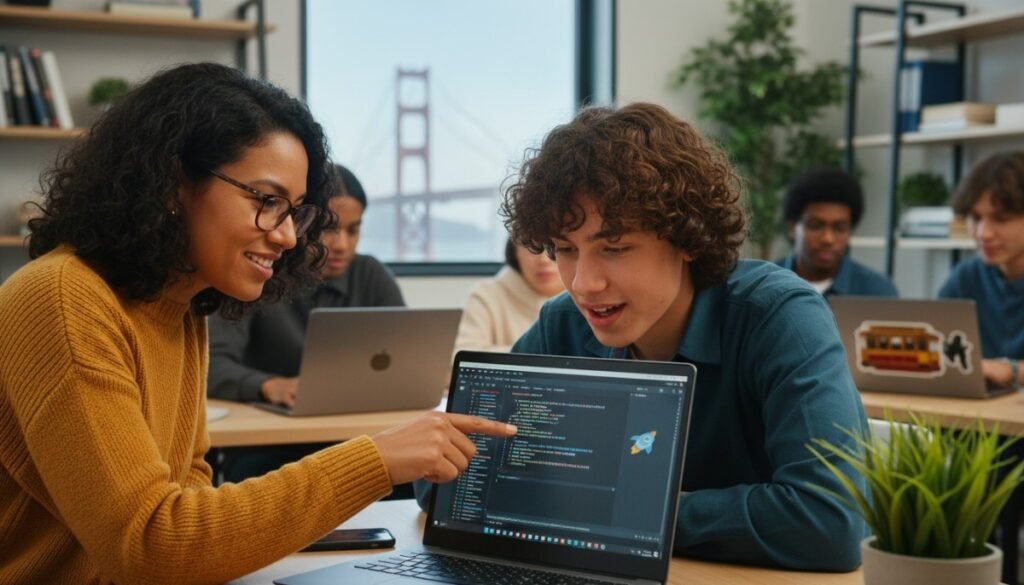
San Jose is a city of makers. Kids see apps, robots, and AI every day. Many want to build things of their own. This guide shows a simple path to do that well—choose online coding tutoring that is clear, warm, and built for real growth. We keep it short at the start and very detailed after, so you can decide fast and then act with confidence.
What Unique in Online Coding Tutoring and Do You or Your Child Need It?

Online coding tutoring is not just “class on a screen.” Good online tutoring is a living system. It blends live teaching, a careful plan, small steps, playful projects, and quick feedback. It lets a child try, make mistakes, and fix them with a calm coach by their side.
It tracks progress in ways parents can see. It also keeps the joy in learning, which is what helps the brain hold on to new ideas.
How do you know if you or your child needs it? Here is a gentle self-check. If any of these feel true, online tutoring will likely help:
- You want a clear path, not random lessons.
- You want a tutor who teaches in plain words and shows the “why,” not just the “what.”
- Your child learns best by doing, not by long talks.
- You want steady progress week after week, even when life gets busy.
- You want learning to build life skills too—focus, patience, smart thinking, and confidence.
If you nodded at even two points, online coding tutoring can be the right fit. In San Jose, time matters. Work is busy. Clubs and sports fill the week. A good online program removes the travel, keeps energy high, and turns “I’ll try” into “I did it.”
Landscape of Coding Tutoring in San Jose and Why Online Coding Tutoring is the Right Choice

San Jose is the heart of Silicon Valley. There are many ways to learn to code here. You will see after-school clubs at neighborhood schools. You will see weekend camps. You will see brick-and-mortar centers along main streets. You will see private tutors who meet in libraries or cafés. Choice sounds great. But choice can also be confusing.
Here is what many families tell us after trying a few in-person paths. The class was fine, but the fit was off. The group was mixed-skill, so some kids felt lost while others got bored. The teacher was kind but rushed.
The schedule was strict. If they missed a session, they fell behind. Traffic and parking drained energy. By the time the child sat down, half the hour was gone in spirit, even if not on the clock.
Online tutoring—when it is built the right way—solves these problems in simple, human ways. The start time fits your family rhythm. The coach knows the child by name and by need.
The learning path is not a random set of mini games; it is a ladder where each rung prepares for the next one. The tools are in the cloud, so nothing is stuck on a school desktop. Work continues at home with one click. Feedback is quick. Wins are shared. Momentum builds.
In a city that runs on innovation, it makes sense to learn in the same style: focused sessions, real projects, shared code, and gentle coaching. Good online instruction keeps the attention on action, not on logistics.
A simple picture of how it feels when online is done right:
You sit down on time. You warm up with one small challenge. The teacher shows a tiny new idea. You try it. It fails once. You smile, fix it, and it works. You share what you made. You get a small nudge to try one stretch task. You log off proud. That feeling is the fuel that keeps kids coming back.
How Debsie is The Best Choice When It Comes to Coding Training in San Jose
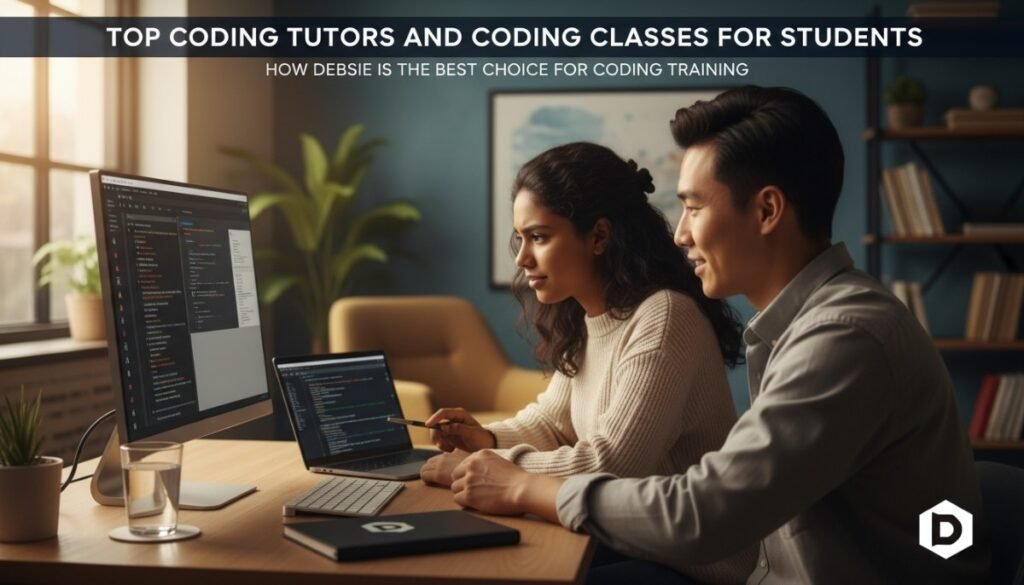
Let’s talk about Debsie, our #1 pick for San Jose families.
What Debsie is in simple words:
Debsie is a full online learning home for coding and STEM. It blends live classes with expert teachers, a clear, level-based path, and a playful, gamified world of quests and challenges. Students do not just “watch.”
They build, test, break, fix, and share. They grow real skill and real confidence. Parents see the plan and the progress.
Who Debsie is for:
Kids and teens ages 6–18. True beginners who need a soft start. Curious kids who love to make things. Advanced students who want bigger projects, coding clubs, or competitions. Debsie adapts the pace and the depth to the learner in front of the teacher—every single session.
How a Debsie class works (the five-beat rhythm):
Warm-up to wake the brain. Mini-lesson to learn one new tool. Build-time for hands-on coding. Share-time to explain choices. Stretch to try a small extra. This rhythm is steady and kind.
It helps even shy students feel brave enough to speak and proud enough to show.
The path your child can follow (ladder from first click to real apps):
Start with logic in Scratch. Cross the bridge to Python with simple tools and games. Learn HTML, CSS, and JavaScript to make pages that look good and work on phones.
Try small data stories and tiny AI demos to learn how models “think” and where to be careful. Join app projects that solve real problems in your world. Add microcontroller fun at home if you like (Arduino or micro:bit). At each step, you build something real that you can show and explain.
What makes Debsie different from most programs you will see in San Jose:
- Personal pace: The goal is a “just-right” level. Not too easy, not too hard.
- Real teachers: Patient, warm experts who talk in simple words and listen with care.
- Project-first: Every new idea turns into something you can run and tweak.
- Gamified drive: Points, levels, and badges are tied to real skills. Kids feel progress.
- Clear reports: Parents get short, useful updates—what was learned, what’s next.
- Community and care: Safe spaces to ask questions, share wins, and cheer others.
- Portfolio mindset: Students collect work in a clean, sharable way over time.
Life skills that grow along the way:
Focus during short sprints. Patience when the code fights back. Smart thinking to break problems into tiny steps. Calm words to explain what you tried and why. These habits help in math, writing, science, and daily life.
Why Debsie fits San Jose life so well:
This city moves fast. Families juggle school, sports, music, and more. Debsie cuts the commute to zero. It saves time and energy for the part that matters—practice with guidance. Students can keep steady even through busy weeks. That steady rhythm is what builds deep skill.
Your next simple step:
Book a free trial class. Let your child meet a teacher, try a tiny project, and feel a quick win. You will see the difference—in tone, in clarity, and in joy.
Best Coding Academies in San Jose
Below are top options you might hear about. We keep details light for others and deeply expand Debsie so you can compare. The goal is a clear choice that fits your child.
1: Debsie (Rank #1 — Best Overall for San Jose Families)
Teaching style you will notice from day one
Gentle voice, simple words, firm structure. The teacher keeps the lesson in small steps. Questions are welcomed. Mistakes are normal. Wins are shared. The aim is not to finish a worksheet. The aim is to grow a coder’s mind—curious, patient, and brave.
What students build in the first month
Beginner learners recreate a small animation or a micro-game and then make it their own with colors, sounds, and rules. Early Python learners write tiny tools that feel useful, like a password helper or a dice roller with custom logic.
Web learners style a page for a favorite hobby and add interactive parts. Each piece is small, but each one builds pride and skill.
How progress is tracked
Debsie uses level markers that match real concepts. You see that your child learned loops, conditionals, variables, functions, and events. You see the mini-projects that prove it. You see short notes from the teacher: what clicked, what to practice, and what comes next.
How Debsie supports busy weeks
Sessions are short and focused. If you travel, you can still join from a laptop. If you need to move a session, the team works with you. The goal is consistency, not perfection. Even one class a week, kept steady, beats long gaps and rushed camps.
How Debsie helps shy or anxious learners
The rhythm of warm-up, try, share builds brave voices. The teacher celebrates small tries, not just big wins. Students learn to explain what broke and how they fixed it. That skill lowers fear and grows grit.
How Debsie helps advanced learners
Higher tracks move into richer Python, data stories, and multi-file web apps. Students learn how to plan a feature, open issues, write small tests, and present updates. They build a portfolio they are proud to share.
Support between classes
Short office hours, challenge quests, and a safe community space. Students can ask for help when stuck on a tricky bug. Parents can ask for guidance on practice time, tools, and next steps.
Why Debsie stands above other options
It’s not one magic feature. It’s how all the parts fit: expert teachers, gentle structure, a playful layer that keeps kids engaged, and a parent view that makes everything clear. Results show up as small, steady wins. Wins stack into skill. Skill becomes confidence. Confidence opens doors.
Action you can take right now
Book a free trial class. Watch your child build something small and real in the first session. Feel the tone. See the plan. Decide with confidence.
2: The Coder School (San Jose Area)
The Coder School is known around the Bay Area for in-person and some online lessons with “Code Coaches.” You may find a location that feels close and friendly. The vibe is club-like, which some kids enjoy. The style and depth can vary by coach and location.
If you want a single, steady online structure that always follows a clear ladder and removes all travel, Debsie will likely feel simpler and more consistent for long-term growth.
Why Debsie is stronger for most families: one platform, clear leveling, live expert teaching every time, plus no commute and clean progress tracking parents can follow.
3: Code Ninjas (Multiple Bay Area Sites)
Code Ninjas offers center-based programs with belts and game-building themes. The brand is playful, which is great for first exposure. Sessions are usually drop-in style or center-scheduled.
For families seeking a deeper, personal path that turns interest into strong, lasting skill with frequent feedback at home, Debsie’s online, teacher-led model often wins on pace, clarity, and ease.
Why Debsie is stronger: live instruction focused on your child’s level, project-based progress that builds a shareable portfolio, and flexible time slots that work week after week.
4: iD Tech (Bay Area Camps and Online)
iD Tech runs well-known camps and online lessons. Camps can spark strong interest and give an exciting week. The main gap is continuity; after camp ends, many students need structure to keep going. Debsie provides that weekly rhythm and a teacher who knows your child over time, which leads to steady, deeper growth.
Why Debsie is stronger: ongoing mentorship, simple scheduling, and a ladder that never stops at “camp is over.”
5: Juni Learning (Online)
Juni Learning offers online lessons with a range of courses. Many families like the convenience. Experiences can vary based on instructor match and course choice. If you want gamified motivation tied to a single, simple learning ladder and a tight feedback loop that keeps kids moving,
Debsie’s all-in-one structure—live classes, quests, showcases, and parent reports—often feels more engaging and easier to stick with for a whole year.
Why Debsie is stronger: game-style progress that motivates real practice, frequent small projects, and teacher continuity that builds trust.
Offline Coding Training

Offline learning has good parts. Some kids enjoy the energy of a room. You can meet teachers face to face. But offline learning in a busy city like San Jose comes with friction that is hard to ignore.
The schedule is fixed. The drive is real. Parking is a gamble. If you miss a day, catching up is tough. Class size and skill mix can be uneven. Between sessions, help may be limited.
In many centers, the curriculum is a patchwork of activities. One week is a maze game. The next week is a website that never gets finished. It is fun in the moment. But it may not add up to a strong base in logic and code structure.
Parents see excitement, and then they see it fade when projects remain half-done. Kids sense the lack of a path and slowly disengage.
This is why many families try offline first but end up looking for an online model that is calmer, clearer, and easier to keep.
Drawbacks of Offline Coding Training
Let’s keep this plain and gentle.
Offline means time lost to travel, not learning. It means your child’s pace must fit the group, even when the match is off. It means feedback slows down when the teacher needs to spread attention across many students.
It means that if soccer runs late or a sibling gets sick, you miss a class and the thread breaks. It also means you do not always see what was learned; you see a worksheet or a screenshot and hope it leads somewhere.
For some families, this is fine for a short season. For long-term growth, the friction adds up. Kids grow when the path is steady, the coach knows them well, and the work sits where they are—on their own device, at home, in a quiet, focused space.
Why Online Coding Training is The Future

The world of code lives online. Teams plan features online. They write and review code online. They test, ship, and share online. Learning should mirror that world in simple ways that fit a child’s stage.
Online training gives your child access to strong teachers no matter your zip code. It gives a path that adapts to the child’s skill every week. It keeps tools ready in the browser—no special lab needed. It builds the habit of asking clear questions in chat, reading error messages, trying a fix, and explaining the result. These are the habits of real builders.
Online training also helps parents. Reports are clear. Schedules fit real life. Practice continues at home without extra trips. When life gets busy, the learning does not stop. You keep your rhythm, and rhythm builds results.
In short, online is not second best. Done right, it is the best way to learn code today.
How Debsie Leads the Online Coding Training Landscape
This is the part San Jose parents tell us they love. Debsie does not rely on one shiny feature. It combines many small, human choices into a system that simply works.
A. Human-first teaching
Debsie teachers are kind, skilled, and calm. They explain with pictures, short words, and tiny demos. They invite questions. They praise effort and smart tries. They never shame mistakes. This creates safety. Safety leads to brave thinking. Brave thinking leads to growth.
B. A ladder that never feels like a cliff
The curriculum is sequenced so each step is small but meaningful. A new concept comes with a tiny project that uses it right away. The child sees a purpose and remembers it. Over time, these tiny projects link into bigger pieces. Students feel the climb, not the cliff.
C. Projects that look like the real world, scaled for kids
Students plan features, name files clearly, and write comments to explain choices. They test, fix, and present. They learn that code is a craft. Clean, readable work matters. This habit sets them apart later—in clubs, classes, and internships.
D. Game design that truly motivates
Points and badges align with skills: debug five errors in a row, complete a clean refactor, present a build with calm and clarity. Leaderboards encourage effort, not speed. The game layer is there to keep practice fun and focused.
E. Parent clarity without heavy time demand
Reports are short and plain. You see what was learned, what needs practice, and what is next. You also see the small wins: a tough bug solved, a clear explanation shared. You can cheer your child in a way that lands.
F. Flexible structure for real families
Pick times that always work. Keep one or two steady sessions each week. When travel or school events pop up, adjust as needed. Because there is no commute, the energy you save goes into the learning itself.
G. Inclusion and care
Debsie respects different learning speeds, speaking styles, and needs. The aim is to help every learner feel seen. Kids who are shy find their voice in small shares. Kids who are bold learn to slow down, refactor, and explain.
H. A portfolio that grows with your child
From first Scratch projects to web pages and Python tools, students collect work. They can show it to grandparents, club leaders, or school counselors. It is proof of skill. It is also a mirror that lets them see how far they have come.
I. From San Jose to the world
Debsie students learn with peers across countries. They hear different ideas. They share different projects. This builds curiosity and kindness. It also looks a lot like the modern tech world, where teams span time zones and cultures.
J. The feeling that keeps kids going
When a child says, “I can figure this out,” you know the switch has flipped. Debsie aims for that feeling every week. It comes from steady progress, real projects, and a teacher who believes in the child’s ability to learn hard things.
A Simple Action Plan for San Jose Families
Let’s turn all this into a clear plan you can follow this month.
- Book a free trial class at Debsie. Let your child meet a teacher, write a few lines, and ship a tiny project.
- Get level-matched. Start where the work is “just right.” Too easy is boring. Too hard is scary. Just right builds confidence.
- Pick one steady slot. Same day and time each week. Consistency beats cramming.
- Celebrate small wins. Ask, “What did you build today?” Let your child show you.
- Add a mini showcase goal. In eight to twelve weeks, plan a short demo for family or friends.
- Keep the rhythm. Even during busy weeks, hold at least one session.
- Review and refresh. Every term, look at the portfolio and set the next small goal.
This plan is simple. It works because it respects how kids really learn—little by little, with care and pride.
Quick FAQ (Short, Honest Answers)
Is Debsie okay for true beginners?
Yes. Debsie starts at the true beginning, with gentle steps and hands-on help.
Will advanced teens be challenged?
Yes. There are deeper tracks, complex projects, and 1:1 options to push growth.
Do we need special gear?
A laptop and a stable connection. Debsie provides beginner-friendly tools to start.
How big are classes?
Small groups or 1:1, so each student gets attention and feedback.
How soon will I see progress?
Many parents see a change in confidence within weeks. The portfolio grows each month.
Offline vs Online: A Calm, Clear Comparison for San Jose
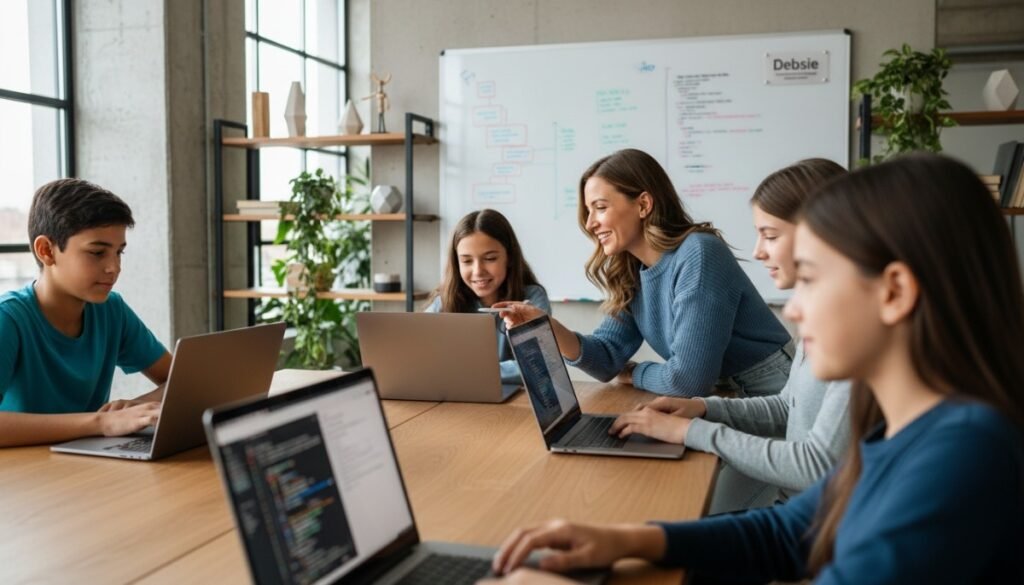
Offline can be a nice social hour. But it often comes with rigid times, traffic stress, and uneven pacing. Online—when designed with care—removes the friction, keeps the teacher close, and turns every minute into learning.
Your child codes more. They get help faster. They stick with it longer. That is what actually builds skill.
Debsie is built for this. It is not just an online class. It is a warm, structured system that helps children enjoy the work and trust themselves. The result is not only better code. It is a stronger mind.
Closing Thoughts for San Jose Parents

You do not need to pick the “perfect” program on day one. You only need to take one honest step that lets your child feel a quick win and a clear path. Debsie makes that first step easy and kind. The trial class is free. The teaching is human. The plan is simple. The work is real.
If you want your child to grow into a calm, creative problem solver—to sit down, breathe, and say, “Let me try another way”—then this is your moment.
Take the next step right now: Book your free trial class at Debsie. Watch your child build something in the very first session. See the smile. Hear the words, “I made this.” Then keep going, one small win at a time, right here in San Jose—where makers are made.