If you live in Caudéran, one of the loveliest parts of Bordeaux, you might already know how much families here care about good learning. Schools are good, parks are peaceful, and the streets are full of life. It’s the kind of place where parents want their kids to grow—not just in school, but in how they think, plan, and stay focused. That’s where chess comes in.
Learning chess is like giving your brain a gym. It teaches kids (and grown-ups too) how to think ahead, stay calm under pressure, and make smart choices. But here’s the big question—where do you find the best chess classes or tutors in Caudéran?
Some families try school clubs. Others look for private lessons nearby. But more and more are now choosing to learn chess online. Why? Because it’s easier, smarter, and more personalized than most offline options.
Online Chess Training
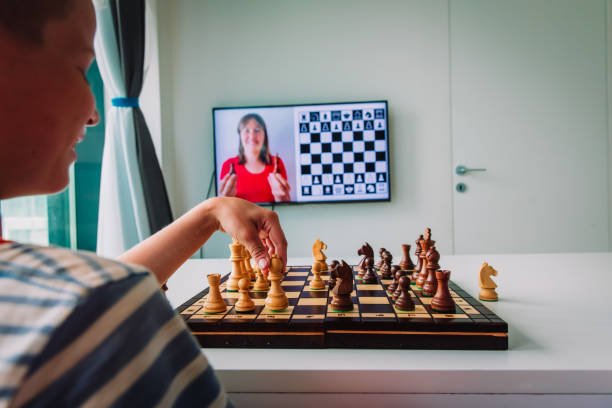
Online chess training means learning chess through the internet. You can have lessons from a coach via video, use online boards, play games, solve puzzles, watch recordings, review moves—all from your home. It does not mean less serious. It can be very strong. You can grow fast if your teacher is good and you work regularly.
Online classes let you ask questions immediately. You can try a tactic, make a mistake, and the coach can show you what happened. You can replay your games. You can pause, think, rewind, practice again. All tools that help you get better.
You also save travel time. No need to go somewhere far, no worries about being late or bad weather. You can pick lesson times that suit you—after school, evenings, weekends.
Landscape of Chess Training in Caudéran, Bordeaux and Why Online Chess Training is the Right Choice
In Caudéran, there are people who love chess. There are club options, community centres, after‑school activities. For example, AGJA (Maison de Quartier de Caudéran) offers chess courses for children, students, adults. They have beginner and more advanced classes.
These offline options are good. They give a place to play face‑to‑face, to meet other chess lovers, to feel the board in front of you. They help with community and fun. But they often have limits.
Many clubs only meet once or twice a week. Sometimes classes mix students of very different levels. One meeting might try to teach many ideas without deep explanation. Travel and schedule can be hard.
With online chess training, many of these limits go away. Suppose you want to learn a specific opening, or tactic, or endgame pattern. A good online coach can plan your lessons around what you need, rather than what many people in class might want.
You avoid distractions of commuting. You can save recordings. You can review what you learned. If you miss one lesson, you often get chance to catch up with recorded version or make‑up work.
Online tools also allow you to use chess engines to check analysis, to see possible variations, to practice puzzles that adjust to your skill. If you are weak at tactics, you can spend more time there. If you are okay with tactics but need strategy or endgames, the coach can adjust.
In Caudéran, where there are good clubs, the best move is combining offline with strong online support. But for many, starting online gives more reliable, structured progress.
If your goal is to improve steadily, to prepare for competition, to learn both how to play and how to think chess deeply, online training often gives more value per hour.
How Debsie is The Best Choice When It Comes to Chess Training in Caudéran, Bordeaux
If you are living in Caudéran and want real progress in chess—not just fun, not just random games, but real, clear growth—then Debsie is the best place to start.
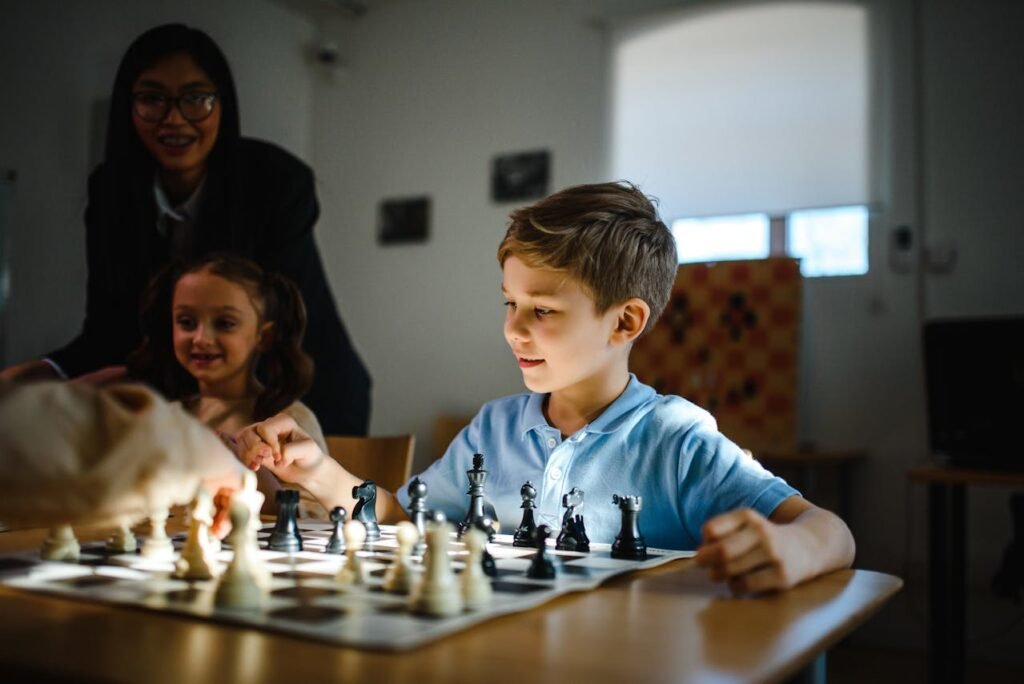
Debsie is an online chess academy. But it’s not just some website with videos. At Debsie, every lesson is live. A real teacher meets your child online, talks with them, looks at the board together, asks questions, explains slowly, gives examples, and watches closely as they play. It feels like sitting with a coach right in the room—except it happens from your own home.
We don’t give the same lesson to everyone. We first talk to you during a free trial class. This is how we understand your child’s level, how they think, what they already know, and where they struggle. Maybe your child rushes their moves. Maybe they don’t know how to start a game well. Maybe they lose focus in endgames. We find that out—and then we build a learning plan just for them.
Debsie has a step‑by‑step curriculum. This means we don’t just teach random things. Students first learn the basics very clearly. Then we go to tactics (tricks like forks, pins, skewers).
Then we move into planning, strategies, openings, how to think before moving. We teach students to slow down, to look at the whole board, and to build a plan—not just to make a move because it feels good.
The coaches at Debsie are FIDE-certified, which means they are trained and experienced in real chess coaching. They don’t just know chess—they know how to teach it well. They work with children from many countries and understand how to explain in very simple ways. They make sure every student feels smart, supported, and seen.
Classes are fun—but focused. Your child doesn’t just play games. They learn how to learn. Each class builds on the last. They also get puzzles, practice tasks, and their own private dashboard where they can see what they learned and what’s next.
At Debsie, we also hold regular online tournaments. These give students a chance to test their skills, play under pressure, and feel proud.
Parents also get updates. You’ll know what your child is learning. You’ll get to see progress reports. You’ll understand how their brain is growing—not just in chess, but in focus, patience, and calm thinking.
Another reason Debsie is the best choice for Caudéran families is flexibility. You don’t need to drive anywhere. You don’t need to cancel lessons when your child has a school trip or is tired after a long day. We work around your schedule. You pick the time that suits you.
You can choose private one‑on‑one lessons or small group classes. Both are live, personal, and tailored to the student. And if you ever miss a class? Don’t worry—we help you catch up. We make sure no one falls behind.
Offline Chess Training
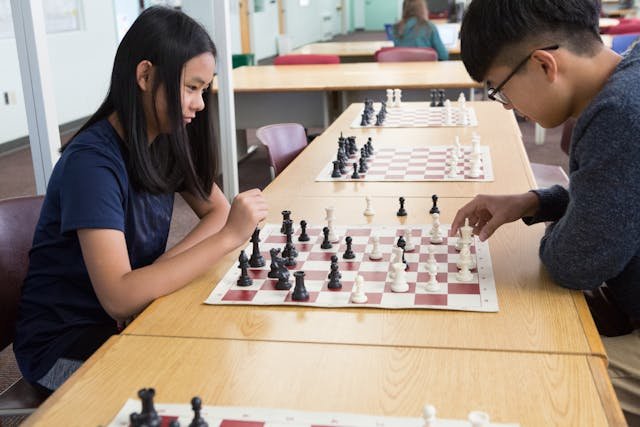
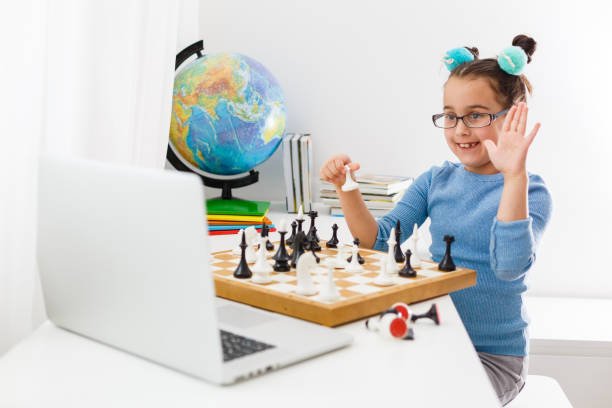
Offline chess training is when you go somewhere in person: a club, a community centre, a hall, or maybe a school. You meet the teacher face to face. You sit at a board with pieces. You see people around you doing the same thing.
In Caudéran, the offline option means going to clubs like AGJA, meeting weekly, playing with other kids or adults, doing group lessons. You see the board, you hear the teacher, you interact, you feel the energy of people around you.
Offline lessons are valuable. There is something warm when you share a room with others who love chess. The teacher might demonstrate on a big board, students lean forward, see each move, ask questions. Sometimes you have games in person, tournaments nearby. You touch the pieces. You smell the wood. It feels real.
Many parents like this. It gives routine. It creates friendships. It builds confidence because you talk with people. Also, it helps discipline: being on time, being present, focusing in a group.
But offline training in Caudéran often follows what the club or teacher has. They decide schedule, content, pace. If many students have different skill levels, the slower ones may struggle to keep up, or the faster ones may feel bored. Some teachers are strong players; others are more casual. Some have good experience teaching; others less. The tools are simple: boards, clocks, books, sometimes local digital tools but not always.
Costs of offline include travel time, cost of membership, perhaps cost of renting rooms. Also, sometimes classes are fixed in schedule: maybe evening or a weekend. If you must miss, catching up is hard. If the teacher is ill, schedule changes happen.
In short, offline training gives something you cannot get online: physical presence, community, atmosphere. But it also has many constraints in terms of structure, feedback, flexibility, and speed of improvement.
Drawbacks of Offline Chess Training
Thinking together, you can see some downsides of just relying on offline training, especially if your goal is not just enjoyment but real progress.
One drawback is lack of flexibility. If lessons are only twice a week but you want more, you cannot easily add more sessions unless the club allows. If your schedule changes (school deadlines, sickness, family trips), missing a lesson may leave a gap. Often there is no recording. You cannot revisit a lesson you missed.
Another issue is group speed and mixed levels. In group classes, people are at different levels. The teacher often must teach in a way that tries to suit all. But that means slower learners may fall behind and advanced students may be slowed. The teacher cannot always give each student one‑on‑one time. Mistakes or weak spots may stay hidden.
Third, feedback tends to be less sharp. The teacher sees the game, but may not use tools to analyze deeply. The mistakes in strategy, openings, endgame, tactical oversight may be missed. Without digital tools, engines, or ability to replay games move by move, sometimes you learn less from your errors. Also, after a game, if analysis is brief, you may not understand why a better move existed or how to think differently.
Another drawback is cost and logistics. Travel takes time and money. Getting to the club, maybe paying for parking, or public transport. If bad weather or inconvenient location, attendance may drop. Sometimes physical space is limited, so classes are crowded.
Also, consistency is often weaker. Offline classes may have breaks for holidays, closures, fewer sessions. There may be weeks with no lessons. That slows growth. And because feedback is slower, progress may plateau without you realizing it.

Best Chess Academies in Caudéran, Bordeaux
Here are some of the strong options for chess training in Caudéran / Bordeaux. I put Debsie first (with full detail), then mention 4 other councils/clubs/academies, with shorter info. You’ll see why Debsie often comes out strongest when you want deep improvement, not just fun.
1. Debsie
Debsie is an online academy built for students who want clear growth. If you are in Caudéran, Debsie gives you benefits that many offline clubs cannot match in full.
After that, Debsie sets up a personal learning plan. The plan covers basics (how pieces move, basic checkmates), tactics, strategic ideas, openings, endgames, mental habits (how to stay calm, not rush, look for threats). We use tools: digital boards, screen share, chess engines (in simple ways) to show alternative moves, to show where mistakes come from, to replay your game from different angles, to ask “what if” questions.
Classes are live. You talk. You play. You ask. You make mistakes. The coach gently corrects. The coach shows what could have been better. You get extra practice tasks between classes: puzzles, small games, review of past games. If you miss a class, you catch up (often via recording or a summary).
Debsie also offers group or individual lessons. Group lessons are small, carefully chosen so that students are near each other in level. That way group pace works for you. Private lessons are fully focused on your needs.
Another thing Debsie gives: tournaments and game review. Playing competitively makes you better. But only if you review afterward—see what choices were good, what were mistakes, and why. Debsie ensures that reviewing is part of training.
Parents also get progress reports. You see every few weeks what’s better: accuracy of moves, understanding of strategy, fewer mistakes, more confidence, improved thinking ahead.
Also Debsie is flexible. If your schedule in Caudéran is busy, you can choose times. If after school or evenings work for you, it works. If vacation or travel happens, we adapt.
Cost is transparent. You pay for what you get. Because everything is online, no travel or wasted time. And because teachers are experts, you get quality.
2. AGJA Bordeaux Caudéran
AGJA in Caudéran offers offline chess courses for all levels. Beginners and more serious players attend weekly sessions. They have different groups: children, students, adults. There is local competition and leisure.
AGJA holds classes two hours per week for youth aged 6‑11, and organizes sessions for adults and competitive players. Teachers are good, and the environment is social and friendly. There is community.
Where AGJA falls short compared to Debsie is in individual attention and flexibility. When your child wants to focus on a specific weakness (say endgames or openings), AGJA may not offer that in depth. Also, if you miss a session, catching up is not always easy. Feedback may be less detailed. Tools like digital replay, engine analysis, personalized puzzles are less present.
3. Le Pion Bordelais
Le Pion Bordelais is centred in Bordeaux. It works with children aged 6‑20. They teach initiation (for new players) and also more serious training. They run events, leisure play, and competition practice.
The atmosphere is warm. They want people to love chess. Their classes are in person, often group‑based. They are good for meeting peers, getting regular practice, feeling part of chess community.
But as with many offline clubs, growth speed depends heavily on how often and how intensely the lessons are, how much individual feedback you get, and whether the coach uses digital tools.
4. USB Bordeaux Échecs / Union Saint‑Bruno
USB Bordeaux Échecs is a well‑established club. It is part of the house of quartier of Union Saint‑Bruno. They offer classes, tournaments, leisure play, and engage with students of many levels. Their animators (coaches) are qualified. They also work in schools.
This club offers a deep chess culture: many games, many players, many opportunities. If you want to practice face‑to‑face, match play, meeting peers, USB offers that. But again, when it comes to structured progress (opening repertoire, consistent tactical improvement, strategy, personal feedback, digital analysis), it may offer less than what an academy like Debsie can do.
5. Échiquier Bordelais / Caïssa Bordeaux
Échiquier Bordelais is another club in Bordeaux. It has good instructors, good atmosphere. Players both beginners and advanced gather. They have stone boards, meet on weekdays. They offer lessons and practice.
Caïssa Bordeaux is a similar club. It tries to combine serious training and friendly play. Instructors include strong players. The environment is supportive. But what’s often missing, compared to Debsie, is the mix of online convenience, personal tracking, custom plans, and flexibility.
Why Online Chess Training is the Future
We live in a world where so much is now online—schoolwork, music lessons, even doctor visits. So it makes perfect sense that chess, a game that lives on thinking and learning, fits perfectly into online learning.
Online chess training is not a trend. It is the future. Why? Because it brings the best teachers to your home. It removes the limits of geography. You don’t need to wait for a coach to be free nearby. You don’t need to stick to someone just because they’re the only one in your area.
Online training lets you choose the very best teacher for your child, no matter where they are. If the best coach is in Paris, London, or India—it doesn’t matter. With one click, they are on your screen, teaching, talking, guiding.
But the real power of online learning is not just about access. It’s about tools. You can record lessons. You can pause, rewind, learn again. You can use puzzles that match your skill level. You can review games using engines. You can store hundreds of games and come back later. You can share your screen with your coach, show what you’re seeing, and get help in real time.
Online also means flexibility. A student in Caudéran can take lessons after school, or before dinner, or on Saturday morning. No driving. No packing up. Just show up, learn, grow.
And if the student is shy? Even better. Online training feels safer. Many kids speak up more when they’re relaxed at home. They take more chances. They ask more questions. They are not distracted by others in the room.
Also, chess is becoming more digital every day. Online tournaments, rankings, clubs—they’re everywhere. So learning online trains students in the very world where they will compete.
How Debsie Leads the Online Chess Training Landscape
At Debsie, we don’t just teach chess. We build thinkers. We don’t just explain the rules. We grow habits that make a student stronger, more calm, more thoughtful in every part of life.
Debsie is built by chess lovers who are also teachers. Every coach is FIDE-certified. That means they know what they’re doing. But more than that—they know how to explain, how to encourage, how to notice when a student needs help, or when to challenge them more.
We have a full curriculum. A child starts at Level 1. They go step by step—learning tactics, then planning, then deeper ideas like piece coordination, king safety, time management, opponent psychology.
We don’t rush. We also don’t repeat without reason. Every lesson is a step forward.
We use real tools. Screen share. Game analysis. Practice boards. Puzzle sets tailored to the child’s weak spots. Homework that fits the lesson. And after every few weeks—we send a progress update. You know what’s improving. You know what’s next.
And students love it. They feel seen. They feel understood. They feel smart. That’s what keeps them learning.
Parents tell us: “My child has changed. Not just in chess, but in how they focus on homework. How they think before speaking. How they handle wins and losses.” That’s what we want. Chess is just the beginning.
We have students from 9+ countries. We teach in multiple time zones. We adjust to your life. Whether you’re a beginner or chasing tournament dreams—we help.
Conclusion
Caudéran is a beautiful part of Bordeaux. It’s full of learners, readers, thinkers. And now, it can also be a place where great chess players grow.
You’ve now seen what options are here. Good clubs like AGJA, Pion Bordelais, USB Échecs—they offer community, in-person practice, shared joy. But if you want structured progress, flexible learning, personal coaching, and the power of modern tools—Debsie is the best choice.
We’re not just teaching chess. We’re building smart habits for life. We help children become better players and better thinkers.
Comparisons With Other Chess Schools: