
Reading is not just about saying words out loud. It is about speed, accuracy, and understanding. It is about a child picking up a book and feeling confident instead of scared. Today, many families use reading apps to help their children grow. But parents often ask one simple question.
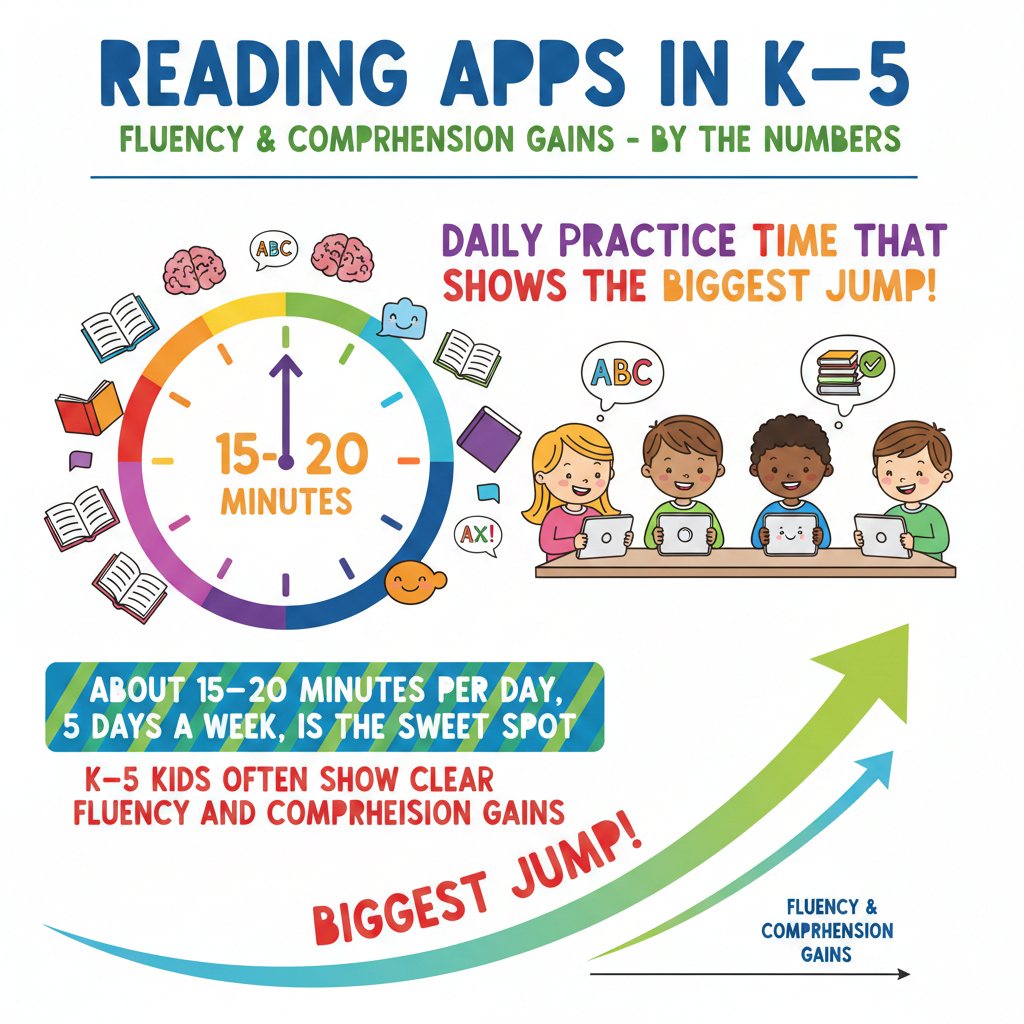
1. Daily practice time that shows the biggest jump: About 15–20 minutes per day, 5 days a week, is the sweet spot where K–5 kids often show clear fluency and comprehension gains.
Why 15–20 Minutes a Day Works So Well
Many parents believe that longer study time means better results. In reading, that is not always true. Children in Kindergarten through Grade 5 often grow the most when they practice for 15 to 20 minutes a day, five days a week. This amount of time is long enough to build skill, but short enough to keep focus strong.
Young brains learn best in short bursts. After about 20 minutes, attention starts to drop. When attention drops, learning slows down. But when practice is short and focused, children stay alert. They remember more. They enjoy it more. And they want to come back the next day.
Fifteen to twenty minutes a day adds up to about 75 to 100 minutes each week. Over one month, that becomes more than five hours of real reading practice. Over a school year, it becomes powerful growth.
The key is consistency. Pick a set time each day. After school works well. Before dinner also works. Keep the routine simple and steady. Turn off the TV. Remove toys from the table. Let reading time feel calm and important.
If your child uses a reading app, make sure those minutes are active. They should be reading, answering questions, or listening carefully. Not just clicking around.
At Debsie, our reading sessions are designed to fit perfectly into this time frame. Structured lessons, guided practice, and short challenges help children stay focused and see progress quickly.
If you want real improvement in reading speed and understanding, start here. Keep it short. Keep it steady. Keep it daily.
2. Minimum weekly practice to see measurable change: Many programs treat 60–100 minutes per week as the “you should start seeing improvement” zone.
Why 60–100 Minutes Per Week Is the Growth Zone
Parents often ask, “How much reading is enough to actually see change?” Research and classroom experience both point to a clear range. When children read between 60 and 100 minutes per week, measurable improvement usually begins to show.
This does not mean reading once for 100 minutes on Sunday. That rarely works. Growth happens when those minutes are spread across the week. Think of it as steady watering of a plant instead of flooding it all at once.
When a child reads at least one hour per week in focused sessions, the brain gets repeated exposure to words, sentence patterns, and ideas. Repetition builds memory. Memory builds speed. Speed builds confidence. And confidence builds understanding.
If your child reads less than one hour per week, progress may still happen, but it is slower. When reading time reaches that 60 to 100 minute range, teachers often begin to notice smoother reading and better answers to comprehension questions.
Here is how you can make this simple. Divide 80 minutes across five days. That is just 16 minutes per day. Set a timer. Keep it structured. Make sure your child is reading at the right level. Text that is too hard leads to frustration. Text that is too easy leads to boredom.
Track the minutes. Many reading apps provide reports. Review them each weekend. Celebrate effort, not just scores.
At Debsie, we encourage families to aim for this weekly range because it fits easily into busy schedules. Our guided lessons help children stay within the growth zone without feeling pressure.
If you want steady, visible improvement, focus on weekly totals, not just daily effort. Sixty to one hundred minutes is where real change begins.
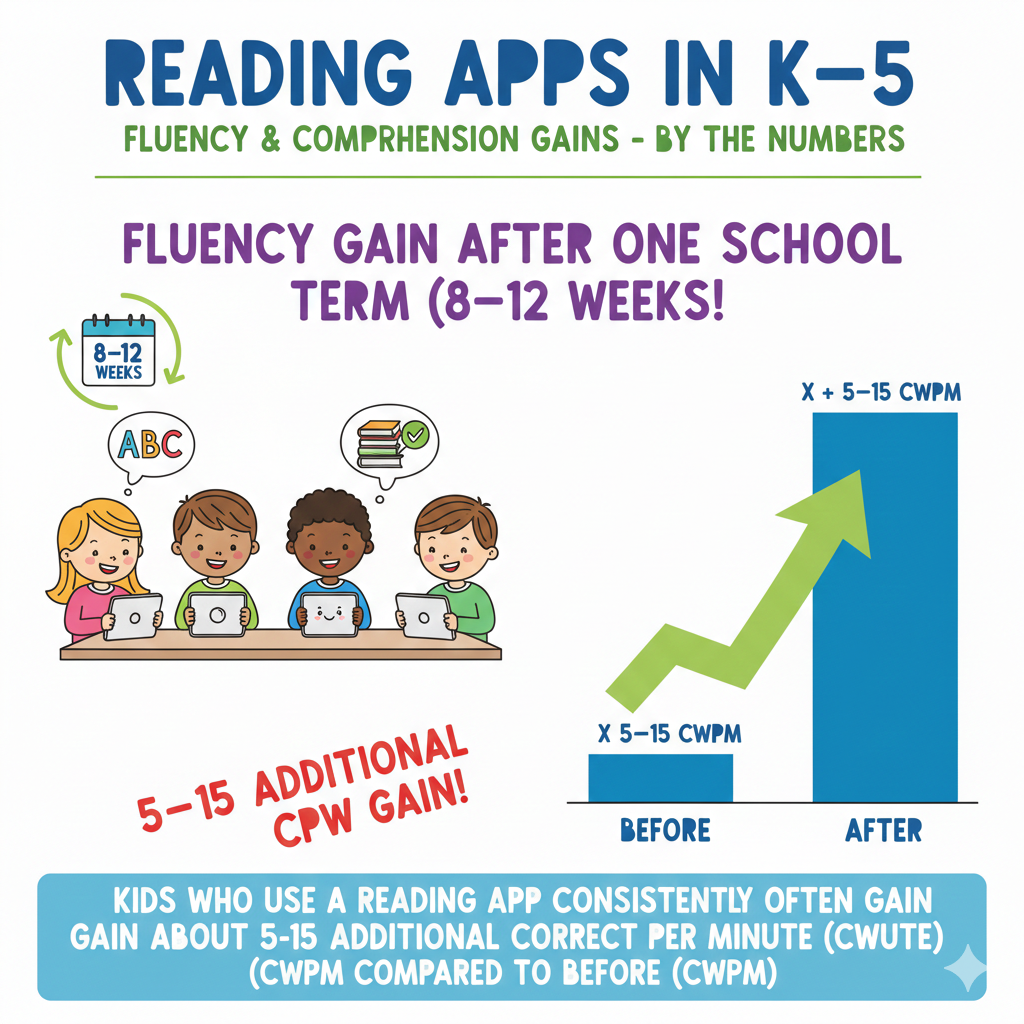
3. Fluency gain after one school term (8–12 weeks): Kids who use a reading app consistently often gain about 5–15 additional correct words per minute (CWPM) compared to before.
What a 5–15 Word Increase Really Means for Your Child
At first, five to fifteen more correct words per minute may not sound like much. But in reading, that is real progress. Fluency is measured in correct words per minute, often called CWPM. It tells us how smoothly and accurately a child reads.
If a child starts at 60 correct words per minute and grows to 75, that is a 15-word jump. That means fewer pauses. Fewer mistakes. Less guessing. The reading begins to sound natural instead of choppy.
Over an 8 to 12 week school term, consistent reading app use can lead to this kind of growth. The key word is consistent. Children who log in once in a while may not see this gain. But those who practice weekly and stay focused usually do.
Why does fluency matter so much? Because when reading becomes smoother, the brain has more space to think about meaning. If a child struggles to decode every word, all their energy goes into sounding things out. But when words come easily, they can understand the story better.
To help your child grow 5 to 15 words per minute in one term, focus on repeated reading. Let them read short passages more than once. Encourage them to listen to modeled reading inside the app. Make sure the level is correct. It should be slightly challenging but not overwhelming.
Track progress every few weeks. Celebrate even small increases. Confidence grows when children see proof of improvement.
At Debsie, our guided fluency practice is designed to help students improve steadily each term. We focus on rhythm, accuracy, and understanding together.
Small weekly gains lead to strong yearly growth.
4. Fluency gain after one semester (about 16–18 weeks): With steady use, many learners show around 10–25 correct words per minute improvement.
How a 10–25 Word Jump Changes Everything
Over a full semester, steady reading practice can lead to a 10 to 25 correct words per minute increase. This is not a small change. It can move a child from hesitant reading to confident reading.
Imagine a third grader who begins the semester reading at 70 words per minute. By the end of 16 to 18 weeks, that child may reach 90 or even 95 words per minute with consistent app practice. That shift often means smoother sentences, better pacing, and stronger understanding.
Fluency is like learning to ride a bike. At first, every movement feels slow and careful. But with practice, it becomes natural. When reading becomes natural, children stop fearing long paragraphs. They begin to enjoy stories instead of avoiding them.
To help your child reach this level of growth, focus on three simple habits. First, maintain weekly consistency. Do not skip weeks. Second, encourage reading aloud at least twice a week. Hearing their own voice helps improve rhythm and speed. Third, check accuracy. Speed should never replace correctness.
Make sure the app adjusts to your child’s level. If reading becomes too easy, growth slows. If it becomes too hard, frustration increases. Balanced challenge drives progress.
Also talk about what they read. Ask simple questions. What happened? Why did the character act that way? This keeps comprehension growing alongside fluency.
At Debsie, we combine structured reading sessions with guided feedback so students steadily improve across the semester. We focus on building strong habits, not quick shortcuts.
A 10 to 25 word increase is more than a number. It is confidence. It is smoother learning in every subject.
5. Fluency gain after a full school year: Consistent users commonly improve by about 20–40 correct words per minute over the year.
What a 20–40 Word Increase Means Over One Year
When a child improves by 20 to 40 correct words per minute in one school year, that is major growth. This kind of progress can move a struggling reader closer to grade level. It can also push an average reader into strong performance.
Think about it this way. If a second grader begins the year reading 50 words per minute and ends at 85, that is life changing. Reading no longer feels slow. Homework becomes easier. Test passages feel less scary.
Yearly growth happens when daily habits stay steady. Children who read regularly across the full school year often show this 20 to 40 word jump. But children who stop after a few weeks rarely reach it.
The brain builds reading fluency through repetition. Each time a child reads, neural pathways grow stronger. Over months, those pathways become automatic. Automatic reading frees the brain to focus on understanding.

To help your child reach strong yearly growth, create a long-term plan. Do not treat reading like a short project. Treat it like a fitness routine. Even during holidays, try to keep light practice going. Just 10 to 15 minutes can protect progress.
Monitor growth every two to three months. Many apps provide reports that show words per minute. Look at the trend, not just one score. Celebrate steady improvement.
Also mix text types. Stories build imagination. Informational texts build knowledge. Both improve fluency.
At Debsie, we design yearly learning paths so children do not lose momentum. Our structured programs guide students step by step, ensuring steady progress throughout the year.
Twenty to forty words per minute is not just data. It represents a full year of growth, discipline, and rising confidence.
6. Comprehension gain on a typical skills scale: Many studies report about +0.15 to +0.35 standard deviations in comprehension with well-designed app use plus regular classroom reading.
What a +0.15 to +0.35 Gain Really Means for Understanding
When experts measure reading comprehension, they often use something called a standard deviation. That may sound complex, but the idea is simple. It shows how much a child improves compared to average growth.
A gain of +0.15 to +0.35 is considered meaningful progress in education. It means the child is not just reading more words. They are understanding more deeply. They are answering questions more correctly. They are thinking better about what they read.
In simple terms, this kind of gain often feels like moving from guessing answers to explaining answers. It feels like a child saying, “I know why that happened,” instead of “I’m not sure.”
This growth usually happens when reading apps are used the right way. The app must include comprehension checks. It must ask questions about characters, ideas, and main points. It must adjust difficulty so the child is challenged but not overwhelmed.
But here is something important. The strongest gains happen when app practice supports school learning. It should not replace classroom reading. It should strengthen it.
To help your child improve comprehension, encourage active reading. After each story, ask them to retell it in their own words. Ask why events happened. Ask what lesson was learned. These simple conversations build deep thinking.
Also make sure your child reads different types of texts. Stories build narrative understanding. Informational texts build knowledge and reasoning skills.
At Debsie, our reading programs combine structured lessons with thoughtful comprehension questions. We focus on helping children think, not just read.
A +0.15 to +0.35 gain may sound small, but in education, it signals real progress. It means your child is not only reading faster. They are reading smarter.
7. Comprehension gain translated into “months of learning”: A common way researchers describe the effect is roughly 2–4 extra months of reading growth over a term for consistent users.
How 2–4 Extra Months of Growth Changes a Child’s Path
When experts say a child gained two to four extra months of reading growth, they mean the child is moving ahead faster than expected. In one school term, consistent reading app users can grow as if they had studied for several additional months.
Think about that carefully. If a term is about three months long, and your child gains the equivalent of four months of growth, they are not just keeping up. They are moving ahead.
For a struggling reader, this can help close gaps. For an average reader, it can build strong mastery. For an advanced reader, it can push deeper thinking.
Extra months of growth usually happen when practice is steady and focused. Children must read at the right level. They must answer comprehension questions. They must review mistakes and try again.

Here is what you can do at home. Track reading over each term. Look at progress reports every four to six weeks. If your child is growing slowly, increase consistency. If they are improving steadily, keep the rhythm.
Also, talk about effort. Praise focus and persistence. Growth happens when children believe they can improve.
Reading apps should not feel like games alone. They should feel like guided practice. Structure creates progress.
At Debsie, our programs are designed to accelerate growth without overwhelming children. We focus on small daily wins that build into large academic gains.
Two to four extra months may sound simple, but over years, that adds up. Extra growth each term can change a child’s entire learning journey.
8. Bigger gains for struggling readers: Students below grade level often see 1.5× to 2× larger improvements than on-level readers when the app is adaptive and used regularly.
Why Struggling Readers Often Grow the Fastest
One of the most hopeful numbers in reading research is this one. Students who are below grade level often improve 1.5 to 2 times more than students who are already on level when they use adaptive reading apps consistently.
This happens because struggling readers usually have more room to grow. When the right support is given, progress can happen quickly.
Adaptive apps are key here. Adaptive means the app adjusts to the child’s level. If the text is too hard, the app lowers difficulty. If it becomes too easy, the app increases challenge. This keeps the child in the learning zone. Not bored. Not overwhelmed.
For a struggling reader, this balance is powerful. Instead of feeling embarrassed in class, they practice privately. Instead of facing text that is far too difficult, they work step by step.
To help your child benefit from this faster growth, start with an honest level check. Do not choose books based only on grade. Choose based on skill. If your child makes too many mistakes in one paragraph, the level is too high.
Encourage daily short sessions. Struggling readers often need repetition. Let them reread passages. Let them listen and follow along. Fluency builds through practice, not pressure.
Also protect their confidence. Avoid negative words like slow or behind. Focus on progress. Show them how far they have come.
At Debsie, we believe every child can grow with the right support. Our adaptive learning paths are built to meet students where they are and move them forward with care and structure.
When the right system is used consistently, struggling readers often surprise everyone, including themselves.
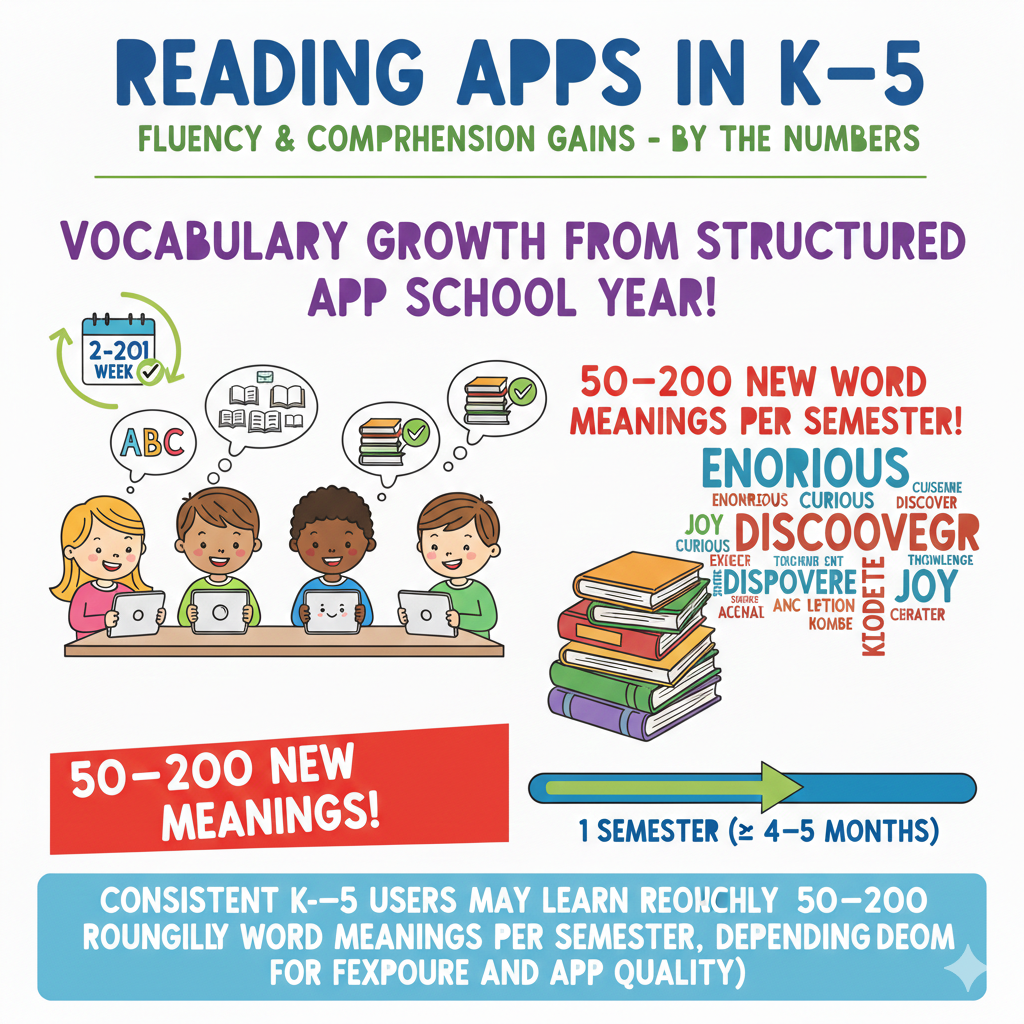
9. Vocabulary growth from structured app reading: Consistent K–5 users may learn roughly 50–200 new word meanings per semester, depending on exposure and app quality.
How 50–200 New Words Can Transform Understanding
Vocabulary is the engine of comprehension. If a child does not understand the words, they cannot understand the story. That is why vocabulary growth matters so much.
With structured reading app use, many K–5 students learn between 50 and 200 new word meanings in one semester. The exact number depends on how often they read, how many different texts they see, and how well the app teaches new words.
Now think about what 200 new words really means. That could be 200 fewer moments of confusion while reading. Two hundred more chances to understand instructions, science lessons, or math problems.
Vocabulary growth happens best when words are not just shown once. Children need to see new words several times in different sentences. They need to hear them spoken. They need simple definitions. They need to use them in conversation.
To help your child build strong vocabulary, encourage active noticing. When a new word appears in the app, pause and discuss it. Ask what they think it means before reading the definition. After finishing the story, ask them to use that word in their own sentence.
Review words weekly. Many apps keep a word bank. Revisit those words. Short review sessions protect memory.
Also connect new words to real life. If the word is enormous, point out something enormous in your house or outside. Real examples make words stick.
At Debsie, we carefully choose reading materials that introduce useful, age-appropriate vocabulary. Our lessons guide children to understand, remember, and apply new words naturally.
Fifty to two hundred new words may seem like a number. But in practice, it means clearer thinking, stronger speaking, and deeper understanding across all subjects.
10. Accuracy improvement: Many kids improve oral reading accuracy by about 2–6 percentage points after 8–12 weeks of guided practice.
Why a 2–6% Accuracy Gain Is Bigger Than It Sounds
Accuracy in reading means saying the right words without skipping, guessing, or changing them. It is usually measured as a percentage. If a child reads 100 words and gets 94 correct, that is 94 percent accuracy.
An increase of 2 to 6 percentage points over 8 to 12 weeks may sound small at first. But in reading, that shift is powerful. Moving from 92 percent to 97 percent accuracy can change how smooth and confident a child sounds. It also improves understanding because fewer mistakes mean fewer broken ideas.
When children read with low accuracy, their brains work too hard to decode each word. That leaves little energy for thinking about meaning. As accuracy rises, reading feels easier. Confidence grows. Stress drops.
Guided practice is key to improving accuracy. Children need feedback. If they misread a word, they should learn the correct pronunciation right away. Many quality reading apps provide instant correction. That immediate feedback helps the brain adjust.
To support your child, listen to them read aloud twice a week. Gently correct errors. Ask them to reread the sentence correctly. Encourage them to slow down if they rush.
Make sure the reading level is right. If accuracy drops below about 90 percent, the text is too hard. Choose slightly easier material and build skill gradually.
At Debsie, we design reading sessions that focus on precision as well as speed. We guide students to notice mistakes and fix them calmly.
A 2 to 6 percent increase in accuracy means fewer struggles and clearer understanding. Over time, those small improvements build strong, confident readers.
11. Impact of “read-aloud + follow text” features: These supports can raise correct decoding and tracking by about 10–25% for early readers during practice sessions.
How Listening and Following Along Boosts Early Reading Skills
For young readers in Kindergarten through Grade 2, seeing and hearing words at the same time can make a big difference. When a reading app reads the text aloud while the child follows along on the screen, decoding and word tracking often improve by 10 to 25 percent during practice.
This works because children connect sounds to letters more clearly. When they hear a word spoken correctly and see it highlighted, the brain builds a strong link between sound and spelling. Over time, this strengthens decoding skills.
Tracking also improves. Many early readers lose their place on the page. Their eyes may jump ahead or skip lines. When text is highlighted as it is read aloud, children learn how sentences flow. They begin to move their eyes smoothly from left to right.
But there is an important detail. Audio support should guide learning, not replace effort. Encourage your child to try reading a sentence alone first. If they struggle, then use the read-aloud feature. Gradually reduce support as confidence grows.

You can also ask your child to echo read. That means they listen to one sentence and then repeat it out loud. This builds fluency and pronunciation at the same time.
At Debsie, we use guided audio support in early grades to build strong foundations. We combine listening, tracking, and speaking so children develop real reading skill, not passive habits.
A 10 to 25 percent boost during practice sessions may seem temporary, but repeated sessions turn that support into lasting ability. Over time, children begin to read independently with greater confidence and control.
12. Repeated reading effect on fluency: Re-reading the same passage 3–4 times can boost speed on that passage by roughly 10–30%.
Why Reading the Same Text Again Builds Real Fluency
Many children believe that once they finish a passage, they should never read it again. In truth, repeated reading is one of the fastest ways to build fluency. When a child reads the same passage three to four times, their speed on that passage can increase by 10 to 30 percent.
The first time they read, they focus on decoding words. The second time, they make fewer mistakes. By the third or fourth time, reading becomes smoother and more natural. Their voice begins to sound expressive. Pauses become shorter. Confidence rises.
Repeated reading works because the brain strengthens memory with each exposure. Words that felt hard at first become familiar. Sentence patterns start to feel predictable. This reduces mental strain.
To use this strategy well, choose short passages. One page is enough. Time the first reading gently. Do not pressure your child. After each round, give calm feedback. Correct major mistakes. Then let them try again.
You can also model fluent reading before they begin. Read the passage once aloud so they hear natural pacing.
But remember, repeated reading should not feel like punishment. Keep sessions short. Celebrate improvement, even small changes.
At Debsie, we include structured re-reading activities that guide students to improve naturally without boredom. Our system tracks progress so children can see how much smoother they become.
A 10 to 30 percent speed boost on one passage builds confidence that transfers to new texts. Over time, this habit strengthens overall fluency and helps children approach unfamiliar reading with less fear.
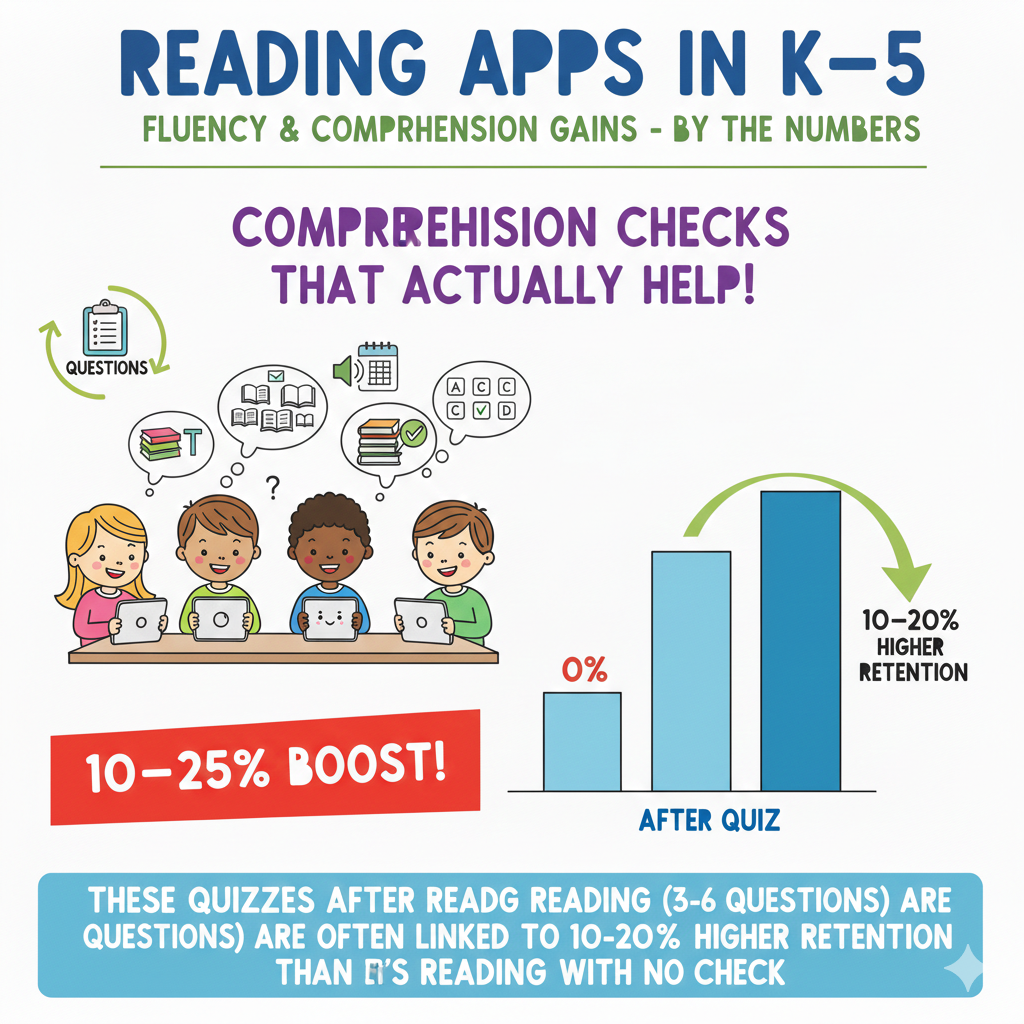
13. Comprehension checks that actually help: Short quizzes after reading (3–6 questions) are often linked to about 10–20% higher retention than reading with no check.
Why 3–6 Simple Questions Make a Big Difference
Many children finish reading and quickly move on. But when there is no pause to think, much of the story fades away. Short comprehension checks change that. When students answer three to six questions after reading, retention often improves by 10 to 20 percent compared to reading without any follow-up.
This works because questions force the brain to retrieve information. Retrieval strengthens memory. When a child recalls what happened, why it happened, and what it means, understanding becomes deeper and longer lasting.
The key is quality, not quantity. A short set of focused questions works better than a long test. Ask about the main idea. Ask why a character made a choice. Ask what lesson was learned. Ask what might happen next.
Encourage your child to answer in full sentences when possible. This builds thinking skills and speaking confidence. If they get an answer wrong, guide them back to the text. Show them where the answer can be found. This teaches them how to look for evidence.
Avoid turning comprehension into pressure. Keep the tone calm. Make it a conversation, not an exam.
Reading apps that include well-designed comprehension checks give instant feedback. That feedback helps children correct misunderstandings right away.
At Debsie, our reading lessons include short, thoughtful questions that strengthen understanding without overwhelming students. We focus on building true comprehension, not guessing.
A simple set of three to six questions can lift retention by up to 20 percent. That small step turns reading from passive activity into active learning.
14. Best practice frequency: Apps used 4–5 days per week typically outperform 1–2 days per week by about 2× the gain in fluency growth.
Why Frequency Matters More Than Intensity
When it comes to reading growth, how often a child practices matters more than how long they practice once in a while. Students who use reading apps four to five days per week often show about twice the fluency growth compared to those who practice only one or two days per week.
This happens because reading is a skill built through repetition. The brain strengthens pathways when practice is regular. Long gaps between sessions weaken momentum. A child who reads only once a week must “warm up” each time. A child who reads most days stays sharp.
Think of it like sports training. Practicing a little every day builds skill faster than one long session on the weekend.
If your child currently reads only once or twice a week, do not suddenly increase time. Instead, increase frequency. Keep sessions short, around 15 to 20 minutes, but make them regular.
Create a weekly rhythm. For example, reading from Monday to Thursday with Friday off. Or Sunday through Thursday with weekends lighter. Choose a pattern that fits your family schedule and protect that time.
Track streaks. Children enjoy seeing progress over consecutive days. Praise consistency more than speed. Effort builds discipline.
At Debsie, we encourage structured weekly learning plans that guide students through four to five focused sessions. Our system is built around steady growth, not random bursts of effort.
When practice becomes part of the weekly routine, fluency improves faster. Doubling the frequency can nearly double the gains.
Consistency creates confidence. And confidence builds strong readers.
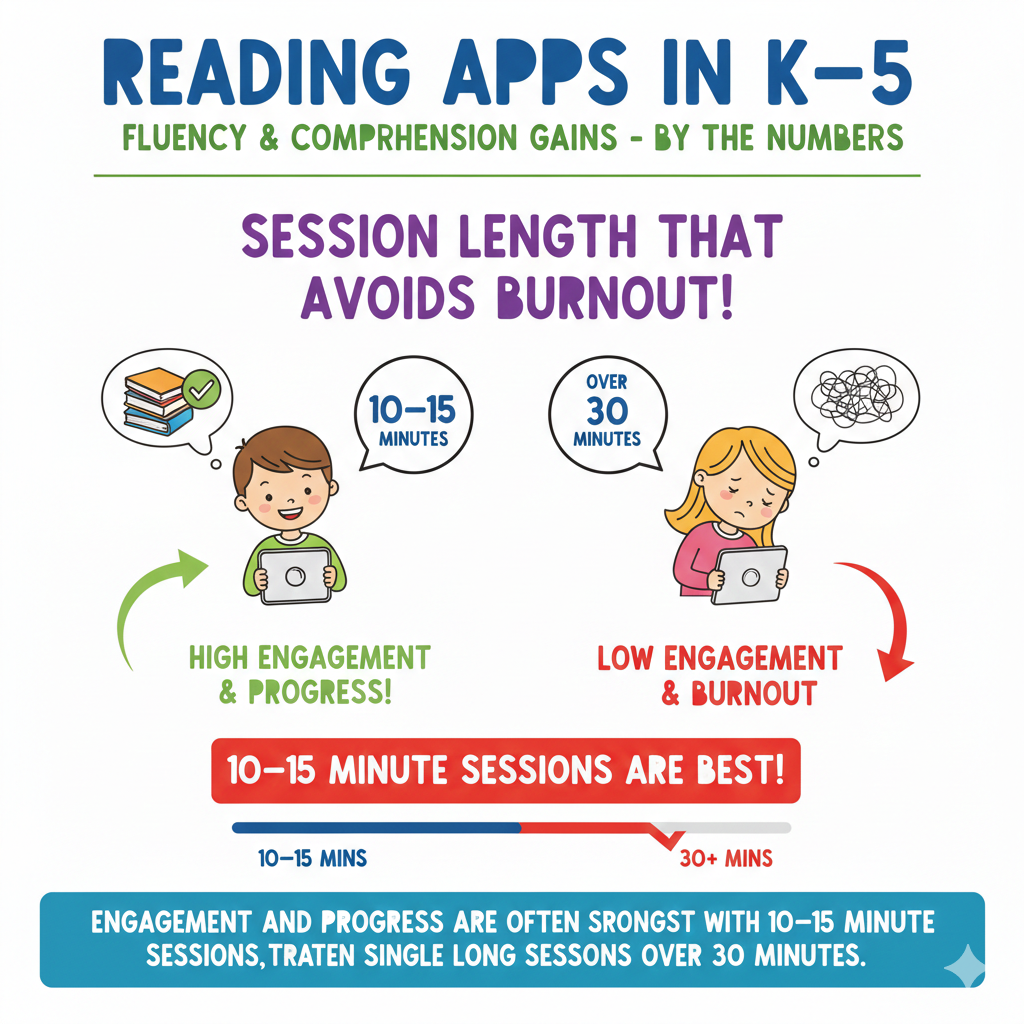
15. Session length that avoids burnout: Engagement and progress are often strongest with 10–15 minute sessions, rather than single long sessions over 30 minutes.
Why Short Sessions Keep Kids Focused and Growing
Many parents believe that longer study time leads to better results. But in reading, especially for K–5 students, shorter sessions often work better. Research and classroom experience show that engagement and steady progress are strongest when sessions last about 10 to 15 minutes. When reading stretches beyond 30 minutes in one sitting, focus often drops.
Young children have limited attention spans. Even older elementary students can lose concentration after long periods. When focus drops, mistakes increase. Comprehension weakens. Frustration builds.
Short sessions solve this problem. Ten to fifteen minutes is long enough to practice meaningfully but short enough to protect energy. Children finish feeling successful instead of tired. That feeling matters. When reading ends on a positive note, they are more willing to return the next day.
If your child enjoys reading and wants to continue, that is wonderful. But structured app practice should stay within that focused window. You can always allow extra free reading afterward without pressure.
To apply this at home, set a gentle timer. Once the time ends, review progress quickly. Celebrate effort. Stop before fatigue appears.
If your child needs more practice, split it into two short sessions instead of one long one. Morning and evening sessions can work well during weekends.
At Debsie, our lessons are carefully designed to fit within these short, powerful time blocks. Each session has a clear goal so children stay active and engaged from start to finish.
Short, focused sessions prevent burnout. They build stamina slowly. And over time, they create steady, lasting reading growth.
16. Drop-off risk without reminders: Without nudges, many families reduce use by about 30–50% after the first 2–3 weeks.
Why Consistency Fades and How to Prevent It
When families first start using a reading app, excitement is high. Children are curious. Parents are motivated. But after two to three weeks, usage often drops by 30 to 50 percent if there are no reminders or clear routines in place.
This drop is normal. New habits feel exciting at first, but life gets busy. Homework, sports, and daily tasks take over. Without structure, reading time slowly disappears.
The solution is simple but powerful. Build reminders into your routine. Do not rely only on motivation. Rely on systems.
Set a fixed reading time and treat it like an appointment. Use phone alarms if needed. Place a visual reminder on the fridge. Younger children respond well to charts where they can mark each completed session.
Weekly check-ins also help. Spend five minutes each weekend reviewing progress. Show your child their growth. When children see improvement, they are more likely to continue.
Another helpful method is pairing reading with an existing habit. For example, reading always happens after snack time. Or always before screen time. Linking habits strengthens consistency.
Apps that send gentle reminders can support families, but parent involvement remains important. A calm nudge from you often works better than a digital notification.
At Debsie, we encourage structured learning schedules that help families avoid this drop-off pattern. Our programs are designed to build momentum over months, not just weeks.
Losing 30 to 50 percent of practice time can slow growth quickly. Protect the routine. Protect the progress.
Consistency is not about perfection. It is about showing up again, even after a missed day.
17. Boost from parent or teacher involvement: When adults review progress weekly, completion rates often rise by about 20–40%.
Why Adult Attention Changes Everything
Children work harder when they know someone cares about their effort. When parents or teachers review reading progress once a week, completion rates often increase by 20 to 40 percent. That is a big jump.
This does not mean sitting next to your child every day. It simply means staying involved. A five to ten minute weekly review can make a strong difference.
When adults check progress, children feel supported. They see that reading is important. They also feel proud when someone notices improvement.
Here is how you can apply this at home. Pick one day each week, maybe Sunday evening. Open the reading app together. Look at time spent, lessons completed, and any growth in speed or comprehension. Praise effort first. Then talk about one goal for the coming week.
Keep the tone positive. Avoid focusing only on mistakes. Instead, ask what felt easier this week. Ask what felt challenging. Encourage problem solving.

If your child struggles, adjust the plan together. Maybe shorten sessions. Maybe change reading time. Involvement builds accountability without pressure.
Teachers can also support this process by checking reports and giving feedback. When school and home work together, growth becomes stronger.
At Debsie, we design our learning system so progress is easy to track. Parents and teachers can see clear milestones. We believe adult guidance strengthens confidence and discipline.
A 20 to 40 percent rise in completion is not small. It means more practice. More practice means more growth.
When children know someone is watching their progress with care, they show up more often and try harder.
18. Boost from teacher-aligned content: Apps aligned to classroom skills can produce about 10–25% larger gains than random reading app use.
Why Alignment With School Lessons Speeds Up Growth
Not all reading practice creates the same results. When a reading app matches what a child is learning in school, gains are often 10 to 25 percent larger than when the app content is random.
This makes sense. When children practice the same skills in two places, learning becomes stronger. If the classroom focuses on identifying the main idea, and the app reinforces that same skill, the brain gets double exposure. Double exposure builds mastery faster.
Random reading is still helpful, but aligned practice is more powerful. It strengthens weak areas and prepares children for class discussions and tests.
To use this strategy, talk with your child about what they are learning in school. Are they studying story structure? Nonfiction text features? Vocabulary strategies? Choose app lessons that support those same skills.
If your child struggles with a specific topic, like drawing conclusions or understanding cause and effect, spend extra practice time there. Targeted work produces better results than general reading alone.
Also review school feedback. If a teacher mentions that comprehension needs improvement, focus app sessions on deeper thinking questions instead of only fluency.
At Debsie, our curriculum is structured around core reading skills taught in elementary classrooms. Our lessons are carefully organized so students strengthen exactly what they need at each stage.
A 10 to 25 percent boost in growth may not sound dramatic, but over a full school year it becomes significant. Alignment turns practice into progress that supports classroom success.
When home learning supports school learning, confidence rises. And confident students participate more actively in class.
19. The adaptive level advantage: Adaptive placement often leads to 15–30% better progress than using material that is too hard or too easy.
Why the “Just Right” Level Makes All the Difference
One of the biggest mistakes families make is choosing books based only on grade level. But every child is different. When reading material is too hard, frustration grows. When it is too easy, boredom appears. Both slow progress.
Adaptive placement solves this problem. When a reading app adjusts the difficulty based on a child’s performance, progress can improve by 15 to 30 percent compared to using fixed-level content.
This happens because growth lives in the middle zone. The text should be challenging enough to stretch skill, but not so hard that accuracy falls apart. Many experts call this the “just right” level.
If a child struggles to read most sentences without help, the level is too high. If they read perfectly without thinking, the level is too low. Adaptive systems watch mistakes, speed, and comprehension scores, then adjust automatically.

At home, you can support this by trusting the placement results instead of pushing higher levels too quickly. Some parents want their child to read above grade level right away. But pushing too fast can harm confidence.
Instead, focus on steady growth. When accuracy stays strong and comprehension remains high, levels can gradually increase.
Check progress reports every few weeks. Look for improvement in speed and understanding before raising difficulty.
At Debsie, we use adaptive learning paths so students always work in their growth zone. Our system adjusts smoothly to keep children challenged but supported.
A 15 to 30 percent boost in progress is powerful. It proves that the right level matters more than the highest level.
When children read at the level that fits them, they grow faster and feel more confident doing it.
20. How many books or passages matter: Completing around 20–40 leveled texts per month is a common threshold linked with noticeable improvement.
Why 20–40 Texts Per Month Builds Momentum
Reading growth is not only about minutes. It is also about volume. Many educators observe that when children complete about 20 to 40 leveled texts per month, noticeable improvement begins to appear.
This does not mean long novels. These can be short stories, passages, or articles matched to the child’s level. The goal is steady exposure to different vocabulary, sentence structures, and ideas.
When a child reads 20 texts in a month, that is about five per week. When they reach 40, that is about one to two per day during school days. This level of repetition strengthens decoding and comprehension naturally.
Each new text introduces fresh words and new thinking patterns. Over time, children become more flexible readers. They adjust faster to unfamiliar topics.
To apply this at home, track completed passages instead of only tracking time. Set a monthly goal. Break it into weekly targets. Celebrate when your child reaches milestones.
Encourage variety. Mix fiction and nonfiction. Include stories, informational pieces, and even short biographies. Variety keeps interest high and builds broader knowledge.
If your child reads slowly, shorter passages work best. If they read faster, longer texts can be included. The focus is steady completion, not rushing.
At Debsie, our structured reading paths guide students through carefully selected texts each month. We balance quantity with quality to ensure real understanding.
Twenty to forty completed texts may seem like a simple number. But over a year, that becomes hundreds of reading experiences.
Volume builds familiarity. Familiarity builds fluency. And fluency builds confidence.
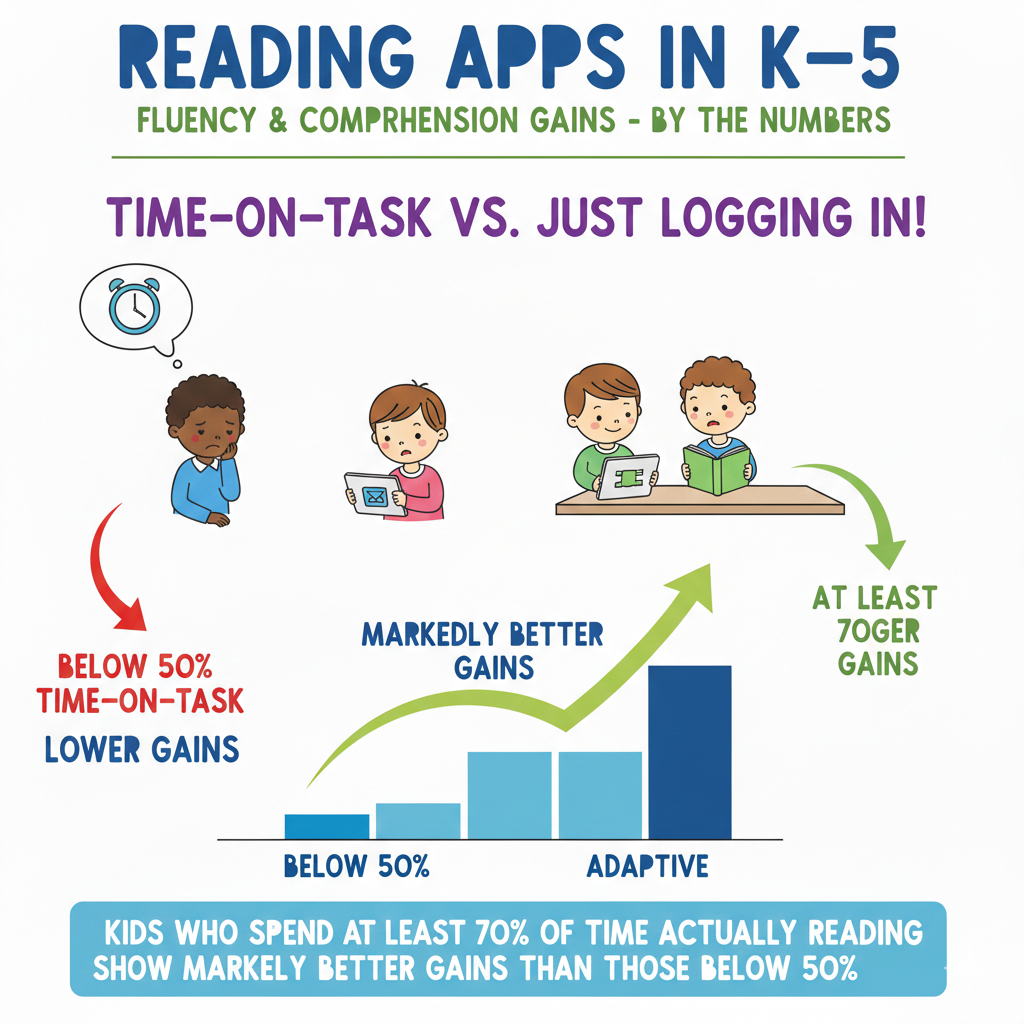
21. Time-on-task vs. just logging in: Kids who spend at least 70% of app time actually reading show markedly better gains than those below 50%.
Why Active Reading Time Matters More Than Screen Time
Not all app time is equal. A child can log in for 20 minutes but spend half of that clicking around, changing avatars, or switching screens. Real growth happens when most of that time is spent actively reading.
Students who spend at least 70 percent of their session actually reading, answering questions, or listening carefully show much stronger gains than those who spend less than 50 percent engaged.
This difference matters because reading skill builds through focused practice. If attention drifts often, the brain does not strengthen reading pathways. Progress slows.
To improve time-on-task, create a calm reading space. Remove toys and extra screens. Encourage your child to complete one full lesson before exploring other app features.
You can also review session summaries if the app provides them. Some systems show how much time was spent reading versus navigating. Use this information to guide better habits.
Teach your child to set a goal before starting. For example, finish two passages or complete one lesson with full focus. Goals improve concentration.
Short sessions help too. Ten to fifteen minutes of deep focus is better than thirty minutes of distraction.
At Debsie, we design lessons to keep students engaged from start to finish. Each session has a clear purpose so children stay involved and active.
Seventy percent focused reading may not sound dramatic, but it makes a clear difference in growth speed. Active engagement turns minutes into measurable progress.
22. Audio support can speed early decoding growth: For K–2 learners, audio scaffolds are often linked to faster word recognition growth by about 10–20%.
How Audio Support Builds Strong Early Readers
In the early grades, especially Kindergarten through Grade 2, decoding is the main challenge. Children are still learning how letters connect to sounds. During this stage, audio support can increase word recognition growth by about 10 to 20 percent.
Audio scaffolds work by modeling correct pronunciation. When children hear a word clearly and see it written at the same time, the brain links sound and spelling. Over repeated practice, those links become automatic.
This is especially helpful for tricky words that do not follow simple phonics rules. Hearing the word correctly prevents guessing and builds accurate memory.
However, audio should support learning, not replace effort. Encourage your child to try reading first. If they hesitate, allow them to tap for audio help. Gradually reduce reliance as confidence grows.
You can also use echo reading. Let the app read one sentence, then ask your child to repeat it. This strengthens fluency and builds rhythm.
Pay attention to independence. The goal is not constant listening. The goal is stronger decoding.
At Debsie, we design early reading lessons with balanced audio support. Children receive guidance when needed, but they are also encouraged to practice independently.
A 10 to 20 percent boost in early decoding may seem small, but at this stage it can speed overall reading development significantly.
When children build strong decoding foundations early, later comprehension becomes easier and smoother.
23. Gamification effect on practice time: Points, badges, and levels commonly increase voluntary reading time by about 10–30% in K–5.
How Motivation Tools Increase Reading Effort
Children are naturally drawn to rewards and progress markers. When reading apps include points, badges, or levels, voluntary reading time often increases by 10 to 30 percent.
This happens because visible progress feels exciting. When a child earns points after completing a passage, the brain releases a sense of achievement. That small reward encourages them to continue.
Gamification works best when it supports learning rather than distracts from it. The reward should follow real effort, such as finishing a lesson or improving accuracy.
At home, you can strengthen this effect by celebrating milestones. If your child reaches a new reading level or earns a badge for consistency, acknowledge it. Simple praise builds pride.
Be careful not to focus only on rewards. The goal is to build internal motivation over time. Gradually shift the conversation from points earned to skills gained.

For example, instead of saying, “You got 100 points,” say, “Your reading sounded smoother today.” This connects rewards to real growth.
At Debsie, we use gamified systems carefully. Our badges and progress markers are designed to encourage consistency without distracting from learning. Children feel excited to advance while still focusing on reading skill.
A 10 to 30 percent increase in voluntary reading time can make a large difference over months. More time spent practicing leads to stronger fluency and deeper comprehension.
When motivation and structure work together, children read more willingly and grow more steadily.
24. Largest benefit window for phonics-heavy tools: The strongest measurable impact is usually in K–2, where decoding practice can drive faster early fluency gains than in older grades.
Why Early Grades See the Biggest Impact
Kindergarten through Grade 2 is the stage where children are learning how to read. After Grade 3, they are reading to learn. That is why phonics-heavy tools show the strongest measurable impact in the early years.
In K–2, children are still building the foundation of decoding. They are learning letter sounds, blends, digraphs, and basic spelling patterns. When they receive structured phonics practice during this window, fluency can grow faster than it does in later grades.
This early boost matters. If decoding becomes automatic by the end of Grade 2, comprehension becomes easier in Grade 3 and beyond. But if decoding remains weak, students may struggle across subjects.
To support early growth, make phonics practice consistent. Focus on short vowel sounds, blends, and sight words. Encourage your child to break unfamiliar words into parts instead of guessing.
Use repetition wisely. Young readers benefit from revisiting similar word patterns across different texts. This builds confidence and speed.
Audio support and guided correction are especially helpful in these grades. Immediate feedback prevents incorrect habits from forming.
At Debsie, our early reading programs are built with strong phonics foundations. We focus on structured skill progression so children master one pattern before moving to the next.
The early years are a powerful opportunity. Gains made in K–2 often shape long-term academic success.
Strong decoding in early grades builds smooth fluency later. And smooth fluency supports strong comprehension for years to come.
25. Comprehension strategy prompts help older elementary more: In grades 3–5, apps that teach “summarize, predict, question” often show bigger comprehension gains than apps focused mainly on phonics.
Why Thinking Skills Matter More in Grades 3–5
By the time children reach Grades 3 to 5, most can decode basic words. The real challenge shifts from sounding out text to understanding deeper meaning. This is why comprehension strategy prompts such as summarize, predict, and question often lead to stronger gains in older elementary students than phonics-heavy practice.
At this stage, texts become longer and more complex. Stories include multiple characters and themes. Informational texts include facts, arguments, and evidence. Children must think while reading, not just pronounce words correctly.
When an app teaches students to pause and summarize a paragraph, they learn to capture the main idea. When they predict what might happen next, they engage actively with the story. When they ask questions about confusing parts, they monitor their own understanding.
These habits build independent readers.
To support this at home, encourage your child to explain what they just read in two or three sentences. Ask what they think will happen next and why. If something seems unclear, guide them to reread that section.
Avoid overemphasizing speed in these grades. Fluency still matters, but understanding matters more.
Choose reading tools that include guided thinking prompts instead of only drill practice. The goal is deeper comprehension, not just correct pronunciation.
At Debsie, our Grades 3–5 reading programs focus strongly on strategy development. We help students learn how to think through text, analyze ideas, and express their understanding clearly.
In older elementary years, reading becomes a thinking skill. Teaching children how to reflect, question, and summarize prepares them for middle school and beyond.
26. Fluency growth is fastest at first: Many kids gain the most in the first 4–6 weeks, then growth continues but often slows unless text difficulty rises.
Why Early Gains Happen Quickly and How to Sustain Them
When children begin structured reading practice, growth often feels dramatic in the first four to six weeks. Fluency can improve quickly during this early phase. Mistakes decrease. Speed increases. Confidence rises.
This happens because the brain responds strongly to new, focused practice. When a child shifts from irregular reading to consistent daily sessions, skills sharpen rapidly.
However, after this initial boost, growth can slow down. This does not mean progress has stopped. It simply means the brain has adapted to the current level of challenge.
To keep fluency improving, text difficulty must rise gradually. If a child continues reading the same level for too long, improvement flattens. Slightly harder passages create new learning opportunities.
The key is balance. Do not increase difficulty too quickly. Watch accuracy and comprehension scores. If accuracy remains strong and understanding is clear, it may be time to move up.
Track progress monthly instead of weekly once the early phase passes. Growth becomes steadier and more gradual.
Also introduce variety. Different genres challenge different skills. A biography may stretch vocabulary. A science article may stretch comprehension.
At Debsie, our adaptive learning system automatically adjusts text complexity as students improve. This ensures continued growth beyond the first few weeks.
Early gains build excitement. But long-term success depends on thoughtful progression.
When challenge rises at the right pace, fluency continues to strengthen month after month.
27. Reading stamina growth: Regular app reading often increases “can read without stopping” time by about 5–15 extra minutes over a semester for reluctant readers.
How Stamina Builds Stronger, More Confident Readers
Some children can decode words well but struggle to read for long periods. They lose focus. They become restless. They want to stop quickly. This is called low reading stamina.
With regular structured practice, many reluctant readers increase their “can read without stopping” time by about 5 to 15 extra minutes over one semester.
That increase is powerful.
If a child could only focus for five minutes at the start, and now they can read for fifteen or even twenty minutes calmly, that changes homework, test performance, and overall confidence.
Stamina builds slowly. It does not happen by forcing long sessions. It grows by starting small and increasing gradually.
Begin with short, focused sessions of ten minutes. Once your child finishes comfortably, extend by two or three minutes the following week. Celebrate effort, not just speed.
Remove distractions during reading time. A quiet space supports longer focus.
Also choose interesting content. Reluctant readers often struggle because the material feels boring or too difficult. When texts match their interests and level, stamina improves naturally.
Encourage small breaks between passages rather than stopping completely. A deep breath and quick stretch can help them continue.
At Debsie, we design reading paths that slowly build endurance. Students begin with manageable lessons and gradually increase challenge and length.
A 5 to 15 minute gain in stamina may seem small, but it represents stronger focus and self-control. These habits extend beyond reading into every subject.
Stamina turns short bursts of effort into sustained learning power.
28. On-screen reading vs. paper: When text is well-designed and distraction is low, comprehension is often similar to print, usually within 0–5% difference.
Does Reading on a Screen Hurt Comprehension?
Many parents worry that reading on a screen is weaker than reading on paper. The truth is more balanced. When digital text is well-designed and distractions are low, comprehension is often very close to print reading, usually within a 0 to 5 percent difference.
That means the format alone is not the problem. The environment matters more.
If a child reads on a device filled with pop-ups, games, and notifications, focus drops. But if the reading app is clean, structured, and distraction-free, understanding remains strong.
Good digital design includes clear fonts, proper spacing, limited animations, and simple navigation. When the screen supports focus instead of pulling attention away, comprehension stays steady.
At home, you can improve digital reading quality easily. Turn off notifications during reading time. Use full-screen mode if possible. Keep other apps closed.
Also encourage occasional reflection. Ask your child to pause and explain what they just read. This keeps thinking active.
For some children, digital reading even increases motivation. Interactive features, instant feedback, and guided support can help them stay engaged longer than with print alone.
At Debsie, our digital reading lessons are carefully structured to minimize distraction and maximize clarity. We focus on learning first, features second.
A 0 to 5 percent difference shows that digital reading, when done correctly, can be just as effective as paper.
What matters most is focus, consistency, and thoughtful practice.
29. Overuse can backfire: When app time replaces all paper reading and conversation, comprehension gains can flatten. Many educators cap app use at about 20–30 minutes per day for K–5.
Why Balance Matters More Than More Time
Reading apps are powerful tools. But like any tool, they work best in balance. When app time replaces all paper reading, storytelling, and family discussion, comprehension growth can slow down. That is why many educators suggest keeping structured app use to about 20 to 30 minutes per day for K–5 students.
Children need variety. They need to hear stories read aloud by adults. They need to hold books. They need to talk about ideas face to face. These experiences build emotional connection and deeper thinking.
If all reading happens on a screen, children may miss the richness of conversation and shared reflection.
To create healthy balance, divide reading time wisely. Use 15 to 20 minutes for structured app practice. Then allow time for free reading with physical books. Ask your child to share what they read. Encourage storytelling at dinner.
Also model reading yourself. When children see adults reading books, they understand that reading is valuable beyond assignments.
Digital tools are excellent for guided skill-building. Print reading is excellent for immersion and imagination. Together, they create strong readers.
At Debsie, we encourage families to use our structured lessons as part of a broader reading routine. Our goal is to build skill while preserving joy and connection.
Twenty to thirty minutes of focused app use is enough to drive growth. Beyond that, conversation and variety strengthen comprehension in ways no app alone can provide.
30. Most common high-impact usage pattern: 80–100 total minutes per week, split into 4–5 sessions, with level-matched texts and quick comprehension checks, is a frequently reported pattern tied to solid gains in both fluency and understanding.
The Simple Weekly Formula That Drives Real Results
After looking at all the numbers, one clear pattern appears again and again. Children who grow steadily in fluency and comprehension often follow a simple structure. They read for about 80 to 100 minutes per week. They spread this time across four to five sessions. They read texts matched to their level. And they complete short comprehension checks after each session.
This formula works because it balances time, frequency, challenge, and reflection.
Eighty to one hundred minutes per week is enough to create measurable improvement without causing burnout. Splitting that time across multiple days protects focus and builds routine. Level-matched texts keep children in the growth zone. Quick comprehension checks turn reading into active thinking.
To apply this at home, create a weekly reading plan. Choose four or five days for structured practice. Keep each session around 15 to 20 minutes. Make sure the reading level feels slightly challenging but manageable.
After each session, ask two or three thoughtful questions. Review mistakes calmly. Track progress weekly.
Protect consistency more than perfection. If one day is missed, continue the next day without guilt. The weekly total matters more than one session.
At Debsie, this is the structure we design our programs around. Our adaptive lessons, guided practice, and built-in comprehension checks follow this proven pattern. Students grow steadily because the system supports strong habits.
Reading improvement does not require complicated strategies. It requires clear structure and steady effort.
Eighty to one hundred focused minutes per week can change a child’s reading confidence, academic performance, and long-term success.
Conclusion
When you step back and look at all these numbers together, one truth becomes clear. Reading growth is not random. It follows patterns. It responds to structure. It rewards consistency.