
English is the language of school, work, travel, and the internet. Every day, more families look for trusted help to learn it well. They want clear lessons, real progress, and a safe place to practice. They want results that open doors. This article is a simple, number-driven guide to the rise in English tutoring for ESL and EAL learners. It shows what is growing, why it matters, and how parents and students can use each trend to learn faster and smarter.
1) Around 1.5–2.0 billion people are learning English today; that is about 1 in 4 people on Earth.
What this means
English is not a niche skill. It is a gateway. When one in four people are learning, the race is not to start, but to keep pace and move ahead. This scale tells us there is constant pressure on schools, tests, and jobs to raise the bar. A basic level is no longer enough.
Clear speaking, fast listening, and confident writing set students apart. For parents, this number also means there is a huge community to learn with, compete with, and learn from. It shows that good tutors, structured programs, and smart practice plans are in high demand, and that waiting often leads to lost time.
The best time to begin is now, but beginning with a plan is what makes the difference. English is also the language of the web, science, and global trade. A child who learns it well opens more doors in college, internships, and remote work. With billions learning, small gains stack up.

Over a year, a child who adds two or three extra hours of smart practice per week can jump a level while many others stay stuck.
How to act on it
Set a clear target that feels real, such as reading a short story aloud with strong pace, or holding a five-minute call without help. Pick a study rhythm that never breaks. Two short live lessons plus three short self-study sessions each week work well for busy families.
Keep practice tight and focused. Use short speaking drills, timed reading aloud, and micro-writing prompts. Track words learned and minutes spoken, not just pages read. At Debsie, we turn these tiny steps into game points and badges, so focus becomes fun.
Book a free trial class, get a level check, and ask for a 12-week plan with weekly checkpoints. Small, steady wins help your child rise above a very large crowd.
2) About 60–70% of all language learners worldwide choose English as their first target language.
What this means
Most learners pick English first because it unlocks global media, travel, and better pay. This strong majority shifts how platforms and schools design content. You will find thousands of courses, but quality varies a lot.
A family can waste months if lessons mix random topics or skip speaking time. Since most people study English first, schools and employers expect more than casual skills. They want clear pronunciation, strong vocabulary in real topics, and the ability to explain ideas in simple words.
For younger students, this focus makes English a base for learning other subjects, like science and history, because many resources use English first.
How to act on it
Do not chase every shiny app. Choose one core program and one human guide. The core program should map to CEFR levels, give short daily tasks, and show clear gains in words, sounds, and grammar patterns.
The human guide should correct errors fast and model natural speech. At Debsie, each learner gets a skills map that shows exactly which sounds, word groups, and sentence frames they need next.
Parents should ask for a monthly progress call and a simple scorecard that shows listening speed, speaking time, and writing accuracy. Keep media in English in daily life. Switch one show, one podcast, or one set of game menus to English.
Practice telling one true story from your day in English at dinner. Tiny habits are the shortcut. If you want a simple start, book a Debsie trial and we will set up your child’s first 30-day English plan in one call.
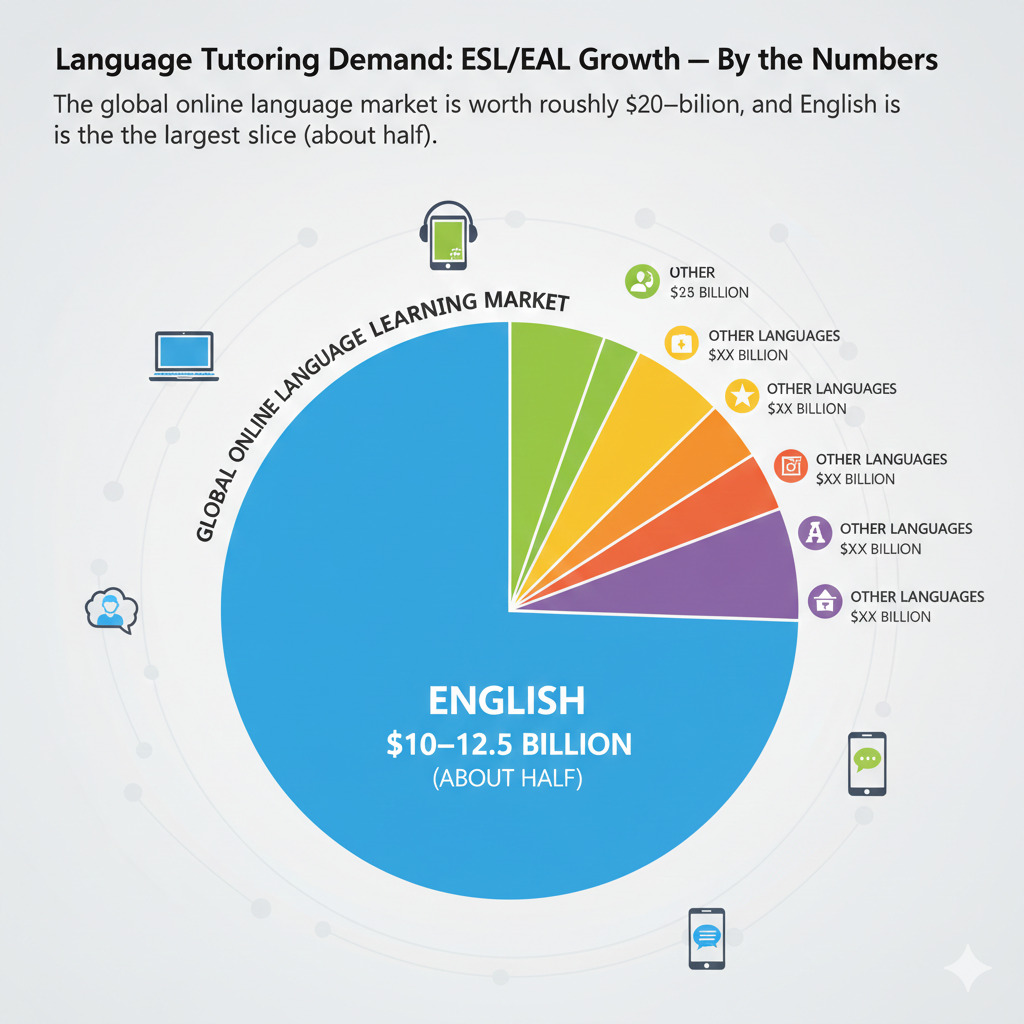
3) The global online language learning market is worth roughly $20–25 billion, and English is the largest slice (about half).
What this means
That much money tells us two things. First, families are ready to invest when they see real results. Second, there is noise in the market. Many tools look good but do not move skills forward. The size also shows a shift from local, in-person classes to flexible, online programs that fit busy schedules.
With English taking about half of the market, innovation tends to happen first in ESL. We see better speech recognition, faster feedback, and more data on what works. The market also grows because employers need English for remote teams.
That means there is strong demand for teen and adult learners who can present, write short reports, and handle calls with clients.
How to act on it
Treat your English plan like a small project with a budget, timeline, and milestones. Decide what you will spend each month across tutoring, self-study, and tests, and aim for the highest return per minute. Look for programs that give instant feedback on speaking and writing, not just passive videos.
Ask for real samples of corrected work before you commit. At Debsie, we offer short, tracked speaking missions and quick writing checks that return specific fixes within the lesson. Build a monthly cycle: week one sets goals and new words, weeks two and three push practice and live feedback, week four reviews and tests.
Keep a simple dashboard at home: minutes practiced, words mastered, and speaking tasks completed. When the numbers rise, confidence rises. If you want a ready-made dashboard and a coach who keeps you honest, take our free trial class and we will set it up for you.
4) Online English learning is growing at about 10–15% per year, much faster than most school enrollments.
What this means
A growth rate like this means choices expand every month. New platforms open, new teachers go online, and new tools appear. It sounds great, but it can overwhelm parents who just want to pick a safe, effective path.
This pace also means that what worked two years ago may not be best today. Live, short classes, adaptive practice, and voice feedback are now common. Families who move with the trend gain time and save effort.
For schools, the growth shows that mixed models win. A blend of teacher-led lessons and guided self-study beats a single method. It also shows that students expect learning to fit their day, not the other way around.
How to act on it
Adopt a blended routine that is light and steady. Choose two twenty-five minute live sessions each week focused on speaking and listening. Add three fifteen-minute self-study blocks focused on vocabulary and reading.
Use a single notebook for new words and example sentences, and review it twice a week. After each live lesson, ask your child to record a one-minute summary of what they learned. This trains recall and builds a habit of speaking aloud.
At Debsie, we keep the schedule flexible and offer make-up lessons so busy weeks do not break the streak. We also suggest a monthly refresh where we swap in new activities if motivation dips. If you want help setting the right mix for your child’s age and level, book a Debsie trial and we will craft a balanced plan in minutes.
5) In U.S. public schools, roughly 5 million students are English Learners (about 1 in 10 students).
What this means
When one in ten children in a large school system is learning English, support cannot be a side plan. It must be part of the main plan. These students bring many languages, stories, and strengths to class. They also face real hurdles.
They need time to learn the sounds of English, the rhythm of sentences, and the special words used in math, science, and history. If support is weak, they fall behind not because they cannot learn, but because they cannot access the content fast enough.

Families who ask clear questions and track progress help their children get what they need. The good news is that small, steady practice outside school makes a large difference. Five million learners also means there is a wide community of parents, tutors, and programs ready to help.
How to act on it
Start by asking the school for your child’s English proficiency level and the specific goals for the term. Request sample work that shows what strong performance looks like in reading, writing, and speaking. At home, build a fifteen-minute daily habit that focuses on school language.
Read one short paragraph from a science or social studies text out loud, then retell it in simple words. Keep a word bank of key terms like estimate, explain, compare, and cause. Practice using them in short sentences each night.
Schedule two weekly live sessions that target listening and speaking, because oral fluency is the bridge to classroom success. At Debsie, we align lessons with school units, so practice connects to homework and tests.
We give quick feedback on pronunciation and sentence frames, and we turn progress into badges so children feel proud. Book a free trial class and we will create a school-aligned plan for your child in the first week.
6) Over the last 20 years, the number of English Learners in U.S. K–12 grew by about 20–30%.
What this means
A steady rise over two decades shows a long-term shift, not a short burst. Schools now teach more multilingual students than before, and this changes everything from staffing to teacher training. Growth at this level can strain services if systems do not adapt.
Some districts respond with strong programs and data-driven support. Others struggle to keep up, which can leave gaps in early grades that snowball later. For parents, this increase means demand for high-quality tutoring is strong and will remain strong.
It also means that children will learn alongside classmates from many language backgrounds. This can be a gift if schools build inclusive culture and provide guided speaking practice. It can also be stressful if children feel shy or left out.
A calm plan at home helps children build skills and confidence while the school system works through change.
How to act on it
Focus on early wins that stack. In grades one to five, build clear sounds, sight words, and simple sentence frames. In grades six to eight, add academic words, note-taking habits, and speaking practice with visuals. Make a four-part weekly cycle at home.
Day one reviews sounds and high-frequency words. Day two practices reading aloud with timing for pace. Day three builds a short writing piece using a frame such as first, next, then, finally. Day four records a one-minute talk about a picture, chart, or map.
Keep goals light but steady, and celebrate small jumps in speed and accuracy. At Debsie, our teachers use short, structured routines that match each age group, and we share clear progress notes with parents.
If you want a plan that grows with your child across terms, start a Debsie trial and get a roadmap for the next ninety days.
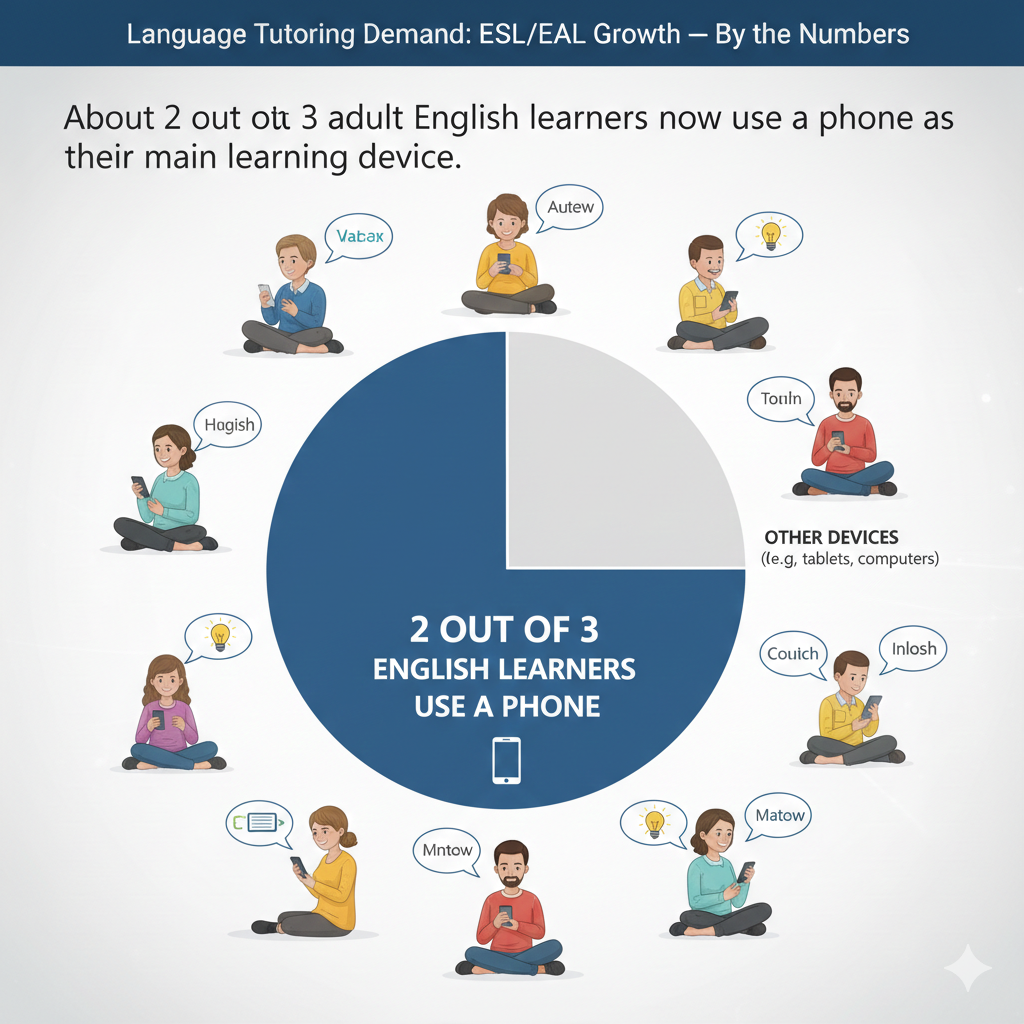
7) About 2 out of 3 adult English learners now use a phone as their main learning device.
What this means
Learning is moving to the pocket. Adults study on buses, in lunch breaks, and between shifts. A phone-first habit changes how lessons should work. Videos must be short. Text must be readable without zooming. Speaking tasks should record cleanly in noisy places.
It also changes how feedback comes back to the learner. It needs to be fast, clear, and easy to act on. The phone is not just a small screen; it is a microphone, a camera, and a timer. Used well, it can give more speaking practice than a laptop because it is always with you.
Used poorly, it can distract with notifications and make focus hard. The key is to design micro-sessions that fit real life. Two or three bursts of ten minutes across a day can match the impact of a long sit-down session if each burst is targeted.
How to act on it
Turn your phone into a speaking gym. Set three daily alarms for short practice blocks morning, midday, and evening. In each block, do one clear task. Shadow a thirty-second clip, record yourself, and compare sound and rhythm.
Read a short news paragraph aloud and time your pace. Speak for one minute on a simple prompt, then replay and mark one thing to fix. Keep a small list of power phrases for work, such as I recommend, the main issue is, or please confirm.
Use them in voice notes to build automaticity. Protect focus by turning on Do Not Disturb during practice and clearing your home screen of distracting apps. At Debsie, mobile lessons are built for clean one-handed use with instant feedback on words, stress, and pauses.
We pair these with short live sessions so you get human correction without giving up flexibility. If you want a phone-first plan with accountability, book a Debsie trial and we will set up your three-daily-bursts routine on day one.
8) Typical online ESL class length is 25–30 minutes, which fits busy schedules and keeps focus high.
What this means
Short lessons work because attention has limits. After about half an hour, focus drops and mistakes rise. A 25–30 minute class gives enough time to warm up, practice one target skill, and get feedback before energy fades.
This length also fits real life. Parents can place a lesson between school and dinner. Adults can learn during a lunch break or just before a shift. Another benefit is faster turnaround. With shorter blocks, it is easier to reschedule if something comes up, so the habit survives busy weeks.
The format also encourages sharper planning by teachers. There is no time for long lectures. Each minute must count. A strong 30-minute session usually includes a quick check of last time’s goal, a focused drill on one small skill, guided practice with a real task, and a brief review with a tiny assignment for next time.
This rhythm builds a sense of progress because each class does one thing well rather than many things halfway.
How to act on it
Design every 30-minute class with a single purpose. It could be fixing the th sound, speeding up reading, or building a clear sentence frame for making requests. Ask the tutor to share the objective at the top of the session in one sentence.
Keep materials light and ready before class to save time. Use a repeatable pattern so students know what comes next. Start with a two-minute warm-up that recalls last lesson’s key point. Move into a ten-minute focused drill that pushes accuracy.
Shift to a ten-minute real-world task such as a call opener, a short report, or a picture description. End with a three-minute debrief and a micro-assignment like recording a one-minute talk. Between classes, use tiny practice moments to keep gains alive.
Read a short paragraph aloud while waiting in a line. Record a new word in a notebook and use it in two quick sentences. If your family prefers structure, set two fixed 30-minute slots each week and guard them like doctor visits.
At Debsie, our standard class pack is built around this exact length, with lesson plans that name the target skill, the success check, and the homework in plain words. This keeps momentum strong without draining the day.
9) A common tutoring pace is 2–3 classes per week; learners who follow this pace often progress a full level in 6–9 months.
What this means
Consistency beats intensity. Two or three well-run sessions each week create a steady drip of input, practice, and feedback. The brain needs spaced contact with the language to form habits. A gap longer than a week makes skills rusty and returns each class to review mode.
With a 2–3 class rhythm, each new skill has a chance to stick before the next one arrives. Over half a year, the hours add up. A level jump in six to nine months is realistic when live lessons pair with short daily practice.
This target is motivating because it is near enough to feel possible but far enough to build true skill. For parents, the rhythm also protects other parts of life. It leaves room for homework, sports, and rest, while keeping English in the weekly mix.

For adults, it fits around work shifts and family duties without taking over evenings.
How to act on it
Make a calendar that never changes. Pick the same two or three days and the same time. Treat them like meetings that matter. Plan your week around them, not the other way around. In each class, focus on one building block that pushes you toward the next level: sound clarity, word groups, sentence frames, or task routines like summarizing.
Between classes, use short review sessions on the same days to lock gains. Ten minutes the day after class and ten minutes the day before the next class work well. Track forward motion with a simple level ladder.
Write down three markers you want to reach in the next ninety days, such as reading 120 words per minute with 95% accuracy, holding a five-minute call without long pauses, or writing a 150-word email with fewer than five grammar slips.
Celebrate each marker when you hit it. If life gets messy, keep the rhythm alive with shorter sessions rather than canceling. A fifteen-minute make-up is better than a missed week.
At Debsie, we schedule 2–3 live lessons per week and pair them with gamified micro-tasks that take five to ten minutes. We also send a tiny checkpoint at week four, eight, and twelve so you can see progress clearly and adjust the plan if needed.
10) Reaching strong B2 (upper-intermediate) commonly takes about 400–600 hours of guided study for many learners.
What this means
B2 is the level where real doors open. You can join college classes taught in English, write clear emails at work, and speak on calls without constant help. But it is not a weekend job. Four hundred to six hundred hours is a serious but doable climb.
Think of it like training for a half marathon. You need weeks of patient effort, not a single sprint. Guided study matters because self-study alone often leads to fossilized errors that become hard to fix. A tutor can stop bad habits early, model natural speech, and set the right pace.
The hour range reflects differences in starting level, prior exposure, and practice quality. A learner who starts at A2, studies three to five hours per week, and gets steady feedback can reach B2 in about two years.
Faster paths are possible with more weekly time and strong focus, but the key is steady, high-quality practice over months.
How to act on it
Turn the big number into a weekly plan. If you aim for 450 hours across 18 months, that is about six hours per week. Split it into three parts. Book two 30-minute live classes for targeted feedback. Add two hours of guided self-study with clear tasks: vocabulary sets, reading with questions, and short writing drills.
Reserve two more hours for speaking and listening in real contexts: shadowing, one-minute talks, and recorded summaries of articles or videos. Keep a simple hours log and a skills log. The hours log tracks time spent. The skills log lists concrete wins, like mastered word groups or improved reading speed.
Review both every month and adjust. Remove activities that do not move the needle. Replace passive watching with active speaking. Use checkpoints tied to B2 tasks. Practice a short presentation, write a problem-solution email, and lead a three-step explanation of a chart.
Ask your tutor to grade these with a clear rubric so you see where to push next. Build in recovery. One lighter week per month prevents burnout. If motivation dips, swap topics to something you love, like sports recaps or tech news, while keeping the same target skills.
At Debsie, our B2 track lays out a 24-week cycle with exact hours, tasks, and check-ins. We combine live coaching with bite-size missions that force output. If you want a clear map from your current level to B2, start a Debsie trial and we will estimate your required hours and build your weekly plan on the spot.
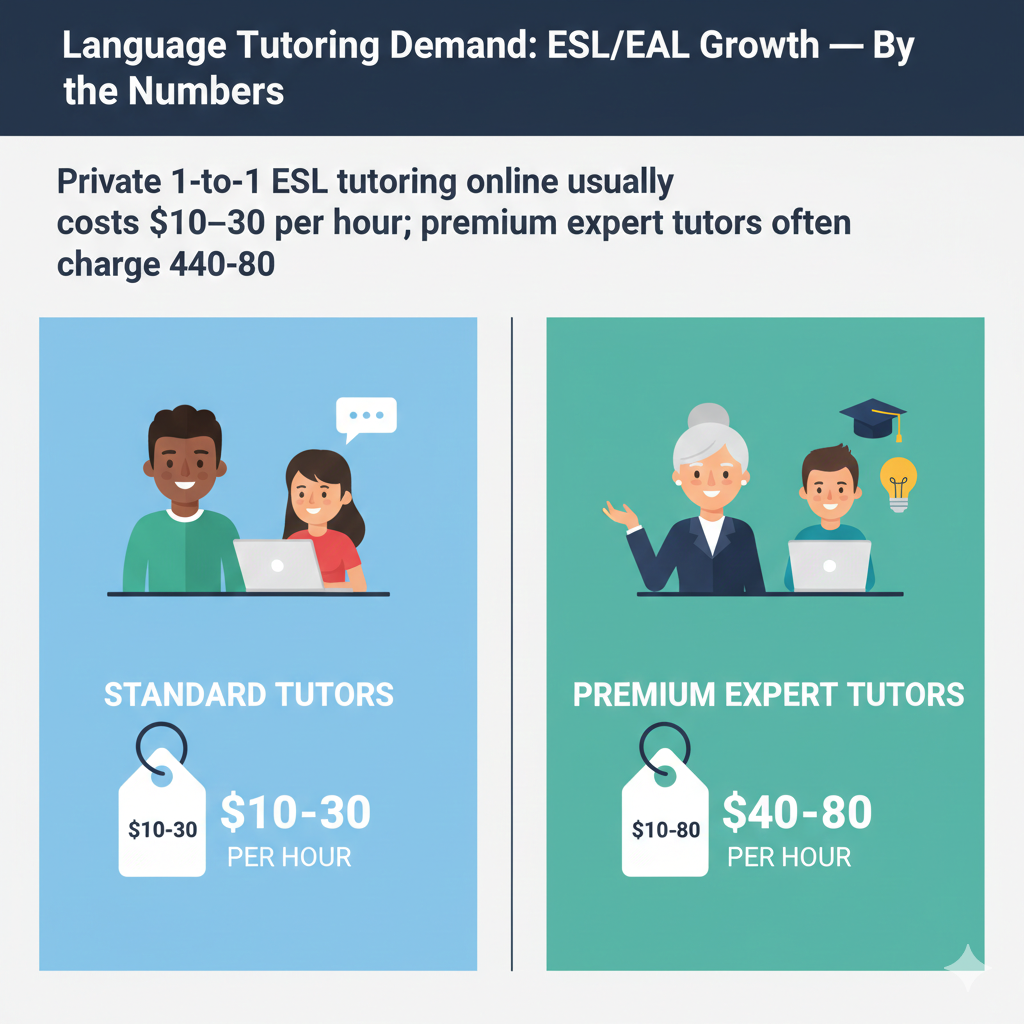
11) Private 1-to-1 ESL tutoring online usually costs $10–30 per hour; premium expert tutors often charge $40–80.
What this means
Price signals two things: experience and structure. Lower rates can be fine for basic practice, but higher rates usually include sharper lesson design, faster error correction, and better results per minute. The spread also reflects time zones and special skills.
A tutor with child-literacy training, exam expertise, or accent coaching may charge more because they deliver targeted outcomes. Paying more is not always better, but paying for clarity is. What you want is return on learning time, not just a bargain hour.
A strong session gives a clear goal, guided practice, and a take-home task that sticks. A weak session drifts, covers many topics, and leaves the learner unsure. Families should also weigh hidden costs like long homework that needs parent help or rigid schedules that lead to missed sessions.
Value shows up in progress data, flexible rescheduling, and how confident the learner feels after class. Over a term, two hours a week with a focused coach can beat four hours with a casual tutor because mistakes get fixed early and good habits form faster.
How to act on it
Set a monthly budget and match it to goals. If the aim is quick fluency gains, spend where feedback is strongest. Ask each tutor for three items before you commit. Request a sample lesson plan for your child’s level, one piece of feedback they gave a similar student, and the specific outcomes they expect in eight weeks.
Track two numbers: cost per lesson and progress per lesson. Progress might be words mastered, reading speed, or error rate in speaking. Compare tutors by progress per dollar. Keep the first month flexible. Buy a small pack to test fit before you book a long plan.
At Debsie, we keep prices clear and pair each live class with a short mission you can do alone, so you are not paying a premium for work that does not need a teacher. Join a free trial class, get a level check, and see a price-to-progress plan you can review anytime.
12) Small-group ESL classes online often cost 30–50% less per learner than 1-to-1 sessions.
What this means
Groups help budgets while still giving real interaction. Done well, a small class offers peer models, turn-taking, and natural listening practice at a lower price. You hear how others answer and learn from both good and imperfect examples.
Groups also create friendly pressure to speak up and finish tasks. The risk is that shy students can hide, or advanced students can get bored if levels are mixed. The key is size and structure. A true small group means three to six learners, clear roles, and rotating chances to speak.
Teachers need tools to track who talks, who needs help, and which skills each child is building. Parents gain when groups follow a stable plan where each week builds on the last and homework links to class tasks.
Savings are real if learning time stays high. If the class is mostly passive, the lower price costs more in the long run because progress slows.
How to act on it
Choose groups by fit, not just time slots. Ask the provider how they place students and how they keep levels tight. Request a sample recording that shows how often each learner speaks in a typical class. Look for routines that force output, like pair tasks, timed responses, and quick debates.
Prepare your child to use hand signals or chat replies so they can jump in without fear. After class, have your child retell one thing a peer said. This builds listening focus and memory. If your child is shy, start with a 1-to-1 lesson to warm up, then join a group at the same level.
Blend the two if you can: one private session for targeted fixes and one group for real-life practice. At Debsie, our small groups are capped, levels are tight, and teachers track talk-time so every child gets fair turns.
We also share a short progress note each cycle so parents see the gains. Try a free trial and we will recommend the best group or mix for your child.
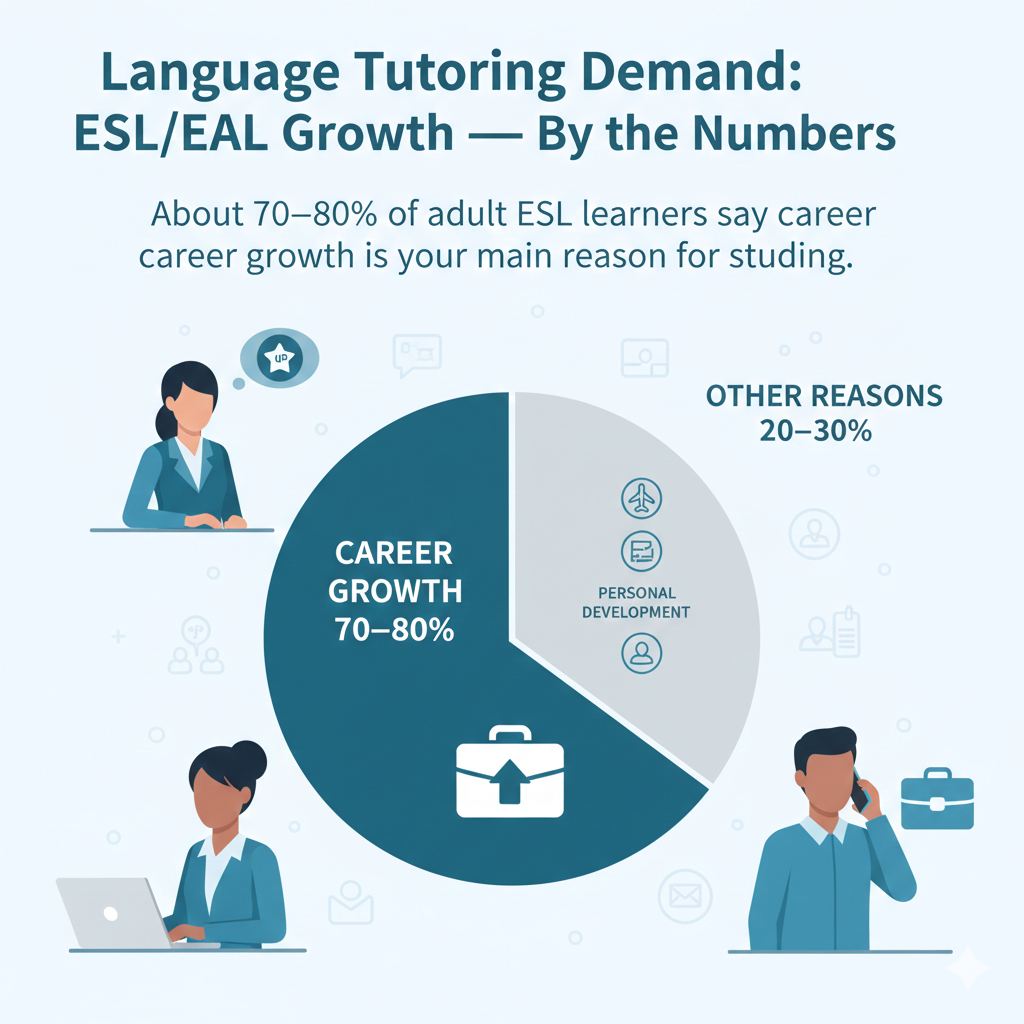
13) About 70–80% of adult ESL learners say career growth is their main reason for studying.
What this means
Adults learn English to change their work life. They want to win interviews, lead meetings, write sharp emails, and get promoted. This aim shapes the kind of practice that works. General language drills help, but job tasks are the real test.
A learner who can explain a delay, propose a fix, and confirm next steps in clear English is far more valuable to a team than someone who only knows textbook dialogues. Career-driven study also rewards consistency over time.
One strong presentation or a crisp email does not make a reputation; steady communication does. Adults need fast, practical wins that tie directly to tasks they face this week. They also need coaches who understand workplace tone: polite, direct, and brief.
Confidence is crucial. Many skilled professionals hold back because they fear errors. Targeted feedback turns fear into control.
How to act on it
Build a work-first study kit. List five tasks you do often, like kickoff calls, status updates, demos, client emails, or feedback chats. For each task, build a script of power phrases and a simple structure. Practice aloud with a timer and record yourself once a week.
Track your words per minute and clarity markers like shorter sentences and fewer fillers. Ask your tutor to role-play tough moments such as pushing back, asking for clarity, or delivering bad news kindly. Keep an email template bank for common notes and edit them for each case.
Use shadowing to copy the rhythm of strong speakers in your field. If you manage teams, practice micro-briefs: a one-minute summary of the goal, the plan, and the owner. At Debsie, our Career English track is built on tasks, not chapters.
Each lesson ends with a work product such as a revised email, a recorded stand-up, or a slide pitch. Book a trial and bring a real work scenario; we will turn it into your next practice loop on day one.
14) Around 40–50% of teen ESL learners study mainly for study-abroad or test goals.
What this means
For many teens, English is the bridge to new schools, visas, and scholarships. Their goals are clear and time-bound. They must raise scores before deadlines and show they can learn in English-only classrooms. This means the work should match the tests and the real tasks they will face abroad.
A teen who can write a clear summary, speak calmly under time pressure, and read fast with good accuracy will feel at home in lectures and labs. It also means stress is real. Teens often juggle schoolwork, sports, and prep books. When a plan is too heavy, they burn out and switch to guesswork.
When a plan is too loose, weeks pass and scores stall. The sweet spot is a steady rhythm that trains the exact skills the tests measure while building the habits college life demands. Think note-taking, quick outlines, timed speaking, and clean grammar for short essays.
These are not just for test day. They are the tools teens will use in every class abroad.
How to act on it
Start with a target date and a gap analysis. Take a full-length practice test under real timing to find weak spots. Build a twelve-week cycle with clear weekly goals. Week one and two set the base: sound clarity, reading speed, and sentence frames for common tasks.
Weeks three to ten run focused drills with rising time pressure and short, real feedback after each set. Weeks eleven and twelve do two full practice tests and a tight review. Keep sessions short and focused. Do fifteen minutes of reading speed work each day, then five minutes of vocab recall using simple word cards and example sentences.
Practice speaking in one-minute bursts with a timer, then replay and mark one fix to try next time. For writing, make tiny outlines before you start, write a simple intro and two clear body points, and leave two minutes to fix grammar slips.
Parents can help by guarding time, not by grading. Let the tutor correct and guide. At Debsie, our teen pathway maps each test task to short drills that feel like games but build real skills. We send weekly scorecards so you can see speed, accuracy, and confidence rise.
Book a Debsie trial, bring your teen’s target score, and we will draft a countdown plan today.
15) Over 3 million people take IELTS each year; it is one of the largest English tests in the world.
What this means
IELTS is a giant gate. Because so many people take it, its tasks shape how millions study. The test checks skills that matter in real life: understanding lectures, explaining data, and writing short academic pieces with clear logic.
The volume also means there is a huge amount of advice online, but not all of it helps. Many learners chase tricks and forget the basics: clear sounds, steady grammar, and strong paragraph flow. IELTS rewards solid habits.

If you can read fast and spot the main idea, if you can write a simple outline and stick to it, if you can speak with calm pace and clear structure, you will score well. The listening test is not about catching every word. It is about staying with the speaker and tracking the point.
The writing test is not about rare words. It is about clear claims, reasons, and examples in neat sentences. The speaking test is not about memorized scripts. It is about natural delivery and direct answers.
How to act on it
Build your study around the test’s real demands. For listening, practice with short talks and lectures. Before you play the audio, read the questions, guess the type of words you need, and mark the key terms. While listening, keep your eyes moving and your pencil ready.
For reading, train speed and question types separately. Do ten-minute sprints where you read and answer only one type, like True or False, to build pattern skill. For writing, plan first. Write two lines of outline for each paragraph, then fill them with clear, short sentences.
Use linking words sparingly and choose ones you actually use in speech. For speaking, build a set of flexible frames. For example, to explain a choice, say the main answer, give two reasons, and add one short example. Record practice answers and listen for pace and filler words.
Fix one thing at a time. At Debsie, we do micro-mocks each week: a mini listening set, a reading sprint, a timed Part 2 talk, and a short Writing Task 1 or Task 2. We give tight feedback in plain words so you know exactly what to change.
Book a free Debsie trial to get your IELTS baseline and a weekly plan that fits your schedule.
16) Over 2 million people take TOEFL each year; many use short-term tutoring to prepare.
What this means
TOEFL is a common ticket for university entry, and its integrated tasks mirror real study life. You listen to a lecture, read a short text, and then write or speak about both. This mix rewards note-taking, summarizing, and clear structure more than fancy vocabulary.
Because many students prep in a short window, the study plan must be sharp. There is no time for random practice. Each session should build a test skill and a college skill at the same time. The speaking section often feels hard because you must think, plan, and talk fast.
The writing section asks for clear logic and control of grammar. With the right drills, gains can come quickly, but only if you practice under time pressure and get exact feedback on what to change.
Short-term tutoring helps because a coach can spot weak habits, show better patterns, and keep the clock honest. Good prep also builds confidence for the first months on campus, where you will face the same kind of integrated tasks daily.
How to act on it
Map your next eight weeks with tight focus. Do three types of drills. First, integrated note-taking. Listen to two-minute clips and read short passages, write a few bullet notes, then speak for forty-five to sixty seconds using a simple structure.
Second, reading logic. Practice finding the main idea and key details fast, and train yourself to skip tough words that do not matter for the question. Third, writing frames. Build templates you truly understand for both the integrated and independent tasks.
Keep sentences short and tidy. Use a timer in every session. For speaking, always plan for fifteen seconds and speak for the rest with calm pace. For writing, stop two minutes early to check verbs, articles, and sentence ends. Keep a small error log and look for patterns, then fix one pattern per week.
At Debsie, our TOEFL track blends integrated drills with quick feedback in the same class, so you do not waste a day waiting for notes. We also track your speaking words per minute and reduce fillers with simple cue cards and live modeling.
Try a Debsie trial class, share your target score and deadline, and we will shape a plan that fits your life and keeps you on schedule.
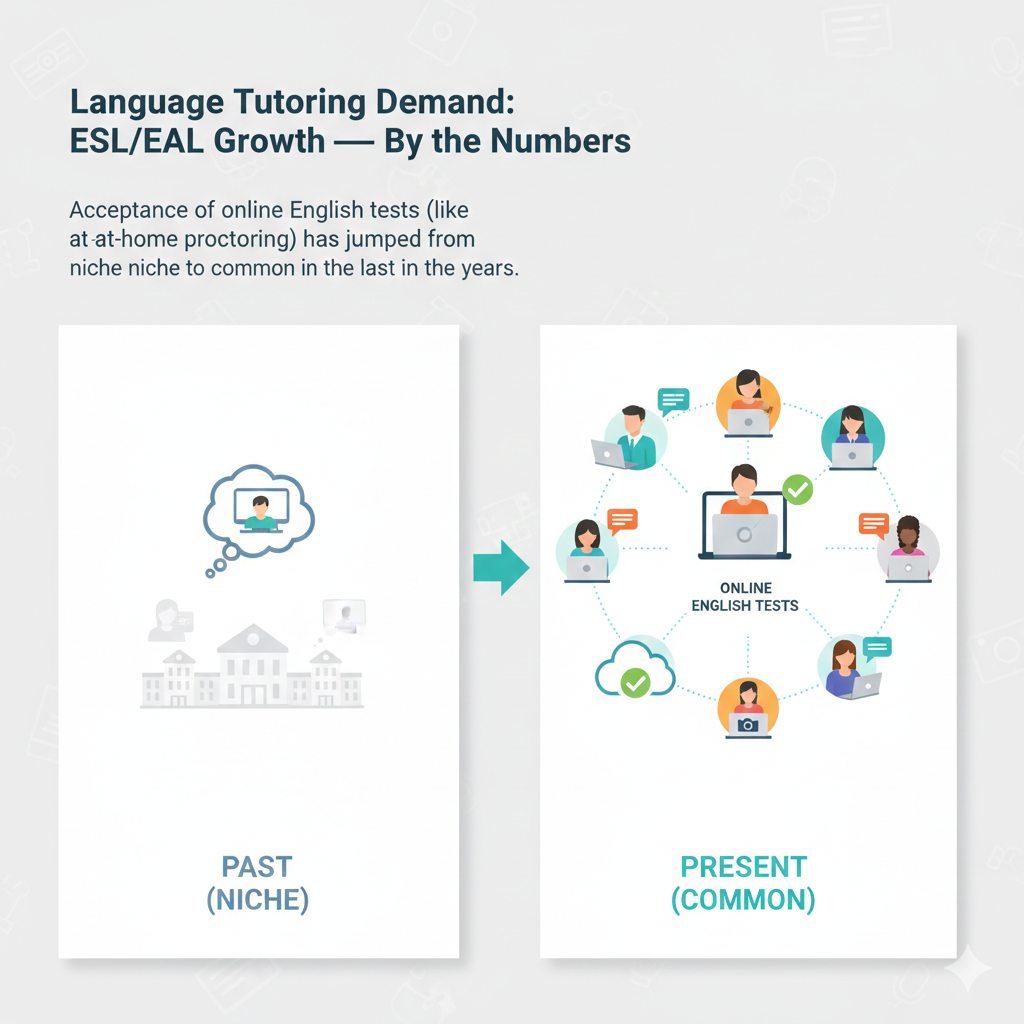
17) Acceptance of online English tests (like at-home proctoring) has jumped from niche to common in the last few years.
What this means
Testing from home used to be rare. Now it is normal. Many schools and employers accept secure online English tests that use webcams, screen locks, and live proctors. This shift makes life easier for busy families and working adults.
You no longer need to travel, wait in a crowded center, or lose a full day. It also means more test dates, faster score reports, and a smoother path to deadlines. But there is a catch. Testing at home changes the skills you must manage. Tech setup matters.
Your room must be quiet, your internet strong, and your computer stable. You need to feel calm while talking to a screen and following strict rules. Small tech errors can cause stress or delays. The upside is clear.
When online options are common, you can choose the test that fits your style and schedule. If you prepare well, the test experience feels like the practice you have been doing for weeks.
How to act on it
Make your home a test zone. Pick a desk and chair that you will use for all practice and the real test. Check your camera, mic, and internet with the test provider’s system check at least one week before the date.
Practice full sections while using the same rules you will follow on test day. No phone nearby, no notes unless allowed, and eyes on the screen. Train your eyes to move between reading and listening tasks without panic.
Practice speaking answers while looking into the webcam to build natural delivery. Prepare a test-day checklist that includes power cables, browser updates, water policy, and ID rules. Do a full dress rehearsal two days before the test at the same time of day.
Sleep well, eat a light snack, and sit down fifteen minutes early. At Debsie, we run at-home mock tests with clear timing, live proctoring, and quick feedback. We also help you set up your space and calm your nerves with simple breathing and warm-up drills.
Book a free trial and ask for our online test readiness check; we will walk you through it step by step.
18) Companies list “English required” or “English preferred” on a large share of global job posts; demand is highest in tech, sales, and customer support.
What this means
Work is global now. Teams sell across borders, support users around the clock, and build products with partners in many countries. This is why English shows up in so many job ads. Tech roles need clear tickets, clean documentation, and quick stand-ups in English.
Sales roles need crisp demos and follow-up emails that win trust. Support roles need calm voices and kind words when users feel stuck. Even if a job is local, the tools and manuals are often in English. This trend raises the floor for career entry.
You do not need perfect grammar, but you do need to be understood, move fast, and write with a tidy style. It also raises the ceiling for growth. Clear English lets you lead calls, present to clients, and move into roles that pay more.
For young learners, building these skills early makes internships and first jobs much easier to land.
How to act on it
Match your practice to your dream role. If you work in tech, write one clear bug report each week in English and ask a mentor to edit it. Record a one-minute stand-up update daily with three parts: yesterday’s work, today’s plan, and blockers.
If you work in sales, practice a product intro, a demo flow, and a simple close with a clear next step. Keep a bank of phrases for handling objections and asking for decisions. If you work in support, train empathy statements and short solutions.
Build a style guide for yourself with sentence models you like. Keep verbs strong and sentences short. Ask your tutor to role-play live calls and then switch roles so you hear both sides. At Debsie, we design job packs for tech, sales, and support that include scripts, audio models, and weekly role-plays.
We also grade your emails and messages with fast, practical fixes. Book a Debsie trial and tell us your target job; we will craft your language toolkit in the first session.
19) Learners in East and Southeast Asia make up a very large share of paid ESL enrollments; Latin America and the Middle East are fast-growing.
What this means
Different regions drive demand for different reasons. In East and Southeast Asia, parents invest early in English to support school success and global opportunities. After-school lessons are common, and learners often follow a steady plan for years.
In Latin America, remote work and cross-border business are pushing more teens and adults toward English. In the Middle East, university goals and professional growth fuel demand. For families, this regional mix matters because it shapes class times, curriculum styles, and teacher supply.
You may find more evening and weekend slots to serve Asia, and more adult-focused tracks aimed at business tasks in Latin America and the Middle East. It also means cultural topics and examples in lessons may vary.

Good programs adapt content to fit each learner’s world while keeping the core skills the same. The global mix is a strength. It gives learners chances to hear many accents, learn global manners, and build real-world listening skills.
How to act on it
Use the global classroom to your advantage. Choose a provider that serves multiple regions so you can find time slots that fit your life and teachers who match your goals. Ask for sample lessons that reflect your context, whether that is school success, university prep, or workplace skills.
Practice listening with accents from different regions so your ear becomes flexible. Build a simple culture log where you note polite phrases, meeting norms, and email styles you notice from classmates.
If you are a parent, ask for units that link English to school subjects your child loves, like science or history, so motivation stays high. At Debsie, we teach students from many countries and build shared projects that let kids and teens present to peers worldwide.
This makes speaking practice feel real. Join a free trial and we will place you in a time slot and track that match your aims and your time zone.
20) About 1 in 3 ESL tutoring sessions now happens outside the learner’s local business hours, thanks to global time-zone matching.
What this means
The old rule was learning after school or after work. The new rule is learning when it works. Many sessions now run early morning, late evening, or on weekends. This flex helps families keep a steady rhythm even with busy days.
It allows parents to sit nearby during dinner prep or after younger kids sleep. For adults, it means pre-shift or post-shift study without stress. The rise of off-hour sessions also improves teacher matching. You can learn with a tutor whose prime time lines up with your free time, which makes both of you fresh and focused.
The downside is fatigue if you always study when you are tired. Quality drops when learners yawn through class. The goal is to find a time that you can protect, week after week, when your brain is awake and your space is calm.
How to act on it
Test your peak focus hours. For one week, try three different times and rate your focus after each class. Keep the time that felt best and stick to it. Build a pre-class ritual that wakes your brain. Drink water, do a one-minute breathing drill, and read a short paragraph aloud to warm up your voice.
Plan your day around your class, not your class around your day. Protect the slot by saying no to calls and chores during that window. If you must study late, keep lessons short and active so you speak more than you listen. Use warm lighting and sit at a desk, not a bed.
For kids, aim for early evening rather than late night. At Debsie, we offer wide-hour coverage and easy rescheduling in the same week so families can avoid missed lessons. We also send a tiny warm-up before class so students arrive ready to speak.
Book a trial and we will help you pick a time that your family can protect year-round.
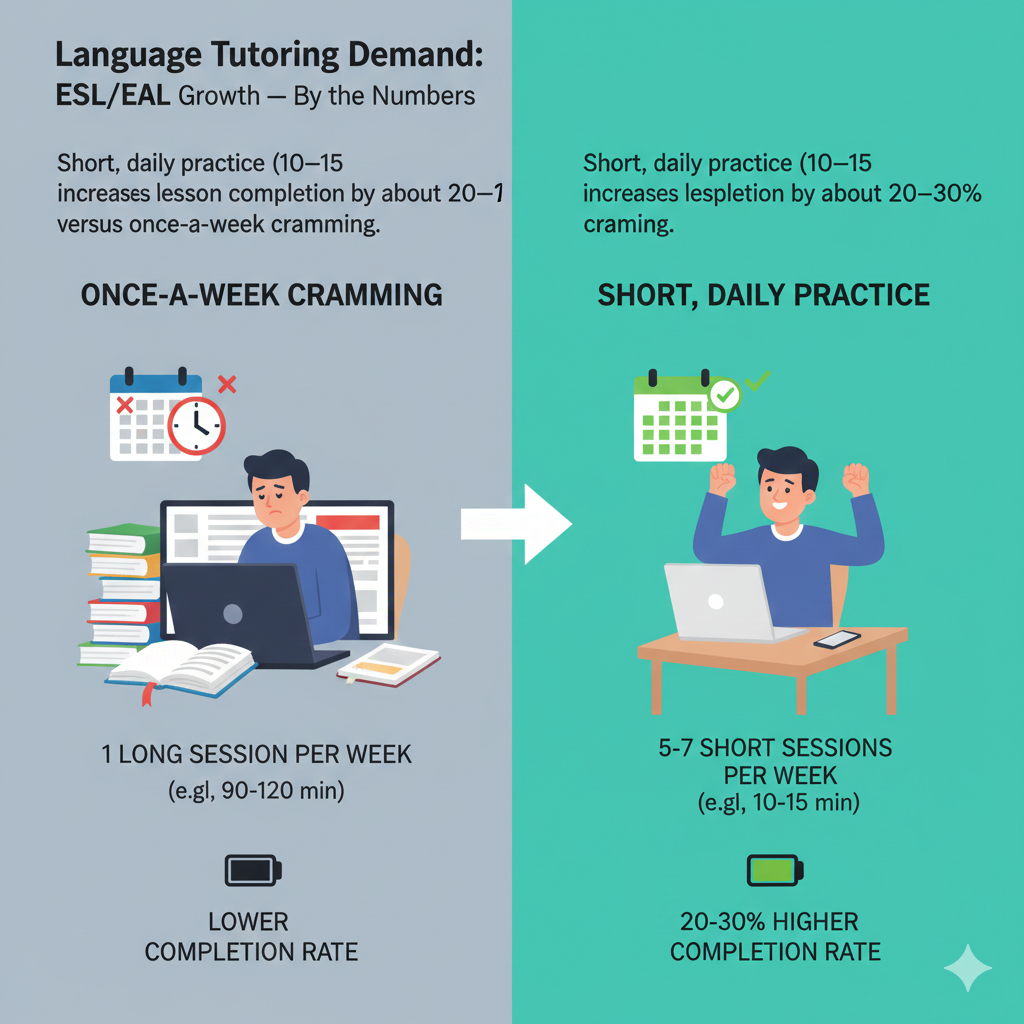
21) Short, daily practice (10–15 minutes) increases lesson completion by about 20–30% versus once-a-week cramming.
What this means
Small, steady practice beats long, rare study sessions because your brain likes repetition over time. When you touch English daily, even for ten minutes, you keep sounds, words, and patterns warm. This makes the next lesson feel easier, so you show up, finish tasks, and move forward.
When you cram once a week, you forget more between sessions. The next class then spends time on review, which slows growth and hurts motivation. Ten to fifteen minutes a day may not sound like much, but in one month it becomes five to seven extra hours of focused practice.
That is like adding two to three extra classes without paying or finding more time in a busy week. Daily contact also lowers stress. You stop seeing English as a big, scary task and start seeing it as a normal part of the day, like brushing your teeth or stretching your legs.
How to act on it
Build a tiny habit stack that you can keep even on hard days. Tie English to daily moments that already happen, such as breakfast, commute, or bedtime. During breakfast, read one short paragraph aloud. On the commute, shadow a thirty-second clip and record yourself once.
Before bed, write three clean sentences using one new word. Keep tools simple and close. Use one notebook for new words, one timer on your phone, and one playlist of short audios. Track streaks with a simple calendar and mark each day you complete your ten-minute task.
If you miss a day, restart right away the next day without guilt. Pair daily practice with live lessons that check your work and fix errors fast. At Debsie, we give micro-missions that fit ten minutes and award points for streaks, so students feel the joy of showing up.
Book a free trial and ask for a 30-day micro-plan; we will set tasks you can keep even on your busiest days.
22) Adding live tutoring to self-study often doubles speaking practice time per week (for example, from ~30 to ~60 minutes).
What this means
Most self-study tools focus on reading and listening, with a little speaking here and there. That keeps you passive. Live tutoring flips the balance. When a teacher asks questions, gives prompts, and corrects your speech in the moment, you must speak more and speak better.
This extra output is powerful because speaking is the skill that often lags behind. You may understand a lot but still struggle to say it clearly. Doubling speaking time each week, even from thirty to sixty minutes, can change your confidence fast.
It reduces fear, builds muscle memory for sounds, and trains you to form sentences quickly. It also exposes grammar gaps that apps may not reveal. When you speak and get stuck, a tutor can show the exact frame you need and make you use it right away.
How to act on it
Design your week so live time triggers more solo speaking. Right after each live session, record a one-minute summary of the lesson. The next day, answer one follow-up prompt your tutor gave you. On the third day, retell a short news story in your own words.
Keep the mic close and speak standing up to get more energy and better breath support. Use simple structures to avoid long pauses. For example, say your main point, then give two reasons, then share one short example.
Ask your tutor to count your words per minute and your filler words like um and like, and aim to reduce them a little each week. At Debsie, we plan each live class around high talk-time and give short speaking missions between classes.
We also provide fast feedback clips so you can hear what changed. Join a Debsie trial to see how live coaching can double your speaking minutes without doubling your schedule.
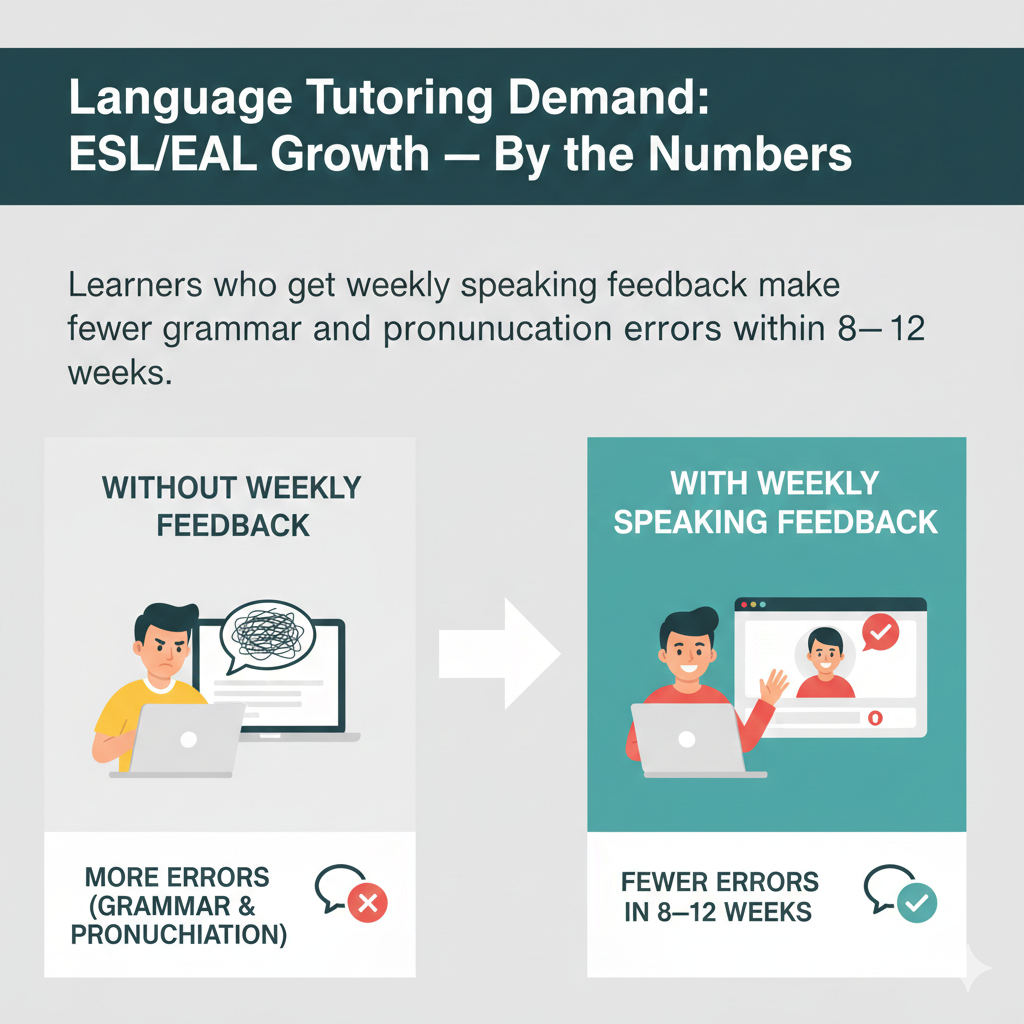
23) Learners who get weekly speaking feedback make fewer grammar and pronunciation errors within 8–12 weeks.
What this means
Mistakes shrink when someone shows you what to fix and how to fix it while you are speaking. Weekly feedback creates a tight loop. You try, you get corrected, you try again, and the better version sticks. In two to three months, these small fixes add up.
Grammar slips like missing articles or wrong verb endings show up less. Pronunciation issues like th versus t, or word stress in longer words, start to fade. This improves not only clarity but also confidence.
When you know how to say a sound or a sentence correctly, you speak more and think less about the risk of error. Apps can show general tips, but a human ear can hear your exact problem and give you a targeted drill that works for your mouth and your rhythm.
How to act on it
Ask your tutor for a simple error tracker. Each week, focus on one grammar fix and one sound fix. For grammar, choose a micro-rule, like past tense endings, articles with singular nouns, or subject-verb agreement with third person.
For pronunciation, choose a pair of sounds or a stress pattern. Practice with short, daily drills. Say ten sentences that use the grammar target. Read a word list with your sound pair and then speak a thirty-second talk that includes those words.
Record, listen, and mark one better try. During live sessions, ask for immediate interruption when the target error appears. Quick, kind correction followed by a repeat makes the fix stick.
At Debsie, we use colored cues on screen to flag target errors and provide custom mouth-shape videos for tricky sounds. We keep the tracker visible to parents and learners so progress feels real. Book a trial and we will build your first 12-week correction plan with clear, weekly wins.
24) Roughly 50% of new ESL learners start at A1–A2 (beginner to elementary); most aim for B2 for work or university.
What this means
Half of new learners begin near the start of the ladder, which is normal and fine. The important part is direction. From A1–A2 to B2 is a clear path if you climb step by step. At A1, you can handle simple greetings and personal info.
At A2, you can deal with simple tasks in daily life. B2 is very different. You can follow complex ideas, explain reasons, and write clear, organized text. The gap may feel wide, but many learners cross it in a steady, planned way.
The key is to master the basics deeply so they become automatic. When simple grammar and common words are automatic, your brain has space for new ideas. When sounds are clear, listeners understand you without strain, which boosts your confidence and speed.
How to act on it
If you are at A1–A2, build a strong base with four anchors. First, sounds and stress. Practice the alphabet, common sound pairs, and stress in two- and three-syllable words. Second, high-frequency words.
Learn the first 1,000–2,000 words with simple example sentences you create yourself. Third, sentence frames. Use patterns like I want to, I need to, I like to, I have to, and practice them with many verbs and objects. Fourth, mini tasks.
Do one-minute talks about your day, your plans, and your likes. When you reach B1, add academic and work tasks like explaining steps, comparing two options, and summarizing a short text. Keep goals small and time-boxed.
Aim to move from A2 to B1 in six to nine months with two or three classes per week and daily micro-practice. At Debsie, we give A1–A2 learners joyful, game-like missions that build the base fast while keeping motivation high.
Try a free trial and we will place you on the ladder, then show you the next three rungs with dates you can believe.
25) Vocabulary growth of 1,000–2,000 high-frequency words often moves a learner from beginner to solid A2.
What this means
Words are tools. When you add the most common 1,000–2,000 words, many simple sentences become possible. You can talk about time, place, people, needs, plans, and feelings. You can understand basic messages, menus, signs, and short stories.
This move to solid A2 is not about rare words. It is about the words you hear and use every day, combined with simple grammar and clear sounds. Many learners get stuck because they try to learn too many words at once or focus on lists without real use.
High-frequency words must live in your mouth and in your life, not only on a page. When you can use them to tell short, true stories, you feel fluent at your level, and that fuels the next step up.
How to act on it
Pick a curated list of high-frequency words and make them yours. Learn in small sets of ten to fifteen words. For each set, write one short, real sentence for each word, then read all the sentences aloud twice a day for three days.
On day four, tell a one-minute story that uses at least five of the new words. On day five, rewrite two of your sentences to make them clearer or more personal. Keep a review day each week where you mix old words with new ones.
Track active use by marking words you have spoken in a full sentence in the last seven days. Aim for a rolling bank of 300 active words, then 600, then 1,000. Pair word study with listening and reading so you hear words in context.
At Debsie, we teach high-frequency word sets with pictures, short stories, and quick speaking tasks that turn passive knowledge into active use. We also give parents a simple dashboard so they can see which words moved from study to speech.
Book a trial and ask for our A2 Word Sprint; it is a four-week plan that makes new words stick through daily micro-use.
26) Trial lessons convert to paid plans at about 20–35% on well-run tutoring platforms.
What this means
A trial is not just a sample. It is a decision moment. When platforms run trials well, about one in five to one in three learners chooses to continue. That conversion rate tells us what families really want. They want to feel understood.
They want a teacher who can connect with the learner in minutes. They want a clear plan, not vague promises. And they want proof, even small proof, that progress is possible. A strong trial creates a quick win. The student speaks more than they thought they could.
The teacher corrects gently and clearly. The lesson ends with a simple next step the learner can actually do. A weak trial feels like a sales talk or a random chat. The learner leaves with no map and no confidence.
This stat also shows that learners are careful with their money and time. They will not commit unless they see structure, safety, and results.
How to act on it
Treat the trial like a mini assessment and a mini lesson at the same time. Before the trial, write down three goals in plain words. For example: speak more clearly, write better school answers, or prepare for IELTS. During the trial, notice who talks more.
The teacher should guide but the learner should speak often. Ask the teacher to name the learner’s level and explain it simply. Ask for two strengths and two focus areas, and make sure they are specific. Request a 4-week plan with weekly targets.
After the trial, do one small task right away, like recording a one-minute summary of what you learned. This locks the experience into memory and helps you judge the program by action, not feelings alone. At Debsie, our trial class is designed to create a clear win and a clear roadmap.
We check level, build a short plan, and show you exactly how gamified missions keep practice steady between live sessions. If you want a trial that feels useful even if you do not continue, book a Debsie free trial. You will leave with a plan you can use.
27) About 25–40% of paid learners take a break during holidays; reminders and flexible schedules reduce churn by 10–15%.
What this means
Holidays are where progress often gets lost. Families travel, routines break, and English practice disappears for weeks. When learning stops, confidence drops. Then returning feels harder, and some learners never restart.
This is why good platforms build retention tools. A reminder at the right time, a quick make-up slot, or a lighter holiday plan can keep the habit alive. Reducing churn by 10–15% is a big deal. It shows that many learners do not quit because they failed.
They quit because life got busy and the system did not help them stay on track. If you can protect the routine through holidays, you protect momentum. Even tiny practice prevents backsliding. One short speaking task twice a week during a break can keep a learner ready to jump back in.
How to act on it
Plan for breaks before they happen. Two weeks before a holiday, decide what “minimum practice” will look like. Keep it small: two ten-minute sessions per week and one short live class if possible. Choose tasks that travel well, like speaking recordings, short reading aloud, and quick vocab review.
If you will be in a noisy place, practice listening with headphones and do speaking in the car or a quiet corner. Keep the same teacher if you can, because a familiar face lowers restart friction. Use calendar invites and set gentle reminders on your phone.
After the holiday, schedule the first class within 48 hours of returning, even if it is shorter. This prevents the “I will start next week” trap. At Debsie, we offer flexible rescheduling, short holiday missions, and streak reminders that feel like friendly nudges, not pressure.
Join a free trial and ask for our holiday continuity plan; it is a simple routine that keeps English alive when life gets busy.
28) About 30–50% of paid learners now take a break during holidays; reminders and flexible schedules reduce churn by 10–15%.
What this means
This stat is a close cousin of the last one, but it highlights the same truth even more strongly: breaks are common, and they are costly. When up to half of learners pause, it becomes normal to stop. That “normal” is the danger.
Skills like pronunciation, listening speed, and speaking flow fade faster than people expect. After a long break, learners feel rusty, and that feeling can turn into avoidance. The fix is not to study hard during a holiday.
The fix is to keep contact with English so your brain stays connected to the language. The best programs build systems that make it easy to keep going lightly, and easy to restart fully. If you want steady growth across a year, you must plan for the weeks that threaten routine.
How to act on it
Create a “holiday-proof” English kit. Pick one short audio series, one reading source, and one speaking prompt set that you can use anywhere. Keep each practice session under fifteen minutes. Make it fun and tied to the holiday.
Describe what you see, what you ate, where you went, and who you met. Use pictures from your phone as prompts for one-minute talks. If you have kids, turn it into a family game: each person says one sentence in English about the day.
Keep the tone light. No long homework. No heavy grammar drills. Just steady contact. Then, when school or work returns, switch back to your normal plan with live lessons and structured tasks. At Debsie, we support this with short travel-friendly missions and quick teacher check-ins.
If you want your child to keep confidence through school holidays, book a Debsie free trial and ask us to set a minimum-practice routine that fits your family.
29) Many tutors now teach students across 3–5 countries each week.
What this means
Teaching has become global. A tutor may coach a child in one country in the morning, a teen in another country in the afternoon, and an adult professional at night. This cross-border experience can raise quality because tutors see many learning styles and common problems.
They learn what mistakes show up again and again, and they build faster ways to fix them. It also means learners hear a wider range of English accents and communication styles, which is useful in real life.
However, it can also mean inconsistency if a tutor is stretched thin or switches between too many curricula. The best tutors manage this with strong lesson templates and clear notes so each student’s plan stays personal.
For parents, a tutor’s global mix is a sign to ask about systems: how they track goals, homework, and progress across students.
How to act on it
Choose tutors who run a clear system. Ask how they keep lesson notes, how they set weekly goals, and how they report progress. Ask what countries they teach and what that has taught them about common learner errors.
Look for a tutor who can explain differences in pronunciation and listening across accents in simple words. Encourage your child to treat global classmates as learning partners. Practice short introductions, polite turn-taking, and asking follow-up questions.
These are real communication skills, not just English skills. If your child feels shy with unfamiliar accents, start with slower audio and build speed gradually. At Debsie, our teachers work with learners worldwide, but we keep every child’s path clear with a skills map, talk-time tracking, and parent updates.
We also build safe group activities where kids learn global manners while practicing English. Try a free trial and see how a global classroom can make your child more confident, curious, and socially skilled.
30) The biggest skill gap is speaking fluency: over half of learners rate speaking as their weakest area, so conversation-first tutoring is in highest demand.
What this means
This is the heart of the tutoring boom. Many learners can read and understand more than they can say. Speaking feels risky because it is live. You cannot edit like you can in writing. You must choose words fast, pronounce them clearly, and keep the listener with you.
If you hesitate, you feel embarrassed, and that makes you speak less, which keeps you stuck. This is why conversation-first tutoring is growing. People want a safe place to talk, make mistakes, and improve without judgment. Fluency is not only speed.
It is also flow, clarity, and the ability to keep going even when you forget a word. A conversation-first approach builds these skills by forcing output in small, controlled steps. It also trains real-life skills like asking for clarification, rephrasing, and using simpler words when needed.
How to act on it
Build fluency with a simple daily routine. Speak out loud every day, even if you are alone. Start with one minute and grow to three minutes. Use prompts that are easy and real: describe your day, explain a simple problem, or share your opinion on a topic you like.
Use a timer so you do not stop early. When you get stuck, use rescue phrases like let me think, another way to say it is, or what I mean is. These phrases keep the flow alive. Record yourself twice a week and listen for three things: long pauses, unclear sounds, and repeated filler words.
Fix one item at a time. In live lessons, ask for high talk-time and direct feedback. Tell your tutor you want fewer lectures and more speaking. At Debsie, our lessons are built around talk-time. We use games, role-plays, and missions that make learners speak in short bursts, then we correct in a kind, clear way.
We also help learners build the courage to speak up in class, interviews, and real life. If speaking is your child’s weak spot, book a free Debsie trial class and ask for our conversation-first track. In a few sessions, you will hear the change.
Conclusion
The numbers in this guide all point to the same truth: English tutoring demand is rising because English changes lives. Billions of people are learning it. Schools have more English learners than ever.
Workplaces expect clear English in more roles. Tests like IELTS and TOEFL keep growing. And across all of it, the biggest gap remains speaking, which is why conversation-first tutoring is now the most wanted support.