Ever wonder how things work? We all felt that spark when we learned something new! That magic drives the greatest living scientists to change our world today.
We’re excited to share these amazing innovators with you! They’re not just doing lab work; they’re inspiring the next generation. You can start your own journey by trying Debsie Gamified Courses at https://debsie.com/courses to grow your skills!
These brilliant minds are tackling big challenges like health and climate. Popular Science honored ten early-career researchers. They’re already making a big impact in their fields. These innovators and change makers show us the future is bright!
They’re studying how birds fly and finding new ways to help our communities. Their work is truly wonderful. We believe every child can be a leader in discovery. Let’s see how these heroes are shaping a better tomorrow for everyone!
Key Takeaways
- Discover ten early-career researchers leading their fields.
- Learn how science solves real-world health and climate issues.
- See how innovation inspires the next generation of students.
- Explore the connection between curiosity and global change.
- Find out how gamified learning helps children grow today.
- Celebrate the diversity of research from math to biology.
The Evolution of Modern Scientific Discovery
We’re seeing a new era in science. New tech and teamwork are changing what we know!
How we do science has changed a lot. New technologies and methods are helping solve big problems.
Using interdisciplinary approaches is key. It mixes different fields to find new answers. Luis von Ahn’s work shows how humans and computers can solve big issues together.
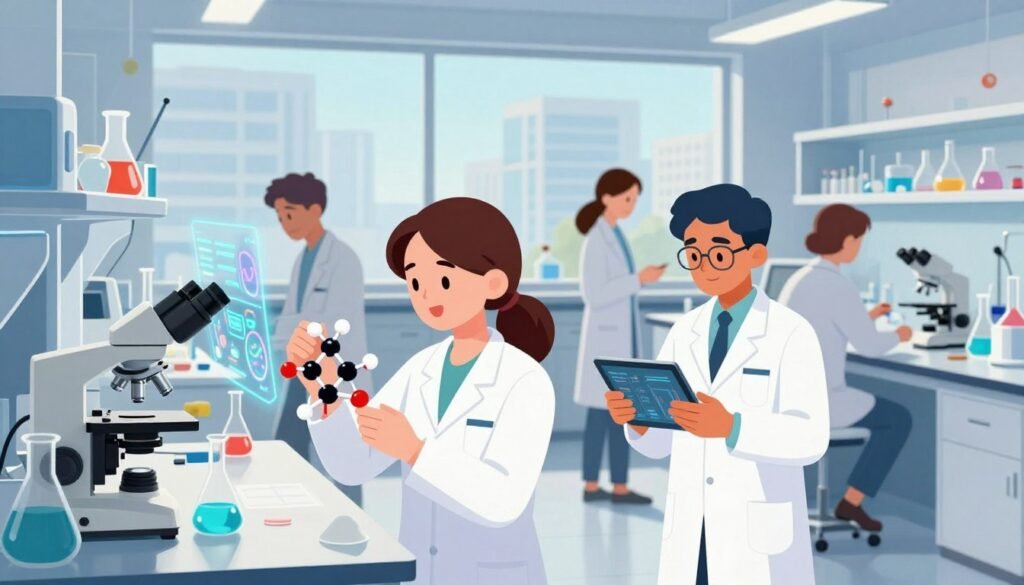
Looking ahead, collaboration and new tech will keep changing science. These changes will open up new ways to make progress in many areas.
You can join this exciting journey. Try new ways to learn and help science grow. Sites like Debsie offer gamified learning experiences to help grow your mind and prepare for the future!
Criteria for Selecting the Greatest Living Scientists
Choosing the top living scientists is a tough job. We look at their big discoveries and how they changed their fields. It’s hard because science is so wide and different.
Key ConsiderationsWhen picking the best scientists, we think about a few things:
- The big impact of their findings!
- How they helped us learn more about the world!
- The effect of their work on future scientists!
- How they helped grow and change their fields!
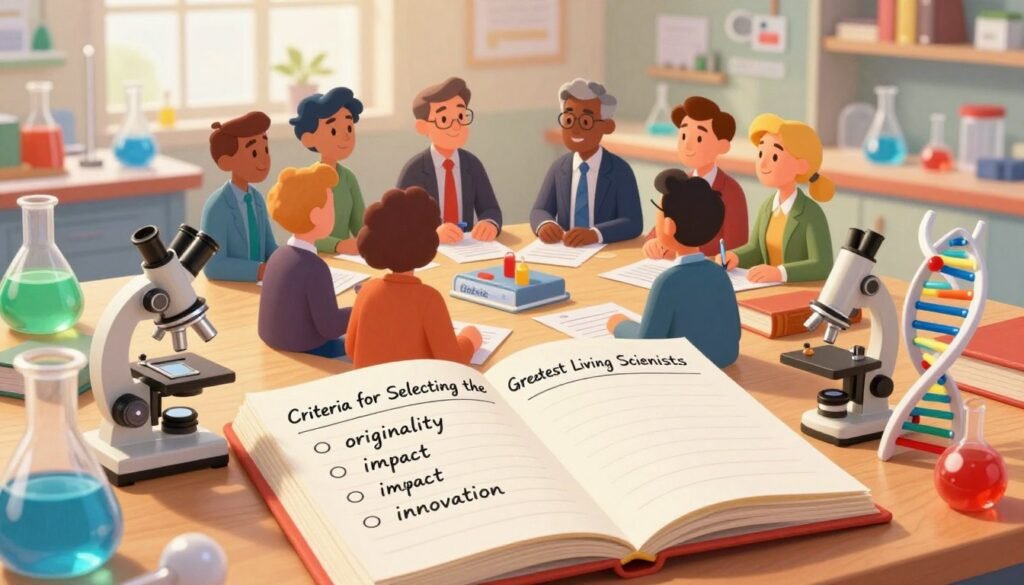
We look at these points to find scientists who have made big changes. They help us understand the world better.
The scientists in this article are known for their amazing work. They are also expected to keep changing science.
Evaluating Scientific AchievementsLooking at a scientist’s work means checking its originality and impact. We also see how it affects other research and future discoveries.
Using these standards, we make a list of the top living scientists. They are famous for what they’ve done and will likely do more great things in science.
Jennifer Doudna and the CRISPR Revolution
Meet Jennifer Doudna, the trailblazing scientist behind the CRISPR Revolution that’s changing the face of genetics!
Jennifer Doudna, along with her colleague Emmanuelle Charpentier, discovered the CRISPR-Cas9 gene editing tool. This groundbreaking technology allows for precise editing of genes, opening up new avenues for treating genetic diseases!
Imagine being able to edit genes with the precision of a text editor! That’s what CRISPR-Cas9 enables scientists to do. It’s like having a powerful tool that can fix typos in the genetic code, potentially curing inherited diseases.
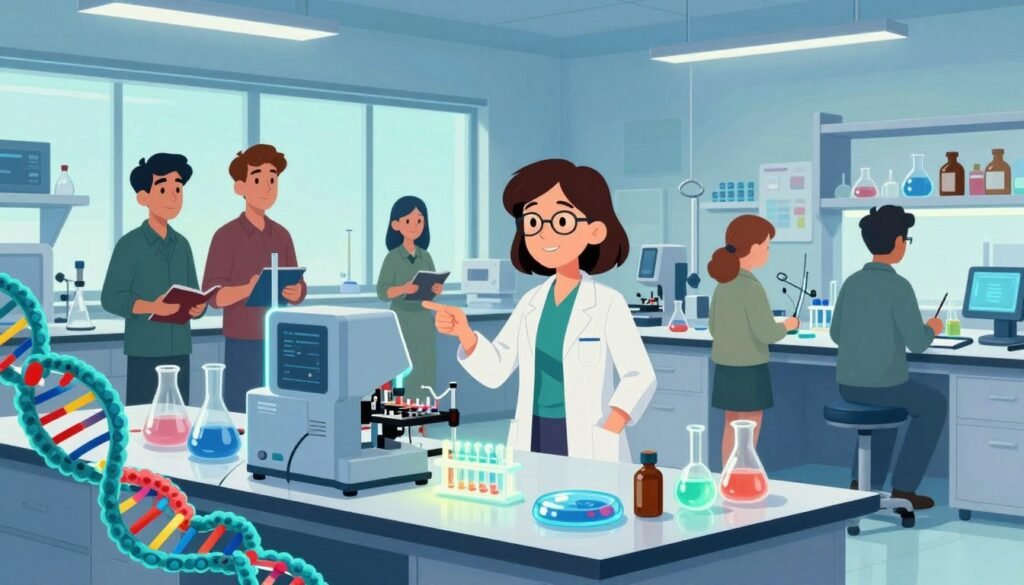
The impact of Doudna’s work is vast. CRISPR technology is being explored for its potential to treat sickle cell anemia, muscular dystrophy, and even some forms of cancer. The possibilities are vast and exciting!
As we continue to explore the potential of CRISPR, we are reminded of the importance of continued research and innovation in genetics. Jennifer Doudna’s contributions have paved the way for a new generation of scientists to explore the frontiers of gene editing!
Katalin Kariko and the mRNA Breakthrough
Katalin Kariko worked hard on mRNA technology. Her work helped make vaccines that save lives. This was very important during the COVID-19 pandemic.
Kariko faced many challenges but kept going. Her research is now key in immunology and vaccine making. The Nobel Prize Committee recognized her work worldwide.
Kariko’s work is not just for COVID-19 vaccines. It also helps in finding treatments for other diseases. This breakthrough could change how we fight diseases and make vaccines.
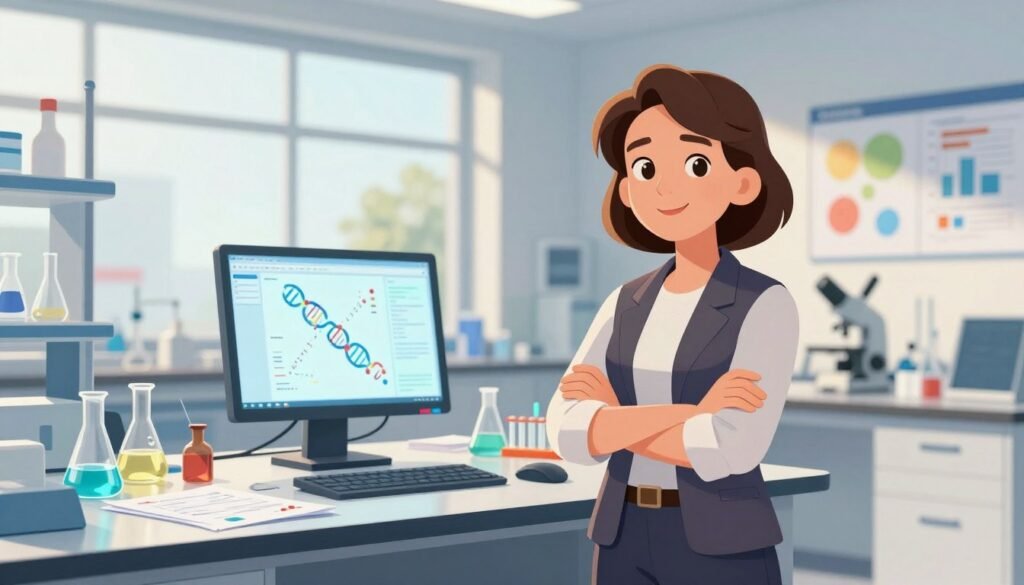
- Development of a new class of vaccines that are highly effective and can be adapted quickly to combat emerging threats.
- Pioneering work that has laid the foundation for future research in mRNA technology.
- Potential therapeutic applications beyond vaccine development, including treatments for various diseases.
Scientists like Katalin Kariko show us the power of hard work and new ideas. They help us create a healthier world for everyone.
Tim Berners-Lee and the Architecture of the Digital Age
Tim Berners-Lee changed the world with the World Wide Web! He made it easy for us to talk, share info, and connect. His work has shaped how we live today.
The World Wide Web is not the same as the internet. It’s a system of linked documents that you can find online. Berners-Lee made it to help researchers share info. But now, it’s a big network that changes our lives.
Berners-Lee did more than just create the web. He wants the internet to be open and free for everyone. He fights for standards and protocols that keep the web fair. This is shown in a recent article in The New Yorker.
Berners-Lee’s work touches many parts of our lives. It’s in schools, shops, and even how we have fun. The web lets us email and use social media. It also makes info easy to find for everyone.
Here are some stats that show how big the web is:
| Year | Number of Internet Users | Percentage of World Population |
|---|---|---|
| 2000 | 413 million | 6.5% |
| 2010 | 2.04 billion | 28.8% |
| 2020 | 4.66 billion | 59.5% |
Tim Berners-Lee’s work has led to many tech advances we use today. His dream of an open web inspires many to innovate and start new businesses.
Jane Goodall and the Transformation of Primatology
Jane Goodall changed primatology with her work on chimpanzees. Her research has helped us understand primate behavior and how to protect them.
In 1960, Goodall went to Tanzania’s Gombe Stream National Park. She studied chimpanzees and found they use tools and have complex social lives. This was new knowledge that showed chimpanzees are smart and social, like humans.
Her big contributions include:
- She found chimpanzees use sticks to get termites for food, showing they use tools!
- She saw complex social behaviors, like working together and helping others.
- She showed how important it is to save chimpanzees and their homes.
Goodall’s work has taught us a lot about primates. It has also inspired many to care for animals and the environment. She says, every person is important, everyone has a role, and everyone can make a difference!
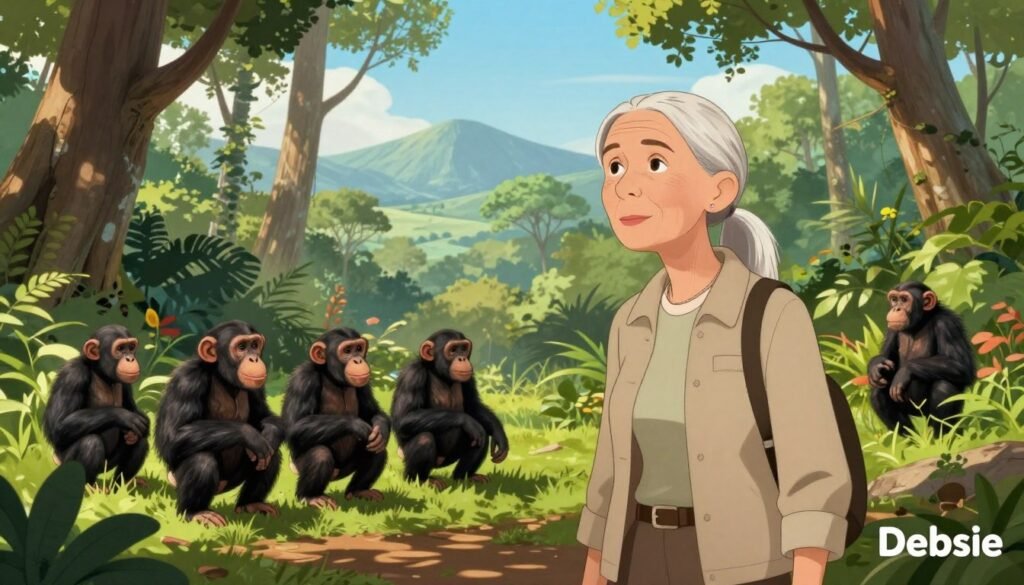
Goodall’s hard work teaches us to protect our planet’s animals and plants. Her work reminds us that one person can change the world!
James Peebles and the Mapping of the Universe
James Peebles is known for his big contributions to cosmology! He is a top cosmologist. James Peebles has helped us learn a lot about the universe, focusing on its big structure.
His work has given us new insights into the cosmos. It helps us understand how the universe changed over billions of years. Cosmology is about the universe’s start, growth, and future. Peebles’ research has been key in shaping our understanding of this vast field.
The universe’s big structure includes galaxy clusters and superclusters. Peebles’ work has been crucial in understanding these structures. His findings help us understand dark matter and dark energy, which are key to the universe’s workings.
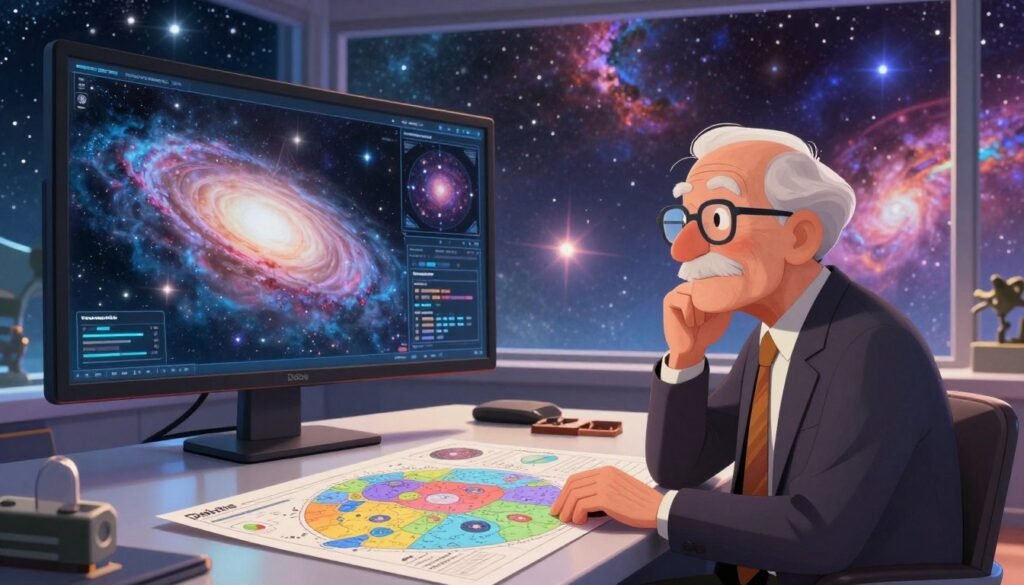
Peebles has studied how the universe changed from smooth to complex. This change, called structure formation, is important in cosmology. By looking at galaxies and clusters, scientists learn about the universe’s laws.
Peebles’ work has greatly influenced modern astrophysics. His research has led to new discoveries and better models of the universe. As we keep exploring, Peebles’ work will be vital to understanding the universe and its secrets.
Frances Arnold and the Power of Directed Evolution
Frances Arnold is a leader in biochemical engineering. She has changed the game with her work on directed evolution! As a Nobel laureate, her ideas are making a big difference in fields like biotechnology and pharmaceuticals.
Arnold knows how to use directed evolution to make enzymes better. This method lets scientists create new biological systems. These systems can make sustainable fuels, new medicines, and help fight climate change.
Arnold’s work shows how directed evolution can change biochemical engineering. It lets us solve big problems with new ideas. You can find out more about her on theNobel Prize website.
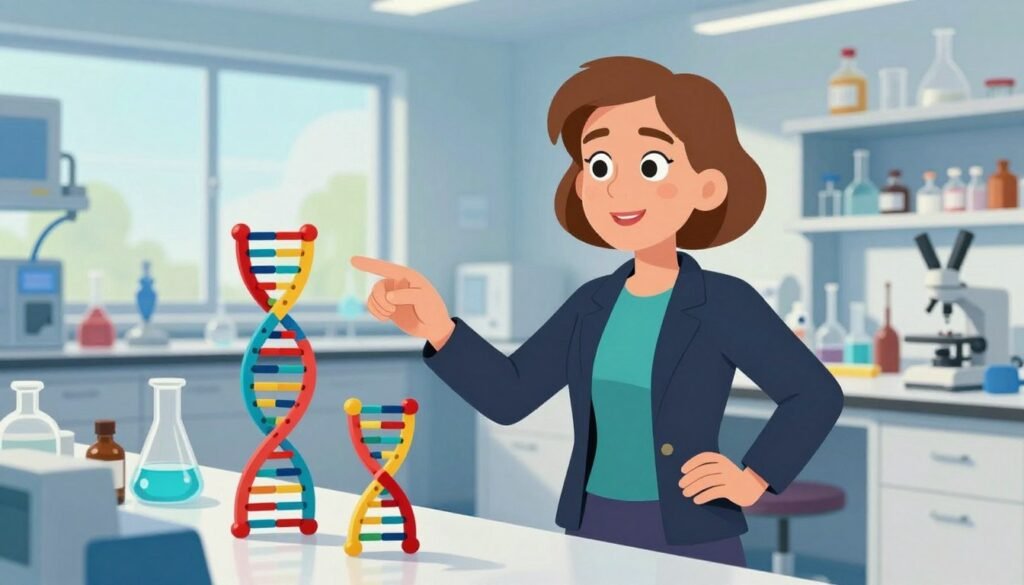
Arnold’s research is not just for scientists. It shows us the bright future of biochemical engineering! With leaders like Arnold, we’re on the path to big discoveries.
Shinya Yamanaka and the Future of Regenerative Medicine
Shinya Yamanaka changed the game in regenerative medicine. He found a way to turn old cells into new ones. This is called induced pluripotent stem cells (iPSCs).
Yamanaka discovered special genes. These genes make adult cells act like new stem cells. This was a groundbreaking moment in science!
This new way to make cells has big benefits. It lets us:
- Study diseases in a lab
- Make treatments just for you
- Learn more about how we grow
As we learn more about iPSCs, we get closer to fixing bodies with new cells. For more on this, check out here.
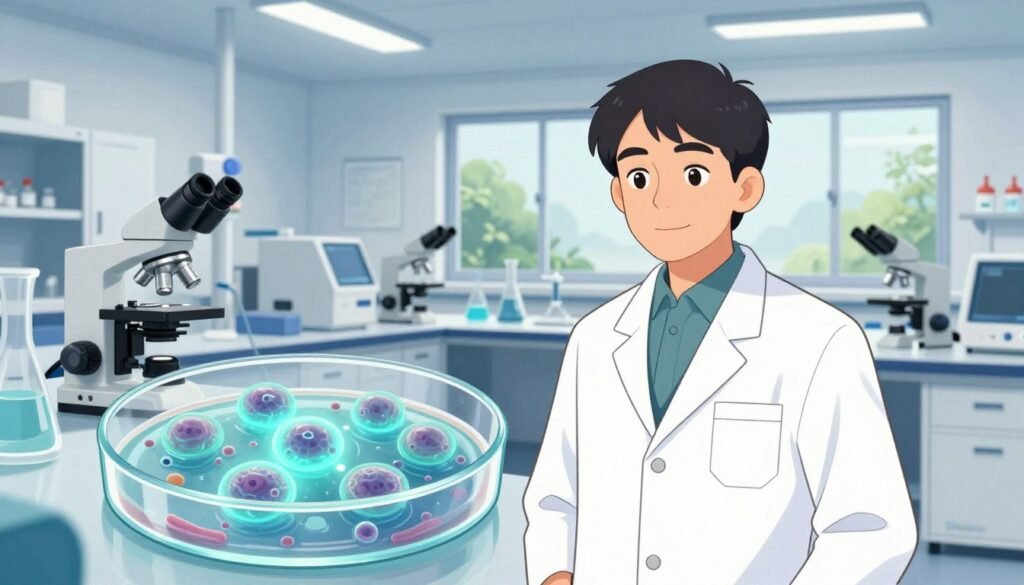
Yamanaka’s work shows how research can change our world. His work will keep guiding us in regenerative medicine.
Terence Tao and the Frontiers of Mathematical Logic
Terence Tao is a star in math, known for his work in mathematical logic. He has changed how we see number theory with his ideas.
His work touches many parts of math. Tao’s work in number theory has given us new views.
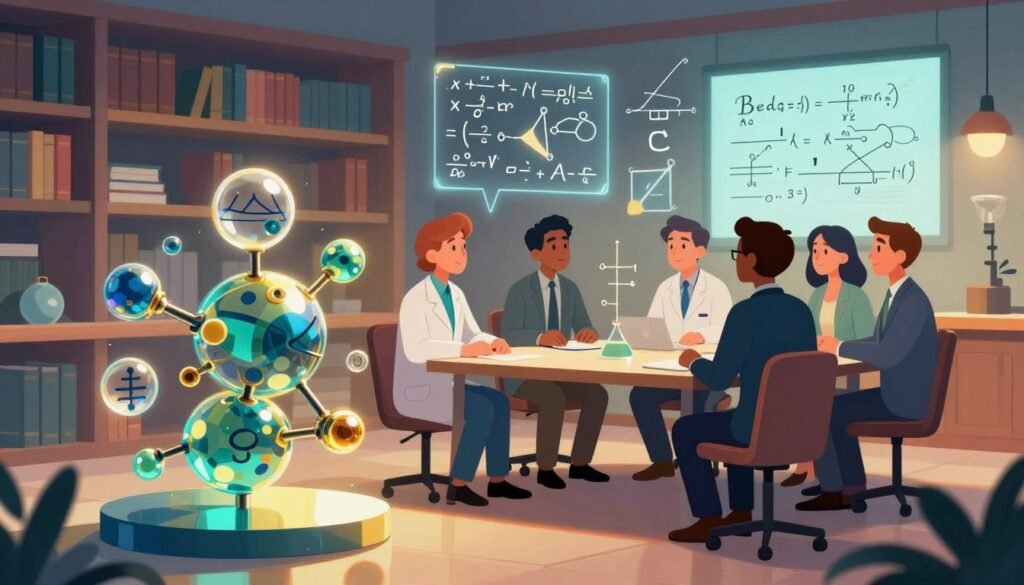
Tao solved big math problems. His work on the Green-Tao theorem shows his creative side in mathematical logic.
Here are some big wins in Tao’s career:
| Achievement | Description | Year |
|---|---|---|
| Fields Medal | Awarded for his contributions to number theory and harmonic analysis | 2006 |
| Green-Tao Theorem | Proved the existence of arbitrarily long arithmetic progressions of prime numbers | 2004 |
| Breakthrough Prize in Mathematics | Recognized for his numerous contributions to mathematics, including number theory | 2014 |
Tao’s work motivates many to study math and science. His work in mathematical logic and number theory helps others discover new things.
Svante Paabo and the Secrets of Human Evolution
Svante Paabo has changed how we see human evolution. He’s a geneticist who looks at ancient DNA. This helps us learn about our history.
Paabo is famous for sequencing the Neanderthal genome. This work showed that many people today have Neanderthal DNA. This means Neanderthals and humans mixed at some point.
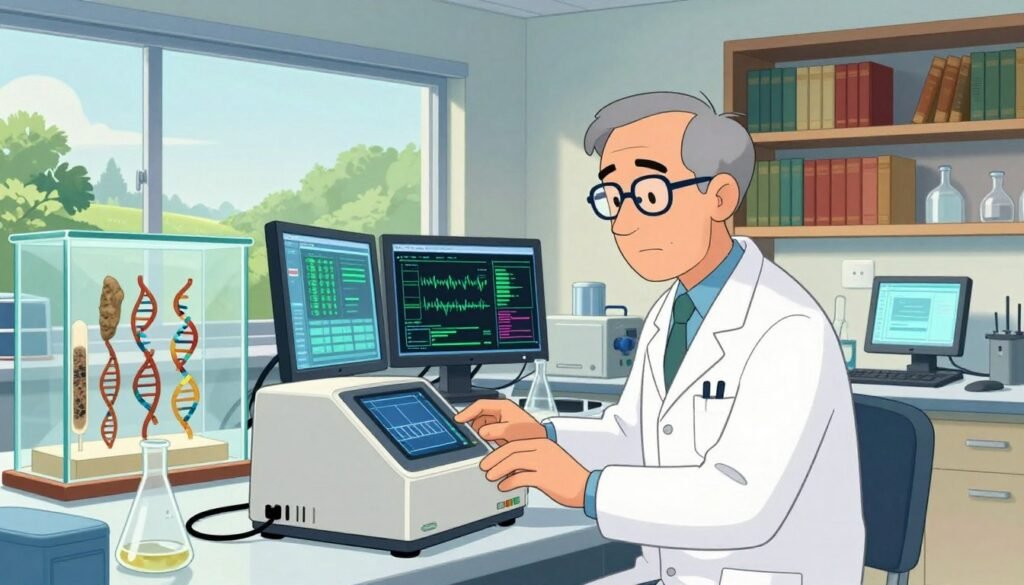
Studying ancient DNA is hard because DNA breaks down fast. But Paabo found ways to get DNA from fossils that are really old. This helps us understand how humans moved, adapted, and why some species like Neanderthals went extinct.
Paabo also found the Denisovans, a human species known from just a finger bone and a tooth in Siberia. He found that Denisovans mixed with Neanderthals and modern humans. This means we all share some Denisovan DNA.
| Key Contributions | Description | Impact |
|---|---|---|
| Neanderthal Genome Sequencing | Paabo’s team sequenced the Neanderthal genome, providing insights into Neanderthal-modern human interactions. | Showed that many modern humans have Neanderthal DNA, indicating interbreeding. |
| Discovery of Denisovans | Paabo’s research identified the Denisovans, a previously unknown human species, from minimal fossil remains. | Revealed interbreeding between Denisovans, Neanderthals, and modern humans. |
| Advancements in Ancient DNA Techniques | Paabo developed innovative methods for extracting and analyzing ancient DNA. | Enabled the study of human evolution and migration patterns through genetic analysis. |
Paabo’s work keeps changing how we see human history and evolution. He’s found secrets of our ancient ancestors. This knowledge helps us understand our health and diseases today.
Demis Hassabis and the Integration of Artificial Intelligence
Demis Hassabis is changing the world with his work at Google DeepMind! He’s a top researcher in machine learning. His work is making big changes in many fields.
At Google DeepMind, Hassabis’ team has made big steps in AI. They’ve created algorithms that can get better by themselves. This has led to big wins, like when AlphaGo beat a human Go champion.
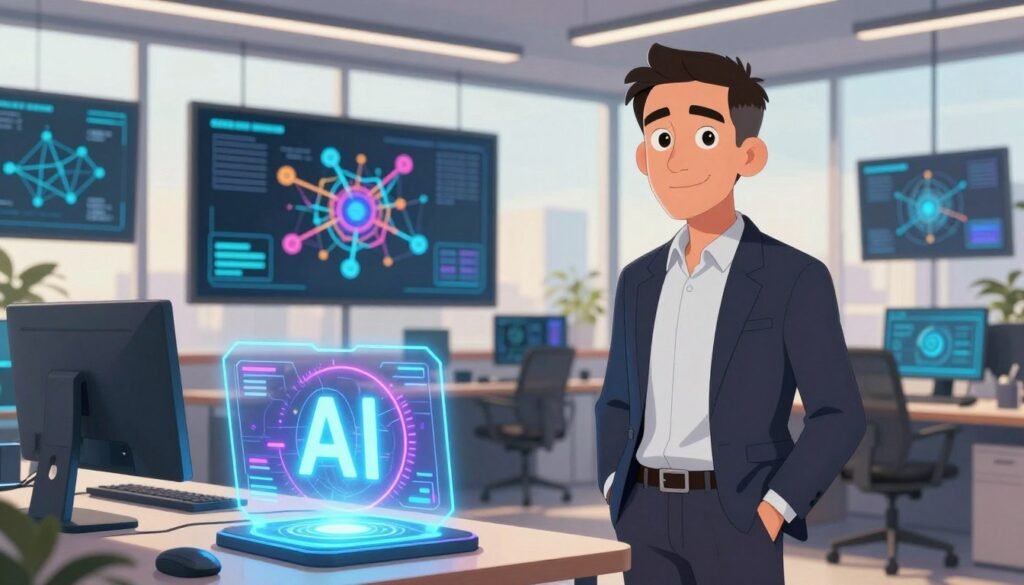
Hassabis’ team is also working on AI for healthcare and robotics. They’re studying protein folding to help medicine and biotech. You can find out more about his work at Big Technology.
AI is not just about new tech. It’s about making our lives better. We’re looking forward to what Hassabis and his team will do next.
Educational Pathways for Aspiring Scientific Minds
The future of science is in our hands today! We must create paths for the next scientists and thinkers. It’s key to give them fun, personal, and effective learning.
Gamified learning is a cool way to do this. It uses games to make learning fun and easy. This makes STEM subjects more engaging and fun to learn.
Leveraging Gamified Learning for STEM Mastery
Gamified learning makes STEM fun and interactive. With gamified learning experiences, students learn better. They get to dive deep into science in a fun way.
Some cool things about gamified learning are:
- Students get more excited and motivated.
- They understand and remember tough ideas better.
- They learn to think and solve problems well.
- They work better together and compete in a good way.
Exploring Debsie Gamified Courses for Skill Development
Debsie has gamified courses for a fun STEM education. At https://debsie.com/courses, you can find great ways to help students grow. They learn important skills and love learning for life.
Here’s what Debsie’s gamified learning offers:
| Feature | Description | Benefits |
|---|---|---|
| Interactive Lessons | Fun, game-based learning | Students learn more and get excited. |
| Personalized Learning Paths | Learning plans just for each student | Students do better and grow more. |
| Real-time Feedback | Quick feedback to help students | Students feel more confident and learn faster. |
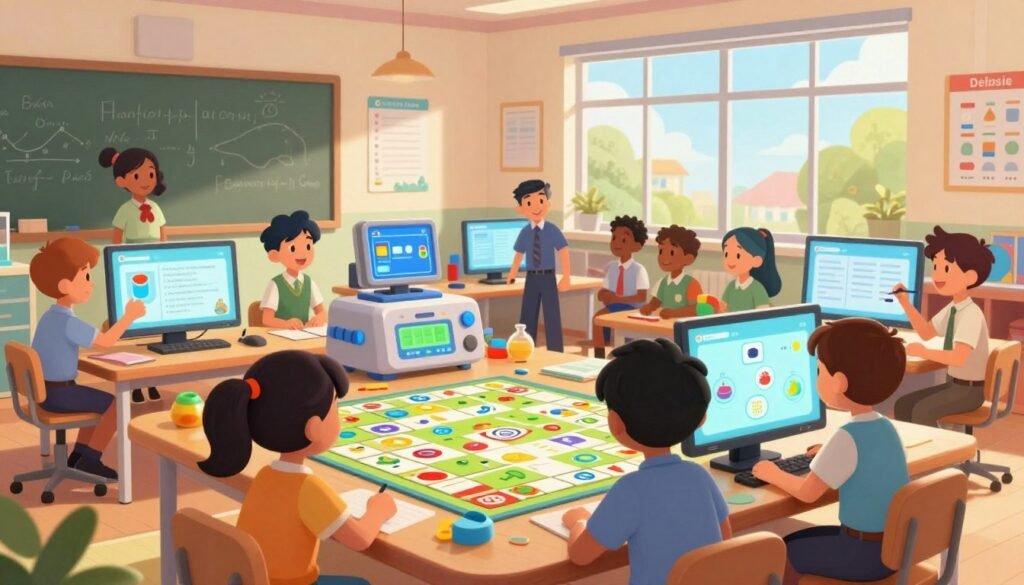
By using gamified learning and personalized education, we can help the next scientists and thinkers. Check out Debsie’s cool learning solutions and open a world of learning!
The Impact of These Greatest Living Scientists on Global Progress
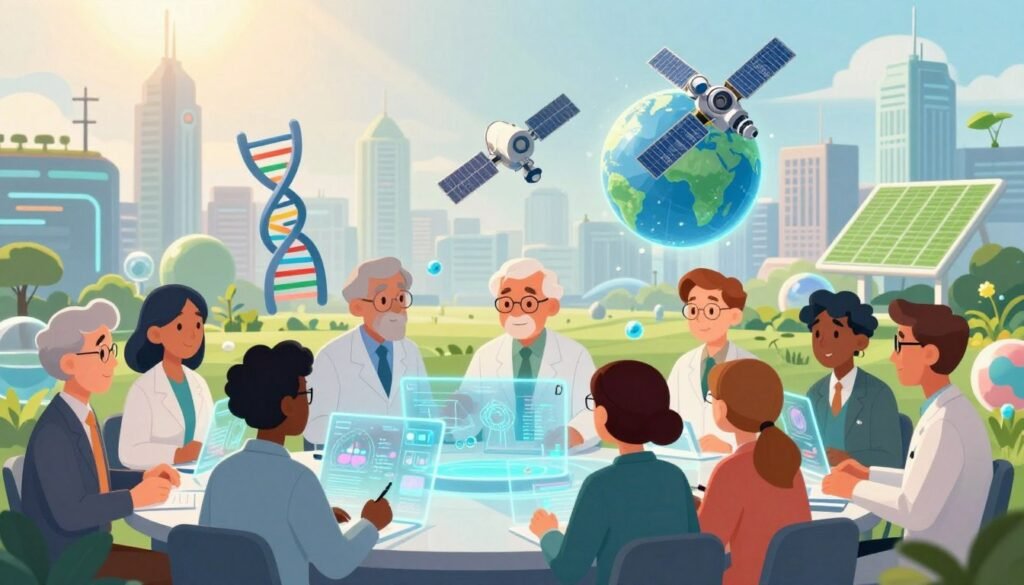
The greatest living scientists are changing our world in big ways! Their work is not just in their fields. It affects progress all over the world.
Let’s see how these smart minds are making our future better. Jennifer Doudna’s CRISPR technology is changing how we edit genes. It could help cure many diseases. Katalin Kariko’s mRNA breakthroughs have made vaccines that save lives.
These scientists, like Tim Berners-Lee and Jane Goodall, are making big changes. They show us what humans can do with science. Their work is a sign of our creativity and curiosity.
| Scientist | Contribution | Global Impact |
|---|---|---|
| Jennifer Doudna | CRISPR Gene Editing | Potential cures for genetic diseases |
| Katalin Kariko | mRNA Technology | Life-saving vaccines and therapies |
| Tim Berners-Lee | World Wide Web | Global connectivity and information sharing |
We are all benefiting from their discoveries. The greatest living scientists are not just improving their fields. They are also helping the world move forward.
By supporting and celebrating these visionaries, we encourage more innovation and teamwork. This will help us all move forward together. The future looks bright, thanks to these amazing people!
The Future of Scientific Inquiry
As we look ahead, science is changing fast. New trends and tech are leading the way. Artificial Intelligence (AI) is becoming a big player in research.
AI makes data analysis faster. It also helps find patterns that humans might miss.
Biotechnology is also advancing, thanks to tools like CRISPR. This tech helps treat diseases and boost crop yields.
Exploring space will teach us more about the universe. It might even find new resources.
Data science and machine learning are also key. They help scientists understand complex data better. This leads to new discoveries.
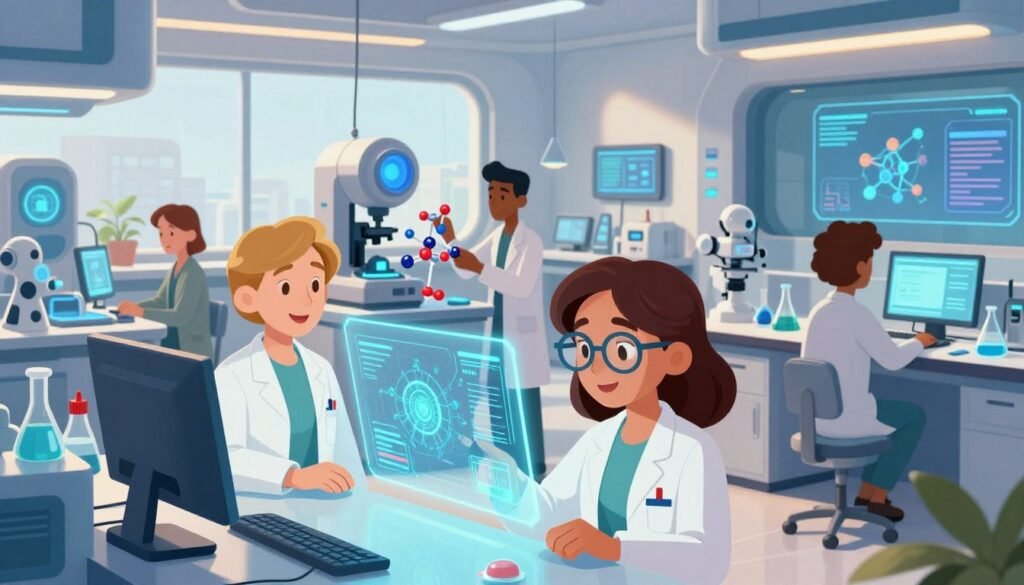
In short, the future of science is bright. New trends and tech will bring big changes to many fields.
Conclusion
The greatest living scientists are changing the world! Their work helps us understand the universe better. It also makes life better for everyone.
They inspire a new generation to learn and think. At Debsie, we help kids love learning. Our games and fun activities make STEM subjects exciting.
Check out Debsie Courses and watch your child become curious and brave. The work of these scientists will keep shaping our future. Let their stories inspire you and your child to explore and discover!