
Government-funded tutoring is a big promise with big questions. Will kids sign up? Will they show up? Will scores go up fast enough to matter? Families and schools want clear answers they can use now, not vague hopes. This guide keeps it simple. We lay out the numbers and then turn each number into action you can take. You will see what works, what fails, and how to set up a tutoring plan that your students will actually finish. You will also see how to talk to parents so they trust the process, how to help tutors teach better, and how to measure real growth without drowning in data.
1) Take-up rate: When tutoring is “opt-in,” about 30–40% of eligible students actually enroll; when schools auto-enroll and let families opt out, take-up jumps to 60–75%
Why this happens
When families must fill forms and book times on their own, many good plans never start. Parents are busy. Students forget. A small hurdle becomes a wall. Auto-enrollment flips the default. Every eligible student gets a spot and a schedule by default.
Families can still say no, but now it takes effort to leave rather than to join. This small design change turns silence into a yes and gives students a fair shot at extra help without extra stress.
What to do this month
Create a simple rule: every eligible child is added to the tutoring roster unless a parent opts out. Publish clear start dates, time blocks, room numbers, and tutor names in one plain message. Send the same message by backpack note, text, and email so no one misses it.
Use short forms when families want changes, like a different time slot or a religious exemption. Keep all forms under one minute to complete. Put homeroom teachers in charge of the first handoff so students know where to go on day one.
What to do this week
Announce auto-enrollment in morning assembly and in every class. Print cards with each student’s tutoring days and times. Ask teachers to read the card with the student and circle the route from the last class to the tutoring room.

Add a simple script for calls home: “Your child is enrolled for extra help at 3:15 on Mondays and Wednesdays. You can opt out anytime. Do you have any questions?” Track take-up daily on a single sheet that shows grade, class, and count.
If a class is below target, ask the teacher to do a two-minute pitch with a personal note: why this student will benefit, how the schedule fits, and what success will look like after four weeks.
How to measure and improve
Set a first-week take-up goal of at least sixty percent. If you fall short, check three things. Are times clashing with transport? Is the message too long? Is there social worry about tutoring? Fix the biggest barrier first.
Offer one alternative time, rewrite the message to ten lines or fewer, and let top students share that tutoring is normal and smart. Keep the default strong, the choice open, and the path easy to follow.
2) Completion: Of those who enroll, about 70–85% finish the full set of sessions; the rest drop out due to moves, illness, or schedule clashes
Why completion matters
Starting is not enough. Learning gains come from steady practice. A half-finished plan yields half the growth. Most dropouts are not about willpower. They are about life getting in the way. A family moves. A bus comes early.
A student needs to care for a sibling. When we plan for real life, completion rises. When we plan for a perfect week, it falls.
How to design for finishing
Begin with a cushion. If a cycle has thirty sessions, schedule thirty-six. Those extra six are make-up slots built into the calendar. Place sessions inside the school day when possible so transport does not block attendance.
Keep sessions short enough that students can stay focused and still make the next class. Name a single adult as the “completer” for each small group. That adult’s job is to watch attendance and solve small problems before they become big ones.
Give the completer a simple dashboard that shows each student’s attended sessions, missed sessions, and next session.
How to keep students coming back
Build routine. The same days, the same room, the same tutor, the same seat. Routine lowers friction and anxiety and helps students feel safe. Add small wins every session. A quick pre-task they can nail in five minutes builds confidence.
Send a two-line text home after the third, tenth, and twentieth session sharing a win. When families feel the progress, they protect the time. Offer one no-questions-asked make-up window every week.
Students who miss a slot can attend a Friday flex period or a short morning booster. Provide a simple cue at school dismissal, such as a wristband or sticker that reminds students to head to tutoring instead of the bus line.
What to measure
Track the “on track to complete” rate every Friday. A student is on track if they have attended at least eighty percent of planned sessions by that point in the cycle. When a student falls behind, act within forty-eight hours.
Call home, offer a make-up, and adjust the schedule if needed. Celebrate completers by name in class and share the exact number of sessions they finished. That public praise is a gentle nudge for others to keep going.
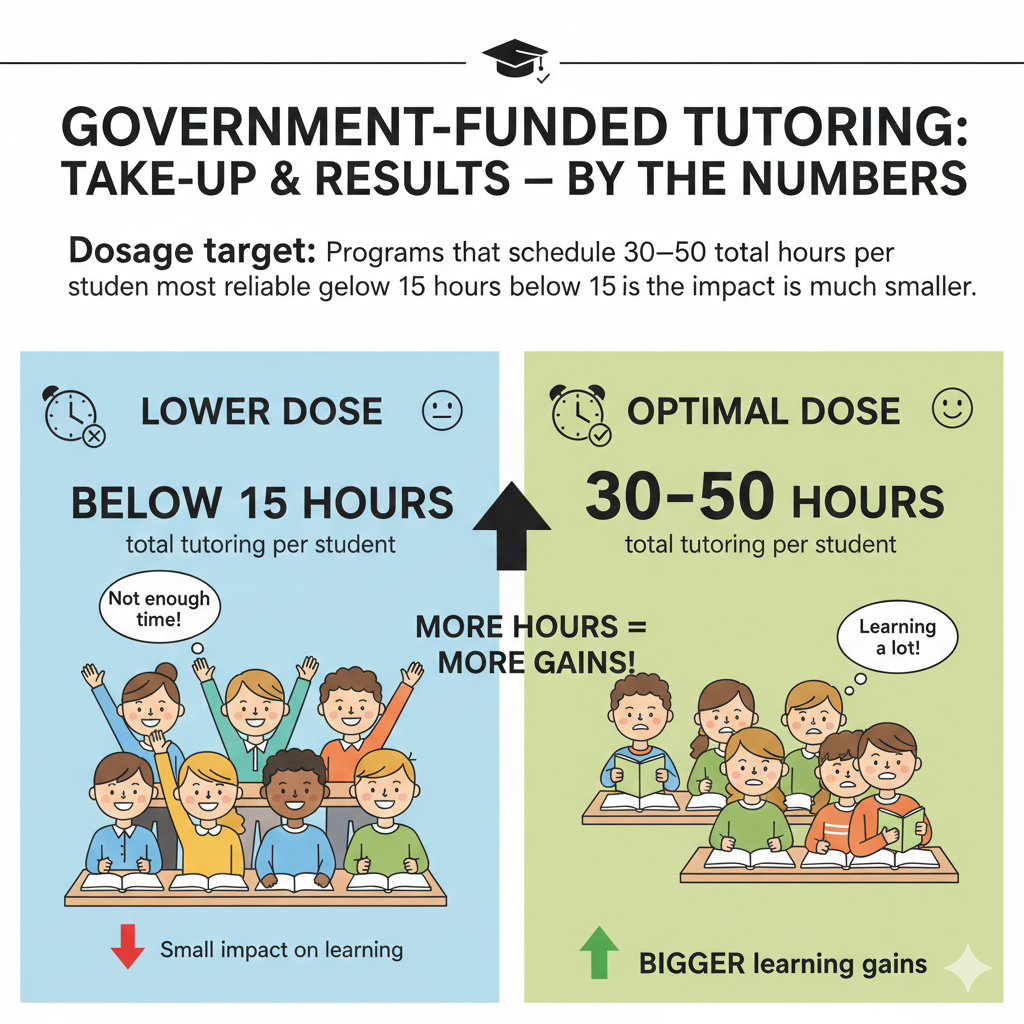
3) Dosage target: Programs that schedule 30–50 total hours per student see the most reliable gains; below 15 hours the impact is much smaller
Why dosage drives learning
Learning is like strength training. You need enough quality reps to see change. Below fifteen hours, students get a taste but not a transformation. At thirty to fifty hours, skills have time to stick. Gaps close, habits build, and tests begin to reflect the practice.
The goal is not to cram more minutes into a day. The goal is to set a steady dose that fits smoothly in the week and adds up across a term.
How to set the plan
Choose a simple pattern that most students can follow. Three sessions a week, forty minutes each, for twelve to fourteen weeks yields twenty-four to twenty-eight sessions and about sixteen to nineteen hours.
If you want to reach the stronger end of the target, add a short fourth session or extend to fifteen weeks. For students with larger gaps, plan two cycles back to back with a one-week break. Keep the content focused on the smallest set of skills that drive big gains, like number sense, math facts, decoding, and fluency.
This focus turns hours into progress rather than into busywork.
How to protect the dose
Treat tutoring sessions as classes, not clubs. Put them on the master schedule. Avoid overlapping with labs, sports, or rehearsals when you can. Train tutors to begin on time, teach tight, and end on time. Use a visible timer in the room so students feel the pace.
Track cumulative minutes, not just sessions. If a session runs short because of an assembly or drill, record the actual minutes and plan a mini-booster later. Give every student a simple progress card showing hours completed and the next goal.
Students love seeing the hours stack up, and this small signal helps the adults stay honest about the target.
What to do when time is scarce
If you cannot reach thirty hours in one term, build a ladder. Start with eighteen to twenty hours now and add a second round after the break. Use five-minute micro-tutoring at the start of class to top up minutes across the week.
Ask classroom teachers to echo one key routine from tutoring, such as a daily fluency read or a two-minute math facts sprint. These echoes help the dosage feel larger than the schedule suggests and keep the learning loop tight between the tutor room and the main class.
4) Session length: The most common session lasts 30–45 minutes; sessions longer than 60 minutes have higher no-show rates
Why length shapes focus and attendance
Thirty to forty-five minutes is the sweet spot because it matches how long most students can stay fully engaged on one task without drifting. In this window, a tutor can greet the group, run a brief warm-up, teach one tight skill, practice it with feedback, and close with a quick check for understanding.
When a session stretches past sixty minutes, attention fades and practical problems grow. Families need to get to work or home. Buses leave. Hunger kicks in. The longer the slot, the more reasons appear to skip it, which is why no-show rates climb when sessions run long.
How to design a high-impact 40-minute block
Open with a two-minute routine that feels the same every time. Students settle faster when they know exactly what to do first. Move to a five-minute spiral review that pulls one or two items from last week. Quick wins build confidence and refresh key skills.
Teach one narrow target for ten minutes using simple steps and clear models. Keep language short and point to the page or screen so students see, hear, and do at the same time. Shift into fifteen minutes of guided practice where the tutor watches, prompts, and corrects in real time.
Close with a three-minute exit check. One or two items are enough to show if the target stuck. If not, plan a short reteach at the start of the next session.
How to make longer blocks work when you must
If scheduling forces a sixty-minute block, break it into two mini-sessions with a clear reset in the middle. Use a water break, a stretch, or a three-minute game that reviews facts or vocabulary. Change the mode after the break so brains reset.
Move from teacher-led to student-led, from paper to manipulatives, or from reading to a whiteboard race. Guard the clock closely. Start the first learning segment by minute five and end the last one by minute fifty-five so dismissal feels calm.
The goal is not to fill time; the goal is to protect attention and finish strong so students want to come back.
5) Frequency: Students who attend 3 sessions per week learn almost twice as fast as those who attend 1 session per week
Why three beats one
Learning sticks when practice is spaced and frequent. One weekly session forces students to reload the skill every time and then forget it again before the next week. Three sessions keep skills warm.
The first session introduces or fixes the target, the second cements it with feedback, and the third moves it toward fluency. This steady beat shortens the time between tries, which cuts forgetting and raises confidence. The result is faster growth with the same total content.
How to lock in a three-day rhythm
Pick consistent days such as Monday, Wednesday, and Friday, or Tuesday, Thursday, and Saturday for schools with weekend options. Keep the time consistent so students never have to wonder when to show up.

Align topics across the week so each session feels like part of a single story. For example, a Monday focus on fractions can lead to a Wednesday practice on equivalent fractions and a Friday fluency check with word problems that use the same ideas.
Use a simple tracker card or digital badge so students can see three boxes for the week and mark them off. When a student misses one day, invite them to a short make-up within forty-eight hours to keep the chain intact.
How teachers and tutors can share the load
Frequency improves when the main classroom echoes the tutor room. Ask classroom teachers to run a two-minute warm-up that mirrors the tutoring target on non-tutoring days. A facts sprint, a quick fluency read, or a number talk keeps momentum.
Tutors can send a tiny “carryover task” home that takes five minutes and needs no special tools. Families are more likely to help when the task is simple and fast. When three weekly sessions feel impossible for some students, create a two-plus-one model where two sessions happen in person and one is a short virtual booster focused on retrieval practice.
Short, frequent, and predictable sessions do the heavy lifting for memory, so build the week around that rhythm.
6) Group size: 1:1 or 1:2 tutoring delivers the biggest gains; moving to 1:4–1:5 cuts the effect by about 25–40%
Why smaller groups accelerate growth
In tiny groups, the tutor can watch every attempt and give instant, precise feedback. Errors are caught early before they harden into habits. Students also speak and solve more often.
A child in a one-to-two setting might answer ten to fifteen times in a session, while a child in a one-to-five setting might answer only three or four times. More reps with feedback mean faster learning. Smaller groups also reduce social risk.
Students are more willing to try, fail, and try again when only one peer is watching, which speeds up skill growth and builds confidence.
How to choose the right size for each student
Reserve one-to-one slots for students with the largest gaps, complex needs, or significant anxiety. One-to-two works well for most learners when the pair has similar skill levels. Use a quick placement check to group students within a narrow range so the tutor can teach one target without leaving someone behind.
For one-to-four or one-to-five settings, tighten the routine to preserve feedback. Use response slates, choral reads, or problem-at-once prompts so every student answers at the same time.
Then sample two answers and give whole-group feedback before a short individual follow-up. This pattern raises the number of responses per minute even in a larger group.
How to fund and staff small groups at scale
Smaller groups cost more per student, so use a tiered model. Aim for one-to-two as the standard and save one-to-one for the highest-need cases. Train paraprofessionals and teaching assistants to run tightly scripted routines so certified teachers can take the most intensive groups.
Stagger start times by five minutes to let one tutor support two adjacent rooms for quick checks and resets. Schedule rolling cycles so when a student graduates from one-to-one to one-to-two, the freed slot immediately serves the next student on the watch list.
Track results by group size every four weeks. If one-to-four shows weak growth in a grade, shift those students into smaller groups for the next cycle. The right size is the one that delivers steady wins with the resources you have now.
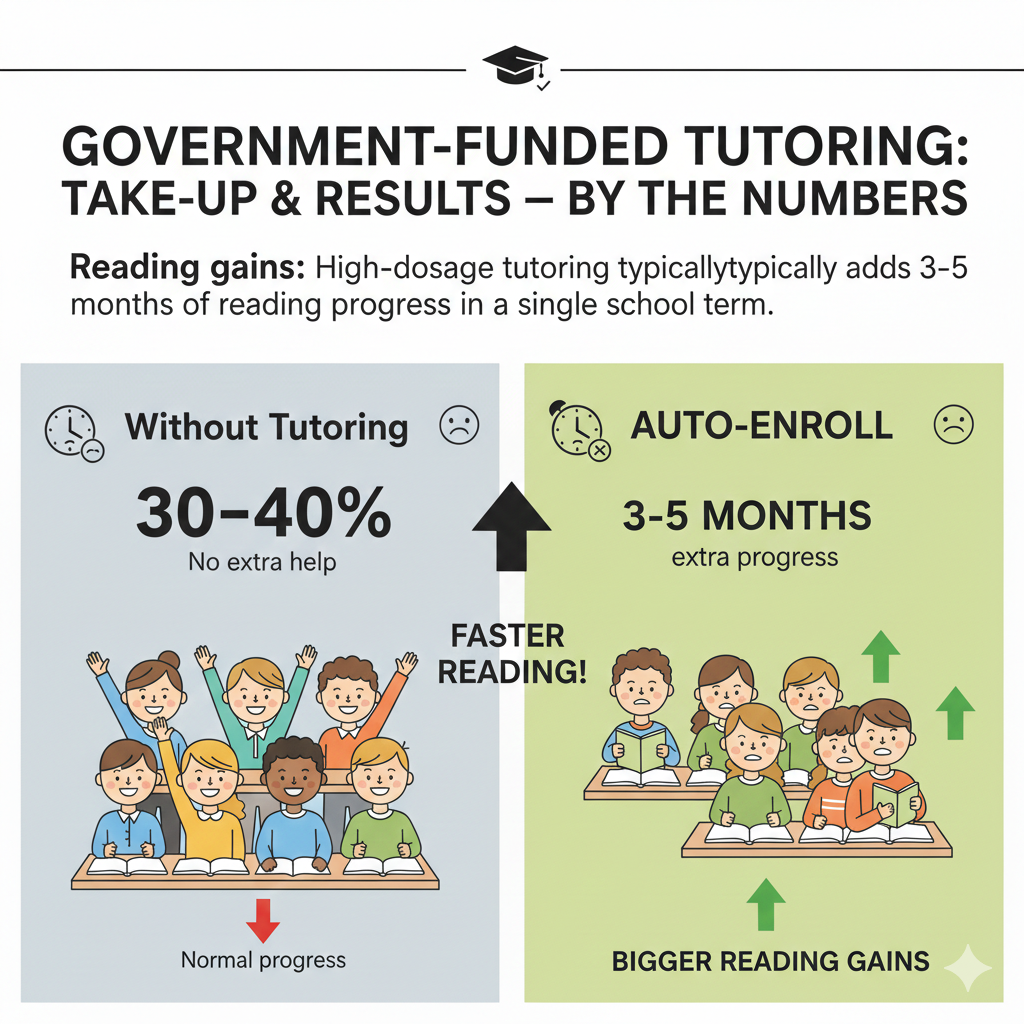
7) Reading gains: High-dosage tutoring typically adds 3–5 months of reading progress in a single school term
Why reading grows fast with steady help
Reading improves when students see words often, hear them aloud, and get feedback right away. High-dosage tutoring gives that exact mix. In three to five months, a child can move from sounding out slowly to reading in smooth phrases.
The key is focus. Pick one or two reading goals, such as decoding vowel teams or improving fluency at grade level. Keep the routine tight so time is not lost. When a tutor hears a mistake, they correct it in the moment.
This prevents the wrong habit from sticking. As words feel easier, a child reads more on their own. More pages mean more growth, which fuels even more reading. It becomes a positive loop.
How to design a powerful reading block
Begin with a short sound drill to warm up the brain. Move to a two-minute review of sight words that show up often in the text. Read a short passage of one hundred to one hundred fifty words at the right level. The text should feel a little hard but not painful.
Use a whisper phone or quick echo reads so students hear themselves and the model. Mark one skill to watch for, like blending across multisyllable words or scooping phrases. Stop briefly at those spots, coach the fix, and keep going.
Close with a one-minute retell or a jot about the main idea and one detail. Track words correct per minute once a week so growth is visible. When the number rises, show the child the chart and celebrate the work, not luck.
If you want a ready-to-run path with games and badges, try a free reading class on Debsie and see how small wins stack quickly.
8) Math gains: In math, strong programs often deliver 4–7 months of extra learning in a school year
Why math moves with targeted practice
Math growth comes from clearing bottlenecks. Weak number sense, shaky facts, and gaps in fraction understanding block later topics. Tutoring that goes straight at these blockers unlocks speed.
Four to seven months of gain happens when students get many correct reps with fast feedback and move through tiny steps. Timing matters too. If a fraction unit is coming in class, tutoring should preview it two weeks early.
This way, class feels familiar, and pride grows. Students stop saying “I am bad at math” and start saying “I know this one.”
How to build a weekly math plan that works
Set three streams. Spend one third of time on number sense work such as composing and decomposing numbers, counting patterns, and place value with base-ten blocks. Spend one third on fact fluency with small sprints, oral counting, and games that reach automaticity without stress.
Spend the last third on the current or coming unit, keeping problems simple in structure but rich in models. Use whiteboards for fast responses from every student. When errors appear, use a short error analysis: here is the wrong path, here is the right path, and here is a way to remember next time.
Keep problems on one page to save time. End with an exit item tied to the exact skill you taught. Record results in a simple tracker so tomorrow’s plan hits the weak spots. If you want plug-and-play math boosters, Debsie’s gamified drills and live help can guide both tutors and students through clean, confidence-building steps.
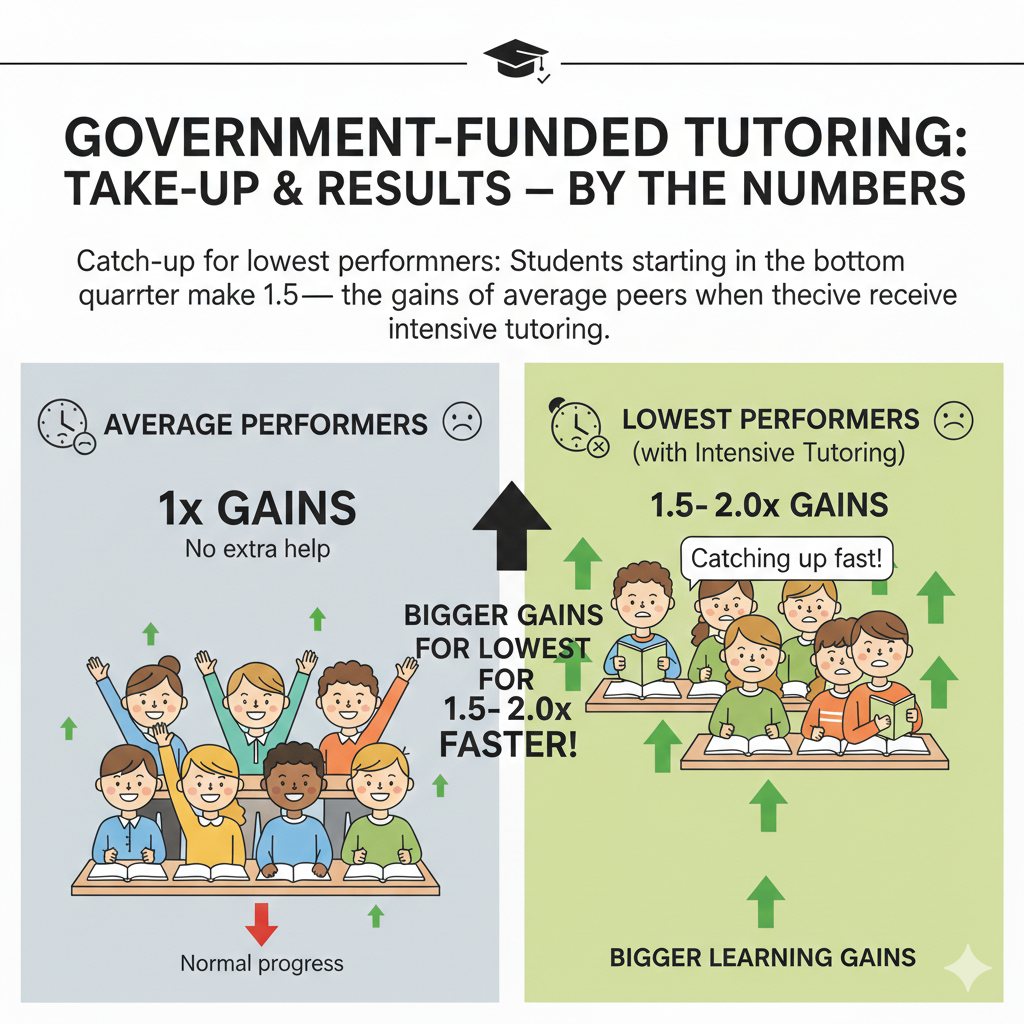
9) Catch-up for lowest performers: Students starting in the bottom quarter make 1.5–2.0× the gains of average peers when they receive intensive tutoring
Why the biggest gaps close fastest with the right plan
Students far below grade level often miss a few key skills, not every skill. When tutoring targets those exact gaps, results pop. The first wins are big because the student finally has tools to access class work.
Confidence shifts from fear to pride. The change feeds effort, and effort feeds more growth. Intensive help also means more time in the “learning zone,” not the “panic zone.” Tasks feel doable and stretch the brain without breaking it.
How to tailor tutoring for rapid catch-up
Start with a short placement check that pinpoints the floor. In reading, test letter-sound mastery, blending, and oral reading of a controlled passage. In math, check counting, place value, and single-step word problems. Use these checks to build a two-week plan with three micro-goals.
For example, master all short vowels, reach twenty addition facts to automaticity, and read a grade-level paragraph with phrase scooping. Teach with clear models and many chances to respond. Give quick praise tied to effort and strategy, not talent.
Pair the student with a steady tutor in a one-to-one or one-to-two setting for at least three days a week. Call home after week one with a specific success and a simple home habit, such as a five-minute reading aloud or a two-minute facts chant.
Protect the group from shame by keeping tasks short and celebrating every correct step. Use visuals to show progress, like a ladder that climbs with each skill gained. Families can see movement, and the student feels it.
If you want help organizing micro-goals, Debsie coaches can share simple templates that make planning fast.
10) Attendance threshold: Students who attend at least 80% of scheduled sessions get 2–3× the benefit of those below 50% attendance
Why showing up drives most of the impact
Tutoring works when sessions build on each other. Missing half the time breaks the chain. The brain keeps restarting rather than building. At eighty percent attendance, the rhythm stays intact. Skills link together, and memory strengthens.
The return is not linear. It is closer to a step up. Cross the eighty percent line, and gains jump.
How to keep attendance high without nagging
Make attendance the easy choice. Place sessions during the school day when possible so transport is not a barrier. Keep the room close to where the previous class ends so the walk is short. Use a friendly cue at dismissal, such as a tutor greeting at the door with a smile and a name.
Send a same-day text that says the exact start time and skill for the session. When a student misses, call within twenty-four hours and offer a make-up in a set window, like Friday morning or lunchtime. Do not scold. Ask what got in the way and solve that issue.
If it was a club conflict, shift the time by ten minutes. If it was hunger, add a small snack. Track attendance like a heartbeat. Tutors mark present or absent in the first five minutes, and a lead checks the dashboard before the session ends.
Share the eighty percent target with families so they know the goal. After four weeks of strong attendance, send a short certificate home with a note about the specific gains you see.
If you want a simple attendance tracker with alerts, Debsie’s classroom tools can ping you when a student is about to fall below the line so you can act fast.
11) Tutor type: Certified teachers produce about 10–20% larger gains than non-teachers, but trained paraprofessionals still show strong results
What this means for staffing and training
Certified teachers bring deep knowledge of content and classroom moves. They can spot a missing skill fast and fix it with a clear model. That edge often shows up as extra growth on tests and smoother lessons. But many schools cannot staff every tutoring slot with a certified teacher.
The good news is that trained paraprofessionals and college tutors can still deliver strong results when the program is designed well. The core is structure. A simple script, a tight routine, and fast feedback close most of the gap.
How to design roles that lift outcomes
Use certified teachers as lead tutors for the hardest cases and for the first two weeks of a new cycle. In that window, they set the bar, diagnose needs, and model the routine. Pair each lead with two or three paraprofessionals who follow the same playbook.

Hold a short daily huddle where the lead shares one focus skill, one model problem, and one common error to watch for. Keep materials identical across rooms so students experience the same look and feel. Build a quick observation loop.
The lead pops in for five minutes, checks pacing and feedback, and leaves one tip. This light touch keeps quality steady without heavy paperwork.
Training that raises gains for all tutors
Give every tutor a short, practical pre-service training of ten to twenty hours. Focus on three items only. First, the routine from minute one to minute forty-five. Second, how to give praise and corrections that are clear and kind.
Third, how to use the data card to plan the next session. Skip theory and use live practice with role play. Record one session per tutor every two weeks and review it in a ten-minute coaching chat. Celebrate what went well, then pick one small change for next time.
If you want ready-to-run scripts, data cards, and short training videos, Debsie’s tutor kit can give your team a solid start in a single afternoon.
12) Training time: A short 10–20 hours of tutor training before launch reduces early dropouts by about 30% and improves fidelity
Why short, focused training works
Tutors do not need weeks of lectures. They need the exact moves they will use on day one. When tutors feel ready, they start strong, and students stay. Clear routines also make the day feel calm, which lowers the chance of chaos and missed sessions.
With just ten to twenty hours of targeted practice, a new tutor can greet, teach, correct, and close with confidence. That confidence shows, and families trust the program more.
How to build a high-impact training plan
Break the training into four blocks. In block one, walk through the full session script and practice the timing. In block two, teach how to model a skill with a think-aloud that uses simple words and points to the work. In block three, rehearse feedback.
Use short phrases, such as say it back, try this step, or stop and scoop the phrase. In block four, train on data. Show how to mark attendance, record exit checks, and choose the next step. Keep each block hands-on.
Every tutor should teach a three-minute segment to a partner at least twice in each block. End training with a live practice session with a small group of students or with peers acting as students.
Support that keeps training alive
New skills fade without use. Build a weekly ten-minute tune-up where tutors share one success and one snag. Offer short video refreshers tied to common problems, like pacing too slow or giving too much talk. Use a one-page checklist that tutors keep on the table during sessions.
This is not for judgment. It is a friendly guide. When leaders visit, they leave one warm note and one precise tip. If your team needs a simple training deck and sample videos, Debsie can share templates that match the routines in this guide so everyone speaks the same language from day one.
13) Curriculum alignment: Using materials aligned to the school curriculum boosts outcomes by 15–25% versus generic worksheets
Why alignment multiplies impact
When tutoring and class work point in the same direction, students practice the right skills at the right time. This makes class feel easier and tutoring feel useful. The brain notices the match and builds one strong pathway instead of two weak ones.
Generic worksheets can still help, but they often miss the exact words, problems, or formats students see in class. Alignment saves time and builds confidence because students can use today’s tutoring skill in tomorrow’s lesson.
How to align without heavy lifting
Ask grade teams to share the next four weeks of topics and the key vocabulary. Pick two to three micro-skills within those topics, such as finding common denominators or reading with phrase scoops at punctuation.

Build short tutor lessons that use the same models, the same number lines, and the same word choices as the classroom. If the class uses a particular anchor chart, print a small version for tutoring tables.
Keep exit checks in the same format as class quizzes so students do not need to learn a new style. When the curriculum turns to a new unit, move the tutoring focus one week ahead to preview tricky parts.
How to keep materials clean and dependable
Create a shared folder with one-page lessons, matching practice, and one-minute exit checks. Name files by week and skill so tutors can grab and go. Review materials once a month to cut clutter and improve confusing steps.
Ask classroom teachers to note any mismatch they see and fix it within a week. The more the two worlds match, the faster students grow. For schools that want ready-aligned reading and math mini-lessons with clear scripts and quick checks, Debsie’s curriculum pack mirrors common scope and sequence maps and can be slotted in with little editing.
14) In-school vs after-school: In-school tutoring (during the day) raises attendance by 10–15 percentage points compared with after-school slots
Why timing shapes who shows up
When tutoring happens during the school day, attendance rises because students are already in the building. There is no bus to catch, no parent pickup, and no late-day fatigue.
After-school slots can work, but they compete with sports, jobs, and family duties. A small change in timing can mean the difference between a full room and a half-empty one. Higher attendance means more learning minutes and better results.
How to place tutoring inside the day
Use homeroom, intervention blocks, study halls, or elective rotations to host sessions. If your schedule is tight, split classes into two short rotations so each student gets a focused burst without missing core instruction.
Work with teachers to avoid pulling students from the same subject every time. Rotate pull-outs so the same student is not always missing art or the same science lab. Keep the walk short. Place tutor rooms close to the sending classrooms so transitions take one minute, not five.
Provide a simple pass system so students move quickly and adults know where they are.
Making after-school work when you need it
If you must run after-school, reduce friction. Start within fifteen minutes of the final bell to avoid long idle time. Offer a quick snack and a three-minute movement break. Coordinate with transportation to provide a late bus two days a week.
Keep sessions tight at thirty to forty minutes so students can still make sports or family plans. Send a same-day text at lunch with the exact start time and a reminder of the focus skill. Celebrate perfect-week attendance with a small note home that names the skill mastered.
If you want tools to track attendance by time of day and get alerts when a slot dips, Debsie’s dashboards can show trends and help you move sessions into the school day where possible.
15) Virtual vs in-person: In-person sessions outperform virtual by about 10–20%, but high-quality virtual tutoring still shows clear gains when tech works well
How to choose the right mode for your students
In-person tutoring gives tutors more control over attention. It is easier to see confusion, point to the work, and manage pacing. That is why the average result is stronger.
Yet virtual tutoring can still deliver meaningful growth, especially when students join from a quiet spot with a reliable device and a clear routine. Virtual also helps reach students in rural areas or during bad weather. The key is to make the virtual room feel as tight and warm as the physical one.
How to make virtual sessions work like a charm
Set rules that keep video strong and simple. Cameras on when possible, microphones muted until called, and work displayed on the screen or a doc cam. Start with a tech check in the first minute.

If a student cannot hear or see, fix it fast or move them to a backup line like a phone call while they follow the shared screen. Use interactive tools sparingly. One shared whiteboard and one set of response cards are enough.
Too many apps create lag and confusion. Keep teacher talk short. Ask for frequent responses with gestures, typed answers, or quick polls so students stay active. End with a screenshot of the exit check and a two-line recap sent to the student and family.
Building a blended plan that keeps gains high
Mix modes to fit real life. Hold two in-person sessions and one short virtual booster each week. Use the virtual time for retrieval practice and quick checks, which work well online. Provide a quiet space at school for students who lack a good spot at home.
Equip that room with headsets, chargers, and a simple poster that shows the routine. Track results by mode for each student. If a child stalls online, switch them to in-person for a few weeks. If travel is the issue, try a shorter in-person slot but keep the frequency high.
For ready-to-use virtual routines and clickable materials that mirror the in-person session, Debsie’s live online classes follow the same scripts so switching modes does not break momentum.
16) Technology issues: When more than 10% of sessions have tech problems, learning gains drop by about 20%
Why small tech issues cause big learning loss
Every minute a screen freezes or a mic cuts out is a minute not learning. When one in ten sessions has a tech hiccup, the flow breaks. Students forget the step they were on. Tutors lose the thread. Confidence drops.
Even simple issues, like low batteries or blocked sites, add friction that makes students avoid the next session. The harm is not just the lost minutes. It is the broken rhythm and the rising stress. A calm, simple setup protects attention and keeps the coaching steady.
How to prevent most problems before they start
Treat tech like classroom materials. Check it before the bell. Build a one-minute start routine for tutors and students. The tutor opens the deck, tests audio, and shares the screen. Students plug in, adjust volume, and open the practice page.
Use one device type and one platform whenever possible so support is easy. Post a short visual guide near each station that shows the three most common fixes. Restart the app, reconnect the device, and switch to the backup link.
Keep spare headsets, chargers, and a few loaner laptops in the room. Label everything in large print so swaps are fast. If a site needs a login, use picture passwords for young students and a single sign-on for older ones. This removes the number one cause of delays.
What to do when something still breaks
Do not let a tech issue steal a whole session. Keep a printable version of the day’s exit check and a paper copy of the key practice. If the app fails, switch to paper in ten seconds and keep teaching. Record the issue on a simple form as soon as class ends, not next day.
Tag the issue type and the device used. Review the week’s issues every Friday. If a certain app or device causes most problems, replace it or retrain staff on the exact fix. Share the plan with families so they trust the program.
When tech is boring and reliable, learning is smooth and gains stay high. If you want a ready-to-run digital and print pack for each skill, Debsie provides matching paper backups so no session goes to waste.
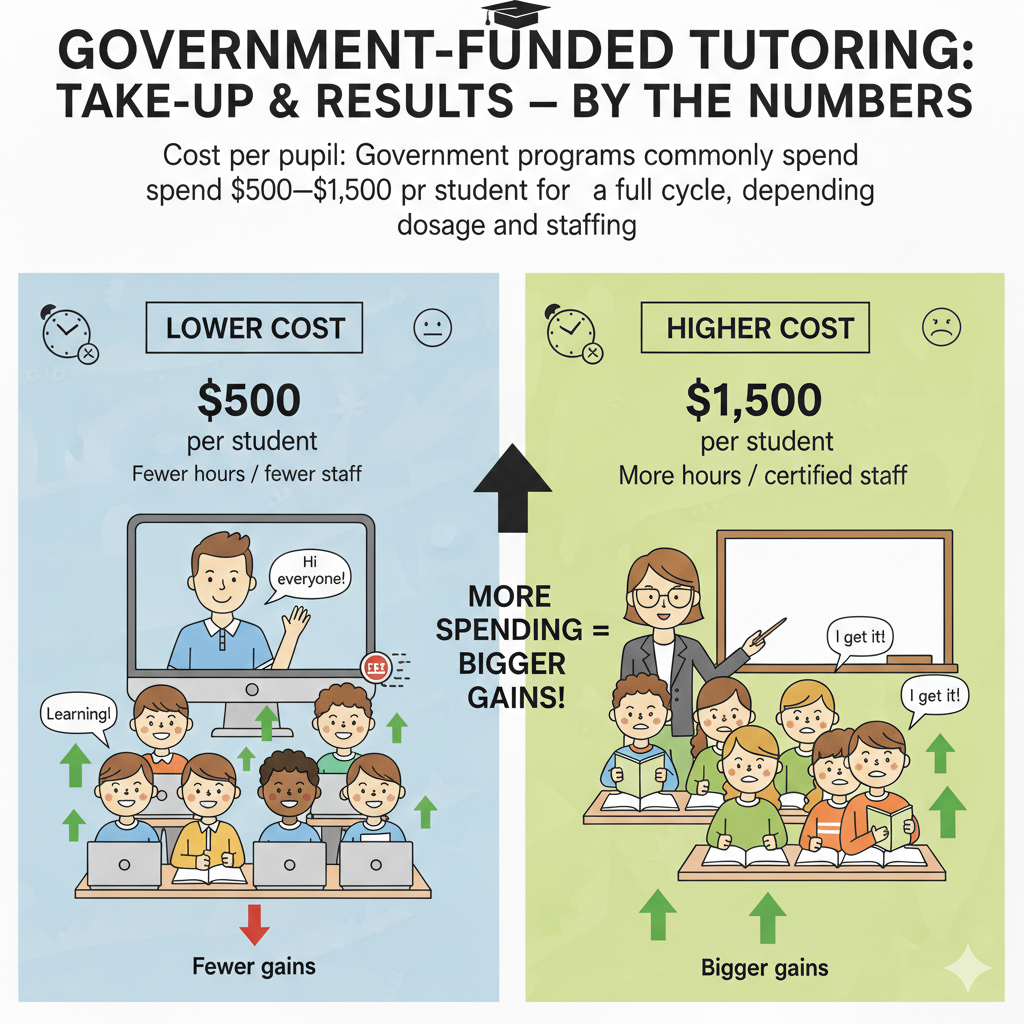
17) Cost per pupil: Government programs commonly spend $500–$1,500 per student for a full cycle, depending on dosage and staffing
Why knowing your cost unlocks smarter choices
A clear cost range helps leaders plan without guessing. Five hundred dollars might fund a tight group model with paraprofessional tutors and shared materials. Fifteen hundred dollars might fund one-to-one support with a certified teacher and richer tools.
The goal is not to pick the cheapest number. The goal is to match the cost to the need and to the result you want. When you know the price of one more hour or one smaller group, you can choose where that dollar does the most good.
How to build a simple budget that reflects reality
List the big pieces first. Tutor pay, training time, materials, space, and program lead time. Add the hidden costs that often get missed, such as time for placement checks, copier fees, and a small snack for after-school slots.
Divide the total by the number of students who will actually complete, not only enroll. This gives a truer per-pupil cost. Next, test scenarios. What happens if you shift from one-to-four to one-to-two? What if you add six extra make-up sessions to raise completion by ten percent?
You may find that spending a little more on staffing lowers waste and improves the final cost per successful student.
How to stretch dollars without hurting results
Spend most of the budget on people and time, not on shiny tools. Choose one simple platform that does the basics well. Use aligned, one-page lessons instead of large, costly bundles that few tutors use fully.
Train a small team as internal coaches so you do not need outside support every month. Schedule in-school blocks to avoid the transport costs of late buses. Track outcomes by cost bucket. If a certain grade gets strong gains at the lower end of the range, copy that model.
If another grade spends more with weak growth, fix the design. A program that is clear, simple, and focused will deliver better value than a fancy plan with too many moving parts. If you want help modeling your cost scenarios, Debsie can share a basic calculator you can copy and edit in minutes.
18) Cost per session: Typical direct cost is $20–$50 per session, with higher costs for 1:1 and rural areas
Why the per-session lens helps daily decisions
Per-student cost is useful for big planning, but per-session cost guides daily moves. If a session costs forty dollars, ten no-shows in a week waste four hundred dollars. Small choices like tighter reminders or better room placement suddenly matter a lot.
The per-session view also helps compare options. Two shorter sessions may cost the same as one long one, but the shorter pair often delivers more learning because attention is fresher.
How to lower per-session waste without lowering quality
Start with attendance. Send same-day reminders two hours before the session with the exact time and room. Place sessions where students naturally pass by to cut travel time and confusion. Begin on time every time so students learn that the first minute matters.
Use a shared kit so supplies are always ready. Whiteboards, markers, manipulatives, and printed exit checks live in a labeled bin at each table. Cut setup to near zero. Track the minutes actually taught. If the first five minutes are lost often, fix the entry routine.
If the last five minutes always rush, tighten the middle practice and use a visible timer so the close never gets skipped.
How to balance group size, frequency, and cost
A one-to-one session may cost more, but it can deliver faster gains for the right student, which means fewer total sessions needed. A one-to-two can be a sweet spot, giving high reps with a lower price.
Large groups look cheap per session, but if they cut the effect by a third, the real cost per month of learning may be higher. Use a simple rule. If a student is not moving after four weeks in a larger group, shift them to a smaller one.
If a student is flying in one-to-one, test a move to one-to-two to free capacity. Let results guide spending. For a clean way to see cost and outcomes together, Debsie’s dashboard can show cost per session and growth per student on one page so you can steer week by week.
19) Cost-effectiveness: Well-run programs deliver roughly 0.20–0.35 standard deviations of learning per $1,000 spent—stronger than most other interventions
How to read this number and use it well
A standard deviation sounds technical, but think of it as a clear yardstick for learning. A gain of 0.20 to 0.35 means real movement on tests and in class work, not just noise. When a program gives that much lift for each thousand dollars, it is doing better than many common school add-ons.
The point is not the exact decimal. The point is that tutoring, when done right, gives strong learning per dollar, especially for students who need it most. Leaders can use this yardstick to decide where to put scarce funds and what to scale next term.
How to lift your own cost-effectiveness
Focus on the parts that drive the curve. Keep group sizes small enough for fast feedback. Protect the three-sessions-per-week rhythm. Align materials to the current unit so practice transfers to class. Raise attendance above eighty percent.

These four moves boost outcomes without huge new costs. At the same time, trim waste. Start on time, keep tech simple, and use shared materials so setup is fast. Track gains every four weeks and shift students who stall into a tighter group or a different time slot.
Small adjustments raise the learning you get for the same dollar.
How to make the case to families and funders
Share a short, human summary with the data. Show a line chart with growth by student group and a simple table with cost per completer. Then tell two short stories of students who moved from struggle to steady confidence.
Invite visitors to see a live session so they feel how calm, brisk teaching turns into progress. If you want a one-page report template with the key charts already built, Debsie offers a simple pack you can plug your numbers into and send to your board or community partners in minutes.
20) Teacher time saved: Embedded tutors reduce teacher small-group load by 1–3 hours per week, freeing time for planning and feedback
Why time saved matters for student results
When teachers get back one to three hours, they can plan tighter lessons, write better feedback, and call home before small problems grow. This hidden gain improves the whole class, not just the tutored students.
A teacher with breathing room can regroup materials, adjust seating, and pre-teach vocabulary for the next unit. Less scramble means clearer teaching, and clear teaching lifts everyone.
How to design tutoring that truly gives teachers time back
Place tutoring during blocks when the teacher would normally run small groups. Let the tutor take the heaviest lift, such as the lowest group or the group previewing new content. Share a simple daily plan so both adults know the target and the checks for understanding.
Keep materials in one labeled bin per group so handoffs are instant. Add a ten-minute co-plan each Friday. The tutor brings exit check data and a list of wins and snags. The teacher names the next week’s targets. This quick loop saves time on Monday and keeps both roles in sync.
Turning saved time into visible gains
Make a plan for those freed hours. Teachers can use a standing slot to phone three families, write quick feedback on drafts, or build a mini lesson for a known weak spot. Leaders should protect this time from being eaten by random tasks.
Track teacher time saved with a short weekly check-in. Ask how the time was used and what impact it had. Share wins in staff meetings so the whole team sees the value. If you want a simple co-planning form and a bin checklist, Debsie’s tool set includes ready pages so the routine takes five minutes, not fifty.
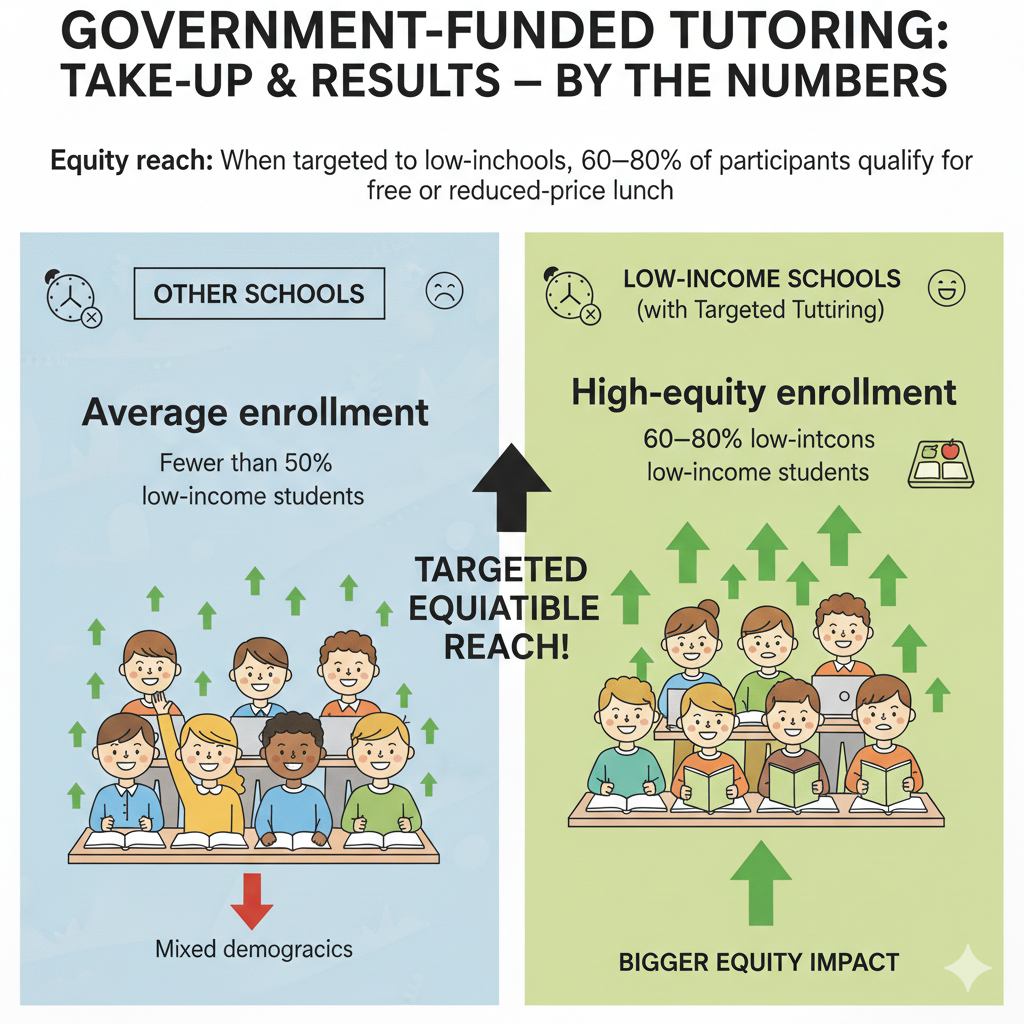
21) Equity reach: When targeted to low-income schools, 60–80% of participants qualify for free or reduced-price lunch
Why this reach matters for fairness and results
Government-funded tutoring is meant to level the field. When most participants are from low-income families, the program is reaching the students who often face the biggest gaps and the most barriers to extra help.
This reach also builds community trust. Families see public funds going to real support, not just announcements. Strong equity reach means more students who might never get private tutoring can finally access steady, skilled coaching that changes the game.
How to design for access, not just offer
Choose schools and grades with the widest gaps and the least outside options. Use auto-enrollment so students do not need parents to navigate long forms or hard deadlines. Offer sessions inside the school day to avoid transport issues and parent work conflicts.
Provide simple, plain-language messages in the languages families speak at home. Use text over email when possible because more families read texts fast. Give families a single phone line or WhatsApp number to ask questions, not a maze of links.
Respect work schedules by letting parents set a preferred call time and sticking to it.
How to keep equity at the center as you grow
Track participant demographics and completion rates by subgroup every month. If a group’s completion lags, find the barrier and fix it. It might be timing, language access, or fear of stigma. Make tutoring feel normal and proud.
Share photos of mixed-ability groups working hard and smiling. Invite families to a short open session so they can see the calm, focused work. Offer small supports that matter a lot, like noise-canceling headsets, pencils, and snacks, so no child feels unprepared.
If you want help setting up a simple equity dashboard with real-time alerts, Debsie can provide a template that highlights gaps early so you can act before the term ends.
22) Language learners: Students learning the local language gain 20–30% more in reading when tutoring includes vocabulary support
Why vocabulary is the unlock
Language learners often know the skill steps but get stuck on the words in the problem or passage. When tutoring adds short, sharp vocabulary work, the text becomes friendlier.
Students can focus on decoding and meaning, not guessing. A small daily practice on high-use words gives a big lift. The best part is that vocabulary work is quick. Five to seven minutes can change the whole session.
How to add vocabulary without losing core time
Start each reading session with three to five target words that appear in the passage. Show a picture or a quick gesture, give a kid-friendly meaning, and use the word in a simple sentence. Ask students to do a one-sentence restate with a partner.
During reading, point to the word when it shows up and prompt a quick nod or whisper read. After reading, do a thirty-second recall game where students hold up a card that matches the meaning, or they choose which of two sentences uses the word correctly. Keep all supports visible on a small word strip at the table.
Building a schoolwide plan for language learners
Share a master list of high-frequency academic words across grades. Coordinate with classroom teachers so the same words appear in class and in tutoring. Train tutors to use clear visuals, gestures, and short talk.
Encourage students to keep a small personal glossary with pictures or first-language notes. Celebrate growth in both reading and vocabulary. Send a short weekly word list home with audio links so families can practice pronunciation even if they do not speak the school language.
If you want a bank of visual word cards matched to common passages, Debsie’s literacy kit includes ready-made sets that slide into any routine.
23) Special education: With adapted materials, students with learning disabilities show 0.10–0.25 test score standard deviation gains in one term
How to design tutoring that truly fits diverse learners
Students with learning disabilities often need the same skills taught in a different way and at a calmer pace. Gains of a tenth to a quarter of a standard deviation in one term are real and meaningful. They happen when the content is broken into tiny steps, feedback is instant, and practice is short but frequent.
The first rule is clarity. Use simple language, clean visuals, and one goal per session. The second rule is predictability. Start and end the same way every time so the student feels safe and knows what comes next. When stress drops, attention rises, and learning follows.
Practical moves that raise growth
Pick one micro-skill and teach it with a clear model, then let the student try it right away. Use guided notes with blanks so writing load stays light while thinking stays high. For reading, mix decodable text with high-interest content so the brain has both structure and joy.

For math, use concrete objects first, then pictures, then numbers. Build in wait time after questions so the student can think without pressure. Use a quiet signal for errors, such as tapping the paper near the step that needs fixing, then show the correct move and have the student do it again correctly.
Keep sessions to thirty to forty minutes and protect two or three sessions per week so memory can build.
Family and team support that sticks
Share a one-page plan with the special education teacher, classroom teacher, and family. Name the exact target, the routine, and the words the tutor uses to praise and correct. This shared script helps the student hear the same cues across settings.
Offer a two-minute home practice that uses simple tools like a card deck, counting objects, or a short reread. Celebrate small wins often and show the graph, not just say good job. If your team wants ready-made adapted materials with larger fonts, step-by-step prompts, and matching home cards, Debsie’s special education pack can save hours and keep everyone aligned.
24) Parent satisfaction: 70–90% of parents rate government-funded tutoring as “helpful” or “very helpful”; the top reason is “more confidence”
Why confidence matters as much as scores
Parents want to see their child walk into school taller and calmer. When a child believes they can learn, they try more and keep going when work is hard. Confidence is not fluff. It is a driver of effort and attendance.
When parents see that spark return, they trust the program and support the routine at home. High satisfaction rates come when families feel informed, respected, and included, and when they can point to real changes in how their child talks about learning.
How to earn trust week by week
Keep communication simple and steady. Send a two-line update after the third, tenth, and twentieth session. Name the skill the child worked on and one thing they did well. Share a short video clip or photo of a completed problem if your policy allows it.
Invite parents to a five-minute open session on a set day each month so they can watch the routine. Offer meeting times early morning, lunch, and evening so working families can attend. Ask one question at each check-in: what is working at home, and what gets in the way.
Then act on the feedback, even if the change is small, like shifting a session by ten minutes or switching to a quieter room.
Turning satisfaction into lasting partnership
Give parents tools, not just news. Share a one-page guide with three ways to help in under five minutes a day, such as reading a short paragraph aloud together, running a quick facts sprint, or asking one deep question about a story.
Set a visible milestone, like mastering twenty key words or solving ten two-step problems in a row, and celebrate when the child hits it. Invite families to try a free live class at Debsie so they can see the gamified approach that keeps kids focused and proud.
When families feel like teammates, attendance rises and gains grow.
25) Student confidence: Self-reported academic confidence rises by 15–25 percentage points after a full cycle of tutoring
Why small wins add up to big confidence
Confidence grows when students can feel progress in their own hands. A jump of fifteen to twenty-five percentage points shows that tutoring does more than raise scores. It changes how students see themselves.
The secret is frequent, authentic success. Each session should offer a quick task that the student can do now, not next month. This shows the brain that effort works. Over time, the student expects to improve, which fuels more practice and better results.
How to build confidence into every session
Start with a warm-up that the student can finish in two minutes with high accuracy. Use it to say, you can do this. Teach one clear step, then let the student try it with immediate, kind feedback. Praise the exact move, like you lined up the numbers before subtracting.
End with an exit check that mirrors the main step. Track the percentage correct and show the line climbing week by week. Use language that ties success to effort and strategy, not talent. When mistakes happen, frame them as information.
You used the old strategy; now try the new one. This keeps emotions calm and thinking active.
Keep confidence growing beyond the cycle
Plan a bridge from tutoring back to the main class. Share the student’s best strategies with the classroom teacher and ask for a chance to use them in front of peers. Let the student teach a quick tip to a friend, which locks in knowledge and adds pride.
Send home a short certificate with the exact skill gains listed, not vague praise. Invite the student to a next-level class or challenge on Debsie so the momentum continues. When students see themselves as learners who can improve, they do the work that makes improvement real.
26) Summer learning loss: Summer tutoring cuts reading loss by 50–70% and can add 1–2 months of progress in math
Why summer is a chance, not just a risk
Without practice, many students slide back over the break, especially in reading fluency and math facts. A short, steady summer program can stop the slide and even push skills ahead. The key is light structure. Keep sessions short, goals simple, and the feel joyful.
Students are more likely to show up when the program respects summer life and still delivers strong practice.
How to design a summer plan that families accept
Offer two or three mornings a week for six to eight weeks, with forty-minute sessions and a friendly routine. Pair reading with math so families get a two-for-one benefit. Use high-interest texts and hands-on math with games and quick sprints.
Keep groups small so feedback is fast. Provide a snack and a short movement break to keep energy high. Build in make-up days every other week so vacations do not wreck progress. Send home a tiny practice kit with a short reading, a facts card, and a game that uses common items like dice or playing cards.
Making summer gains visible and sticky
Test skills lightly at the start and end with one-minute checks. Share the gains with students and families in a simple chart. Celebrate with a small showcase, where students read a favorite paragraph aloud or explain a math trick they learned.
Invite families to continue with a free trial at Debsie so the habit of practice carries into the fall. When summer becomes a time for quick wins, students return to school ready to learn, not to relearn.
27) No-show rates: Average no-show is 10–20%; sending same-day reminders lowers no-shows by 3–6 percentage points
Why students miss and how reminders help
Most absences are not about attitude. They come from tiny frictions that pile up. A student forgets the room number. A parent thinks the session is tomorrow. A bus leaves early. When the plan is fragile, small bumps break it. Same-day reminders work because they meet real life where it is.
A clear, short message two hours before the session jogs memory, solves confusion, and gives families time to adjust rides. A drop of three to six points in no-shows may look small on paper, but across a term it protects many hours of learning that would have been lost.
How to build a no-show prevention routine that sticks
Make the day easy to follow. Keep session days and times fixed so habits form. Put the room number on a small card that lives in the student’s binder and on a sticker in the planner.
Send a simple text two hours before start time that says the student’s name, the room, the start time, and the skill focus for that day. Use the same message format every time so families scan and know what it means.
Place a friendly adult in the hallway five minutes before the bell to greet students heading to tutoring. For after-school sessions, offer a snack and a quiet landing spot so students do not drift away while waiting. Keep a ten-minute late window with a quick catch-up routine so arriving late is still worth it.
Track no-shows by homeroom and by time of day. If one slot has more misses, move the slot, not the students. When a student misses, call within twenty-four hours and ask what got in the way. Offer one small fix, such as a different day or a closer room.
Avoid blame. Focus on solving the barrier so the next session is a yes.
How to recover a missed session without losing momentum
Plan one weekly make-up block and publish it widely. If a student misses Monday, they can attend the Friday flex. Keep make-ups short and focused on the highest-value skill that was missed. Use a fast-track script with a brief model and four practice items.
End with the same exit check the student would have taken, so your data stays clean. Share a two-line note with families that says what was recovered and the next session date. When recovery is quick and simple, students and parents stop fearing that one miss ruins the whole plan, and steady attendance returns.
28) Waitlists: In high-need areas, demand can exceed supply by 20–40%, creating waitlists unless schools expand tutor hiring
Why waitlists form and how to keep them short
When a program works, word spreads. More families ask to join, and seats run out. In high-need areas, the gap between students and tutor capacity can become wide. A waitlist by itself is not a failure, but a long wait can turn excitement into frustration.
The goal is to honor demand quickly and fairly. That means building a clear intake process, a smart triage system, and a plan to expand seats without harming quality.
How to triage fairly and move students in fast
Start with transparent criteria. Give first priority to students far below grade level, students without other support, and those in tested grades. Publish the rules in simple language so families understand the order.
Use a short placement check that takes ten minutes and scores on the spot, so triage happens the same day. Keep a living roster sorted by priority and by schedule fit. When a seat opens, call the next family and offer two specific time options rather than a blank ask.
If they decline both, keep their place but note the constraint so you can offer a better match later. Hold a weekly onboarding window so new students start in batches with a warm welcome, a room tour, and a quick run-through of the routine. This reduces first-week confusion and protects tutor time.
How to expand capacity without losing quality
Grow smart, not sloppy. Add one-to-two groups before adding larger groups, since feedback remains tight. Recruit paraprofessionals, college students, and retired teachers who can train quickly. Use a short, practical training of ten to twenty hours with live practice before they meet students.
Clone a proven room. Copy the routine, materials, and schedule from the strongest tutor and give new hires a checklist to match it. Use data to decide where to add seats. If Grade 4 math has a long wait and strong gains, expand there first.
Share timelines with families on the waitlist, even if brief, so they feel seen. Offer a bridge kit with five-minute home practices and a link to a free Debsie class so students can start now while they wait. Small bridges keep skills warm and show good faith until a full seat opens.
29) Onboarding speed: Districts that finalize contracts by September reach 90% of their tutoring targets; late starts (after November) reach only 60–70%
Why starting early changes everything
Time is the one resource you cannot add later. When contracts, hiring, and schedules are set by September, sessions begin in the first weeks of the term. Students get steady help while content is fresh and before bad habits set in.
Early starts leave room for make-ups, holidays, and testing windows without crushing the plan. Late launches, especially after November, force rushed schedules, thin training, and fewer total hours. The result is predictable: fewer students served and weaker gains per student.
How to lock down an early launch
Work backward from a September start. Post roles in late spring, interview in early summer, and sign offers by mid-summer. Order materials before teachers leave for break and pack room kits in August. Run the ten- to twenty-hour tutor training in the last two weeks of August, with a live practice day.
Align schedules with principals by the final week of August so tutoring appears on student timetables from day one. Use standard contracts with pre-approved vendors to avoid long legal reviews. If your district requires board approval, put tutoring on the first fall agenda and share clear metrics to speed the vote.
Keep a public countdown with four checkpoints: hiring complete, training complete, schedules set, first sessions launched. When leaders can see the green lights, they remove blockers faster.
How to rescue a late start if it happens
If you launch after November, do not try to cram. Tighten the design instead. Move sessions inside the school day to raise attendance. Shift to one-to-two groups for the highest-need students to increase impact per minute. Add a Friday flex block for make-ups so completion stays high.
Focus curriculum on the highest-leverage skills for the next unit and tested standards. Keep training short and live, with daily huddles in the first week. Promise families clarity, not miracles. Share the exact number of weeks left and the realistic goals you aim to hit.
Offer a free Debsie trial to give students extra practice at home between sessions. A calm, honest rescue plan will beat a rushed, messy push every time.
30) Long-term outcomes: Students who receive two terms of tutoring are 20–35% more likely to pass the next year’s math or reading benchmark
Why two steady terms change the future, not just the next quiz
One term of tutoring closes gaps. Two terms change habits. The first term fixes core mistakes, builds confidence, and sets routines. The second term turns those gains into automatic skills that last.
When a student keeps practicing with feedback across two full cycles, they are much more likely to meet next year’s benchmark. This is not only about test points. It is about a stronger memory for key facts, a fluent reading voice, and a calm plan for solving tough problems.
With two terms, tutors and teachers can coordinate previews and reviews around big units, which means fewer shocks and more wins. The student stops feeling behind and starts feeling ready.
How to design a two-term path that sticks
Plan both terms at the start of the year. Map the weeks, the holidays, and the testing windows so you can protect the total hours. Keep the same tutor if you can, because trust saves time and lifts effort. Use a simple rule for goals.
In term one, focus on foundation skills with fast checks, such as decoding patterns, fluency, number sense, and fact recall. In term two, shift to application skills tied to the coming units, such as multi-step word problems, fractions with unlike denominators, or reading for main idea across longer texts.
Keep three sessions per week and aim for at least thirty total hours each term. After every four weeks, run a tiny progress check and adjust the plan. When a student masters a skill, bank it and move on. When a skill stalls, reteach it with a clearer model or in a smaller group.
Treat attendance like a vital sign. If it dips, call home within a day and offer a make-up slot, a closer room, or a quick schedule tweak. Send families a two-line update each month that names the exact skill gains and the next target. Invite them to try a free Debsie class between terms to keep the rhythm alive during breaks.
How to make gains last into the next school year
Build a handoff, not just a finish line. In the last two weeks of term two, create a bridge plan for the next grade. Share a one-page summary with the new teacher that lists the student’s most reliable strategies, current fluency rate, facts mastered, and two watch items.
Let the student practice those strategies in the new teacher’s room before summer so the first day of school feels familiar. Give the student a small home kit for the break with a short reading routine or a facts game that takes five minutes a day.
If your school runs summer boosters, enroll the student early and keep the same routine and language. In the first month of the new year, schedule two short “booster” sessions to refresh key skills and rebuild momentum.
When the new grade begins with confidence and a clear plan, the student is far more likely to meet benchmarks on time. If you want a ready template for bridge plans and summer kits, Debsie provides simple, print-ready packs that match the routines in this guide and make the step into next year smooth and strong.
Conclusion
Government-funded tutoring works when design meets real life. The numbers you saw are not random. They point to a clear path. Make enrollment the default. Keep sessions short, focused, and frequent. Hold groups small enough for fast feedback. Align tutoring to what teachers teach this week. Place sessions in the school day. Guard attendance like gold. Train tutors for the moves they will use on day one.
Track simple data every week and make small fixes fast. When you do these things together, students learn more, feel braver, and stay with the plan. Families see progress, not promises. Teachers get time back and use it well. Costs match results and can be explained in plain words to anyone who asks.