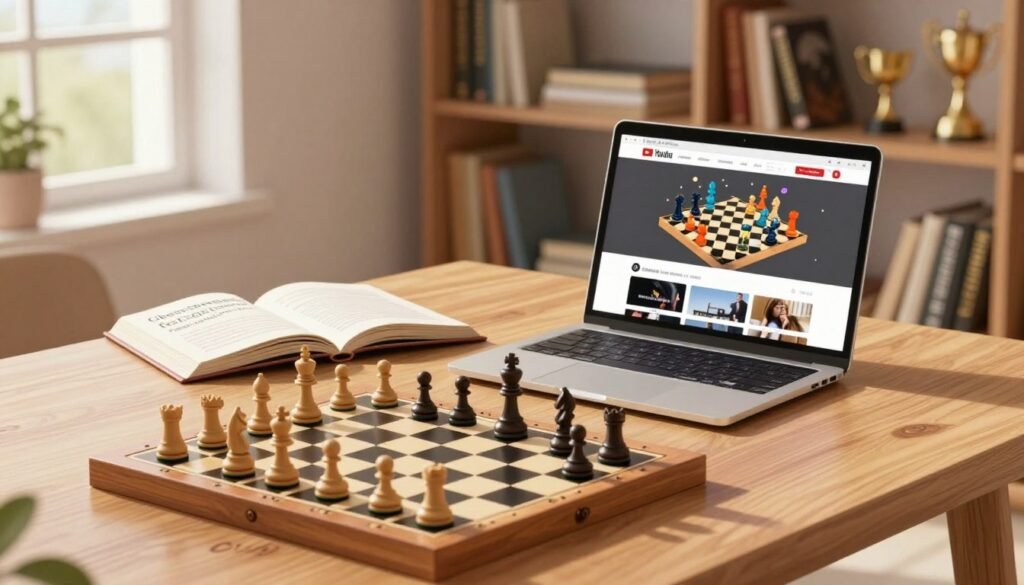
Ever wondered why so many new players start with video lessons instead of books? Visual learning sticks. It shows moves, ideas, and patterns in a way that makes sense fast!
We made this list for beginners who want real improvement, not endless noise or random clips. You’ll find a curated set of channels that use clear plans, simple language, and repeatable habits you can use in your next game.
Many learners pick a youtube channel first because books can feel dry. Choosing among many chess youtubers can feel overwhelming. We’ll show how to use each channel efficiently so you don’t waste time.
What you’ll get: one curated list of the best chess YouTubers, quick tips to turn videos into training (pause, calculate, compare), and a note for parents about calm, family-friendly teachers. Later, we’ll explain how Debsie’s interactive options can help you level up beyond YouTube!
Key Takeaways
- YouTube is a great visual start for new players.
- This guide targets learners who want clear progress, not distractions.
- Each youtube channel listed comes with a simple way to use it.
- We include calm, family-friendly options for parents.
- Learn to turn videos into real training habits that raise your rating.
- Want more? Debsie’s interactive paths are covered later in the article.
What makes a chess YouTube channel beginner-friendly in 2026
A helpful youtube channel turns a confusing game into a clear lesson. You should leave a video knowing one simple plan you can try in your next match!
Clear explanations over engine dumps: The #1 filter is explanation. You must understand why a move works. If a presenter just reads engine lines, you memorize instead of learning.
Playlists that match your level and time
Good playlists say who they’re for. Look for “beginner” tags and short 10–20 minute tactics for busy days. Save longer lectures for weekends.
Actionable ideas for real games
Every video should give one or two usable ideas: a plan, a pattern, or a tactical motif. Try the improvement test—can you explain the plan in one sentence and spot it in your next game?
“Teach the idea, not the moves.”
- Warn against engine dumps: too many lines, too little meaning.
- Prefer “one topic, many examples” playlists for steady progress.
- Match openings to your level: focus on plans and piece placement.
Want structure? If you want step-by-step guided improvement, Debsie courses and tutors can complement video learning (details and links in Section 10). For a quick survey of channel styles, check this top channels list, or learn about local tutors and classes at local tutors and classes.
Best chess YouTubers for beginners you can actually learn from
Start with one channel and turn a single video into a week of focused practice. Pick a creator below, follow one playlist, and apply one idea per game. Do that for seven days and you will notice real progress!
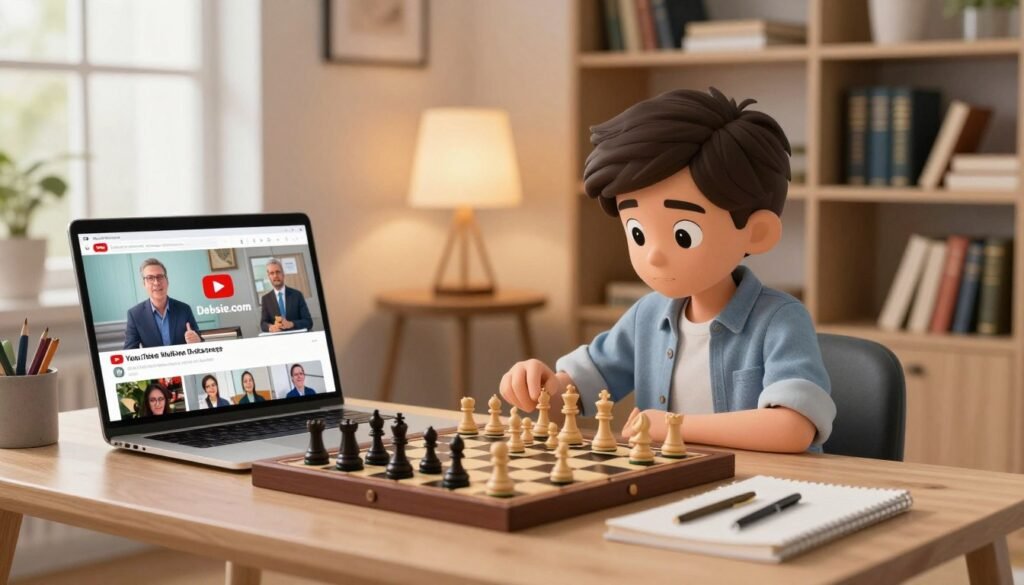
Daniel Naroditsky — step-by-step thinking and speedruns
Watch his instructive speedruns first. Pause when he explains choices. Try the same positions in a practice game and name the plan out loud.
Hanging Pawns — deep playlists for openings, middlegame, and endgame
Start with one opening playlist that fits your level. Learn the main plan and one common trap. Play online and look for that plan in your games.
Saint Louis Chess Club — structured lectures by masters and grandmasters
Treat this channel like a free classroom. Pick a beginner playlist and watch one lecture per night. Take notes and test the ideas in short practice matches.
Agadmator — digestible game analysis and tournament recaps
Use short recaps to learn whole plans quickly. Watch one classic game, then try to recreate its key idea in your own play.
PowerPlayChess (Daniel King) — calm commentary and practical plans
Choose his calm, practical videos if you get overwhelmed. One clear plan per video. Apply it slowly and repeat until it feels natural.
How to start: pick one creator, follow one playlist, and apply one idea per game for a week. We recommend tracking notes and replaying your games to lock in learning!
Saint Louis Chess Club and US chess instruction that feels like a course
The Saint Louis setup feels like enrolling in a free, step-by-step course you can watch from home! It shines for players who want steady progress and clear lessons.
Beginner-to-expert playlists that build a foundation
Follow the level-based playlists: start at the beginner track, finish a mini-course, then move up when your games feel easier. Each playlist focuses on openings, tactics, and endgame basics in a clear order.
Resident Grandmaster lectures and long-form training
The channel features rotating resident grandmasters and masters. Lectures are longer. They use many examples and fewer jump cuts so ideas stick. This feels like a real club lesson in the united states.
Why the club format works for players trying improve
Structure beats random clips. A chess club format gives rhythm: lesson, practice, review. That helps players trying improve build a foundation.
- Simple schedule: 2 lectures per week.
- Practice: 3 short games.
- Review: 1 session to replay and note mistakes.
Ready for more accountability? Use this channel like a course, then add Debsie for interactive training and tracking. For a quick survey of similar options, see the top channels list.
Grandmaster and master-led channels that teach patterns fast
When a master explains a position, the pattern often clicks in one clear sentence. These channels are pattern builders. They help your brain spot tactics, plans, and common mistakes faster in real play!
John Bartholomew — fundamentals and practical breakdowns
Clear fundamentals: John focuses on safe piece placement and simple calculation. His post-game breakdowns are honest and model how a player thinks. Copy his step-by-step cleanup of mistakes to improve game habits.
Eric Rosen — family-friendly tactics and opening ideas
Friendly style: Eric’s channel is ideal for kids and parents. He shows traps, the London System, and fun tactical motifs. Videos teach why opponents fall for ideas, not just what to play.
Ben Finegold — classroom-style lessons with banter
High-energy lecture: Ben mixes humor and story with solid instruction. If your family likes lively lessons, his classroom vibe keeps players engaged while teaching real plans.
Gauri Chess — US-based master insight and competitive mindset
Competitive coaching: Gauri brings a US perspective and practical tips for nerves and tournament play. Her guidance helps young players think about match prep and pressure.
Choose by personality: calm teacher vs. fast talker vs. comedian-teacher. Pick the style that fits your child or student. Then watch one video and play one game right after. Test a single idea and see it stick!
Beginner-friendly chess YouTube channels for openings, tactics, and habits
Pick one openings playlist, one tactics habit, and one short review each day. This trio—openings, tactics, habits—moves you forward faster than watching ten random series.
GothamChess — high-signal openings and online-play tactics
Quick, practical ideas: GothamChess gives short, useful plans you can try right away. Use one openings playlist for your level and learn the idea, not just the trap.
ChessNetwork — calm, classic instructional analysis
Slow pacing helps focus. ChessNetwork walks you through positions with clear thinking. It’s great when you want calm, classic lessons and less noise.
Chess.com — bite-sized lessons from rules to strategy
Step-by-step progression: This channel turns rules into strategy with short videos chess students can repeat daily. Perfect for kids building fundamentals.
“One playlist, one habit, one short review — repeat weekly.”
- Daily time plan: 10 minutes openings, 10 minutes tactics, 5 minutes endgame basics.
- Warning: don’t just memorize traps. Learn the plan that works after the trick fails.
- Consistency matters: the best channel is the one you follow every week without quitting!
For a compact list of useful youtube channels and how to use them, see this channel guide.
Best “game chess” analysis channels for learning from great chess games
Real game replays are a goldmine for patterns you can copy into your own play! Watching full games helps you learn ideas that repeat across events. That’s the heart of game chess: study real games and steal the plans.
How tournament recaps help you spot recurring plans
Tournament recaps show many games from the same field. You’ll see the same pawn breaks, trade ideas, and attack themes. Watch several matches from one event and patterns pop out!
Using historical games without getting overwhelmed
Pick one classic game at a time. Focus on three moments: the opening plan, one middlegame turning point, and one endgame lesson. That keeps study short and useful.
- Tip: Pause, guess the move, then learn the reason.
- Example channel: Agadmator chess channel makes tournament recaps and historic greats easy for beginners.
“Great games inspire. Turn that inspiration into practice!”
How to use YouTube to improve chess without wasting time
Turn video watching into short workouts that sharpen your thinking—no marathon sessions needed! Pick one focused plan and repeat it. That keeps practice simple and effective.
Three-track weekly routine
One openings playlist, one tactics series, one tiny endgame track. Do one video from each track every other day. Repeat the pattern all week!
Turn videos into active training
Pause, calculate, compare. Pause before the presenter moves. Guess two candidate moves. Then watch and learn why the creator chose their move.
Watch less, play more
The biggest trap is binge-watching without playing. You learn by doing. Try a simple rhythm: 3 videos + 5 short games + 1 review session (15 minutes works!).
- Write one sentence after each video: “Today I learned: ____.”
- Keep notes by level. Use the idea in your next game.
- Make it a family challenge—consistency matters more than perfection!
Quick tip: If you’re trying improve and feel stuck, use a channel as a guide, then add Debsie later for interactive training and tracking. That gives accountability and real practice results!
If you feel YouTube isn’t “real studying,” here’s what to do next
Videos can inspire, but study needs structure to turn that inspiration into skill.
Validate the feeling: if a channel feels random, you’re not wrong. Random inputs make random results. Many learners say, “YouTube is not good for actual studying.” That’s common!
When structured training beats random videos
If you keep repeating the same mistakes, watching more clips won’t help. Structure wins when a player needs habits, feedback, and goal-based drills.
Simple rule: stop collecting tips. Start following a plan.
Build a weekly plan based on your level and goals
Beginner plan (daily short work): 20 minutes a day. Focus on tactics and basic endings. Play 2 rapid practice games and review one blunder.
Intermediate plan (three days a week): 40 minutes per session. Add a deep game review and one opening plan. Track one measurable target—fewer one-move blunders or higher puzzle accuracy.
- Time option: 20-min/day — great for busy families.
- 3-days/week: longer sessions with review and notes.
- Goal-based: “win more online games,” “stop blundering,” or “play your first tournament.”
One measurable target helps you know if you improve game skills. Pick a metric and log progress each week!
“If watching feels aimless, swap scrolling for a simple training plan.”
Want guided steps, interactive practice, and steady motivation? We can help. For local coaching options and a structured start, check this tutoring guide at top chess coaching academies. In the next section we explain Debsie courses, leaderboards, and tutor roadmaps to get you moving with purpose!
Go beyond videos with Debsie: courses, competition, and a personalized start
If YouTube sparks ideas, Debsie turns them into a plan you can follow every week. Keep the fun of channel lessons, but add structure, practice, and feedback!
Learn via Debsie Courses for interactive, guided improvement
Clear lessons and built-in practice. Each course mixes short modules, exercises, and checkpoints. You learn an idea, try it, and log progress. That saves time and makes each hour count.
Debsie Leaderboard to stay motivated and track progress
Friendly competition! The leaderboard rewards practice, streaks, and measured gains. Kids love it. Parents see steady improvement and consistent effort.
Take a Free Trial Class with a personalized tutor
A live tutor will match your level and goals. They point you to useful playlists on a youtube channel and tell you what to skip. That stops guesswork and helps you improve game plans faster.
- Why add Debsie: keep videos, gain a roadmap.
- Faster progress: guided training that fits your time.
- Start now: try a free class and get a custom plan!
For local tutor options and classes, see our guide to top tutors and classes.
Conclusion
Wrap up with a simple routine that moves your game forward!
Pick one opening track, one tactics habit, and a tiny endgame mini-track. Watch a lesson, play a short game, then write one sentence about what you learned.
Big numbers like youtube subscribers and total views help find channels. But real progress comes from practice, not just views. Stay calm. Learn the next right thing for your level.
Starter pack: Naroditsky for thinking, Saint Louis Chess Club for structured lectures, and a tactics-focused creator for patterns. Make it a family goal. Track one weekly win and celebrate consistency!
Want guided help? Try Debsie Courses (learn via Debsie), join the Debsie Leaderboard (stay motivated), or book a Free Trial Class (get a custom roadmap). For openings, see our popular openings guide.